
Paper:
Disaster Risk Reduction and Climate Resilience in Malaysia: A Decade of Progress and Accelerated Action
Khamarrul Azahari Razak*1,†
 , Siow Yuet Mei*1, Liyana Hayatun Syamila Ramlee*1
, Haslinda Mohamad Hamran*1,*2
, Muhammad Fauzie Ismail*1,*3
, Ezrein Faizal Ahmad*1,*4, Zamri Ramli*5, Nursalbiah Hamidun*6, Sabri Abdul Mulok*1, Rabieahtul Abu Bakar*7
, Norazam Ab Samah*1,*8, Fitri Yakub*1
, Mohdoor Anuar Mohd Zain*1,*9, Khairul Afnan Khalid*1, and Zakaria Mohamad*10
, Siow Yuet Mei*1, Liyana Hayatun Syamila Ramlee*1
, Haslinda Mohamad Hamran*1,*2
, Muhammad Fauzie Ismail*1,*3
, Ezrein Faizal Ahmad*1,*4, Zamri Ramli*5, Nursalbiah Hamidun*6, Sabri Abdul Mulok*1, Rabieahtul Abu Bakar*7
, Norazam Ab Samah*1,*8, Fitri Yakub*1
, Mohdoor Anuar Mohd Zain*1,*9, Khairul Afnan Khalid*1, and Zakaria Mohamad*10
*1Disaster Preparedness and Prevention Center (DPPC), Malaysia-Japan International Institute of Technology (MJIIT), Universiti Teknologi Malaysia (UTM)
Jalan Sultan Yahya Petra, Kuala Lumpur 54100, Malaysia
†Corresponding author
*2Department of Irrigation and Drainage, Ministry of Energy Transition and Water Transformation
Cyberjaya, Malaysia
*3National Disaster Management Agency (NADMA)
Putrajaya, Malaysia
*4Department of Town and Country Planning (PLANMalaysia), Ministry of Housing and Local Government
Putrajaya, Malaysia
*5Department of Mineral and Geoscience Malaysia (JMG)
Putrajaya, Malaysia
*6Slope Engineering Branch (CKC), Public Works Department (JKR)
Kuala Lumpur, Malaysia
*7Enforcement, Leadership and Management University (ELMU)
Nilai, Negeri, Malaysia
*8Malaysian Medical Relief Society (MERCY) Malaysia
Kuala Lumpur, Malaysia
*9NATECH Management PLT
Iskandar Puteri, Malaysia
*10National Association for Geo Disaster and Community Resilience (Geo-Resilience Malaysia), DRR-IEI Lab, Bangunan National Energy Centre (NEC), Universiti Tenaga Nasional (UNITEN)
Selangor, Malaysia

This study provides retrospective views, stocktaking, and commitments to accelerate the local implementation of the Sendai Framework for Disaster Risk Reduction (SFDRR) 2015–2030 in Malaysia. Employing a transdisciplinary approach, this study integrates systematic reviews, document analysis, stakeholder needs assessment, focus group discussions, field observations, and expert consultations. The findings are structured according to the SFDRR’s priorities, revealing significant advancements. However, persistent systemic challenges are evident, including fragmented data governance, limited risk communication strategies, poor investments by private sector, chronic underinsurance, and gaps in inclusive preparedness for vulnerable groups. This study underscores the coexistence of structured progress and deep-seated implementation gaps. Thus, intensified efforts are required to meet the 2030 global target by strengthening cross-sectoral coordination, co-implementing risk-based planning, enhancing financial risk protection, institutionalizing “build back better” for resilient recovery, and ensuring that resilience-building is both locally grounded and equitably distributed.
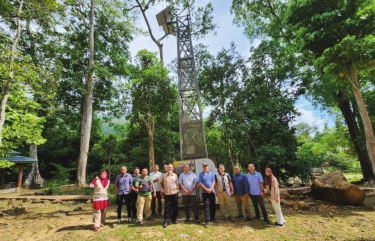
People-centred EWS in Jerai Geopark
1. Introduction
The Sendai Framework for Disaster Risk Reduction 2015–2030 (SFDRR) is the principal global blueprint for guiding nations in the systematic reduction of disaster risk and strengthening societal resilience. Endorsed by the United Nations in 2015, the SFDRR outlines an ambitious 15-year agenda structured around four key priorities: (i) understanding risk, (ii) strengthening governance, (iii) investing in resilience, and (iv) enhancing preparedness 1. These targets aim to substantially reduce disaster mortality, the number of people affected, economic losses, and damage to critical infrastructure, while simultaneously increasing the availability of early warning systems, international cooperation, and national disaster risk reduction (DRR) strategies. This framework emphasizes a preventive, whole-of-society approach, recognizing that effective disaster risk management (DRM) is fundamental to sustainable development, climate change adaptation, and safeguarding development gains 2.
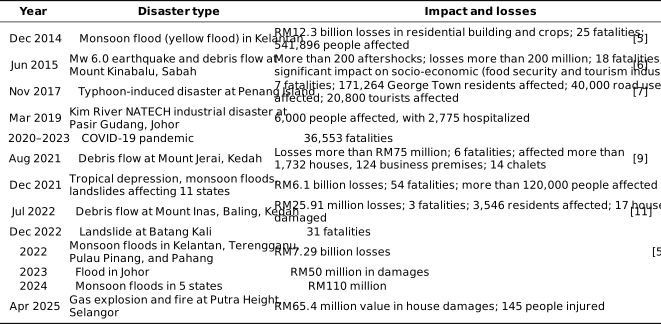
Table 1. Significant disasters in Malaysia, 2014–2025.
As the SFDRR implementation reaches its midpoint, the Midterm Review (MTR) of the Sendai Framework represents a strategic inflection point. This global stocktaking exercise compels nations to conduct rigorous evidence-based assessments of progress, challenges, and lessons learned since 2015. The MTR of the SFDRR 3 revealed that while awareness and policy development have advanced, implementation is hindered by systemic gaps. Key challenges include insufficient and fragmented data, particularly data disaggregated by vulnerability; weak integration of DRR into development planning and budgeting; chronic underinvestment in prevention; and inadequate multilevel governance and coordination. Currently, no single country is on track to realize the outcomes of the SFDRR by 2030 3.
In parallel, regional cooperation mechanisms have proven to be indispensable for addressing transboundary and cascading risks. Within Southeast Asia, the ASEAN Agreement on Disaster Management and Emergency Response (AADMER) serves as a pivotal legal and operational instrument that fosters solidarity and joint action among member states. The synergy between regional frameworks and the global agenda is critical as it translates international commitments into context-specific, coordinated action on the ground.
This study analyzes Malaysia’s pathways to implementing the global agenda. It operationalizes reporting to the SFDRR across national and subnational scales, and seeks to critically examine Malaysia’s advancements and persistent gaps across the four SFDRR priorities, situating Malaysia’s efforts within a unique multi-hazard context. Moreover, it aims to contribute to the broader discourse on effective disaster risk governance, highlight transferable practices, and underscore the imperative of sustained, integrated action to achieve the resilience ambitions of the SFDRR by 2030.
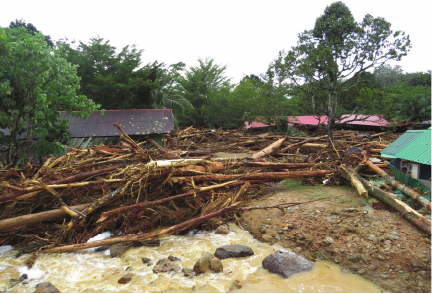
Fig. 1. Debris flow in Yan, Kedah, in 2021.
1.1. Disaster Profile in Malaysia
Although Malaysia is situated near the Pacific Ring of Fire, it is less vulnerable to tectonic hazards. However, climate-related hazards and cascading risks, such as typhoons, cyclones, floods, landslides, and droughts, continue to arise 4. Several major disasters have occurred periodically over the last decade (Table 1), with floods being a major risk. The 2014 flood incident, which affected several states on the East Coast of Peninsular Malaysia, was one of the major reasons for the establishment of the National Disaster Management Agency (NADMA) under the Prime Minister’s Department. Malaysia also expects a higher risk of exposure induced by tropical depressions and cyclones/typhoons, leading to extreme rainfall and floods in low-lying areas. An example of the impact of debris flow in Jerai Geopark, Yan, Kedah, is shown in Fig. 1. According to the World Bank 15, a 1-in-20-year flood could cost Malaysia up to 4.1% of its GDP by 2030 if adaptation efforts are absent, and increase the national unemployment rate by up to 2.2 percentage points.
2. Methodology
This study employs a multi-method qualitative approach to provide a comprehensive and grounded assessment of Malaysia’s progress toward accelerating the implementation of the SFDRR agenda. The methodology was co-designed and co-developed to triangulate data from diverse sources (public, private, nongovernmental organizations (NGOs), and academia). It combined documentary analysis with primary stakeholder engagements, field-based expert consultations, and observations, and was aligned with the methodology established by the United Nations Office for Disaster Risk Reduction (UNDRR) in the MTR of Sendai Reporting 3.
The study design incorporates three primary components. First, a systematic document review of development plans, technical guidelines, and policy frameworks forms the foundational layer of analysis and examines these materials through the lens of the SFDRR’s four priorities for action. Second, primary qualitative data were gathered through semi-structured interviews with 12 key informants: Malaysia Civil Defence Force (APM), Public Work Department, Department of Irrigation and Drainage (DID), Department of Minerals and Geoscience, Malaysia Meteorological Department, Department of Social Welfare (JKM), Department of Town and Country Planning (PLANMalaysia), Malaysia’s Ministry of Health, Tenaga Nasional Berhad (TNB)/TNB Research, MERCY Malaysia, and UNICEF Malaysia. These interviews provided in-depth perspectives on governance dynamics, investment challenges, and barriers to implementation. Third, input from focus group discussions conducted through the Survey on Disaster Risk Reduction and Management Capacities of State and Local Government by NADMA and the Japan International Cooperation Agency (JICA), with participants from technical agencies, local authorities, the private sector, and communities, was incorporated to foster dialogue and advocacy on coordination mechanisms, preparedness capacities, and recovery practices.
The analysis was enriched by direct professional involvement and field-based observations. The authors have actively engaged in several documented national initiatives and best practices, including contributions to policy development, community-based program design, and post-disaster assessments. This direct involvement provided opportunities for participant observation and field investigations at disaster sites and during simulation exercises. Moreover, it offers unique insights into the practical applications, local adaptations, and tangible outcomes of DRR strategies. The synthesis of documentary evidence, stakeholder perceptions, and experiences allows for a nuanced, validated, and contextually rich examination of Malaysia’s SFDRR implementation pathway and its alignment with national objectives and regional DRR frameworks.
3. Results and Discussions
The following sections present an integrated assessment of Malaysia’s progress in achieving the Sendai Framework priorities for DRR across these four priority areas, synthesizing key advancements and acknowledging the persistent challenges shaping the national pathway toward resilience by 2030.
3.1. Priority 1: Understanding Disaster Risk
Strengthening the evidence base for decision-making by systematically assessing disaster risk in all its dimensions is the foundation of SFDRR. Malaysia has undertaken several key initiatives to advance its risk knowledge, using institutional, technological, and community-based approaches.
3.1.1. Centralized Risk Knowledge Repository
Establishing the National Risk Register (NRR), aligned with the UNDRR’s DesInventar system, constitutes a centralized effort to standardize the recording of historical disaster loss data. This repository is intended to facilitate the longitudinal analysis of disaster events and identify risk patterns and trends for strategic planning.
3.1.2. Multi-Hazard and Geo-Spatial Assessment
The government formulated technical frameworks for addressing specific hazard profiles. The National Slope Master Plan (NSMP, 2009–2023), its extended NSMP 2025–2030 action plan, and the associated Slope Hazard and Risk Mapping (PBRC) framework provide a structured methodology for assessing geological risks including landslides and debris flows.
The DID developed the National Flood Forecasting and Warning System (NaFFWS) under the National Flood Forecasting and Warning Programme (PRAB) in 2015 to provide flood forecasting, warning, and dissemination services. It aims to develop an effective flood prediction and river monitoring system, distribute warnings through telemetry, radar, and rainfall data, and support decision-making 16.
The National Water Balance System (NAWABS), also developed by DID, provides a comprehensive water resource management framework based on a Sustainable Water Resource Management (SWRM) approach. It supports the goals of the National Water Resources Policy (NWRP) by helping river basin managers balance water supply and demand. This system improves the forecasting of future weather conditions and enables the assessment of risks associated with different operational strategies 17.
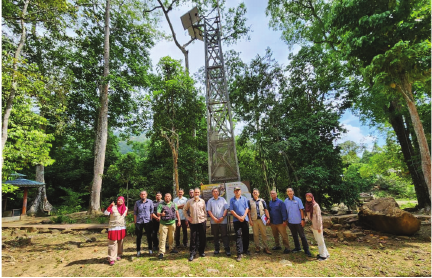
Fig. 2. Early warning system for debris flow in Yan, Kedah.
3.1.3. Real-Time Data and Public Information
Multiple public-facing digital platforms were deployed to communicate risk information. These include the Social Welfare Department’s Info Bencana portal, the DID’s MyPublicInfoBanjir, and the Public Works Department’s eBencana system. These platforms disseminate data on evacuation centers, flood levels, and infrastructure status, respectively. Furthermore, during the COVID-19 pandemic, the MySejahtera application and TracAPM were used for public health surveillance and response coordination, demonstrating the adaptive use of digital tools for risk management during a concurrent crisis.
3.1.4. Standardized Metrics for Urban Resilience
The benchmarking of urban resilience has advanced through the application of the Climate Disaster Resilience Index (CDRI) across multiple major cities. The findings from these assessments inform local development planning by demonstrating the strengths and weaknesses of dimensions such as physical, social, economic, institutional, and environmental conditions. Thus, PLANMalaysia published planning guidelines for disaster-resilient cities in Malaysia 18. An example of this initiative is the integration of resilience principles into the Penang Structure Plan 2030, which includes specific provisions for safeguarding cultural heritage assets from disaster risks.
3.1.5. Community-Led Early Warning System
An innovative pilot in Yan, Kedah exemplifies the integration of technological and community-based approaches. The project deployed a sensor-based early warning system for debris flows developed in collaboration with the Department of Mineral and Geoscience and local academia (Fig. 2). Crucially, this technological intervention was coupled with Community-Based Disaster Risk Management (CBDRM), training local communities in risk awareness and response protocols to foster local ownership and enhance last-mile warning effectiveness.
3.1.6. Persistent Systemic Challenges
Despite these advancements, several systemic challenges constrain a comprehensive and proactive understanding of disaster risk. A primary issue is the fragmented governance of disaster-related data, where information remains siloed across multiple agencies with different mandates, hindering the development of a unified national risk profile. This fragmentation complicates efforts to effectively monitor the Sendai Framework targets and limits forward-looking systemic risk analysis that can anticipate compounding and cascading events. Although risk information is increasingly available, its systematic mainstreaming into development planning, investment decisions, and land-use policy remains inconsistent, indicating the need for stronger mechanisms to ensure that risk intelligence translates into concrete, risk-informed action across all sectors.
3.2. Priority 2: Strengthening Disaster Risk Governance
Effective disaster risk governance is essential for coordinating multistakeholder actions, ensuring accountability, and mainstreaming DRR at all levels of planning and development. Progress in this area reflects a commitment to building cohesive, multiscale governance that aligns with the SFDRR’s emphasis on inclusive and integrated risk management.
3.2.1. Strengthening National Disaster Governance and Multi-Level Coordination
Establishing the NADMA in 2015 marked a major shift toward centralized coordination and policy leadership. NADMA’s mandate includes preparedness, response, early warning coordination, and overall disaster governance, providing a single focal point for national decision-making 8. This centralization is reinforced by NADMA Directive No.1: Policy and Mechanism for National Disaster Risk Management 19, which updates and strengthens the provisions of the previous Malaysian National Security Council Directive No.20 by integrating ministries and technical agencies across multiple levels to manage disasters of various scales. This institutional restructuring improved coherence across federal agencies, particularly during emergency operations, and supported the alignment of national policies with international frameworks. This governance architecture has been further strengthened through the National Disaster Risk Reduction Policy 2030 (NDRR-P 2030), which establishes a unified, forward-looking national DRR direction by institutionalizing risk-informed development, enhancing multi-stakeholder coordination, and embedding resilience principles across federal, state, and local planning systems 8.
3.2.2. Empowering Sub-National Governance
Recognizing the critical role of local actors, states have established dedicated disaster management units to enhance localized response and planning 20. For example, the Selangor Disaster Management Unit (SDMU) was established to optimize resources, respond at the state and district levels, and integrate DRR action into local risk-informed development agendas, with NADMA providing overarching coordination and policy support.
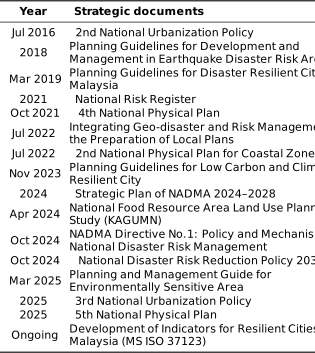
Table 2. Chronology of documents related to mainstreaming DRR since 2015.
3.2.3. Mainstreaming DRR into Spatial Planning
The national aspiration for risk-informed sustainable development, demonstrated through federal commitment and local development, is implemented through the Town and Country Planning Act 1976 (Act 172), with support from public, private, academic, and civil society organizations. Generally, the direction of spatial development policies in Malaysia has been guided by the National Physical Plan (NPP), for example, the 4th NPP (2021–2025), followed by the respective State Structure Plans, District Local Plans, and Special Area Plans. In accordance with Act 172, the National Physical Planning Council (NPPC) has been used for multilevel governance to update, disseminate, and translate national policies into local action (Table 2).
In 2022, 24 local plans were revised, where relevant, to include seven categories of disasters, five types of disaster risk assessment maps, and mitigation measures. These efforts have contributed to a more coherent multilevel governance system by aligning national priorities with local planning instruments. Several notable documents include the Second National Physical Plan for Coastal Zones and the National Food Resource Area Land Use Planning Study. Technical guidelines on Disaster Resilient Cities in Malaysia 18 and Integrating Geo-disaster and Risk Management into the Preparation of Local Plans 21 issued by PLANMalaysia further operationalized DRR integration in local development control.
The Technical Committee on Earthquake, authorized by the Industry Standards Committee on Building, Construction, and Civil Engineering, developed the Malaysia National Annex 2017 in conjunction with MS EN 1998-1:2015. This standard follows the National Annex to BS EN 1998-1:2004, Eurocode 8: Design of structures for earthquake resistance – Part 1: General rules, seismic actions, and rules for buildings.
From the perspectives of natural hazards triggering technological disasters (NATECH) and industrial risk, Malaysia’s experience over the past decade has been both catalytic and challenging. Consequently, regulators and operators must reconsider safety and emergency preparedness. In Johor, the Pasir Gudang Emergency Mutual Aid (PAGEMA) demonstrates how cluster-based mutual aid, joint drills, and shared resources between major hazard installations, local authorities, and first responders can improve readiness at the industrial-area level. Moreover, Malaysian Standard MS 2735:2021 on Emergency Preparedness and Response (EPR) provides a national standard for safe workplaces, exercises, and command-and-control arrangements.
3.2.4. Persistent Systemic Challenges
Despite the well-articulated governance framework, several challenges impede its optimal implementation. Vertical and horizontal coordination among agencies, while structured, can be hampered by bureaucratic silos and overlapping mandates, particularly during complex, transboundary crises. Integrating DRR into local development plans remains uneven and often depends on the variable capacities and political will of local authorities. Additionally, while community engagement mechanisms exist, sustaining meaningful participation and ownership at the community level, particularly among marginalized groups, requires more consistent resources and empowerment strategies. Advances in NATECH risks remain limited to a few high-risk hubs and larger operators, whereas many industrial areas and small- to medium-sized businesses remain in systematic technological and risk assessment, integrated emergency plans, or structured communications with nearby communities.
3.3. Priority 3: Investing in Disaster Risk Reduction for Resilience
Strategic investments in DRR are critical for mitigating current risks, preventing future losses, and enhancing societal resilience. Progress in this area reflects a multifaceted approach that combines significant public infrastructure investment, efforts to incentivize private sector participation, and innovative financing mechanisms to build a more resilient national economy and society.
3.3.1. Public-Private Investments in DRR and Resilient Infrastructure
The government has undertaken substantial engineering projects to mitigate key hazards. For example, the Stormwater Management and Road Tunnel (SMART Tunnel) in Klang Valley is a globally recognized dual-purpose infrastructure that manages urban floodwater while alleviating traffic congestion 22,23. In Kuching, the Sungai Sarawak Regulation Scheme (SSRS), a complex barrage and floodgate system, has been in operation for over two decades as a benchmark for integrated flood defense 24.
To protect the coastline of Penang, the state has completed the RM12.9 million restoration of the 460 m Sea Wall Heritage Trail, a project to restore the historic seawall and esplanade promenade in George Town to strengthen coastal defense, protect heritage sites, and improve public access along the waterfront 25. Additionally, the Sungai Batu Feringghi Marine Outfall and Sungai Satu Marine Outfall, initiated by the DID, were built as river marine outlets extending 120 m into the sea to protect rivers from river-mouth blockage and prevent sullage and sewerage pollution along the beach. These projects represent long-term, high-impact public investments in urban resilience 26. See Fig. 3 for details.
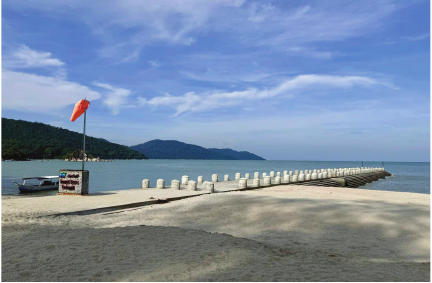
Fig. 3. Sungai Batu Feringghi Marine Outfall.
3.3.2. Social Safety Nets and Response Capacity
Investments in social infrastructure have also increased. The number of evacuation centers has expanded to 9,058 nationwide as of November 1, 2025, ready to be activated at any time, with the capacity to accommodate approximately 2.18 million people in the event of floods or other disasters. Concurrently, budget allocations to key response agencies have grown. For instance, the JKM received an increased allocation of RM32.04 million in 2022, enabling improvements in data systems, continuous training, and disaster response capabilities.
In addition to infrastructure and institutional investments, the government provides immediate financial relief to disaster-affected households through the NADMA’s cash aid, which is disbursed to eligible household heads following verification by local authorities. This scheme was designed as an urgent support mechanism to alleviate the hardships for families affected by climate-induced disasters 27.
3.3.3. Private DRR Investment
Leading corporations have begun aligning DRR with their operational and sustainability goals. Tenaga Nasional Berhad (TNB), as a major dam operator, has committed significant resources, such as a RM40 million investment in sediment dredging at the Sultan Abu Bakar Dam, to dam safety and community-based early warning systems. TNB’s initiatives, which include annual multi-agency drills and community engagement programs, demonstrate a shift toward anticipatory risk management and reflect its commitment to supporting national resilience alongside its net-zero emissions target.
Beyond individual firms, Government-Linked Companies (GLCs) and Government-Linked Investment Companies (GLICs) have increasingly channeled disaster-related contributions through the GLC Demi Rakyat dan Negara (GDRN) platform. As a coordinated corporate disaster-response mechanism, the GDRN mobilizes pooled resources such as cash assistance, essential goods, logistics assets, and volunteers to support national relief and early recovery efforts 28. Consolidated GDRN and NADMA reports indicate that member companies provide substantial financial and operational support during major flood events and NADMA-led recovery missions, illustrating how corporate capacities complement state disaster management functions 27. Although most private-sector engagement remains focused on humanitarian relief, the institutionalization of the GDRN aligns with UNDRR’s guidance on strengthening public–private partnerships for DRR and climate risk governance 29.
3.3.4. Innovative Risk Financing and Insurance
Several financial instruments have been introduced to address this protection gap, particularly among low-income groups. The Kampungku microinsurance scheme in Kemaman provides prompt payouts to flood-affected villagers, while the government’s Perlindungan Tenang Voucher (PTV) program aims to make basic insurance more accessible to the B40 income group. These schemes, along with the expanding availability of flood coverage for vehicles and small and medium-sized enterprises, represent the initial steps toward diversifying financial risk transfer and promoting a culture of insurance.
3.3.5. Incorporating Nature-Based Solutions into Urban Resilience Investment
Cities with the largest share of the global population must prepare for rising temperatures, more frequent extreme weather, and sea level rise. The Penang Nature-based Climate Adaptation Programme (PNBCAP), Malaysia’s first climate adaptation initiative funded by the Adaptation Fund (AF) and implemented in partnership with UN-Habitat, was created through collaboration among the Penang Island City Council (MBPP), DID, and Think City. Instead of relying only on traditional grey infrastructure, such as concrete drains, the project leverages natural systems to address urban challenges, reduce heat, prevent flooding, and strengthen community resilience 30.
3.3.6. Persistent Systemic Challenges
The DRR investment landscape faces several constraints. Chronic underinsurance persists, particularly among low-income populations, leaving many households and businesses financially vulnerable to shocks. Private sector investment remains largely limited to corporate social responsibility or regulatory compliance, with a lack of systematic economic incentives for broader preventive DRR investment. Furthermore, disaster risk-financing mechanisms, while innovative, are often pilot-based and lack sustainable long-term funding models to ensure scalability and permanence. Although public investment in infrastructure is evident, budgetary allocations for DRR are frequently reactive, rather than proactively embedded in risk-informed development planning, indicating the need for more predictable and mainstream financing to systematically build societal resilience.
3.4. Priority 4: Enhancing Disaster Preparedness for Effective Response and to “Build Back Better” in Recovery, Rehabilitation, and Reconstruction
Effective preparedness, timely response, and resilient recovery are the critical components of comprehensive disaster risk management. Progress in this area demonstrates a commitment to moving beyond reactive measures toward proactive, inclusive, and forward-looking strategies that aim not only to save lives and reduce losses, but also to strengthen communities against future shocks, in alignment with the SFDRR’s “build back better” principle.
3.4.1. Developing Models for Resilient Recovery
Moving beyond an immediate response, Malaysia pioneered the co-development of the Disaster Resilient Recovery Model, initially applied in Pasir Mas, Kelantan, following the 2022 flood. This assessment served as a national case study for developing a locally contextualized Post-Disaster Needs Assessment (PDNA) model. This study involved systematic data collection, impact mapping, and field observations to capture the spatial and socioeconomic consequences of a disaster. The PDNA process was implemented through integrated collaboration among public agencies, NGOs, academic institutions, and private sector actors. This multi-sectoral approach strengthened the analytical depth of the assessment and supported the formulation of a recovery strategy that adhered to international PDNA standards while aligning with local realities and community needs.
3.4.2. Advancing Resilient Living Lab
Establishing a Resilient Living Lab (RLL) in Hulu Langat, Selangor, represents a parallel initiative aimed at enhancing community-centered resilience during the recovery and reconstruction phases. As one of the first RLLs in Malaysia, it functions as an experimental and participatory platform where scholars, practitioners, community members, and disaster management agencies can jointly observe, analyze, and refine local DRR practices. The lab promotes active community engagement, increases awareness of climate and disaster risks, and fosters continuous learning among stakeholders. The RLL contributes to the development of more responsive and inclusive recovery models capable of achieving long-term resilience by supporting iterative monitoring and adaptive planning throughout the rebuilding process. Within this RLL, several themes were identified as lessons learned for post-disaster recovery at Hulu Langat: (i) Disaster preparedness and early warning systems (EWS), (ii) Resilient Settlements, (iii) Rights to Clean Water, (iv) Resilient Infrastructure, and (v) Building Resilient Communities 31.
3.4.3. Scaling Up Community-Led Preparedness and Volunteerism
Community empowerment remains the core pillar of Malaysia’s national preparedness strategy. Recent program records indicate large-scale engagement through CBDRM initiatives, with 23,000 participants trained across multiple states in 2022, focusing on risk awareness, evacuation readiness, and local leadership strengthening 32. These engagements demonstrate a sustained national effort to localize disaster preparedness through participatory approaches.
This community capacity is reinforced by 9,902 registered volunteers under JKM, which provides critical surge support during emergencies, complementing formal response agencies through evacuation assistance, relief distribution, and psychosocial support 33. Strengthening local volunteerism is further supported by the private sector, such as the TNB and Sarawak Energy Berhad, which periodically conduct community-focused emergency drills and dam safety awareness programs under corporate obligations.
A central institutional mechanism supporting this ecosystem is the Rakan NADMA (Friend of NADMA), a national platform that enhances the capacity, coordination, and visibility of NGOs in disaster management. The Rejuvenation Plan’s Rakan NADMA 2030 emphasizes that the platform consolidates multi-sector humanitarian expertise, strengthens governance, and improves the ability of NGOs to respond effectively to large-scale disasters. It positions the Rakan NADMA as a coordinated system for strengthening long-term commitment, capacity building, and risk governance, ensuring that NGOs remain an integral component of national preparedness and response architecture.
The expansion of CBDRM programs and the institutionalization of the Rakan NADMA reveal that while community involvement in disaster governance is increasing, the quality and consistency of participation across awareness, inclusiveness, empowerment, preparedness, and resource mobilization remain uneven, underscoring the need for standardized indicators, such as the Community Participation Index (CPI), to systematically measure these dimensions.
3.4.4. Persistent Systemic Challenges
Although preparedness systems are advancing, significant gaps have hindered their effectiveness. The “build back better” principle is not yet fully institutionalized within standard recovery frameworks, with a tendency to prioritize rapid restoration over resilient reconstruction that addresses underlying vulnerabilities. Furthermore, disaster preparedness and recovery planning often lack systematic integration of the specific needs of marginalized groups, including persons with disabilities, the elderly, women, and indigenous communities, indicating the need for more inclusive and targeted approaches. Additionally, community participation, although widely recognized as critical for preparedness and recovery, remains inconsistent, insufficiently institutionalized, and difficult to evaluate. Despite the expansion of CBDRM programs, volunteer networks, and community-led initiatives, Malaysia has not yet employed standardized indicators to assess participation quality, inclusiveness, or local empowerment. This gap underscores the need for structured tools for measuring community capacity and engagement across the disaster cycle 3,20,34.
4. Way Forward
Malaysia’s evolving disaster landscape underscores the need for holistic, interconnected, and knowledge-driven resilience strategies. As risks become increasingly systemically shaped by climate change, rapid urbanization, environmental degradation, and public health pressures, traditional sectoral approaches are no longer sufficient. The following recommendations outline key areas where such approaches can be mainstreamed to support national progress in DRR and climate resilience.
4.1. Strengthening Risk Governance and Institutional Coordination
Clarifying the roles and responsibilities of federal, state, and local authorities will reduce fragmentation and improve accountability. Structured interagency coordination platforms should be institutionalized to align planning, implementation, and global reporting. Periodic reviews and monitoring mechanisms are essential for tracking progress, identifying gaps, and ensuring compliance with national and international DRR commitments. Strengthening legal and regulatory frameworks to support risk-informed decision-making will further consolidate governance structures.
4.2. Enhancing Data Sharing and Interoperability
A national disaster data governance framework should be developed using standardized collection, reporting, and verification protocols. Integrating interoperable systems across agencies, including geospatial and EWS, will improve the accessibility, timeliness, and reliability of risk information. Open and transparent data-sharing mechanisms should be implemented to support multilevel planning, research, and predictive risk analysis, thereby enabling evidence-based policies and proactive risk management.
4.3. Integrating Scientific, Technical, and Community Knowledge
Disaster risk assessments should combine scientific research, technical expertise, and community-based knowledge. Participatory approaches involving local communities, civil society, and technical agencies ensure context-specific and socially relevant measures. Partnerships with universities, research institutions, and specialized agencies can enhance analytical capacity and scenario modeling. The systematic incorporation of indigenous and local knowledge is essential for building practical and culturally appropriate resilience strategies. Knowledge sharing through digital platforms, such as establishing a Resilient Living Lab Network in Malaysia, could enhance the sharing of lessons learned and the replicability of the initiatives.
4.4. Transdisciplinary Capacity Building, Adaptive Learning, and Knowledge Management
Institutionalizing structured training programs, sustained cross-sector knowledge exchange, and systematic post-disaster evaluations could strengthen the national DRR ecosystem. This includes establishing formal mechanisms to capture, synthesize, and disseminate lessons learned by government agencies, local authorities, academic institutions, and community actors. Embedding adaptive learning processes within DRR governance enhances a country’s ability to anticipate and respond to emerging, systemic, and compound risks. By fostering a culture of continuous improvement and transdisciplinary collaboration, Malaysia can build a more agile, informed, and resilient system.
4.5. Empowering Community Participation
Although community-led DRR and volunteer-driven preparedness initiatives have expanded, empirical evidence suggests that community participation often remains nominal, inconsistent, and difficult to assess objectively 35,36. Existing resilience frameworks underscore the absence of consensus and standardized measures to evaluate community capacity and engagement at the local level 37. This gap underscores the critical need to institutionalize community participation indicators for risk governance.
5. Conclusion
Malaysia has made notable progress in accelerating DRR actions over the past decade; however, challenges in risk governance, data management, and multi-stakeholder coordination continue to limit the full achievement of SFDRR targets. This study reflects on the disaster risk governance model for middle-income countries, particularly the balance between risk acceptance and development demands. Strengthening risk governance, improving data interoperability, integrating scientific and community knowledge, and institutionalizing inclusive multistakeholder engagement are critical for building a resilient system. Capacity development, adaptive learning, and knowledge management must be embedded in national and local DRR strategies to ensure continuous improvement and preparedness for emerging risks. This research highlighted the best practices, challenges, progress, and commitment by the Malaysian Government and its relevant stakeholders to prevent future systemic risks, promote sustainable resilience, and strengthen societal resilience 38,39,40. Aligning DRR with national development and resilience frameworks will further enhance policy coherence, optimize resource use, and promote long-term sustainability. Moving forward, future research should focus on integrating advanced technologies 38, such as artificial intelligence and Internet of Things, into the localized EWS in alignment with Early Warning for All 2023–2027. By adopting these integrated, forward-looking, and inclusive approaches, Malaysia can accelerate its progress toward the 2030 global targets and establish a more adaptive, equitable, and future-ready disaster resilience system.
Acknowledgments
The development of this article and the ongoing advancement of Malaysia’s disaster risk reduction agenda are the result of multi-stakeholder collaboration. The authors gratefully acknowledge the leadership, coordination, and information provided by the National Disaster Management Agency (NADMA) along with the contributions of all relevant agencies, and stakeholders. Sincere appreciation is also extended to the Malaysia-Japan Linkages (MJL) Grant and the Japan International Cooperation Agency (JICA) for their invaluable technical and capacity-building support for strengthening the nation’s resilience agenda.
- [1] United Nations Office for Disaster Risk Reduction, “Sendai Framework for disaster risk reduction,” 2015. https://www.preventionweb.net/files/43291_sendaiframeworkfordrren.pdf [Accessed March 23, 2026]
- [2] United Nations Office for Disaster Risk Reduction, “Strategic approach to capacity development for implementation of the Sendai Framework for disaster risk reduction,” 2019. https://www.unisdr.org/files/58211_fullconciseguide.pdf [Accessed December 15, 2025]
- [3] United Nations Office for Disaster Risk Reduction, “The Report of the midterm review of the implementation of the Sendai Framework for disaster risk reduction 2015–2030,” 2023. https://sendaiframework-mtr.undrr.org/publication/report-midterm-review-implementation-sendai-framework-disaster-risk-reduction-2015-2030 [Accessed December 15, 2025]
- [4] United Nations Office for Disaster Risk Reduction, “Disaster Risk Reduction in Malaysia Status Report 2020,” 2020. https://www.undrr.org/media/48531/download?startDownload=20250801 [Accessed December 20, 2025]
- [5] Z. Ujang, “Flood facts and mitigation,” Institut Perubahan Iklim, 2025.
- [6] R. A. Bakar, “Seismotectonic geohazards and geospatial framework for disaster risk reduction in Kundasang Sabah,” Ph.D. thesis, Universiti Kebangsaan Malaysia, 2019. https://ptsldigital.ukm.my/jspui/handle/123456789/515311 [Accessed March 23, 2026]
- [7] H. M. Hamran, “Integrated flood hazard assessment for strengthening urban resilience in George Town, Penang,” Master’s thesis, Universiti Teknologi Malaysia, Kuala Lumpur, 2021.
- [8] NADMA, “Dasar Pengurangan Risiko Bencana Negara 2030,” 2024 (in Malaysian). https://www.nadma.gov.my/images/2024/RujukanDalaman/DASAR_PENGURANGAN_RISIKO_BENCANA_NEGARA_2030_FINAL_COPY.pdf [Accessed December 20, 2025]
- [9] L. H. S. Ramlee, K. A. Razak, Z. Ramli, and Z. Mohamed, “Impact-based early warning system for debris flow in Malaysia: A science-based and localization approach for strengthening disaster resilience,” EGU General Assembly 2024, 2024. https://doi.org/https://doi.org/10.5194/egusphere-egu24-19871
- [10] International Federation of Red Cross and Red Crescent Societies, “Final report – Malaysia: Floods,” 2021.
- [11] Ministry of Energy and Natural Resources, “Study report on geological disaster debris flood 2022 Sungai Kupang, Baling, Kedah,” 2022 (in Malaysian). https://www.nres.gov.my/ms-my/pustakamedia/Penerbitan/Laporan%20Kajian%20Bencana%20Geologi%20Banjir%20Puing%202022%20di%20Sungai%20Kupang%20Kedah.pdf [Accessed December 22, 2025]
- [12] M. R. Mohd Noh, Q. A. Z. Rosle, T. R. Tuan Mohamed, F. Ahmad, A. R. Harun, and Z. Ramli, “Geological factors contributing to landslide incident in Malaysia – Case study Batang Kali Landslide Disaster, Hulu Selangor, Selangor,” Thai Geoscience J., Vol.5, No.8, pp. 34-44, 2024.
- [13] H. S. Rosmadi, M. F. Ahmed, M. B. Mokhtar, and C. K. Lim, “Reviewing challenges of flood risk management in Malaysia,” Water, Vol.15, No.13, Article No.2390, 2023. https://doi.org/10.3390/w15132390
- [14] Agensi Pengurusan Bencana Negara, “Letupan paip gas Putra Heights: Nilai kerosakan rumah RM65.4 juta,” 2025 (in Malaysian). https://www.nadma.gov.my/bi/media-en/news/3676-letupan-paip-gas-putra-heights-nilai-kerosakan-rumah-rm65-4-juta [Accessed March 23, 2026]
- [15] World Bank and Bank Negara Malaysia (BNM), “Managing flood risks: Leveraging finance for business resilience in Malaysia,” 2024.
- [16] W. Azad, M. H. Hassan, H. N. Ghazali, A. Weisgerber, and F. Ahmad, “National flood forecasting and warning system of Malaysia: An overview,” Proc. of the 1st Int. Conf. on Dam Safety Management and Engineering (ICDSME’2019), pp. 264-273, 2020. https://doi.org/10.1007/978-981-15-1971-0_27
- [17] M. Ismail, A. Ishak, W. Majid, and T. Sekaran, “Malaysia’s national water balance management system: Tool for water resources manager,” Proc. of the 1st Int. Conf. on Dam Safety Management and Engineering (ICDSME’2019), pp. 274-279, 2020. https://doi.org/10.1007/978-981-15-1971-0
- [18] PLANMalaysia, “Garis Panduan Perancangan Bandar Berdaya Tahan Bencana di Malaysia,” 2019 (in Malaysian). https://www.planmalaysia.gov.my/uploads/content-downloads/file_20251114203026.pdf [Accessed March 23, 2026]
- [19] NADMA, “Arahan Nadma No.1,” 2023 (in Malaysian). https://www.nadma.gov.my/images/2024/RujukanDalaman/Arahan_NADMA_No_1.pdf [Accessed March 23, 2026]
- [20] N. Omar Chong and K. H. Kamarudin, “Disaster risk management in Malaysia: Issues and challenges from the perspective of agencies,” Planning Malaysia, Vol.16, Issue 1, pp. 105-117, 2018. https://doi.org/10.21837/pm.v16i5.415
- [21] PLANMalaysia, “Panduan Mengarus Perdana Pengurusan Risiko Geobencana Dalam Penyediaan Rancangan Tempatan,” 2022 (in Malaysian). https://www.planmalaysia.gov.my/planmalaysia/resources/data%20migration/garis%20panduan/khidmatan/PEKELILING_KP-Panduan_Mengarus_Perdana_Pengurusan_Risiko_Geobencana_dalam_Penyediaan_RT.pdf
- [22] N. Isah and M. Binti, “A review of the literature on the roles and features of SMART tunnel, Kuala Lumpur, Malaysia,” Int. J. of Research & Review, Vol.2, Issue 7, pp. 465-475, 2015.
- [23] United Nations Office for Disaster Risk Reduction, “Words into action: Implementation guide for land use and urban planning,” 2020. https://www.undrr.org/words-into-action/implementation-guide-land-use-and-urban-planning [Accessed March 23, 2026]
- [24] G. Chin Guan, O. F. Marzuki, E. Lih, P. H. Yiu, M. I. Adam Assim, and N. Adam, “The Sungai Sarawak regulation scheme: A comprehensive analysis of its 3-in-1 infrastructure and associated risks,” J. of Maritime Research, Vol.XXII, pp. 228-238, 2025.
- [25] Think City, “Penang breaks ground with the rejuvenation of the Historic Esplanade Seawall,” 2022. https://thinkcity.com.my/about/media-centre/press-releases/penang-breaks-ground-with-the-rejuvenation-of-the-historic-esplanade-seawall [Accessed December 22, 2025]
- [26] Department of Drainage and Irrigation, “Annual report,” 2023.
- [27] Agensi Pengurusan Bencana Negara, “Annual report NADMA 2024,” 2024 (in Malaysian). https://www.nadma.gov.my/images/2025/TerbitanDalaman/FULL_BUKU_LAPORAN_TAHUNAN_NADMA_2024.pdf [Accessed March 23, 2026]
- [28] GDRN, “GLC Demi Rakyat & Negara.” https://gdrnbantu.online/ [Accessed December 23, 2025]
- [29] United Nations Office for Disaster Risk Reduction, “Disaster risk reduction private sector partnership post 2015 Framework – Private sector blueprint five private sector visions for a resilient future,” 2015. https://www.unisdr.org/files/42926_090315wcdrrpspepublicationfinalonli.pdf [Accessed December 23, 2025]
- [30] Adaptation Fund, “Penang’s urban green revolution: How nature is leading climate adaptation in Malaysia,” 2025. https://www.adaptation-fund.org/penangs-urban-green-revolution-how-nature-is-leading-climate-adaptation-in-malaysia/ [Accessed December 23, 2025]
- [31] MERCY Malaysia, “Resilience living Lab Hulu Langat,” 2023. https://mercy.org.my/wp-content/uploads/2025/01/Resilience-Living-Lab-Hulu-Langat.pdf [Accessed December 23, 2025]
- [32] Agensi Pengurusan Bencana Negara, “Garis Panduan Pelaksanaan Pengurusan Risiko Bencana Berasaskan Komuniti (CBDRM) di Malaysia,” Jabatan Perdana Menteri, Putrajaya, 2024 (in Malaysian). https://www.nadma.gov.my/bi/publication/nadma [Accessed December 23, 2025]
- [33] Ministry of Women, Family and Community Development, Department of Social Welfare, “Statistic Report 2022,” 2022 (in Malaysian). https://www.jkm.gov.my/uploads/content-downloads/file_20241025154333.pdf [Accessed December 23, 2025]
- [34] B. M. K. Halim, N. S. A. Shamsuddin, R. Abdullah, and K. H. Kamarudin, “Factors contributing to Participation in Community-led DRR Programmes in Malaysia,” Disaster Advances, Vol.17, No.8, pp. 41-48, 2024. https://doi.org/10.25303/178da041048
- [35] Z. Nkombi and G. J. Wentink, “The role of public participation in disaster risk reduction initiatives: The case of Katlehong township,” Jamba, Vol.14, No.1, Article No.1203, 2022. https://doi.org/10.4102/jamba.v14i1.1203
- [36] M. Samiri, A. Nilwana, N. Nonci, J. Ahmad, and F. Fitriani, “Community engagement and participation in flood disaster mitigation: A case study of Sidenreng Rappang Regency, Indonesia,” Society, Vol.12, No.1, pp. 129-139, 2024. https://doi.org/10.33019/society.v12i1.472
- [37] M. J. Rana, K. H. Rahi, T. Ray, and R. Sarker, “An efficient optimization approach for flexibility provisioning in community microgrids with an incentive-based demand response scheme,” Sustainable Cities and Society, Vol.74, Article No.103218, 2021, https://doi.org/https://doi.org/10.1016/j.scs.2021.103218
- [38] IRDR, “Disaster risk reduction products and processes: Knowledge sharing for place- and context-specific actions. Policy Brief,” Integrated Research on Disaster Risk, Int. Programme Office, 2025.
- [39] AHA Centre, “ASEAN Risk Monitor and Disaster Management Review (2nd Ed.): Time Is Running Out: Why ASEAN Must Act Now against Climate Emergencies,” ASEAN Coordinating Centre for Humanitarian Assistance on Disaster Management, 2020.
- [40] R. Jati, O. Andaresta, P. Wijaksono, T. Yanuarto, and F. Hidayati, “Building sustainable resilience: Navigating systemic risks, enhancing resilience,” AHA Centre, “ASEAN Risk Monitor and Disaster Management Review (4th Ed.),” ASEAN Coordinating Centre for Humanitarian Assistance on Disaster Management (AHA Centre), 2024.
This article is published under a Creative Commons Attribution-NoDerivatives 4.0 Internationa License.