
Paper:
Development and Field Evaluation of a ROV-Based System for Moon Jellyfish Removal Operation
Jonghyun Ahn
 and Shoun Masuda
Hiroshima Institute of Technology
2-1-1 Miyake, Saeki-ku, Hiroshima, Hiroshima 731-5193, Japan

In recent years, the Seto Inland Sea has experienced extensive blooms of moon jellyfish (Aurelia aurita), resulting in substantial disruptions to the local fishing industry. Large aggregations of jellyfish clog fishing nets, damage gear, and reduce fish catches, causing significant economic losses for coastal communities. In 2023, unusually high jellyfish densities were recorded from April onward, and fishing operations in some areas were either severely curtailed or temporarily suspended due to the intensity of the blooms. Despite ongoing monitoring and localized mitigation efforts, no effective large-scale removal methods currently exist that can be rapidly and efficiently deployed under real marine conditions. To address this pressing issue, we developed a remotely operated vehicle (ROV) equipped with a custom-designed suction-and-shredding jellyfish removal device, capable of capturing and removing jellyfish in situ. The ROV was designed with a dry weight of less than 40 kg, enabling two operators to deploy and retrieve it without specialized lifting equipment. Field experiments conducted in the Seto Inland Sea demonstrated that, once a jellyfish was detected by the operator, removal typically required approximately 20 s. Additionally, the fragments collected after removal measured less than approximately 50 mm in diameter. According to previous studies on jellyfish regeneration, fragments of this size are incapable of regenerating. These field trials provided valuable insights into the ROV’s handling, effectiveness, and practical applicability. The results suggest that the proposed method has the potential to substantially reduce fishermen’s workload, mitigate economic losses, and contribute to sustainable marine resource management by providing a rapid and efficient response to large-scale jellyfish blooms.
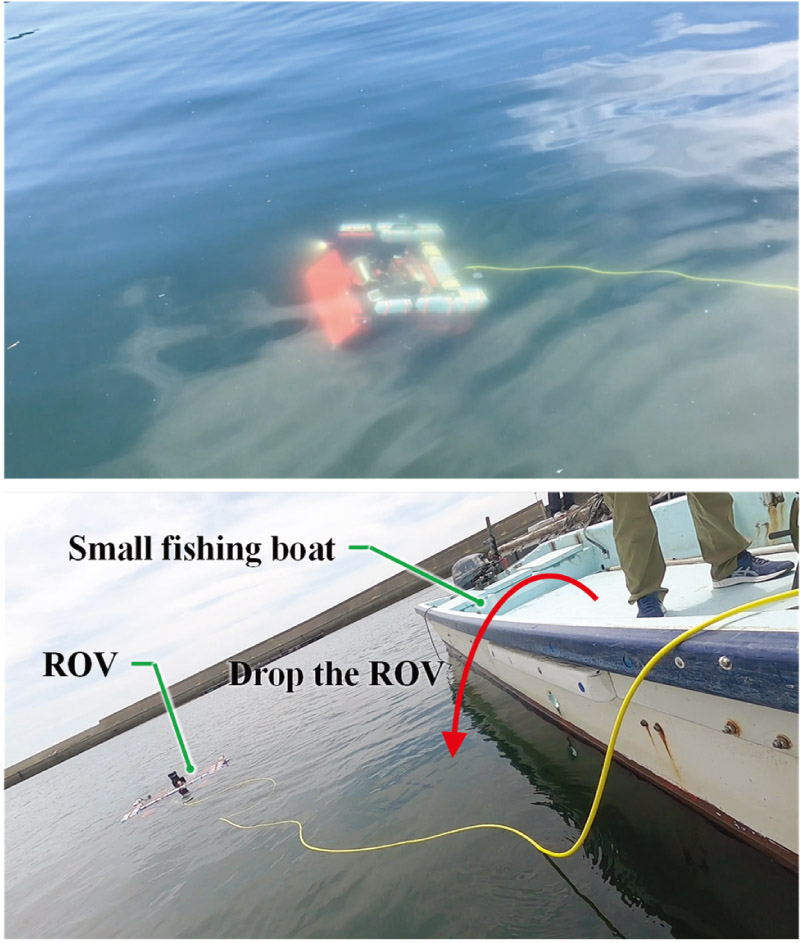
Field experiment of the deveolped jellyfish removal ROV
1. Introduction
In recent years, the rapid proliferation of jellyfish across Asia has resulted in severe ecological and economic consequences. Large-scale blooms have disrupted marine ecosystems, reduced biodiversity, and caused substantial losses in key sectors such as fisheries, tourism, and power generation [1–3]. These outbreaks often emerge abruptly and on extensive spatial scales, overwhelming conventional control measures and leaving stakeholders with limited options for timely intervention.
In the Seto Inland Sea of Japan, the moon jellyfish (Aurelia aurita) has proliferated extensively, resulting in significant damage to the fisheries industry. In 2023, juvenile moon jellyfish were first observed in Tashima, located in the eastern region of the Seto Inland Sea, on March 22, with a rapid increase in abundance documented by April 16. Under these conditions, fishing activities can only resume once jellyfish populations naturally decline as seawater temperatures decrease. This reliance on environmental changes not only prolongs economic losses but also constrains the capacity to respond effectively to recurrent blooms.
To address this urgent need, an active, rapid-response removal system capable of operating under real marine conditions is required. Conventional manual removal methods are labor-intensive, time-consuming, and hazardous, particularly in rough sea states. A remotely operated vehicle (ROV) offers a proven platform for performing precise and efficient underwater tasks across a wide range of applications, including inspection, maintenance, and biological sampling [4–6]. Building on these capabilities, we developed a compact ROV equipped with a suction-and-shredding mechanism for jellyfish removal. The system was engineered to have a dry weight of less than 40 kg, allowing deployment and retrieval by two operators without specialized lifting equipment and enabling efficient operation directly from small fishing vessels. In this paper, we describe the design of the ROV and present the results of its field evaluation conducted in the Seto Inland Sea.
2. Moon Jellyfish Occurrence Status in the Seto Inland Sea and Proposed Jellyfish Removal Operation
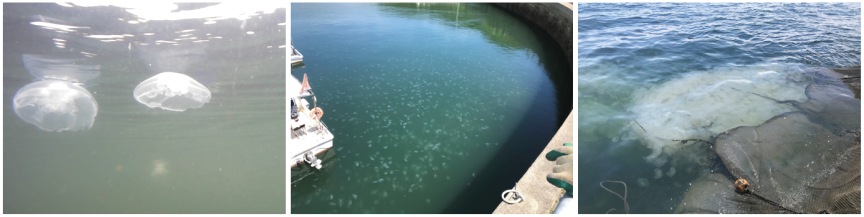
Fig. 1. Moon jellyfish blooms in the Seto Inland Sea, Japan.
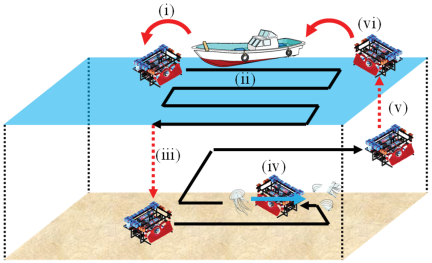
Fig. 2. Procedure of the proposed jellyfish removal system employing a ROV.
In Hiroshima Bay, located within the Seto Inland Sea, large-scale occurrences of moon jellyfish have been documented over many years. To elucidate the underlying causes of these events, investigations into environmental parameters such as water temperature, salinity, and dissolved oxygen have been conducted 7. Fixed-net fishing is widely practiced in this region, and large-scale jellyfish blooms have resulted in significant damage to the fisheries industry. Fig. 1 illustrates the scale of this problem.
The left panel of Fig. 1 shows moon jellyfish with an approximate diameter of 220 mm. The central panel depicts a dense aggregation of jellyfish within the Tashima port area, while the right panel illustrates the volume of jellyfish captured in a fixed net during a single day of operation. The severity of these conditions, as depicted in Fig. 1, underscores the urgent need for efficient jellyfish removal strategies to safeguard the local fishing industry. To address this challenge, we propose a jellyfish removal method that utilizes a compact ROV, designed for deployment and retrieval by two or three operators.
The operational procedure of the proposed jellyfish removal system is illustrated in Fig. 2.
As shown, the process consists of six steps, described as follows.
-
(i)
The jellyfish removal ROV is transported by boat to an area with high jellyfish density and deployed into the sea by 2–3 operators.
-
(ii)
The ROV is navigated by an operator to search for jellyfish while operating at the surface.
-
(iii)
After completing the surface search, the ROV submerges to perform underwater searches for jellyfish.
-
(iv)
Upon detection of a jellyfish, the ROV approaches the target, removes it using the integrated removal device, and then resumes searching for additional targets.
-
(v)
Upon completion of the removal operation in the designated area, the ROV resurfaces.
-
(vi)
The ROV is retrieved by the operators and transported to the next target area to continue the removal operation.
In the following sections, we describe the development of a ROV capable of executing the procedures outlined in Fig. 2.
3. Development of Jellyfish Removal ROV System
To develop a ROV capable of performing the jellyfish removal operation illustrated in Fig. 2, two core components were required: the jellyfish removal device and the ROV platform. The ROV was specifically designed to integrate the suction-and-shredding jellyfish removal device, enabling efficient execution of removal tasks in real marine environments. Section 3.1 describes the design considerations, structural configuration, and functional features of the jellyfish removal device, while Section 3.2 explains the structural configuration and operational characteristics of the ROV equipped with two units of the developed device.
3.1. Development of Jellyfish Removal Device
The jellyfish removal device was designed to intake jellyfish from the front of the unit and subsequently shred them. Considering the induced flow generated when the ROV approaches a jellyfish, the device was engineered to allow suction from a distance of approximately 0.3–0.4 m. The designed jellyfish removal device is depicted in Fig. 3, and its specifications are listed in Table 1.
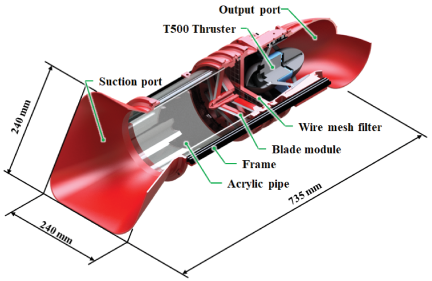
Fig. 3. Designed jellyfish removal device.
Table 1. Specifications of the jellyfish removal device.
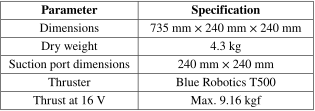
As shown in Fig. 3, the device operates by using thrusters to draw jellyfish through the suction port, after which they are fragmented by the blade module and filtered through a wire mesh before being expelled through the output port.
As stated in Table 1, the designed jellyfish removal device weighs 8.6 kg and features a suction port measuring 240 mm \(\times\) 240 mm. A T500 thruster manufactured by Blue Robotics was employed to generate suction and is capable of producing a maximum thrust of 9.16 kgf at 16 V.
To estimate the maximum effective suction distance of the device, theoretical calculations were conducted, and the resulting value was adopted as a key performance indicator for evaluating removal capability. The thruster’s maximum thrust of 9.16 kgf corresponds to a force of \(T =89.8\) N.
The suction port has a rectangular cross-sectional area of \(A =0.0576\) m\(^2\), with a width of \(W =0.24\) m and a height of \(H =0.24\) m.
Based on the actuator disk approximation, the volumetric flow rate is estimated using Eq. \(\eqref{eq:1}\).
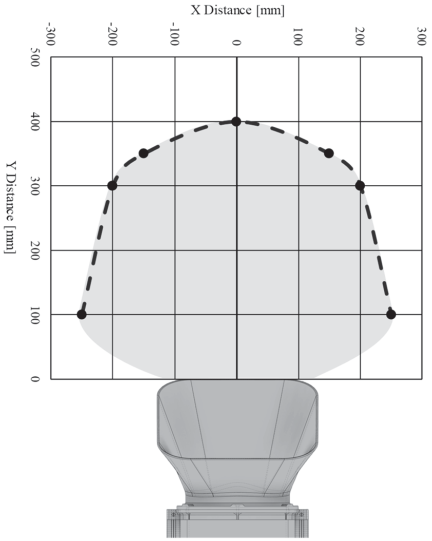
Fig. 4. Measured suction range of the jellyfish removal device.
Substituting the estimated parameters yields \(Q\approx 0.0710\) m\(^3\)/s. Given the large rectangular geometry of the inlet, the far-field axial velocity decay was approximated using a two-dimensional slot-sink mode:
The estimated suction range \(r_{\textit{max}}\) was 0.4283 m by Eq. \(\eqref{eq:2}\).
Using Eq. \(\eqref{eq:2}\), the estimated suction range was calculated as \(r_{\textit{max}}=0.4283\) m.
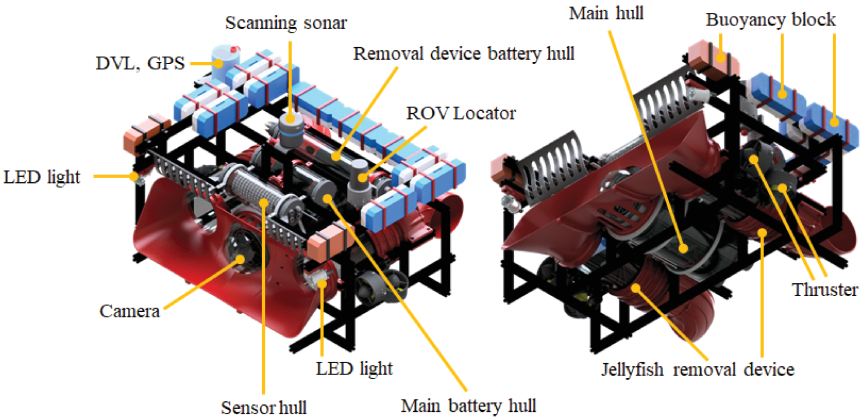
Fig. 5. Designed jellyfish removal ROV.
To obtain a more reliable performance evaluation, the device was subsequently fabricated, and its suction range was experimentally measured using gelatin-based jellyfish analogs. These measurements were used to assess the performance of the developed jellyfish removal device. The measured suction range is presented in Fig. 4. The suction range was evaluated using 300 g samples, approximating the weight of the target jellyfish 9. As shown in Fig. 4, the five black dots represent the maximum distances at which the sample was successfully captured by the suction flow. Based on these results, the developed device is expected to draw in targets from a distance of approximately 400 mm. The experiment therefore achieved the performance goal established during the design phase, demonstrating an effective suction range of approximately 0.3–0.4 m.
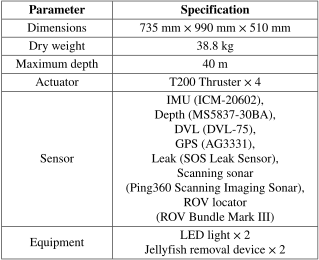
Table 2. Specifications of the jellyfish removal ROV.
3.2. Development of ROV
We developed a ROV for jellyfish removal that can operate in underwater environments and determine its own position using onboard sensors. In addition, the ROV can be equipped with the developed jellyfish removal device and a front camera to perform the removal task. The designed ROV is shown in Fig. 5, and its specifications are summarized in Table 2. As shown in Fig. 5 and summarized in Table 2, the designed ROV is equipped with four thrusters, enabling surge, heave, roll, and yaw motions. Propulsion is provided by T200 thrusters manufactured by Blue Robotics, each capable of producing a maximum thrust of 5.25 kgf at 16 V. In addition to the sensors commonly used in standard small ROVs, the system is outfitted with a Doppler velocity log (DVL) to measure ground speed via ultrasonic waves and determine the ROV’s position. The ROV is also equipped with an underwater locator, allowing the operator to track its position through acoustic communication with a reference station. In addition, the ROV is equipped with two LED lights to provide the illumination required for visual observation of the surrounding underwater environment. The ROV is constructed from four hulls, which house the main control system, sensors, and battery. The configuration and interconnections of the hulls are illustrated in Fig. 6.
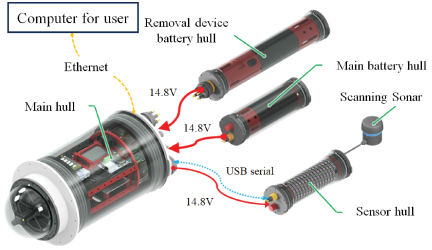
Fig. 6. Connection configuration of the ROV hulls.
The main hull houses the front camera, motor drivers for controlling the thrusters, the main control unit for operating the ROV, and a communication module for interfacing with the user’s computer. The main battery hull contains a 14.8 V, 18 Ah Li-ion battery, which supplies power to all components except the jellyfish removal device. The sensor hull is equipped with a depth sensor and a scanning sonar, as well as a dedicated computer for processing data from these sensors. This computer communicates with the main control unit via a USB serial connection. The removal device battery hull contains a separate 14.8 V, 18 Ah Li-ion battery that exclusively powers the jellyfish removal device. This design was adopted to accommodate the high power consumption of the removal device.
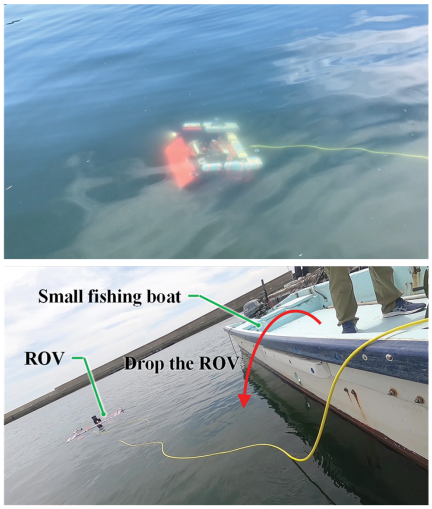
Fig. 7. Field experiment of the jellyfish removal ROV.
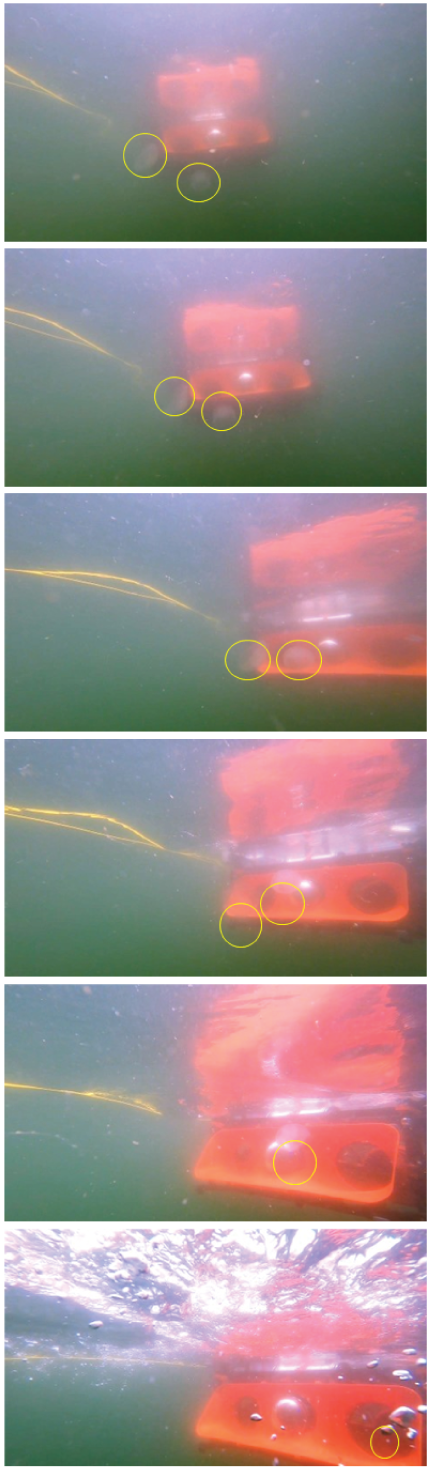
Fig. 8. Jellyfish removal operation using the developed ROV.
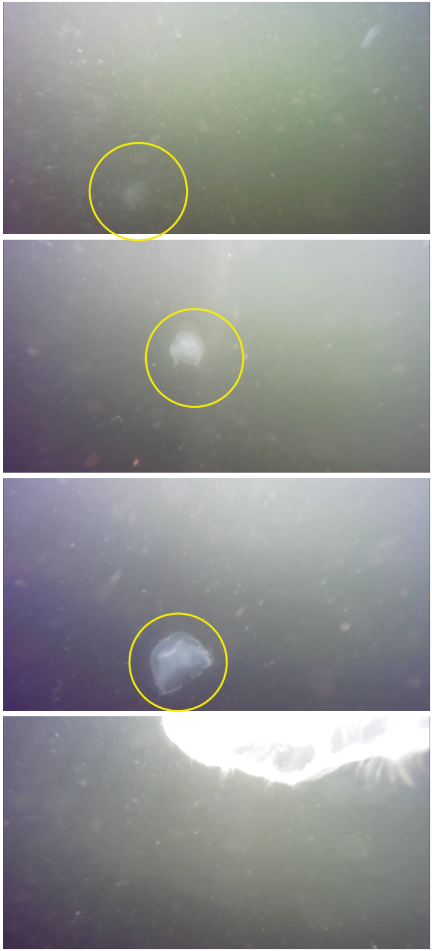
Fig. 9. Jellyfish removal sequence captured by the ROV’s front camera.
4. Evaluation of Jellyfish Removal ROV System
Experiments were conducted at Tashima Port in the Seto Inland Sea, Japan, to evaluate the performance of the developed jellyfish removal ROV. The field experiment setup is shown in Fig. 7.
As illustrated, the developed ROV operated in an underwater environment and could be deployed and retrieved from the sea by two operators on a small fishing boat.
Scenes of jellyfish removal using the ROV are presented in Figs. 8 and 9.
In Fig. 8, the ROV is shown performing a removal operation targeting two jellyfish located directly in front of the vehicle. The target jellyfish are indicated by yellow circles, and each frame was captured at one-second intervals.
Figure 9 illustrates the jellyfish removal sequence captured by the ROV’s front camera at 2-second intervals. The target jellyfish is indicated by a yellow circle, and in the final frame, the removal device was activated to capture and remove the jellyfish.
To evaluate the performance of the developed jellyfish removal ROV, we measured the time elapsed from the moment the operator detected a jellyfish using the front camera to the completion of the removal process. This experiment was conducted on 10 individual jellyfish, and the results are presented in Table 3.
“Jellyfish No.” indicates the identification number assigned to each jellyfish. “Removal time” refers to the elapsed time (in seconds) from when the operator first detected the jellyfish to its successful removal. “Number of target losses” denotes the number of instances in which a jellyfish moved outside the ROV camera’s field of view, preventing the operator from accurately tracking its location. As a result of this experiment, the mean jellyfish removal time was approximately 20 s, with a standard deviation of 9.6 s.
In addition, to assess the performance of the jellyfish removal device, fragments of moon jellyfish that had been shredded by the ROV were collected. The collected fragments are shown in Fig. 10.
Table 3. Experimental evaluation results of jellyfish removal.
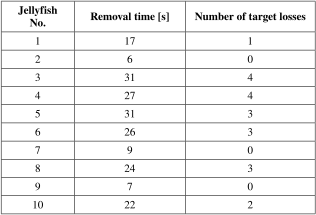
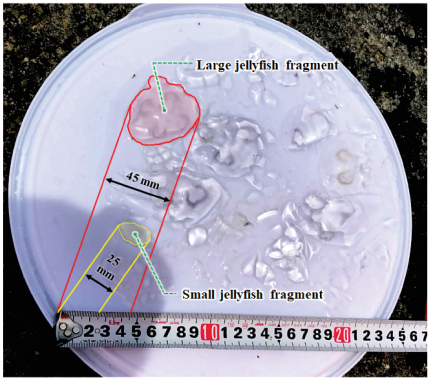
Fig. 10. Collected fragments after the removal operation.
As illustrated in Fig. 10, the small jellyfish fragments measured approximately 25 mm in diameter, while the large fragments were approximately 45 mm. Considering that an adult moon jellyfish has a diameter of approximately 220 mm 10,11, even the largest fragments indicate that each jellyfish was divided into about 24 pieces. Previous studies on jellyfish regeneration have reported that moon jellyfish (Aurelia aurita) can occasionally recover even when divided into two or four sections. However, regeneration [12–14] from fragments crushed into more than twenty pieces is extremely rare. Therefore, the degree of fragmentation achieved in this study suggests that regeneration is virtually impossible.
5. Conclusions
In this study, we developed a jellyfish removal device capable of drawing in and shredding jellyfish and integrated it into a ROV designed for practical deployment in real marine environments. Field experiments conducted at Tashima Port in the Seto Inland Sea demonstrated that the system successfully removed ten moon jellyfish, achieving an average removal time of approximately 20 s with a standard deviation of 9.6 s. These results indicate that the proposed ROV-based approach possesses sufficient operational capability to perform jellyfish removal tasks efficiently in actual fishing grounds, where dynamic environmental conditions present significant challenges. Overall, the findings provide strong empirical evidence supporting the practicality and robustness of the developed system.
A major contribution of this work is the successful execution of trials under authentic sea conditions, rather than in controlled laboratory environments. Real-sea experiments inherently involve numerous uncontrollable factors, including current fluctuations, variations in turbidity, complex hydrodynamic interactions, and unpredictable jellyfish behavior. Despite these challenges, the system consistently demonstrated reliable performance, highlighting its robustness and suitability for deployment in real-world scenarios. These findings emphasize the importance of field-based performance verification, as such results provide valuable insights that cannot be fully captured through simulations or laboratory testing alone. Consequently, this study establishes a critical empirical foundation for advancing jellyfish mitigation technologies and improving their practical applicability.
During the trials, it was observed that hydrodynamic disturbances generated by the ROV occasionally caused target jellyfish to drift rapidly out of the camera’s field of view, requiring the operator to re-acquire the target before removal could proceed. This limitation highlights the need for refinement in the ROV’s approach strategy, thruster control, and sensing configuration. Future work will focus on addressing these issues by incorporating predictive tracking algorithms, enhancing propulsion management, and implementing adaptive navigation strategies that minimize disturbance to target organisms. Additionally, the integration of automated jellyfish detection, localization, and re-acquisition capabilities will be critical for enabling higher degrees of autonomy and enhancing operational efficiency in large-scale deployments.
Beyond addressing these technical challenges, the system’s performance carries broader implications for fisheries and coastal resource management. Large-scale jellyfish blooms impose substantial economic burdens on fishing communities by damaging gear, reducing fish catches, and disrupting routine operations. The proposed ROV-based removal method provides a practical, safe, and rapid countermeasure that can significantly reduce the physical workload of fishermen while minimizing the operational risks associated with manual removal in rough sea conditions. As these systems continue to advance, they may be integrated into broader monitoring and response frameworks, forming a key component of comprehensive strategies for mitigating jellyfish-related impacts in coastal regions.
Overall, the findings of this study demonstrate the feasibility and effectiveness of a ROV-based jellyfish removal system and provide a solid foundation for future research aimed at developing fully autonomous and scalable mitigation technologies. By bridging the gap between laboratory prototyping and practical field deployment, this work represents an important step toward realizing advanced marine robotic solutions capable of addressing the growing ecological and economic challenges posed by large-scale jellyfish blooms.
- [1] J. E. Purcell, S. Uye, and W.-T. Lo, “Anthropogenic causes of jellyfish blooms and their direct consequences for humans: A review,” Marine Ecology Progress Series, Vol.350, pp. 153-174, 2007. https://doi.org/10.3354/meps07093
- [2] C. H. Lucas, S. Gelcich, and S.-I. Uye, “Living with jellyfish: Management and adaptation strategies,” K. A. Pitt and C. H. Lucas (Eds.), “Jellyfish Blooms,” Springer, pp. 129-150, 2014. https://doi.org/10.1007/978-94-007-7015-7_6
- [3] Z. Dong, “Blooms of the moon jellyfish Aurelia: Causes, consequences and controls,” C. Sheppard (Ed.), “World Seas: An Environmental Evaluation (2nd ed.) – Vol.III: Ecological Issues and Environmental Impacts,” Academic Press, pp. 163-171, 2019. https://doi.org/10.1016/B978-0-12-805052-1.00008-5
- [4] R. Capocci, G. Dooly, E. Omerdić, J. Coleman, T. Newe, and D. Toal, “Inspection-class remotely operated vehicles—A review,” J. of Marine Science and Engineering, Vol.5, No.1, Article No.13, 2017. https://doi.org/10.3390/jmse5010013
- [5] D. R. Yoerger, M. Jakuba, A. M. Bradley, and B. Bingham, “Techniques for deep sea near bottom survey using an autonomous underwater vehicle,” Int. J. Robotics Res., Vol.26, No.1, pp. 41-54, 2007. https://doi.org/10.1177/0278364907073773
- [6] D. Sward, J. Monk, and P. Barrett, “A systematic review of remotely operated vehicle surveys for visually assessing fish assemblages,” Frontiers in Marine Science, Vol.6, Article No.134, 2019. https://doi.org/10.3389/fmars.2019.00134
- [7] J. Shoji, T. Kudoh, H. Takatsuji, O. Kawaguchi, and A. Kasai, “Distribution of moon jellyfish Aurelia aurita in relation to summer hypoxia in Hiroshima Bay, Seto Inland Sea,” Estuarine, Coastal and Shelf Science, Vol.86, No.4, pp. 485-490, 2010. https://doi.org/10.1016/j.ecss.2009.03.001
- [8] M. J. McHenry and J. Jed, “The ontogenetic scaling of hydrodynamics and swimming performance in jellyfish (Aurelia aurita),” J. of Experimental Biology, Vol.26, No.22, pp. 4125-4137, 2003. https://doi.org/10.1242/jeb.00649
- [9] S. Masuda, J. Ahn, and K. Ishii, “Development of a jellyfish removal device to equip on underwater robot and its suction performance evaluation,” OCEANS 2024 – Singapore, 2024. https://doi.org/10.1109/OCEANS51537.2024.10682331
- [10] H. Ishii and F. Tanaka, “Respiration rates and metabolic demands of Aurelia aurita in Tokyo Bay with special reference to large medusae,” Plankton and Benthos Research, Vol.1, No.1, pp. 64-67, 2006. https://doi.org/10.3800/pbr.1.64
- [a] E. A. Yoon et al., “Density estimates of moon jellyfish (Aurelia coerulea) in the Yeongsan estuary using nets and hydroacoustics,” Ocean Science J., Vol.54, No.3, pp. 457-465, 2019. https://doi.org/10.1007/s12601-019-0022-x
- [b] M. J. Abrams et al., “Self-repairing symmetry in jellyfish through mechanically driven reorganization,” Proc. of the National Academy of Sciences, Vol.112, No.26, pp. E3365-E3373, 2015. https://doi.org/10.1073/pnas.1502497112
- [c] C. Sinigaglia et al., “Pattern regulation in a regenerating jellyfish,” eLife, Vol.9, Article No.e54868, 2020. https://doi.org/10.7554/eLife.54868
- [d] M. Gong et al., “Jellyfish shape as a mechanical balance,” Proc. of the National Academy of Sciences, Vol.122, No.13, Article No.e2412082122, 2025. https://doi.org/10.1073/pnas.2412082122
This article is published under a Creative Commons Attribution-NoDerivatives 4.0 Internationa License.