
Paper:
Human Tracking by a Mobile Robot Using Machine Learning of Clothing Features and Body Thermal Images
Kazuaki Itoya, Remma Kosaka, and Takahiro Inoue†

Tokyo Denki University
Ishizaka, Hatoyama-machi, Hiki-gun, Saitama 350-0394, Japan
†Corresponding author

This study proposes a human tracking algorithm that combines vision-based object detection and body heat tracking. The small autonomous mobile robot developed in this study is equipped with an ultracompact camera and three thermal array sensors. We propose a hybrid human tracking method based on camera images and body heat information. In particular, the proposed machine-learning-based image recognition method employs Faster Objects, More Objects, an object detection algorithm optimized for resource-constrained edge devices such as microcontrollers. This algorithm generates an inference model focusing on the clothing features of the target person, which is implemented in the robot control system. Furthermore, a human-robot distance estimation model is derived to calculate the tracking distance between the target person and the robot using a monocular camera. Experiments demonstrated that the proposed inference model enables robust tracking even when the target is partially occluded by another person. Additionally, the body-heat-distribution-based tracking method employs the summation of multiple thermal pixels to improve tracking performance. In this study, tracking performance was improved by emphasizing the target region in the thermal image using four-pixel, nine-pixel, and one-column pixel summation methods. The experimental results demonstrate that the four-pixel summation method, which minimizes fluctuations in the robot posture angle during motion, is the most suitable for the proposed tracking algorithm. The proposed algorithm is effective for hybrid control in environments where illumination conditions change abruptly between bright and dark areas.
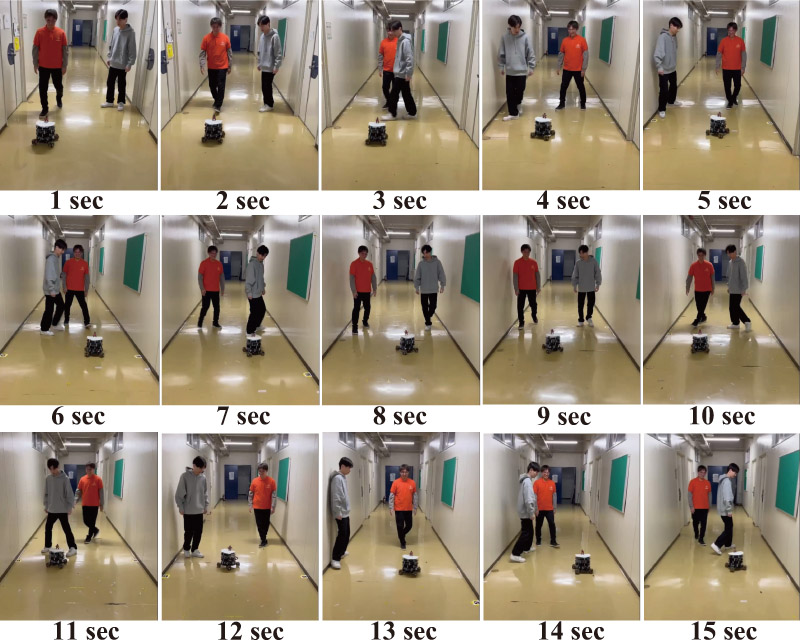
Human tracking under occlusion using image-based ML
1. Introduction
With the recent expansion of service and industrial robots, interest in robotics technologies capable of collaborating with humans has increased significantly. For example, robots have been developed to follow medical professionals during hospital rounds while delivering medical supplies and recording health data 1,2. Systems have also been developed to perform tasks such as monitoring patient health status and providing medication reminders. In the logistics industry, robots capable of following workers and assisting with the transportation of heavy objects are also being developed. These robots can flexibly adapt to changes in production environments and work processes. A fundamental requirement of these robotic tasks is robust tracking of a specific individual. To achieve this, robots must be able to follow the individual’s walking pace at an appropriate distance and speed 3. In addition, multiple component technologies are required, such as path planning, obstacle avoidance, and recognition of the surrounding environment and individuals. Prior research has focused on individual methodologies for person recognition, tracking, path planning, and obstacle avoidance, with limited progress in sharing or integrating these algorithms 4. To address this gap, Min et al. achieved human detection and tracking by combining a You Only Look Once version 7-tiny (YOLOv7-tiny) network with kernelized correlation filters to reduce computational complexity 5. Furthermore, Zhao et al. achieved target detection and tracking both indoors and outdoors using a medium-sized six-legged vehicle for rough terrain equipped with an red-green-blue-depth (RGB-D) camera and light detection and ranging (LiDAR), and formulated an optimization problem with robot speed as a variable 6. Despite these advances, modern artificial intelligence (AI) and machine learning approaches often impose extremely high computational loads due to their reliance on deep learning models and massive sensor data. Consequently, these systems require high-performance general-purpose computers, which significantly limit the miniaturization and weight reduction of robotic systems. This conventional approach is unsuitable for robots operating in confined spaces or domestic environments. Therefore, lightweight AI and machine learning algorithms must be implemented on edge devices such as microcontrollers, which are essential for ultra-compact mobile robots, where computational resources, such as processing power, memory capacity, and energy consumption, are limited and real-time operation without high-performance hardware (e.g., GPUs) is required.
In this study, we propose a human tracking method using a small autonomous mobile robot that can be used for indoor and outdoor luggage transportation and daily-life support. We developed a driving control algorithm that combines camera images of a person with body thermal images. In particular, this study focuses on AI architectures designed for edge devices and introduces a human tracking control method for an autonomous mobile robot equipped with a general-purpose small microcontroller capable of implementing machine learning models. We also develop a person-tracking method that uses body thermal images to provide tracking capabilities in dark indoor environments, enabling more practical use in residential environments. The camera-based tracking method uses a machine-learning-based object detection algorithm that focuses on clothing color information and achieves robust tracking of the target person, even in environments where occlusion occurs. Furthermore, we demonstrate that the human-robot distance, which is essential for tracking, can be estimated by person detection using image-based machine learning. In contrast, the tracking method using body thermal images incorporates a strategy of emphasizing thermal distribution deviations by summing multiple thermal pixels to improve tracking control performance. We also investigate three methods of thermal pixel summation and identify a method suitable for person tracking through relative evaluation. We conducted a hybrid human tracking experiment that integrated image recognition and body heat distribution algorithms to demonstrate the validity and usefulness of the proposed method. This method is particularly effective for tracking in environments where illumination conditions change abruptly between bright and dark areas. Finally, this study demonstrates that a new human tracking method and algorithm combining vision and thermal sensors through sensor fusion can be implemented in a small autonomous mobile robot.
2. Related Works
2.1. Object Detection by Image Machine Learning
Farooq and Imran successfully identified currencies in vending machines by implementing the object detection model Faster Objects, More Objects (FOMO) trained on ESP32-CAM 7. This enabled high-accuracy currency identification, achieving an F1 score of 59.3%, a training accuracy of 70.83%, and a classification reliability of 94%. Nguyen et al. conducted Drosophila detection experiments using an ESP-EYE microcontroller and FOMO 8. The system achieved a maximum RAM usage of 2.4 MB and an inference time of 5.694 s, achieving an IoU-based detection accuracy of 96%, in which the target object was considered correctly detected when the overlap with the ground truth exceeded 50%. Alaa et al. developed a real-time tuk-tuk detection algorithm using a FOMO-based blind spot detection system for car drivers 9. To compare the YOLOv5, FOMO, and MobileNetV2 SSD FPN-Lite algorithms, the learning rate was fixed at 0.004, the validation data size was set to 20, and the batch size was set to 20. Consequently, they achieved real-time accuracies of 88.24% and 82.35%, respectively, with the FOMO algorithm demonstrating the highest test accuracy. Silva et al. developed a maritime vessel detection system for maritime surveillance 10. They conducted a comparative analysis of five object-detection algorithms, FOMO, MobileNetV2 SSD, YOLOv5, YOLOv8, and YOLOv10. They reported that YOLOv8n and YOLOv10n achieved superior accuracy and are therefore suitable when accuracy is prioritized over inference time and resource consumption. Ronda et al. developed a real-time road crack and pothole detection system for motorcycle safety 11. They trained the model using actual images of road cracks and potholes and implemented the resulting FOMO inference model on OpenMV Cam H7 Plus. The resulting inference time was 74 ms, the image processing speed was approximately 13 fps, and the model accurately detected cracks and potholes when the motorcycle speed was less than 30 km/h. Rocha et al. performed comparative testing of three object detection models, YOLOv8, FOMO, and MobileNet, for defect detection in electronic circuit boards 12. They expanded their inference model by training it with additional images of electronic circuit boards containing missing components, rotated images, horizontally and vertically flipped images, and images with different brightness levels. Consequently, only the FOMO training model achieved precision, recall, and F1 scores exceeding 95%, a processing speed of 10.5 fps, and a model size of 152 kB. Arul et al. developed a tennis-ball retrieval robot by implementing a FOMO model trained on tennis balls using an ESP32-CAM mounted on the robot 13. Despite using a low-specification 80 MHz MPU, they achieved a tennis ball detection speed of up to 10 fps with a detection accuracy of 98.73%. Therefore, implementing a FOMO-based learning model, which is a lightweight object detection algorithm optimized for edge AI, on small autonomous mobile robots is considered highly useful and applicable to cooperative behavior and platooning control in swarm robotics.
Recently, extensive research has been conducted on mobile robots capable of detecting and following people at close range (approximately 1 m). Among these studies, significant progress has been made in object detection algorithms and applications utilizing RGB-D cameras capable of measuring depth. Li et al. proposed the Spatial Pyramid Pooling Cross-Stage Partial Channel module based on the YOLOv7 object detection algorithm 14. This method successfully detected small objects in images, achieving an average accuracy of 81.1%. Su et al. used the DNN module of the OpenCV image-processing library to control the speed and posture of a robot while tracking a person 15. In their system, a ROS network system was used to perform image processing on a host computer, enabling control of the mobile robot based on person identification. However, these image-processing-based studies generally require high-performance general-purpose computers because of their high computational cost, resulting in bulky robotic platforms such as wheelchair robots. Consequently, although these systems offer advantages for outdoor use and operation on rough terrain, they may lack the agility and responsiveness required for indoor and confined environments. In other words, although sensing systems primarily based on depth cameras and image processing can identify objects and detect people, the computational complexity and processing latency may limit their responsiveness to dynamic changes during human walking. For human tracking, sensor modalities with relatively short measurement ranges, such as thermal sensors, laser range sensors, and ultrasonic sensors, are considered more suitable for indoor navigation by small mobile robots. However, simultaneous localization and mapping (SLAM) is also essential for indoor navigation of small mobile robots. Furthermore, because GPS signals are unavailable indoors and the range of movement is often extremely limited depending on the application, dead reckoning is required for self-localization. However, significant accumulated errors often occur because of drift in acceleration sensors and other sensors, thereby reducing estimation accuracy. Although these issues remain unresolved, they may be mitigated by combining multiple sensing modalities.
Furthermore, lightweight vision-based detection methods have been applied to mobile robotic systems operating in constrained environments. For example, harmful animal detection using visual information has been implemented in wire-type mobile robots, demonstrating that lightweight image processing and machine learning techniques can be effectively deployed on resource-limited robotic platforms 16. These studies highlight the importance of designing efficient perception algorithms for edge-device-based robots. Similarly, in ultra-resource-constrained platforms such as CanSat systems 17, efficient and lightweight visual recognition methods have been developed to achieve high-speed and reliable target detection from long distances. These approaches demonstrate that even under severe limitations in computational resources and sensing capabilities, carefully designed lightweight algorithms can achieve both high recognition accuracy and real-time performance. This highlights the importance of adopting efficient perception strategies for the practical deployment of small-scale robotic systems.
2.2. Human Tracking by Body Heat
In addition to human detection and path planning using multiple sensors, including cameras, this study also reviews related research using devices capable of measuring thermal signatures based on body temperature. Surveys have been conducted on the design and control of indoor autonomous mobile robots 18,19, as well as on sensor fusion technologies 20. These studies extensively describe SLAM methods using inertial measurement units and rotary encoders in addition to RGB-D cameras and LiDAR, as well as robot posture estimation algorithms such as Kalman filters. However, survey papers published up to 2021 contain limited discussion regarding the use of thermal sensors and human body temperature information, despite the rapidly increasing attention these technologies have received in recent years.
Meanwhile, LiDAR-based human detection and tracking methods have also been extensively studied and have demonstrated reliable performance, particularly in short-range scenarios. Additionally, recent studies have shown that combining LiDAR with other sensing modalities, such as cameras, can improve robustness and detection accuracy. These findings suggest that multisensor fusion is an effective approach for achieving reliable human tracking. However, while methods based primarily on LiDAR and inertial measurement unit (IMU) sensors are capable of obstacle avoidance and robot posture control, achieving reliable human tracking remains difficult 21,3. Consequently, there has been a significant increase in research focused on human detection using thermal array sensors as a complementary modality.
Shubha and Shastrimath detected multiple people using a low-resolution thermal array sensor (Grid-EYE: AMG8833) capable of capturing thermal distribution data over an \(8 \times 8\) pixel area. They concluded that the most effective detection approach was to enhance the thermal image using a Gaussian filter and bicubic interpolation 22. This pioneering method for heat-based human identification has spurred increasing research activity in recent years. For instance, Gochoo et al. fixed three similar thermal sensors in an indoor environment and used deep convolutional neural networks (DCNNs) to classify human postures in the obtained thermal images. This enabled the detection of eight postures, including standing and lying down, and allowed analysis of the recognition rate 23. Géczy et al. used a similar thermal sensor to detect passengers in a car and discussed the difficulty of detecting rear-seat passengers as well as the appropriate sensor installation location 24. Alraeesi et al. proposed a method for calculating the distance between two people using deep learning and thermal images to ensure social distancing in workplaces during the COVID-19 pandemic 25. Rusydi et al. used two high-resolution thermal sensors to estimate the distance to a person using an algorithm based on the facial aspect ratio. In this study, verification experiments were conducted under varying indoor and outdoor illumination conditions and in environments involving occlusion by multiple people. Although target detection was successful, large distance estimation errors were observed, and the necessity of combining additional sensors was discussed 26. Bharathiraja et al. developed a fall detection system using thermal sensors for emergency life-support applications. Because the system was implemented on a low-specification microcontroller rather than a high-performance general-purpose computer, the fall detection algorithm was executed on a server, and decisions were made over a network 27. Despite the contributions of these studies, they primarily focused on static behavior recognition, such as person detection and pose estimation, and did not address dynamic human tracking using a small autonomous mobile robot.
This study aims to develop a system in which an autonomous mobile robot equipped with a compact camera and thermal array sensors can follow a target person using sensor fusion. A core development priority is practicality in real-world settings, which is essential for the robot’s functional deployment. To this end, this paper proposes a stable tracking control method designed for indoor environments subject to significant illumination fluctuations, such as transitions between day and night. The proposed approach ensures reliable close-range person tracking, even in challenging conditions where lighting varies abruptly between bright and dark areas.
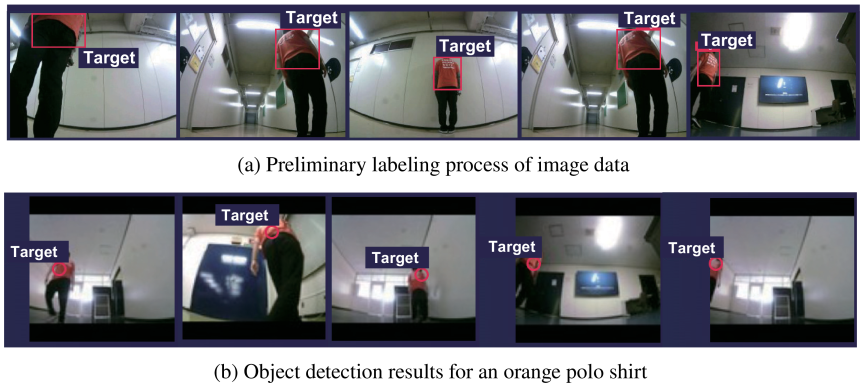
Fig. 1. Fundamental examples of object detection using an inference model generated by FOMO.
3. Human Tracking and Following Running Using Machine Learning with FOMO
In this study, we derived an effective inference model for human tracking using machine learning based on upper-body clothing images, enabling a mobile robot to robustly follow a target person. To this end, we first introduce FOMO, a machine-learning-based object detection algorithm for edge devices that has rapidly advanced in recent years. We then describe a tracking control method that utilizes the position coordinates of a target person obtained from image data. In particular, we define extended pixel coordinates and demonstrate that stable target tracking can be achieved even with extremely coarse positional information.
3.1. Object Detection Algorithm for Edge AI: FOMO
YOLO is a widely used object detection technique based on image-based machine learning, which has rapidly advanced in recent years. YOLO achieves significantly higher accuracy and reproducibility than previous object detection algorithms 28. This is because it divides the input image into an arbitrary grid and simultaneously outputs the object presence probability and bounding box (location information) for each grid cell, enabling region-of-interest identification and classification in a single pass. As a result, YOLO achieves high processing speed and highly accurate object detection 29. The advantages of YOLO include a good balance between detection accuracy and speed, as well as the ability to simultaneously detect multiple classes and objects. However, owing to the complexity of the bounding box regression process and network structure, careful implementation is required for resource-limited edge devices. On the other hand, FOMO is a lightweight object detection algorithm for edge devices developed by Edge Impulse Corp. Unlike conventional detection models, it does not use regression to determine object position and size. Instead, it classifies the object class present in each cell on a feature map that divides the image into a grid. Specifically, the feature map extracted by the lightweight CNN MobileNetV2 is classified using a \(1 \times 1\) convolutional layer, and the presence or absence of an object is determined for each cell. This reduces the processing load, allowing inference models that previously required hundreds of MB to be stored in only a few KB of memory, thereby enabling real-time operation.
Meanwhile, DCNNs have made great strides in the fields of image recognition and object detection. However, these algorithms require high computational resources and are structured to utilize GPUs, making them difficult to implement in edge environments with limited computing resources such as microcontrollers. To address these limitations, MobileNetV2 was introduced by Google as a lightweight, high-performance CNN model specifically designed for edge environments. As an evolution of MobileNetV1, it features two key structural innovations: inverted residual blocks and linear bottlenecks. The inverted residual block is a structure that increases the number of channels once, processes them, and then reduces them again. This reduces computational effort while maintaining detection accuracy. Furthermore, the linear bottleneck prevents information loss by not using an activation function in the final layer of the CNN. It is widely used due to its ease of implementation, as it is compatible with platforms such as those from Edge Impulse. This has made it possible to implement learning models on small microcontrollers, facilitating its application in small-scale autonomous mobile robots.
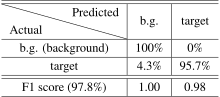
Below, we describe the object detection algorithm used in this study and present the learning model and its results. The FOMO algorithm used in this study simplifies object detection by obtaining only the geometric center position of the detected object, thereby reducing memory usage without sacrificing detection accuracy. This simplification enables object detection to be processed on a microcontroller, making the algorithm applicable to small mobile robots. Furthermore, a learning model can be created using software provided by Edge Impulse, enabling the system to detect only the target object. In this study, robust tracking of the target person was achieved by training the model using images of the orange polo shirt (hereafter simply referred to as the shirt) worn by the target person and subsequently performing object detection. First, 180 images of the target person wearing the shirt were captured using a compact camera equipped with an ultra-wide-angle lens mounted on the robot, and all images were labeled, as shown in Fig. 1(a). Additional images were included in the training dataset when the target person changed direction or when the robot was far from the target person, thereby preventing loss of the target during tracking. Next, the images were divided into training and testing datasets at a ratio of \(3:1\), and machine learning was performed using Edge Impulse software while adjusting the image size, learning rate, and number of training iterations. In this study, machine learning was performed under the conditions of an image size of \(96 \times 96\) px, a learning rate of 0.001, and 60 training iterations, resulting in the highest detection rate shown in Table 1. Furthermore, testing using the trained model resulted in successful detection, as shown in Fig. 1(b), achieving a high detection rate of 97.8%. Therefore, this trained model was adopted in the experiments.
Table 1. Confusion matrix after the training process.
3.2. Estimation Model of Human-Robot Distance
In this section, we derive a model for estimating the distance between a person and a robot (hereafter referred to as the human-robot distance) from the human detection results obtained using the learning model presented in the previous section. Ranging sensors and LiDAR are commonly used for estimating the human-robot distance. However, these methods may incorrectly estimate the distance to nearby obstacles other than the target person as the human-robot distance. For this reason, previous research proposed a tracking control method for small mobile robots based on image-based machine learning and achieved favorable results 30. In this method, two different alphabet characters were attached to the back of the leading mobile robot, and the FOMO algorithm was applied to derive the distance between the two characters. Because the distance between the characters changes depending on perspective, the inter-robot distance can be estimated, thereby enabling stable following behavior. However, this study focuses on the task of tracking a single person, and previous methods cannot convert the image pixel spacing obtained when multiple objects are detected into an actual distance. Therefore, in this study, we designed, developed a low-floor small mobile robot, and adopted a method that clearly extracts the vertical movement of a detected person in a perspective image by installing an ultra-compact camera for edge devices at a low position. In other words, the human-robot distance is estimated using the amount of change in the vertical pixel coordinate of the clothing region extracted through object detection as an index. Specifically, as shown in Fig. 2(a), the greater the vertical pixel coordinate in the object detection result image, the greater the human-robot distance. Therefore, Fig. 2(b) shows the relationship between the pixel coordinates obtained from the basic experiment shown in Fig. 2(a) and the actual measured values of the human-robot distance. In addition, Eq. \(\eqref{eq:equU003Ainterrobotmodel}\) shows the logarithmic approximation curve corresponding to Fig. 2(b), which achieved the highest approximation score of 0.944.
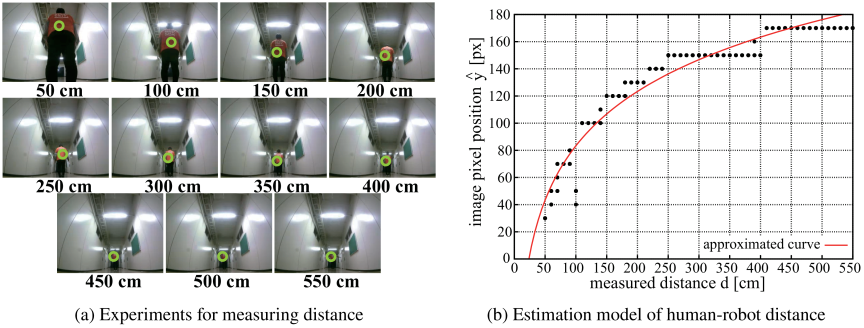
Fig. 2. Derivation of the relationship between the center point of a detected pixel in the \(Y\)-axis of the image and the traveling distance of the target person towards depth direction in real space.
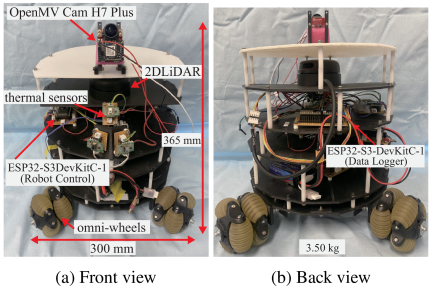
Fig. 3. Autonomous mobile robot equipped with a small camera with wide-angle lens and three thermal sensors.
3.3. Omnidirectional Mobile Robot and Hardware Configuration
The small autonomous mobile robot developed in previous studies is shown in Fig. 3 31,32. This robot incorporates knowledge obtained from previous research to achieve a compact mechanism with excellent off-road performance. The body frame has a regular hexadecagonal shape with a six-layer structure, enabling high maneuverability. The control system is capable of real-time control with a control period of 2 ms using an ESP32-S3 microcontroller, and the drive system uses 80 mm diameter omni-wheels to achieve omnidirectional movement. Furthermore, as shown in Table 2, the robot is equipped with a nine-axis IMU for acquiring posture angles, and three infrared thermal array sensors (AMG8833), which are effective for detecting humans in dark environments, are installed on the fourth layer of the robot, as shown in Fig. 3. The top layer is equipped with a compact camera microcontroller, OpenMV Cam H7 Plus (Cortex-M7, 480 MHz), mounted with an ultra-wide-angle lens capable of implementing the FOMO inference model and installed at an upward angle of 46°. The inference results are transmitted from the camera microcontroller to the control unit via UART at a sampling rate of 10 Hz.
Table 2. Sensor specifications.

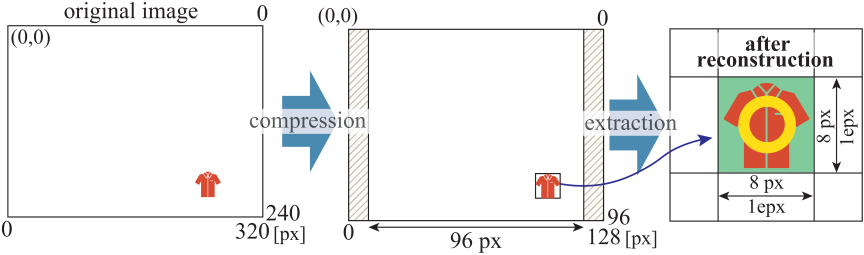
Fig. 4. FOMO detection process: the input image is compressed to 40% and cropped on the long axis to square, then scanned with an \(8\times8\) px grid window; detected objects are reported as the geometric center of the triggering grid.
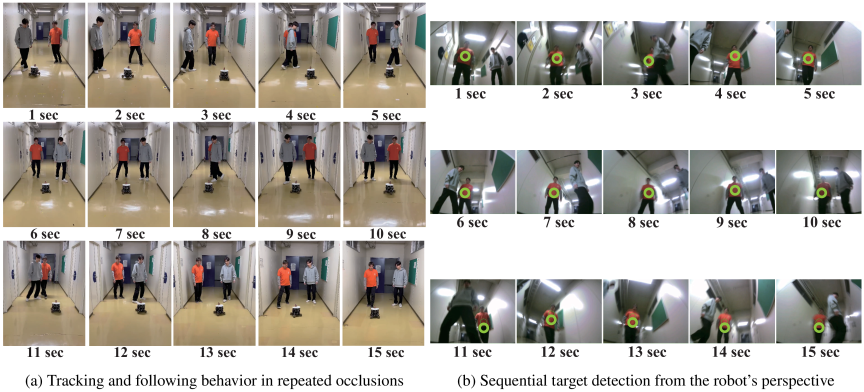
Fig. 5. A non-target person walks in front of the target person, crossing his path and occluding him. With such momentary occlusion, the robot tracks and follows the target without failure 33.
3.4. Person-Following Control Based on Clothing Image Machine Learning
This section describes the tracking algorithm, which uses a learning model of the target person generated through machine learning based on clothing images and a human-robot distance estimation model. The image-processing flow when applying the learning model to the camera microcontroller is shown in Fig. 4. The compact camera mounted on the robot was equipped with an ultra-wide-angle lens capable of capturing images with a resolution of \(240 \times 320\) px. These images were first compressed by 40% and converted into images with a resolution of \(96 \times 128\) px. Next, as described in the derivation process of the learning model, a square image was extracted and aligned with the minor axis of 96 px, and extended pixels (unit: epx) were defined by integrating 8 px \(\times\) 8 px regions. Consequently, the compressed \(96 \times 96\) px image was reconstructed into an \(8 \times 8\) epx image (64 pixels). Subsequently, a region of interest was identified and classified for each extended pixel, and the geometric center coordinates of the target person’s shirt were obtained from the extended pixel coordinates. These operations are characteristic of the inference process based on the FOMO algorithm specialized for object detection and are one of the reasons why lightweight and high-speed inference can be achieved. Finally, by implementing this learning model on the camera microcontroller, human detection at 8 Hz was successfully achieved. The robot drive system used in this study consists of four omni-wheels, resulting in redundancy for planar motion with three degrees of freedom. Therefore, in addition to using a simple proportional controller to generate velocity commands, a regulation method was adopted in which positive velocity commands were added to only two of the four wheels during turning motion. The control law for maintaining the distance between the target person and the robot is as follows:
3.5. Person-Following Experiment
To clarify the effectiveness of the person-tracking method using machine learning based on clothing images and the FOMO algorithm described in the previous section, we conducted a target-tracking experiment in an environment containing multiple people. In this experiment, an environment containing both target and non-target individuals was created using a corridor approximately 2.2 m long and 2.1 m wide. During the experiment, the robot tracked the target person while non-target individuals repeatedly passed in front of the robot, causing temporary occlusions of the target. The results of this experiment are shown in Fig. 5 as a sequence of photographs over a period of 15 s. As observed in the results, even when the non-target individuals occluded the target person from both sides, the object detection algorithm successfully detected the target person from the front and continuously maintained tracking. In this experiment, the participants did not stop or remain stationary, and the duration of complete occlusion, during which the shirt was entirely hidden, was extremely short. Although a complete occlusion lasting longer than 1 s could lead to tracking failure, when the occlusion duration was less than 1 s, the shirt position detected immediately before the complete occlusion was retained as the control variable without updating, allowing stable control generation to continue. These results demonstrate that the proposed target person tracking control method based on the lightweight object detection algorithm FOMO enables stable tracking in a multi-person environment.
To further evaluate the robustness of the proposed method, additional tracking experiments were conducted using multiple subjects and different clothing conditions. When the same inference model was applied to other subjects without retraining, stable tracking was achieved, and no tracking failures were observed. Additionally, the experiments were conducted using different clothing colors (e.g., black and dark green). Although the system was generally able to track the target person, several misidentifications occurred, indicating sensitivity to clothing color and environmental conditions. Outdoor experiments were also conducted under different lighting conditions. When the target person wore high-contrast clothing, stable tracking was achieved even in an unseen outdoor environment. By contrast, under low-contrast conditions, the tracking performance deteriorated because of the reduced distinguishability between the target person and the background. These results indicate that the robustness of the proposed method is influenced by the contrast between the clothing color and background. When the contrast is low, the identification performance may degrade, which remains a limitation of the proposed approach.
4. Human Tracking and Following During Running Using Body Heat Distribution
This section demonstrates tracking control using thermal images of the target person’s body. As shown in Fig. 6(a), the developed mobile robot is equipped with three infrared thermal array sensors capable of capturing two-dimensional thermal images with an \(8 \times 8\) array. This configuration enables the acquisition of thermal images consisting of 192 thermal pixels in front of the robot, allowing noncontact and wide-angle detection of the target person’s body heat. The proposed tracking algorithm classifies the robot’s direction of travel into seven categories, such as straight motion and turning motion, and uses only 96 of the 192 thermal pixels by dividing the sensing area according to each travel direction. When the summed value of multiple thermal pixels exceeds a certain threshold relative to the room temperature, the detected heat source is identified as a person. Directional commands for the robot are generated according to which of the seven regions contains the high-temperature area. This section compares and evaluates driving experiments using the four-pixel, nine-pixel, and one-column pixel summation methods, thereby demonstrating the feasibility of human tracking using body thermal information. Furthermore, by focusing on the behavior of the robot’s posture angle while following the target, we demonstrate that the four-pixel summation method resulted in the least robot oscillation and was the most stable method for tracking based on body heat.
4.1. Summation Method of Multiple Heat Pixels
This section details the thermal pixel summation method used in the human tracking task using body thermal distribution images. As shown in Fig. 6(a), the left and right thermal array sensors are tilted 80° from the horizontal, and the front one is tilted 40° from the horizontal. This is due to the wide field of view of 60° for sensor performance purposes, and is intended to avoid floor thermal information as a disturbance while also improving human detection capabilities. In this design, the three sensors are positioned with a 10° overlap, resulting in a total field of view of 100° vertically. The thermal image in Fig. 6(b) shows a hand being held in front of the sensor, measuring a body temperature of approximately 28°C, although this varies depending on the distance.
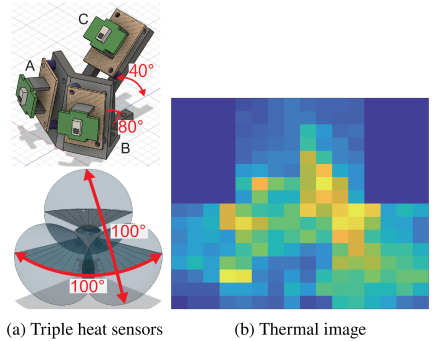
Fig. 6. Sensor placement and detection field: three thermal sensors mounted for 100° omnidirectional coverage, here detecting a palm held above the robot at approximately 28°C (varies with distance).
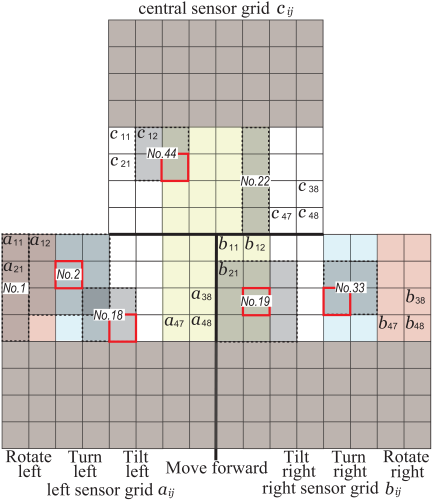
Fig. 7. Seven movement patterns classified by the region containing the peak thermal pixel, mapping spatial heat distribution to movement type (straight, small/large rotation, or turn).
Next, we detail the method for generating tracking motion for a mobile robot using a body thermal distribution image acquired by a thermal array sensor in Fig. 7. First, we assign numbers to the grids of each thermal sensor in Fig. 6(a) and define each pixel temperature as \(a_{ij}\), \(b_{ij}\), and \(c_{ij}\). As mentioned above, to eliminate unnecessary thermal distribution on the floor and ceiling, the lower half of sensors A and B and the upper half of sensor C are excluded from the measurement range. The thermal pixel summation methods proposed in this paper include four-pixel summation that sums four thermal pixels in a square area, nine-pixel summation that sums nine thermal pixels, and one-column pixel summation that sums four thermal pixels in a rectangular area. By adding multiple thermal pixels using these methods, the total heat value is calculated, and the maximum value is obtained by sorting within the measurement area. Move forward, Tilt, Turn, and Rotate motions are generated according to the area containing the maximum value. For example, when applying the one-column pixel summation method to the leftmost column of sensor A, the total value is as follows:
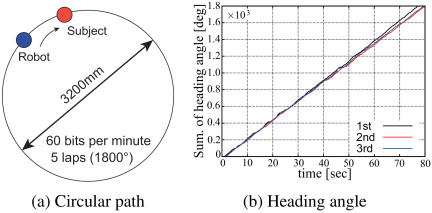
Fig. 8. A person walks along a circular path 1 m in front of the robot, and the robot follows using the four-pixel summation method. The results are the sum of the robot’s posture angle obtained over five laps.
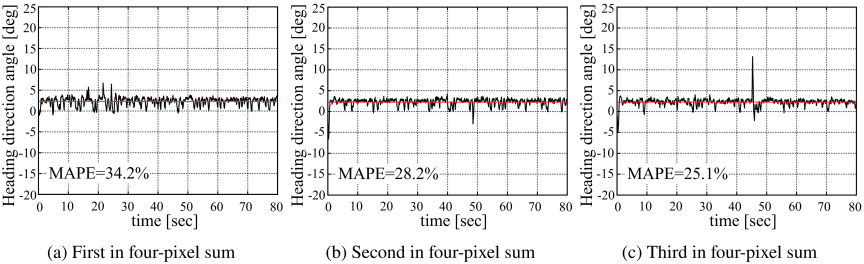
Fig. 9. Experimental results on human tracking using a small mobile robot based on body heat distribution, showing the time transition of the robot’s posture angle when using the four-pixel summation method. The minimum MAPE value is 25.1%.
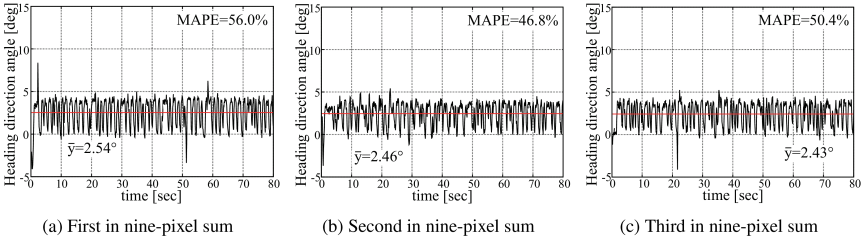
Fig. 10. Time change of the robot posture angle using the nine-pixel summation method, in which the MAPE value is significantly larger.
4.2. Tracking and Following Performance with Comparative Verification
In this experiment, as shown in Fig. 8(a), a circular course with a diameter of 320 cm is prepared on a flat floor, and the robot’s tracking performance is evaluated by walking clockwise at exactly 60 bpm using a metronome. In addition to one-column pixel summation, four and nine-pixel summations are used to evaluate human tracking performance. Because processing times vary slightly depending on the algorithm applied to the robot, this experiment ends when the robot completes five laps, rather than prioritizing the elapsed time until tracking ends. For the human tracking method based on body thermal images proposed in this paper, the results of a running tracking experiment are shown in Fig. 8(b). Note that this result is an example using the four-pixel summation method; all other experiments involved three trials. The horizontal axis of the figure represents the elapsed time, and the vertical axis represents the sum of the robot’s posture angle during tracking. As can be seen from the figure, the robot completes five laps around the course, resulting in a total posture angle of approximately 1800°. This orientation angle is yaw angle data from the IMU sensor mounted on the robot and is acquired at 100 Hz. In this paper, to quantitatively evaluate this data, we focus on the fluctuations in the robot’s posture angle during tracking, and treat the angle that does not fluctuate during tracking as the theoretical value and compare it with the measured value. In addition, to analyze differences in summation methods and objectively evaluate the tracking performance when implementing the FOMO inference model described in the next chapter, we introduce the mean absolute percentage error (MAPE) and perform a quantitative evaluation. In this analysis, \(y_i\) and \(\bar{y}\) are the measured and theoretical values of the robot’s posture angle at each sample time, respectively. In this experiment, the theoretical value is the sum of the posture angle, 1800°, over which the robot completes five laps around the circular trajectory divided by the total number of data points, \(N\). In actual experiments, the robot’s initial posture, \(\theta_1\), may not maintain 0° when it starts moving, therefore we correct the theoretical value to be \(\bar{y} = (1800-\theta_1)/N\). Furthermore, since the robot exhibits unstable posture changes at the start of movement due to the influence of nonlinear friction between the omni-wheel and the floor, data within 1 s from the start time is excluded as an outlier. In other words, the first 100 data from the start of the experiment are not included in the evaluation. The MAPE related to the robot’s posture angle obtained through these calculation procedures is expressed by the following equation.
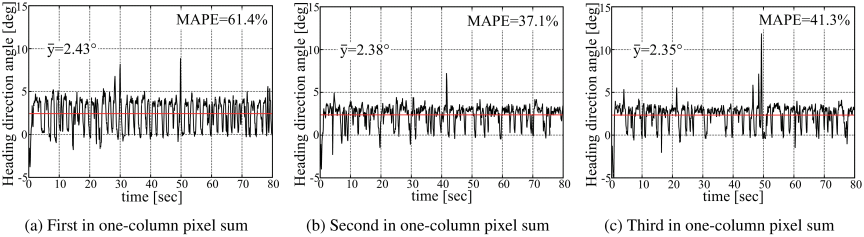
Fig. 11. Time change in the robot posture angle using the one-column pixel summation method, in which the MAPE value was improved compared to the result of nine-pixel summation.
In addition, the results for the nine-pixel summation method and the one-column pixel summation method, which use a similar body heat distribution algorithm, are shown in Figs. 10 and 11. First, we can see that the nine-pixel summation method produces significantly larger fluctuations in the posture compared to the four-pixel summation method. This result is also clear from the MAPE value. On the other hand, a distinctive feature of the robot’s behavior using the nine-pixel summation method is that it faithfully traces a circular path with a diameter of 3.2 m, while the four-pixel summation method moves slightly inside the trajectory. This is due to increases or decreases in the deviation of body heat, which is the controlled variable of the simple proportional control law used in motor drive. That is, in order to generate a tracking distance of approximately 1 m, the target body temperature within the control law is set to 35°C. Since nine-pixel summation adds five more pixels of temperature compared to four-pixel summation, the control deviation also increases accordingly. On the other hand, in this paper, to clearly verify the tracking behavior and demonstrate the validity of the methodology, we use a uniform proportional gain value without making any differences between algorithms. As a result, it is thought that with nine-pixel summation, the motor speed command (operation amount) increases due to the increase in the amount of deviation, and that the sensitivity characteristics are similar to high gain, resulting in improved tracking of the circular trajectory.
These results can be explained using Fig. 7. In other words, the body heat distribution-based tracking method does not perform pixel summation across the boundaries between sensors. Therefore, when nine-pixel summation is used, the representative pixel does not fall into the \(a_{i8}\) or \(b_{i1}\) columns between sensors A and B when determining the robot’s movement. This process reduces the number of times the area is determined to be Move forward command, presumably resulting in greater fluctuations in the robot’s posture angle. On the other hand, one-column pixel summation improves the MAPE value compared to nine-pixel summation. Furthermore, as can be seen from the figure, there is a tendency for the angles to exceed the theoretical value, \(\bar{y}\), similar to the response of four-pixel summation. In addition, several deviations in the data are observed in one-column pixel summation, and also, in four-pixel summation. These results demonstrate that the fluctuations in the robot’s orientation are strongly dependent on the number of pixel columns used in each summation algorithm. That is, four-pixel summation uses two columns, while nine-pixel summation uses three. Since the number of columns in one-column summation is 1, the operating area of Fig. 7 clearly switches when the number of columns is small. On the other hand, when the number of columns to be added is 2 or 3, the sum of multiple pixels has a filtering effect, which is thought to suppress abrupt switching of the operating area.
5. Hybrid Tracking and Following Method Based on Sensor Integration
In this chapter, we conduct experiments that combine an object detection algorithm using image-based machine learning with a human tracking method based on body heat distribution, and demonstrate its usefulness and the validity of the methodology. Because this paper is the result of research into a sensor-based small mobile robot that uses camera images and body heat information from a thermal array sensor, therefore, it is necessary to implement both algorithms within a single task and then conduct human tracking experiments from the perspective of sensor fusion. Thus, in this experiment we attempt human tracking and following in an environment where the illuminance rapidly changes. Specifically, we create an environment where the robot’s driving course contains a mixture of bright and dark areas, and verify that it is possible to achieve tracking control by switching between the two algorithms.
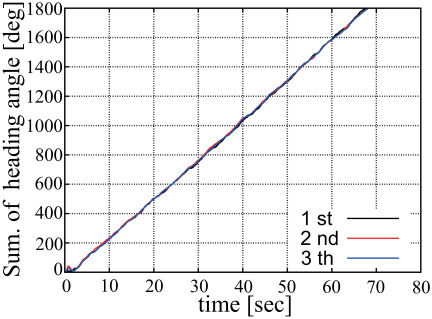
Fig. 12. A person walks along a circular path and the robot follows using the FOMO inference model with a small camera. The results are the sum of the robot’s posture angle obtained over five laps.
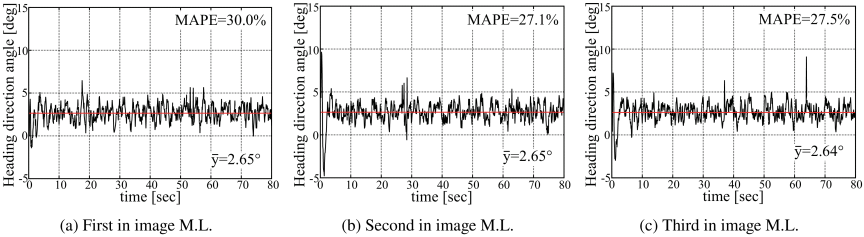
Fig. 13. Posture angle of a robot following a person on a circular trajectory using a FOMO inference model. The results are highly reproducible.
First, to demonstrate the running stability of the human tracking method based on image-based machine learning, we will detail the circular trajectory tracking task used in the previous chapter and the time response of the robot’s posture angle. Fig. 12 shows the time response of the total posture angle when the robot completes five laps of a circular trajectory. As can be seen by comparing it with Fig. 8(b), it achieves highly stable tracking behavior with extremely little variance between trials compared to the body heat tracking method. This is because the pixel resolution of the camera image is higher than the pixel resolution of the thermal image (\(8 \times 8\)), and it sends more maneuverable speed commands to the drive system.
Next, as in the previous chapter, we quantitatively analyze the behavior of the robot’s posture angle during tracking using the MAPE. The results are shown in Fig. 13. All three trials were below 30%, demonstrating higher reproducibility than the body heat tracking method, and the minimum MAPE was 27.1%, achieving good results. However, compared to the four-pixel summation results in Fig. 9, there is a larger deviation from the theoretical orientation value \(\bar{y}\). Based on these results, the image-based machine learning tracking method and the body heat distribution method can be summarized as Table 3.
Table 3. Comparison results of MAPE analysis.
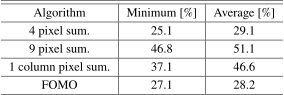
Based on these findings, for the final task of tracking a person in both bright and dark places, we will apply the FOMO algorithm and four-pixel summation method, which have the best average values from the MAPE analysis, and implement them in the control system of the mobile robot. Specifically, in bright places during tracking, control is performed using only camera image information, and in dark places, tracking commands are generated using only body heat information based on the four-pixel summation method. In this experiment, as with Fig. 5, we verify operation by having a target person wearing a shirt walk zigzag along a route and turning lights on and off at arbitrary times. To obtain the environmental illuminance, the raw RGB data of all pixels of the camera images used for person inference is converted to grayscale using a weighted average method. The converted 8-bit brightness value is set at 10 as the threshold, and when it falls below 10, it is determined to be a dark place and the driving algorithm is switched. The results of the driving experiment are shown in Fig. 14.
The figure indicates that it is possible to smoothly switch the tracking algorithm even in environments where the illuminance suddenly changes, and as a result, stable tracking operation is achieved not only in bright places but also in dark places using a four-pixel summation method based on body heat distribution. As described above, the proposed method is capable of robust target human tracking in bright and dark places, and can be implemented in environments that are not dependent on illuminance, including indoors and outdoors.
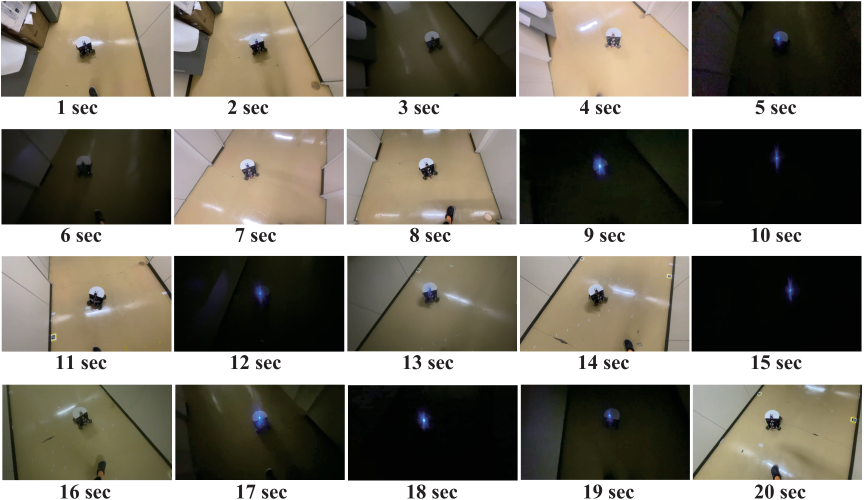
Fig. 14. Lights along the robot’s path were turned on and off at random times; the resulting 20 s video footage is shown as snapshots at 1 s intervals.
6. Concluding Remarks
In this paper, we propose a method for estimating the distance and position of a tracked person using image-based machine learning. We then implemented a sensor-fusion-based human-tracking algorithm on a small autonomous mobile robot by integrating it with a tracking algorithm using thermal array sensors capable of measuring body heat. In particular, we used FOMO, a lightweight object detection algorithm for edge devices, to build an inference model and successfully tracked the target person using clothing features. Compared to conventional object detection methods such as YOLO, which typically require large-scale datasets, the FOMO-based approach used in this study enables effective detection with a significantly smaller dataset. In this study, only 180 images were used without data augmentation. Next, we derived a human-robot distance estimation model using the FOMO algorithm to estimate the distance between the person and robot by utilizing depth-related information obtained from monocular camera images. This was achieved by installing a camera at a low position on the low-profile mobile robot developed in this paper and applying perspective projection. Using the person’s position in the image obtained from this estimation model as the control variable, we successfully tracked the person using simple proportional control. Furthermore, experiments demonstrated that the proposed method can also handle brief occlusions by non-target people.
Next, this study proposed a human-tracking algorithm using a thermal array sensor capable of measuring body heat distribution. Three sensors were placed on the robot and multiple thermal pixel summations were used to improve tracking performance. In this study, we performed four-pixel summations, nine-pixel summations, and one-column summations. We achieved stable human tracking by classifying the robot’s motion patterns using the maximum temperature value per sample period. In particular, we quantitatively evaluated human tracking performance by visualizing the fluctuations in the robot’s posture angle during human tracking using the MAPE. The four-pixel summation method, including the behavior of the posture angle during human tracking using image-based machine learning, proved to be the most stable, with highly reproducible and consistent results. Finally, we conducted a hybrid human-tracking experiment integrating the proposed image-recognition and body-heat-distribution algorithms, and successfully achieved human tracking and following in both bright and dark environments with sudden changes in illuminance. As described above, this study proposed a new human tracking method and algorithm that combines vision sensors and thermal sensors from the perspective of sensor fusion, and successfully conducted a human tracking experiment using a small autonomous mobile robot.
The proposed method can achieve stable tracking across different individuals when clothing features are consistent. However, the method is sensitive to clothing color and environmental conditions, particularly when the contrast between the target and background is low. Therefore, while the proposed method is effective under controlled conditions, its generalization capability is limited in more complex environments. As future work, incorporating additional features such as shape or motion information, as well as integrating other sensing modalities (e.g., LiDAR), is considered a promising direction for improving robustness.
- [1] R. Tasaki, M. Kitazaki, J. Miura, and K. Terashima, “Prototype design of medical round supporting robot ‘Terapio’,” IEEE Int. Conf. Robotics and Automation, pp. 829-834, 2015. https://doi.org/10.1109/ICRA.2015.7139274
- [2] S. Mahajan and C. M. Vidhyapathi, “Design of a medical assistant robot,” IEEE Int. Conf. Recent Trends in Electronics, Information & Communication Technology, pp. 877-881, 2017. https://doi.org/10.1109/RTEICT.2017.8256723
- [3] H. Yoo, D. Kim, J. Sohn, K. Lee, and C. Kim, “Development of a worker-following robot system: Worker position estimation and motion control under measurement uncertainty,” Machines, Vol.11, No.3, Article No.366, 2023. https://doi.org/10.3390/machines11030366
- [4] A. Eirale, M. Martini, and M. Chiaberge, “Human following and guidance by autonomous mobile robots: A comprehensive review,” IEEE Access, Vol.13, pp. 42214-42253, 2025. https://doi.org/10.1109/ACCESS.2025.3548134
- [5] Y. Min, J. Shui, S. Liu, J. Wang, and Z. Guo, “Human target detection and tracking algorithm based on improved YOLOv7,” 2023 IEEE 13th Int. Conf. CYBER Technology in Automation, Control, and Intelligent Systems, pp. 297-302, 2023. https://doi.org/10.1109/CYBER59472.2023.10256546
- [6] Y. Zhao, Y. Gao, Q. Sun, Y. Tian, L. Mao, and F. Gao, “A real-time low-computation cost human-following framework in outdoor environment for legged robots,” Robotics and Autonomous Systems, Vol.146, Article No.103899, 2021. https://doi.org/10.1016/j.robot.2021.103899
- [7] A. Farooq and M. Imran, “Innovating vending machine through object detection for currency recognition and enhanced cash handling,” 7th Int. Symp. Multidisciplinary Studies and Innovative Technologies, 2023. https://doi.org/10.1109/ISMSIT58785.2023.10304989
- [8] Q. M. Nguyen, V. T. Le, M. N. Lai, and H. B. Vo, “Resource-constrained intelligent trap: Fruit flies surveillance framework with TinyML integration,” 10th Int. Conf. Communications and Electronics, pp. 415-420, 2024. https://doi.org/10.1109/ICCE62051.2024.10634657
- [9] R. Alaa, H. Al-Libawy, and E. A. Hussein, “Low-cost blind spot detection system based on lite object detection algorithm and limited resources hardware,” 4th Int. Conf. Science and Information Technology in Smart Administration, pp. 469-474, 2024. https://doi.org/10.1109/ICSINTESA62455.2024.10747868
- [10] H. V. L. B. Silva, F. A. P. de Figueiredo, and S. B. Mafra, “Performance evaluation of edge computing object detection models for maritime surveillance on a Raspberry Pi,” 2024 IEEE Latin-American Conf. on Communications (LATINCOM), 2024. https://doi.org/10.1109/LATINCOM62985.2024.10770682
- [11] J. L. R. Ronda et al. “Real-time path hole detection for motorcycle driver safety assistance using Faster Object More Object (FOMO) algorithm,” TENCON IEEE Region 10 Conf., pp. 1746-1750, 2024. https://doi.org/10.1109/TENCON61640.2024.10902942
- [12] F. G. F. Rocha, H. V. L. B. Silva, R. B. Vimieiro, and F. A. P. de Figueiredo, “Defect detection in printed circuit boards based on EdgeML and computer vision,” Int. Conf. Intelligent Cybernetics Technology & Applications, pp. 573-577, 2024. https://doi.org/10.1109/ICICYTA64807.2024.10913437
- [13] N. Arul, V. Chaitanya, S. Deepana, S. Gowsalya, and P. Lathasree, “Design and development of autonomous ball collecting machine using FOMO algorithm,” Int. Conf. Computing and Communication Technologies, 2025. https://doi.org/10.1109/ICCCT63501.2025.11019447
- [14] K. Li, Y. Wang, and Z. Hu, “Improved YOLOv7 for small object detection algorithm based on attention and dynamic convolution,” Applied Sciences, Vol.13, No.16, Article No.9316, 2023. https://doi.org/10.3390/app13169316
- [15] Q. Su, Y. Zhang, P. Wang, G. Liu, L. Zhu, and W. Li, “Research on human following technology of robot based on ECO-HC,” Int. Conf. Mechatronics Technology and Intelligent Manufacturing, pp. 347-351, 2023. https://doi.org/10.1109/ICMTIM58873.2023.10246498
- [16] T. Doi, A. Mizuta, and K. Nagumo, “Harmful animal detection using visual information for wire-type mobile robots,” J. Robot. Mechatron., Vol.37, No.3, pp. 742-751, 2025. https://doi.org/10.20965/jrm.2025.p0742
- [17] M. Akiyama, H. Ninomiya, and T. Saito, “Method to achieve high speed and high recognition rate of goal from long distance for CanSat,” J. Robot. Mechatron., Vol.35, No.1, pp. 194-205, 2023. https://doi.org/10.20965/jrm.2023.p0194
- [18] M. A. K. Niloy et al. “Critical design and control issues of indoor autonomous mobile robots: A review,” IEEE Access, Vol.9, pp. 35338-35370, 2021. https://doi.org/10.1109/ACCESS.2021.3062557
- [19] S. H. Tsai, L. H. Kao, H. Y. Lin, T. C. Lin, Y. L. Song, and L. M. Chang, “A sensor fusion based nonholonomic wheeled mobile robot for tracking control,” Sensors, Vol.20, No.24, Article No.7055, 2020. https://doi.org/10.3390/s20247055
- [20] M. B. Alatise and G. P. Hancke, “A review on challenges of autonomous mobile robot and sensor fusion methods,” IEEE Access, Vol.8, pp. 39830-39846, 2020. https://doi.org/10.1109/ACCESS.2020.2975643
- [21] S. A. Ahmed, A. V. Topalov, N. G. Shakev, and V. L. Popov, “Model-free detection and following of moving objects by an omnidirectional mobile robot using 2D range data,” IFAC-PapersOnLine, Vol.51, Issue 22, pp. 226-231, 2018. https://doi.org/10.1016/j.ifacol.2018.11.546
- [22] B. Shubha and V. V. D. Shastrimath, “Real-time occupancy detection system using low-resolution thermopile array sensor for indoor environment,” IEEE Access, Vol.10, pp. 130981-130995, 2022. https://doi.org/10.1109/ACCESS.2022.3229895
- [23] M. Gochoo, T. H. Tan, T. Batjargal, O. Seredin, and S. C. Huang, “Device-free non-privacy invasive indoor human posture recognition using low-resolution infrared sensor-based wireless sensor networks and DCNN,” IEEE Int. Conf. Systems, Man, and Cybernetics, pp. 2311-2316, 2018. https://doi.org/10.1109/SMC.2018.00397
- [24] A. Géczy, R. D. Jorge Melgar, A. Bonyar, and G. Harsanyi, “Passenger detection in cars with small form-factor IR sensors (Grid-eye),” 2020 IEEE 8th Electronics System-Integration Technology Conf., 2020. https://doi.org/10.1109/ESTC48849.2020.9229693
- [25] A. F. Alraeesi, H. F. Kharbash, J. S. Alghfeli, S. S. Alsaedi, and M. Gochoo, “Privacy-preserved social distancing system using low-resolution thermal sensors and deep learning,” 2021 IEEE Int. Conf. Systems, Man, and Cybernetics, pp. 66-71, 2021. https://doi.org/10.1109/SMC52423.2021.9659292
- [26] M. I. Rusydi, A. Novira, T. Nakagome, J. Muguro, R. Nakajima, W. Njeri, K. Matsushita, and M. Sasaki, “Autonomous movement control of coaxial mobile robot based on aspect ratio of human face for public relation activity using stereo thermal camera,” J. of Robotics and Control, Vol.3, Issue 3, pp. 361-373, 2022. https://doi.org/10.18196/jrc.v3i3.14750
- [27] N. Bharathiraja, R. B. Indhuja, P. R. A. Krishnan, S. Anandhan, and S. Hariprasad, “Real-time fall detection using ESP32 and AMG8833 thermal sensor: A non-wearable approach for enhanced safety,” 2023 Second Int. Conf. Augmented Intelligence and Sustainable Systems, pp. 1732-1736, 2023. https://doi.org/10.1109/ICAISS58487.2023.10250598
- [28] H. Garg, A. K. Bhartee, A. Rai, M. Kumar, and A. Dhakrey, “A review of object detection algorithms for autonomous vehicles: Trends and developments,” 5th Int. Conf. Advances in Computing, Communication Control and Networking, pp. 1173-1181, 2023. https://doi.org/10.1109/ICAC3N60023.2023.10541773
- [29] J. Da Silva, T. Flores, S. Junior, and I. Silva, “TinyML-based pothole detection: A comparative analysis of YOLO and FOMO model performance,” 2023 IEEE Latin American Conf. Computational Intelligence (LA-CCI), 2023. https://doi.org/10.1109/LA-CCI58595.2023.10409357
- [30] T. Fukushima, K. Itoya, and T. Inoue, “WiFi-communicated cooperative platoon running of multiple mobile robots using image machine learning with FOMO,” IEEE Int. Conf. Real-time Computing and Robotics, TuB2(2), 2025. https://doi.org/10.1109/RCAR65431.2025.11139496
- [31] T. Inoue, Y. Okazaki, and K. Itoya, “Person following algorithm with pixel-area addition method of thermal sensors for autonomous mobile robots,” 10th Int. Conf. Control, Automation and Robotics, pp. 77-82, 2024. https://doi.org/10.1109/ICCAR61844.2024.10569955
- [32] T. Inoue and Y. Okazaki, “Human-following control of omnidirectional autonomous mobile robot by integrating sensor information,” 23rd Int. Conf. Control, Automation and Systems, pp. 1055-1059, 2023. https://doi.org/10.23919/ICCAS59377.2023.10317018
- [33] K. Itoya and T. Inoue, “Image machine-learning based person following under sequential occlusions,” Int. Conf. Control, Automation and Systems, WeAT2.4, 2025.
This article is published under a Creative Commons Attribution-NoDerivatives 4.0 Internationa License.