
Paper:
The Historical Process of Institutionalizing Collaborative Disaster Victim Support: Changes in the Role of the Third Sector in Disaster Response in Japan
Taku Sugano

Graduate School of Literature and Human Sciences, Osaka Metropolitan University
2-1-132 Morinomiya, Joto-ku, Osaka, Osaka 536-8525, Japan

This paper provides a brief history of the third sector in Japan’s disaster response and assesses its current status. The Great Hanshin–Awaji Earthquake of 1995 led to the institutionalization of disaster volunteer centers, and the year drew attention as the “first year of volunteerism.” This was followed by the enactment of the Act on Promotion of Specified Non-Profit Activities in 1998 and the development of the third sector, with a considerable delay compared with other advanced countries. Volunteers and third-sector organizations involved in disaster response developed institutionally differently from those involved in other fields owing to the unique characteristics of disasters, which occur only occasionally and in specific areas. In addition, a collaborative mechanism was institutionalized to support disaster victims in rebuilding their lives. This mechanism also helped address the incompatibility between the peacetime care regime, based on a quasi-market system involving private organizations, and the emergency care regime, which relies on direct government intervention. Given this history, it seems likely that Japanese society has begun to consider incorporating mechanisms into its peacetime systems to mobilize as much peacetime expertise as possible in the event of a disaster, as well as making special preparations in case of disasters to supplement any areas where this is insufficient.
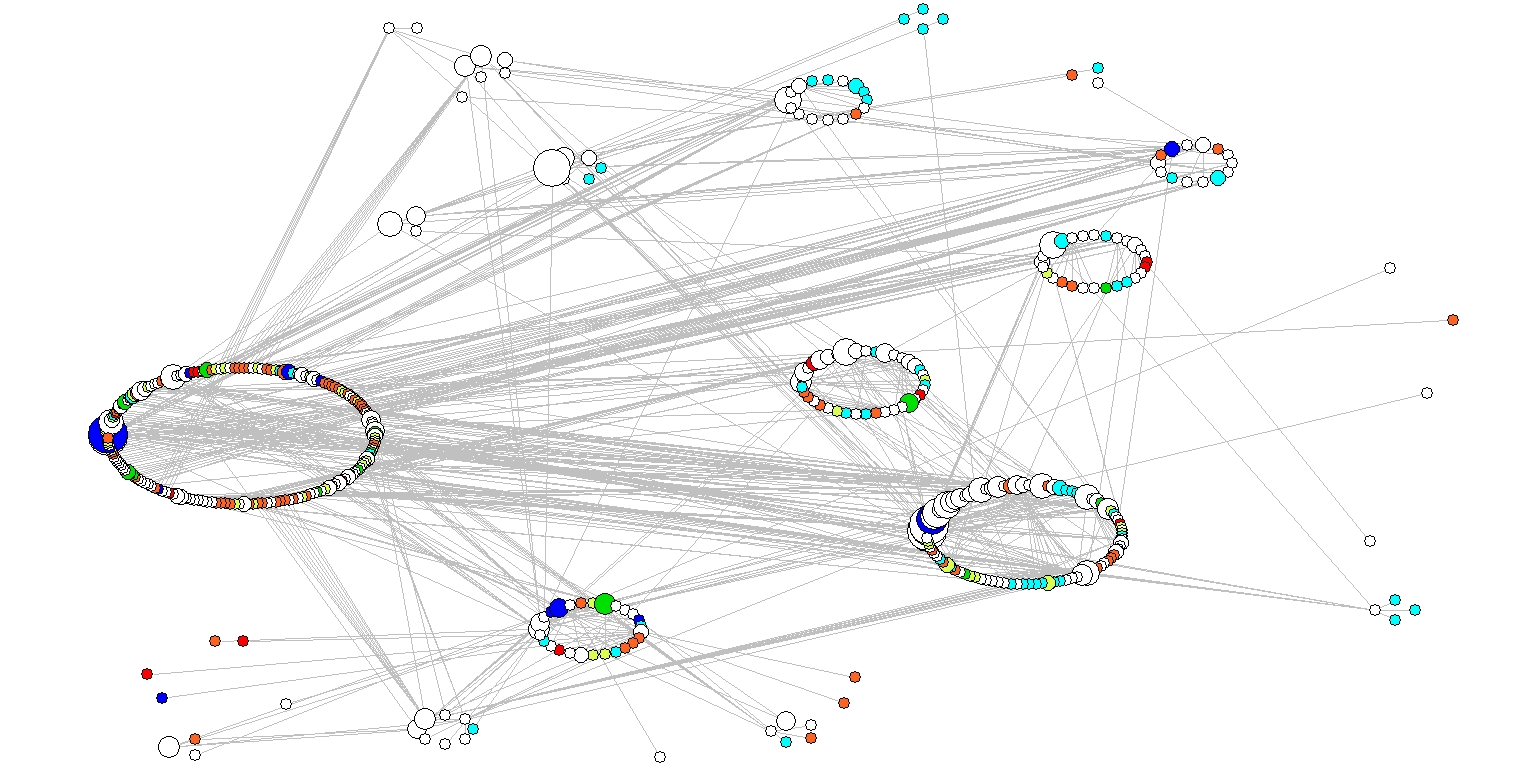
Social network of key persons involved in the third sector
- [1] G. Takamura, “Freedom for association: The logic of the republic,” Keiso Shobo, 2007 (in Japanese).
- [2] E. Hoshino, “Recommendation on the civil code,” Iwanami Shoten, 1998 (in Japanese).
- [3] I. Hatsutani, “NPO policy theory and development,” Osaka University Press, 2001 (in Japanese).
- [4] T. Sugano, “Networks creating innovation: Inter-regional emergence through the third sector,” Nakanishiya Shuppan, 2020 (in Japanese).
- [5] T. Sugano, “Late development and policies of the third sector: Collaboration or subcontracting, social movements or return to institutions, policy and citizens,” K. Tsuchiyama and M. Fukao (Eds.), Minerva Shobo, (in press) (in Japanese).
- [6] A. Anttonen and J. Sipilä, “European social care services: Is it possible to identify models?,” J. of European Social Policy, Vol.6, No.2, pp. 87-100, 1996. https://doi.org/10.1177/095892879600600201
- [7] “Care work: The quest for security,” M. E. Daly (Ed.), Int. Labour Office, 2002.
- [8] T. Sugano, “Disaster response governance: Ending chaos in disaster victim support,” Nakanishiya Shuppan, 2021 (in Japanese).
- [9] M. Suga, “Logic and systems for volunteer disaster relief activities in Japan: Current situations and challenges 15 years after the ‘Volunteer Year One’,” J. of Societal Safety Sciences, No.1, pp. 55-66, 2011 (in Japanese).
- [10] M. Suga, “Disaster volunteer centers, supplemented and revised chronological table: Volunteer, NPO, and citizen activities in Japan,” Y. Ishida et al. (Eds.), Akashi Shoten, 2014 (in Japanese).
- [11] N. Nihei, “The Birth and demise of ‘volunteerism’: The sociology of knowledge in the ‘Paradox of Giving’,” The University of Nagoya Press, 2011 (in Japanese).
- [12] A. L. Barabási and R. Albert, “Emergence of scaling in random networks,” Science, Vol.286, No.5439, pp. 509-512, 1999. https://doi.org/10.1126/science.286.5439.509
This article is published under a Creative Commons Attribution-NoDerivatives 4.0 Internationa License.