
Paper:
Disaster Vulnerability in an Ageing Rural Society: The 2024 Noto Peninsula Earthquake
Miwako Kitamura*,† and David E. Alexander**

*Tohoku University
6-6-10 Aramaki Aza-Aoba, Aoba-ku, Sendai, Miyagi 980-8579, Japan
†Corresponding author
**University College London
London, United Kingdom

The 2024 Noto Peninsula earthquake offers an important case for examining disaster in an ageing rural society. Existing studies have contributed substantially to understanding hazard processes and physical damage, but less attention has been given to the structure of vulnerability that shaped both disaster impacts and early recovery. This paper addresses that gap through an integrated analysis of vulnerability, culture and gender. Based on documentary analysis of official reports and peer-reviewed studies, the paper argues that the Noto disaster cannot be explained adequately by hazard impact alone. Its severity was shaped by the interaction of demographic ageing, depopulation, infrastructural fragility, care dependence, health-system constraints and place-based cultural systems. Infrastructure failure became socially consequential because it occurred in a setting marked by advanced ageing, limited redundancy and uneven access to medical care, social care and wider support. The analysis also suggests that culture functioned both as a source of vulnerability and as a possible resource in recovery.
1. Introduction
On January 1, 2024, a major earthquake of moment magnitude 7.6 struck the Noto Peninsula in Ishikawa Prefecture, Japan 1. The term “rural” is used here to include areas where agriculture, forestry and fisheries have historically supported local livelihoods. In the Noto Peninsula, these activities coexist with tourism and other service-based economic activities. The event caused severe damage across coastal and rural communities and was followed by a sequence of interconnected impacts, including tsunami effects, landslides, urban fire, infrastructure disruption and, later, flood-related disturbance 2,3,4,5. It is therefore best understood as a composite disaster rather than as a single seismic event.
Official records document extensive damage to housing and lifelines, including roads, water supply systems and communications 6,7. National media also reported the prolonged isolation of some communities, particularly under winter conditions, as damage to transportation routes delayed emergency assistance and the delivery of essential supplies 8,9. These observations indicate that the consequences of the earthquake were shaped not only by the hazard itself, but also by the structural characteristics of the affected region.
This point is particularly important in Noto. The peninsula is marked by long-term depopulation, advanced ageing, limited redundancy of infrastructure, peripheral access to healthcare and heavy dependency on local sources of livelihood. These conditions pre-dated the earthquake, but the disaster exposed and intensified them 6,10. The analytical significance of the case therefore lies not only in the scale of physical destruction, but also in the way it reveals how vulnerability is constituted in an ageing rural society.
Existing studies of the 2024 Noto Peninsula earthquake have already made important contributions to understanding seismic mechanisms, geomorphological change, behaviour during tsunamis, evacuation and infrastructure damage 3,4,5,10,11. However, much of this literature remains centred on hazard processes, technical consequences or the analysis of emergency responses. Less attention has been paid to the broader structure of vulnerability that shaped susceptibility to harm, the distribution of impacts and the trajectory of recovery. In particular, ageing, gender and culture are often acknowledged, but seldom examined together within a single analytical framework.
This is a significant limitation. In a case such as Noto, vulnerability cannot be explained adequately by hazard intensity alone, nor merely by demographic patterns. It is produced through the interaction of demographic decline, ageing, social care, healthcare access, infrastructural constraints and local cultural systems 12,13,14. Unless one analyses these conditions in relation to one another, it is difficult to explain why the disaster affected communities in the ways it did and why recovery has been both uneven and socially differentiated.
Culture is especially important in this context. In disaster research, it is often treated mainly as heritage at risk, that is, as something damaged, lost or in need of protection. Although this perspective is necessary, it is not sufficient. In regions such as Noto, culture also forms part of the social infrastructure through which everyday life is organised. Traditional industries, local knowledge, community practices and attachment to place shape both patterns of vulnerability and the ability to respond to disaster 15,16. Culture should therefore be understood not only as something that risks being lost, but also as one of the conditions through which continuity and recovery are sustained.
Gender represents a similarly important but insufficiently developed dimension. Existing studies have identified challenges in evacuation centres and post-disaster living conditions, especially for elderly people and those requiring care 17,18. However, these issues are not always examined in relation to the gendered organisation of care, responsibility and access to resources. In ageing rural communities, women often bear a disproportionate share of responsibilities in caregiving and community support while also facing constraints on their mobility, security and participation in decision-making 19,20. Gender therefore shapes both vulnerability and resilience, but this relationship remains under-analysed in current work on the Noto disaster.
Against this background, this paper examines the 2024 Noto Peninsula earthquake through an integrated lens of vulnerability, culture and gender. It is based on documentary analysis of official reports, peer-reviewed studies and selected media accounts, interpreted through a theoretically informed framework. The aim is not to reproduce existing descriptions of damage, but to re-examine the disaster in order to clarify the structural conditions that shaped both its impacts and its early recovery.
The central research question is as follows: how did the pre-existing structure of vulnerability in the Noto Peninsula shape the impacts of the 2024 earthquake and the initial trajectory of recovery? More specifically, the paper asks how ageing, depopulation, gendered social relations, healthcare and care systems, and place-based cultural systems interacted to produce vulnerability in this case. The contribution of the paper is threefold. First, it shifts attention from hazard effects alone to the social production of vulnerability, thereby offering a fuller explanation of why the Noto disaster unfolded as it did. Second, it contributes to current debates on disaster and culture by showing that culture should be understood not only as something damaged by disaster, but also as part of the social conditions that shape continuity, resilience and recovery. Third, it addresses the need for a more integrated analysis of ageing, gender and rural marginality in disaster research.
The paper differs from much of the existing literature in that it does not treat physical impacts, demographic conditions, cultural systems and gender relations as separate domains of analysis. Instead, it brings them together within a single framework centred on vulnerability. In doing so, it seeks to contribute to a more socially grounded understanding of disaster in ageing societies, with relevance not only to Japan but also to other regions undergoing similar demographic and structural changes.
2. Theoretical Framework and Critical Literature Review
The starting point of this paper is the proposition that disaster should be understood not simply as the occurrence of a hazardous event, but as the outcome of the interaction between hazard and pre-existing vulnerability 12,13,14,21,22. This position has been central to the development of disaster studies beyond hazard-based explanation, and it remains fundamental to contemporary disaster risk reduction. A particularly important statement of this shift was Kenneth Hewitt’s critique of technocratic interpretations of calamity, which argued that vulnerability, rather than hazard alone, is central to the explanation of disaster 22. The Sendai Framework similarly defines disaster risk in relation to hazard, exposure, vulnerability and capacity, and places strong emphasis on understanding disaster risk in all of its dimensions 21. In this respect, vulnerability is not ancillary to disaster analysis; it is central to explaining why hazards become disasters and why their effects are unevenly distributed.
Within the relevant literature, the Pressure-and-Release (PAR) model remains important because it conceptualises vulnerability as the outcome of root causes, dynamic pressures and unsafe conditions rather than as an immediate or isolated characteristic of exposed populations 12. Its continuing value lies in directing attention to the social production of disaster and to the long-term processes through which risk is accumulated. At the same time, broader theoretical work has argued that vulnerability should be treated holistically rather than reduced to a simple attribute of particular populations or sectors 23,24. McEntire, for example, emphasised that hazards, vulnerability and disaster reduction need to be analysed within a more integrated paradigm, while Wisner’s later synthesis showed that vulnerability can function as concept, model, metric and practical tool 23,24. This is useful in the present study because it helps to avoid treating elderly people, women, or people requiring care as self-evidently vulnerable categories. Instead, vulnerability is understood here as a dynamic condition shaped by demographic change, spatial inequality, institutional weakness and everyday social organisation. In that sense, the PAR model remains useful, but it is most effective when read alongside more holistic approaches to vulnerability 12,23,24.
This limitation is especially significant in ageing rural populations. Research on elderly people has shown that disaster risk is shaped not only by age-related health and mobility concerns, but also by communication needs, social support, settlement patterns and cultural expectations 10,25,26. Recent review work has emphasised that elderly people’s disaster needs extend across health, socioeconomic, evacuation and settlement, information and communication, and cultural dimensions 25. In regions such as Noto, where populations are shrinking and where communities are often peripheral to the national economy, the issue is therefore not simply that a high proportion of residents are elderly, but that demographic ageing interacts with depopulation and local capacity weakened by long-term public-sector contraction. High demand and low revenue also tend to reduce redundancy in the infrastructure that responds to these problems. Recent work on the Noto Peninsula earthquake has made a similar point by showing that shrinking-society conditions and demographic imbalance significantly complicate emergency management and recovery 10.
A second body of literature relevant to this paper concerns culture. In much disaster research, culture has been treated mainly as heritage at risk, with emphasis on damage to monuments, archives, artefacts and cultural landscapes. This literature is important, but it is incomplete. Recent scholarship argues that disasters affect culture in all its forms, including tangible and intangible heritage, cultural economies and designated sites. Moreover, by providing social cohesion and a sense of direction, culture can support societies in preparing for, responding to and recovering from disasters 15,16,27,28. This shift is analytically important because it moves culture from the margins of disaster research towards the centre of questions about continuity, identity and recovery.
This broader understanding of culture is particularly relevant in rural regions, where livelihood, identity and place are closely connected. Recent scholarship has suggested that preserving cultural heritage after disaster may support psychosocial continuity and contribute to resilience among affected populations 15. Other work has shown that disaster risk management for cultural heritage is moving from a narrow focus on post-disaster conservation towards more integrated forms of risk governance 16,28. These arguments are important for the present study because they suggest that culture should not be treated solely as something to be protected after disaster, but also as part of the social infrastructure through which recovery becomes possible. In this paper, culture is therefore understood not only as a field of loss, but also as a persistent condition that may shape both vulnerability and resilience 15,16,27,28.
A third body of literature concerns gender. Disaster research has long shown that women and men do not experience disaster in the same way and that gender influences exposure, care burdens, mobility, access to resources and participation in recovery 19,20,29,30. However, too often gender is still treated as an additional variable rather than as part of the structure through which vulnerability is manifested. This is particularly problematic in ageing rural societies, where care responsibilities, household labour and community support are frequently unevenly distributed between women and men. Recent review work has shown that gender-inclusive disaster response requires attention not only to individual vulnerability, but also to institutional arrangements and social norms 29. Intersectional work has similarly shown that gender cannot be analysed in isolation from age, disability, sexuality or social position 30. In such settings, the issue is not simply whether women are more affected than men, but how gendered relations help to organise both vulnerability and resilience. The same social roles that increase burdens during disaster may also place women at the centre of care, coordination and the maintenance of community values 19,20,29,30.
The literature on social capital and community resilience offers a further point of connection. Research in this area has shown that networks, trust, collective ties and local forms of cooperation can strongly influence post-disaster outcomes and help explain why some communities recover more effectively than others 31. Although social capital is not identical to culture, the two are closely related in practice, especially in local contexts where place attachment, shared norms and everyday mutual support form part of community life. This insight is important in the case of Noto because it allows culture to be understood not as a separate symbolic domain, but as part of the wider set of social relations that shape continuity, support and collective capacity after disaster 27,28,31.
Taken together, these directions of scholarship point to an important gap. Vulnerability, culture, gender, ageing and disaster risk reduction have each been discussed in disaster research, but they are too often treated as separate analytical domains. The result is a fragmented understanding of disaster, in which physical processes, demographic conditions, cultural systems and social inequalities are discussed in parallel rather than as interacting processes. The present study addresses that gap by bringing these dimensions together within a single framework centred on vulnerability. It proceeds from the view that vulnerability in the Noto case was produced through the interaction of demographic ageing, regional decline, gendered care relations, infrastructural constraints and place-based cultural systems. This integrated perspective provides the basis for the case-study analysis that follows and supports the wider argument of the paper: disaster risk reduction in ageing societies must move beyond hazard-centred thinking towards a more structural and socially grounded understanding of risk.
Some studies have already shown that disaster recovery is strongly conditioned by pre-disaster demographic trends in declining and ageing communities 32, that disaster policy needs more explicit attention to social vulnerability among older adults, women, people with disabilities and other groups whose support needs are not fully captured by hazard exposure alone 33, and that immobility itself can generate disaster vulnerability for people requiring assistance during disasters 34. Other work has emphasised the need to estimate support needs for older people before national-scale disasters 35, to develop facility-specific evacuation criteria for elderly-care institutions under flood conditions 36, and to understand life recovery as a process shaped by housing, well-being, social ties and psycho-behavioural factors 37. The present paper extends these contributions by applying an integrated vulnerability, culture and gender lens to the 2024 Noto Peninsula earthquake, with particular attention to how ageing, care dependence, medical access, infrastructure disruption and place-based cultural systems interacted in an isolated rural peninsula.
3. Case Context and Structural Vulnerability in the Noto Peninsula Earthquake
Analysis of the Noto Peninsula earthquake is important not only because of the scale of its physical impacts, but also because it reveals how disaster vulnerability is structured in a rural region with an ageing population. Before the earthquake, the affected area was already marked by long-term depopulation, dispersed settlement, limited infrastructural redundancy and advanced ageing 6,10,21,25,26. These conditions did not simply form the background to the disaster; they shaped both the distribution of impacts and the constraints on early recovery. In this respect, Noto offers more than a simple instance of earthquake damage. It is a case that shows how disaster is socially constructed where everyday life already depends on fragile systems of mobility, communication, healthcare and care. Some of the evacuation centres struggled with both operational management and the provision of nutritionally adequate meals for a population of evacuees that was predominantly elderly 6,18,38,39.
A demographic reading of the case helps to clarify this point. According to the 2020 population census, the proportion of the population aged 65 years or above was 28.6% in Japan as a whole, while in Ishikawa Prefecture, the jurisdiction most affected by the 2024 earthquake, it stood at 29.8% 40,41. At the municipal level, the population was markedly older. Published and local official sources indicate that the proportion of elderly residents was 46.2% in Wajima, 49.1% in Anamizu and 51.6% in Suzu in 2020 40,41,42,43,44. This matters analytically. In a region characterised by an ageing population, infrastructure failure has distinctive social consequences.
Mobility constraints, care dependency, information access and institutional demand are intensified at the same time. The earthquake therefore struck not simply a rural area, but one in which demographic structure had already increased dependency on a limited set of social and material supports 25,26,40,41,42,43,44.
Official evidence shows that the disruption was both severe and highly systemic. The Japanese Cabinet Office recorded major damage to housing, roads, water supply, communications and other essential systems 6. On January 5, 2024, four days after the earthquake, 93 prefectural roads had been closed in Ishikawa Prefecture and 3,345 people in 33 districts had become isolated because of the road closures 6. Although approximately 80% of trunk roads in the peninsula had reopened by January 9, and around 90% by January 15 , full access to all communities was not restored until January 19 6. At its peak, water supply was suspended for approximately 136,440 households, while by January 31, 147 water trucks had been dispatched to affected areas 6. Communications failures were similarly severe. On January 3, 839 mobile base stations were out of service and, at the height of disruption, service levels in the six most affected municipalities fell to 20–30% of pre-disaster levels 6. These figures indicate that the disaster quickly became a crisis of access. In Noto, the loss of roads, water and communications did not simply delay response; it restricted the material basis of survival 6,10.
This crisis of access was not limited to roads and lifelines. It also needs to be understood in relation to the ordinary geography of healthcare provision. In Japan, prefectural Medical Care Plans organise regional healthcare delivery through secondary medical-care areas, with attention to emergency care, remote-area care, disaster medicine, home care, medical collaboration and human resources 45,46. In Ishikawa Prefecture, the municipalities at the centre of the Oku-Noto disaster are located in the Noto North secondary medical-care area, which is distinct from the Noto Central medical-care area 45. This distinction matters because access to secondary and tertiary medical services in the northern peninsula was already spatially constrained before the earthquake. When roads, water supply and communications failed, the disaster therefore disrupted not only emergency transport, but also the wider regional system through which older residents ordinarily accessed medical care, medication continuity, welfare facilities and long-term care support 45,46.
Table 1. Cross-analysis of ageing, critical infrastructure disruption and vulnerability in the 2024 Noto Peninsula earthquake.
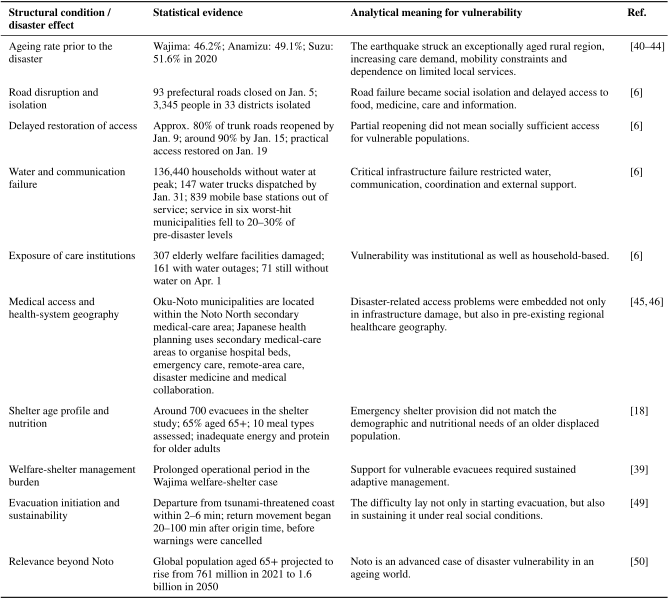
The analytical point is straightforward. The same level of infrastructure damage would not have the same social meaning in a better-connected urban region with a younger, denser population. In Noto, however, the effects were intensified by the conjunction of ageing and rural life. Elderly populations are more likely to require routine medical access, support with mobility, continuity in medication and stable provision of nutrition. Rural populations are more dependent on a smaller number of roads, facilities and service hubs. When these conditions coincide, critical infrastructure becomes more than a technical system; it becomes the material basis of care, communication and social reproduction. The Noto case therefore shows a strong structural association between demographic ageing, dependency on infrastructure and the severity of disaster.
This interpretation also requires attention to the structure of the Japanese healthcare system. Japan provides universal health coverage and allows broad free access to medical institutions, but the delivery system is characterised by comparatively low physician density, a high number of hospital beds and a large private-provider sector 47,48. These national characteristics do not by themselves explain the Noto disaster, but they help to clarify why rural medical access can become fragile under conditions of population ageing, workforce shortage and spatial isolation. In other words, the problem was not simply that roads were damaged by the earthquake, but that this disruption exposed pre-existing dependence on limited and unevenly distributed medical, care and support resources. Rather, road disruption exposed a pre-existing regional dependence on a limited and unevenly distributed network of medical and care resources. For older residents, this meant that interruption of transport, water and communications could quickly become interruption of treatment, medication, nursing care, nutritional support and relocation planning 18,39,45,46,47,48 (see Table 1).
The same pattern is visible in care infrastructure and shelter conditions. Official reporting recorded damage to 307 elderly welfare facilities, with 161 experiencing water outages and 71 still without water on April 1 6. A shelter nutrition study covering around 700 evacuees found that 65% were aged 65 years or above and that the 10 meal types assessed were inadequate in energy and protein for older adults, especially older men 18. A welfare-shelter case study in Wajima described a prolonged operational period and highlighted continuing difficulties in the allocation of personnel, the procurement of resources, infection control, maintenance of a balanced diet and relocation planning 39.
These communities were cut off by road collapse, welfare facilities lost water for extended periods, and evacuation centres struggled with both operational management and the provision of nutritionally adequate meals for a population of evacuees that was predominantly elderly 6,18,38,39.
The national government’s casebook on disaster-related deaths after the 2024 Noto Peninsula earthquake further supports this interpretation. The Cabinet Office compiled cases certified and not certified as disaster-related deaths in January 2026, including recognised cases linked to worsening injuries, physical burdens during evacuation and illness associated with evacuation life 51. The importance of this evidence lies less in treating disaster-related deaths as a single outcome than in showing the pathways through which prolonged displacement, health deterioration, interruption of care and environmental stress may become fatal, especially for older people and those with pre-existing conditions. The casebook therefore reinforces the argument that vulnerability in Noto was produced through the intersection of ageing, care dependence, medical access and the degradation of everyday support systems 51.
Evacuation behaviour provides a further dimension to the structure of vulnerability. Large-scale geolocation analysis showed that departure from coastal zones threatened by impending tsunamis occurred rapidly, within approximately 2–6 minutes after the earthquake, but that return movements to the coast began between 20 and 100 minutes after the time of origin, before warnings were fully downgraded or cancelled 49. Similar issues have been noted in other countries and contexts 52. This is analytically important because it suggests that exposure to the initial hazard does not exhaust vulnerability. It appears to have been more difficult to sustain evacuation than to initiate it. In ageing rural settings, this difficulty is likely to reflect the interaction of mobility limitations, dependency on family-based or other informal care, uncertainty over shelter conditions and the practical demands of everyday life 25,26,49. Vulnerability therefore shaped not only initial exposure, but also the ability to remain protected over time.
Although the current literature on the Noto earthquake does not yet provide a fully developed gender analysis, the available evidence suggests that care relations were central to the experience of disaster. In ageing rural communities, the maintenance of everyday life depends heavily on unpaid and informal support, much of which is provided by women 19,20,29,30. Under disaster conditions, these relations do not disappear; they intensify. The burdens associated with shelter life, meal preparation, support for older relatives and community coordination are therefore likely to have been unevenly distributed. Gender is important here not only as a marker of differential vulnerability, but also as part of the social organisation of survival and recovery. This is one reason why a vulnerability framework is analytically stronger than a purely event-centred account: it makes visible the social relations through which disaster is lived and managed 17,18,19,20,29,30.
Culture and livelihood systems form another crucial dimension of the case. In Noto, economic life is closely tied to place-based practices that include local industries such as fisheries, agriculture and traditional crafts. Damage to homes, workshops, facilities and transport systems therefore had consequences that were not only material but also social and cultural 6,11,53,54. Where livelihood is embedded in place and community, disruption affects not only income but also continuity, identity and the transmission of knowledge. This is especially relevant in regions where cultural practices form part of the social structure of everyday life 15,16,27,28. In the Noto case, the interruption of local production systems should therefore be understood not only as economic damage, but also as a weakening of the conditions that support the continuity of collective life. What makes Noto particularly useful as a case study is that it shows how cultural systems can function simultaneously as a site of vulnerability and as a possible resource in recovery.
The importance of this case study extends beyond Noto itself. The United Nations projects that the global population aged 65 years or above will rise from 761 million in 2021 to 1.6 billion in 2050 50. Noto should therefore not be treated as an exceptional local case. Rather, it can be seen as an example of disaster vulnerability in an ageing world. What it makes unusually visible is the way in which ageing, rural life and the fragility of services combine. Ageing increases support needs, rural life lacks redundancy, and infrastructure failure converts these conditions into disaster. If disaster risk reduction remains focused mainly on hazard monitoring, engineering protection works and emergency response, it will not adequately address the social conditions that make disasters severe in regions with ageing populations 20,21,50.
Early recovery in Noto was uneven not only geographically but also socially. Recent work on reconstruction has shown that recovery has been shaped by multiple hazards, population change and uneven local capacities 10,53,54,55. This is consistent with the argument advanced in this paper. Recovery is not a simple return to pre-disaster conditions, but a process mediated by pre-existing vulnerability structures. In the context of regional decline, restoration of the status quo may itself be neither possible nor desirable. The issue is not simply one of rebuilding, but of the emergence of a new social and material configuration under altered conditions.
The Noto case therefore demonstrates the value of analysing disaster through vulnerability. The earthquake became socially consequential not only because of its physical force, but because it interacted with an ageing population, constrained mobility, limited infrastructural redundancy, unequal conditions of social care, regional healthcare provision and culturally embedded livelihood systems. The last of these illustrates the way in which culture can both increase disaster vulnerability by adding constraints and reduce it by promoting solidarity. These characteristics shaped both the severity of impacts and the course of early recovery, which was uneven. If disaster risk reduction is to be effective in ageing rural societies, it must address not only hazards and emergency response, but also the structural production of vulnerability itself.
4. Discussion
The Noto Peninsula earthquake supports the central proposition of this paper. In a rural region with an ageing population, disaster cannot be explained adequately by hazard impact alone. The earthquake was the triggering event, but the scale and persistence of its effects were shaped by a pre-existing structure of vulnerability 10,12,13,14,21. In Noto, that structure was formed through the interaction of demographic ageing, depopulation, fragility of local infrastructure, dependency on care and local cultural systems 6,10,21,25,26. This case therefore confirms a basic insight of disaster studies, namely that disaster is not the simple result of physical force, but the outcome of the interaction between hazard and socially produced conditions of vulnerability 12,13,14.
The first implication concerns the concept of vulnerability itself. In the present case, vulnerability is not used as a descriptive label attached to particular groups, nor is it treated as a residual category once damage has been measured. Instead, it is understood as a structural condition. This distinction is important. In Noto, ageing did not merely identify a population at risk; it altered the practical meaning of infrastructure failure. Road closures, water outages and communication breakdowns became more serious because they occurred in a setting where a substantial share of the population depended on the continuity of regular access to care, medicine, mobility support and institutional assistance 6,18,39. In this sense, vulnerability arose not from one factor alone, but from the conjunction of demographic structure and infrastructural dependence.
A second implication concerns the relationship between ageing and rural life. These two factors should not be treated as separate background conditions. In Noto, they interacted. Ageing increased the need for support, while rural life lacked redundancy in transport, communications and service provision 10,25,26. This interaction clarifies why the disaster developed into a prolonged crisis of access rather than remaining a short-term emergency. It also helps to explain why recovery was uneven. In a region with dispersed settlements and a limited number of service nodes, infrastructure disruption has wider and more persistent consequences than in an area with a younger or denser population. The case therefore suggests that the study of disaster in contracting societies must analyse demographic ageing and peripheral infrastructure in terms of how they interact with one another. This also aligns with recent research on depopulated fishing villages, which argues that earthquake countermeasures in ageing coastal communities need to be considered from a sustainability and social-vulnerability perspective 56.
A third implication concerns care. The evidence from damaged welfare facilities, shelter conditions and prolonged management burdens indicates that vulnerability in Noto was institutional as well as household-based 6,18,39. This point is analytically important. Disaster research often identifies vulnerable populations without giving equivalent attention to the institutions through which support is delivered. In Noto, however, the same conditions that increased the need for care also weakened the capacity to provide it. Welfare facilities lost water. Shelters faced difficulty in maintaining adequate nutrition and operational continuity. The geography of secondary medical-care areas and the organisation of healthcare delivery also shaped the practical meaning of access in the northern peninsula 45,46. Evacuation and sheltering therefore became socially differentiated processes shaped by dependency on care rather than by uniform protection. The case suggests that the study of vulnerability in ageing regions must extend beyond population categories to the material and institutional organisation of care itself.
The evidence on disaster-related deaths adds weight to this point. A disaster-related death framework shifts attention from immediate mortality to the longer social and medical pathways through which disaster affects health 51. In Noto, those pathways included evacuation burden, deterioration of physical condition, disruption of care environments and difficulty in maintaining ordinary medical and welfare support. This makes the case especially important for disaster research in ageing societies. The prevention of disaster-related deaths cannot be addressed only through evacuation orders or shelter provision; it also requires continuity of medical care, long-term care, medication, nutrition, mobility support and individualised follow-up after displacement 18,39,45,46,47,48,51. This point is also supported by a recent analysis of indirect deaths after Japanese earthquakes 57. Earlier Japanese studies also show that rural medical restructuring, family behaviour and family caregiving arrangements can shape support needs and care awareness in disaster-affected communities 58,59.
A fourth implication concerns gender. The present analysis does not include a full gender study of the Noto disaster. Nevertheless, the evidence and the wider literature indicate that care burdens and everyday survival are organised through gendered relations 19,20,29,30. Gender enters the case not only as a factor of differential exposure, but also as part of the social organisation of response and recovery. The same relations that may increase women’s burdens in shelter life and household support may also place them at the centre of care, coordination and continuity. This is not a contradiction. It is part of the structure of vulnerability itself. This also means that gender should not be equated simply with care; rather, care is one important pathway through which gendered social relations shape vulnerability, responsibility and recovery in ageing rural communities. The Noto case therefore supports the argument that gender should not be appended to disaster analysis as an additional variable but incorporated into the relationships through which vulnerability and resilience are understood.
A fifth implication concerns culture. The case study suggests that culture should not be reduced to heritage loss alone. In Noto, cultural systems were embedded in livelihoods, local industries, community practices and attachment to place 15,16,27,28. Damage to workshops, homes and local facilities not only disrupted economic production, but it also reduced continuity, a sense of collective identity and the transmission of knowledge 11,53,54. At the same time, local networks, shared practices and place-based ties may function as resources in recovery 15,27,28,31,55. The significance of culture in this case lies precisely in this dual role. It was both exposed to damage and implicated in continuity. This suggests that research on disaster and culture should move beyond a narrow framework focused on the preservation of assets and should examine the ways in which cultural systems participate in both the production and mitigation of vulnerability.
These points have direct implications for disaster risk reduction. In ageing rural societies, a narrowly hazard-centred approach is not sufficient. Forecasting, engineering protection and emergency response remain necessary, but they do not address the social conditions that make the effects of disaster severe, prolonged and unevenly distributed 20,21. If disaster risk reduction is to be effective in such settings, it must engage with demographic change, care systems, healthcare access, mobility dependence, institutional fragility and cultural continuity. In other words, it must address the production of vulnerability, not only the management of hazard impacts. This point acquires greater significance in the light of global ageing trends. As the proportion of the elderly population increases, cases such as Noto are likely to become more relevant, not less so 50.
The Noto case is therefore significant beyond Japan. It should not be understood only as a local earthquake disaster. It may also be read as an advanced case of disaster in a world where ageing, regional inequality and the fragility of services are all becoming more widespread 10,21,50. What Noto makes especially visible is the way in which these processes combine: ageing increases support needs, rural life reduces redundancy, and infrastructure failure converts these conditions into disaster. In this respect, the case contributes not only to Japanese disaster studies, but also to the comparative study of vulnerability in ageing societies more generally.
Limitations of the Study
This study has limitations that follow from its documentary and interpretive design. First, it is based primarily on official reports, peer-reviewed studies and selected media accounts rather than on primary interviews, ethnographic observation or direct fieldwork in affected communities. The added evidence on secondary medical-care areas, Japan’s healthcare delivery system and disaster-related deaths strengthens the empirical basis of the analysis, but it does not establish formal statistical causality between infrastructure disruption, medical-care access, care interruption and mortality. The argument should therefore be read as one of structural association and interpretive explanation.
Second, the discussion of gender and culture remains necessarily cautious. The manuscript clarifies that gender should not be equated with care and that culture may function both as a source of vulnerability and as a resource for recovery. However, the available documentary evidence is not sufficient for a full gender analysis or an ethnographic account of Noto’s cultural systems. Future research should include fieldwork, municipal comparison, interviews with residents, local authorities and care providers, and longitudinal analysis of recovery in order to examine how vulnerability is experienced, negotiated and transformed over time.
Within these limits, however, the case study yields a clear conceptual conclusion. Disaster vulnerability in ageing rural societies should be understood as a product of interaction: between demographic structure and infrastructure, between care dependency and institutional fragility, and between cultural continuity and social disruption. The Noto Peninsula earthquake supports a more integrated understanding of disaster, one in which vulnerability is not secondary to hazard, but central to explaining why disaster occurs and why recovery proceeds unevenly.
5. Conclusion
This paper has examined the 2024 Noto Peninsula earthquake through an integrated lens of vulnerability, culture and gender in an ageing rural society. Its central argument has been that the disaster cannot be explained adequately by hazard impact alone. The earthquake was the triggering event, but the severity and persistence of its effects were shaped by a pre-existing structure of vulnerability formed through the interaction of demographic ageing, regional decline, infrastructural fragility, care dependence, healthcare access and place-based cultural systems 6,10,12,13,14,21.
The analysis has shown, first, that the Noto case illustrates the importance of treating vulnerability as a structural condition rather than as a descriptive attribute of particular groups. The effects of road closures, water outages, communication failures and difficulties of evacuation were intensified because they occurred in a setting where a large share of the population depended on routine access to healthcare, care, support and institutional provision 6,18,39,49. Second, the paper has argued that ageing and rural life should be analysed together. In Noto, they interacted to produce a prolonged crisis of access and an uneven early recovery 10,25,26,45,46. Third, the paper has shown that culture should not be treated solely as heritage at risk. In this case, cultural systems were implicated both in vulnerability and in continuity, as sites of damage and as possible resources in recovery 15,16,27,28,31.
The paper has also highlighted the importance of gender, although the available evidence remains limited. Care relations and the everyday organisation of survival were central to the disaster experience, and these relations were structured in part through gendered forms of labour and responsibility 19,20,29,30. This indicates that gender should be incorporated into vulnerability analysis not as an additional category, but as part of the social relations through which disaster is experienced and managed.
The significance of the Noto example reaches beyond Japan. It can be read as an advanced case of disaster vulnerability in an ageing world 50. What it reveals is the way in which demographic ageing, regional inequality, health-system constraints and a lack of infrastructural redundancy combine to transform hazard into disaster. In this respect, the case study offers a broader lesson for disaster risk reduction. If the field remains focused on hazard monitoring, engineering protection and emergency response, it will not adequately address the social conditions that make disasters severe in regions with ageing populations 20,21. A more effective approach requires sustained attention to the social production of vulnerability itself.
The contribution of this paper lies in bringing together demographic structure, dependency on healthcare and care, cultural continuity and infrastructural fragility within a single analytical framework centred on vulnerability. In doing so, it seeks to contribute to a more socially grounded understanding of disaster in ageing societies. The Noto Peninsula earthquake shows that disaster is not only an event; it is also a condition produced through the interaction between hazard and the organisation of everyday life. That insight is central both to the interpretation of this case and to the future development of disaster research and policy in ageing societies.
- [1] Japan Meteorological Agency, “The 2024 Noto Peninsula Earthquake,” 2024.
- [2] G. Pescaroli and D. Alexander, “A definition of cascading disasters and cascading effects: Going beyond the ‘toppling dominos’ metaphor,” Planet@Risk, Vol.3, No.1, pp. 58-67, 2015.
- [3] G. Chen, Y. Wu, M. Xia, and Z. Li, “Focal mechanics and disaster characteristics of the 2024 M7.6 Noto Peninsula earthquake, Japan,” Frontiers of Structural and Civil Engineering, Vol.18, No.9, pp. 1378-1387, 2024. https://doi.org/10.1007/s11709-024-1111-1
- [4] Y. Fukushima, D. Ishimura, N. Takahashi, Y. Iwasa, L. C. Malatesta, T. Takahashi, C.-H. Tang, K. Yoshida, and S. Toda, “Landscape changes caused by the 2024 Noto Peninsula earthquake in Japan,” Science Advances, Vol.10, Article No.eadp9193, 2024. https://doi.org/10.1126/sciadv.adp9193
- [5] H. Masuda, D. Sugawara, A.-C. Cheng, A. Suppasri, Y. Shigihara, S. Kure, and F. Imamura, “Modeling the 2024 Noto Peninsula earthquake tsunami: Implications for tsunami sources in the eastern margin of the Japan Sea,” Geoscience Letters, Vol.11, Article No.29, 2024. https://doi.org/10.1186/s40562-024-00344-8
- [6] Cabinet Office, Government of Japan, “White Paper on Disaster Management 2024,” 2024 (in Japanese).
- [7] Fire and Disaster Management Agency, Ministry of Internal Affairs and Communications, “Damage Situation and Firefighting Response Related to the 2024 Noto Peninsula Earthquake,” 2024 (in Japanese).
- [8] NHK, “NHK Archives: Noto Earthquake,” 2024 (in Japanese). https://www2.nhk.or.jp/archives/movies/?id=D0009030915_00000 [Accessed April 16, 2026]
- [9] The Asahi Shimbun, “Noto Peninsula Earthquake,” 2024 (in Japanese). https://www.asahi.com/topics/AP-1838b57a-bf55-4fee-8c74-0af2f8f50cb7/2024 [Accessed April 16, 2026]
- [10] A. Laosunthara, K. Saengtabtim, A. Suppasri, N. Leelawat, and T. Ohashi, “Disaster management in a shrinking society: The 2024 Noto Peninsula earthquake’s holiday shutdown, challenges and lessons learned,” Int. J. of Disaster Risk Reduction, Vol.125, Article No.105582, 2025. https://doi.org/10.1016/j.ijdrr.2025.105582
- [11] N. Inagaki, Y. Nishida, T. Mikami, R. Nakamura, I. Nistor, M. Soltanpour, N. Goseberg, and T. Shibayama, “Field survey of the 2024 Noto Peninsula earthquake and tsunami in Japan: Characteristics of damage patterns to coastal communities,” Ocean Engineering, Vol.316, Article No.119765, 2025. https://doi.org/10.1016/j.oceaneng.2024.119765
- [12] B. Wisner, P. Blaikie, T. Cannon, and I. Davis, “At Risk: Natural Hazards, People’s Vulnerability and Disasters, 2nd ed.,” Routledge, 2004.
- [13] S. L. Cutter, B. J. Boruff, and W. L. Shirley, “Social vulnerability to environmental hazards,” Social Science Quarterly, Vol.84, No.2, pp. 242-261, 2003. https://doi.org/10.1111/1540-6237.8402002
- [14] K. Tierney, “The Social Roots of Risk: Producing Disasters, Promoting Resilience,” Stanford University Press, 2014.
- [15] M. Kamiyama, M. Sato, R. Ichijo, D. Sato, and J. Morris, “A psychometric evaluation of preserving cultural heritage as a form of psychosocial support after disaster,” J. Disaster Res., Vol.19, No.6, pp. 886-895, 2024. https://doi.org/10.20965/jdr.2024.p0886
- [16] M. Li, “Disaster risk management of cultural heritage: A global scale analysis of characteristics, multiple hazards, lessons learned from historical disasters, and issues in current DRR measures in World Heritage sites,” Int. J. of Disaster Risk Reduction, Vol.110, Article No.104633, 2024. https://doi.org/10.1016/j.ijdrr.2024.104633
- [17] Y. Kaneda, A. Ozaki, M. Endo, E. Nakamura, and H. Beniya, “2024 Noto Peninsula earthquake: Elderly evacuees and mental health challenges,” QJM: An Int. J. of Medicine, Vol.117, No.7, pp. 549-550, 2024. https://doi.org/10.1093/qjmed/hcae062
- [18] T. Sakamoto, K. Asano, H. Miyata, and T. Amagai, “Meals in shelters during the Noto Peninsula earthquake are deficient in energy and protein for older adults vulnerable to disaster: Challenges and responses,” Nutrients, Vol.16, No.12, Article No.1904, 2024. https://doi.org/10.3390/nu16121904
- [19] E. Enarson and P. G. D. Chakrabarti, “Women, Gender and Disaster: Global Issues and Initiatives,” Sage, 2009.
- [20] United Nations Office for Disaster Risk Reduction, “Policy Brief: Gender-Responsive Disaster Risk Reduction,” 2023.
- [21] United Nations Office for Disaster Risk Reduction, “Sendai Framework for Disaster Risk Reduction 2015-2030,” 2015.
- [22] K. Hewitt, “The idea of calamity in a technocratic age,” K. Hewitt (Ed.), “Interpretations of Calamity from the Viewpoint of Human Ecology,” Unwin Hyman, pp. 3-32, 1983.
- [23] D. A. McEntire, “Triggering agents, vulnerabilities and disaster reduction: Towards a holistic paradigm,” Disaster Prevention and Management, Vol.10, No.3, pp. 189-196, 2001. https://doi.org/10.1108/09653560110395359
- [24] B. Wisner, “Vulnerability as concept, model, metric, and tool,” Oxford Research Encyclopedia of Natural Hazard Science, 2016. https://doi.org/10.1093/acrefore/9780199389407.013.25
- [25] N. Phraknoi, J. Sutanto, Y. Hu, Y. S. Goh, and C. E. C. Lee, “Older people’s needs in urban disaster response: A systematic literature review,” Int. J. of Disaster Risk Reduction, Vol.96, Article No.103809, 2023. https://doi.org/10.1016/j.ijdrr.2023.103809
- [26] S. Ashida, E. L. Robinson, J. Gay, and M. Ramirez, “Motivating rural older residents to prepare for disasters: Moving beyond personal benefits,” Ageing & Society, Vol.36, No.10, pp. 2117-2140, 2016. https://doi.org/10.1017/S0144686X15000914
- [27] UNESCO, “Disaster Risk Reduction for Culture and Designated Sites,” 2024.
- [28] UNESCO World Heritage Centre, “Managing Disaster Risks for World Heritage,” UNESCO World Heritage Centre, 2010.
- [29] A. Acanga, B. Matovu, V. Murale, and S. Arlikatti, “Gender perspectives in disaster response: An evidence-based review,” Progress in Disaster Science, Vol.26, Article No.100416, 2025. https://doi.org/10.1016/j.pdisas.2025.100416
- [30] T. Crawford, K.-Y. J. Chang, F. Nila, P. Subramaniam, L. Bethune, D. Parkinson, and M. Villeneuve, “The intersectionality of gender, sexual identity, and disability in disaster risk reduction in OECD countries: A rapid scoping review,” Disabilities, Vol.3, No.4, pp. 562-578, 2023. https://doi.org/10.3390/disabilities3040036
- [31] D. P. Aldrich, “Building Resilience: Social Capital in Post-Disaster Recovery,” University of Chicago Press, 2012.
- [32] T. Nakasu, “A Fundamental vulnerability: Contributions from population studies,” J. Disaster Res., Vol.16, No.6, pp. 936-941, 2021. https://doi.org/10.20965/jdr.2021.p0936
- [33] K. Vink, K. Takeuchi, and K. M. Kibler, “A quantitative estimate of vulnerable people and evaluation of flood evacuation policy,” J. Disaster Res., Vol.9, No.5, pp. 887-900, 2014. https://doi.org/10.20965/jdr.2014.p0887
- [34] E. Yamasaki and H. Hayashi, “People who cannot move during a disaster: Initiatives and examples in japan Disaster victim support,” J. Disaster Res., Vol.12, No.1, pp. 137-146, 2017. https://doi.org/10.20965/jdr.2017.p0137
- [35] K. Tamura and M. Inoguchi, “Proposal of elements for creating scenarios for those needing support during national disasters,” J. Disaster Res., Vol.11, No.5, pp. 870-880, 2016. https://doi.org/10.20965/jdr.2016.p0870
- [36] J. Kanai and S. Nakano, “Evacuation behavior of facilities for the elderly in the heavy rain of July 2018,” J. Disaster Res., Vol.14, No.6, pp. 922-935, 2019. https://doi.org/10.20965/jdr.2019.p0922
- [37] S. Sato, R. Ishibashi, and M. Sugiura, “Two major elements of life recovery after a disaster: Their impacts dependent on housing damage and the contributions of psycho-behavioral factors,” J. Disaster Res., Vol.16, No.7, pp. 1107-1120, 2021. https://doi.org/10.20965/jdr.2021.p1107
- [38] T. Itatani, M. Kojima, J. Tanaka, R. Horiike, K. Shibata, and R. Sasaki, “Operational management and improvement strategies of evacuation centres during the 2024 Noto Peninsula earthquake: A case study of Wajima City,” Safety, Vol.10, No.3, Article No.62, 2024. https://doi.org/10.3390/safety10030062
- [39] M. Kosaka, C. Yamamoto, K. Ishikawa et al., “Establishing and operating welfare shelters in the aftermath of the 2024 Noto Peninsula earthquake: A case study of adaptive management for vulnerable populations,” Disaster Medicine and Public Health Preparedness, Vol.19, Article No.e148, 2025. https://doi.org/10.1017/dmp.2025.10057
- [40] Statistics Bureau of Japan, Ministry of Internal Affairs and Communications, “Population and Households of Japan 2020: Overview of the Results of the 2020 Population Census,” 2024.
- [41] Ishikawa Prefecture, “Statistical Data on Population by Age Group,” 2024 (in Japanese).
- [42] T. Mashio, Y. Morisaki, and M. Fujiu, “Analysis of leisure activities and residential intentions in depopulated areas: A case study of Wajima City, Ishikawa Prefecture,” Sustainability, Vol.16, Article No.9339, 2024. https://doi.org/10.3390/su16219339
- [43] Anamizu Town, “The 9th Long-Term Care Insurance Project and Elderly Welfare Plan,” 2024 (in Japanese).
- [44] Suzu City, “Elderly Welfare Plan and Long-Term Care Insurance Project Plan,” 2021 (in Japanese).
- [45] Japan Medical Association Research Institute, Japan Medical Analysis Platform (JMAP), “Regional Medical Information System: Ishikawa Prefecture,” (in Japanese). https://jmap.jp/cities/detail/pref/17 [Accessed June 27, 2026]
- [46] Health and Global Policy Institute, Japan Health Policy NOW, “Regional Medical Care Delivery System Maintenance.” https://japanhpn.org/en/section-4-4/ [Accessed June 27, 2026]
- [47] OECD, “OECD Health at a Glance 2023: Country Note: Japan,” OECD, 2023.
- [48] Health and Global Policy Institute, Japan Health Policy NOW, “Overview of Japan’s Healthcare Delivery System.” https://japanhpn.org/en/section-4-1-2/ [Accessed June 27, 2026]
- [49] F. Makinoshima, S. Yotsui, S. Sato, and F. Imamura, “Large-scale geolocation data reveal evacuation behaviour during the 2024 Noto Peninsula earthquake and tsunami,” Communications Earth & Environment, Vol.6, Article No.891, 2025. https://doi.org/10.1038/s43247-025-02819-8
- [50] United Nations, “World Social Report 2023: Leaving No One Behind in an Ageing World,” 2023.
- [51] Cabinet Office, Government of Japan, “Cases Certified and Not Certified as Disaster-Related Deaths in the 2024 Noto Peninsula Earthquake (Disaster-Related Death Casebook),” 2026 (in Japanese).
- [52] P. Buckle, “Preparedness, warning and evacuation,” B. Wisner, J. C. Gaillard, and I. Kelman (Eds.), “Handbook of Hazards and Disaster Risk Reduction,” Routledge, pp. 493-504, 2012.
- [53] D. Yang, M. Minami, A. U. Fahim, and T. Kawashita, “A timeline-based study of the early reconstruction phases in Ishikawa Prefecture following the 2024 Noto Peninsula earthquake,” Sustainability, Vol.16, Article No.10838, 2024. https://doi.org/10.3390/su162410838
- [54] S. Nagata, E. Mas, Y. Takeda, T. Nakaya, and S. Koshimura, “Multiple hazards and population change in Japan’s Suzu City after the 2024 Noto Peninsula earthquake,” Progress in Disaster Science, Vol.25, Article No.100396, 2025. https://doi.org/10.1016/j.pdisas.2024.100396
- [55] M. Ishiwatari, S. Nomura, S. Kanbara, S. Matharage, and D. Aldrich, “The role of social infrastructure in community-based disaster resilience: A case study of the 2024 Noto Peninsula earthquake,” Int. J. of Disaster Risk Reduction, Vol.134, Article No.106033, 2026. https://doi.org/10.1016/j.ijdrr.2026.106033
- [56] K. Muroi, M. Takahashi, and K. Tadokoro, “Depopulated Fishing Village Under the Prediction of a Nankai Trough Earthquake: Social Vulnerability and High Ground Relocation Planning in Taiki-cho, Mie Prefecture,” J. Disaster Res., Vol.21, No.1, pp. 101-113, 2026. https://doi.org/10.20965/jdr.2026.p0101
- [57] M. Inagaki, “Exploring of the factors behind disaster-related deaths,” J. Disaster Res., Vol.19, No.1, pp. 173-181, 2024. https://doi.org/10.20965/jdr.2024.p0173
- [58] S. Niinuma, “Medical restructuring and family behaviour in rural Tohoku: A case study of public hospital reform in Tome City, Miyagi Prefecture,” J. of Rural Studies, Vol.19, No.1, pp. 25-36, 2012 (in Japanese). https://doi.org/10.9747/jars.19.1_25
- [59] T. Tanaka, T. Kano, Y. Iwabuchi et al., “Longitudinal research on support needs and changes in care awareness among family caregivers in disaster-affected areas: Findings from seven follow-up surveys of 32 households,” Bulletin of the Faculty of Social Welfare, Iwate Prefectural University, Vol.19, pp. 75-80, 2017 (in Japanese).
This article is published under a Creative Commons Attribution-NoDerivatives 4.0 Internationa License.