
Paper:
Disaster Ethnography as a Research Infrastructure: From Fundamental Studies to Social Implementation
Satoshi Tanaka†
Tokoha University
6-1 Yayoi-cho, Suruga-ku, Shizuoka, Shizuoka 422-8581, Japan
†Corresponding author

Large-scale natural disasters are complex social phenomena in which damage patterns and response processes vary depending on social, institutional, and temporal contexts. Conventional disaster research has primarily relied on quantitative approaches that capture conditions at specific points in time, making it difficult to understand the dynamic and procedural nature of disasters. Despite increasing attention to qualitative approaches, a systematic framework for accumulating and using primary experiential data remains underdeveloped. In response to this gap, disaster ethnography has emerged as a methodological approach that documents the experiences, perceptions, and actions of disaster victims and responders through detailed chronological narratives. This study reviews the definition, objectives, and methodological foundations of disaster ethnography and examines its contributions to disaster studies. It highlights key findings from previous studies, including the identification of temporal phases in disaster response and standardization of analytical procedures. Furthermore, the study conceptualizes disaster ethnography not only as a qualitative method, but also as a research infrastructure for preserving and sharing primary data. Moreover, it demonstrates its practical value as a training resource that facilitates the externalization of tacit knowledge and enhances situational awareness and decision-making in disaster risk management. These findings suggest that disaster ethnography provides an integrative framework linking research, practice, and education.
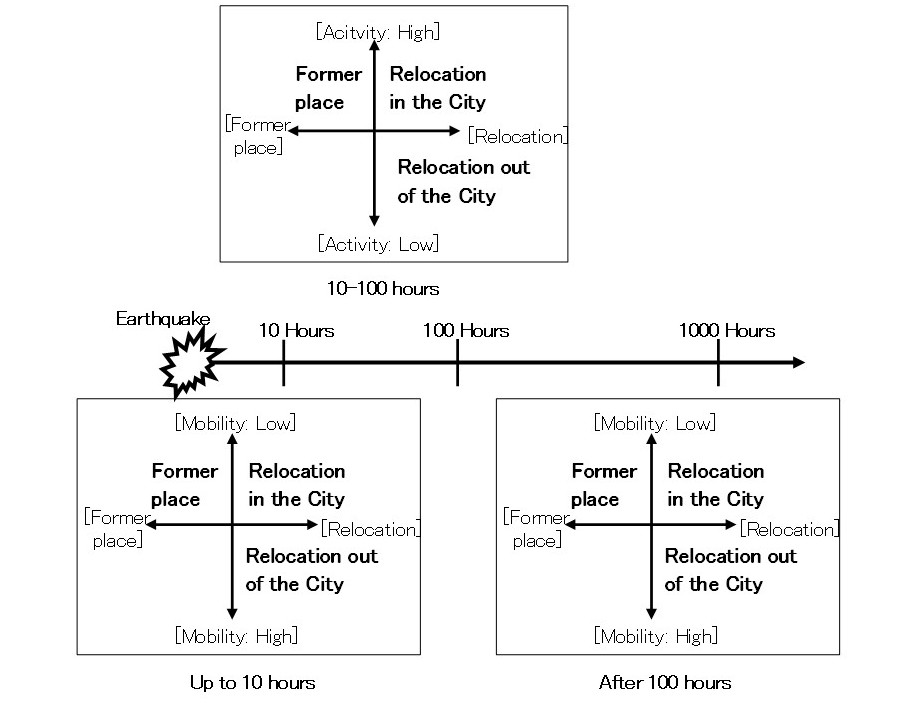
Response phases of victims’ behavior
1. Introduction
Large-scale natural disasters possess a strong dimension of social phenomena, and the patterns of damage and response processes are inherently complex and context-specific. Conventional disaster research in social science has primarily relied on quantitative approaches such as questionnaire surveys, which aim to capture an overall picture of disaster impacts at a particular point in time. Consequently, systematically describing the entire disaster process along a chronological timeline and achieving a comprehensive understanding of its dynamics remains an unresolved challenge.
Despite the increasing recognition of qualitative approaches in disaster studies, a systematic framework for accumulating, preserving, and reusing primary experiential data as a shared research infrastructure remains lacking. In particular, the role of disaster ethnography as both a methodological approach and data infrastructure has not been sufficiently examined.
Disaster ethnography, an approach that applies ethnographic methods developed in cultural anthropology and related qualitative social science traditions to disaster research, can be situated within broader developments in qualitative social research, particularly in ethnography, oral history, narrative inquiry, and disaster anthropology. Since the interpretive turn in the social sciences, ethnographic approaches have been increasingly employed to understand how individuals and communities construct meaning through lived experiences.
Qualitative methods, including in-depth interviews, participant observations, narrative inquiries, and oral histories, have become increasingly important in disaster studies. As noted in the Handbook of Disaster Research 1, these approaches provide valuable insights into lived experiences, sense-making processes, organizational responses, and recovery trajectories that are often difficult to capture using quantitative methods alone. This broader methodological development provides an important intellectual context for the emergence of disaster ethnography.
In disaster studies, researchers such as Hoffman and Oliver-Smith 2, Bolin and Stanford 3, and Tierney 4 have demonstrated the value of qualitative approaches in examining vulnerability, recovery, and social adaptation in disaster contexts. Although these studies have contributed significantly to understanding disasters as social and cultural phenomena, relatively limited attention has been paid to the systematic preservation and reuse of experiential narratives as shared research resources.
Within this broader development of qualitative disaster studies, the disaster ethnography project initiated after the Great Hanshin–Awaji Earthquake represents a distinctive effort to combine ethnographic documentation with the systematic archiving and long-term preservation of disaster narratives. Although many qualitative disaster studies focus primarily on analysis, disaster ethnography places equal emphasis on creating reusable primary data for future research, education, and practice. This study focuses on this development and examines its significance as a methodological and infrastructural framework for disaster studies.
In parallel, oral history projects have been increasingly used to document decision-making processes and institutional responses during disasters, thereby preserving forms of experiential knowledge that may otherwise be lost.
In Japan, large-scale disaster oral history projects led by Mikuriya et al. 5,6 documented the experiences of cabinet ministers, senior government officials, and local government leaders involved in post-disaster recovery, generating unique records of policy formulation, organizational decision-making, and recovery governance. Although disaster ethnography primarily focuses on reconstructing disaster processes from the perspectives of affected individuals and responders, oral disaster history provides valuable records for decision-making at the policy and organizational levels. Together, these approaches preserve and accumulate experiential knowledge as a foundation for future disaster research and practice and may be regarded as complementary components of a broader disaster knowledge infrastructure.
This study provides an overview of the definitions, objectives, and methodological foundations of disaster ethnography. Moreover, it reviews key research cases and the insights derived from them and discusses future research directions and the potential for broader application of this approach.
Scope of Review
This study adopts a narrative review approach rather than a systematic review because the objective is to examine the conceptual and methodological development of disaster ethnography rather than to evaluate empirical findings quantitatively. The discussion is based on studies related to ethnography, disaster anthropology, oral history, qualitative disaster research, and disaster ethnography, published primarily between 1980 and 2025. The reviewed literature was selected based on its relevance to four themes: (1) conceptual foundations of disaster ethnography, (2) methodological developments in qualitative disaster research, (3) preservation and reuse of disaster experience records, and (4) practical and educational applications. Publications exclusively dealing with quantitative disaster surveys or engineering-based damage assessments were excluded unless they directly contributed to discussions on disaster ethnography.
2. Disaster Ethnography as Primary Data
2.1. Problem Statement: The Absence of Primary Data in Disaster Research
When a disaster occurs, many investigations are conducted, ranging from immediate emergency response to studies of long-term recovery processes. Interview surveys and questionnaire-based studies targeting disaster responders and affected residents have been conducted frequently.
The results of these investigations are typically compiled and analyzed, and the findings are published as academic papers. They are also used to plan and evaluate various recovery and reconstruction policies for affected areas.
However, the survey data that form the foundation of these studies—the primary data—are rarely systematically preserved or made publicly accessible. Several factors contribute to this phenomenon. First, many surveys are not originally designed to make primary data publicly available. Second, primary datasets often contain extensive personal information, and the anonymization and editing processes require considerable time and effort. Third, the publication of such data generally requires the consent of the research participants and must comply with strict ethical considerations. Consequently, even within academic institutions such as universities, a significant risk exists that valuable data may be dispersed or discarded when researchers responsible for them relocate or retire.
Furthermore, primary data often depend heavily on the knowledge and contextual understanding of the individuals who collect them. Consequently, when these materials are transferred to third parties, they may not be fully interpretable or usable. Another challenge arises from the diversity of recording media. In addition to traditional paper-based records, digital data are increasingly used; however, digital formats carry the inherent risk of becoming inaccessible owing to technological obsolescence, changes in hardware, or evolving file formats.
Thus, despite the large number of disaster surveys conducted, the institutional framework necessary to systematically accumulate, preserve, and share primary data as an academic foundation remains insufficiently developed in disaster research.
2.2. The Significance of Foundational Literature Sets
One of the major values of ethnography in cultural anthropology lies in its role as foundational literature documenting specific societies or ethnic groups. A prominent example is the Human Relations Area Files (HRAF), a comprehensive collection of ethnographic materials on societies and cultures worldwide. In this system, documents are collected by regional and cultural groups, and experts analyze and organize the entire content of these materials based on a specialized classification framework 7. Such systematically organized collections function as essential scholarly infrastructure supporting research in the field.
Similarly, disaster research would benefit from the development of foundational literature that comprehensively documents disaster experiences. In the natural sciences and engineering, observational and experimental data are routinely preserved and reused for reanalysis and comparative studies. In contrast, in the social sciences, the challenges described above have made it difficult to establish a robust research framework based on the systematic accumulation of primary data.
Recognizing this issue, recent efforts have sought to create, preserve, and disseminate disaster ethnographic data as primary data, thereby establishing a long-term research infrastructure for disaster studies 8.
2.3. Disaster Ethnography as Research Infrastructure
In this study, the term research infrastructure is used in a sense broadly consistent with its application in data-intensive research communities, where it denotes shared systems that enable a community to collect, preserve, access, and reuse data beyond individual projects. Applied to disaster ethnography, it refers to a systematic framework that enables long-term accumulation, organization, accessibility, comparability, and secondary usage of disaster experience data within a research community.
In disaster research, a large amount of experiential information is generated through interviews, surveys, field observations, administrative records, and oral histories. However, many of these materials remain fragmented, unpublished, or accessible only to individual researchers or institutions. Consequently, opportunities for comparative analysis, longitudinal examination, and secondary use are often limited. Disaster ethnography seeks to address this problem by transforming experiential narratives into systematically organized and reusable primary data.
To function as a research infrastructure, disaster ethnography requires several essential components.
First, long-term preservation is necessary to prevent loss or dispersion of valuable disaster records over time. In this regard, publications with ISBN registration and deposition in public archives, such as the National Diet Library, provide an important institutional foundation. Printed materials deposited in public archives offer institutional stability and resistance to technological obsolescence, making them a reliable foundation for long-term preservation. Simultaneously, systematic digital preservation with redundancy remains important and has not yet been fully established.
Second, searchability and comparability are necessary to enable researchers to retrieve and compare cases across different disasters and contexts. Introducing coding systems, such as the Outline of Cultural Materials (OCM) 9, originally developed within the HRAF system, contributes to the structural organization of narratives and improves the comparability of cases. Moreover, digital preservation enhances searchability and comparability by enabling text-based retrieval, cross-case analysis, and integration of emerging computational research tools. Making ethnographic materials openly accessible online can substantially expand their potential for secondary use in comparative research.
Third, metadata organization is important for contextual interpretation. Information on interviewees’ affiliations, roles, geographic locations, disaster phases, and interview timings enables future researchers to understand the conditions under which narratives were produced. The Disaster Ethnography series 10 records such metadata at the beginning of each volume, providing essential context for the interpretation and comparative use of the narratives. Nevertheless, adopting standardized metadata schemas compatible with existing academic databases remains a challenge for future research.
Fourth, ethical governance and access management are indispensable, because disaster ethnographies frequently contain sensitive personal experiences and institutional information. In the current Disaster Ethnography series, informed consent was obtained from all interviewees before publication. However, explicit rules governing secondary use and data sharing have not yet been fully formalized, representing an area requiring future development.
Fifth, reusability and educational applicability are important characteristics of disaster ethnography as an infrastructure. Ethnographic records are not only research materials, but can also function as educational and training resources for disaster preparedness, organizational learning, and policy development.
The first four components constitute the structural conditions of disaster ethnography as research infrastructure. When these conditions are fulfilled, the accumulated data become available not only for academic research, but also for applied purposes such as practitioner training, organizational learning, and policy development.
From this perspective, disaster ethnography can be conceptualized as qualitative data infrastructure connecting research, practice, and education. However, substantial portions of interview data remain unpublished or stored in non-standardized formats by individual researchers. Accumulating ethnographic records from multiple disasters enables comparative analysis across hazard types, regions, organizations, and recovery phases. Such use is essential if disaster ethnography is to function as research infrastructure rather than merely as a collection of individual case studies.
Future challenges include developing common archival standards, metadata frameworks, ethical guidelines, and digital platforms that enable broader sharing and long-term usage of disaster experience records.
3. Definition and Objectives of Disaster Ethnography
Ethnography is a scientific research method to document and analyze the cultures of particular ethnic groups or social communities in a concrete and systematic manner. Disaster ethnography is a methodological approach that seeks to capture and describe the reality of disasters as a social phenomenon in a detailed and comprehensive manner. As each disaster manifests itself differently and the experiences of affected persons vary widely, disasters can be conceptualized as an “unfamiliar culture” to be explored and documented 11,12.
According to Hayashi, disaster research employing ethnographic approaches can be broadly categorized into two orientations 13. The first approach focuses on the perspectives of those who directly experience the disaster, both victims and disaster responders. Using detailed interviews, researchers document the disaster situation, decisions and actions taken by the individuals themselves and those around them, and relationships among these actors, to achieve a comprehensive understanding of the disaster process.
The second approach also emphasizes disaster experiencers’ perspectives but involves long-term investigations extending over several years or more. These studies examine the direct and indirect impacts of disasters, the responses of individuals, groups, and organizations, and their interactions. By situating these responses within the broader social and cultural conditions that existed before the disaster, this approach seeks to enhance the understanding of the disaster. In this study, the former approach is the primary focus. Examples of the latter approach can be found in ethnographic studies such as Oliver-Smith 14 and Bolin and Stanford 3.
The most important objective of disaster ethnography is to reveal the knowledge framework possessed by the people present at the disaster scene, that is, victims and disaster responders. These knowledge frameworks include elements of “culture” and tacit knowledge, such as practical insights, intuitions, and experiential understandings that are difficult to articulate explicitly. Disaster ethnography seeks to translate such tacit knowledge into explicit and communicable forms of knowledge so that it can be understood and shared by those who did not directly experience the disaster. Specifically, the objectives of disaster ethnography include the following:
-
Description and systematic understanding of disaster processes
Disaster ethnography aims to enhance the overall understanding of disasters by examining disaster situations, decisions, actions, and response patterns of individuals, groups, and organizations in detail from the perspective of those who experienced the event.
-
Improving the effectiveness of future disaster response
By identifying implicit principles, operational norms, and practical problem-solving knowledge that emerge in disaster situations, disaster ethnography improves future disaster management and response strategies.
-
Challenging stereotypes
Disaster ethnography seeks to transcend the common stereotypes often reproduced in mass media narratives, such as portraying victims as merely helpless, or administrative authorities as incompetent. Instead, it emphasizes what may be termed “non-obviousness,” focusing on unexpected facts and overlooked realities to reveal the complexities of disaster situations.
In such studies, the narratives provided by research participants are treated as accounts of fragmented experiences of events that actually occurred. By collecting and systematically organizing these narratives, disaster ethnography attempts to reconstruct the overall disaster process from multiple experiential perspectives.
4. Research Methods
Disaster ethnography particularly emphasizes the form of a “written record,” as suggested by the suffix “-graphy.” In this study, disaster ethnography refers to an approach that seeks to achieve a comprehensive understanding of disaster processes by conducting detailed interviews with those who experienced a disaster, such as victims and disaster responders, documenting the disaster situation, decisions and actions taken by the individuals themselves and those around them, and relationships among these actors.
As the quality of the data collected through disaster ethnography depends heavily on the skills and abilities of the individual researcher, the method is sometimes criticized for resembling experiential tacit knowledge and lacking objectivity. Nevertheless, it is widely recognized as a necessary research approach for capturing the complexity of disasters as social phenomena.
Notably, the author has been directly involved in developing the Disaster Ethnography series discussed in this study. Although this involvement provides methodological insight and access to primary materials, it may also introduce a tendency to evaluate these activities favorably. The author has endeavored to present the findings and limitations as objectively as possible; however, readers should interpret the evaluative statements considering this context.
4.1. Data Collection and Interview Techniques
The primary methods of data collection include interviews, group discussions, and participant observations in the field. Interviews constitute the central methodological tool. The key characteristics of the interview approach employed in this study are as follows.
-
Non-structured interviews
The interview process is designed to avoid imposing the researcher’s assumptions or preconceived ideas. Instead, participants are encouraged to freely develop their narratives. By refraining from structuring questions in advance, this approach increases the likelihood of uncovering unexpected facts or perspectives.
-
Emphasis on chronological order
In describing disaster processes, the temporal axis serves as the primary organizational framework. Therefore, participants are asked to recount their experiences chronologically, beginning with the day before the disaster and continuing until the time of the interview.
-
Memory and interpretation
Narratives provided during interviews should be understood not as direct reproductions of events, but as the narrator’s interpretations of those experiences. Accordingly, the objective is not to extract a presumed “true intention” or hidden meaning but rather to collect the diverse realities constructed through individual experiences.
-
Timing of the survey
As emotional stability and a certain degree of recovery in daily life are necessary for reflective narration, interviews are generally conducted some time after the disaster, rather than immediately afterward. For example, interviews are often conducted approximately one year or two after a major disaster.
4.2. Editing of Disaster Ethnography
In interviews, as in everyday conversations, topics often shift abruptly, diverge from the chief subject, or reappear after temporarily disappearing from the discussion 15. To preserve the characteristics of such narratives, this study adopts a basic editorial principle of avoiding excessive summarization and retaining as much of the original content of the narratives as possible.
Furthermore, to allow readers to engage directly with the voices of those who experienced the disaster, the narratives are presented in a monologue format. The questions posed by the interviewer are integrated into the speaker’s narrative whenever possible.
The editing of disaster ethnographies follows the procedure outlined below 16.
-
Non-essential portions of the transcript, such as interjections or casual small talk, are removed.
-
The conversation is divided into segments according to meaningful thematic units, and each segment is assigned a title.
-
These titled segments are reorganized according to chronological order or the flow of activities.
-
Redundant or repetitive passages within each segment are edited to improve readability.
-
The names of organizations and locations are corrected to their official designations, demonstrative expressions are replaced with specific nouns, and annotations are added to technical terms or institutional names when necessary.
Using these processes, narratives retain their sense of immediacy while being organized into a form suitable for use as research material.
4.3. Reliability and Validity in Disaster Ethnography
Disaster ethnography relies heavily on qualitative narratives and interpretive editing processes, ensuring methodological reliability and validity is an important challenge. In particular, issues such as interviewer bias, retrospective interpretation, editorial subjectivity, memory reconstruction, and psychological effects of traumatic experiences must be carefully considered.
This study discusses the reliability and validity of disaster ethnography with reference to commonly used criteria in qualitative research, including credibility, dependability, confirmability, and transferability.
First, credibility was enhanced by emphasizing detailed chronological interviews and encouraging interviewees to describe their experiences in their own words. Rather than extracting predefined answers, the interviews aimed to reconstruct disaster processes from the participants’ perspectives. In addition, interviews were conducted after a certain period of time had passed following the disaster, allowing participants to reflect on their experiences with greater psychological stability. Where possible, edited narratives were shared for review with interviewees or colleagues familiar with the disaster context, providing a form of member checking that helped identify factual discrepancies or significant omissions in the reconstructed accounts.
Second, dependability was addressed through the standardization of interviews, editing, and coding procedures. The editing process followed explicit procedures, including the segmentation of narratives, chronological reconstruction, and annotation of institutional terminology. Furthermore, coding systems, such as the OCM, were introduced to improve procedural consistency and analytical transparency. Although ethnographic research inherently involves individual researcher judgment, the standardized procedures described above are intended to reduce variations arising from differences between interviewers and editors, thereby improving the dependability of the findings across cases.
Third, confirmability was strengthened by maintaining traceability between the original interview records and edited ethnographic texts. Whenever possible, the original transcripts, field notes, and edited versions were managed in parallel so that interpretations and editorial decisions could be examined retrospectively. In addition, triangulation using participant observations, administrative documents, and multiple narratives was employed to reduce excessive dependence on a single source of information.
Fourth, transferability was supported by preserving contextual information regarding the interviewees and disaster situations, including organizational affiliations, roles, locations, and timing of the interviews. By retaining rich contextual descriptions, ethnographic materials can be comparatively interpreted across different disasters and organizational settings.
Simultaneously, several limitations remain inherent in disaster ethnography. Interview narratives are influenced by retrospective interpretation and memory reconstruction, and the meanings attached to the experiences may change over time. In particular, interviewees may unconsciously reconstruct their past decisions and actions considering subsequent outcomes, a form of hindsight bias that is difficult to eliminate entirely in retrospective interview-based research. Moreover, the process of transforming dialogical interviews into monologue-style narratives inevitably involves editorial interpretation. Moreover, the psychological impact of traumatic experiences may affect both the content and timing of narration. Therefore, disaster ethnography should not be understood as a method for extracting objective “facts” alone, but rather as an approach for documenting and interpreting multiple realities constructed through disaster experiences.
Acknowledging these limitations is not a concession of weakness but a prerequisite for strengthening disaster ethnography as research infrastructure. Transparency in interviewing, editing, coding, and archiving enables researchers to evaluate, replicate, and build on prior studies, transforming individual ethnographic work into cumulative, comparable knowledge.
4.4. Preservation and Publication as Primary Data
To maintain their value as primary data, the narrative lengths are not adjusted or reduced. At the beginning of each completed manuscript, relevant background information about the interviewee, such as their institutional affiliation, position, and role at the time of the disaster, is provided whenever possible.
The finalized manuscripts are published in printed booklet form and assigned ISBN numbers, after which they are deposited in the National Diet Library of Japan. This process ensures that the materials are preserved as part of a public archival system, rather than remaining solely in the possession of individual researchers. The Disaster Ethnography series, which focuses on the 2011 Great East Japan Earthquake, currently comprises 33 published volumes (Nos.1–33) 10.
In addition, the Reconstruction Agency of Japan conducted an oral history project involving cabinet ministers, members of the National Diet, senior government officials, and local government leaders involved in reconstruction policies following the Great East Japan Earthquake. This project records important decision-making processes and policy evaluations related to post-disaster recovery. These initiatives complement the framework of disaster ethnography and help create a multi-layered record of disaster response and recovery processes 6.
5. Major Studies Using Disaster Ethnography and Key Findings
Disaster ethnographies collected using the methods described above have been applied to various research areas, including disaster victim behavior, administrative support processes, and community reconstruction. These studies revealed concrete empirical findings that often challenge the conventional understanding of disaster response and recovery.
5.1. Identification of Three Disaster Response Phases in Victims’ Behavior
Based on the analysis of interviews with survivors of the 1995 Great Hanshin–Awaji Earthquake, research focusing on the reconstruction process of housing (“sumai”) identified three distinct temporal phases—10 h, 100 h, and 1000 h—in the response behaviors of disaster victims 17.
The survey was conducted in Nishinomiya City, Hyogo Prefecture, and involved approximately 60 hours of unstructured interviews with 32 households. The data collected were transcribed and compiled into a database. Behavioral histories were mapped using a geographic information system, and statistical analyses were conducted using Quantification Theory.
By analyzing changes in residential locations after the disaster, the victims’ residential trajectories were categorized into three types:
-
(1)
remaining in their original homes;
-
(2)
relocating within the same municipality; and
-
(3)
relocating outside the municipality.
The analysis revealed three clearly identifiable temporal phases in the victims’ response behaviors:
-
Up to 10 h (Disorientation phase)
During this period, victims are unable to fully understand the situation and respond in an ad hoc manner by engaging in rescue activities, confirming the safety of family and neighbors, and evacuating.
-
Up to 100 h (Formation phase of the disaster-affected community)
At this stage, the overall situation gradually becomes clearer. Emergency shelters are established, external assistance begins to arrive, and a temporary disaster-affected community emerges. Victims start exploring options for securing housing and rebuilding their daily lives.
-
Up to 1000 h (Stabilization phase of the disaster-affected community)
With the emergency restoration of lifelines and the entry of volunteers, the disaster-affected community begins to stabilize. Disparities among victims in terms of their residential choices and recovery trajectories become increasingly visible.
After this phase, as broader societal flow systems recover, the temporary disaster-affected social structure gradually dissolves, and individuals begin to move toward long-term livelihood recovery.
To examine the validity of these temporal phases, data on the number of evacuees and overnight shelter occupants in evacuation shelters in Kobe City were analyzed. Clear change points were observed at approximately 10 and 100 hours after the disaster. Additional shifts were identified at approximately 1000 hours (approximately one month) and during the restoration of lifeline services. These findings support the external validity of the proposed temporal structure.
5.2. Standardization of Disaster Ethnography Procedures
Ethnographic research generally depends heavily on the skills and abilities of individual ethnographers, which can result in substantial variations in outcomes. To address this issue, a standardized research methodology was proposed to guide the processes of data collection, case editing, analysis, and evaluation, thereby minimizing variations arising from individual differences among researchers. The goal is to establish procedures that would enable researchers to produce ethnographic studies of consistent quality by following a standardized methodological framework 18.
The proposed standardization method comprises four stages:
-
Interviews;
-
Case editing;
-
Coding; and
-
Identifying disaster processes.
In particular, disaster research as a social science field often lacks a well-developed keyword classification system, making systematic comparison and retrieval of cases difficult. To address this problem, the OCM classification system, widely used in cultural anthropology, was introduced to code the ethnographic data.
By assigning classification codes to each paragraph, the content of the cases can be structurally organized, thereby improving both searchability and comparability. Furthermore, the coded data allow researchers to visualize the structural composition of each case. The distinctive characteristics of each case become clearer by identifying the OCM categories that appear most frequently.
Additionally, the proposed methodology employs a logarithmic temporal framework, dividing post-disaster time into intervals of 10 h, 100 h, and 1000 h—to analyze how specific behaviors and issues emerge over time. This approach enables researchers to capture disaster processes systematically and analytically.
5.3. Analysis of Government Disaster Response Operations and Identification of Challenges
Government disaster response operations face various challenges. Disaster ethnography has been used to examine these challenges, clarify their underlying causes, and propose possible solutions.
5.3.1. Building Damage Assessment Surveys
Following a disaster, victims become eligible for various forms of assistance, depending on the degree of damage to their houses. The survey used to determine the level of housing damage is known as the building damage assessment survey.
The survey is conducted by municipal officials, who inspect buildings and determine the level of damage. However, the process frequently generates significant confusion regarding both the reliability of the assessment and workload of the staff members involved.
To investigate this issue, researchers supported building damage assessment operations, while simultaneously conducting participant observations and interviews with the municipal officials responsible for the surveys. Using this approach, the operational processes were analyzed and key challenges were identified 19,20.
As these surveys are conducted by municipal officials, large-scale disasters often lead to a shortage of qualified inspectors. Simultaneously, the survey must be conducted rapidly and fairly to determine the victims’ eligibility for assistance. Furthermore, the process must be perceived as legitimate and convincing by the affected residents who must accept the survey results.
Achieving fairness and consensus is inherently difficult because each building exhibits unique damage patterns and there is no single objectively correct evaluation. Moreover, because many municipal officials conducting the surveys are not engineers, it is extremely difficult to fully meet these requirements even with training programs.
As a possible solution, a self-assessment approach was proposed in which victims themselves inspect and report damage to their homes rather than relying solely on municipal officials 21.
In addition, the 2011 Great East Japan Earthquake revealed another challenge: because it was a wide-area disaster affecting multiple municipalities, survey procedures and criteria varied significantly among local governments. The accumulation of these issues has been identified as a major factor contributing to declining reliability and operational confusion in the survey process 22.
5.3.2. Support for Housing Reconstruction
Housing reconstruction is a central component in the broader process of livelihood recovery after disasters. Poorly coordinated support systems can result in confusion among residents and increased administrative workloads.
Based on interviews with disaster victims and municipal officials responsible for victim assistance, this study examined the practical processes of housing reconstruction support not by evaluating individual support programs separately, but by analyzing the interrelationships among multiple support systems.
Using the disaster ethnography approach, the study demonstrated that housing reconstruction support does not function as a single policy instrument but rather as a “bundle of institutions.” This perspective enables us to visualize the gap between the principles underlying institutional design and their actual implementation in practice, providing important insights for improving future disaster response policies 23.
Furthermore, as each disaster victim faces unique circumstances and reconstruction strategies, individualized support tailored to specific conditions is required.
Takashima et al. addressed this issue in Anamizu Town, Ishikawa Prefecture, which was affected by the 2007 Noto Peninsula Earthquake. While assisting municipal livelihood reconstruction support operations, they conducted participant observation and proposed the “Livelihood Reconstruction Card” (Kurashi no Saiken Karte) system, which integrates and manages recovery-related information for each affected household 24.
Through practical implementation, the study demonstrated several benefits of this system:
-
ensuring continuity of support through consultation history management;
-
improving information sharing within local government administration;
-
systematically tracking each household’s recovery process; and
-
enhancing communication with disaster victims.
In addition, the analysis of consultation records suggests that affected households can be categorized into four types:
-
households able to rebuild with minimal consultation;
-
households able to rebuild once certain problems are resolved;
-
households requiring frequent consultation despite relatively few institutional barriers; and
-
households facing complex and multiple challenges.
This classification closely resembles the four categories of affected households used in the Sendai City Livelihood Reconstruction Support Promotion Program following the Great East Japan Earthquake. This similarity highlights the pioneering nature and practical relevance of the study.
5.3.3. Action Research and Disaster Case Management
Building on these developments, recent studies have increasingly adopted action research approaches in which researchers actively participate in administrative support activities while simultaneously conducting analytical research.
For example, Sugano analyzed disaster response operations in Kumamoto City following the 2016 Kumamoto Earthquake, focusing on the introduction of a livelihood reconstruction support model that combined leased temporary housing with disaster case management 25.
In this study, the researcher participated directly in administrative practice, contributing to the design of support systems and institutional frameworks, while deriving practical insights from the field of disaster response.
The research further argued that disaster case management should not be treated as a temporary emergency measure limited to disaster situations but rather institutionalized as a system connected to broader social welfare frameworks that operate during normal times.
6. Disaster Ethnography as a Training Text for Disaster Risk Management
A typical application of disaster ethnography is as a training text in disaster drills and workshops. For participants with limited or no experience in disaster response, it is difficult to fully understand the perceptions of affected residents and responders, their judgments, and their response in situations that unfolded over time. Disaster ethnography functions as an educational resource by presenting detailed chronological descriptions of actual disaster response processes. Using such case-based narratives, participants can “re-experience” situations vicariously and better grasp the complexity of decision-making and actions under disaster conditions. Accordingly, disaster ethnography is often positioned as an introductory learning material in training programs and workshops, helping to stimulate participants’ awareness of key issues and establish a shared baseline of understanding.
The significance of this form of use is reflected in the Standard Textbook on Disaster Prevention issued by the Cabinet Office of Japan 26. This text emphasizes the importance of sharing tacit knowledge about what actually occurred in past disasters and how responses were conducted as a form of universal knowledge that administrative personnel engaged in disaster response should share, irrespective of rank or departmental assignment. By translating and structuring such tacit knowledge into written form, disaster ethnography supports learning processes that cultivate the ability to concretely imagine disaster situations (i.e., imagination) and extract practical wisdom and lessons from them. Its educational value lies not merely in presenting illustrative cases, but also in functioning as a medium for understanding the underlying reasoning and cognitive processes involved in disaster response.
The competencies fostered through training employing disaster ethnography have been described as including the following:
-
Understanding the distinctive characteristics of activities under disaster conditions
-
Developing disaster and activity mental models for large-scale events and strengthening situational forecasting capacity
-
Enhancing the ability to organize and understand one’s own role
-
Strengthening the ability to judge the appropriateness of response measures
-
Cultivating the ability to interpret and select disaster-related information
These competencies are closely related not only to knowledge and technical skills in disaster response, but also to cognitive capacities such as situational awareness, decision-making, and role comprehension. In particular, as disasters are characterized by high uncertainty and severe time constraints, formal knowledge alone is often insufficient. Therefore, learning the reasoning process using concrete cases is crucial. Disaster ethnography can be characterized as an educational approach that foregrounds the cognitive dimensions of disaster response.
In practice, training commonly proceeds by dividing participants into small groups, asking them to read disaster ethnography, and extracting lessons aligned with the training objectives, followed by group discussions. Through this process, it becomes apparent that even when participants read the same case, their points of focus and interpretations differ. This makes the differences in perceptions explicit and provides an important educational opportunity. The discussion results are then shared in plenary sessions, and expert commentary is provided to help participants reconstruct and reorganize the lessons derived from the case into more generalized knowledge.
As disaster ethnographies often extend to several dozen pages, shortened or edited versions are commonly prepared to enable reading and discussion within a limited training period. Notably, the process of instructional design itself—deciding what to emphasize and how to edit the material—is closely linked to clarifying the educational objectives. Thus, training practice often involves not only using disaster ethnography as a text, but also actively reconfiguring it for specific pedagogical purposes.
However, adapting disaster ethnographic materials for training inevitably involves a degree of selection and editing that may reduce the contextual richness of the original narratives. The tension between accessibility and ethnographic completeness is an inherent challenge in applying qualitative research materials to practical training contexts. To mitigate this risk, edited training materials should always be accompanied by references to the original ethnographic texts, enabling users to consult the full narratives when a deeper contextual understanding is required.
The effectiveness of these applications has been examined in several studies. For example, Ota 27 implemented a training program for novice fire service personnel using disaster ethnography developed from interviews with volunteer firefighters following a typhoon. The results indicated that disaster ethnography is effective in enhancing imagination related to “cognition” within disaster action processes. This finding suggests that disaster ethnography contributes to the development of core capacities that underpin disaster response, particularly situational awareness and decision-making.
In addition, cross-sectoral applications have been reported, including their use in training aimed at supporting the development of business continuity plans and strengthening disaster response capacity in welfare facilities 28, as well as in developing training materials for human resource development in water utilities 29. These cases indicate that disaster ethnography is not limited to a particular profession; rather, it can serve as a foundational training resource for disaster preparedness personnel across diverse domains, including public administration, welfare services, and infrastructure operations. Moreover, because the content and focal points of ethnographic descriptions can be adjusted according to the operational characteristics of each sector, disaster ethnography can be customized to meet the specific preparedness needs of diverse professional communities.
Another distinctive feature is that unlike lecture-based instruction focused on knowledge transmission, disaster ethnography promotes learning in which participants actively construct meaning. The process of reading a case, extracting lessons, and discussing them with others resembles experiential and scenario-based learning. This suggests that disaster ethnography is well-suited for cultivating the practical judgment and collaborative decision-making abilities required for disaster response.
Disaster ethnography plays an important role as a training text by making tacit knowledge of disaster response visible and fostering participants’ imagination, situational awareness, and judgment. In disaster preparedness training, the combination of reconstructing ethnographic materials according to the training objectives and implementing group-based learning activities positions disaster ethnography as an approach for developing practical competencies beyond mere knowledge acquisition. Considering its cross-sectoral applicability, disaster ethnography is expected to continue evolving as a foundational method of disaster preparedness and capacity building.
6.1. Evaluation Framework for Educational Applications
Although several studies have reported on the practical use of disaster ethnography in disaster education and training programs, evaluating its educational effectiveness remains an important topic for future research. To further establish disaster ethnography as a training methodology, clarifying expected learning outcomes and developing appropriate evaluation frameworks is necessary.
The educational effects of disaster ethnography can be broadly categorized into four dimensions.
First, disaster ethnography contributes to the development of situational awareness by enabling participants to understand how disaster situations evolve over time and how information becomes available, incomplete, or uncertain during different response phases.
Second, it supports decision-making capabilities by exposing learners to actual cases in which disaster victims and responders are required to make judgments under the conditions of uncertainty, resource constraints, and time pressure.
Third, disaster ethnography facilitates role recognition and organizational understanding. Through detailed narratives of disaster response processes, participants acquire an enhanced understanding of the responsibilities, limitations, and interactions of various actors involved in disaster management.
Fourth, it promotes collaborative learning and reflective thinking. Group discussions based on ethnographic cases encourage participants to compare interpretations, identify differing perspectives, and critically reflect on their own assumptions regarding disaster response.
Learning outcomes can be evaluated using both qualitative and quantitative approaches. Quantitative methods may include pre- and post-training questionnaires measuring changes in disaster awareness, role understanding, self-efficacy, and decision-making confidence. Qualitative approaches include reflective reports, focus group discussions, discourse analysis of workshop interactions, and interviews with participants regarding their perceived learning outcomes.
Furthermore, longitudinal evaluations may be employed to examine whether lessons derived from disaster ethnography can be transferred to actual professional practice and organizational preparedness activities. Such mixed-method approaches would provide a more comprehensive understanding of the educational value of disaster ethnography.
Therefore, future studies should transcend reporting the training activities themselves and develop systematic evaluation methodologies that link educational outcomes with improvements in disaster preparedness, organizational learning, and disaster management practices.
7. Conclusion
This study examined the methodological challenges involved in understanding disasters as social phenomena and organized the definition, objectives, and methodology of disaster ethnography as well as key findings from major studies and their potential applications in practice and education.
Disaster ethnography emerged as a methodological approach through investigations conducted after the 1995 Great Hanshin-Awaji Earthquake. Inspired by ethnographic traditions in cultural anthropology, it incorporates several key characteristics of anthropological ethnography and adapts them to the context of disaster research. Consequently, disaster ethnography differs in important respects from traditional ethnography in cultural anthropology 30. Nevertheless, the introduction of this approach has opened new avenues for disaster research.
First, disaster ethnography contributes to the development of a primary data infrastructure for disaster studies. Although numerous surveys have been conducted on disaster research, the systematic preservation and public availability of primary data, particularly in studies addressing disasters as social phenomena, remain insufficient. Disaster ethnography addresses this gap by editing experiential narratives while preserving their original content as much as possible, and organizing them into forms that can be used by third parties. By preserving and publishing these materials as part of public archives, disaster ethnography provides a foundation for forming a “core literature set” for disaster studies.
Second, disaster ethnography contributes to an enhanced understanding of disaster processes. For example, the identification of temporal phases, such as the 10-hour, 100-hour, and 1000-hour phases—demonstrates how disaster response can be interpreted as a sequence of decisions that unfold over time. This temporal perspective allows researchers to identify critical turning points and points of intervention in the disaster response processes. In addition, the standardization of procedures, such as editing and coding, has reduced the craft-like nature of ethnographic work and enabled researchers and practitioners to record and analyze a growing body of narratives using a shared methodological framework.
Third, disaster ethnography provides insights into practical improvements and institutional designs. Analyses of administrative operations, such as building damage assessment surveys and housing reconstruction support, have demonstrated that operational confusion cannot be simply attributed to individual errors. Instead, disaster ethnography reveals structural factors, such as procedural complexity and insufficient coordination among institutional systems. Furthermore, recent developments in action research and discussions on disaster case management suggest that disaster ethnography can extend beyond observations to support practical implementation in disaster governance.
Fourth, disaster ethnography is significant as a training resource. By enabling participants to vicariously experience disaster situations through detailed case narratives, it supports the development of cognitive capacities such as situational awareness, decision-making, and role recognition. In future disaster preparedness training, both adapting ethnographic materials according to training objectives and designing training processes that connect learning outcomes with improvements in actual operational practice are significant.
This study makes three primary contributions to disaster research. First, it conceptualizes disaster ethnography not only as a qualitative research method, but also as a research infrastructure for accumulating and sharing primary experiential data. Second, it demonstrates that disaster processes can be systematically understood through temporal structuring and standardized analytical procedures, thereby bridging the gap between qualitative insights and analytical rigor. Third, it highlights the practical value of disaster ethnography in improving disaster management and training by making tacit knowledge explicit and transferable.
Another direction concerns the potential use of unedited interview transcripts as resources for research and practice. Unedited transcripts preserve the full contextual texture of the disaster experience and may, for research purposes, support a more rigorous reanalysis, including the credibility and confirmability checks discussed above. However, for training purposes, the unstructured and often nonlinear nature of raw interview data, in which topics shift abruptly, diverge, and recur, makes it difficult to incorporate them into conventional training schedules without substantial instructional redesign. Realizing this potential requires the development of new training objectives and formats specifically designed to engage with unedited ethnographic materials.
These contributions suggest that disaster ethnography has the potential to function as a foundational framework integrating research, practice, and education in disaster risk management. Future studies should focus on expanding the accumulation of ethnographic data and developing systems for systematic preservation and utilization.
- [1] H. Rodríguez, W. Donner, and J. E. Trainor (Eds.), “Handbook of Disaster Research,” 2nd ed., Springer, 2017. https://doi.org/10.1007/978-3-319-63254-4
- [2] S. M. Hoffman and A. Oliver-Smith (Eds.), “Catastrophe and Culture: The Anthropology of Disaster,” School of American Research Press, 2002.
- [3] R. Bolin and L. Stanford, “The Northridge Earthquake: Vulnerability and Disaster,” Routledge, 1998. https://doi.org/10.4324/9780203028070
- [4] K. J. Tierney, “From the Margins to the Mainstream? Disaster Research at the Crossroads,” Annu. Rev. Sociol., Vol.33, pp. 503-525, 2007. https://doi.org/10.1146/annurev.soc.33.040406.131743
- [5] T. Mikuriya (Ed.), “C.O.E. Oral History and Policy Research Project: ‘Hanshin-Awaji Earthquake Reconstruction Committee’ (1995–1996), Chair: Atsushi Shimokobe, ‘Simultaneous Progress’: Oral History,” Vols.1 and 2, National Graduate Institute for Policy Studies, 2002.
- [6] Reconstruction Agency, “Oral History,” Website for Passing on the Lessons Learned from the Great East Japan Earthquake. https://www.reconstruction.go.jp/311kyoukun/oral-history/ (in Japanese) [Accessed May 20, 2026]
- [7] Human Relations Area Files. https://hraf.yale.edu/ [Accessed May 20, 2026]
- [8] S. Tanaka and Y. Kuriyama, “Development of a Disaster Ethnography Database Featuring Digital and Analog Methods,” Proc. ISSS, 2017 (in Japanese).
- [9] Human Relations Area Files, “Outline of Cultural Materials.” https://hraf.yale.edu/resources/reference/outline-of-cultural-materials/ [Accessed May 20, 2026]
- [10] “Disaster Ethnography Series,” Nos.1-33, Social Disaster Research Center, Tokoha University, 2016-2025 (in Japanese).
- [11] H. Hayashi and K. Shigekawa, “Producing Disaster Ethnography for the Development of Disaster Ethnology,” Papers of the Annual Conf. of ISSS, No.7, pp. 376-379, 1997 (in Japanese).
- [12] S. Tanaka and H. Hayashi, “Development of Disaster Ethnography for Establishing Disaster Ethnology,” Papers of the Annual Conf. of ISSS, No.8, pp. 14-19, 1998 (in Japanese).
- [13] I. Hayashi, “Disaster Ethnography and Interviews,” J. Japan Soc. Nat. Disaster Sci., Vol.27, No.3, pp. 236-241, 2008 (in Japanese).
- [14] A. Oliver-Smith, “The Martyred City: Death and Rebirth in the Peruvian Andes,” University of New Mexico Press, 1986.
- [15] H. Murakami, “Underground,” Kodansha, 1997 (in Japanese).
- [16] R. Yanagiya et al., “Establishment of Disaster Ethnography Research, Editing, and Utilization Process,” Papers of the Workshop on the Great East Japan Earthquake, ISSS, No.9, pp. 31-34, 2020 (in Japanese).
- [17] S. Tanaka et al., “A Study on the Chronological Development of Disaster Processes,” J. Japan Soc. Nat. Disaster Sci., Vol.18, No.1, pp. 21-30, 1999 (in Japanese).
- [18] S. Tanaka et al., “Development of a Standardized Procedure for Disaster Ethnography,” J. ISSS, No.3, pp. 181-199, 2000 (in Japanese).
- [19] S. Tanaka et al., “Operational Issues for the Housing Damage Evaluation Process in the 2004 Mid-Niigata Earthquake Disaster: Lessons Learned from the Ojiya City Experience,” J. ISSS, No.8, pp. 51-61, 2006 (in Japanese).
- [20] K. Shigekawa et al., “Some Regulatory Issues in Building Damage Assessment: A Case Study of the Niigata-ken Chuetsu Earthquake,” J. ISSS, No.7, pp. 133-140, 2005 (in Japanese).
- [21] S. Tanaka, “Building Damage Inspection Analysis in the 2007 Niigata Chuetsu-Oki Earthquake, Kashiwazaki: Self-Inspection Analysis for Damage Evaluation,” J. Disaster Res., Vol.3, No.6, pp. 372-380, 2008. https://doi.org/10.20965/jdr.2008.p0372
- [22] S. Tanaka and K. Shigekawa, “Building Damage Evaluation Analysis of Tsunami Damage in the 2011 Great East Japan Earthquake,” J. ISSS, No.18, pp. 269-275, 2012 (in Japanese).
- [23] K. Shigekawa et al., “Analysis of the Correlation Between Public Assistance Systems for the Restoration of Damaged Dwellings: A Case Study of Ojiya City After the 2004 Mid-Niigata Earthquake,” J. ISSS, No.8, pp. 71-80, 2006 (in Japanese).
- [24] M. Takashima, S. Tanaka, and K. Shigekawa, “Household Recovery Consulting Using Household Recovery Support Chart in Anamizu Town After the March 2007 Noto Peninsula Earthquake,” J. Disaster Res., Vol.3, No.6, pp. 381-389, 2008. https://doi.org/10.20965/jdr.2008.p0381
- [25] T. Sugano, “Significance and Future Issues Concerning the Provision of Temporary Housing, Mainly Through Private Rental Houses, and Disaster Case Management: An Action Research Study in Kumamoto City Applying Research Results from the Great East Japan Earthquake,” J. ISSS, No.31, pp. 177-186, 2017 (in Japanese).
- [26] Cabinet Office, “Standard Textbook on Disaster Prevention,” 2007 (in Japanese).
- [27] K. Ota, “A Case Study Utilizing Disaster Ethnography for Emergency Responder Training,” J. ISSS, No.12, pp. 93-99, 2010 (in Japanese).
- [28] H. Kagiya et al., “Approaches to the Identification of Issues Regarding Disaster Management in Welfare Facilities for Persons with Disabilities and the Formulation of a Business Continuity Plan (BCP),” J. ISSS, No.27, pp. 113-120, 2015 (in Japanese).
- [29] Y. Shiga et al., “Development of Training Materials for Human Resource Development Utilizing Disaster Ethnography Research from the Great East Japan Earthquake,” Proc. Japan Water Works Association 2019, Session ID 9-50, 2019 (in Japanese).
- [30] Y. Noguchi and S. Kikuchi, “Discussion on an Ethnographic Approach to Post-Disaster Settings in Architectural Planning Studies,” J. Architecture and Urban Design, Kyushu University, No.39, pp. 7-14, 2021 (in Japanese).
This article is published under a Creative Commons Attribution-NoDerivatives 4.0 Internationa License.