
Review:
Bridging Post-Disaster Life Recovery and Recovery Planning Through Residential Mobility Research: Toward Interdisciplinary Research for Transformative Adaptation
Tamiyo Kondo†

Research Center for Urban Safety and Security, Kobe University
1-1 Rokkodai, Nada-ku, Kobe, Hyogo 657-8501, Japan
†Corresponding author

This study reviews research on residential mobility in disaster risk reduction and post-disaster recovery from an urban planning perspective while incorporating sociological insights. Based on 83 studies identified in the Web of Science and J-STAGE databases, it examines how residential mobility influences life recovery and community recovery and explores its implications for recovery planning. The review demonstrates that residential mobility is not simply a change in residence, but a dynamic process that simultaneously reshapes livelihoods, social relationships, communities, housing, land use, and urban structure. The identified impacts are multifaceted, long-term, cascading, and inequitable while also involving adaptive responses by individuals and communities. Six normative planning agendas were identified: inclusive and collaborative planning, context-sensitive and people-centered planning, life-space and social network-oriented planning, planning for long-term and cascading effects, planning beyond administrative and project boundaries, and planning to support adaptation. These findings can be systematically interpreted through the Five Principles of Disaster Risk Reduction for “Leave No One Behind,” suggesting that they provide a common theoretical foundation linking sociology and urban planning. The review further reveals that planning scholarship has evolved from controlling residential mobility and mitigating its negative consequences toward “Planning for Transformative Adaptation,” which conceptualizes residential mobility as a process of adaptation and transformation. This study offers an analytical framework that integrates life recovery and spatial restructuring through residential mobility, thereby connecting adaptation research and urban planning and providing a foundation for interdisciplinary research on transformative adaptation.
1. Introduction
This study reviews research on residential mobility in disaster risk reduction and post-disaster recovery from a planning perspective while incorporating sociological insights. It seeks to clarify the intersection between life recovery and recovery planning and explore the interdisciplinary domain connecting sociology and planning studies. The need for closer engagement between these fields can be summarized in three respects.
First, planning studies tend to emphasize visions and interventions at urban and regional scales while comparatively focusing less on the lived realities of individuals and households. Therefore, a better understanding of the complementary relationship between planning and life recovery is necessary, if planning serves as the foundation for post-disaster life recovery.
Second, while sociology primarily seeks to describe social realities and explain social phenomena, planning studies are grounded in normative approaches that envision a desirable future. Consequently, planning research may become overly constrained by institutional frameworks and fail to fully capture actual residential conditions.
Third, as Mileti 1 argued, disasters are shaped by accumulating social choices embedded in land use, development, institutions, and public policy. Therefore, as a social product, planning can serve as a means of reducing disaster risk, however, it can also contribute to producing and amplifying risk when promoting development in hazard-prone areas. Furthermore, Tierney 2 emphasized that disaster risk and vulnerability are produced through social inequalities and institutional and political processes. Therefore, planning should be understood not only as a technical or rational exercise, but also as a process that determines whose interests and values are reflected and how benefits and burdens are distributed. This perspective highlights the importance of the principle of “Leave No One Behind.”
In recent years, the principle of “Leave No One Behind” has become central in international disaster policy. Disaster recovery is now widely understood not only as physical reconstruction, but also as an inclusive and sustainable process that restores livelihoods, everyday life, health, and socioeconomic activities while reducing future disaster risks and strengthening community resilience 3,4,5,6. The Sendai Framework for Disaster Risk Reduction 2015–2030 further promotes the concept of Build Back Better, which aims to achieve safer and more resilient societies through recovery, rehabilitation, and reconstruction 3.
This study defines recovery as a process that simultaneously supports restoring affected people’s lives, reorganizing residential environments, and enhancing sustainability, livability, and resilience. Although the concept of Build Back Better has become widely recognized in disaster studies, the objective of recovery planning is not simply to create “better” or “stronger” cities. Rather, this study adopts the position that urban planning should contribute to rebuilding the foundations of everyday life and supporting the recovery of disaster-affected populations.
Among the many dimensions of disaster recovery, this study focuses on residential mobility. Residential mobility represents a critical turning point in the recovery of affected households, while simultaneously transforming urban footprints and spatial structures. Studies on post-disaster recovery have developed along two largely separate trajectories: sociological studies examining life recovery, livelihoods, social relationships, and adaptation processes; and planning studies focusing on land-use change, housing reconstruction, infrastructure development, and relocation programs. However, in practice, life recovery and spatial reorganization are mutually influential processes, and analyzing them separately provides only a partial understanding of recovery.
To address this challenge, this study adopted the Five Principles of Disaster Risk Reduction proposed by disaster sociologist Shigeo Tatsuki as its analytical framework: (1) wholeness, (2) continuity, (3) equity, (4) collaboration, and (5) diversity 7. These principles were developed to operationalize the goal of “Leave No One Behind,” and examine whether recovery: (1) understands life as an integrated system; (2) recognizes the persistence of pre-disaster vulnerabilities, structures, and inequalities; (3) avoids the concentration of disadvantages on particular groups or areas; (4) promotes consensus-building and interorganizational coordination; and (5) acknowledges both restorative recovery and transformative adaptation as possible pathways.
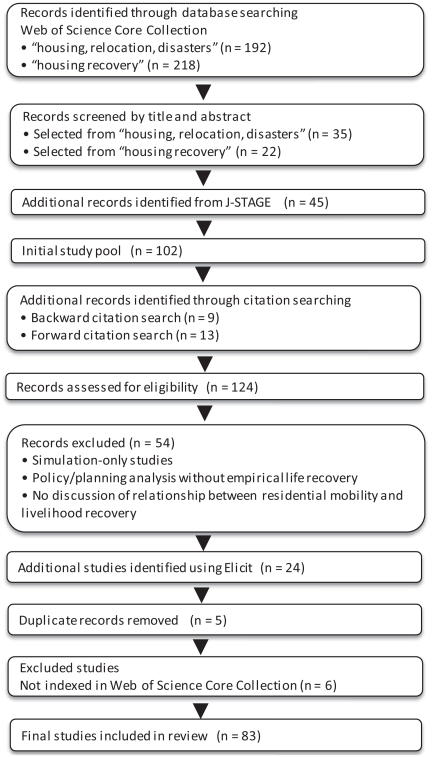
Fig. 1. PRISMA flow diagram of literature selection process.
2. Method
The literature was reviewed through a stepwise search and selection process designed to ensure the systematic and transparent identification of relevant studies. This review covered peer-reviewed articles indexed in the Web of Science Core Collection and Japanese articles published in J-STAGE. Studies on post-disaster residential mobility and life recovery have accumulated extensively in Japan, particularly following the 2004 Niigata Chuetsu Earthquake and the 2011 Great East Japan Earthquake. Therefore, including Japanese literature was intended to complement insights that could not be captured by international publications alone. J-STAGE is a Japanese electronic journal platform operated by the Japan Science and Technology Agency that provides full-text access to scholarly journals, many of which are published in Japanese. Unlike citation indexing databases such as Web of Science and Scopus, J-STAGE primarily functions as a journal-publishing platform.
Literature selection was conducted according to the “Preferred Reporting Items for Systematics Reviews and Meta-Analyses” (PRISMA) guidelines. The corresponding flow diagram is presented in Fig. 1.
A preliminary search was conducted to determine the appropriate search terms. The results indicated that using the term residential mobility retrieved several studies on everyday residential mobility, population mobility, and migration, primarily in the fields of demography and geography, making it difficult to efficiently identify planning and housing studies that focus on post-disaster housing recovery and residential mobility. Therefore, the search terms housing, housing recovery, relocation, and disaster were used to identify studies addressing post-disaster housing recovery, residential mobility, and housing reconstruction. Selecting these search terms prioritized the identification of literature highly relevant to the objectives of this study rather than maximizing the number of retrieved publications.
For English-language literature, topic searches were conducted in the Web of Science Core Collection using two sets of keywords. Searches for “housing, relocation, disasters” yielded 192 articles, whereas searches for “housing recovery” yielded 218 articles. The search results were screened based on their relevance to recovery planning and recovery. An initial screening was conducted using article titles, followed by a review of abstracts to assess their suitability for the study objectives. Consequently, 35 and 22 articles were selected from the respective searches.
For Japanese-language literature, a similar search and screening process was conducted using J-STAGE, which resulted in the selection of 45 articles. These 102 articles were included in the initial study pool. Additional studies were identified using a citation-based search. First, a backward search of the reference lists of the selected articles identified nine additional studies that fulfilled the same selection criteria. Subsequently, a forward search based on citation relationships identified 13 additional studies.
The initial study pool and additional studies (124 articles) were included in the final selection process. Only studies that empirically examined post-disaster residential mobility, life recovery, and their relationship were retained. Studies relying solely on simulation analyses and those limited to institutional or policy analyses without examining the lived experiences of disaster-affected populations were excluded. This resulted in the selection of 70 articles.
To complement the keyword-based search, an additional search was conducted using Elicit, an AI-assisted literature-discovery tool. Bernard et al. 8 suggested that Elicit could be used as a complementary tool alongside conventional database searches to support a systematic literature review. The Elicit search identified 24 additional studies. Finally, five duplicate articles were removed. To maintain consistency in database coverage and selection criteria, six studies identified through Elicit that were not indexed in the Web of Science Core Collection were excluded. After these procedures, 83 articles were included in the final analysis (Fig. 1).
No restrictions were placed on the publication period because this study aimed to provide a comprehensive overview of the research trends in the field. The body of research on post-disaster housing reconstruction has developed at different times depending on the type of disaster and regional context, and includes foundational studies that continue to be widely cited. Therefore, restricting the search to a specific publication period may have resulted in the omission of important studies relevant to the objectives of this review. From the 83 selected articles, statements describing (1) the impact of residential mobility on life recovery and (2) planning implications derived from residential mobility were extracted and summarized into a single sentence for each finding. Thereafter, the authors classified these statements using an affinity diagramming method. Using this classification process, this study identified the conceptual structure underlying the influence of residential mobility on life recovery.
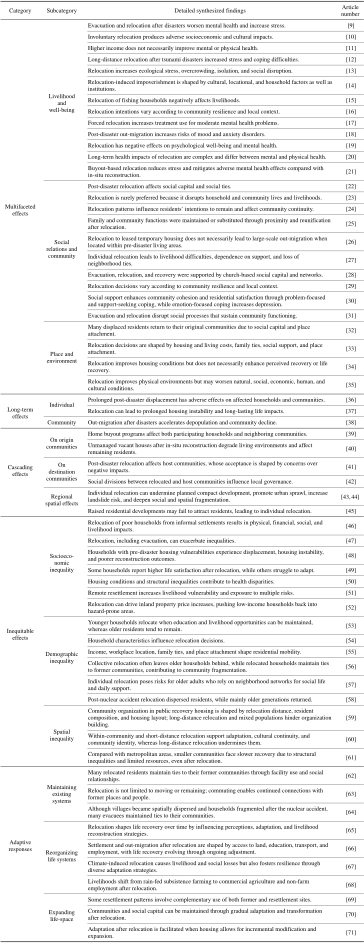
Table 1. Residential mobility effects.
3. Results
3.1. Effects of Residential Mobility
The effects of post-disaster residential mobility on life recovery and community, and spatial recovery were classified into five categories: (1) multifaceted effects, (2) long-term effects, (3) cascading effects, (4) inequitable effects, and (5) adaptive responses (Table 1).
Studies on “multifaceted effects” indicate that the impacts of residential mobility transcend housing reconstruction to multiple dimensions, including livelihood, health, psychological well-being 9,11,12,17,18,19,20,21, social relationships 13, and community conditions 16. The literature documents negative consequences during the recovery process, such as changes in neighborhood relationships and mutual-support networks, declines in community functions, and loss of social capital 22,23,24,25,26,27,28,29,30,31. Furthermore, even when improvements in housing and residential environments were achieved, other challenges emerged, including the loss of attachment to former places of residence and changes in everyday conveniences 32,33,34,35.
Studies on “long-term effects” reveal that the impacts of residential mobility do not end immediately after relocation but continue over extended periods. Reported outcomes include persistent residential instability, secondary relocation, return migration, and difficulties in achieving permanent resettlement 36,37. At the community level, residential mobility is associated with structural changes, such as population decline, population aging, and community weakening 38. Moreover, the literature reports that some disaster-affected households return to their original communities despite relocation programs intended to reduce disaster risk, owing to factors such as loss of social capital, attachment to place, and livelihood constraints, indicating that long-term settlement after relocation is not always achieved 32.
Studies on “cascading effects” demonstrate that the impacts of residential mobility transcend relocated households and affect both origin and destination communities. In origin areas, increases in vacant houses and vacant land, as well as declines in community functions, have been documented 39,40. In destination areas, challenges related to housing markets, public services, and relationship-building among residents have been reported 41,42. Studies on residential buyout programs identify not only reductions in place attachment and social capital among participating households, but also signs of decline in neighborhoods adjacent to buyout areas, thereby hindering broader community recovery 39. In addition, the accumulation of residential mobility can alter the urban structure, population distribution, and spatial distribution of disaster risks 44,45. For example, studies on areas affected by the Great East Japan Earthquake report that individual residential mobility proceeded contrary to government-led plans for compact urban development through collective relocation, resulting in urban sprawl, declining urban density, creation of new disaster risks, vacant land in newly developed areas, and social and spatial fragmentation 43.
Studies on “inequitable effects” reveal that the impact of residential mobility varies according to factors such as income, assets, age, household composition, and relocation distance. The literature documents difficulties in securing housing and rebuilding livelihoods among low-income households 46,47,49,50,51,52, as well as challenges faced by older adults in maintaining social relationships and adapting to new environments 53,54,55,57,58. Pre-disaster housing vulnerability increases the risk of displacement and residential instability, and reduces the quality of housing reconstruction and repair 48. In the case of collective relocation, some older households remain in their original settlements under disadvantaged conditions, whereas relocated households may improve their settlement intentions and life satisfaction while maintaining ties with their former communities 56. Geographic conditions are also important. Long-distance relocation can disrupt activity spaces and social relationships 59,61, whereas suburban relocation programs may separate residences from employment opportunities, creating disparities in the pace of livelihood and life recovery 60.
Finally, a growing body of literature conceptualizes residential mobility not only as a process of loss and disruption, but also as an active “adaptation response” by individuals and communities. Documented practices include continued visits to former communities, participation in community activities after relocation, and multilocal lifestyles involving movement between multiple places of residence 69,62,63,64. Other studies reported autonomous adjustments in residential environments through housing extensions and modifications 71. These findings suggest that relocation should not be understood as a binary choice between leaving and remaining, but as a practice through which ties with former communities can be maintained through continued circulation 63. Moreover, the literature documents adaptive responses, such as forming new social relationships and livelihoods 65,66,67,68, reconstructing family and community functions through nearby residences, and reunifying households 25.
Table 2. Normative agenda for planning.
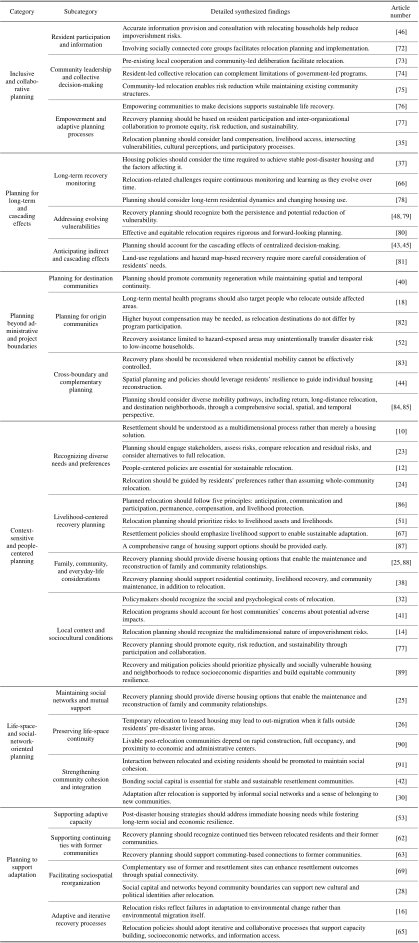
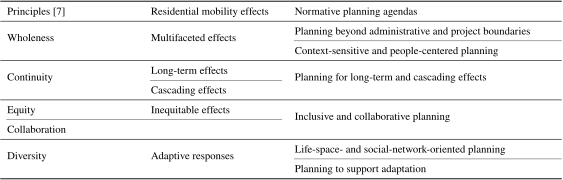
Table 3. Relationship of residential mobility effects and normative planning agendas to the five principles of disaster risk reduction.
3.2. Normative Agenda for Planning
In addition to documenting the effects of residential mobility, the studies reviewed have numerous implications for relocation planning and recovery policies. Synthesizing these findings, six normative planning agendas were identified: (1) inclusive and collaborative planning, (2) planning for long-term and cascading effects, (3) planning beyond administrative and project boundaries, (4) context-sensitive and people-centered planning, (5) life-space and social network-oriented planning, and (6) planning to support adaptation (Table 2).
The literature highlights the effectiveness of resident participation, information sharing, interdisciplinary collaboration, and iterative planning processes within “inclusive and collaborative planning” 77,35. Participation in planning from the early stages, transparent decision-making processes, and adequate information provision have been identified as factors contributing to higher post-relocation satisfaction and stronger intention to remain in relocated communities 46,72. Moreover, community-led relocation initiatives and local leadership have been reported to facilitate relocation processes and support the maintenance of community functions 73,75. For example, resident-driven collective relocation projects have been found to achieve higher levels of life recovery satisfaction than government-led initiatives, suggesting that active resident involvement is an important foundation for post-relocation recovery 74. The literature further indicates that practitioners play an essential role in supporting participation and empowering communities to make autonomous decisions regarding long-term recovery 76.
Studies related to “planning for long-term and cascading effects” emphasize the importance of continuously monitoring long-term settlement outcomes and life recovery processes following relocation 37,66,78. Further, literature suggests that relocation may generate new forms of vulnerability and inequality, highlighting the value of long-term monitoring and adaptive responses 48,66,80,79. Furthermore, the reviewed studies indicate that relocation policies can have broader implications for mobility patterns, population distribution, urban structures, and disaster risk distribution, highlighting the importance of considering indirect and cascading effects 43,45,81. Accordingly, planning scholars argue that planning should incorporate incremental and adaptive responses to dynamic recovery processes while remaining attentive to the cascading effects of centralized planning decisions 43.
Studies on “planning beyond administrative and project boundaries” focus on changes occurring outside designated planning areas. Studies examine issues such as vacant housing and population decline in origin communities 40, and impacts on housing markets and public services in destination communities 18,52. These findings suggest the need to understand the origin and destination areas as components of interconnected systems 83,44,84,85. The literature further reveals that life recovery after relocation is shaped not only by new residential environments, but also by existing socioeconomic networks and connections extending beyond local communities. Consequently, relocation policies should address not only housing provisions within project areas, but also connections with broader socioeconomic systems spanning both origin and destination communities 18.
Studies on “context-sensitive and people-centered planning” emphasize the importance of planning based on the lived realities of affected populations and local contexts, rather than focusing solely on the implementation of relocation projects. Key considerations identified in the literature include accommodating diverse needs and relocation preferences 10,23,12,36, supporting livelihoods and life recovery 86,51,67,87, providing housing and residential options that enable the maintenance of family and community relationships, and considering locally specific cultural and institutional conditions 25,73,88,89.
Studies on “life-space and social network-oriented planning” highlight the importance of maintaining and rebuilding activity spaces and social relationships during recovery. The proposed approaches include nearby and group relocation, which preserve continuity in daily activity spaces 26,90, as well as measures to facilitate interaction between existing and new residents and to support community formation 91,42,30. Moreover, the literature notes that temporary housing in leased private rental units may contribute to population outflow from disaster-affected areas when households relocate beyond their existing activity spaces 26.
Studies on “planning to support adaptation” conceptualize relocation not as a one-time event, but as an ongoing process of adaptation. The literature emphasizes strengthening adaptive capacity 53, supporting continued ties and mobility between former and current places of residence 62,63, and developing planning processes that can be flexibly adjusted to changing circumstances 16,65. For example, relocation cannot be adequately understood through a simple dichotomy of departure versus settlement, as many affected households continue to maintain relationships with former communities while rebuilding their lives through recurrent visits and interactions 62,63. Studies have also documented the formation of new social relationships and communities 28 and resettlement patterns in which the former and current places of residence function in complementary ways 69. Planning scholars argue that planning should support adaptation through capacity building, continued access to socioeconomic networks, information and support provisions, and iterative co-design processes that respond to the changing needs of residents over time 65. Collectively, these studies demonstrate that life recovery after relocation changes over time and is shaped by access to land, education, transportation, employment, and other resources. This supports the view that residential mobility should be understood as a dynamic process of adaptation rather than a fixed outcome.
4. Discussion
4.1. Interpreting Residential Mobility Research through the Five Principles of Disaster Risk Reduction
The impact of residential mobility on life recovery and the normative planning agendas identified in the Section 3 can be interpreted from the perspective of the Five Principles of Disaster Risk Reduction proposed by Tatsuki 7, as discussed in Table 3.
The principle of “wholeness” corresponds to a perspective that understands residential mobility as a process of reorganizing the entire life system. This review confirms that the impact of residential mobility transcends changes in housing and land use to include livelihoods, health, social relationships, community conditions, and attachment to places. Similarly, the identified planning agendas emphasized people-centered approaches and attention to lived realities. Planning is required to support life recovery across both the origins and destinations of residential relocation, transcending the spatial boundaries between the two. Together, these findings suggest that residential mobility should be understood not simply as spatial movement, but as a phenomenon affecting multiple dimensions of the life system.
The principle of “equity” is closely related to the inequitable effects identified in this study. These findings demonstrate that the effect of residential mobility is not uniform across disaster-affected populations, but tends to be concentrated among the elderly, low-income households, vulnerable populations, and particular localities. This highlights the limitations of evaluating recovery solely in terms of disaster risk reduction or housing provision. Moreover, assessments must consider how the benefits and burdens associated with relocation are distributed.
The principle of “collaboration” corresponds to the agenda of inclusive and collaborative planning. The reviewed studies repeatedly emphasized the importance of resident participation, consensus-building, and community-led initiatives. As the effects of residential mobility vary across places and populations, and because recovery needs are diverse, one-way planning by government agencies alone is insufficient. These findings highlight the importance of planning processes developed and adjusted by involving multiple stakeholders.
The principle of “diversity” is consistent with viewing residential mobility not solely as a source of impacts and losses, but also as a process of adaptation by individuals and communities. Similarly, Tatsuki’s 7 distinction between restorative recovery and transformative adaptation is reflected in the reviewed studies. The former involves stabilizing everyday life while maintaining and adjusting relationships with one’s former places of residence. The latter refers to lifestyle transformations through the reconfiguration of activity spaces and social relationships, as illustrated by the formation of new social ties and multi-local living arrangements. Planning should support not only physical relocation, but also the reconfiguration of social relationships and adaptive processes. These findings suggest that recovery is not simply a process of returning to pre-disaster conditions but a multilayered process in which existing relationships are partially maintained while new social and spatial relationships are created.
As discussed above, the Five Principles of Disaster Risk Reduction proposed based on the accumulated research on disaster survivors’ life recovery 92 are highly consistent with the findings of this review on community recovery and recovery planning through residential mobility (Table 3). This finding has several important implications.
First, the Five Principles of Disaster Risk Reduction have the potential to serve as a common theoretical foundation linking sociology and planning. Second, despite their relevance, the findings suggest that these principles have not yet been fully realized in community recovery or recovery planning, indicating that neither sociology nor planning has yet established sufficient methodologies for implementing these principles.
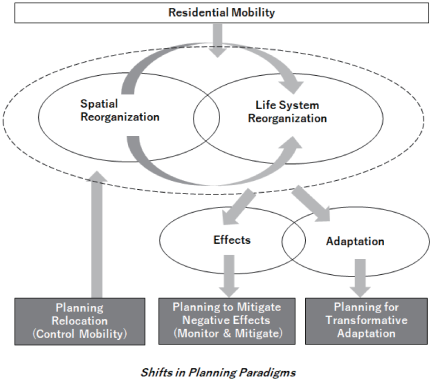
Fig. 2. Residential mobility as a mediating process linking life-system reorganization, spatial reorganization, and planning paradigms.
4.2. Reframing Planning Approaches in Residential Mobility Research
This review identifies six normative planning agendas. These agendas also reflect the evolution of planning perspectives on residential mobility and a broader shift in planning paradigms. Accordingly, they were synthesized into three planning approaches: “Planning Relocation,” “Planning to Mitigate Negative Effects,” and “Planning for Transformative Adaptation.” Rather than simply grouping the six planning agendas, these three planning approaches illustrate a progression from planning that controls disaster risks before they occur to planning to monitor and adjust the consequences of residential mobility after disasters, and finally, to planning that transforms the assumptions, institutions, and practices of the planning itself (Fig. 2).
The first approach, “Planning Relocation,” focuses on how relocation from high-risk areas to safer locations can be achieved. This approach corresponds to “inclusive and collaborative planning” and “context-sensitive and people-centered planning.” It is based on the assumption that residential mobility itself can be improved through planning interventions and that relocation outcomes can be enhanced through appropriate planning processes.
The second approach, “Planning to Mitigate Negative Effects,” emphasizes reducing the social, livelihood-related, and spatial consequences that emerge after relocation. This approach corresponds to “planning for long-term and cascading effects,” “life-space and social network-oriented planning,” and “planning beyond administrative and project boundaries.” It considers relocation not as a completed action but as a process with continuing consequences. Accordingly, planning transcends the implementation of relocation to address adverse social, spatial, and livelihood consequences. Understanding these consequences is essential to improve relocation-oriented planning approaches.
The third approach, “Planning for Transformative Adaptation,” conceptualizes residential mobility as a process of adaptation and seeks to support the reorganization of both life systems and spatial systems. This approach corresponds to “planning to support adaptation.” Rather than merely responding to or adjusting for negative consequences, it recognizes that disaster experiences and residential mobility may trigger active transformations in life systems, including the exploration of new lifestyles and ways of living. The findings suggest that conventional planning has primarily addressed the challenges of residential mobility within the scope of adjustment, whereas more fundamental challenges require a transition toward transformation.
Therefore, achieving transformative adaptation requires not only extending planning to incorporate adaptation and transformation, but also transforming planning itself by reconsidering the assumptions and norms on which conventional planning has been based. As planning alone is insufficient to achieve transformative adaptation, future studies should develop interdisciplinary frameworks that integrate planning and disaster sociology to better understand how individuals and communities adapt and transform, while examining institutions, policies, and planning in an integrated manner.
4.3. Limitations
This study has two chief limitations. First, the classifications presented in Tables 1 and 2 were performed by a single author. Consequently, researchers can develop different category structures or assign labels to different categories. Therefore, the classifications presented in this study do not indicate the level of interrater reliability or reproducibility expected from quantitative analyses. Future studies should enhance the validity of the classification by comparing classifications produced by multiple researchers and further examining the classification process.
Second, this study examines cases from diverse sociocultural contexts, including Japan, the United States, China, and other regions affected by the Indian Ocean tsunami. However, it did not examine in detail how differences in sociocultural contexts, such as housing policies and housing cultures, influence residential mobility and life recovery. Therefore, the applicability of the findings presented in this study should be further examined considering the sociocultural context of individual countries and regions.
5. Conclusion
This study conceptualized post-disaster residential mobility as a process that mediates the reorganization of life systems and spatial restructuring. This review demonstrates that residential mobility is a dynamic process through which livelihoods, social relationships, communities, housing, land use, and urban structures are simultaneously reshaped. This further indicates that life recovery research and studies on spatial restructuring and recovery planning should not be viewed as separate lines of inquiry. Rather, they are closely interconnected through residential mobility.
This study offers two major contributions to existing literature. First, it provides a perspective connecting adaptation and urban planning research by presenting an analytical framework that integrates life recovery and spatial restructuring through residential mobility. Second, it systematically synthesizes previous studies on housing recovery and residential mobility using the Five Principles of Disaster Risk Reduction and three planning approaches, highlighting the importance of planning for transformative adaptation.
Future studies should further examine the mechanisms by which life-system reorganization and spatial restructuring interact. In particular, advancing planning for transformative adaptation requires not only further developments in planning research, but also stronger interdisciplinary collaboration with disaster sociology to better understand how individuals and communities adapt and transform after disasters.
Acknowledgments
This work was supported by JSPS KAKENHI Grant Number 25K01397.
- [1] D. S. Mileti, “Disaster by design: A reassessment of natural hazards in the United States,” Joseph Henry Press, 1999.
- [2] K. J. Tierney, “Disasters: A sociological approach (2nd ed.),” Polity Press, 2025.
- [3] United Nations Office for Disaster Risk Reduction, “Sendai framework for disaster risk reduction 2015–2030,” United Nations, 2015. https://www.undrr.org/publication/sendai-framework-disaster-risk-reduction-2015-2030 [Accessed June 6, 2026]
- [4] P. R. Berke, J. Kartez, and D. Wenger, “Recovery after disaster: Achieving sustainable development, mitigation and equity,” Disasters, Vol.17, Issue 2, pp. 93-109, 1993.
- [5] G. Smith and D. Wenger, “Sustainable disaster recovery: Operationalizing an existing agenda,” H. Rodriguez, E. Quarantelli, and R. Dynes (Eds.), “Handbook of disaster research,” Springer, pp. 234-257, 2006.
- [6] R. B. Olshansky, L. A. Johnson, and K. C. Topping, “Rebuilding communities following disaster: Lessons from Kobe and other cities,” Built Environment, Vol.32, Issue 4, pp. 354-374, 2008.
- [7] S. Tatsuki, “Five principles of diversified, equitable, and inclusive disaster risk reduction for all-weather purpose public health, medical, and social service collaborations,” Igaku no Ayumi, Vol.292, No.2, pp. 145-151, 2025. https://doi.org/10.32118/ayu292020145
- [8] N. Bernard, Y. Sagawa Jr, N. Bier, T. Lihoreau, L. Pazart, and T. Tannou, “Using artificial intelligence for systematic review: The example of Elicit,” BMC Medical Research Methodology, Vol.25, No.1, Article No.75, 2025. https://doi.org/10.1186/s12874-025-02528-y
- [9] E. Fussell and S. R. Lowe, “The impact of housing displacement on the mental health of low-income parents after Hurricane Katrina,” Social Science & Medicine, Vol.113, pp. 137-144, 2014. https://doi.org/10.1016/j.socscimed.2014.05.025
- [10] H. N. Bang and R. Few, “Social risks and challenges in post-disaster resettlement: The case of Lake Nyos, Cameroon,” J. of Risk Research, Vol.15, Issue 9, pp. 1141-1157, 2012. https://doi.org/10.1080/13669877.2012.705315
- [11] S. B. Tan, M. C. Waters, and M. C. Arcaya, “Analyzing the long-term impact of post-disaster relocation and implications for disaster recovery policy,” Int. J. of Disaster Risk Reduction, Vol.70, Article No.102765, 2022. https://doi.org/10.1016/j.ijdrr.2021.102765
- [12] N. Fernando, “Lessons learnt from long term impact of 2004 tsunami relocation: A case study of selected relocation settlements in Akmeemana Divisional Secretary Division in Galle District, Sri Lanka,” Procedia Engineering, Vol.212, pp. 47-54, 2018. https://doi.org/10.1016/j.proeng.2018.01.007
- [13] J. K. Riad and F. H. Norris, “The influence of relocation on the environmental, social, and psychological stress experienced by disaster victims,” Environment and Behavior, Vol.28, Issue 2, 1996. https://doi.org/10.1177/0013916596282001
- [14] M. Quetulio-Navarra, A. Niehof, H. Van der Horst, and W. Van der Vaart, “Short-term risk experience of involuntary resettled households in the Philippines and Indonesia,” Habitat International, Vol.41, pp. 48-56, 2014. https://doi.org/10.1016/j.habitatint.2013.07.013
- [15] M. Bavinck, L. de Klerk, F. van der Plaat, J. Ravesteijn, D. Angel, H. Arendsen, T. van Dijk, I. de Hoog, A. van Koolwijk, S. Tuijtel, and B. Zuurendonk, “Post-tsunami relocation of fisher settlements in South Asia: Evidence from the Coromandel Coast, India,” Disasters, Vol.39, Issue 3, pp. 592-609, 2015. https://doi.org/10.1111/disa.12113
- [16] R. Black, N. W. Arnell, W. N. Adger, D. Thomas, and A. Geddes, “Migration, immobility and displacement outcomes following extreme events,” Environmental Science & Policy, Vol.27, Suppl.1, pp. S32-S43, 2013. https://doi.org/10.1016/j.envsci.2012.09.001
- [17] T. Hoang, I. Noy, and T. V. Le, “Heterogeneous mental health impacts of a forced relocation: The Red Zone in Christchurch (New Zealand),” Health Economics, Vol.34, Issue 10, pp. 1782-1803, 2025. https://doi.org/10.1002/hec.70004
- [18] D. Hogg, S. Kingham, T. M. Wilson, and M. Ardagh, “The effects of relocation and level of affectedness on mood and anxiety symptom treatments after the 2011 Christchurch earthquake,” Social Science & Medicine, Vol.152, pp. 18-26, 2016. https://doi.org/10.1016/j.socscimed.2016.01.025
- [19] L. Uscher-Pines, “Health effects of relocation following disaster: A systematic review of the literature,” Disasters, Vol.33, Issue 1, pp. 1-22, 2009. https://doi.org/10.1111/j.1467-7717.2008.01059.x
- [20] H. Hikichi, J. Aida, K. Kondo, and I. Kawachi, “Six-year follow-up study of residential displacement and health outcomes following the 2011 Japan earthquake and tsunami,” Proc. of the National Academy of Sciences of the United States of America, Vol.118, No.2, Article No.e2014226118, 2021. https://doi.org/10.1073/pnas.2014226118
- [21] L. Koslov, A. Merdjanoff, E. Sulakshana, and E. Klinenberg, “When rebuilding no longer means recovery: The stress of staying put after Hurricane Sandy,” Climatic Change, Vol.165, No.3, article No.59, 2021. https://doi.org/10.1007/s10584-021-03069-1
- [22] H. Hikichi, Y. Sawada, T. Tsuboya, J. Aida, K. Kondo, S. Koyama, and I. Kawachi, “Residential relocation and change in social capital: A natural experiment from the 2011 Great East Japan Earthquake and Tsunami,” Science Advances, Vol.3, No.7, Article No.e1700426, 2017. https://doi.org/10.1126/sciadv.1700426
- [23] B. Balachandran, R. B. Olshansky, and L. A. Johnson, “Planning for disaster-induced relocation of communities,” J. of the American Planning Association, Vol.88, Issue 3, pp. 288-304, 2022. https://doi.org/10.1080/01944363.2021.1978855
- [24] M. Tanaka, “The realities and background of the moving of residents by the collective relocation project after the Niigata Ken Chuetsu Earthquake: Cases of Nishidani district and Kotaka district, Nagaoka city,” J. of Architecture and Planning (Trans. of AIJ), Vol.76, No.665, pp. 1251-1257, 2011 (in Japanese). https://doi.org/10.3130/aija.76.1251
- [25] M. Maeda, H. Tsukuda, Y. Onoda, M. Takada, H. Amakusa, and K. Nakamura, “A study on house and life restoration with household separation and reorganization in group resettlement: The case of Tamaura-West district in Iwanuma-city, Miyagi Prefecture in the Great East Japan Earthquake of 2011,” J. of Architecture and Planning (Trans. of AIJ), Vol.85, No.770, pp. 793-803, 2020 (in Japanese). https://doi.org/10.3130/aija.85.793
- [26] K. Ueyama, T. Kondo, H. Watanabe, T. Maruyama, and F. Meno, “Characteristics and challenges of housing recovery process of victims in Mashiki Town in the 2016 Kumamoto Earthquake after residence in government-leased private rental interim housing: Comparison analysis with government-constructed temporary housing and the Great East Japan Earthquake,” J. of the City Planning Institute of Japan, Vol.56, No.3, pp. 944-951, 2021 (in Japanese). https://doi.org/10.11361/journalcpij.56.944
- [27] M. Tanaka, “The realities and background of voluntary relocation to higher areas in a coastal district at risk from tsunami from the Nankai and Tonankai earthquakes: Case of Kushimoto-cho, Wakayama Prefecture,” J. of Social Safety Science, Vol.21, pp. 251-258, 2013 (in Japanese). https://doi.org/10.11314/jisss.21.251
- [28] C. A. Airriess, W. Li, K. J. Leong, A. C.-C Chen, and V. M. Keith, “Church-based social capital, networks and geographical scale: Katrina evacuation, relocation, and recovery in a New Orleans Vietnamese American community,” Geoforum, Vol.39, Issue 3, pp. 1333-1346, 2008. https://doi.org/10.1016/j.geoforum.2007.11.003
- [29] S. B. Binder, C. K. Baker, and J. P. Barile, “Rebuild or relocate? Resilience and postdisaster decision-making after Hurricane Sandy,” American J. of Community Psychology, Vol.56, Issues 1-2, pp. 180-196, 2015. https://doi.org/10.1007/s10464-015-9727-x
- [30] S.-F Chao, “Social support, coping strategies and their correlations with older adults’ relocation adjustments after natural disaster,” Geriatrics & Gerontology Int., Vol.17, Issue 6, pp. 1006-1014, 2017. https://doi.org/10.1111/ggi.12807
- [31] A. R. Spokane, Y. Mori, and F. Martinez, “Housing arrays following disasters: Social vulnerability considerations in designing transitional communities,” Environment and Behavior, Vol.45, Issue 7, pp. 887-911, 2013. https://doi.org/10.1177/0013916512447799
- [32] M. S. Akbar, S. Ahmad, M. R. Safdar, and F. N. Yousaf, “A failure or success?: A qualitative analysis of post-disaster relocation among survivors of 2010 floods in Pakistan,” Int. J. of Disaster Risk Reduction, Vol.100, Article No.104138, 2024. https://doi.org/10.1016/j.ijdrr.2023.104138
- [33] S. C. Pendley, A. A. Merdjanoff, and M. VanLandingham, “Drivers of return migration and permanent relocation among Hurricane Katrina survivors: A qualitative analysis,” Traumatology, Vol.31, No.3, pp. 424-429, 2025. https://doi.org/10.1037/trm0000608
- [34] S. A. Andrew, S. Arlikatti, L. C. Long et al., “The effect of housing assistance arrangements on household recovery: An empirical test of donor-assisted and owner-driven approaches,” J. of Housing and the Built Environment, Vol.28, pp. 17-34, 2013. https://doi.org/10.1007/s10901-012-9266-9
- [35] A. E. Piggott-McKellar, J. Pearson, K. E. McNamara et al., “A livelihood analysis of resettlement outcomes: Lessons for climate-induced relocations,” Ambio, Vol.49, pp. 1474-1489, 2020. https://doi.org/10.1007/s13280-019-01289-5
- [36] N. Paul, C. Galasso, and J. Baker, “Household displacement and return in disasters: A review,” Natural Hazards Review, Vol.25, No.1, 2024. https://doi.org/10.1061/NHREFO.NHENG-1930
- [37] A. A. Merdjanoff, D. M. Abramson, Y. S. Park, and R. Piltch-Loeb, “Disasters, displacement, and housing instability: Estimating time to stable housing 13 years after Hurricane Katrina,” Weather, Climate, and Society, Vol.14, No.2, pp. 535-550, 2022. https://doi.org/10.1175/WCAS-D-21-0057.1
- [38] H. Aoto, Y. Kumagai, E. Itoigawa, and M. Sawada, “A study on factors of households’ moving out and their impacts on the communities in intermediate and mountainous areas after the Niigata-ken Chuetsu Earthquake,” J. of Social Safety Science, Vol.8, pp. 155-162, 2006 (in Japanese). https://doi.org/10.11314/jisss.8.155
- [39] S. B. Binder, J. P. Barile, C. K. Baker, and B. Kulp, “Home buyouts and household recovery: Neighborhood differences three years after Hurricane Sandy,” J. of Housing and the Built Environment, Vol.18, Issue 2, pp. 127-145, 2019. https://doi.org/10.1080/17477891.2018.1511404
- [40] T. Kondo, “Planning challenges for housing and built environment recovery after the Great East Japan Earthquake: Collaborative planning and management go beyond government-driven redevelopment projects,” V. Santiago-Fandiño, S. Sato, N. Maki, and K. Iuchi (Eds.), “The 2011 Japan earthquake and tsunami: Reconstruction and restoration,” Advances in Natural and Technological Hazards Research, Vol.47, 2018. https://doi.org/10.1007/978-3-319-58691-5_10
- [41] D. Geekiyanage, K. Keraminiyage, T. Fernando, and T. Jayawickrama, “Factors influencing acceptance or rejection regarding being the host community for post-disaster resettlements in developing countries,” Int. J. of Disaster Risk Reduction, Vol.53, Article No.101973, 2021. https://doi.org/10.1016/j.ijdrr.2020.101973
- [42] P. Daly, S. Mahdi, I. Mundir, J. McCaughey, C. S. Amalia, R. Jannah, and B. Horton, “Social capital and community integration in post-disaster relocation settlements after the 2004 Indian Ocean tsunami in Indonesia,” Int. J. of Disaster Risk Reduction, Vol.95, Article No.103861, 2023. https://doi.org/10.1016/j.ijdrr.2023.103861
- [43] T. Kondo and G. Lizarralde, “Maladaptation, fragmentation, and other secondary effects of centralized post-disaster urban planning: The case of the 2011 “cascading” disaster in Japan,” Int. J. of Disaster Risk Reduction, Vol.58, Article No.102219, 2021. https://doi.org/10.1016/j.ijdrr.2021.102219
- [44] T. Kondo and Y. Karatani, “The transformation of urban built environment and spatial characteristics of new building construction after the Great East Japan Earthquake: Focus on the self-help housing reconstruction with relocation in nine municipalities in Iwate and Miyagi Prefecture,” J. of Architecture and Planning (Trans. of AIJ), Vol.81, No.721, pp. 667-674, 2016 (in Japanese). https://doi.org/10.3130/aija.81.66
- [45] T. Kondo and Y. Karatani, “A half decade process of decision-making, satisfaction and its relevant factors for housing reconstruction action by self-help relocated survivors after the Great East Japan Earthquake: Case studies of nine municipalities in Iwate and Miyagi Prefecture,” J. of Architecture and Planning (Trans. of AIJ), Vol.83, No.747, pp. 917-927, 2018 (in Japanese). https://doi.org/10.3130/aija.83.917
- [46] A. Nikuze, R. Sliuzas, J. Flacke, and M. F. A. M. Van Maarseveen, “Livelihood impacts of displacement and resettlement on informal households: A case study from Kigali, Rwanda,” Habitat International, Vol.86, pp. 38-47, 2019. https://doi.org/10.1016/j.habitatint.2019.02.006
- [47] E. Fussell, “The long term recovery of New Orleans’ population after Hurricane Katrina,” American Behavioral Scientist, Vol.59, Issue 10, pp. 1231-1245, 2015. https://doi.org/10.1177/0002764215591181
- [48] R. Yore, J. F. Walker, and A. Suppasri, “Transitions to recovery: The shelter and housing journey following disaster,” Int. J. of Disaster Risk Reduction, Vol.128, Article No.105726, 2025. https://doi.org/10.1016/j.ijdrr.2025.105726
- [49] E. Ishikawa, H. Ikeda, M. Sawada, and I. Nakabayashi, “Study on reconstruction of damaged villages from viewpoint of rebuilding of houses and recovery of livelihood of each sufferer: In case of reconstructed villages from the Mid Niigata Earthquake,” J. of the City Planning Institute of Japan, Vol.43, No.3, pp. 727-732, 2008 (in Japanese). https://doi.org/10.11361/journalcpij.43.3.727
- [50] C. B. Swope and D. Hernández, “Housing as a determinant of health equity: A conceptual model,” Social Science & Medicine, Vol.243, Article No.112571, 2019. https://doi.org/10.1016/j.socscimed.2019.112571
- [51] Y. Chen, Y. Tan, and Y. Luo, “Post-disaster resettlement and livelihood vulnerability in rural China,” Disaster Prevention and Management: An Int. J., Vol.26, Issue 1, pp. 65-78, 2017. https://doi.org/10.1108/DPM-07-2016-0130
- [52] J. W. McCaughey, P. Daly, I. Mundir et al., “Socio-economic consequences of post-disaster reconstruction in hazard-exposed areas,” Nature Sustainability, Vol.1, pp. 38-43, 2018. https://doi.org/10.1038/s41893-017-0002-z
- [53] I. Siddiq and A. Javernick-Will, “Should I stay or should I go?: Reasons beneficiaries decide to stay or leave aid-provided in-situ housing,” Int. J. of Disaster Risk Reduction, Vol.106, Article No.104454, 2024. https://doi.org/10.1016/j.ijdrr.2024.104454
- [54] R. Costa, C. Wang, and J. W. Baker, “Integrating place attachment into housing recovery simulations to estimate population losses,” Natural Hazards Review, Vol.23, No.4, 2022. https://doi.org/10.1061/(ASCE)NH.1527-6996.0000571
- [55] D. Hu and A. Nejat, “Role of spatial effect in postdisaster housing recovery: Case study of Hurricane Katrina,” J. of Infrastructure Systems, Vol.27, No.1, 2021. https://doi.org/10.1061/(ASCE)IS.1943-555X.0000589
- [56] M. Tanaka and E. Nakakita, “The realities of separation of disaster-stricken villages by the collective relocation project and its impact on residents: Case of Nishidani district, Nagaoka City, Niigata Prefecture,” J. of Social Safety Science, Vol.13, pp. 463-470, 2010 (in Japanese). https://doi.org/10.11314/jisss.13.463
- [57] M. Tanaka, “Coastal district residents’ tsunami disaster risk awareness and intention toward relocation to higher areas: Case of Kushimoto-cho, Wakayama Prefecture,” J. of Social Safety Science, Vol.18, pp. 495-502, 2012 (in Japanese). https://doi.org/10.11314/jisss.18.495
- [58] M. Tanaka, “Realities and background of residents’ returning process in a nuclear power plant stricken area: Case of Kawauchi Village, Fukushima Prefecture,” J. of Social Safety Science, Vol.31, pp. 137-146, 2017 (in Japanese). https://doi.org/10.11314/jisss.31.137
- [59] K. Otsuyama, “How does the housing recovery and relocation process disconnect or reconnect neighborhood associations in disaster public housing? A mixed-method study of a tsunami-impacted city in Japan,” Int. J. of Disaster Risk Reduction, Vol.98, Article No.104091, 2023. https://doi.org/10.1016/j.ijdrr.2023.104091
- [60] H. Chen, Y. Liu, N. Maki, H. Hayashi, and M. Sawada, “Disaster recovery collective relocation and life recovery issues: Fundamental analysis of permanent housing sites of Typhoon Morakot, Taiwan,” J. of the City Planning Institute of Japan, Vol.47, No.3, pp. 919-924, 2012 (in Japanese). https://doi.org/10.11361/journalcpij.47.919
- [61] T. Yabe, P. S. C. Rao, and S. V. Ukkusuri, “Regional differences in resilience of social and physical systems: Case study of Puerto Rico after Hurricane Maria,” Environment and Planning B: Urban Analytics and City Science, Vol.48, Issue 5, pp. 1083-1100, 2021. https://doi.org/10.1177/2399808320980744
- [62] M. Tanaka and Y. Shiozaki, “The realities and background of the moving-out of residents after the land readjustment project in a mixed use district: Case of Misuga-nishi district, Kobe city,” J. of Architecture and Planning (Trans. of AIJ), Vol.73, No.629, pp. 1529-1536, 2008 (in Japanese). https://doi.org/10.3130/aija.73.1529
- [63] S. Imoto and K. Tsuchikawa, “Research on a relationship between “attending” and spatial resources in Fukushima #1 nuclear power plant disaster area: Case of Tomioka Town, Futaba County, Fukushima Prefecture,” J. of Architecture and Planning (Trans. of AIJ), Vol.90, No.838, pp. 2659-2667, 2025 (in Japanese). https://doi.org/10.3130/aija.90.2659
- [64] M. Tanaka, “The process of living in evacuation and difficulties of decision-making in residential choices in a nuclear power plant stricken area: Case of Kawauchi Village, Fukushima Prefecture,” J. of Social Safety Science, Vol.29, pp. 155-164, 2016 (in Japanese). https://doi.org/10.11314/jisss.29.155
- [65] K. Iuchi, “Adaptability of low-income communities in postdisaster relocation: A long-term study following Typhoon Haiyan,” J. of the American Planning Association, Vol.90, Issue 1, pp. 2-17, 2024. https://doi.org/10.1080/01944363.2022.2133781
- [66] J. Birkmann, N. Fernando, A. Jamshed, H. Lauer, and R. Djalante, “Short- and long-term impacts of relocation and buffer zones: The Indian Ocean Tsunami 2004 to 2024,” Int. J. of Disaster Risk Reduction, Vol.132, Article No.105974, 2026. https://doi.org/10.1016/j.ijdrr.2025.105974
- [67] B. Hossain, G. Shi, A. Chen, M. N. I. Sarker, M. S. Sohel, and Q. Yang, “Climate change induced human displacement in Bangladesh: Implications on the livelihood of displaced riverine island dwellers and their adaptation strategies,” Frontiers in Psychology, Vol.13, Article No.964648, 2022. https://doi.org/10.3389/fpsyg.2022.964648
- [68] A. Arnall, D. S. G. Thomas, C. Twyman, and D. Liverman, “Flooding, resettlement, and change in livelihoods: Evidence from rural Mozambique,” Disasters, Vol.37, Issue 3, pp. 468-488, 2013. https://doi.org/10.1111/disa.12003
- [69] M. Maeda, M. Takada, and K. Kanki, “Classification of resettlement by household-relationship and owner/user relationship of housing site: A study on resettlement with housing relocation in Sri Lanka after the Indian Ocean tsunami in 2004 Part 1,” J. of Architecture and Planning (Trans. of AIJ), Vol.75, No.652, pp. 1441-1448, 2010 (in Japanese). https://doi.org/10.3130/aija.75.1441
- [70] M. Abe, T. Uchiyama, and C. Ochiai, “Social capital and its transition that enabled long-distance collective relocation after disasters: The case of 1889 flood reconstruction and domestic migration in Japan,” Int. J. of Disaster Risk Reduction, Vol.96, Article No.103945, 2023. https://doi.org/10.1016/j.ijdrr.2023.103945
- [71] T. Sararit, T. Kondo, and E. Maly, “Resident’s satisfaction to relocated houses after 2004 Indian Ocean tsunami, Thailand,” Procedia Engineering, Vol.212, pp. 637-642, 2018. https://doi.org/10.1016/j.proeng.2018.01.082
- [72] C. Ochiai and K. Saito, “How the establishment of community organizations can help improve newly resettled residential sites: A case study from the post-tsunami disaster in Japan,” Int. J. of Disaster Risk Reduction, Vol.115, Article No.105022, 2024. https://doi.org/10.1016/j.ijdrr.2024.105022
- [73] K. Fukutome, “Relocation factors of settlements due to disasters: In case of the 2004 Mid-Niigata Prefecture Earthquake,” J. of the City Planning Institute of Japan, Vol.47, No.3, pp. 913-918, 2012 (in Japanese). https://doi.org/10.11361/journalcpij.47.913
- [74] S. Araki, I. Handa, A. Shibayama, and M. Ubaura, “A study on the process of introducing and actual condition of self-help collective relocation and evaluation of the living environment by the residents: A case study of Marumori Town in Miyagi Prefecture, after the East Japan Typhoon in 2019,” J. of the City Planning Institute of Japan, Vol.59, No.3, pp. 1328-1335, 2024 (in Japanese). https://doi.org/10.11361/journalcpij.59.1328
- [75] K. Iuchi, R. Matsumaru, and L. Maly, “Community-driven post-disaster rebuilding policy and its relocation patterns: A case study of resettlement after the volcanic eruption of Mt. Merapi in Yogyakarta, Indonesia,” J. of the City Planning Institute of Japan, Vol.50, No.3, pp. 431-437, 2015 (in Japanese). https://doi.org/10.11361/journalcpij.50.431
- [76] K. Iuchi, “Planning resettlement after disasters,” J. of the American Planning Association, Vol.80, Issue 4, pp. 413-425, 2014. https://doi.org/10.1080/01944363.2014.978353
- [77] P. R. Berke, J. Kartez, and D. Wenger, “Recovery after disaster: Achieving sustainable development, mitigation and equity,” Disasters, Vol.17, Issue 3, pp. 179-193, 1993. https://doi.org/10.1111/j.1467-7717.1993.tb01137.x
- [78] E. Ishikawa, I. Nakabayashi, T. Yoshikawa, and K. Fukutome, “A study about sufferers’ behavior and adaptation on recovery with housing relocation: The case of the Marmara earthquake in Turkey,” J. of Social Safety Science, Vol.7, pp. 443-452, 2005 (in Japanese). https://doi.org/10.11314/jisss.7.443
- [79] B. Hong, B. J. Bonczak, A. Gupta et al., “Measuring inequality in community resilience to natural disasters using large-scale mobility data,” Nature Communications, Vol.12, Article No.1870, 2021. https://doi.org/10.1038/s41467-021-22160-w
- [80] N. L. Bonnett and S. J. Birchall, “Local planning for climate induced relocation: A systematic review,” Int. J. of Disaster Risk Reduction, Vol.117, Article No.105094, 2025. https://doi.org/10.1016/j.ijdrr.2024.105094
- [81] K. Iuchi, H. Takagi, Y. Jibiki, T. Kondo, A. Kusunoki, and N. R. Hanifa, “Questioning the hazard map-based rebuilding process: Learning from the 2018 Sulawesi earthquake in Indonesia,” Coastal Engineering J., Vol.65, Issue 1, pp. 126-148, 2023. https://doi.org/10.1080/21664250.2023.2165430
- [82] N. L. Schwaller, T. K. BenDor, A. Greer, and P. R. Berke, “Migration due to floodplain buyouts mimics general post-disaster migration patterns,” Climate Risk Management, Vol.48, Article No.100715, 2025. https://doi.org/10.1016/j.crm.2025.100715
- [83] T. Kondo and Y. Karatani, “The decision-making and housing reconstruction action of self-help relocated survivors after the Great East Japan Earthquake,” J. of Architecture and Planning (Trans. of AIJ), Vol.81, No.719, pp. 117-124, 2016 (in Japanese). https://doi.org/10.3130/aija.81.117
- [84] E. Fussell, “Population displacements and migration patterns in response to Hurricane Katrina,” R. McLeman and F. Gemenne (Eds.), “Routledge handbook of environmental displacement and migration,” Routledge, pp. 277-288, 2018. https://doi.org/10.4324/9781315638843-7
- [85] C. Graif, “(Un)natural disaster: Vulnerability, long-distance displacement, and the extended geography of neighborhood distress and attainment after Katrina,” Population and Environment, Vol.37, No.3, pp. 288-318, 2016. https://doi.org/10.1007/s11111-015-0243-6
- [86] A. Tadgell, B. Doberstein, and L. Mortsch, “Principles for climate-related resettlement of informal settlements in less developed nations: A review of resettlement literature and institutional guidelines,” Climate and Development, Vol.10, Issue 2, pp. 102-115, 2018. https://doi.org/10.1080/17565529.2017.1291401
- [87] R. Kimura, H. Hayashi, S. Tatsuki, and Y. Urata, “Clarifying the human behavior of disaster victims after the Great Hanshin-Awaji earthquake,” J. of Social Safety Science, Vol.1, pp. 93-102, 1999 (in Japanese). https://doi.org/10.11314/jisss.1.93
- [88] E. Wijegunarathna, G. Wedawatta, L. J. Prasanna, and B. Ingirige, “Long-term satisfaction of resettled communities: An assessment of physical performance of post-disaster housing,” Procedia Engineering, Vol.212, pp. 1147-1154, 2018. https://doi.org/10.1016/j.proeng.2018.01.148
- [89] K. Seong, C. Losey, and S. Van Zandt, “To rebuild or relocate? Long-term mobility decisions of Hazard Mitigation Grant Program (HMGP) recipients,” Sustainability, Vol.13, Issue 16, Article No.8754, 2021. https://doi.org/10.3390/su13168754
- [90] S. Palagi and A. Javernick-Will, “Pathways to livable relocation settlements following disaster,” Sustainability, Vol.12, Issue 8, Article No.3474, 2020. https://doi.org/10.3390/su12083474
- [91] K. Gero, J. Aida, K. Kondo, and I. Kawachi, “Evaluation of trust within a community after survivor relocation following the Great East Japan earthquake and tsunami,” JAMA Network Open, Vol.3, No.11, Article No.e2021166, 2020. https://doi.org/10.1001/jamanetworkopen.2020.21166
- [92] S. Tatsuki, “Long-term life recovery processes among survivors of the 1995 Kobe earthquake: 1999, 2001, 2003, and 2005 life recovery social survey results,” J. Disaster Res., Vol.2, No.6, pp. 484-501, 2007. https://doi.org/10.20965/jdr.2007.p0484
This article is published under a Creative Commons Attribution-NoDerivatives 4.0 Internationa License.