
Paper:
Successful Disaster Recovery in Displaced Communities Through a Transdisciplinary Approach: Case of Sumber Mujur Village in Lumajang, Indonesia
Mambaus Suud*1,†, Kuniyoshi Takeuchi*2
 , Sumarmi*1
, Yoshihiro Katsuhama*3, Takashi Fukuwatari*4, I Komang Astina*5, Ardha Kusuma Wardana*6, and Syamsul Bachri*5
, Sumarmi*1
, Yoshihiro Katsuhama*3, Takashi Fukuwatari*4, I Komang Astina*5, Ardha Kusuma Wardana*6, and Syamsul Bachri*5
*1Department of Geography, Universitas Negeri Malang
Jl. Semarang 5, Malang, East Java 65145, Indonesia
†Corresponding author
*2University of Yamanashi
Kofu, Japan
*3Nippon Koei Co., Ltd.
Tokyo, Japan
*4Public Works Research Institute
Tsukuba, Japan
*5Department of Geography, Faculty of Social Science, Universitas Negeri Malang
Malang, Indonesia
*6East Java Provincial Disaster Management Agency
Sidoarjo, Indonesia

This study examines how the transdisciplinary approach (TDA) strengthens post-disaster recovery by integrating physical reconstruction with social and institutional rehabilitation. Using the case of the 2021 Mount Semeru eruption in Sumber Mujur Village, Lumajang, Indonesia, this study employs a qualitative phenomenological case study to analyze collaboration among government agencies, NGOs, and displaced communities. Data were collected through field observations, in-depth interviews, and document analysis, and interpreted within the TDA framework encompassing co-design, co-production, co-delivery, and co-implementation of the recovery processes. Findings reveal that recovery success emerged through adaptive coordination and collective learning among multiple actors. Government institutions established spatial and policy frameworks; NGOs supported livelihood recovery and capacity-building programs; and residents, through community forums and associations, co-designed housing modifications, managed local governance, and revitalized cultural practices. These interlinked actions transformed relocation from a technocratic intervention into a socially embedded governance system that balanced technical safety with social cohesion, livelihood adaptation, and cultural continuity. The study concludes that TDA operationalizes resilience and adaptive governance theories by bridging disciplinary and institutional boundaries through collaborative learning and participatory engagement. The Sumber Mujur experience demonstrates that rebuilding after disaster is not solely a technical endeavor but a process of creating resilient communities through shared scientific knowledge, culture, and institutional synergy.
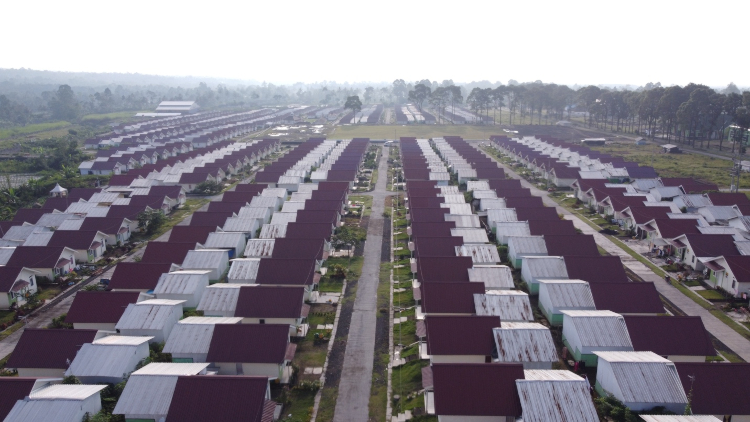
Relocation site for communities displaced by the 2021 Semeru eruption, March 2024.
1. Introduction
Natural disasters pose persistent challenges to sustainable development, particularly in geologically fragile and disaster-prone regions, such as Indonesia, an archipelagic nation located along the Pacific Ring of Fire. It has the world’s largest number of active volcanoes and has experienced repeated volcanic eruptions. These events cause not only physical destruction and loss of life but also significant social, economic, and psychological challenges. The 2021 eruption of Mount Semeru exemplifies this multidimensional impact, with pyroclastic flows and volcanic debris damaging more than 5,000 houses and public buildings (Fig. 1). The disaster triggered a mass evacuation in which temporary shelters were initially dispersed across more than 100 sites managed by local governments, NGOs, and spontaneous community initiatives before eventually being consolidated in Sumber Mujur Village, Lumajang Regency. This site evolved from a temporary camp into a permanent resettlement area supported by the national government.
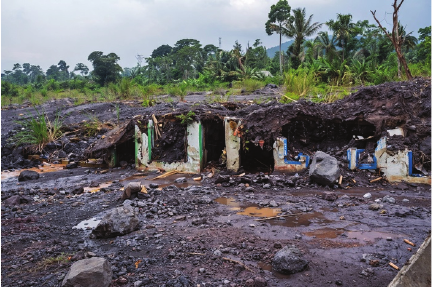 (Source: Field documentation by the author, 2024)
Fig. 1. Buried houses and public facilities impacted by the 2021 Semeru eruption.
Post-disaster recovery in these situations goes beyond the rebuilding of structures. This includes the complex processes of restoring social ties, revitalizing the economy, and helping affected people adjust psychologically. The effectiveness of these recovery efforts depends heavily on the capacity of institutions and communities to co-develop inclusive, participatory, and long-term resilience-oriented strategies 1. In Indonesia, where disaster recovery intersects with diverse sociocultural contexts and decentralized governance, a multisectoral integrative framework based on the transdisciplinary approach (TDA) becomes indispensable for ensuring equitable and sustainable recovery outcomes.
TDA drives collaboration among engineers, policymakers, researchers, the private sector, and civil society through joint planning, design, and implementation (co-design, co-production, co-delivery, and co-implementation), integrating scientific knowledge into decision-making. TDA for disaster risk reduction (DRR) was promoted by Technical Committee 21 (TC21) of the Asian Civil Engineering Coordinating Council (ACECC) 2,3, which articulates TDA as going beyond conventional interdisciplinary collaboration by embedding scientific knowledge directly within co-implementation processes, enabling multiple stakeholders to achieve a shared societal goal. The applications and merits of the TDA are reviewed in Section 2.
In the Indonesian context, applying the TDA in post-disaster recovery, such as in the Semeru eruption resettlement, illustrates the need to harmonize technical reconstruction with community engagement, livelihood restoration, and cultural continuity. Embedding the TDA as a method transforms resettlement from a purely physical rebuilding process to an iterative action-oriented system of co-planning, co-design, and co-implementation. Through these actions, the TDA creates a mechanism for scientific knowledge-based decision-making, where technical, policy, and community perspectives are jointly applied to enhance governance transparency, institutional responsiveness, and community self-reliance in achieving the Build Back Better principle.
Despite extensive research on post-disaster resettlement, for example, the research by Monteil et al. 4, Avery 5, and Istiyanto and Wijayanti 6, much of the existing literature remains constrained by its emphasis on technical design and administrative implementation, often reducing recovery to the reconstruction of physical housing. Previous studies have primarily treated relocation as an engineering or logistics problem. They ignore the social processes, cultural changes, and institutional teamwork that are key to successful recovery 7. Empirical evidence shows that when sociocultural dynamics, community participation, and livelihood restoration are neglected, resettlement programs frequently fail to achieve long-term satisfaction and sustainability 8. In this context, the TDA has emerged as a critical framework for understanding and guiding post-disaster recovery. Theories of community resilience and adaptive governance underscore that recovery outcomes are strengthened when affected populations actively shape decisions related to housing, livelihood, and collective organization 9. Without adopting the TDA, recovery processes risk becoming technically fragmented and socially disconnected. This can undermine the long-term recovery success. This lack of transdisciplinary integration indicates a significant gap between theory and methods in post-disaster resettlement research.
This study identified and confirmed the TDA mechanisms that emerged from continuous adaptive processes to achieve Build Back Better (BBB) in the case of the Semeru eruption resettlement. Accordingly, this study employs a phenomenological case study design to examine the resettlement of communities displaced by the 2021 Mount Semeru eruption. Through this lens, this study explores how the village’s relocation process is collaboratively managed among residents, government agencies, and supporting organizations. It investigates how transdisciplinary efforts have shaped key recovery dimensions: site selection, transition from temporary shelters to permanent housing, reestablishment of livelihoods and social cohesion, and emergence of new governance structures. These inquiries are situated within a broader analysis of how participatory engagement, inter-institutional learning, and culturally grounded strategies coalesce to generate sustainable recovery in Indonesia 10.
Ultimately, this study contributes to the empirical literature by advancing the application of TDA in post-disaster recovery in displaced communities affected by the Semeru eruption. In the case of the Sumber Mujur relocation site, research has demonstrated that recovery is most effective when conceived as a collaborative effort among related stakeholders to achieve common long-term recovery and societal resilience goals 3. By foregrounding the lived experiences of affected communities, this study provides theoretical and practical insights into how transdisciplinary governance, local knowledge integration, and cross-sectoral cooperation collectively sustain long-term post-disaster resilience.
2. Literature Review
Post-disaster recovery represents a complex, multidimensional transition process that moves from emergency response to long-term reconstruction and societal resilience 4,11. Traditionally, recovery has been understood as rebuilding physical infrastructure and restoring livelihoods 12. However, contemporary frameworks emphasize that recovery must go beyond material reconstruction to encompass social, psychological, and cultural restoration 1,13. Within this context, the BBB principle—introduced by the United Nations Office for Disaster Risk Reduction (UNDRR)—serves as a cornerstone for integrating sustainability, community participation, and disaster risk reduction into recovery practices. The BBB framework aims to not only restore pre-disaster conditions, but also enhance resilience, reduce vulnerability, and promote safer and more adaptive forms of development 14. In Indonesia, the National Disaster Management Agency (BNPB) has institutionalized these principles through recovery programs that combine safe housing construction, risk-sensitive land use, and livelihood restoration. However, while such initiatives provide structural stability, they often fail to address the deeper social reconstruction necessary for sustainable recovery 15.
Anto and Haris 9 argue that the true measure of recovery lies in how communities reestablish their social relationships, psychological well-being, and cultural continuity after displacement. This broader view reframes recovery as a social process—one that must integrate lived experiences, collective memory, and local wisdom alongside technical interventions 16,17. In this sense, recovery becomes not only a material task, but also a moral and epistemic one: a process of reconstituting meaning, identity, and community in altered environments. This perspective provides a foundation for incorporating participatory and transdisciplinary approaches that bridge science, policy, and lived experience 3,18.
Previous studies have investigated various strategies and dynamics of post-disaster recovery, especially in volcanic disaster areas, such as Merapi and Semeru in Indonesia. Muir et al. 10 emphasized that financial aid influences long-term migration decisions, often encouraging resettlement rather than returning to the original home. Iuchi and Mutter 7 found that long-term satisfaction with permanent housing depends more on household economic conditions than on community involvement in the reconstruction process. Studies in the Merapi region have demonstrated the significance of community-based governance in maintaining social stability. For example, Bawole 17 reported that resettlement programs driven by local community engagement led to stronger ownership and long-term settlement viability.
Complementing this phenomenological lens, the TDA provides a structured framework for connecting the social, institutional, and scientific dimensions of recovery, ensuring that collaboration and decision-making are grounded in shared goals and scientific evidence. While these frameworks combine insights across disciplines, the TDA transcends disciplinary boundaries by emphasizing knowledge co-production, a collaborative process involving scientists, policymakers, practitioners, and community members in generating contextually grounded solutions. Within DRR, the TDA bridges the persistent gap between technical expertise and community realities, ensuring that recovery strategies are both scientifically robust and socially legitimate.
In addition to the previous description of the TDA in Section 1, a specific process applicable to the case study is presented. First, TDA is operationalized as a cyclical and adaptive process consisting of four iterative stages: co-design, co-production, co-delivery, and co-implementation 3. Each stage involves dynamic interactions between government agencies, scientific institutions, and community actors, generating continuous feedback loops that allow strategies to evolve in response to emerging conditions. The importance of an adaptive approach was implied by Folke 19, who noted that flexibility, learning, and transformation through feedback and collaboration are important elements of resilience.
Second, the TDA functions as a two-way iterative mechanism that integrates top-down policy directions and technical expertise with bottom-up community participation and local knowledge. Through these bidirectional processes, institutions and communities jointly produce, apply, and refine knowledge—turning recovery from a linear intervention into a collaborative, adaptive system that enhances transparency in governance, learning capacity, and societal resilience 19.
The growing complexity of disaster governance in Indonesia underscores the need for a transdisciplinary model. Recovery efforts increasingly require coordination that transcends administrative and sectoral boundaries 7,18. Nowell et al. 20 described this as transboundary governance, in which multiple actors, including government agencies, NGOs, and community organizations, share resources, knowledge, and authority to address cross-scale challenges. While Indonesia’s multi-level disaster management system (BNPB–BPBD–local governments) enables broad collaboration, it often suffers from fragmentation and weak horizontal integration 15,21. TDA addresses this gap by fostering participatory governance and horizontal linkages that empower local actors as decision makers 3. Such an approach enables shared ownership of recovery outcomes and the co-production of solutions that enhance institutional legitimacy and community trust 20,22.
Housing reconstruction provides a concrete illustration of how transdisciplinary collaboration manifests in a post-disaster context. Studies on the Merapi and Semeru eruptions 8,23 have shown that, while governments often prioritize structural safety, communities emphasize functionality and adaptability. Residents tend to modify and extend housing units to accommodate livelihood activities, family growth, or cultural practices—an adaptive process described by Firdaus et al. 24 as “incremental housing.” These household-level modifications represent an expression of urgency, rather than a rejection of the policy, reflecting how displaced families reclaim control over their living environments. From a TDA perspective, these practices illustrate the co-production of solutions in which community knowledge interacts with technical design to create spaces that are both safe and socially meaningful.
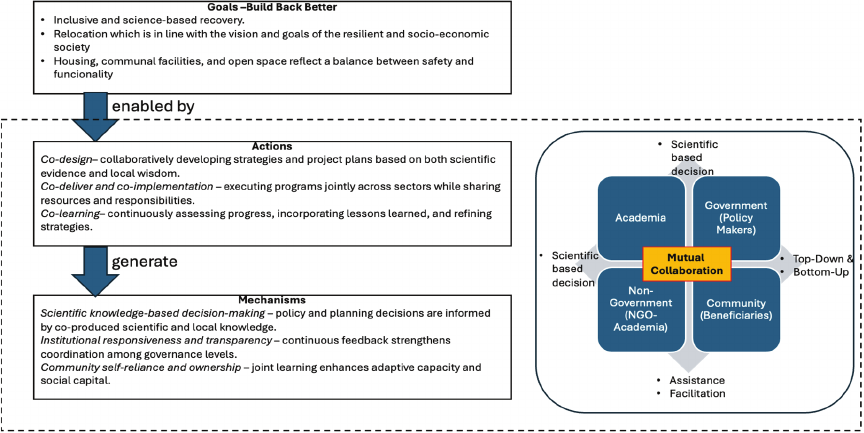
Fig. 2. Conceptual structure of the TDA in the Semeru context (adapted from ACECC TC21 2).
Livelihood restoration, another crucial aspect of recovery, similarly benefits from transdisciplinary collaboration 9,25. Disaster-disrupted economic systems cannot simply be reinstated; they must evolve in tandem with social and environmental changes. Livelihoods are not purely economic but are embedded in identity, culture, and social relations. Restoring livelihoods requires the integration of economic diversification, social inclusion, and institutional support 26. Community-driven initiatives—such as women’s cooperatives, micro-enterprises, and collective farming—exemplify this integration, especially when facilitated by NGOs through participatory training 17,21. In TDA terms, these reflect knowledge co-production between formal institutions and local communities, producing adaptive economic models that enhance both material recovery and social cohesion 3,22.
Beyond material and economic aspects, the sociocultural dimensions of recovery form the intangible foundations of resilience. Cultural continuity—the preservation of rituals, traditions, and social memory—anchors collective identity and emotional well-being in post-disaster contexts 9. In Indonesia, local practices such as gotong royong (mutual aid) and religious gatherings serve not only as mechanisms of social solidarity but also as forms of emotional therapy 7. Integrating these cultural practices into formal recovery planning broadens the epistemological scope of disaster governance by validating local knowledge systems as a source of resilience. From a transdisciplinary standpoint, such integration ensures that recovery is not only technically sound but also ethically and culturally grounded.
The convergence of physical reconstruction and social renewal is the most advanced form of resilience in disaster recovery. Resilience can be conceptualized as an interdependent system encompassing physical, social, economic, and institutional dimensions 27. The synergy between engineering innovation and social participation creates a holistic recovery framework in which each domain reinforces the others. This understanding resonates with the Sendai Framework Priority 4—“Build Back Better in recovery, rehabilitation, and reconstruction”—which emphasizes that resilient recovery must integrate structural safety with social well-being 28. The TDA framework operationalizes this integration by facilitating continuous dialogue and feedback among stakeholders, turning resilience into an evolving adaptive process rather than a fixed outcome.
Taken together, these strands of the literature indicate that the success of post-disaster recovery depends fundamentally on integrating diverse knowledge systems and on multilevel institutional collaboration. The synthesis of social experience, community knowledge, and scientific expertise, embodied in the TDA, provides a practical foundation for achieving recovery outcomes that are both contextually relevant and socially sustainable. However, most existing scholarship is dominated by technical and infrastructural perspectives, often neglecting the social learning processes and collaborative mechanisms that determine long-term success.
Within this gap the present study does not merely explore the concept of TDA but seeks to reveal how TDA functions as a driving framework for successful recovery implementation in the post-disaster Semeru context. Specifically, it examines how government agencies, communities, and supporting organizations collaborate in co-design, co-production, co-delivery, and co-implementation to achieve common long-term recovery and societal resilience goals through TDA. By operationalizing the TDA framework, this study moves beyond descriptive inquiry to uncover practical mechanisms through which multi-stakeholder coordination, participatory governance, decision-making processes, and shared learning foster adaptive and inclusive recovery outcomes.
As shown in Fig. 2, the TDA process, adapted from ACECC TC21 2, integrates the collaborative actions and systemic mechanisms of scientific knowledge-based and adaptive recovery practices. This structure guided the study’s analytical design.
3. Method
This research used a qualitative case study design with a phenomenological orientation to examine how the TDA facilitated collaboration among government institutions, communities, and supporting organizations to bridge the gap between physical reconstruction and social rehabilitation following the 2021 Mount Semeru eruption in Lumajang Regency, Indonesia. The qualitative approach was chosen because it allows for an in-depth exploration of complex interactions among institutional actors and affected communities, while the phenomenological lens captures the lived experiences of those navigating the recovery processes in the newly established resettlement area of Sumber Mujur Village 29.
The research design integrated three complementary domains: scientific, institutional, and community-based. The scientific dimension includes policies, disaster management frameworks, and engineering knowledge applied to reconstruction. The institutional domain involves coordination and collaboration among government agencies, such as the BNPB, BPBD, PUPR, and local government units, as well as partnerships with NGOs and donor agencies. The community-based domain focuses on the perspectives and adaptive practices of the residents at the relocation site, whose social networks and cultural values inform the overall recovery process.
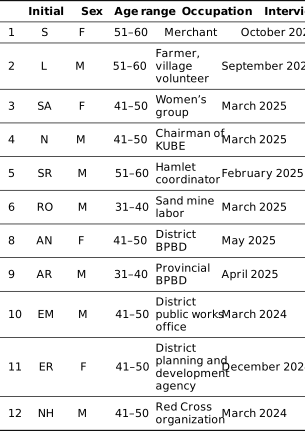
Data were collected through semi-structured interviews, participant observations, and document analysis. In-depth interviews were conducted with key representatives from government institutions (BNPB, BPBD, PUPR, and Bappeda), nongovernmental and humanitarian organizations (such as the PMI and regional NGOs), and community members, including local leaders, women’s groups, and informal social networks (Table 1). These interviews explored themes such as institutional collaboration, decision-making processes, communication systems, and integration of community input into formal recovery plans. Participant observations were conducted during various field activities, including coordination meetings, community discussions, and reconstruction-related events, allowing the researcher to directly observe interactions and collaborative practices among stakeholders. Document analysis was conducted on policy papers, technical guidelines, recovery plans, and NGO reports to identify the institutional arrangements, coordination structures, and collaborative experiences that reflect TDA principles in practice.
Table 1. List of research informants.
All data were transcribed, coded, and analyzed using thematic analysis guided by the four iterative stages of TDA as conceptualized by Takeuchi et al. 3: co-design, co-production, co-delivery, and co-implementation. Through these stages, this study traced how collaborative processes evolved from the initial identification of recovery priorities to the joint formulation and adaptation of reconstruction and rehabilitation strategies. The analysis also examines how feedback loops and collective learning mechanisms strengthen institutional coordination and community participation over time. Triangulation across interviews, observations, and document reviews ensured the validity and reliability of the findings, and member checking was employed to confirm the interpretive accuracy of the key themes with selected participants.
The unit of analysis in this study encompasses both individual and collective actors, enabling an understanding of collaboration across multiple scales, from personal engagement and leadership within communities to institutional coordination across governmental and non-governmental entities. Ethical clearance was obtained prior to data collection, and the participants were informed that their involvement was voluntary. Anonymity and confidentiality were maintained throughout this study.
This framework was designed to examine how TDA enables collaboration among government agencies, communities, and supporting organizations to achieve long-term recovery and resilience. By operationalizing TDA, the study moves beyond description to identify practical mechanisms through which multi-stakeholder coordination, participatory governance, decision-making, and shared learning drive adaptive and inclusive recovery outcomes.
4. Findings
The relocation process evolved through three main temporal phases: emergency displacement (December 2021–March 2022), temporary sheltering (April–August 2022), and permanent resettlement (September 2022–present) 30. Five major themes emerged during these phases, illustrating how recovery practices in Sumber Mujur inherently reflected the operational logic of the TDA, even though the framework was not explicitly or formally adopted by policymakers and practitioners.
While the TDA model theoretically consists of four sequential stages—co-design, co-production, co-delivery, and co-implementation—the empirical evidence from this study shows that an additional and critical process underpins the effectiveness of recovery, particularly in achieving BBB outcomes, namely, co-learning. Throughout the recovery process, learning emerged as a central mechanism for coping with conflict, negotiating differing priorities, and adapting to changing conditions. Therefore, we extended the original TDA process by explicitly incorporating co-learning as a core component, resulting in an expanded framework comprising co-design, co-production, co-delivery, co-implementation, and co-learning. In addition, this study shows that the stages manifest as overlapping, adaptive, and mutually reinforcing processes shaped by situational dynamics, resource constraints, and community interactions.
For instance, activities related to co-planning and co-designing are often intertwined, because spatial decision-making and participatory design workshops occur simultaneously during the relocation planning phase. Similarly, implementation and feedback cycles evolved in parallel with onsite experiences and community reflections, continuously informing project adjustments. This pattern reveals that rather than following a prescriptive method, the stakeholders—government agencies, NGOs, engineers, and residents—organically enacted TDA principles through practical collaboration and problem solving.
Consequently, the findings indicate that the TDA was not an externally imposed analytical model but an emergent, system-driven pattern that arose naturally from the interaction of diverse actors and knowledge systems. The recovery process thus demonstrates that even in the absence of formal transdisciplinary framing, the logic and spirit of the TDA were inherently embedded in how decisions were made, designs were co-created, projects were implemented, and lessons learned.
In this sense, the Sumber Mujur relocation represents a de facto application of the TDA, showing that transdisciplinary collaboration can emerge spontaneously from real-world practice when the institutional, scientific, and community domains converge to address complex recovery challenges.
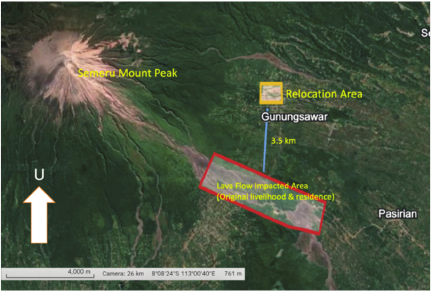 (Source: Google Earth Imagery modified by QGIS)
Fig. 3. Spatial relocation map.
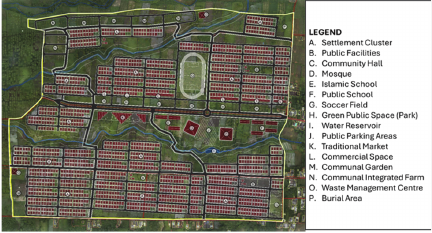 (Source: Public Work Office presentation in the Resettlement Coordination Meeting 31)
Fig. 4. Site plan settlement areas.
4.1. Participatory Spatial Governance: Co-Designing and Co-Producing Safety and Functionality
The relocation of Semeru survivors began with a collaborative risk assessment process involving the district governments of Lumajang, the PVMBG, the BNPB, the BPBD, and the Ministry of Public Works and Housing (PUPR). Using updated Disaster-Prone Area (KRB) maps, stakeholders jointly identified Sumber Mujur Village as the safest location for resettlement outside the KRB II–III zones, yet close enough to the residents’ previous agricultural and sand mining livelihoods (Fig. 3).
To institutionalize the implementation of the relocation project, the Head of Lumajang District issued Decree No.188.45/191/427.12/2022, designating 81.55 hectares of official land for permanent housing construction and defining the relocation master plan for Semeru survivors (Fig. 4). This legal instrument provides a spatial and administrative foundation for collaborative planning, translating the TDA’s boundary-spanning principle into a regulatory framework.
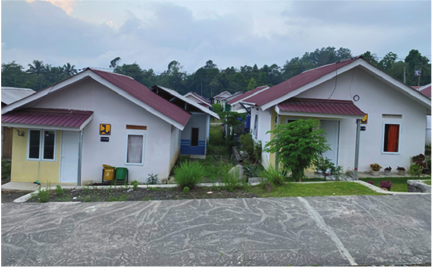 (Source: Field documentation by the author, 2024)
Fig. 5. Permanent relocated housings provided by the ministry of public works.
Co-designing and co-producing solutions were realized through participatory planning workshops facilitated by PUPR and BPBD, in which all related stakeholders, including resident representatives and NGOs, contributed insights into house orientation, drainage systems, accessibility, and communal spaces. According to one BPBD official, “The maps gave us safety, but the people gave us meaning.” This statement captures the dual logic of the TDA, integrating scientific risk data with community knowledge to achieve both safety and livability.
However, implementing this process was challenging. Early in relocation planning, tensions emerged between community expectations for flexible, livelihood-oriented settlement layouts and the government’s standardized housing design, dictated by national procurement regulations. Some residents initially opposed uniform house types, arguing that they did not fit their household needs or allow space for small-scale economic activities. Through co-design workshops, these disagreements were discussed openly and gradually reconciled. Government engineers and NGOs have applied TDA principles by facilitating joint mapping sessions and design revisions, allowing modest flexibility in house orientation and backyard use while maintaining compliance with safety and legal standards. This process of dialogue, negotiation, and adaptive compromise exemplifies how the TDA functions as a mechanism to mediate conflicting priorities and align institutional limitations with community aspirations.
To operationalize the master plan, 1,620 temporary housing units were established through collaboration between 40 NGOs and private sector partners, while the district government contributed an additional 300 units. The national government, through the PUPR, subsequently constructed 1,920 permanent housing units based on an incremental housing model, strategically attached to temporary shelters to ensure continuity and ease of transition (Fig. 5). These developments were complemented by the provision of public facilities and household necessities, including prioritized disability-friendly housing designed for accessibility and proximity to communal infrastructure. This multi-actor collaboration embodied the co-delivery and co-implementation of the TDA, translating technical planning into an inclusive needs-based implementation process that responded to both structural and social vulnerabilities.
The physical design of the relocation site reflected not only engineering standards but also residents’ aspirations for connectedness and continuity. Thus, the planning process exemplified how co-design and co-production within a transdisciplinary framework transformed a government-led project into a collaborative, socially meaningful endeavor 3.
4.2. Adaptive Recovery of Livelihoods: Co-Implementing Socio-Economic Resilience
Livelihood disruption was among the most severe challenges following the eruption, as residents lost access to farmland, livestock, and sand mining areas. However, through community-driven adaptation, a gradual reorganization of local economies occurred. This process epitomized the TDA principle as a collaborative effort in which residents, NGOs, and government actors jointly designed recovery strategies aligned with local capacities and aspirations.
In the co-design of economic solutions, NGOs such as DT Peduli, NU Peduli, and the Muhammadiyah Disaster Management Center (MDMC) facilitated participatory workshops on financial literacy, entrepreneurship, and cooperative development. Residents contributed market knowledge and sociocultural insights, ensuring that recovery strategies were not imposed externally but co-produced solutions from within.
However, this process was also characterized by friction and negotiation. One major challenge was the mismatch between the livelihood programs initially proposed by NGOs and the actual skills or market access of local residents. Some early projects, such as small urban-style industries, were deemed unsustainable because of limited purchasing power and logistical barriers in rural Lumajang. Through iterative discussions and feedback sessions facilitated by the BPBD and NGO coordinators, these tensions were gradually resolved using the TDA’s co-learning and adaptive planning approach. Instead of enforcing standardized aid packages, stakeholders collectively adjusted their strategies toward more context-sensitive initiatives such as small-scale farming cooperatives, home-based food processing, and community savings groups.
The co-implementation phase unfolded as these participatory plans took shape in the form of women’s cooperatives (Kelompok Usaha Bersama), collective farming groups, and home-based enterprises. Many households extended their new PUPR-constructed homes into microbusiness spaces, such as food stalls, tailoring shops, repair workshops, and grocery kiosks, demonstrating bottom-up innovation consistent with the incremental housing model.
As one resident expressed, “We lost our house and field, but we gained a new way to live together. Our small shop was a new beginning.” These accounts illustrate the intertwining of economic adaptation with emotional recovery and social identity.
These initiatives restored not only income but also social networks that functioned as informal safety nets. By linking economic revitalization with psychosocial recovery, the co-implementation of livelihoods bridged institutional support with local creativity—demonstrating how TDA operationalizes resilience as a collaborative, adaptive process 2,25.
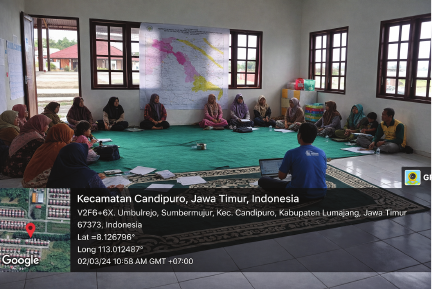 (Source: Field documentation by the author, 2024)
Fig. 6. Paguyuban activities to identify new disaster-prone areas.
4.3. Emergence of Participatory Governance Structures: Co-Designing and Co-Producing Inclusive Decision-Making and Solutions
Beyond the economic and spatial domains, the recovery process catalyzed the formation of a new community representation mechanism, known locally as the Community Forum, or Paguyuban (Fig. 6). This forum emerged as a critical instrument for participatory governance and illustrates the TDA principle of co-design and co-production, where communities act not merely as beneficiaries but also as partners in decision-making and institutional coordination 3.
The forum’s establishment was initiated jointly by the BPBD Lumajang, the Village Office, and local leaders in response to the need for structured communication between residents, NGOs, and government actors. Its leadership was elected democratically, and thematic subgroups were formed to address specific concerns, such as water management (PDAM), social assistance, and infrastructure maintenance.
Information exchange occurred through regular meetings and WhatsApp-based coordination networks, reflecting an adaptive form of digital governance. Residents could directly report grievances or proposals that the coordinator forwarded to appropriate authorities.
As one coordinator explained, “We are not just recipients of help—we manage our village together.” This participatory structure has become a microcosm of transboundary governance 32, facilitating horizontal linkages among citizens, local governments, and NGOs.
Through the forum, residents also organized gotong royong (collective work), religious events, and community discussions, which functioned as both social reconstruction and informal governance. These practices demonstrate how the co-implementation of participatory institutions transformed relocation sites into spaces of democratic adaptation, where governance, solidarity, and resilience evolved simultaneously 11.
4.4. Reconstruction of Social Cohesion and Collective Identity: Co-Implementation of Community Solidarity
Recovery in Sumber Mujur extended beyond infrastructure—it represented a process of rebuilding the social fabric and moral infrastructure. The reactivation of gotong royong became central to reestablishing trust, cooperation, and emotional connections among the relocated residents. Activities such as neighborhood cleaning, tree planting, and communal worship served as both practical and symbolic acts of belonging.
As one resident reflected, “When we cleaned the streets together, it wasn’t about garbage—it was about reclaiming our place.” These sentiments capture the phenomenological depth of recovery, where collective actions produce meaning and re-embed people in their environment 13.
However, the process of restoring social cohesion is not entirely harmonious. The merging of families from villages with different origins initially created subtle tensions over leadership roles, resource access, and cultural practices. Disagreements arose, for example, regarding the rotation of neighborhood leaders (RT), the use of shared communal spaces, and the organization of collective religious or social events. This friction reflects the challenge of constructing new community norms during displacement. These issues were addressed through TDA’s co-learning and co-implementation processes.
The government and NGOs supported these community initiatives through co-delivered programs that aligned physical maintenance with psychosocial support, the rehabilitation of drainage systems, the establishment of public facilities, and joint environmental management. Programs by NGOs and the BPBD encouraged residents to take shared responsibility for their environments, bridging technical interventions with cultural values 33.
This convergence of institutional facilitation and community solidarity illustrates the co-implementation dimensions of the TDA. Social rehabilitation thus became inseparable from physical reconstruction, affirming that resilience emerges from shared labor, mutual trust, and the reactivation of local cultural capital (gotong royong, religious gatherings, and collective rituals).
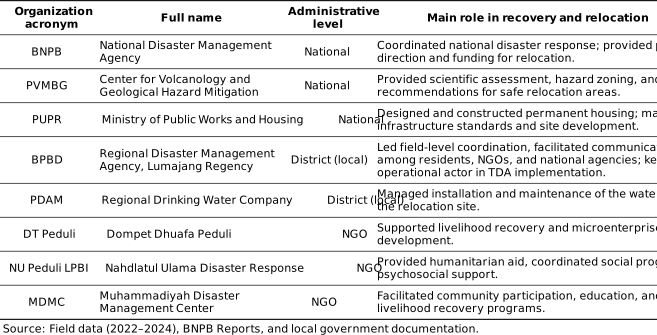
Table 2. Key organizations and their roles.
4.5. Institutional Co-Learning: Sustaining Resilience Through Shared Reflection
The final and most dynamic dimension of the TDA observed in Sumber Mujur was co-learning and reflexive adaptation. Rather than treating recovery as a finite project, stakeholders institutionalized continuous feedback mechanisms enabling adaptive modification of policies and practices. A formal tool used by BPBD in collaboration with academic institutions was the Post-Disaster Recovery Index, designed to assess recovery progress across three dimensions: education, health, and economy. This method employs multiple indicators reflecting Human Development Index components to measure recovery stages before, during, and after rehabilitation, providing an evidence-based framework to evaluate interventions and inform policy adjustments.
At the community level, regular evaluation meetings involving BPBD officials, NGO representatives, and community leaders served as learning spaces to discuss challenges, such as water supply, infrastructure maintenance, and livelihood program adjustments. When problems emerged—such as inadequate drainage or uneven access to training—joint reflection led to co-designed solutions. As a BPBD representative emphasized, “Rebuilding houses was the easy part; rebuilding coordination and trust is what takes time.” This recognition underscores how reflexivity within the TDA transforms governance from a command structure to a learning system 3,20.
Iterative feedback cycles also helped align local practices with broader disaster governance frameworks. For instance, community and academic input informed improvements to the district’s recovery plans and capacity-building strategies, demonstrating how bottom-up and scientific knowledge coalesced into institutional learning. Through this ongoing reflection, the relocation site evolved into a living laboratory of resilience where the government, academia, and communities co-learned through practice, dialogue, and shared experiences. This outcome aligns with TDA’s theoretical core: systemic transformation arises not from technical control but from collective learning and intersubjective understanding 19,22.
To enhance the clarity for readers unfamiliar with Indonesia’s disaster governance structure, Table 2 summarizes the key organizations involved in the Semeru relocation and their respective roles. The network illustrates how TDA was operationalized through multi-level collaboration: national agencies provided policy and technical inputs, while the BPBD Lumajang acted as a coordinating hub linking scientific, governmental, and community-based initiatives.
5. Discussion
The post-disaster resettlement of Sumber Mujur Village following the 2021 Mount Semeru eruption provides critical insights into how resilience emerges through the intersection of physical reconstruction, social adaptation, and institutional collaboration. This pattern aligns with the principles of BBB and the Sendai Framework for Disaster Risk Reduction (2015–2030), both of which emphasize recovery as an opportunity to enhance safety, inclusion, and adaptive capacity. Evidence from Sumber Mujur demonstrates how these global frameworks were realized in practice through a transdisciplinary process involving co-design, co-production, co-delivery, co-implementation, and co-learning. Recovery integrated scientific knowledge, institutional coordination, and community participation, while iterative learning and feedback enable stakeholders to adapt plans and interventions in response to emerging challenges. In doing so, the case illustrates how the TDA functions as a collaborative and adaptive learning process that translates the goals of the BBB and Sendai Framework into sustained resilience in practice 7,15.
The Semeru case exemplifies how TDA provides a structural and epistemic foundation that allows BBB principles to evolve into adaptive resilience systems. Rather than treating recovery as a technical phase following a disaster, the TDA reframes it as a collaborative process in which science, policy, and lived experiences interact iteratively through co-design, co-production, co-delivery, co-implementation, and co-learning in practice. This interaction demonstrates that resilience is not an inherent property of infrastructure or institutions, but rather an emergent quality of collaborative learning among diverse actors 3,22,32.
The transition from hierarchical disaster management to adaptive networked governance is central to understanding the success of Sumber Mujur’s recovery. However, the TDA enabled horizontal and bottom-up integration between institutions, NGOs, and community actors, dissolving rigid boundaries and fostering polycentric decision-making. The establishment of the Paguyuban in Sumber Mujur embodies this transformation 12,34.
Co-designed and co-produced solutions are fundamental elements shaping the multidimensional resilience observed in Sumber Mujur. Participatory design workshops led by the PVMBG, National Government, District Government, and NGOs demonstrated how technical knowledge, such as hazard mapping, infrastructure design, and risk mitigation, gained social legitimacy and practical relevance only when contextualized through community insights into livelihoods, culture, and spatial orientation. This integration aligns with the epistemological foundations of TDA, which emphasize the merging of disciplinary, institutional, and experiential understanding 4. Community input, especially regarding housing orientation and communal space, transformed technical plans into socially embedded frameworks for safety and livability 21.
The co-implementation process redefined the relationship between the state and communities in post-disaster governance. Historically, governments have been viewed as the primary driver of recovery, whereas communities have often been positioned as passive recipients of aid. However, the Semeru recovery reversed this dynamic by cultivating reciprocal partnerships among government agencies, NGOs, and residents 9,35. This tripartite collaboration exemplified the principles of co-implementation and co-delivery in which authority and knowledge were shared, negotiated, and continuously adapted.
Livelihood reorganization further underscores how TDA operationalizes the connection between social resilience and economic recovery. The eruption destroyed traditional economic foundations—particularly agriculture and sand mining—but recovery emerged through joint innovation 25,36. The transformation of standardized housing into multifunctional spaces illustrates how households applied the incremental housing model as an adaptation strategy, merging institutional planning with household agency.
Cultural continuity emerged as a vital dimension in psychosocial recovery. In the aftermath of displacement, communities reconstituted emotional stability and moral order through rituals, collective prayers, and cultural performances 33. These practices integrate intangible cultural knowledge into formal recovery frameworks, turning culture into both a resource and resilience strategy 10.
The synthesis of the physical reconstruction, economic and social rehabilitation, and cultural renewal in Sumber Mujur reveals the operational maturity of the TDA. Ultimately, the Sumber Mujur experience demonstrates that the TDA transformed recovery from a phase of reconstruction into a collaborative process of adaptive resilience.
6. Conclusions
The case study of the Sumber Mujur resettlement following the 2021 Mount Semeru eruption reveals that resilience is neither a predetermined outcome nor an externally imposed standard but an emergent property of collaboration among institutions, communities, and supporting organizations. The findings confirm that the success of resettlement cannot be measured solely by the completion of physical infrastructure but must also be evaluated in terms of community resilience, social reconstruction, and the reestablishment of livelihoods and cultural continuity. This aligns with the evolving understanding in disaster research that recovery is a complex process encompassing social, psychological, cultural, and economic aspects rather than focusing only on physical assets. Within this context, TDA provides a methodological and epistemic framework that transforms recovery from a linear, top-down process into a continuous, adaptive, and participatory system of learning and co-creation.
In practical terms, the TDA proved effective in achieving several key recovery targets. It enabled the planning and design of relocation sites that reflected a shared vision of a resilient and sustainable community, produced housing and communal facilities that balanced technical safety with social functionality, and facilitated implementation and iterative improvement, ensuring that the recovery process remained responsive to emerging needs and locally defined priorities. These achievements were made possible through transdisciplinary actions, such as learning and sharing experiences across knowledge systems, conducting participatory meetings and workshops to harmonize aspirations and decisions, co-planning and co-implementation among multiple sectors and disciplines, and establishing formal governance mechanisms to sustain coordination and accountability. Through these actions, the recovery in Sumber Mujur evolved into a co-productive ecosystem in which government agencies, NGOs, academia, and communities collaborated as equal partners. In this setting, recovery ceased to be a technical or bureaucratic activity and became a deeply human endeavor rooted in empathy, participation, and shared learning. Without the TDA framework, post-disaster recovery might achieve physical and infrastructural stability but remain vulnerable in terms of social cohesion, collective learning, and long-term resilience. Thus, the rebuilding of houses becomes the rebuilding of humanity itself, and the reconstruction of infrastructure becomes the reconstitution of community life.
The mechanisms underlying this transformation include horizontal linkages among citizens, institutions, and civil society, the integration of diverse forms of knowledge (scientific, institutional, and local), and scientific knowledge-based decision-making embedded within participatory planning and feedback loops. These mechanisms illustrate that resilience in Sumber Mujur emerged not from material assets alone, but from the synergy between institutional coordination and social innovation. Conceptually, this study reinforces the idea that TDA provides a structural and epistemic foundation that allows BBB principles to evolve into adaptive resilience systems. Practically, this study positions the TDA as a forward-looking governance model for disaster recovery that is currently being formalized and institutionalized across international DRR collaborations and policy arenas. Such institutionalization has the potential to ensure that future reconstruction efforts address not only physical recovery but also the social, ethical, and relational foundations of resilience.
Acknowledgments
Gratitude is expressed to the Government of Lumajang Regency, East Java Provincial Disaster Agency, and local stakeholders and survivors for providing a positive contribution to this research and article.
- [1] F. Pfalzgraf, “Maintaining land and life in Vanuatu: Indigenous alter-natives of recovery following the Manaro eruption on Ambae, Vanuatu,” J. Environ. Media, Vol.2, Suppl.1, pp. 5.1-5.13, 2021. https://doi.org/10.1386/jem_00053_1
- [2] TC21-JSCE Editorial Group, “Transdisciplinary approach (TDA) for building societal resilience to disasters – Concepts and case study for practicing TDA –,” JSCE Publ., 2019.
- [3] K. Takeuchi, L. Mangada, M. Inoue, K. Kikuiri, K. Tsukahara, Y. Katsuhama, and M. Ishiwatari, “Challenges of transdisciplinary approach in disaster recovery management,” Nat. Hazards, Vol.120, No.13, pp. 12471-12489, 2024. https://doi.org/10.1007/s11069-024-06693-z
- [4] C. Monteil, P. Simmons, and A. Hicks, “Post-disaster recovery and sociocultural change: Rethinking social capital development for the new social fabric,” Int. J. Disaster Risk Reduct., Vol.42, Article No.101356, 2020. https://doi.org/10.1016/j.ijdrr.2019.101356
- [5] J. G. Avery, “The aftermath of a disaster. Recovery following the volcanic eruptions in Montserrat, West Indies,” West Indian Med. J., Vol.52, No.2, pp. 131-135, 2003.
- [6] S. Istiyanto and Y. T. Wijayanti, “Evaluation of community participation in restoration efforts following the Merapi Volcano eruptions in Muntilan, Magelang,” Proc. Int. Conf. Polit. Soc. Humanit. Sci. (ICPSH), Vol.8, No.3, pp. 311-322, 2023. https://doi.org/10.18502/kss.v8i3.12837
- [7] K. Iuchi and J. Mutter, “Governing community relocation after major disasters: An analysis of three different approaches and its outcomes in Asia,” Prog. Disaster Sci., Vol.6, Article No.100071, 2020. https://doi.org/10.1016/j.pdisas.2020.100071
- [8] B. L. Oo, R. Sunindijo, and F. Lestari, “Users’ long-term satisfaction with post-disaster permanent housing: a case study of 2010 Merapi Eruption, Indonesia,” MATEC Web Conf., Vol.192, Article No.02066, 2018. https://doi.org/10.1051/matecconf/201819202066
- [9] F. Anto and A. Haris, “Living a post-disaster life: The role of cultural adaptability, coping strategies, and spiritual support on resilience among families affected by the Semeru Eruption,” Indones. J. Islam. Psychol., Vol.6, No.2, pp. 108 136, 2024. https://doi.org/10.18326/ijip.v6i2.2431
- [10] J. A. Muir, M. R. Cope, J. E. Jackson, and L. R. Angeningsih, “To move home or move on? Investigating the impact of recovery aid on migration status as a potential tool for disaster risk reduction in the aftermath of volcanic eruptions in Merapi, Indonesia,” SocArXiv:qcm58_v1, 2019. https://doi.org/10.31235/osf.io/qcm58
- [11] J. Gaillard, “Post-disaster resettlement,” pp. 143-155, Springer Nature, 2015. https://doi.org/10.1057/9781137484291_10
- [12] J. A. Muir, M. R. Cope, L. R. Angeningsih, and R. B. Brown, “Community recovery after a natural disaster: Core data from a survey of communities affected by the 2010 Mt. Merapi eruptions in Central Java, Indonesia,” Data Brief., Vol.32, Article No.106040, 2020. https://doi.org/10.1016/j.dib.2020.106040
- [13] A. Oliver-Smith, “Successes and failures in post-disaster resettlement,” Disasters, Vol.15, No.1, pp. 12-23, 1991. https://doi.org/10.1111/j.1467-7717.1991.tb00423.x
- [14] E. Dube, “The build-back-better concept as a disaster risk reduction strategy for positive reconstruction and sustainable development in Zimbabwe: A literature study,” Int. J. Disaster Risk Reduct., Vol.43, Article No.101401, 2020. https://doi.org/10.1016/j.ijdrr.2019.101401
- [15] C. B. D. Samekto, “Evaluation of community-based settlement reconstruction program: Case study in post-disaster recovery of 2010 Merapi Volcano Eruption in Cangkringan District, Sleman Regency, Yogyakarta Province,” J. Public Adm. Stud., Vol.1, No.3, pp. 64-70, 2017.
- [16] B. Pratama, A. Muslim, B. A. Praja, M. Pratama, and E. Putra, “Life after natural disaster: The case of resettlement policy in Pagerjurang, Yogyakarta,” J. Publicuho, Vol.3, No.3, pp. 279-288, 2020. https://doi.org/10.35817/jpu.v3i3.12482
- [17] P. Bawole, “Community based resettlement program for the victims of natural disaster of Merapi Volcano eruption 2010,” J. Archit. Disc., Vol.13, pp. 114-127, 2015. https://doi.org/10.24167/tesa.v13i2.644
- [18] Y. Jibiki, D. Pelupessy, D. Sasaki, and K. Iuchi, “Implementation of post disaster needs assessment in Indonesia: Literature review,” J. Disaster Res., Vol.15, No.7, pp. 975-980, 2020. https://doi.org/10.20965/jdr.2020.p0975
- [19] C. Folke, “Resilience: The emergence of a perspective for social–ecological systems analyses,” Glob. Environ. Change, Vol.16, No.3, pp. 253-267, 2006. https://doi.org/10.1016/j.gloenvcha.2006.04.002
- [20] B. Nowell, T. Steelman, A.-L. K. Velez, and Z. Yang, “The structure of effective governance of disaster response networks: Insights from the field,” Am. Rev. Public Adm., Vol.48, No.7, pp. 699-715, 2018.
- [21] A. P. Wardani and B. Kusumasari, “Socio-cultural dynamics of resilience building: Lesson learned from Sleman, Indonesia,” J. Kebijak. Adm. Publ., Vol.23, No.1, pp. 63-76, 2019. https://doi.org/10.22146/JKAP.42391
- [22] M. J. Stablein et al., “Compound[ing] disasters in Puerto Rico: Pathways for virtual transdisciplinary collaboration to enhance community resilience,” Glob. Environ. Change, Vol.76, Article No.102558, 2022. https://doi.org/10.1016/j.gloenvcha.2022.102558
- [23] M. M. Suud, S. Bachri, Sumarmi, I. K. Astina, and A. Nadhiroh, “Double-Track Recovery Strategy to Address The Sustainable Recovery for Communities Impacted by The Semeru Eruption, Indonesia,” Plan. Malaysia, Vol.23, No.4, pp. 674-690, 2025. https://doi.org/10.21837/pm.v23i38.1819
- [24] A. Firdaus, F. Lestari, S. A. Afiff, and H. Herdiansyah, “Integration of knowledge and local wisdom for disaster resilience in Anak Krakatau volcano,” Jamba J. Disaster Risk Stud., Vol.15, No.1, pp. 1-12, 2023. https://doi.org/10.4102/jamba.v15i1.1457
- [25] M. Garcia-Fry, O. Murao, S. Bachri, and L. A. Moya, “Land-Use microsimulation model for livelihood diversification after the 2010 Merapi volcano eruptions,” Transp. Res. Part D Transp. Environ., Vol.104, Article No.103189, 2022. https://doi.org/10.1016/j.trd.2022.103189
- [26] Department for International Development (DFID), “Sustainable Livelihoods Guidance Sheets, Section 2.1,” DFID, 1999.
- [27] I. Karsai, T. Schmickl, and G. Kampis, “Resilience and stability of ecological and social systems,” Springer Nature, 2020. https://doi.org/10.1007/978-3-030-54560-4
- [28] United Nations Office for Disaster Risk Reduction (UNDRR), “Sendai Framework for Disaster Risk Reduction 2015–2030,” 2015.
- [29] M. Calipusan-Elnar and F. T. Abocejo, “Typhoon and flooding disasters’ lived experiences of loboc residents in Bohol, Philippines,” Indones. J. Soc. Environ. Issues, Vol.2, No.3, pp. 271-283, 2021. https://doi.org/10.47540/ijsei.v2i3.298
- [30] BPBD Lamajang, “Post Disaster Need Assessment of Semeru Eruption 2022–2025,” 2022.
- [31] Public Work Office, “Temporary Shelter (HUNTARA) Development Management,” 2022
- [32] B. Nowell, T. Steelman, and A.-L. Velez, “The structure of effective governance of transboundary disaster response networks,” Acad. Manag. Proc., 2015.
- [33] A. Ahmadi and U. Kulsum, “Resilience and family harmony after the Mount Semeru Eruption Disaster,” Int. J. Law Dyn. Rev., Vol.2, No.2, pp. 73-81, 2024. https://doi.org/10.62039/ijldr.v2i2.77
- [34] S. Panday, S. Rushton, J. Karki, J. Balen, and A. Barnes, “The role of social capital in disaster resilience in remote communities after the 2015 Nepal earthquake,” Int. J. Disaster Risk Reduct., Vol.55, Article No.102112, 2021. https://doi.org/10.1016/j.ijdrr.2021.102112
- [35] T. Haq, “Modeling of community relocation affected by the Semeru Volcanic Eruption in Lumajang Regency,” Airlangga Dev. J., Vol.8, No.1, pp. 21-38, 2024. https://doi.org/10.20473/adj.v8i1.59143
- [36] P. Sangasumana, “Post-disaster relocation issues: A case study of Samasarakanda Landslide in Sri Lanka,” Eur. Sci. J., Vol.14, No.32, Article No.1, 2018. https://doi.org/10.19044/ESJ.2018.V14N32P1
This article is published under a Creative Commons Attribution-NoDerivatives 4.0 Internationa License.