
Paper:
Conjunctive Use of Two Bony Features’ Kinematic Information to Estimate Dynamic Gait Stability
Haoyun Peng*, Shogo Okamoto*
 , and Yasuhiro Akiyama**
*Department of Computer Science, Tokyo Metropolitan University
6-6 Asahigaoka, Hino, Tokyo 191-0065, Japan
**Department of Mechanics and Robotics, Shinshu University
3-15-1 Tokita, Ueda, Nagano 386-8567, Japan

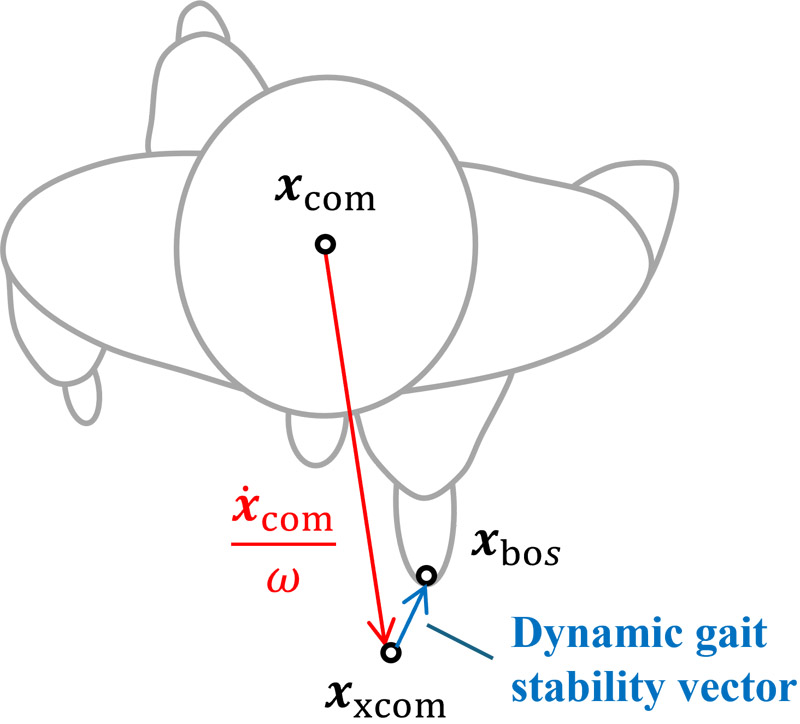
Margin of stability (MoS) is a metric used to assess an individual’s dynamic postural stability during walking. It can identify those at risk of falling and enhance their awareness of preventive measures. Although accurately computing the MoS requires capturing the motion of the entire body, previous research has shown that the kinematic information, specifically the three-axial translational velocities of a single bony feature, can estimate the MoS value to some extent. Such information can be obtained from an inertial measurement unit installed in portable devices such as smartphones and smartwatches. Nowadays, it is common for individuals to have two or more such devices. The primary objective of this study is to determine which combination of data from two or three bony features can most accurately predict the MoS. We used a camera-based kinematic database of healthy Japanese walkers, selecting gait data from 30 male and 30 female participants aged 60 and above. The analysis method involved principal motion analysis, a linear predictive model for multi-dimensional time-series data, to predict the MoS, and used cross-validation for stable model assessment. The results exhibited that combining two bony features generally outperform single features, and the combination of the sacral crest and T10 vertebra was the most effective in predicting MoS with an RMSE of 0.0070 m, followed by the combination of the sacral crest and right toe. We did not find any evidence that the combination of three bony features would result in substantially better accuracy than that of two features. This finding suggests that if IMU-equipped devices are placed on these two body parts, they could better assess their risk of falling.
Prediction of dynamic gait stability
- [1] R. Vaishya and A. Vaish, “Falls in Older Adults are Serious,” Indian J. of Orthopaedics, Vol.54, No.1, pp. 69-74, 2020. https://doi.org/10.1007/s43465-019-00037-x
- [2] World Health Organization, “WHO global report on falls prevention in older age,” 2007.
- [3] D. Hamacher, D. Liebl, C. Hödl et al., “Gait Stability and its Influencing Factors in Older Adults,” Frontiers in Physiology, Vol.9, Article No.01955, 2019. https://doi.org/10.3389/fphys.2018.01955
- [4] R. Jayakarthik, A. Srinivasan, S. Goswami, Shivaranjini, and Mahaveerakannan R, “Fall Detection Scheme based on Deep Learning Model for High-Quality Life,” 2022 3rd Int. Conf. on Electronics and Sustainable Communication Systems (ICESC), pp. 1582-1588, 2022. https://doi.org/10.1109/ICESC54411.2022.9885675
- [5] S. M. Bradley, “Falls in Older Adults,” Mount Sinai J. of Medicine: A J. of Translational and Personalized Medicine, Vol.78, Issue 4, pp. 590-595, 2011. https://doi.org/10.1002/msj.20280
- [6] M. K. Karlsson, T. Vonschewelov, C. Karlsson, M. Cöster, and B. E. Rosengen, “Prevention of falls in the elderly: A review,” Scandinavian J. of Public Health, Vol.41, Issue 5, pp. 442-454, 2013. https://doi.org/10.1177/1403494813483215
- [7] G. F. Papalia, R. Papalia, L. A. D. Balzani, G. Torre, B. Zampogna, S. Vasta, C. Fossati, A. M. Alifano, and V. Denaro, “The Effects of Physical Exercise on Balance and Prevention of Falls in Older People: A Systematic Review and Meta-Analysis,” J. of Clinical Medicine, Vol.9, Issue 8, Article No.2595, 2020. https://doi.org/10.3390/jcm9082595
- [8] M. B. Lott, “Translating the Base of Support a Mechanism for Balance Maintenance during Rotations in Dance,” J. of Dance Medicine & Science, Vol.23, Issue 1, pp. 17-25, 2019. https://doi.org/10.12678/1089-313X.23.1.17
- [9] P. M. M. Young, J. M. Wilken, and J. B. Dingwell, “Dynamic margins of stability during human walking in destabilizing environments,” J. of Biomechanics, Vol.45, Issue 6, pp. 1053-1059, 2012. https://doi.org/10.1016/j.jbiomech.2011.12.027
- [10] H.-S. Nam, J.-H. Kim, and Y.-J. Lim, “The Effect of the Base of Support on Anticipatory Postural Adjustment and Postural Stability,” The J. of Korean Physical Therapy, Vol.29, No.3, pp. 135-141, 2017. https://doi.org/10.18857/jkpt.2017.29.3.135
- [11] J.-Y. You et al., “Effect of slip on movement of body center of mass relative to base of support,” Clinical Biomechanics, Vol.16, Issue 2, pp. 167-173, 2001. https://doi.org/10.1016/S0268-0033(00)00076-0
- [12] A. L. Hof, “The ‘extrapolated center of mass’ concept suggests a simple control of balance in walking,” Human Movement Science, Vol.27, Issue 1, pp. 112-125, 2008. https://doi.org/10.1016/j.humov.2007.08.003
- [13] A. L. Hof, M. G. J. Gazendam, and W. E. Sinke, “The condition for dynamic stability,” J. of Biomechanics, Vol.38, Issue 1, pp. 1-8, 2005. https://doi.org/10.1016/j.jbiomech.2004.03.025
- [14] T. Kuroda, S. Okamoto, and Y. Akiyama, “Prediction of Margin of Gait Stability by Using Six-DoF Motion of Pelvis,” Sensors, Vol.24, Issue 22, Article No.7342, 2024. https://doi.org/10.3390/s24227342
- [15] W. Li, Y. Zhang, and J. H. Chien, “Applying bilateral mastoid vibration changes the margin of stability in the anterior-posterior and medial-lateral directions while walking on different inclines,” European J. of Medical Research, Vol.30, No.1, Article No.108, 2025. https://doi.org/10.1186/s40001-025-02364-2
- [16] N. Matsunaga, Y. Kurike, A. Kanada, Y. Yamamura, K. Honda, M. Yamamoto, and Y. Nakashima, “Proposal for Cane Tip Position to Achieve Both High Stability and Low Joint Torque Using Inverse Dynamics Analysis in T-Cane Gait,” J. Robot. Mechatron., Vol.36, No.5, pp. 1208-1220, 2024. https://doi.org/10.20965/jrm.2024.p1208
- [17] A. Noamani, K. Agarwal, A. Vette, and H. Rouhani, “Predicted Threshold for Seated Stability: Estimation of Margin of Stability Using Wearable Inertial Sensors,” IEEE J. of Biomedical and Health Informatics, Vol.25, Issue 9, pp. 3361-3372, 2021. https://doi.org/10.1109/JBHI.2021.3073352
- [18] T. Siragy, Y. Russo, and B. Horsak, “Mediolateral margin of stability highlights motor strategies for maintaining dynamic balance in older adults,” PLOS ONE, Vol.19, No.10, Article No.e0313034, 2024. https://doi.org/10.1371/journal.pone.0313034
- [19] F. Watson et al., “Use of the margin of stability to quantify stability in pathologic gait – A qualitative systematic review,” BMC Musculoskeletal Disorders, Vol.22, Article No.597, 2021. https://doi.org/10.1186/s12891-021-04466-4
- [20] B. Project, “Report of BALANCE-deliverable 3.1-stability index,” Technical Report, Balance Augmentation in Locomotion Through Anticipative and Cooperative Control of Exoskeletons, 2013.
- [21] D. Hamacher, N. B. Singh, J. H. Van Dieën et al., “Kinematic measures for assessing gait stability in elderly individuals: A systematic review,” J. of The Royal Society Interface, Vol.8, Issue 65, pp. 1682-1698, 2011. https://doi.org/10.1098/rsif.2011.0416
- [22] S. M. Bruijn, O. G. Meijer, P. J. Beek, and J. H. van Dieën, “Assessing the stability of human locomotion: A review of current measures,” J. of the Royal Society Interface, Vol.10, Issue 83, Article No.20120999, 2013. https://doi.org/10.1098/rsif.2012.0999
- [23] H. Ohtsu, S. Yoshida, T. Minamisawa et al., “Does the balance strategy during walking in elderly persons show an association with fall risk assessment?,” J. of Biomechanics, Vol.103, Article No.109657, 2020. https://doi.org/10.1016/j.jbiomech.2020.109657
- [24] M. Chen, H. Wang, L. Yu et al., “A Systematic Review of Wearable Sensor-Based Technologies for Fall Risk Assessment in Older Adults,” Sensors, Vol.22, Issue 18, Article No.6752, 2022. https://doi.org/10.3390/s22186752
- [25] G. J. Ellsworth, S. M. Klisch, B. Berg-Johansen, and E. Ocegueda, “Validation of Smartphones in Arbitrary Positions Against Force Plate Standard for Balance Assessment,” Sensors, Vol.25, Issue 9, Article No.2639, 2025. https://doi.org/10.3390/s25092639
- [26] R. N. Ferreira, N. F. Ribeiro, and C. P. Santos, “Fall Risk Assessment Using Wearable Sensors: A Narrative Review,” Sensors, Vol.22, Issue 3, Article No.984, 2022. https://doi.org/10.3390/s22030984
- [27] H. Jebelli, C. R. Ahn, and T. L. Stentz, “Comprehensive Fall-Risk Assessment of Construction Workers Using Inertial Measurement Units: Validation of the Gait-Stability Metric to Assess the Fall Risk of Iron Workers,” J. of Computing in Civil Engineering, Vol.30, Issue 3, 2016. https://doi.org/10.1061/(ASCE)CP.1943-5487.0000511
- [28] P. M. Riek, A. N. Best, and A. R. Wu, “Validation of Inertial Sensors to Evaluate Gait Stability,” Sensors, Vol.23, Issue 3, Article No.1547, 2023. https://doi.org/10.3390/s23031547
- [29] S. Subramaniam, A. I. Faisal, and M. J. Deen, “Wearable Sensor Systems for Fall Risk Assessment: A Review,” Frontiers in Digital Health, Vol.4, Article No.921506, 2022. https://doi.org/10.3389/fdgth.2022.921506
- [30] K. Yang, C. R. Ahn, M. C. Vuran, and S. S. Aria, “Semi-supervised near-miss fall detection for ironworkers with a wearable inertial measurement unit,” Automation in Construction, Vol.68, pp. 194-202, 2016. https://doi.org/10.1016/j.autcon.2016.04.007
- [31] Y. Akiyama, K. Kazumura, S. Okamoto, and Y. Yamada, “Utilizing Inertial Measurement Units for Detecting Dynamic Stability Variations in a Multi-Condition Gait Experiment,” Sensors, Vol.24, Issue 21, Article No.7044, 2024. https://doi.org/10.3390/s24217044
- [32] T. Kuroda, S. Okamoto, and Y. Akiyama, “Anterior and mediolateral dynamic gait stabilities attributed to different gait parameters in different age groups,” J. of Biomechanical Science and Engineering, Vol.19, Issue 1, Article No.23-00183, 2024. https://doi.org/10.1299/jbse.23-00183
- [33] Z. Liu, S. Okamoto, T. Kuroda, and Y. Akiyama, “Estimating the Margin of Gait Stability in Healthy Elderly Using the Triaxial Kinematic Motion of a Single Body Feature,” Applied Sciences, Vol.14, Issue 7, Article No.3067, 2024. https://doi.org/10.3390/app14073067
- [34] H. Peng, S. Okamoto, and Y. Akiyama, “Conjunctive use of two body parts’ kinematic information to estimate dynamic postural stability,” 2024 IEEE Global Conf. on Consumer Electronics (GCCE), pp. 51-53, 2024. https://doi.org/10.1109/GCCE62371.2024.10760482
- [35] Y. Kobayashi, H. Hobara, T. A. Heldoorn, M. Kouchi, and M. Mochimaru, “Age-independent and age-dependent sex differences in gait pattern determined by principal component analysis,” Gait & Posture, Vol.46, pp. 11-17, 2016. https://doi.org/10.1016/j.gaitpost.2016.01.021
- [36] Y. Kumano, S. Kanoga, M. Yamamoto, H. Takemura, and M. Tada, “Estimating Whole-Body Walking Motion from Inertial Measurement Units at Wrist and Heels Using Deep Learning,” Int. J. Automation Technol., Vol.17, No.3, pp. 217-225, 2023. https://doi.org/10.20965/ijat.2023.p0217
- [37] H. Watanabe, S. Okamoto, T. Kuroda, and Y. Akiyama, “Manipulability Analysis of Anterior and Mediolateral Dynamic Gait Stability of Young and Elderly Individuals,” J. Robot. Mechatron., Vol.36, No.6, pp. 1568-1576, 2024. https://doi.org/10.20965/jrm.2024.p1568
- [38] T. Yamaguchi and K. Masani, “Effects of age on dynamic balance measures and their correlation during walking across the adult lifespan,” Scientific Reports, Vol.12, Article No.14301, 2022. https://doi.org/10.1038/s41598-022-18382-7
- [39] C. He, R. Xu, M. Zhao, Y. Guo, S. Jiang, F. He, and D. Ming, “Dynamic stability and spatiotemporal parameters during turning in healthy young adults,” BioMedical Engineering Online, Vol.17, No.1, Article No.127, 2018. https://doi.org/10.1186/s12938-018-0558-5
- [40] A. Kulkarni, C. Cui, S. Rietdyk, and S. Ambike, “Humans prioritize walking efficiency or walking stability based on environmental risk,” Plos One, Vol.18, No.4, Article No.e0284278, 2023. https://doi.org/10.1371/journal.pone.0284278
- [41] G. Varas-Diaz, U. Jayakumar, B. Taras, S. Wang, and T. Bhatt, “Assessing Balance Loss and Stability Control in Older Adults Exposed to Gait Perturbations under Different Environmental Conditions: A Feasibility Study,” Biomechanics, Vol.2, Issue 3, pp. 374-394, 2022. https://doi.org/10.3390/biomechanics2030030
- [42] W. S. Erdmann, “Center of mass of the human body helps in analysis of balance and movement,” MOJ Applied Bionics and Biomechanics, Vol.2, No.2, pp. 144-148, 2018. https://doi.org/10.15406/mojabb.2018.02.00057
- [43] A. Ledebt and Y. Brenière, “Dynamical implication of anatomical and mechanical parameters in gait initiation process in children,” Human Movement Science, Vol.13, Issue 6, pp. 801-815, 1994. https://doi.org/10.1016/0167-9457(94)90019-1
- [44] National Aeronautics and Space Administration (NASA), “NASA-STD-3000 Man-Systems integration standards. Section 3: Anthropometry and biomechanics,” 1995.
- [45] R. Alamoudi and M. Alamoudi, “Development of Linear Regression Models to Estimate the Margin of Stability Based on Spatio-Temporal Gait Parameters,” IEEE Access, Vol.8, pp. 19853-19859, 2020. https://doi.org/10.1109/ACCESS.2020.2969294
- [46] A. Simonet, P. Fourcade, F. Loete, A. Delafontaine, and E. Yiou, “Evaluation of the Margin of Stability during Gait Initiation in Young Healthy Adults, Elderly Healthy Adults and Patients with Parkinson’s Disease: A Comparison of Force Plate and Markerless Motion Capture Systems,” Sensors, Vol.24, Issue 11, Article No.3322, 2024. https://doi.org/10.3390/s24113322
- [47] J. Choi, B. A. Knarr, and J.-H. Youn, “The Effects of Ship’s Roll Motion on the Center of Mass and Margin of Stability During Walking: A Simulation Study,” IEEE Access, Vol.10, pp. 102432-102439, 2022. https://doi.org/10.1109/ACCESS.2022.3208876
- [48] S. Shokouhi, P. Sritharan, and P. V.-S. Lee, “Recovering whole-body angular momentum and margin of stability after treadmill-induced perturbations during sloped walking in healthy young adults,” Scientific Reports, Vol.14, No.1, Article No.4421, 2024. https://doi.org/10.1038/s41598-024-54890-4
- [49] C. Qiu, S. Okamoto, Y. Akiyama, and Y. Yamada, “Application of Supervised Principal Motion Analysis to Evaluate Subjectively Easy Sit-to-Stand Motion of Healthy People,” IEEE Access, Vol.9, pp. 73251-73261, 2021. https://doi.org/10.1109/ACCESS.2021.3078202
- [50] T. Iwasaki, S. Okamoto, Y. Akiyama, and Y. Yamada, “Gait Stability Index Built by Kinematic Information Consistent with the Margin of Stability Along the Mediolateral Direction,” IEEE Access, Vol.10, pp. 52832-52839, 2022. https://doi.org/10.1109/ACCESS.2022.3175409
- [51] H. Oshima, S. Aoi, T. Funato, N. Tsujiuchi, and K. Tsuchiya, “Variant and Invariant Spatiotemporal Structures in Kinematic Coordination to Regulate Speed During Walking and Running,” Frontiers in Computational Neuroscience, Vol.13, Article No.63, 2019. https://doi.org/10.3389/fncom.2019.00063
- [52] D. Berrar, “Cross-Validation,” Encyclopedia of Bioinformatics and Computational Biology, Vol.1, pp. 542-545, 2019. https://doi.org/10.1016/B978-0-12-809633-8.20349-X
- [53] J. Cohen, “Statistical Power Analysis for the Behavioral Sciences,” Routledge, 1988. https://doi.org/10.4324/9780203771587
- [54] Q. An, Y. Ikemoto, and H. Asama, “Muscle Synergy Analysis Between Young and Elderly People in Standing-Up Motion,” J. Robot. Mechatron., Vol.25, No.6, pp. 1038-1049, 2013. https://doi.org/10.20965/jrm.2013.p1038
- [55] T. Funato, S. Aoi, H. Oshima, and K. Tsuchiya, “Variant and invariant patterns embedded in human locomotion through whole body kinematic coordination,” Experimental Brain Research, Vol.205, No.4, pp. 497-511, 2010. https://doi.org/10.1007/s00221-010-2385-1
- [56] Y. P. Ivanenko, R. E. Poppele, and F. Lacquaniti, “Five basic muscle activation patterns account for muscle activity during human locomotion,” The J. of Physiology, Vol.556, Issue 1, pp. 267-282, 2004. https://doi.org/10.1113/jphysiol.2003.057174
- [57] F. C. Park and K. Jo, “Movement Primitives and Principal Component Analysis,” J. Lenarčič and C. Galletti (Eds.), “On Advances in Robot Kinematics,” pp. 421-430, Springer, 2004. https://doi.org/10.1007/978-1-4020-2249-4_45
- [58] A. Scano, V. Lanzani, and C. Brambilla, “How Recent Findings in Electromyographic Analysis and Synergistic Control Can Impact on New Directions for Muscle Synergy Assessment in Sports,” Applied Sciences, Vol.14, Issue 23, Article No.11360, 2024. https://doi.org/10.3390/app142311360
- [59] M. C. Tresch, V. C. K. Cheung, and A. d’Avella, “Matrix Factorization Algorithms for the Identification of Muscle Synergies: Evaluation on Simulated and Experimental Data Sets,” J. of Neurophysiology, Vol.95, Issue 4, pp. 2199-2212, 2006. https://doi.org/10.1152/jn.00222.2005
- [60] S. R. Hussain and W. G. Wright, “The Development and Validation of a Novel Smartphone Application to Detect Postural Instability,” Sensors, Vol.25, Issue 5, Article No.1505, 2025. https://doi.org/10.3390/s25051505
- [61] W. Teufl, M. Lorenz, M. Miezal, B. Taetz, M. Fröhlich, and G. Bleser, “Towards Inertial Sensor Based Mobile Gait Analysis: Event-Detection and Spatio-Temporal Parameters,” Sensors, Vol.19, Issue 1, Article No.38, 2019. https://doi.org/10.3390/s19010038
- [62] A. Yamamoto, K. Fujita, E. Yamada, T. Ibara, F. Nihey, T. Inai, K. Tsukamoto, Y. Kobayashi, K. Nakahara, and A. Okawa, “Gait characteristics in patients with distal radius fracture using an in-shoe inertial measurement system at various gait speeds,” Gait & Posture, Vol.107, pp. 317-323, 2024. https://doi.org/10.1016/j.gaitpost.2023.10.023
- [63] A. Bonnefoy-Mazure and S. Armand, “Normal gait,” F. Canavese and J. Deslandes (Eds.), “Orthopedic Management of Children with Cerebral Palsy,” Chapter 16, pp. 199-213, Nova Science Publishers, 2015.
- [64] H. G. Chambers and D. H. Sutherland, “A Practical Guide to Gait Analysis,” J. of the American Academy of Orthopaedic Surgeons, Vol.10, No.3, pp. 222-231, 2002. https://doi.org/10.5435/00124635-200205000-00009
- [65] S. Ciklacandir, S. Ozkan, and Y. Isler, “A Comparison of the Performances of Video-Based and IMU Sensor-Based Motion Capture Systems on Joint Angles,” 2022 Innovations in Intelligent Systems and Applications Conf. (ASYU), 2022. https://doi.org/10.1109/ASYU56188.2022.9925507
- [66] R. Schwesig, S. Leuchte, D. Fischer, R. Ullmann, and A. Kluttig, “Inertial sensor based reference gait data for healthy subjects,” Gait & Posture, Vol.33, Issue 4, pp. 673-678, 2011. https://doi.org/10.1016/j.gaitpost.2011.02.023
- [67] H. Peng, S. Okamoto, H. Watanabe, and Y. Akiyama, “Dynamic Gait Stability Estimation Using IMU-Based Kinematic Data,” 2025 IEEE 14th Global Conf. on Consumer Electronics (GCCE), pp. 752-754, 2025. https://doi.org/10.1109/GCCE65946.2025.11274709
- [68] Y. Kuboki, Y. Akiyama, S. Okamoto, and Y. Yamada, “The influence of hip joint rotation of a physical assistant robot on curving motion,” Advanced Robotics, Vol.35, Issue 2, pp. 108-117, 2021. https://doi.org/10.1080/01691864.2020.1857304
- [69] K. Ogata, T. Zhu, M. Fujimoto, S. Kudo, and Y. Matsumoto, “Robotic Wear with Pneumatic Actuators to Assist/Improve Sideways Balance During Walking: Part 1—Prototype Development,” J. Robot. Mechatron., Vol.37, No.4, pp. 909-917, 2025. https://doi.org/10.20965/jrm.2025.p0909
- [70] M.-Y. Xu, Y.-F. Hua, Y.-F. Li, J.-R. Zhuang, K. Osawa, K. Nakagawa, H.-H. Lee, L. Yuge, and E. Tanaka, “Development of an Ankle Assistive Robot with Instantly Gait-Adaptive Method,” J. Robot. Mechatron., Vol.35, No.3, pp. 669-683, 2023. https://doi.org/10.20965/jrm.2023.p0669
- [71] Y. Kobayashi, N. Hida, K. Nakajima, M. Fujimoto, and M. Mochimaru, “AIST Gait Database 2019,” 2019. https://unit.aist.go.jp/harc/ExPART/GDB2019.html [Accessed April 1, 2025]
This article is published under a Creative Commons Attribution-NoDerivatives 4.0 Internationa License.