
Paper:
Human-Like Decision Making for Automatic Lane Changes at Congested Highway On-Ramp
Hanwool Woo
 , Keiju Nishimura, and Takumi Iwasa
Department of Mechanical Systems Engineering, Kogakuin University
2665-1 Nakano-machi, Hachioji, Tokyo 192-0015, Japan

This study considers a merging scenario on a congested highway on-ramp and develops a system that autonomously performs lane changes from an on-ramp to the main lane. In particular, we focused on constructing a method for selecting a target space in a congested traffic flow into which the host vehicle enters itself. Driving-behavior data of human drivers were collected using a driving simulator, and the proposed method was constructed by mimicking human decision-making mechanisms through machine learning. This enables autonomous vehicles to make natural decisions that are similar to those of human drivers, thereby enhancing the social acceptance of autonomous driving technologies. Simulation experiments confirmed that the proposed method ensures sufficient safety while selecting a target space comparable to that chosen by human drivers.
Merging scene at congested highway
1. Introduction
It has been reported that more than 90% of fatal traffic accidents are caused by human errors such as inattention to the forward direction, insufficient safety confirmation, and operational mistakes a. Furthermore, previous studies reported an increase in traffic accidents involving elderly drivers, although the overall number of traffic accidents has shown a decreasing trend 1,2. The progression of population aging increases accident risk owing to age-related declines in cognitive and decision-making abilities. Consequently, the technological development of autonomous driving systems is expected to reduce traffic accidents caused by human errors.
Autonomous driving technologies have steadily advanced in recent years, and services such as driverless taxis are already in operation. However, it is unlikely that all vehicles will transition to fully autonomous driving simultaneously; instead, environments in which autonomous and manual vehicles coexist are expected to persist 3. New challenges are expected in mixed traffic environments. One representative example is situations in which autonomous and manual vehicles engage in implicit negotiations, such as yielding behavior. Fig. 1 illustrates a scenario in which an autonomous vehicle merges with a congested main lane on an on-ramp highway. The red vehicles traveling in the merging lane represent autonomous vehicles, whereas the white vehicles in the main lane represent vehicles driven by human drivers. Current autonomous driving systems put safety first, and therefore tend to wait until all potential collision risks are eliminated, even when the remaining risk is very small. In contrast, human drivers flexibly adapt to a situation by expressing their intention to merge through vehicle motion or by interpreting the yielding intentions of other drivers and executing lane changes accordingly. Existing autonomous driving technologies cannot interact with human drivers and only consider physical safety, which can result in missed merging opportunities. Consequently, autonomous vehicles may stop at the end of a merging lane, potentially exacerbating traffic congestion. Therefore, there is an urgent need to develop automatic lane-changing systems that can achieve both safety and efficiency.
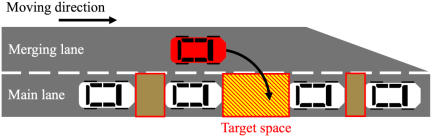
Fig. 1. Merging scene at congested highway on-ramp.
Because previous studies focused on lane-changing behavior, Do et al. proposed a lane-change model that imitates human driving behavior by analyzing human lane-change data 4. In their study, lane-changing behavior was modeled based on driving data collected from skilled drivers on Japanese highways. However, since the data were obtained under free-flow traffic conditions, their method could not be directly applied to congested traffic environments. Yoon et al. proposed a decision-making method that explicitly considered the collision risk between vehicles 5. Their study aimed to determine the feasibility of safe lane changes without collisions in dense traffic environments. However, their approach imposes collision avoidance as a strict constraint that requires sufficient inter-vehicle distance in advance. Consequently, in congested environments, all potential inter-vehicle gaps are judged as infeasible for merging, leading to missed merging opportunities. Yajima and Takami enabled merging in mixed traffic environments consisting of autonomous and manual vehicles using vehicle-to-vehicle communication 6. Numerous studies have discussed lane-changing strategies based on communication devices 7,8,9. However, these approaches have a common limitation in that all vehicles must be equipped with communication devices.
Our research group has been engaged in the development of an automatic lane-changing system that accounts for interactions with the surrounding drivers 10,11. In this study, we considered a congested highway-merging scenario and constructed a system by collecting and analyzing human lane-changing behaviors using a driving simulator (DS). However, these studies assumed merging into a predefined target space, and primarily focused on estimating yielding intentions based on the behavior of vehicles in the main lane. To select the target space for a lane change to the main lane, a method based on manually designed features was developed, and its effectiveness was validated through simulation experiments 12. Although the safety of lane changes was confirmed using our previous approach, the resulting decisions may differ from those of human drivers. If an autonomous vehicle unpredictably executes a lane-changing maneuver from the perspective of human drivers, it may force them to apply sudden braking. Such situations can potentially reduce the social acceptance of autonomous vehicles.
In this study, we developed a system capable of autonomously executing lane-changing maneuvers on a ramp on a congested highway. In particular, we focus on a method for selecting the target space for merging, and aim to construct a decision-making mechanism that exhibits behavior similar to that of human drivers. In our approach, human driving behavior is measured using a DS, and the underlying decision-making mechanism is modeled using machine learning. By comparing the decisions generated by the proposed method with the human driving behavior observed in the DS experiments, we verified that the proposed approach can achieve human-like decision-making. The safety of the proposed method is evaluated through simulation experiments.
2. Proposed Method
2.1. Problem Definition
This study considered a merging scenario on a congested highway on a ramp. A roadway consists of a single main lane connected to a merging lane, as shown in Fig. 1. The merging lane is designed such that it terminates at an endpoint. The host vehicle was assumed to be an autonomous vehicle traveling in a merging lane and was controlled by the proposed method. All vehicles traveling in the main lane were assumed to be driven by human drivers and traffic congestion was present. The host vehicle is equipped with external perception sensors, such as laser scanners, which enable continuous measurement of the state of vehicles in the main lane. In addition, the environmental map information and positioning sensors allow the host vehicle to obtain the remaining distance from its current position to the end of the merging lane.
The task of the host vehicle is to safely and smoothly complete a lane change while avoiding collisions with adjacent vehicles before reaching the end of the merging lane. To accomplish this, the requirements are defined by the following four criteria.
-
Ensuring safety: The highest driving priority is to avoid collisions with adjacent vehicles. The system must continuously monitor the relative positions and speeds of the host vehicle and surrounding vehicles and maintain sufficient spatial and temporal margins to prevent collisions.
-
Merging completeness: The merging lane has a physical constraint in that it terminates at the endpoint. If the system continues to defer merging opportunities owing to excessive prioritization of safety, the lane may eventually disappear, potentially leading to further traffic congestion. Therefore, the system must complete the lane-change maneuver before the remaining distance in the merged lane reaches zero.
-
Social cooperativeness: In congested traffic situations, the inter-vehicle gaps between vehicles in the main lane are typically small, making it necessary to rely on the cooperation of surrounding drivers to some extent. However, forcing the following vehicles to apply sudden braking through aggressive merging maneuvers not only increases the risk of rear-end collisions but is also socially unacceptable in traffic environments. Therefore, the system must select an appropriate target space that does not impose an excessive burden on the following vehicles, and enables cooperative interactions with the surrounding vehicles.
-
Impact on traffic flow: If the host vehicle disrupts traffic flow in the main lane, further congestion may occur. Ideally, merging should be executed in a manner that allows the following vehicles to continue traveling at a constant speed without deceleration. Therefore, the system is required to exhibit behavior that does not disturb the traffic flow in the main lane before and after the merging maneuver.
2.2. Overview
The automatic lane-changing system developed in this study consisted of two modules. The first module was responsible for selecting the target space for merging. This study focuses on this module and provides a detailed explanation. The second module controls the vehicle to execute a merging maneuver in a selected space. For details on this module, please refer to our previous works 10,12. In this study, we constructed a model for selecting a target space for merging maneuvers by mimicking the human driving behavior using machine learning. The workflow of the proposed approach is illustrated in Fig. 2. The parts explained in detail in this paper are indicated in red. It consists of three stages: dataset acquisition through DS experiments, model construction for target-space selection, and validation.
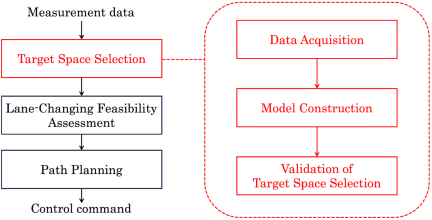
Fig. 2. Schematic of proposed method.
For the dataset acquisition, training data were first collected to model the decision-making mechanisms of human drivers. To obtain human driving-behavior data, experiments were conducted using a DS, considering the safety and reproducibility of congested traffic environments. Subsequently, explanatory data analysis was performed on the collected data, and features that were assumed to influence the decisions of human drivers in selecting the target space for merging maneuvers were extracted.
In the model construction stage, machine learning was applied to the acquired dataset to develop a model that selected the target space by imitating the decisions of human drivers. Features describing the driving situation were used as inputs, and the inter-vehicle gaps of vehicles in the main lane were evaluated as candidate options. Ultimately, the space evaluated as most suitable was the output as the target for the merging maneuver.
In the validation stage, the decisions generated by the proposed method were compared with the decision-making results of human drivers obtained from DS experiments to evaluate whether the proposed approach can select target spaces in a manner similar to that of human drivers. The selection results are compared with those obtained using the baseline method 12. Furthermore, simulation experiments were conducted to assess the safety of merging maneuvers performed using the proposed method.
2.3. Dataset Acquisition
To collect diverse merging behaviors from human drivers, a highway on-ramp is recreated in the virtual environment of a DS, and a congested traffic flow is generated. To reproduce realistic traffic flow under congestion, the speeds of vehicles in the main lane were adjusted with reference to prior studies such that the coefficient of variation of inter-vehicle gaps was set to 0.4 13. The participants began driving from the merging lane and attempted to merge into the congested main lane. In real-world situations, some drivers readily yield to merging vehicles, whereas others are reluctant to do so. To reflect this diversity in yielding behavior, the responses of drivers in the main lane to the participant vehicle were categorized into four levels of yielding tendencies, ranging from yielding to non-yielding. Yield was randomly assigned to each trial. According to the assigned level, vehicles in the main lane decelerate and yield after a predefined time has elapsed following the activation of the turn signal by the participant vehicle, or in some cases, do not yield, even after the signal is activated.
By reproducing congested highway-merging scenarios using DS in this manner, human driving behavior in response to varying traffic conditions in the main lane was measured and utilized as a dataset.
2.4. Model Construction
The proposed method employs LightGBM as a model to select the target space for merging maneuvers 14,15. LightGBM is a gradient-boosting algorithm based on decision trees optimized for high-speed execution and low memory consumption. Compared to conventional boosting methods, it is capable of capturing nonlinear interactions among features and achieves high prediction accuracy.
The proposed model outputs the probability that each candidate space will be selected as a merging target. The feasibility of executing a merging maneuver was determined by comparing the output probabilities with a predefined threshold. If the probabilities of all the candidate spaces are below the threshold, the system judges that no appropriate merging target exists and defers the selection. Conversely, if multiple candidates exceeded the threshold, the space with the highest output probability was selected as the target. This strategy enables the system to avoid aggressive merging in high-risk situations, while selecting the space with the highest likelihood of successful merging.
In the proposed method, the five inter-vehicle gaps closest to the host vehicle are defined as candidates for merging. This design choice was based on observations from the DS experiments described in Section 3.1, in which many human drivers tended to select spaces located near their vehicles during merging maneuvers. A total of 21 features were used to represent each candidate space. The feature set was designed to describe four aspects of human decision-making during merging maneuvers: (1) driving state of the host vehicle, (2) state of the target space itself, (3) temporal changes in the traffic situation, and (4) relative relationships with adjacent spaces. First, features related to the host vehicle are introduced to represent the urgency of merging and the motion state of the host vehicle. Second, features describing the target space itself, such as the inter-vehicle gap, relative speed, and margin-to-collision (MTC), were introduced to evaluate the feasibility and safety of merging into the corresponding space. Third, temporal changes in these variables were incorporated because actual merging decisions are influenced not only by the current traffic state but also by whether the surrounding spaces are expanding or shrinking over time. Finally, features describing the spaces in front of and behind the target space were included because human drivers make decisions by comparing multiple nearby spaces rather than evaluating a single target space independently. All the features are summarized in Table 1.
Table 1. Features for target-space selection.
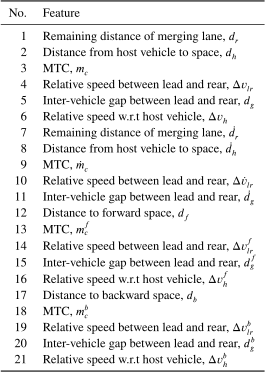
The remaining distance, \(d_r\), is defined as the distance from the host vehicle to the end of the merging lane, and represents the temporal and spatial margins available for the host vehicle to execute a merging maneuver. The distance from the host vehicle to space, \(d_h\), represents the distance from the host vehicle to the center point of the corresponding candidate space. Fig. 3 illustrates the remaining distance, \(d_r\), and the distance from the host vehicle, \(d_h\). The red vehicle in the merging lane is the host vehicle. The blue vehicles represent the lead and rear vehicles with respect to the corresponding space. The lead and rear vehicles are defined with respect to the space that is currently under consideration. As the currently considered space changes, the vehicles defined as lead and rear vehicles change accordingly.
Next, the MTC is used to evaluate the collision risk between the lead and rear vehicles 16,17. The MTC, \(m_c\), is calculated using Eq. (1).
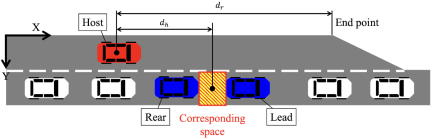
Fig. 3. Definition of features, lead vehicle, and rear vehicle.
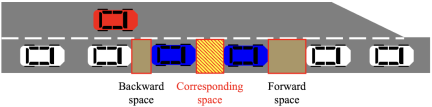
Fig. 4. Definition of forward and backward spaces.
Next, the inter-vehicle gap, \(d_g\), and the relative speed, \(\Delta v_{lr}\), between the lead and rear vehicles were considered. In addition, the relative speed between the host vehicle and surrounding vehicles, \(\Delta v_h\), was calculated using Eq. (2) to evaluate the required acceleration or deceleration adjustments during the merging maneuver and assess whether smooth following behavior can be achieved.
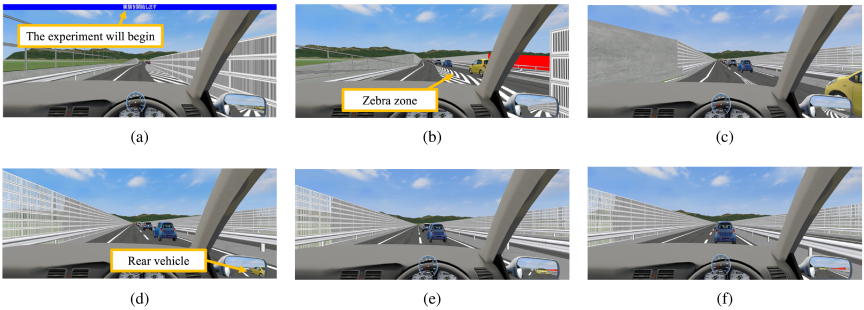
Fig. 5. Example of DS experiments for dataset acquisition.
These features are used to evaluate the state variables at the current time. However, dynamic changes play a crucial role in the merging decisions. Therefore, temporal data are incorporated as features to capture temporal changes during driving. Conventional approaches perform absolute evaluations using only data from the target space 12. However, human drivers compare multiple options and make decisions based on relative assessments. Accordingly, the forward and backward spaces of the currently considered space were also included as features. Fig. 4 illustrates this concept.
However, temporal dynamics using temporal differences in state variables are relatively simple and do not explicitly model the long-term temporal dependencies on driver behavior. More advanced temporal modeling approaches may provide a more accurate representation of temporal dependencies and the evolution of driver decision-making behaviors over time. The investigation of such approaches remains an important topic for future research.
Using the above 21 features, a target-space selection model was constructed based on LightGBM.
3. Validation
3.1. Results of DS Experiments
This section describes the results of the DS experiments conducted to obtain the dataset. The DS experiments were approved by the Ethics Committee of Kogakuin University. Prior to participating in the experiments, all participants were provided with an explanation of the purpose and procedures of the study, including the collection and use of driving-behavior data for research and publication purposes. Written informed consent was obtained from all participants prior to the experiment. To account for the influence of different road geometries, the total lengths of the merging lanes were set to 240 and 480 m. The average speed of the main traffic also varied between 20 km/h and 30 km/h. Fifteen vehicles were placed on the main lane, and the speed of each vehicle was varied within a range of \({\pm}7\) km/h around the designated average speed. The experiment was conducted with four levels of yielding behavior of the main stream, and five trials were performed for each level, resulting in 20 driving trials per participant. The participants were 27 students with valid driving licenses. The average age of the participants was 22.3 years, the average duration since license acquisition was 3.4 years, and the average driving frequency was 5.5 times per month. In modeling the decision-making process for selecting the target space, considering individual differences, such as driving style and risk tolerance, is expected to improve the prediction accuracy. Previous studies have reported that a sample size of 30 is acceptable for modeling individual differences using repeated measures data 18. The number of participants in this study satisfied this criterion and was therefore considered to provide sufficient statistical validity.
Prior to the experiment, the participants were provided with three instructions. First, they were instructed to merge into a traffic stream. Second, they were asked to drive in the same manner as they usually do during daily driving. Third, the participants were instructed to press a button mounted on the steering wheel when they firmly decided on the target space for merging. This button operation was used to extract the ground-truth labels for merging decision-making in the subsequent model construction.
The experiment was conducted over 540 trials. The experimental procedure is illustrated in Fig. 5, which shows the sequence from the start of the experiment until completion of the lane change to the main lane. In each trial, after the message “The experiment will begin” was displayed as shown in Fig. 5(a), a countdown started, and driving and data recording commenced when the countdown reached zero. Each trial was terminated when the participant completed a lane change to the main lane or reached the end of the merging lane. Trials were excluded from the analysis if a collision occurred, the participants merged at the end of the vehicle platoon, or a button indicating the decision to merge was not pressed. Consequently, 47 trials were excluded, and the remaining 493 trials were adopted as valid datasets.
3.2. Results of Model Construction
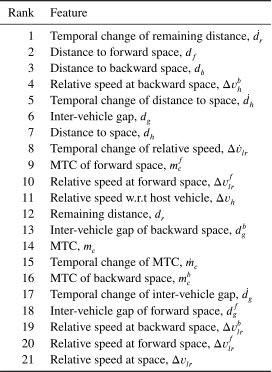
Table 2 lists the contributions of each of the 21 features to the selection results for the target space. A higher rank indicates a greater influence on decision-making. The feature with the highest importance is the temporal change in the remaining distance, \(\dot{d}_r\). Because this feature represents a decrease in the remaining distance per second, it is equivalent to the speed of the host vehicle. This result suggests that the model places a strong emphasis on the motion state of the host vehicle, such as whether it is accelerating in the search for an available space or decelerating in preparation for merging. The next most influential features were the distances to forward space, \(d_f\), and backward space, \(d_b\). This result implies that human drivers do not make decisions based solely on the immediate target space but instead perform comparative evaluations with surrounding spaces. The distances to adjacent spaces represent the local density of traffic and are considered key factors in determining whether to merge immediately or wait for the next opportunity.
In contrast, features related to relative speed exhibited the lowest importance. According to the initial hypothesis, the relative speed is expected to be a useful indicator for predicting the expansion or contraction of spaces. However, the low importance of these features is likely due to congested traffic conditions, under which speed differences between vehicles are minimal, and therefore do not provide sufficient information for decision-making.
Table 2. Ranking of features for target-space selection.
In this study, the participant group was biased toward young drivers, limiting the generalizability of the findings. A previous study reported that elderly drivers tend to merge at lower speeds and closer to the end of the acceleration lane than younger drivers 19. However, a prior study showed that the merge location and gap acceptance are strongly influenced by traffic density and available gaps in congested merging scenarios 20. Therefore, the importance of features related to the remaining distance and adjacent gaps observed in this study is consistent with existing findings on merging behavior. Nevertheless, feature importance may vary depending on the driver’s age and driving experience, and validation using a more diverse driver population remains an important topic for future studies.
The model was constructed using driving simulator data collected from congested low-speed merging scenarios (20 and 30 km/h). Therefore, the direct applicability of the proposed method to high-speed freeway-merging scenarios has not yet been validated. A previous study reported that merging behavior differs significantly depending on traffic speed and density 21. In particular, the merge location and gap acceptance characteristics vary between congested and free-flow traffic conditions. Furthermore, in high-speed merging scenarios, speed synchronization and speed relative to surrounding vehicles are critical factors for safe merging behaviors. Therefore, features related to relative speed, which showed relatively low importance under the congested traffic conditions considered in this study, may become more influential under high-speed conditions. Nevertheless, the proposed framework is data driven and does not rely on assumptions specific to low-speed traffic environments. Therefore, the proposed method is expected to be extendable to high-speed merging scenarios by retraining the model using driving-behavior data collected under such conditions.
Table 3. Human-likeness of target-space selection.
3.3. Results of Human-Likeness Evaluation
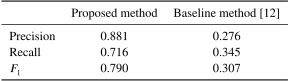
We evaluated whether the proposed method can select a target space for merging maneuvers in a manner similar to that of human drivers. For this purpose, a fivefold cross-validation was conducted using human driving data obtained from the DS experiments. The proposed method defines five candidate spaces that are the closest to the host vehicle. Candidate spaces with output probabilities equal to or greater than a predefined threshold are extracted as feasible candidates. Among the extracted candidates, the space with the highest output probability is selected as the final target space for merging. A prediction is regarded as correct when the space selected by the proposed method matches the space chosen by the human driver in the DS experiment; otherwise, it is regarded as incorrect. The results are summarized in Table 3.
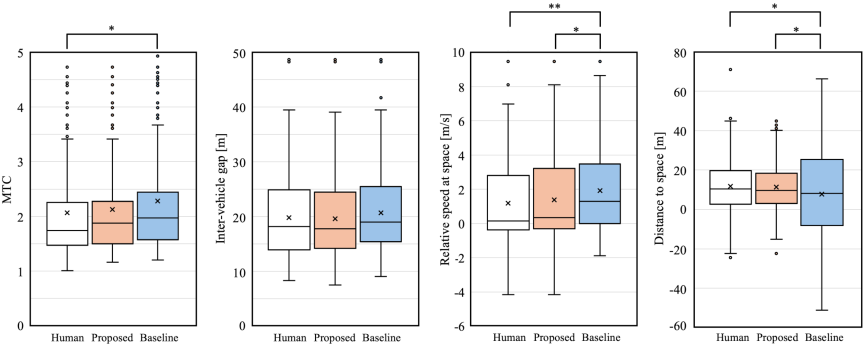
Fig. 6. Comparison of human-likeness evaluation.
The proposed method achieved a precision of 0.881, a recall of 0.716, and an \(F_1\) score of 0.790, indicating that it selected merging target spaces consistent with human driver choices with approximately 80% accuracy. To demonstrate the effectiveness of the proposed method, a performance comparison was performed using a baseline method 12. The baseline method yielded significantly lower performance, with a precision of 0.276 and a recall of 0.345. In terms of \(F_1\) score, the baseline method achieved a performance of less than 31%. These results indicate that the decision criteria of the baseline method deviate substantially from those of human drivers, whereas the proposed method enables decision-making that is closely aligned with human behavior.
The threshold parameter controls the balance between aggressive and conservative decision-making. If the threshold is set too low, the method may select a target space even when none of the available spaces is sufficiently appropriate for merging. In such situations, the method may force the selection of the best candidate, despite insufficient safety or merging feasibility. Conversely, if the threshold is excessively high, there may be situations in which no candidate space satisfies the threshold condition. In such cases, the proposed method determines that no appropriate merging target currently exists, and postpones the merging decision. To investigate the influence of the threshold parameter on target-space selection performance, a sensitivity analysis was conducted by varying the threshold value from 0.1 to 1.0 in increments of 0.1. The highest \(F_1\) score was obtained when the threshold was set at 0.4 or 0.5. Based on these results, the threshold value was set as 0.5 in this study.
To further investigate the behavioral similarity between human drivers and the proposed method, additional analyses were conducted using four indicators related to the merging decision characteristics: MTC, inter-vehicle gap, relative speed between the lead and rear vehicles, and distance to the target space. Fig. 6 shows boxplots comparing the distributions obtained from the human driving data, proposed method, and baseline method. The results indicated that the baseline method exhibited statistically significant differences from the human driving data for three of the four indicators. By contrast, the proposed method showed no statistically significant differences from the human driving data for any of the indicators, and similar distributions were observed overall.
Specifically, the baseline method tended to select target spaces with larger MTC values than those selected by human drivers. This suggests that the baseline method prioritizes safety-oriented decisions by selecting spaces with larger safety margins. One possible reason for this behavior is the influence of the relative speeds of the lead and rear vehicles surrounding the target space. Positive relative speed values indicate that the lead vehicle travels faster than the rear vehicle, whereas negative values indicate that the rear vehicle travels faster than the lead vehicle. Human drivers and the proposed method frequently selected target spaces with negative relative speed values, whereas the baseline method tended to select spaces with positive relative speed values. This result suggests that the baseline method places greater emphasis on the speed difference between the surrounding vehicles to prioritize safety. In contrast, both human drivers and the proposed method appeared to place less emphasis on relative speed when selecting target spaces. This tendency is consistent with the feature importance analysis presented in Table 2, in which the ranking of the relative speed in space was relatively low. In addition, the distribution of the distance to the target space showed clear differences between the baseline method, human drivers, and the proposed method. The baseline method occasionally selected target spaces located farther from the host vehicle, whereas both human drivers and the proposed method tended to prioritize nearby spaces around the host vehicle. These results indicate that the proposed method reproduces not only the final target-space selection results but also decision-making characteristics similar to those of human drivers during merging maneuvers. However, it should be noted that the present evaluation focused on behavioral similarity rather than cognitive similarity. Although the proposed method reproduced target-space selections and decision-related indicator distributions comparable to those observed in human drivers, the underlying cognitive processes and internal reasoning mechanisms of human decision-making could not be directly verified from the available behavioral data. Therefore, the results demonstrate similarities in observable decision outcomes and behavioral characteristics, rather than the equivalence of the underlying cognitive processes.
The primary objective of this study is not to derive an optimal merging strategy but to reproduce the human-like target-space selection behavior observed in driving simulator experiments. For this purpose, a supervised learning framework based on the LightGBM was adopted to directly learn the relationship between traffic situations and human target selection decisions from measured driving-behavior data. Recently, reinforcement learning (RL), inverse reinforcement learning (IRL), and game-theoretic approaches have attracted attention as promising methods for autonomous driving decision-making. Although such approaches may achieve efficient merging behavior, the resulting behavior does not necessarily correspond to actual human target-selection tendencies because they are generated based on predefined or inferred optimization criteria. Therefore, this study focuses on a supervised learning approach that directly imitates observed human decision-making behavior. Nevertheless, comparisons with RL, IRL, and game-theoretic approaches remain important future research topics for the further validation of the effectiveness and characteristics of the proposed method.
3.4. Results of Safety Evaluation
To evaluate the safety of merging maneuvers executed using the proposed method, simulation experiments were conducted by integrating the proposed target-space selection module with the vehicle control module developed in our previous studies 10,12. After the proposed method selects the target space, the host vehicle autonomously executes the merging maneuver using the vehicle control system within the simulation environment. Therefore, the proposed method was evaluated in a closed-loop simulation environment in which the decision-making and vehicle control modules operated simultaneously during the merging maneuver.
Simulations were conducted for more than 100 driving scenarios. The length of the merging lane was set to 480 m and 15 vehicles were generated in the main lane. The main-lane vehicles were initially positioned at an inter-vehicle distance of 10 m at the start of each trial. Each main-lane vehicle followed a preceding vehicle at an average speed of approximately 5 m/s. Subsequently, the inter-vehicle distances were adjusted according to the adaptive cruise control (ACC) model described by
To represent the differences in driver characteristics in the main lane, ACC parameters were independently sampled from predefined ranges for each vehicle. In addition, the timing of the yielding behavior toward the merging vehicle varied among the vehicles. More specifically, a delay parameter was introduced to represent the elapsed time between the activation of the turn signal of the host vehicle and the initiation of deceleration by the rear vehicle. This parameter is randomly assigned to each surrounding vehicle. In such situations, if yielding behavior is not observed within 5 s of the turn signal activation, the host vehicle selects another candidate space located behind the current target space. The parameter ranges used in the simulation were determined based on previous studies, as summarized in Table 4 22,23,24. Using these parameter settings, the simulation environment can reproduce the diversity of real-world drivers.
Performance comparisons with the baseline method 12 were also performed using the random parameters listed in Table 4. To ensure a fair comparison with the baseline method, these environmental factors were kept identical. Therefore, the simulation environment was configured using fixed random seeds to reproduce identical traffic scenarios. Consequently, the differences observed in each trial can be attributed solely to the decision-making criteria of the respective models.
Table 4. Driving characteristics of drivers in main lane.
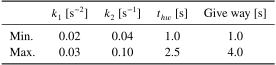
Figure 7 illustrates the process of target-space selection and merging execution using the proposed method. Fig. 7(a) shows the scene immediately after the start of the simulation, where the red vehicle represents the host vehicle. Fig. 7(b) shows the moment at which the proposed method evaluates the feasibility of merging into each candidate space and makes a decision; the two vehicles defining the selected target space are highlighted in blue. Fig. 7(c) shows the moment when the host vehicle approaches the target space and activates the turn signal. The color of the host vehicle changes from red to yellow, indicating its intention to merge. Fig. 7(d) shows the moment when the rear vehicle yielded in response to the turn signal of the host vehicle. The space widened as the rear vehicle yielded. Fig. 7(e) shows the host vehicle performing a lane change. Finally, Fig. 7(f) shows the completion of the merging maneuver.
Three performance metrics were defined to evaluate the effectiveness of the proposed method. The results are presented in Fig. 8. The first metric is MTC, which evaluates the safety of the merging maneuver at the time of execution. Specifically, the MTC between the host and rear vehicles in the selected space was calculated when the host vehicle merged into the target space. An MTC value below one indicates the risk of a collision. The evaluation value was defined as the MTC during the period from the determination of the target space to the completion of the merging maneuver. The second metric is the maximum deceleration, which evaluates whether the merging maneuver of the host vehicle forces the following vehicles to brake. During the evaluation period, the maximum deceleration among all vehicles located behind the host vehicle was extracted. A larger value indicates a more aggressive merging maneuver that imposes a stronger braking demand on the following vehicles. Previous studies have reported that accelerations exceeding \(-\)0.3 G (\(-\)2.94 m/s\(^2\)) are regarded as hard braking 25. Accordingly, a deceleration of \(-\)0.3 G or less for following vehicles was defined as the criterion for a smooth merging maneuver. The third metric is the average speed difference, which is used to evaluate the smoothness of the merging process. This metric was calculated as the difference between the average speed of the traffic flow at the time the host vehicle selected the target space and the average speed at the time the merging maneuver was completed. In merging scenarios, it is preferable for the host vehicle to merge while maintaining the traffic flow speed, rather than causing deceleration. Therefore, a smaller speed difference indicates a smoother merging that does not disturb the traffic flow.
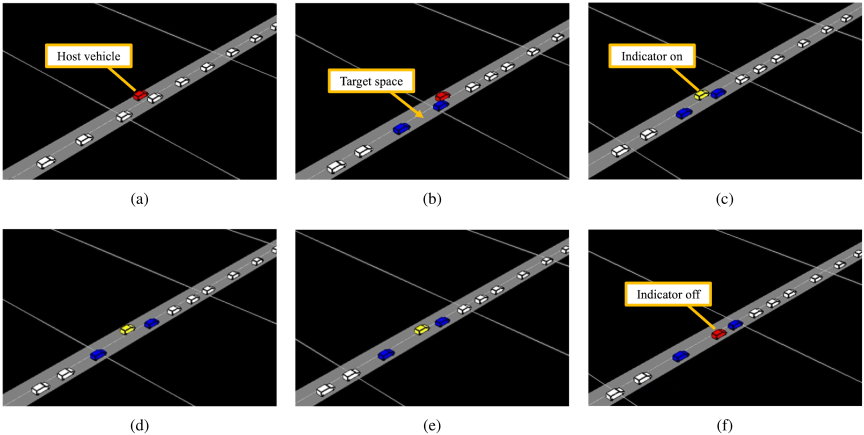
Fig. 7. Example of simulation experiments for safety evaluation.
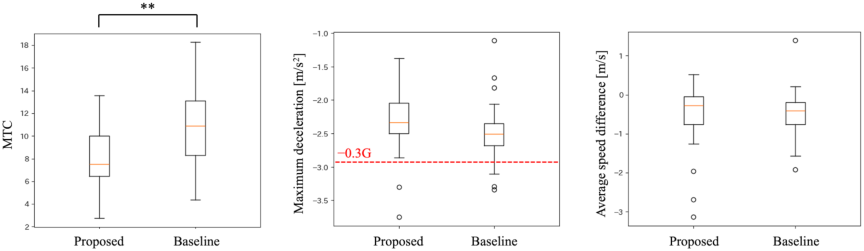
Fig. 8. Comparison of safety evaluation with baseline method.
As a result of the experiments, all merging maneuvers were successfully completed using both models. The two models selected different target spaces in 27 of 100 trials. Fig. 8 presents a comparison of the results when the two models selected different target spaces. The baseline method generally yields higher values, indicating that wider spaces are selected for merging. By contrast, the proposed method tended to yield lower MTC values. However, the minimum MTC observed for the proposed method did not fall below one. To investigate the robustness of the proposed method under severe traffic conditions further, an additional worst-case analysis was conducted. In this analysis, all surrounding vehicles were configured using the maximum values of \(k_1\) and \(k_2\) and the minimum value of \(t_{hw}\) within the predefined parameter ranges. This configuration represents a highly aggressive driving behavior characterized by short headway distances and rapid acceleration responses. Furthermore, the yield delay was fixed at 4 s, which was the maximum value used in the simulation, to reproduce situations in which the surrounding vehicles were reluctant to yield to the host vehicle. Even under these severe conditions, the proposed method maintained MTC values greater than one during the merging maneuvers, indicating that the collision avoidance capability was preserved, even in highly challenging traffic situations.
Regarding the maximum deceleration, the baseline method showed a tendency toward larger maximum deceleration values than the proposed method. When comparing the number of occurrences exceeding the hard braking threshold of \(-\)0.3 G, the baseline method resulted in four such cases, whereas the proposed method resulted in only two cases. With respect to the difference in average speed relative to the vehicles in the main lane, no noticeable difference was observed between the two models. The majority of the data were concentrated around approximately \(-\)1 m/s.
Although no statistically significant differences were observed between the two methods in the maximum deceleration and average speed difference, the proposed method demonstrated a tendency to suppress the abrupt deceleration of the following vehicles while maintaining a level of safety comparable to that of the baseline method. These results suggest that the proposed method can realize merging behavior based on decision-making criteria similar to those of human drivers and that considers the impact on surrounding traffic.
4. Conclusion
In this study, an automatic lane changing system for autonomous vehicles in congested traffic environments was developed and evaluated. Using data obtained from human drivers during merging maneuvers as training data, a model that closely reflects human decision-making criteria was proposed. Comparative experiments were conducted using a baseline method to verify the effectiveness of the proposed method. The merging target space selection of the baseline method deviates substantially from that of human drivers, whereas the proposed method enables decision-making that is closely aligned with human behavior. In the safety evaluation, the proposed method demonstrated a tendency to suppress the abrupt deceleration of the following vehicles, while maintaining a level of safety comparable to that of the baseline method, although no statistically significant differences were observed between the two methods.
Although this study evaluated the proposed method using objective indicators such as target-space selection accuracy and safety-related measures, a subjective evaluation by human drivers was not conducted. To rigorously assess the social acceptance and perceived naturalness of the proposed merging behavior, evaluations involving human participants are necessary. In particular, subjective assessments of the perceived safety, comfort, naturalness, and acceptability during interactions with autonomous vehicles are important for evaluating whether the proposed method can achieve socially acceptable merging behavior. Therefore, future work will include driving simulator experiments in which human participants interact with autonomous vehicles using the proposed method, and provide subjective evaluations of the resulting merging behavior.
Furthermore, the current safety evaluation is limited to the traffic scenarios and parameter ranges considered in this study. Future work should investigate the robustness of the proposed method under a wider variety of traffic conditions, including rare corner cases and unexpected surrounding-vehicle behaviors.
Acknowledgments
This work was supported by the Hanshin Expressway Company Limited.
- [1] K. Kim, K. Matsuhashi, and M. Ishikawa, “Analysis of primary-party traffic accident rates per driver in Japan from 1995 to 2015: Do older drivers cause more accidents?,” IATSS Res., Vol.47, No.4, pp. 447-454, 2023. https://doi.org/10.1016/j.iatssr.2023.09.001
- [2] D.-N. Nguyen, H.-T. Nguyen, A. Kojima, and H. Kubota, “Traffic safety of elderly road user: The global trend and the Japanese case,” J. Jpn. Soc. Civ. Eng. Ser. D3 (Infrastruct. Plan. Manag.), Vol.72, No.5, pp. I_1249-I_1264, 2016. https://doi.org/10.2208/jscejipm.72.I_1249
- [3] Y. Nishimura et al., “A study on behavior of autonomous vehicles cooperating with manually-driven vehicles,” 2019 IEEE Int. Conf. Pervasive Comput. Commun. (PerCom), pp. 212-219, 2019. https://doi.org/10.1109/PERCOM.2019.8767390
- [4] Q. H. Do et al., “Human drivers based active-passive model for automated lane change,” IEEE Intell. Transp. Syst. Mag., Vol.9, No.1, pp. 42-56, 2017. https://doi.org/10.1109/MITS.2016.2613913
- [5] Y. Yoon, H. Lee, and K. Yi, “Risk-aware lane change decision for autonomous vehicle considering feasibility,” Proc. 7th Int. Symp. Future Act. Saf. Technol. (FAST-zero), Session No.Fri-AM2-B-3, 2023.
- [6] H. Yajima and K. Takami, “Inter-vehicle communication protocol design for a yielding decision at an unsignalized intersection and evaluation of the protocol using radio control cars equipped with Raspberry Pi,” Computers, Vol.8, No.1, Article No.16, 2019. https://doi.org/10.3390/computers8010016
- [7] Y. Luo, Y. Xiang, K. Cao, and K. Li, “A dynamic automated lane change maneuver based on vehicle-to-vehicle communication,” Transp. Res. Part C Emerg. Technol., Vol.62, pp. 87-102, 2016. https://doi.org/10.1016/j.trc.2015.11.011
- [8] L. Li, J. Gan, K. Zhou, X. Qu, and B. Ran, “A novel lane-changing model of connected and automated vehicles: Using the safety potential field theory,” Phys. A Stat. Mech. Appl., Vol.559, Article No.125039, 2020. https://doi.org/10.1016/j.physa.2020.125039
- [9] Y. Ali, Z. Zheng, M. M. Haque, M. Yildirimoglu, and S. Washington, “Understanding the discretionary lane-changing behaviour in the connected environment,” Accid. Anal. Prev., Vol.137, Article No.105463, 2020. https://doi.org/10.1016/j.aap.2020.105463
- [10] H. Woo, H. Tetsuka, and J. Gwak, “Automatic lane-changing system on congested highway,” J. Robot. Mechatron., Vol.36, No.3, pp. 779-786, 2024. https://doi.org/10.20965/jrm.2024.p0779
- [11] H. Woo, H. Tetsuka, and J. Gwak, “Autonomous lane-changing system at congested merging area,” Proc. 7th Int. Symp. Future Act. Saf. Technol. (FAST-zero), Session No.Fri-AM2-B-2, 2023.
- [12] K. Nishimura and H. Woo, “Target space selection for automatic lane-changing system at congested highway on-ramp,” J. Robot. Mechatron., Vol.37, No.5, pp. 1061-1067, 2025. https://doi.org/10.20965/jrm.2025.p1061
- [13] M. Fujita, A. Aratani, and S. Yamada, “Analysis of traffic volume and travel-time relationship using continuous one-hour values on urban expressway,” J. Adv. Transp., Vol.2023, Article No.6866060, 2023. https://doi.org/10.1155/2023/6866060
- [14] G. Ke et al., “LightGBM: A highly efficient gradient boosting decision tree,” Proc. 31st Int. Conf. Neural Inf. Process. Syst. (NIPS), pp. 3149-3157, 2017.
- [15] Y. Shi, G. Ke, Z. Chen, S. Zheng, and T.-Y. Liu, “Quantized training of gradient boosting decision trees,” Proc. 36th Int. Conf. Neural Inf. Process. Syst. (NIPS), pp. 18822-18833, 2022.
- [16] T. Hiraoka, M. Tanaka, H. Kumamoto, T. Izumi, and K. Hatanaka, “Collision risk evaluation index based on deceleration for collision avoidance (first report),” Rev. Automot. Eng., Vol.30, No.4, pp. 429-437, 2009. https://doi.org/10.11351/jsaereview.30.429
- [17] L. Yang, C.-F. Xing, and H.-B. Zhao, “Study on driver’s reaction time (DRT) during car following,” Comput. Technol. Autom., Vol.34, No.3, pp. 33-37, 2015 (in Chinese). https://doi.org/10.16339/j.cnki.jsjsyzdh.2015.03.007
- [18] D. D. Boos and J. M. Hughes-Oliver, “How large does n have to be for Z and t intervals?,” Am. Stat., Vol.54, No.2, pp. 121-128, 2000. https://doi.org/10.1080/00031305.2000.10474524
- [19] L. Lwambagaza, T. Sando, E. Mtoi, E. E. Ozguven, and J. O. Sobanjo, “Age-based simulation of merging behavior at freeway merging ramps,” Transp. Res. Rec., Vol.2663, pp. 57-66, 2017. https://doi.org/10.3141/2663-08
- [20] D. de Waard, C. Dijksterhuis, and K. A. Brookhuis, “Merging into heavy motorway traffic by young and elderly drivers,” Accid. Anal. Prev., Vol.41, No.3, pp. 588-597, 2009. https://doi.org/10.1016/j.aap.2009.02.011
- [21] X. Wan, P. J. Jin, L. Zheng, Y. Cheng, and B. Ran, “Speed synchronization process of merging vehicles from the entrance ramp: Empirical analysis,” Transp. Res. Rec., Vol.2391, pp. 11-21, 2013. https://doi.org/10.3141/2391-02
- [22] V. Milanés and S. E. Shladover, “Modeling cooperative and autonomous adaptive cruise control dynamic responses using experimental data,” Transp. Res. Part C Emerg. Technol., Vol.48, pp. 285-300, 2014. https://doi.org/10.1016/j.trc.2014.09.001
- [23] Y. Wang et al., “Online parameter estimation methods for adaptive cruise control systems,” IEEE Trans. Intell. Veh., Vol.6, No.2, pp. 288-298, 2021. https://doi.org/10.1109/TIV.2020.3023674
- [24] J. Marzbanrad and I. T. Moghaddam, “Self-tuning control algorithm design for vehicle adaptive cruise control system through real-time estimation of vehicle parameters and road grade,” Veh. Syst. Dyn., Vol.54, No.9, pp. 1291-1316, 2016. https://doi.org/10.1080/00423114.2016.1199886
- [25] J. Boylan, W. S. Chen, and D. Meyer, “The influence of vehicle characteristics on the braking behaviour of young people as measured using telematics,” J. Road Saf., Vol.36, No.1, pp. 1-10, 2025. https://doi.org/10.33492/JRS-D-25-1-2468883
- [a] National Highway Traffic Safety Administration, “Critical reasons for crashed investigated in the National Motor Vehicle Crash Causation Survey,” Traffic Safety Facts, No.DOT HS 812 115, 2015. https://crashstats.nhtsa.dot.gov/Api/Public/ViewPublication/812115 [Accessed July 22, 2026]
This article is published under a Creative Commons Attribution-NoDerivatives 4.0 Internationa License.