
Paper:
Culturally Embedded Disaster Education and Intergenerational Preparedness Effects: Evidence from a Disaster Prevention Maena-Based Project on Nias Island, Indonesia
Iwao Kato*,†, Bambang Rudyanto*, and Kenichi Ishibashi**
*Faculty of Economics and Business, Wako University
5-1-1 Kanaigaoka, Machida, Tokyo 195-8585, Japan
†Corresponding author
**Department of Policy Studies, Aichi Gakuin University
Nisshin, Japan

Disaster risk reduction education for children is increasingly recognized as an effective tool to enhance household resilience. This study evaluates a child-centered disaster risk reduction education project implemented on Nias Island, Indonesia, a region highly vulnerable to earthquakes and tsunamis. The intervention integrated disaster preparedness messages into Maena, a traditional communal dance of Nias, embedding risk-reduction learning within local cultural practice. Using a quasi-experimental pre–post design with matched survey data (children: n=1,242; parents: n=415), statistically significant improvements were observed in children’s disaster knowledge and parental awareness and preparedness behaviors. Notably, household preparedness measures increased from 55.2% to 78.8% among parents (χ2=67.6, p<0.001). These findings provide quantitative evidence of intergenerational spillover effects, indicating that culturally grounded child-centered disaster education can transcend classrooms to strengthen family-level and community resilience.
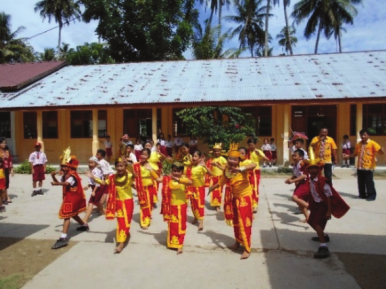
Children performing Disaster Prevention Maena
1. Introduction
Disaster risk reduction (DRR) education has become an essential pillar of resilience-building strategies in hazard-prone regions worldwide 1. The Sendai Framework for Disaster Risk Reduction (2015–2030) emphasizes education as a key strategy for enhancing preparedness and cultivating a culture of safety within communities 2. Beyond its theoretical importance, practical experience has also demonstrated the value of education compared with purely technological interventions.
One of the authors of this paper has been involved in DRR initiatives in Indonesia for three decades and has observed both successful and unsuccessful community-based disaster preparedness projects. Many projects centered primarily on equipment or infrastructure, such as warning systems, evacuation facilities, or monitoring devices, faced difficulties in long-term maintenance after external funding or technical support ended. In several cases, introduced equipment became underused or fell into disrepair because of limited local maintenance capacity. In contrast, community-oriented disaster education programs often generate more sustainable effects by strengthening residents’ awareness of hazards, evacuation behavior, and preparedness practices. These observations suggest that building human and social capacities through education may be as important as or, in some contexts, more sustainable than technological measures alone.
These challenges are particularly pronounced in small-island environments, such as Nias Island, Indonesia, located along the Pacific Ring of Fire. Island communities often face geographical isolation, limited emergency infrastructures, and restricted access to rapid external assistance during disasters. Evacuation routes may be constrained by coastal topography, and warning systems may not always be fully maintained because of financial and technical limitations. In such contexts, the ability of residents to recognize hazards and respond promptly is a critical determinant of survival. Therefore, school-based disaster education is particularly important because preparedness knowledge must often compensate for infrastructural constraints.
Many island societies maintain strong intergenerational household structures in which children, parents, and extended family members interact closely in everyday life. These conditions create opportunities for knowledge acquired by children in schools to circulate rapidly within households. Thus, whether school-based disaster education can generate measurable effects beyond the classroom is particularly relevant in small-island communities where households function as primary units of disaster response.
Children have traditionally been viewed as passive recipients of disaster-related knowledge. However, recent scholarship suggests that children may also function as important agents for influencing household preparedness behaviors 3. Through communication with family members, children can transmit knowledge acquired at school, potentially prompting discussions and behavioral changes within the home. Despite this theoretical recognition, quantitative evidence of such intergenerational effects remains limited, particularly in Southeast Asia. Moreover, while culturally embedded approaches are increasingly advocated in DRR education, few studies have examined whether integrating local cultural practices enhances knowledge acquisition and household diffusion.
The decision to use Maena, a traditional communal dance involving collective singing, rhythm, and coordinated movement, as the central educational medium on Nias Island was influenced by lessons from the neighboring Simeulue Island in Aceh Province, where the traditional oral narrative Smong played an important role in saving lives during the 2004 Indian Ocean tsunami. Simeulue’s tsunami knowledge was transmitted across generations through songs and stories describing the signs of a tsunami and the need for immediate evacuation after strong ground shaking. Inspired by this example, the project initially considered introducing the Smong narrative directly on Nias Island. However, because the linguistic and cultural contexts of Simeulue and Nias differ substantially, a direct transfer was impractical. During the early project stage, a picture-story show based on Smong was presented to schoolchildren on Nias Island by a project team supported by the Japan International Cooperation Agency (JICA). However, local educational authorities advised that visually depicting frightening disaster scenes did not align well with local cultural norms. This feedback prompted the project team to adopt a more culturally appropriate approach centered on Maena. Therefore, integrating disaster-prevention messages into Maena was viewed as a locally legitimate and memorable strategy for communicating preparedness knowledge. Thus, Disaster Prevention Maena was developed as a culturally adapted DRR communication strategy, not merely as a creative teaching tool.
This study makes three contributions to the literature. First, it provides quantitative evidence of the effectiveness of a child-centered disaster education project, using matched pre–post survey data collected from both children and parents. Second, it examines whether children’s knowledge gains are statistically associated with changes in parental awareness and household preparedness behaviors, thereby contributing to studies on intergenerational learning in disaster preparedness. Third, it evaluates a culturally embedded educational approach by integrating disaster-prevention messages into Maena, contributing to broader discussions on how local cultural practices can strengthen community resilience.
The remainder of this paper is organized as follows: Section 2 describes the geographical and social context of Nias Island. Section 3 reviews relevant literature and presents the theoretical framework. Section 4 outlines the research questions and hypotheses. Section 5 explains the project framework and design of the Disaster Prevention Maena-based program. Section 6 describes the methods and survey instruments. Section 7 presents the empirical results, followed by a discussion in Section 8. Finally, Sections 9 and 10 summarize the study’s limitations and conclusions, respectively.
2. Context: Nias Island and the Need for Disaster Education
Nias Island, located off the western coast of Sumatra, was severely affected by the 2004 Indian Ocean tsunami and 2005 Nias earthquake. Although awareness of disaster risks increased following these events, systematic and sustained school-based disaster education remained limited in coverage and continuity.
Many communities continue to reside in coastal and river-mouth areas vulnerable to tsunami inundation. Although governmental frameworks for DRR existed, practical evacuation training and household-level preparedness measures were implemented inconsistently. Furthermore, although Nias possesses rich cultural traditions, they had not been systematically integrated into formal disaster education initiatives.
In response to these challenges, the JICA Grassroots Partnership Support Scheme launched a disaster-prevention education project in 2016. The project was designed to establish participatory school-centered DRR education that would extend beyond classrooms to households and communities.
3. Literature Review and Theoretical Framework
3.1. DRR Education and Community Resilience
DRR education is increasingly recognized as a fundamental component of community resilience in hazard-prone regions 4,5. Education plays an important role in strengthening risk awareness, preparedness, and adaptive capacity among populations exposed to natural hazards.
Moreover, its importance is reflected in international policy frameworks. The Sendai Framework for Disaster Risk Reduction (2015–2030) identifies education as a key mechanism for enhancing preparedness and fostering a culture of safety across societies 6. Within this context, schools are widely regarded as essential institutions for disseminating disaster knowledge and shaping preparedness behaviors among younger generations 7.
Empirical studies reveal that school-based disaster education can improve children’s hazard recognition, evacuation knowledge, and preparedness behavior 8. Research in countries such as Japan and Indonesia indicates that structured programs combining classroom learning, evacuation drills, and experiential activities enhance students’ preparedness capabilities 9. These findings suggest that schools function not only as educational institutions, but also as important actors in strengthening community resilience through knowledge transmission and behavioral training 10.
However, most studies primarily focus on learning outcomes among children; relatively few have examined whether school-based disaster education produces measurable impact beyond the classroom, particularly on family environments and household preparedness practices.
3.2. Children as Agents of Change and Intergenerational Knowledge Transfer
Recent scholarship increasingly challenges the traditional view of children as passive disaster victims. Instead, children are now recognized as potential “agents of change” capable of influencing disaster preparedness within families and communities 11.
This perspective is grounded in social learning theory and knowledge-sharing frameworks 12. Social learning theory suggests that behaviors and attitudes are shaped by observation, modeling, and interactions within social environments 13. When children acquire preparedness knowledge through school-based education, they may share this knowledge with family members or demonstrate behaviors that parents observe and adopt 14.
Knowledge-sharing research suggests that information can circulate through social networks and across generations within households. In disaster contexts, such processes may stimulate family discussions about hazards, evacuation strategies, and preparedness measures 15.
Empirical evidence for these intergenerational mechanisms remains limited but is suggestive. Studies in Japan report that child-focused disaster education activities can stimulate household discussions and encourage preparedness behavior among parents 16. Similarly, studies involving children with foreign backgrounds reveal that children may function as important transmitters of disaster knowledge to parents who lack direct access to institutional disaster education 17.
However, systematic quantitative evaluations of child-to-parent knowledge diffusion are scarce, particularly in Southeast Asia. Many studies rely on qualitative observations or perception-based assessments, rather than statistical analyses of pre–post interventions. Consequently, the pathways through which children’s disaster education influences household preparedness remain insufficiently examined.
3.3. Cultural Embeddedness in Disaster Education
In addition to researching intergenerational learning, scholars have emphasized the importance of culturally grounded approaches in disaster education 18. Preparedness messages embedded within locally meaningful practices, such as oral narratives, songs, rituals, or community performances, may be more readily accepted and remembered 19.
Studies on indigenous knowledge systems reveal that traditional storytelling and cultural narratives have long functioned as mechanisms for transmitting survival knowledge across generations 20,21. One widely cited example is the Smong narrative from Simeulue Island, Indonesia, which suggests that strong earthquakes prompt immediate evacuation to higher ground. During the 2004 Indian Ocean tsunami, long-term transmission of this narrative contributed to rapid evacuation behavior and remarkably low casualty rates on the island 22.
The Smong case demonstrates how culturally embedded knowledge can support effective disaster risk reduction through intergenerational transmission 23,24,25. However, such systems are highly context-specific. As the language, traditions, and social practices of Simeulue differ substantially from those of Nias Island, directly transferring the Smong narrative is unlikely to generate the same cultural resonance.
Recognizing these differences, this study adopted a locally grounded approach by integrating disaster-prevention messages into Maena. Unlike externally introduced teaching materials, Maena functions as an established medium for collective expression and social interaction.
Embedding disaster knowledge in this familiar cultural performance sought to reproduce, in the Nias context, a mechanism similar to that observed in the Smong case: the transmission of preparedness knowledge through culturally meaningful and socially shared practices. Therefore, the Disaster Prevention Maena-based project can be understood as an attempt to create a locally adapted pathway for disaster knowledge transmission.
Recent studies in Indonesia have explored integrating local wisdom and traditional practices into disaster education 26. These initiatives suggest that culturally familiar frameworks can enhance engagement, community participation, and legitimacy of preparedness programs 27,28.
However, although culturally embedded disaster education has revealed promising results in improving student awareness, few studies have quantitatively examined whether such programs influence preparedness behaviors at the household level. Empirical evidence linking culturally grounded school-based education to intergenerational diffusion remains limited.
3.4. Research Gap and Contribution
Considered together, the literature suggests that school-based disaster education can strengthen community resilience through multiple pathways. Nevertheless, several important gaps remain.
First, most studies focus on children’s educational outcomes rather than household preparedness effects. Second, quantitative evidence of intergenerational knowledge diffusion remains limited. Third, relatively few studies evaluate culturally embedded disaster education using pre–post statistical designs. Fourth, empirical evidence from small island communities in Southeast Asia is scarce.
To address these gaps, this study quantitatively evaluates a culturally embedded disaster education project implemented in elementary schools on Nias Island. By combining matched pre–post survey analyses with child–parent comparisons, this study examines whether improvements in children’s disaster knowledge coincide with measurable changes in parental awareness and household preparedness behaviors 29.
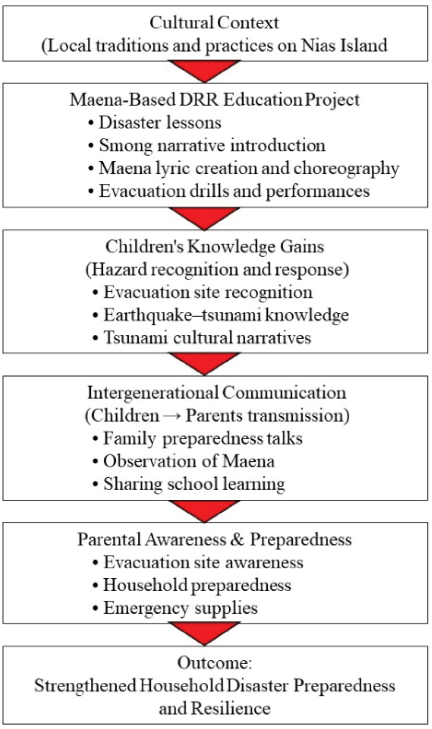
Fig. 1. Conceptual framework.
3.5. Integrated Theoretical Framework
This study integrates insights from three theoretical perspectives: social learning theory, intergenerational knowledge transfer, and culturally grounded education.
First, social learning theory suggests that behaviors and attitudes are shaped by observations and interactions within social environments. When children acquire disaster knowledge in school and demonstrate preparedness behaviors, parents may observe these behaviors and incorporate them into household practices 30.
Second, intergenerational knowledge transfer theory emphasizes that knowledge can circulate between generations through everyday communication within families 31. In disaster education contexts, children may act as conduits through which institutional knowledge learned at school is transmitted to parents.
Third, culturally grounded education theory highlights that learning embedded within meaningful cultural practices can enhance engagement, legitimacy, and retention of knowledge 32.
Figure 1 presents the conceptual framework of this study. It proposes that culturally embedded disaster education, implemented through the Disaster Prevention Maena-based project, strengthens children’s disaster knowledge and stimulates communication within households. Through these interactions, children’s learning may coincide with increased parental awareness and preparedness behaviors, thereby contributing to household-level resilience.
The framework does not assume direct causality; rather, it illustrates a plausible mechanism linking school-based disaster education with broader household preparedness outcomes. Moreover, it provides a theoretical basis for the empirical analyses presented in Section 7.
4. Research Questions and Hypotheses
This study examines three primary questions:
-
RQ 1.
Does participation in the Maena-based disaster education project improve children’s disaster-related knowledge?
-
RQ 2.
Does the project coincide with improvements in parental awareness and preparedness?
-
RQ 3.
Are improvements in children’s knowledge statistically associated with changes in parental preparedness outcomes?
Hypotheses:
-
H1:
Children’s disaster-related knowledge improves significantly following the intervention.
-
H2:
Improvements in parental awareness and preparedness are observed during the project period.
-
H3:
Improvements in children’s knowledge are statistically associated with changes in parental preparedness outcomes, consistent with an intergenerational diffusion pattern.
5. Project Framework and Program Design
5.1. Project Design Matrix
The disaster prevention education initiative was implemented under the framework of JICA’s Grassroots Partnership Support Scheme. The project was designed using a project design matrix to ensure logical coherence between objectives, activities, and expected outcomes.
The overall goal of the project was to strengthen community-level disaster resilience on Nias Island. Recognizing that schools function as central institutions within local communities, the project aimed to foster resilience through a participatory educational model centered on elementary schools.
The project aimed to establish sustainable, participatory, school-based DRR education involving students, teachers, parents, and local education authorities. Rather than limiting intervention to classroom-based knowledge transmission, the project sought to create a collaborative structure in which disaster awareness would circulate between schools and households.
To achieve this purpose, four principal outputs were identified:
-
Developing a locally adapted disaster prevention curriculum;
-
Creating and disseminating “Disaster Prevention Maena” as a culturally embedded educational tool;
-
Implementing systematic evacuation drills in participating schools;
-
Organizing community performances to encourage household-level diffusion.
The underlying logic assumes that culturally embedded disaster education enhances children’s knowledge, stimulates communication within families, and ultimately improves household preparedness.
5.2. Implementation Structure
The program was conducted over a seven-month period from October 2016 to April 2017 and followed a structured, phased implementation process.
Implementation was led by a project team established under JICA’s Grassroots Partnership Support Scheme.
The team included university researchers with expertise in DRR and education. The project leader was one of the authors of this paper and was responsible for the initial institutional design of the program and for supervising the overall implementation progress throughout the project period.
A project researcher was stationed on Nias Island during the implementation period to coordinate daily activities and maintain communication with local stakeholders. Other team members traveled regularly between Nias Island and their home institutions to provide technical support, monitor progress, and participate in key program events.
At the local level, the project closely collaborated with a community-based NGO that had previously engaged in post-earthquake recovery support on Nias Island. This partnership facilitated communication with schools, communities, and local authorities. Further, the program received cooperation from local government agencies, including disaster management and education offices, which supported coordination, outreach, and implementation activities.
The first phase comprised a baseline survey administered to both children and parents. The survey provided diagnostic data regarding disaster knowledge, awareness, and preparedness practices prior to the intervention.
The second phase involved teacher workshops, during which the importance of disaster education was discussed and shared objectives were clarified. These workshops aimed to build institutional and household commitments to the program.
Subsequently, each participating school established a disaster leadership structure, designated responsible personnel, and clarified lines of communication in case of an emergency. Evacuation routes were mapped and formally agreed upon to ensure that preparedness training corresponded to realistic geographic conditions.
The core creative component of the project was developing Disaster Prevention Maena. This process was collaborative and iterative, involving teachers, community members, and students.
Following the creative phase, structured disaster education classes were conducted in classrooms. These classes covered earthquake mechanisms, tsunami generation, evacuation principles, and risk recognition specific to the students’ local environments.
Practical reinforcement was provided through schoolwide evacuation drills conducted in coordination with teachers and local authorities, aiming to transform cognitive understanding into embodied preparedness behavior.
To consolidate learning and encourage broader community engagement, schools participated in a public Disaster Prevention Maena contest and performance event. Local education offices and disaster management authorities were invited, reinforcing institutional recognition.
Finally, a post-intervention survey was administered to evaluate changes in both children’s knowledge and parental awareness.
Through this structured progression, from institutional coordination and diagnosis to instruction, rehearsal, public performance, and evaluation, the project aimed to create an integrated educational ecosystem rather than a one-time instructional event.
The overall implementation of the educational project is summarized in Fig. 2. The figure illustrates the sequential structure of the intervention, including baseline surveys, teacher workshops, disaster education classes, evacuation drills, and the development and performance of Disaster Prevention Maena. By visualizing the program structure, Fig. 2 clarifies how institutional collaboration, educational activities, cultural engagement, and community participation were integrated throughout the intervention period.
5.3. Disaster Prevention Maena: Educational Content and Pedagogical Process
The central pedagogical innovation of the project was the adaptation of Maena, a traditional Nias communal dance, as a medium for disaster education.
The pedagogical development proceeded in six stages. First, students were introduced to the Smong tsunami narrative, a well-known traditional account from neighboring regions emphasizing immediate evacuation after strong ground shaking. This narrative served as a cultural bridge linking indigenous knowledge with contemporary disaster science.
Second, structured instructions were provided on earthquake response behaviors, including self-protection during shaking, tsunami risk, and the need for rapid evacuation to higher ground.
Third, students participated in composing the lyrics, expressing disaster-prevention messages in their own words. This participatory process aimed to enhance understanding and strengthen ownership of the material.
Fourth, teachers and community members collaboratively refined the lyrics into coherent and rhythmically appropriate verses, ensuring both accuracy and performative feasibility.
Fifth, local musicians composed music consistent with traditional Maena rhythms, preserving cultural authenticity.
Sixth, choreography was developed collaboratively. Dance movements were intentionally aligned with key preparedness behaviors, including protecting oneself during shaking, evacuating immediately to high ground, avoiding coastal areas after earthquakes, and recognizing the importance of emergency stockpiling.
By embodying preparedness behaviors through movement, the program sought to transform abstract knowledge into memorable physical expression.
Public performance played an important reinforcing role. When children performed Disaster Prevention Maena at school events and community gatherings (Fig. 3), parents were exposed to disaster-prevention messages in a culturally legitimate and emotionally engaging format. This visibility was expected to encourage household discussion and strengthen intergenerational transmission of knowledge.
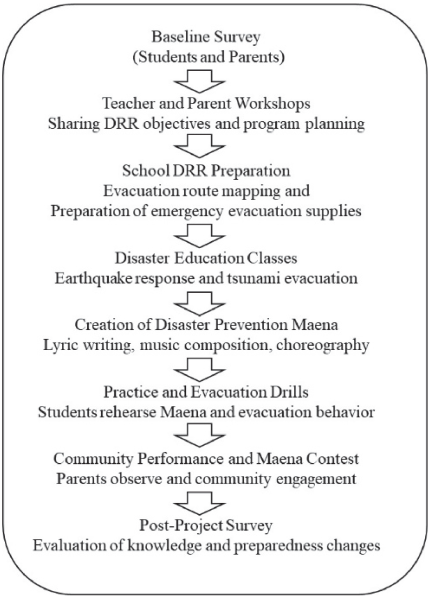
Fig. 2. Process of the project.
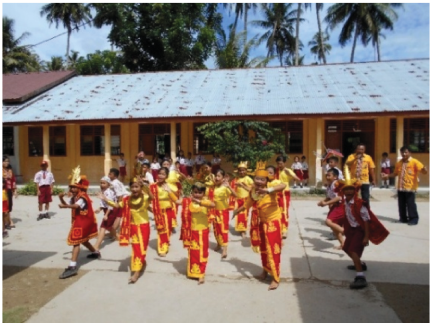
Photograph by the authors.
Fig. 3. Children performing Disaster Prevention Maena.
Importantly, Disaster Prevention Maena was not a standardized performance imposed uniformly across schools. Each participating school created its own version through collaboration among teachers, students, and community members. Consequently, songs and movements reflected local cultural expressions, and variations emerged across schools and regions.
The lyrics incorporated concrete disaster-prevention messages related to earthquake and tsunami response. Common themes included warnings that strong earthquakes may be followed by tsunamis, the need to evacuate immediately to higher ground, and the dangers of approaching coastal areas after seismic events. Some songs emphasized that people should not observe the sea or rivers after an earthquake. Others warned that even if seawater suddenly recedes and fish appear on the exposed seabed, people should not approach the shore, but should evacuate immediately.
Dance movements corresponded to these messages. Some gestures symbolized protecting oneself during shaking, whereas others represented running toward higher ground. Integrating lyrics, rhythm, and movement, Disaster Prevention Maena translated disaster-prevention knowledge into an embodied cultural performance.
As Maena is traditionally performed collectively during community gatherings, its use in disaster education has allowed preparedness messages to circulate naturally across generations. Thus, it functioned not only as a pedagogical tool for children, but also as a social medium through which disaster preparedness discourse entered family spaces.
6. Methods
6.1. Research Design
This study employed a quasi-experimental pre–post survey design to evaluate the changes in disaster-related knowledge and preparedness associated with implementing a culturally embedded disaster education project. Baseline data were collected before the intervention in September 2016, and follow-up surveys were conducted after project completion in April 2017.
The research design focused on assessing changes at two levels: (1) knowledge gains among children participating in a school-based disaster education project (Fig. 4) and (2) changes in disaster awareness and preparedness behaviors among their parents. By comparing the responses collected before and after the project, this study aimed to identify statistically significant improvements in both groups.
As the educational intervention was implemented as part of a community-based development project rather than as a controlled experimental study, the research design did not include a randomized control group. Instead, the study relied on a combination of matched pre–post comparisons and aggregated cross-sectional analyses to examine changes associated with the intervention period.
In addition, although both children and parents completed the questionnaires, individual household-level linkages between specific children and their parents were not always possible because of the cultural naming practices on Nias Island, where family surnames are not commonly used. Consequently, the analysis focused on aggregated comparisons between student and parent groups rather than on strictly matched parent–child pairs.
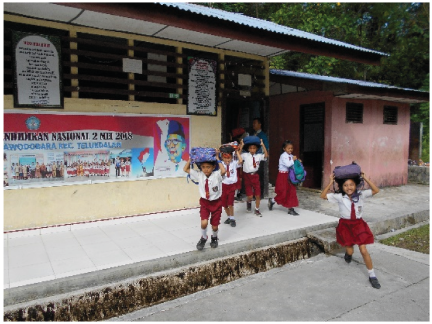
Photograph by the authors.
Fig. 4. Children during an evacuation drill.
Despite these limitations, the design remains appropriate for evaluating project-related changes in community-based educational settings. Pre–post survey comparisons allow the identification of statistically significant improvements in knowledge and preparedness indicators, while cross-tabulation analyses provide insights into the potential associations between child-level learning outcomes and parent-level preparedness behaviors.
Thus, although causal inference cannot be definitively established, the research design enables a systematic examination of whether implementing the Disaster Prevention Maena-based disaster education project coincided with measurable improvements in both children’s disaster knowledge and parental preparedness.
6.2. Participants
A total of 1,273 students participated in the surveys, of whom 1,242 completed both pre- and post-surveys and were included in the matched analyses. Additionally, 415 parents completed corresponding questionnaires.
6.3. Questionnaire Instrument
The questionnaire was translated into the Nias language for administration and comprised 17 structured items designed to assess disaster-related awareness, knowledge, communication, and preparedness behaviors. Comparable versions were administered to children and randomly selected parents from each participating school.
The instrument was structured to capture five conceptual domains: (A) demographic background, (B) geographic and hazard awareness, (C) disaster learning exposure, (D) evacuation knowledge and behavioral intention, and (E) household preparedness.
The specific items were as follows:
(A) Demographics and Household Background
-
1.
Gender
-
2.
Age
-
3.
Household composition (family members living together)
-
4.
Residence location (coastal area, riverside, mountains)
-
5.
Parents’ occupation
(B) Hazard Perception and Learning Experience
-
6.
Perceived types of disasters likely to occur in the community
-
7.
Prior learning experience regarding earthquakes and tsunamis
-
8.
Source of disaster-related learning
(C) Behavioral Knowledge and Communication
-
9.
Intended action immediately after an earthquake
-
10.
Whether the child discusses school disaster learning with family members
-
11.
Person to contact first during a disaster
-
12.
Intended evacuation destination in the case of an earthquake (e.g., high ground, home, school)
(D) Cultural and Indigenous Knowledge
-
13.
Situations in which Maena is performed
-
14.
Experience of participating in evacuation drills
-
15.
Knowledge of disaster-related local legends
-
16.
Type of disaster associated with known legends
(E) Household Preparedness
-
17.
Presence of household emergency supplies
Questionnaire items were developed with reference to perspectives on hazard perception, protection motivation, and intergenerational knowledge transfer. Items related to local legends were included to evaluate the educational integration of culturally embedded disaster narratives within Maena-based interventions.
All outcome variables used in the statistical analyses (Tables 1 and 2) were derived from dichotomized responses to these items. For inferential testing, matched pre–post responses were analyzed using McNemar tests, and associations between child and parent outcomes were examined using chi-square tests of independence.
Table 1. Changes in children’s disaster knowledge.

Table 2. Changes in parental awareness and preparedness.

6.4. Statistical Analysis
Changes in paired categorical responses between the pre- and post-intervention surveys were analyzed using McNemar tests. To facilitate interpretation of the practical magnitude, standardized effect-size indices based on \(2\times 2\) contingency tables were additionally reported as Cramér’s \(V\). Associations between children’s learning outcomes and parental awareness or preparedness outcomes were examined using chi-square tests of independence. Statistical findings were interpreted as associations rather than definitive causal relationships.
School-level descriptive consistency checks were conducted to examine whether the effects were limited only to a small number of schools. Positive directional changes in similar patterns in both children’s and parents’ outcomes were broadly observed across the participating schools, although each school developed its own locally adapted version of Disaster Prevention Maena.
In addition to questionnaire surveys, qualitative observations of program implementation and community participation were conducted during the project period. However, this study does not use these qualitative observations as formal analytical evidence, and the reported findings are based exclusively on the quantitative results of the pre–post surveys.
This decision was made considering potential observer bias. Two authors were directly involved in project implementation, one of whom served as the overall project leader. This dual role is recognized as a possible source of interpretive bias, particularly regarding qualitative observations.
To maintain analytical objectivity, this study limits its empirical claims to transparently reported survey data analyzed through standardized statistical procedures.
6.5. Author Positionality and Ethics
Two authors were directly involved in the project implementation, with one serving as the project leader. This dual role has been acknowledged as a potential source of bias. Standardized instruments and transparent statistical procedures were used to address this issue. The study complied with the JICA ethical guidelines, and informed consent was obtained.
7. Results
7.1. Participant Characteristics
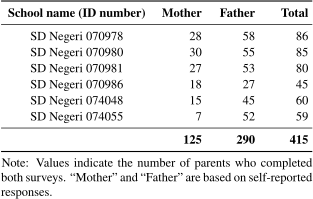
Among the 1,273 participating students, 1,242 completed both the pre- and post-surveys and were included in matched analyses (mean age \(=9.0\) years, SD \(=1.4\); 46.6% female). Parent respondents (\(n=415\)) had a mean age of 39.5 years (SD \(=7.3\)), and 30.1% were mothers, with fathers comprising the majority.
Most participating families (81.9%) resided in low-lying areas such as coastal or riverside locations, indicating high exposure to tsunami risk. Farming and fishing were reported by 61.4% of households, reflecting socioeconomic vulnerability typical of small island communities.
No statistically significant demographic differences were observed across the participating schools, supporting the comparability of the responses.
The distribution of respondents across participating schools and gender/parental categories is presented in Tables 3 and 4.
7.2. Children’s Knowledge Gains
Table 1 presents the pre–post changes in children’s disaster knowledge. Evacuation site recognition increased from 84.5% before the intervention to 99.7% after the program (\(\chi^2=180.3\), \(p<0.001\), Cramér’s \(V\) \(=0.38\)). The moderate-to-large effect size indicates a substantial improvement in evacuation site recognition. Importantly, the reduction of incorrect or “unknown” responses suggests not only incremental improvement but near-universal acquisition of correct evacuation knowledge.
Understanding earthquakes and tsunamis increased markedly from 23.3% to 55.6% (\(\chi^2=353.5\), \(p<0.001\), \(V\) \(=0.61\)). This represents a large effect size and reflects a significant enhancement in hazard differentiation skills—knowledge critical for appropriate behavioral responses during seismic events.
Table 3. Number of responding students (\(n=1{,}242\)).
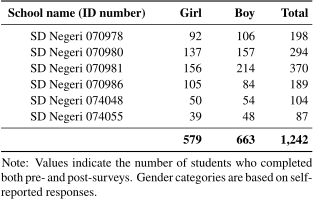
Table 4. Number of responding parents (\(n=415\)).
Recognition of local legends of tsunamis increased from 8.3% to 34.8% (\(\chi^2=114.2\), \(p<0.001\), \(V =0.37\)). Although the absolute percentage remains lower than in other domains, the fourfold increase indicates successful transmission of culturally embedded disaster narratives.
Collectively, these findings are consistent with Hypothesis 1, and demonstrate that the Disaster Prevention Maena-based project produced statistically robust and practically meaningful improvements in children’s disaster knowledge.
7.3. Parental Awareness and Preparedness
Importantly, significant changes were also observed among parents, supporting hypothesis H2 and directly addressing the central research question regarding the intergenerational impact.
7.3.1. Awareness of Proper Evacuation Sites
Parental awareness of proper evacuation sites increased from 96.6% to 99.8% (\(\chi^2=11.3\), \(p=0.0008\), \(V = 0.17\)). Although the baseline level was already high, the statistically significant increase suggests the reinforcement and near-complete consolidation of correct evacuation site recognition.
The relatively small effect size (\(V = 0.17\)) should be interpreted considering the ceiling effect. With initial awareness exceeding 96%, limited variability constrained the magnitude of the observable change. Thus, the modest effect size does not imply a negligible impact but rather reflects a restricted room for improvement.
7.3.2. Family Preparedness Discussion
Family-level disaster discussion increased from 92.8% to 100% (\(\chi^2=30.0\), \(p<0.001\), \(V = 0.27\)). The complete elimination of non-discussing households indicates that the program period coincided with universal engagement in disaster-related communication among participating families.
This finding is particularly significant from an intergenerational perspective. Disaster discussions within households constitute a key mechanism through which knowledge diffusion occurs. The observed increase suggests that children’s participation in school-based disaster education may stimulate or normalize preparedness-related dialogue at home.
7.3.3. Household Preparedness Measures
The largest parental change was observed in household preparedness measures. The proportion of parents reporting implementation of emergency preparedness actions increased from 55.2% before the intervention to 78.8% afterward (\(\chi^2=67.6\), \(p<0.001\), \(V = 0.40\)).
The moderate effect size (\(V = 0.40\)) indicates a significant behavioral shift. Unlike awareness measures, this variable reflects tangible preparedness practices, including stockpiling of food and medicine.
A 23.6 percentage-point increase represents a substantial expansion in household-level resilience capacity. Considering that preparedness behaviors require effort and resource allocation, this change suggests more than superficial attitudinal adjustments.
Moreover, among the 109 parents who reported having received no disaster education before the project, 73.4% indicated that their first exposure to disaster-prevention knowledge occurred through their children’s school participation. For these parents, observing their children perform Disaster Prevention Maena may have constituted their initial, structured engagement with disaster preparedness concepts.
This finding supports the intergenerational diffusion hypothesis. The school functioned not only as an educational institution for children, but also as an indirect entry point for adult disaster learning.
7.4. Intergenerational Associations
To examine the intergenerational effects of disaster prevention education, the associations between children’s knowledge gains, parental awareness, and preparedness outcomes were assessed using chi-square tests of independence (Table 5).
Table 5. Associations between children’s knowledge gains and parental outcomes.
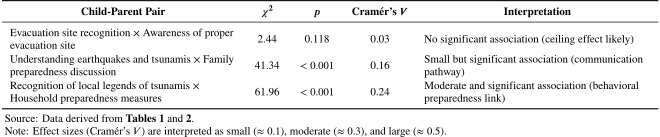
Three key child–parent pairs were assessed:
-
Evacuation site recognition \(\times\) Awareness of proper evacuation site
-
Understanding earthquakes and tsunamis \(\times\) Family preparedness discussion
-
Recognition of local legends of tsunamis \(\times\) Household preparedness measures
The results indicated that two of the three child–parent pairs demonstrated statistically significant associations.
The first pair—evacuation site recognition—indicated a weak and non-significant association (\(\chi^2=2.44\), \(p=0.118\), \(V = 0.03\)). This result is likely attributable to a ceiling effect as parental baseline awareness exceeded 96%, leaving limited variability to detect statistical relationships.
In contrast, the second pair demonstrated a statistically significant association. Children’s improved understanding of earthquakes and tsunamis was associated with increased family preparedness discussion (\(\chi^2=41.34\), \(p<0.001\), \(V = 0.16\)). Although the effect size was small, the result suggests that children’s learning stimulates disaster-related communication within households.
The third pair demonstrated a significant association. Recognition of local legends of tsunamis among children was associated with increased implementation of household preparedness measures (\(\chi^2=61.96\), \(p<0.001\), \(V = 0.24\)). This finding indicates that culturally embedded knowledge may be particularly effective in promoting practical preparedness behaviors at the household level.
Across domains, the results suggest that children’s disaster learning is meaningfully associated with parental awareness and preparedness. Notably, culturally grounded content demonstrated stronger associations with behavioral outcomes than basic knowledge domains, indicating the potential importance of contextual and culturally relevant educational materials.
These analyses reflect statistical associations rather than causal relationships, and should not be interpreted as evidence of direct causality.
7.5. Supplementary Descriptive Improvements
Beyond the primary analytical domains, the descriptive results indicated a broader educational impact. For example, the proportion of children reporting participation in evacuation drills increased to 100%, and “unknown” responses regarding residential hazard locations were eliminated from the post-survey.
7.6. Summary of Key Findings
Considered together, these findings reveal a consistent pattern of educational influence extending beyond the classroom. The project was associated not only with substantial improvements in children’s disaster-related knowledge, but also with measurable changes in parental awareness and household preparedness.
The marked increase in household preparedness measures suggests that school-based learning may have contributed to practical preparedness actions within families. The simultaneous increase in family discussions on disaster preparedness further indicates that knowledge acquired by children may have circulated within the household environment during the program period.
These patterns provide an empirical basis for examining how culturally embedded disaster education facilitates the intergenerational diffusion of knowledge and preparedness behaviors. The following section discusses these findings in relation to the existing theoretical perspectives on disaster education, intergenerational learning, and culturally grounded resilience.
8. Discussion
The findings of this study suggest that culturally embedded disaster education may influence not only student preparedness but also household preparedness. Although the quasi-experimental design does not permit a definitive causal inference, the combined pattern of children’s knowledge gain, increased family discussions, and improved parental preparedness is consistent with the intergenerational learning pathway proposed in Fig. 1.
From the perspective of DRR education, these results reinforce the growing recognition that children can function as important agents of change within families and communities. Although many school-based disaster education programs focus primarily on student learning, children often communicate their newly acquired knowledge to family members. In this study, the observed increase in household preparedness discussions suggests that children’s school experiences may have stimulated conversations about hazards, evacuation, and preparedness at home. Such communication is particularly relevant in island communities where close intergenerational interactions remain common.
Moreover, these findings are notable because changes were observed not only in awareness-related indicators, but also in practical household behaviors. Preparedness actions, such as stockpiling emergency supplies, generally require time, planning, and household resource allocation. Therefore, the observed improvement suggests that the program may have coincided with more substantive changes in household preparedness rather than merely temporary attitudinal shifts.
The associations reported in Table 5 further strengthen the plausibility of the intergenerational diffusion processes. Children’s improved understanding of earthquakes and tsunamis was linked to greater family preparedness discussions, whereas the recognition of tsunami-related narratives was associated with household preparedness measures. Although these relationships should not be interpreted causally, they indicate that child-centered learning may be meaningfully related to family-level preparedness outcomes.
A distinctive contribution of this study is the cultural embedding of educational interventions. Disaster Prevention Maena transformed disaster education from a conventional instructional activity into a participatory cultural practice. By integrating preparedness messages into songs, rhythms, and collective movements, the program enhanced memorability, emotional engagement, and social legitimacy. In communities where traditional practices remain socially meaningful, culturally familiar formats may increase receptivity to disaster-prevention messages more effectively than externally introduced or purely technical approaches.
Public performance may have also amplified the program’s reach beyond the classroom. When children performed the Disaster Prevention Maena at school events and community gatherings, disaster-prevention messages became visible to parents and other community members. This created opportunities for shared learning experiences and may have helped normalize disaster discussions within households.
The adaptation to local culture is particularly significant considering the well-known Smong case on Simeulue Island. Smong relied on oral narratives and songs transmitted over generations, whereas this project developed a context-specific mechanism suited to the language and traditions of Nias Island. Rather than replicating an external model, the intervention created a locally meaningful pathway for transmitting preparedness knowledge through existing communal practices.
From a policy perspective, these findings suggest that culturally grounded school-based DRR programs may serve as strategic entry points for strengthening community preparedness, particularly when direct adult participation in formal training is limited. Reaching out to children through school may indirectly extend preparedness knowledge to a wider household population through everyday family interactions.
The practical relevance of this approach was further demonstrated after completion of the original project. Following feedback on the project process and findings from local government stakeholders, including the district education authority on Nias Island, disaster education was incorporated into the local curriculum as a regional subject. Consequently, schools other than the original project participants began implementing the Disaster Prevention Maena.
Subsequent evaluation of this curriculum-based expansion on Nias Island also supported the durability of the model. A research team conducting a JICA post-project evaluation reported intergenerational spillover effects among schools where Disaster Prevention Maena was introduced as a local subject, indicating that children’s participation in disaster education was associated with improved parental preparedness behaviors 33. These findings suggest that the original project design provided a useful institutional foundation for scalable and sustainable DRR education.
Overall, the findings extend growing evidence that disaster education can influence preparedness beyond classrooms and households. This case suggests that child-centered learning embedded in local cultural practices may provide a feasible pathway for strengthening resilience when direct adult training is constrained. Future studies should examine the long-term durability and contextual adaptability of culturally grounded approaches.
9. Limitations
Several limitations should be acknowledged in interpreting the findings.
First, the quasi-experimental pre–post design without a control group limits causal inference because external influences during the intervention period cannot be fully excluded.
Second, the survey responses were self-reported, which may not fully capture gradations of knowledge or preparedness behavior and may involve social desirability bias.
Third, parent and child responses could not be rigorously linked at the household level, because uniquely verifiable identifiers were unavailable. Accordingly, intergenerational associations should be interpreted not as confirmed within-family causal pathways but as broader patterns observed between the overall parent and child groups.
Fourth, short-term outcomes were assessed immediately after project completion. The long-term retention of knowledge and sustained preparedness behavior remain unknown.
Fifth, while the principle of culturally embedded education may be transferable, the specific use of Disaster Prevention Maena reflects the cultural context of Nias Island and may not be directly generalizable to other settings.
Finally, two authors were directly involved in project implementation. Although standardized instruments and transparent analytical procedures were used, researcher involvement may have introduced interpretive bias.
Future studies using a comparative design, longitudinal follow-up, household-linked data, and independent replication will strengthen the evidence base.
10. Conclusion
This study evaluates a culturally embedded disaster education project implemented in elementary schools on Nias Island, Indonesia. The findings indicate significant improvements in children’s disaster knowledge and measurable gains in parental preparedness behaviors during the program period.
These results provide empirical support for the proposition that children can function as agents of change in disaster risk reduction. Further, they suggest that culturally grounded educational approaches may facilitate the diffusion of preparedness knowledge from schools to households. By embedding disaster-prevention messages into Maena, the project created a locally meaningful learning environment that enhanced engagement, legitimacy, and knowledge retention.
From a policy perspective, these findings indicate that school-based disaster education can serve as a strategic entry point for strengthening household preparedness, particularly where adult participation in formal disaster training is limited. In this context, child-centered programs embedded in local cultural practices may offer a practical and cost-effective pathway for expanding community resilience.
For the practical implementation of the Sendai Framework for Disaster Risk Reduction, these findings suggest that culturally grounded school-based education can help extend preparedness knowledge beyond classrooms and into households in hazard-prone communities.
Future studies should test whether culturally embedded child-centered disaster education can generate durable resilience gains across diverse hazard-prone settings.
Acknowledgments
The authors wish to express their sincere gratitude to JICA, Nias Island Education Office, local NGOs, community members, participating schools, students, teachers, and families for their invaluable cooperation and support throughout the project. The study was conducted in accordance with JICA’s ethical guidelines, and informed consent was obtained from all participating institutions and relevant individuals. The project discussed in this paper was implemented from August 2016 to November 2018 under JICA’s Grassroots Partnership Support Scheme. The initiative was organized by the BR Laboratory with a serving project manager in collaboration with a local partner NGO.
- [1] L. Guo, M. Fang, L. Liu, H. Chong, W. Zeng, and X. Hu, “The development of disaster preparedness education for public: A scoping review,” BMC Public Health, Vol.25, 2025. https://doi.org/10.1186/s12889-025-21664-0
- [2] C. Mutch, “How schools build community resilience capacity and social capital in disaster preparedness, response and recovery,” Int. J. of Disaster Risk Reduction, Vol.92, Article No.103735, 2023. https://doi.org/10.1016/j.ijdrr.2023.103735
- [3] B. Pfefferbaum, R. L. Pfefferbaum, and R. L. Van Horn, “Involving children in disaster risk reduction: The importance of participation,” European J. of Psychotraumatology, Vol.9, Issue sup2, 2018. https://doi.org/10.1080/20008198.2018.1425577
- [4] A. Sakurai and T. Ito, “Community-based disaster education in Japan: Lessons from local schools,” T. Ito, M. Tamura, A. Kotera, and Y. Ishikawa-Ishiwata (Eds.), “Interlocal Adaptations to Climate Change in East and Southeast Asia,” pp. 89-99, Springer, 2022. https://doi.org/10.1007/978-3-030-81207-2_8
- [5] UNDRR, “Sendai Framework for Disaster Risk Reduction 2015–2030,” United Nations, 2015.
- [6] A. Sakurai and T. Sato, “Promoting education for disaster resilience and the Sendai Framework for Disaster Risk Reduction,” J. Disaster Res., Vol.11, No.3, pp. 402-412, 2016. https://doi.org/10.20965/jdr.2016.p0402
- [7] M. Wahlstrom, “New Sendai Framework strengthens focus on reducing disaster risk,” Int. J. of Disaster Risk Science, Vol.6, pp. 200-201, 2015. https://doi.org/10.1007/s13753-015-0057-2
- [8] T. Mitchell, T. Tanner, and K. Haynes, “Children as agents of change for disaster risk reduction: Lessons from El Salvador and the Philippines,” Children in a Changing Climate Research, Working paper No.1, 2009.
- [9] L. Peek, “Children and disasters: Understanding vulnerability, developing capacities, and promoting resilience – An introduction,” Children, Youth and Environments, Vol.18, No.1, pp. 1-29, 2008.
- [10] W. Adiyoso and H. Kanegae, “Effectiveness of disaster-based school program on students’ earthquake-preparedness,” J. Disaster Res., Vol.8, No.5, pp. 1009-1017, 2013. https://doi.org/10.20965/jdr.2013.p1009
- [11] S. Torani, P. M. Majd, S. S. Maroufi, M. Dowlati, and R. A. Sheikhi, “The importance of education on disasters and emergencies: A review article,” J. of Education and Health Promotion, 2019. https://doi.org/10.4103/jehp.jehp_262_18
- [12] S. Wang and R. Noe, “Knowledge sharing: A review and directions for future research,” Human Resource Management Review, Vol.20, No.2, pp. 115-131, 2010. https://doi.org/10.1016/j.hrmr.2009.10.001
- [13] K. R. Ronan and D. Johnston, “Promoting community resilience in disasters: The role for schools, youth, and families,” Springer, 2005. https://doi.org/10.1007/b102725
- [14] H. Kawasaki, S. Yamasaki, M. M. Rahman, Y. Murata, M. Iwasa, and C. Teramoto, “Teachers-parents cooperation in disaster preparation when schools become as evacuation centers,” Int. J. of Disaster Risk Reduction, Vol.44, Article No.101445, 2020. https://doi.org/10.1016/j.ijdrr.2019.101445
- [15] J. C. Gaillard and J. Mercer, “From knowledge to action: Bridging gaps in disaster risk reduction,” Progress in Human Geography, Vol.37, No.1, pp. 93-114, 2013. https://doi.org/10.1177/0309132512446717
- [16] T. Matsukai and N. Itoigawa, “A research for effect that the disaster experience learning of the child at the disaster experience facility gives to a child and the parent—Tokyo Life Safety Learning Center as a target,” J. of Social Safety Science, Vol.31, 2017 (in Japanese). https://doi.org/10.11314/jisss.31.125
- [17] Y. Tsuchida, “Internationalization of the school and education on disaster prevention – Based on case study of primary school A in Ichihara,” Bulletin of the Faculty of Education, Chiba University, Vol.63, pp. 205-211, 2015 (in Japanese).
- [18] M. Rahmani, A. Muzwagi, and A. J. Pumariega, “Cultural factors in disaster response among diverse children and youth around the world,” Current Psychiatry Reports, Vol.24, pp. 481-491, 2022. https://doi.org/10.1007/s11920-022-01356-x
- [19] H. Ogawa, T. Ishikawa, and N. Imura, “Production of a picture book as disaster prevention education in early stage, based on evaluation of teachers and practice in kindergarten – Efforts to improve people’s ability for earthquake disaster prevention part 3,” Summaries of Technical Papers of Annual Meeting, Architectural Institute of Japan, 2006 (in Japanese).
- [20] Cabinet Office Japan (Disaster Management Office Japan), “Implementation handbook for disaster resilience education at the regional level,” Government of Japan, 2015 (in Japanese).
- [21] M. Mort, I. Rodriguez-Giralt, and A. Delicado, “Children and young people’s participation in disaster risk reduction, agency and resilience,” Policy Press, 2020. https://doi.org/10.51952/9781447354437
- [22] S. A. Sutton, D. Paton, P. Buergelt, S. Sagala, and E. Meilianda, “Sustaining a transformative disaster risk reduction strategy: Grandmothers’ telling and singing tsunami stories for over 100 years saving lives on Simeulue Island,” Int. J. of Environmental Research and Public Health, Vol.17, Issue 21, Article No.7764, 2020. https://doi.org/10.3390/ijerph17217764
- [23] E. N. Aroyandini, Supriyadi, A. Rusilowati, and Hartono, “The influence of disaster knowledge elaboration on disaster education implementation,” J. Disaster Res., Vol.20, No.2, pp. 215-221, 2025. https://doi.org/10.20965/jdr.2025.p0215
- [24] J. Tulius, “Lesson from the past, knowledge for the future: Roles of human memories in earthquake and tsunami narratives in Mentawai, Indonesia,” Paradigma: Jurnal Kajian Budaya, Vol.10, No.2, 2020. https://doi.org/10.17510/paradigma.v10i2.396
- [25] Juhadi, N. Hamid, E. Trihatmoko, M. Herlina, and E. N. Aroyandini, “Developing a model for disaster education to improve students’ disaster mitigation literacy,” J. Disaster Res., Vol.16, No.8, pp. 1243-1256, 2021. https://doi.org/10.20965/jdr.2021.p1243
- [26] M. Rusydi, Y. Mudin, Rahmawati, and Sabhan, “Disaster preparedness using local wisdom approach in Palu City,” J. Disaster Res., Vol.18, No.8, pp. 852-858, 2023. https://doi.org/10.20965/jdr.2023.p0852
- [27] A. Wardekker, S. Nath, and T. U. Handayaningsih, “The interaction between cultural heritage and community resilience in disaster-affected volcanic regions,” Environmental Science and Policy, Vol.145, pp. 116-128, 2023. https://doi.org/10.1016/j.envsci.2023.04.008
- [28] M. Chen and C. Wu, “Integrating science, technology, engineering, and mathematics (STEM) into indigenous education for sustainability: The development and implementation of a curriculum based on disaster prevention for young children,” Sustainability, Vol.16, Issue 21, 2024. https://doi.org/10.3390/su16219186
- [29] A. Bandura, “Self-efficacy: Toward a unifying theory of behavioral change,” Psychological Review, Vol.84, No.2, pp. 191-215, 1977. https://psycnet.apa.org/doi/10.1037/0033-295X.84.2.191
- [30] L. G. H. Midtbust, A. Dyregrov, and H. W. Djup, “Communicating with children and adolescents about the risk of natural disasters,” European J. of Psychotraumatology, Vol.9, Issue sup2, 2018. https://doi.org/10.1080/20008198.2018.1429771
- [31] M. Yasuda, R. Saito, and T. Muramoto, “Sustainability of disaster preparedness education effects in elementary school children and its diffusion effects on families: A comparison between coastal and inland schools,” J. of Natural Disaster Science, Vol.40, No.S08, pp. 125-142, 2021 (in Japanese). https://doi.org/10.24762/jndsj.40.S08_125
- [32] E. Eda, K. Maebayashi, M. Shibata, and A. Tanaka, “A survey study on disaster education and preparation at home: Focusing on the differences between men and women in the household,” Research J. of Disaster Education, Vol.3, No.1, pp. 97-106, 2022 (in Japanese). https://doi.org/10.51004/rjde.3.1_97
- [33] T. Harada, M. Shoji, and Y. Takafuji, “Intergenerational spillover effects of school-based disaster education: Evidence from Indonesia,” Int. J. of Disaster Risk Reduction, Vol.85, Article No.103505, 2023. https://doi.org/10.1016/j.ijdrr.2022.103505
This article is published under a Creative Commons Attribution-NoDerivatives 4.0 Internationa License.