
Paper:
Transforming Inclusive Disaster Risk Reduction in Ecuador (Phase I): Curriculum-Based Capacity Development and Institutionalization
Shigeo Tatsuki*,**,†

*Doshisha University
Kyoto , Japan
**Research Center, Institute of Social Safety Science
Tokyo, Japan
†Corresponding author

The Sendai Framework for Disaster Risk Reduction calls for inclusive and people-centered approaches, yet significant gaps persist between normative commitments and their realization in everyday governance. This paper examines Phase I of a Japan International Cooperation Agency (JICA) technical cooperation project implemented under Japan’s Official Development Assistance (ODA) framework in Ecuador and argues that the project advances Sendai Framework and Beyond by translating inclusion into institutionalized disaster risk reduction (DRR) practice through curriculum-based capacity development. Grounded in the social model of disablement, functional perspectives informed by the International Classification of Functioning, Disability and Health, and disaster sociology on the social production of risk, the study conceptualizes inclusive DRR as a form of localized governance capacity embedded in routine welfare and administrative practice. Phase I employed a systematic curriculum integrating conceptual learning, practitioner-oriented materials, practical tools, and reflective assignments. A Spanish-language practitioner booklet, produced in-house by the JICA Ecuador Office, functioned as a modular backbone linking learning modules to applied governance tasks. The analysis shows that Phase I’s most significant achievement was the institutionalization of inclusive DRR. In four model municipalities, inclusive DRR ordinances were enacted and accompanied by permanent budget allocations, embedding inclusion within local governance structures. At the national level, an inter-ministerial agreement between welfare and disaster management authorities formalized cross-sectoral collaboration. These outcomes marked a transition from project-based initiatives to routinized governance. At the same time, field-based evaluation identified substantial variation in operational workflows across municipalities, revealing the limits of institutionalization without standardized implementation procedures. This finding clarified the necessity of Phase II, which focuses on developing nationally applicable standard operating procedures expressed through operational workflow diagrams. The Ecuador case demonstrates that inclusive DRR advances through staged governance transformation: institutionalization establishes commitment, while standardization enables consistency and scalability. By sequencing these stages through learning-oriented ODA technical cooperation, the project provides a concrete example of how Sendai Framework and Beyond can be realized in practice.
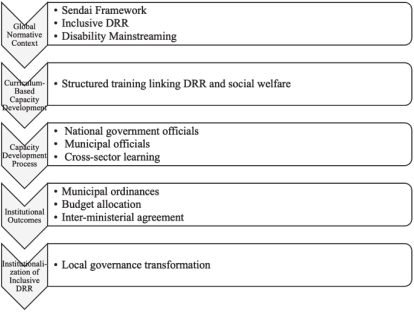
Analytical framework of Phase I
1. Introduction
Inclusive disaster risk reduction (DRR) has become a central theme in international policy discourse over the past decade. The adoption of the Sendai Framework for Disaster Risk Reduction 2015–2030 marked a significant normative shift by explicitly recognizing persons with disabilities and other marginalized groups, and by promoting an “all-of-society” approach grounded in the principle of “leaving no one behind” (UNDRR 1). Despite this progress, a persistent gap remains between policy commitments and their realization in everyday governance, particularly at the local level where disaster preparedness and response are enacted (Henstra and Thistlethwaite 2).
This implementation gap is most evident for persons with disabilities (PWD), older adults, and others with functional and access needs. Empirical research across disaster contexts has consistently demonstrated that disaster-related harm is shaped less by individual impairments than by social arrangements, institutional fragmentation, and the absence of inclusive planning mechanisms (Stough and Kelman 3; Kailes and Enders 4). Evacuation systems, warning dissemination, shelter management, and recovery programs are frequently designed around standardized assumptions that fail to accommodate diverse needs. As a result, inclusion is often addressed reactively during emergencies rather than systematically embedded in preparedness and governance structures.
The Sendai Framework acknowledges these challenges but provides limited guidance on how inclusive DRR should be operationalized within administrative routines. While it emphasizes participation, accessibility, and the integration of disability perspectives, it leaves unanswered questions regarding the concrete mechanisms through which such principles can be translated into sustained practice. In this sense, inclusive DRR remains at risk of becoming a rhetorical commitment unless supported by institutional designs that enable learning, coordination, and implementation over time.
This paper examines a Japan International Cooperation Agency (JICA) technical cooperation project implemented under Japan’s Official Development Assistance (ODA) framework in Ecuador as an empirical response to this challenge. The project was initiated following a formal request from the Government of Ecuador and implemented as a country-based training program focused on strengthening capacity for inclusive DRR. Rather than emphasizing the transfer of disaster-specific technologies or infrastructure, the project centered on capacity development, understood as the enhancement of practical, managerial, and training-related abilities among national and municipal officials responsible for welfare and disaster management.
A distinctive feature of the project was its reliance on a systematic, curriculum-based approach to capacity development. Inclusive DRR was not treated as a standalone topic or short-term training theme but was embedded within a multi-year learning process that combined conceptual input, applied tools, and reflective assignments. This approach recognized that inclusive DRR requires not only technical knowledge but also changes in professional practice, organizational routines, and inter-sectoral relationships.
The curriculum was anchored in a practitioner-oriented booklet originally developed in Japan and later adapted for Ecuador. Its Spanish-language edition was produced in-house by the JICA Ecuador Office, signaling its intended use as an operational tool within administrative practice rather than as an academic reference alone. The chapter structure of this booklet corresponded closely to the curriculum modules, creating coherence between conceptual learning and applied exercises. Through this alignment, participants were provided with a shared vocabulary and set of tools that could be adapted to diverse local contexts while maintaining a common analytical framework.
From an analytical perspective, this study situates the Ecuador project within the broader debate on Sendai Framework and Beyond. The term “beyond” is used here not to dismiss the significance of the Sendai Framework but to highlight the need for implementation-oriented approaches that complement its normative aspirations. Drawing on disaster sociology, disability studies, and social work, the paper conceptualizes inclusive DRR as a form of localized governance capacity embedded in everyday welfare and administrative practice. Central to this conceptualization is the role of learning processes and relational dynamics in shaping how inclusion is enacted on the ground.
The analysis focuses on Phase I, the first three years of the project, during which the foundational curriculum, tools, and institutional relationships were developed. Particular attention is given to how capacity development was linked to the formation of processual social capital, understood as relational resources generated through sustained collaboration and joint problem-solving among actors. A counterpart-led mid-term evaluation provides additional insight into how these relational capacities contributed to improved coordination and participatory governance for inclusive DRR.
By examining the Ecuador project as a JICA ODA case, this paper contributes to the literature in three ways. First, it offers an empirically grounded account of how inclusive DRR principles can be operationalized through curriculum-based capacity development. Second, it advances a relational understanding of capacity and social capital as processual outcomes of sustained practice rather than as pre-existing conditions. Third, it demonstrates how ODA technical cooperation can function as a platform for realizing Sendai Framework and Beyond by linking policy norms to everyday governance.
This paper analyzes how curriculum-based capacity development contributed to the institutionalization of inclusive disaster risk reduction within Ecuador’s national and municipal governance systems. The analysis focuses on the processes through which training-based capacity development produced institutional foundations for inclusive DRR, thereby establishing the conditions that later enabled the development of standardized operational procedures in Phase II.
To clarify the analytical perspective of this study, the paper examines how inclusive DRR was institutionalized through curriculum-based capacity development. The analysis focuses on three interconnected dimensions: (1) the design of a structured training curriculum linking disaster governance and social welfare practice; (2) the capacity development process among national and municipal officials responsible for welfare and disaster management; and (3) the resulting institutionalization of inclusive DRR through municipal ordinances, budget allocation, and inter-ministerial coordination. By examining these dimensions, the study conceptualizes institutionalization not simply as policy adoption but as a governance transformation supported by sustained learning and cross-sector collaboration. The remainder of the paper is organized as follows. Section 2 presents the analytical framework. Section 3 explains the project design and research approach. Section 4 describes the curriculum-based capacity development process, and Section 5 discusses the institutional outcomes and their implications.
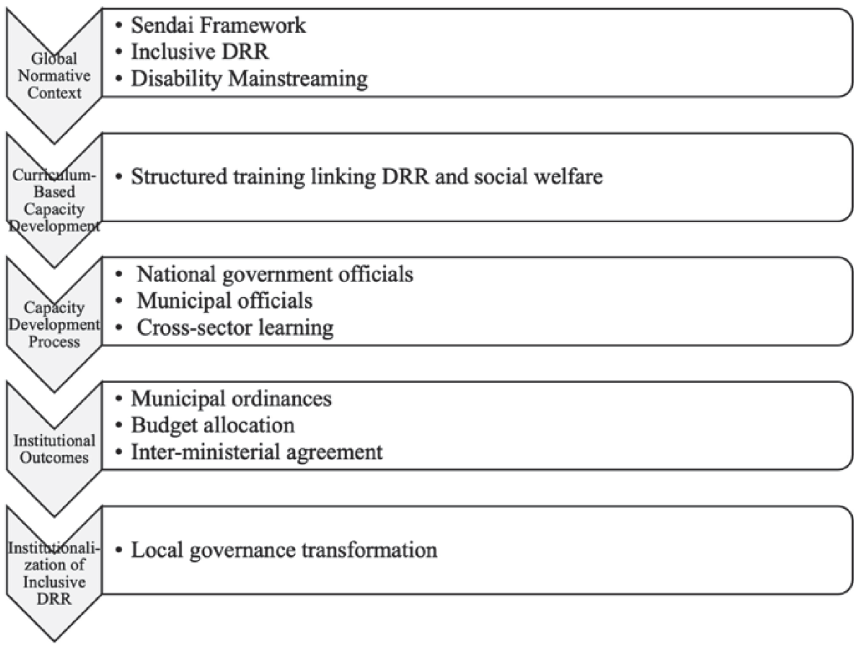
Fig. 1. Analytical framework of curriculum-based capacity development and institutionalization of inclusive disaster risk reduction.
2. Analytical Framework: Disability, the Social Production of Disaster Risk, and Processual Social Capital
Figure 1 presents the analytical framework guiding this study. The framework conceptualizes the institutionalization of inclusive DRR as a process generated through curriculum-based capacity development. The analysis begins with the normative context provided by the Sendai Framework for Disaster Risk Reduction, which emphasizes disability mainstreaming and the principle of leaving no one behind. Within this context, the JICA technical cooperation project introduced a structured training curriculum linking disaster governance and social welfare practice.
The framework assumes that such curriculum-based training functions as an intervention that facilitates capacity development among national and municipal officials responsible for welfare and disaster management. Through sustained participation, cross-sector learning, and practical exercises, these actors develop the managerial and operational competencies necessary to implement inclusive DRR. The resulting capacity development is expected to produce institutional outcomes, including municipal ordinances, budget allocation, and inter-ministerial coordination mechanisms. These outcomes together indicate the institutionalization of inclusive DRR within local governance systems.
The study analyzes how structured curriculum-based training for national and municipal officials generates capacity development processes that lead to institutional outcomes, including municipal ordinances, budget allocation, and inter-ministerial coordination, thereby contributing to the institutionalization of inclusive disaster risk reduction.
2.1. Disability, Disablement, and the Social Production of Disaster Risk
This study is grounded in the social model of disablement, which fundamentally reframes disability as a condition produced through social, institutional, and environmental barriers rather than as an attribute of individuals (Oliver 5). From this perspective, disablement occurs when social systems—such as housing, transportation, welfare services, and emergency management—are designed without adequate consideration of human diversity. Disability is thus located not in bodies but in the organization of society.
This insight resonates strongly with contemporary disaster sociology, which emphasizes that disasters are not merely natural events but are socially produced outcomes. Kathleen Tierney’s influential work, The Social Roots of Risk, synthesizes decades of disaster research to demonstrate how disaster risk is shaped by social, economic, political, and institutional processes. Hazards become disasters through land-use decisions, regulatory failures, governance arrangements, and inequalities that systematically expose certain populations to greater harm (Tierney 6).
From this standpoint, DRR must address not only physical hazards but also the social roots of vulnerability embedded in everyday governance. For PWD, older adults, and others with functional and access needs, disaster risk is amplified by institutional arrangements that fail to anticipate diverse needs in preparedness, warning dissemination, evacuation support, and recovery planning. Disproportionate mortality and delayed evacuation (Tatsuki 7; Stough and Kelman 3) observed in past disasters are not accidental outcomes but manifestations of socially produced risk.
Tierney’s analysis underscores that vulnerability is neither random nor inevitable; it is generated through policy choices, organizational practices, and patterns of exclusion. This perspective complements the social model of disablement (Oliver 5) by highlighting how disaster-related harm emerges at the intersection of disability, governance, and risk production. In disaster contexts, disablement is intensified when emergency management systems replicate the same exclusionary logics that characterize everyday social institutions.
While the social model provides a critical normative foundation, operationalizing it in DRR practice requires frameworks that can translate abstract principles into actionable guidance. In this regard, the International Classification of Functioning, Disability and Health (ICF) (WHO 8) offers an important functional complement. Rather than categorizing individuals solely by medical diagnoses, the ICF conceptualizes functioning as the outcome of interactions among bodily functions, activities, participation, and contextual factors.
Applied to DRR, a functional approach enables practitioners to identify disaster-related risks arising from environmental and institutional barriers rather than impairments per se. For example, evacuation difficulties may stem from inaccessible transportation systems, inadequate warning formats, or the absence of individualized support arrangements. By shifting analytical focus from categorical labels to functional needs, the ICF framework broadens the scope of inclusive DRR to encompass a wide range of people who may require assistance during emergencies, including older adults, people with chronic illnesses, and those facing temporary functional limitations.
Crucially, this study adopts a relational understanding of vulnerability that integrates insights from the social model, functional approaches, and the social production of disaster risk. Vulnerability is conceptualized not as a fixed characteristic of individuals or groups, but as a lived condition produced through relationships—between individuals, professionals, institutions, and communities. In disaster contexts, vulnerability is experienced through fragmented care relationships, siloed administrative systems, and the absence of trusted coordination mechanisms.
Participation, therefore, is not merely consultative or symbolic. It constitutes meaningful involvement in decision-making processes that shape preparedness and response. Inclusive DRR requires that people with functional and access needs, as well as the professionals who support them, are embedded within governance processes that anticipate risk and organize support before disasters occur. This relational perspective provides a conceptual bridge between disability studies and the governance challenges identified in Tierney’s account of socially produced risk.
2.2. Social Capital as a Processual Outcome of Capacity Development
Within disaster research, social capital has often been invoked to explain variations in preparedness, response, and recovery outcomes. While influential studies have emphasized the role of social networks and trust in enhancing community resilience, such approaches frequently treat social capital as a pre-existing community attribute (Wisner et al. 9). This study adopts a different perspective, drawing primarily on Tatsuki’s longitudinal disaster sociology, which conceptualizes social capital as a processual outcome generated through sustained social practice.
Tatsuki’s analysis of long-term recovery following the 1995 Great Hanshin–Awaji Earthquake demonstrated that social capital is not simply inherited from pre-disaster community cohesion but is actively produced and transformed through recovery processes linking residents, professionals, and administrative systems (Tatsuki 10). His research showed that life recovery trajectories were shaped by evolving relationships with welfare institutions, neighborhood organizations, and support professionals, highlighting the dynamic nature of social capital over time.
This process-oriented understanding was further developed through panel-based research following the Great East Japan Earthquake, which traced how social capital interacted with institutional arrangements to influence both individual life recovery and collective governance capacity (Tatsuki and Kawami 11). Rather than functioning as a static resource, social capital emerged as a relational infrastructure embedded in everyday administrative practice, shaped by opportunities for interaction, trust-building, and shared problem-solving.
From this perspective, social capital is closely linked to capacity development. Capacity is not limited to individual skills or organizational competencies but includes the relational ability of actors to coordinate across institutional boundaries. In disaster contexts, such relational capacity is essential for inclusive DRR, where welfare, health, and disaster management systems must operate in concert to support diverse needs.
Importantly, this relational approach aligns with Tierney’s emphasis on the social roots of risk. If disaster risk is socially produced through institutional arrangements, then reducing risk requires transforming those arrangements. Social capital, understood as a processual outcome, functions as a mechanism through which institutional change becomes possible. It enables actors to bridge organizational silos, reinterpret formal rules, and adapt policies to local contexts.
This study positions social capital as a central lens for examining how inclusive DRR is operationalized through capacity-building interventions. Rather than measuring social capital as an independent variable, it analyzes how social capital is generated through structured learning, repeated interaction, and shared tools. Curriculum-based capacity development enables actors across sectors and administrative levels to engage in joint learning, fostering trust, mutual recognition, and informal coordination.
In the context of the Ecuador project examined here, social capital is analyzed as an emergent property of curriculum-based capacity development. Through repeated participation in modules, applied exercises, and joint action planning, participants developed relational ties that extended beyond formal project structures. These ties enhanced their ability to coordinate inclusive DRR initiatives within and across municipalities, providing empirical grounding for the argument that curriculum design and tools can function as engines of social capital formation.
By integrating the social model of disablement, Tierney’s theory of the social production of disaster risk, functional approaches to vulnerability, and a process-oriented conception of social capital, this analytical framework provides a robust foundation for examining how inclusive DRR can be realized in practice. It also offers a clear conceptual rationale for positioning the Ecuador project as an instance of Sendai Framework and Beyond, where normative commitments are translated into relationally embedded governance capacity.
3. Research Design and Analytical Perspective
3.1. Research Design and Data Sources
This study adopts a qualitative case study approach to examine how inclusive DRR was operationalized and institutionalized through a JICA technical cooperation project implemented in Ecuador between 2020 and 2026. The analysis draws on multiple sources of qualitative evidence, including project design documents, training materials, workshop records, mission reports, and policy documents produced during the implementation of Phase I.
In addition, insights were obtained through direct observation of capacity development workshops, consultations with national and municipal counterparts, and participatory discussions conducted during field missions. These sources were analyzed to trace the processes through which curriculum-based capacity development contributed to the emergence of institutional arrangements supporting inclusive DRR at both national and municipal levels.
Rather than evaluating project performance in a conventional sense, the study focuses analytically on how institutional change emerged through iterative interactions among stakeholders participating in the training and implementation process.
The participatory nature of the training process also enabled continuous feedback from participating officials and practitioners, allowing the analysis to incorporate perspectives emerging from the implementation context.
Ethical considerations were carefully addressed throughout the study. The analysis relies primarily on project documents, training materials, and workshop records produced during the implementation of the JICA technical cooperation project. No personal or sensitive data of individuals were collected or analyzed. Observations and discussions conducted during workshops and consultations were used only in aggregated and anonymized form. The participatory training process also emphasized the meaningful involvement of practitioners and stakeholders, including welfare officials and disaster management personnel, in accordance with the principles of inclusive disaster risk reduction. The study was conducted in line with standard ethical practices for qualitative policy research. In addition, the study analyzed activities conducted within a public international cooperation project implemented by JICA in collaboration with national and municipal institutions in Ecuador.
3.2. Social Work and Disaster Governance as Everyday Practice
Building on the analytical framework introduced in the previous section, this subsection discusses how a social work perspective informs the understanding of disaster governance as an everyday administrative practice.
Social work provides a critical analytical and practical entry point for operationalizing inclusive DRR. Unlike disaster management approaches that are activated primarily during emergencies, social work is embedded in everyday governance, engaging continuously with individuals, families, and communities through assessment, case management, and coordination of services. This everyday orientation positions social work as a key institutional interface through which disaster risks can be identified, mitigated, and addressed before hazards materialize as disasters.
The relevance of social work to DRR has been increasingly recognized, particularly within the framework of green social work, which situates disasters within broader socio-environmental and political-economic contexts (Dominelli 12). Green social work emphasizes that disasters are not isolated events but are connected to environmental degradation, social inequality, and governance failures. From this perspective, disaster preparedness and recovery are inseparable from routine welfare practice and community engagement.
Building on this approach, Tatsuki 13 conceptualizes disaster preparedness and recovery as continuations of ordinary social work practice rather than exceptional interventions. In this view, activities such as individualized assessment, care planning, and relationship-building with clients and communities constitute foundational elements of DRR. By maintaining continuity between non-disaster and disaster periods, social work–informed governance reduces the discontinuities that often exacerbate vulnerability during emergencies.
A central implication of this perspective is that inclusive DRR cannot be achieved solely through emergency-specific plans or protocols. Instead, it requires the institutional integration of welfare and disaster management functions. In many administrative systems, these functions are organized in silos, with limited interaction between social welfare departments and disaster management agencies. Such fragmentation reproduces the social roots of risk identified by Tierney 6, as it prevents coordinated responses to the complex needs of people with functional and access needs.
Social work offers practical mechanisms for bridging these silos. Case management practices, for example, involve ongoing assessment of individual needs, coordination among service providers, and negotiation with institutions. When extended to disaster contexts, these practices enable the development of individualized evacuation plans, continuity of care during emergencies, and post-disaster recovery support. Importantly, these mechanisms are not created from scratch during disasters; they are adaptations of existing welfare routines.
This study emphasizes the role of individualized planning as a governance tool that links social work and DRR. Individualized evacuation planning requires understanding functional needs, social networks, and environmental constraints, and translating this knowledge into actionable arrangements. Such planning is inherently participatory, involving individuals, families, professionals, and community actors. Through this process, inclusion is operationalized not as a policy slogan but as a concrete practice embedded in administrative routines.
Another key contribution of social work to inclusive DRR lies in its emphasis on relational practice. Trust-based relationships between professionals and service users are essential for effective communication, consent-building, and shared decision-making. In disaster contexts, these relationships facilitate timely evacuation, adherence to preparedness measures, and engagement in recovery processes. From a governance perspective, relational practice functions as a form of informal infrastructure that complements formal plans and regulations.
This relational dimension aligns closely with the process-oriented conception of social capital discussed in the previous section. Social work practice creates repeated opportunities for interaction among individuals, professionals, and institutions, thereby fostering trust, mutual recognition, and coordination capacity. These relational resources are particularly important for inclusive DRR, where standardized procedures must be adapted to diverse and changing needs.
The integration of social work into disaster governance also has implications for capacity development. Training programs that focus exclusively on technical aspects of disaster management may overlook the relational and ethical dimensions of inclusion. By contrast, social work–informed capacity development emphasizes reflective practice, ethical reasoning, and collaborative problem-solving. These elements are essential for addressing the complex, context-specific challenges of inclusive DRR.
In the Ecuador project examined in this study, social work perspectives informed the design of the curriculum and the selection of tools. Participants were encouraged to view disaster preparedness not as an external mandate but as an extension of their existing professional responsibilities. This reframing helped to legitimize inclusive DRR within everyday administrative practice and to reduce resistance associated with additional workloads or unfamiliar procedures.
Moreover, by embedding social work concepts within a structured curriculum, the project created a shared analytical framework across welfare and disaster management sectors. This common framework facilitated dialogue and coordination, contributing to the formation of relational governance capacity. From the perspective of Sendai Framework and Beyond, such integration illustrates how inclusive DRR can be realized through institutional designs that connect normative principles to everyday practice.
In sum, social work provides both a conceptual lens and a set of practical tools for operationalizing inclusive DRR. By treating disaster preparedness and recovery as extensions of ordinary welfare practice, social work–informed governance addresses the social roots of risk and supports the development of relational capacity. This perspective underpins the analysis of the Ecuador project and provides a foundation for understanding how curriculum-based capacity development can translate inclusive DRR principles into sustained governance practice.
4. Curriculum-Based Capacity Development Process: Project Design and Implementation
This section analyzes how the curriculum-based training program functioned as a mechanism for developing capacity and facilitating the institutionalization of inclusive disaster risk reduction. Rather than presenting a chronological description of project activities, the section is organized to clarify the analytical logic linking project design, training implementation, and institutional outcomes. Section 4.1 first explains the logic of capacity development within the framework of ODA technical cooperation. Section 4.2 then describes the design and pedagogical structure of the training curriculum. Sections 4.3 and 4.4 examine how the curriculum facilitated capacity development among national and municipal officials through cross-sector learning and practice-oriented exercises. The institutional outcomes emerging from these processes are presented in Section 5.
4.1. ODA Technical Cooperation and the Logic of Capacity Development
This subsection examines the logic of capacity development embedded in ODA technical cooperation, which served as the institutional foundation for the curriculum-based training program implemented in this project. The Ecuador project examined in this study was implemented as a JICA technical cooperation project under Japan’s ODA framework, specifically through a country-based training modality. The project was initiated in response to a formal request from the Government of Ecuador and was designed to address a widely recognized gap between inclusive DRR policy commitments and their implementation at the local level.
In contrast to ODA projects that prioritize infrastructure development or the transfer of specialized technologies, this initiative adopted a capacity development approach centered on human resources, organizational routines, and institutional relationships. Capacity development was understood not as short-term skill acquisition but as a cumulative process through which actors enhance their ability to plan, coordinate, and implement inclusive DRR in everyday governance contexts.
The project explicitly targeted both national-level officials and municipal practitioners, recognizing that inclusive DRR must be operationalized at the local level while remaining aligned with national policy frameworks. Four pilot municipalities—Quito, Salinas, Tena, and Patate—were selected to represent diverse geographic and administrative contexts. National-level participants were embedded in municipal group work, creating opportunities for cross-level learning and coordination.
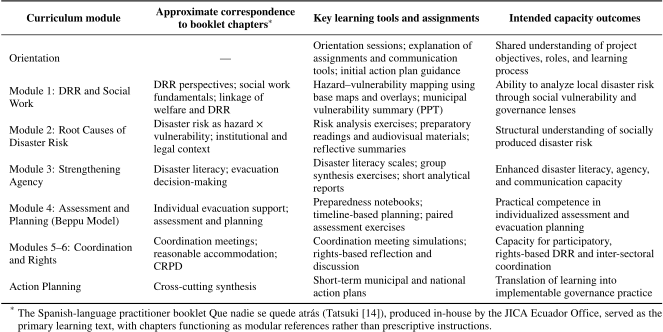
Table 1. Structure of the curriculum modules, corresponding practitioner booklet chapters, training tools, and intended capacity development outcomes (Phase I).
4.2. Curriculum-Centered Design: From Training Events to Learning Processes
This subsection presents the structure of the training curriculum and explains how it operationalized the capacity development approach through a sequence of interconnected learning modules. A defining feature of the project was its reliance on a systematic, curriculum-centered design. Inclusive DRR was not treated as a standalone training topic or a one-off event but was embedded within a structured learning process composed of sequential modules. This design reflected the understanding that inclusive DRR requires not only technical knowledge but also sustained changes in professional practice, organizational routines, and inter-sectoral relationships.
Each module combined three interrelated elements:
-
(1)
conceptual input grounded in disaster sociology, disability studies, and social work;
-
(2)
applied tools that translated concepts into concrete practice; and
-
(3)
reflective assignments that required participants to situate learning within their own administrative contexts.
Learning was designed to be iterative rather than linear. Participants repeatedly revisited core concepts as they applied tools in different settings, reflected on challenges, and shared experiences across municipalities and administrative levels. Mechanisms such as daily assignments, structured reflection sessions, and action planning reinforced the expectation that learning would translate into governance practice rather than remain at the level of abstract understanding.
To clarify the structure of the curriculum and its relationship to the learning materials and practical tools used in the training program, Table 1 summarizes the modules implemented during Phase I, their approximate correspondence to the chapters of the practitioner booklet, the key tools introduced in each module, and the capacity development outcomes that the curriculum was designed to achieve.
The curriculum emphasized the identification of functional needs through collaboration between welfare professionals and disaster management officials, integrating perspectives from service providers working directly with persons with disabilities and other vulnerable populations. Beyond the transmission of technical knowledge, the training process was designed to facilitate participatory dialogue among practitioners responsible for welfare and DRR. Workshops encouraged participants to reflect on operational challenges and exchange experiences across institutional boundaries. This participatory structure helped ground discussions of inclusive DRR in the practical realities of service provision.
4.3. Practitioner Booklet as a Modular Curriculum Backbone
As summarized in Table 1, the curriculum was anchored in a practitioner-oriented booklet originally developed in Japan (Tatsuki 15) and adapted for the Ecuadorian context through a Spanish-language edition titled Que nadie se quede atrás (Tatsuki 14). This edition was produced in-house by the JICA Ecuador Office (Quito: Enlaces de JICA Ecuador), underscoring its institutional positioning as an operational resource within ODA technical cooperation.
The booklet functioned as a modular curriculum backbone, with its chapter structure corresponding closely—though not mechanically—to the curriculum modules. This alignment ensured coherence across lectures, readings, and applied assignments, while also facilitating the development of a shared analytical vocabulary among participants from different sectors and administrative levels.
Importantly, the booklet was not treated as a prescriptive manual. Participants were encouraged to critically engage with its content and adapt concepts to their local contexts, recognizing that inclusive DRR solutions must be context-sensitive and embedded in existing administrative routines.
4.4. From Curriculum Design to Governance Practice
The curriculum design summarized in Table 1 was explicitly oriented toward connecting learning processes to everyday governance practice. This connection was achieved through the systematic use of practical tools, cross-level interaction, and action planning, which together functioned as mediating mechanisms between normative principles and implementation.
Practical tools translated abstract concepts into actionable practices and served as shared reference points for discussion and coordination. By engaging with common tools, participants from welfare and disaster management backgrounds were able to negotiate meanings, align perspectives, and develop joint solutions. These interactions fostered trust and mutual recognition, contributing to the formation of relational capacity.
Embedding national-level participants within municipal group work further strengthened learning across administrative levels. This arrangement enhanced mutual understanding of policy constraints and local realities, reinforcing coordination beyond formal organizational boundaries.
The learning process culminated in short-term action plans developed at both municipal and national levels, requiring participants to identify concrete steps for advancing inclusive DRR within their institutional contexts. Action planning thus bridged curriculum-based learning and sustained governance practice.
Taken together, these design elements illustrate how the curriculum functioned not merely as a training program but as a governance intervention. By linking conceptual learning, practitioner-oriented materials, practical tools, and cross-level interaction, the project operationalized inclusive DRR in a manner consistent with Sendai Framework and Beyond, translating normative commitments into relationally embedded governance capacity.
5. Capacity-Building Outcomes of Phase I
This section examines the institutional outcomes that emerged from the curriculum-based capacity development process described in the previous section. These outcomes are interpreted as concrete steps toward the institutionalization of inclusive disaster risk reduction within national and municipal governance systems, consistent with the principles of the Sendai Framework.
At the same time, Phase I outcomes revealed structural challenges that could not be resolved through legal and budgetary measures alone. These challenges, identified through field-based evaluation toward the end of Phase I, directly informed the design and necessity of Phase II. Accordingly, Phase I is best understood as a critical transition stage that both achieved institutionalization and exposed the need for further standardization.
5.1. Strengthening Practical Capacity for Inclusive DRR
Phase I produced substantial gains in practical capacity among municipal and national-level participants to identify and address disaster-related risks faced by persons with disabilities and others with functional and access needs. Repeated engagement with tools such as hazard–vulnerability mapping, disaster literacy scales, preparedness notebooks, and timeline-based planning enabled participants to translate inclusive DRR principles into concrete administrative actions.
Municipal practitioners reported increased confidence in conducting assessments that focused on functional needs and environmental barriers rather than categorical classifications. Individualized assessment and evacuation planning were increasingly embedded in routine welfare practices, reinforcing continuity between everyday service provision and disaster preparedness. This continuity was a central premise of the project and represented a significant departure from emergency-only approaches to DRR.
In addition, participants developed the capacity to conceptualize disaster risk as a product of socially produced vulnerability. By integrating hazard data with demographic and social indicators, participants reframed local disaster risk discussions, strengthening the legitimacy of inclusive DRR within municipal governance.
5.2. Managerial and Coordination Capacity Across Sectors
Beyond individual practice, Phase I contributed to the enhancement of managerial and coordination capacity across welfare and disaster management sectors. Through simulations, coordination meetings, and joint action planning exercises, participants gained experience in aligning roles, responsibilities, and timelines across institutional boundaries.
Vertical coordination was strengthened by embedding national-level officials within municipal learning processes. This arrangement enabled mutual learning: national officials gained insight into local implementation constraints, while municipal practitioners developed clearer understanding of national policy frameworks. Such interaction reduced structural disconnects between policy formulation and local practice, laying the groundwork for institutional alignment.
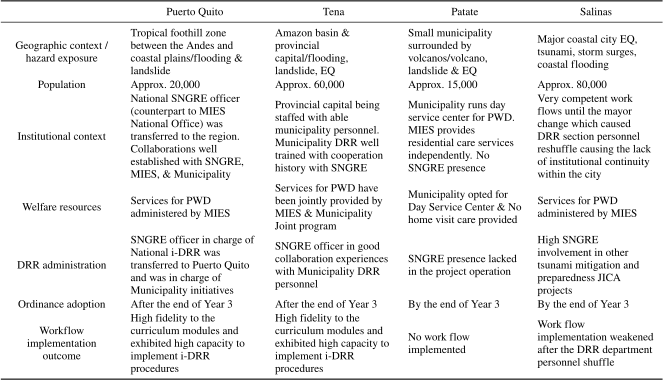
Table 2. Institutional context and factors influencing workflow implementation in the four model municipalities.
5.3. Institutionalization at the Municipal Level: Ordinances and Budgeting
The most significant achievement of Phase I was the formal institutionalization of inclusive DRR at the municipal level. In all four model municipalities—Puerto Quito, Salinas, Tena, and Patate—municipal ordinances were enacted to promote inclusive DRR as an explicit policy objective. These ordinances clarified administrative responsibilities, legitimized inclusive DRR within municipal governance, and provided a legal basis for sustained action.
Crucially, the ordinances were accompanied by permanent budget allocations, transforming inclusive DRR from a time-limited project activity into a funded and routinized municipal function. Budgeting signaled political and administrative commitment, ensuring continuity of training, coordination, and tool usage beyond the project period.
This institutionalization was not imposed externally but emerged through curriculum-based learning and local deliberation. Municipal actors were able to articulate the rationale for inclusive DRR in their own administrative language, translating capacity development into locally appropriate legal and fiscal arrangements. This bottom-up process underscores the effectiveness of capacity development approaches that prioritize learning, ownership, and contextual adaptation.
5.4. Inter-Ministerial Collaboration: MIES–SNGRE Agreement
At the national level, Phase I culminated in a formal inter-ministerial agreement between the Ministry of Economic and Social Inclusion (MIES) and the National Secretariat for Risk Management (SNGRE). This agreement institutionalized collaboration on inclusive DRR, addressing long-standing fragmentation between welfare and disaster management systems.
The agreement established a framework for coordinated planning, information sharing, and joint initiatives, aligning national policy with the practices emerging in the model municipalities. Importantly, this formal collaboration was enabled by the relational capacity developed through Phase I. Repeated interaction among national and municipal actors fostered trust and mutual understanding, creating the conditions necessary for formal cooperation.
5.5. Development of Processual Social Capital
Consistent with a process-oriented understanding, processual social capital emerged as a key outcome of Phase I. Trust-based relationships were generated through sustained interaction, shared use of tools, and collaborative problem-solving across municipalities and national agencies.
These relational resources supported both municipal institutionalization and national coordination. Social capital functioned as a relational infrastructure that complemented legal ordinances and formal agreements, enabling actors to navigate institutional boundaries and adapt practices to local conditions.
5.6. Limits of Institutionalization and Lessons from Field Evaluation
Although the institutionalization of inclusive DRR was successfully achieved across the participating municipalities, the implementation of operational workflows revealed significant variation in administrative practice. These differences were influenced by variations in local governance structures, administrative capacity, welfare service provision, and hazard contexts. To illustrate these structural differences, Table 2 summarizes key characteristics of the four model municipalities that shaped how inclusive DRR workflows were interpreted and implemented.
As shown in Table 2, municipalities with stronger institutional coordination between SNGRE, MIES, and municipal DRR units were able to implement the workflow more consistently. In contrast, municipalities with weaker institutional integration or discontinuities in administrative leadership experienced difficulties in translating institutional commitments into operational procedures. These findings highlighted the limits of institutionalization alone and directly informed the design of Phase II, where the development of standardized operating procedures (SOPs) aimed to ensure more consistent implementation across diverse local governance contexts.
These variations did not indicate failure; rather, they reflected the decentralized governance and context-sensitive adaptation encouraged during Phase I. However, they also exposed a structural challenge: without a shared operational reference, the quality and consistency of inclusive DRR implementation could not be ensured at scale.
This finding marked an important analytical turning point. It demonstrated that institutionalization through legal and fiscal measures, while necessary, was not sufficient to guarantee consistent implementation. What was required was a mechanism to translate inclusive DRR principles into standardized yet adaptable operational practice.
5.7. Implications for Phase II: From Institutionalization to Standardization
The recognition of workflow variability directly informed the design of Phase II. Building on the institutional foundations established during Phase I, Phase II was tasked with developing SOPs in the form of operational workflow diagrams applicable across Ecuador.
In this sense, Phase I should be understood not as a completed cycle but as a precondition for Phase II. Ordinances, budgets, and inter-ministerial agreements created the institutional space within which SOP development became both possible and necessary. Phase II thus represents a shift from institutionalization to standardization, aimed at ensuring that inclusive DRR can be implemented consistently while remaining responsive to local contexts.
In sum, Phase I achieved its most important outcome by embedding inclusive DRR within Ecuador’s legal, fiscal, and institutional architecture. At the same time, it revealed the limits of institutionalization without standardized operational guidance. This dual outcome—achievement and limitation—provides the logical bridge to Phase II and underscores the project’s contribution to Sendai Framework and Beyond, where inclusive DRR evolves from normative commitment to routinized and scalable governance practice. In this sense, the Ecuador case suggests a sequential governance pathway in which curriculum-based capacity development enables institutionalization, institutionalization reveals operational variability across local contexts, and standardization through SOPs becomes necessary for scaling inclusive DRR as a routine governance practice.
6. Discussion: From Institutionalization to Standardization—Inclusive DRR as Governance Transformation
This discussion situates the findings of Phase I within broader debates on inclusive DRR, governance, and international development cooperation. The Ecuador project demonstrates that inclusive DRR advances most effectively when capacity development is designed as a governance transformation process rather than as a series of technical interventions. Phase I achieved a decisive transition from normative commitment to institutionalized practice, while simultaneously revealing the limits of institutionalization without operational standardization. This dual outcome provides important insights for understanding Sendai Framework and Beyond.
6.1. Institutionalization as a Necessary but Insufficient Condition
Phase I produced robust institutional outcomes: municipal ordinances promoting inclusive DRR in four model municipalities, permanent budget allocations that ensured continuity, and a formal inter-ministerial agreement between welfare and disaster management authorities. These outcomes address a long-standing gap identified in the Sendai Framework—the translation of inclusive principles into legal and fiscal commitments.
From a governance perspective, these achievements represent a shift from discretionary inclusion to mandated inclusion. Ordinances and budgets reduced dependence on individual champions and project-specific resources, embedding inclusive DRR within routine administrative authority. The inter-ministerial agreement addressed institutional fragmentation by creating formal channels for cross-sectoral collaboration. Together, these measures established the enabling environment necessary for sustained inclusive DRR.
However, Phase I also demonstrated that institutionalization alone does not guarantee consistent implementation. Field-based evaluation in the third year revealed substantial variation in how municipalities operationalized inclusive DRR. Differences in assessment sequences, coordination timing, and documentation practices reflected local adaptation but also produced uneven implementation quality. This finding underscores a central insight of governance research: rules and resources require operational translation to shape practice effectively.
6.2. The Social Roots of Risk and the Limits of Legal Reform
The observed variability highlights the persistence of the social roots of disaster risk (Tierney 6) even after legal and fiscal reforms. While ordinances addressed formal authority, they did not automatically harmonize everyday work processes across municipalities. This gap illustrates how disaster risk continues to be socially produced through organizational routines, professional practices, and coordination mechanisms.
In this sense, Phase I outcomes align with disaster sociology’s emphasis on institutional processes as sources of risk. Legal mandates can reduce vulnerability only insofar as they are enacted through coherent workflows that connect actors, decisions, and actions. Without such coherence, inclusive DRR remains uneven, potentially reproducing inequalities across jurisdictions.
The Ecuador case thus illustrates a critical boundary of policy-driven inclusion: institutional commitment must be complemented by operational design. This insight is central to advancing Sendai Framework and Beyond, as it shifts attention from policy adoption to the quality and consistency of implementation.
6.3. Capacity Development Beyond Skills: Relational and Processual Dimensions
Another key contribution of Phase I lies in its demonstration that capacity development extends beyond individual skills to include relational and processual capacities. Curriculum-based learning fostered trust, mutual recognition, and shared analytical frameworks among actors across sectors and administrative levels. These relational resources—conceptualized as processual social capital—enabled municipalities and national agencies to negotiate institutional reforms and coordinate action.
Importantly, social capital functioned as a catalyst for institutionalization. Ordinances and inter-ministerial agreements emerged not merely from top-down directives but from accumulated relational capacity built through sustained interaction. These findings challenge technocratic models of capacity development that prioritize technical training while neglecting social processes.
Yet relational capacity alone could not resolve operational inconsistencies. While trust facilitated collaboration, it did not substitute for shared procedural references. This distinction clarifies the complementary roles of social capital and standardization: relational capacity enables cooperation, while standardized procedures ensure consistency and scalability.
6.4. From Local Adaptation to National Standardization
Phase I deliberately encouraged local adaptation, recognizing the diversity of municipal contexts. This approach was effective for fostering ownership and innovation, as reflected in the enactment of locally tailored ordinances. However, as the project progressed, the need for nationally applicable operational standards became evident.
This realization marked a conceptual transition from institutionalization to standardization. SOPs, articulated through workflow diagrams, offer a means of balancing consistency with contextual flexibility. By specifying sequences of actions, decision points, and coordination mechanisms, SOPs translate inclusive DRR principles into actionable routines without prescribing uniform outcomes.
From the perspective of Sendai Framework and Beyond, this transition is significant. It moves inclusive DRR from a principle-based agenda toward a systems-oriented implementation framework capable of supporting scaling and diffusion. Standardization does not negate local discretion; rather, it provides a shared operational language that facilitates learning, monitoring, and improvement.
6.5. ODA Technical Cooperation as an Enabler of Governance Learning
The Ecuador project also contributes to debates on the role of ODA technical cooperation. Rather than transferring fixed models or technologies, the project functioned as a platform for governance learning. JICA’s technical cooperation modality enabled sustained engagement, iterative learning, and adaptive design—conditions essential for addressing complex governance challenges such as inclusive DRR.
Phase I illustrates how ODA can support institutional transformation by sequencing interventions: first establishing legal and fiscal foundations, then identifying operational gaps, and finally enabling standardization. This sequencing contrasts with linear project designs and highlights the value of long-term, learning-oriented cooperation.
Moreover, the project demonstrates how ODA can facilitate policy–practice integration. By embedding learning within everyday administrative contexts and linking it to institutional reforms, the project bridged the divide between normative commitments and operational realities.
6.6. Positioning Phase I within Sendai Framework and Beyond
Taken together, the findings position Phase I as a concrete realization of Sendai Framework and Beyond. The project moved beyond normative endorsement of inclusion by embedding inclusive DRR within legal, fiscal, and institutional architectures. At the same time, it exposed the limitations of such embedding without standardized operational guidance.
This dual insight—achievement and limitation—strengthens the conceptual contribution of the study. It suggests that the next frontier of inclusive DRR lies not in additional policy commitments but in operational design. Standardization, when grounded in participatory and relational processes, offers a pathway to reconcile inclusivity with consistency.
6.7. Implications for Research and Practice
For researchers, the Ecuador case underscores the importance of examining implementation processes rather than focusing solely on policy adoption. For practitioners and policymakers, it highlights the need to complement institutional reforms with operational tools that ensure quality and equity across jurisdictions.
In sum, Phase I demonstrates that inclusive DRR advances through staged governance transformation: institutionalization establishes commitment, while standardization enables consistent practice. Recognizing and sequencing these stages is essential for realizing Sendai Framework and Beyond.
7. Conclusion
This paper examined Phase I of a JICA technical cooperation project implemented under Japan’s ODA framework in Ecuador, focusing on how curriculum-based capacity development contributed to the operationalization of inclusive DRR. By analyzing project design, learning processes, institutional outcomes, and field-based evaluation, the study offers insights into how inclusive DRR can be translated from normative commitment into sustained governance practice.
Three key contributions emerge from the analysis. First, Phase I demonstrated that institutionalization is a critical milestone for inclusive DRR. The enactment of municipal ordinances in four model municipalities, accompanied by permanent budget allocations, embedded inclusive DRR within local governance structures. At the national level, the inter-ministerial agreement between welfare and disaster management authorities addressed long-standing institutional fragmentation. Together, these legal and fiscal measures shifted inclusion from discretionary practice to mandated governance.
Second, the project illustrated the value of curriculum-based capacity development as a mechanism for governance transformation. Rather than relying on one-off training events, the project employed a systematic curriculum integrating conceptual learning, practitioner-oriented materials, practical tools, and reflective assignments. This approach strengthened practical and managerial capacities while fostering relational resources—processual social capital—that enabled coordination and institutional reform. Capacity development, in this sense, functioned as a driver of institutional change rather than a peripheral activity.
Third, Phase I revealed the limits of institutionalization without operational standardization. Field-based evaluation identified significant variation in how municipalities implemented inclusive DRR, despite shared legal and fiscal foundations. This finding underscores that ordinances and budgets, while necessary, are insufficient to ensure consistent practice. Inclusive DRR requires operational designs that translate principles into standardized yet adaptable workflows.
These findings have important implications for advancing Sendai Framework and Beyond. The Ecuador project shows that moving beyond normative endorsement of inclusion requires attention to the quality and consistency of implementation. Governance transformation unfolds in stages: institutionalization establishes commitment, while standardization enables scalability and equity. Recognizing and sequencing these stages is essential for realizing inclusive DRR in practice.
Phase I thus set the conditions for Phase II, which focuses on developing nationally applicable SOPs expressed through operational workflow diagrams. By building on the institutional foundations established in Phase I, Phase II addresses the operational gap identified through evaluation, aiming to ensure consistent implementation across diverse municipal contexts. Importantly, Phase II does not replace local adaptation but provides a shared operational reference that supports learning, monitoring, and continuous improvement.
In conclusion, this study contributes to disaster research by demonstrating how ODA technical cooperation can support inclusive DRR as a process of governance transformation. Through curriculum-based capacity development, institutionalization, and the identification of operational limits, the Ecuador project offers a pathway for translating inclusive principles into sustained practice. As such, it provides a concrete example of how Sendai Framework and Beyond can be realized through sequential, learning-oriented interventions.
Acknowledgments
This research was conducted as part of the JICA technical cooperation project, “Capability Development for Inclusive Risk Management Focused on Persons with Disabilities in the Community.” The author would like to express sincere appreciation to Dr. Aya Tsujioka, former Assistant Professor at the Tatsuki Laboratory, Doshisha University and to Ms. Ryoko Shimano and Ms. Ayaka Shirai of the JICA Human Development Department for their invaluable contributions to the design and implementation of the project. The author also gratefully acknowledges the dedicated efforts of officials from the Ministry of Economic and Social Inclusion (MIES), the National Secretariat for Risk Management (SNGRE), and the four participating municipalities—Puerto Quito, Tena, Patate, and Salinas—as well as the training participants whose engagement made this project possible. This work was also supported by the International Research Institute of Disaster Science (IRIDeS), Tohoku University, through the Disaster Resilience Co-Creation Research Project, entitled “Foundational Research on Social Digital Twin Development to Support Resilient Social, Community, Economic, and Administrative Transformation in Disaster-Affected, Super-Aged Regions.”
- [1] United Nations Office for Disaster Risk Reduction (UNDRR), “Sendai framework for disaster risk reduction 2015–2030,” United Nations, 2015.
- [2] D. Henstra and J. Thistlethwaite, “Overcoming barriers to meeting the Sendai Framework for Disaster Risk Reduction,” Centre for Int. Governance Innovation (CIGI), 2017.
- [3] L. M. Stough and I. Kelman, “People with disabilities and disasters,” H. Rodríguez, W. Donner, and J. E. Trainor (Eds.), “Handbook of disaster research,” (2nd ed), pp. 225-242, Springer, 2018. https://doi.org/10.1007/978-3-319-63254-4_12
- [4] J. I. Kailes and A. Enders, “Moving beyond “special needs”: A function-based framework for emergency management and planning,” J. of Disability Policy Studies, Vol.17, Issue 4, pp. 230-237, 2007. https://doi.org/10.1177/10442073070170040601
- [5] M. Oliver, “The politics of disablement,” Macmillan, 1990. https://doi.org/10.1007/978-1-349-20895-1
- [6] K. Tierney, “The social roots of risk: Producing disasters, promoting resilience,” Stanford University Press, 2014.
- [7] S. Tatsuki, “Old age, disability, and the Tohoku-Oki earthquake,” Earthquake Spectra, Vol.29, No.S1, pp. S403-S432, 2013. https://doi.org/10.1193/1.4000126
- [8] World Health Organization, “International classification of functioning, disability and health (ICF),” WHO, 2001.
- [9] B. Wisner, P. Blaikie, T. Cannon, and I. Davis, “At risk: Natural hazards, people’s vulnerability and disasters,” (2nd ed.) Routledge, 2004.
- [10] S. Tatsuki, “Long-term life recovery processes among survivors of the 1995 Kobe earthquake: 1999, 2001, 2003, and 2005 life recovery social survey results,” J. Disaster Res., Vol.2, No.6, pp. 484-501, 2007. https://doi.org/10.20965/jdr.2007.p0484
- [11] S. Tatsuki and F. Kawami, “Longitudinal impacts of pre-existing inequalities and social environmental changes on life recovery: Results of the 1995 Kobe Earthquake and the 2011 Great East Japan Earthquake recovery studies,” Int. J. Mass Emerg. Disasters, Vol.41, No.1, pp. 94-120, 2023. https://doi.org/10.1177/02807270231171504
- [12] L. Dominelli, “Green social work: From environmental crises to environmental justice,” Polity Press, 2012.
- [13] S. Tatsuki, “Persons with disabilities in the Great East Japan Earthquake,” L. Dominelli (Ed.), “The Routledge handbook of green social work,” Routledge, pp. 464-477, 2018. https://doi.org/10.4324/9781315183213
- [14] S. Tatsuki, “Que nadie se quede atrás: Guía de prevención de desastres para personal del área social,” JICA Ecuador Office, Ecuador, i-BOSAI Folleto, No. 1, 2021, Spanish trans. of “Toward Disaster Risk Reduction That Leaves No One Behind: What Social Welfare Professionals Need to Learn,” Kizasu Shobo, 2020.
- [15] S. Tatsuki, “Toward disaster risk reduction that leaves no one behind: What social welfare professionals need to learn,” Kizasu Shobo, 2020 (in Japanese).
This article is published under a Creative Commons Attribution-NoDerivatives 4.0 Internationa License.