
Review:
Methodological Advances in Longitudinal Life Recovery Research: Connecting the Natori Panel to Global Evidence
Shosuke Sato*,†
 and Shigeo Tatsuki**,***
*International Institute of Disaster Science, Tohoku University
468-1 Aramaki Aza-Aoba, Aoba-ku, Sendai, Miyagi 980-8572, Japan
†Corresponding author
**Doshisha University
Kyoto, Japan
***Research Center, Institute of Social Safety Science
Tokyo, Japan

This study reviews methodological developments in quantitative life recovery research in Japan, focusing on longitudinal approaches developed after the 2011 Great East Japan Earthquake. Rather than conducting a systematic review, this study provides a focused methodological synthesis centered on panel studies conducted in Natori City, Miyagi Prefecture. The review traces the evolution of analytical strategies from cross-sectional designs established after the 1995 Hanshin-Awaji Earthquake to advanced causal inference techniques, including propensity score matching, fixed-effects models, and synthetic control methods. These methodological advances enabled scholars to transcend descriptive correlations toward identifying causal mechanisms and dynamic recovery processes. The findings demonstrate that recovery disparities are driven primarily by pre-existing inequalities, that recovery follows non-linear trajectories, and that social ties and meaning-making processes play evolving roles over time. Furthermore, policy evaluations indicate that disaster case management significantly accelerates housing recovery. These findings are consistent with broader global evidence from epidemiological and social science research. By situating the Natori Panel within this wider body of knowledge, this study highlights how methodological advances contribute to the development of evidence-based disaster recovery policy.
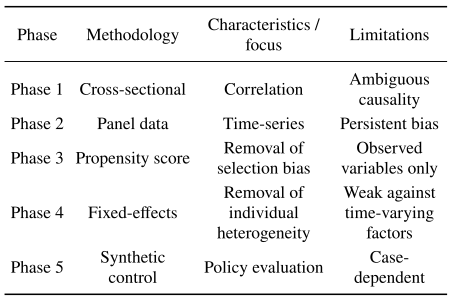
Phases of methodology in life recovery research
1. Introduction
Over the past three decades, life recovery research in Japan has evolved significantly, both conceptually and methodologically. Following the 1995 Hanshin-Awaji Earthquake, research shifted toward a micro-level perspective on individual recovery, leading to the development of the Seven Critical Element Model of Life Recovery (SCEM) 1. However, early studies relied primarily on cross-sectional designs, which limit their ability to capture dynamic processes and causal relationships.
In parallel, international studies on disaster recovery have increasingly adopted longitudinal and cohort-based approaches, particularly in epidemiology and social sciences. These studies have documented persistent inequalities and heterogeneous recovery trajectories across different populations 2,3.
This study reviews the methodological evolution of life recovery research in Japan, focusing on the longitudinal approaches developed after the Great East Japan Earthquake (GEJE). Rather than attempting a comprehensive systematic review, this study adopts a focused methodological synthesis centered on a coherent body of panel studies conducted in Natori City, Miyagi Prefecture. Studies were selected based on two explicit criteria: (1) direct use of the Natori City longitudinal panel dataset, which constitutes a methodologically coherent and cumulative research program spanning from 2014 to 2020; and (2) demonstrable contribution to methodological advancement in life recovery research, specifically the introduction or application of causal inference techniques not previously employed in this field. Supplementary international literature was identified through targeted searches on Google Scholar and PubMed using terms such as “disaster recovery,” “longitudinal,” “panel data,” and “causal inference,” and was included where it provided comparative methodological context for the Natori findings. By situating these studies within the broader international literature, this study demonstrates how methodological advances have enabled a deeper understanding of disaster recovery processes.
2. Foundations: Cross-Sectional Approaches After the Hanshin-Awaji Earthquake
Research following the Hanshin-Awaji Earthquake marked a paradigm shift toward understanding recovery at the individual level 1. Central to this shift was developing the SCEM of Life Recovery, which emerged from a series of grassroots assessment workshops conducted during the summer of 1999. In these workshops, residents from all nine wards of Kobe and three special interest groups were asked a single question: “What will it take for you to feel like you are no longer a disaster victim?” A total of 1,623 opinion statements were collected, and seven mutually exclusive categories were identified through conceptual clustering based on the Total Quality Management affinity diagram method 4,5.
SCEM conceptualizes life recovery not as an objective restoration of physical conditions but as a subjective sense of recovery—the feeling of regaining a “new normal” in everyday life. The seven elements are: (1) housing, (2) personal social ties (individual-level social capital, including both kith-and-kin-based strong ties and common-interest-based weak ties), (3) community social ties (collective social capital and neighborhood solidarity), (4) physical and mental health, (5) preparedness for future disasters, (6) livelihood (economic and financial situation), and (7) relation to government 1,5.
Among these, housing, physical and mental health, and livelihood were identified as foundational elements that operate primarily through event impact alleviation, a process by which the tangible effects of disaster damage are reduced. By contrast, personal and community social ties operate through a distinct pathway of event reappraisal, in which survivors reframe their disaster experiences into meaningful narratives 1. These two pathways were confirmed through structural equation modeling of the 2003 and 2005 Hyogo Life Recovery Survey data and were subsequently replicated in GEJE Natori Panel studies 5.
The generalizability of the SCEM was cross-validated across multiple disaster contexts. The same seven categories emerged independently from grassroots workshops in Nishinomiya in 1999, interview studies with survivors of the 2004 Indian Ocean tsunami and the 2006 Central Java earthquake, and content analyses of open-ended survey responses from GEJE survivors over a 10-year period 5. This cross-cultural consistency supports the SCEM as a robust theoretical framework for life recovery research.
Despite their contributions, cross-sectional studies have two key methodological limitations. First, they could not establish causal relationships because they captured only static associations at a single point in time. Second, they were unable to control for unobserved heterogeneity—individual traits such as sociability, optimism, or pre-existing social networks that may confound the relationship between recovery elements and outcomes. These limitations set the agenda for longitudinal research following the GEJE.
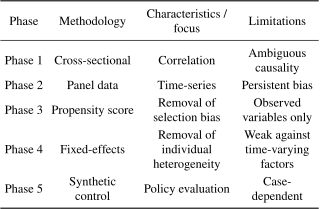
To clarify the transition of analytical strategies in life recovery studies, this study categorizes the methodological evolution into five distinct phases (see Table 1). These phases represent the progression from early descriptive correlations to advanced causal inferences and policy evaluations. Each phase is characterized by its specific focus and inherent methodological limitations, which necessitate a transition to a subsequent, more sophisticated analytical approach. The following sections detail how research associated with the Natori Panel and other GEJE studies navigated through these phases, transcending the ambiguity of cross-sectional findings toward the identification of rigorous causal mechanisms.
Table 1. Phases of methodology in life recovery research.
3. Emergence of Longitudinal Design After the GEJE
Following the 1995 Hanshin-Awaji Earthquake, life recovery research in Japan made significant strides; however, the 2011 GEJE presented new challenges, particularly regarding the spatial dispersion of survivors. In Natori City, Miyagi Prefecture, “Designated Temporary Housing” (DTH)—a system in which the government leases private rental units—was implemented on a large scale alongside traditional prefabricated temporary housing. Matsukawa et al. 7 used data from the Natori City Life Recovery Survey across two waves (2014 and 2015) to conduct an early-stage verification of how choices in housing supply affected subsequent reconstruction intentions.
A distinctive feature of the GEJE response was the large-scale deployment of “leased temporary housing” (DTH using private rental units). By March 2012, leased housing units (68,645) had significantly outnumbered traditional prefabricated temporary housing units (48,913) 6. Although leased housing enabled faster entry and more living space, it risked isolating survivors by dispersing them throughout urban areas, in contrast to prefabricated unit complexes, where survivors lived in close proximity. This spatial dispersion raises a critical research question: Which housing type better promotes permanent housing reconstruction?
A distinctive feature of this study was its evolution into a long-term panel study (2014–2020) that tracked the same households within a single municipality. Conventional cross-sectional surveys can only capture correlations at a specific point in time, whereas the post-GEJE Natori Panel provided a robust foundation for dynamically understanding the “process” of recovery. Matsukawa et al. 7 noted that the accumulation of multi-wave panel data enabled causal inference by controlling for unobserved individual heterogeneity, thereby elevating life recovery studies from descriptive research to empirical causal analysis.
This transition to panel data was a critical methodological turning point. Longitudinal designs allow scholars to observe within-individual changes and examine the temporal dynamics of recovery processes.
4. Advancing Causal Inference
4.1. Propensity Score Analysis
A key methodological challenge is evaluating temporary housing policies. However, although simple comparisons suggested differences in recovery speed between housing types, these were confounded by selection bias.
A primary obstacle to evaluating the effectiveness of housing policies is “selection bias.” As survivors’ choices between DTH and “prefabricated temporary housing” depend on pre-disaster economic status, household structure, and the extent of damage, a simple comparison cannot measure the pure effect of a policy. Kawami et al. 8 addressed this endogeneity issue by employing propensity score analysis.
Specifically, the scholars matched the background characteristics of prefabricated housing residents with those of DTH residents using propensity scores. After balancing the covariates, they conducted a survival analysis. The results indicated that, although differences in reconstruction speed were observed between housing types before controlling for confounding factors, these differences lost statistical significance after adjustment. This finding, established through a causal inference framework, demonstrates that recovery disparities stem not from the functional differences of the housing supply systems, but rather from the “pre-disaster vulnerabilities” of the households that were compelled to select specific housing types.
The results revealed that recovery disparities were not caused by housing type itself but by pre-existing household characteristics.
4.2. Fixed-Effects Models
A persistent concern in analyzing cross-sectional data is confounding caused by “unobserved individual heterogeneity,” such as personality (e.g., optimism), pre-disaster life skills, and inherent sociability, which are difficult to measure via surveys. Matsukawa et al. 7 applied fixed-effects models to four waves of Natori Panel data (2014–2017) to perform an analysis that effectively eliminates time-invariant confounding factors.
This analysis more precisely demonstrated that intra-individual changes in “housing,” “livelihood,” and “social ties”—three of the seven elements of life recovery—directly contribute to improvements in the subjective feeling of life recovery. Furthermore, by examining the interaction between each element and time, this study revealed that the relative importance of these elements shifted dynamically according to the recovery phase. These findings provide scientific evidence of the necessity of shifting the focus of support over time.
This approach revealed the dynamic importance of variables such as housing conditions, livelihoods, and social ties in shaping recovery trajectories.
4.3. Trajectory Analysis
Life recovery did not progress uniformly or linearly for any of the survivors. The four recovery patterns identified by Kuromiya et al. 9 in a panel analysis of the Hanshin-Awaji Earthquake (self-reliant, public-dependent, stagnant, and declining) were incorporated into the post-GEJE research. Fujimoto et al. 10 used growth mixture modeling with five waves of Natori Panel data to classify the recovery trajectories of the GEJE survivors.
These findings resonate strongly with the international epidemiological study by Goodwin et al. 3, which highlighted that, beneath the “resilient” majority in the aftermath of the GEJE, there exist distinct “stagnant” and “delayed distress” classes. Integrating these studies reveals that “non-linearity” and “rebounds” (deterioration) in the recovery process are universal phenomena. In particular, it highlights the “Matthew effect,” where those with pre-existing vulnerabilities experience a widening gap relative to other groups over time.
5. Policy Evaluation: Synthetic Control and Disaster Case Management
A recent milestone in life recovery studies has been the verification of specific intervention effects using advanced causal inference methods. Kawami and Tatsuki 11,12 employed the synthetic control method (SCM) to verify the impact of “Disaster Case Management” (DCM) implemented in Sendai City.
While finding an appropriate control group for a policy implemented in a single municipality is typically difficult, this study constructed a counterfactual “Synthetic Sendai” by weighting and combining other municipalities in Miyagi Prefecture that did not implement DCM. The analysis revealed that the introduction of DCM significantly accelerated housing reconstruction compared with the synthetic counterfactual. This provides important policy implications, demonstrating that personalized, continuous support (the “retail method” of social reform) has clear effectiveness in subjective satisfaction as well as in hard indicators such as housing reconstruction.
This approach provides evidence that individualized support strategies significantly accelerate housing recovery, representing a shift toward evidence-based policy evaluation.
6. Key Insights from Methodological Advances
The methodological advances reviewed in this study have transformed Japanese life recovery research from a descriptive endeavor to a rigorous exploration of causal mechanisms. Academic insights derived from these sophisticated quantitative approaches can be summarized from three critical perspectives.
First, these methods provide robust statistical evidence of the persistence of pre-existing social inequalities throughout the recovery process. Analyses using propensity score matching 8 and fixed-effects models 7 have revealed that disparities in housing reconstruction and subjective feelings of recovery are governed more by pre-disaster household backgrounds than by post-disaster factors alone. This aligns with the epidemiological findings of Li et al. 13, who demonstrated that pre-disaster depressive symptoms significantly contributed to post-disaster mortality rates among older survivors. These results suggest that disaster assistance must shift focus from merely addressing “post-disaster damage” to mitigating “pre-disaster vulnerabilities.”
Second, this body of research elucidates the non-linear and long-term dynamics of recovery and well-being. Identifying “stagnant” or “deteriorating” classes through trajectory analysis has revealed the reality that, although classes most exhibit a “resilient” pattern, a specific segment of the population remains trapped in severe conditions 3,10. Furthermore, as Kino et al. 2 demonstrated in a 5.5-year longitudinal study, post-traumatic stress symptoms may improve over time, whereas depressive symptoms often persist or even worsen in the long term. Uchida et al. 14 noted that changes in happiness following a disaster are not merely transient emotional shifts; rather, they involve profound restructuring of individual value systems and social meaning-making. These findings prove that life recovery must be understood as a dynamic, multi-wave process encompassing both physical dimensions, such as housing, and psychological dimensions, such as mental health and subjective well-being.
Third, the Natori Panel findings offer a substantive critique of, and methodological advances over, the dominant Putnam-type social capital approach to disaster recovery, most prominently represented by Aldrich 15. Aldrich 15 argues that communities rich in social capital recover more rapidly after a disaster. This thesis has proven to be enormously influential in disaster recovery literature. However, as Portes 16,17 observed in his systematic critique of Putnam-type social capital theory, such arguments are logically circular: communities are considered to possess high social capital because they exhibit cooperative behavior, and cooperative behavior is then explained by their social capital. Therefore, the cause and effect are the same phenomenon, merely described twice. In practice, this can reduce the argument to little more than the claim that neighborhoods where residents already gather for block parties recover better precisely because they are the types of neighborhoods where residents gather for block parties in the first place. Furthermore, Portes 17 cautioned that many of the alleged benefits of collective social capital may be spurious once other structural factors are properly controlled—precisely the type of control that cross-sectional designs such as those used by Aldrich cannot achieve.
Furthermore, such formulations risk leaving those who may never have been invited to such networks unexamined. This indicates a second and more fundamental problem: exclusion. The Putnam–Aldrich framework implicitly assumes that social capital is available to all community members. However, Peacock et al. 18, drawing on longitudinal housing reconstruction data, demonstrated that pre-existing inequalities rooted in race, class, and other axes of structural disadvantage are systematically amplified rather than overcome by disasters. Those who were excluded from community networks before the disaster were also excluded. In other words, one cannot invite those who were never part of the neighborhood to begin with to the block party. The trajectory analyses of the Natori Panel 10 confirm this pattern in the Japanese context: survivors with pre-existing vulnerabilities—older single-person households, those with disabilities, and those unemployed by the disaster—followed stagnant or declining recovery trajectories, irrespective of the aggregate level of community social capital in their surroundings.
Natori Panel studies respond to this critique not by abandoning the social ties construct, but by reframing the research question entirely. Rather than asking whether communities with rich social capital recover better, a question that invites circularity, Tatsuki and Kawami 5 discussed how social ties are formed or enriched after a disaster and what causal effects such post-event changes have on recovery. By eliminating unobserved individual heterogeneity, the fixed-effects analyses of Matsukawa et al. 7 demonstrated that within-individual increases in weak ties—acquaintances formed through hobbies, clubs, and common interests after the disaster—rather than pre-existing strong kinship networks, causally contribute to improvements in the subjective sense of life recovery. This distinction is theoretically decisive: weak ties 19 are, by definition, bridges to people and resources outside one’s existing social circle and are therefore accessible precisely to those who were previously excluded from dense community networks.
This connects directly to the second pathway of life recovery identified in the SCEM framework: event reappraisal. The Natori Panel findings show that enrichment in personal and community social ties facilitates encounters with significant others, promoting the positive reframing of disaster experience—what the SCEM model terms the transformation of traumatic experience into meaningful narrative 5. This process operates independently of the impact alleviation pathway (housing, livelihood, and health) and, crucially, is amenable to post-disaster intervention. DCM, as demonstrated by the synthetic control analyses of Kawami and Tatsuki 11,12, functions as a mechanism for brokering such encounters, connecting isolated survivors to people and institutions that can catalyze reappraisal. In this sense, the Natori program of research does not merely critique the Putnam–Aldrich tradition. It provides an empirically grounded, causally identified account of how social capital can be generated for those who do not yet possess it.
A further finding from the fixed-effects analyses deserves separate treatment, as it points beyond both the Putnam–Aldrich and Portesian critiques toward a richer institutional account. In the Natori Panel, the community outlook variable, operationalized on a four-point scale ranging from neighborhoods where residents do not interact at all to those where residents socialize frequently and participate actively in community events, emerged as a significant predictor of within-individual improvements in life recovery 5,7. Critically, the mechanism at work was not merely the pre-existing density of social ties within a neighborhood. Rather, moving into a neighborhood with high community solidarity was found to increase encounters with significant others, which, in turn, promoted event reappraisal and improved the subjective sense of recovery. Community outlook functions not as a static reservoir of social capital to be drawn upon, but as an institutional environment that actively generates new social ties for those who enter it, including those who arrived with none.
This finding invites a theoretical reframing that transcends Putnam-type social capital theory. In her analysis of long-enduring common-pool resource institutions, Ostrom 20 identified a set of core design principles (CDPs) that characterize communities that can sustain cooperative governance over time. These principles include (1) clearly defined membership boundaries that specify who belongs to the community and who does not; (2) monitoring members’ behavior by those who are themselves accountable to the group; (3) graduated sanctions against those who violate community norms; and (4) collective-choice arrangements in which those affected by the rules participate in modifying them. It is significant that the community outlook construct in the Natori Panel maps directly to these CDPs. Neighborhoods rated as high in community outlook are precisely those where boundaries are recognized (residents know who belongs), where mutual monitoring occurs (“people watch out for each other”), where non-participation carries implicit social costs, and where local rules and events are collectively organized. These are not communities rich in social capital in the Putnam sense; they are those with a functioning institutional architecture in Ostrom’s sense.
The theoretical implication is substantial. Putnam asked: Do communities with rich social capital recover better? The answer is correlational, and as Portes 15 demonstrated, it is potentially spurious. Ostrom asked: What institutional design enables communities to sustain collective action? The answers are causal and actionable. The Natori Panel evidence suggests that the “machi” (community outlook) variable operates in exactly the Ostromian register: it is not the prior existence of trust or norms that drives recovery, but the institutional features of the community—boundaries, monitoring, sanctions, and participatory rule-making—that create the conditions under which encounters with significant others become likely, and through which the reappraisal of disaster experience becomes possible. Considering this, housing policy is not merely a matter of providing shelter; relocating survivors into communities with functioning CDPs constitutes a form of institutional intervention that can generate social capital ex post, for survivors whose pre-existing vulnerabilities had previously excluded them. This represents a point at which the Natori research program achieves genuine theoretical originality: it synthesizes the causal rigor of econometric longitudinal analysis with an Ostromian institutional framework to offer an account of community recovery that is simultaneously empirically grounded, causally identified, and policy-actionable.
An equally important implication follows when the temporal dimension of the community transformation is considered. The Ostromian framework is not static: Ostrom 20 emphasized that the design principles characterizing robust commons institutions are not simply inherited attributes of communities but can be actively constructed over time through deliberate collective action. In the post-GEJE housing recovery context, this dynamic is vividly illustrated by the process through which newly established disaster public housing complexes, whose initial residents arrived as strangers, were displaced from different neighborhoods, and stripped of pre-existing social ties, gradually developed functioning resident associations (jichikai). The formation of such associations, supported in many cases by local governments and case managers, instantiated several of Ostrom’s CDPs from the ground up: defining who belonged to the community, establishing shared norms for common space use, organizing collective events that brought residents into contact, and creating informal mechanisms for mutual monitoring and conflict resolution. Thus, community outlook did not simply exist as a precondition to be selected; it was constructed as a post-disaster outcome through purposive institutional design. Fixed-effects analyses of the Natori Panel are sensitive to this dynamic by capturing within-individual changes in community outlook over time, including changes attributable to moving into a newly formed disaster public housing complex. An individual whose community outlook score increases between survey waves because their residential association has become more active is, in the Ostromian reading, an individual whose institutional environment has been transformed with measurable consequences for their subjective sense of life recovery. This finding speaks directly to the policy relevance of the research; the conditions for recovery-promoting community life can be deliberately cultivated and not merely awaited. These advances justify evidence-based policy making.
Evaluations using the SCM 11,12 have demonstrated that individual-level interventions, specifically DCM, serve as an effective means to alleviate structural inequalities and accelerate housing recovery. This scientific validation of the “accumulation of ten years of social response” discussed by Sato 21 provides strong evidence supporting the institutionalization of personalized, continuous support as a form of “pre-disaster preparedness” for future large-scale catastrophes.
In conclusion, Japanese life recovery research has converged with global trends in social science and epidemiology through the accumulation of longitudinal data, such as the Natori Panel, and the introduction of advanced analytical techniques 5. The remaining challenge lies in the social implementation of these causal insights, such as overcoming pre-disaster inequalities and ensuring early intervention for non-linear recovery paths, to construct recovery processes that truly leave no one behind.
7. Discussion
The transition from cross-sectional analysis to longitudinal causal inference did not improve methodological precision; it fundamentally transformed the theoretical questions that life recovery research could ask. Earlier cross-sectional approaches, including Putnam-type social capital frameworks, and much of the early disaster recovery literature were largely limited to demonstrating associations between community cohesion and positive recovery outcomes. Such studies identified that socially cohesive communities often recovered better but were unable to determine whether social capital itself caused recovery, whether recovery generated stronger social ties, or whether both were shaped by prior structural conditions. As Portes 16,17 highlighted, this ambiguity risks collapsing cause and effect into the same phenomenon.
The Natori Panel studies addressed this limitation by introducing longitudinal designs and causal inference techniques capable of distinguishing pre-existing vulnerabilities from post-disaster social and environmental changes. Propensity score analyses demonstrated that apparent differences in recovery outcomes were often attributable not to the disaster policies themselves but to inequalities already present before the disaster 8. Fixed-effects models further revealed that within-individual changes in housing conditions, livelihoods, and weak social ties causally contributed to improvements in the subjective sense of life recovery 7, shifting the analytical focus away from static community attributes toward dynamic post-disaster processes through which recovery-supporting environments are generated over time.
Thus, the significance of Natori’s research program transcends disaster recovery studies. The findings suggest that social ties should not be understood merely as pre-existing communal resources unevenly distributed across neighborhoods, but as dynamic relationships that can be produced, expanded, or transformed after a disaster through institutional intervention. This represents a substantial departure from correlational social capital theory and moves the discussion closer to an Ostromian understanding of communities as institutional environments capable of generating cooperative relationships over time 20.
This study has significant theoretical implications. Putnam-type frameworks examine whether communities with rich social capital can recover more effectively. The answer is necessarily correlational and remains vulnerable to the circularity critique identified by Portes. Instead, Natori’s findings suggest a different question: Under what institutional conditions do new social ties emerge for survivors who lack them before a disaster? From this perspective, “community” is no longer simply a reservoir of social capital but a dynamic institutional setting capable of producing encounters with significant others, facilitating event reappraisal, and supporting long-term recovery trajectories.
This reinterpretation has several direct policy implications. Synthetic control analyses of DCM 11,12 indicate that post-disaster recovery is not merely a spontaneous social process but can be actively shaped through individualized and continuous institutional support. Similarly, the emergence of functioning resident associations within newly established disaster public housing demonstrates that recovery-supporting communities can be intentionally cultivated rather than passively awaited. In this sense, the methodological evolution reviewed in this study is not merely technical; it also reshapes the theoretical and policy foundations of disaster recovery research.
Although this study primarily focuses on the Natori Panel studies, similar patterns of persistent inequality, heterogeneous trajectories, and long-term psychosocial effects have been identified in broader epidemiological and longitudinal disaster research 2,3,13,22. These converging findings support the broader relevance of the causal and institutional perspectives advanced by Natori’s research program.
Finally, it is worth clarifying the relationship between the present study and that of Tatsuki and Kawami 5, which also reviewed longitudinal life recovery studies based on the same panel dataset. Although Tatsuki and Kawami 5 focused primarily on substantive findings concerning inequalities and post-disaster social and environmental changes, this study focuses on the methodological evolution that enabled these findings to emerge. In this sense, the two studies are complementary: one addresses what longitudinal studies have revealed about the recovery processes, while the other addresses how these findings became methodologically and theoretically possible.
8. Conclusion
This study reviewed the methodological evolution of Japanese life recovery research from cross-sectional studies initiated after the 1995 Hanshin-Awaji Earthquake to longitudinal causal analyses developed following the GEJE. The introduction of panel data, propensity score analysis, fixed-effects models, trajectory analysis, and synthetic control methods transformed life recovery research from a descriptive enterprise into a rigorous investigation of causal mechanisms and dynamic recovery processes.
The central contribution of the Natori research program lies in demonstrating that disaster recovery should not be understood merely as the spontaneous resilience of socially cohesive communities. Rather, recovery emerges through dynamic interactions between pre-existing vulnerabilities, post-disaster institutional environments, and the generation of new social ties over time. Longitudinal causal analysis makes these processes visible in ways that cross-sectional approaches cannot.
The findings reviewed here further suggest that social capital is not simply a fixed communal asset unevenly distributed before a disaster but something that can be generated through institutional intervention after a disaster. The significance of this insight transcends disaster sociology. This indicates a broader understanding of recovery as a socially and institutionally producible process. Policies such as DCM and the deliberate cultivation of community organizations within disaster public housing demonstrate that recovery-supporting social environments can be actively constructed, including those that had previously been excluded from community networks.
In this sense, the methodological advances reviewed in this study are not merely technical refinements. They alter the theoretical foundations of disaster recovery research and provide an empirical basis for evidence-based recovery policies aimed at reducing structural inequalities and supporting those most vulnerable to long-term stagnation or decline. Therefore, the remaining challenge is not only methodological but also institutional and political: how to design post-disaster environments capable of generating social relationships and community conditions through which recovery becomes possible for all survivors.
- [1] S. Tatsuki, “Long-term life recovery processes among survivors of the 1995 Kobe Earthquake: 1999, 2001, 2003, and 2005 life recovery social survey results,” J. Disaster Res., Vol.2, No.6, pp. 484-501, 2007. https://doi.org/10.20965/jdr.2007.p0484
- [2] S. Kino, J. Aida, K. Kondo, and I. Kawachi, “Long-term trends in mental health among older adults after the Great East Japan Earthquake: A longitudinal study,” JAMA Netw. Open, Vol.3, No.8, Article No. e2013437, 2020. https://doi.org/10.1001/jamanetworkopen.2020.13437
- [3] R. Goodwin, K. Sugiyama, S. Sun, M. Takahashi, and J. Aida, “Trajectories of psychological distress after the Great East Japan Earthquake: A five-wave longitudinal study,” Clin. Psychol. Sci., Vol.8, No.1, pp. 34-48, 2020. https://doi.org/10.1177/2167702620949156
- [4] S. Tatsuki and H. Hayashi, “Seven critical element model of life recovery: General linear model analyses of the 2001 Kobe panel survey data,” Proc. of the 2nd Workshop for Comparative Study on Urban Earthquake Disaster Management, pp. 27-46, 2002.
- [5] S. Tatsuki and F. Kawami, “Longitudinal impacts of pre-existing inequalities and social environmental changes on life recovery: Results of the 1995 Kobe Earthquake and the 2011 Great East Japan Earthquake recovery studies,” Int. J. Mass Emerg. Disasters, Vol.41, No.1, pp. 94-120, 2023. https://doi.org/10.1177/02807270231171504
- [6] Cabinet Office, “Transitions in emergency temporary housing following the Great East Japan Earthquake (Occupancy),” 2013 (in Japanese). https://www.bousai.go.jp/kaigirep/kentokai/hisaishashien2/wg/pdf/dai4kai/siryo2.pdf [Accessed February 29, 2025]
- [7] A. Matsukawa, F. Kawami, S. Sato, and S. Tatsuki, “A study of life recovery using a fixed effect model: Using the 2014, 2015, 2016, and 2017 Natori City survey four-wave panel data,” J. Soc. Saf. Sci., No.37, pp. 401-411, 2020 (in Japanese). https://doi.org/10.11314/jisss.37.401
- [8] F. Kawami, A. Matsukawa, S. Sato, and S. Tatsuki, “Did the designated temporary housing policy promote housing recovery?: Causal inference by using Natori City data,” J. Soc. Saf. Sci., No.35, pp. 217-224, 2019 (in Japanese). https://doi.org/10.11314/jisss.35.217
- [9] A. Kuromiya, S. Tatsuki, H. Hayashi, T. Noda, K. Tamura, and R. Kimura, “Four recovery patterns from the Hanshin-Awaji Earthquake: Using the 2001-2003-2005 panel data,” J. Nat. Dis. Sci., Vol.28, No.2, pp. 43-60, 2006. https://doi.org/10.2328/jnds.28.43
- [10] S. Fujimoto, F. Kawami, A. Matsukawa, S. Sato, and S. Tatsuki, “Pre-existing inequalities, post-event social environmental changes, and long-term trajectories of life recovery: Findings from Five-Wave Natori City Life Recovery Panel Survey,” J. Disaster Res., Vol.17, No.2, pp. 207-216, 2022. https://doi.org/10.20965/jdr.2022.p0207
- [11] F. Kawami and S. Tatsuki, “The effect of disaster case management on housing recovery: Analysis of disaster survivor support in Sendai City using synthetic control method,” J. Archit. Plan. (Trans. AIJ), Vol.87, No.797, pp. 1282-1293, 2022 (in Japanese). https://doi.org/10.3130/aija.87.1282
- [12] F. Kawami and S. Tatsuki, “The effect of disaster case management on housing recovery: Analysis of disaster survivor support in Sendai City using the synthetic control method,” Jpn. Archit. Rev., Vol.8, Article No.e70007, 2025. https://doi.org/10.1002/2475-8876.70007
- [13] X. Li, J. Aida, H. Hikichi, K. Kondo, and I. Kawachi, “Postdisaster depression and posttraumatic stress disorder and mortality among older survivors of the Great East Japan Earthquake,” JAMA Netw. Open, Vol.2, No.12, Article No.e1917550, 2019. https://doi.org/10.1001/jamanetworkopen.2019.17550
- [14] Y. Uchida, Y. Takahashi, and K. Kawahara, “Changes in hedonic and eudaimonic well-being after a severe nationwide disaster: The case of the Great East Japan Earthquake,” J. Happiness Stud., Vol.15, No.1, pp. 207-221, 2014. https://doi.org/10.1007/s10902-013-9463-6
- [15] D. P. Aldrich, “Building resilience: Social capital in post-disaster recovery,” University of Chicago Press, 2012.
- [16] A. Portes, “Social capital: Its origins and applications in modern sociology,” Annu. Rev. Sociol., Vol.24, No.1, pp. 1-24, 1998. https://doi.org/10.1146/annurev.soc.24.1.1
- [17] A. Portes, “The two meanings of social capital,” Sociol. Forum, Vol.15, No.1, pp. 1-12, 2000.
- [18] W. G. Peacock, S. Van Zandt, Y. Zhang, and W. E. Highfield, “Inequities in long-term housing recovery after disasters,” J. Am. Plan. Assoc., Vol.80, No.4, pp. 356-371, 2014. https://doi.org/10.1080/01944363.2014.980440
- [19] M. S. Granovetter, “The strength of weak ties,” Am. J. Sociol., Vol.78, No.6, pp. 1360-1380, 1973. https://doi.org/10.1086/225469
- [20] E. Ostrom, “Governing the commons: The evolution of institutions for collective action,” Cambridge University Press, 1990.
- [21] S. Sato, “Verification of three aspects of social response for 10 years after the Great East Japan Earthquake disaster,” J. Jpn. Soc. Nat. Dis. Sci., Vol.40, No.4, pp. 405-419, 2022 (in Japanese).
- [22] S. Ando, H. Kuwabara, T. Araki et al., “Mental health problems in children and adolescents after the Great East Japan Earthquake: A systematic review,” Harv. Rev. Psychiatry, Vol.25, No.1, pp. 15-28, 2017. https://doi.org/10.1097/hrp.0000000000000124
This article is published under a Creative Commons Attribution-NoDerivatives 4.0 Internationa License.