
Paper:
Agent of Change: How Migration Decision-Making Relates to Post-Migration Well-Being Among Older Adults in Hulhumalé, Maldives
Akiko Sakamoto*,†
 , Yuto Kunitake*
, Aishath Laila**, Ayaka Naganuma*
, and Shafraz Rasheed***
, Yuto Kunitake*
, Aishath Laila**, Ayaka Naganuma*
, and Shafraz Rasheed***
*Global Infrastructure Fund Research Foundation Japan (GIF Japan) Shiodome City Center 5F, 1-5-2 Higashi Shimbashi, Minato-ku, Tokyo 105-7105, Japan E-mail: a.sakamoto@gif.or.jp
†Corresponding author
**Housing Development Corporation (HDC)
Malé, Maldives
***Green Climate Network
Hulhumalé, Maldives

This study explores the association between agency in migration decision-making and post-migration well-being among older residents of Hulhumalé, a planned artificial island city in the Maldives. Face-to-face survey data were collected in 2024 from Maldivian nationals aged 65 years and older who had relocated to Hulhumalé. Based on the reported primary decision-maker, 189 respondents were classified as self-determined or family-led migrants. Life satisfaction before and after migration, post-migration experiences, and perceived living conditions were analyzed using non-parametric tests and multiple regression. The results revealed distinct patterns between the two groups. Current life satisfaction did not differ significantly; however, self-determined migrants reported lower pre-migration satisfaction and a subsequent increase following relocation, whereas family-led migrants reported higher pre-migration satisfaction and little overall change. Statistical significance for non-parametric comparisons was determined using false discovery rate (FDR)-adjusted p-values. In an extended regression model controlling for socio-demographic factors (N=145), agency in migration decision-making remained significantly associated with changes in life satisfaction. Family-led migrants also reported greater difficulty in social integration and urban adaptation. While these exploratory findings should be interpreted with caution due to a retrospective baseline assessment and missing data for some socioeconomic variables, they suggest that perceived agency is more clearly associated with subjective well-being trajectories and post-migration social adaptation than with current life satisfaction. Supporting meaningful participation in relocation decisions, while addressing the social needs of family-led migrants, may contribute to more inclusive outcomes for the older population in rapidly urbanizing island contexts.

Elder sitting at Hulhumalé Artificial Beach
1. Introduction
1.1. Background
The Republic of Maldives, an archipelagic nation of 26 coral atolls in the Indian Ocean, is widely recognized as the world’s lowest-lying country, with an average elevation of approximately 1.5 m above sea level 1,2. This geographic condition makes the country vulnerable to climate change, particularly sea-level rise, which poses long-term risks to human settlements.
In response, the Government of Maldives developed Hulhumalé, a reclaimed artificial island located adjacent to the capital city Malé. Hulhumalé was designed as a safe island, constructed at a higher elevation to reduce climate-related risks, while also addressing the severe population congestion in Malé and broader regional disparities.
Migration to Hulhumalé involved both residents from the capital region and migrants from outer atolls. Previous studies have shown that place of origin is associated with differences in post-migration life satisfaction and evaluations of the living environment 3. In this context, relocation to Hulhumalé is often understood as both an aspirational move and an adaptive strategy, particularly among the earlier waves of migrants. Despite growing research on internal migration to Hulhumalé, the experiences of older migrants remain underexplored.
This study focuses on residents aged 65 years and older who relocated to Hulhumalé. Although relocation to a planned city with improved infrastructure may be expected to enhance the quality of life, outcomes among older adults appear heterogeneous. In particular, some older migrants report challenges with social integration and adaptation to urban life, even when material living conditions improve.
In the Maldivian context, migration decisions in later life are deeply embedded in family relationships and norms of care. Older parents often relocate to support their children’s households or receive family-based care, and relocation decisions are frequently framed as collective family matters rather than individual choices. Consequently, family-led migration among older residents does not necessarily imply coercion, as such moves are often shaped by moral expectations of intergenerational responsibility, rather than explicit pressure. Nevertheless, even within these collective family processes, older adults may differ substantially in the extent to which they perceive themselves as having participated in or influenced relocation decisions. This distinction between collective family roles and individual decision-making agency is critical for interpreting post-migration well-being outcomes. To establish the context for this study, the following section reviews existing research on late-life relocation, agency in migration decision-making, and post-migration well-being.
1.2. Literature Review
1.2.1. Agency and Late-Life Relocation
Existing research on late-life relocation highlights two consistent patterns. First, many older adults prefer to remain in familiar environments and tend to relocate only when compelled by major stressors, such as health decline, family changes, or housing constraints. Second, older adults who experience relocation as more self-initiated or less forced tend to report better psychosocial adjustment after relocation.
Scheibl et al. 4 found that only a small minority of individuals aged 95 years and older made relocation decisions independently, while most moves were initiated by family members or professionals, suggesting declining decision-making autonomy in very old age. Studies of congregate senior housing and downsizing further demonstrate that perceived autonomy is associated with more favorable psychosocial outcomes, whereas relocations driven by “push” factors are linked to lower post-move well-being 5,6.
1.2.2. Familiarity, Perceived Loss, and Perceived Disruption
Qualitative research emphasizes the importance of familiarity with one’s prior living environment and established social ties in shaping relocation experiences. Older adults may perceive relocation as disruptive because it involves leaving a familiar living environment, concerns about losing connections with family and friends, and the need to adapt to unfamiliar settings. When selecting a destination, they also value familiarity with the location and neighborhood, including the presence of familiar social networks. These concerns can be particularly salient when external actors strongly influence relocation decisions 7. Accordingly, even when housing quality or infrastructure improves, material improvements alone may be insufficient to ensure positive outcomes.
1.2.3. Family-Led Migration and Social Integration
Research on family-driven migration among older adults, particularly in contexts characterized by strong intergenerational ties, indicates an elevated risk of loneliness and social isolation. Studies on older adults relocating to follow their children have shown that improved material living conditions do not necessarily translate into successful social integration. For instance, Xu et al. 8 reported that such migrants frequently experience heightened loneliness, a trend observed to be particularly pronounced among female migrants. This sense of isolation aligns with the findings of Bao et al. 9 who described family-led older migrants as largely passive movers who often experience “double social detachment” from both their origin and destination communities. These studies suggest that a lack of agency in the relocation process can entail psychosocial vulnerabilities that persist despite material improvements.
1.2.4. Research Gap
Taken together, existing studies indicate that agency in relocation decision-making and post-migration social integration are closely related to subjective well-being in later life. However, most research has focused on relocations driven by health or care needs in high-income countries, or on family-driven migration in rapidly urbanizing societies. Empirical evidence regarding older adult migration to climate-adaptation planned cities in the Global South, where relocation is neither strictly crisis-driven nor institution-based remains limited. Nevertheless, while the Maldivian context differs from these settings in scale, governance structure, and cultural norms, such studies provide valuable conceptual parallels regarding family-led migration and social integration in later life.
Despite the growing significance of planned relocation as a climate-adaptation strategy, a critical research gap remains concerning the decision-making agency of the older population in small island developing states. Specifically, the role of perceived autonomy in relocation processes within atoll countries, such as Maldives, has not been empirically examined. This study addresses this gap by providing a unique analysis of older migrants in Hulhumalé, a high-elevation artificial island. By explicitly linking perceived decision-making agency to post-migration well-being, this study contributes to a deeper understanding of how psychological dimensions of relocation influence adaptation outcomes in a climate-vulnerable context. In doing so, it provides empirical evidence to support more inclusive and person-centered urban planning and adaptation policies for aging island populations.
1.3. Analytical Framework
This study draws on the self-determination theory (SDT), which conceptualizes autonomy as a fundamental psychological need linked to well-being 10. It is important to distinguish between autonomy as conceptualized in SDT and the operational use of agency adopted in the empirical analysis. In SDT, autonomy refers to a basic psychological need describing the extent to which individuals experience their actions as self-endorsed and volitional. In contrast, the present study does not attempt to measure autonomy as a latent psychological construct. Instead, it operationalizes agency in migration decision-making in a narrower and context-specific sense, based on respondents’ reports of the primary decision-maker in the relocation process. This measure captures perceived participation and ownership in the migration decision, rather than broader motivational orientations or psychological autonomy. Applying this perspective, the identity of the primary migration decision-maker is treated as an indicator of perceived agency and examines its association with post-migration life satisfaction and social experiences among older migrants in Hulhumalé.
2. Objective
The objective of this study was to examine post-migration well-being among the older residents of Hulhumalé, with particular attention to the role of agency in migration decision-making.
Specifically, the study analyzes how differences in perceived agency, operationalized according to whether the decision to migrate was made primarily by the individual or by family members, are associated with (i) changes in life satisfaction before and after migration, (ii) post-migration social experiences and perceived isolation, and (iii) selected socio-demographic and migration-related characteristics. Rather than adopting a causal explanation, the analysis uses an exploratory approach to clarify how perceived agency relates to subjective well-being and adaptation in a planned urban relocation context. This positioning is consistent with the exploratory questionnaire-based approaches used in disaster and displacement research to examine mobility-related intentions and post-disruption adaptation under conditions where causal identification is difficult 11.
3. Methodology
This study employed a quantitative, cross-sectional research design based on a structured questionnaire administered to the older residents of Hulhumalé. The survey was jointly conducted by the Housing Development Corporation of the Maldives and the Global Infrastructure Fund Research Foundation Japan (GIF Japan) between October and November 2024 through face-to-face interviews.
Interviews were conducted in communal areas and public open spaces where older residents typically socialize. This recruitment strategy enabled efficient face-to-face access to the target population in familiar, comfortable environments. The target population consisted of Maldivian nationals aged 65 years and older residing in Hulhumalé at the time of the survey. As recruitment was conducted in public and communal spaces rather than through probabilistic household sampling, the sample primarily reflects older residents who were mobile and socially active at the time of the survey and should not be interpreted as statistically representative of the entire older population of Hulhumalé. The detailed implications of this sampling strategy are discussed in Section 5.6.
3.1. Measures and Grouping
The questionnaire included items regarding demographic characteristics, migration history, household composition, and socioeconomic conditions. The questionnaire item was labeled “Gender” and recorded two response options, male and female; because the survey did not assess gender identity separately, this variable is treated as sex in the present analysis. Subjective and psychosocial variables were measured using the following items:
-
Life satisfaction before and after migration (Five-point Likert scale)
-
Satisfaction with current income (Five-point Likert scale)
-
Perceptions of daily living conditions, including social interactions, household communication, and feelings of isolation (Five-point Likert scale)
-
Motivations for migration (multiple Likert-type items)
-
Evaluation of changes in living conditions, environmental quality, and access to services compared to previous residences
-
Preferences for government and community support measures
All Likert-type responses were numerically coded from 1 to 5, with higher values indicating stronger agreement or, for comparative evaluations, better-perceived conditions after migration. All items were coded in the same direction; higher values consistently indicated more positive evaluations or stronger agreement, and no reverse-coded items were included in the analyses.
To examine the association between agency in migration decision-making and post-migration outcomes, respondents were asked to identify the primary decision-maker for their move to Hulhumalé. From the 197 respondents who met the age and residency criteria, individuals who selected “Work order (company transfer)” or “Other/unspecified reasons” were excluded, as these categories represent migration mechanisms that are structurally distinct from personal or family-based decision-making.
After these exclusions, 189 respondents remained eligible for analysis based on decision-making agency. The two analytical groups were defined as follows:
-
Self-determined migrants: respondents who chose “Myself”
-
Family-led migrants: respondents who chose “Family member(s)” (e.g., children, spouse, or other relatives)
These two groups formed the basis for all descriptive and comparative analyses in this study.
For analyses focusing on life satisfaction, a change in score was computed to capture the respondents’ perceived change in well-being following migration. The change in score was calculated as the difference between self-reported life satisfaction after migration and retrospectively assessed life satisfaction before migration as follows:
This operationalization reflects subjective trajectories of well-being rather than objective causal effects and is therefore interpreted in conjunction with descriptive and multivariate analyses. As this change in score is based on retrospectively reported pre-migration life satisfaction, it may also be affected by regression to the mean. Particularly, respondents with relatively low or high baseline evaluations may show larger apparent changes, partly for statistical rather than substantive reasons. In addition, variables were constructed for housing phases (Phase 1 vs. Phase 2), year of migration, and changes in household composition. As agency classification relies on respondents’ perceptions of the primary decision-maker, it should be interpreted as a measure of perceived agency rather than an objective reconstruction of intra-family decision-making processes.
3.2. Ethical Considerations
All participants were briefed on the study’s purpose, assured of anonymity, and informed that their participation was voluntary. No personal identifiers or sensitive medical information was collected. In accordance with the ethical review regulations of GIF Japan, this study qualified for exemption from full Institutional Review Board review due to its use of anonymous survey data.
3.3. Statistical Analysis
All analyses were conducted in Python using the pandas, SciPy, and statsmodels packages. The Likert-scale responses were treated as ordinal variables and encoded numerically from 1 to 5.
3.3.1. Group Comparisons
Descriptive statistics and group comparisons were conducted using the full sample of respondents with valid agency classifications (\(N=189\)). Differences between self-determined and family-led migrants were examined using:
-
Mann–Whitney \(U\) tests for ordinal or non-normally distributed continuous variables (e.g., life satisfaction scores and perceived changes in living conditions);
-
Chi-square tests of independence for categorical variables (e.g., sex and intention to return to the previous residence).
Effect sizes were calculated using rank-biserial correlation (\(r\)) for Mann–Whitney \(U\) tests and Cramér’s \(V\) for chi-square tests. Effect sizes were interpreted according to Cohen’s conventional benchmarks 12; for rank-biserial correlation (\(r\)), values of 0.1, 0.3, and 0.5 were considered small, medium, and large effects, respectively.
For the items where higher scores indicated better conditions, positive \(r\) values indicated more favorable outcomes in the self-determined group. For items measuring difficulty or stress, negative \(r\) values indicated lower reported difficulty among the self-determined group.
To provide context regarding detectable effect sizes, a post hoc sensitivity analysis was conducted for the main inferential analyses. For the group comparisons between self-determined (\(N=87\)) and family-led migrants (\(N=102\)), the available sample size allowed detection of a between-group effect of approximately Cohen’s \(d=0.41\) at \(\alpha=0.05\) with 80% power. For the regression analyses, the available sample sizes corresponded to the minimum detectable overall effect sizes of approximately \(f^2=0.052\) for Model 1 (\(N=189\), two predictors) and \(f^2=0.098\) for Model 2 (\(N=145\), six predictors). These values suggest that the analyses provided sensitivity for detecting small to moderate effects, although such adequacy does not imply population representativeness.
3.3.2. Regression Analyses
Multiple linear regression models were estimated with the change in life satisfaction (\(\Delta= \textrm{after} - \textrm{before}\)) as the dependent variable. As the dependent variable was the gain score, regression to the mean should also be considered when interpreting the results. Thus, the regression results were interpreted as exploratory associations in perceived life satisfaction trajectories rather than as precise estimates of causal change. Although Likert-scale data are inherently ordinal, it is a common and accepted practice in psychological and social research to treat such scores as interval data while computing change in scores for parametric analysis 13. This approach allows for a clearer interpretation of the magnitude of change across groups.
The models are specified as follows:
-
Model 1: \(\Delta\textit{Life Satisfaction}=\beta+\beta_1\textit{Agency}+\beta_2\textit{Sex}+\varepsilon\);
-
Model 2: \(\Delta\textit{Life Satisfaction}=\beta+\beta_1\textit{Agency}+\beta_2\textit{Sex}+\beta_3\textit{ Year}+\beta_{4}\textit{ Phase}+\beta_5\textit{ Income Sat.}+\beta_6\textit{ Age}+\varepsilon\).
Here, \(\beta_1\) represents the primary predictor of interest (agency in migration decision-making), and \(\varepsilon\) denotes the error term. Model 1 was estimated using the full analytical sample (\(N=189\)), whereas Model 2 included additional covariates and utilized a reduced sample size (\(N=145\)) due to listwise deletion. Unstandardized coefficients (\(B\)), standardized coefficients, standard errors, \(t\)-values, \(p\)-values, and model-fit statistics (\(R^2\) and \(F\)-tests) were reported for both models. Year of migration was entered as a calendar year to capture its timing. As the survey was conducted in 2024, lower values of this variable correspond to earlier migration and a longer duration of residence in Hulhumalé.
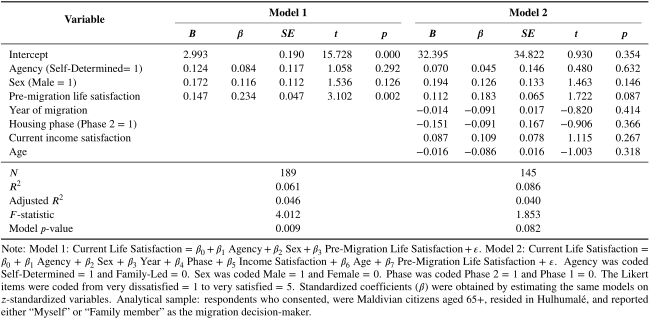
As a supplementary analysis, we estimated models using current life satisfaction as the dependent variable and retrospectively reported pre-migration life satisfaction as a covariate. This was intended to examine whether the association between perceived agency in migration decision-making and current life satisfaction remained after accounting for reported baseline levels, thereby facilitating interpretation of the gain score models in light of possible baseline dependence and regression to the mean. The supplementary models are as follows.
Supplementary Model 1 was estimated using the full analytical sample with valid data for these variables (\(N=189\)), whereas Supplementary Model 2 included additional covariates and used a reduced sample size (\(N=145\)) due to listwise deletion. As pre-migration life satisfaction was also measured retrospectively, these supplementary analyses do not eliminate recall bias and should therefore be interpreted as complementary analyses rather than replacements for the gain score models. The results are reported in Appendix A.
3.3.3. Association with Return Intention
The relationship between agency in migration decision-making and intention to return to the previous residence was examined using contingency tables and chi-square tests. Cramér’s \(V\) was reported as a measure of association strength.
All statistical tests were two-tailed, with statistical significance set at \(p<0.05\). Given the exploratory nature of the study, we report both uncorrected \(p\)-values and false discovery rate (FDR)-adjusted \(p\)-values using the Benjamini–Hochberg procedure 14. FDR correction was applied separately within each table to control for Type I error accumulation across multiple comparisons.
4. Results
The analysis identified statistically significant differences between the two groups across multiple domains, and the following comparisons (Sections 4.3–4.8) examine patterns of post-migration adaptation and perceived changes between self-determined and family-led migrants.
-
Supplementary model 1: Current life satisfaction \(=\beta+\beta_1\textrm{Agency}+\beta_2\textrm{Sex}+\beta_3\textrm{Pre-migration life satisfaction}+\varepsilon\).
-
Supplementary model 2: Current life satisfaction \(=\beta+\beta_1\textrm{Agency}+\beta_2\textrm{Sex}+\beta_3\textrm{Year}+\beta_4\textrm{Phase}+\beta_5\textrm{Income Sat.}+\beta_6\textrm{Age}+\beta_7\textrm{Pre-migration life satisfaction}+\varepsilon\).
4.1. Demographic Characteristics
A total of 197 respondents were included in the descriptive demographic analysis. Table 1 summarizes age and sex distributions. Table 2 summarizes socio-economic and migration-related characteristics.
Table 1. Age and sex characteristics (\(N=197\)).
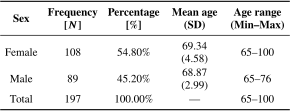
Table 2. Socio-economic and migration profile (\(N=197\)).
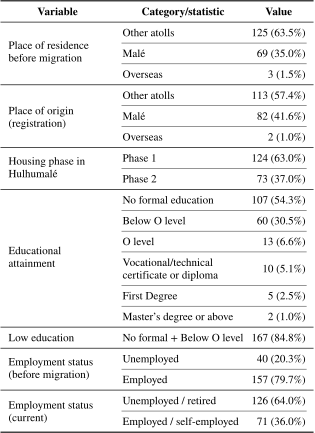
Table 3. Comparison of respondent characteristics by decision-making group (\(N=189\)).
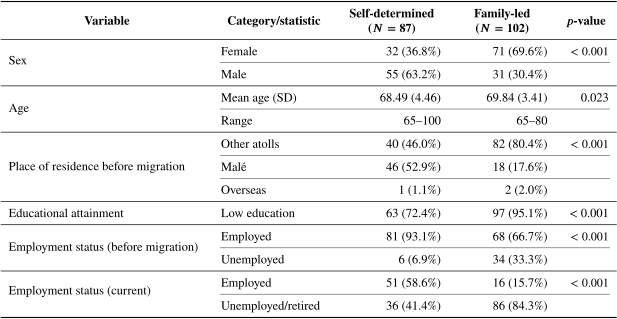
Table 4. Differences in migration motivations by decision-making group (\(N=189\)).
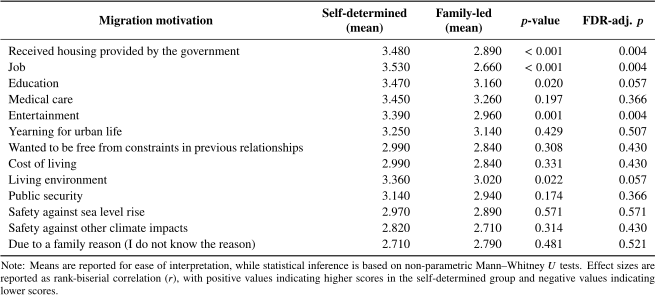
Table 5. Differences in income and life satisfaction by decision-making group (\(N=189\)).

4.2. Characteristics by Migration Decision-Maker (Self-Determined vs. Family-Led)
Respondents included in the agency analysis comprised 189 individuals divided into self-determined (\(N=87\)) and family-led (\(N=102\)). Table 3 reports group differences across demographic and socio-economic variables. The difference in place of residence was driven primarily by a higher proportion of migrants from other atolls in the family-led group and a higher proportion of migrants from Malé in the self-determined group. The family-led group included a higher proportion of female participants and respondents with lower educational attainment than the self-determined group.
4.3. Differences in Migration Motivations
Table 4 presents mean scores for migration motivations, highlighting distinct patterns between the two groups. Self-determined migrants reported significantly higher agreement with several motivations, including housing provided by the government and job opportunities (both FDR-adjusted \(p<0.01\)). Differences in education and living environment were suggestive but did not remain statistically significant after FDR correction. No significant differences were observed for motivations related to medical care, public security, cost of living, or climate-related safety. No significant group difference was observed for general urban aspiration (“Yearning for urban life”).
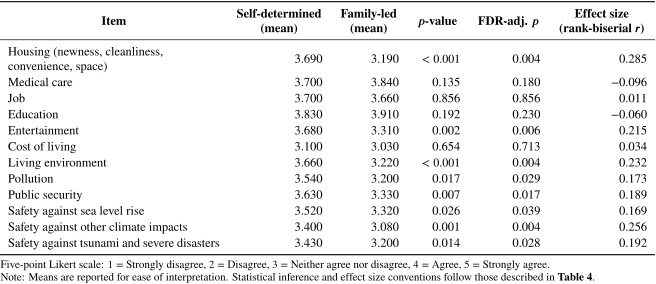
Table 6. Comparison of perceived improvements after migration (self-determined vs. family-led, \(N=189\)).
4.4. Differences in Income Satisfaction and Life Satisfaction
Table 5 reports comparisons of subjective well-being measures. The results indicate that while current income satisfaction was similar across both groups, distinct trajectories emerged regarding life satisfaction. Significant group differences were observed in life satisfaction before migration and in the overall change in life satisfaction. While current life satisfaction levels did not differ significantly between groups, the largest contrasts were seen in life satisfaction trajectories, with the self-determined group showing a pattern of positive mean change, whereas the family-led group exhibited near-zero or negative mean change following relocation.
4.5. Perceived Changes in Living Conditions Compared with Previous Residence
Table 6 shows the mean evaluations of changes in living conditions after migration, revealing divergent patterns of adaptation between the two groups. Self-determined migrants evaluated several domains more positively compared with family-led migrants, particularly regarding housing, entertainment, and the overall living environment. Significant group differences were observed in several safety-related items, including public security, pollution, safety against sea-level rise, and safety against other climate impacts and severe disasters, including tsunamis.
4.6. Evaluation of Daily Living Conditions After Migration
Table 7 summarizes the evaluation of current difficulties in daily life, illustrating the psychosocial challenges faced by each group. Family-led migrants tend to report higher levels of difficulty than self-determined migrants in several domains, most notably regarding feeling not at home in the urban atmosphere or housing type, as well as challenges related to social integration. Significant differences were observed in social integration-related difficulties, including a lack of people to talk to outside the family, fewer opportunities to interact with the same generation, and a perceived inability to contribute to society, although this difference was not statistically significant after FDR correction. No notable group differences were observed for difficulties related to the cost of living, family conversations, or access to medical care and entertainment.
4.7. Preferences for Government and Community Support Measures
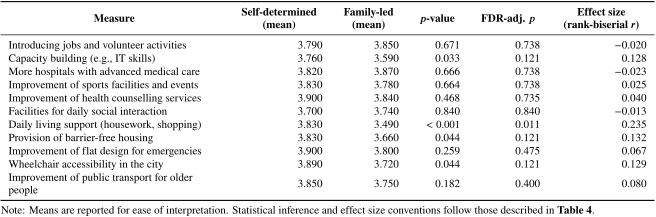
Table 8 shows preferences for proposed support measures, highlighting shared priorities alongside some group-specific preferences. While both groups emphasized the importance of hospitals and health counseling, significant differences were observed in preferences for capacity building, daily living support, provision of barrier-free housing, and wheelchair accessibility in the city.
Table 7. Evaluation of living conditions after migration by decision-making group (\(N=189\)).
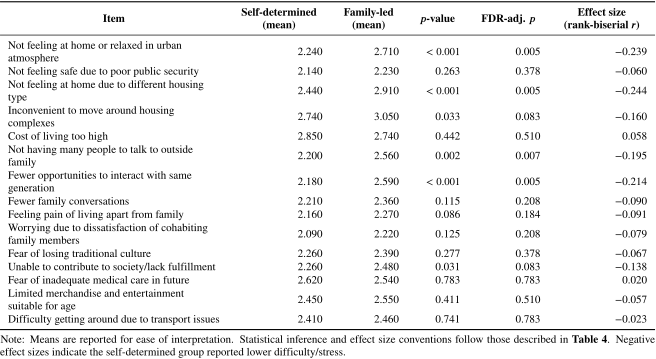
Table 8. Preferred government and local authority measures by decision-making group (\(N=189\)).
4.8. Return Intention (Intention to Return to Previous Residence)
Table 9 reports the intention to return to previous residences, indicating a stronger attachment to the place of origin among the family-led group. The analysis showed a clear association between agency in migration decision-making and return intention (\(\chi^2(2)=14.70\), \(p<0.001\)). Family-led migrants were more inclined to express a desire to return to their previous residence (16.4%) compared to self-determined migrants (5.7%).
Table 9. Association between migration decision-maker (agency) and intention to return to previous residence (\(N=189\)).
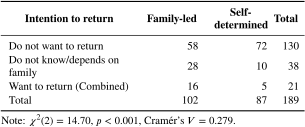
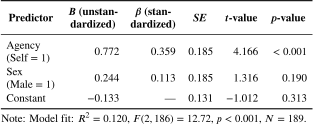
Table 10. Multiple regression predicting change in life satisfaction (Change in life satisfaction (after–before)).
4.9. Regression Analysis: Agency and Life Satisfaction Change (Model 1)
A multiple regression analysis was conducted with change in life satisfaction (after–before) as the dependent variable, and Agency and Sex as predictors (Table 10). The analysis utilized the full sample of valid responses (\(N=189\)). Agency was a statistically significant predictor of change in life satisfaction (\(B=0.772\), \(p<0.001\)), whereas sex was not statistically significant (\(B=0.244\), \(p=0.190\)). The model explained 12.0% of the variance in life satisfaction change (\(R^2=0.120\)).
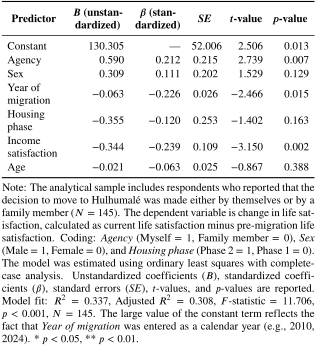
Table 11. Multiple regression predicting change in life satisfaction (Model 2).
4.10. Extended Regression Analysis Including Additional Covariates (Model 2)
A second multiple regression analysis was conducted to control for additional covariates: year of migration, housing phase (Phase 1 vs. Phase 2), income satisfaction, and age (Table 11). Multicollinearity was assessed using variance inflation factors; all values remained below 2 (ranging from 1.09 to 1.76), indicating that multicollinearity did not significantly bias the model estimates.
The sample size for this model was \(N=145\), following listwise deletion of cases with missing data. The non-response rate—particularly for income satisfaction—was significantly higher in the family-led group (37.3%, \(N=38\)) compared to the self-determined group (6.9%, \(N=6\)) (\(\chi^2=22.56\), \(p<0.001\)). Model 2 represents a subsample analysis of respondents with complete socioeconomic information. As Model 2 was estimated using a complete-case analysis, this differential pattern of missing income data may introduce a potential selection bias, which is considered further in Section 5.
In this extended model, Agency remained a statistically significant predictor of change in life satisfaction (\(B=0.590\), \(p=0.007\)). Income satisfaction (\(B=-0.344\), \(p=0.002\)) and Year of migration (\(B=-0.063\), \(p=0.015\)) were also significant predictors. The negative coefficient for income satisfaction likely reflects a ceiling effect, where those who were already satisfied with their income had less room for a positive shift in life satisfaction following relocation. Notably, the significance of the year of migration indicates that earlier migrants (those with a longer duration of residence) experienced greater improvements in their well-being. Housing phase (\(p=0.163\)) and age (\(p=0.388\)) did not show statistically significant associations. As a supplementary analysis, models using current life satisfaction as the dependent variable and retrospectively reported pre-migration life satisfaction as a covariate were estimated (Appendix A). In these models, agency in migration decision-making was not significantly associated with current life satisfaction, suggesting that the main regression results are more appropriately interpreted as reflecting differences in perceived life satisfaction trajectories than current life satisfaction itself.
5. Discussion
This study examined the relationship between agency in migration decision-making and post-migration well-being among older residents of Hulhumalé. Across multiple outcome domains, differences were observed between migrants who reported deciding to relocate themselves (self-determined migrants) and those whose relocation was initiated primarily by family members (family-led migrants). These findings indicate that perceived agency in the migration process is closely associated with trajectories of subjective well-being and post-migration social experiences in a planned urban context.
5.1. Agency and Trajectories of Subjective Well-Being
Here, “agency” refers to perceived agency in migration decision-making as reported by respondents. The central finding is that agency is more clearly associated with life satisfaction trajectories across migration than with current life satisfaction. Current life satisfaction levels were similar between the two groups. However, self-determined migrants reported lower pre-migration life satisfaction and a positive change after relocation, whereas family-led migrants reported higher pre-migration satisfaction and minimal overall change. Regression analyses further showed that perceived agency remained significantly associated with changes in life satisfaction, even after controlling for sex, age, housing phase, income satisfaction, and year of migration. However, supplementary analyses using current life satisfaction as the dependent variable and retrospectively reported pre-migration life satisfaction as a covariate did not reveal a statistically significant association between agency and current life satisfaction (Appendix A). The effect sizes for pre-migration life satisfaction (\(r=0.37\)) and change in life satisfaction (\(r=0.36\)) were medium, according to Cohen’s benchmarks 12, whereas the effect size for current life satisfaction was negligible (\(r=0.05\)). Taken together, these results suggest convergence in current well-being despite divergence in perceived well-being trajectories, and support the interpretation of agency primarily as related to subjective trajectories rather than to the current level of life satisfaction itself.
One methodological issue that warrants careful consideration is the use of retrospectively assessed pre-migration life satisfaction in the gain score analysis. As the dependent variable was constructed as the difference between current and recalled pre-migration life satisfaction, the observed change in scores may have been influenced not only by recall bias but also by regression to the mean. In particular, respondents who retrospectively rated their pre-migration life satisfaction as relatively low may show larger positive changes, whereas those reporting relatively high baseline satisfaction may show more limited gains or negative changes, for statistical reasons rather than substantive adaptation alone. In addition, the respondents’ current circumstances may have influenced how they evaluated their past well-being. Self-determined migrants, for example, may have been more inclined to perceive their relocation as a coherent and meaningful life choice, potentially leading them to recall lower pre-migration satisfaction and more positive post-migration outcomes. Such cognitive processes, including post hoc rationalization or the reduction of cognitive dissonance, could partially affect the magnitude of the observed change in scores.
At the same time, the focus of this study is not on reconstructing an objective baseline of pre-migration well-being or estimating causal change but rather on capturing perceived trajectories of change as experienced by older migrants themselves. From the perspective of SDT, these subjective interpretations remain analytically meaningful because the perception of having acted autonomously can shape how individuals interpret past experiences and evaluate current outcomes. Accordingly, even if recall bias and regression to the mean are present, differences in perceived life satisfaction remain relevant to understanding how older migrants make sense of relocation within their own life narratives.
These results suggest that post-migration well-being among older adults may be shaped not only by objective living conditions but also by how the relocation decision is experienced. In the Maldivian context, migration decisions are often embedded in family relationships and the distinction between self-determined and family-led migration should not be interpreted as absolute. Rather, the findings highlight the importance of the perceived locus of decision-making. Older individuals who view relocation as reflecting their own choices may experience adaptation to new environments differently than those who experience the move as externally driven.
5.2. Socio-Demographic Factors and the Role of Agency
Although agency in migration decision-making was associated with several socio-demographic characteristics, including sex and educational attainment, sex itself did not significantly predict changes in life satisfaction once agency and other covariates were included in the regression models. This finding indicates that the observed differences in well-being trajectories cannot be explained solely by sex differences.
Income satisfaction emerged as an independent predictor of changes in life satisfaction in the multivariate analysis, suggesting that economic conditions remain an important component of post-migration well-being. These results indicate that both decision-making agency and material conditions contribute to subjective outcomes, and neither factor alone is sufficient to explain the observed differences.
This finding is particularly noteworthy considering the strong family-oriented cultural context of the Maldives. Although women were overrepresented in the family-led group, and gendered caregiving norms may shape relocation pathways, sex itself did not independently predict changes in life satisfaction once perceived decision-making agency was considered. This suggests that it is not sex per se, but the extent to which older individuals perceive themselves as having participated in relocation decisions that is more closely associated with post-migration well-being. Even within family-centered decision-making contexts, perceived agency appears to remain an analytically meaningful dimension of subjective adaptation, although this relationship is more clearly reflected in perceived trajectories than in current life satisfaction.
5.3. Divergence and Convergence in Post-Migration Experiences
The analysis revealed a pattern of divergence in subjective evaluations of the post-migration environment and social integration. Self-determined migrants reported more positive changes in several aspects of their living environment, including housing quality, entertainment opportunities, public security, and perceived safety from environmental risks. This pattern is broadly consistent with findings from disaster recovery public housing research, showing that residents’ life satisfaction is closely associated with their evaluations of the living environment, safety, convenience, comfort, and community, although the institutional and geographic contexts differ from those of Hulhumalé 15. These differences yielded small to medium effect sizes (housing: \(r=0.29\); safety from climate impacts: \(r=0.26\)), whereas items showing nonsignificant differences were consistently accompanied by negligible effects (\(r<0.1\)), supporting the distinction between agency-related divergence and shared structural challenges. By contrast, family-led migrants reported greater challenges in establishing social interactions in the new urban environment and expressed feelings of being out of place. These experiences may be interpreted as manifestations of disrupted place attachment after relocation. At the same time, family-led migration may also entail protective dimensions, such as enhanced access to caregiving, housing, and family support, which may help explain why current life satisfaction did not differ significantly between self-determined and family-led migrants in the present study. It should be noted that after FDR correction, some originally significant differences (e.g., education and living environment as migration motivations, inconvenience in housing complexes, and inability to contribute to society) were no longer significant at the adjusted threshold. However, the core findings regarding life satisfaction trajectories, social integration difficulties, and environmental evaluations remained robust to correction, thus supporting their substantive interpretation.
Simultaneously, convergence was observed under several structural challenges. Perceived difficulties related to cost of living did not differ significantly between the groups, and no significant group differences were observed in the evaluations of medical care. Preferences for government and community support measures also showed substantial overlap, indicating a shared need for improved accessibility, daily living support, and age-friendly urban infrastructure. These findings suggest that while agency is associated with differences in subjective adaptation and social experiences, it does not eliminate the broader structural constraints faced by older residents in Hulhumalé.
5.4. Migration Timing and Adaptation over Time
Year of migration was significantly associated with changes in life satisfaction, with earlier migrants showing greater positive changes than more recent ones. This pattern suggests that adaptation to urban environments may unfold over time, potentially through the gradual formation of social networks and increased familiarity with cities. Once migration timing was considered, the housing phase was not a significant predictor, indicating that the duration of residence may be more relevant to well-being than the physical location within Hulhumalé.
5.5. Policy Implications
These findings have implications for policies aimed at supporting the older population in planned relocation settings. Facilitating opportunities for older individuals to meaningfully participate in relocation decisions may contribute to more favorable post-migration experiences. Even limited involvement in the decision-making processes may help mitigate feelings of passivity and social dislocation.
Simultaneously, the convergence observed in the structural challenges underscores the importance of broader support measures. Enhancing access to medical services, improving barrier-free design, strengthening transportation options, and expanding opportunities for social interaction are likely to benefit older residents, regardless of their migration history. This emphasis on social interaction is also supported by research on disaster recovery public housing, where social isolation has been identified as a persistent issue requiring organized support and community-based response mechanisms 16. Addressing these shared needs is essential, as Hulhumalé continues to age and expand.
5.6. Limitations and Future Research
This study has several limitations that should be considered when interpreting the findings. First, the sampling strategy entailed a potential selection bias. As the data were collected in public and communal spaces, the sample is likely to overrepresent relatively healthy and socially active older residents who were able to leave their homes and participate in social activities, whereas homebound older adults were underrepresented. This bias is particularly relevant to outcomes related to social interactions, perceived isolation, and difficulties in daily living. Accordingly, the findings should be interpreted as reflecting the experiences of comparatively active older residents in Hulhumalé and should not be regarded as statistically representative of the entire older population.
Second, the measurement of key variables imposes methodological constraints. Agency in migration decision-making was operationalized using a single item on the primary decision-maker, so the distinction between “self-determined” and “family-led” migrants may not fully capture shared or negotiated family decision-making. For example, some respondents may have identified themselves as the final decision-makers even though the move emerged through extensive family discussions. Pre-migration life satisfaction was also measured retrospectively. As the regression models used a gain score based on this recalled baseline, the observed associations may have been affected by recall bias, regression to the mean, and post hoc rationalization. Therefore, change scores should be interpreted as subjective evaluations of life trajectories, rather than objective longitudinal measures.
Third, the explanatory power of the regression models remains limited. Although the agency in migration decision-making was a statistically significant predictor of changes in life satisfaction, the overall model fit, particularly in Model 1 (\(R^2=0.120\)), indicates that a substantial proportion of variance remains unexplained. Subjective well-being among older adults is influenced by a wide range of factors including physical health status, functional decline, chronic illness, and caregiving needs. As detailed health-related variables were not collected in the present survey, their potential confounding or mediating effects could not be examined.
Fourth, as this study adopted an exploratory approach to investigate the multifaceted experiences of older migrants, specific item-level hypotheses were intentionally not predefined. To control for the risk of Type I errors associated with multiple comparisons, FDR correction was applied to the non-parametric tests. While this enhances statistical rigor, the findings regarding specific environmental and social indicators should still be viewed as hypothesis-generating rather than confirmatory. Additionally, the differential nonresponse in income-related data, particularly among family-led migrants (37.3%), implies that the multivariate results in Model 2 should be interpreted as a sub-sample analysis of older residents who were more willing or able to evaluate and disclose their financial status. This shift in sample composition between Model 1 (\(N=189\)) and Model 2 (\(N=145\)) introduces a potential selection bias, and the findings may therefore primarily reflect the experiences of a more “socio-economically expressive” group rather than the entire cohort.
Nevertheless, the persistence of a significant association between perceived decision-making agency and changes in life satisfaction, even in the presence of these sample constraints and the absence of health controls, suggests that agency remains an analytically meaningful correlate of post-migration adaptation rather than merely reflecting underlying health or socio-economic reporting differences. Future longitudinal and qualitative research could provide deeper insight into how perceptions of agency evolve over time and how older migrants adapt socially and psychologically in planned urban environments.
6. Conclusion
This study examined the association between migration decision-making agencies and post-migration well-being among older residents of Hulhumalé, a planned urban development area in the Maldives. Although current life satisfaction did not differ significantly between the groups, older migrants who reported having decided to relocate themselves tended to report a more positive perceived change in life satisfaction than those whose relocation was family-led. Supplementary analyses further suggest that this difference is better interpreted in terms of subjective well-being trajectories than as independent associations with current life satisfaction.
Differences were also observed in post-migration experiences. Self-determined migrants evaluated several aspects of the living environment more positively, whereas family-led migrants reported greater difficulties related to social interaction and feelings of being out of place. At the same time, both groups faced similar challenges related to the cost of living, medical care, and the need for age-friendly urban infrastructure.
Overall, these findings suggest that perceived agency in the migration process is closely related to how older migrants interpret relocation and socially adapt to a planned city, particularly in terms of perceived well-being trajectories and social integration. As planned relocation is increasingly employed as a climate adaptation strategy, attention to decision-making processes, along with improvements in structural support, may contribute to more inclusive outcomes for aging populations in planned climate adaptation cities such as Hulhumalé.
Appendix A. Supplementary Regression Models Predicting Current Life Satisfaction, Including Retrospectively Reported Pre-Migration Life Satisfaction as a Covariate
Acknowledgments
This study was conducted as part of a collaborative research initiative between the Housing Development Corporation (HDC) and the Global Infrastructure Fund Research Foundation Japan (GIF Japan). We would like to express our sincere gratitude to Ms. Mariyam Areesha (HDC) for her substantial contribution to the data collection process, particularly her involvement in the fieldwork for the older adult population component of the survey. The questionnaire was designed by GIF Japan. Sampling, field implementation, and survey-related costs were supported by HDC. Data analysis and interpretation were conducted jointly by the authors. The authors declare that these institutional roles did not influence the analytical process or the interpretation of the results. We would also like to express our sincere gratitude to Takuto Kaku, Moeri Matsuda, and Kazuma Taiko (Visiting Fellows at GIF Japan) for their valuable contributions to the survey questionnaire design. We also thank Keiko Kikuchi (Research Assistant at GIF Japan) for her meticulous support in manuscript proofreading and content verification.
- [1] A. Chapman, W. Davies, C. Downey, and D. Dookie, “Climate risk country profile: Maldives,” Asian Development Bank, 2021.
- [2] “UNDP climate change adaptation.” https://www.adaptation-undp.org/explore/asia-and-pacific/maldives [Accessed January 21, 2026]
- [3] A. Sakamoto, M. Maekawa, A. Aslam, A. Laila, K. Kikuchi, T. Kaku, K. Kataoka, M. Matsuda, K. Taiko, and M. Nakayama, “Life satisfaction and migration motivations of the residents of Hulhumalé from Malé and other atolls,” J. Disaster Res., Vol.20, No.1, pp. 15-24, 2025. https://doi.org/10.20965/jdr.2025.p0015
- [4] F. Scheibl, M. Farquhar, J. Buck, S. Barclay, C. Brayne, and J. Fleming, “When frail older people relocate in very old age, who makes the decision?,” Innov. Aging, Vol.3, Issue 4, Article No.igz030, 2019. https://doi.org/10.1093/geroni/igz030
- [5] H. H. Ewen and J. Chahal, “Influence of late life stressors on the decisions of older women to relocate into congregate senior housing,” J. Hous. Elderly, Vol.27, No.4, pp. 392-408, 2013. https://doi.org/10.1080/02763893.2013.813428
- [6] K. Costlow, P. A. Parmelee, S. L. Choi, and B. Roskos, “When less is more: Downsizing, sense of place, and well-being in late life,” J. Environ. Psychol., Vol.71, Article No.101478, 2020.
- [7] S. Chaulagain, “Unveiling the relocation journey: A qualitative study of key factors influencing older adults’ decisions to relocate to senior living communities,” J. Ageing Longev., Vol.5, Issue 2, Article No.13, 2025. https://doi.org/10.3390/jal5020013
- [8] J. Xu, G. Liu, H. Li, X. Jiang, S. Zhou, J. Wang, M. Pang, S. Li, and F. Kong, “Association between social integration and loneliness among the female migrant older adults with children: The mediating effect of social support,” BMC Geriatr., Vol.24, No.1, Article No.4, 2024. https://doi.org/10.1186/s12877-023-04569-8
- [9] Y. Bao, J. Tao, and Q. Liu, “‘Embedding’ and ‘pulling back’: Spatial transformations and urban assimilation of migrant elderlies following their children,” Front. Public Health, Vol.10, Article No.1009274, 2022. https://doi.org/10.3389/fpubh.2022.1009274
- [10] R. M. Ryan and E. L. Deci, “Self-determination theory and the facilitation of intrinsic motivation, social development, and well-being,” Am. Psychol., Vol.55, No.1, pp. 68-78, 2000. https://psycnet.apa.org/doi/10.1037/0003-066X.55.1.68
- [11] Y. Jibiki, D. Pelupessy, and K. Iuchi, “Exploratory analysis of the relationship between livelihood disruptions and displacement intentions following a volcanic eruption: A case from the 2014 Mt. Kelud eruption,” J. Disaster Res., Vol.14, No.8, pp. 1066-1071, 2019. https://doi.org/10.20965/jdr.2019.p1066
- [12] J. Cohen, “Statistical power analysis for the behavioral sciences (2nd ed),” Routledge, 1988. https://doi.org/10.4324/9780203771587
- [13] G. Norman, “Likert scales, levels of measurement and the ‘laws’ of statistics,” Adv. Health Sci. Educ. Theory Pract., Vol.15, No.5, pp. 625-632, 2010. https://doi.org/10.1007/s10459-010-9222-y
- [14] Y. Benjamini and Y. Hochberg, “Controlling the false discovery rate: A practical and powerful approach to multiple testing,” J. R. Stat. Soc.: Series B (Methodol.), Vol.57, No.1, pp. 289-300, 1995. https://doi.org/10.1111/j.2517-6161.1995.tb02031.x
- [15] S. Tsukada and T. Morita, “Impression of the reconstruction and satisfaction with life after the Great East Japan Earthquake: Tago Nishi’s disaster restoration public housing,” J. Disaster Res., Vol.14, No.8, pp. 1059-1065, 2019. https://doi.org/10.20965/jdr.2019.p1059
- [16] M. Orui, “Establishment of training system to cope with mental health and social issues in disaster recovery public housing after the Great East Japan Earthquake,” J. Disaster Res., Vol.18, No.5, pp. 485-491, 2023. https://doi.org/10.20965/jdr.2023.p0485
This article is published under a Creative Commons Attribution-NoDerivatives 4.0 Internationa License.