
Paper:
Association of Urban and Economic Foundations with Post-Migration Life Satisfaction in the Maldives: Evidence from Voluntary Migrants to Hulhumalé
Akiko Sakamoto*,†
 , Aishath Laila**, Ayaka Naganuma*
, Taku Nishimura*
, and Shafraz Rasheed***
, Aishath Laila**, Ayaka Naganuma*
, Taku Nishimura*
, and Shafraz Rasheed***
*Global Infrastructure Fund Research Foundation Japan (GIF Japan)
Shiodome City Center 5F, 1-5-2 Higashi Shimbashi, Minato-ku, Tokyo 105-7105, Japan
†Corresponding author
**Housing Development Corporation (HDC)
Malé, Maldives
***Green Climate Network
Hulhumalé, Maldives

Understanding the factors associated with post-migration life satisfaction is critical for small island states pursuing climate adaptation and population consolidation strategies. This study examines how urban and economic foundations are associated with subjective well-being among voluntary, working-age migrants (aged 18–60) from islands outside the Greater Malé Region who relocated to Hulhumalé, a planned artificial island in the Maldives. Using data from an original questionnaire survey conducted between December 2024 and April 2025, changes in life satisfaction were assessed using paired t-tests, and an ordinary least squares regression model was utilized to examine associations between current satisfaction and evaluations of urban and economic foundations. The results present a significant increase in average life satisfaction following migration. Regression analysis indicates that although employment, income, housing, and the living environment are positively associated with current life satisfaction, social service-related factors—specifically human capital investment factors such as education and medical care—presented no significant independent association. Furthermore, pre-migration satisfaction is not a significant predictor once current conditions are accounted for. This pattern indicates a stronger connection between post-migration well-being and destination-based foundations than retrospective assessments of prior conditions. Although social services are highly rated, they function as essential background conditions rather than independent predictors of satisfaction. Thus, success in planned resettlement for economically active migrants depends on providing stable economic opportunities and livable residential foundations for populations with characteristics similar to this sample.
Street signs on Hulhumalé Maldives
1. Introduction
1.1. Background
Small-island developing states face increasing pressure to accommodate internal migration driven by economic concentration, urbanization, and climate change. In the Maldives, the development of Hulhumalé, a planned artificial island adjacent to Malé and connected to it by a bridge, has become a central component of national strategies for population consolidation and climate adaptation 1,2. Hulhumalé has been promoted not only as a response to overcrowding in Malé but also as a long-term resettlement option for residents of geographically dispersed outer islands that are increasingly exposed to sea level rise and other climate-related risks 3.
Existing research on internal migration to Hulhumalé has largely focused on migrants relocating from Malé, documenting substantial improvements in post-migration life satisfaction associated with better housing, infrastructure, and access to services 4,5. By contrast, migrants from islands outside the Greater Malé Region (hereinafter referred to as outer-atoll migrants) have received significantly less empirical attention. Previous research by the present authors demonstrated that outer-atoll migrants differ systematically from Malé migrants in their socioeconomic characteristics and migration motivations and that, on average, their post-migration life satisfaction tended to decline rather than improve 5. However, because that study was designed to compare migrants from Malé and the outer atolls, the sample size of outer-atoll migrants was limited, constraining the scope of the statistical analysis and precluding a detailed examination of the factors shaping their post-migration well-being. This discrepancy may be attributed to the differences in research design and population coverage. The present study focuses exclusively on voluntary working-age migrants from outside the Greater Malé Region (GMR), in contrast to the previous study, which was structured as a comparative analysis between Malé and outer-atoll migrants with a limited outer-atoll subsample. This approach enabled a more targeted examination of post-migration evaluations and well-being within this specific population. In addition to documenting average changes in life satisfaction, this study identifies which specific economic and urban conditions are most strongly associated with post-migration well-being in this group by using a larger and more focused sample of outer-atoll migrants.
Understanding the determinants of life satisfaction among outer-atoll migrants is particularly important from both policy and climate adaptation perspectives. Unlike migrants from Malé, outer-atoll migrants often relocate from communities with diverse albeit generally more locally oriented social and economic structures, which are distinct from the GMR 6. If planned urban developments, such as Hulhumalé, are to function as viable and sustainable destinations under future climate adaptation and population concentration policies, they must be able to support not only physical relocation but also the subjective well-being of these migrants. Improving post-migration life satisfaction among outer-atoll migrants is therefore relevant not only for individual welfare but also for the long-term feasibility of relocation-based adaptation strategies, alongside climate adaptation strategies that operate in parallel with long-standing economic, demographic, and urbanization dynamics in the Maldives.
Against this background, the present study focuses exclusively on voluntary migrants from islands outside the GMR, defined here as Malé, Hulhumalé, and Villimalé and their immediate commuting zones. Importantly, this definition distinguishes the GMR from other islands within Kaafu Atoll, which are treated as part of the outer atolls for this study.(1) Rather than comparing migrant groups, this analysis examines how current urban and economic conditions are associated with post-migration life satisfaction within this population. Specifically, this study investigates the relative roles of employment conditions, income satisfaction, housing quality, living environment, and access to services while accounting for pre-migration life satisfaction. By focusing on a population that has been underexplored in previous studies, this study aims to provide empirically grounded insights into the conditions under which planned urban development can support the well-being of migrants from geographically and socially peripheral regions.
1.2. Theoretical Framework and Conceptual Definitions
This study draws on two complementary conceptual perspectives to examine post-migration life satisfaction, namely human capital investment and foundational benefits.
In the literature on migration and urban well-being, human capital investment refers to individual-level factors such as employment opportunities, income prospects, and access to education and skills that enhance economic security and long-term productivity. Since the seminal works of Sjaastad 7 and Becker 8, human capital theory has conceptualized migration as an investment decision in which individuals relocate to improve their economic returns and life chances. Subsequent empirical research has consistently revealed that improvements in employment conditions and income stability are closely associated with higher subjective well-being among internal migrants, particularly in rapidly urbanizing contexts 9.
By contrast, the concept of foundational benefits emphasizes the role of basic urban and living conditions that support everyday life, including housing quality, neighborhood environment, infrastructure, and access to essential services. This perspective is closely related to urban studies and capability-based approaches that highlight the importance of material and institutional foundations that enable individuals to pursue valued ways of living 10. In planned urban developments, such as Hulhumalé, foundational benefits capture the extent to which the physical and social environment provides a stable and livable setting beyond purely economic considerations.
Building on the classic push-pull framework of migration, which conceptualizes migration as the outcome of negative factors at the place of origin (push factors) and positive attributes at the destination (pull factors) 11,12, this study emphasizes the role of destination-specific economic and foundational conditions in shaping post-migration life satisfaction. Although constraints and dissatisfaction at the place of origin may motivate migration, previous research on migration determinants suggests that objective conditions at the destination, particularly employment opportunities, income stability, and housing quality, are central to migrants’ post-relocation experience 12,13. From this perspective, economic and urban foundations function not merely as pull factors at the decision stage but also as central determinants of lived experience after migration.
Consistent with this framework, the present study focuses on how post-migration evaluations of employment, income, housing, and the living environment are related to current life satisfaction, while treating pre-migration life satisfaction as a baseline contextual factor rather than a focal explanatory variable. In other words, retrospectively reported pre-migration life satisfaction is included to adjust for pre-existing differences in subjective well-being across respondents to ensure that the associations between current destination-based conditions and current life satisfaction could be interpreted more clearly.
To interpret the observed pattern, we used the term “reset interpretation” as a descriptive label, rather than an established concept in the literature. In this study, the term refers to the pattern in which migrants’ current life satisfaction is more closely associated with present destination-based evaluations than with retrospective assessments of pre-migration well-being. This interpretation is conceptually related to broader discussions on adaptation and re-evaluation in subjective well-being research, in which well-being judgments may become increasingly anchored in current circumstances over time 14. However, as the present study relied on cross-sectional data and retrospective reporting, the term was not used to claim a causal mechanism, a complete process of adaptation, or direct evidence of psychological adjustment. It is used only as a concise heuristic to describe the empirical patterns observed in this sample.
2. Objectives
This study had two objectives. First, it examined changes in life satisfaction before and after migration among voluntary migrants to Hulhumalé from islands outside the GMR. By focusing on this group, this study addresses a gap in the existing literature, which has primarily examined migrants from Malé and has provided limited empirical evidence on post-migration well-being among migrants from outer atolls.
Second, this study sought to identify how current urban and economic conditions are associated with post-migration life satisfaction in this population. Specifically, it assesses the relative roles of employment conditions, income satisfaction, housing quality, the living environment, and access to services, while accounting for pre-migration life satisfaction. This study aimed to clarify the extent to which present conditions are more closely associated with subjective well-being than prior circumstances, without implying causal relationships.
3. Methodology
3.1. Study Design and Data Collection
This study is based on an original questionnaire survey of residents in Hulhumalé, the Maldives. Data were collected between December 2024 and April 2025 in collaboration with the Housing Development Corporation (HDC) and the Global Infrastructure Fund Research Foundation Japan (GIF Japan). Although the survey period was initially planned to be shorter, data collection extended over several months because of the characteristics of the target population and the use of multiple recruitment channels, including both online outreach and in-person approaches. Because recruitment relied on these methods, the study used a non-probability sampling strategy rather than random sampling. Accordingly, the statistical representativeness of all migrants to Hulhumalé was not assumed in this study. All valid responses (\(N=177\)) were retained for the descriptive analysis. This extended period of data collection was necessary to secure adequate responses from the target population and to reduce reliance on only the most digitally active segments of the population.
The survey was conducted using a mixed-mode approach. The online questionnaire was distributed through social media platforms and communication channels managed by HDC and its partners. Trained surveyors conducted face-to-face interviews using tablet devices in the public areas of Hulhumalé. This combination was intended to reduce the reliance on a single recruitment channel and to include respondents who may have limited access to or familiarity with online surveys.
3.2. Participants and Definition of Outer-Atoll Migrants
The analytical sample consisted of voluntary migrants residing in Hulhumalé who relocated from islands outside the GMR, defined based on the respondents’ immediate place of residence prior to migration. This study focused on Maldivian citizens aged 18–60.
This age range was selected to concentrate on individuals who were most likely to be economically active and directly engaged in labor market conditions, income generation, and housing arrangements. Given the study’s focus on the associations between post-migration life satisfaction and economic and urban foundations, such as employment conditions, income satisfaction, and housing quality, restricting the sample to the working-age population allows for a more consistent and interpretable analysis of these factors. Consequently, older adults whose life satisfaction may have been shaped by different mechanisms related to retirement, health, or dependency were excluded from the main analysis. The lower bound of 18 years reflects the legal working age in the Maldives and the study’s focus on labor-market engagement.
This study focused on migrants from the outer atolls who relocated to Hulhumalé. The sample encompasses various migration motivations, including personal choices, family reasons, and work assignments, reflecting the diverse pathways of population consolidation in the Maldives. For consistency with the study definition, the GMR is operationalized as Malé, Hulhumalé, Villimalé, and their immediate commuting zones.
3.3. Ethical Considerations
All the participants were informed of the study objectives, assured of their anonymity, and informed that their participation was voluntary. No personal identifiers or sensitive medical data were obtained. In accordance with the ethical review regulations of the GIF Japan, this study qualified for exemption from full Institutional Review Board (IRB) review as it involved anonymous data collection and posed no more than minimal risk to the participants.
3.4. Measures
Life satisfaction before migration and at the time of the survey was measured using five-point Likert scales ranging from “very dissatisfied” to “very satisfied.” Respondents were asked, “How satisfied are you with your life?” for both their current situation and retrospectively for the period immediately before moving to Hulhumalé. Changes in life satisfaction were calculated as the difference between the post-migration and pre-migration scores.
Independent variables captured the respondents’ subjective evaluations of current employment conditions, income satisfaction, housing quality, living environment, public services, and environmental conditions measured on a five-point Likert scale. Migration motivations were measured separately and treated as contextual variables rather than primary explanatory factors.
The questionnaire item was labeled “Gender” and recorded two response options, male and female; because the survey did not assess gender identity separately, this variable is treated as sex in the present analysis.
3.5. Statistical Analysis
The statistical analysis in this study followed a two-stage process to ensure a comprehensive understanding of migrants’ well-being. First, descriptive statistics were employed to characterize the participants’ demographics, migration motivations, and post-migration evaluations, providing the necessary context for subsequent inferential analysis. Second, inferential statistics, including paired \(t\)-tests and ordinary least squares (OLS) regression models, were used to examine shifts in well-being and identify factors associated with current life satisfaction.
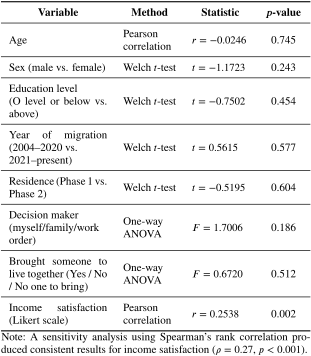
To evaluate the changes in life satisfaction before and after migration, paired \(t\)-tests were conducted on the entire sample. Furthermore, these tests were applied to various demographic subgroups, including sex, age cohorts, and educational levels, to verify whether the observed changes in life satisfaction remained consistent across different segments of the migrant population (Table 1). Multivariate regression analyses were then conducted to examine the associations between current life satisfaction and current urban and economic conditions, while statistically adjusting for retrospectively reported pre-migration life satisfaction. Pre-migration life satisfaction was included as a control variable rather than as a focal explanatory variable because the purpose of the model was not to estimate the independent effect of prior well-being itself but to assess whether present destination-based conditions were associated with current life satisfaction net of baseline differences across respondents. In this sense, pre-migration life satisfaction functions as a baseline covariate that helps reduce confounding by pre-existing subjective differences and prevents the associations of current post-migration conditions from being overstated.
Table 1. Relationship between respondent characteristics and change in life satisfaction (\(N=177\)). (\(\Delta\textit{Life Satisfaction}=\textit{Life Satisfaction}\,(\textrm{after migration})-\textit{Life Satisfaction}\,(\textrm{before migration}))\).
Life satisfaction and other evaluative variables were measured using a five-point Likert scale. Although current life satisfaction is ordinal in a strict sense and ordered logit models are therefore a commonly used alternative specification, OLS was adopted as the main specification in this study for three reasons. First, prior research on subjective well-being has revealed that treating life satisfaction scales as cardinal rather than purely ordinal often makes little substantive difference to the estimated relationships of interest 15. Second, methodological studies have argued that parametric approaches are generally robust for Likert-type variables with five response categories when the purpose is to estimate overall associative patterns rather than category thresholds 16. Third, OLS allows for a more straightforward interpretation of coefficient magnitudes and facilitates a comparison of the relative associations of multiple post-migration evaluative factors with current life satisfaction. To ensure that this modeling choice did not materially affect the conclusions, an ordered logit model was used as a robustness check. The ordered logit results yielded the same coefficient signs and set of statistically significant predictors (job evaluation, income satisfaction, housing quality, and living environment), indicating that substantive conclusions are not driven by the choice between linear and ordinal specifications. Therefore, the analysis was interpreted as exploratory rather than causal. To address the potential inflation of Type I errors, the Benjamini–Hochberg procedure was applied to control the false discovery rate at 0.05. Supplementary analyses using rank-based correlations and alternative model specifications also produced consistent directional patterns across key variables.
In line with the conceptual framework outlined above, explanatory variables were grouped into three categories. Employment evaluation and income satisfaction were treated as economic factors reflecting human capital-related outcomes. Housing quality and the living environment were conceptualized as foundational factors representing the material and infrastructural conditions of daily life. Specifically, “living environment” refers to neighborhood surroundings and local infrastructure, which are analytically distinguished from “housing quality,” defined as the physical attributes of the dwelling itself. These evaluative items were measured on a five-point scale to capture the respondents’ perceived post-migration conditions. Education and medical services were included as service-related human capital investment (HCI) factors, capturing access to key public services rather than direct economic returns.
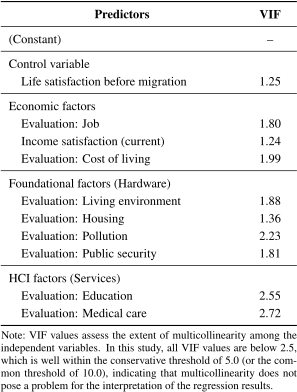
The potential overlap among conceptually related explanatory variables was assessed using variance inflation factors (VIFs) as part of the model diagnostics. Although employment evaluation and income satisfaction, as well as housing quality and living environment, captured the related aspects of migrants’ experiences, they were included simultaneously to distinguish between qualitatively different evaluative dimensions. The diagnostic results did not indicate problematic levels of multicollinearity. Additionally, the stability of the coefficient signs across the alternative model specifications suggests that these variables analytically capture distinct aspects of post-migration conditions.
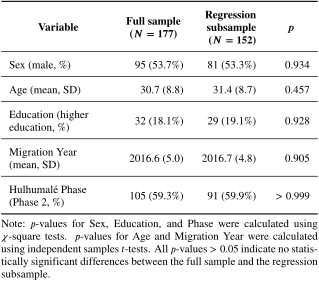
As several explanatory variables contained missing values, a regression analysis was conducted using listwise deletion. Consequently, the analytical sample size for the multivariate model was reduced from 177 to 152 respondents. The exclusion of cases can be primarily attributed to missing responses regarding income satisfaction. This missingness reflects the survey design in which respondents without personal income (e.g., unemployed or economically dependent individuals) were not required to answer the income satisfaction question. No systematic differences were observed between the full sample (\(N=177\)) and the regression subsample (\(N=152\)) in terms of basic demographic characteristics, as verified by chi-square and \(t\)-tests in Appendix A. In all subsequent tables, the abbreviation SD denotes standard deviation.
These comparisons indicate that the regression subsample is broadly comparable to the full sample with respect to the observed demographic characteristics, suggesting that listwise deletion is unlikely to have introduced a substantial demographic selection bias. However, the possibility of unobserved differences cannot be entirely ruled out.
3.6. Common Method Bias
As both the dependent and most explanatory variables were based on self-reported evaluations collected through a single survey instrument, the potential for common method bias (CMB) was considered. To mitigate this risk at the design stage, the questionnaire was structured such that life satisfaction measures and post-migration evaluations were placed in separate sections and different scale anchors were used for the outcome and explanatory variables.
Harman’s single-factor test was conducted as an ex-post diagnostic test. However, Harman’s single-factor test is only a coarse diagnostic test and cannot rule out subtle forms of common method variance. Unrotated exploratory factor analysis indicated that no single factor accounted for most of the total variance among the measurement items, suggesting that common method variance was unlikely to fully explain the observed associations. Although CMB cannot be entirely ruled out in cross-sectional survey research, these results reassure us that it does not dominate the empirical patterns reported in this study.
3.7. Sampling Considerations and Limitations
This study does not rely on snowball sampling. However, the use of mixed recruitment methods and a non-probability sample meant that the findings should not be interpreted as statistically representative of all migrants to Hulhumalé. Rather, they should be understood as analytically informative for the specific population captured by this survey, namely working-age voluntary migrants from islands outside the GMR. As noted above, multivariate analysis was conducted on the regression subsample (\(N=152\)). Appendix A indicates no systematic differences between the full sample and the regression subsample in the observed basic demographic characteristics. Nevertheless, the focus on the working-age population (18–60 years) excludes the perspectives of older migrants and children, whose well-being may be shaped by different structural factors, such as healthcare dependency or educational adaptation. Future studies should employ random sampling and include broader age cohorts to enhance the generalizability of these findings. Potential sources of bias also include differential access to online platforms and concentration of in-person data collection in public spaces. These limitations should be considered when interpreting our findings.
4. Results
This section presents the empirical findings derived from the survey data. The descriptive results were based on the full sample (\(N=177\)), whereas the multivariate regression results reported below were based on the regression subsample (\(N=152\)), as described in Section 3.
Table 2. Respondent characteristics (\(N=177\)).
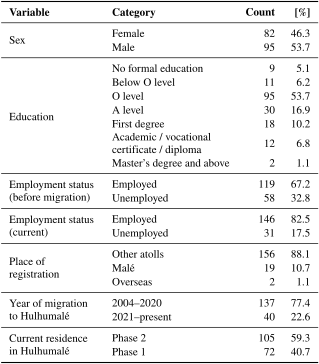
Table 3. Age distribution by sex (\(N=177\)).

4.1. Respondent Characteristics and Migration Motivations
The demographic profiles of the respondents (\(N=177\)) are summarized in Tables 2 and 3. Table 4 presents the respondents’ migration motivations, capturing the reasons and expectations that influenced their decision to relocate to Hulhumalé, rather than their post-migration evaluations. The sample consisted of working-age adults who voluntarily migrated to Hulhumalé from islands outside the GMR. Slightly more than half of the respondents were male (53.7%), and the overall age distribution was skewed toward younger adults, with mean ages of 28.93 years for female respondents and 32.18 years for male respondents. In terms of educational attainment, the majority of respondents had completed an O level education or below, whereas a smaller proportion had attained an A level or higher qualification. Employment status improved after migration, with the proportion of employed respondents increasing from 67.2% before migration to 82.5% at the time of the survey. Most respondents were registered in outer atolls, and a substantial majority migrated to Hulhumalé before 2021. Residences within Hulhumalé were divided into Phases 1 and 2, with a larger share residing in Phase 2.
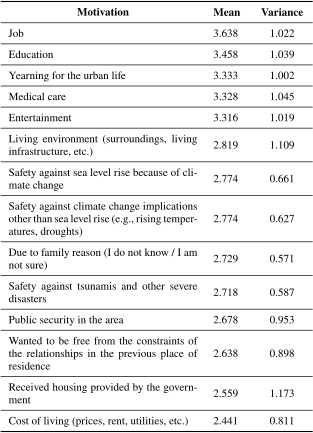
Table 4. Motivations for migration to Hulhumalé (\(N=177\)); (5-point Likert scale: \(1=\) strongly disagree; \(5=\) strongly agree).
The most common administrative atoll of origin was Seenu (30.5%), followed by Thaa (11.3%) and Kaafu (7.9%). Migration decision-making was self-directed for 72.3% of the respondents. Household sizes averaged 5.18 persons in Phase 1 and 6.92 in Phase 2; Welch’s \(t\)-test indicated no statistically significant difference (\(p=0.065\)).
As depicted in Table 4, migration motivation received higher mean ratings for items related to economic and service factors. “Job” was the highest-rated motivation (mean \(=3.64\)), followed by “Education” (mean \(=3.46\)) and “Yearning for the urban life” (mean \(=3.33\)). Service-related factors like “Medical care” (mean = 3.33) also ranked highly. “Received housing provided by the government” received one of the lowest mean ratings (mean \(=2.56\)), indicating that government-provided housing was not a primary migration consideration for most outer-atoll migrants. It should be noted that these motivation items reflect pre-migration considerations and expectations and are analytically distinct from the respondents’ post-migration evaluations of living conditions reported later in this section.
Regarding whether respondents had brought someone from their previous residence to Hulhumalé, 35.6% answered “Yes,” 47.5% “No,” and 16.9% reported that all family members had already relocated. Table 5 presents the mean responses for reasons not to bring someone; the highest mean score was for “Subject does not want to move to Hulhumalé.”
Table 5. Reasons for not bringing someone to Hulhumalé (\(N=84\); 5-point Likert scale: \(1=\) strongly disagree; \(5=\) strongly agree).
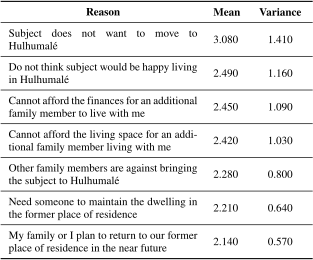
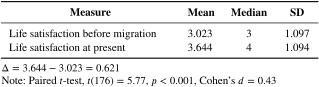
Table 6. Life satisfaction: retrospectively reported pre-migration vs. current (\(1=\) very dissatisfied; \(5=\) very satisfied).
4.2. Changes in Life Satisfaction
Pre-migration life satisfaction was retrospectively assessed. Based on these assessments, the results demonstrate that respondents reported significantly higher current satisfaction than their pre-migration levels (Table 6). The mean score rose from 3.02 (pre-migration) to 3.64 (current migration) (\(p<0.001\), Table 6). A paired \(t\)-test indicated that life satisfaction increased significantly after migration, \(t(176)=5.77\), \(p<0.001\), Cohen’s \(d=0.43\). However, as pre-migration life satisfaction was assessed retrospectively, the improvement observed may be subject to recall bias and thus potentially overestimated (see Section 5.7 for further discussion). Despite this caveat, a broadly similar pattern of improvement was observed across most demographic subgroups (Table 1).
These analyses describe the overall direction and distribution of the changes in life satisfaction following migration. However, they did not identify the specific post-migration conditions associated with higher current well-being. To examine these associations, the following section focuses on current life satisfaction as the outcome variable.
4.3. Post-Migration Evaluation
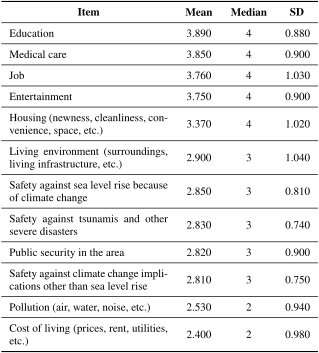
The participants were asked to evaluate whether specific aspects of life in Hulhumalé represented an improvement over their previous place of residence. These items capture post-migration evaluations of perceived change rather than migration motivations. As presented in Table 7, “Education” received the highest evaluation score (mean \(=3.89\)), followed by “Medical care” (mean \(=3.85\)) and “Job” (mean \(=3.76\)). By contrast, evaluations of the physical environment were moderate. “Housing” (mean \(=3.37\)) and “Living environment” (mean \(=2.90\)) scored lower than services. “Cost of living” was rated the lowest (mean \(=2.40\)). Regarding current challenges (Table 8), “Cost of living” was the only item exceeding the midpoint (mean \(=3.00\)), confirming it as the primary perceived burden or challenge. Importantly, Table 7 indicates that housing evaluations, although slightly lower than those for education and medical care, remained above the neutral midpoint. This suggests that, although residential conditions are generally satisfactory, variation in individual experiences is greater compared to public services.
Table 7. Perceived improvements in Hulhumalé compared with pre-migration conditions (\(N=177\). \(1=\) strongly disagree; \(5=\) strongly agree).
4.4. Social Integration and Future Intentions
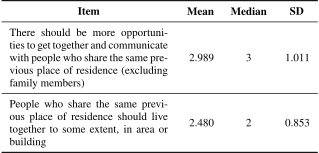
Table 9 presents respondents’ attitudes toward community formation. The desire for more opportunities to communicate with people from the same origin was moderate (mean \(=2.99\)), whereas the preference for living in the same area as people from the same origin was lower (mean \(=2.48\)). Regarding future residence, the largest group comprised respondents who do not intend to return to their previous place of residence (64.4%). Only 23.7% reported an intention to return at some point.
Table 8. Evaluation of living conditions (\(N=177\). \(1=\) strongly disagree; \(5=\) strongly agree).
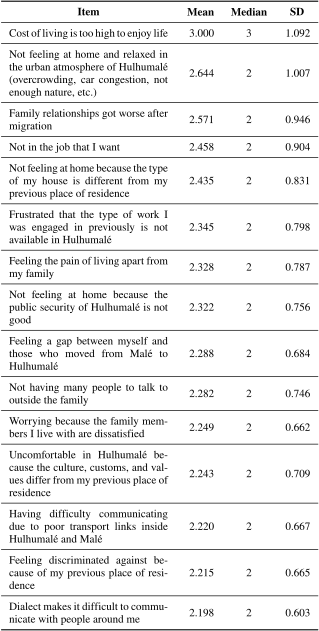
Table 9. Communication with people from the same previous place of residence (\(N=177\). \(1=\) strongly disagree; \(5=\) strongly agree).
4.5. Associated Factors of Current Life Satisfaction
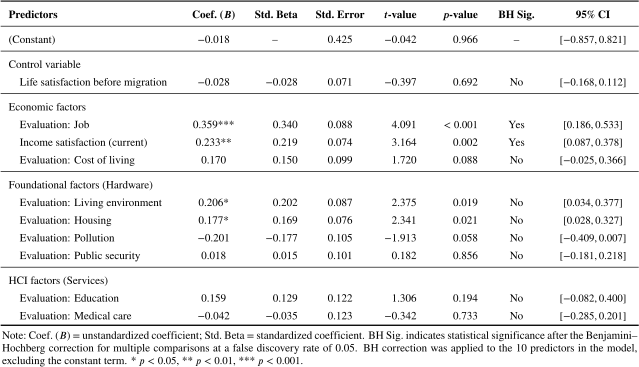
To identify the post-migration conditions associated with current life satisfaction within this multivariate model, an OLS regression analysis was conducted using present life satisfaction as the outcome variable (Table 10). Multicollinearity was assessed using VIFs, and all values were confirmed to be within acceptable limits (see Appendix B). The regression results indicated that evaluations of education (\(p=0.194\)) and medical care (\(p=0.733\)) were not statistically significant predictors of current life satisfaction, whereas job evaluation (\(B=0.359\), \(p<0.001\)) and income satisfaction (\(B=0.233\), \(p=0.002\)) showed statistically significant positive associations that remained significant after the Benjamini–Hochberg correction. Housing quality (\(B=0.177\), \(p=0.021\)) and living environment (\(B=0.206\), \(p=0.019\)) were significant at the unadjusted level but did not survive correction, indicating suggestive but less robust associations. Pre-migration life satisfaction was not statistically significant when current conditions were considered (\(p=0.692\)).
Although several of the explanatory variables capture related aspects of migrants’ experiences, their simultaneous inclusion allows the model to distinguish between qualitatively different evaluative dimensions. The stability of the coefficient signs across the alternative specifications supports the robustness of the identified associations. With respect to the cost-of-living item, the positive coefficient reflects respondents’ perceptions of whether living expenses in Hulhumalé are less burdensome than in their previous place of residence rather than absolute price levels. The set of covariates was selected a priori, based on the human capital and foundational benefits framework outlined in Section 1.2.
Table 10. Associated factors of current life satisfaction among outer-atoll migrants (\(N=152\)).
5. Discussion
5.1. The Paradox of Satisfaction: Services vs. Foundations
In the empirical analysis, employment evaluation and income satisfaction correspond to human capital-related outcomes, whereas housing and living environments represent foundational benefits. A key finding was the disconnect between what migrants appreciate and what is associated with their life satisfaction. As depicted in Table 7, the migrants rated “Education” (mean \(=3.89\)) and “Medical care” (mean \(=3.85\)) highly, confirming the success of service provision at the destination. However, the regression analysis presented in Table 10 reveals that these service-based factors did not statistically predict current life satisfaction. In this study, they are therefore described as essential requirements, that is, basic conditions that are expected and necessary for resettlement but that do not, by themselves, differentiate higher from lower levels of overall subjective well-being. One possible explanation for this is that access to education and medical services has become a widely shared baseline expectation among working-age migrants. Once this baseline is met, marginal differences in perceived service quality may matter less for overall life satisfaction than for tangible variations in housing and neighborhood conditions. This suggests that while the provision of social services is a prerequisite for population consolidation, the quality of the immediate residential and economic environment primarily drives post-migration well-being.
By contrast, Table 7 reveals that “Housing” (mean \(=3.37\)) and “Living environment” (mean \(=2.90\)) received only moderate evaluations compared with services. Despite these lower scores, both factors emerged as significant associated factors in the regression model, as presented in Table 10. This suggests that the physical quality of the living space and surrounding urban fabric are key factors in distinguishing happy migrants from others. The findings indicate that the foundational quality of the residential environment strongly influences post-migration well-being, despite the critical role of service-based infrastructure in attracting migrants.
5.2. Economic Stability as a Complementary Condition
Cost of living emerged as a major challenge; nevertheless, higher income satisfaction was positively associated with current life satisfaction. In this analysis, cost of living was treated as an economic perception reflecting subjective financial pressure rather than as a housing-related condition. Together with the significant association with housing quality, this pattern suggests that economic stability, along with adequate residential foundations, plays an important role in shaping post-migration well-being. Although these factors are conceptually related, they capture distinct subjective dimensions and were, therefore, included simultaneously in the regression model. The absence of problematic multicollinearity (see Appendix B) suggests that these variables partly capture independent aspects of migrants’ post-migration experiences. In substantive terms, a one-point increase on the five-point evaluation scale for these factors was associated with an increase of approximately 0.18 to 0.36 points in current life satisfaction, indicating a non-trivial magnitude relative to the outcome scale.
5.3. A Descriptive “Reset Interpretation”: Limited Role of Pre-Migration Satisfaction
The regression results indicate that retrospectively reported pre-migration life satisfaction does not have a statistically significant association with current life satisfaction when post-migration economic and urban conditions are considered. In this study, we use the term “reset interpretation” as a descriptive label to refer to a pattern in which current subjective well-being appears to be more closely aligned with present destination-based conditions than with retrospective evaluations of pre-migration life.
To clarify the baseline relationship between pre- and post-migration life satisfaction, a simple bivariate analysis was conducted prior to multivariate regression. The results reveal that the correlation between retrospectively reported pre-migration life satisfaction and current life satisfaction is weak and not statistically significant at the conventional 5% level (\(r=0.144\), \(p=0.056\)). This weak association suggests that continuity between past and present subjective well-being is limited even before controlling for post-migration conditions, implying that respondents may evaluate their pre- and post-migration lives using partially distinct reference frames.
The statistical non-significance observed in the regression model invites two complementary interpretations. On the one hand, it is consistent with the possibility that present well-being evaluations are more strongly anchored in current structural conditions than in retrospective baseline assessments. On the other hand, the weak association may also reflect a measurement error in retrospective reporting (recall bias), limited statistical power, or a true effect close to zero. Therefore, we do not present the “reset interpretation” as a new theoretical construct or as direct evidence of adaptation. Instead, the term is used only as a concise description of the empirical patterns identified in the Maldivian sample.
Collectively, the weak simple correlation and non-significant regression coefficient suggest that pre-migration life satisfaction plays only a limited role in current well-being once present economic and residential conditions are considered. This pattern does not necessarily imply a psychological rupture caused by migration itself. Instead, it may indicate that subjective well-being in a purpose-built urban setting is primarily evaluated in relation to current structural conditions, which may reduce the observable association with prior subjective experiences.
5.4. Relationship with Previous Research and Population Focusing
Although previous studies reported an average decline in life satisfaction among outer-atoll migrants, the present study identified a significant increase. This divergence is primarily attributed to the refined research design and the specific focus on the working-age population. Unlike a previous comparative study that captured broad trends across all age groups, this analysis deliberately excluded older adults whose satisfaction may have been negatively affected by factors unrelated to urban foundations, such as the loss of long-standing social networks or retirement-related challenges.
By concentrating on an economically active population (aged 18–60), this study accurately represents the primary cohort expected to relocate under future climate adaptation and population consolidation strategies. Therefore, the improvement in life satisfaction observed here should be interpreted as reflecting the experiences of a population that is better positioned to engage with and benefit from the economic and urban opportunities available in Hulhumalé, particularly in comparison to older migrants whose well-being may be shaped by different constraints. This focus enables a more targeted examination of the relationship between planned urban development and the well-being of future migrants from geographically dispersed atolls.
5.5. Social Integration and Permanent Settlement
Despite economic pressures, the majority (64.4%) intended to remain in Hulhumalé. The low demand for ethnic clustering (Table 9) suggests a tendency toward integration into the broader urban fabric rather than seeking isolated enclaves. The resolve to stay reinforces that the combination of “hard” infrastructure and economic opportunity outweighs the challenges.
5.6. Policy Implications
For policymakers, one implication drawn from the present findings is that, for working-age voluntary migrants from outside the GMR, providing access to education and medical care may help attract migrants; however, such measures may not be sufficient to ensure higher life satisfaction. To sustain the success of Hulhumalé as a potential long-term destination under climate adaptation strategies, future development should prioritize improvements in the residential environment and the availability of economic opportunities. In descriptive terms, the present findings suggest that when these physical and economic foundations are secured, the current quality of life may depend more on the present destination conditions than on retrospective evaluations of pre-migration circumstances. This implication should be interpreted cautiously, as the present study does not directly test adaptation processes and applies primarily to migrants with characteristics similar to those in the current sample. Moreover, because Hulhumalé is a purpose-built artificial island with exceptional levels of public investment and infrastructure provision, the extent to which these findings can be generalized to other Maldivian cities or resettlement contexts may be limited.
5.7. Limitations
This study has some limitations that should be considered when interpreting the results.
First, its cross-sectional design relied on retrospective assessments of pre-migration life satisfaction, which may introduce recall bias. Specifically, respondents’ current well-being might color their memories of the past, potentially leading to an overestimation of the observed improvement in satisfaction.
Second, the analytical sample was restricted to the working-age population (aged 18–60), which limits the generalizability of the findings to older adults and children, whose well-being may be shaped by different structural factors.
Third, both the dependent and most of the explanatory variables were based on subjective self-reported evaluations. This subjective nature means that the results reflect perceived well-being and personal assessments of urban conditions, rather than objective indicators.
Fourth, the use of a single survey instrument raises the possibility of common method variance. Although this limitation is common in subjective well-being research and cannot be fully eliminated in cross-sectional designs, the inclusion of conceptually distinct variables and the absence of uniformly inflated coefficients suggest that CMB is unlikely to fully account for the observed patterns.
Fifth, because job evaluation and income satisfaction are subjective assessments reported simultaneously with life satisfaction, the possibility of reverse causality cannot be fully ruled out; migrants with higher overall well-being may evaluate their employment and income conditions more positively.
Sixth, the study captured only migrants residing in Hulhumalé at the time of the survey. This may introduce an upward bias in the estimated levels of satisfaction, as individuals who are significantly dissatisfied with relocation may have already returned to their home islands or moved elsewhere.
Finally, although the Benjamini–Hochberg procedure was applied to control for multiple comparisons, the regression subsample size (\(N=152\), with 10 predictors in the model) may provide limited statistical power to detect small-to-moderate associations after such adjustments. Therefore, multivariate results should be interpreted as exploratory association estimates within the observed sample rather than as precise population-level parameters. Future longitudinal studies with larger and more systematically drawn samples are required to examine these relationships more rigorously.
6. Conclusion
This study examined post-migration life satisfaction among voluntary migrants to Hulhumalé, a large-scale artificial island, by focusing on the relative roles of pre-migration well-being and post-migration conditions. The findings indicate that employment evaluation and income satisfaction are robustly associated with current life satisfaction, whereas housing quality and living environment present positive albeit less robust associations that warrant further investigation. Improvements in employment and housing conditions may appear unsurprising; however demonstrating that their predominance in a purpose-built urban setting is analytically informative and policy-relevant.
The results suggest that, in planned cities such as Hulhumalé, migrants’ quality of life is more closely associated with present destination conditions than with retrospective evaluations of prior circumstances, particularly when the destination provides stable economic opportunities and livable residential environments. This highlights the central role of urban design and policy choices in shaping migration outcomes in artificial islands and other planned developments. From a broader perspective, these findings support the view that migrants’ well-being in planned urban development is primarily shaped by present economic and foundational conditions, rather than by their pre-migration circumstances. For policy, the study findings imply that climate-related relocation strategies need to prioritize stable employment opportunities and livable residential environments alongside basic service provisions. This study contributes to the literature on population consolidation by demonstrating that while service-led development may attract residents, it is the underlying economic and urban fabric that sustains their satisfaction in the long term.
By focusing on voluntary working-age migrants from islands outside the GMR, this study provides new empirical evidence of how the material and economic foundations of a planned city are associated with post-migration life satisfaction among migrants from geographically and socially peripheral regions.
Appendix A. Comparison of Characteristics Between Full Sample and Regression Subsample
Appendix B. Multicollinearity Diagnostics for the Regression Model
Acknowledgments
This study was conducted as part of a collaborative research initiative between HDC and GIF Japan. The questionnaire was designed by GIF Japan. Sampling, field implementation, and survey-related costs were supported by HDC, and research activities were funded by GIF Japan. Data analysis and interpretation were conducted jointly by the authors. The authors declare that these institutional roles did not influence the analytical process or the interpretation of the results. We would like to express our sincere gratitude to Takuto Kaku, Yuto Kunitake, Moeri Matsuda, and Kazuma Taiko (Visiting Fellows at GIF Japan) for their valuable contributions to the survey questionnaire design and literature review. We also thank Keiko Kikuchi (Research Assistant at GIF Japan) for her meticulous support in manuscript proofreading and content verification.
Footnotes
(1) This classification is operationally based on respondents’ self-reported immediate place of residence prior to migration. Although Malé, Hulhumalé, and Villimalé are geographically located within Kaafu Atoll, they constitute the primary urban destination, whereas other islands in the same atoll maintain more locally oriented structures consistent with the “outer-atoll” category used in this study.
- [1] Z. Brown, K. Kendall, E. O’Donnell, L. Tavasi, and N. Seddon, “Nature-based solutions for climate adaptation in small island developing states: A systematic review,” Front. Environ. Sci., Vol.13, Article No.1706713, 2026. https://doi.org/10.3389/fenvs.2025.1706713
- [2] Housing Development Corporation, “Housing Development Corporation (HDC) – Building sustainable communities.” https://www.hdc.mv/ [Accessed January 22, 2026]
- [3] M. M. Husny, “Climate induced migration in Maldives: Preliminary analysis and recommendations,” UNDP, 2021.
- [4] M. Abdul Mohit and M. Azim, “Residents’ satisfaction with public housing in Hulhumale’ area of Male’, Maldives,” Asian J. Environ.-Behav. Stud., Vol.3, No.9, pp. 125-135, 2018. https://doi.org/10.21834/aje-bs.v3i9.302
- [5] A. Sakamoto, M. Maekawa, A. Aslam, A. Laila, K. Kikuchi, T. Kaku, K. Kataoka, M. Matsuda, K. Taiko, and M. Nakayama, “Life satisfaction and migration motivations of the residents of Hulhumalé from Malé and other atolls,” J. Disaster Res., Vol.20, No.1, pp. 15-24, 2025. https://doi.org/10.20965/jdr.2025.p0015
- [6] M. Mohamed, “Historical changes in human-nature interactions in island communities of the Maldives,” Rural South Asian Studies, Vol.1, No.1, pp. 22-36, 2015.
- [7] L. A. Sjaastad, “The costs and returns of human migration,” J. Polit. Econ., Vol.70, No.5, pp. 80-93, 1962. https://doi.org/10.1086/258726
- [8] G. S. Becker, “Human Capital: A Theoretical and Empirical Analysis, With Special Reference to Education,” 2nd ed., University of Chicago Press, 1983.
- [9] A. E. Clark and A. J. Oswald, “Well-being in Panels,” University of Warwick, 2002. http://www2.warwick.ac.uk/fac/soc/economics/staff/academic/oswald/revwellbeinginpanelsclarkosdec2002.pdf [Accessed January 29, 2026]
- [10] B. Kimhur, “How to apply the capability approach to housing policy? Concepts, theories and challenges,” Hous. Theory Soc., Vol.37, No.3, pp. 257-277, 2020. https://doi.org/10.1080/14036096.2019.1706630
- [11] E. S. Lee, “A theory of migration,” Demography, Vol.3, No.1, pp. 47-57, 1966. https://doi.org/10.2307/2060063
- [12] M. Urbański, “Comparing push and pull factors affecting migration,” Economies, Vol.10, Issue 1, Article No.21, 2022. https://doi.org/10.3390/economies10010021
- [13] S. Dias, B. Cruz, S. Luís, P. J. da Palma, and M. P. Lopes, “Professional factors influencing internal migration: A systematic review,” J. Popul. Res., Vol.42, Article No.39, 2025. https://doi.org/10.1007/s12546-025-09390-1
- [14] B. Nowok, M. van Ham, A. M. Findlay, and V. Gayle, “Does migration make you happy? A longitudinal study of internal migration and subjective well-being,” Environ. Plan. A: Economy and Space, Vol.45, No.4, pp. 986-1002, 2013. https://doi.org/10.1068/a45287
- [15] A. Ferrer-i-Carbonell and P. Frijters, “How important is methodology for the estimates of the determinants of happiness?,” Econ. J., Vol.114, No.497, pp. 641-659, 2004. https://doi.org/10.1111/j.1468-0297.2004.00235.x
- [16] G. Norman, “Likert scales, levels of measurement and the ‘laws’ of statistics,” Adv. Health Sci. Educ., Vol.15, pp. 625-632, 2010. https://doi.org/10.1007/s10459-010-9222-y
This article is published under a Creative Commons Attribution-NoDerivatives 4.0 Internationa License.