
Paper:
Navigating the “Right to Stay”: A Comparative Analysis of Perceptions on Climate Adaptation in Kiribati and the Marshall Islands
Shoryu Matsumoto*,†, Ayaka Naganuma*
 , Jennifer Seru**, and Takuia Uakeia***
*Global Infrastructure Fund Research Foundation Japan
Shiodome City Center 5F, 1-5-2 Higashi Shimbashi, Minato-ku, Tokyo 105-7105, Japan
†Corresponding author
**College of the Marshall Islands
Majuro, Republic of the Marshall Island
***Kiribati Campus, The University of the South Pacific
Tarawa, Republic of Kiribati

This study compares the perceptions of climate change adaptation, migration, and the “Right to Stay” among post-secondary students in Kiribati and the Republic of the Marshall Islands. Using a common survey instrument, responses from students at The University of the South Pacific and College of the Marshall Islands were analyzed using the Mann–Whitney U test and Benjamini–Hochberg correction. The analysis revealed statistically significant differences across several dimensions. Students in Kiribati expressed stronger support for rights-based adaptation measures related to the “Right to Stay” and placed greater emphasis on advance preparation for international migration. In contrast, students in the Marshall Islands indicated significantly stronger support for certain domestic infrastructure-based adaptations, particularly for the construction of artificial islands. Moreover, differences were observed in migration intentions, expectations of post-graduation employment, and perceptions of cultural and linguistic continuity following migration. Simultaneously, no significant differences were found in the overall life satisfaction or perceived severity of sea-level-rise risks. These findings provide empirical evidence that adaptation- and migration-related preferences differ systematically across atoll nations, underscoring the importance of the national context in adaptation policy discussions.
1. Introduction
1.1. Atoll Countries and Climate Change
The Maldives, the Republic of the Marshall Islands (RMI), Kiribati, and Tuvalu are composed entirely of atolls and are among the most climate-vulnerable regions worldwide, owing to their extremely low elevations of only a few meters above sea level on average. These countries face existential threats from rising sea levels and increasingly severe weather events. In response, these countries are exploring various adaptation strategies such as relocating populations abroad or constructing artificial islands.
For example, in the Maldives, the artificial island Hulhumalé has been developed since the early 2000s as a long-term solution for climate-induced displacement. This artificial island, connected to the capital Malé by a 1-kilometer bridge, was designed to accommodate large-scale population relocation. The Maldives has a total population of 517,122 1, of which 65,724 currently live on Hulhumalé 2. The Housing Development Corporation aims to increase Hulhumalé’s population to 230,000 in phases, with 87,000 in Phase I and 143,000 in Phase II 3.
Beyond the Maldives, atoll nations differ considerably in population sizes and migration regimes. The RMI has a total population of 37,548 4 and maintains the Compact of Free Association (COFA) with the United States 5. Under this agreement, the U.S. assumes responsibility for the security of the Marshall Islands and provides substantial financial support. Importantly, the COFA grants Marshallese citizens the legal right to reside, work, and study in the United States without a visa 6. Kiribati has a total population of approximately 134,518 4 with no large-scale migration agreement, similar to the RMI. Tuvalu has a total population of 9,646 4 and recently signed Australia-Tuvalu Falepili Union treaty 7. This agreement established a special pathway for up to 280 Tuvaluan citizens to migrate to Australia annually in response to the climate crisis.
Although these atoll nations exhibit considerable divergence in their economic structures and bilateral migration treaties, they share the same fundamental challenges of climate change.
1.2. Climate Change Adaptation Measures in Atoll Countries and the “Right to Stay”
Faced with the existential threat from the overall effects of sea-level rise, potential adaptation strategies for atoll nations can be categorized into two fundamental pathways: migrating to other countries or staying in their own countries 8. These broad pathways translate into several tangible options for the affected communities. These include migrating to other countries, migrating to another atoll within the country, migrating to artificial islands to be built within the country, and implementing coastal protection measures, such as developing high seawalls.
Crucially, all but the first of these options represent different approaches to securing the “Right to Stay”—the principle that threatened communities should have the choice to remain, rather than being forced into international migration.
This concept arose in opposition to the discourse that categorized them as “climate refugees” whose only option was migration. Leaders and representatives of these nations argued that they were not passive victims but sovereign actors with a fundamental right to stay in their homelands 9. The 2007 Malé Declaration 10 marked a key development by framing climate change as a human rights issue, which provided a moral and legal foundation for the “Right to Stay.” Subsequently, the 2010 Cancún Adaptation Framework 11 evolved international policy by establishing mechanisms to support vulnerable nations, thereby helping create the necessary conditions for threatened communities to remain in place.
This momentum is now translating the “Right to Stay” into viable measures, ranging from high seawalls to the artificial island of Hulhumalé in the Maldives and Marshall Islands’ 2023 land elevation plan 12.
1.3. Objectives
Although the concept of artificial islands as a measure to secure the “Right to Stay” is gaining traction, the perceptions of the affected populations remain underexplored. In a foundational study, our research group provided initial insights by surveying college students in the Marshall Islands and exploring their broad attitudes toward climate change adaptation, emigration, and the specific prospect of relocating to an artificial domestic island 13.
Building directly on this work, this study primarily aims to conduct a comparative analysis of the Marshall Islands and Kiribati. We selected Kiribati rather than other island nations, such as the Maldives, which already has artificial islands, because the survey included questions on attitudes toward the construction of domestic artificial islands. Additionally, by conducting the same survey for university students in Kiribati, we aim to compare the views of youth in two similarly vulnerable atoll nations by assessing their overall life satisfaction, perspectives on emigration, and perceptions of various climate adaptation measures, including the “Right to Stay” concept.
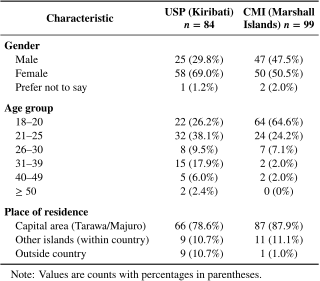
Table 1. Summary of respondent characteristics.
2. Materials and Methods
2.1. Overview of Survey Questionnaire
The questionnaire contains approximately 40 items designed to assess respondents’ intentions to relocate to a proposed artificial island within the country and their perceptions and motivations regarding such relocation. A summary of the respondents’ basic demographic characteristics is presented in Table 1.
Table 2. Comparison of survey responses between the USP and CMI students.
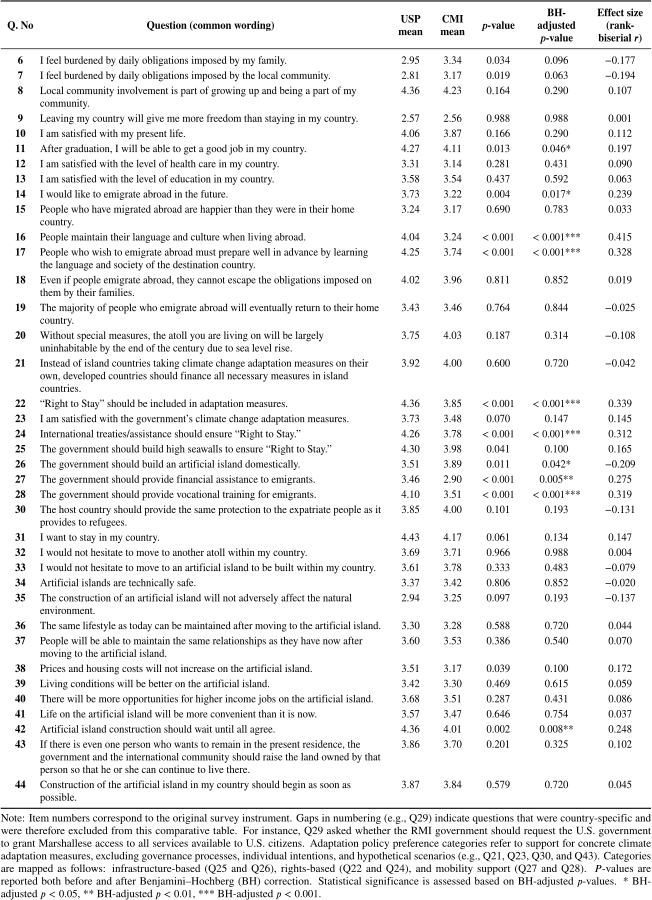
The University of the South Pacific (USP) sample was predominantly female (69.0%) and young, with 64.3% of students aged 25 or below. Similarly, the College of the Marshall Islands (CMI) sample was characterized by a very young demographic, where 88.8% of respondents were aged 25 or under, while the gender distribution was more balanced, with 50.5% female respondents. These demographic variables, including gender, age group, and place of residence, were collected from Q1 to Q5 to describe the sample composition, but were excluded from the statistical analysis because the sample size was insufficient to maintain statistical power for detailed subgroup stratification. Notable differences were observed between the two cohorts: the CMI sample was predominantly younger, with 64.6% of students aged 18–20 years, compared with 26.2% in the USP sample. Additionally, the USP sample had a higher proportion of female respondents (69.0%) than the CMI sample (50.5%). The survey items analyzed in this study are listed in Table 2. Respondents were asked to rate the questionnaire items on a Likert scale by selecting the following options: “Strongly agree,” “Agree,” “Neutral or neither agree nor disagree,” “Disagree,” or “Strongly disagree.” These choices were then converted into numerical values by assigning 5 points to “Strongly agree,” 4 points to “Agree,” 3 points to “Neutral or neither agree nor disagree,” 2 points to “Disagree,” and 1 point to “Strongly disagree.”
2.2. Sampling and Data Collection
Using snowball sampling, this study included 88 students from USP and 140 students from CMI. After data screening, 84 USP responses and 99 CMI responses were deemed valid and included in the analysis. Data collection for the USP sample was conducted in May 2025 at the USP Tarawa campus, whereas the CMI student survey data were collected from July to October 2024. The CMI student sample was updated and extended from previously collected survey data, following the same sampling framework and survey methodology as prior studies conducted among CMI students 13,14. The USP survey used a snowball sampling approach, whereby instructors first invited their students to participate and subsequently asked them to share the survey with their classmates and peers. This method was selected for the following reasons. First, the small and dispersed student population at USP, along with irregular attendance patterns owing to work or family responsibilities, made probability sampling difficult. Second, the survey included sensitive topics; therefore, relying on trusted instructors and peer networks helped increase the students’ willingness to participate. Third, resource and time constraints limited the feasibility of adopting a probability-based sampling design 14,15.
However, the limitations of snowball sampling must be acknowledged. This method may introduce selection bias, as participants tend to recruit others with similar characteristics or opinions. Furthermore, the respondents represented a relatively educated, urban, and privileged subset of the population. This specific composition is partly owing to limited higher education infrastructure available in both countries. In RMI, the CMI provides two-year, in-person classes. In contrast, in Kiribati, there is no equivalent two-year college offering face-to-face education. Although USP operates as a four-year university with campuses in both RMI and Kiribati, it offers only remote education in these locations without face-to-face instruction.
Owing to this institutional and infrastructural context, the respondents were highly concentrated in urban centers, and their views may differ from those of non-student youth, older generations, and outer-island populations. More specifically, compared with the educated and urban youth sample, these groups generally face greater barriers to international migration and maintain stronger traditional ties to their land and communities, which may significantly shape their adaptation preferences.
Consequently, the findings from these samples cannot be broadly generalized to national populations. Relying solely on these perspectives for policymaking risks prioritizing urban-centric adaptation strategies while overlooking the distinct vulnerabilities and localized needs of rural communities.
In addition, the two samples differed in gender composition, age distribution, and timing of data collection. These differences may have influenced not only migration intentions and preferences for adaptation policies, but also perceptions of roles and responsibilities toward family and local communities, as well as attachments to land and community. Therefore, the comparative findings of this study should be interpreted with caution.
2.3. Statistical Analysis
The Mann–Whitney \(U\) test was used to compare responses between the USP and CMI groups. This nonparametric test was selected as the most appropriate method because the survey data were collected using a Likert scale, which produces ordinal rather than interval data. The Mann–Whitney \(U\) test allows the two groups to be compared without assuming a normal distribution of the data.
To control the false discovery rate arising from multiple comparisons, \(p\)-values were corrected using the Benjamini–Hochberg procedure with \(q = 0.05\) 16. An adjusted \(p\)-value below 0.05 was regarded as statistically significant.
In addition to statistical significance testing, effect size was assessed using the rank-biserial correlation (\(r\)), which is an appropriate non-parametric effect size measure associated with the Mann–Whitney \(U\) test 17. The rank-biserial correlation reflects the extent to which responses from one group tend to be systematically higher or lower than those from the other group, based on the relative ordering of observations. Positive \(r\)-values indicated that the USP group tended to have higher ranks than the CMI group, whereas negative \(r\)-values indicated higher ranks for the CMI group.
Items with adjusted \(p\)-values of 0.05 or higher were not considered statistically significant; however, when the absolute value of the rank-biserial correlation was 0.15 or greater, these results were interpreted cautiously as marginal (suggestive) findings based on effect size in an exploratory manner. Although the rank-biserial correlation is not identical to Pearson’s \(r\), conventional benchmarks for correlation coefficients proposed by Cohen 18 were referenced solely for descriptive interpretation of the effect size magnitude (0.1 for small, 0.3 for medium, and 0.5 for large effects). Building on these benchmarks, \(\vert r \vert = 0.15\), which is slightly above Cohen’s conventional threshold for a small effect, was used as a conservative operational cutoff to avoid overinterpreting very small group differences in this exploratory analysis based on ordinal Likert scale responses and a nonprobability sample obtained via snowball sampling. All remaining items, particularly those with \(\vert r \vert < 0.15\), were regarded as having very small effect sizes and were, therefore, not interpreted further.
3. Results
Table 2 presents the statistical results of the questionnaires. These results offer a detailed comparison of perspectives between the CMI and USP student samples regarding environmental risks, cultural values, economic conditions, and governance.
3.1. Community and Family Obligations
Although both groups expressed similar values concerning community and familial responsibilities (Q8 and Q18), the data suggest a potential trend where the sense of burden associated with these duties (Q6 and Q7) may be lower among the USP respondents than among those from the CMI (e.g., Q6: USP M \(=2.95\), CMI M \(=3.34\); adjusted \(p = 0.096\), \(r = -0.18\)).
3.2. Life Satisfaction and Local Opportunities
Although satisfaction with living standards, healthcare, and education did not differ significantly between the USP and CMI groups (Q10, Q12, and Q13), perceptions regarding domestic employment prospects after graduation differed significantly (Q11). The USP expressed more optimism toward job opportunities (USP M \(=4.27\), CMI M \(=4.11\); adjusted \(p = 0.046\), \(r = 0.20\)).
3.3. Migration Intentions and Attitude
There were no significant differences between the USP and CMI groups in terms of their values and attitudes toward migration (Q9, Q15, Q19, Q31, Q32, and Q33).
However, significant differences were observed in behavioral intentions (Q14). The USP respondents reported a stronger intention to migrate abroad than their CMI counterparts (USP M \(=3.73\), CMI M \(=3.22\); adjusted \(p = 0.017\), \(r = 0.24\)).
Similarly, The USP participants expressed greater agreement (Q17) with the necessity of acquiring language and social knowledge prior to migration (USP M \(=4.25\); CMI M \(=3.74\); adjusted \(p < 0.001\), \(r = 0.33\)).
Regarding preferences for climate change adaptation strategies, only intention to migrate internationally (Q14) demonstrated a statistically significant difference between the two groups. No significant differences were found in the intention to remain in one’s own country (Q31) or in attitudes toward relocating to other atolls (Q32) or to artificial islands (Q33).
3.4. Cultural and Linguistic Preservation
Regarding perceptions of cultural preservation (Q16), particularly language preservation after migration abroad, the survey identified a statistically significant difference between the two cohorts regarding perceptions of cultural preservation among emigrants (adjusted \(p < 0.001\), \(r = 0.42\)). Respondents from the USP in Kiribati reported a higher mean agreement (M \(=4.04\)) with the statement that their compatriots retained their language and culture abroad than respondents from the CMI in the Marshall Islands (M \(=3.24\)).
3.5. Climate Change Awareness and Concern
Regarding awareness of the threat of sea level rise to atolls (Q20), the analysis revealed no statistically significant difference between the two groups in their assessment of the threat of sea level rise to their respective capital atolls. Both the USP (M \(=3.75\)) and CMI respondents (M \(=4.03\)) demonstrated high levels of agreement with the statement that their capital would become largely uninhabitable by the end of the century without special measures.
3.6. Adaptation Policy Preferences
Analyzing preferences for climate change adaptation policies revealed key distinctions and similarities between cohorts from the USP in Kiribati and CMI in the Marshall Islands.
Regarding international-level policy frameworks, a consensus was reached on the principles for common international norms. Specifically, no statistically significant difference was found in their support for comprehensive financial assistance from developed countries (Q21) or granting climate migrant protection status comparable to that of refugees (Q30).
However, a significant divergence emerged concerning rights-based approaches centered on the “Right to Stay.” Respondents from the USP in Kiribati reported significantly stronger support for formally including this right in climate change adaptation measures (Q22: USP M \(=4.36\), CMI M \(=3.85\), adjusted \(p < 0.001\), \(r = 0.34\)). Similarly, the USP respondents expressed significantly higher agreement regarding the need for international treaties and financial assistance to secure this right globally (Q24: USP M \(=4.26\), CMI M \(=3.78\); adjusted \(p < 0.001\), \(r = 0.31\)).
Regarding domestic policy preferences, there was no significant difference in the stated satisfaction with the respective governments’ current adaptation measures (Q23). Nevertheless, opinions diverged significantly regarding specific future strategies. The USP respondents were significantly more supportive of government-led emigration support, including providing financial assistance to emigrating nationals (Q27: USP M \(=3.46\), CMI M \(=2.90\); adjusted \(p = 0.005\), \(r = 0.28\)) and offering vocational training to those wishing to move abroad (Q28: USP M \(=4.10\), CMI M \(=3.51\); adjusted \(p < 0.001\), \(r = 0.32\)).
Furthermore, student samples displayed contrasting patterns in their preferences for infrastructure-based measures. However, support for constructing high seawalls (Q25) did not differ significantly between the two student samples (Q25: USP M \(=4.30\), CMI M \(=3.98\); adjusted \(p = 0.100\), \(r = 0.17\)) and should not be interpreted as evidence of a systematic difference but rather as descriptive and hypothesis-generating. In contrast, the CMI respondents indicated a significantly stronger preference for building an artificial island (Q26: USP M \(=3.51\), CMI M \(=3.89\); adjusted \(p = 0.042\), \(r = -0.21\)).
Furthermore, no statistically significant difference was observed for Q43, which captures a strong formulation of the “Right to Stay” (USP M \(=3.86\), CMI M \(=3.70\); adjusted \(p = 0.325\), \(r = 0.10\)).
3.7. Perceptions of Artificial Islands
Analyzing perceptions of life on artificial islands revealed no statistically significant differences between the USP and CMI groups for most items concerning lifestyle quality (Q36, Q37, Q39, Q40, and Q41). Similarly, perceptions of technical safety, environmental impact, and construction timeline (Q34, Q35, and Q44) did not differ significantly between the groups.
In addition, no statistically significant difference was observed for Q38 regarding perceptions of future prices and housing costs (USP: M \(=3.51\), CMI: M \(=3.17\); adjusted \(p = 0.10\), \(r = 0.17\)). However, considering the magnitude of the effect size, this result may be interpreted cautiously as descriptive and hypothesis-generating within an exploratory framework.
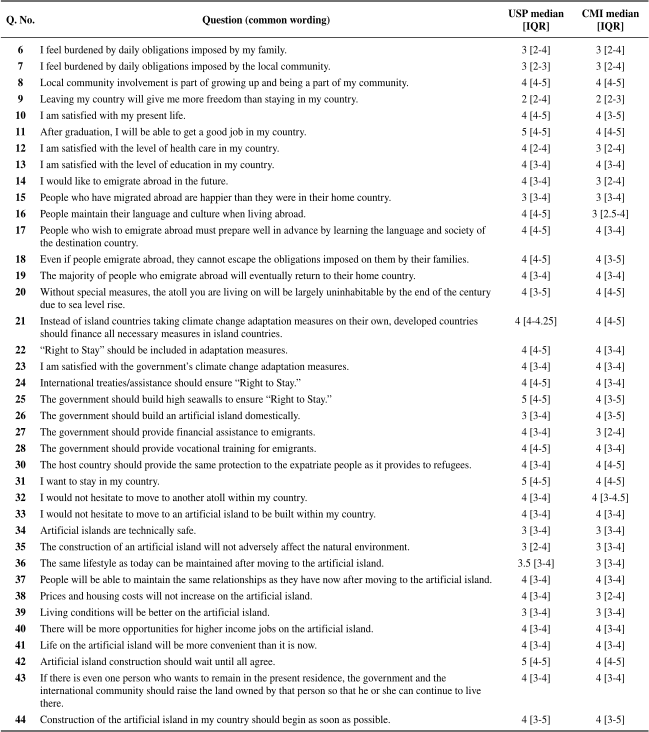
In contrast, a significant difference was found for Q42, which addresses the necessity of consensus-building prior to construction (USP M \(=4.36\), CMI M \(=4.01\); adjusted \(p = 0.008\), \(r = 0.25\)). This result stems from notable differences in the level of agreement. Most of the USP group selected the highest rating of “5” (strongest agreement), whereas the modal response for the CMI group was “4.” The corresponding median and interquartile range values are reported in Appendix A. Thus, although both groups endorsed the need for consensus, the USP respondents affirmed this principle more strongly than their CMI counterparts.
4. Discussion
This section explores potential explanations for the observed differences between the USP and CMI in terms of cultural perceptions, adaptation preferences, and views on artificial island construction. Although causality cannot be determined from the data alone, these patterns may reflect broader differences in political structures, historical legacies, migration regimes, and sociocultural norms. Furthermore, it should be explicitly noted that findings based solely on the effect-size criterion (\(\vert r \vert > 0.15\)) should be considered tentative and require replication in future studies with larger and more representative samples. The following subsections draw on existing literature and contextual factors to interpret the comparative findings.
4.1. Perspectives Shaping the “Right to Stay”
4.1.1. Family Obligations, Mobility Options, and Perceived Social Constraints
The data suggest a potential trend in which the CMI respondents may perceive marginally greater family-related burdens than the USP respondents. There is a possibility that this difference may reflect the distinct social contexts in which obligations are experienced. In RMI, where 75.5% of respondents reported having family members living abroad in the questionnaire by Fujikura et al. 19, transnational family networks were a common feature of everyday life. Within this context, responsibilities toward the family and community, such as maintaining contact, providing support, and participating in reciprocal exchanges, may be experienced as ongoing duties that span domestic and overseas kin.
Conversely, Kuruppu 20 observed that, in Kiribati, resource demands are embraced as integral to cultural identity rather than perceived as external burdens. Financial resources gain personal meaning when directed toward fulfilling social obligations because neglecting these duties is considered shameful and carries social stigma. Consequently, what may appear as a burden may be reframed as an essential investment in social continuity, as avoiding these responsibilities would lead to loss of identity and profound social shame.
4.1.2. Labor Market Conditions and Youth Employment Prospects
Differences in perceptions of future domestic jobs after graduation may stem from structural disparities in labor markets and economic conditions, such as contrasting youth unemployment rates and the relative attractiveness of public sector employment in each country. According to World Bank data 21, the youth unemployment rate (ages 15–24) in Kiribati was estimated at 7.7% in 2023, whereas the rate in RMI was estimated to be 24.9% in 2021. This fundamental gap suggests that CMI students face a more difficult labor market, which fuels greater anxiety about their post-graduation future.
Furthermore, CMI students navigate a labor market shaped by migration opportunities under the COFA. The option to migrate to the United States creates a “reservation wage” effect. As noted by the World Bank 22, the significant wage gap between RMI and the US means that potential earnings abroad drive up the minimum salary at which Marshallese workers are willing to accept local employment.
Consequently, domestic jobs may appear financially unattractive compared with the opportunities available abroad. This dynamic may depresses CMI students’ optimism, as they regard local employment as both difficult to access and less advantageous when weighed against the benefits of migration.
4.1.3. Cultural and Linguistic Preservation in Distinct Historical Contexts
Differences in perceptions of cultural and linguistic preservation may reflect broader historical, institutional, and cultural divergences in language exposure, identity formation, and socialization practices. In Kiribati, concern over the cultural impact of migration is high, and the government emphasizes continuity through the concept of “Migration with Dignity” 23,24. In contrast, a study in Majuro by Buchstaller and Alvanides found that English dominates public spaces, with Marshallese use largely confined to personal or government contexts 25. As suggested by previous ethnographic studies, this may reflect the historical legacy of the U.S. trusteeship, COFA, and American-style education systems, which together have likely contributed to the gradual erosion of the national language and culture.
4.2. Interpreting and Valuing the “Right to Stay”
4.2.1. Migration Intentions Under Contrasting Institutional Pathways
The high migration intention and preparation awareness among the USP students may reflect the fact that international migration is a highly challenging process with many barriers. Anticipating climate displacement, the Kiribati government promotes “Migration with Dignity,” a policy initiated by former President Anote Tong to facilitate voluntary migration by skilled workers rather than refugees through vocational and language training. This strategy frames migration not as evacuation but as a meritocratic goal achieved through individual effort 23. As Oakes et al. noted, considering the strict visa requirements, it is possible that USP students view meticulous preparation as essential for preserving dignity and ensuring survival 24.
In contrast, lower scores among the CMI students may reflect the absence of regulatory barriers under COFA. For Marshallese citizens, visa-free migration to the US reduces entry barriers, reducing the immediate necessity to articulate specific intentions or engage in pre-departure training. Fujikura et al. observed that many Marshallese migrate without adequate skills and often face social and economic hardships abroad 19. Consequently, CMI students likely perceive migration as a readily accessible option rather than a challenge requiring special preparation, resulting in a lower sense of urgency regarding preparation. Notably, this institutional contrast did not translate into differing perceptions of personal freedom (Q9), suggesting that legal mobility and subjective freedom are not necessarily perceived as equivalent.
To further interpret this paradox, although Marshallese citizens have legal access to migration under COFA, previous studies reveal that migration is often accompanied by a gap between expectations and lived realities, including limited employment opportunities, challenges in education transferability, and difficulties in social integration 26. In addition, migration decisions are shaped by family obligations and social networks rather than purely individual choices, and may be both compelled and constrained by economic, social, and environmental factors 27. Thus, legal mobility does not necessarily translate into a subjective sense of freedom.
4.2.2. Adaptation Policy Preferences and the Meaning of the “Right to Stay”
Potential differences in adaptation policy support may reflect the availability of migration options and the broader institutional context. Comparison of adaptation policy preference items suggested variations across three domains: rights-based measures (Q22 and Q24), infrastructure (Q25 and Q26), and mobility support (Q27 and Q28) (Table 2). These categories focused specifically on concrete adaptation measures, excluding the broader governance-related items discussed in Section 3.6.
Among USP students, stronger support for rights-based measures and mobility support aligns with the national discourse of “Migration with Dignity” 28, in which the “Right to Stay” coexists with an emphasis on enabling voluntary and dignified mobility. In this context, consistent with the earlier discussion of social obligations (Section 4.1.1), the positive valuation of social obligations and of migration as a meritocratic process may not necessarily contradict support for adaptation measures, but may instead coexist within a normative framework that values both individual responsibility and collective support mechanisms.
In contrast, among CMI students, where migration to the U.S. is institutionalized through COFA, support for the “Right to Stay” appears to be articulated differently, with relatively greater emphasis placed on infrastructure-based domestic adaptation options. Simultaneously, mobility support receives comparatively less emphasis. Migration tends to be framed primarily around socioeconomic considerations rather than explicitly as a response to climate change 19,29, and this framing may reflect lower perceived agency and more constrained expectations regarding migration outcomes.
To clarify the apparent inconsistencies in infrastructure-related responses, distinguishing between the two types of infrastructure strategies is significant. First, in situ infrastructure measures, such as seawalls, are closely aligned with the normative commitment to remain in place, and thus conceptually overlap with rights-based preferences such as the “Right to Stay.” Notably, support for seawalls did not differ significantly between the two student samples and should not be interpreted as evidence of differential infrastructure orientation. Rather, the data may suggest broadly comparable levels of support across the two student samples, although this interpretation should be treated with caution considering the absence of statistical significance. This interpretation is consistent with responses to Q43, which capture a strong formulation of the “Right to Stay.” Although support for this item did not differ significantly between the two student samples, the observed pattern suggests broadly comparable levels of normative support for remaining in place under this stronger formulation.
Second, transformative infrastructure measures, such as artificial islands, involve the spatial reconfiguration of habitation and represent a more interventionist state-led adaptation strategy. In this domain, respondents in the CMI sample demonstrated relatively greater support, suggesting greater openness to large-scale infrastructural transformation rather than a strict emphasis on remaining in place.
Collectively, these findings suggest that infrastructure orientation may not be uniform but depends on the type of infrastructure considered. Support for in situ measures, such as seawalls, may be broadly comparable across the two student samples, whereas differences are more clearly observed in relation to transformative infrastructure measures, particularly artificial island construction. This interpretation is consistent with the argument of Bordner et al. 30 that historical experiences of displacement and external assistance have shaped preferences for domestic state-led adaptation approaches including large-scale infrastructural interventions.
4.2.3. Artificial Islands as a Collective Strategy: Costs, Governance, and Decision-Making
Building on the hypothesis-generating findings regarding potential differences in adaptation preferences, this section considers how public perceptions of artificial island construction may be shaped by expectations regarding costs and governance structures. Optimism about future affordability may be indirectly linked to limited migration experience and information asymmetries, which Sabūnas 31 noted as characteristic of Kiribati’s population with restricted mobility.
Although both groups supported consensus in principle, the stronger emphasis observed among the USP respondents may partly reflect the cultural practices of deliberation embedded in traditional governance, such as Te Mwaneaba 32, where collective discussion is instrumental in communal decision-making. This interpretation is consistent with Haglegam 33, who noted that in the Marshall Islands, integrating traditional chiefs (Iroij) into state institutions has reinforced more centralized decision-making structures, which may help explain the relatively weaker emphasis on consensus among Marshallese respondents.
5. Conclusion
This study examined perceptions of climate change adaptation among university students in Kiribati and the Marshall Islands, focusing on migration attitudes, domestic adaptation measures, and views related to the “Right to Stay.” Using a common survey instrument across two highly vulnerable atoll nations, this study identified shared concerns and statistically robust differences in specific adaptation-related perceptions. Across both student samples, respondents demonstrated a high awareness of sea-level rise risks and strong attachment to their homelands. Moreover, they shared similar views on community involvement, overall life satisfaction, perceived freedom associated with migration, and expectations regarding the quality of life on artificial islands, suggesting a common baseline of values and risk perceptions despite divergent institutional contexts. Simultaneously, statistically significant differences were observed in expectations regarding domestic employment, international migration intentions, perceptions of cultural and linguistic preservation after migration, and preferences for specific adaptation policies. Notably, USP students demonstrated stronger support for rights-based adaptation measures associated with the “Right to Stay,” whereas CMI students demonstrated relatively greater support for transformative infrastructure measures, particularly government-led artificial island construction.
This study contributes empirical evidence to the climate adaptation literature by demonstrating that perceptions of staying or migrating vary across atoll nations operating under distinct governance and migration regimes. However, the analysis was limited to a cross-sectional survey of university students and did not allow for causal inferences or broader population-level generalizations.
Future studies should build on these findings using larger and more diverse samples and combining quantitative and qualitative approaches, including longitudinal designs, to better capture how perceptions of climate adaptation evolve over time. Such approaches would clarify how public needs and expectations regarding the “Right to Stay” change as environmental risks intensify and adaptation initiatives advance, thereby generating clearer policy discussions for climate adaptation planning.
Appendix A. Median and Interquartile Range (IQR) of Survey Responses
Acknowledgments
This study was supported by the Global Infrastructure Fund Research Foundation Japan, JSPS Bilateral Program Grant Number JPJSBP120249945, and JSPS KAKENHI Grant Number 24K03174. We are grateful to Dr. Mikiyasu Nakayama, CEO of GIF Japan, for his support through grants and guidance for this work. We also thank the students and staff of the College of the Marshall Islands and The University of the South Pacific Kiribati Campus for their cooperation in the survey.
- [1] PSM News, “Total population of the Maldives recorded at over 500,000,” March 31, 2023. https://psmnews.mv/en/118961 [Accessed August 16, 2025]
- [2] The Maldives Journal, “Malé area population on the rise: Census reveals increase in residents,” April 1, 2023. https://themaldivesjournal.com/48882 [Accessed August 16, 2025]
- [3] Avas, “Hulhumalé population at 92,000,” July 16, 2024. https://avas.mv/en/120130 [Accessed August 16, 2025]
- [4] World Bank Group, “Population, total - Kiribati, Marshall Islands, Tuvalu.” https://data.worldbank.org/indicator/SP.POP.TOTL?locations=KI-MH-TV [Accessed August 24, 2025]
- [5] U.S. Department of State, “Compact of Free Association: Agreement between the United States of America and the Marshall Islands,” 2004. https://www.state.gov/wp-content/uploads/2019/02/04-501-Marshall-Island-Amendment.pdf [Accessed August 16, 2025]
- [6] U.S. Citizenship and Immigration Services, “Federated States of Micronesia, Republic of the Marshall Islands, and Palau.” https://www.uscis.gov/i-9-central/completing-form-i-9/federated-states-of-micronesia-republic-of-the-marshall-islands-and-palau [Accessed August 16, 2025]
- [7] Australian Government Department of Foreign Affairs and Trade, “Australia-Tuvalu Falepili Union treaty.” https://www.dfat.gov.au/geo/tuvalu/australia-tuvalu-falepili-union-treaty [Accessed August 16, 2025]
- [8] M. Nakayama, R. Fujikura, R. Okuda, M. Fujii, R. Takashima, T. Murakawa, E. Sakai, and H. Iwama, “Alternatives for the Marshall Islands to cope with the anticipated sea level rise by climate change,” J. Disaster Res., Vol.17, No.3, pp. 315-326, 2022. https://doi.org/10.20965/jdr.2022.p0315
- [9] K. E. McNamara and C. Gibson, “‘We do not want to leave our land’: Pacific ambassadors at the United Nations resist the category of ‘climate refugees’,” Geoforum, Vol.40, Issue 3, pp. 475-483, 2009. https://doi.org/10.1016/j.geoforum.2009.03.006
- [10] Center for International Environmental Law, “Male’ declaration on the human dimension of global climate change,” 2007.
- [11] UNFCCC, “Decision 1/CP.16, The Cancún Agreements: Outcome of the work of the Ad-Hoc Working Group on Long-Term Cooperative Action Under the Convention,” 2010.
- [12] Republic of the Marshall Islands, “The national adaptation plan of the Republic of the Marshall Islands,” 2023. https://rmigov.com/RMI-NAP-2023.pdf [Accessed August 16, 2025]
- [13] M. Nakayama, J. Seru, C. Vila, M. Bilimon, R. Fujikura, A. Sakamoto, and M. Sato, “Artificial island construction as an instrument for the Right to Stay: Case of the Marshall Islands,” J. Disaster Res., Vol.20, No.1, pp. 44-52, 2025. https://doi.org/10.20965/jdr.2025.p0044
- [14] J. Seru, M. Bilimon, and M. Nakayama, “Comparing perspectives on artificial island development: Analysis of surveys from Majuro general population and college of the Marshall Islands students,” J. Disaster Res., Vol.21, No.4, pp. 713-728, 2026. https://doi.org/10.20965/jdr.2026.p0713
- [15] T. Uakeia and M. Nakayama, “Artificial island construction as a climate adaptation strategy for the right to stay: Perspectives from Kiribati University Students” J. Disaster Res., Vol.21, No.4, pp. 689-704, 2026. https://doi.org/10.20965/jdr.2026.p0689
- [16] Y. Benjamini and Y. Hochberg, “Controlling the false discovery rate: A practical and powerful approach to multiple testing,” J. of the Royal Statistical Society. Series B, Vol.57, No.1, pp. 289-300, 1995.
- [17] E. E. Cureton, “Rank-biserial correlation,” Psychometrika, Vol.21, Issue 3, pp. 287-290, 1956. https://doi.org/10.1007/BF02289138
- [18] J. Cohen, “Statistical power analysis for the behavioral sciences (2nd Edition),” Lawrence Erlbaum Associates, 1988. https://doi.org/10.4324/9780203771587
- [19] R. Fujikura, M. Nakayama, D. Sasaki, I. Taafaki, and J. Chen, “Family and community obligations motivate people to immigrate—A case study from the Republic of the Marshall Islands,” Int. J. of Environmental Research and Public Health, Vol.20, No.8, Article No.5448, 2023. https://doi.org/10.3390/ijerph20085448
- [20] N. Kuruppu, “Adapting water resources to climate change in Kiribati: The importance of cultural values and meanings,” Environmental Science & Policy, Vol.12, Issue 7, pp. 799-809, 2009. https://doi.org/10.1016/j.envsci.2009.07.005
- [21] World Bank Group, “Unemployment, youth total (% of total labor force ages 15–24) (national estimate) - Marshall Islands, Kiribati,” 2024. https://data.worldbank.org/indicator/SL.UEM.1524.NE.ZS?end=2023&locations=MH-KI&start=2018&view=chart [Accessed December 13, 2025]
- [22] World Bank Group, “Republic of the Marshall Islands: Country economic memorandum and public expenditure review,” 2021. https://documents.worldbank.org/en/publication/documents-reports/documentdetail/ [Accessed December 13, 2025]
- [23] Mongabay, “Kiribati confronts climate upheaval by preparing for ‘migration with dignity’,” July 11, 2017. https://news.mongabay.com/2017/07/kiribati-confronts-climate-upheaval-by-preparing-for-migration-with-dignity/ [Accessed December 13, 2025]
- [24] R. Oakes, S. Banerjee, and K. Warner, “Human mobility and adaptation to environmental change,” World Migration Report, Vol.2020, Issue 1, Article No.e00019, 2020. https://doi.org/10.1002/wom3.19
- [25] I. Buchstaller and S. Alvanides, “Mapping the linguistic landscapes of the Marshall Islands,” J. of Linguistic Geography, Vol.5, Issue 2, pp. 67-85, 2017. https://doi.org/10.1017/jlg.2017.4
- [26] S. N. McClain, J. Seru, and H. Lajar, “Migration, transition, and livelihoods: A comparative analysis of Marshallese pre- and post-migration to the United States,” J. Disaster Res., Vol.14, No.9, pp. 1262-1266, 2019. https://doi.org/10.20965/jdr.2019.p1262
- [27] H. B. Roland, “Compelled and constrained migration: Restrictions to migration agency in the Marshall Islands,” Frontiers in Climate, Vol.5, Article No.1212780, 2023. https://doi.org/10.3389/fclim.2023.1212780
- [28] K. E. McNamara, “Cross-border migration with dignity in Kiribati,” Forced Migration Review, Issue 49, pp. 52-53, 2015.
- [29] K. van der Geest, M. Burkett, J. Fitzpatrick, and B. Wheeler, “Climate change, ecosystem services and migration in the Marshall Islands: Are they related?,” Climatic Change, Vol.161, pp. 109-127, 2020. https://doi.org/10.1007/s10584-019-02648-7
- [30] A. S. Bordner, C. E. Ferguson, and L. Ortolano, “Colonial dynamics limit climate adaptation in Oceania: Perspectives from the Marshall Islands,” Global Environmental Change, Vol.61, Article No.102054, 2020. https://doi.org/10.1016/j.gloenvcha.2020.102054
- [31] A. Sabūnas, “Can climate change exacerbate the survival of minor languages? A case study of Kiribati,” The J. of Social Science, Vol.92, pp. 5-26, 2025. https://doi.org/10.34577/0002000272
- [32] P. K. C. Low, “The Te Mwaneaba system and people management—The Kiribati case study,” Int. J. of Business and Social Science, Vol.10, No.9, pp. 56-67, 2019. https://doi.org/10.30845/ijbss.v10n9a6
- [33] J. Haglegam, “Traditional leaders and governance in Micronesia,” DPA Discussion Papers, 1998. https://doi.org/10.25911/5f20075e274dc
This article is published under a Creative Commons Attribution-NoDerivatives 4.0 Internationa License.