
Material:
Transdisciplinary Approach to Enhance Citizens’ Disaster Resilience in Khovd, Western Mongolia
Yasuhiro Suzuki*1,†
 , Shoko Ishii*1, Yumiko Nara*2, Tetsuya Inamura*2, Hirofumi Takahashi*2, Sukhee Battulga*3, Dangaa Enkhtaivan*4, Serd-Yanjiv Narangerel*4, Byambajav Narmandakh*3, Chadraabal Ariunaa*5, Dalai Serjmyadag*6, Tuvdendorj Zorig*6, Yoshiyuki Takaichi*7, Tomonori Hasegawa*8, Ganzorig Nergui*9, and Batsukh Altanbadralt*6
*1Nagoya University
Furo-cho, Chikusa-ku, Nagoya, Aichi 464-8601, Japan
†Corresponding author
*2The Open University of Japan
Chiba, Japan
*3National University of Mongolia
Ulaanbaatar, Mongolia
*4Institute of Geography and Geoecology, Mongolian Academy of Sciences
Ulaanbaatar, Mongolia
*5UN Resident Coordinator Office, Mongolia
Ulaanbaatar, Mongolia
*6National Emergency Management Agency
Ulaanbaatar, Mongolia
*7Nakanihon Air Service Co., Ltd.
Toyoyama, Japan
*8Nihon Koei Urban Space Co., Ltd.
Nagoya, Japan
*9Khovd Emergency Management Department
Khovd, Mongolia

Residents, schools, universities, and governments in Khovd Province, Mongolia, have been working together since 2017 to increase awareness of and preparedness for disaster risk reduction (DRR). This DRR project is in partnership with Nagoya University, the Open University of Japan, the National University of Mongolia, the Institute of Geography and Geoecology at the Mongolian Academy of Sciences, and the National Emergency Management Agency of Mongolia, and is supported by the Japan International Cooperation Agency. The Sendai Framework for Disaster Risk Reduction 2015–2030 states the importance of enhancing citizens’ disaster resilience and understanding of disaster risk, strengthening risk governance, and investing in DRR. Although the goals of the Sendai Framework are rapidly being met, a proven methodology to inspire citizens remains a major issue. It is essential to disseminate citizen-led DRR that encourages citizens to understand that they must take action themselves. This material discusses and validates a methodology for a transdisciplinary approach for citizen-led DRR involving numerous related stakeholders in a remote area of western Mongolia. Transdisciplinary activities began in 2017, including the creation of a DRR educational card game by students, citizen-led workshops, hazard map creation by geographical methods, and production of educational online content. These activities were derived from anthropological interviews with regional ethnic groups, geographical surveys, and sociological risk communication. We conclude that the keys to success lie in understanding local cultures and needs, customization of methods and materials, and voluntary public participation. The methodology’s further verification is warranted through future nationwide dissemination in Mongolia.
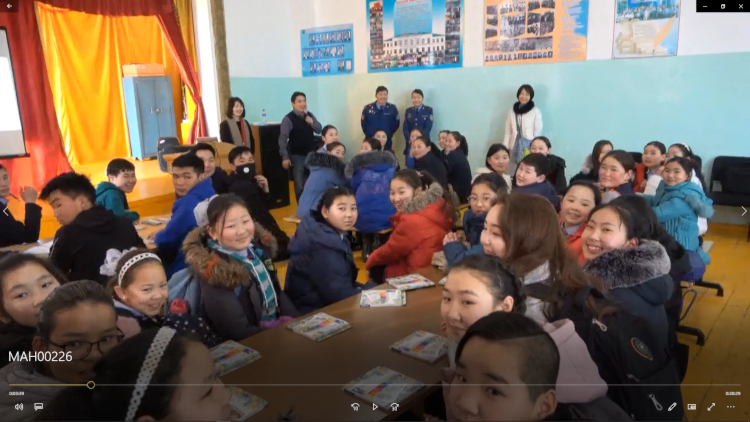
Mongolia DRR Card Game Co-creation Workshop 2019
1. Introduction
The present study applies a Japanese good-practice methodology for citizen-led disaster risk reduction (DRR) in Khovd Province, western Mongolia. The rationale for this study is the development of a Mongolian good practice model that can better enable DRR across the country.
As one of the most disaster-prone countries, and having experienced the 1995 Kobe Earthquake and the 2011 Great East Japan Earthquake, Japan has recognized the limitations of public assistance and has strongly promoted citizen-led disaster prevention in the last few decades. Shaw 1 reviewed recent innovative DRR practices in Japan that emphasize multi-stakeholder collaboration and multi-disciplinary research, and suggested their potential for efficiently enhancing citizens’ disaster resilience.
In recent years, Mongolia has emphasized public involvement in DRR and has promoted related policies in its capital, Ulaanbaatar; however, there has not been sufficient promotion in rural areas. Using the Japanese good practice of citizen-led DRR, we introduced methods for creating DRR educational materials, implementing citizen-led workshops, and conducting hazard mapping to Khovd Province in western Mongolia in collaboration with the National Emergency Management Agency of Mongolia (NEMA), the National University of Mongolia, and the Institute of Geography and Geoecology, under the Japan International Cooperation Agency (JICA) Partnership Program “Disaster Awareness Project for Large-Scale Natural Disasters Caused by Global Environmental Change in Khovd Province, Mongolia” (executing agency: Nagoya University) 2,3. The participation of the government and citizens in Khovd City was essential, and it was also important to design methods that matched the lifestyles and characteristics of the local people.
Suzuki et al. 3 reported on our previous progress in Mongolia from 2014 to 2017 and concluded that the essential key aspects for citizen involvement in DRR are 1) transferring the spirit of DRR, 2) customizing methods for the target area, 3) consistency with public policies, and 4) involvement of regional stakeholders. This material reports on the results of intensive activities from 2018 to 2023, evaluates them, reconsiders the key aspects of the DRR, and discusses future issues.
The importance of interdisciplinary efforts for disaster resilience enhancement has been previously highlighted 4,5,6,7. The present research is based on the interdisciplinary viewpoints of cultural anthropology, physical geography, and sociology, and also aims for a transdisciplinary approach that emphasizes co-production with citizens.
Regarding disaster resilience, we follow Hayashi and Suzuki’s 8 definition that encompasses responsiveness to disasters, including prevention and recovery, and also keep in mind the following points: “Resilience varies among countries or regions depending on their natural and cultural backgrounds. We must learn from traditional knowledge first, listen simply to the voice of nature, and understand local climates and cultures, thereby humbly seek the most appropriate way without overconfidence in science and technology” 9. “Mongolian nomadic society is full of good ideas on how to live sustainably” 10.
2. Background: Progress of DRR in Mongolia
Mongolia has strengthened its DRR capabilities in response to the Hyogo Framework for Action established by the United Nations Inter-Agency Secretariat of the International Strategy for Disaster Reduction 11. The framework emphasizes DRR at local, national, and international levels and provides guidance to risk-prone countries 12.
After the United Nations Office for Disaster Risk Reduction (UNDRR) published the Sendai Framework 13, the Mongolian government revised the Disaster Protection Law (DPL) in 2017 and initiated efforts to raise disaster awareness and strengthen citizens’ resilience. The revised DPL introduced an approach focused on disaster prevention, risk reduction, mitigation, and resilience, rather than response-oriented mechanisms 14.
The 2003 DPL stipulates nine items related to public activities for DRR; however, 24 items are stipulated in the revised 2017 DPL. The public activities for DRR in the reformulated DPL enable citizens to lead volunteer activities for DRR and clarify citizens’ obligations, responsibilities, and activities. Within the legal framework, the Mongolian government has implemented the following policy documents: The National Program of Community Participatory DRR (2015–2025) and the Mid-Term Strategy to Implement the Sendai Framework for DRR in Mongolia (2017–2030).
The purpose of the former program is to reduce disaster risk through the involvement of communities and citizens in DRR, enhance their knowledge and skills by organizing training and awareness, strengthen a safe living environment and culture, as well as create climate change resilience. The program mandates citizen volunteer activities, workshops for citizens conducted by bag (the smallest administrative unit of the local community) chiefs and social workers in the region, and DRR education at universities. The mass media is also required to broadcast public service commercials and television programs.
The goal of the mid-term strategy is to reduce risks by carrying out measures that prevent and minimize exposure and vulnerability to disasters through mitigation, prevention, preparedness, and recovery actions, thus strengthening resilience in Mongolia. Strategy implementation is in three phases: 2017–2020, 2021–2025, and 2026–2030. From 2017 to 2020, DRR education centers were established in places in Ulaanbaatar City and Orkhon Province to hold workshops for citizens. In order to raise the awareness of citizens’ participation in DRR, there were efforts to ask citizens’ opinions, disseminate information through social networking sites, and take disabled people into consideration while planning. In this way, policies are set to achieve a risk-reducing nation through citizen participation by 2025.
However, despite political implementation, in general, it is not easy to promote citizen-led DRR. Since the 1995 Kobe Earthquake, Japan has emphasized volunteering and aimed for citizen participation in DRR, but it is difficult for citizens to sustain DRR activities because they tend to quickly forget about past disasters and do not understand how DRR relates to their lives. People tend to prioritize economic activities over DRR activities.
Japan has continued to consider how to promote citizen-led DRR through various methods. For example, Nagoya University set up the Disaster Mitigation Research Center to promote DRR activities in collaboration with various stakeholders in the local region in 2010, and it established the Cooperative Center for Resilience Research with the National University of Mongolia in 2016 2,3. The Open University of Japan has broadcast several classes on civil DRR since 2011 7. Mongolia is paying attention to Japan’s good practices. The Khovd Emergency Management Department (EMD), one of NEMA’s branches, is an important base for local disaster prevention activities.
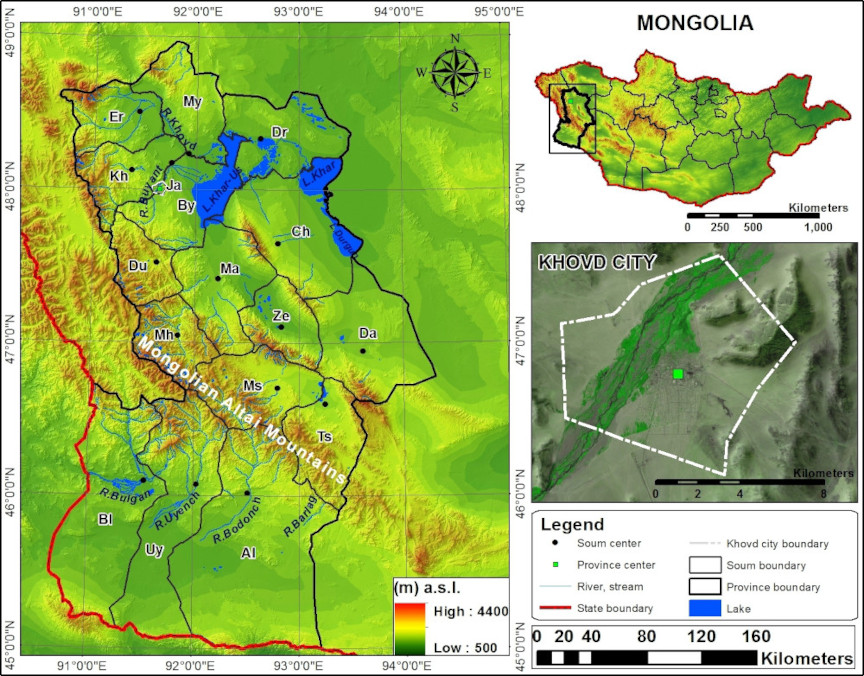
Fig. 1. Khovd Province (Aimag) and its soums: My: Myangad, Dr: Durgun, Ch: Chandmani, Da: Darvi, Er: Erdeneburen, Kh: Khovd, Ja: Jargalant, By: Buyant, Du: Duut, Ma: Mankhan, Ze: Zereg, Mh: Munkhkhairkhan, Ms: Must, Ts: Tsetseg, Al: Altai, Uy: Uyench, Bl: Bulgan. Jargalant Soum is known as the city of Khovd.
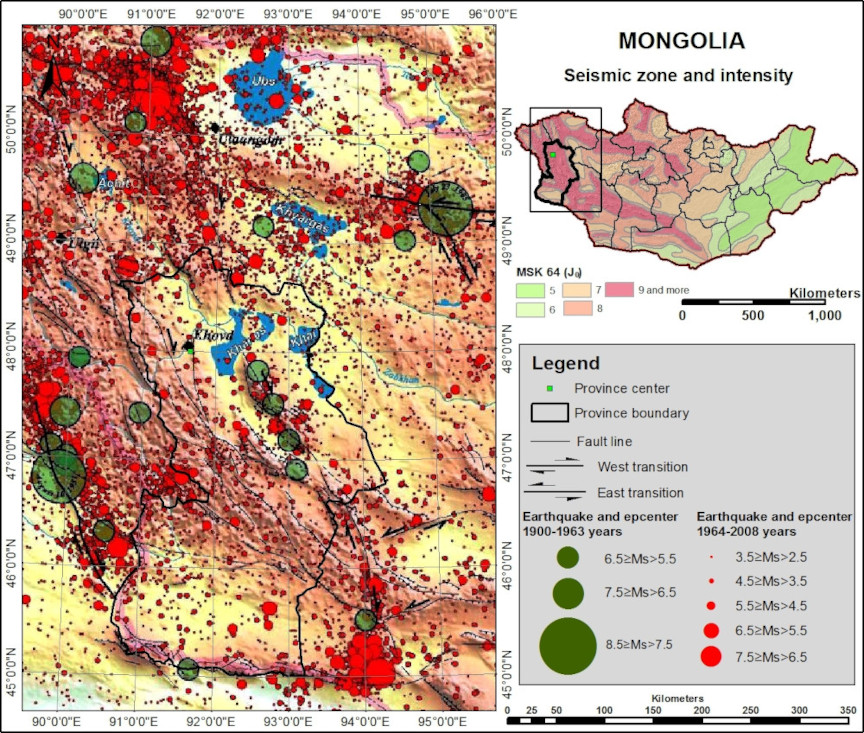 Data source: One century of seismicity in Mongolia (1900–2000) 16.
Fig. 2. Seismicity in the westernmost area of Mongolia.
3. Khovd Regional Environment
3.1. Geography
The topography of Khovd Province (Aimag) comprises the northern flat basin region with lakes, the central Mongolian Altai Mountain region, and the southern plain region at the foot of the Mongolian Altai Mountains. The surface condition is semi-arid barren land in the north, alpine terrain covered with snow and ice in the central area, barren land or steppe at mountain feet, and mostly arid (Gobi) or desert land except for grasslands along the river in the south. Khovd Province has all the ecosystems that represent the physiographic environment of Central Asia (Fig. 1).
The average annual temperatures are 0°C or higher in the north, less than 0°C in the central area, and 2°C or higher in the south. The average temperatures in July and January are 15°C or higher, \(-20°\)C to \(-25°\)C in the northern area; 0°C to 15°C, \(-25°\)C or lower in the central area; and 20°C, \(-20°\)C or higher in the southern area. Annual precipitation is 150 mm or less in the north, 150–400 mm in the center, and 150 mm or less in the south.
The annual average temperature of the city of Khovd, where the prefectural office is located, is approximately 0°C, and the monthly average temperatures in January and July are \(-25°\)C and 19°C, respectively. The annual rainfall is about 120 mm.
As of 2019, the population of Khovd Province was 89,712 (31,268 in the city of Khovd and 9,807 in Bulgan Soum). There are 17 soums (Myangad, Durgun, Chandmani, Darvi, Erdeneburen, Khovd, Jargalant, Buyant, Duut, Mankhan, Zereg, Munkhkhairkhan, Must, Tsetseg, Altai, Uyench, and Bulgan) in the province. Since 2003, Jargalant Soum has been known as the city of Khovd and is the central city of western Mongolia.
The city of Khovd (Jargalant Soum) consists of 12 administrative units called bags (Alagtolgoi, Baatarkhairkhan, Bugat, Bichigt, Jargalant, Magsarjav, Takhilt, Buyant, Khairkhan, Tsambagarav, Rashaant, and Naran).
Khovd Province is multi-ethnic and culturally diverse, with 10 Buddhist temples, six Christian churches, and two Islamic mosques. Nine sub-ethnic groups (Khalkh, Zakhchin, Uriankhai, Durvud, Myangad, Uuld, Torghut, Tuva, and Khoshuud) and one ethnic group (Khasag) live there. The Khasag are Islamic people of Turkish ethnicity. A soum is often populated by specific ethnic groups who form a regional majority. In Khovd Province, there is a tendency of specific ethnic groups to live in each bag.
3.2. Disasters Triggered by Natural Hazards
The disasters triggered by natural hazards experienced in Khovd Province include 1) earthquakes throughout the province; 2) floods along the Khovd, Buyant, Bulgan, Uyench, and Bodonch rivers; 3) sheet floods due to heavy rain on steep mountain slopes; 4) sandstorms; 5) harsh winter (dzud); 6) forest fires; 7) ground deformation and dryness due to melting permafrost; 8) sand movement; 9) possible glacial lake outbursts; and 10) infectious diseases coming across borders.
There are many active faults throughout Khovd Province, and large-scale earthquakes have occurred 15,16. The 1931 Fuyun earthquake (Mw 8.0) occurred in Chinese territory near the Mongolian border 17,18,19, and many M6–7 class earthquakes have occurred in the Mongolian Altai Mountains and the northern region in the twentieth century, causing damage to buildings in Khovd Province (Fig. 2).
The effects of global warming, such as dry weather, melting glaciers, and rising water levels in rivers, are beginning to appear in Khovd Province 20,21. Glaciers at high altitudes in the Mongolian Altai Mountains have also been found to have shrunk significantly 22,23. The town of Altai at the southern foot of the Mongolian Altai Mountains was relocated due to flooding of the Bodonch River in 2009. Floods also occurred in the city of Khovd in 2016 and 2018.
Batjargal 24 estimates that the vulnerability and risk index for 2046–2065 due to global warming is the worst in the western region, including Khovd Province.
In particular, Khovd Province is predicted to have less annual rainfall and more frequent dzud.
Dzud are the most serious winter disasters in Mongolia, as many livestock die due to the harsh climatic conditions they create. Mongolia experienced major dzud in 1944–1945, 1967–1968, 1999–2002, and 2009–2010. The numbers of dead animals were 8.6 million, 3.8 million, 3 million (total 12 million in 1999–2002), and 10 million, respectively. Zavkhan, Gobi-Altai, Uvs, and Khovd Provinces are more vulnerable to dzud and lost a significant number of livestock in the above-mentioned dzud 25,26,27.
There are many buildings in the city of Khovd, located on the banks of the Buyant River (Fig. 3). A large flood in 2018 caused six traditional residential mobile tents (gers) to collapse, and 630 households and four building basements were flooded. Nineteen households evacuated to shelters. In the neighboring province of Bayan-Ulgii, three people were injured, 287 houses crumpled, 154 gers collapsed, and 236 households were forced to move to temporary shelters. In total, 2,500 people were affected.
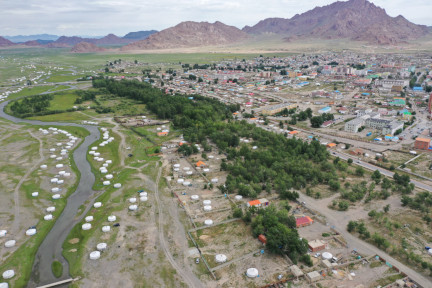
Fig. 3. Oblique view of Khovd City from the southwest, August 2019. Many gers are built along the Buyant River for recreation during summer.
One of the causes of flood damage was that artificial structures blocked the drainage of waterways. Residents also worry about the earthquake resistance of buildings and electrical fires caused by broken electricity cables.
4. Methodology for Citizen-Led DRR in Khovd
In Mongolia, local community activities are generally organized under the leadership of bag chiefs and social workers. Taking advantage of this, we first held a disaster prevention workshop led by bag chiefs. They are elected by the people, responsible for the safety of the community, and respected by the people. The workshop allowed residents to point out the hazards in their bags and discuss specific risk mitigation measures. Finally, they created a poster to present the DRR measures for their bags and discussed them with all participants.
Second, DRR leaders from all junior high schools in Khovd City learned how to create and play a disaster prevention card game, carta. Carta is a traditional Japanese card game that was introduced from Portugal to Japan in the sixteenth century. It is played by reading aloud a poem on one card and competing to be the quickest player to pick up the corresponding picture card. In recent years, carta games with DRR slogans have been used in Japan for teaching purposes.
The workshop introduced the Japanese DRR carta culture to motivate the students’ interest in creating their own games. They were then taught how to draw the pictures and write the poetry so that they could make their own carta. Once they had created their prototype of carta, they returned to their schools to help the other students in creating carta. Students then entered a carta contest to select the best cards. Over 100 cards were created by the students in total.
Third, as Internet access rapidly improves even in remote areas of Mongolia, we created online teaching materials for DRR 2. There is a risk of large earthquakes in Khovd Province due to active faults, dry weather, melting glaciers, and rising river water levels due to climate change. It is, therefore, necessary to disseminate the latest earth science knowledge to allow citizens to comprehensively prepare for future disasters. Videos are an effective means for researchers, as well as NEMA staff, to speak directly to residents 28. We video-recorded lectures and instructions by researchers in Khovd City. We then visited every soum in the province and interviewed residents and local government officials.
Fourth, we created a hazard map based on geographic survey data so that residents could better understand hazards in their areas. Recently, the importance of hazard maps has been attracting attention due to the frequent occurrence of flash floods in Mongolia. In Japan, the development of hazard maps has rapidly progressed since 2000, and problems have been highlighted 29. Therefore, it will be possible to integrate solutions to these problems when creating maps in Mongolia.
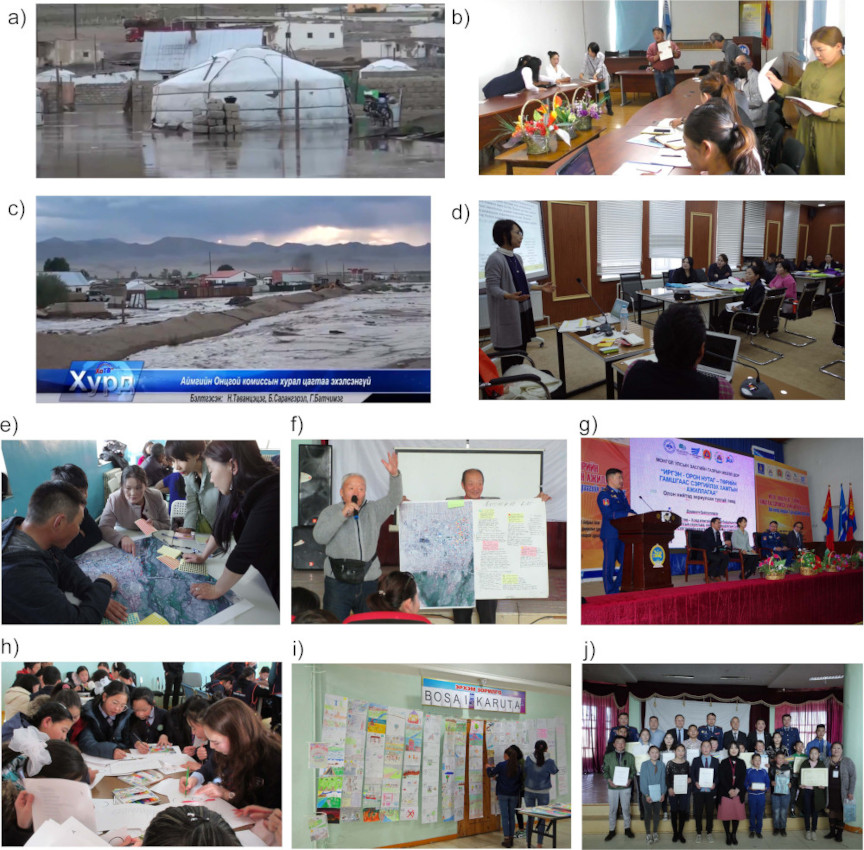
Fig. 4. The 2018 Khovd flood and DRR workshops. (a,b) Source: Khovd TV footage; (c) August 10, 2018 workshop; (d) February 21, 2019 workshop; (e,f) citizen workshop, March 28, 2019; (g) Khovd symposium, March 28, 2019; (h) carta workshop, February 20, 2019; (i,j) carta contest winners, March 28, 2019.
5. Results: Citizen-Led Practical DRR Activities in 2018–2023
5.1. Citizen-Led DRR Workshop
In August 2018, Profs. Sukhee Battulga, Yumiko Nara, and Tetsuya Inamura met with bag chiefs and social workers in the city of Khovd and asked them for their views on the damage caused by the June 2018 flooding (Fig. 4). Moreover, we asked them for their cooperation in conducting the questionnaire survey on DRR among residents 28,30. The questionnaire survey was conducted among Khovd residents in October 2018 (956 valid responses, 95.6% valid response rate), and revealed that awareness of disaster risks (especially for earthquakes and floods), self-help and mutual assistance, and support systems are not sufficient for DRR 31. Regarding this as a problem, DRR workshops were planned with residents to promote changes in their behavior.
On February 21, 2019, we reunited with the bag chiefs to report on the survey results, held a workshop, and suggested holding a workshop for residents. The chiefs enthusiastically accepted this proposal and each chief facilitated workshops with 10 residents on March 28.
Resident representatives gathered around a large-format satellite photo of their bags and placed stickers of different colors (brown: earthquake, blue: flood, pink: dzud, red: fire, yellow: storm) at likely areas where these disasters could occur, thereby creating a consciousness-based hazard map (Fig. 4(e)). They proposed disaster mitigation measures and created handwritten posters. Finally, the representative of each bag gave a poster presentation for all the participants (Fig. 4(f)). Both the bag leaders and residents became aware of the significance of the workshops 30.
Following those workshops, in August 2019, we walked around the areas with the bag chiefs and social workers looking at the posters and confirming the danger points. We then compiled proposals for damage mitigation measures.
Our DRR activities in Khovd Province were also important in terms of transmitting ideas from rural areas to the capital. Although DRR activities usually proceed under the direction of the central government, we aimed for DRR proposals and implementation by rural citizens. As a symbolic gesture, a symposium on citizen-led DRR was held in the auditorium of the Khovd Province Office in March 2019 (Fig. 4(g)). First, the Khovd EMD Director, B. Altanbadralt, talked about the disasters triggered by natural hazards in the Khovd region and NEMA’s activities. Profs. Yasuhiro Suzuki and Yumiko Nara explained the scope and progress of the JICA project. Lastly, we discussed the importance of citizen-led DRR. The symposium was broadcast by some local TV stations. Although disaster prevention workshops by international organizations have been previously held in Khovd City, this was the first DRR led by bag chiefs and residents, and the program was announced country-wide by media.
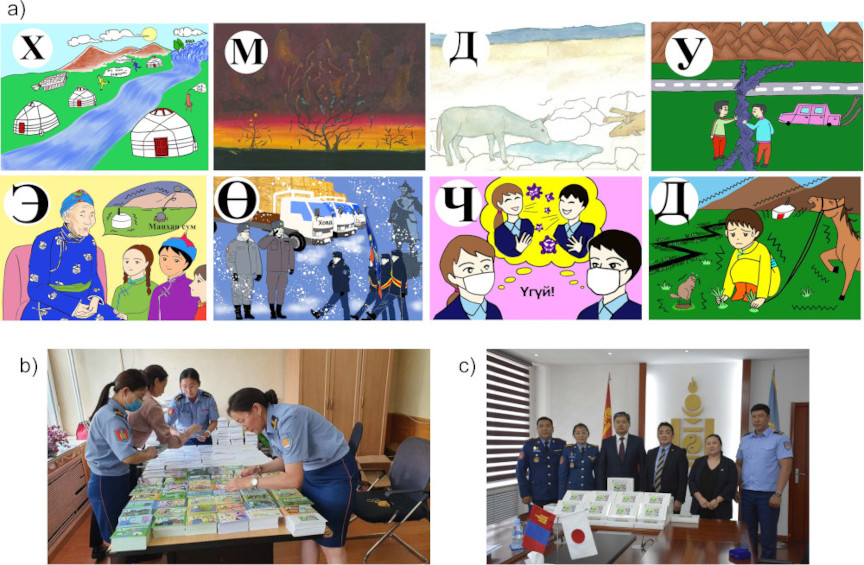
Fig. 5. Creation of DRR carta. (a) Picture cards drawn by students and Dr. Ishii; (b) carta preparation; (c) presentation ceremony at NEMA (June 26, 2020).
5.2. DRR Carta Creation
In March 2018, we first gathered 100 student disaster prevention leaders at Tsast-Altai Junior High School in the city of Khovd to learn about DRR carta. Although carta is not known in Mongolia, children generally enjoy drawing pictures and writing poems, and it was thought they would like to create carta.
Then in February 2019, we reassembled the students at Tsast-Altai Junior High to create their own carta. The students were very enthusiastic about the project and used colored pencils to draw pictures and write poems (Fig. 4(h)). Following the workshop, they used their skills to facilitate carta-making with students in their own schools.
In March 2019, with the cooperation of Khovd EMD and the Department of Education of Khovd Province, a carta contest for all the schools in the city of Khovd was held. We judged and selected the winners with EMD staff and the province officers. The students’ excellent work was exhibited at the Children’s Center on March 28, and the winners were commended by Prof. Tetsuya Inamura and Dr. Shoko Ishii (Figs. 4(i) and (j)) 32.
In the autumn of 2019, the children’s work was sent to Ulaanbaatar for refinement. We created new cards with motifs of Mongolian landscapes and folklore in the winter of 2019, and since COVID-19 had become a problem by then, several pictures regarding measures against infectious diseases were added (Fig. 5(a)).
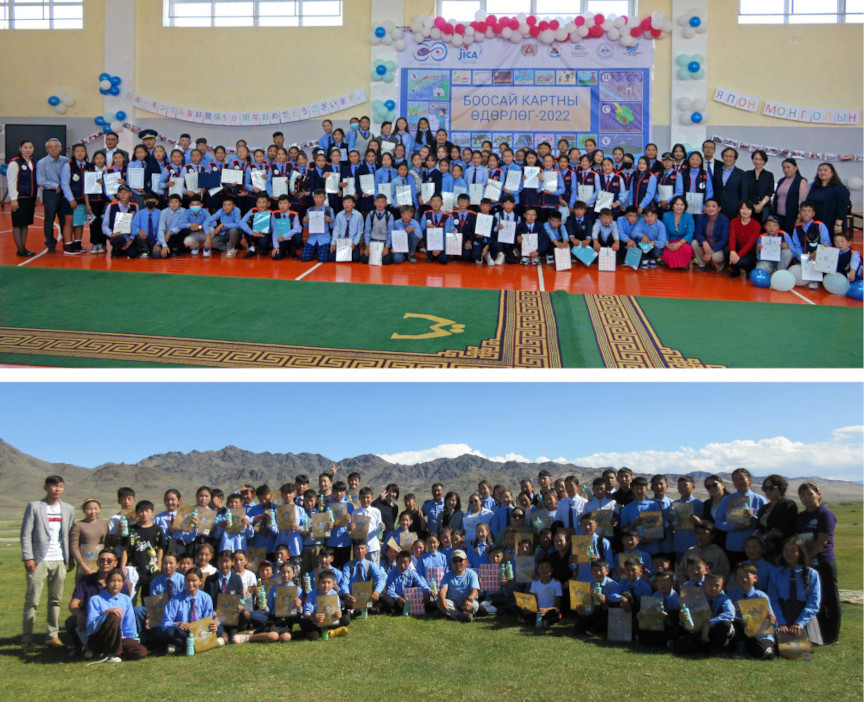
Fig. 6. Carta tournaments held in collaboration with schools in Khovd Province. Top: at Khovd City in 2022, bottom: at Mankhan Soum in 2023.
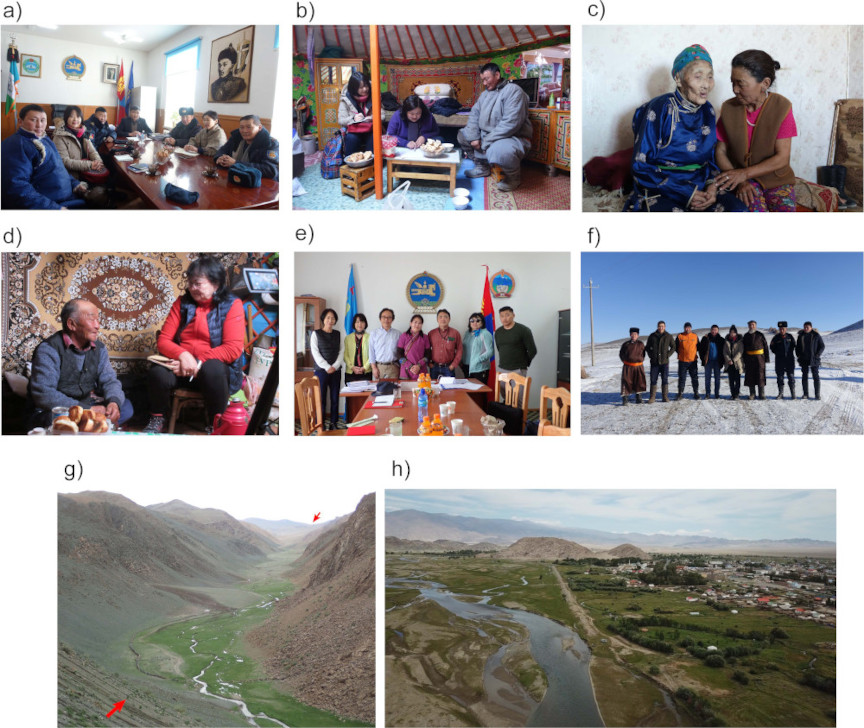
Fig. 7. Fieldwork and interviews with residents in Khovd Province. Photos were taken in (a) Myangad on January 29, 2018; (b) Buyant on January 28, 2018; (c) Mankhan on January 27, 2018; (d) Erdeneburen on August 7, 2019; (e) Duut on June 29, 2018; and (f) Munkhkhairkhan on January 30, 2018. (g) and (h) show topographic environment in Duut and in Bulgan, respectively. The red arrow indicates the active fault trace in (g), and (h) shows the liner bank constructed in the 1980s and the residential area of Bulgan (photos were captured on June 29, 2018 and August 8, 2018, respectively).
In January 2020, a workshop was held at NEMA to report on the progress of the project and discuss how to proceed (details are mentioned later).
In May 2020, we chose a printing company and a paper manufacturing company in Ulaanbaatar, and the first DRR carta cards in Mongolia were printed. The staff of NEMA organized the cards into boxes to complete the carta sets (Fig. 5(b)). On June 27, a presentation ceremony was held with the chief of NEMA presiding (Fig. 5(c)). The chief was impressed with the DRR carta and issued an order to disseminate them nationwide.
After a two-year break due to COVID-19 from 2020, a large carta tournament was held at Tsast-Altai School in the city of Khovd in September 2022, where more than 100 children enjoyed playing carta games. This year marked the 50th anniversary of the establishment of friendly relations between Japan and Mongolia, and international cultural exchange was realized with the participation of JICA staff (Fig. 6).
After that, teachers of Tsast-Altai School voluntarily worked to promote carta at schools in Khovd Province. As a result, a carta tournament was held on the grassland in Mankhan Soum, 90 km from the city of Khovd, in September 2023. The children who participated showed interest in the poems and pictures of the carta. By memorizing these, the effectiveness of DRR education was enhanced.
5.3. Online Content Coverage for DRR Education
In January 2018, we started creating remote educational content about Khovd region’s natural environment and DRR. First, to understand the characteristics of each region in the province, we conducted fieldwork in Jargalant, Buyant, Munkhkhairkhan, Myangad, and Mankhan in January 2018; Uyench and Bulgan in March 2018; Duut, Durgun, and Most in June 2018; Bulgan and Wench in August 2018; and Altai, Mankhan, Eldeneburen, and Munkhkhairkhan in August 2019 (Fig. 7). We captured aerial photographs with drones and recorded interviews with residents and government officials 32,33.
Our fieldwork revealed the diversity of each soum:
-
In the Myangad Soum (Fig. 7(a)) in the northern region of the province, the Myangad are the majority. Agriculture is thriving because of the flat landscape. The soum is vulnerable to strong winds, and gers were blown away in 2018. Fires are likely to occur in bush areas, and there are many lightning strikes. Livestock often die by eating poisonous grass.
-
In Durgun Soum, the Durvud are the majority. Situated on Lake Khal-Us, the province has been significantly dry for the last 30 years. Trees cannot be planted due to the movement of sand. Due to the construction of the dam, the water level changed and pasture was adversely affected.
-
In Buyant Soum (Fig. 7(b)), the Khalkha and Khasag are the majority, and there are two mosques. This soum produces 70% of the grass consumed in Khovd Province. The temperature differs significantly between summer and winter, and floods and fires are likely to occur.
-
In Mankhan Soum (Fig. 7(c)), the Zakhchin account for 98% of the total population. The number of livestock owned is the highest in the prefecture; however, there has been a lot of flood damage. A fire erupted in the bush on the shore of Lake Khal-Us. In winter, it can reach \(-60°\)C, and dzud frequently occur. Earthquakes occur occasionally. We interviewed a woman almost 100 years old about her experience of a mountain slope collapsing in an earthquake over 80 years ago.
-
In Erdeneburen Soum (Fig. 7(d)), the Uuld account for 90% of the population. Located along the Khovd River, irrigation-based agriculture (watermelon, potatoes, vegetables, and wheat) is flourishing. Recently, while the frequency of drought has increased, the water level of the Khovd River has risen, and the meadows have been flooded. Infectious diseases among livestock occur occasionally. The 1988 earthquake also caused ice blocks to fall from glaciers, killing many livestock. The icecap on Mt. Tsanbagarau (4,208 m) has shrunk rapidly since the late 1990s to one-third its original size 33.
-
In Khovd Soum, the Khasag account for 96% of the population. Vegetable cultivation is popular. Sandstorms can trigger fire. People worry about drought and rock collapse due to earthquakes. In the socialist era, co-operatives (negdel) took effective mitigation measures, but today it is more difficult to institute these measures, and individuals experience different levels of damage.
-
In Duut Soum (Fig. 7(e)), the Uriankhai account for 90% of the population. The soum is in the Mongolian Altai Mountains where 10,000 yaks are kept. Strong winds and dzud damage occur frequently. As villages are situated along the valley, snowmelt floods cause frequent damage. There is a large active fault along a straight, steep valley (Fig. 7(g)).
-
In Munkhkhairkhan Soum (Fig. 7(f)), the Uriankhai accounts for 98% of the population. Due to the high mountains, there is little grass and they buy grass from other soums. Dzud, floods, and lightning strikes are likely, and earthquakes occur. It is said that there was an earthquake in 1932–1933 that caused cracks in the ground and injured livestock. On March 31, 1975, there was an earthquake with a seismic intensity of 7–8 in MSK scale. A building was damaged and ice fell from the mountain. The Munkhkhairkhan mountain snowcaps are decreasing in size, and droughts are increasing.
-
In Bulgan Soum, the Torghut accounts for 80% of the population. In addition to agriculture such as watermelon cultivation, residents actively trade with China across the border. Residents want to reinforce the embankment built in 1982, as it is vulnerable to the snowmelt floods of the Bulgan River. Drone aerial photography clearly captures the topographical features of the flood-vulnerable Bulgan (Fig. 7(h)).
Since 2018, we have started consultations with the National University of Mongolia regarding editing local coverage. The university has had a plan in place to actively promote the creation of online teaching materials since 2019, and to bring half of all lectures online. In addition, the National University of Mongolia and the Open University of Japan signed a cooperation agreement in May 2019. Since the disaster prevention teaching materials we create can also be used for university education, it was agreed that Mr. Khatanzorig of the National University of Mongolia will cooperate with us in video editing. He recorded lectures in Ulaanbaatar 33 given by Serjmyadag (NEMA), Ariunaa (NEMA), Sarantuya (National Agency for Meteorology, Hydrology and Environment Monitoring), Batjargal (Ministry of Natural Environment and Tourism), and Enkhtaivan (Institute of Geography and Geoecology).
In November 2018, we recorded lectures given by Dr. Enkhzaya, the director of the Khovd Meteorological Observatory, on Khovd’s climate, and by Dr. Otogonbayar, associate professor at Khovd University, on melting glaciers in the Mongolian Altai Mountains.
In 2020, due to the spread of COVID-19, the importance of online content could be clearly seen. The content prepared for this project has become more important in providing pioneering materials for online access.
5.4. Hazard Mapping
We first discussed the types of hazard maps that are necessary in Mongolia. As a result, we identified the need to visualize the following three categories of hazard information: (1) regional differences in hazard types by province, (2) earthquake and flood hazards at the provincial level, and (3) detailed disaster risks at the soum level. Among these, this study focused on the development of a flood hazard map for Khovd City, which was subsequently presented to the relevant local authorities 34.
In recent years, floods have become frequent in the city of Khovd, causing continuous damage. As hazard maps are becoming important for reducing flood damage, we attempted to create a hazard map using a simple method. The city is located in a semi-arid region, so there is no surface runoff except for the Buyant River that flows next to the city. However, during heavy rains, flash floods flowing down from the mountain slopes hit the city. Therefore, it is necessary for citizens first to recognize the flow paths that arise due to topographical constraints and take them into consideration when using land.
In August 2019, we captured 15,000 drone photographs of the city of Khovd and analyzed them with a structure-from-motion program (photographing specifications are as follows: flight altitude: 120 m; overlap: 75%; side lap: 64%; resolution: 3 cm; number of flights: 53; total flight time: 18 hours). A large-scale topographic map with contour spacing of 20 cm was created from the data. The map indicates the direction of water flow during floods and enables us to understand how the 2018 flooding occurred 31. Additionally, it was found that the flooding from the Buyant River, which flows to the west of the city, could flow into the center of the city. Comparing this figure with a consciousness-based hazard map created by citizens helps to raise awareness of disasters.
Furthermore, because there are many active faults throughout Khovd Province, it is necessary to create a detailed expected seismic intensity map for each earthquake scenario. Risk communications and transdisciplinary disaster awareness activities based on the hazard map can then be generated.
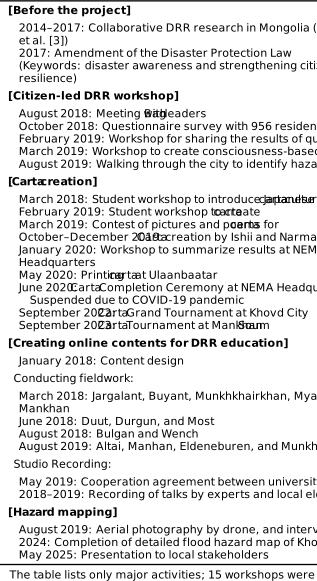
Table 1. Activity timeline.
6. Discussion and Conclusion
6.1. Achievement and Validation
The present study applied a Japanese good-practice methodology for citizen-led DRR in the Khovd Province to develop a Mongolian good practice model (Table 1) that can better enable DRR across the country. We considered the following factors important for international collaboration in DRR projects: 1) transferring the spirit of DRR, 2) customizing methods for the target area, 3) consistency with national policies, and 4) involvement of regional stakeholders.
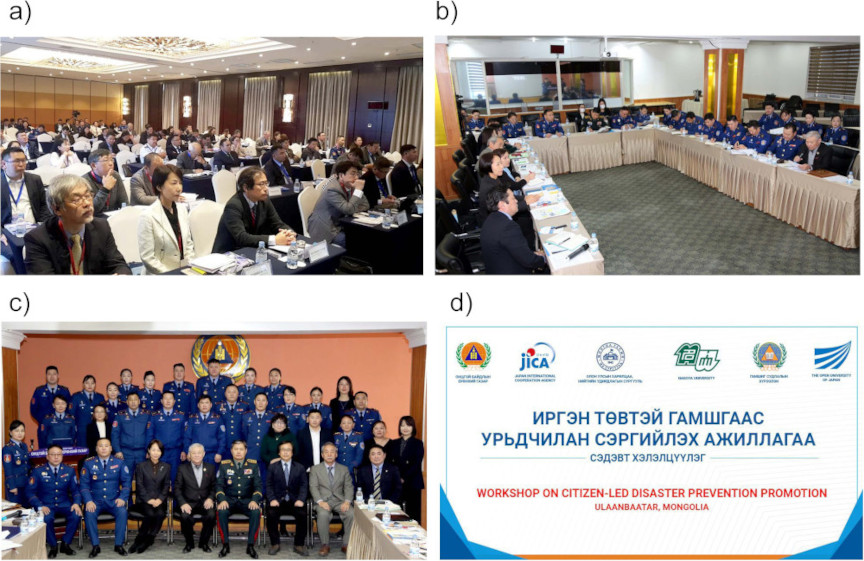
Fig. 8. Symposium and workshop in Ulaanbaatar. (a) UNDRR symposium, September 27, 2019; (b–d) NEMA workshop, January 27, 2020.
This transdisciplinary research examined the regional characteristics of the target area and proposed an effective methodology for citizen-led DRR that had not previously been implemented in Mongolia. First, community activities for each bag are now active, as public participation workshops were held under the initiative of the bag leaders. Second, the DRR student leaders organized in the junior high schools acted as facilitators to create a DRR carta for the first time in Mongolia. Third, as remote education can be effective in a nomadic society, online DRR teaching materials were created together with Mongolian researchers. Fourth, based on the geographic survey, we created hazard maps that had not before been developed in Mongolia.
The project should ultimately be evaluated by the residents; however, many residents and children have already participated and expect to see results. The project has also received a certain amount of evaluation by NEMA and the local government.
In September 2019, UNDRR held the International Science Conference on Strengthening Urban Disaster Resilience (Fig. 8(a)). We presented our report on the current achievements of this project under the title, “Practical Research and Education to Enhance Disaster Resilience of Citizens: Lessons from Japan’s Disasters and Collaboration with Mongolia” 35. We have also reported at other international conferences and published the results of the residents’ questionnaires 36,37,38,39.
In January 2020, we held a workshop in Ulaanbaatar to discuss the progress of the project (Figs. 8(b)–(d)) at NEMA. We first reported on the creation of carta, broadcast content, and hazard maps, and then on the citizen workshops with bag chiefs. Dovchin Munkhbat, director of NEMA’s DRR Education Center, reported on their DRR educational activities in Ulaanbaatar, plans for regional expansion, and media coverage. Dalai Serjmyadag of the Disaster Research Institute reported that citizen-led DRR became active after the 2017 revision of the disaster protection law, and both workshops and DRR education became mandatory. These reports from NEMA proved that the results of our project are consistent with and effectively support the policies of the Mongolian government.
Finally, Tuvshin Badral, the chief of NEMA, evaluated the project as follows:
-
1)
I look forward to creating hazard maps across Khovd Province where floods and earthquakes occur.
-
2)
I want residents to learn about the necessary countermeasures for each bag through the workshops.
-
3)
I look forward to DRR educational broadcast content. When it is completed, I would like to introduce it into schools. Schools can be actively involved if they have basic content.
-
4)
Khovd EMD staff have learned how to use drones and have been successful in rescue operations.
-
5)
Carta is quite unique and interesting, and it conveys tradition as well as DRR. Let us form a joint team to promote carta.
-
6)
I would like to set up a DRR education center not only in Ulaanbaatar but also in rural areas. I would like to ask the Japanese members to cooperate in spreading practices based in regional centers. It is important for teachers to know how to teach DRR.
Furthermore, B. Altanbadralt, director of Khovd EMD, commented:
-
1)
I propose to conduct questionnaire surveys with residents not only in the city of Khovd but throughout the province.
-
2)
It would be good to complete the creation of carta in 2020 and spread the game nationwide in 2021.
-
3)
I hope that the hazard map for each soum will be completed.
-
4)
I want volunteers to learn how to facilitate workshops.
6.2. Future Challenges and Developments
It can be concluded that our attempt to co-produce and demonstrate a good model for DRR for Mongolian citizens in Khovd was successful. Tuvshin Badral, the NEMA chief, has officially announced that this practice will be rolled out nationwide. This citizen-led DRR model is likely to be strongly promoted at regional DRR education centers that will be set up nationwide in the future. However, as the DRR model we propose is a citizen-led software measure, financial support, including international cooperation, is required to establish the hardware of regional DRR education centers. Additionally, it is necessary for related organizations in Mongolia (local governments, schools, universities, research institutes, etc., with whom we collaborated in Khovd Province) to cooperate and support this operation.
Furthermore, the methodology presented in this study serves as a model for disseminating citizen-led DRR internationally through transdisciplinary measures.
On May 15, 2020, the chief of NEMA issued the following order regarding carta creation as the official Mongolian message on the future development of the project. This order proves that the citizen-led DRR practice in Khovd conducted by this study was appropriate.
ORDER OF THE CHIEF OF NATIONAL EMERGENCY MANAGEMENT AGENCY, which was approved on May 15, 2020, stated with the title: Establishment of a working group as follows.
“According to the Provision 8.4, 15.1 of the Law on Legal Status of Government Agencies, 30.1.11 of the Law on Disaster Protection, ORDERING hereby:
-
1.
Disaster Awareness Enlightenment Project for large-scale natural disasters caused by global environmental change in Mongolia with support of Japanese technical cooperation under the JICA partnership program, being implemented until July 2020 by the National Emergency Management Agency, establishing a project implementing working group as follows:
Chairman of the project: Ts. Ganzorig, Deputy Chief, Colonel.
Working group members: Ch. Ariunaa, Head of Foreign Cooperation Division, Colonel, D. Serjmyadag, Scientific secretary, Disaster Research Institute under NEMA, Lieutenant Colonel, B. Altanbadralt, Director of Western Regional Center and Emergency Management Department of Khovd Aimag, Lieutenant Colonel, B. Vanchindorj, Specialist, Policy Coordination and Cooperation Department, Senior Lieutenant.
-
2.
Assign the duty to Colonel Ts. Ganzorig, Chairman of project for disseminating good practices and applications for public developed during the project implementation to all aimags.
-
3.
Assign the duty to Brigadier General G. Ariunbuyan, First Deputy Chief of NEMA for monitoring the implementation of this order.
BADRAL TUVSHIN, CHIEF, MAJOR GENERAL (signed and sealed).”
Although this project produced notable practical outcomes in disaster prevention, several academic issues remain in cultural anthropology and geography. First, as mentioned above, citizen-led DRR is not easy to realize in Mongolia. This may be linked to the weakening of administrative structures after the socialist collapse and to widening economic disparities under neoliberal reforms, however, these factors require further study. Second, in Khovd City, the bag-led administrative system appeared to function relatively well, possibly due to the city’s agriculture-centered industrial structure. Comparative research in regions with different economic bases is needed to substantiate this point. Third, ethnic subgroups within each soum may influence regional variations in disaster awareness; this could not be clarified in the present study. Fourth, interviews suggested that living environments and lifestyles shape disaster risk—such as differing views on the need for river levees—but a systematic analysis of such regional differences has yet to be undertaken. Fifth, although hazard maps were required for all soums in Khovd Province, this project was only able to produce them for Khovd City. Moving forward, it is essential to explore efficient mapping methods and establish a sustainable system for their development. Clarifying these issues remains an important task for future research.
In 2025, we launched the second phase of the JICA project, titled “Project for Sustainable Civic Activities and Disaster Risk Reduction (DRR) Education in Mongolia.” This phase aims to promote the DRR carta nationwide in collaboration with the Ministry of Education, expand school DRR curricula, and cultivate regional volunteer leaders to advance community-based DRR efforts.
In addition, Suzuki et al. 40,41 discovered a previously unidentified Ulaanbaatar active fault within the city of Ulaanbaatar in another project. It became necessary to comprehensively review the earthquake DRR in Ulaanbaatar, indicating that international cooperation is also required to deal with this matter.
Data availability
Information on the activities of the Cooperative Center for Resilience Research and the Disaster Mitigation Research Center at Nagoya University can be found at the following URLs http://danso.env.nagoya-u.ac.jp/CCRR/ http://www.gensai.nagoya-u.ac.jp/en/ Details of various activities, including this study, are available on the NEMA website: http://en.nema.gov.mn/ A summary of the White Paper on Disaster Risk Reduction in Mongolia is available at the following URL https://www.jica.go.jp/project/mongolia/016/materials/ku57pq0000316w3f-att/2017WhitePaper_Summary_Eng.pdf
Acknowledgments
We sincerely thank the anonymous reviewer for recognizing the academic and societal value of this paper and for providing insightful comments that helped improve it. This work was supported by the JICA Partnership Program (2017–2024), JSPS Bilateral Joint Research Project (FY2020–2021, JPJSBP120209913), and JSPS KAKENHI Grants (16H05645, 24H00120 – Yasuhiro Suzuki; 18K18543, 21K18122 – Tetsuya Inamura).
- [1] R. Shaw (Ed.), “Community Practices for Disaster Risk Reduction in Japan,” Springer, 2014.
- [2] T. Inamura, Y. Suzuki, S. Ishii, S. Battulga, Y. Nara, A. Kawai, T. Yamada, and H. Takahashi, “Research and activity of resilience in Mongolia: Starting the JICA Partnership Project,” J. Open Univ. Jpn., Vol.35, pp. 61-76, 2018 (in Japanese).
- [3] Y. Suzuki, S. Ishii, T. Inamura, Y. Nara, H. Takahashi, S. Battulga, D. Enkhtaivan, S. Narangerel, C. Ariunaa, D. Serjmyadag, B. Altanbadralt, and T. Bandal, “Enhancing citizens’ disaster resilience through an international transdisciplinary research project in Mongolia,” Geog. Rev. Jpn. Series B, Vol.92, No.1, pp. 1-9, 2019. https://doi.org/10.4157/geogrevjapanb.92.1
- [4] N. Kapucu, D. V. Hawkins, and F. I. Rivera (Eds.), “Disaster Resiliency: Interdisciplinary Perspectives,” Taylor & Francis, 2013.
- [5] A. Miller and B. Birnbaum, “Preparing for disasters,” Science, Vol.348, No.6236, pp. 766-767, 2015. https://doi.org/10.1126/science.348.6236.766-c
- [6] I. Pal, J. Meding, S. Shrestha, I. Ahmed, and T. Gajendran (Eds.), “An Interdisciplinary Approach for Disaster Resilience and Sustainability,” Springer, 2020.
- [7] Y. Nara and T. Inamura (Eds.), “Resilience and Human History – Multidisciplinary Approaches and Challenges for a Sustainable Future,” Springer, 2020.
- [8] Y. Hayashi and Y. Suzuki (Eds.), “Resilience and Regional Revitalization – National Design Explored from Traditional Knowledge and Big Data,” Akashi Shoten, 2015 (in Japanese).
- [9] Y. Hayashi, Y. Suzuki, S. Sato, and K. Tsukahara (Eds.), “Disaster Resilient Cities: Concepts and Practical Examples,” Elsevier, 2016.
- [10] S. Ishii, “Loss of resilience of Mongolian nomadic life due to urbanization,” Y. Hayashi, Y. Suzuki, S. Sato, and K. Tsukahara (Eds.), “Disaster Resilient Cities: Concepts and Practical Examples,” pp. 51-61, Elsevier, 2016. https://doi.org/10.1016/B978-0-12-809862-2.00007-3
- [11] United Nations Inter-Agency Secretariat of the International Strategy for Disaster Reduction (UN/ISDR), “Hyogo Framework for Action 2005–2015: Building the Resilience of Nations and Communities to Disasters,” 2005.
- [12] T. Sternberg and B. Batbuyan, “Integrating the Hyogo Framework into Mongolia’s disaster risk reduction policy and management,” Int. J. Disaster Risk Reduct., Vol.5, pp. 1-9, 2013. https://doi.org/10.1016/j.ijdrr.2013.05.003
- [13] United Nations Office for Disaster Risk Reduction (UNDRR), “Sendai Framework for Disaster Risk Reduction 2015–2030,” 2015.
- [14] NEMA and JICA, “White paper on disaster risk reduction in Mongolia (Summary),” 2017. http://www.jica.go.jp/project/mongolia/016/materials/ku57pq0000316w3f-att/2017WhitePaper_Summary_Eng.pdf [Accessed March 26, 2026]
- [15] E. A. Rogozhin, S. Lar’kov, and S. Demberel, “Recurrence of strong earthquakes in the active Hovd Fault Zone, Mongolian Altay,” Geotectonics, Vol.47, pp. 340-350, 2013. http://doi.org/10.1134/S0016852113050051
- [16] T. Dugarmaa, A. Schlupp, M. Adiya, D. Ankhtsetseg, T. S. Baasanbat, G. Bayar, C. Bayarsaikhan, D. Erdenezul, D. Mungunsuren, A. Munkhsaikhan, D. Munkhuu, R. Narantsetseg, C. Odonbaatar, L. Selenge, B. Tsembel, M. Ulziibat, K. Urtnasan, and DASE/LDG team, “One century of seismicity in Mongolia (1900–2000),” Research Centre of Astronomy & Geophysics of the Mongolian Academy of Sciences and Department of Analysis, Monitoring and Environment, Laboratory of Detection and Geophysics, 2003.
- [17] I. A. Baljinnyam, B. A. Bayasgalan, A. Borisov, M. G. Cisternas, L. Dem’yanovich, V. M. Ganbaatar, R. A. Kochetkov, P. M. Kurushin, P. Hervé, and Y. Y. Vashchilov, “Ruptures of major earthquakes and active deformation in Mongolia and its surroundings,” Geol. Soc. America, Vol.181, 1993. https://doi.org/10.1130/MEM181-p1
- [18] A. Lin and S. Lin, “Tree damage and surface displacement: The 1931 M 8.0 Fuyun earthquake,” J. Geol., Vol.106, pp. 751-757, 1998. https://doi.org/10.1086/516058
- [19] Y. Klinger, M. Etchebes, P. Tapponnier, and C. Narteau, “Characteristic slip for five great earthquakes along the Fuyun fault in China,” Nat. Geosci., Vol.4, No.6, pp. 389-392, 2011. https://doi.org/10.1038/ngeo1158
- [20] P. Batima, L. Natsagdorj, P. Gombluudev, and B. Erdenetsetseg, “Observed climate change in Mongolia,” AIACC Working Paper, Vol.12, 2005.
- [21] P. S. Borodavko, E. S. Volkova, M. A. Melnik, A. S. Litvinov, and O. Demberel, “Climate change impact on high-altitude geomorphological systems,” IOP Conf. Series: Earth Environ. Sci., Vol.211, Article No.012004, 2018. https://doi.org/10.1088/1755-1315/211/1/012004
- [22] J. G. Cogley, “Glacier shrinkage across high mountain Asia,” Ann. Glaciolo., Vol.57, pp. 41-49, 2016. https://doi.org/10.3189/2016AoG71A040
- [23] D. A. Ganyushkin, K. V. Chistyakov, I. V. Volkov, D. V. Bantcev, E. P. Kunaeva, T. A. Andreeva, A. V. Terekhov, and D. Otgonbayar, “Present glaciers of Tavan Bogd Massif in the Altai Mountains, Central Asia, and their Changes since the Little Ice Age,” Geosci. J., Vol.8, No.11, Article No.414, 2018. https://doi.org/10.3390/geosciences8110414
- [24] Z. Batjargal, “Third national communication of Mongolia under the united nations framework convention on climatic change,” Ministry of Environment and Tourism of Mongolia, 2018. https://unfccc.int/sites/default/files/resource/06593841_Mongolia-NC3-2-Mongolia%20TNC%202018%20pr.pdf [Accessed March 26, 2026]
- [25] Z. Batjargal, R. Oyun, N. Togtokh, and S. Sangidansranjav, “Lessons learnt from the Dzud 1999–2000: Fundamental issues affecting sustainability of the Mongolian steppe,” International Institute for the Study of Nomadic Civilizations, 2002.
- [26] A. Hahn, “Complexity of Mongolian stakeholders’ dzud preparation and response,” Nat. Hazards, Vol.92, pp. 127-143, 2018. https://doi.org/10.1007/s11069-017-2907-2
- [27] B. Nandintsetseg, M. Shinoda, and B. Erdenetsetseg, “Contributions of multiple climate hazards and overgrazing to the 2009/2010 winter disaster in Mongolia,” Nat. Hazards, Vol.92, No.s1, pp. 109-126, 2018. https://doi.org/10.1007/s11069-017-2954-8
- [28] S. Ishii, Y. Nara, T. Inamura, H. Takahashi, S. Battulga, and Y. Suzuki, “Life and natural disaster in a local city and nomadic society in western Mongolia: Report of field research in Khovd Aimag,” J. Open Univ. Jpn., Vol.36, pp. 93-111, 2019 (in Japanese).
- [29] Y. Suzuki, “Utilization of Hazard Maps Toward Disaster Mitigation,” Iwanami Shoten, 2015 (in Japanese).
- [30] Y. Nara, S. Battulga, T. Inamura, Y. Suzuki, S. Ishii, H. Takahashi, Y. Takaichi, T. Hasegawa, and B. Narmandakh, “Practical research for topographic estimation of flood hazard and enhancing DRR activities with the participation of citizens in Khovd City, western Mongolia,” J. Open Univ. Jpn., Vol.37, pp. 83-92, 2020 (in Japanese).
- [31] Y. Nara and S. Battulga, “Action research for the implementation of community disaster prevention activities with the participation of citizens in Khovd City, Mongolia,” Risk Insur. Manag., Vol.51, pp. 173-193, 2020.
- [32] S. Ishii, T. Inamura, Y. Suzuki, D. Enkhtaivan, Y. Nara, H. Takahashi, S. Battulga, B. Narmandakh, and K. Has-Erdene, “The nomad’s memory and cognition of disasters and ‘disaster awareness enlightenment project’ in Khovd Province, Mongolia,” J. Open Univ. Jpn., Vol.37, pp. 93-108, 2020 (in Japanese).
- [33] S. Ishii, Y. Nara, T. Inamura, Y. Suzuki, H. Takahashi, S. Battulga, B. Narmandakh, D. Enkhtaivan, O. Sukhbaatar, and K. Has-Erdene, “Disaster awareness enlightenment project and remote education for the reinforcement of resilience in Mongolia,” J. Open Univ. Jpn., Vol.38, pp. 1-21, 2021 (in Japanese).
- [34] S. Narangerel, Y. Suzuki, T. Hasegawa, and Y. Takaichi, “Flood hazard mapping and disaster prevention recommendations based on detailed topographical analysis in Khovd City,” Nat. Hazards Earth Syst. Sci., Vol.25, pp. 4563-4576, 2025. https://doi.org/10.5194/nhess-25-4563-2025
- [35] Y. Nara and S. Battulga, “Practical research and education to enhance disaster resilience of citizens: Lessons from Japan’s disasters and collaboration with Mongolia,” Proc. of the Int. Sci. Conf. on Strengthening Urban Disaster Resilience, pp. 51-61, 2019.
- [36] Y. Suzuki, S. Ishii, and S. Battulga, “Cooperation toward enhancing citizens’ disaster resilience among Mongolian government, Mongolian university and Japanese universities,” Asian Ministerial Conf. on Disaster Risk Reduction, 2018.
- [37] Y. Suzuki, S. Ishii, T. Inamura, Y. Nara, S. Battulga, D. Enkhtaivan, S. Narangerel, C. Ariunaa, D. Serjmyadag, B. Altanbadralt, and T. Badral, “Cooperative project toward enhancing citizens’ disaster resilience conducted by Japanese universities and Mongolian government/academia in 2014–2018,” American Geophysical Union, Fall Meeting 2018, PA21F-1003, 2018. https://ui.adsabs.harvard.edu/abs/2018AGUFMPA21F1003S/abstract [Accessed March 26, 2026]
- [38] S. Ishii, Y. Suzuki, Y. Nara, T. Inamura, S. Battulga, D. Enkhtaivan, B. Altanbadralt, C. Ariunaa, and D. Serjmyadag, “Disaster awareness enlightenment project for large-scale natural disasters caused by global environmental change in Khovd Province, Mongolia,” Asian Ministerial Conf. on Disaster Risk Reduction, 2018.
- [39] Y. Nara and S. Battulga, “Observations on residents’ risk awareness and practice of countermeasures against natural disasters in Mongolia: Questionnaire survey data of Khovd citizens,” Procedia Comput. Sci., Vol.159, pp. 2345-2354, 2019. https://doi.org/10.1016/j.procs.2019.09.409
- [40] Y. Suzuki, M. Watanabe, and T. Nakata, “Impact of active fault discovery on disaster risk reduction,” Proc. of the Int. Science Conf. on Strengthening Urban Disaster Resilience, pp. 65-70, 2019.
- [41] Y. Suzuki, T. Nakata, M. Watanabe, S. Battulga, D. Enkhtaivan, S. Demberel, C. Odonbaatar, A. Bayasgalan, and T. Badral, “Discovery of Ulaanbaatar Fault: A new earthquake threat to the capital of Mongolia,” Seismol. Res. Lett., Vol.92, No.1, pp. 437-447, 2020. https://doi.org/10.1785/0220200109
This article is published under a Creative Commons Attribution-NoDerivatives 4.0 Internationa License.