
Paper:
Effects of Disaster Literacy Factors on People’s Reaction to the Earthquake Early Warning
Shoji Ohtomo*1,†, Reo Kimura*2
 , Kosuke Nakazawa*3
, and Toshimitsu Nagata*4
, Kosuke Nakazawa*3
, and Toshimitsu Nagata*4
*1College of Interhuman Symbiotic Studies, Kanto Gakuin University
KGU Office 310 3F, Kannai-Ekimae No.1 Bldg. 2-12, Masago-cho, Naka-ku, Yokohama, Kanagawa 231-0016, Japan
†Corresponding author
*2School of Human and Environment, University of Hyogo
Himeji, Japan
*3SHINKEN PRESS
Tokyo, Japan
*4Niigata Local Meteorological Office, Japan Meteorological Agency
Niigata, Japan

Many people fail to take appropriate protective actions upon receiving an Earthquake Early Warning (EEW), which has emerged as an important concern. This study examined aspects of disaster literacy that promote appropriate protective actions in response to EEWs. Drawing on dual-process theory, we hypothesized that EEW responses would rely more on intuitive processes than on deliberative processes, because immediate reactions are required when an EEW is issued. This study used nationwide survey data collected in Japan in August 2022. Data from 491 respondents who had previously received EEWs were analyzed. The variables included reactions to EEWs, means of receiving EEWs, activity status when receiving an EEW, experience of victims of past disasters, expectation of an earthquake, recognition of hazard map, daily disaster-preparedness, and demographics. The results indicated that only 35% of participants reported taking concrete protective actions upon receiving EEWs. The experience of victims of past disasters, expectations of an earthquake, and daily disaster-preparedness were associated with reactions to EEW. Each of these variables reduced the likelihood of choosing inaction and increased the likelihood of selecting protective actions. These findings suggest that the experience of victims of past disasters, expectation of an earthquake, and daily disaster-preparedness experience function as intuitive factors related to disaster imagery, thereby facilitating immediate protective actions. In conclusion, this study highlights the importance of designing disaster literacy strategies that target intuitive factors to enhance the effectiveness of EEWs.
1. Introduction
The failure to take appropriate safety actions during disasters has emerged as a significant social concern [1–3]. Disaster literacy, defined as the capacity to confront and overcome disasters 4, is a crucial component in addressing this concern. This literacy is particularly important in the case of earthquakes, which occur suddenly and require individuals to take safety actions within only a few seconds.
Several countries, including Japan, the United States, Mexico, South Korea, and Taiwan, have introduced Earthquake Early Warning (EEW) systems to the public 5,6. An EEW system detects earthquakes and alerts people prior to the arrival of strong shaking. Although warnings are typically issued a few to several tens of seconds before the shaking, they may not reach areas close to the epicenter in time 7. Nevertheless, if individuals can immediately take protective actions (e.g., drop, cover, and hold on) upon receiving an EEW, the incidence of injuries and fatalities can be mitigated. However, previous studies have indicated that people often fail to take protective actions, even after receiving EEWs 8,9,10. For example, Nakayachi et al. 9 found that many individuals remained inactive, stopped, and stayed still awaiting for the shaking or looked for information about the warning, whereas only a small proportion took protective actions. Against this background, this study assumes that improving disaster literacy involves enhancing individuals’ abilities to take appropriate protective actions upon receiving EEWs. This study aims to examine the factors influencing behavioral choices at the time of EEW reception. Understanding people’s reactions to EEWs requires investigating the relevant cognitive and behavioral factors.
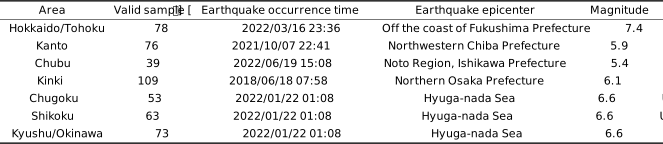
Table 1. Target earthquakes for the EEW and number of respondents by area.
Cognitive and behavioral factors associated with response actions to earthquakes include expectations of an earthquake, recognition of hazard maps, experience of victims of past disasters, and daily disaster-preparedness. To date, results regarding the relationship between risk perceptions, such as the expectation of an earthquake, and safety behaviors have been inconsistent 11. Some studies have indicated that risk perception promotes preventive behaviors 12,13. Other studies indicated that risk perception 14 and expectation of a disaster 3 were not associated with evacuation behavior and that the relationship between risk perception and preventive behavior was weak 15. These inconsistencies can be attributed to the susceptibility of risk perception and protective behavior to the influence of contextual factors 16. Similarly, while some studies have indicated that recognition of hazard map is weakly associated with protective actions 3,15, others have indicated an association with preventive behaviors 17,18. The experience of victims of past disasters have also been identified as an important cue in risk judgment 19, influencing immediate behavioral responses to earthquakes 20 or promoting the intentions of appropriate reactions to EEWs 21. According to Siegrist and Gutscher 22, people who have experienced victims activate a more negative image of disasters than those who have not, a phenomenon that subsequently motivates them to take protective behaviors. Furthermore, daily disaster-preparedness presupposes not only risk perception but also knowledge of appropriate responses and the capacity to implement them, making it associated with protective behaviors 20,23,24.
This study focuses on the contexts in which immediate action is required in response to EEWs and examines the effects of these cognitive and behavioral factors. Dual-process theories of risk judgment 25,26 posit two modes of information processing: System 1, which is affective, rapid processing based on intuition and experience and oriented to immediate actions, and System 2, which is logical processing and oriented to deliberative actions. Previous study has indicated that affective System 1 takes precedence over logical System 2 during the decision-making process for evacuation behavior during natural disasters 3. When EEWs require an immediate reaction, actions are likely to be driven by System 1 rather than System 2. Accordingly, the recognition of hazard maps is likely to have little effect on EEW reactions, as it pertains to a logical understanding of disasters. The expectation of an earthquake, which evokes an image of disaster damage, and relates to preventive behaviors 27, is likely to be associated with reactions to EEWs as a System 1 factor. The experiences of victims of past disasters, which trigger the affective recall of negative events, are likely related to reactions to EEWs as an intuitive cue. Daily disaster-preparedness, which reflects risk imagery and coping capabilities regarding disasters 24, is likely to promote immediate and appropriate reactions from EEWs. Moreover, previous studies have suggested that demographics such as age and gender are associated with risk-related behaviors 16,20,28. This study also examines the effects of demographic factors on reactions to EEWs.
2. Method
2.1. Survey Data
We analyzed the data from the “Survey on Disaster Risk Perception and Protective Behaviors” conducted by the National Research Institute for Earth Science and Disaster Prevention (NIED) of the National Research and Development Agency (Japan) on August 25 to 26 in 2022. For academic purposes, these data were previously used by Nakazawa et al. 18, and we conducted analyses with permission from the NIED. This study focuses on EEW data that were not used in the study by Nakazawa et al. 18. The survey recruited a total of 2,100 participants, 300 each from seven areas across Japan: Hokkaido/Tohoku, Kanto, Chubu, Kinki, Chugoku, Shikoku, and Kyushu/Okinawa. The 300 residents from each region were divided into 10 groups according to gender (male and female) and age range (20s, 30s, 40s, 50s, and over 60s), with each group comprising 30 participants. Finally, 1,900 valid responses with no missing values were obtained. The analysis data consisted of 491 respondents who reported receiving the EEW for the target earthquake in each area listed in the survey (Table 1) and who remembered their activity status at the time of the earthquake (excluding respondents who answered “don’t know” or “don’t remember”). The questionnaire, data files, and analysis outputs are available online at https://osf.io/46tzv/?view_only=ceb729a026e5404e8a37523c737110f0.
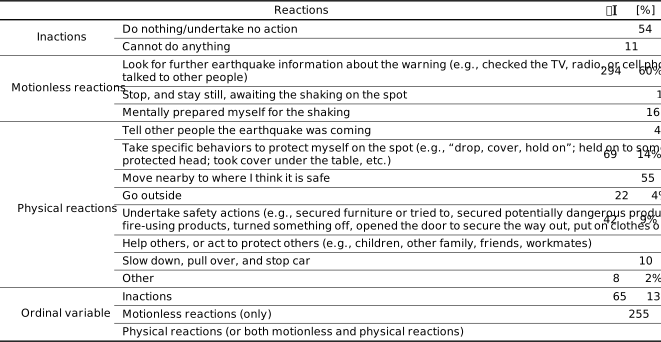
Table 2. Reactions to the EEW and their selection rates.
2.2. Analysis Variables
2.2.1. Reactions to the EEW
The question regarding the expectations of the reactions to the EEW was as follows: “In this earthquake, what did you do after receiving an emergency EEW,” or “What were you about to do?” The respondents were asked to select multiple answers from 13 options, including “Do nothing/undertake no action,” “Look for further earthquake information about the warning (e.g., checked the TV, radio, or cell phone or talked to other people),” “Take specific behaviors to protect myself on the spot (e.g., “drop, cover, hold on”; held on to something; protected head; took cover under the table).” For analysis, these multiple responses were converted into the ordinal scale shown in Table 2: inaction, motionless reactions (only), and physical reactions (or both motionless and physical reactions), according to the classification by Nakayachi et al. 9.
2.2.2. Means of Receiving the EEW
The question regarding the expectation of the means of receiving the EEW was: “How did you receive the EEW in this earthquake?” The respondents were asked to select multiple answers from the following options: “Smartphone or mobile phone,” “Landline telephone or fax,” “Personal computer,” “TV messages,” “Radio,” “Public announcements such as warnings from loudspeakers,” “From other people (family, friends, neighbors, coworkers, etc.),” “Other emergency earthquake warning devices,” and “Other.”
2.2.3. Experience of Victims of Past Disasters
The question regarding victims’ experiences of past disasters was as follows: “Have you or any of your family members or relatives ever been affected by a disaster?” The respondents were asked to select one of the following options: “No one was affected,” “Someone was affected, but I don’t know the extent of the damage,” “Affected, but no significant damage occurred,” “Suffered damage such as partial damage to a house,” or “Suffered significant damage such as major damage to a house.” For analysis, cases in which both the respondent and their family/relatives selected “No one was affected” were converted into a binary dummy variable, with 0 (Non) and 1 (Yes) for all other cases.
2.2.4. Expectation of an Earthquake
The question regarding the expectations of an earthquake was as follows: “Do you think a major earthquake will occur because of active faults in your area?” The respondents could choose from the following options: 1) The earthquake is likely to occur within a few years; 2) The earthquake is likely to occur within the next 10 years; 3) The earthquake is likely to occur in the 21st century; 4) Probably the earthquake will not occur; 5) There are no active faults in this area; and 6) I don’t know the word active faults.
For the analysis, the items were made into binary dummy variables, where “Probably the earthquake will not occur,” “There are no active faults in this area,” and “I don’t know the word active faults” were set as 0 (Non-expectation), and where other items were set as 1 (Expectation).
2.2.5. Recognition of Hazard Map
The question regarding awareness of hazard maps was as follows: “Have you ever seen the hazard map (earthquake) of your residential area before the disaster?” The respondents could choose from the following options: 1) I have seen the hazard map (earthquake) and remembered the contents; 2) I have seen the hazard map (earthquake) but did not remember the contents; 3) I knew the hazard map (earthquake) but I had never seen it; 4) I know the word hazard map but was unaware that there was one in this area; and 5) I did not know the word hazard map. For the analysis, the items were made into binary dummy variables; where “I knew the hazard map (earthquake) but I had never seen it,” “I know the word hazard map but I did not know there was one in this area” and “I did not know the word hazard map” were coded as 0 (Non-recognition), and where other items were coded as 1 (Recognition).
2.2.6. Daily Disaster-Preparedness
From a list of 32 items (see OSF site), participants were asked to select all daily disaster-preparedness in which they had engaged, e.g., “I have readied food, drinking water, and daily goods,” “I have prepared emergency clothes and blankets,” “I have agreed on a mode of communication with my family,” “I have decided on a nearby place for evacuation such as a school or park,” “I have secured the furniture and refrigerator to prevent them from tipping over.” The number of disaster-preparedness items selected by each participant were counted.
2.2.7. Activity Status when Receiving an EEW
The question regarding activity status when receiving an EEW was “What were you doing during this earthquake?” Respondents were asked to select from the following options: “Sleeping indoors,” “Awake indoors,” “Taking a bath,” “Using the toilet,” “Working indoors,” “Working outdoors,” “Outdoors for non-work reasons,” “Other,” or “Don’t know / Can’t remember.” Respondents who answered “Don’t know / Can’t remember” were excluded from the analysis. For analysis purposes, responses of “Sleeping indoors,” “Taking a bath,” and “Using the toilet” were converted into a binary dummy variable, with 0 (Non-active) and 1 (Active) for all other cases.
2.2.8. Demographic Variable
The survey data included age, gender, yearly income, marital status, presence or absence of children, and ownership of residence.
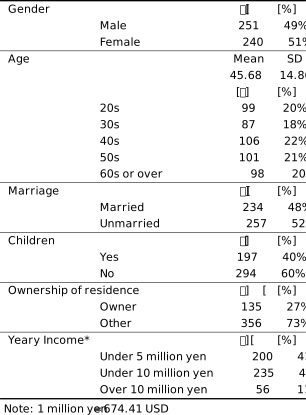
Table 3. Demographics of respondents.
2.2.9. Statistical Analysis
We examined the effects of demographic variables and disaster-related variables, such as the experience of victims of earthquakes, on reactions to the EEW. The dataset consisted of 491 respondents nested within seven areas (Hokkaido/Tohoku, Kanto, Chubu, Kinki, Chugoku, Shikoku, and Kyushu/Okinawa). We employed a multilevel modeling approach to account for differences across areas. Specifically, we conducted a multilevel ordinal logistic regression analysis with EEW reactions (inaction, motionless, physical) as ordinal dependent variables. The hierarchical structure of individuals nested within areas was modeled using a random-intercept specification, allowing intercepts to vary across areas. At Level 2, the only predictor was magnitude, which was common across areas, whereas all other variables were included at Level 1. Continuous Level 1 predictors (i.e., age, income, and number of daily disaster-preparedness) were centered within the cluster (CWC), while the Level 2 predictor (i.e., magnitude) was centered at the grand mean (CGM). Parameter estimation was conducted in R 29 using the brms package 30, specifying a cumulative logit model. In the analysis of the model, all iterations were set to 10,000, burn-in samples were set to 5,000, and the number of chains was set to four. The model confirmed that the value of Rhat for all parameters equaled 1.0, indicating convergence across the four chains. According to Kruschke 31, the interval estimation of coefficients is significant as long as 0 is not included between 95% credible intervals.
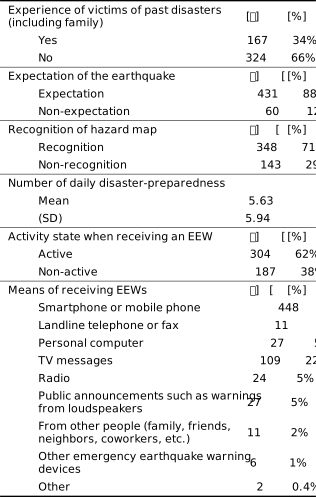
Table 4. Descriptive statistics of disaster-related variables.
3. Results
3.1. Characteristics of the Respondents
Table 3 presents the respondents’ demographics. Of the total sample, 49% were male with a mean age of 45.68 (\(\textit{SD}=14.86\)) years. Concerning reactions to EEW, 13% of the respondents reported inaction, 52% reported motionless reactions, and 35% reported physical reactions (or both motionless and physical reactions; see Table 2). Regarding the means of receiving EEW, smartphones or mobile phones accounted for 91%, TV messages accounted for 22%, and other means accounted for 5% or less (Table 4). In total, 34% of respondents had personally experienced victims of past disasters or had family members who had experienced them. Additionally, 62% of the respondents engaged in some activities when they received EEW.
3.2. Predicting the Reactions to the EEW
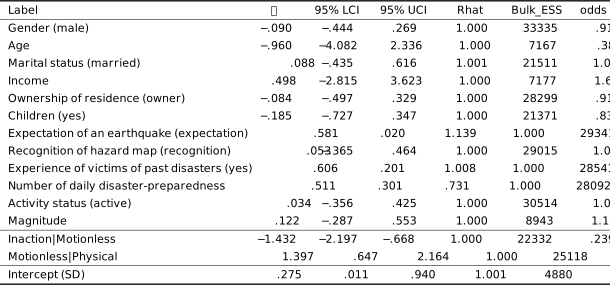
This study implemented a Bayesian multilevel ordinal logistic regression analysis to predict the reactions to the EEW (inaction, motionless, physical). The results indicated that the expectation of an earthquake (\(b =.581\), 95%CI =.020–1.139), experience of victims of past disasters (\(b = .606\), 95%CI \(=.201\)–1.01), and the number of daily disaster-preparedness (\(b =.511\), 95%CI \(=.301\)–.731) were related to reactions to EEW (Table 5). Although people who expected an earthquake were less likely to choose inaction, they were more likely to choose physical reactions (Fig. 1(a)). Similarly, people with experience as victims of past disasters were less likely to choose inaction and more likely to choose physical reactions (Fig. 1(b)). People who engaged in more daily disaster-preparedness were less likely to choose inaction or motionless reactions. By contrast, those who engaged in more daily disaster-preparedness were more likely to choose physical reactions (Fig. 1(c)). The estimated standard deviation of the random intercept for the area was .275 (95%CI \(=.011\)–.940), indicating some variability in the baseline response tendencies across areas.
Table 5. Results of the Bayesian multilevel ordinal logistic regression analysis to predict the reactions to the EEW.
4. Discussion
This study suggested that fewer than 40% of people took concrete protective actions (physical reactions) after receiving an EEW, while the majority chose behaviors that did not effectively ensure safety, such as inaction or motionless reactions. Previous studies on EEWs have indicated that many people fail to take concrete protective actions 8,9,10. In particular, people tend to engage in passive behaviors, such as checking their smartphone screens upon receiving EEWs 10. Thus, disaster literacy promoting protective actions is essential for the effective functioning of EEWs. This study analyzed the factors influencing reactions to EEWs using a predictive model.
The first factor was the expectation of an earthquake. Although it exhibited only a weak association with the choice of motionless reactions, the expectation of an earthquake reduced the tendency to choose inactions and increased the tendency to select physical reactions. Previous studies reported mixed results regarding the relationship between risk perception (such as the expectation of an earthquake) and safety behaviors 11. While some studies have found no association between risk perception and evacuation or preventive behavior 3,14,15, others have reported associations 12,13. Wachinger et al. 16 argued that contextual factors influence the relationship between risk perception and preventive behaviors. In this study, the association between expectations of an earthquake and physical reactions may be explained by individuals forming concrete images of disaster consequences. Previous study has indicated that the expectation of major earthquakes can promote preventive behaviors through the activation of disaster-related imagery 27.
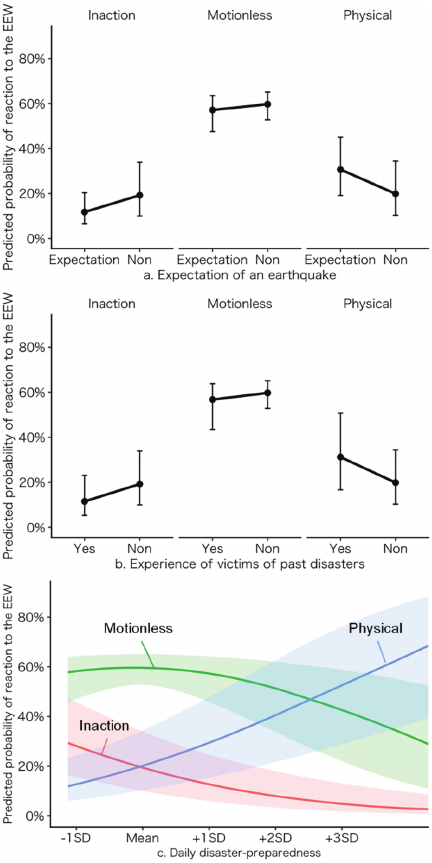
Fig. 1. Predicted probability of reaction to the EEW among the expectation of the earthquake, the experience of victims of past disasters, and the daily disaster-preparedness.
The second factor was the experiences of victims of past disasters. Similar to the expectation of an earthquake, the experiences of victims of past disasters were only weakly associated with motionless reactions; however, they reduced the likelihood of inaction and increased the likelihood of physical reactions. Previous study has indicated that disaster experience is correlated with immediate response behaviors to earthquakes 20 and that the experiences of victims of close others are related to intentions of reactions to EEW 21. According to Siegrist and Gutscher 22, people who have experienced a disaster are more likely to recall the negative effects they experienced at that time, which can lead to more protective behaviors. This study suggests that people with experiences as victims of past disasters are more likely to evoke negative affect when receiving EEWs, which is linked to physical reactions to protect themselves.
The third factor is daily disaster-preparedness. Greater levels of preparedness were associated with a lower likelihood of choosing inactions or motionless reactions and a higher likelihood of choosing physical reactions. Previous studies have indicated that household disaster-preparedness influences subsequent risk perception 23,24. Preparation for disasters in daily life may act as a type of simulation, enabling individuals to imagine what situations might occur during an earthquake, what would be needed, and what preparations would be necessary. Individuals who engage in preparedness behaviors are more likely to associate disaster imagery with fear, which in turn promotes protective behavior 20. Thus, people with greater levels of disaster-preparedness may more readily activate disaster imagery, and consequently respond more effectively to EEWs. These findings indicate that people who engage in greater levels of disaster-preparedness in their daily lives are more likely to make appropriate behavioral choices when receiving EEWs.
By contrast, recognition of the hazard map was not associated with reactions to EEWs. Previous studies have indicated that hazard maps do not significantly affect residents’ risk judgments 15 or evacuation behaviors during emergency heavy-rain warnings and evacuation orders 3. These findings suggest that recognition of hazard maps may not directly influence immediate behavioral decisions during disasters. In addition, direct associations were not found between demographic factors such as age and gender and reactions to EEWs. While some studies have suggested that demographic variables are related to protective behaviors during earthquakes 20,28, others have indicated that these factors are not associated with evacuation behaviors 14. Generally, engaging in physical reaction to EEWs becomes more difficult with increasing age. However, the lack of association between demographics and reactions to EEWs may be due to the large proportion of participants who chose motionless reactions, regardless of their attributes.
This study has several limitations. First, recall bias cannot be ruled out when interpreting the data because reactions to EEW were assessed retrospectively based on past major earthquakes. Further research should examine EEW reactions soon after earthquakes, as reported by Nakayachi et al. 9,10. Second, although the magnitude of the earthquake was not associated with reactions to EEW in this study, the time interval between receiving EEW and perceiving shaking may have influenced behavioral choices. However, this variable could not be examined because the information was not available in the survey data. Further studies should analyze reactions to EEWs using datasets that include this variable. Third, false alarms must be considered. In some cases, EEWs may be issued, but shaking may be too weak to be perceived. Such false alarms are unavoidable in the EEW systems. However, a previous study suggested that false alarms do not necessarily reduce trust in EEWs 8. Nonetheless, the extent to which people perceive shaking may affect behavioral choices, and further studies should investigate the relationship between seismic perception and protective behavior. In addition, differences in safety environments, such as the seismic resistance of buildings and the surrounding safety level, may influence the types of behavioral choices at the time of EEW reception. Future studies should examine the relationship between environmental factors and reactions to EEWs in greater detail.
This study suggests the limitations of safety behavior after EEWs and the important factors influencing behavioral choices. In contexts where immediate responses are required upon receiving an EEW, reactions are guided more by intuitive processes (i.e., System 1) than deliberative processes (i.e., System 2). Consequently, the expectations of an earthquake, the experiences of victims of past disasters, and daily disaster-preparedness, all of which are associated with disaster imagery, were more influential than the recognition of hazard maps and demographics. Strengthening disaster literacy in ways that foster concrete disaster imagery is important for enhancing the effectiveness of EEWs.
5. Conclusion
This study indicates that the proportion of people who chose concrete protective actions (i.e., physical reactions) upon receiving an EEW was relatively low. However, expectations of an earthquake, the experience of victims of past disasters, and daily disaster-preparedness were found to play important roles in promoting physical reactions. These results suggest that reactions to EEWs may rely primarily on the intuitive processes of System 1. Therefore, expecting that an earthquake may occur in the near future, perceiving earthquakes as personally relevant, and forming a vivid imagery of earthquake damage are important for eliciting immediate protective actions. To enhance the effectiveness of EEWs, disaster literacy communication should be designed to target System 1-related factors.
Acknowledgments
The authors gratefully acknowledge the cooperation of Masaki Ikeda of the National Research Institute for Earth Science and Disaster Resilience (NIED) for providing the survey data and the “Survey on Disaster Risk Perception and Protective Behaviors.” This study was supported by the Ministry of Education, Culture, Sports, Science, and Technology of Japan under its “Third Earthquake and Volcano Hazards Observation and Research Program.”
- [1] M. K. Lindell, S.-K. Huang, H.-L. Wei, and C. D. Samuelson, “Perceptions and expected immediate reactions to tornado warning polygons,” Natural Hazards, Vol.80, No.1, pp. 683-707, 2016. https://doi.org/10.1007/s11069-015-1990-5
- [2] R. Meyer and H. Kunreuther, “The ostrich paradox: Why we underprepare for disasters,” Wharton School Press, 2017.
- [3] S. Ohtomo, R. Kimura, Y. Kawata, and K. Tamura, “The determinants of residents’ evacuation behavior in the torrential rain in western Japan in 2018: Examination of survey data of victims in Okayama prefecture,” J. Disaster Res., Vol.15, No.7, pp. 1011-1024, 2020. https://doi.org/10.20965/jdr.2020.p1011
- [4] R. Kimura, H. Hayashi, K. Kobayashi, T. Nishino, U. Kenshin, and I. Satoshi, “Development of a disaster management literacy hub for collecting, creating, and transmitting disaster management content to increase disaster management literacy,” J. Disaster Res., Vol.12, No.1, pp. 42-56, 2017. https://doi.org/10.20965/jdr.2017.p0042
- [5] R. M. Allen and D. Melgar, “Earthquake Early Warning: Advances, scientific challenges, and societal needs,” Annual Review of Earth and Planetary Sciences, Vol.47, No.1, pp. 361-388, 2019. https://doi.org/10.1146/annurev-earth-053018-060457
- [6] USGS, “ShakeAlert: Earthquake Early Warning for the West Coast of the United States.” https://www.shakealert.org/ [Accessed September 17, 2025]
- [7] JMA, “What is an Earthquake Early Warning?.” https://www.data.jma.go.jp/eew/data/nc/shikumi/whats-eew.html [Accessed September 17, 2025]
- [8] F. Laure, F. Francesco, and B. Rémy, “Efficacy and usefulness of an independent public Earthquake Early Warning system: A case study – The earthquake network initiative in Peru,” Seismological Research Letters, Vol.93, No.2A, pp. 827-839, 2021. https://doi.org/10.1785/0220210233
- [9] K. Nakayachi, J. S. Becker, S. H. Potter, and M. Dixon, “Residents’ reactions to Earthquake Early Warnings in Japan,” Risk Analysis, Vol.39, No.8, pp. 1723-1740, 2019. https://doi.org/10.1111/risa.13306
- [10] K. Nakayachi, R. Yokoi, and J. Goltz, “Human behavioral response to Earthquake Early Warnings (EEW): Are alerts received on mobile phones inhibiting protective actions?,” Int. J. of Disaster Risk Reduction, Vol.105, Article No.104401, 2024. https://doi.org/10.1016/j.ijdrr.2024.104401
- [11] P. Bubeck, W. J. W. Botzen, and J. C. J. H. Aerts, “A review of risk perceptions and other factors that influence flood mitigation behavior,” Risk Analysis, Vol.32, No.9, pp. 1481-1495, 2012. https://doi.org/10.1111/j.1539-6924.2011.01783.x
- [12] T. Grothmann and F. Reusswig, “People at risk of flooding: Why some residents take precautionary action while others do not,” Natural Hazards, Vol.38, No.1, pp. 101-120, 2006. https://doi.org/10.1007/s11069-005-8604-6
- [13] I. M. Martin, H. Bender, and C. Raish, “What motivates individuals to protect themselves from risks: The case of wildland fires,” Risk Analysis, Vol.27, No.4, pp. 887-900, 2007. https://doi.org/10.1111/j.1539-6924.2007.00930.x
- [14] T. Hatori, R. Moriwaki, and K. Shingu, “Disparity between evacuation intention and actual evacuation behavior during a heavy rain induced disaster event in Japan: Exploring the role of everyday awareness of disaster preparedness,” Int. J. of Disaster Risk Reduction, Vol.92, Article No.103729, 2023. https://doi.org/10.1016/j.ijdrr.2023.103729
- [15] M. Siegrist and H. Gutscher, “Flooding risks: A comparison of lay people’s perceptions and expert’s assessments in Switzerland,” Risk Analysis, Vol.26, No.4, pp. 971-979, 2006. https://doi.org/10.1111/j.1539-6924.2006.00792.x
- [16] G. Wachinger, O. Renn, C. Begg, and C. Kuhlicke, “The risk perception paradox – Implications for governance and communication of natural hazards,” Risk Analysis, Vol.33, No.6, pp. 1049-1065, 2013. https://doi.org/10.1111/j.1539-6924.2012.01942.x
- [17] R. Kimura, S. Sato, T.-Y. Yi, K. Nakazawa, A. Matsukawa, A. Tsujioka, and R. Ohtsuka, “Elucidations of present situation of preparedness for natural disasters at home in Japan and its effective factors,” J. Disaster Res., Vol.19, No.5, pp. 818-828, 2024. https://doi.org/10.20965/jdr.2024.p0818
- [18] K. Nakazawa, S. Ohtomo, R. Kimura, T. Nagata, and M. Ikeda, “Examining the relationship between disaster scenarios and disaster management behavior during earthquakes,” J. Disaster Res., Vol.19, No.1, pp. 182-191, 2024. https://doi.org/10.20965/jdr.2024.p0182
- [19] J. S. Becker, S. H. Potter, S. K. McBride, A. Wein, E. E. H. Doyle, and D. Paton, “When the earth doesn’t stop shaking: How experiences over time influenced information needs, communication, and interpretation of aftershock information during the Canterbury Earthquake Sequence, New Zealand,” Int. J. of Disaster Risk Reduction, Vol.34, pp. 397-411, 2019. https://doi.org/10.1016/j.ijdrr.2018.12.009
- [20] M. K. Lindell, C. S. Prater, H. C. Wu, S.-K. Huang, D. M. Johnston, J. S. Becker, and H. Shiroshita, “Immediate behavioural responses to earthquakes in Christchurch, New Zealand, and Hitachi, Japan,” Disasters, Vol.40, No.1, pp. 85-111, 2016. https://doi.org/10.1111/disa.12133
- [21] J. S. Becker, L. J. Vinnell, S. K. McBride, K. Nakayachi, E. E. H. Doyle, S. H. Potter, and A. Bostrom, “The effects of earthquake experience on intentions to respond to Earthquake Early Warnings,” Frontiers in Communication, Vol.7, Article No.857004, 2022. https://doi.org/10.3389/fcomm.2022.857004
- [22] M. Siegrist and H. Gutscher, “Natural hazards and motivation for mitigation behavior: People cannot predict the affect evoked by a severe flood,” Risk Analysis, Vol.28, No.3, pp. 771-778, 2008. https://doi.org/10.1111/j.1539-6924.2008.01049.x
- [23] M. K. Lindell and R. W. Perry, “Household adjustment to earthquake hazard: A review of research,” Environment and Behavior, Vol.32, No.4, pp. 461-501, 2000. https://doi.org/10.1177/00139160021972621
- [24] S. Shapira, L. Aharonson-Daniel, and Y. Bar-Dayan, “Anticipated behavioral response patterns to an earthquake: The role of personal and household characteristics, risk perception, previous experience and preparedness,” Int. J. of Disaster Risk Reduction, Vol.31, pp. 1-8, 2018. https://doi.org/10.1016/j.ijdrr.2018.04.001
- [25] P. Slovic, ““If I look at the mass I will never act”: Psychic numbing and genocide,” Judgment and Decision Making, Vol.2, No.2, pp. 79-95, 2007. https://doi.org/10.1017/S1930297500000061
- [26] K. E. Stanovich and R. F. West, “Individual differences in reasoning: Implications for the rationality debate?,” Behavioral and Brain Sciences, Vol.23, No.5, pp. 645-665, 2000. https://doi.org/10.1017/S0140525X00003435
- [27] S. Ohtomo, R. Kimura, and K. Nakazawa, “The influence of risk literacy, recognition of earthquake, and psychographic factors on disaster prevention behaviors,” Chikyu Monthly, Vol.47, No.6, pp. 289-298, 2025.
- [28] J. D. Goltz, L. A. Russell, and L. B. Bourque, “Initial behavioral response to a rapid onset disaster: A case study of the October 1, 1987 Whittier Narrows Earthquake,” Int. J. of Mass Emergencies & Disasters, Vol.10, No.1, pp. 43-69, 1992. https://doi.org/10.1177/028072709201000103
- [29] The R Core Team, “R: A language and environment for statistical computing,” R Foundation for Statistical Computing, 2022.
- [30] P.-C. Bürkner, “brms: An R package for Bayesian multilevel models using Stan,” J. of Statistical Software, Vol.80, No.1, pp. 1-28, 2017. https://doi.org/10.18637/jss.v080.i01
- [31] J. K. Kruschke, “Doing Bayesian data analysis: A tutorial with R, JAGS, and Stan,” Academic Press, 2014. https://doi.org/10.1016/B978-0-12-405888-0.00008-8
This article is published under a Creative Commons Attribution-NoDerivatives 4.0 Internationa License.