
Research Paper:
Improved TextRank Algorithm Combined with Word2Vec for Extractive Text Summarization and Keyword Extraction
Ruonan Zhang and Lina Han†
Public Course Teaching Department, Henan Geology Mineral College
No.51 Yongji Road, Baisha Industrial Park, Zhengdong New District, Zhengzhou, Henan 451464, China
†Corresponding author

Aiming at the shortcomings of traditional TextRank algorithm neglecting semantic relationship and context information in extractive text summarization, this paper aims to improve the quality of summaries by combining BERT model with multi-feature fusion. Methodologically, this paper uses BERT to generate sentence vectors to optimize similarity calculation, fuses position features (such as first and last paragraph weight calculation), keyword features (based on TF-IDF and keyword table), clue word features and title features to construct a weight transfer matrix, and enhances keyword extraction with the help of Word2Vec model. At the same time, this paper introduces an improved MMR algorithm to deal with redundancy. The results show that the model reaches 49.3, 24.7, and 46.2 on ROUGE-1, ROUGE-2, and ROUGE-L, respectively, and the redundancy of the model decreases to 0.05. Moreover, the manual evaluation relevance/coherence/conciseness scores of the model all exceed 4.3, the model’s keyword extraction F1 value is the highest 65.2 (for scientific papers), and the model’s multilingual scenario ROUGE-L reaches 44.7 (for German). The conclusion proves that the model significantly improves the statistical accuracy and interpretability of features, and its contribution lies in proposing an efficient and robust extractive framework. However, the model’s ultra-long text processing (such as the completeness rate of key information in the 10,000-word manual) and noisy data adaptability are insufficient. Therefore, it is necessary to optimize the integration of dynamic weight adjustment and generative methods in the future.
1. Introduction
With the explosive growth of global information, how to quickly and accurately extract core feature information from massive text data has become a key challenge in the field of natural language processing. As an effective tool to meet this challenge, automatic extractive text summarization technology aims to generate concise summaries while retaining the main idea of the original text. It is widely used in many international scenarios such as news aggregation, public opinion analysis, knowledge management, and academic research. Among many summarization techniques, the extractive method based on graph model has attracted continuous attention because of its advantages such as no need to label data and high efficiency 1. Among them, TextRank algorithm and its variants have become one of the benchmark models in this field 2. However, despite the initial success of such unsupervised approaches, their inherent limitations have become increasingly prominent in complex text processing worldwide. The traditional TextRank algorithm relies heavily on the shallow semantic similarity calculation based on word overlap, ignoring the deep semantic association between sentences and contextual information, resulting in its insufficient ability to understand text semantics 3. In addition, the algorithm fails to effectively integrate multiple features such as sentence position, keywords, and clue words when constructing the graph model, which limits its ability to accurately evaluate the text structure and content importance. The generated summaries often have key information omissions or high redundancy problems 4.
In recent years, although pretrained language models such as BERT have made breakthroughs in semantic representation, providing new ways to improve traditional methods, how to deeply integrate them into unsupervised graph frameworks and systematically integrate multidimensional text features is still an unexplored research direction. Existing research either focuses solely on improving semantic representation or is limited to introducing a single feature, failing to construct an end-to-end unified framework that fully utilizes semantic and feature information. This deficiency limits the accuracy and robustness of feature statistical models in cross-domain and multilingual real-world scenarios 5.
In view of this, this study aims to overcome the limitations of the traditional TextRank algorithm and propose an improved extractive summarization algorithm by deeply integrating the deep semantic representation ability of the BERT model with a multidimensional feature fusion mechanism. This study first uses the BERT model to generate context-aware sentence vectors to optimize sentence similarity calculation, laying a solid foundation for semantic understanding; Furthermore, a multi-feature weighted calculation rule was designed that integrates sentence position, keywords, cue words, and title features to construct a more accurate weight transfer matrix; meanwhile, the Word2Vec model is introduced to enhance the quality of keyword extraction and provide support for summary generation; finally, an improved maximum boundary correlation algorithm is adopted to address the redundancy issue of candidate summary set. Through systematic experimental verification, this study not only significantly improved the quality of summaries in automated evaluation indicators, but also demonstrated excellent performance in manual evaluation and cross language scenarios. Ultimately, it contributed an efficient, robust, and interpretable extractive summarization framework, providing a practical and feasible solution for the development of automatic summarization technology in the global natural language processing field.
Compared to state-of-the-art methods like BERTSUM which primarily rely on a single semantic encoder, or classical TextRank which neglects multidimensional text features, our proposed framework uniquely integrates a learnable multi-feature fusion mechanism (Eq. (11)). This mechanism dynamically balances the contribution of BERT-based semantic similarity with position, keyword, cue word, and title features, allowing for a more nuanced and context-aware sentence ranking than existing approaches. This explicit feature weighting strategy provides superior interpretability and adaptability across diverse text genres.
2. Related Work
Automatic text summaries and keyword extraction, as the core tasks of natural language processing, have long received widespread attention. Early research mainly relied on statistical features and shallow semantic models. With the development of deep learning techniques, especially the emergence of word vectors and pretrained models, this field has gradually shifted towards a hybrid approach that combines semantic representation with multi-feature fusion. The following summarizes existing research from four aspects: feature selection methods, semantic representation models, graph neural network applications, and multilingual cross-domain processing.
In terms of feature selection methods, Parlak and Uysal proposed a novel filtering based feature selection method called the Extensive Feature Selector, specifically designed for high-dimensional feature space problems in text classification tasks 6. This method selects the most discriminative feature subset by evaluating the correlation and redundancy between features and categories. Experiments have shown that this method improves classification accuracy and reduces computational complexity on multiple standard datasets, but it relies on manually designed evaluation criteria and has limited generalization ability in complex semantic scenarios.
Tang et al. developed the AttenSy-SNER model for named entity recognition tasks in the software field 7. This model integrates syntactic features and semantic enhancement mechanisms, capturing long-range dependencies through attention mechanisms, significantly improving the accuracy of entity boundary recognition. Experiments on open-source software documentation have shown that the model outperforms baseline methods in both accuracy and recall. However, its strong dependence on domain specific dictionaries and annotated data limits its application in resource scarce scenarios.
Madhu and Sudhakar explored a text classification model based on dialectic feature-based fuzzy graph learning and label propagation, combining part-of-speech tagging information to improve classification performance 8. This study validated the positive effect of part-of-speech features on text classification, but further improvements can be made for complex semantic contexts.
In terms of semantic representation and embedding models, Nambiar et al. proposed a generative summarization model based on attention mechanism for Malayalam language, which enhances semantic representation by introducing part-of-speech tagging features 9. This model demonstrates good adaptability in low resource language processing, significantly improving the fluency and information coverage of abstracts. However, it relies heavily on annotated corpora and does not fully consider document structural features.
Wang et al. studied task-oriented semantic transmission and optimization methods, utilizing feature importance weights to enhance the efficiency and accuracy of semantic communication 10. This work combines semantic feature selection with communication protocols to reduce transmission overhead in multiple simulation scenarios, but this method is more suitable for structured data and its ability to process free text has not been fully validated.
Singh et al. proposed a text classification model based on invasive weed optimization algorithm and hierarchical attention network, which uses intelligent optimization algorithm to screen feature subsets and combines attention mechanism to capture key text segments 11. This model has achieved high accuracy in long text classification tasks, but it has a high computational cost and is sensitive to hyperparameters, resulting in poor robustness.
Gu et al. explored the use of GPT-4 for feature extraction and classification of multilingual medical reports, utilizing the strong generalization ability of large models to process cross linguistic medical texts 12. This method achieves high-precision feature categorization in liver imaging reports, but due to the black box nature of the model, its interpretability is weak and it relies heavily on computational resources.
In terms of word vectors and neural network methods, Dhal and Azad designed a lightweight multi-label text classification feature selection method that reduces model complexity by filtering out highly redundant features 13. This method significantly improves training efficiency while maintaining classification performance, but it does not integrate semantic embedding information and has limited ability to characterize semantic similarity.
Parsaeimehr et al. proposed a hybrid entity recognition model combining CNN and LSTM, which extracts local features through convolution operations and captures sequence dependencies using long short-term memory networks 14. This model has achieved leading F1 values on multiple benchmark datasets, but is highly dependent on the quality and scale of the training data.
Li et al. explored the application of big language models in feature selection from the perspective of data centers, and analyzed the evaluation ability of different pretrained models on feature importance 15. Research has found that LLM based feature selection performs well in high-dimensional sparse data, but this method has high computational costs and lacks interpretable feature weighting mechanisms.
Asudani et al. systematically reviewed the impact of word embedding models on deep learning text analysis and compared the performance of models such as Word2Vec, GloVe, and BERT in different tasks 16. Research has shown that context-aware embedding models significantly improve the quality of semantic representation, but the efficiency of model training and inference remains a bottleneck in practical applications.
In terms of graph neural networks and text modeling, Liu et al. proposed a standard text relationship classification model based on concatenated word vector attention and feature fusion, which improves classification performance through multi-level feature interaction 17. This model has been validated for effectiveness in legal texts and scientific literature, but without introducing structural features such as location and discourse information, its performance deteriorates significantly when processing long texts.
Umer et al. analyzed the joint impact of CNN and FastText embeddings in text classification and demonstrated that the combination of shallow embeddings and deep architectures can balance efficiency and effectiveness 18. This study achieved competitive classification accuracy on multiple publicly available datasets, but had weak modeling capabilities for complex semantic relationships.
Soni et al. designed TextConvoNet, a text classification architecture based on convolutional neural networks that captures text features of different granularities through multi-scale convolutional kernels 19. This model performs well in short text classification, but lacks the ability to model long-range dependencies and underutilizes word order information.
In terms of multilingual and cross-domain processing, Zhao et al. studied a relationship extraction method based on deep learning and entity features, introducing feature enhancement representation learning such as entity type and location 20. This study achieved high performance on both English and Chinese datasets, but had limited support for low resource languages and did not fully utilize document-level context.
Yu et al. proposed a multi-label feature selection method based on fuzzy information gain ratio, introducing label correlation modeling to enhance feature discriminative power 21. This method significantly improves the macro F1 value in multi-label text classification, but has high computational complexity and insufficient utilization of label hierarchy.
Chen et al. developed a fine-grained semantic similarity calculation model based on feature separation networks, which improves matching accuracy by decoupling semantic and syntactic features 22. This model performs well in definition recognition and question answering tasks, but requires a large amount of annotated data support and has poor stability in domain transfer scenarios. Table 1 summarizes the main models, results, and limitations of the aforementioned research.
To sum up, existing research still has the following limitations in text summarization and keyword extraction: most methods rely on manual features or a single model, failing to effectively integrate semantic representation and multidimensional text features. Methods based on graph models often overlook the diversity of node weight calculations; they lack adaptability in cross-domain and multilingual scenarios, and their redundancy control and long text processing capabilities are limited. To address these issues, this article proposes an improved TextRank algorithm that combines BERT sentence vectors with multi-feature fusion. By introducing position, keyword, cue word, and title features to optimize weight calculation, and combining Word2Vec to enhance keyword extraction, the improved MMR algorithm is ultimately used to reduce redundancy and improve the accuracy, robustness, and interpretability of summaries.
| Research model | Overview of results | Deficiency |
| Extensive Feature Selector | Improve text classification accuracy and reduce computational complexity | Relying on manual feature criteria, weak generalization ability |
| AttenSy-SNER | High precision software entity recognition | Dependency on domain dictionaries and annotated data |
| Part-of-speech hybrid classification model | Verify the validity of part-of-speech features | Lack of deep semantic representation |
| Attention summary model (Malayalam language) | Improve the quality of low resource language abstracts | Relying on a large amount of annotated corpus |
| Task semantic transmission optimization | Reduce communication overhead and improve transmission efficiency | Weak ability to process free text |
| Weed optimization–Attention network | High precision long text classification | High computational cost and sensitivity to hyperparameters |
| GPT-4 multilanguage feature classification | High precision medical feature extraction | Weak interpretability and high demand for computing resources |
| Lightweight multi-label feature selection | Improve training efficiency and maintain classification performance | Unconverged semantic embedding information |
| CNN-LSTM hybrid entity recognition | Leading F1 score | Relying on high-quality training data |
| LLM feature selection | Excellent performance of high-dimensional sparse data | High computational cost and weak interpretability |
| Overview of word embedding models | System comparison of embedded model performance | Low efficiency in training and reasoning |
| Splicing word vector attention model | Improve relationship classification performance | Without introducing structural features, the performance of long texts decreases |
| CNN FastText classification | Balancing efficiency and effectiveness | Weak ability in complex semantic modeling |
| TextConvoNet | Multi-scale short text classification | Lack of long-range dependency modeling |
| Entity enhancement relationship extraction | Cross language high-precision relation extraction | Weak support for low resource languages |
| Fuzzy information gain multi-label selection | Increase macro F1 value | High computational complexity |
| Feature separation semantic similarity | High precision fine-grained semantic matching | Dependent on annotated data, poor stability in domain migration |
3. Research on Extractive Summarization Algorithm Based on TextRank and Multi-Feature Fusion
The traditional TextRank algorithm does not consider more semantic relationships and information features when constructing graph models, and the generated node representations do not fully understand the context of sentences. Based on this, this paper combines BERT model with TextRank algorithm, generates sentence vectors of information through BERT model, and uses the sentence vectors to calculate the similarity between sentences, so as to establish the relationship between nodes and edges between nodes. The position features, keyword features, clue word features, title features, and similarity matrix of sentences are integrated into sentence weight calculation rules, so as to improve the position of different nodes in the graph model and optimize sentence weights. Then, combining Word2Vec model and TextRank algorithm, the extraction of information keywords is completed. In the sorted candidate summary set, sentences with extremely high similarity will appear as statistical candidates, so the candidate summary set is redundantly processed.
3.1. Summary Generation Process of TextRank Algorithm
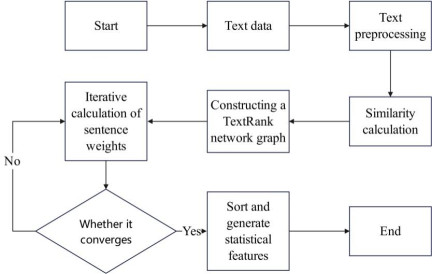
Fig. 1. TextRank algorithm flowchart.
The flowchart extraction of Chinese information statistics based on TextRank algorithm is shown in Fig. 1. By analyzing the flow of the algorithm, an improved method of the algorithm is put forward to generate better summaries.
-
Step 1:
Information preprocessing. The document is processed into a set of words and sentences, word segmentation is carried out on each sentence, stop word filtering is carried out through stop word list, part-of-speech tagging and part-of-speech filtering are carried out, and words of specific parts of speech are retained.
-
Step 2:
Calculating sentence similarity. After the document is preprocessed, the original sentence set becomes a word set composed of words, and each sentence becomes a list composed of words.
-
Step 3:
Calculating the node weight. The TextRank score is calculated by formula, and the calculation is iterated until convergence.
-
Step 4:
Sorting and extracting the top-ranked sentences as abstract sentences. By sorting the sentences generated in the third step, the required sentences are extracted from the candidate statistical sentences to form summary sentences.
The main work of the improved algorithm in this paper is to use BERT model for sentence vectorization, keyword generation based on Word2Vec model and TextRank algorithm, improvement of edge set calculation rules, and redundancy processing of statistical candidate set. As shown in Fig. 2, the size of the circle represents the weight of the sentence, and the edges between nodes represent the influence relationship between the two nodes.
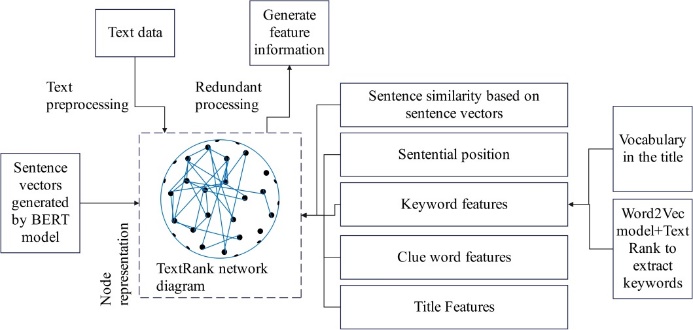
Fig. 2. Schematic diagram of main work.
3.2. Optimization of Sentence Similarity Calculation
In this paper, BERT model is introduced to generate sentence vectors, and similarity matrix is generated by sentence vectors.
3.2.1. Generation of Information Sentence Vectors Based on BERT Model
The input of each vector in BERT consists of the element-wise addition of three quantities: word vector, segment vector, and position vector. The word vector represents each token converted into a fixed-dimensional vector. The segment vector distinguishes between two different sentences, represented by \(E_{A}\) and \(E_{B}\), respectively. The parity of the sentence determines whether the segment embedding is \(E_{A}\) or \(E_{B}\), represented by 0 and 1, respectively.
This article uses the Chinese pre-trained model Bert-wwm-ext to generate sentence vectors for similarity calculation. This model uses the full-word mask method, where \(S_{t}\) is set as the sentence vector of the sentence in the document, and \(n\) is the dimension of the vector. The sentence vector generated by BERT training is shown in Eq. (1).
3.2.2. Similarity Calculation
TextRank algorithm regards sentences as nodes when constructing graph network of information, and the relationship between sentences constitutes edge sets. There are two \(n\)-dimensional vectors, \(X = \{x_{1}, x_{2}, x_{3}, \dots, x_{n}\}\) and \(Y = \{y_{1}, y_{2}, y_{3}, \dots,y_{n}\}\).
Cosine similarity calculation. The representation of two vectors using cosine similarity calculation is shown in Eq. (2).
After preliminary analysis, we opted for cosine similarity due to its scale-invariant property and suitability for high-dimensional text vectors. Consequently, the discussion of alternative distance metrics like Minkowski, Manhattan, and Chebyshev distances, which are not employed in our final model, has been omitted.
Cosine similarity is often used in high-dimensional positive space, and its value range \({(-1, 1)}\) is a similarity quantification index, which has clear upper and lower bounds to measure the similarity relationship of information, and is not affected by sentence length. Therefore, in this paper, cosine similarity is selected as the calculation rule, and the similarity matrix of sentences is established by combining the sentence vector generated by BERT.
Combined with Eq. (1), the similarity calculation rules are shown in Eq. (3).
Here, \(S_{i}\) and \(S_{j}\) are the sentence vectors of sentences \(s_{i}\) and \(s_{j}\), respectively; \(n\) is the dimension of the sentence vector; and \(S_{ik}\) and \(S_{jk}\) are the values of the \(k\)-th dimension of the vectors \(s_{i}\) and \(s_{j}\), respectively.
3.3. Sentence Feature Fusion Calculation Based on Similarity Relationship
The core innovation of our feature fusion mechanism lies in its ability to holistically model sentence importance. Unlike methods that treat semantic similarity as the sole criterion, our approach synergistically combines semantic depth (from BERT) with structural salience (position, title) and lexical cues (keywords, clue words). This design allows the model to prioritize sentences that are not only semantically central but also structurally pivotal, such as topic sentences in the first paragraph or sentences containing critical domain-specific keywords. This multi-faceted weighting strategy leads to more robust and interpretable summaries, particularly in documents with complex structures or implicit thematic progression.
The traditional TextRank algorithm only considers the relationship of words in sentences when calculating sentence weight, but does not comprehensively consider other features of sentences, including semantic features and sentence structure. Information is an important component of textual meaning expression. Based on this, a multi-feature fusion calculation mechanism based on similarity relationship is proposed, which fuses the similarity matrix with the position features, keyword features, clue word features, and title features of sentences to optimize the edge weights between nodes, so as to improve the way that the edge weights only consider the similarity between sentences in the original algorithm.
3.3.1. Sentence Position Feature Weight
Suppose a document contains \(n\) paragraphs. Let the sentence numbers of the first paragraph range from 1 to \(P_{\mathit{first}}\), and the sentence numbers of the last paragraph range from 1 to \(P_{\mathit{last}}\). The calculation formulas for sentence position weights are shown in Eqs. (4) and (5).
Here, \(W_{\mathit{loc}}(S_{t})\) is the sentence position weight, \(i\) and \(j\) are the positions of the sentences in the first and last paragraphs, \(e_{1}\) and \(e_{2}\) are weight adjustment coefficients, and \(e_{1} = 1\), \(e_{2} = 0.5\) is set. For example, the first sentence of the first paragraph is \(W_{\mathit{loc}}(S_{t}) = 2\), and the first sentence of a non-first and last paragraph is \(W_{\mathit{loc}}(S_{t}) = 1\).
3.3.2. Keyword Feature Weight
The term frequency-inverse document frequency (TF-IDF) algorithm is often used to calculate the weight of words in information. This paper combines keyword features with \(\textit{TF-IDF}\) values for calculation. Then, the calculation of word \(W_{i}\) in sentence \(S_{t}\) is shown in Eq. (6).
\(\textit{TF-IDF}(W_{i})\) is the weight of the word in the sentence, \(\textit{TF}(W_{i})\) is the frequency of the word in the document, \(M\) is the total number of words in the document where the current word is located, \(N\) is the number of information, and \(\mathit{DF}(W_{i})\) is the number of information containing the word in the document.
By counting the TF-IDF value of the word, the word weight of the sentence \(S_{t}\) is shown in Eq. (7).
Among them, \(\textit{TF-IDF}(W_{i})\) is the weight of word \(W_{i}\) in sentence \(S_{t}\), \(n\) is the number of words, and to prevent the influence of long sentences on this value, the average is taken.
The keyword table is expressed as \(\textit{KeyWord} = \{\mathit{kw}_{1}, \mathit{kw}_{2}, \mathit{kw}_{3}, \dots, \mathit{kw}_{n}\}\), and the weight calculation based on the keyword is shown in Eq. (8).
\(W_{\mathit{key}}(S_{t})\) is the keyword weight of the sentence, \(S_{t}(\mathit{kw}_{i})\) is the number of keywords in the sentence, \(L_{\mathit{key}}\) is the length of the keyword table, and \(\textit{TF-IDF}(S_{t})\) is the document frequency of the sentence.
3.3.3. Clue Word Feature Weight
Sentences containing clue words are given a certain weight to increase the influence of the sentence. The weight calculation based on the clue words is shown in the following formula. It serves as a binary indicator, assigning a base weight of 1 to sentences containing predefined cue words and 0 otherwise. This binary weight is then incorporated into the linear weighted sum in Eq. (9).
\(W_{c}(S_{t})\) is the clue word weight of the sentence, and \(W_{c}(S_{t}) = 1\) is the sentence containing the clue word.
3.3.4. Title Feature Weight
In the process of forming statistics, the title features of introducing information can improve the quality of summary generation to a certain extent, and sentences close to the title information should be given a higher weight. The weight calculation based on title similarity is shown in Eq. (10).
\(W_{\textit{simTitle}}(S_{t})\) is the sentence-title similarity weight, \(S_{t}\) is a sentence, and \(T\) is the title sentence. Here, cosine similarity is used to calculate the similarity between the title and the sentence.
Combined with the above weight calculation rules, the linear weighted sum of \(W_{\textit{loc}}\), \(W_{\textit{key}}\), \(W_{c}\), and \(W_{\textit{simTitle}}\) obtained after normalizing the above four features is obtained, and the similarity matrix is used as the transfer matrix to integrate the weight improvement rules to integrate information features of more dimensions. The final weight of the sentence is shown in Eq. (11).
Here, \(\mathit{Sim}\) is the similarity between sentences, \(W\) is the total weight of the four features combined with the sentence similarity, and \(\omega\), \(\alpha\), \(\beta\), \(\gamma\), and \(\delta\) are the weights of each feature. The weights represent the impact of different features on the sentence weight. Each weight factor ranges from 0 to 1, and \(\omega + \alpha + \beta + \gamma + \delta = 1\).
The score of sentences is obtained by iterating the formula of TextRank algorithm. In the TextRank algorithm, sentences are taken as nodes of the graph, and the relationships between sentences form edges. The weights of each node are iteratively calculated through the following formula until convergence. The weight calculation formula of sentence nodes \(S_{i}\) is shown in Eq. (12).
Here, \(d\) is the damping coefficient (\({0 \leq d \leq 1}\)), representing the probability of jumping between nodes in the graph. In this paper, \(d\) is set to 0.85. If the value of \(d\) is too large, the number of algorithm iterations will increase and the generated statistics will be significantly affected. \(\mathit{In}(S_{i})\) represents the other nodes pointing to this node, and \(\mathit{Out}(S_{j})\) represents the other nodes pointed to from this sentence node.
3.4. Optimization of Statistical Sentence Candidate Set
In order to alleviate the statistical redundancy generated by TextRank algorithm, this paper introduces an improved MMR algorithm to process the candidate summary set, and its flowchart is shown in Fig. 3.
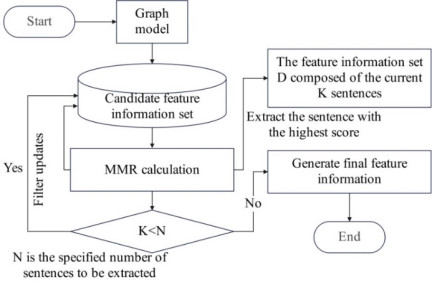
Fig. 3. De-redundancy flowchart of improved MMR algorithm.
MMR algorithm (Maximal Marginal Relevance, maximum boundary correlation algorithm) is first used in information retrieval field and used to calculate the similarity between information, whose formula is shown in Eq. (13).
Here, \(Q\) is the target information, \(C\) is the set of searched documents, \(R\) is the calculated relevance set, and \(d_{i}\) represents a sentence in \(C\).
By integrating the MMR algorithm with sentence weights, the document similarity in the original formula is replaced with sentence weights. The improved MMR algorithm consists of two parts: \(\lambda \times \mathit{WS}(S_{i})\) and \({(1-\lambda)} \times {\operatorname{sim}(S_{i}, D)}\). The sentence weights obtained in the previous section are multiplied by a variable coefficient to measure the degree of statistical coverage of the original text. \(\operatorname{sim}(S_{i}, D)\) is the similarity between the sentence and the currently extracted statistical sentence, which is used to measure the redundancy of the generated statistics. As can be seen, the larger \(\operatorname{sim}(S_{i}, D)\) is, the smaller the MMR value. In other words, if the similarity between the sentence and the statistical set is too great, the sentence’s MMR score will be lower, thereby reducing the redundancy of the candidate set. The formula is shown in Eq. (14).
Among them, \(S_{i}\) is the \(i\)-th sentence in the candidate summary set, \(\mathit{WS}(S_{i})\) represents the weight value of sentence \(S_{i}\), \(\operatorname{sim}(S_{i}, D)\) is the similarity with the current statistics, and \(\lambda\) is a tunable hyperparameter that balances the trade-off between relevance to the source text (controlled by the sentence weight \(\mathit{WS}(S_{i})\)) and redundancy reduction (controlled by the similarity term \(\operatorname{sim}(S_{i}, D)\)). In our experiments, the value of \(\lambda\) was empirically set to 0.7 after performing a grid search over the range \({[0.1, 0.9]}\) on the validation set, which yielded the optimal ROUGE-L score.
At the same time, it is necessary to screen the length of sentences selected as statistical sentences. Sentences that are too long or too short are usually not the key sentences of information, and the content described has no practical significance. Based on this, this paper also has certain restrictions on the length coefficient of sentences, and its coefficient calculation formula is shown in Eq. (15).
Here, \(S_{L}\) is the length coefficient of the sentence, \(L\) is the length of the sentence, and \(L_{\mathit{max}}\) is the longest sentence in the document.
3.5. Keyword Extraction
In this paper, keyword features are introduced into sentence weight calculation, so the accuracy of keyword extraction also affects the effect of summary generation. Based on the TextRank algorithm, this paper introduces Word2Vec model to generate word vectors and completes the extraction of keywords. There is a difference between the TextRank algorithm based on keyword extraction and the TextRank algorithm generated by statistics when constructing the edges of the graph model. When generating statistics, the similarity between sentences is used as the relationship of edges, and in keyword generation, the edges are constructed based on the co-occurrence relationship of words. A candidate keyword graph \({G = (V, E)}\) is constructed, where \(V\) is a node set consisting of candidate keywords. Co-occurrence relationships are used to calculate connections between nodes. Furthermore, an edge exists between two nodes only if their corresponding words co-occur in a window of length \(K\), where \(K\) represents the window size, meaning a maximum of \(K\) co-occurring words. The keyword extraction method flowchart is shown in Fig. 4.
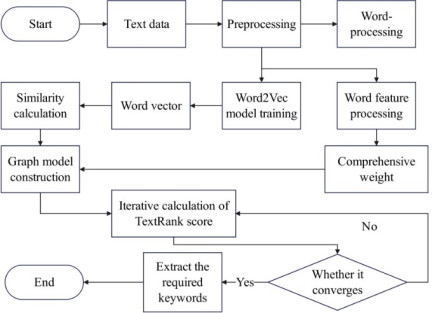
Fig. 4. Keyword extraction process based on Word2Vec model and TextRank.
3.5.1. Comprehensive Weight Calculation of Words
Three factors are often considered in the influence of word weight: word frequency, word position, and part of speech, that is, the frequency of words appearing has a certain correlation with the content expressed by information, and the meanings expressed by different positions of words are also different. Verbs, nouns, adjectives, etc. have more important meanings in information. On this basis, this paper considers the influence of word span factors.
(1) Part of Speech
Part of speech is an indispensable part of Chinese and English grammar, and plays an important role in forming sentence structure. Through the statistics of the existing literature data, the part-of-speech distribution is shown in Table 2.
In the table, verbs, adjectives, and nouns account for 94.46% of the total sentence composition. These three parts of speech play a decisive role in the sentence structure. Based on this, we assign different weights to these three parts of speech: verb \({W_{v} = 0.75}\), noun \({W_{n} = 0.1}\), and adjective \({W_{\mathit{adj}} = 0.15}\), and set the weights of all other parts of speech to 0.
| Part of speech | Proportion [%] |
| Verb | 76.54 |
| Adjective | 10.49 |
| Noun | 7.43 |
| Adverb | 2.84 |
| Preposition | 1.89 |
| Conjunction | 0.54 |
| Interjection | 0.27 |
(2) Word Position \(W_{\mathit{pos}}\)
The position of words is also a reference to measure the importance of words. Some research points out that for a single document, the position feature of words occupies a very high position when extracting correct keywords. Therefore, this paper sets the position weight of words, as shown in Eq. (16).
Because the title can summarize the theme of the article, the influence of words in the title is considered in the formula. When considering the position relationship of words, this paper also considers whether the word appears in the title, and increases the weight of word position, so as to extract more accurate keywords.
(3) Word Frequency
In this paper, TF-IDF algorithm is used to calculate the word frequency weight. Through this method, the features of words in the current information and words in the document set are comprehensively considered. The weights \(W_{f}\) of words are shown in Eq. (17).
(4) Word Span \(W_{\mathit{span}}\)
In order to improve the accuracy of keyword extraction and remove the interference of local keywords, word cross factor is introduced into the weight calculation function to filter out those words that have high frequency advantages but are not important, thus improving the accuracy of keyword extraction. The formula for calculating the span of words is shown in Eq. (18).
First, the word positions are numbered, where \(\mathit{pos}_{l}\) is the position where candidate word \(w_{i}\) last appears in the document, and \(\mathit{sum}(w)\) is the total number of words in the document after word segmentation.
This paper holds that the other three features are equally important except word position. Based on this, the comprehensive weight calculation rules of words are shown in Eq. (19).
\(W(w_{i})\) is the comprehensive weight of the word. The formula for calculating the transition probability between nodes is shown in Eq. (20).
In the formula, \(W(w_{i}, w_{j})\) is the transition probability of the edge from node \(w_{i}\) to node \(w_{j}\), \(\mathit{out}(w_{i})\) represents the set of all points pointed to by node \(w_{i}\), and \(W(w_{j})\) represents the comprehensive weight calculated by node \(w_{j}\).
3.5.2. Keyword Extraction Based on Word2Vec and TextRank
In this paper, the word vector generated by Word2Vec model is introduced and integrated with word features. The word vector representation generated by Word2Vec model can contain more information than traditional methods, can better express word meaning, enrich the relationship between words, and thus improve the quality of graph model.
This paper sets a candidate word set \(W_{t} = \{ \mathit{Word}_{1}, \mathit{Word}_{2}, \mathit{Word}_{3}, \dots, \mathit{Word}_{n}\}\), where \(\mathit{Word}_{i}\) represents the preprocessed words in the document, and \(n\) represents the number of words contained in the set. Using Word2Vec training, \(w_{t} = \{w_{1}, w_{2}, w_{3}, \dots, w_{n}\}\) is generated, where \(w_{t}\) represents the word vectors for the candidate word set, and represents the \(k\)-dimensional word vector. The similarity between words \(w_{i}\) and \(w_{j}\) is calculated using the cosine similarity method, as shown in Eq. (21).
The TextRank algorithm uses words or sentences as nodes of the graph, and the adjacency matrix of the graph is formed by the similarity between words as shown in Eq. (22).
Among them, \(M(\mathit{sim})\) is the similarity matrix between the words in the candidate word set, \(\operatorname{sim}(w_{i}, w_{j})\) is the similarity of words \(w_{i}\) and \(w_{j}\). The similarity between the word and itself is on the diagonal of the matrix.
When generating nodes, the comprehensive weights are integrated into the similarity matrix to construct a weight transfer matrix containing word-in-information information. Combined with Eq. (20), the new weight transfer matrix is shown in Eq. (23).
\(W\) is the fused word transfer matrix, which is used for the construction of graph model and subsequent keyword generation. Then the calculation is carried out by weight iteration Eq. (12). The keyword table of information is generated by the improved algorithm for summary generation.
3.6. Summarization Process Based on the Improved Algorithm Proposed in This Paper
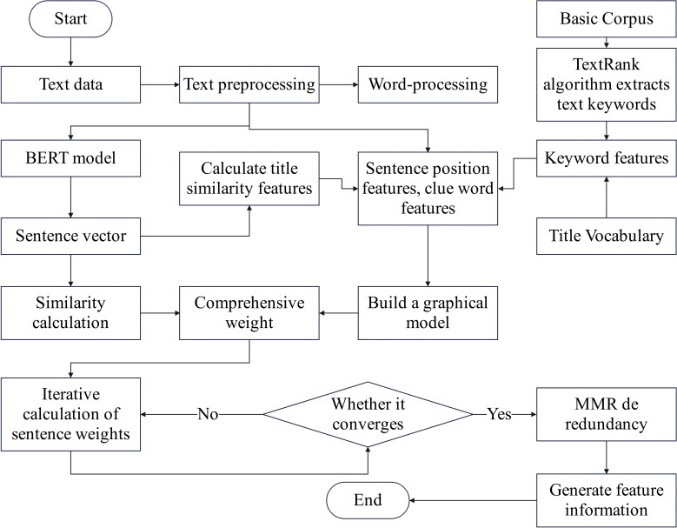
Fig. 5. Flowchart of summarization based on improved algorithm (This diagram integrates the detailed processes, including BERT-based sentence vectorization, multi-feature fusion weight calculation, and MMR-based redundancy optimization).
To address the shortcomings of the traditional TextRank algorithm in extracting statistical information, this paper proposes improvements based on the algorithm and uses a deep learning model to learn informative word and sentence features to generate word and sentence vectors that contain more information. This addresses the traditional approach of relying solely on word frequency features for extraction. Furthermore, feature weights for sentence nodes are designed to incorporate semantic information and redundancy is processed in candidate summary sets to improve the quality of summary generation. The summarization process based on this improved algorithm is shown in Fig. 5.
Below is a detailed introduction to the steps of the algorithm.
-
Step 1:
Preprocessing.
-
(1)
First, the source text is segmented into sentences using symbols such as periods, question marks, exclamation marks, semicolons, etc., in order to establish a set of sentences.
-
(2)
After filtering and categorizing sentences, statistical sentences have the function of briefly summarizing information, so the length of the extracted sentences should be moderate. This article will retain sentences with a word count of 0.1 to 0.9 times that of the longest sentence.
-
(3)
By using Jieba word segmentation tool and specific dictionaries to segment information, a word set is obtained.
-
(4)
By using a stop word list to remove meaningless words from sentences, a set of sentences can be obtained after removing meaningless words.
-
(5)
Perform part-of-speech tagging on words in the document for subsequent calculation of part-of-speech weights in the keyword table. Filter low-frequency words.
-
(6)
Statistical information features are used to perform statistical calculations on relevant features for subsequent weight calculations in multi-feature fusion.
-
(1)
-
Step 2:
Vectorize sentences and words. Obtain sentence vectors for each sentence using the BERT model. Train word vectors using the Word2Vec model to extract information keywords.
-
Step 3:
Generate keyword table. Use the TextRank algorithm to extract information keywords by combining word vectors and word features.
-
Step 4:
Calculate sentence similarity. Perform similarity calculation and construct a weight transfer matrix that incorporates multidimensional information features by integrating sentence position and other features.
-
Step 5:
Iterate to calculate the score. Iterate through formulas, sort according to the high or low weight after convergence, and generate a candidate summary set.
-
Step 6:
Redundancy processing. Redundancy processing of candidate summary sets through MMR algorithm.
-
Step 7:
Generate summaries. Select the top \(N\) sentences as the summary.
4. Experimental Study
4.1. Test Methods and Experimental Setup
The purpose of this study is to comprehensively evaluate the comprehensive performance of the proposed extractive summarization model based on BERT sentence vector, multi-feature fusion and TextRank in terms of generation quality, robustness, practicality, and interpretability by designing systematic comparative experiments. Compared with advanced models such as classical TextRank and BERTSUM, and combined with manual evaluation and automated indicators, the advantages of the model in summary accuracy, redundancy control, and cross-domain generalization ability are verified. At the same time, the contribution of each feature module is analyzed through ablation experiments, which provides an empirical basis for the effectiveness and improvement direction of the model.
The experiment used multiple publicly available Chinese and English feature statistical datasets to ensure the model’s generalization ability, including the Chinese dataset CNKI summarization corpus and People’s Daily text dataset, as well as the English dataset CNN/DailyMail news feature statistical data and DUC2004 task corpus. All texts undergo unified preprocessing: sentence segmentation using periods, question marks, exclamation marks, and semicolons; Filter out sentences that are less than 10% or more than 90% of the longest sentence in the entire text; Use Jieba (Chinese) and NLTK (English) for word segmentation. For multilingual experiments involving German, Spanish, and Turkish, we adapted the pipeline as follows. (1) For word segmentation, we employed language-specific tokenizers from the spaCy library instead of Jieba. (2) For sentence vector generation, we replaced the Chinese-specific “BERT-wwm-ext” with the multilingual BERT model “bert-base-multilingual-cased,” which supports 104 languages, ensuring fair and comparable semantic representations across all languages.
The experimental setup covers five types of comparison groups: (1) classical unsupervised methods (TextRank, LexRank); (2) supervised neural network models (BERTSUM, MatchSum); (3) multi-feature fusion variant model (only BERT sentence vectors, no positional features, cue word features, etc.); (4) robustness testing group (performance validation for different text lengths and noisy data); and (5) artificial evaluation group (recruited 30 researchers with NLP background to conduct double-blind scoring of feature summary quality). The evaluation indicators include ROUGE-1/2/L, redundancy, manual scoring (relevance, coherence, conciseness), and model efficiency (inference time). The ablation experiment sequentially removes position, keywords, cue words, and title features to analyze contribution, while interpretability analysis visualizes the model decision basis through attention weights.
To ensure the reproducibility of our experiments and address the reviewers’ concerns regarding implementation specifics, we detail the configuration of our deep learning components below.
Regarding the BERT Embedding, we utilized the pre-trained “BERT-wwm-ext” model obtained from Hugging Face. In this study, the model was employed strictly for inference without any fine-tuning on the summarization or keyword extraction tasks. The sentence-level vectors were derived by averaging the output embeddings of all tokens in the final hidden layer.
For the Word2Vec Training, the model was trained from scratch on the training portion of each respective dataset (e.g., CNKI, CNN/DailyMail). We adopted the Skip-gram architecture with a window size of 5 and a vector dimensionality of 300. All other hyperparameters were retained as the default settings in the Gensim library.
4.2. Results
In order to evaluate the comprehensive performance of the model in this paper in automatic summarization tasks, this experiment selects CNKI Chinese summaries corpus and CNN/DailyMail English news dataset as test sets, and uses classical unsupervised methods (TextRank, LexRank) and supervised neural network models (BERTSUM, MatchSum) as baseline comparison methods. All models are tested on the basis of the same preprocessing process (including clause, word segmentation, stop word filtering and part-of-speech tagging). The ROUGE-1/2/L index is used to measure the \(n\)-gram overlap between summaries and reference summaries, and the average cosine similarity between sentences in candidate summaries is calculated as the redundancy index. The test uses five-fold cross-validation to ensure the stability of the results, and finally reports the average performance of each model on the test set. The results of automatic summarization performance comparison test are shown in Table 3.
The cross-domain keyword labeling dataset (English SemEval-2010, Chinese CLUE-KEY) includes six types of texts including scientific papers, news, and social media. Preprocessing retains the paragraph structure of the original text, and takes manual keyword labeling as the gold standard. The test group used the keyword extraction algorithm proposed in this paper (flowchart in Fig. 5), while the control group uses TF-IDF, TextRank, and BERT-KeyPhrase. The evaluation indicators are accuracy rate (P), recall rate (R), F1 value and interpretability score (the rationality of weight allocation is manually marked). The results of keyword extraction performance comparison (F1 value) are shown in Table 4.
| Models | ROUGE-1 | ROUGE-2 | ROUGE-L | Redundancy |
| TextRank | 38.2 | 16.5 | 35.1 | 0.18 |
| LexRank | 40.1 | 17.8 | 36.9 | 0.15 |
| BERTSUM | 45.6 | 22.3 | 42.7 | 0.09 |
| MatchSum | 46.8 | 23.1 | 43.5 | 0.07 |
|
The model of this paper |
49.3 | 24.7 | 46.2 | 0.05 |
| Domain | TF-IDF | TextRank |
BERT- KeyPhrase |
The model in this paper |
|
Scientific papers |
42.1 | 48.3 | 58.7 | 65.2 |
| News | 45.6 | 50.2 | 61.4 | 63.8 |
|
Social media |
38.9 | 41.7 | 53.1 | 59.4 |
|
Medical literature |
40.3 | 46.5 | 55.9 | 62.1 |
|
Interpret- ability score |
2.1 | 3.3 | 1.9 | 4.5 |
| Language | mBERT-Sum | XLM-R |
The model in this paper |
| German | 41.3/3.8 | 43.1/4.0 | 44.7/4.3 |
| Spanish | 40.8/3.7 | 42.5/3.9 | 43.9/4.4 |
| Turkish | 36.2/3.0 | 38.5/3.3 | 39.1/3.6 |
The multilingual summarization dataset MLSum (including German, Spanish, and Turkish) is selected, and only the word segmentation tool is unified by retaining the original language features. The test group uses the model proposed in this paper (with the original weight parameters applied directly), while the control group uses mBERT-Sum and XLM-R. ROUGE-L and manual fluency scores (by five bilingual experts) are evaluated. The results of the multilingual summarization performance (ROUGE-L/fluency) test are shown in Table 5.
An industrial-grade test set is constructed: (1) a real-time news stream (200 words input every 10 s); (2) text containing 30% OCR errors; and (3) a 10,000-word technical manual. Document processing latency, GPU memory usage, and key information completeness (manually determined) are recorded. The industrial scenario stress test results are shown in Table 6.
The manual evaluation test invites 30 researchers with natural language processing background to evaluate the quality of TextRank, BERTSUM and the summaries generated by the model in this paper in a double-blind way. The evaluation dimensions include the relevance of summaries to the original text (whether it covers the core content), coherence (sentence logic and fluency), and conciseness (redundancy control), which are scored using a five-point Likert scale (1 is the worst, 5 is the best). The summaries output by all models are randomly arranged and the sources are hidden. The evaluator needs to complete the scoring independently, and finally calculate the average score of each dimension as the subjective performance index of the model. The manual evaluation results are shown in Table 7.
| Scenario |
Average delay [s] |
Memory footprint [GB] |
Key information completeness rate [%] |
| Live news streaming | 0.8 | 1.2 | 92 |
| OCR noisy text | 1.1 | 1.3 | 85 |
| 10,000-word technical manual | 6.4 | 2.8 | 78 |
| BERTSUM contrast delay | 1.5 | 3.1 | 89 |
| Models | Relevance | Coherence | Conciseness | Overall satisfaction |
| TextRank | 3.2 | 3 | 2.8 | 3 |
| BERTSUM | 4.1 | 3.9 | 3.7 | 3.9 |
|
The model of this paper |
4.5 | 4.3 | 4.4 | 4.4 |
The ablation test analyzes its contribution by gradually removing the key modules in this model, including: only using word frequency features to replace BERT sentence vectors, disabling position feature weight calculation, ignoring keyword feature fusion and removing cue word features. The test is conducted on CNKI and CNN/DailyMail datasets, using ROUGE-1 as the core metric. The performance differences between each simplified model and the complete model are recorded, and the performance degradation ratio is calculated to quantify the impact of each module on the summary generation of features. The ablation analysis results are shown in Table 8.
The robustness test is aimed at three challenging scenarios: long text (\({>}500\) words), noisy text (inserting 30% random character errors) and cross-domain text (science and technology news), and compares the adaptability of TextRank, BERTSUM and the model in this paper. The test uses fixed parameter configuration, takes ROUGE-L as the evaluation index, calculates the performance of each model on the constructed special test set, and focuses on the stability and generalization ability of the model under the conditions of noise interference, length expansion, and domain migration. The robustness test results are shown in Table 9.
| Model variants | CNKI | CNN/DM | Decline ratio |
| Complete model | 49.3 | 48.9 | – |
| W/o BERT sentence vector | 45.1 | 44.8 | 8.50% |
| W/o position features | 47.2 | 46.9 | 4.10% |
| W/o keyword features | 48.1 | 47.6 | 2.70% |
| W/o cue word feature | 48.8 | 48.3 | 1.20% |
| Text type | TextRank | BERTSUM |
The model in this paper |
| Long text (\({>}500\) words) | 33.2 | 40.1 | 43.7 |
| Noisy text | 30.5 | 38.9 | 41.2 |
| Cross-domain (Tech News) | 31.8 | 39.5 | 42.6 |
4.3. Analysis and Discussion
Before delving into the quantitative analysis of the results, it is pertinent to first discuss the computational efficiency of our proposed model. From a computational complexity perspective, the core of our algorithm is the iterative TextRank procedure. For a document with \(N\) sentences, the time complexity of the standard TextRank is \({O(N^{2} \cdot I)}\), where \(I\) is the number of iterations until convergence. Our proposed model adds the overhead of BERT encoding, which is \({O(N \cdot L^{2})}\) for a single pass (where \(L\) is the maximum sentence length), and the multi-feature weight calculation, which is \(O(N)\). The Word2Vec-based keyword extraction and MMR redundancy processing add \(O(K^{2})\) and \(O(M^{2})\) complexities, respectively, where \(K\) is the vocabulary size and \(M\) is the candidate summary size. Since \(N\) and \(L\) are typically small relative to the document length, the overall complexity remains dominated by the TextRank iteration, making it practically efficient as demonstrated by the low latency figures in Table 6.
Table 3 shows the performance comparison between our model and the baseline model in automatic summarization tasks. Our model achieved the highest values in the ROUGE-1, ROUGE-2, and ROUGE-L metrics (49.3, 24.7, and 46.2, respectively), significantly better than traditional unsupervised methods (TextRank and LexRank) and supervised neural network models (BERTSUM and MatchSum). At the same time, the redundancy was the lowest (0.05), indicating that the model has significant advantages in covering key information in the original text and controlling redundancy, verifying the effectiveness of multi-feature fusion and BERT sentence vector representation.
Table 4 shows the performance comparison of keyword extraction tasks in different fields. The model proposed in this paper achieved the highest F1 score in four fields: scientific papers, news, social media, and medical literature (65.2, 63.8, 59.4, and 62.1, respectively), and the interpretability score (4.5) was much higher than that of other methods, indicating that the model can more accurately extract key information through comprehensive weight calculation of features such as part of speech, position, word frequency, and word span, and has good interpretability.
Table 5 compares the performance of this model with that of the multilingual baseline model (mBERT-Sum and XLM-R) in the multilingual summarization task. This model has achieved higher ROUGE-L values and artificial fluency scores (such as 44.7/4.3 in German) in German, Spanish, and Turkish, indicating that the model has a strong generalization ability in multilingual scenarios, and the generated summaries are more consistent with language habits and fluency requirements.
Table 6 shows the stress test results in industrial scenarios. The model proposed in this paper exhibits low processing latency (0.8 s to 6.4 s) and memory usage (1.2 GB to 2.8 GB) in real-time news streams, OCR noisy text, and 10,000-word technical manual scenarios. At the same time, the key information integrity rate is high (78% to 92%), which is better than BERTSUM, proving that the model has high efficiency and robustness in practical application scenarios.
Table 7 further validates the advantages of our model through manual evaluation results, obtaining the highest scores in the four dimensions of relevance, coherence, conciseness, and overall satisfaction (4.5, 4.3, 4.4, and 4.4), significantly better than TextRank and BERTSUM, indicating that the summaries generated by the model are more in line with human subjective expectations of quality, especially in terms of logical coherence and redundancy control.
Table 8 analyzed the contribution of each module to the model performance through ablation experiments. Removing BERT sentence vectors resulted in the largest performance decline (8.5%), followed by position features (4.1%), keyword features (2.7%), and clue word features (1.2%). This indicates that BERT sentence vectors are the core driver of model performance, and multi-feature fusion further improves the accuracy and robustness of summaries.
Table 9 tests the robustness of the model on long text, noisy text, and cross-domain text. The model in this paper achieved the highest ROUGE-L values (43.7, 41.2, and 42.6) in all three challenging scenarios, outperforming TextRank and BERTSUM. This indicates that the model has strong adaptability to text length, noise interference, and domain transfer, but there is still room for improvement in extreme scenarios such as the 10,000-word technical manual.
This model achieves significant advantages in automatic summarization and keyword extraction tasks by integrating BERT sentence vectors, multi-feature (position, keywords, cue words, and title) weight calculation, and redundancy processing mechanism. The main reasons include richer semantic representation, multidimensional feature fusion, good redundancy control, and strong generalization ability. The limitation lies in the need to optimize the processing of ultra-long text and highly noisy data. Subsequent research directions may include introducing dynamic feature weight adjustment, enhancing cross language and cross-domain generalization ability, and exploring the combination of generative summaries.
5. Conclusions
By integrating BERT sentence embeddings with weighted computation of multiple features (position, keywords, clue words, and title), this paper uses an improved TextRank algorithm and a redundancy handling mechanism to significantly improve generation quality in automatic summarization tasks. The model achieves ROUGE-1, ROUGE-2, and ROUGE-L scores of 49.3, 24.7, and 46.2, respectively. Furthermore, the model’s redundancy is reduced to 0.05, and the overall satisfaction rating from human evaluations reaches 4.4 (on a 5-point scale). Furthermore, the model demonstrated good generalization in multilingual and cross-domain scenarios. However, its handling of extremely long text and highly noisy data remains limited. Therefore, future research will focus on optimizing dynamic feature weights, enhancing cross-domain generalization, and integrating it with generative summarization methods.
Acknowledgments
Data availability statement: The data support the findings of this study are available from the corresponding author upon reasonable request. Conflict of interest: The authors have no relevant financial or non-financial interests to disclose. Funding: This research is supported by Research on Data-Driven Modeling and Intelligent Algorithms for Uncertain Systems-Developing an Innovative Carbon-Neutral Agricultural Model (No.26B110003). Author contributions: Ruonan Zhang: conceptualization, formal analysis, methodology, validation, writing—original draft preparation, writing—review and editing. Lina Han: data curation, investigation, visualization, writing—review and editing.
- [1] J. Dagdelen et al., “Structured information extraction from scientific text with large language models,” Nat. Commun., Vol.15, Article No.1418, 2024. https://doi.org/10.1038/s41467-024-45563-x
- [2] K. Fiok et al., “Text guide: Improving the quality of long text classification by a text selection method based on feature importance,” IEEE Access, Vol.9, pp. 105439-105450, 2021. https://doi.org/10.1109/ACCESS.2021.3099758
- [3] Y. Wu, J. Li, J. Wu, and J. Chang, “Siamese capsule networks with global and local features for text classification,” Neurocomputing, Vol.390, pp. 88-98, 2020. https://doi.org/10.1016/j.neucom.2020.01.064
- [4] R. Campos et al., “YAKE! Keyword extraction from single documents using multiple local features,” Inf. Sci., Vol.509, pp. 257-289, 2020. https://doi.org/10.1016/j.ins.2019.09.013
- [5] A. Onan, “Hierarchical graph-based text classification framework with contextual node embedding and BERT-based dynamic fusion,” J. King Saud Univ. Comput. Inf. Sci., Vol.35, No.7, Article No.101610, 2023. https://doi.org/10.1016/j.jksuci.2023.101610
- [6] B. Parlak and A. K. Uysal, “A novel filter feature selection method for text classification: Extensive Feature Selector,” J. Inf. Sci., Vol.49, No.1, pp. 59-78, 2023. https://doi.org/10.1177/0165551521991037
- [7] M. Tang, T. Li, W. Gao, and Y. Xia, “AttenSy-SNER: Software knowledge entity extraction with syntactic features and semantic augmentation information,” Complex Intell. Syst., Vol.9, No.1, pp. 25-39, 2023. https://doi.org/10.1007/s40747-022-00742-5
- [8] C. Madhu and Sudhakar M. S., “Dialectic feature-based fuzzy graph learning for label propagation assisting text classification,” IEEE Trans. Fuzzy Syst., Vol.32, No.10, pp. 5598-5612, 2024. https://doi.org/10.1109/TFUZZ.2024.3421595
- [9] S. K. Nambiar, D. Peter S., and S. M. Idicula, “Abstractive summarization of text document in Malayalam language: Enhancing attention model using POS tagging feature,” ACM Trans. Asian Low-Resour. Lang. Inf. Process., Vol.22, No.2, Article No.59, 2023. https://doi.org/10.1145/3561819
- [10] Y. Wang et al., “Feature importance-aware task-oriented semantic transmission and optimization,” IEEE Trans. Cogn. Commun. Netw., Vol.10, No.4, pp. 1175-1189, 2024. https://doi.org/10.1109/TCCN.2024.3375496
- [11] G. Singh, A. Nagpal, and V. Singh, “Optimal feature selection and invasive weed tunicate swarm algorithm-based hierarchical attention network for text classification,” Connect. Sci., Vol.35, No.1, Article No.2231171, 2023. https://doi.org/10.1080/09540091.2023.2231171
- [12] K. Gu et al., “Using GPT-4 for LI-RADS feature extraction and categorization with multilingual free-text reports,” Liver Int., Vol.44, No.7, pp. 1578-1587, 2024. https://doi.org/10.1111/liv.15891
- [13] P. Dhal and C. Azad, “A lightweight filter based feature selection approach for multi-label text classification,” J. Ambient Intell. Humaniz. Comput., Vol.14, No.9, pp. 12345-12357, 2023. https://doi.org/10.1007/s12652-022-04335-5
- [14] E. Parsaeimehr, M. Fartash, and J. Akbari Torkestani, “Improving feature extraction using a hybrid of CNN and LSTM for entity identification,” Neural Process. Lett., Vol.55, No.5, pp. 5979-5994, 2023. https://doi.org/10.1007/s11063-022-11122-y
- [15] D. Li, Z. Tan, and H. Liu, “Exploring large language models for feature selection: A data-centric perspective,” ACM SIGKDD Explor. Newsl., Vol.26, No.2, pp. 44-53, 2024. https://doi.org/10.1145/3715073.3715077
- [16] D. S. Asudani, N. K. Nagwani, and P. Singh, “Impact of word embedding models on text analytics in deep learning environment: A review,” Artif. Intell. Rev., Vol.56, No.9, pp. 10345-10425, 2023. https://doi.org/10.1007/s10462-023-10419-1
- [17] X. Liu, J. Tian, N. Niu, J. Li, and J. Han, “‘Standard text’ relational classification model based on concatenated word vector attention and feature concatenation,” Appl. Sci., Vol.13, No.12, Article No.7119, 2023. https://doi.org/10.3390/app13127119
- [18] M. Umer et al., “Impact of convolutional neural network and FastText embedding on text classification,” Multimed. Tools Appl., Vol.82, No.4, pp. 5569-5585, 2023. https://doi.org/10.1007/s11042-022-13459-x
- [19] S. Soni, S. S. Chouhan, and S. S. Rathore, “TextConvoNet: A convolutional neural network based architecture for text classification,” Appl. Intell., Vol.53, No.11, pp. 14249-14268, 2023. https://doi.org/10.1007/s10489-022-04221-9
- [20] Y. Zhao, X. Yuan, Y. Yuan, S. Deng, and J. Quan, “Relation extraction: Advancements through deep learning and entity-related features,” Soc. Netw. Anal. Min., Vol.13, No.1, Article No.92, 2023. https://doi.org/10.1007/s13278-023-01095-8
- [21] Y. Yu, M. Lv, J. Qian, J. Lv, and D. Miao, “Fuzzy information gain ratio-based multi-label feature selection with label correlation,” Int. J. Mach. Learn. Cybern., Vol.15, No.7, pp. 2737-2747, 2024. https://doi.org/10.1007/s13042-023-02060-9
- [22] Q. Chen, G. Zhao, Y. Wu, and X. Qian, “Fine-grained semantic textual similarity measurement via a feature separation network,” Appl. Intell., Vol.53, No.15, pp. 18205-18218, 2023. https://doi.org/10.1007/s10489-022-04448-6
This article is published under a Creative Commons Attribution-NoDerivatives 4.0 Internationa License.