
Research Paper:
A Retrospective Study of Shenshu Granules for the Treatment of Pyelonephritis in Xiamen
Yaling Kong*1,*2
 , Xulian Cai*1,*2, Ming Li*1,*2
, Jiayuan Zhang*1,*2
, Suping Wang*1,*2, Litao Yi*3,*4
, Guanghui Xu*1,*2
, and Moliang Chen*1,*2,†
*1Xiamen Health and Medical Big Data Center
No.2009 Huizhan Road, Siming, Xiamen, Fujian 361008, China
*2Xiamen Key Laboratory of Natural Medicine Research and Development
No.2009 Huizhan Road, Siming, Xiamen, Fujian 361008, China
*3Department of Chemical and Pharmaceutical Engineering, College of Chemical Engineering, Huaqiao University
No.668 Jimei Avenue, Jimei, Xiamen, Fujian 361021, China
*4Institute of Pharmaceutical Engineering, Huaqiao University
No.668 Jimei Avenue, Jimei, Xiamen, Fujian 361021, China
†Corresponding author

To characterize the clinical profile of Shenshu granules (SG) in patients with pyelonephritis and evaluate their effectiveness in reducing the recurrence of pyelonephritis. This retrospective cohort study included patients diagnosed with pyelonephritis in Xiamen between January 1, 2013, and December 31, 2023. To minimize potential selection bias, propensity score matching (PSM) was performed at a 1:2 ratio between the observation group and the control group. A total of 5,628 patients were initially enrolled in this study. After PSM, 1,110 patients were included in the final analysis: 740 in the antibiotic-only (AO) group and 370 in the antibiotics combined with SG group. Within six months of follow-up, recurrence occurred in 85 patients (23.0%) in the SG group and 247 patients (33.4%) in the AO group, representing a significantly lower recurrence rate in the SG group (p<0.001). Among patients who experienced recurrence within six months, 49 of 85 patients (57.6%) in the SG group and 109 of 247 patients (44.1%) in the AO group achieved therapeutic efficacy. Overall treatment effectiveness was significantly higher in the SG group than in the AO group (90.2% vs. 81.4%, p<0.001). SG demonstrated favorable therapeutic efficacy and may help alleviate symptoms, promote faster recovery, and reduce the risk of pyelonephritis recurrence when used as an adjunct to antibiotic therapy. These findings support the clinical potential of SG and warrant further investigation in larger prospective studies.
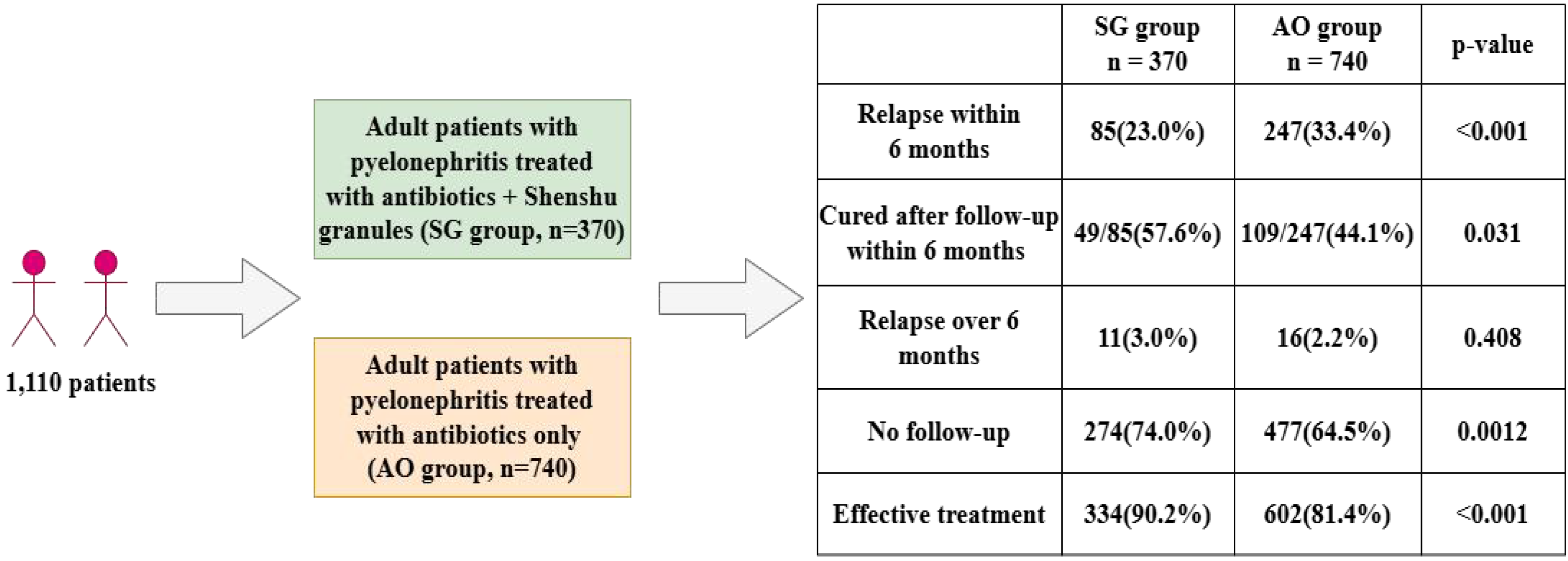
Flowchart of the study
1. Introduction
Pyelonephritis is a common upper urinary tract infection encountered in urological practice. It results from the invasion of microorganisms into the mucosal layers of the renal pelvis, kidney tubules, and adjacent interstitial tissues. The immunological state of the host and the consequent inflammation are crucial factors determining the progression of the illness 1. Women of reproductive age, particularly those who are married, represent the population most commonly affected by pyelonephritis 2. The condition is typically characterized by urinary frequency, urgency, and dysuria. These symptoms can significantly impair an individual’s daily functioning and reduce workplace productivity 3,4.
Antibiotic therapy remains the cornerstone of pyelonephritis treatment. However, the overuse and inappropriate prescribing of antibiotics have contributed to the emergence of antimicrobial resistance, thereby reducing therapeutic efficacy 5. Moreover, antimicrobial resistance has been associated with an increased risk of severe renal impairment 6. Clinical practice has increasingly incorporated integrated regimens that combine traditional Chinese medicine (TCM) and Western medicine, including Shenshu granules (SG) and other TCM interventions for pyelonephritis management. Recent studies report observed clinical efficacy for these approaches 7,8. This study examined the therapeutic efficacy and clinical outcomes of SG in patients with pyelonephritis.
SG consists of ten herbal ingredients: Hedyotis diffusa, Polygonum aviculare, Lophatherum gracile, Lygodium japonicum, Folium Isatidis, Dianthus superbus, Cortex Phellodendri, Rehmannia glutinosa, Poria cocos, and Glycyrrhiza uralensis. According to the quality standard for SG (sugar-free formulation) recognized by the National Medical Products Administration (NMPA) 9, this herbal preparation is primarily indicated for the management of urinary tract infections, acute and chronic pyelonephritis, cystitis, and related conditions. The ministerial herbs comprised Polygonum aviculare, Lophatherum gracile, Lygodium japonicum, Dianthus superbus, Folium Isatidis, and Cortex Phellodendri. Among them, Polygonum aviculare has been reported to inhibit the activity of Escherichia coli 10, a major pathogen responsible for urinary tract infections 11. Lophatherum gracile leaves can clear heat from the small intestine and prevent “heart-fire” from descending to the small intestine 12. Dianthus superbus disperses heat and induces diuresis 13. Folium Isatidis and Cortex Phellodendri have been shown to nourish, moisten, and detoxify a patient’s tissues and organs 14. Rehmannia glutinosa and Poria cocos are used as adjuvants. Poria cocos has antioxidant, diuretic, and antiviral properties and can transport dampness and heat 15. The crude polysaccharides derived from Rehmannia glutinosa have immunomodulatory effects 16. Licorice exerts detoxifying, antioxidant, and anti-inflammatory effects and is compatible with various drugs 17,18. The original standard for SG (sugar-free formulation) is specified in the “National Drug Standard BFZ20010063” 19.
We conducted a study using a representative sample drawn from Xiamen to assess the curative efficacy of SG in patients with pyelonephritis and to determine whether this therapy reduced the incidence rate of pyelonephritis. Prescription records, laboratory test results, and medication information were extracted from the Xiamen Health and Medical Big Data Center.
2. Methods
2.1. Study Design
This study is a retrospective cohort analysis using the Xiamen Regional Health and Medical Database, designed to evaluate the therapeutic efficacy of SG in patients with pyelonephritis.
2.2. Participants
Prescription records and clinical data from patients with pyelonephritis who were treated at medical institutions in Xiamen, China, between January 1, 2013, and December 31, 2023, were retrospectively analyzed. Manual screening and statistical validation based on predetermined inclusion and exclusion criteria were used to identify patients chosen for the final follow-up analysis. A standardized case report form was used to gather data from the patients’ electronic medical records.
The inclusion criteria were as follows:
Adult patients (aged \(\geq\)18 years at the time of first consultation) diagnosed with pyelonephritis according to the diagnostic criteria outlined in “Clinical Diagnosis and Treatment of Kidney Disease” 20. The criteria were as follows: (i) acute illness with high fever or chills, and severe cases can be complicated by sepsis or shock; (ii) frequent urination, urgency, dysuria, flank pain, or abdominal pain radiating to the perineum, and even renal colic; (iii) elevated total white blood cell and neutrophil counts; (iv) urine routine examination revealing urine protein trace (++), increased white blood cells on urine sediment examination, often accompanied by red blood cells and casts; and (v) Fever at admission (\(\geq\)38.0°C).
The urine analysis results documented white blood cell count and bacterial quantification as discrete reportable metrics.
Recurrent pyelonephritis episodes observed among patients receiving SG concomitantly with antibiotics. The initial evaluation was conducted by resident physicians in inpatient or outpatient settings, and relevant documentation was uploaded to the Xiamen Medical Database.
The exclusion criteria were as follows:
Patients with a prior diagnosis of pyelonephritis before January 1, 2013.
2.3. Variables
The collected data encompassed the following variables:
-
(1)
Population characteristics: age and gender.
-
(2)
Non-urinary-related conditions: diabetes, current or prior cancer, digestive system disorders, hepatic diseases, and a compromised immune system state.
-
(3)
Neurological abnormalities: neural pain, nerve irritation, persistent fatigue syndrome, nervous system damage, mental health conditions, and peripheral nerve injury.
-
(4)
Cardiovascular abnormalities: heart failure conditions, coronary artery disorders, rhythm disruptions, and fast heartbeat.
-
(5)
Anomalies of the urinary system involve structural or functional problems within the urinary tract, chronic kidney disease, existing urinary stones, and the existence of either short- or long-term implanted devices, such as ureteral stents or percutaneous nephrostomy tubes.
-
(6)
Findings of bacterial examination in urine assessments.
-
(7)
Administering antibiotics through intravenous therapy in the early treatment stage.
-
(8)
Oral antibacterial drugs prescribed at the time of hospital discharge.
-
(9)
Immune dysfunction: defined by congenital immunodeficiency, autoimmune disease, HIV infection, or prior exposure to chemotherapy.
For patients with recurrent urinary tract infections referred during the study period and treated with SG, laboratory and clinical test results from the index visit were used in statistical analyses. For individuals who experienced multiple infections and were diagnosed with pyelonephritis within six months, our analysis primarily focused on assessing the outcomes of their initial and most recent diagnoses.
The exposure factor was defined as treatment with SG, identified by documented medical consultation within six months of pyelonephritis diagnosis and initiation of SG therapy. We extracted clinical prescription records for SG from the database.
2.4. Ethics and Informed Consent
This study was approved by the Ethics Committee of Huaqiao University (Approval No.M2023011). This examination retrospectively used de-identified medical records, guaranteeing that no personal identifying information was accessed or used. In line with the relevant ethical criteria for retrospective studies, the requirement for obtaining written informed consent from the participants was waived.
2.5. Outcomes
Clinical effectiveness and adverse event data were limited to individuals who experienced recurrent episodes of pyelonephritis within six months following treatment initiation and who had either documented clinical follow-up or reported outcome data (i.e., at least two episodes within a six-month period). Patients who failed to attend follow-up consultations and those with first subsequent visits occurring beyond six months following treatment completion were classified as achieving clinical cure.
Clinical failure was defined as the presence of any of the following:
-
(1)
Persistent or unresolved symptoms, such as dysuria, flank pain, fever, urinary urgency, frequency, or hematuria, or onset of treatment-related adverse reactions, including vomiting, rash, headache, or diarrhea.
-
(2)
An episode of urinary tract infection occurring within six months post-treatment.
-
(3)
Intermittent positive urine bacterial cultures.
-
(4)
Persistent pyuria, defined as \(>\)10 white blood cells per high-power field in the centrifuged urine sediment.
-
(5)
Receipt of any medical intervention for urinary tract infection, as documented by an external healthcare facility.
2.6. Statistical Analysis
Baseline characteristics are reported as proportions (percentages), means \(\pm\) standard deviations (SD), or medians according to variable type and distribution. Categorical variables were compared using the chi-square and Fisher’s exact tests. Continuous variables were analyzed using the independent-samples Student’s \(t\)-test if sample sizes permitted and assumptions of normality and homogeneity of variance were met; otherwise, the Mann–Whitney U test was applied. A two-tailed \(p < 0.05\) was considered statistically significant. Propensity score matching (PSM) was performed at a \(1:2\) ratio, matching one patient in the antibiotics combined with SG group to two patients in the antibiotic-only (AO) group. Matching variables included sex, age at disease onset, and antibiotic use. All analyses were performed using R version 4.4.3.
3. Results
3.1. Study Participants
During the study period from January 1, 2013, to December 31, 2023, a retrospective cohort analysis was conducted among 9,034 adult patients in Xiamen, China. All patients were initially diagnosed with pyelonephritis during their first clinical presentation and had comprehensive and well-documented medication histories. Patient enrollment strictly adhered to the prespecified inclusion criteria.
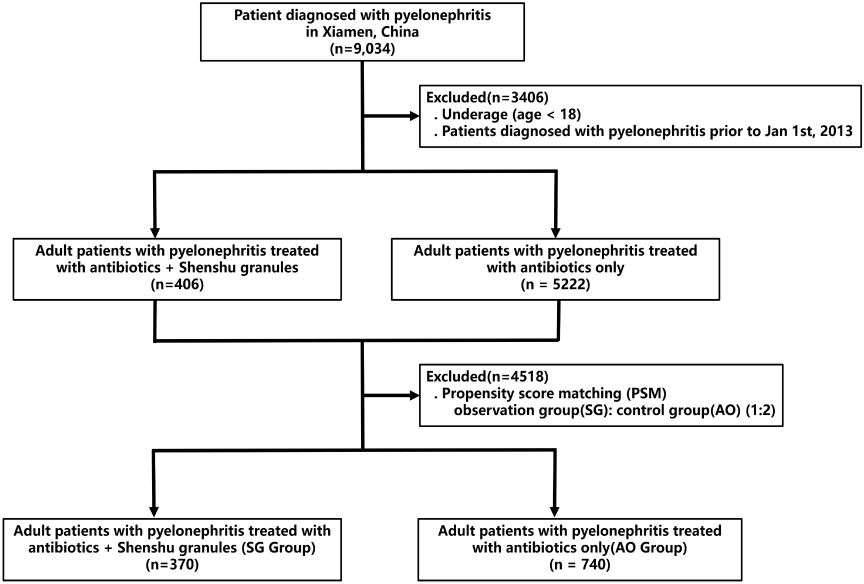
Fig. 1. Flow diagram of the enrolled patients.
Following application of the exclusion criteria, 5,628 patients were ultimately enrolled in this study. These patients were stratified into two comparative groups: the AO group (control group), comprising 5,222 patients who received antibiotic monotherapy, and the SG group (observation group), consisting of 406 patients who received oral SG (sugar-free formulation) in addition to antibiotics. As shown in Fig. 1, 5,628 patients constituted the final analytical cohort during the study period.
3.2. General Characteristics
The overall distribution of baseline characteristics across all indicators for the two groups is summarized in Table 1. Intergroup difference test results are as follows: (1) Gender distribution: The SG group comprised 78 male patients (19.2%), 292 female patients (71.9%), and 36 patients with missing gender information (8.9%); the AO group comprised 719 male patients (13.8%), 4,170 female patients (79.9%), and 333 patients with missing gender information (6.3%). The between-group difference in the gender distribution was statistically significant (\(p = 0.00532\)). (2) Age distribution: The mean \(\pm\) standard deviation age was 45.0\(\pm\)17.3 years in the SG group and 41.9\(\pm\)17.7 years in the AO group; the corresponding median ages were 43.0 [18.0, 89.0] years and 37.0 [18.0, 99.0] years, respectively. Normality testing indicated a non-normal distribution of age in both groups (\(p < 0.05\)); therefore, the Mann–Whitney U test was used, revealing a statistically significant between-group difference (\(p < 0.001\)). (3) Antibiotic subgroup distribution: As presented in Table 1, the distribution of antibiotic subgroups differed significantly between the two groups (\(p < 0.001\)).
| AO group | SG group | p-value | |
| (N = 5222) | (N = 406) | ||
| Gender | |||
| Missing | 331 (6.3%) | 36 (8.9%) | 0.00532 |
| Male | 719 (13.8%) | 78 (19.2%) | |
| Female | 4170 (79.9%) | 292 (71.9%) | |
| Not specified | 1 (0.0%) | 0 (0%) | |
| Unknown | 1 (0.0%) | 0 (0%) | |
| Age | |||
| Mean (SD) | 41.9 (17.7) | 45.0 (17.3) | <0.001 |
| Median [Min,Max] | 37.0 [18.0,99.0] | 43.0 [18.0,89.0] | |
| Antibiotic_Types | |||
| Aminoglycosides | 476 (9.1%) | 19 (4.7%) | <0.001 |
| Sulfonamides | 15 (0.3%) | 0 (0%) | |
| Quinolones | 2020 (38.7%) | 128 (31.5%) | |
| Other antibiotics | 248 (4.7%) | 14 (3.4%) | |
| Penicillins | 349 (6.7%) | 37 (9.1%) | |
| Carbapenems | 57 (1.1%) | 7 (1.7%) | |
| Cephalosporins | 2057 (39.4%) | 201 (49.5%) |
PSM was performed to address baseline imbalances in sex, age at disease onset, and antibiotic use between the SG and AO groups. After matching, the analytic cohort comprised 1,110 patients: 370 in the SG group and 740 in the AO group (Table 2). The matched groups showed no statistically significant differences in sex, age at disease onset, or antibiotic use (\(p > 0.05\)).
| AO group | SG group | p-value | |
| (N = 740) | (N = 370) | ||
| Gender | |||
| Male | 152 (20.5%) | 78 (21.1%) | 0.896 |
| Female | 588 (79.5%) | 292 (78.9%) | |
| Age | |||
| Mean (SD) | 43.9 (16.4) | 43.7 (16.5) | 0.829 |
| Median [Min,Max] | 42.0 [18.0,89.0] | 42.0 [18.0,89.0] | |
| Antibiotic_Types | |||
| Aminoglycosides | 28 (3.8%) | 15 (4.1%) | 0.977 |
| Quinolones | 233 (31.5%) | 115 (31.1%) | |
| Other antibiotics | 25 (3.4%) | 12 (3.2%) | |
| Penicillins | 62 (8.4%) | 34 (9.2%) | |
| Carbapenems | 5 (0.7%) | 4 (1.1%) | |
| Cephalosporins | 387 (52.3%) | 190 (51.4%) |
The patient age distribution is shown in Fig. 2. The mean ages at presentation were 43.9 (\(\pm\)16.4) years in the AO group and 43.7 (\(\pm\)16.5) years in the SG group, with no statistically significant difference observed between the groups (\(p = 0.829 > 0.05\)).
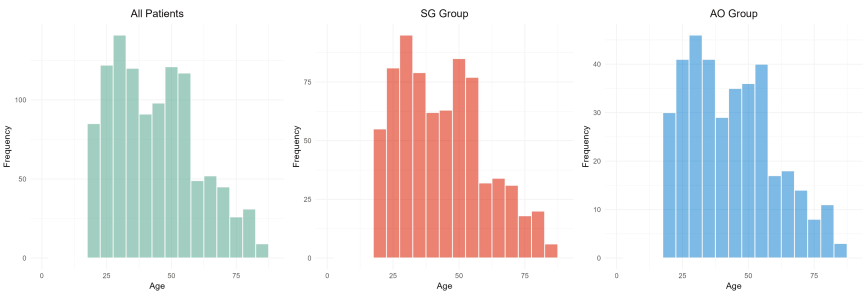
Fig. 2. Age normal distribution plot of SG and AO groups.
| Comorbidity | AO group | SG group | Overall |
| Hypertension | 1222 | 100 | 1322 |
| (23.4%) | (24.6%) | (23.5%) | |
| Diabetes mellitus | 951 | 81 | 1032 |
| (18.2%) | (20.0%) | (18.3%) | |
| Cardiovascular | 1295 | 96 | 1391 |
| disease | (24.8%) | (23.6%) | (24.7%) |
| Gastrointestinal | 2500 | 190 | 2690 |
| disease | (47.9%) | (46.8%) | (47.8%) |
| Liver disease | 1567 | 132 | 1699 |
| (30.0%) | (32.5%) | (30.2%) | |
| Backache | 1215 | 125 | 1340 |
| (23.3%) | (30.8%) | (23.8%) | |
| Fever | 1962 | 98 | 2060 |
| (37.6%) | (24.1%) | (36.6%) | |
| Immune system | 1160 | 84 | 1244 |
| disorders | (22.2%) | (20.7%) | (22.1%) |
3.3. Main Results
The standard therapeutic approach for patients diagnosed with pyelonephritis involved antimicrobial agents from five pharmacological classes as follows: (1) carbapenems (e.g., meropenem, imipenem); (2) fluoroquinolones (e.g., norfloxacin, ofloxacin); (3) aminoglycosides (e.g., gentamicin, amikacin); (4) penicillins (e.g., amoxicillin, mezlocillin sodium; note that penicillin G is rarely used for pyelonephritis owing to limited urinary concentrations); and (5) cephalosporins (e.g., cephalexin, cefotaxime, cefazolin). The duration of antimicrobial therapy was standardized to 10–14 days, extended by an additional 3–5 days after complete symptom resolution and confirmation of negative urine culture results. Cephalosporins were the most frequently prescribed antibiotics, followed by fluoroquinolones and penicillins (Table 2). No statistically significant between-group differences were observed in the distribution of these five antibiotic classes between the SG and AO groups (\(p = 0.977 > 0.05\)).
In the study cohort, the most prevalent clinical manifestations (Table 3) were gastrointestinal disorders (47.8%), fever (36.6%), liver diseases (30.2%), cardiovascular diseases (24.7%), flank pain (23.8%), and diabetes mellitus (18.3%).
Based on follow-up visit records, the treatment response rate in the SG group (90.2%) was significantly higher than that in the AO group (81.4%; \(p < 0.001\)). The proportion of patients lost to follow-up was also higher in the SG group than that in the AO group (74.0% vs. 64.5%, respectively). Furthermore, the six-month recurrence rate was significantly lower in the SG group (23.0%) compared with that in the AO group (33.4%; \(p < 0.001\)).
Next, we calculated the risk ratio (RR) for the association between the use of SG and six-month pyelonephritis recurrence. The RR was 0.688 (23.0%/33.4%), corresponding to an observed 31.2% relative reduction in recurrence risk among patients receiving SG versus controls.
Adjunctive SG plus antibiotic regimens were more effective than antibiotic monotherapy in patients with pyelonephritis. Among the 1,110 enrolled patients, the combination intervention, integrating antibiotics with SG, yielded a statistically significant improvement in efficacy compared with antibiotic monotherapy (Table 4).
| SG group | AO group | p-value | |
| (n = 370) | (n = 740) | ||
|
Relapse within 6 months |
85 (23.0%) | 247 (33.4%) | <0.001 |
|
Cured after follow-up within 6 months |
49/85 (57.6%) | 109/247 (44.1%) | 0.031 |
|
Relapse over 6 months |
11 (3.0%) | 16 (2.2%) | 0.408 |
| No follow-up | 274 (74.0%) | 477 (64.5%) | 0.0012 |
|
Effective treatment |
334 (90.2%) | 602 (81.4%) | <0.001 |
4. Discussion
Acute and chronic pyelonephritis can cause significant morbidity, particularly affecting the renal system, which may lead to impaired renal function or structural kidney damage, thereby adversely affecting patient health 21. Antibiotic-based antimicrobial therapy remains the primary clinical intervention for pyelonephritis. Although substantial progress in antibacterial therapeutics has been documented, clinical efficacy and treatment outcomes for pyelonephritis remain suboptimal, with prolonged disease duration reported. The widespread use of antibiotics has contributed to the emergence of antimicrobial-resistant strains in multiple pathogenic species, resulting in reduced antibiotic efficacy. Similar to the commonly used levofloxacin 22, this agent inhibits bacterial DNA replication by targeting bacterial DNA gyrase. Although it exhibits potent bactericidal activity 23, its overall clinical effectiveness has been determined to be suboptimal owing to the pervasive emergence of antimicrobial resistance, which is associated with a substantially elevated rate of disease recurrence. Therefore, the investigation of novel combination therapies added to conventional treatment is required, including the administration of SG (sugar-free), to assess the potential enhancement of therapeutic efficacy.
Hedyotis diffusa is a principal constituent of SG and demonstrates pharmacological activity characterized by the promotion of blood circulation, resolution of blood stasis, facilitation of exudate absorption, collateral dredging, detoxification, and heat-clearing effects. Modern pharmacological studies 7 have demonstrated that it has antibacterial, immunoenhancing, and antioxidant effects. Its therapeutic efficacy has been found to be pronounced. Relevant literature 8 has reported that SG can significantly ameliorate renal tubular function and enhance patients’ intrinsic immune responses, supporting their potential for broader clinical applications.
Pyelonephritis is reported more frequently in women than men. In our study, the male-to-female ratio of participants was \(1:5.6\), which is similar to that reported by other authors 24. The average age of the adult participants in this study was 43.8 years. The youngest and oldest participants were aged 18 and 99 years, respectively. In the study of Lin et al. 25, the most common clinical manifestations of pyelonephritis were gastrointestinal diseases (60.4%), diabetes (33.6%), immune system diseases (3.9%), and liver diseases (3.5%). In Ireland, Tehrani et al. 26 observed a high incidence of lower back pain (100%) in patients with acute pyelonephritis, followed by urinary irritation (96.6%) and nausea (86.2%). Hatlen et al. 1 observed that among the 99 patients with urinary tract infection, 58% had urinary system dysfunction. In addition, diabetes (46%), chronic kidney disease (26%), and fever (21%) were also common clinical manifestations.
The most prevalent clinical manifestations in the study cohort are presented in Table 3. These findings are consistent with those reported by Lin et al. Given that pyelonephritis typically requires antibiotic therapy, our study employed a retrospective comparative design.
Patients in the observation group received SG for acute and chronic pyelonephritis, and the dosage was individualized based on the clinical presentation and patient-specific factors. After a mean treatment duration of one week, the overall response rate in the observation group reached 90.2%, significantly higher than that in the control group (81.4%). Over a six-month follow-up period, the recurrence rate in the observation group remained consistently low at 23.0%, which was significantly lower than the 33.4% observed in the control group (Table 4). The findings demonstrated that SG alleviated the clinical symptoms in patients with acute and chronic pyelonephritis, and favorable therapeutic outcomes were observed in the majority of the included cases. SG demonstrated immunomodulatory effects, microenvironmental stabilization, and synergistic antimicrobial and anti-inflammatory activities, distinct from those of conventional Western antibiotic therapy. In conclusion, oral SG are associated with favorable clinical outcomes in patients with pyelonephritis.
This study has several limitations that must be considered. First, electronic patient documentation was exclusively obtained from Xiamen, a municipality in southeastern China with a population of approximately 5 million; therefore, the generalizability of the findings is limited to populations with comparable demographic, geographic, and healthcare system characteristics. Second, follow-up data were not available, and patients lost to follow-up may have experienced higher rates of clinical deterioration, thus introducing a potential selection bias. Finally, pyelonephritis exhibits a high frequency of recurrence; the effect of adjunctive SG on the development of antimicrobial resistance and the incidence of adverse events remain uncharacterized. These limitations indicate that further prospective multicenter studies with longitudinal outcome assessments are required to define the therapeutic efficacy and safety profile of SG for the management of pyelonephritis.
5. Conclusions
SG (sugar-free formulation) demonstrated therapeutic effects in the included study, with symptom relief observed and time to clinical recovery reduced, supporting consideration for broader implementation in routine care. Further investigation is required to establish efficacy, safety, and generalizability across diverse populations and settings.
Acknowledgments
The authors declare that this study was conducted in the absence of any commercial or financial relationships that could be construed as potential conflicts of interest. This work was supported by the Medical and Health Guiding Project of Xiamen [3502Z20214ZD1028] and the Xiamen Science and Technology Plan Project [3502Z20224007]. Designed studies: Litao Yi, Guanghui Xu, and Moliang Chen; Data analysis: Yaling Kong, Xulian Cai, Ming Li, Jiayuan Zhang, and Suping Wang; Wrote the draft of the manuscript: Yaling Kong, Moliang Chen, Guanghui Xu, and Litao Yi. Revised & approved manuscript: all authors. The datasets that support the findings of this study are not publicly available because of privacy and ethical restrictions but are available from the corresponding author upon reasonable request. The study was approved by the review committee of Huaqiao University (M2023011). Due to the retrospective and descriptive nature of this study, the need to provide informed consent was waived by the ethics committee of Huaqiao University.
- [1] T. J. Hatlen, R. Flor, M. H. Nguyen, G. H. Lee, and L. G. Miller, “Oral fosfomycin use for pyelonephritis and complicated urinary tract infections: A 1 year review of outcomes and prescribing habits in a large municipal healthcare system,” J. Antimicrob. Chemother., Vol.75, pp. 1993-1997, 2020. https://doi.org/10.1093/jac/dkaa126
- [2] S. Anumudu and G. Eknoyan, “Pyelonephritis: A historical reappraisal,” J. Am. Soc. Nephrol., Vol.30, pp. 914-917, 2019. https://doi.org/10.1681/ASN.2019010017
- [3] J. R. Johnson and T. A. Russo, “Acute pyelonephritis in adults,” New England J. of Medicine, Vol.378, pp. 48-59, 2018. https://doi.org/10.1056/NEJMcp1702758
- [4] R. Umeda, S. Ogata, S. Hara, K. Takahashi, D. Inaguma, M. Hasegawa, H. Yasuoka, Y. Yuzawa, H. Hayashi, and N. Tsuboi, “Comparison of the 2018 and 2003 International Society of Nephrology/renal Pathology Society classification in terms of renal prognosis in patients of lupus nephritis: A retrospective cohort study,” Arthritis Res. Ther., Vol.22, Article No.260, 2020. https://doi.org/10.1186/s13075-020-02358-x
- [5] K. B. Kolman, “Cystitis and pyelonephritis,” Prim. Care Clin. Off. Pract., Vol.46, pp. 191-202, 2019. https://doi.org/10.1016/j.pop.2019.01.001
- [6] K. S. Kaye, A. Belley, P. Barth, O. Lahlou, P. Knechtle, P. Motta, and P. Velicitat, “Effect of cefepime/enmetazobactam vs piperacillin/tazobactam on clinical cure and microbiological eradication in patients with complicated urinary tract infection or acute pyelonephritis: A randomized clinical trial,” JAMA 328, 1304, 2022 https://doi.org/10.1001/jama.2022.17034
- [7] W. Li and W. Xie, “Study on the Clinical Efficacy of Shenshu Granules in the Treatment of Chronic Urinary Tract Infection,” Research of Integrated Traditional Chinese and Western Medicine, pp. 246-249, 2015.
- [8] C. Cheng, “Clinical Observation of Shenshu Granule in the Treatment of Chronic Pyelonephritis,” Modern Diagnosis and Treatment, pp. 1522-1523, 2014.
- [9] National Medical Products Administration, “Announcement of the National Medical Products Administration and National Health Commission on Issuing the 2025 Edition of the Pharmacopoeia of the People’s Republic of China,” No.29, 2025.
- [10] M. Li, Z. Liu, C. Zhu, T. Ling, C. Li, L. Wang, and Y. Xu, “Antibacterial activity of ethyl acetate fraction from Polygonum aviculare,” Research and Development of Natural Products, Vol.28, pp. 547-550, 2016.
- [11] P. Zhao, J. Gong, A. Gao, H. Zheng, Y. Chen, X. Zhang, F. Lu, N. Li, and S. Ni, “Identification and Research Advance on pharmaceutical Science of Lyodium Sw. Plants,” J. of Anhui Agricultural Sciences, Vol.39, pp. 8380-8381, 2011.
- [12] R. Zhu, K. Xu, Y. Wei, F. Zeng, and Z. Zheng, “Study on the clinical application and dosage of Lophatherum gracile,” Jilin Chinese Medicine, Vol.41, pp. 668-671, 2021.
- [13] F. Yuan, M. Wu, and B. Tan, “Simultaneous determination of 9 components in Shenshu granules by quantitative analysis of multi-components by single marker (QAMS),” Chinese Patent Medicine, Vol.41, pp. 2848-2853, 2019.
- [14] X. Wang, Y. Wang, Z. Zhou, and S. Luo, “Study on the Antibacterial Activity of and Isatis Indigotica and Phellodendron Chinense Schneid Extracts in Vitro,” Heilongjiang Science, Vol.14, pp. 94-97, 2023.
- [15] T. Diao, “Preliminary study on pharmacological effects of Poria cocos,” Clinical Study of Traditional Chinese Medicine, Vol.7, pp. 23-24, 2015.
- [16] P. Li, Y. Meng, H. Li, B. Gong, X. Shi, and C. Hao, “Study on the effective components of polysaccharides from Nanhe Rehmannia glutinosa,” China Food Safety Magazine, pp. 81, 2017.
- [17] Q. Yang, Z. Meng, X. Wang, M. Fang, and G. Wu, “Extraction and Purification of Glycyrrhizin and Its Pharmacological Effects: A Review,” Chinese Wild Plant Resources, Vol.42, pp. 12-17, 2023.
- [18] X. Xiao, C. Li, X. Liu, and J. Xue, “Research progress of main chemical constituents and pharmacological effects of Glycyrrhizae Radix et Rhizoma,” J. of Xinxiang Medical University, Vol.40, pp. 280-285, 2023.
- [19] National Medical Products Administration, “National Drug Standard BFZ20010063: Shenshu Granules (Sugar-Free Type),” National Medical Products Administration, 2001.
- [20] Chinese Society of Nephrology, “Clinical Practice Guidelines: Nephrology Volume,” People’s Medical Publishing House, 2011.
- [21] S. Deoraj, F. Zakharious, A. Nasim, and C. Missouris, “Emphysematous pyelonephritis: Outcomes of conservative management and literature review,” BMJ Case Rep., Vol.2018, Article No.bcr-2018-225931, 2018. https://doi.org/10.1136/bcr-2018-225931
- [22] F. M. Wagenlehner, O. Umeh, J. Steenbergen, G. Yuan, and R. O. Darouiche, “Ceftolozane-tazobactam compared with levofloxacin in the treatment of complicated urinary-tract infections, including pyelonephritis: A randomised, double-blind, phase 3 trial (ASPECT-cUTI),” The Lancet, Vol.385, pp. 1949-1956, 2015. https://doi.org/10.1016/S0140-6736(14)62220-0
- [23] S. Messous, I. Trabelsi, K. Bel Haj Ali et al., “Two-day versus seven-day course of levofloxacin in acute COPD exacerbation: A randomized controlled trial,” Ther. Adv. Respir. Dis., Vol.16, Article No.175346662210997, 2022. https://doi.org/10.1177/17534666221099729
- [24] C. Rafat, I. Debrix, and A. Hertig, “Levofloxacin for the treatment of pyelonephritis,” Expert Opin, Pharmacother, Vol.14, pp. 1241-1253, 2013. https://doi.org/10.1517/14656566.2013.792805
- [25] K. Lin, Y. Zahlanie, J. K. Ortwine, W. Wei, N. S. Mang, and B. C. Prokesch, “A retrospective review of oral cephalosporins versus fluoroquinolones for the treatment of pyelonephritis,” PLoS ONE, Vol.17, No.9, Article No.e0274194, 2022. https://doi.org/10.1371/journal.pone.0274194
- [26] S. Tehrani, F. Elyasi, and S. Abolghasemi, “Levofloxacin versus ceftriaxone for the treatment of acute pyelonephritis in Iranian adults,” Infect. Disord. – Drug Targets, Vol.21, pp. 603-607, 2021. https://doi.org/10.2174/1871526520999200727154214
This article is published under a Creative Commons Attribution-NoDerivatives 4.0 Internationa License.