
Research Paper:
An Intelligent Control Strategy Based on Control of Three Key Process Variables for Gas Boiler Power Generation Process
Xinjian Zhang*1,*2,*3,*4, Fan Yin*1,*2,*3, Fusheng Peng*1,*2,*3
 , Jie Hu*1,*2,*3,†
, and Jundong Wu*1,*2,*3
, Jie Hu*1,*2,*3,†
, and Jundong Wu*1,*2,*3
*1School of Artificial Intelligence and Automation, China University of Geosciences (Wuhan)
No.388 Lumo Road, Hongshan District, Wuhan 430074, China
*2Hubei Key Laboratory of Advanced Control and Intelligent Automation for Complex Systems
No.388 Lumo Road, Hongshan District, Wuhan 430074, China
*3Engineering Research Center of Intelligent Technology for Geo-Exploration, Ministry of Education
No.388 Lumo Road, Hongshan District, Wuhan 430074, China
*4Loudi Valin V-Cloud Digital Technology Co., Ltd.
Room 1509, 15th Floor, Shuangling Building, No.1005 North Gangui Road, Louxing District, Loudi 417009, China
†Corresponding author

As the emphasis on energy efficiency and environmental protection grows, an intelligent control strategy for the power generation process of gas boilers has become a key approach to optimizing industrial production. This paper presents an intelligent control strategy for a 150 MW ultra-high temperature subcritical gas boiler’s power generation process. The strategy aims to address the issue of frequent manual adjustments to the mixed gas and attemperating water valves due to fuel instability. The proposed strategy achieves stable control of the power generation process and dynamic regulation of the power generation load. It does so by monitoring key operating parameters of the gas boiler in real time, designing an intelligent control strategy that uses three key process variables (main steam temperature, gas equivalent, and attemperating water valve opening degree) as controlled parameters, and implementing expert rule-based control. Operational results demonstrate that this control strategy effectively stabilizes the main steam temperature within the specified process range and enables dynamic regulation of the power generation load. With a system utilization rate exceeding 90% and a reduction in standard coal consumption from 299.8 g/kWh under manual control to 297 g/kWh under automatic control, this strategy effectively stabilizes the power generation process. It significantly improves combustion efficiency, reduces energy consumption, and mitigates environmental pollution. Thus, it has promising practical application prospects.
Process flow diagram
1. Introduction
In the context of economic globalization, manufacturing enterprises face increasingly fierce competition, which imposed higher requirements on sustainable production, energy consumption, and product quality 1,2. Although thermal power plants are the mainstay of electricity supply, they are also significant emitters of CO\(_2\) and pollutants. Optimizing thermal power plant boilers is an important measure to promote the transformation and upgrading of the energy structure 3. Ultra-high temperature subcritical gas boilers are a type of power generation boiler that is widely used in many metallurgical enterprises.
As a traditional energy-intensive industry, the iron and steel industry is a key field for energy conservation, emission reduction, and low-carbon transformation. In terms of reducing energy consumption, existing studies have proposed data-driven models for the iron ore sintering process in iron and steel production. These models include an adaptive weighted broad echo state learning system 4, an improved just-in-time learning system combined with a gated recurrent unit-based temporal cascade broad learning system 5, an automatic kernel-based fuzzy \(c\)-means-based broad learning model 6, and a relevance vector machine with a hybrid kernel 7. These models provided technical support for optimizing energy consumption by accurately predicting carbon consumption and other key indicators. Beyond sintering, advanced energy-saving strategies are employed in thermal equipment (e.g., boilers). Genetic algorithm-optimized energy consumption models reduced coal-fired boiler operating costs by adjusting operational parameters (e.g., coal supply frequency), particularly under low-temperature conditions 8. Additionally, Internet of Things (IoT)-based data analysis predicted heat demand and balanced supply, reducing boiler heat loss and enhancing energy-saving efficiency 9. Reference 10 proposed digitalization solutions for energy efficiency in metallurgy that highlight energy-saving technologies, such as high-efficiency furnaces and waste heat recovery systems, to reduce energy use and improve environmental performance.
In the domain of boiler power generation control, conventional control methodologies frequently depend on the expertise of operators and manual adjustments, impeding the attainment of precise control and optimization of power generation load 11. The implementation of intelligent control mechanisms within the boiler power generation process has been demonstrated to enhance combustion efficiency and stability in gas boilers. This development not only reduced operator dependence but also mitigated the risks associated with human errors, as evidenced by Qiu 12.
Currently, researchers have proposed various solutions, aiming to enhance the safety, stability, and efficiency of boilers. Liu and Wang 13 studied the issue of steam superheating in a 300 MW “W” type subcritical coal-fired boiler. By analyzing the temperature regulation principles and the causes of superheating, they proposed targeted combustion adjustment measures that successfully resolved the problem. This enhanced the safety and stability of the boiler, providing a reference for the safe and economical operation of the unit. Zhu 14 addressed the frequent failures of the boiler burner, which led to issues such as unsuccessful ignition or automatic shutdown. They optimized the control signals of the boiler burner and integrated them into the DCS system, enabling the monitoring of burner status and load control adjustments within the DCS system. This optimization achieved the goal of ensuring the safe operation of the boiler. Bian et al. 15 developed a boiler performance prediction model using feature classification and multi-model coupling, significantly improving optimization efficiency and accuracy. Sun and Zhang 16 proposed a combustion temperature peak-shaving control method based on fuzzy self-optimization, achieving automatic, precise, and efficient control of the combustion temperature in coal-fired hot water boilers. Song and Feng 17 developed a neural network-based control system: it identifies combustion nonlinearity, clarifies parameter relationships, and optimizes system architecture via data analysis, enabling automatic, intelligent boiler operation. Zhou 18 described an automatic control system for the main steam temperature that was based on a cascade control architecture. This system optimized the PID parameters by integrating an adaptive algorithm, thereby improving the control accuracy of the main steam temperature. Yuan et al. 19 presented a fuzzy self-tuning PID control algorithm for controlling the combustion temperature of gas boilers. In addition, Zhang et al., Yan, and Zhou et al. achieved the goals of economical boiler operation, energy conservation, emission reduction, and reduction of labor intensity through the optimization of boiler power generation control 20,21,22.
This paper takes a 150 MW ultra-high temperature subcritical gas boiler in a steel enterprise as the research object. This boiler uses a mixture of by-product gases from blast furnaces, coke ovens, and converters at steel enterprises as fuel. Due to the intermittent nature of steel production, the mixing ratio of these three types of gas fluctuates, resulting in random changes in the gas’s calorific value, pressure, and flow rate. The instability of these fuel parameters directly causes an imbalance in the boiler’s combustion intensity. This, in turn, results in key parameters, such as power generation load and main steam temperature, deviating from their normal ranges. This impairs the quality of power generation and increases safety risks, including furnace backfire and overheating of heating surfaces. Currently, manual real-time adjustment of the mixed gas valve and attemperating water valve is relied upon. However, manual operations suffer from issues such as delayed responses and inconsistent judgment criteria. After accounting for the coupling relationships among the process variables affecting gas boiler power generation, an intelligent control strategy based on expert rule control was designed. Three key process variables are taken as the controlled parameters: main steam temperature, gas equivalence, and the degree of opening of the attemperating water valve. Ultimately, this strategy achieves stable control of the power generation process and dynamic adjustment of the power generation load. Practical operational results demonstrate that this control strategy effectively stabilizes the main steam temperature within the process range and enables dynamic adjustment of the power generation load. The system has a commissioning rate exceeding 90%, and standard coal consumption has decreased from 299.8 g/kWh with manual control to 297 g/kWh with automatic control. These results demonstrate that the strategy effectively stabilizes the power generation process, significantly improves combustion efficiency, reduces energy consumption, and mitigates environmental pollution. Thus, the strategy boasts promising practical application prospects.
2. Analysis of Process Characteristics and Design of Control System
This section commences with an analysis of the operational process of the ultra-high temperature subcritical gas boiler, followed by an in-depth discussion of the boiler’s power generation mechanism. The text then goes on to discuss the challenges associated with the stabilization of power generation process control and the dynamic adjustment of power generation load. It also presents the design of an automatic control system for the power generation process of gas boilers.
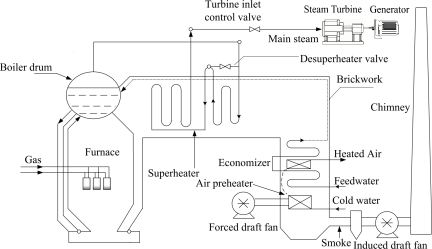
Fig. 1. Process flow diagram.
2.1. Analysis of Process Characteristics
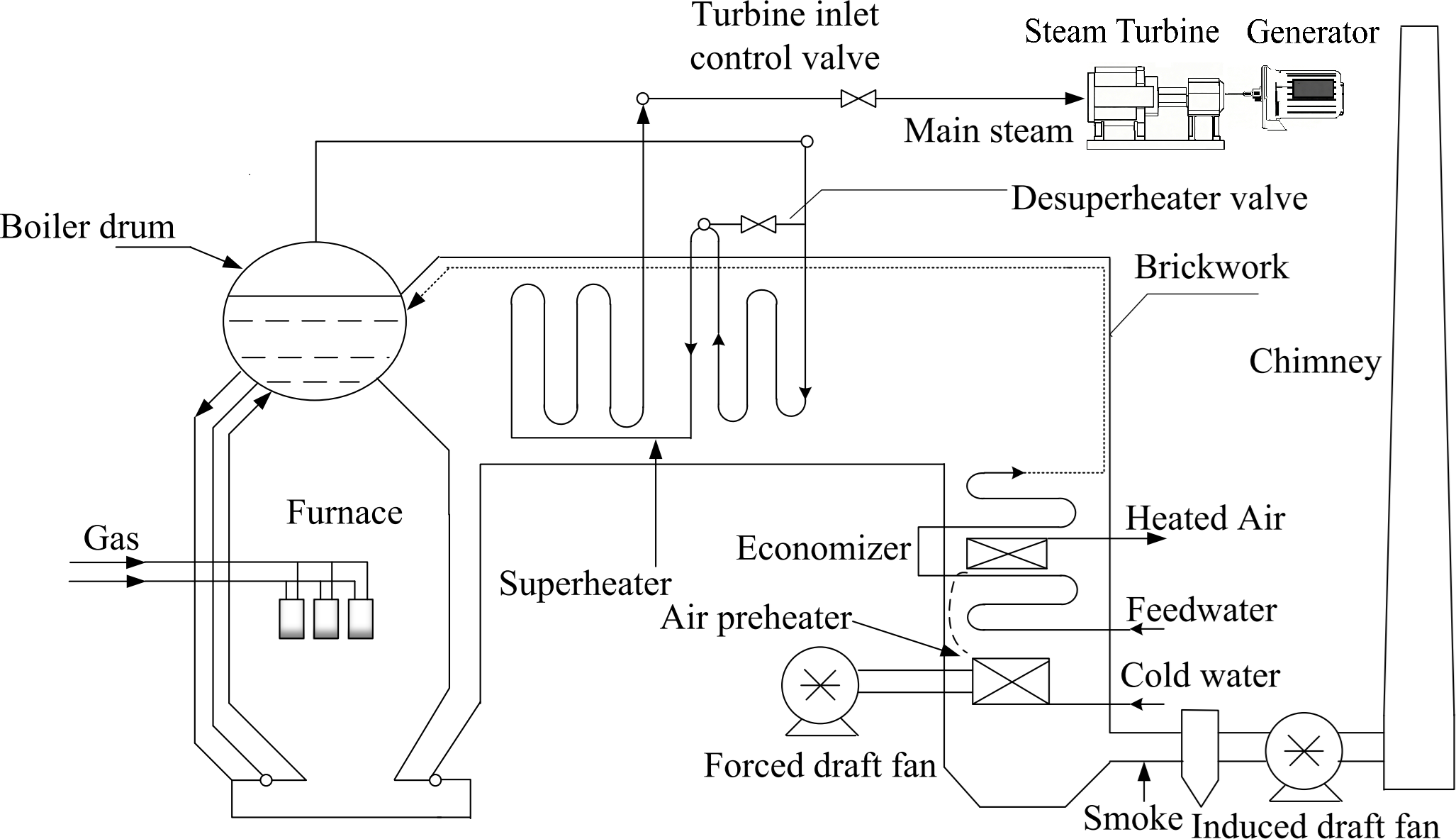
As illustrated in Fig. 1, the power generation process of the gas boiler principally comprises the pretreatment and transportation of fuel and air, furnace combustion, and the heat transfer and emission of flue gas. The system is typically divided into three distinct components: the “steam-water system,” the “fuel system,” and the “flue gas system.” The coordination of major heat exchange surfaces and auxiliary equipment facilitates the conversion of the fuel’s thermal energy into steam thermal energy, mechanical energy, and electrical energy.
The stable power generation process, control, and dynamic adjustments to the power generation load are crucial aspects of boiler operation. These aspects play a significant role in improving boiler efficiency, ensuring safety, and reducing environmental pollution. However, in practical operation, intelligent power generation process control faces numerous difficulties and challenges. It mainly has the following characteristics: nonlinear characteristics, thermal inertia, fuel instability, and operational complexity.
The total heat \(Q\) released by the complete combustion of gas in the boiler system satisfies the following heat balance equation:
The effective utilization of the gas boiler’s heat directly determines the main steam temperature and the power generation load. Assuming relatively stable thermal efficiency, gas consumption and calorific value directly affect the utilized heat by altering the total input heat. Therefore, significant random fluctuations in gas calorific value, pressure, and flow rate require frequent manual adjustments to the mixed gas and attemperating water valves to ensure stable boiler operation and maintain stable main steam temperature and power generation load.
After considering the relationships among the process variables affecting boiler power generation, three key variables were selected as controlled parameters to achieve automatic gas boiler power generation control. The core logic is as follows:
-
Gas equivalent control stabilizes the heat input of the mixed gas at the source, ensuring the basic heat supply for boiler steam production.
-
Main steam temperature serves as a constraint parameter, guaranteeing steam quality and equipment safety.
-
Attemperating water valve opening control adjusts the attemperating water flow, altering the matching relationship between steam enthalpy and flow rate. This regulates the power generation load and assists in adjusting the main steam temperature.
Coordinating the operation of these three variables enables automatic control of gas boiler power generation. Additionally, a main steam pressure limiting constraint must be added to ensure temperature–pressure parameter matching and safe equipment operation.
2.2. Design of Control System
The gas boiler power generation process is characterized by a high degree of complexity, with numerous factors influencing the power generation load. In light of these challenges, this paper proposes an intelligent control strategy for the gas boiler power generation process. The strategy integrates the process characteristics of gas boilers and on-site operational experience, leading to the design of a corresponding automatic control system. The sequence of events is illustrated in Fig. 2.
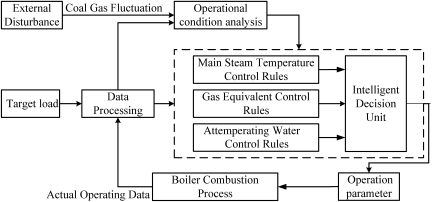
Fig. 2. Automatic control system flowchart.
Initially, the power generation load is specified, and error calculation and operating condition analysis are performed based on real-time data feedback. The feedback data principally comprise key real-time operational parameters, including power generation load, main steam temperature, gas equivalent, mixed gas valve opening, and attemperating water valve opening. Subsequently, the results of the error, operating parameters, and operating condition analysis are utilized as inputs to the expert rule module for the stable control of three key process variables. The final output comprises the operational parameters for intelligent power generation process control, primarily the opening and attemperating water valves.
The 150 MW gas boiler at this steel plant is equipped with three layers of mixed gas pipelines, with six pipelines per layer. In accordance with on-site process requirements, the mixed gas valves of the middle and lower layers can be placed under automatic control, and the mixed gas valve openings are consistent within each layer. The gas boiler power generation system comprises three pipelines utilized for temperature regulation, specifically one primary pipeline and two secondary pipelines. An analysis of the on-site process characteristics reveals that the primary attemperating water exerts a substantial influence on the gas boiler’s power generation load, while exhibiting a negligible effect on the main steam temperature. In contrast, the two secondary attemperating water pipelines demonstrate a modest impact on the power generation load, yet they significantly affect the main steam temperature.
The intelligent control strategy for the gas boiler power generation process comprises three sub-control modules: main steam temperature control, gas equivalent control, and attemperating water control. The primary steam temperature control mechanism adjusts the valve openings of the middle and lower layers of the mixed gas, according to a set of expert rules. These rules are based on the setpoint error and the rate of change of the real-time temperature. The gas equivalent control adjusts the mixed gas valve openings of the middle and lower layers through expert rules based on the setpoint error and trend of the gas equivalent. The system’s temperature regulation is divided into two distinct rule sets: one for power generation load regulation and another for main steam temperature regulation. The temperature regulation of the cooling water system is meticulously calibrated to ensure precise alignment with the designated load setpoint error. This calibration is achieved through the strategic adjustment of the apertures of the three temperature control valves, which are meticulously calibrated to ensure precise alignment with the designated load setpoint error. Conversely, the attemperating water control for main steam temperature is designed to regulate the main steam temperature during significant temperature fluctuations (predominantly caused by gas parameter fluctuations) by adjusting the openings of the two secondary attemperating water valves.
3. Intelligent Control Strategy Based on Control of Three Key Process Variables
This section provides a detailed introduction to the intelligent power generation process control strategy, which comprises three sub-control modules: main steam temperature stability control, gas equivalent stability control, and attemperating water control. The strategy enhances the stability and combustion efficiency of the gas boiler power generation process by leveraging real-time data and predefined expert rules. It achieves this enhancement by summarizing on-site operational experience. The strategy also reduces energy consumption and achieves precise control and dynamic adjustment of the gas boiler power generation load.
3.1. Main Steam Temperature Control Rules
The main steam temperature is a critical parameter in the gas boiler power generation process, directly affecting the steam’s thermal energy output and the overall thermal efficiency of the gas boiler. It has been established that both excessively high and low main steam temperatures can impact the safety and combustion efficiency of the boiler. Therefore, it is imperative to regulate the main steam temperature within a designated range to ensure the stability of boiler operation. Typically, the temperature should be maintained between 550°C and 570°C, with a target temperature of 564°C under stable power generation load conditions.
In the expert rules for main steam temperature control, during each control cycle, the system first enters different rule branches based on the main steam temperature. Then, according to the main steam temperature rise rate and the target power generation load error, it performs the first adjustment of the mixed gas valve, followed by entering a sleep state. After the sleep period ends, the system determines if the second adjustment of the mixed gas valve should be performed and if the system should enter another sleep state. This decision is based on the difference in the main steam temperature rise rate before and after the sleep period, as well as the real-time data of the main steam temperature rise rate. The expert rule control for the current cycle is then complete, and the system proceeds to the next control cycle. In the main steam temperature control rules, if certain requirements are met, the system switches to gas equivalent control rules. Partial expert rules for main steam temperature control are presented in Algorithm 1.
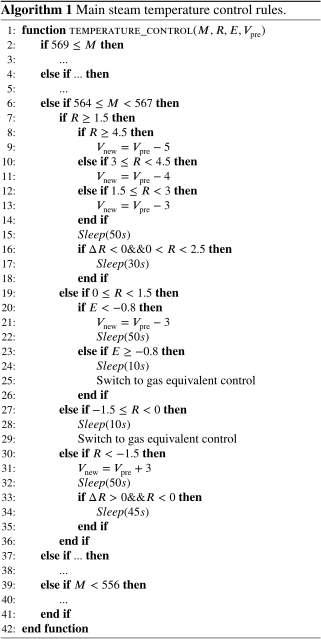
Here, \(M\) is the current main steam temperature [°C]. \(R\) is the current main steam temperature rise rate [°C/min]. \(E\) is the difference between the target power generation load and the current power generation load [MW]. The target power generation load is entered by the operators based on the dispatch center’s instructions. \(V_{\mathit{pre}}\) is the mixed gas valve opening degree for the previous step [%]. \(V_{\mathit{new}}\) is the mixed gas valve opening degree for the next step [%]. When the \(V_{\mathit{new}}\) value changes, the mixed gas valve opening is adjusted in real time. \(\Delta R\) is the difference in main steam temperature rise rates before and after sleep [°C/min]. The unit of sleep time is seconds.
3.2. Gas Equivalent Control Rules
The gas equivalent is defined as the standardized gas equivalent calculated based on the flow rates and calorific values of blast furnace gas, coke oven gas, and converter gas. This phenomenon exerts a substantial influence on the combustion efficiency and emission levels of the boiler. The gas equivalent is a critical factor in the variations of the boiler’s main steam temperature and power generation load. Ensuring the stability of the boiler’s load operation is paramount. The formula is as follows:
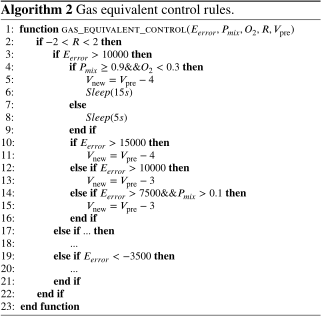
Here, \(E_{\mathit{error}}\) represents the error between the current equivalent and the target equivalent, with the target equivalent being the moving average value of the previous minute. \(P_{\mathit{mix}}\) represents the pressure variation rate of the mixed gas [kPa/min]. \(O_2\) represents the oxygen content [%].
The gas equivalent control rules are intended to stabilize the heat input of the mixed gas at the source and guarantee the gas boiler’s basic heat supply for steam generation. The controlled device is the degree of opening of the mixed gas valve, but these rules do not conflict with the expert control rules for the main steam temperature. Gas equivalent expert control can only be activated when certain conditions of the main steam temperature expert control are met. The design logic is as follows: there is a time lag between fluctuations in the mixed gas and its impact on the main steam temperature. Therefore, once the main steam temperature stabilizes, the gas equivalent control can be initiated to stabilize the heat input of the mixed gas at the source, thereby reducing the impact of mixed gas fluctuations.
3.3. Attemperating Water Control Rules
The function of the tempering water is to regulate both the gas boiler load and the main steam temperature by controlling the water injection rate. The 150 MW gas boiler is equipped with three pipelines for tempering water, which are categorized into one primary pipeline and two secondary pipelines. As indicated by on-site process characteristics, the primary attemperating water exerts a substantial effect on the gas boiler load, while its influence on the main steam temperature is relatively minor. Conversely, the two secondary attemperating waters demonstrate a smaller impact on the gas boiler load but exert a greater influence on the main steam temperature. According to the aforementioned characteristic, the regulation of power generation load via attemperating water entails initial adjustments to the primary attemperating water, with subsequent adjustments to the secondary attemperating water. In scenarios where attemperating water is employed to facilitate main steam temperature regulation, adjustment is limited to the two secondary attemperating waters. Furthermore, once the primary steam temperature has been stabilized, it is imperative to recalibrate the opening of the tempering water valves. This recalibration is crucial to mitigate potential adverse effects on the stability of the power generation load.
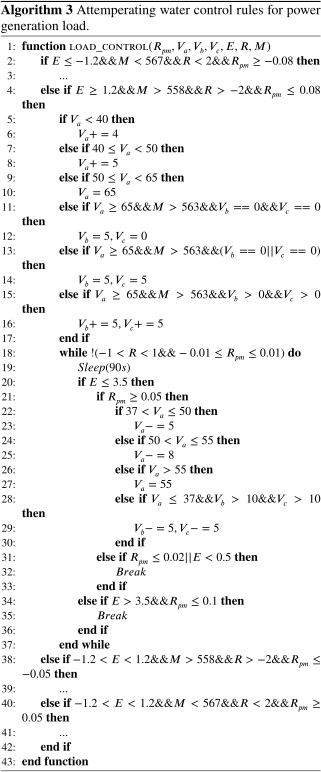
Partial attemperating water control rules for power generation load are shown in Algorithm 3, where \(V_a\) denotes the opening degree of the primary attemperating water valve [%], \(V_b\) and \(V_c\) denote the opening degrees of the two secondary attemperating water valves [%], respectively, \(R_{pm}\) denotes the rate of change of main steam pressure [kPa/min]. When the main steam temperature is within the process range and the gas boiler is operating normally with a stable opening of the steam turbine inlet control valve, the main steam pressure change rate is positively correlated with the change in power generation load. Furthermore, the main steam pressure change rate provides a more accurate and sensitive response than direct detection of power generation load. Therefore, this parameter can be used to determine the direction and magnitude of changes in power generation load. The design of the expert rules primarily considers the rate of change of the main steam pressure as the controlled parameter and the attemperating water valve as the controlled object. It adheres to the fundamental principle of regulating the attemperating water flow rate to adjust the rate of change of the main steam pressure and indirectly regulate the power generation load. Implementing the expert rules involves judging based on the target power generation load error, main steam temperature, rate of change of main steam temperature, and rate of change of main steam pressure. Then, the corresponding control rule branch is entered. Additionally, a callback mechanism is designed for scenarios in which the rate of change of main steam pressure is excessively rapid, that is, when the power generation load changes too quickly.
The attemperating water control rules for the main steam temperature are based on a process in which controlling only the mixed gas valves is insufficient for quickly stabilizing the main steam temperature when the temperature and its rate of change exceed specific thresholds. Therefore, the two secondary attemperating water valves adjust to help stabilize the temperature. To avoid affecting the power generation load due to changes in the attemperating water flow rate, the opening degrees of the two secondary attemperating water valves are adjusted once the main steam temperature has stabilized.
4. Experiment and Analysis
This section substantiates the efficacy and viability of the intelligent control strategy for the gas boiler power generation process, predicated on the regulation of three pivotal process variables. This is achieved by implementing the automatic control system for the 150 MW gas boiler’s power generation process in actual production. Both the main steam temperature control and the gas equivalent control adjust the 12 mixed gas valves to regulate the main steam temperature. The attemperating water control serves two functions: controlling the power generation load and assisting in controlling the main steam temperature. This section demonstrates the effectiveness of the control system in regulating the main steam temperature and power generation load while reducing energy consumption and alleviating operator workload.
4.1. Main Steam Temperature Control Effect
The primary temperature of the gas that is utilized in the boiler directly impacts its thermal efficiency and plays a pivotal role in the overall performance of the system. The proposed intelligent control strategy involves the collaborative regulation of key parameters, including the main steam temperature, the gas equivalent, and the attemperating water, with the objective of ensuring the stability of the gas boiler’s main steam temperature. The automatic control system is principally responsible for adjusting the mixed gas valves. It is further complemented by the regulation of the two secondary attemperating water valves, thereby ensuring stable control of the main steam temperature.
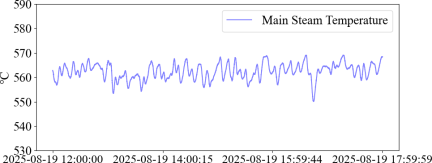
Fig. 3. Gas boiler main steam temperature curve diagram.
As demonstrated in Fig. 3, upon implementation of the automatic control system, there was minimal fluctuation in the mixed gas supply, thereby ensuring the main steam temperature remained within the desired range of 550°C to 570°C. This outcome is in accordance with the established process requirements and effectively guarantees the normal operation of the gas boiler. In scenarios where fluctuations in mixed gas were more pronounced—such as when the minute variation rate of mixed gas pressure exceeded 3.5 kPa/min—the system identified this as an extreme operating condition, exited automatic control mode, and triggered an alarm. This required on-site operators to perform manual intervention. Moreover, in instances where the gas supply from the blast furnace, converter, or coke oven was inadequate and the power generation load required augmentation through superheating, the system prompted the operator to transition to manual control. This ensured the stability and operational safety of the system.
4.2. Power Generation Load Control Effect
Ensuring stable power generation load control is imperative for the efficient operation of the gas boiler, as it guarantees the gas boiler functions continuously at its optimal operating point, thereby enhancing combustion and thermal efficiency. In the context of fluctuating mixed gas supplies, the stabilization of the power generation load within the requisite fluctuation range (i.e., ±2 MW) prevents frequent and substantial load fluctuations. This, in turn, mitigates energy dissipation, optimizes fuel utilization, and consequently enhances the overall operational efficiency of the boiler.
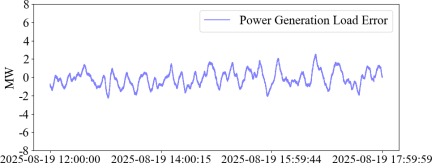
Fig. 4. Gas boiler power generation load error curve diagram.
The dispatch center is responsible for analyzing the overall status of plant production to determine the target power generation load. The automatic control system is designed to stabilize the actual power generation load within a range of ±2 MW of the target load, in compliance with process requirements. This is a critical component in ensuring the reliable operation of the gas boiler. As demonstrated in Fig. 4, in the context of small-amplitude mixed gas fluctuations, the system exhibits the capacity to maintain the load deviation within a range of ±2 MW. This capability enables the automation of load control for the gas boiler, thereby markedly reducing the labor intensity demanded of on-site operators. The implementation of stable power generation load control has led to a substantial enhancement in the operational stability and energy utilization efficiency of the gas boiler system.
During target power generation load changes, the system maintains the main steam temperature within the normal process range, enabling smooth load transitions with an average load change rate of 0.5 MW/min. The load is stabilized within ±2 MW of the target load. Given the necessity of maintaining the main steam temperature within the standard range, the load adjustment speed is calibrated to be slightly less responsive than that of manual adjustment. The slower load adjustment helps to avoid sharp fluctuations in temperature and pressure inside the boiler. This, in turn, reduces material fatigue and damage, preserves the long-term durability of the equipment, and prevents incomplete combustion. Consequently, this reduces pollutant emissions and meets environmental protection standards.
4.3. Operational Performance Analysis
During the initial month of the automatic control system’s operation in actual production, the system successfully stabilized the gas boiler load within the process-required range under different operating conditions. The utilization rate of the system exceeded 90%, thereby ensuring the effective realization of stable control and dynamic adjustment of the gas boiler load. This not only significantly enhanced the operational efficiency and stability of the gas boiler, reduced the labor intensity of operators, and improved mixed gas combustion efficiency, but also lowered energy consumption.
From the perspectives of optimized control and energy conservation, based on standard coal consumption data, the average standard coal consumption under manual control by operators over one month was 299.8 g/kWh, whereas that under the automatic control system was 297 g/kWh. This finding indicates that the proposed intelligent control strategy for the gas boiler power generation process has the potential to enhance combustion efficiency and reduce energy consumption. The calculation formula for standard coal consumption is as follows:
The findings substantiate the efficacy and viability of the proposed intelligent control strategy for the gas boiler power generation process, which is predicated on the regulation of three pivotal process variables. Preliminary findings indicate that the automatic control system can substitute for the frequent manual adjustments of the mixed gas valves and temperature control valves by operators. This substitution has the potential to reduce their workload.
5. Conclusion
The present study proposes and validates an intelligent control strategy for the gas boiler power generation process, based on the control of three key process variables. The efficacy of the strategy is evidenced by its ability to successfully achieve stable control and dynamic adjustment of the gas boiler load. This is achieved through real-time monitoring and regulation of key process parameters, including main steam temperature, gas equivalent ratio, and attemperating water valve openings. This enhancement of the gas boiler’s operational efficiency and stability, reduction in labor intensity for operators, and significant reduction in energy consumption and mitigation of environmental pollution are significant advancements.
A thorough examination of a 30-day period of on-site production data reveals that the automatic control system operates at an exceptional rate of over 90%, thereby accomplishing the objectives of stable load control and dynamic adjustment for gas boiler power generation. In terms of load stability control, the system maintains the gas boiler load within a range of ±2 MW of the target load, ensuring the efficient and safe operation of the boiler. Specifically, the system has been engineered to stabilize the main steam temperature within the range of 550°C to 570°C, thereby meeting the process requirements. Concurrently, the system autonomously adjusts the power generation load to minimize operator intervention, thereby enhancing the boiler’s operational stability and efficiency. Moreover, the system enhances the efficiency of boiler combustion control, reduces energy consumption, and increases the economic benefits of the enterprise.
In addition, the proposed control strategy demonstrates notable adaptability to complex operating conditions during gas boiler operation. This adaptability is crucial for ensuring that the main steam temperature remains within an acceptable range during load transitions. The relatively low load variation rate helps mitigate drastic fluctuations in temperature and pressure inside the boiler, thereby preventing excessive equipment wear and incomplete combustion. Consequently, this results in the extension of the service life of the equipment and the enhancement of its environmental performance.
Acknowledgments
This work was supported in part by the National Natural Science Foundation of China under Grant 62303431, and in part by the 111 Project under Grant B17040.
- [1] S. Xie, Y. Hua, S. Lu, and X. Li, “A novel spatio-temporal adaptive prediction modeling strategy for industrial production process,” IEEE Trans. Instrum. Meas., Vol.72, Article No.2507011, 2023. https://doi.org/10.1109/TIM.2023.3246514
- [2] S. Sgouridis, M. Ali, A. Sleptchenko, A. Bouabid, and G. Ospina, “Aluminum smelters in the energy transition: Optimal configuration and operation for renewable energy integration in high insolation regions,” Renew. Energy, Vol.180, pp. 937-953, 2021. https://doi.org/10.1016/j.renene.2021.08.080
- [3] F. Hong, Y. Zhao, W. Ji, and Vasbieva, “A feature-state observer and suppression control for generation-side low-frequency oscillation of thermal power units,” Applied Energy, Vol.354, Article No.122179, 2024. https://doi.org/10.1016/j.apenergy.2023.122179
- [4] J. Hu, M. Wu, and W. Pedrycz, “Adaptive weighted broad echo state learning system-based dynamic modeling of carbon consumption in sintering process,” IEEE Trans. on Neural Networks and Learning Systems, Vol.36, No.7, pp. 12066-12075, 2025. https://doi.org/10.1109/TNNLS.2024.3491101
- [5] J. Hu, J. Liu, M. Wu, and W. Pedrycz, “A framework for time-series dynamic modeling of carbon consumption in sintering process,” IEEE Trans. on Systems, Man, and Cybernetics: Systems, Vol.55, No.10, pp. 7369-7378, 2025. https://doi.org/10.1109/TSMC.2025.3583084
- [6] J. Hu, M. Wu, W. Cao, and W. Pedrycz, “Dynamic modeling framework based on automatic identification of operating conditions for sintering carbon consumption prediction,” IEEE Trans. on Industrial Electronics, Vol.71, No.3, pp. 3133-3141, 2024. https://doi.org/10.1109/TIE.2023.3270514
- [7] J. Hu, H. Li, H. Li, M. Wu, W. Cao, and W. Pedrycz, “Relevance vector machine with hybrid kernel-based soft sensor via data augmentation for incomplete output data in sintering process,” Control Engineering Practice, Vol.145, Article No.105850, 2024. https://doi.org/10.1016/j.conengprac.2024.105850
- [8] K. Kravtsov and V. Kukartsev, “Algorithmic optimization of coal-fired boilers using energy consumption models,” 2025 24th Int. Symp. INFOTEH-JAHORINA (INFOTEH), 2025. https://doi.org/10.1109/INFOTEH64129.2025.10959271
- [9] M. Jiang, H. Yu, M. Jin, I. Nakamoto, G. T. Tang, and Y. Guo, “Research on boiler energy saving technology based on Internet of Things data,” J. Adv. Comput. Intell. Intell. Inform, Vol.28, No.2, pp. 296-302, 2024. https://doi.org/10.20965/jaciii.2024.p0296
- [10] O. Maslak, M. Maslak, N. Grishko, Y. Yakovenko, and A. Savielova, “Formation of metallurgy industry development scenarios based on energy efficiency and digitalization of production,” 2023 IEEE 4th KhPI Week on Advanced Technology (KhPIWeek), 2023. https://doi.org/10.1109/KhPIWeek61412.2023.10312839
- [11] L. Yuan, “The impact and cause analysis of low-nitrogen burner retrofit on boiler fouling in a 670 MW unit,” China Equipment Engineering, Vol.20, pp. 197-199, 2024.
- [12] L. Qiu, “Fault prediction and diagnosis of boiler combustion systems in thermal power plants based on artificial intelligence,” Modern Manufacturing Technology and Equipment, Vol.60, No.10, pp. 131-133, 2024.
- [13] J. Liu and Z. Wang, “Optimization of steam temperature regulation for ‘W’ type subcritical coal-fired boilers,” Energy Technology, Vol.19, No.1, pp. 56-60, 2021.
- [14] G. Zhu, “Optimization of combustion control scheme to solve boiler safety operation issues,” Chemical Engineering Safety and Environment, Vol.36, No.12, pp. 71-73, 2023.
- [15] J. Bian, B. Xie, and H. Wu, “Boiler flame combustion state recognition based on multi-feature fusion and WOA-SVM,” China Special Equipment Safety, Vol.40, No.9, pp. 13-18, 2024.
- [16] J. Sun and W. Zhang, “Fuzzy self-optimizing peak regulation control for combustion temperature of coal-fired hot water boilers in power plants,” Resources Conservation and Environmental Protection, No.4, pp. 118-122, 2025.
- [17] J. Song and Y. Feng, “Neural network-based modeling of boiler combustion control system for power generation,” 2023 IEEE 6th Int. Conf. on Knowledge Innovation and Invention (ICKII), pp. 503-505, 2023. https://doi.org/10.1109/ICKII58656.2023.10332672
- [18] Y. Zhou, “Design and application of automatic control system for main steam temperature of gas boilers,” Metallurgical Industry Automation, Vol.43, No.2, pp. 73-76, 2019.
- [19] L. Yuan, Z. Li, and D. Li, “Research on combustion control of small gas-fired hot water boilers based on fuzzy self-tuning PID,” Computing Technology and Automation, Vol.44, No.3, pp. 50-54+70, 2025.
- [20] G. Zhang, Y. Wang, and J. Li, “Research and application of load control and combustion optimization technology for pulverized coal boilers,” Automation Expo, Vol.38, No.5, pp. 120-123, 2021.
- [21] H. Yan, “Practical combustion optimization control for 180 t/h full gas boiler,” Metallurgical Power, Vol.7, pp. 40-43, 2020.
- [22] H. Zhou, H. Fan, and J. Zhao, “Analysis of the total air volume followed load control concept for coal-fired power plant boilers,” Clean Coal Technology, Vol.25, No.2, pp. 18-24, 2019.
This article is published under a Creative Commons Attribution-NoDerivatives 4.0 Internationa License.