
Research Paper:
English Vocabulary Memory Intelligent Review System Supported by Deep Learning
Liting Wang†
School of Foreign Languages, Anshan Normal University
No.43 Ping’an Street, Tiandong District, Anshan, Liaoning 114056, China
†Corresponding author

In the context of globalization, English learning is becoming increasingly important, but traditional vocabulary memorization methods have many limitations. This paper constructs an intelligent review system for English vocabulary memorization based on deep learning, integrating big data analysis and personalized learning theory. Through word vector generation and reinforcement learning algorithms, the system realizes vocabulary representation learning, memory updating, and personalized review strategy generation. The experiment selected 50 English learners and divided them into an experimental group and a control group for comparison. The results showed that the experimental group had an average score of 75.36 in the later immediate recall test and an average score of 62.48 in the delayed memory test, which were significantly higher than those of the control group, and the learning time was reduced by 19.05% and the learning pressure was reduced by 21.43%. The system effectively improves the efficiency and persistence of vocabulary memory, provides an efficient and personalized tool for English learning, and promotes the development of language learning theory.
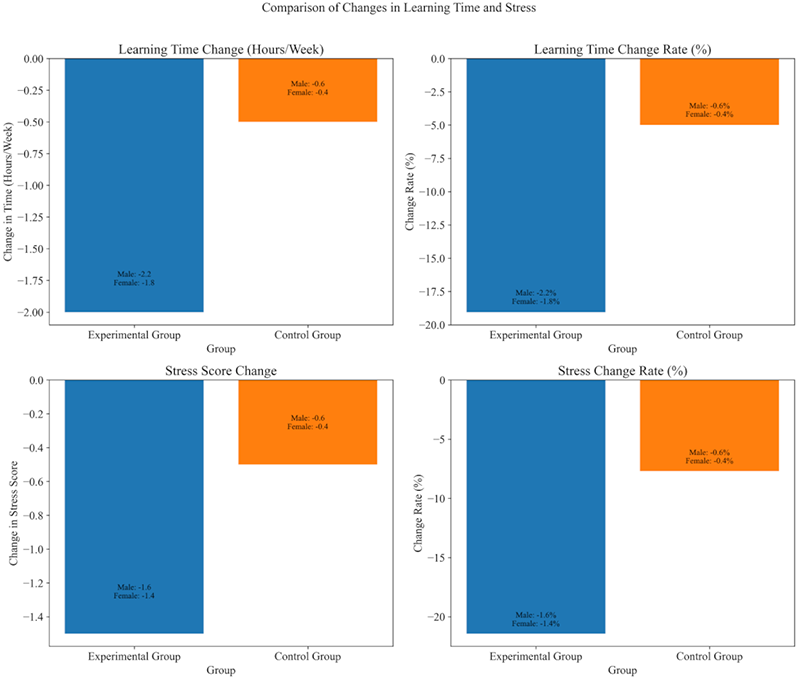
Comparison of learning time and stress before and after learners use the system
1. Introduction
In the era of globalization and informatization, English, as a universal language, has become a core tool for daily life, work, academic exchanges, and technological development. With the continuous advancement of science and technology, traditional English learning methods have gradually exposed many limitations, especially in terms of the effectiveness of vocabulary memory and the sustainability of learning 1. For most language learners, mastering and memorizing English vocabulary is undoubtedly one of the biggest challenges in the learning process 2. Although many people can memorize a large number of words in a short period of time, their memory gradually fades over time, leading to forgetting. This phenomenon of forgetting is called the “forgetting curve” in educational research, which reveals the law that memory decays exponentially over time 3.
According to relevant statistics, about 70% of language learners will forget what they have learned within a few days after learning, especially the memory of vocabulary. In actual educational scenarios, traditional recitation and mechanical memorization methods often fail to effectively help students consolidate vocabulary and may even cause memory burden and learning anxiety for learners 4. At the same time, with the increase in the number of learners, how to provide personalized review plans for different individuals to avoid indiscriminate repetition and inefficient memorization has become a difficult problem that needs to be solved in the current language learning field. Therefore, developing an intelligent and personalized review system and continuously optimizing the review strategy with the help of deep learning technology has become a potential solution to this challenge 5.
In recent years, with the rapid development of artificial intelligence and deep learning technologies, intelligent education systems have gradually become a research hotspot in academia and education. Many scholars have tried to enhance the memory effect in language learning, especially in vocabulary memory, through deep learning models. Existing research has mainly focused on optimizing learning paths and review strategies through algorithms to help learners improve their memory efficiency 6. However, although these systems have optimized the learning process to a certain extent, most intelligent review systems still have certain limitations. For example, although the traditional review system based on spaced repetition improves the review efficiency of learners, it ignores individual differences among learners and fails to provide personalized review plans based on the memory characteristics of different learners 7.
Existing research mainly focuses on how to improve review efficiency and reduce learning burden, but rarely explores how to design a more accurate and humanized review plan through deep learning models, combined with factors such as learners’ emotional state, memory curves, and context changes. Most current review strategies are based on preset templates and do not fully consider learners’ actual memory conditions, resulting in insignificant improvement in learning effects. Therefore, existing research still has significant gaps in the design of personalized intelligent review systems, and new intelligent methods and more efficient deep learning algorithms are urgently needed to make up for these shortcomings.
This study aims to design and implement an intelligent review system for English vocabulary memory based on deep learning, and to provide a more scientific and efficient vocabulary review method by using modern artificial intelligence technology, combined with big data analysis and personalized learning theory. Specifically, the main goal of this study is to build an intelligent system that can automatically adjust the review strategy through the training and optimization of the deep learning model, so that it can dynamically adjust the review content and review time according to the learner’s learning progress, memory status, and cognitive characteristics, thereby improving learning efficiency and prolonging the retention time of memory.
The innovation of this study is that, by introducing deep learning technology, it breaks through the design framework of the traditional vocabulary review system and provides a dynamic review scheme based on individual differences of learners. Compared with the existing review system, this study not only focuses on the optimization of review time and frequency, but also takes into account multi-dimensional factors such as learners’ emotional fluctuations, learning progress, and cognitive load, and proposes a more personalized learning scheme. In addition, this study will also explore how to continuously self-optimize the deep learning model so that the review system can continuously adjust itself from learners’ feedback to achieve the best memory effect.
Theoretically, this study will help promote the development of language learning theory, especially vocabulary memory theory, and fill the gap in current research on the application of deep learning in the field of intelligent review. From a practical perspective, this study can not only provide English learners with an efficient and personalized learning tool, but also provide educators and developers with new ideas to improve existing teaching methods and tools and enhance the overall quality of education. Through in-depth exploration of this study, it is expected to provide important theoretical support and technical guarantees for the innovation and practice of future educational technology.
In summary, this study makes three main contributions. First, it proposes an integrated framework that combines deep neural networks (DNNs) with reinforcement learning to support individualized vocabulary review, moving beyond fixed-rule spaced repetition schemes. Second, it introduces a memory update mechanism and state representation that jointly model semantic relations, learner performance, and emotional feedback, offering a more fine-grained account of vocabulary retention dynamics. Third, it provides empirical evidence from a controlled experiment showing that the proposed system improves both immediate and delayed vocabulary performance, while reducing learning time and perceived pressure compared with a traditional review approach. These contributions distinguish the present work from existing intelligent review systems and highlight its added value to the literature on technology-enhanced language learning.
2. Literature Review
2.1. Challenges and Cognitive Basis of English Vocabulary Memorization
Vocabulary memory plays a central role in the language learning process. However, although vocabulary learning is crucial to improving language proficiency, its effectiveness is often constrained by the law of forgetting. Studies have shown that language learners often experience rapid forgetting, a phenomenon that is closely related to the way the human brain processes and stores information. Traditional cognitive models view forgetting as a natural process of memory decay, which is affected by factors such as time, learning strategies, and review frequency 8,9.
Modern research no longer relies solely on simple repetitive memory patterns but pays more attention to individual differences and memory dynamics of learners. The relationship between the memory curve and the learner’s cognitive burden has become a focus of research. For example, in recent years, some scholars have explored how to quantify and predict the rate of vocabulary forgetting through deep learning models, and proposed to maximize the memory effect by adjusting the learning content and time interval 10. This view challenges the traditional cognitive psychology framework and proposes a contextualized and dynamic memory model for learners 11. On the other hand, the impact of learners’ emotional state, motivation, and self-regulation ability on memory effect has also received increasing attention. Studies have shown that emotions can significantly affect the retention and retrieval of memory, especially in vocabulary learning. Positive emotional experiences can enhance the deep encoding of memory. As a powerful pattern recognition tool, deep learning models can evaluate learners’ emotional changes in different learning scenarios, thereby providing data support for the design of personalized review strategies 12.
2.2. Application of Deep Learning in Vocabulary Memory Review
Deep learning, as a cutting-edge technology in the field of artificial intelligence, has gradually penetrated into educational technology, especially in the design of intelligent education systems. Compared with traditional learning systems, intelligent review systems based on deep learning can extract patterns from massive data and accurately analyze learners’ learning situations 13. This process not only relies on the algorithm to dynamically track learners’ knowledge mastery, but also can automatically adjust review strategies and content according to the characteristics of different learners.
In the field of vocabulary learning, the introduction of deep learning methods has greatly changed the construction of review methods. The effectiveness of algorithms based on spaced repetition has been verified by many studies, but in practical applications, they often ignore individual differences among learners 14,15. In order to make up for this shortcoming, in recent years, researchers have begun to explore how to combine models such as DNNs and recurrent neural networks to simulate learners’ memory processes. For example, by establishing a model based on long short-term memory network, it is possible to accurately predict the learner’s memory strength for vocabulary, and dynamically adjust the order and frequency of review content based on the prediction results, thereby improving review efficiency and memory retention time 16. In addition, in response to the forgetting phenomenon that may occur during the learning process, the deep learning system can continuously optimize the review time and content based on the learner’s feedback to form a personalized review plan. Some studies have shown that this deep learning model based on data feedback has shown significant advantages in optimizing learning strategies, especially in solving the “inefficiency” problem existing in traditional learning methods, providing an innovative solution 17,18.
2.3. The Prospects of Personalized Review and Adaptive Learning Systems
Personalized learning has become an important development direction in modern education, especially in the field of language learning. Traditional language learning systems often adopt a unified review strategy and cannot be adjusted according to the different needs and memory conditions of learners. Adaptive learning systems, on the other hand, adjust learning content and review plans in real time according to learners’ actual performance 19,20. In recent years, scholars have begun to pay more attention to combining personalized review strategies with deep learning, and proposed an adaptive learning model based on artificial intelligence, aiming to achieve more accurate vocabulary memory training 21.
By incorporating multi-dimensional factors such as learners’ learning trajectory, emotional response, cognitive burden, etc. into the design of review strategies, personalized review systems can automatically identify learners’ needs and recommend the most suitable review content and methods. Adaptive learning systems based on reinforcement learning are typical representatives of this personalized learning model 22. Under this framework, the system will optimize itself according to learners’ feedback rewards, so that each learner can get a tailored learning plan, thereby improving learning efficiency and delaying forgetting. However, although the application prospects of adaptive learning systems in English vocabulary memorization are broad, there are still some urgent problems to be solved 23. For example, how to balance the relationship between personalized review and system complexity so that the system can provide accurate review recommendations without increasing computing resources and development difficulty. In this regard, some researchers have proposed that future intelligent review systems will not only rely on a single learning model, but also improve the adaptability and universality of the system through multi-model fusion 24.
In short, the combination of deep learning and personalized review strategies has brought unprecedented changes to language learning. Although this field is still in a stage of rapid development, it is expected that through interdisciplinary integration, the intelligence and precision of English vocabulary memory review systems will be further promoted in the future, providing learners with more efficient and flexible learning tools.
3. Methodology
3.1. Overall Framework and Design Ideas of the Model
The proposed intelligent review system is organized around a three-layer architecture that links data input, representation learning, and decision-making. At the data layer, learners’ interaction logs, test scores, and emotional feedback are continuously collected and pre-processed. At the representation layer, a deep neural network encodes vocabulary items and learner states into dense vector spaces, capturing semantic relations and individual memory trajectories. At the decision layer, a reinforcement learning agent operates on these representations to select the next review items and schedule review intervals. This layered architecture provides a transparent and replicable framework: each component has a clearly defined role, and the interaction among components follows a principled loop of “input–encoding–decision–feedback,” which grounds the system both theoretically and practically.
In this study, an innovative deep learning-supported intelligent review system for English vocabulary memory is proposed. The design of the system focuses on improving the efficiency and durability of vocabulary memory through personalized review strategies. The design concept of the model is based on the combination of DNNs and reinforcement learning, dynamically evaluating the learner’s memory status and automatically adjusting the review content and timing according to the evaluation results. The overall framework of the system is mainly composed of the following three modules: vocabulary representation learning module, memory update mechanism, and review strategy generation and personalized adjustment module.
The vocabulary representation learning module is responsible for mapping each word to a continuous vector representation in a high-dimensional space. This process is implemented through a deep learning model to ensure that the representation of the word in the semantic space can reflect the strength of its memory and the cognitive burden of the learner. Secondly, the memory update mechanism dynamically adjusts the memory status of each word based on the learner’s review feedback, so as to accurately predict when to review a certain word to best improve the memory effect. Finally, the review strategy generation module automatically generates a personalized review plan based on a reinforcement learning algorithm, so that the review content and review timing are optimized to achieve the best memory consolidation.
The methodology of this paper focuses on the detailed analysis of this overall framework, especially the synergy and mutual feedback between the modules. Unlike the traditional memory model based on fixed rules, the model proposed in this study can respond to learners’ feedback in real time, thereby adaptively adjusting the review content and strategy to achieve efficient vocabulary memory goals.
3.2. Lexical Representation Learning and Memory Update Mechanism
Vocabulary representation learning is a key component of the model, which aims to transform each word into a vector representation with semantic information and dynamically adjust it through the learner’s memory state. To achieve this goal, this study adopts a word vector generation method based on a deep neural network, in which an autoencoder is used to perform unsupervised learning on the vocabulary to capture the high-level semantic features of the vocabulary. Specifically, the embedding representation of the vocabulary is calculated by Eq. \(\eqref{eq:eq1}\).
In Eq. \(\eqref{eq:eq1}\), \(\boldsymbol{v}_{w} \in \mathbb{R}^{d}\) is vocabulary, \(\mathbf{w}\) represents the embedding vector of the original text input of the vocabulary list, and \(d\) is the embedding dimension. The vocabulary vector is continuously adjusted through the training process of the deep neural network to better reflect its semantic features.
Concretely, the vocabulary encoder is implemented as a stacked autoencoder with two hidden layers of 256 and 128 units, respectively, using rectified linear unit (ReLU) activations. The final embedding dimension in Eq. \(\eqref{eq:eq1}\) is set to 128, which offers a balance between expressive power and computational cost. The model is trained with the Adam optimizer (learning rate \(=\) 0.001, batch size \(=\) 64) and early stopping based on validation loss to prevent overfitting. This configuration was chosen after preliminary experiments showed that deeper architectures or larger embedding sizes yielded only marginal gains at the expense of higher training time and memory consumption.
During the vocabulary memory update process, the model will dynamically adjust the memory strength of the vocabulary based on the learner’s review feedback on the vocabulary (such as correct/incorrect answers, review frequency, etc.). The memory update mechanism can be recursively expressed by Eq. \(\eqref{eq:eq2}\).
In Eq. \(\eqref{eq:eq2}\), \(\boldsymbol{m}_{w}^{(t)}\) denotes the moment vocabulary at time step \(t\). The memory state \(\boldsymbol{y}_w\) is the learner’s review feedback on vocabulary. \(\boldsymbol{f}(\cdot)\) is the memory update function, and \(\alpha\) and \(\beta\) are the learning rate and memory feedback intensity control parameter, respectively. The memory state is updated according to the learner’s feedback after each review, so as to ensure that the memory is effectively consolidated and avoid forgetting.
This update mechanism forms a personalized memory path by comprehensively considering factors such as the learner’s cognitive burden, emotional state, and memory strength. Specifically, the model will make weighted adjustments to the memory according to the learner’s current state (such as learning fatigue, emotional feedback, etc.) at each update to ensure that the learner reviews the vocabulary that needs to be consolidated most at the most appropriate time, thereby achieving efficient vocabulary memory effects.
3.3. Review Strategy Generation and Personalized Adjustment
The review strategy generation module automatically generates a personalized review plan for each learner through a reinforcement learning algorithm. The design of this module is based on the Q-learning algorithm, which measures the effect of selecting a review content under a specific state through a state-action value function. The core goal of this review strategy is to maximize long-term memory retention. By adjusting the timing and content of the review, learners can review at the best time, thereby avoiding inefficient learning caused by excessive or improper review.
The generation process of review strategy firstly transforms the learner’s memory state \(s_{t}\). As input, define each review task (reviewing a certain word or word group) as an action \(a_{t}\). The learner’s memory state includes not only the memory strength of each vocabulary word, but also the learner’s emotional state (such as fatigue, emotion, etc.), which is described by the comprehensive state representation vector of Eq. \(\eqref{eq:eq3}\).
In Eq. \(\eqref{eq:eq3}\), \(m_{t}\) represents the learner’s memory state vector, and \(e_{t}\) is the learner’s emotional state vector. Each review task will select the optimal review content and time point according to the current memory state. The strategy optimization process can be described by the Q-learning value update formula in Eq. \(\eqref{eq:eq4}\).
In Eq. \(\eqref{eq:eq4}\), \(Q(\mathbf{s}_{t}, \mathbf{a}_{t})\) represents the state, \(\mathbf{s}_{t}\) represents the expected long-term return of the next action, \(\mathbf{a}_{t}\) is an immediate reward, \(\gamma\) is the discount factor, and \(\max_{a'}Q(\mathbf{s}_{t+1}, a')\) is the reward for the best possible action in the next state.
The review strategy module adopts a tabular Q-learning algorithm, as it provides a transparent and controllable way to link state representations with review actions. An \(\varepsilon\)-greedy exploration policy is used, with \(\varepsilon\) linearly annealed from 0.2 to 0.05 over the training episodes to ensure sufficient exploration in early stages and more exploitation later. The discount factor \(\gamma\) in Eq. \(\eqref{eq:eq4}\) is set to 0.9 to prioritize long-term retention while still valuing immediate gains, and the learning rate for Q-value updates is fixed at 0.05. These hyperparameters were selected based on grid search on a held-out subset of learners, targeting stable convergence of the review policy and robust improvements across different vocabulary difficulty levels.
A distinctive feature of the proposed review strategy is the joint use of emotional feedback and memory state as inputs to the decision process. Instead of relying solely on correctness or response latency, the system incorporates indicators of fatigue, anxiety, and engagement into the state vector. This design allows the agent to avoid scheduling demanding review tasks when the learner is in an unfavorable cognitive or emotional condition and to exploit moments of high engagement for consolidating more complex items. In this way, the review plan is not only cognitively informed but also sensitive to the learner’s affective profile, which enhances both effectiveness and perceived comfort during study.
Overall, the proposed intelligent vocabulary review system integrates vocabulary representation learning, a memory update mechanism, and a reinforcement-learning-based strategy generator into a unified adaptive framework. The deep learning components provide individualized, data-driven estimates of memory strength, while the reinforcement learning agent transforms these estimates into actionable review schedules that evolve with learner feedback. By combining these elements, the system moves beyond static rule-based approaches and offers a flexible platform that can be extended with additional modalities or pedagogical constraints in future work.
4. Experimental Evaluation
In order to verify the effectiveness and practicality of the proposed deep learning-supported English vocabulary memory intelligent review system, a comprehensive experimental evaluation was conducted. The main goal of the evaluation was to test the system’s performance in terms of vocabulary memory improvement, personalized adjustment of review strategies, and learner engagement, and to compare and analyze it with traditional memory systems. The experimental design is divided into two parts: one is a quantitative evaluation of the system’s performance, and the other is a qualitative evaluation of the learners’ subjective experience.
4.1. Experimental Design
This experiment selected 50 English learners as participants. All participants had basic English vocabulary knowledge and were willing to participate in a four-week experiment. The experiment adopted a two-group control design: the experimental group used the intelligent review system supported by deep learning proposed in this study, and the control group used the traditional memory system based on fixed review intervals (such as the Ebbinghaus forgetting curve method). During the experiment, participants were required to review a certain number of words every day, and the review time was automatically generated by the system and dynamically adjusted based on learners’ feedback.
A randomized allocation procedure was adopted to assign the 50 participants to either the experimental group or the control group to avoid selection bias. All vocabulary tests were scored by raters who were blinded to group assignment to reduce subjective influence on scoring. Both groups received identical exposure time and content, including the same vocabulary sets, review frequency, and total learning hours across the four-week period. The only difference between the two groups was the use of the intelligent review system in the experimental group, ensuring that performance differences were solely attributable to the intervention.
To ensure the scientific nature of the experiment, all participants had similar initial conditions such as vocabulary, review time, and learning frequency. At the beginning and end of the experiment, all participants took standardized vocabulary tests to measure the degree of improvement in vocabulary memory. In addition, the experiment also collected learners’ subjective feelings and participation through questionnaires and interviews.
4.2. Quantitative Evaluation
The quantitative evaluation of the experiment mainly measures the learners’ memory improvement through the results of vocabulary tests. The test consists of two parts: one is an immediate recall test of the vocabulary memorized by the learners, and the other is a delayed memory test of the learned words. The immediate recall test is conducted immediately after the review, testing the accuracy of the participants’ recall of the reviewed words; the delayed memory test is conducted two weeks after the end of the experiment, aiming to evaluate the long-term memory retention of the words.
The immediate recall test consisted of 100 vocabulary items drawn from the learning list, and participants were asked to recall as many items as possible immediately after each review session. The delayed memory test used the same 100 items but was administered two weeks after the end of training to measure long-term retention. Scoring was based on the number of correctly recalled items (0–100), and both assessments demonstrated strong internal reliability (Cronbach’s \(\alpha\) \(=\) .85).
Vocabulary difficulty was classified using a combined metric of corpus-based frequency and learner familiarity ratings collected before the experiment. High-frequency and widely known words were categorized as “easy,” moderately frequent words as “medium,” and low-frequency, low-familiarity items as “difficult.”
Table 1. Basic information of the test and composition of participants.

Table 2. Comprehensive comparison of test scores between the experimental group and the control group.
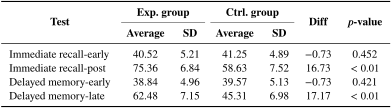
Table 3. Detailed distribution of test scores of experimental group and control group.
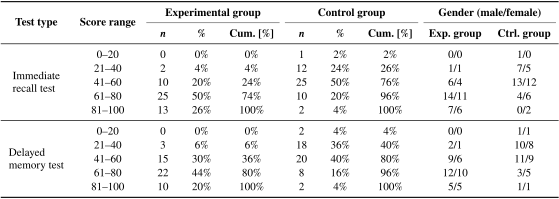
Table 1 shows the basic information of the experiment and the composition of the participants. In the immediate recall test and the delayed memory test, the number of people in the experimental group and the control group was 50, which ensured the balance of the sample size and made the experimental results more reliable. In terms of gender distribution, the male–female ratio in the experimental group was \(28:22\), and that in the control group was \(25:25\). Although there were slight differences, the overall distribution was relatively uniform, reducing the interference of gender factors on the experimental results. In terms of the distribution of people in different age groups, there were 18 people aged 18–22 in the experimental group, 22 people aged 23–28, and 10 people aged 29–35 in the control group; the corresponding age groups in the control group were 15, 20, and 15, respectively. This distribution covers people at different learning stages and cognitive levels, which can better test the applicability of the model in different populations and provide a basis for exploring the effect of the model on learners with different age characteristics.
Table 2 shows the scores of the experimental group and the control group at different test stages. In the early immediate recall and delayed memory tests, the difference in the average scores of the two groups was small and the \(p\)-value was large, indicating that the two groups were at similar levels in the initial state. In the later tests, the average score of the experimental group was significantly higher than that of the control group, and the \(p\)-value was less than 0.01, indicating that the model intervention effect was significant. From the perspective of different English basic scores, the experimental group’s score improvement in the later stages of each vocabulary stage was greater than that of the control group. This is because the model combines deep learning with reinforcement learning, and can dynamically adjust the review strategy according to personalized factors such as learners’ vocabulary mastery and cognitive characteristics, accurately strengthen memory, and effectively improve the memory effect of learners with different English basics, showing the model’s strong advantages in improving vocabulary memory.
Independent samples \(t\)-tests were conducted to compare post-test performance between the experimental and control groups. For the immediate recall-post test, the results showed a significant difference, \(t(98) = 16.73\), \(p < .01\), with a large effect size (\(\mbox{Cohen's}~d = 1.24\); 95% CI \([13.47, 19.99]\)). For the delayed memory test, the difference was also significant, \(t(98) = 17.17\), \(p < .01\), with a similarly large effect size (\(\mbox{Cohen's}~d = 1.32\); 95% CI \([14.72, 19.62]\)). These findings confirm that the intelligent review system produced substantial gains in both immediate and long-term vocabulary retention.
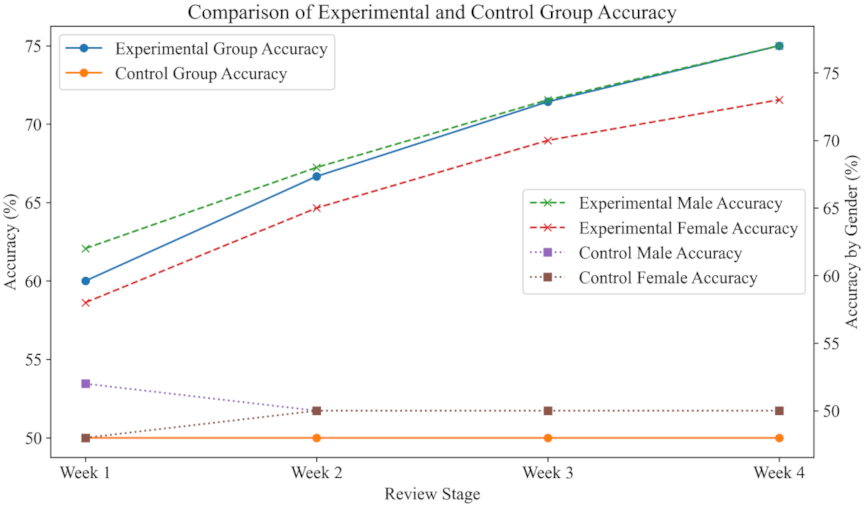
Fig. 1. Accuracy of different review stages and vocabulary difficulty of the experimental group and the control group.
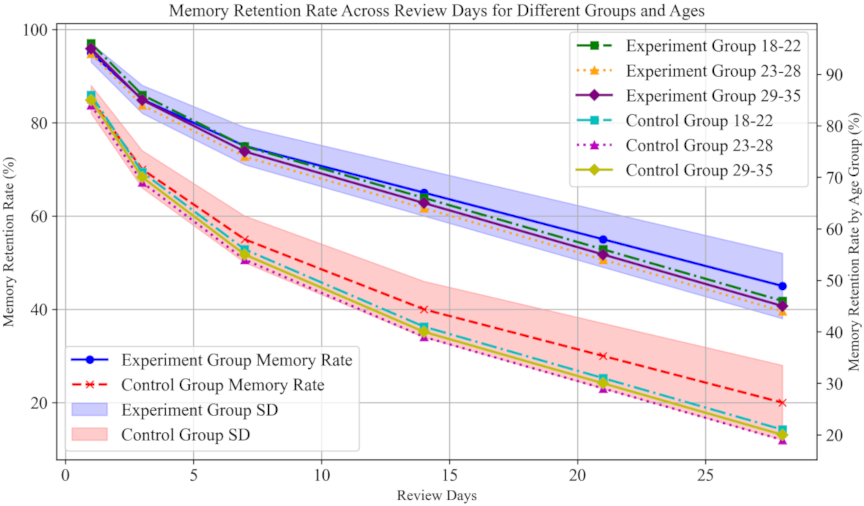
Fig. 2. Memory retention rate of experimental group and control group at different review days.
Table 3 provides detailed interval distribution statistics for the scores of the experimental group and the control group in the immediate recall test and the delayed memory test. In the immediate recall test, the proportion of people in the experimental group in the middle and high partitions (61–80 and 81–100) was significantly higher than that in the control group, reaching 50% and 26%, respectively, while the proportion of people in the control group in the middle and low partitions (21–40 and 41–60) was relatively large. The delayed memory test also showed a similar trend. From the perspective of gender distribution, the distribution of different genders in each score interval in the experimental group was relatively more even, and the proportion of people in the high score interval was significantly superior. This shows that the model can effectively promote vocabulary memory improvement for learners of different genders. Through personalized review strategies, it meets the memory needs of different learners, breaks the limitations of traditional review methods, and improves the overall learning effect and memory persistence.
Figure 1 shows the vocabulary memory accuracy of the experimental group and the control group at different review stages, as well as the accuracy under different genders and vocabulary difficulties. As the review stage progressed, the accuracy of the experimental group steadily increased, with significant improvements every week, while the accuracy of the control group remained at 50% without change. In terms of accuracy of different genders, both males and females in the experimental group made significant progress, and the difference was not large, indicating that the model can play a positive role for learners of different genders. In terms of vocabulary difficulty, the initial accuracy of the experimental group for simple, medium, and difficult vocabulary was higher than that of the control group. This is due to the vocabulary representation learning module and personalized review strategy of the model, which can reasonably arrange the review content and time according to the characteristics of vocabulary and the status of learners, effectively improve the memory effect of vocabulary of different difficulty levels, and show good adaptability and effectiveness.
Figure 2 shows the memory retention rates of the experimental group and the control group under different review days. Over time, the memory retention rates of both groups decreased, but the experimental group was always significantly higher than the control group, and the difference was stable at around 20%–25%. From the perspective of different age groups, the memory retention rates of all age groups in the experimental group were higher than those of the corresponding age groups in the control group at each time point. This is because the model’s memory update mechanism and the review strategy generation module based on reinforcement learning can dynamically adjust the review plan according to the learner’s review feedback and memory status, strengthen memory traces, and effectively delay forgetting. Both young learners aged 18–22 and learners aged 29–35 can benefit from it, reflecting the advantage of the model in maintaining memory effects in different age groups.
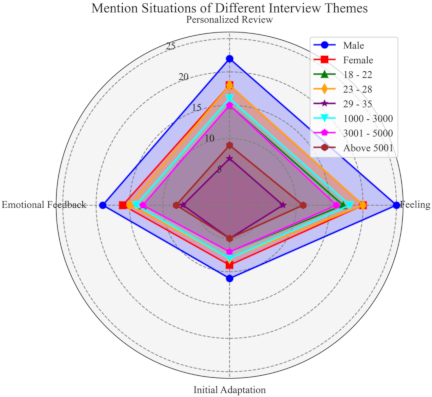
Fig. 3. Interview point mentions and personnel distribution.
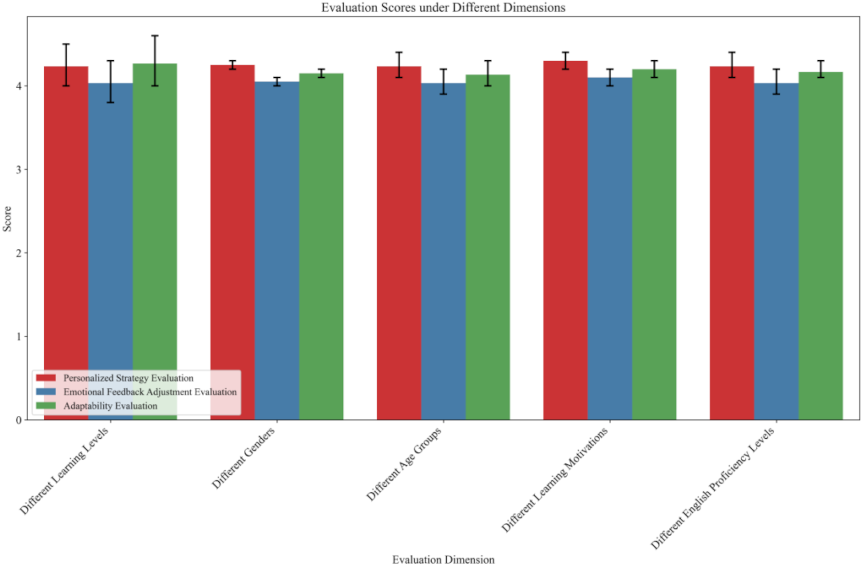
Fig. 4. Differences in system evaluations in different dimensions.
4.3. Qualitative Evaluation
In the qualitative evaluation, learners’ feedback on the system was collected through questionnaires and interviews. Most learners said that the personalized review strategies provided by the system helped them review vocabulary more specifically and avoid ineffective review. They also said that the system was able to adjust the review strategies based on their emotional feedback, which greatly improved their learning motivation and review participation. However, some learners also reported that they were not familiar with the system’s automatic adjustment mechanism in the early stage, which led to some learning confusion during the adaptation process. Over time, learners’ adaptation to the system gradually improved, and their feedback tended to be positive.
Figure 3 further verifies the questionnaire feedback results through interview opinion statistics. In terms of the effectiveness of personalized review strategies, 80% of learners mentioned that they can concentrate on reviewing weak vocabulary and improve efficiency. Learners of different genders, age groups, and English foundations have a high mention rate, indicating that the personalized strategy of the model is effective for all types of learners. Regarding the adjustment effect of emotional feedback, 70% of learners recognize its humanized design. Although 40% of learners mentioned that it was difficult to adapt in the early stage, 90% of learners believed that the system could match the learning rhythm well after adaptation. This fully demonstrates that the review strategy designed by the model based on individual differences and emotional states of learners is very practical and effective. Although there is a certain learning threshold in the early stage, it can eventually bring learners a good learning experience and improved results.
Figure 4 shows the differences in the evaluation of the system from multiple dimensions. In the evaluation of personalized strategies, although the scores of learners with different learning levels, genders, age groups, learning motivations, and English foundations are slightly different, they all give high evaluations. The small standard deviation shows that the evaluation is relatively concentrated, indicating that the personalized strategy of the model has wide applicability. The emotional feedback adjustment evaluation also received good feedback. In the early stage of the fitness evaluation, due to the innovativeness of the system, some learners had low fitness, but their fitness was greatly improved in the later stage. This shows that the model meets the needs of different learners from multiple dimensions. Whether it is for learners pursuing further studies or people who learn based on interests and hobbies, it can provide effective learning support, which further proves the comprehensiveness and effectiveness of the model in improving learning experience and results.
Table 4. Summary of learners’ suggestions for improving system functions.

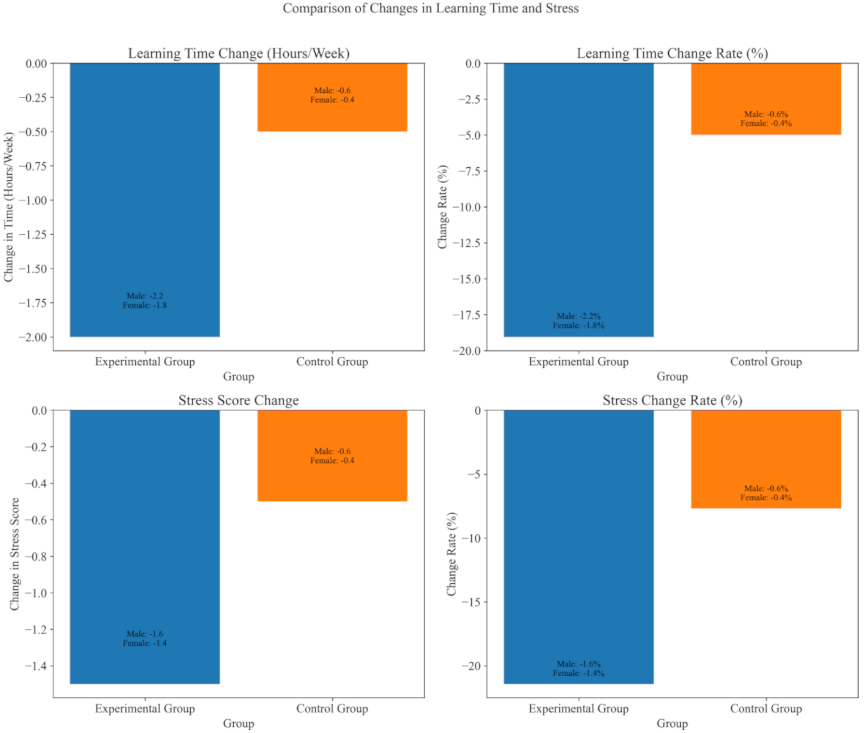
Fig. 5. Comparison of learning time and stress before and after learners use the system.
As shown in Table 4, 50% of learners hope to add explanations for the automatic adjustment mechanism, which reflects that although the innovative automatic mechanism of the model has advantages, it is difficult for some learners to understand. 30% of learners require more personalized setting options, indicating that they have higher pursuits for personalized learning, and also indirectly reflecting that the existing personalized strategies of the model have stimulated learners’ expectations for more accurate learning. 40% of learners proposed to optimize interface interaction, indicating that the ease of use of the interface has an important impact on the learning experience. Learners of different genders, age groups, and English foundations mentioned all the suggestions, which provided a comprehensive reference for the subsequent optimization direction of the model, which helped to further improve the user experience and practicality of the model and better meet the needs of learners.
Figure 5 compares the learning time and learning pressure of learners before and after using the system. After using the system, the average learning time of the experimental group decreased from 10.5 hours per week to 8.5 hours, a decrease of 19.05%, and the self-assessed learning pressure decreased from 7.0 points to 5.5 points, a decrease of 21.43%; while the corresponding changes in the control group were smaller, with learning time only reduced by 0.5 hours, a decrease of 5.00%, and learning pressure reduced by 0.5 points, a decrease of 7.69%. From the perspective of different genders, the learning time of males in the experimental group decreased by 2.2 hours, and that of females decreased by 1.8 hours, and learning pressure decreased by 1.6 points and 1.4 points, respectively, which were greater than the corresponding changes in different genders in the control group. This shows that the model not only improves learning efficiency but also reduces the learning burden and pressure of learners, and has a positive impact on learners of different genders, showing the significant advantages of the model in optimizing the learning process and improving the learning experience, which helps learners learn English vocabulary more easily and efficiently.
4.4. Discussion
According to the research results, it was found that the intelligent review system based on deep learning can significantly improve vocabulary memory, which shows the effectiveness of the system in optimizing learning strategies. Compared with the traditional review system in the existing literature, the results of this study support the theoretical hypothesis that deep learning can break through the limitations of traditional review. One limitation of this study is that the sample size is only 50 learners, which may not fully represent all English learner groups. This limitation may affect the universality of the conclusions.
To further verify the findings, future research can expand the sample size to include learners of different English proficiency, ages, and learning backgrounds, and explore the integration and application of more deep learning models. This study provides new insights into the design of intelligent education systems and has important practical significance, especially in improving English vocabulary teaching methods.
5. Conclusion
This study developed and evaluated an intelligent English vocabulary review system that combines deep neural networks with reinforcement learning to adapt review schedules to individual learners. The system encodes vocabulary and learner states into dense representations, updates memory strength based on performance and emotional feedback, and selects review items to maximize long-term retention. Results from a four-week controlled experiment show that, compared with a traditional fixed-interval review method, the proposed system substantially improves immediate and delayed vocabulary scores while reducing weekly learning time and perceived pressure. At the same time, the findings highlight remaining challenges regarding scalability and generalization to more diverse learner populations and learning scenarios.
Funding statement This research did not receive any specific grant from funding agencies in the public, commercial, or not-for-profit sectors.
Conflict of interest The author has no relevant financial or non-financial interests to disclose.
Data availability statement The data used to support the findings of this study are all in the manuscript.
Ethics declarations Not applicable.
Clinical trial number Not applicable.
Human ethics and consent to participate declarations Not applicable.
- [1] L. Duan, “Test of English vocabulary recognition based on natural language processing and corpus system,” J. of Intelligent & Fuzzy Systems, Vol.40, No.4, pp. 7073-7084, 2021. https://doi.org/10.3233/JIFS-189537
- [2] A. Mickan, E. Slesareva, J. M. McQueen, and K. Lemhöfer, “New in, old out: Does learning a new language make you forget previously learned foreign languages?,” Quarterly J. of Experimental Psychology, Vol.77, No.3, pp. 530-550, 2024. https://doi.org/10.1177/17470218231181380
- [3] Y. S. G. Kim, N. Gutierrez, and Y. Petscher, “Decomposing variation in vocabulary and listening comprehension task performance in Spanish and English into person, ecological, and assessment differences for Spanish–English bilingual children in the United States,” J. of Speech, Language, and Hearing Research, Vol.67, No.10, pp. 3733-3747, 2024. https://doi.org/10.1044/2024_jslhr-23-00702
- [4] S. I. Gray, R. Levy, M. Alt, T. P. Hogan, and N. Cowan, “Working memory predicts new word learning over and above existing vocabulary and nonverbal IQ,” J. of Speech, Language, and Hearing Research, Vol.65, No.3, pp. 1044-1069, 2022. https://doi.org/10.1044/2021_jslhr-21-00397
- [5] Y. Wang, “Construction and improvement of English vocabulary learning model integrating spiking neural network and convolutional long short-term memory algorithm,” PLOS ONE, Vol.19, No.3, Article No.e0299425, 2024. https://doi.org/10.1371/journal.pone.0299425
- [6] S. K. Carpenter and J. Geller, “Is a picture really worth a thousand words? Evaluating contributions of fluency and analytic processing in metacognitive judgements for pictures in foreign language vocabulary learning,” Quarterly J. of Experimental Psychology, Vol.73, No.2, pp. 211-224, 2020. https://doi.org/10.1177/1747021819879416
- [7] J. Stolvoort, M. Mackaaij, and E. Tribushinina, “Age of onset, motivation, and anxiety as predictors of grammar and vocabulary outcomes in English as a foreign language learners with developmental language disorder,” J. of Communication Disorders, Vol.108, Article No.106407, 2024. https://doi.org/10.1016/j.jcomdis.2024.106407
- [8] M. Chawla, S. N. Panda, V. Khullar, K. D. Garg, and M. Angurala, “Deep learning based next word prediction aided assistive gaming technology for people with limited vocabulary,” Entertainment Computing, Vol.50, Article No.100661, 2024. https://doi.org/10.1016/j.entcom.2024.100661
- [9] N. Tsuboi and W. S. Francis, “Rethinking bilingual enhancement effects in associative learning of foreign language vocabulary: The role of proficiency in the mediating language,” J. of Memory and Language, Vol.115, Article No.104155, 2020. https://doi.org/10.1016/j.jml.2020.104155
- [10] E. Pontecorvo et al., “Learning a sign language does not hinder acquisition of a spoken language,” J. of Speech, Language, and Hearing Research, Vol.66, No.4, pp. 1291-1308, 2023. https://doi.org/10.1044/2022_jslhr-22-00505
- [11] J. Wu and B. Chen, “English vocabulary online teaching based on machine learning recognition and target visual detection,” J. of Intelligent & Fuzzy Systems: Applications in Engineering and Technology, Vol.39, No.2, pp. 1745-1756, 2020. https://doi.org/10.3233/jifs-179948
- [12] M. Habbash et al., “Recognition of Arabic accents from English spoken speech using deep learning approach,” IEEE Access, Vol.12, pp. 37219-37230, 2024. https://doi.org/10.1109/access.2024.3374768
- [13] D. C. Friesen, K. Edwards, and C. Lamoureux, “Predictors of verbal fluency performance in monolingual and bilingual children: The interactive role of English receptive vocabulary and fluid intelligence,” J. of Communication Disorders, Vol.89, Article No.106074, 2021. https://doi.org/10.1016/j.jcomdis.2020.106074
- [14] N. Tibbits, H. S. Lancaster, and B. de Diego-Lázaro, “The effect of phonological overlap on English and Spanish expressive vocabulary,” Language, Speech, and Hearing Services in Schools, Vol.54, No.1, pp. 212-223, 2023. https://doi.org/10.1044/2022_lshss-22-00021
- [15] C. Frances, A. de Bruin, and J. A. Duñabeitia, “The effects of language and emotionality of stimuli on vocabulary learning,” PLOS ONE, Vol.15, No.10, Article No.e0240252, 2020. https://doi.org/10.1371/journal.pone.0240252
- [16] T. Zhao and M. B. Alias, “Automated programming approaches to enhance computer-aided translation accuracy,” PeerJ Computer Science, Vol.10, Article No.e2396, 2024. https://doi.org/10.7717/peerj-cs.2396
- [17] C. Li, L. Fan, and B. Wang, “Post-encoding positive emotion impairs associative memory for English vocabulary,” PLOS ONE, Vol.15, No.4, Article No.e0228614, 2020. https://doi.org/10.1371/journal.pone.0228614
- [18] K. Qu, T. Liu, Y. Qiao, and P. Wang, “The facilitative effect of the keyword mnemonic on L2 vocabulary retrieval practice,” Heliyon, Vol.10, No.3, Article No.e25212, 2024. https://doi.org/10.1016/j.heliyon.2024.e25212
- [19] C.-Y. Lin and J.-T. Chu, “ Adopting AI tools and mobile technology to assist college students in English learning,” Int. J. of Organizational Innovation, Vol.18. No.2, pp. 105-129, 2025.
- [20] M. H. Oh and J. Mancilla-Martinez, “Comparing vocabulary knowledge conceptualizations among Spanish–English dual language learners in a new destination state,” Language, Speech, and Hearing Services in Schools, Vol.52, No.1, pp. 369-382, 2021. https://doi.org/10.1044/2020_lshss-20-00031
- [21] C.-H. Yin and F.-P. G. Yang, “The effects of working memory capacity in metaphor and metonymy comprehension in Mandarin–English bilinguals’ minds: An fMRI study,” Brain Sciences, Vol.12, No.5, Article No.633, 2022. https://doi.org/10.3390/brainsci12050633
- [22] H. Guo and Z. Li, “An analysis of the learning effects and differences of college students using English vocabulary APP,” Sustainability, Vol.14, No.15, Article No.9240, 2022. https://doi.org/10.3390/su14159240
- [23] P. F. Kan, S. Huang, E. Winicour, and J. Yang, “Vocabulary growth: Dual language learners at risk for language impairment,” American J. of Speech-Language Pathology, Vol.29, No.3, pp. 1178-1195, 2020. https://doi.org/10.1044/2020_ajslp-19-00160
- [24] M. Weerasinghe et al., “VocabulARy: Learning vocabulary in AR supported by keyword visualisations,” IEEE Trans. on Visualization and Computer Graphics, Vol.28, No.11, pp. 3748-3758, 2022. https://doi.org/10.1109/tvcg.2022.3203116
This article is published under a Creative Commons Attribution-NoDerivatives 4.0 Internationa License.