
Research Paper:
Exploring the Relationship Between University Students’ Satisfaction with Physical Education Courses and Their Well-Being
Jen-Yi Huang*1,*2, Kuang-Nan Tsai*3, and Tsung-Kuo Tien-Liu*4,†

*1Department of Physical Education and Sport Sciences, National Taiwan Normal University
No.885-3 Sec. 2, Zhongshan Rd., Changhua, Changhua 500002, Taiwan
*2Department Education of Sports, National Changhua University
No.1 Jinde Rd., Changhua, Changhua 500207, Taiwan
*3Department of Beauty Science, Meiho University
23 Pingguang Rd., Neipu, Pingtung 912, Taiwan
*4Department of Sport and Leisure Management, Meiho University
23 Pingguang Rd., Neipu, Pingtung 912, Taiwan
†Corresponding author

This study examines the relationship between university students’ multidimensional satisfaction with physical education (PE) courses and their subjective well-being, grounded in positive psychology. After data screening, the final valid sample comprised 422 students. Two validated instruments were employed: the Chinese version of the physical activity-class satisfaction questionnaire and a well-being questionnaire adapted from the literature. Using descriptive statistics, reliability analysis, and structural equation modeling, the study confirmed that PE course satisfaction comprises nine key dimensions: mastery experiences, cognitive development, teaching, normative success, interaction with others, fun and enjoyment, improvement of health and fitness, diversionary experiences, and relaxation. These dimensions together form a coherent higher-order construct. Experimental results indicate a significant positive relationship between PE satisfaction and students’ well-being, particularly in terms of emotional well-being, social connectedness, and psychological adaptation. These findings suggest that PE courses, when well-designed and inclusive, can fulfill the psychological needs of students, promote motivation, and enhance both physical and mental health. The study recommends that university PE programs adopt diverse teaching strategies, integrate health education, and foster supportive social environments to optimize students’ holistic development. Future research should explore mediating mechanisms and cultural factors to further refine the theoretical model and practical applications.
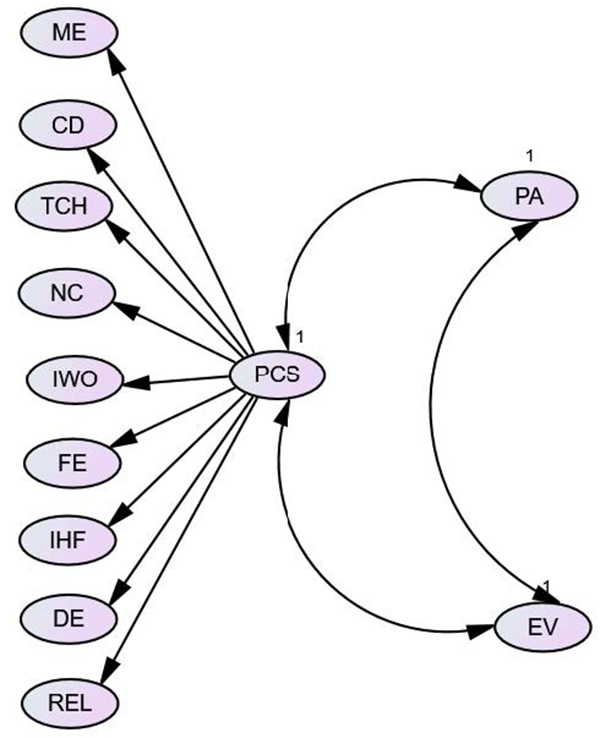
Hierarchical positive coping model
1. Introduction
With the increasing emphasis on holistic education in higher education, physical education (PE) courses are no longer merely channels for enhancing physical fitness but have emerged as critical platforms for promoting psychological well-being and student development. PE course satisfaction refers to students’ subjective evaluations of their overall learning experience, including teaching quality, curriculum design, learning atmosphere, facility resources, and personal achievements 1. Prior research has indicated that satisfaction with PE courses significantly influences students’ learning motivation and classroom engagement 2, and is strongly associated with long-term exercise participation and positive attitudes toward physical activity 3. One objective of this study is to assess the psychometric properties (reliability and construct validity) of the physical education-class satisfaction questionnaire (PACSQ) among Taiwanese university students.
Li and Huang’s 4 systematic review demonstrates that physical activity is consistently associated with improved mental well-being among college students, including enhanced life satisfaction, positive affect, and reduced psychological distress. Importantly, the review highlights that moderate-to-vigorous physical activity exerts stronger psychological benefits, suggesting that engagement in structured or intentional activity may play a critical role in emotional regulation and stress buffering.
From a theoretical perspective, self-determination theory (SDT) by Ryan and Deci 5 posits that environments that satisfy individuals’ basic psychological needs, such as autonomy, competence, and relatedness, are more likely to foster intrinsic motivation and subjective well-being (SWB). When designed to encourage choice, recognize individual differences, and promote interpersonal connections, PE courses can effectively enhance student engagement and happiness 6.
Positive psychology highlights the importance of cultivating well-being and personal strengths. Seligman’s 7 PERMA outlines the five core components of well-being: positive emotions, engagement, relationships, meaning, and accomplishment. PE courses are uniquely positioned to contribute to several domains, particularly in fostering positive emotions and interpersonal relationships.
Despite these theoretical advancements, empirical research exploring the relationship between PE course satisfaction and SWB in Taiwan remains limited. Moreover, integrated theoretical models explaining the mechanisms linking course satisfaction with psychological outcomes are lacking. Therefore, this study aimed to examine the relationship between university students’ satisfaction with PE courses and their SWB using SEM. By identifying relevant factors and psychological mechanisms, our findings offer valuable insights into educational practices and curriculum design in the context of higher education.
2. Literature Review
Meaning and components of PE course satisfaction refer to students’ subjective evaluations of their overall learning experiences in PE classes. This includes components such as teaching quality, course design, learning atmosphere, available resources, and personal gain 1. Most scholars agree that PE course satisfaction significantly influences students’ learning motivation and classroom engagement 2, and is further associated with their willingness to continue engaging in physical activities outside the class and develop positive attitudes toward sports 3.
Li and Huang4 conducted a systematic review synthesizing empirical studies on the influence of physical activity on mental well-being among college students. Their findings indicate that regular and appropriately intense physical activity is significantly associated with improvements in psychological health indicators, including stress regulation, emotional stability, and overall subjective well-being. The authors emphasize that physical activity contributes not only to physical health but also plays a crucial role in enhancing psychological well-being, suggesting that it should be integrated as a core component of health promotion strategies in higher education settings.
Theoretical perspectives according to SDT proposed by Ryan and Deci 5 state that when the learning environment satisfies three basic psychological needs—autonomy, competence, and relatedness—it enhances individuals’ intrinsic motivation and well-being. PE courses that offer choice, respect for individual differences, and promote interpersonal interaction can effectively boost student motivation and well-being 6.
From the perspective of positive psychology, Seligman’s 7 PERMA outlines five pillars of well-being: positive emotions, engagement, relationships, meaning, and accomplishments. Studies have shown that PE courses support these domains, particularly interpersonal relationships and a sense of achievement 4. PE course satisfaction encompasses curriculum design, teaching methods, learning environments, and teacher-student interactions. Liu et al. 8 found that student satisfaction with PE courses is significantly related to teaching style, course difficulty, and participation. Higher satisfaction levels are positively correlated with classroom engagement and learning motivation.
SWB and its connection to PE: SWB is defined as individuals’ overall cognitive and emotional evaluations of their life experiences. It typically consists of two dimensions: life satisfaction and affective balance (positive versus negative emotions) 9. Expanding upon SWB, contemporary theories of psychological or overall well-being include constructs such as self-efficacy, sense of purpose, and interpersonal relationships 10.
Positive psychology suggests several mechanisms through which physical activity promotes well-being. One such mechanism is the induction of positive emotions. Exercise stimulates dopamine and endorphin secretion, which enhances feelings of happiness 11. Increased self-efficacy: Gaining new skills and physical achievements fosters self-confidence 12. Formation of interpersonal bonds: Interactions in group activities contribute to the development of social support networks and a sense of belonging 13. Yuan and You 14 found that physical activity significantly enhanced college students’ subjective well-being during the COVID-19 pandemic, suggesting that exercise serves as an effective coping strategy under stressful circumstances.
Empirical evidence linking PE satisfaction and well-being. An increasing number of empirical studies have examined the causal relationship between PE course satisfaction and well-being. Liu et al. 8 investigated the interaction between emotional satisfaction with PE and well-being. Their results showed that students who experienced self-worth and social support in PE classes reported significantly higher levels of well-being.
Previous studies have identified various factors influencing students’ satisfaction with PE courses, highlighting the importance of understanding the multidimensional nature of this construct. Previous research 15 has consistently reported gender differences in physical activity preferences among college students. Male students tend to favor competitive and vigorous activities driven by performance and challenge, whereas female students are more inclined toward socially interactive and moderately intense forms of exercise. These differences suggest that tailoring activity programs according to gender-specific preferences may enhance engagement and psychological well-being. Watan 16 studied indigenous students and reported that when traditional cultural elements or tribal sports were incorporated into PE curricula, students felt culturally respected, which enhanced their well-being and ethnic identity. This aligns with Diener’s 17 cultural adaptation hypothesis, which posits that sources of well-being vary depending on the cultural context.
Synthesis and future directions: Overall, the literature consistently supports a stable and significant positive relationship between PE course satisfaction and SWB among university students. Courses that integrate autonomous teaching designs, challenging content, and interpersonal activities promote engagement and foster psychological well-being. When courses include cultural elements, diverse activity options, and positive reinforcement strategies, their contribution to well-being is amplified.
However, most current research remains limited to unidirectional associations. There is a lack of comprehensive theoretical models explaining how course satisfaction influences well-being through various mediators. Future studies should consider constructing SEMs or frameworks involving mediation and moderation analyses. Potential mediators such as self-efficacy, exercise motivation, and learning engagement were examined. Individual differences, such as gender and cultural background, should also be considered to enhance the cultural sensitivity and practical relevance of the research. Based on the above findings, the following recommendations are proposed for university PE instructors and curriculum designers: Optimize PE course design, including diverse physical activities and mechanisms for student autonomy, to enhance participation and a sense of agency.
Strengthening professional development: Training instructors in psychological support, emotional coaching, and motivational strategies to foster a positive learning environment.
Integrate psychological and social components: Embed mindfulness practices, emotional education, and collaborative tasks into PE to promote holistic development and well-being. In conclusion, PE courses are more than just platforms for physical activity and play a critical role in promoting students’ psychological health and overall well-being. By combining theoretical insights with practical innovation, PE can comprehensively support the personal growth and life satisfaction of university students.
3. Research Methods
3.1. Research Instruments
3.1.1. Physical Education Course Satisfaction Questionnaire
The Chinese version of the PACSQ, adapted from the original scale developed by Cunningham 18, was used to assess student satisfaction with PE courses. This scale aims to evaluate college students’ overall satisfaction with their learning and participation in physical education classes. It is based on a multi-dimensional framework of course satisfaction and includes nine sub-dimensions: mastery experiences, cognitive development, teaching, normative success, interaction with others, fun and enjoyment, improvement of health and fitness, diversionary experiences, and relaxation.
The Chinese version of the questionnaire consisted of 45 items, with five items in each sub-dimension. It adopted a 7-point Likert scale (\(1=\) extremely dissatisfied, \(7=\) extremely satisfied). Based on the findings of Cunningham 18 and subsequent research, the scale demonstrated excellent psychometric properties, with internal consistency coefficients (Cronbach’s \(\alpha\)) all above .85. The instrument was also positively correlated with students’ behavioral intentions, such as continued participation in physical activity, indicating its strong construct validity and practical value for evaluating physical education programs in higher education contexts.
3.1.2. Well-Being Questionnaire
The well-being questionnaire used in this study was developed by Luo and was designed to measure participants’ SWB in their daily lives. This scale was grounded in the theoretical frameworks of SWB and positive psychology. It encompasses four key dimensions. (1) life satisfaction: evaluating individuals’ subjective assessments of their overall life conditions; (2) positive emotions: assessing the frequency and intensity of pleasant feelings experienced in daily life; (3) negative emotions: reflecting the frequency of anxiety, depression, and other negative emotional states; and (4) personal growth and meaning in life: exploring individuals’ sense of purpose, self-realization, and perceived existential value.
The questionnaire comprised 40 items and demonstrated high internal consistency (Cronbach’s \(\alpha>.90\)), indicating excellent reliability and temporal stability. We further conducted a principal component analysis with varimax rotation to extract the underlying factors using an eigenvalue threshold greater than one. The results revealed two representative sub-dimensions: (1) affective well-being and social connectedness, reflecting participants’ experiences of positive emotions (e.g., joy, satisfaction) and interpersonal support, and (2) physical and psychological adaptation, encompassing participants’ perceptions of their physical health, psychological resilience, and overall life adaptation.
All item loadings exceeded the recommended threshold of .50, confirming strong structural validity and discrimination. Furthermore, the extracted dimensions aligned closely with the existing literature, echoing Diener’s 9 emphasis on positive emotions, Baumeister and Leary’s 19 theory of social connection needs, and Lazarus and Folkman’s 20 framework of stress and coping. This finding supports the theoretical and empirical validity of the scale. In other words, both instruments employed in this study exhibited strong reliability, validity, and theoretical grounding. They effectively captured students’ subjective perceptions of physical education experiences and well-being, making them suitable for further empirical analyses and model development.
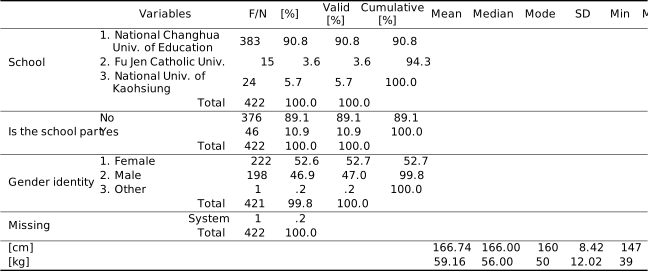
Table 1. Descriptive statistics summary.
3.2. Statistical Analysis
The data analysis was conducted in three phases:
Descriptive statistics: Means, standard deviations, skewness, and kurtosis were calculated to summarize data distribution and assess the normality of the item responses.
Reliability and validity testing: Cronbach’s \(\alpha\) was used to assess internal consistency at both the overall and subscale levels. Confirmatory factor analysis (CFA) was conducted to examine the measurement structure of the well-being scale. Results indicated acceptable model fit (\(\chi/\textit{df}=2.68\), CFI \(=.93\), GFI \(=.89\), RMSEA \(=.06\)). All factor loadings were significant (\({p}<.001\)), supporting the construct validity of the well-being measure.
SEM: CFA was employed to validate the measurement model and examine the factor loadings of the observed indicators for each latent construct. Model fit indices such as CFI, TLI, RMSEA, and \(\chi/\textit{df}\) were used to assess model adequacy. Subsequently, SEM was conducted to explore the direct and indirect relationships between PECS and SWB.
All statistical analyses were conducted using SPSS 26.0 and AMOS 24.0, with a significance level set at \({p}<.05\).
4. Results
The revised SEM specified PE satisfaction as a latent construct represented by nine parcels, with each parcel corresponding to one of the nine subscales (mastery experiences, cognitive development, teaching, normative success, interaction with others, fun and enjoyment, improvement of health and fitness, diversionary experiences, and relaxation). These parcels served as observed indicators of the higher-order latent variable “PE satisfaction.” SWB was modeled as another latent construct measured by its respective subscales. A directional path was specified from PE satisfaction to SWB, reflecting the hypothesized predictive relationship.
Based on the results presented in Table 1, the following descriptive findings were obtained.
Among the 422 university students surveyed, the majority (90.8%) were from the National Changhua University of Education (\(n =383\)), followed by 5.7% from the National University of Kaohsiung (\(n =24\)), and 3.6% from the Fu Jen Catholic University (\(n =15\)). Regarding whether the physical education course was a part of the academic program, 89.1% of the students (\(n =376\)) indicated that it was not, while 10.9% (\(n =46\)) reported that it was included in their program. Regarding gender identity, 52.6% of respondents were female (\(n =222\)), 46.9% were male (\(n =198\)), and 0.2% were female (\(n =1\)). One patient (0.2%) was missing the sex category. In terms of physical characteristics, the average height was 166.74 cm (SD \(=8.42\)), ranging from 147 to 190 cm. The average weight was 59.16 kg (SD \(=12.02\)), with a minimum weight of 39 kg and a maximum weight of 108 kg.
These results provide a demographic overview of the sample and serve as a foundation for subsequent analyses of PECS and SWB.
Based on the results shown in Fig. 1, the observed variables (PECS1–PECS45) served as indicators of the latent construct. The factor loadings predominantly ranged between .50 and 1.00, with most exceeding .60. The lowest loading was observed in PECS43 (.50), whereas the highest was observed in PECS3 (.92). Overall, the indicators demonstrated strong explanatory power for the latent variables. Most loadings exceeding .60 suggest high internal consistency among the observed variables.
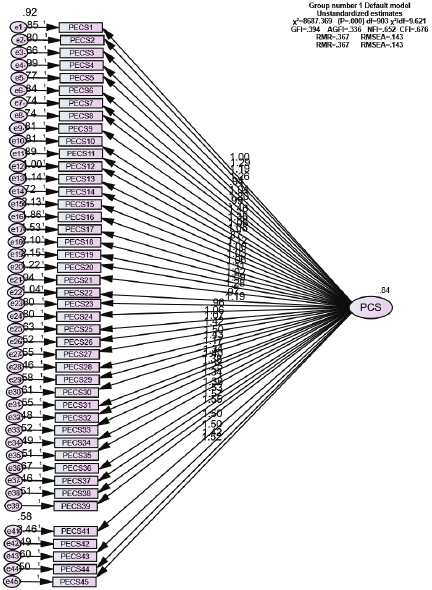
Fig. 1. First-order factor analysis with a single latent construct.
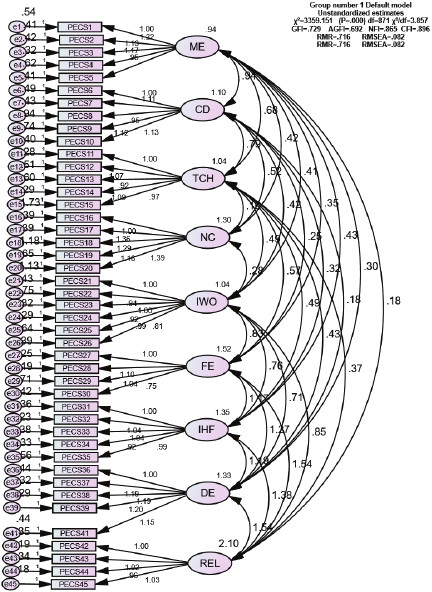
Fig. 2. Inter-factor correlations among the nine first-order latent constructs.
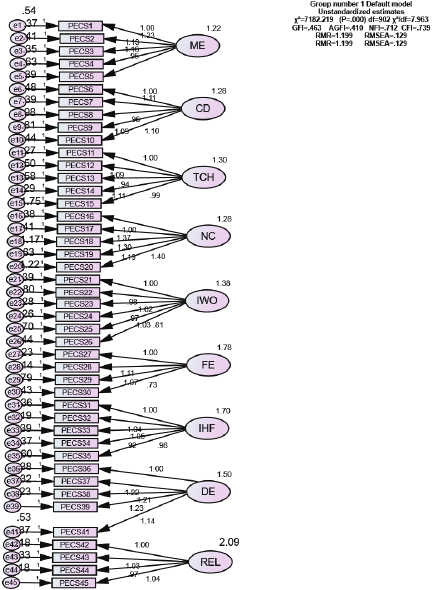
Fig. 3. Nine first-order latent constructs are assumed to be orthogonal.
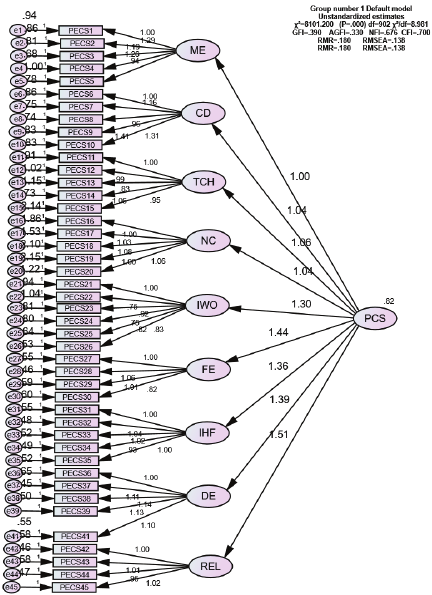
Fig. 4. Second-order factor model with nine first-order factors.
Based on the results shown in Fig. 2, all latent factors were correlated, with correlation coefficients ranging from .18 to .85. The diagram illustrates the inter-factor correlations among the nine first-order constructs of PE satisfaction, supporting the multidimensional structure identified through CFA. Note that all correlations were statistically significant (\({p}<.05\)). The highest correlation was observed between improvement of health and fitness (IHF) and diversionary experiences (DE) at .85, while the lowest was observed between cognitive development (CD) and relationships (REL) at .18. These findings suggest that although the constructs represent distinct concepts, they exhibit moderate-to-strong interrelationships, providing reasonable support for the structural integrity of the latent model.
As shown in Fig. 3, unlike the previous model, this figure assumes that the nine latent factors are completely uncorrelated (orthogonal). This model treats each construct as an independent psychological unit with no interrelationships. It is suitable for a preliminary exploration to determine whether each factor can be measured independently.
As shown in Fig. 4, this model integrates the nine dimensions into a single higher-order structure, thereby contributing to the development of a comprehensive evaluation index. The conceptual framework is coherent, and most of the path coefficients meet the acceptable threshold (\(>.80\) to 1.4), indicating that each factor contributes substantially to the overall PECS construct.
-
Model Comparison and Second-Order CFA Analysis: To evaluate the latent structure of the scale, three structural models were tested using CFA: (1) a first-order orthogonal nine-factor model, (2) a first-order correlated nine-factor model, and (3) a second-order factor model with nine first-order constructs.
-
Model 1: First-order orthogonal model: In the first model (Fig. 3), nine first-order latent factors were assumed to be orthogonal. Although each indicator showed significant loadings on its respective factors, the overall model fit was poor. \(\chi^2/\mathit{df}=7.963\), GFI \(=.463\), AGFI \(=.410\), NFI \(=.727\), CFI \(=.739\), RMSEA \(=.129\).
-
Model 2: First-order correlated model: The second model (Fig. 2) allows the nine latent constructs to be freely correlated. The model exhibits an improved fit. \(\chi^2/\mathit{df}=3.857\), GFI \(=.725\), AGFI \(=.682\), NFI \(=.675\), CFI \(=.756\), RMSEA \(=.082\). Inter-factor correlations ranged from .18 to .85, indicating conceptual coherence among the constructs.
-
Model 3: Second-order factor model: The third model (Fig. 5) specifies a second-order latent factor (PCS) that accounts for nine first-order factors. All the standardized paths were significant, ranging from .51 to 1.44. The fit indices were as follows: \(\chi^2/\mathit{df}=6.981\), GFI \(=.730\), AGFI \(=.690\), NFI \(=.678\), CFI \(=.700\), RMSEA \(=.138\).
As summarized in Table 2, although the first-order correlated model demonstrates a better statistical fit, the second-order model offers a more parsimonious and theoretically meaningful structure. Future studies should consider model refinement strategies, such as item reduction or factor specification, to improve model adequacy.
As shown in Fig. 5, a second-order CFA was conducted to further examine the structural integrity of the PECS construct. In this model, nine first-order latent factors were loaded onto a single higher-order latent variable, PECS, which represents an integrated measure of satisfaction with PE courses. The measurement model was also linked to two SWB constructs: PA (affective well-being and social connectedness) and EV (physical and psychological adaptation).
Model fit indices
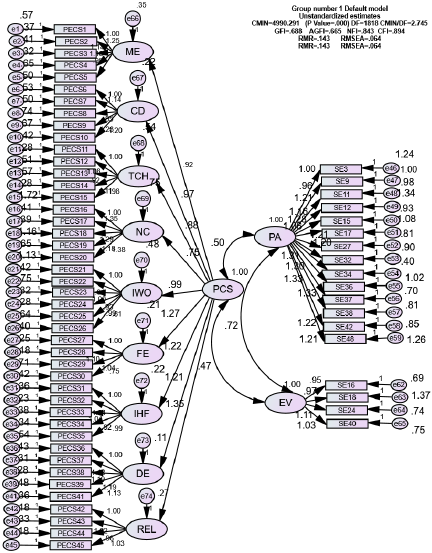
Fig. 5. Second-order CFA.
Table 2. Model fit comparison table.

The overall model demonstrated an acceptable fit to the data, as indicated by the following indices: \(\chi^2(1818)=4990.291\), \(p<.001\), \(\chi^2/\mathit{df}=2.745\), GFI \(=.688\), AGFI \(=.665\), CFI \(=.894\), NFI \(=.843\), RMSEA \(=.064\), RMR \(=.143\).
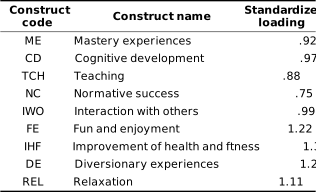
Although the GFI and AGFI were slightly below the ideal threshold (\(>.90\)), the CFI and NFI values approached acceptable levels, and the RMSEA value fell within the acceptable range (\(<.08\)), suggesting that the model was statistically adequate for interpretation. Factor loadings of first-order constructs on PCS: The standardized factor loadings of the nine first-order constructs on the higher-order PECS variable were all statistically significant, ranging from .75 to 1.35. The loadings are summarized as follows:
As summarized in Table 3, these high loadings reflect strong internal consistency and support the conceptualization of PECS as a coherent, higher-order construct derived from multiple dimensions of satisfaction with PE courses.
Predictive validity on SWB: The second-order PECS factor was then used to predict two latent constructs of SWB: PECS \(\to\) PA: .50, PCS \(\to\) EV: .72
Table 3. Standardized loadings of latent constructs in the PECS model.
Both paths were statistically significant and positive, suggesting that higher satisfaction with physical education courses significantly predicted both social-emotional and physical-psychological components of well-being. A stronger path coefficient for EV indicates that physical education experiences may have a particularly notable impact on students’ perceived health and adaptive capabilities. The second-order model provided strong empirical support for using PECS as an overarching latent construct that encompasses diverse satisfaction factors in PE. The model also confirmed that PECS significantly contributes to students’ SWB, particularly in enhancing physical and psychological adaptation. These findings underscore the value of integrating pedagogical quality, curriculum engagement, and affective experiences into PE course design.
5. Conclusion
This study aimed to explore the relationship between university students’ satisfaction with PE courses and their SWB and to construct an integrated structural model using SEM. Our findings revealed that PE course satisfaction could be conceptualized as a higher-order latent construct encompassing nine dimensions: mastery experiences, cognitive development, teaching, normative success, interaction with others, fun and enjoyment, improvement of health and fitness, diversionary experiences, and relaxation. The measurement model demonstrated high internal consistency and good structural validity.
This key finding highlights important implications for higher education practices. Specifically, PE courses should focus on physical skills and address social connectedness and psychological growth. Universities should recognize that student satisfaction with PE is directly related to overall well-being, aligning with the broader goals of higher education to foster holistic development and resilient graduates. Consistent with Chen and Wang 4, our findings indicated a positive association between PE course satisfaction and psychological well-being. However, unlike Liu et al. 8, who emphasized the role of teaching strategies, this study underscores the multidimensional nature of satisfaction, highlighting its broader contribution to social connectedness and student flourishing.
The confirmatory factor analysis of the second-order model supported the conceptual integrity and theoretical foundation of PE satisfaction, which significantly predicted two major facets of SWB: (1) affective well-being and social connectedness, and (2) physical and psychological adaptation. Notably, PE satisfaction showed a stronger predictive effect on students’ physical and psychological adaptation, highlighting the vital role of PE in promoting physical activity and fostering mental health and adaptive functioning.
These findings align with multi-dimensional satisfaction and positive psychology, indicating that when PE courses satisfy students’ needs for autonomy, competence, and relatedness, their overall sense of well-being is significantly enhanced. From a practical perspective, university PE programs should integrate elements that support students’ psychological needs, such as diverse physical activities, motivational teaching strategies, and social engagement, to create more meaningful and fulfilling learning experiences.
Future research should incorporate mediating variables (e.g., self-efficacy and academic engagement) and moderating factors (e.g., Taiwan’s educational context) to build more comprehensive explanatory models. Furthermore, developing culturally adapted and context-sensitive measurement tools can enhance the practical application and impact of PE courses across diverse educational settings.
Limitations and future directions
This study had several limitations. First, the sample was dominated by students from a single university (90.8% from National Changhua University of Education), which limits the generalizability of the findings. Cultural and institutional factors such as teaching practices, curriculum emphasis, and resources may shape students’ perceptions of PE and well-being differently. Future studies should include diverse samples from different institutions.
Second, although the PACSQ and well-being questionnaire demonstrated good psychometric properties, some SEM indices (e.g., GFI \(=.688\), AGFI \(=.665\)) fell below conventional thresholds, while others (CFI \(=.894\), RMSEA \(=.064\)) indicated an acceptable fit. Rigid reliance on cutoffs may be problematic, as fit is influenced by sample size, model complexity, and data characteristics. From this perspective, our model remains statistically adequate. Future research could refine the items or validate the findings using independent samples.
This study also integrated PE satisfaction with SDT and positive psychology (PERMA). Competence-related subscales (mastery experiences, cognitive development, teaching, and normative success) map onto SDT’s competence need and PERMA’s accomplishment domain; ness-related subscales (interaction with others, fun and enjoyment, and relaxation) link to SDT’s relatedness and PERMA’s positive emotions and relationships, while autonomy-related subscales (diversionary experience and health improvement) reflect SDT’s autonomy and PERMA’s engagement and meaning. This mapping demonstrates that PE satisfaction fulfills basic psychological needs and fosters flourishing across well-being domains, underscoring this study’s conceptual contribution.
Finally, the cross-sectional design restricted causal inference; the results should be interpreted as associations rather than definitive effects. Future longitudinal and experimental studies are required to confirm this hypothesis. Moreover, Taiwan’s exam-oriented culture, dual role of PE in fitness and character development, and integration of indigenous cultural elements provide unique contextual factors that shape student satisfaction and well-being, highlighting the importance of cultural sensitivity in the interpretation of these findings. Moreover, because this study adopted a cross-sectional design, causal relationships could not be inferred. Future research employing longitudinal or experimental designs is recommended to validate the proposed model.
- [1] D. J. Cothran and C. D. Ennis, “Building bridges to student engagement: Communicating respect and care for students in urban high schools,” J. of Research and Development in Education, Vol.33, No.2, pp. 106-117, 2000.
- [2] M. Lyu and D. L. Gill, “Perceived physical competence, enjoyment and effort in same-sex and coeducational physical education classes,” Educational Psychology, Vol.31, No.2, pp. 247-260, 2011. https://doi.org/10.1080/01443410.2010.545105
- [3] S.-G. Baek and H.-J. Choi, “The effect of 12 weeks complexed lower body muscle-strengthening exercise program on fall risk in elderly women,” J. of Digital Convergence, Vol.13, No.10, pp. 533-539, 2015. https://doi.org/10.14400/JDC.2015.13.10.533
- [4] R. Li and R. Huang, “The influence of physical activity on mental well-being in college students: A systematic review,” Frontiers in Psychology, Vol.16, Article No.1573446, 2025. https://doi.org/10.3389/fpsyg.2025.1573446
- [5] R. M. Ryan and E. L. Deci, “Self-determination theory and the facilitation of intrinsic motivation, social development, and well-being,” American Psychologist, Vol.55, No.1, pp. 68-78, 2000. https://doi.org/10.1037//0003-066X.55.1.68
- [6] N. Ntoumanis, “A self-determination approach to the understanding of motivation in physical education,” British J. of Educational Psychology, Vol.71, No.2, pp. 225-242, 2001. https://doi.org/10.1348/000709901158497
- [7] M. E. P. Seligman, “Flourish: A Visionary New Understanding of Happiness and Well-Being,” Simon and Schuster, 2011.
- [8] T. K. Liu, C. H. Tsai, and M. J. Hsu, “Teaching strategies and student satisfaction in physical education,” Taiwan J. of Physical Education, Vol.55, No.1, pp. 101-118, 2020.
- [9] E. Diener, “Subjective well-being,” Psychological Bulletin, Vol.95, No.3, pp. 542-575, 1984. https://doi.org/10.1037/0033-2909.95.3.542
- [10] C. D. Ryff and C. L. M. Keyes, “The structure of psychological well-being revisited,” J. of Personality and Social Psychology, Vol.69, No.4, pp. 719-727, 1995. https://doi.org/10.1037/0022-3514.69.4.719
- [11] P. Ekkekakis, “Pleasure and displeasure from the body: Perspectives from exercise,” Cognition and Emotion, Vol.17, No.2, pp. 213-239, 2003. https://doi.org/10.1080/02699930302292
- [12] A. Bandura and S. Wessels, “Self-Efficacy,” Cambridge University Press, pp. 4-6, 1997.
- [13] R. Bailey, “Physical education and sport in schools: A review of benefits and outcomes,” J. of School Health, Vol.76, No.8, pp. 397-401, 2006. https://doi.org/10.1111/j.1746-1561.2006.00132.x
- [14] S. Yuan and M. You, “Effects of physical activity on college students’ subjective well-being during COVID-19,” J. of Epidemiology and Global Health, Vol.12, No.4, pp. 441-448, 2022. https://doi.org/10.1007/s44197-022-00062-4
- [15] M. Espada, N. Romero-Parra, D. Bores-García, and J. M. Delfa-De La Morena, “Gender differences in university students’ levels of physical activity and motivations to engage in physical activity,” Education Sciences, Vol.13, No.4, Article No.340, 2023. https://doi.org/10.3390/educsci13040340
- [16] Y. Watan, “The effect of cultural sports on Indigenous college students’ identity and subjective well-being,” J. of Indigenous Education and Research, Vol.3, No.1, pp. 41-58, 2020.
- [17] E. Diener (Ed.), “Assessing Well-Being: The Collected Works of Ed Diener,” Springer, 2009.
- [18] G. B. Cunningham, “Development of the physical activity class satisfaction questionnaire (PACSQ),” Measurement in Physical Education and Exercise Science, Vol.11, No.3, pp. 161-176, 2007. https://doi.org/10.1080/10913670701326443
- [19] R. F. Baumeister and M. R. Leary, “The need to belong,” Psychological Bulletin, Vol.117, No.3, pp. 497-529, 1995.
- [20] R. Lazarus and S. Folkman, “Stress and coping,” Vol.18, No.31, pp. 34-42, 1985.
This article is published under a Creative Commons Attribution-NoDerivatives 4.0 Internationa License.