
Institute Overview:
Ritsumeikan University: Robotics Research Center
Shinichi Hirai

Department of Robotics, Ritsumeikan University
1-1-1 Nojihigashi, Kusatsu, Shiga 525-8577, Japan

This paper describes the Robotics Research Center at Ritsumeikan University. The center was established in 1994, following the opening of the Biwako–Kusatsu Campus of Ritsumeikan University. The Robotics Research Center aims at “society-driven, needs-based” research to solve problems in industry and society, based on fundamental research and system integration technology from the university. The center conducts a wide range of research on field robots, biorobotics, manufacturing robots, interactive robots, mechanisms, and devices.
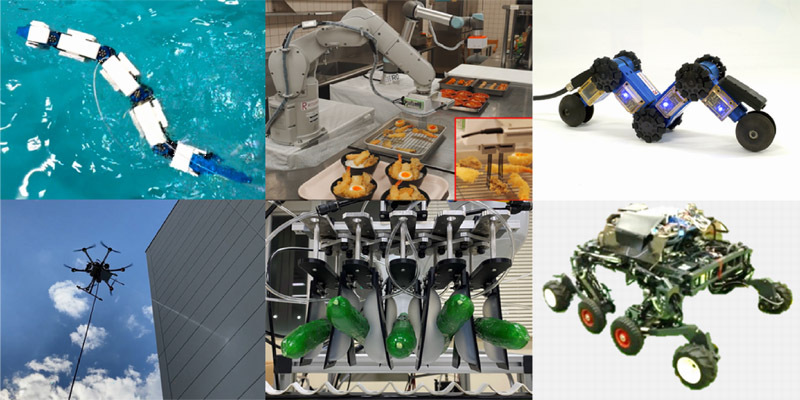
Robots developed at Ritsumeikan University Robotics Research Center
1. Introduction
The Robotics FA (flexible automation) Research Center was established in 1994, following the opening of Ritsumeikan University’s Biwako–Kusatsu Campus and the expansion of the Faculty of Science and Engineering. This center aims to foster industry–government–academia collaboration. The university also set up the Liaison Office in parallel and initiated efforts to connect the needs of the industry with the seeds of the university. The Robotics FA Research Center has been promoting robotics and automation research for 20 years.
In 2014, the center was re-launched as the Robotics Research Center. Here, researchers from a wide range of fields, including mechanical engineering, electrical engineering, computer science, sports science, and materials science, work collaboratively on various research activities. This center aims at “society-driven, needs-based” research to solve problems in industry and society, based on fundamental research and system integration technology from the university.
2. Organization
The Robotics Research Center is a part of the Research Organization of Science and Technology. The Research Organization of Science and Technology, formerly known as the Research Organization of Science and Engineering, was established in 1994. The Research Organization of Science and Technology includes multiple research centers such as the Synchrotron Radiation Center, VLSI center, Research Center for BIWAKO \(\Sigma\), Advanced Micro/Nano System Technology Research Center, and Research Center for Sports and Health Science.
The organization is independent of undergraduate and graduate schools, implying that some of the members of the organization are involved in the schools. This allows for flexible organization of the research groups.
Research Office, formerly the Liaison Office, offers one-stop service for project coordination, government projects, and technology transfer. For example, it helps match the company’s needs with those of researchers, and supports obtaining rights to new technologies and utilizing intellectual property.
Currently, the Robotics Research Center has forty-five members from robotics, mechanical engineering, electrical engineering, bioengineering, civil engineering, chemistry, and computer science, who conduct a wide range of research on field robots, biorobotics, manufacturing robotics, interactive robots, mechanisms, and devices. The center supports lectures and seminars delivered by visiting researchers and industrial exhibitions, and promotes international and domestic conferences.
3. Research Projects
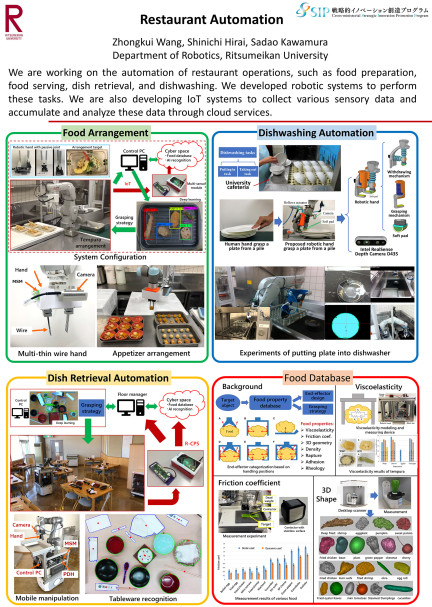
Fig. 1. Restaurant automation research (courtesy of Professor Zhongkui Wang).
This section introduces research projects conducted at the Robotics Research Center. From 2018 to 2023, a project on “Sensor-Rich Soft End-Effectors for Cyber-Physical Systems” (Principal investigator: Professor Sadao Kawamura) was conducted under the Cross-ministerial Strategic Innovation Promotion Program (SIP). The motivation for this project came from exploring why automation lags behind and why labor productivity is low in food packing processes and grading/packing stations for agricultural, forestry, and fishery products. In these processes, target objects often have diverse shapes as well as complicated material and surface properties. In addition, it is necessary to handle a wide variety of products in small quantities, resulting in frequent setup changes. We found that the teaching-and-playback approach could not cope with such uncertain environments. We focused on restaurant automation (Fig. 1) and food manipulation (Fig. 2) to develop technologies for addressing these challenges.
Researchers from various fields, both internal and external to the university, participated in this project and conducted joint R&D. Many industries also participated in the promotion of several joint R&D projects. Furthermore, successor projects are currently being conducted based on the SIP results.
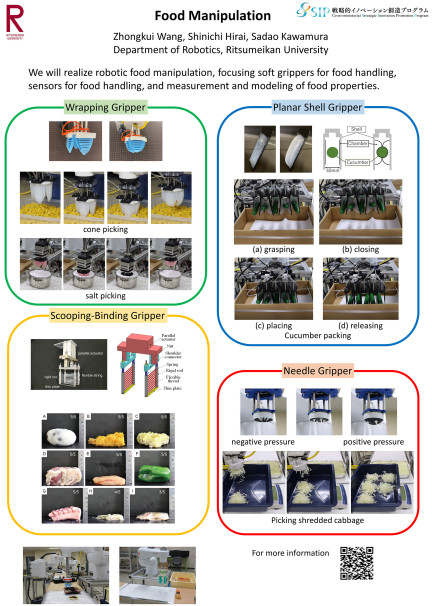
Fig. 2. Food manipulation research.
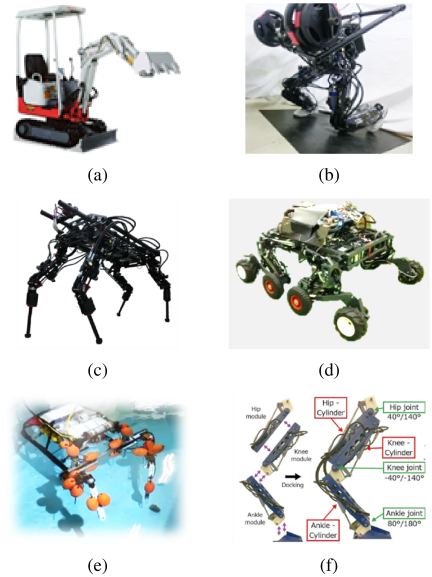
Fig. 3. Hydraulic robotics (courtesy of Professor Sang-Ho Hyon).
In restaurant automation research, we set up a food database for the AI-based recognition of food items. We have integrated robotic hands, robot manipulators, and mobile robots with controllers and recognition systems for dish retrieval and washing. Proof-of-concept experiments were conducted at a university restaurant. For food manipulation research, we developed a wide variety of robotic hands for grasping food items and agricultural products. The developed hands were employed in the packing of food items and farming products.
Several research groups at the Robotics Research Center are working on field robotics. One of the groups focuses on novel hydraulic robots for heavy-duty applications, such as multi-functional unmanned electro-hydraulic excavator (Fig. 3(a)), hydraulic servo presses with high speed and precision (Fig. 3(b)), compliantly balancing bipedal and quadrupedal robots (Fig. 3(c)), hydraulic rovers navigating uneven terrain (Fig. 3(d)), submersible dual-arm hydraulic manipulators (Fig. 3(e)), and reconfigurable hydraulic modular robots (Fig. 3(f)). Another group focuses on extreme environment robotics for outdoor field applications, such as inspection robot for narrow sewer pipelines with an inner diameter of 100 mm or less (Fig. 4(a)), inspection robot for three-dimensionally winding gas pipelines (Fig. 4(b)), bucket-shaped end-effector for transporting powder and viscous materials (Fig. 4(c)), robot for measuring the thickness of liquid tank floor plates (Fig. 4(d)), underwater snake-like robot for swimming and manipulation (Fig. 4(e)), and underwater robotic arm capable of adhesion, swimming, and manipulation (Fig. 4(f)).
The Robotics Research Center is also conducting various other R&D projects such as flying washer (Fig. 5(a)), aquatic surface sensing (Fig. 5(b)), wearable robotic arm (Fig. 5(c)), and fabric handling (Fig. 5(d)).
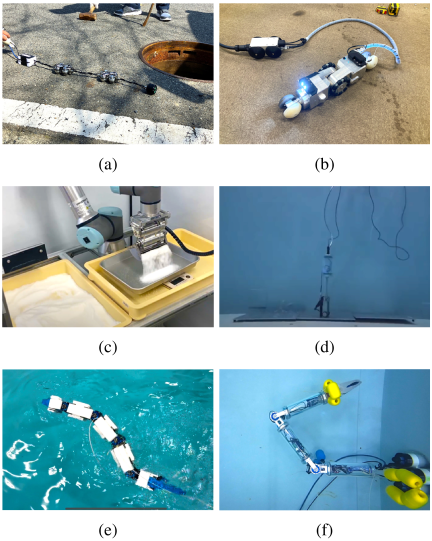
Fig. 4. Extreme environment robotics (courtesy of Professor Atsushi Kakogawa).
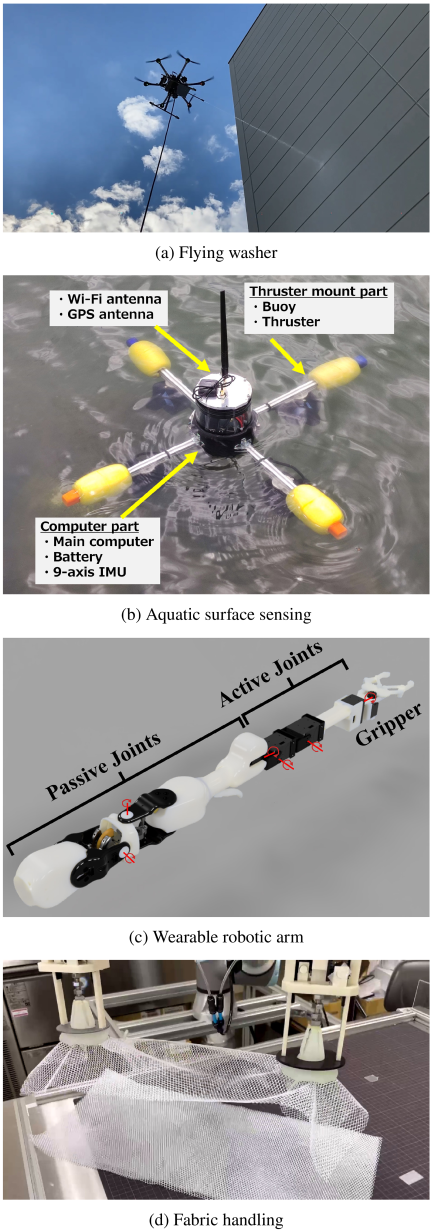
Fig. 5. Other research topics in Robotics Research Center (courtesy of (a) Professor Kazuhiro Shimonomura, (b, c) Professor Joo-Ho Lee).
4. Conclusion
This paper gives information about the Robotics Research Center at Ritsumeikan University. This center is independent of undergraduate and graduate schools, allowing for flexible organization of research groups. Additionally, the Research Office offers one-stop service for project coordination, government projects, and technology transfer, enabling researchers to focus on their own research work. More information can be found on the websites: https://ritsumeikanroboticscenter.com/en/ in English, and https://ritsumeikanroboticscenter.com/ in Japanese.
This article is published under a Creative Commons Attribution-NoDerivatives 4.0 Internationa License.