
Paper:
Climate Change and Disaster Risk Reduction Frameworks: Challenges and Opportunities for Youth-Led Community Mobilization
Mohammed Mamun Rashid*1
 , Mallika Datta*2, Farzana Ferdous*3,†
, Al Amin Hossain Sojib*4, Musarat Jahan Khan Sara*2, and Raisa Sadia Tun-noor*2
, Mallika Datta*2, Farzana Ferdous*3,†
, Al Amin Hossain Sojib*4, Musarat Jahan Khan Sara*2, and Raisa Sadia Tun-noor*2
*1Department of Media Studies and Journalism, University of Liberal Arts Bangladesh (ULAB)
688 Beribadh Road, Mohammadpur, Dhaka 1207, Bangladesh
*2Department of Environment and Development Studies, United International University (UIU)
Dhaka, Bangladesh
*3Department of Sociology, Government Brojomohun College
Barishal, Bangladesh
†Corresponding author
*4Department of Sociology, University of Barishal
Barishal, Bangladesh

Bangladesh is one of the most climate vulnerable countries in the world, with its coastal regions severely affected by climate-related extremes. This paper identifies existing provisions for youth involvement in disaster risk reduction (DRR) frameworks and examines the opportunities and practical challenges they face in community mobilization. In method, efforts were made to extract all youth-related narratives from relevant literature. A total of 100 youth volunteers were surveyed, and in-depth interviews were conducted with six experts from youth-led organizations and four youth volunteers. The findings reveal that policy gaps, coordination difficulties, limited resources and recognition, non-inclusiveness, patriarchal attitudes, and bureaucratic red tape are major challenges encountered by youth volunteers. Notably, Bangladeshi youth demonstrate strong volunteerism, effective use of information technology, potential for capacity building, engagement with grassroots communities, and the ability to strengthen Union Disaster Management Committees (UDMCs), all of which can contribute to a sustainable community-based DRR approach. As rights-holders, youth empowerment is critically important. Relevant stakeholders—especially state actors, global leaders, forums, and funding organizations—should give greater attention to maximizing the contributions of youth in this field.
1. Introduction
Youths are significant driving forces for positive changes in the world. According to United Nations 1, 1.2 billion people aged 15–24 make up 16% of the global population. The Bangladesh Bureau of Statistics’ Labour Force Survey 2022 2 reported 45.9 million youths in Bangladesh and identified their productive employment as essential for socio-economic development. Following the National Youth Policy 2017 3 of Bangladesh, this study defines youth as individuals aged 18–35 years.
Coastal zones refer to areas where land and sea meet. Three indicators have been considered for determining the landward boundaries of the coastal zone of Bangladesh. These are influence of tidal waters, salinity intrusion, and cyclones/storm surges. Total 19 coastal districts, out of 64, of the country are being affected directly or indirectly by some of these phenomena 4. According to the Global Climate Risk Index 2024 5 published by Germanwatch, Bangladesh ranks ninth among the countries most vulnerable to climate change. Rashid 6 specified that coastal areas of Bangladesh are highly vulnerable to climate change-induced disasters such as irregular rainfall, heatwaves, cyclones, storm surges, tidal waves, floods, coastal erosion, and salinity intrusion.
Local communities, informal and quasi-formal institutions, social relationships and networks, decentralized risk management systems, and institutional collaboration mutually help for enhancing community resilience to disaster shocks in coastal areas of Bangladesh 7,8. Muzenda-Mudavanhu 9 and World Vision 10 revealed that academic and scientific literature on youth engagement in disaster risk reduction (DRR) in Bangladesh remains critically limited, largely treating young people as passive victims rather than active agents of change. This empirical study makes an original contribution to existing body of knowledge by examining the alignment between commitments about youth engagement in DRR frameworks and its execution in coastal areas of Bangladesh.
Youth participation in disaster management governance is gradually increasing globally 11. According to Al Jazeera 12, floods in Bangladesh affected over 5.7 million people, claimed 23 lives death, and stranded about 1.24 million families across 11 districts in 2024. The voluntary participation of Bangladeshi youth in emergency response efforts was widely appreciated. The willingness of youth, together with other individuals and institutions, played a vital role in rescuing trapped people 13. Choudhury et al. 14 revealed that coastal youths possess significant potential to enhance community resilience to climate-related disasters. Engagement of youth in DRR remains strikingly underexplored and inadequate-research in coastal communities of Bangladesh, despite climate change is a reality, and youths need more grassroots-level information, knowledge, skills, practices, and innovative ideas to foster a sense of ownership and promote mutual learning in reducing climate-induced disaster risks 15. This study has originality to literatures by identifying knowledge and practice gaps that can influence the diffusion and implementation of DRR initiatives in a rapidly changing world. It also provides scholarship to bridge between policy commitments and their practical implementation through youth engagement.
1.1. Problem Statement
Coastal communities in Bangladesh are highly vulnerable to the impacts of climate change, with their lives and livelihoods increasingly threatened by recurrent climate-induced disasters. Global DRR frameworks including Hyogo Framework for Action (2005–2015) and Sendai Framework for Disaster Risk Reduction (2015–2030), alongside national policy instruments such as Disaster Management Policy – 2015, Standing Orders on Disaster – 2019, and National Plan for Disaster Management (2021–2025), recognize the important roles of youth in strengthening community resilience. In Bangladesh, young people have been widely acknowledged for their voluntary contributions to emergency disaster response. But scholarly work on their activities to mobilize coastal communities for DRR remains inadequate. Empirical research on youth-led community mobilization for DRR in coastal Bangladesh remains limited, particularly regarding policy implementation, governance, institutional capacity, resource utilization, coordination, socio-cultural barriers, and enabling conditions. Against this backdrop, this study intends to examine policy provisions related to youth engagement in DRR and investigates the opportunities and challenges of youth-led community mobilization.
1.2. Research Objectives
-
・
To examine the provisions related with youth engagement in international and national policy frameworks of DRR.
-
・
To assess the opportunities and challenges faced by youth in mobilizing coastal communities for DRR interventions.
1.3. Significance of Study
Climate change and DRR knowledge persists in multiple disciplines, including the natural sciences, social sciences, and interdisciplinary fields. Bangladesh is one of the world’s most disaster-prone countries, with its coastal regions facing particularly high vulnerability to climate-induced hazards. At the same time, the country’s large youth population represents a significant demographic dividend with considerable potential to strengthen disaster resilience. Identifying the opportunities and challenges associated with youth engagement in DRR will help academics, policymakers, practitioners, and other stakeholders to develop sustainable solutions. Although this study is conducted at micro-level with a limited samples, it provides empirical, evidence-based insights into youth engagement in disaster risk governance and community-based DRR activities. By addressing existing knowledge gaps, the study contributes to both theoretical and empirical scholarship on youth participation in DRR. A key novelty of this research lies in its examination of the gap between policy commitments regarding youth engagement and realities of youth participation at grassroots in a developing country context, particularly Bangladesh. By and large, findings from Bangladeshi coastal communities offer practical implications for revising and strengthening global, regional, national, and local policy frameworks to promote meaningful youth participation and empower young people as active contributors to building resilient communities.
2. Global and National Framework
Global DRR gained momentum when United Nations declared the 1990s as International Decade for Natural Disaster Reduction (IDNDR) in 1987. This led to establishment of International Day for Disaster Reduction in 1989, United Nations International Strategy for Disaster Reduction (UNISDR) in 1999, and mainstreaming of the term DRR from 2000 16. Major milestones include the Hyogo Framework for Action (2005–2015), which emphasized community participation and youth engagement, and the Sendai Framework for Disaster Risk Reduction (2015–2030), which shifted the focus from disaster response to proactive risk reduction through four priorities: understanding disaster risk, strengthening governance, investing in resilience, and enhancing preparedness while “Building Back Better” 17.
The 2030 Agenda for Sustainable Development aligns closely with the Sendai Framework, integrating DRR into sustainable development and climate adaptation, with youth recognized as key drivers of resilience and community development 18. In Bangladesh, disaster management has evolved significantly since its independence in 1971. The Ministry of Disaster Management and Relief was established in 2012 to strengthen disaster governance. The National Plan for Disaster Management (2021–2025), together with the Disaster Management Act 2012, Disaster Management Policy 2015, and Standing Orders on Disaster (2019), adopts a whole-of-society approach emphasizing resilience, youth engagement, leadership and capacity buildings for youth, tech-savvy initiatives, networking, community participation, gender responsiveness, and disability inclusion 19,20.
These national policies recognize youth as vital agents of change in DRR. Through technology, community mobilization, early warning systems, disaster preparedness, and participation in local disaster management, youth can bridge policy and grassroots action. National Adaptation Plan of Bangladesh (2023–2050), developed by Ministry of Environment, Forest and Climate Change 21, further highlights significance of youth leadership in climate adaptation, awareness raising, rescue and evacuation, environmental conservation, waste management, and sustainable community resilience.
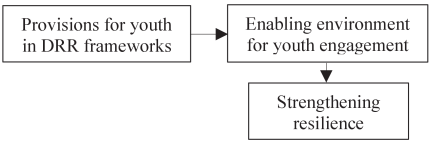
Fig. 1. Theoretical framework.
3. Theoretical Framework
This section describes relevant aspects of theory to establish the study’s theoretical and conceptual framework. Aligned with the objectives of present study, it draws upon DRR Theory and Youth Engagement Theory.
DRR Theory posits that disaster risk results from the interaction of hazard, exposure, and vulnerability, and that reducing this risk requires systematic efforts to address their underlying causes 22. It emphasizes minimizing vulnerability through strategies such as effective preparedness, and resilient infrastructure; reducing exposure of people and assets; and mitigating the hazards themselves. The central principle of DRR is to proactively prevent and lessen disaster risks while strengthening resilience, rather than concentrating solely on post-disaster response.
Hart 23 proposed engagement of youth for planning, designing and implementation of environmental education. Youth engagement theory underscores the active engagement of young people in decision-making processes that shape their lives, recognizing them as capable citizens with their own rights, voices, and perspectives. It holds that youth input is essential for designing effective policies and services, while also contributing to their personal growth, skill development, and sense of agency. The theoretical framework is presented in Fig. 1.
The theoretical framework is developed by integrating key constructs from two complementary theories and aligning them with the research problem. It establishes a significant linkage between research objectives and underlying theoretical perspectives. Provisions for youth within DRR frameworks provide a basis for examining their practical implications in the context of coastal communities in Bangladesh. Furthermore, concept of an enabling environment for youth engagement guides the assessment of opportunities and challenges that effect young people to mobilize coastal communities and contribute effectively to DRR interventions.
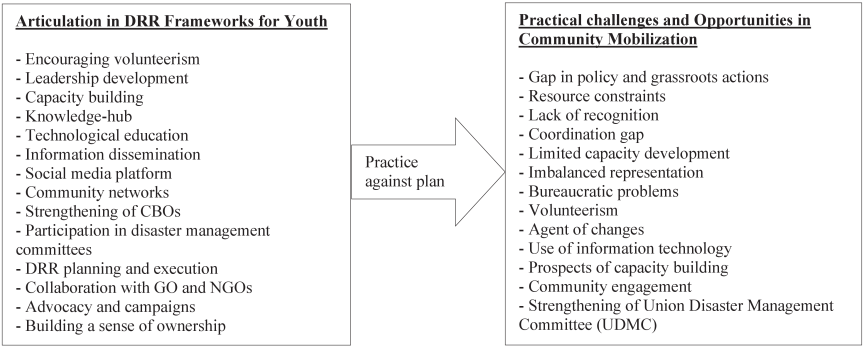
Fig. 2. Conceptual framework.
4. Conceptual Framework
Based on study objective, authors have incorporated theories and reviewed a number of literatures to depict conceptual framework. Article 18 of UN Convention on the Rights of the Child (CRC) confirms, whereby approached in a paternalist way, child/youth need supports of adults to help them to access rights. Children/youth are rights-holders; and can take their own action, and engage with grassroots protest, media work and lobbying for climate justice as they enter rights spaces 24. In this section, major promises of DRR frameworks (international and national) particularly relating with youth’ engagement have been highlighted. Besides, grassroots-level practical challenges and opportunities of youth for community mobilization are addressed to show real scenario. It is synchronized within conceptual framework about commitments of youth engagement at DRR activities and practices in the context of Bangladeshi coastal societies. Conceptual framework is depicted in Fig. 2.
Volunteerism, Leadership, and Capacity Building. The Sendai Framework for Disaster Risk Reduction (2015–2030) placed strong emphasis on youth engagement, highlighting the importance of their voluntary participation, leadership development, and capacity building for effective DRR 25. Similarly, Khatiwada 15 noted that when youth are equipped with information, knowledge, skills, and innovative ideas, they can foster mutual learning, strengthen ownership, and enhance collective outcomes, ultimately contributing to reduced disaster impacts.
Knowledge-hub, Technology, Information, and CBOs. National Plan for Disaster Management (2021–2025) of Bangladesh adopts a “whole-of-society” approach to disaster risk management and response, emphasizing gender responsiveness and disability inclusion to build resilience. The plan describes strong commitment on youth engagement, encouraging their involvement in knowledge hubs, technological education, information dissemination, and the use of social media. It also highlights the role of young people in developing formal and informal community networks and strengthening community-based organizations (CBOs).
DRR Planning and Execution, and Collaboration with GO and NGOs. The Standing Orders on Disaster (SOD) 2019 of Bangladesh includes specific provisions for youth involvement in DRR planning, such as their participation in various disaster management committees, community risk assessments, early warning dissemination, operation of control rooms, and evacuation of communities to shelters, search and rescue activities, nature conservation, and the organizing of community meetings. It also emphasizes youth roles in disaster preparedness training, simulations, capacity-building workshops, and ensuring effective implementation of DRR measures. According to Nipa et al. 26, government policies in Bangladesh encourage youth to work collaboratively with government agencies and NGOs to empower communities and strengthen disaster resilience.
Advocacy and Campaign, and Sense of Ownership. Yusof and Ariffin 27 highlighted the vital role of youth in advocating for and promoting the implementation of the Sustainable Development Goals (SDGs, 2015–2030) in ASEAN countries, particularly through contributing to sustainable policymaking at multiple levels, integrating indigenous knowledge with scientific risk assessments, and ensuring that the voices of vulnerable groups—such as women, children, and the elderly—are represented in DRR initiatives. Similarly, the National Adaptation Plan of Bangladesh (2023–2050) identifies youth and student as key actors in climate mitigation and adaptation. Young people can foster a sense of ownership within communities by engaging in awareness raising, rescue and evacuation efforts, nature conservation, watershed management, waste management, entrepreneurship, and other relevant interventions.
5. Methods
5.1. Study Location and Respondents
Barisal district in Bangladesh is considered one of the most climate vulnerable areas due to its low elevation, coastal location, and exposure to frequent flooding, cyclones, and rising salinity levels, making it highly susceptible to the impacts of climate change 28. Thus, authors collected field data from three sub-districts (e.g., Barisal Sadar, Mehendiganj, Swarupkathi) in Barisal district of Bangladesh. Bhardwaj 29 suggested that random sampling is unbiased and ensures that each unit has an equal probability of inclusion. However, purposive sampling is more appropriate in challenging areas and is easy to implement for large-scale data collection. It is also cost-effective. A semi-structured printed questionnaire was used to gather data from 100 youth volunteers (64 males and 36 females) of six youth-based organizations. Enthusiastic youth volunteers, small grants from donor agency and government are key strengthen of these organizations. Noted, these six local organizations mainly work on disaster management, environment, health, and other social issues. Purposive sampling technique was administered for selecting respondents. Specifically, engagement in disaster preparedness, relief distribution, rescue; and directly working with community people were major criteria of volunteer to be respondent for survey questionnaire.
In-depth interviews (IDIs) are advantageous for their versatility and flexibility 30. Experienced and knowledgeable participants about research topic is significantly helpful to obtain more accurate data. Tuokuu et al. 31 also revealed that interviews are reciprocal and helpful in exploring experiences and interpretations from informants, allowing for follow-up questions. Muellmann et al. 32 recommended that 6 to 12 informants are sufficient for a specific and narrowed-down topic. Having more informants may alter and confound results. Noted, IDI was taken from six officials of these youth-based organizations and four youth volunteers (Table 1).
| Respondent | Sex | Age | Education | Marital status | Designation |
Organization / representation |
Experience in year | District |
| 1 | Male | 28 | Masters | Unmarried | Vice president | SAHACHARI | 6 | Barisal |
| 2 | Male | 32 | Masters | Unmarried | President | SNDC | 2 | Barisal |
| 3 | Male | 22 | HSC | Married | Member | Banglar Bagh Foundation | 7 | Barisal |
| 4 | Male | 24 | Bachelor | Married | President | Lal Sabuj Society | 6 | Barisal |
| 5 | Female | 58 | Masters | Married | Executive director | AVAS | 17 | Barisal |
| 6 | Male | 35 | Bachelor | Married | President | BBDC | 15 | Barisal |
| 7 | Female | 19 | HSC | Unmarried | Student | Youth Representative | – | Barisal |
| 8 | Female | 25 | Masters | Married | Student | Youth Representative | – | Barisal |
| 9 | Male | 20 | BSc | Unmarried | Student | Youth Representative | – | Barisal |
| 10 | Male | 22 | Honours | Unmarried | Student | Youth Representative | – | Barisal |
5.2. Data Collection
The author conducted fieldwork from November to December 2024. The author visited several houses and interviewed youth by using a printed questionnaire. The questionnaire (Appendix A) consisted of 23 items covering a range of themes, including biographical information, household location, policy formulation, availability of resources, recognition toward youth volunteers, coordination among stakeholders, capacity development, representation of diverse groups in disaster management planning and implementation, bureaucratic challenges, youth volunteerism, use of technology, community mobilization and engagement, roles of youth as changing agent, and the strengthening of Union Disaster Management Committees (UDMCs).
Two criteria were used to select the ten participants for IDIs including (1) participants were at least 18 years of age and (2) participation was voluntary. In addition, professional participants were required to have a minimum of two years of experience managing volunteers in DRR, while volunteer participants were compulsory to have actively engaged in DRR activities. An IDI protocol was prepared by comprising a standardized introduction, a logical sequencing of open-ended questions, built-in probing techniques, and concluding remarks. Each interview lasted approximately 30 minutes. Follow-up questions were asked, where necessary, to obtain accurate and comprehensive information. The interview guide consisted of major open-ended questions exploring participants’ perspectives on the adverse effects of climate change, disasters in coastal areas, policy implications, institutional coordination, training and orientation, capacity building, prospects of volunteerism, effectiveness of communication technologies, stakeholder and community engagement, participation in local disaster management committees, operational challenges, and future directions for DRR.
5.3. Reliability and Validity of Data
Abdul Halim et al. 33 emphasized that data reliability and validity are essential prerequisites for high-quality research. To ensure consistent responses, the data collector asked the same questions two or three times from different angles. Two social workers—one female and one male—assisted the author in validating the data by cross-checking respondents’ answers. When necessary, responses were also verified with family members.
Cypress 34 described qualitative research as a process-oriented approach in which expectations for reliability and validity are relatively minimal during post-evaluation. The author conducted each IDI by following a structured procedure guided by a data collection protocol. Detailed handwritten notes were recorded by author during interviews with informed consent of the interviewee. IDI notes were triangulated using original data sources to effectively explore the study objectives.
5.4. Data Analysis Procedure
The data from the printed questionnaire was entered into the SPSS (Statistical Package for the Social Sciences) software. The data was then analyzed and organized sequentially according to the objectives of the study. This included respondents’ profiles and themes. Major themes are challenges, and opportunities of youth engagement in DRR. Methodological framework of this study combines quantitative and qualitative strands through triangulation, ensuring validity and coherence. Quantitative data established statistical associations, while qualitative narratives illuminated the socio-political meanings behind these patterns. Following the integration principles outlined Noble and Heale 35, this design strengthened credibility through convergence, complementarity, and expansion of data sources. Both data streams were interpreted together in the Discussion section to highlight intersections between challenges and opportunities of youth engagement against descriptions in DRR frameworks. The ATLAS.ti software (version 8) was utilized for coding and categorizing the qualitative data. The findings section of the study was structured based on both quantitative and qualitative analyses. Similar types of codes and homogenous title of survey data were considered to emerge themes.
5.5. Ethics Statement
This study was conducted in accordance with internationally recognized ethical principles, including the Declaration of Helsinki and the Belmont Report. While formal approval from an institutional review board was not obtained, all procedures were designed and implemented to uphold high ethical standards throughout the research process. Participants in both the household survey and IDI were fully informed about the academic nature of the research. Participation was voluntary, and respondents were assured of their right to decline or withdraw without consequence. Written consent form was signed by respondents. To ensure confidentiality and anonymity, no personally identifiable information was collected. All data were securely stored with restricted access, and only the authors and two social workers were aware of the identities of participants. Anonymity of in-depth interviewees was preserved using coded identifiers in all transcripts and publications. All data collectors received training in ethical fieldwork, including informed consent, confidentiality, and procedures ensured the protection of participants’ rights and maintained the integrity of the research process.
6. Results
6.1. Respondents’ Information
Among (100) youth volunteers, 32% were married and 68% unmarried. Majority of them (43%) completed graduation, 23% passed Higher Secondary Certificate (HSC), and 34% completed Secondary School Certificate (SSC). A big portion (79%) of total respondents are students, and rest (21%) just have entered in professional life. Table 1 presents the information of participants contributed in IDI.
6.2. Challenges
6.2.1. Gaps Between Policy and Community Actions
Unfortunately, community-based DRR approach is mostly overlooked by policymakers and practitioners. A total of 78% respondents reveal that disaster management policy frameworks often adopt a top-down approach, which may not align with the realities or needs at grassroots level. In-depth Interviewee 4 raised apprehension in this piece. According to him,
DRR policies are predominantly top-down. We observe that policymakers hear, in few extents, issues and concerns of grassroots people through consultative process; but are not reflected fully in policy frames as expressed by people. Moreover, described policy issues are not executed in effective ways. There is a big gap of transforming policy decisions into actions.
In sum, community people are not enough aware about the policies and its impact on those what is made for them. The gap between policy and community-level actions generate mistrust and negative attitude among mass people. Youth volunteers face challenges to minimize aforesaid gap, even it creates obstacle during their works at grassroots level.
6.2.2. Lack of Resources and Recognition
Total 59% respondents indicate that lack of sufficient financial and technical resources hinders to implement DRR initiatives effectively. In addition to that, 53% respondents perceive that government department do not formally recognize youth volunteers except members of Cyclone Preparedness Programme (CPP), a government-led intervention. In-depth Interviewee 1 recounted:
Standing Orders on Disaster, 2019 of Bangladesh recommended for allocation of necessary resources and implementing DRR programs in accordance with the Sendai Framework, SDGs, Delta Plan 2100, and Five Year Plan. But general people exposed to disaster vulnerability are deprived and they get very limited access to what sort of disaster management programs are being planned and executed by the Upazila (sub-district) and District administrations in Bangladesh.
In-depth Interviewee 8 shared insights about resource allocation, supports and recognition. According to her,
Most of disaster management related logistics and vehicles are deployed in capital city rather than coastal areas. High officials of capital city use it. In addition, Upazila administrations are not well supportive to make the Union level Disaster Management Committee (UDMC) effective as resource allocated for disaster management is usually handled by officers of the government. Cyclone Preparedness Programme (CPP) provides certificate, award, and spacing events in limited scale for its volunteers. But volunteers, out of CPP, are deprived from such recognition.
Budget allocation, necessary equipment, instruments, vehicles, infrastructure, and technical assistance (i.e., preparing contingency plans, conducting simulations, warning messages, distributing humanitarian aids, rescue, evacuation, shelter management, repair, reconstruction, etc.) are part and parcel of DRR. Lack of sufficient resources and ineffective uses of logistics and vehicles impede DRR activities in coastal areas. Moreover, absence of formal recognition ruins agility of youth volunteers.
6.2.3. Coordination Gap
There is fragmentation of disaster response efforts due to poor coordination among government agencies, NGOs, and community organizations. 39% of total respondents mention about the lack of shared goals and understanding among stakeholders hampers to execute unified strategies. Lack of coordination is a major cause of overlapping in program interventions. In-depth Interviewee 2 told,
Coordination among youth-based organizations, government and NGOs are significantly required for fruitful DRR. But government department sluggishly assists youth-based organizations, even ignore in coordination process.
In short, coordination gap among institutions shows institutional weakness and governance problem in broader aspect. Coastal communities are frontline victims of climate-led disasters but they are being deprived seriously because of fragile institutional norms and structure. Lack of enabling environment due to coordination gap aggravate youth efforts in DRR programs.
6.2.4. Lack of Training and Capacity Building
NGOs have to depend on external funding from donor agencies. Thus, interventions of NGOs are mostly ad hoc based rather than mainstreaming on DRR. 76% of total respondents specify that training and capacity building opportunities by government department are insufficient. In-depth Interviewee 10 raised his concerns in this regard. According to him,
Some of us have limited access to modern tools, like geospatial mapping or other advanced DRR technologies (e.g., remote sensing, drones, crowdsourcing, and cloud storage). NGOs may make a good model or example of youth engagement in DRR activities. Ultimately, government departments should utilize potentialities of youth for disaster preparedness, early warning systems, and community mobilization.
In nutshell, government departments must ensure maximum utilization strengthens of youth through training and capacity building interventions. Advanced DRR technologies must be confirmed. Otherwise, government will fail to engage youth forces of Bangladesh in DRR and other substantial activities.
6.2.5. Non-Inclusive Representation
Women and marginalized groups (e.g., children, elderly, and disabled) are often underrepresented in youth-led and broader disaster management efforts, which limits inclusivity. 67% of total respondents opine that there are very limited accesses of above groups in policy discussions. In-depth Interviewee 3 specified:
Utilization of wisdom and experience of elderly persons is a biggest asset for youth particularly in community-based DRR. Similarly, views of children and persons with disabilities are very important for designing and implementing DRR activities. We observe a serious negligence regarding proper representation of theirs.
In-depth Interviewee 9 also recounted:
We read about rights and provisions of children and persons with disabilities in our textbooks. In practice, their representation is very limited in DRR activities.
Youth volunteers realize about effective inclusion of women, children, elderly, and disabled persons in local disaster management forums. It is one of the positive attitudinal changes among youth. All respective actors should incorporate the realization of youth volunteers with significant priority.
6.2.6. Cultural and Bureaucratic Hurdles
The traditional societal norms sometimes undervalue roles of youth in decision-making processes. 57% of total respondents remark that still participation of female youth in such voluntary activities are not encouraged due to stereotyped gender norms and social taboo. Total 23 female respondents, out of 36, profess that family members permit for training, workshop, meeting on DRR issue rather than humanitarian aid distribution and rescue work because of social insecurity. Bureaucratic hurdles for obtaining permission or funding to take initiatives demotivate youth-based local organizations and its volunteers. In-depth Interviewee 6 briefed:
Government of Bangladesh (GoB) do not will to support unregistered youth-based organization; and registration process is also very complicated. Government-led disaster management department is yet to establish comprehensive knowledge-hub for youth. Noteworthy, specialized agency like Bangladesh Red Crescent Society provides training for our volunteers in limited scale.
In brief, social awareness is still necessary through social media; and extension NGO workers in remote coastal areas for breaking stereotyped gender roles. GoB should encourage youth-based organizations, CBOs, and local NGOs through easy registration process, incentivization, capacity building, and engaging in different social works.
6.3. Opportunities
6.3.1. Sense of Volunteerism
Youth of Bangladesh have pro-activeness to be involved in voluntary activities particularly for humanitarian response. 98% of total respondents urge that youth force is a valuable asset for mainstreaming of community-based DRR approach. In-depth Interviewee 5 explained:
Intense precipitation in Tripura (a state of India) has caused several rivers to overflow from 22 August 2024. In addition, heavy rainfalls in Bangladesh caused to colossal floods mostly in Chattogram (north side), Feni, Cumilla, Noakhali, Lakshmipur, and Brahmanbaria districts. Youth of different districts voluntarily participated for emergency response in flood affected areas. Their dedication was highly appreciated by all. We should keep up their sprits.
In-depth Interviewee 7 talked about collection, analysis, use of relevant information and dissemination; based on the needs of different users. According to her,
We have capacity for baselines and periodically assessment of disaster risks, vulnerabilities, exposures, hazard characteristics and its impact on relevant social and ecosystems. We update and disseminate, as appropriate, location-based disaster risk information including risk maps, to decision-makers, the general public and communities at risk of exposure to disaster in a proper format.
In sum, proactive engagement to voluntary activities and willingness are greatest prospect of youth. Some of them have technological advancement. It shows a benchmarking scope for coastal people to be a climate resilient community.
6.3.2. Roles as Change Agent
87% of total respondents claim that, they are well-positioned to adopt and promote innovative DRR strategies, such as risk & resource mapping and early warning systems. They already developed texts in local dialect and used Short Message Service (SMS), alert by mobile application, video clipping; and online youth platform, youth networking for information sharing. In-depth Interviewee 1 told:
Our youth have vast potentiality and willingness for volunteerism. They can play role to change society positively by using updated technology and value-based & lifelong learning. They can also foster our indigenous knowledge in the areas of DRR.
In-depth Interviewee 8 expressed her views about adaptation with technological devices and information sharing. According to her,
Most of us have android phones. We can access for relevant contents on DRR. Then, we prepare tailored message for targeted audiences. But it is necessary to ensure easy and accessible information flows for poor people especially uneducated youth.
Youth, being tech-savvy and dynamic, can leverage social media, technology, and community networks to raise awareness and mobilize grassroots people. Thus, necessary interventions should be taken for empowering youth and providing them with the space to contribute effectively to more inclusive and sustainable risk reduction efforts.
6.3.3. Capacity Building Through NGOs
84% of total respondents appeal to increase exchange program in home and abroad for increasing their capacities. In-depth Interviewee 5 suggested to take more initiatives for capacity development of youth volunteers. According to her,
Bangladesh is one of the most climate vulnerable countries in the world. Its coastal zone is severely affected by climate extremes. Our organization arrange capacity building trainings for youth volunteers. Initiatives of the government should be increased in this regard.
In-depth Interviewee 3 raised his concern about external funding and responsibility of global leaders. According to him,
Coastal communities are first victims of climate change. NGOs’ foreign funding declined in Bangladesh due to its transformation to a middle-income economy during 2015. But many remote coastal pockets remain in poverty-stricken and vulnerabilities of climate change. Thus, global leaders should ensure necessary funds to address DRR issues, among others.
In short, few NGOs arrange trainings, workshops, spot visits, and facilitating platform for youth to lead DRR initiatives, fostering leadership and resilience-building skills. Collaborations with NGOs also offer youth’ exposure to global best practices in disaster management. It is realized that global leaders cannot ignore their responsibilities and commitments agreed upon in international frameworks. Thus, collaboration between Bangladeshi coastal communities and global platforms are part and parcel to ensure climate justice where youth volunteers can play vital roles as a catalyst.
6.3.4. Community Engagement
Youth are playing a pivotal role in educating their communities about disaster preparedness and risk reduction. 89% of total respondents acknowledge that, it a great chance for them to work with grassroots people. In-depth Interviewee 6 narrated:
We run one project on DRR funded by UNICEF. Our youth volunteers have prospects to engage community people effectively.
In analytical view, if community members directly engage with risk assessments, organizing meetings, training sessions, simulations, early warning dissemination, rescue, shelter management, rehabilitation then results of community-based DRR will be more fruitful and sustainable. Youth volunteers are ready to help them.
6.3.5. Strengthening UDMC
75% of total respondents believe that community-level youth can raise voices of people and positively influence the decision-making through UDMC. According to In-depth Interviewee 5:
Youth can facilitate to organize UDMC meetings on a regular basis both pre, during and post disaster phases; raise dedicated fund for disaster risk reduction; set up disaster warning station in each Union Parishad office; construct and maintain disaster shelter centers within the Union Parishad.
As a result, UDMC become more strengthen. It helped to form volunteer teams, enhancing social awareness campaign on disaster management, and ensuring rapid and timely coordination.
7. Discussion
In this section, the findings of the present study have been critically explained to discover the realms of echo and discordance relating to past studies. The scoping review highlights significant commitments for involvement of youth in DRR frameworks. Findings of present study indicate that the implementation of policy commitments related to youth engagement at grassroots level remains limited, while policy formulation is largely characterized by a top-down approach. Similarly, Islam et al. 36 identified significant gaps between policy commitments and their implementation in DRR and climate change adaptation in Bangladesh.
This study finds that resource constraints limit youth participation in DRR activities. It also reveals that disaster-management logistics and vehicles are concentrated in the capital and frequently used by senior officials, leaving coastal areas underserved. Similarly, Uddin et al. 37 reported that inadequate funding mechanisms and corruption significantly hamper DRR efforts in coastal Bangladesh. Bessaha et al. 11 found that formal and informal recognition by government organizations enhances youth participation in DRR initiatives. However, such recognition is limited in study area. This study identifies inadequate coordination among disaster management stakeholders as a barrier to youth engagement in DRR. Likewise, Dai and Azhar 38 claimed that coordination gaps among stakeholders pose significant challenges to disaster management governance across most South Asia countries.
This study ascertains insufficient training and capacity-building opportunities provided by government departments for youth especially on DRR. In this case, Zahri et al. 39 called for comprehensive training and capacity-building initiatives by government to strengthen youth engagement in DRR. Youth volunteers in this study reported limited representation of marginalized women, children, older adults, and persons with disabilities in DRR policy discussions. Similarly, The Daily Star 40 noted that although women are represented in UDMC committees, their voices and needs are often inadequately reflected, highlighting the persistent challenge of gender mainstreaming in DRR.
Youth volunteers of present study opine that social taboos and family restriction ascetically hamper to engagement of female youth in DRR activities. Equally, Lee et al. 41 mentioned that stereotyped institutional design, female self-deprecation, household cohorts, social disparagement discourage females to contribute at disaster resistant communities (DRCs) in Taiwan. Alike existing study; Rahman et al. 42 also identified that climate adaptation innervations of Bangladesh face challenge from overwhelming of bureaucratic complexities.
Youth Engagement Theory emphasizes meaningful youth participation in decision-making, recognizing their rights, voices, and agency to foster more inclusive and effective policies. Consistent with this perspective, the study finds that Bangladeshi youth possess a strong culture of volunteerism, particularly in humanitarian response, indicating substantial potential for meaningful engagement in DRR activities. Present findings underscore the need to harness youth potential for realizing the practical implications of this theory.
Current study recognizes that youth volunteers will be actual change agent in communities if nurtured properly. They are tech-savvy and dynamic; and have capacity to develop DRR strategies and execute properly through community engagement. Nursey-Bray et al. 43 mentioned that youth leadership, volunteerism, sense of shared responsibility, technology-based information dissemination by youth generate a new model in DRR realm of Philippine. This paper urges that coastal youth of Bangladesh can form such a new model if properly nurtured. Present study advocates to increase NGOs’ funding for leadership and capacity development of youth to ensure sustainability of community-based DRR approach. Seddiky et al. 44 also suggested to ensure funding for NGOs for mainstreaming of DRR aligning with international principles.
Kurniawan et al. 45 found that youth participation in local disaster management of Indonesia has a positive impact, particularly in strengthening governance. Quader et al. 7 claimed that UDMCs of Bangladesh face a number of institutional challenges like institutional dependency i.e., limited financial and administrative autonomy. Existing study indicates that youth perceive their engagement in DRR as contributing to both personal development and community well-being. Their involvement in UDMC also appears to enhance institutional capacity for serving underprivileged coastal communities in Bangladesh.
8. Conclusion
With the accelerating impacts of global climate change, DRR frameworks have become increasingly crucial. In alignment with international commitments—particularly the Sendai Framework for Disaster Risk Reduction (2015–2030) and other global agreements—Bangladesh has updated several of its national policies and plans to highlight the role of youth in DRR. These documents recognize young people as key actors and rights-holders who can contribute significantly to preparedness, response, and community resilience. However, despite these policy commitments, the actual implementation on the ground remains weak. Youth often lack adequate resources, institutional support, and scope to meaningfully participate in DRR initiatives. Given this gap, the study calls upon the state, global leaders, regional forums, and donor agencies to give special and urgent attention to strengthening youth participation and empowerment. Youth engagement for community-based DRR mainstreaming is essential for building a resilient and climate-adaptive society in Bangladesh.
- [1] United Nations, “Youth.” https://www.un.org/en/global-issues/youth [Accessed June 16, 2024]
- [2] Bangladesh Bureau of Statistics, “Labour force survey 2022: Final report,” 2023.
- [3] Ministry of Youth and Sports, Government of the People’s Republic of Bangladesh, “National youth policy 2017,” 2017.
- [4] Water Resources Planning Organization, “Coastal zone policy 2005,” Ministry of Water Resources, Government of the People’s Republic of Bangladesh, 2005.
- [5] J. Burck, T. Uhlich, C. Bals, N. Höhne, and L. Nascimento, “Climate Change Performance Index 2024,” Germanwatch, NewClimate Institute, and Climate Action Network International, 2023.
- [6] M. M. Rashid, A. Azman, P. S. J. Singh, and M. I. Ali, “Issues and problems of small-scale fishing (SSF) communities in South Asia: A comprehensive overview,” Indian J. Ecol., Vol.47, No.3, pp. 775-781, 2020.
- [7] M. A. Quader, A. U. Khan, M. A. Malak, and M. Kervyn, “Mainstreaming decentralization and collaboration in disaster risk management: Insights from coastal Bangladesh,” Int. J. Disaster Risk Sci., Vol.14, No.3, pp. 382-397, 2023. https://doi.org/10.1007/s13753-023-00495-w
- [8] M. S. Uddin, C. E. Haque, D. Walker, and M. U. I. Choudhury, “Community resilience to cyclone and storm surge disasters: Evidence from coastal communities of Bangladesh,” J. Environ. Manag., Vol.264, Article No.110457, 2020. https://doi.org/10.1016/j.jenvman.2020.110457
- [9] C. Muzenda-Mudavanhu, “A review of children’s participation in disaster risk reduction,” Jàmbá: J. Disaster Risk Stud., Vol.8, No.1, Article No.a218, 2016. https://doi.org/10.4102/jamba.v8i1.218
- [10] World Vision Bangladesh, “Scalable approaches for children and youth-led disaster risk reduction,” 2022. https://www.wvi.org/sites/default/files/2023-09/Children%20and%20Youth%20led%20Disaster%20Risk%20Reduction%20Research%20Report%202023.pdf [Accessed June 29, 2024]
- [11] M. Bessaha, R. A. Hayward, and K. Gatanas, “A scoping review of youth and young adults’ roles in natural disaster mitigation and response: Considerations for youth wellbeing during a global ecological crisis,” Child Adolesc. Ment. Health, Vol.27, No.1, pp. 14-21, 2022. https://doi.org/10.1111/camh.12517
- [12] F. Mahmud, “‘I have lost everything’: Bangladesh floods strand 1.24 million families,” Al Jazeera, August 28, 2024. https://www.aljazeera.com/features/2024/8/28/i-have-lost-everything-bangladesh-floods-strand-1-24m-families [Accessed October 27, 2024]
- [13] K. T. Zaman, “Floods 2024: Bangladesh’s unexpected show of solidarity,” The Daily Star, August 25, 2024. https://www.thedailystar.net/life-living/news/floods-2024-bangladeshs-unexpected-show-solidarity-3686081 [Accessed October 29, 2024]
- [14] M. U. I. Choudhury, C. E. Haque, and G. Hostetler, “Transformative learning and community resilience to cyclones and storm surges: The case of coastal communities in Bangladesh,” Int. J. Disaster Risk Reduct., Vol.55, Article No.102063, 2021. https://doi.org/10.1016/j.ijdrr.2021.102063
- [15] P. Khatiwada, “Role of youth and young professionals in climate change and disaster risk reduction,” R. Shaw (Ed.), “Handbook on Climate Change and Disasters,” pp. 161-171, Edward Elgar Publishing, 2022. https://doi.org/10.4337/9781800371613.00024
- [16] United Nations Office for Disaster Risk Reduction, “Sendai framework for disaster risk reduction 2015–2030,” 2015.
- [17] United Nations General Assembly, “Sendai framework for disaster risk reduction 2015–2030: Resolution adopted by the General Assembly,” A/RES/69/283, 2015.
- [18] A. Y. Mustafa, “Sustainable development goals 2015–2030,” Al-Ratwah Center for Studies and Consultations, 2016.
- [19] Ministry of Disaster Management and Relief, “About the ministries,” BG Press, 2023.
- [20] Ministry of Disaster Management and Relief, Government of the People’s Republic of Bangladesh, “National plan for disaster management (2021–2025): Action for disaster risk management towards resilient nation,” 2020.
- [21] Ministry of Environment, Forest and Climate Change, Government of the People’s Republic of Bangladesh, “National adaptation plan of Bangladesh (2023–2050),” 2022.
- [22] B. Wisner, J. C. Gaillard, and I. Kelman, “Framing disaster: Theories and stories seeking to understand hazards, vulnerability and risk,” I. Kelman (Ed.), “Disaster Prevention,” pp. 44-62, Routledge, 2015.
- [23] R. Hart, “Children’s experience of place,” Irvington Publishers, 1979.
- [24] A. Daly et al., “Climate action and the UNCRC: A ‘postpaternalist’ world where children claim their own rights,” Youth, Vol.4, No.4, pp. 1387-1404, 2024. https://doi.org/10.3390/youth4040088
- [25] R. G. Dagohoy, J. J. A. Juaton, and M. L. L. Navales, “Exploring the dimensions of youth volunteerism in times of crisis: A framework development,” NRCP Res. J., Vol.23, No.2, pp. 50-66, 2024. https://doi.org/10.63225/nrcp.rj.2024.0012
- [26] S. N. Nipa, J. T. Oyshi, and I. I. Rouf, “Effectiveness of disaster risk reduction (DRR) and climate change adaptation (CCA) training programs: Views and voices from Barisal Division, a coastal region in Bangladesh,” I. Chowdhooree and S. M. Ghani (Eds.), “External Interventions for Disaster Risk Reduction: Impacts on Local Communities,” pp. 253-271, Springer, 2020. https://doi.org/10.1007/978-981-15-4948-9_14
- [27] M. I. M. Yusof and M. M. Ariffin, “Youth engagement in the implementation of the Sustainable Development Goals (SDGs) in ASEAN countries,” Int. J. Acad. Res. Prog. Educ. Dev., Vol.10, No.3, pp. 956-974, 2021. https://doi.org/10.6007/IJARPED/v10-i3/10359
- [28] A. Mukherjee, M. Faisal, and M. K. Saha, “Measuring resilience of urban slum to climate-induced disasters: A study on Barishal City Corporation, Bangladesh,” Int. J. Disaster Manag., Vol.3, No.2, pp. 34-47, 2020. https://doi.org/10.24815/ijdm.v3i2.17815
- [29] P. Bhardwaj, “Types of sampling in research,” J. Pract. Cardiovasc. Sci., Vol.5, No.3, pp. 157-163, 2019. https://doi.org/10.4103/jpcs.jpcs_62_19
- [30] O. Boiral, I. Heras-Saizarbitoria, and M. C. Brotherton, “Improving environmental management through indigenous peoples’ involvement,” Environ. Sci. Policy, Vol.103, pp. 10-20, 2020. https://doi.org/10.1016/j.envsci.2019.10.006
- [31] F. X. D. Tuokuu, S. D. Kpinpuo, and R. E. Hinson, “Sustainable development in Ghana’s gold mines: Clarifying the stakeholder’s perspective,” J. Sustain. Min., Vol.18, No.2, pp. 77-84, 2019. https://doi.org/10.1016/j.jsm.2019.02.007
- [32] S. Muellmann, T. Brand, D. Jürgens, D. Gansefort, and H. Zeeb, “How many key informants are enough? Analysing the validity of the community readiness assessment,” BMC Res. Notes, Vol.14, Article No.85, 2021. https://doi.org/10.1186/s13104-021-05497-9
- [33] N. N. A. Abdul Halim, M. H. Jaafar, M. A. Kamaruddin, N. A. Kamaruzaman, and P. S. Jamir Singh, “The causes of Malaysian construction fatalities,” J. Sustain. Sci. Manag., Vol.15, No.5, pp. 236-256, 2020. https://doi.org/10.46754/jssm.2020.07.018
- [34] B. S. Cypress, “Rigor or reliability and validity in qualitative research: Perspectives, strategies, reconceptualization, and recommendations,” Dimens. Crit. Care Nurs., Vol.36, No.4, pp. 253-263, 2017. https://doi.org/10.1097/DCC.0000000000000253
- [35] H. Noble and R. Heale, “Triangulation in research, with examples,” Evid. Based Nurs., Vol.22, No.3, pp. 67-68, 2019. https://doi.org/10.1136/ebnurs-2019-103145
- [36] S. Islam, C. Chu, and J. C. R. Smart, “Challenges in integrating disaster risk reduction and climate change adaptation: Exploring the Bangladesh case,” Int. J. Disaster Risk Reduct., Vol.47, Article No.101540, 2020. https://doi.org/10.1016/j.ijdrr.2020.101540
- [37] M. S. Uddin, C. E. Haque, and M. N. Khan, “Good governance and local level policy implementation for disaster-risk-reduction: Actual, perceptual and contested perspectives in coastal communities in Bangladesh,” Disaster Prev. Manag., Vol.30, No.2, pp. 94-111, 2021. https://doi.org/10.1108/DPM-03-2020-0069
- [38] J. Dai and A. Azhar, “Collaborative governance in disaster management and sustainable development,” Public Adm. Dev., Vol.44, No.4, pp. 358-380, 2024. https://doi.org/10.1002/pad.2071
- [39] R. Zahri, A. H. M. Ali, S. Matsuura, and S. Rambat, “Enhancing youth resilience in disaster risk reduction: Insights from a systematic literature review,” Environ.-Behav. Proc. J., Vol.10, No.SI33, pp. 63-70, 2025. https://doi.org/10.21834/e-bpj.v10iSI33.7067
- [40] K. A. Hoque, “Reducing the impact of disaster,” The Daily Star, October 12, 2019. https://www.thedailystar.net/opinion/news/reducing-the-impact-disaster-1812772 [Accessed October 27, 2024]
- [41] C.-C. Lee et al., “Gender matters: The role of women in community-based disaster risk management in Taiwan,” Int. J. Disaster Risk Reduct., Vol.77, Article No.103046, 2022. https://doi.org/10.1016/j.ijdrr.2022.103046
- [42] M. S. Rahman, P. K. Sarker, R. Hirono, and L. Giessen, “Implications of development cooperation and state bureaucracy on climate change adaptation policy in Bangladesh,” Climate, Vol.8, No.10, Article No.118, 2020. https://doi.org/10.3390/cli8100118
- [43] M. Nursey-Bray, M. Masud-All-Kamal, M. Di Giacomo, and S. Millcock, “Building community resilience through youth volunteering: Towards a new model,” Reg. Stud. Reg. Sci., Vol.9, No.1, pp. 242-263, 2022. https://doi.org/10.1080/21681376.2022.2067004
- [44] M. A. Seddiky, H. Giggins, and T. Gajendran, “International principles of disaster risk reduction informing NGOs strategies for community based DRR mainstreaming: The Bangladesh context,” Int. J. Disaster Risk Reduct., Vol.48, Article No.101580, 2020. https://doi.org/10.1016/j.ijdrr.2020.101580
- [45] E. Kurniawan, E. Suharini, and M. Dafip, “How far disaster management implemented toward flood preparedness: A lesson learn from youth participation assessment in Indonesia,” Int. J. Saf. Secur. Eng., Vol.11, No.2, pp. 175-183, 2021. https://doi.org/10.18280/ijsse.110206
Appendix
Appendix A. Questionnaire to Collect Data from Youth Volunteers
-
(1)
Name of respondent.
-
(2)
Sex.
-
(3)
Age.
-
(4)
Education.
-
(5)
Marital status.
-
(6)
Occupation.
-
(7)
Village.
-
(8)
Upazila.
-
(9)
District.
-
(10)
In your understanding, do disaster management policy frameworks adopt a top-down approach? [Please, (\(✓\))]
Yes No Do not know -
(11)
Does a lack of sufficient financial and technical resources hinder the effective implementation of DRR initiatives? [Please, (\(✓\))]
Yes No Do not know -
(12)
Does the government department success to formally recognize youth volunteers who are outside of Cyclone Preparedness Programme (CPP)? [Please, (\(✓\))]
Yes No Do not know -
(13)
Do you notice a lack of shared goals and understanding among different DRR stakeholders to implement planned activities? [Please, (\(✓\))]
Yes No Do not know -
(14)
Are the training and capacity-building opportunities provided by government departments sufficient according to your needs? [Please, (\(✓\))]
Yes No Do not know -
(15)
Is access of women and marginalized groups (e.g., children, elderly, and disabled) equal in policy discussions regarding disaster management? [Please, (\(✓\))]
Yes No Do not know -
(16)
Are female youth discouraged for participating in voluntary DRR activities due to stereotyped gender norms or social taboos? [Please, (\(✓\))]
Yes No Do not know -
(17)
For female respondent; does your family restrict your participation in frontline rescue work rather than indoor events (meetings/workshops) due to social insecurity? [Please, (\(✓\))]
Yes No Do not know -
(18)
Do you believe that the youth force is a valuable asset for mainstreaming community-based DRR approaches? [Please, (\(✓\))]
Yes No Do not know -
(19)
Do you feel well-positioned to adopt and promote innovative DRR strategies like risk and resource mapping? [Please, (\(✓\))]
Yes No Do not know -
(20)
Is there a significant need to increase exchange programs (at home and abroad) for building the capacities of youth? [Please, (\(✓\))]
Yes No Do not know -
(21)
Do you consider working closely with grassroots people to be a problem for your personal and community growth? [Please, (\(✓\))]
Yes No Do not know -
(22)
Do you believe that community-level youth amplify people’s voices and positively influence decision-making through the Union Disaster Management Committee (UDMC)? [Please, (\(✓\))]
Yes No Do not know -
(23)
Any opinion related with above questions.
This article is published under a Creative Commons Attribution-NoDerivatives 4.0 Internationa License.