
Paper:
Heterogeneity in Climate Risk Perception and Rights-Based Protection: A Multi-Group Analysis in the Marshall Islands and Kiribati
Ayaka Naganuma*1,*2,†
 , Jennifer Seru*3, and Takuia Uakeia*4
*1Global Infrastructure Fund Research Foundation Japan
Shiodome City Center 5F, 1-5-2 Higashi Shimbashi, Minato-ku, Tokyo 105-7105, Japan
*2University of Ottawa
Ottawa, Canada
*3College of the Marshall Islands
Majuro, Republic of the Marshall Islands
*4Kiribati Campus, The University of the South Pacific
Tarawa, Republic of Kiribati
†Corresponding author

This study examines how university students in the Marshall Islands and Kiribati differ in their attitudes toward climate adaptation. Multi-group confirmatory factor analysis revealed three factors: perceived feasibility of artificial islands (F1), satisfaction with current conditions (F2), and recognition of climate threats and rights protection (F3). Measurement invariance testing supported partial scalar invariance, allowing valid cross-group comparisons. Although F1 and F2 revealed no differences, F3 revealed heterogeneity through three findings. First, the latent structure differed, with a weaker covariance between F2 and F3 in the Kiribati group. Second, the Kiribati group scored lower on F3 than the Marshall Islands group. Third, permutation feature importance analysis indicated distinct determinants of F3, suggesting that it may rest on different psychological foundations in each country. Although the statistical evidence was modest, these results imply that uniform policy packages may be less effective than anticipated. The findings highlight the need for adaptation and climate justice strategies tailored to the unique socio-historical contexts shaping how atoll populations perceive their right to international protection.
1. Introduction
1.1. Background: Climate Justice and On-the-Ground Realities
In recent years, the international legal landscape surrounding climate justice has expanded rapidly. On July 23, 2025, the International Court of Justice (ICJ) issued an advisory opinion on “States’ Obligations Regarding Climate Change,” unanimously affirming that states may incur international responsibility for failing to prevent, mitigate, or remedy (including, where appropriate, provide compensation for) climate-related harm 1. This study does not examine the validity of such overarching frameworks per se. Instead, it focuses on how people in atoll countries structure their perceptions, life satisfaction, and future preferences, and the conditions under which these preferences translate into support for the “Right to Stay” and for international guarantees such as financial assistance, international protection, or treaty-based arrangements, from the perspective of those directly affected. For higher-level regimes to be effective, the values and priorities they assume must align with the preference structures of communities on the ground.
1.2. The Heterogeneity of Adaptation in Atoll Countries
Even among atoll countries, baseline conditions such as geography, economy, demographics, and international relations vary considerably. These differences directly shape local preferences for the Right to Stay and climate adaptation measures, making it inappropriate to generalize from the experience of a single country. In practice, adaptation strategies have taken diverse forms. In Kiribati, the Migration with Dignity policy emphasizes overseas skills and educational pathways 2. For the Marshall Islands, the National Adaptation Plan considers coastal protection, land elevation, and settlement consolidation 3. In the Maldives, projects such as the construction of the artificial island Hulhumalé and the development of high sea walls are underway 4. In Tuvalu, a bilateral agreement with Australia is creating a framework that combines mobility with domestic adaptation 5. Accordingly, rather than treating adaptation in atoll countries as a single process, comparing and understanding the structures of preferences among those directly concerned is necessary.
1.3. Research Objectives and Hypotheses
Guided by this objective, we focus on two countries, the Republic of the Marshall Islands and Kiribati. In both countries, several major adaptation options—internal relocation, coastal protection, land elevation, artificial islands, and international migration—coexist as realistic possibilities. However, artificial island projects are not yet operational. Previous study by Nakayama et al. 6 has already suggested that the underlying structures of influence on climate change perception differ significantly between these two countries, despite their surface similarities. Building on this finding, we hypothesize that the perceptual structures regarding climate adaptation would vary between the two countries, particularly in how students link climate threat recognition with support for rights-based international protection (F3).
Such differences are expected to manifest across multiple analytical levels, including differences in the mean level of the focal dimension, differences in its patterns of correlation with other evaluative dimensions, and differences in the determinants of individual-level variation. The questionnaire used in this study was designed primarily to capture perceptions related to the Right to Stay and therefore focused on three core evaluative domains: normative and institutional expectations regarding rights-based protection, evaluations of current living conditions, and assessments of specific adaptation measures such as artificial islands. As these evaluative domains differ in their object of evaluation, temporal orientation, and underlying logic, this study conceptualizes climate adaptation-related evaluations as comprising three qualitatively distinct dimensions. These dimensions are analyzed as evaluations of specific infrastructural measures: artificial islands (F1), satisfaction with current living conditions (F2), and an integrated dimension combining the recognition of climate threats with support for rights-based international protection (F3).
Using an identical questionnaire design, this study compares responses from university students in Kiribati (USP) and the Marshall Islands (CMI), focusing on differences in latent structure, differences in latent means of F3, and qualitative differences in the determinants of F3, examined through permutation feature importance (PFI). In particular, the analysis tests the hypothesis that support for the Right to Stay does not function as a standalone normative position but is embedded within broader adaptation policy packages in different ways depending on the national context.
1.4. Contributions and Structure of the Paper
Considering the exploratory nature of this inquiry and the moderate sample sizes, this study should be considered primarily as hypothesis-generating rather than hypothesis-testing research. The study does not aim to provide definitive conclusions about cross-national differences in climate adaptation preferences, but rather to identify patterns and mechanisms that warrant further investigation. The statistical findings, although suggestive, should be interpreted with caution and considered as a foundation for future confirmatory research with larger and more diverse samples.
This study makes three contributions. First, by applying the same design across multiple groups and establishing partial scalar invariance, it identifies cross-country differences in preference structures while controlling for measurement errors. Second, it reveals critical structural differences in how normative support for rights-based protections is connected to other attitudes and concerns. Analyzing inter-factor correlations and PFI, it demonstrates that support for the “Right to Stay” is embedded within different psychological frameworks in each country, identifying the distinct conditions under which it is supported as part of a broader policy package rather than as a standalone abstract value. Third, it draws practical implications from the comparative findings on operationalizing support and compensation through financial mobilization, treaty design, and domestic adaptation investment, ensuring alignment between higher-level frameworks and local preferences. Section 2 describes the survey design, measurement model, and analytical procedures. Section 3 presents the results of the latent correlation structures, latent means, and PFI analyses. Section 4 interprets these findings, including the differences in institutional experience between the two countries, and examines the feasibility of implementing the Right to Stay and international guarantees. Section 5 outlines priorities for the design of support and compensation in atoll countries and proposes future directions for comparative research.
2. Materials and Methods
2.1. Participants and Procedure
This study compares the structure of perceptions regarding climate change adaptation among university students from the College of the Marshall Islands (CMI; \(n = 99\)) and The University of the South Pacific in Kiribati (USP; \(n = 84\)). Data for the CMI students were drawn from a previous study, “Artificial Island Construction as an Instrument for the Right to Stay: Case of the Marshall Islands” 7. For Kiribati students, new data were collected using an identically designed questionnaire. The survey instrument, used for both groups, composed of approximately 40 items covering various aspects of climate change adaptation (with three to four items per factor). The analysis was conducted in three main stages. First, exploratory factor analysis (EFA) and confirmatory factor analysis (CFA) were conducted to develop and validate a measurement model applicable to both groups. Second, a multi-group CFA was used to sequentially test for measurement invariance. After establishing partial scalar invariance, this framework was used to conduct two key comparisons: examining the latent structure (specifically, inter-factor covariances) and comparing latent factor means. Third, PFI was applied to visualize and interpret the structural heterogeneity of the “Recognition of Climate Threats and Rights Protection” (F3) factor by identifying its key predictive items within each group.
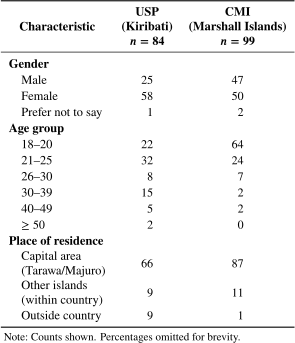
The CMI and USP were selected as case institutions because they represent the highest-level educational institutions in their respective countries and serve as key venues for youth engagement and public discourse on climate change. Respondents in both groups varied in terms of gender, age, and place of residence, although most students in both samples resided in the main urban centers (Majuro for CMI and Tarawa for USP). Although the gender and age distributions differed somewhat between the two groups, both samples primarily comprised students enrolled at the chief campuses located in their respective capital regions. A summary of the respondents’ characteristics is presented in Table 1.
Table 1. Summary of respondent characteristics.
2.2. Measurement Model
The measurement model was developed in two stages: EFA followed by CFA.
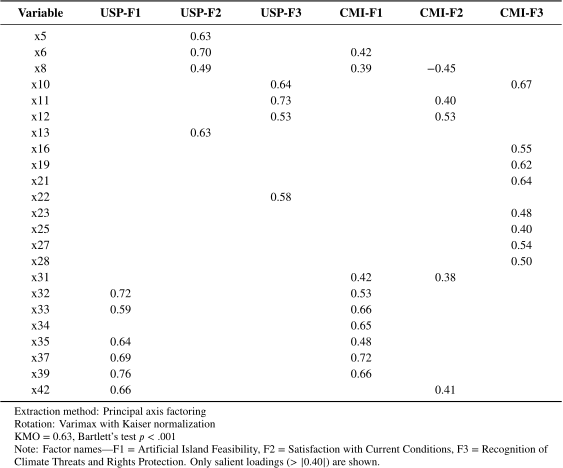
First, to confirm the suitability of the data for factor analysis, the Kaiser–Meyer–Olkin (KMO) measure of sampling adequacy and Bartlett’s test of sphericity were used. The results indicated that both the CMI group (\(\textrm{KMO} = 0.659\), Bartlett’s \(p < .001\)) and the USP group (\(\textrm{KMO} = 0.621\), Bartlett’s \(p < .001\)) fulfilled the standard criteria for applying factor analysis.
Next, to explore the common factor structure, an EFA was conducted separately for each group. The number of factors was determined using parallel analysis (PA) with 500 bootstrap replications. Factors were retained when their observed eigenvalues exceeded the upper bound of the 95% confidence interval for eigenvalues generated from random data. This procedure identified a three-factor structure as the most appropriate solution for both groups (see the Appendices for details).
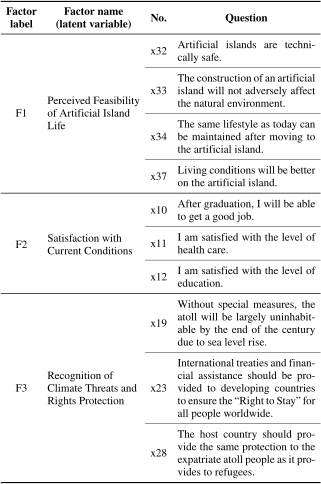
Based on the three-factor structure identified in the EFA, and considering model identification in multi-group comparisons, three to four representative items were selected for each factor to construct the CFA model. The final three-factor model used in the analysis is summarized in Table 2.
Table 2. Measurement model structure in CFA.
When the three-factor model was tested separately for each group using CFA, the results indicated a good model fit. This model was then adopted as the baseline for the multi-group comparison (configural invariance model).
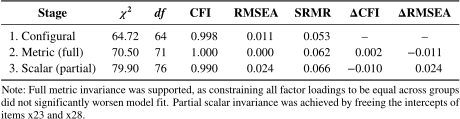
Table 3. Results of measurement invariance testing.
2.3. Analytical Strategy
To test our hypotheses, we employed a three-stage analytical strategy.
First, to establish a robust measurement model, we conducted an EFA separately for each group. The suitability of the data for factor analysis was assessed using the KMO statistic and Bartlett’s test of sphericity. The number of factors to be retained was determined using PA.
Second, we performed a multi-group CFA to examine measurement invariance and conduct cross-group comparisons. This procedure followed a standard hierarchical approach. First, we tested for configural invariance (the same factor structure across groups), which was supported. Thereafter, we tested for metric invariance (equal factor loadings), which was also supported. Next, we tested for scalar invariance (equal intercepts). As the full scalar model did not fulfill the recommended fit criteria (\({\Delta\textrm{CFI}} > .010\)), we examined modification indices and released the equality constraints on the intercepts of two items (x23 and x28), thus establishing partial scalar invariance. The final model demonstrated good fit, which permitted valid cross-group comparisons. Model fit was evaluated using the comparative fit index (CFI), the root mean square error of approximation (RMSEA), and the standardized root mean square residual (SRMR), with model comparisons based on \(\Delta\)CFI and \(\Delta\)RMSEA thresholds. With partial scalar invariance established, we proceeded with two key comparisons: first, we used chi-square difference tests to explore the equality of inter-factor covariances, and second, we estimated latent mean differences, setting the CMI group as the reference.
Third, to examine the internal structure of F3 in greater detail, we employed a PFI analysis, which examines whether the same survey items contribute equally to F3 across groups. Although factor loadings reveal overall item-factor relationships, PFI analysis identifies the specific items that most strongly predict individual differences within each group. This approach transcends simply comparing the F3 level (via latent means) to uncovering potential qualitative differences in its psychological foundation, thereby revealing qualitative differences in how the same latent construct is supported by different item configurations across cultural contexts.
All statistical analyses were performed using R (version 4.5.2) and Python (version 3.12) software. CFA and multi-group measurement invariance testing were performed in R using the lavaan package (version 0.6-19) with maximum likelihood estimation. EFA was conducted using the factor_analyzer package (version 0.5.1) in Python. The PFI analysis was implemented in Python using permutation-based procedures with scikit-learn and LightGBM.
Table 4. Standardized factor loadings (Std.all).
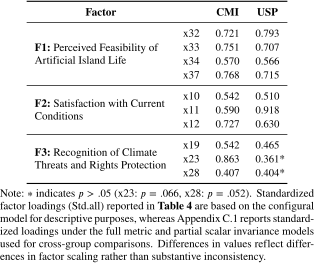
Table 5. Inter-factor correlation matrix by group.
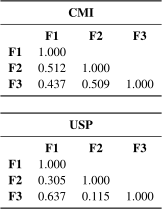
Table 6. Chi-square difference tests for equality of inter-factor covariances.
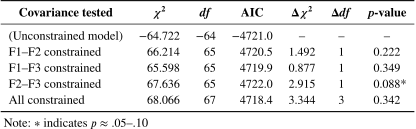
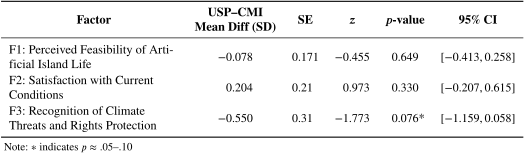
Table 7. Estimated latent mean differences.
3. Results
This section presents the findings in the following order: (i) model fit and measurement invariance; (ii) comparison of latent structures; (iii) comparison of latent means; (iv) further exploration of structural heterogeneity through PFI analysis; and (v) a summary of results.
3.1. Measurement Invariance Testing
The results of our measurement invariance testing are presented in Table 3. The initial configural invariance model, which tested for a common factor structure, demonstrated an excellent fit to the data (\(\chi^{2}(64) = 64.72\), \(p = .451\); \(\textrm{CFI} = .998\); \(\textrm{RMSEA} = .011\)). Subsequently, the metric invariance model, with all factor loadings constrained to be equal, was supported, as constraining the loadings did not significantly worsen model fit relative to the configural model (\(\Delta\chi^{2} = 5.78\), \(\Delta\mathit{df} = 7\), \(p = .566\); \(\Delta\textrm{CFI} = +0.002\)).
However, the scalar invariance test revealed a more nuanced picture. A model constraining all item intercepts to be equal did not meet the commonly used criteria for scalar invariance, because the model fit deteriorated relative to the metric model. This suggests that for some items, the groups had different baseline levels of agreement, irrespective of their underlying scores on the latent factor. To achieve an adequate model fit, it is necessary to establish partial scalar invariance. Specifically, the intercepts for items x23 (concerning the “Right to Stay” via international treaties) and x28 (concerning refugee-like protection for Marshallese) were freely estimated. This adjustment resulted in a well-fitting model (\(\Delta\textrm{CFI} = -0.010\) compared to the metric model). The non-invariance of x23 and x28 reveals that these items, both invoking international institutions, operate differently across groups. This likely reflects the extensive engagement of the Marshall Islands with international frameworks (e.g., COFA [Compact of Free Association] negotiations and nuclear compensation) versus Kiribati’s limited experience. For the CMI students, treaty guarantees and refugee-like protections feel concrete, whereas for the USP students, they are more abstract and less connected to everyday adaptations. Methodologically, this supports our comparative approach: differences in F3 reflect not only factor means and correlations, but also the interpretation of rights-based concepts, highlighting the need for context-sensitive policy design.
This finding of partial scalar invariance is itself a significant result, highlighting the structural heterogeneity in how the two groups approach the highly political and ethical questions of international protection. With the partial scalar invariance established, the prerequisite for comparing the latent means was fulfilled.
3.2. Latent Structure Comparison: Factor Loadings and Correlations
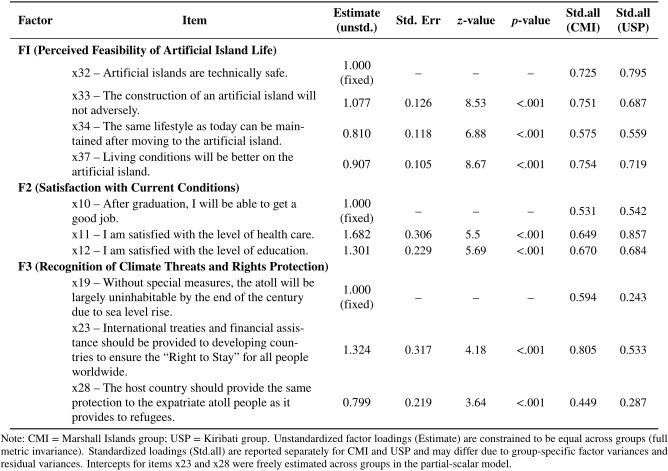
Table 4 presents the standardized factor loadings for each group. Although factor loadings were constrained to be equal at the metric level, Table 4 reports standardized loadings (Std.all), which can differ across groups because they depend on group-specific factor variances and residual variances. Overall, the key items loaded appropriately on their respective factors in both groups, supporting the validity of the model. Notably, the item “International Treaty and Aid Support for the Right to Stay” (x23), part of F3 (Recognition of Climate Threats and Rights Protection), had a high loading in the CMI group (.863) but a weaker, non-significant loading in the USP group (.361, \(p = .066\)).
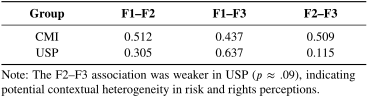
Table 5 presents the inter-factor correlations. In the CMI group, the three factors were moderately and positively correlated (.437–.512). However, in the USP group, the correlation between F2 (Satisfaction with Current Conditions) and F3 was near zero (.115). A chi-square difference test for equality of factor covariances (Table 6) indicated a difference in the F2–F3 relationship at the 10% level (\(\chi^{2}\textrm{diff}(1)=2.92\), \(p = .088\)).
3.3. Latent Mean Comparison
Using a scalar invariance model, the latent mean differences for the USP group were estimated relative to those of the CMI group (set to zero). As presented in Table 7, no statistically significant differences were observed for F1 (Perceived Feasibility of Artificial Island Life) or F2 (Satisfaction with Current Conditions). However, for F3, the USP group scored approximately 0.55 standard deviations lower than the CMI group (estimated difference \(=\) \(-0.550\), \(p = .076\)).
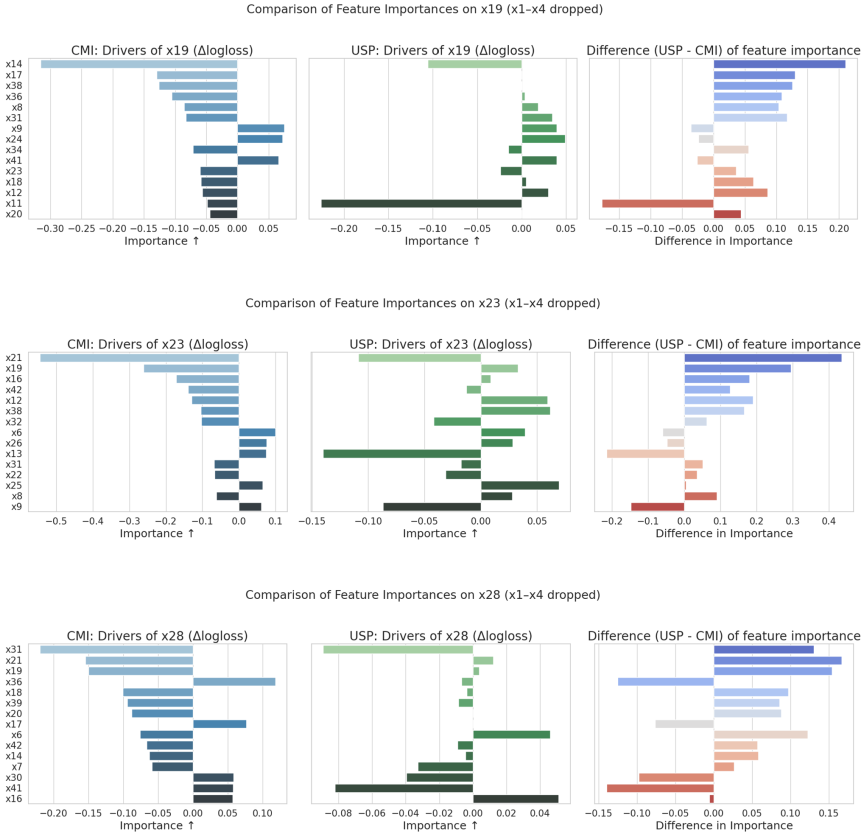
Fig. 1. PFI for x19 (sea level rise perception), x23 (International Treaty and Aid Support for the Right to Stay), and x28 (refugee-like protection). In each row: left panel \(=\) CMI (blue), middle panel \(=\) USP (green), and right panel \(=\) USP–CMI difference.
3.4. PFI Analysis of F3
The patterns of feature importance revealed by the PFI analysis (Fig. 1) indicate that Factor F3 rests on markedly different psychological foundations in the CMI and USP groups. In each triplet of the panels (left: CMI in blue; middle: USP in green; right: USP–CMI differences), the top row depicts x19 (sea level rise perception), the middle row x23 (International Treaty and Aid Support for the Right to Stay), and the bottom row x28 (refugee-like protection).
For x19 (top row), the CMI scores are most strongly influenced by x14 (belief that migrants abroad are happier), followed by x17 (perceived persistence of family obligations after migration) and x36 (expectation that prices will not rise on artificial islands) (left panel). In contrast, in the USP group (middle panel), x11 (satisfaction with health care) emerges as the dominant predictor with a strong negative contribution, while other variables play a minor role. This shift is clearly visible in the right panel, where x11 shows the largest negative difference, indicating a substantial divergence in predictive importance between the groups.
For x23 (middle row), the CMI results indicate that x21 (support for the Right to Stay as part of adaptation policy) and x19 (sea-level-rise perception) are the most influential predictors, both revealing strong negative contributions (left panel). In contrast, the USP group (middle panel) displays a distinctly different pattern: x13 (intention to emigrate abroad) and x16 (belief that emigrants should prepare well in advance by learning language and society of destination countries) become dominant predictors, with x13 demonstrating a positive contribution and x16 a moderate negative contribution. The right panel highlights these contrasts, with x21 and x19 demonstrating large positive differences (indicating a weaker influence on the USP) and x13 demonstrating a negative difference (indicating stronger influence on the USP).
For x28 (bottom row), the leading predictors also shift notably. In the CMI group, x31 (willingness to move to an artificial island within a country) and x21 (support for the Right to Stay) exert the strongest influence, followed by x19 (sea-level-rise perception) and x36 (expectation of stable prices on artificial islands) (left panel). However, in USP, x41 (belief that those wishing to remain should have their land raised by the government and international community) and x16 (preparation for emigration abroad) emerge as dominant positive predictors, while x31 and x21 lose much of their explanatory power (middle panel). These changes are clearly captured in the right panel, where x41 and x16 exhibit large positive differences, indicating that these factors play a stronger role in shaping USP students’ recognition of refugee-like protection than their CMI counterparts.
These systematic shifts, visible across all three variables in Fig. 1, demonstrate that while F3 is statistically identified as the same factor, its underlying network of associations differs substantially between the two groups, underscoring the context-specific nature of rights-based climate adaptation preferences.
3.5. Summary of Results
Across analyses, the perception structures of the CMI and USP groups were similar for F1 and F2 but demonstrated marked heterogeneity for F3 (Recognition of Climate Threats and Rights Protection). This heterogeneity was supported from three angles: (i) latent mean level (USP \(\approx\) 0.55 SD lower), (ii) latent structure (notably weaker association with F2 in USP), and (iii) determinants of individual differences (qualitative differences in top PFI items). Considering the sample sizes (CMI: \(n = 99\), USP: \(n = 84\)), these results fall near the conventional significance boundary (\(p \approx .05\)–.10). However, they indicate substantively important differences that serve as hypothesis-generating evidence warranting further large-scale research.
4. Discussion
The results of this study reveal substantive differences between the CMI (Marshall Islands) and the USP (Kiribati) groups in both the mean and structural parameters of the latent factor (F3), which combines the recognition of climate threats and rights protection. The USP group scored approximately 0.55 standard deviations lower than that of the CMI group (\(p = .076\)), representing a medium-to-large effect size that warrants attention despite falling just outside the conventional significance thresholds. Considering that both groups face similar ecological threats to atoll countries, the observed differences in F3 are likely shaped by more complex sociopolitical and institutional factors rather than by variations in physical risk perception alone. This discussion adopts an exploratory and hypothesis-generating perspective that extends prior theories on climate justice, focusing on asymmetries in “access to institutions” and “rights consciousness regarding compensation,” and situates these interpretations within the existing literature.
4.1. Main Findings and Their Interpretation
Higher F3 scores in the CMI group likely reflect the distinct historical and institutional experiences of the Marshall Islands. The COFA with the United States, the legacy of nuclear testing and related compensation disputes 8, and the exclusion of COFA migrants from certain U.S. social programs 9 have contributed to both cultural and practical capacities for contesting structural injustices and asserting rights through international frameworks. Such accumulated experiences, from negotiating the terms of association with the U.S. 10 to confronting the limits of internal mobility as an adaptation option 11, may have reinforced an orientation toward “international institutions” as critical arenas for securing the countries’ future. Drawing on Krzesni and Brewington, the fragility of “everyday infrastructure” (health, water, and food) under climate stress may further increase the inclination to seek institutional solutions 12.
4.2. Institutional Context: Marshall Islands vs. Kiribati
In Kiribati, climate risk perception is known to be high 13,14. However, this does not appear to translate into similar demands for compensation through international frameworks. One possible explanation is Webber’s notion of “performative vulnerability,” in which national adaptation policies strategically represent vulnerability to secure aid, cultivating dependency rather than individual rights consciousness 15. Moreover, as Klepp and Fünfgeld argue, when international aid projects fail to integrate local knowledge and participation, “epistemic injustice” may emerge 16. These dynamics can foster a sense that “the institutions are not ours,” thereby dampening grassroots engagement with global governance.
Beyond the differences in institutional access at the national level, the divergence observed in F3 may also be linked to how climate adaptation is encountered and interpreted in everyday governance contexts. In the Marshall Islands, the policy discourse surrounding adaptation, articulated most clearly in national planning frameworks such as the National Adaptation Plan 17, may render rights-based concepts more visible and intelligible to the public, including younger cohorts. This visibility may facilitate a cognitive linkage between climate risk recognition and institutional claims. In contrast, in Kiribati, although climate risk awareness is high, opportunities for direct engagement in policy formation appear more limited. This may weaken the translation of risk perception into rights-oriented claims, not because climate threats are perceived as less severe, but because international institutions are perceived as more distant. Although this study does not directly measure political participation, these differences in everyday governance experiences help to situate the observed group differences in F3.
4.3. Theoretical Implications for Climate Justice
Beyond everyday governance experiences, differences in engagement with international institutions at the historical and political level also help explain the variations in F3. The Marshall Islands have actively used international platforms, notably in nuclear compensation negotiations, and more recently in Pacific-wide advocacy, such as Marshallese youth movements urging ICJ advisory opinions on climate justice 18. Such experiences may correlate with a political orientation toward treating “non-economic losses” (NELD), land, culture, and identity, as subjects for institutional redress 19. In contrast, in Kiribati, international advocacy remains concentrated among the elites, and opportunities for grassroots participation in institutional processes are limited 20. This aligns with the observed group differences in F3. Importantly, F3 should not be interpreted as a universal factor in climate risk perception. Rather, it represents a context-dependent hybrid construct that combines descriptive assessments of environmental threats with normative and institutional expectations of rights-based protection. The observed group differences suggest that climate risk perception is interpreted through policy, institutional, and historical frames, rather than as a purely cognitive evaluation of physical risk.
4.4. Policy Recommendations
As Siders 21 emphasizes, realizing climate justice depends less on normative ideals than on the ability to navigate implementation dilemmas. Thus, differences in F3 may reflect an asymmetry in the capacity to appeal to institutions, shaped by historical trajectories. For the CMI group, rights consciousness is tied to engagement in institutional struggles; whereas for the USP group, exclusion from institutional design processes may have contributed to a weaker inclination to seek international guarantees.
Although these interpretations remain provisional considering the data limitations, the findings point to important implications for both theory and practice. Addressing these disparities requires more than quantifying losses or providing financial aid. It demands empowerment strategies that foster agency and institutional access, rooted in postcolonial perspectives on structural inequality. For the USP group, where rights-oriented recognition is relatively low, stepwise readiness measures, such as participatory processes and capacity building, may be more suitable. In contrast, for the CMI group, where rights consciousness is established, more advanced implementation measures, mobilizing finance, and establishing legal frameworks, may be warranted. Therefore, designing country-specific adaptation strategies that reflect latent preference structures is essential for equitable policy design.
5. Conclusion
This study compared perceptions of climate change adaptation between university students in the Marshall Islands (CMI group) and Kiribati (USP group) using multi-group CFA. Although no significant differences were found in the feasibility of artificial islands (F1) or satisfaction with current conditions (F2), a clear divergence emerged in the factor integrating the recognition of climate threats and rights protection (F3). The USP group scored approximately 0.55 standard deviations lower than the CMI group (\(p =.076\)), indicating a moderate effect size that reflects the underlying sociopolitical and institutional differences.
This study contributes to climate justice research by providing hypothesis-generating evidence that, even among atoll countries facing similar ecological risks, the cognitive structures shaping rights-oriented perceptions are heterogeneous. This study empirically tests and extends existing theoretical frameworks on climate justice and rights-based adaptation, by combining measurement invariance testing, latent mean analysis, and permutation-based diagnostics.
This study has several limitations. The relatively small sample size and the focus on university students constrain generalizability, and the cross-sectional design precludes causal inferences. In addition, the study does not directly measure individual-level political participation or civic engagement; therefore, interpretations linking institutional experiences or governance contexts to rights-oriented perceptions should be understood as inferential rather than behaviorally validated. As an exploratory and hypothesis-generating analysis, these findings should be regarded as preliminary evidence that lays the groundwork for larger-scale, multi-site studies. Future studies should build on this work through confirmatory and mixed-method approaches. Further causal examination of the observed differences and hypothesis testing of institutional and cultural mechanisms will be crucial to strengthening our understanding of climate justice dynamics. Ultimately, large-scale and collaborative empirical research is essential to consolidate these findings, for which this study may serve as an initial foundation.
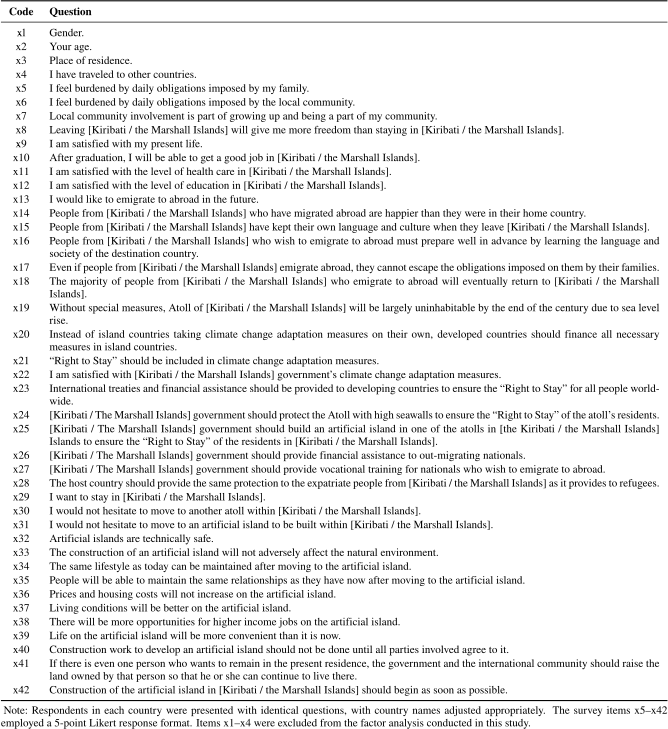
Appendix A. Full List of Survey Items (Questionnaire Items and Codes)
Appendix B. Exploratory Factor Analysis (EFA) Results
Appendix C. Supplementary Parameter Estimates and Fit Indices
C.1. Factor Loadings Under Metric and Partial Scalar Invariance (CMI & USP)
C.2. Factor Correlations
C.3. Supplementary Fit Indices

Acknowledgments
This study was supported by the Global Infrastructure Fund Research Foundation Japan, JSPS Bilateral Program Grant Number JPJSBP120249945, and JSPS KAKENHI Grant Number 24K03174. We are grateful to Dr. Mikiyasu Nakayama, CEO of GIF Japan, for his support through these grants and guidance for this work. We also thank the students and staff of the College of the Marshall Islands and the University of the South Pacific Kiribati Campus for their cooperation in the survey.
- [1] United Nations News, “World Court says countries are legally obligated to curb emissions, protect climate,” July 23, 2025. https://news.un.org/en/story/2025/07/1165475 [Accessed August 7, 2025]
- [2] K. E. McNamara and C. Gibson, “‘We do not want to leave our land’: Pacific ambassadors at the United Nations resist the category of ‘climate refugees’,” Geoforum, Vol.40, No.3, pp. 475-483, 2009. https://doi.org/10.1016/j.geoforum.2009.03.006
- [3] Republic of the Marshall Islands, “National Adaptation Plan: Responding to the impact of climate change (final version),” World Bank PREP II Project, 2023. https://rmigov.com/RMI-NAP-2023.pdf [Accessed August 7, 2025]
- [4] A. Shaig, “Survey of climate change adaptation measures in Maldives: Integration of climate change risks into resilient island planning in the Maldives Project,” Ministry of Housing and Environment and United Nations Development Programme, 2011.
- [5] Department of Foreign Affairs and Trade, Australian Government, “Australia-Tuvalu Falepili Union treaty,” 2023. https://www.dfat.gov.au/geo/tuvalu/australia-tuvalu-falepili-union-treaty [Accessed August 7, 2024]
- [6] M. Nakayama et al., “Alternatives for the Marshall Islands to cope with the anticipated sea level rise by climate change,” J. Disaster Res., Vol.17, No.3, pp. 315-326, 2022. https://doi.org/10.20965/jdr.2022.p0315
- [7] M. Nakayama et al., “Artificial island construction as an instrument for the right to stay: Case of the Marshall Islands,” J. Disaster Res., Vol.20, No.1, pp. 44-52, 2025. https://doi.org/10.20965/jdr.2025.p0044
- [8] A. S. Bordner, “Climate migration & self-determination,” Columbia Hum. Rights Law Rev., Vol.51, No.1, pp. 183-252, 2019.
- [9] T. Lum, “How the compacts of free association support U.S. interests and counter the PRC’s influence,” Testimony before the Committee on Natural Resources, Indo-Pacific Task Force, U.S. House of Representatives, Congressional Research Service, June 14, 2023.
- [10] J. Young, “The compact of free association and development in the freely associated states,” INTA 4500 Pro-Seminar in Int. Affairs, 2023.
- [11] H. B. Roland, “Compelled and constrained migration: Restrictions to migration agency in the Marshall Islands,” Front. Clim., Vol.5, Article No.1212780, 2023. https://doi.org/10.3389/fclim.2023.1212780
- [12] D. Krzesni and L. Brewington, “What do climate impacts, health, and migration reveal about vulnerability and adaptation in the Marshall Islands?,” npj Clim. Action, Vol.1, Article No.22, 2022. https://doi.org/10.1007/s44168-022-00023-4
- [13] L. Allgood and K. E. McNamara, “Climate-induced migration: Exploring local perspectives in Kiribati,” Singap. J. Trop. Geogr., Vol.38, No.3, pp. 370-385, 2017. https://doi.org/10.1111/sjtg.12202
- [14] J. P. Cauchi, S. Moncada, H. Bambrick, and I. Correa-Velez, “Coping with environmental hazards and shocks in Kiribati: Experiences of climate change by atoll communities in the Equatorial Pacific,” Environ. Dev., Vol.37, Article No.100549, 2021. https://doi.org/10.1016/j.envdev.2020.100549
- [15] S. Webber, “Performative vulnerability: Climate change adaptation policies and financing in Kiribati,” Environ. Plan. A, Vol.45, No.11, pp. 2717-2733, 2013. https://doi.org/10.1068/a45311
- [16] S. Klepp and H. Fünfgeld, “Tackling knowledge and power: An environmental justice perspective on climate change adaptation in Kiribati,” Clim. Dev., Vol.14, No.8, pp. 757-769, 2022. https://doi.org/10.1080/17565529.2021.1984866
- [17] Republic of the Marshall Islands, “Republic of the Marshall Islands National Adaptation Plan,” Office of the President, 2023.
- [18] B. M. Rikimani, “Climate justice and Pacific Island countries – A case study on grassroots advocacy,” Round Table, Vol.113, No.4, pp. 374-384, 2024. https://doi.org/10.1080/00358533.2024.2382563
- [19] J. Handmer, R. Monson, and T. Schinko, “Addressing the diversity of Loss and damage in Pacific Island countries to foster a just transition towards a climate-resilient future,” Clim. Dev., Vol.17, No.7, pp. 657-669, 2025. https://doi.org/10.1080/17565529.2024.2437133
- [20] E. A. Morgan and K. Petrou, “Climate justice through climate finance? Lessons from Oceania,” npj Clim. Action, Vol.2, Article No.24, 2023. https://doi.org/10.1038/s44168-023-00061-6
- [21] A. R. Siders, “The administrator’s dilemma: Closing the gap between climate adaptation justice in theory and practice,” Environ. Sci. Policy, Vol.137, pp. 280-289, 2022. https://doi.org/10.1016/j.envsci.2022.08.022
- [22] F. F. Chen, “Sensitivity of goodness of fit indexes to lack of measurement invariance,” Struct. Equ. Model., Vol.14, No.3, pp. 464-504. 2007. https://doi.org/10.1080/10705510701301834
This article is published under a Creative Commons Attribution-NoDerivatives 4.0 Internationa License.