
Paper:
Current Situation and Problems of Pass on Related to the Kumamoto Earthquake in 2016: The Case of Elementary and Junior High School Teachers in Mashiki Town
Taiyo Hamatsu and Yukiko Takeuchi†
Kumamoto University
2-39-1 Kurokami, Chuo-ku, Kumamoto, Kumamoto 860-8555, Japan
†Corresponding author

This study examines how disaster experiences from the 2016 Kumamoto Earthquakes are transmitted and reflected in school education, focusing on elementary and junior high school teachers in Mashiki Town, one of the most severely affected areas. A questionnaire survey was conducted to clarify teachers’ perceptions and practices regarding the transmission of disaster experiences. The study addressed three research questions: (1) how disaster experiences are shared and transmitted among teachers, (2) how archival materials and facilities related to the earthquake are utilized in schools, and (3) how the earthquake experiences are reflected in disaster education. The results show that while teachers generally recognize the importance of transmitting disaster experiences, systematic opportunities for sharing within schools are limited, partly due to teacher turnover. Although many teachers are aware of archival resources, their use in educational practice remains limited. Furthermore, disaster education reflecting earthquake experiences tends to rely on individual teachers’ initiatives rather than on institutionalized curricula. These findings suggest that sustainable transmission of disaster experiences in school education requires organizational support, including systematic teacher training, curriculum development, and effective use of archival resources. This study provides empirical insights into post-disaster education in a severely affected municipality and contributes to the discussion on disaster memory transmission in schools.
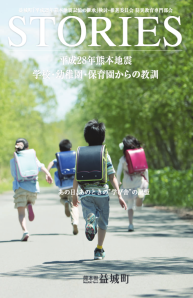
STORIES: Lessons from the 2016 Kumamoto Earthquakes
1. Introduction
1.1. Research Background and Objectives
Previous research has emphasized that disaster education plays a crucial role in fostering disaster preparedness and community resilience.
Studies on the transmission of disaster experiences have demonstrated that disaster memories tend to fade over time, especially when there is generational and personnel turnover in local communities and schools 1,2.
In the school context, frequent teacher transfers make it challenging to maintain organizational memory. Therefore, institutional mechanisms are required to preserve disaster experiences beyond the level of individual teachers. Previous studies have highlighted the importance of disaster archives and storytelling as tools for systematically transmitting disaster memories 3.
However, few empirical studies have examined how these archives are utilized in schools and how teachers share and pass on disaster experiences in their daily educational practice.
This study addresses this research gap by focusing on Mashiki Town, one of the most severely affected areas by the 2016 Kumamoto Earthquakes.
This study aimed to clarify the current situation and challenges related to the transmission of disaster experiences following the 2016 Kumamoto Earthquakes among elementary and junior high school teachers in Mashiki.
Specifically, this study addressed the following three research questions:
-
How are disaster experiences shared and transmitted among teachers?
-
To what extent were archival materials and facilities related to the 2016 Kumamoto Earthquakes utilized in schools?
-
How are the experiences of the 2016 Kumamoto Earthquakes reflected in school disaster education?
By answering these questions, this study seeks to identify issues in sustaining disaster memory within school communities and to discuss the implications for the continuation and development of disaster education.
1.2. Mashiki Town, Kumamoto Prefecture
Mashiki Town was established in April 1954 by merging five towns and villages: Kiyama Town, Hiroyasu Village, Iino Village, Fukuda Village, and Tsumori Village. Mashiki Town is located in the north-central part of Kumamoto Prefecture 4. The entire town is within the urban planning area of the Kumamoto metropolitan area and is a town where rural and urban areas coexist in harmony. The Futagawa Fault Zone runs from Minamiaso Village (Aso District, Kumamoto Prefecture), near Kiyama (Mashiki Town, Kamimashiki District), to the tip of the Uto Peninsula, and the Hinagu Fault Zone runs from near Kiyama (Mashiki Town, Kamimashiki District), through Ashikita Town (Ashikita District), to the southern part of the Yatsushiro Sea. In addition, the mountains of Shiroyama, Asagoyama, Funanoyama, and Iidayama are connected, and in the Mashiki Plateau, an area of approximately 2,000 hectares, where farmland has been developed. In addition, rivers such as the Kiyama, Akai, Akitsu, and Kanayama Rivers 5 flow through the area. Accordingly, until the 2016 Kumamoto Earthquakes, Mashiki Town experienced frequent flooding and typhoon-related disasters. Volcanic ash from the eruptions of Mount Aso left farmland with no water retention capacity. During heavy rainfall, roads were damaged by topsoil erosion and landslides, while rice paddy areas were repeatedly flooded and inundated.
As of March 31, 2024, the total population was 33,993, of which 10,137 (29.8%) were aged 65 years or older 6. In 2016, the total population was 34,499, with 9,106 (26.4%) aged 65 years or older; however, in 2017, the total population was 33,001, with 9,089 (27.5%) aged 65 years or older. The total population decreased after the earthquake but is now increasing. However, the proportion of the population aged 65 and older is expected to increase by 3.4% from 2016 to 2024.
1.3. Damages in Mashiki Town
Mashiki Town suffered the most damage during the 2016 Kumamoto Earthquakes, with both the foreshock and main shock recording seismic intensities of 7. In addition to the two earthquakes measuring 7 on the Japanese seismic intensity scale, there was a series of aftershocks, including two with a seismic intensity of 6\(+\), three with a seismic intensity of 6\(-\), five with a seismic intensity of 5\(+\), 13 with a seismic intensity of 5\(-\), 145 with a seismic intensity of 4 or higher, and 4,484 with a seismic intensity of 1 or higher 7.
The human toll included 45 deaths (20 direct and 25 disaster-related), 135 serious injuries, and 31 minor injuries 7. The total damaged residential buildings was 10,584, including 3,026 destroyed, 3,233 partially destroyed, and 4,325 partially damaged 7.
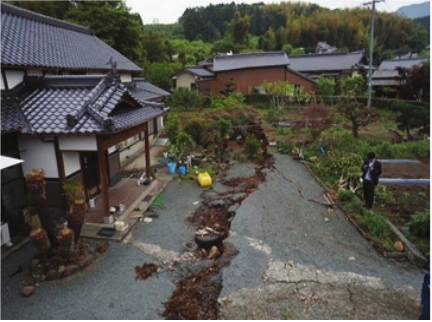
Fig. 1. Conjugate faults in the Tanigo area 7.
In terms of damage to public facilities, 48 of the 58 town-owned facilities were damaged, and various public facilities, including the town hall, assembly building, and educational and welfare facilities, were so damaged that they had to be demolished 7. At Mashiki Town General Gymnasium, after the main shock, most of the main arena ceiling panels, lighting fixtures (each weighing approximately 7 kg), and air-conditioning vents fell 7. The gymnasium was not opened as an evacuation shelter when the foreshock struck; therefore, there were no casualties at the site. During the 2016 Kumamoto Earthquakes, a 30-km-long surface rupture formed, causing severe damage to buildings and farmland directly above the fault zone. Surface fault ruptures also appeared in Mashiki Town, three of which, in the Tanigo, Dozono, and Sugido Districts, are preserved as national natural monuments (Fig. 1) 7.
2. Disaster Prevention and Mitigation After the 2016 Kumamoto Earthquakes
2.1. Initiatives by the Kumamoto Prefectural Board of Education
In response to the issues faced by schools following the 2016 Kumamoto Earthquakes, the Kumamoto Prefectural Board of Education introduced a “Disaster Prevention Chief System” in 2017 for elementary and junior high schools, compulsory education schools, and prefectural schools 8. Disaster prevention chiefs were assigned to public schools throughout the prefecture to serve as coordinators for promoting disaster prevention education, disaster prevention management, and community cooperation.
Also, the Kumamoto Prefectural Board of Education published “TSUNAGU: Towards Kumamoto’s Tomorrow” in the spring of 2017 9. This teaching material is intended for students from first grade through junior high school. It was created with the intention that “those who have experienced the Kumamoto Earthquake must never let the experience fade away 10,” and aims to support classroom lessons that encourage students to communicate, think about, and discuss “how children and the adults around them felt at the time and what thoughts led them to act.”
In March 2018, the “School Disaster Prevention Education Instruction Guide” 11 was created as a teaching resource for teachers to nurture students who can take the initiative in self-help and mutual aid.
It contains lesson plans suitable for promoting “self-help” and “mutual aid,” understanding the history and mechanisms of natural disasters, and conducting practical evacuation drills. It has been distributed to schools throughout the prefecture.
Although the Kumamoto Prefectural Board of Education provided disaster prevention systems and educational materials, this study focused on Mashiki Town as a case study.
Prefectural-level systems were referred to only as institutional backgrounds, whereas the actual analysis was conducted at the town and school levels.
2.2. Kumamoto Prefecture’s Archives and Facilities
Kumamoto Prefecture has formulated a museum concept to pass on the experiences and lessons learned from the 2016 Kumamoto Earthquakes and has been building corridor-style museums. One such corridor-style museum is the Kumamoto Earthquake Disaster Museum KIOKU (Remembrance), which was built on the former Tokai University Aso Campus in Minamiaso Village (Fig. 2) 12. It opened on July 15, 2023. Visitors can learn about various aspects of the disaster, including exhibits of disaster relics, earthquake remains, and records of the Kumamoto Earthquake.
In addition to physical, exhibition-based archives such as this, there are also digital archives such as the “Kumamoto Disaster Digital Archive” created by Kumamoto Prefecture. The Kumamoto Disaster Digital Archive contains photographs and videos of the damage and evacuations caused by the 2016 Kumamoto Earthquakes and the July 2020 heavy rains. Operations began on April 19, 2017. It also includes interviews with people in charge of disaster response, as well as documentary records that can be used for education and training.
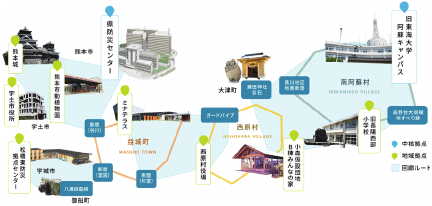
Fig. 2. Kumamoto Earthquake Corridor Museum.
2.3. Mashiki Town’s Initiatives
Before the 2016 Kumamoto Earthquakes, Mashiki had neither established a voluntary disaster prevention organization nor conducted comprehensive disaster prevention drills. Following the earthquake, the General Affairs Section was reorganized into the Crisis Administration Section in FY 2017, which made significant changes to the local disaster prevention plan, promoted the establishment of voluntary disaster prevention organizations, and set up disaster prevention warehouses in various locations, including elementary and junior high schools and public facilities. In 2017, the Kumamoto Earthquake Remembrance Inheritance Study and Promotion Committee was established to encourage residents of Mashiki to share their experiences of the 2016 Kumamoto Earthquakes for the future and to prepare for future disasters. This committee comprises three specialist committees: the Disaster Prevention Education Committee, the Committee of Preservation and Utilization of Earthquake Remains, and the Earthquake Memorial Park Committee. The new Mashiki Town Hall (opened May 8, 2023) also features an observation deck on the fourth floor overlooking Mashiki and an exhibition corner dedicated to the 2016 Kumamoto Earthquakes. Next to the Town Hall is the reconstruction urban development center, “Nijiiro” (opened March 30, 2023), which was built to serve as a place for residents to interact, to preserve the memory of the Kumamoto Earthquake, and to prepare for disasters. At “Nijiiro,” there is a “Memory Promenade” that utilizes the sloped area, where visitors can learn about the situation at the time of the disaster, people’s actions, and the recovery process in chronological order. Between “Nijiiro” and the Town Hall is the Earthquake Memorial Park, which is designed to form three consecutive areas. The Earthquake Memorial Park (opened June 18, 2023) features a monument with a motif of plum blossoms, the town flower of Mashiki, and is a place to pass on the “remembrance of life” 13. It also serves as a park where residents can relax daily and where various events can be held. Mina Terrace, a library in Mashiki, has set up a corner dedicated to the 2016 Kumamoto Earthquakes, where earthquake-related records are displayed and preserved. The exhibits mainly feature photographs of Mashiki after the disaster, and visitors can view earthquake-related books, newspaper clippings, and the latest earthquake-related materials posted on the town’s website. In November 2017, a retrospective report was prepared on emergency response measures taken over approximately 8 months from the disaster through December 2016. Another archive of educational and welfare facilities is a record booklet called “STORIES: Lessons from the 2016 Kumamoto Earthquakes and childcare facilities after the 2016 Kumamoto Earthquakes” (Fig. 3) 14.
“STORIES” is the result of a hearing survey conducted at 21 facilities in Mashiki Town, including five elementary schools, two junior high schools, two kindergartens, five municipal daycare centers, and seven private daycare centers. This survey summarizes responses to the 2016 Kumamoto Earthquake, including the reopening of schools, pre- and post-earthquake efforts, difficulties faced, innovations implemented, and future challenges.
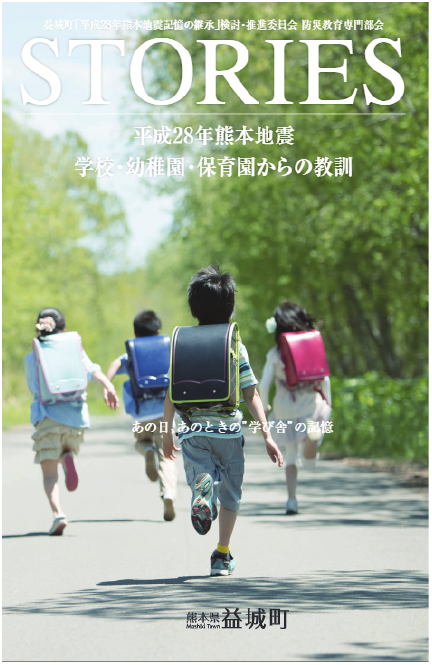
Fig. 3. STORIES: Lessons from the 2016 Kumamoto Earthquakes and childcare facilities after the 2016 Kumamoto Earthquakes 14.
2.4. Initiatives of Kumamoto University
Kumamoto University opened “Mashiki Lab” in October 2016, six months after the 2016 Kumamoto Earthquakes. The facility, built using shipping containers, is located in a park along the Akitsu River in Mashiki, Japan. It is part of the university’s Kumamoto Reconstruction Support Project, in which local residents, students, and faculty members engage in dialogue about the earthquake and participate in various recovery support activities.
The initiative “Teach Us! All About Mashiki” has been held since 2024, in which residents of Mashiki serve as storytellers, sharing their experiences and knowledge about the town with participants.
There are also digital archives, such as the Hinokuni Disaster History Record, which Kumamoto University created. The Hinokuni Disaster History Record was managed by the Digital Archives Laboratory at Kumamoto University 15. It was created as a digital archive to record, organize, and preserve the knowledge and lessons learned during the post-earthquake recovery and reconstruction process following the 2016 Kumamoto Earthquakes. This archive was compiled for future reconstruction support and disaster prevention education.
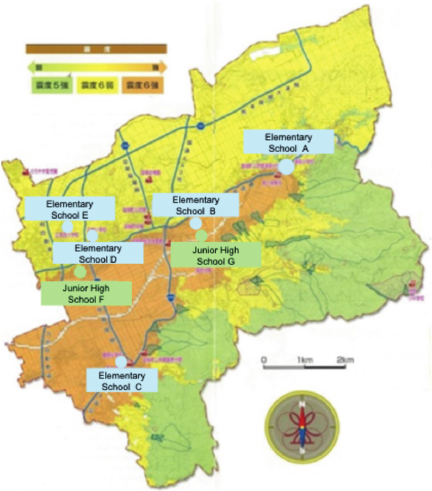
Fig. 4. Map of elementary and junior high schools in Mashiki Town.
3. Research Overview
3.1. Purpose of Research
In this study, a questionnaire survey was conducted at five elementary schools and two junior high schools in Mashiki Town, which suffered extensive damage during the 2016 Kumamoto Earthquakes. The aim was to clarify the lessons learned from the 2016 Kumamoto Earthquakes, the status of passing down these experiences through disaster prevention education, and the issues in disaster prevention education.
In this study, the booklet “STORIES” was not analyzed as a primary text document. Instead, it was used as reference material to understand the disaster situation and each school’s post-earthquake responses.
The questionnaire survey was designed based on issues suggested in STORIES, such as teacher turnover, sharing disaster experiences, and the continuity of disaster education.
Therefore, STORIES served as background information for designing the questionnaire items, and the primary data for analysis were obtained from the teachers’ responses.
3.2. Research Target Schools
This study targeted seven schools (five elementary and two junior high schools): A, B, C, D, E, F, and G (Fig. 4). Below is a summary of the damage and reconstruction status of each target school listed in “STORIES.”
3.2.1. Elementary School A
At the time of the 2016 Kumamoto Earthquakes, Elementary School A had 91 students and 17 teachers and staff members. It served as an evacuation shelter and remained open until April 16.
During the foreshock, the school opened an evacuation shelter under the direction of the Mashiki Town Board of Education’s superintendent, and some evacuees were asleep in their cars on the playground. In addition, they “informed parents of school closure in the middle of the night through safety and security emails” and “conducted safety checks on children and parents.”
When the main shock occurred, approximately 80% of the teaching staff were working on site. However, as the fire brigade and district chief were in charge of managing the evacuation center, the teaching staff only performed light work, such as distributing lunch boxes. Evacuees worried that nearby bridges might become impassable, so they moved to Eminence (a hotel) and Grand Messe (an industrial exhibition hall). Teachers and staff members were involved in activities such as “tidying up the school,” “visiting evacuation centers and homes to check that students were out,” and “writing down the evacuation locations and status of students on a large paper and sharing this information among themselves.”
The school’s post-earthquake initiatives included “sending out safety information to parents” and “holding a first-anniversary meeting to reflect on the earthquake.”
Future challenges raised and pointed out were “how to pass on the lessons to new teachers and staff as staff and principals are replaced” and “how to incorporate disaster prevention education.”
3.2.2. Elementary School B
At the time of the 2016 Kumamoto Earthquakes, Elementary School B had 456 students and 32 teachers and staff members. The evacuation center that they set up remained open until August 18.
Although it was not designated as an evacuation shelter at the time of the foreshock, town officials opened a shelter, and a few families evacuated sought shelted there.
None of the teachers or staff members were called upon, but about ten school staff members gathered voluntarily. Concentrating solely on school matters, they cleaned the school, checked the students’ conditions and notined damage, such as cracks appearing in the ground and in the school walls.
When the main shock occurred, an evacuation shelter was opened in the school gymnasium; it was mainly run by town officials and housed about 400 evacuees, many of whom were sleeping in their cars. The principal discussed the division of roles for supporting the evacuation shelter with the official in charge. Seven teaching staff members toured evacuation shelters in the school district to repair damage, such as broken window glass, and to check the safety of the students. Furthermore, on April 18, all staff members helped with meal distribution and health checks at the evacuation shelters. They held an emergency staff meeting to review the status of all staff members’ injuries and to schedule an in-school response meeting to prepare for the school’s reopening. By the latter half of May, local residents had taken over management of the evacuation center.
When Elementary School B reopened, Junior High School G and the Fifth Nursery School moved in and shared the space; this arrangement continued until August 31. During this time, they faced a situation in which an elementary school, a junior high school, a nursery school, and an evacuation shelter were all located on the same premises. Their post-earthquake initiatives focused on mental health care, such as “evacuation drills without ringing the emergency bell” and “mental health care for children, parents, and staff.”
As future challenges, they pointed out “conducting joint evacuation drills with the local community” and “reflecting on the organizations that came to provide support and discussing the issues with the town and other schools,” showing an interest in working with the local community.
3.2.3. Elementary School C
At the time of the 2016 Kumamoto Earthquakes, Elementary School C had 120 students and 13 teachers and staff members. The evacuation shelter remained open until May 19.
When the foreshock struck, the PTA general meeting had just finished around 9 PM, and approximately 4 or 5 staff members were inside the school. However, the emergency doors were closed, and the newly hired staff members were confused and did not know how to operate them. Subsequently, the superintendent of education contacted them and asked them to accept evacuees, but most of the bridges leading to the school were damaged and closed to traffic. During the foreshock, the focus was less on opening shelters and more on using parking lots so evacuees could sleep in their cars.
When the main shock occurred, staff members could not gather, and only faculty and staff who could confirm evacuees’ safety and handle immediate response tasks that day. Approximately 150 evacuees were housed in five classrooms used by first- through fourth-grade classes and the special support class. The school only operated the evacuation shelter for the first two or three days, after which the operation was handed over to the town hall and volunteers.
Starting on April 20, “C Aozora Classroom” was held to prepare children for their return to school. They practiced reading aloud and singing, and worked with evacuees and volunteers to prepare the classrooms for the school’s reopening. When the school reopened, the students promoted interaction between the evacuation center and the school community by singing songs they had practiced in “C Aozora Classroom” together with the people at the evacuation center. Because of the risk of flooding at the planned temporary housing site, temporary housing was constructed on the school playground, and a temporary school playground was set up on the planned site adjacent to the school. At this temporary playground, fire drills and sports were held with residents of the temporary housing, deepening their interactions.
After the earthquake, the school tried to “pass on to new staff members, who were assigned to the school after the disaster, what happened at the time, using presentation materials and other means.” The school also designates the 14th or 16th of each month as “Life and Disaster Prevention Day,” when disaster prevention activities and meetings are held. The school also points out that a future challenge is “how to pass on the story of the Kumamoto Earthquake to future generations in the school as faculty and staff members change over time.”
3.2.4. Elementary School D
During the 2016 Kumamoto Earthquakes, Elementary School D had 712 students and 47 teachers and staff members. The evacuation center remained open until August 18.
At the time of the foreshock, about 10 staff members were preparing for the next day’s open class day for parents, but administrative staff were absent because they were attending vice-principal meetings and other reasons. The gymnasium was opened as a shalter, but because aftershocks continued, no one used it, and many people were asleep in their cars on the school playgrounds. Town officials also helped run the evacuation center, but it was primarily staffed by teachers and administration who were simultaneously cleaning up the school in preparation for reopening.
When the main shock occurred, schools and local governments were unable to keep pace with the response. Some said, “We could not decide whether to let evacuees out of the classrooms,” and “It was difficult to create a list of evacuees,” and stated that they would have to ask the local community for help. Following advice from Hyogo Prefecture’s Disaster and School Support Team, which visited on April 17, a shelter leaders’ meeting was set up. The principal and vice-principal attended daily meetings at 8:00 AM and 3:00 PM, respectively, and other teaching staff began preparing to reopen the school. The management of the evacuation shelter gradually shifted from teachers and staff to the evacuees. For example, in May, the evacuees made an offer to help, saying “We also would like to do what we can.” Collaboration between schools, local residents, and evacuees is evident.
Efforts to reopen the school included “checking on the condition of students and parents,” “maintaining and inspecting facilities,” “inspecting school routes,” and “confirming and informing methods for commuting to and from school.”
Regarding post-earthquake efforts, teachers said they had conducted evacuation drills. Also, since the school coexisted with the evacuation shelter, they taught children that there is a “place for daily life” and a “place for education.”
Future challenges raised include “conducting emergency pick-up training and formulating manuals” and “passing on the story of the earthquake to teaching staff who are assigned to work here after the disaster.”
3.2.5. Elementary School E
At the time of the 2016 Kumamoto Earthquakes, Elementary School E had 775 students, teachers and staff members. The evacuation shelter remained open until August 18.
At the time of the foreshock, about 10 teachers, including the academic director and head teacher, were at the school assisting the evacuees. Town officials later visited the school. However, an aftershock around midnight damaged mercury-vapor lamps in the gymnasium, prompting an evacuation. At this time, several evacuees were at the school, and approximately seven teachers and staff members stayed overnight.
When the main shock occurred, the gymnasium and first-floor classrooms were opened, and approximately 800 people were evacuated. Additionally, approximately 200 cars were on the school grounds.
There were fewer than 20 teachers and staff at the school, each staff member was assigned a task and worked in three shifts to address problems in the evacuation shelters. They encouraged the creativity and ideas of each teacher or staff member responsible for creating a bright atmosphere. The school was responsible for hygiene, improving the shelter’s comfort, accepting aid, and answering the telephone. At the same time, town officials were responsible for maintaining public order and liaising with the town headquarters. In addition, message boards were set up, and the school’s internal broadcasting system was used to collect evacuees’ voices and provide information. In addition, there was an opportunity to interact with the evacuees. The student brass band and alumni held a concert to encourage evacuees and interact with them.
Post-earthquake efforts included “creating a record book while the school had the teachers, staff, and students who experienced the disaster,” “providing psychological care to staff who were unable to take part in the operation of the evacuation center,” and “evacuation drills that do not use the emergency bell.”
Future challenges include “how to pass on the experiences of the earthquake” and “how to carry out emergency pick-up training, given the school’s large size.”
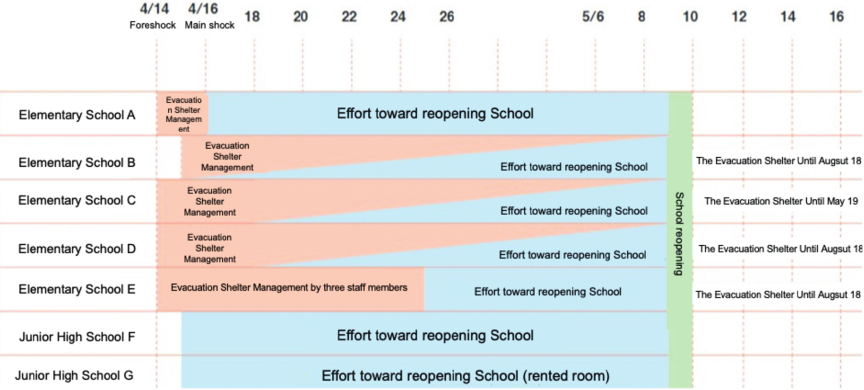
Fig. 5. Steps towards the reopening of Mashiki Town elementary and junior high schools.
3.2.6. Junior High School F
At the time of the 2016 Kumamoto Earthquakes, Junior High School F had 691 students, teachers and staff members. The evacuation shelter was not opened.
Although the school had not been designated as an evacuation shelter when the foreshock occurred on August 14, the town’s Board of Education instructed it to open its gymnasium, and the principal and several others gathered there. However, considering the danger, they advised evacuees to move to evacuation shelters and asked teachers and staff who had gathered there to return home after midnight. On April 15, 28 teachers and staff who were able to return to work checked on the safety of students and staff, the extent of damage to the area, roads, and the school buildings and grounds.
The main shock caused the rooftop walkway roof to collapse, misaligned the path to the gymnasium, and damaged school buildings. Seven teaching staff members, administrators, and those who were able to come to work went around, mainly visiting each evacuation center with class and grade rosters, while staff members who were staying at home made phone calls to check on students’ safety and the situation at each evacuation center. They also patrolled the local area, discussed future actions, rechecked damage to school facilities and equipment, and cleaned staff rooms and other areas. Starting on April 29, restoration work began, such as moving seven classrooms out of use, installing temporary toilets and simple water stations, and removing debris. They also stated that, because the school building was damaged, a temporary building was to be constructed; however, it was difficult to determine where to construct it. The new school building was completed in April 2021.
Measures taken after the earthquake included “a moment of silent prayer for the victims,” “mental care for students,” “evacuation drills,” and “placing disaster prevention hoods on each chair in the classroom.”
A future challenge was “to restore and improve the school education environment by incorporating life in temporary school buildings,” which was unique to Junior High School F.
3.2.7. Junior High School G
At the time of the 2016 Kumamoto Earthquakes, Junior High School G had 271 students and 36 faculty members. The evacuation shelter was not opened.
When the foreshock occurred, school staff checked the safety of the school community, and inspected and cleaned up the damage within the school.
When the main shock occurred, the area suffered extensive damage, including the collapse of a walkway, water pipe leaks, and the destruction of the gymnasium’s support structure. Consequently, an evacuation shelter was not set up in the gymnasium; however, some evacuees were sleeping in their cars in the schoolyard. School staff checked the safety of faculty, staff, and students, but were unable to contact about half of them because cell phone batteries ran out or they were out of service range. Therefore, staff made home visits and wrote down and shared information about students’ conditions on a large sheet of paper.
Due to damage to the corridor connecting the administration and classroom buildings, and because of safety concerns, Junior High School G reopened at Elementary School B. In May, the NPO “Katariba” began holding early morning and evening study sessions, offering support to students, such as introducing to work experience opportunities, providing counseling, and helping with preparations for sports and cultural festivals. The school reopened in its original building on August 22.
Staff stated that they worked on “counseling students” and “asking students to write about the disaster” after the earthquake. In addition, they implemented the “Reconstruction Starts at Junior High School G Project” with Kumamoto University and the Mashiki Town Board of Education, working with students and teachers from Junior High School G to film videos and pass on the memories of the 2016 Kumamoto Earthquakes and the subsequent reconstruction.
Future challenges that were raised included “how to communicate what we learned from the earthquake,” “there is no guidance on where to incorporate disaster prevention education, how to secure time for it, or how to carve out some time,” “how to work with the local community,” and “though there is an emergency pick-up manual, it has not been thoroughly communicated to parents.”
3.2.8. Summary
Five elementary schools (Elementary Schools A–E) opened evacuation shelters. The shelters’ opening periods varied from school to school. Some schools kept their shelters open until May, whereas others kept them open until August. There was also variation in the duration of schools’ management of shelters. Initially, shelters were managed mainly by teachers and school staff, but the main management roles later shifted to town officials, local residents, and evacuees, allowing many schools to focus on reopening efforts. In addition, most schools were able to assess student safety and understand their situation through phone calls, home and evacuation centers visits. Two junior high schools (Junior High Schools F and G) did not open evacuation shelters and worked to reopen their schools (Fig. 5).
Table 1. Overview of disaster prevention personnel.
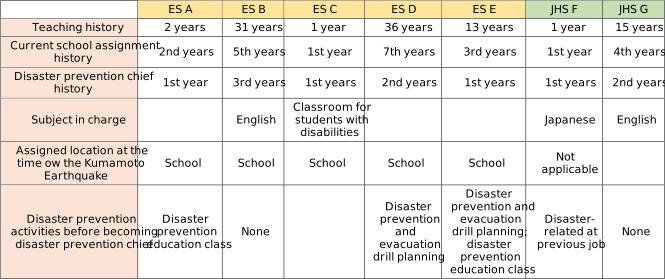
Table 2. Mashiki Town elementary and junior high schools overview.

At Elementary School C, the playground was occupied by temporary housing buildings; however, interactions between the residents of the temporary houses and the school took place in a temporary schoolyard. At Junior High School G, the school building was damaged; therefore, the students rented space at Elementary School B, which is another example of cooperation between the local community and schools during a disaster.
4. Questionnaire Survey
4.1. Questionnaire Survey Overview
A questionnaire survey was conducted with disaster prevention chiefs from seven schools in Mashiki Town: five elementary schools and two junior high schools.
The questionnaire comprised of four parts. The first part contained nine questions about the school’s overview, including community collaboration. The second part contained nine questions about the disaster prevention chief’s career history. The third part included 16 questions about the transmission of memories among teaching staff and the use of archived materials and facilities. The fourth part contained 12 questions about the implementation status of Mashiki Town’s annual disaster prevention education plan. In total, the questionnaire consisted of 46 questions and was administered between December 2024 and January 2025, achieving a 100% response rate.
4.2. Survey Results
4.2.1. Attributes of Each School’s Disaster Prevention Chief
The length of time that the participant disaster prevention chiefs have been employed at the school varies: two are in their first year, while others are in their second, third, fifth, and seventh years at the school. In terms of experience as disaster prevention chiefs, the majority (four people) were in their first year, followed by two in their second year. During the 2016 Kumamoto Earthquakes, five staff members were assigned to schools. The disaster prevention activities that respondents had been involved in before becoming disaster prevention chiefs were “planning disaster prevention and evacuation drill plans, etc.” (two people), “teaching in disaster prevention classes” (two people), “having been in charge of disaster-related matters in a previous job” (one person), and “none” (two people) (Table 1).
Table 3. Community school members and years of establishment.
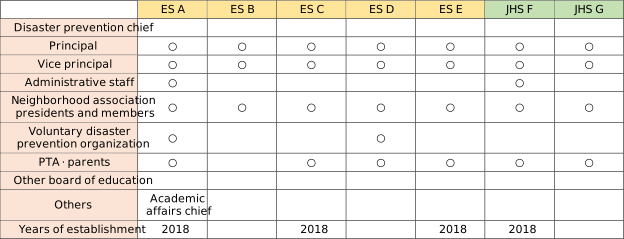
Table 4. School activities involving the local community.
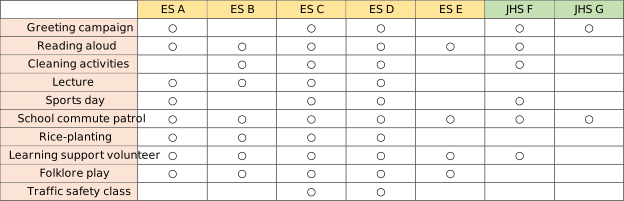
Table 5. Activities carried out with the local community in anticipation of disaster.
4.2.2. Connections Between the School and the Community
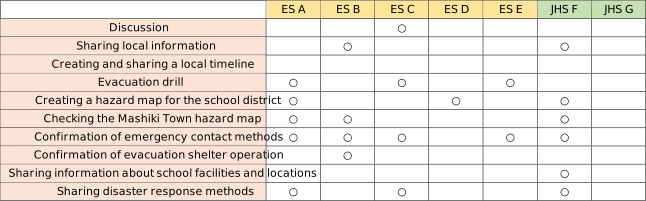
Table 2 shows the number of children, students, and classes at each school during 2016 and FY2024. The number of students has increased since the 2016 Kumamoto Earthquakes, and the number of teachers and staff has also increased in these six schools. Community schools were established in all schools, and all community schools involved the principal, vice principal, neighborhood association president(s), and members of the neighborhood association. All community schools, except Elementary School B, involved the PTA and parents. None of the community schools had a “disaster prevention chief,” and only two schools, Elementary Schools A and D, had a “voluntary disaster prevention organization” among their members (Table 3). When asked about school activities involving the local community, six schools reported “reading aloud activities,” “patrolling students’ commute to and from school,” and “study support volunteers” (Table 4). All elementary schools connect with local communities through “traditional folk games.” In terms of what schools are doing with the local community in anticipation of a disaster, five schools responded that they are “confirming contact methods in the case of an emergency.” Three schools conducted evacuation drills in their local communities (Table 5).
Table 6. Disaster prevention chief’s challenges.
4.2.3. Disaster Prevention Chiefs
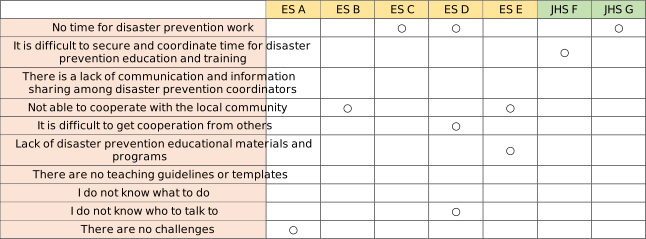
Regarding the challenges faced by disaster prevention chiefs, two schools pointed out that they were “not able to work with the local community” and “the disaster prevention chief does not have enough time for disaster prevention duties.” Other challenges included “it is difficult to get cooperation from those around us,” “there is a lack of disaster prevention education materials and programs,” and “we do not know who to consult with.” Additionally, one participant reported no issues at present (Table 6). All the schools responded that there were opportunities for their disaster prevention chiefs to learn about disaster prevention. When asked about the materials and facilities they would use, all schools answered, “the exhibition corner on the fourth floor of Mashiki Town Hall” and “the Futagawa Fault;” five schools answered “Nijiiro;” and four schools answered, “School Disaster Prevention Manual,” “School Disaster Prevention Education Instruction Guide,” “Disaster Prevention Education Training Seminar,” and “TSUNAGU: Toward Kumamoto’s Tomorroww” (Table 7).
4.2.4. Handover Among Faculty and Staff
Regarding recognition of STORIES, three schools, Elementary Schools B, C, and D, responded that they were aware of it, while the other four schools responded that they were not aware of it. The learned about it “from former teachers and staff,” “during disaster prevention education training,” and “because it was distributed to each school.” Additionally, when asked how they used STORIES, Elementary School D responded that they used it when preparing teaching materials. No other schools reported using it (Table 8).
All schools reported receiving a handover of disaster prevention education from the previous disaster prevention chief, but, in many schools, the handover method was “providing materials.” Elementary School D responded that “disaster prevention education training was conducted during its in-school training.” All schools reported that they conduct handovers of disaster prevention education and projects among teachers and staff. Junior High School F responded that it hands over “a memo of what was implemented during the school year” (Table 9).
Table 7. Materials and facilities used by the disaster prevention chief to learn about the disaster prevention, and by teachers and staff to pass on the story of the Kumamoto Earthquake.
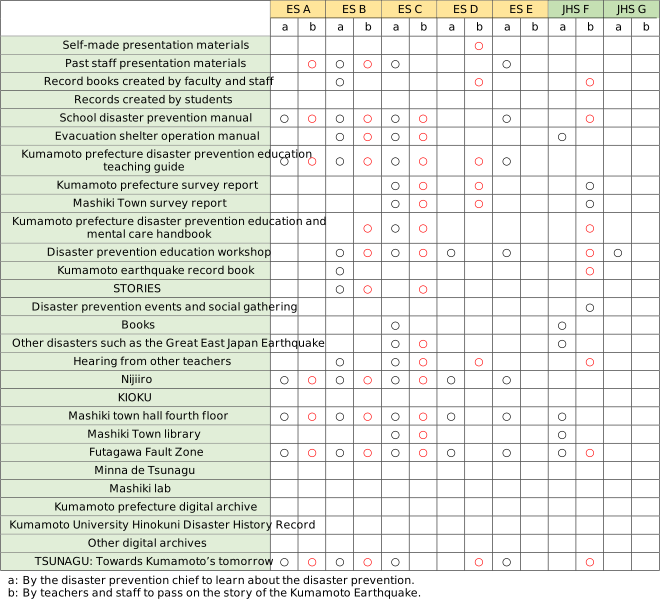
Table 8. Awareness and utilization of STORIES.

Table 9. Passing on the work of the disaster prevention chief.
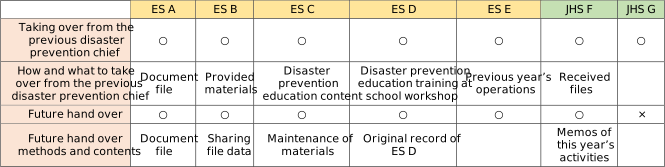
Table 10. Contents of the passed-on stories of Kumamoto Earthquake.
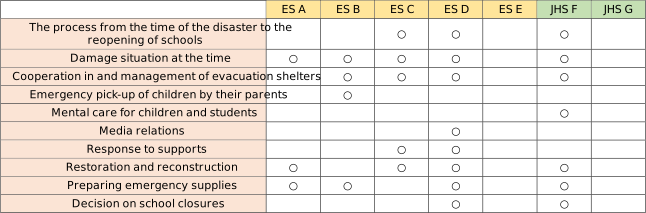
Table 11. Sharing stories about the Kumamoto Earthquake.
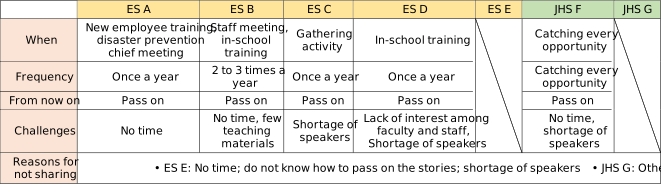
At five schools, teachers and staff shared their experiences and lessons learned from the 2016 Kumamoto Earthquakes. When which materials and facilities were used to pass on their stories, four schools answered that they used paper materials such as the “School Disaster Prevention Manual,” the “School Disaster Prevention Education Instruction Guide,” and the “Futagawa Fault Zone.” Three schools answered that they used Mashiki Town’s archive facilities, such as “Nijiiro” and the “exhibition corner on the fourth floor of Mashiki Town Hall,” and paper materials such as the “Kumamoto Prefecture Investigative Report,” the “Mashiki Town Investigative Report,” the “Mental Care Handbook,” and “TSUNAGU: Toward Kumamoto’s Tomorrow.” Three schools responded that they use “disaster prevention education training sessions” and “materials from other teachers.” Two schools reported using “STORIES” (Table 7). When asked which aspects of the disaster were shared, five schools answered “the situation at the time of the disaster,” followed by four schools that answered “cooperation and management of evacuation shelters” and “the process of recovery and reconstruction” (Table 10). Respondents reported passing on their stories during “staff meetings,” “new employee training,” “in-school training,” and “assembly activities” (Table 11). Regarding the frequency of passing on stories, three schools answered “once a year,” while the other two schools answered “two to three times a year” or “whenever the opportunity allows.” All five schools responded that they would continue to pass on the story in the future. When asked about the challenges of passing on the stories, three schools answered “lack of time” and “lack of storytellers,” while others also mentioned “lack of disaster prevention teaching materials” and “lack of interest among teachers and staff” (Table 11). However, the reasons given by Elementary School E for not passing on stories included “lack of time,” “not knowing how to pass on stories,” and “lack of storytellers” (Table 11).
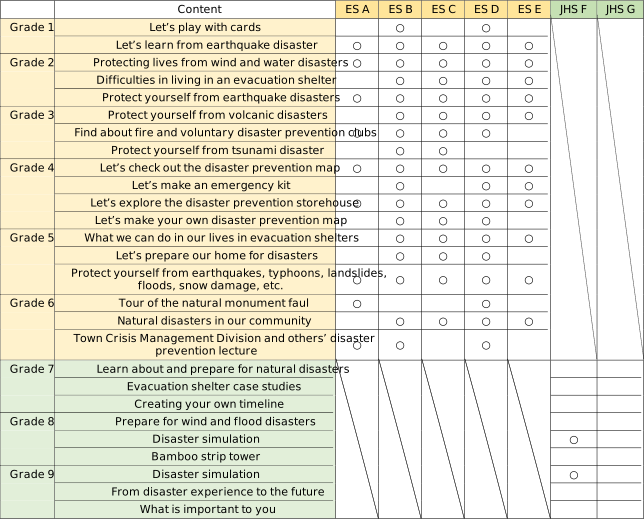
Table 12. Disaster prevention education implementation status of elementary and junior high schools in Mashiki Town.
4.2.5. Disaster Prevention Education and Disaster Prevention at Schools
The implementation status of disaster prevention education is presented in Table 12. Six items, including “Let us learn from earthquake disasters,” were implemented in all elementary schools. However, three items, such as “visiting natural monument faults,” were implemented by only two schools. Of the 18 items, two elementary schools implemented 17, whereas Elementary School A implemented only half (nine items). Elementary School B responded that instead of “visiting the natural monument faults,” they were “interviewing local residents.” In addition, Junior High School F only conducted “disaster simulations” for second- and third-year students and implemented only two of the nine items. It was found that disaster prevention education was provided through “homeroom,” “life environment studies,” and “moral education” in the lower grades of elementary school. In contrast, in the upper grades of elementary school, disaster prevention education is linked to subjects such as “social studies” and “science.” In Junior High School F, disaster prevention education was provided through “home economics” and “health and physical education.”
Regarding changes to disaster prevention education since the 2016 Kumamoto Earthquakes, four schools reported having “incorporated content from the Kumamoto Earthquake.” As references for disaster prevention education, they cited “websites” and “news footage from the time of disasters.” Other initiatives besides disaster prevention education included “listening to talks from the principal and vice principal at the time of the earthquakes,” “posting messages of support from all over the country,” and “posting panels and posters related to disaster prevention.” A challenge raised in disaster prevention education was “maintaining disaster prevention awareness on a daily basis.”
When asked about the materials and facilities they use for disaster prevention education, all elementary schools mentioned the “School Disaster Prevention Education Instruction Guide,” “Disaster Prevention Education Training Seminars,” and “Futagawa Fault Zone.” Three schools responded that they used “STORIES.”
Three schools reported that they had students in need of mental health care following the 2016 Kumamoto Earthquakes. On the other hand, one school answered that it did not know whether there were such students in need, and another said that it did not have any such students.
5. Discussion
5.1. Ties Between the Schools and the Community
Table 4 shows that local people are involved in school activities at elementary and junior high schools in Mashiki Town, and that face-to-face relationships are built on a daily basis. However, as can be seen from Table 5, although many schools have established “ways to contact parents and/or families in an emergency,” “creating and sharing a local timeline,” “checking the operation of evacuation shelters,” and “sharing information about school facilities and locations” are not often implemented. During the 2016 Kumamoto Earthquakes, many schools handed over the management of evacuation shelters from teachers and staff to residents, it is therefore necessary to.“create a timeline,” “check the operation of the evacuation shelter,” and “share information about school facilities” with residents.
Table 3 shows that disaster prevention chiefs were not involved in community schools. It was also revealed that only two schools had voluntary disaster prevention organizations participating in their community schools. A community school is a place where local perspectives are incorporated into school management, and we believe that participation by organizations deeply involved in local disaster prevention, such as voluntary disaster prevention organizations, is essential.
At Elementary School D, a voluntary disaster prevention organization was part of the community school, but the results showed that few actions were taken in anticipation of a disaster. Furthermore, Shobu reported that although the school administrators of Elementary School D participated in a workshop to create a disaster prevention timeline for the school district’s voluntary disaster prevention organization, the information was not sufficiently shared with other staff members who did not participate 15. This suggests that although “creating and sharing a local timeline” is completed, the sharing component is insufficient, and that there may be situations in which disaster prevention chiefs are unfamiliar with the timeline. In addition to having voluntary disaster prevention organizations participate in community schools, we should aim for a system of community schools in which disaster prevention chiefs gather and share information with other staff members.
5.2. About Persons Assigned to the Disaster Prevention Chief
It was also revealed that some people were appointed disaster prevention chiefs during their first year of assignment. Although there are no formal criteria for appointment as a disaster prevention chief, it appears that those taking on the role tend to have been involved in disaster prevention activities such as “providing disaster prevention education,” “planning disaster prevention and evacuation drills,” or “being in charge of disaster-related work in a previous job.” However, teachers and staff appointed as disaster prevention chiefs in their first year of assignment cited issues such as “no time to work as the disaster prevention chief” and “difficulty to secure and coordinate time for disaster prevention education and evacuation drills.” It is necessary to appoint teachers and staff who understand the school and local area as disaster prevention chiefs.
Table 7 reveals that almost all schools use archival facilities in Mashiki Town, such as “Nijiiro” the “fourth floor of Mashiki Town Hall,” and “Futagawa Fault Zone” in their learning of disaster prevention. On the other hand, it was also revealed that digital archives such as the “Kumamoto Prefecture Digital Archive” and the “Kumamoto University Hinokuni Disaster History Record” were not being used. According to Shibayama, one issue with the Great East Japan Earthquake digital archive is that it has not been widely utilized in educational settings 16. Also, three schools responded that they were not aware of “STORIES,” even though it was created to share memories in the educational field. One of the challenges faced by disaster prevention chiefs and those seeking to pass on disaster stories was the “lack of disaster prevention educational materials and programs.” There are ample educational materials, such as STORIES and digital archives, and a lack of awareness seems to underlie this problem.
5.3. Handover Among Disaster Prevention Chief Teachers and Staff
Takagi 17 conducted a questionnaire survey of disaster prevention chiefs at 26 schools participating in the Kumamoto Prefecture School Safety Comprehensive Support Project. According to Takagi, 50.0% answered “yes” to the question “Are you aware of past projects?” Moreover, 30.8% reported taking over from the person in charge at that time. The survey revealed that awareness of and participation in disaster prevention activities at 26 schools were low. In contrast, in Mashiki Town, six targeted schools received handovers from the previous disaster prevention chiefs. Takagi found that handover is easier when project documents are available and argued that a system based on handover documents is necessary 17. It is necessary to systematize this type of succession for future handovers.
Five schools passed on the story of the 2016 Kumamoto Earthquakes. The materials and facilities used to pass on the stories were “Futagawa Fault Zone” and “Kumamoto Prefecture School Disaster Prevention Education Instruction Guide” at four schools, and “STORIES” at two schools. Elementary School D and Junior High School F created and used their own books. The digital archives were not used when passing on the story, and neither “Let Us Connect Together” (“Minna de Tsunagu,” a series of talk events held in Mashiki Town) nor “Mashiki Lab” (at Kumamoto University) was used. The stories passed down included the experiences and lessons learned from the 2016 Kumamoto Earthquakes, such as “the damage situation at the time,” “cooperation and management of evacuation shelters,” and “recovery and reconstruction.” However, only one school has been able to “confirm the operation of the evacuation shelter” with residents. It is necessary to share with residents, the government, and others what teachers and staff have discussed in schools to strengthen cooperation. The challenges that were frequently mentioned regarding passing on the story were “lack of time” and “lack of storytellers.” To solve these problems, too, “STORIES” and “record books created at schools” should be used effectively. The experience of the 2016 Kumamoto Earthquakes and the materials should be presrved, helping reduce the burden of passing down experiences. It was revealed that the passing on of stories is not being carried out at Elementary School E. “Creation of record books” was listed as one of the post-earthquake initiatives, but record books are currently not used. If these records remain unused, the existence of record books fades from memory. Therefore, we believe that preventing these materials and record books from fading away is crucial, for example, by distributing them during school-wide training and new employee orientation.
5.4. Disaster Prevention Education and Disaster Prevention at Schools
Table 12 shows that, in elementary schools in Mashiki Town, many listed items are implemented under the annual disaster prevention education plan. Furthermore, disaster prevention education is implemented in conjunction with other subjects such as “social studies” and “science,” as well as with “integrated studies” and “special activities,” through exercises. In Junior High School F, a few items are being conducted in accordance with the annual disaster prevention education teaching plan. This limited implementation is thought to be due to factors such as the diversification of themes during “integrated studies” classes in junior high schools. All elementary schools used the “Kumamoto Prefecture School Disaster Prevention Education Teaching Guide,” and also utilized “Nijiiro,” “the fourth floor of Mashiki Town Hall,” and “Futagawa Fault Zone.” Some schools are using “STORIES” and “TSUNAGU: Toward Kumamoto’s Tomorroww,” and it is believed that this helped address the lack of disaster prevention education that was an issue immediately after the 2016 Kumamoto Earthquakes. However, because schools adopt different approaches, it is essential to review the program’s content, as well as the facilities and materials used.
6. Conclusion
This study used a questionnaire survey to examine the current situation and challenges related to the transmission of disaster experiences from the 2016 Kumamoto Earthquakes among elementary and junior high school teachers in Mashiki Town. Three research questions were addressed: (1) How are disaster experiences shared and transmitted among teachers? (2) How are archival materials and facilities utilized in schools? and (3) How are the experiences of the 2016 Kumamoto Earthquakes incorporated into disaster education?
The results of this study correspond to the three research questions presented in Section 1.1.
First, regarding Research Question 1, it was found that although many teachers recognized the importance of sharing disaster experiences and opportunities to do so, opportunities for systematic sharing at the school level were limited. Teacher transfers and generational turnover have made it challenging to sustain disaster-related memories in schools. These findings indicate the need for organizational systems that enable the transmission of disaster experiences beyond individual teachers.
Second, for Research Question 2, while most teachers were aware of the archival materials and facilities related to the earthquake, their use in educational activities was limited. This result suggests a gap between the development of archival resources and their practical use in schools. Stronger collaboration among schools, local governments, and archive administrators is required to promote the effective utilization of these resources.
Third, for Research Question 3, the experiences of the 2016 Kumamoto Earthquakes were incorporated to some extent into disaster education, particularly in evacuation drills and disaster preparedness instruction. However, such efforts often depend on individual teachers’ motivation and experience rather than being incorporated into systematic, school-wide curricula. This result highlights the importance of establishing sustainable disaster education frameworks that integrate lessons learned from past disasters.
Taken together, these findings suggest that the transmission of disaster experiences in schools requires not only teachers’ individual efforts but also institutional support through training opportunities, curriculum development, and the active use of archival resources. Furthermore, as the tenth anniversary of the 2016 Kumamoto Earthquakes approaches, it is essential to explore mechanisms to share these experiences and lessons not only within schools but also with other regions.
This study contributes to disaster education research by providing empirical evidence on teachers’ perceptions and practices in a severely affected municipality.
This study has several limitations. It focuses on a single municipality and relies on self-report questionnaires. Future research should include qualitative approaches, such as interviews and classroom observations, as well as comparative studies across different regions and time periods, to further clarify how disaster experiences can be sustainably inherited within school education.
Acknowledgments
This study was supported by the Ministry of Education, Culture, Sports, Science and Technology (MEXT) of Japan, under its The Third Earthquake and Volcano Hazards Observation and Research Program (Earthquake and Volcano Hazard Reduction Research).
- [1] R. Isihara and N. Matsumura, “A study on the actual condition and the effects of disaster oral tradition in the coastal regions,” J. of Japan Society of Civil Engineers, Ser. D3 (Infrastructure Planning and Management), Vol.69, No.5, pp. I_101-I_114, 2013. https://doi.org/10.2208/jscejipm.69.I_101
- [2] K. Taniuchi, Y. Tashiro, I. Fujie, and N. Matsumura, “Do flood memories affects citizens’ disaster prevention abilities? A case study of flood-prone Nishiyodogawa Ward in Osaka City,” 52nd Civil Engineering Planning Research Presentation and Lectures, pp. 335-339, 2015.
- [3] A. Shibayama, “The first ten years and the next ten years of disaster archives,” Tohoku University International Research Institute of Disaster Science Disaster Culture Archive, 2021. https://www.shinrokuden.irides.tohoku.ac.jp/msrdnwp/wp-content/uploads/2021/01/r2_shibayama [Accessed November 6, 2024]
- [4] Mashiki Town, “Overview / Mashiki Town.” https://www.town.mashiki.lg.jp/kiji0032000/index.html [Accessed December 10, 2024]
- [5] Geospatial Information Authority of Japan, “1:25,000 active fault map – Futagawa and Hinagu zones and surrounding areas: “Yatsushiro (revised edition)” and “Hinagu” explanatory booklets.” https://www.gsi.go.jp/common/000202326.pdf [Accessed January 21, 2025]
- [6] Mashiki Town, “Population by age group as of March 2024.” https://www.town.mashiki.lg.jp/kiji0032535/3_2535_18593_up_w0bed8er.pdf [Accessed January 21, 2025]
- [7] Mashiki Town, “Verification report on Mashiki Town’s response to the 2016 Kumamoto Earthquakes.” https://www.town.mashiki.lg.jp/bousai/kiji0032410/3_2410_1633_up_j7cvpcog.pdf [Accessed December 10, 2024]
- [8] Kumamoto Prefectural Government, “On the role of disaster prevention coordinators.” https://www.pref.kumamoto.jp/uploaded/attachment/133671.pdf [Accessed December 10, 2024]
- [9] Kumamoto Prefectural Government, “Educational material related to the 2016 Kumamoto Earthquakes: “TSUNAGU: Toward Kumamoto’s Tomorrow” leaflet.” https://www.pref.kumamoto.jp/uploaded/attachment/142333.pdf [Accessed December 11, 2024]
- [10] Kumamoto Prefectural Board of Education, “Verification report on the response to the Kumamoto Earthquake, 2020.” https://www.pref.kumamoto.jp/uploaded/attachment/65436.pdf [Accessed December 11, 2024]
- [11] Kumamoto Prefectural Board of Education, “Guidelines for disaster prevention education in schools.” https://www.pref.kumamoto.jp/uploaded/attachment/65208.pdf [Accessed December 11, 2024]
- [12] Kumamoto Earthquake Museum, “Kumamoto Earthquake Museum.” https://kumamotojishin-museum.com/ [Accessed January 21, 2025]
- [13] Mashiki Town, “About the Kumamoto Earthquake – Related exhibition corner (Updated April 1, 2023).” https://www.town.mashiki.lg.jp/kouryu/kiji0032931/index.html [Accessed January 22, 2025]
- [14] Mashiki Town, “STORIES: Lessons from the 2016 Kumamoto Earthquakes and childcare facilities after the 2016 Kumamoto Earthquakes.” https://www.kumamoto-archive.jp/post/58-99991jl00075cy [Accessed November 6, 2024]
- [15] Kumamoto University Center for Water Cycle, Marine Environment and Disaster Management, “Digital archive division.” https://cwmd.kumamoto-u.ac.jp/digital_archives_laboratory/overview/ [Accessed January 24, 2025]
- [16] K. Shobu, “Research on community version timeline for disaster risk reduction with cooperate school and community,” Master’s Thesis, Kumamoto University, 2022.
- [17] T. Takagi, “Inheritance and issues of disaster prevention education in schools implementing comprehensive school safety support programs,” Undergraduate Thesis, Kumamoto University, 2023.
This article is published under a Creative Commons Attribution-NoDerivatives 4.0 Internationa License.