
Paper:
Empirical Analysis of the Long-Term Life Recovery Process from the 2011 Great East Japan Earthquake Using the Life Recovery Calendar Method
Reo Kimura*1,†
 , Keiko Tamura*2, Shosuke Sato*3
, and Munenari Inoguchi*4
, Keiko Tamura*2, Shosuke Sato*3
, and Munenari Inoguchi*4
*1Faculty and Graduate School of Human Science and Environment, University of Hyogo
1-1-12 Shinzaike-honcho, Himeji, Hyogo 670-0092, Japan
†Corresponding author
*2Risk Management Office, Headquarters for Risk Management, Niigata University
Niigata, Japan
*3International Research Institute of Disaster Science, Tohoku University
Sendai, Japan
*4College of Policy Science, Ritsumeikan University
Ibaraki, Japan

This study visualized the long-term life recovery process of survivors of the 2011 Great East Japan Earthquake (GEJE) using the life recovery calendar method, based on a large-scale random-sampling survey conducted 13 years after the disaster. Moreover, it conducted a comparative analysis with the 1995 Great Hanshin-Awaji (Kobe) Earthquake (GHAE). The results indicated that most survivors grasped the overall impact within several days, recognized the protracted nature of recovery within weeks, restored work and school conditions within approximately two months, and regained housing, household finances, and a sense of safety within six months. Road restoration, community activity recovery, and reduction in self-identification as “disaster victims” were observed within one year. In contrast, regional economic recovery required approximately seven years, and even after 13 years, approximately one-quarter of respondents continued to perceive themselves as victims and reported persistent risk awareness. Greater levels of housing damage significantly delayed recovery in victim identity, suggesting the importance of damage-based support design. Compared with the GHAE, employment, housing, and daily life recovery progressed relatively rapidly in both disasters, whereas psychological recovery, perceived safety, and regional economic recovery were more prolonged following the GEJE owing to its characteristics as a wide-area, multi-hazard (compound) disaster, underscoring the need for long-term, phase-specific support.
1. Background and Objectives
1.1. The 2011 Great East Japan Earthquake and Understanding Long-Term Life Recovery
The 2011 Great East Japan Earthquake (GEJE) occurred at 14:46 JST on March 11, 2011, triggered by a moment magnitude (Mw) 9.0 megathrust earthquake off the Pacific coast of the Tohoku region, which generated catastrophic tsunamis. This event was the strongest scientifically recorded earthquake in Japan. The tsunami run-up height reached a maximum of 40.5 meters, resulting in devastating human and physical losses, particularly along the coastal areas of the Tohoku region 1. According to the Fire and Disaster Management Agency, the disaster resulted in 19,782 fatalities, 2,550 missing people, and severe housing damage, including 122,053 completely destroyed houses, 284,074 partially destroyed houses, and 750,069 houses with minor damage 2.
Life recovery for survivors of large-scale disasters requires prolonged periods. According to the Reconstruction Agency, it took approximately four years for the number of evacuees to decrease from approximately 470,000 immediately after the disaster to approximately 220,000. Even 14 years after the event, approximately 27,000 people remained displaced. Occupancy of temporary housing peaked at approximately 124,000 units one year after the disaster (April 2012) and required approximately four years (until April 2016) to decline to approximately half of that number, with 505 units remaining occupied 14 years post-disaster. Regarding physical reconstruction, land development for relocated residential areas took approximately nine years (completed in March 2020), and the full opening of approximately 570 km of reconstruction and support roads required roughly ten years (completed in December 2021) 3. These figures illustrate that sustained long-term recovery policies are essential for supporting survivors’ life recovery.
To evaluate the effectiveness of long-term recovery policies and systematically accumulate lessons for future disasters, elucidating the process of survivors’ recovery, which is the direct target of such policies, is essential. For example, in the case of the 1995 Great Hanshin-Awaji Earthquake (GHAE), which caused 6,434 fatalities, Tamura et al. identified seven key elements of life reconstruction—housing, interpersonal connections, community, preparedness, mental and physical health, lifestyle, and relationship with government—based on workshops conducted with survivors five years after the earthquake 4. This framework was also applied to analyses of the GEJE 5.
Terumoto et al. conducted a panel survey of the GEJE survivors and proposed five stages of individual recovery: securing basic living conditions, ensuring access to public services, achieving and improving stable housing, rebuilding economic and social activities, and reconstructing communication networks 6. From an economic perspective, Lee et al. developed a scale for perceived recovery, demonstrating that age, household income, and home ownership significantly influence sense of recovery 7. Based on a survey of survivors’ perceptions, Horigome et al. found that temporary housing residents exhibited higher anxiety levels and those who retired or closed their businesses after the disaster reported lower life satisfaction 8. In addition, Terumoto et al. compared conditions one and five years after the GEJE, revealing that perceptions related to housing, employment, and dietary habits significantly affected overall life recovery 9.
Wang et al. examined the 2008 Wenchuan Earthquake in Sichuan Province, China and found that low economic status, long unemployment periods, bereavement, and low educational attainment placed survivors at a disadvantage in the long-term recovery process 10.
Although these studies have clarified the components, determinants, and staged nature of life recovery, few have visualized the temporal process, specifically, when each element is achieved, which aspects advance or lag, and where stagnation or regression occurs. To evaluate long-term policy effectiveness, a framework that captures not only the “state” of recovery, but also its “transition” over time is necessary.
To this end, the life recovery calendar method provides a means of visualizing when and at what stage survivors perceive milestones in their life recovery processes. Developed by Kimura et al., this method asks survivors to indicate the approximate timing (year, month, week, or hour) at which they feel they have reached predetermined milestones of recovery. By plotting these responses along a temporal axis, this method elucidates the chronological structure of the life recovery process 11.
In addition to studies that examined the stability and validity of indicators by comparing the GHAE with the 2004 Mid-Niigata Earthquake and the 2007 Chuetsu-Oki Earthquake 12,13, the method has also been applied to heavy-rain disasters, including Typhoon No.12 in 2011 and the 2018 Heavy Rainfall Event in Western Japan 14,15, as well as to non-natural disasters, such as the COVID-19 pandemic beginning in 2019 16. Moreover, a study applying this approach to the GEJE at the three-year mark has also been reported 17.
Previous studies 10,11 have demonstrated that post-disaster recovery comprises several stages that unfold over time. The characteristics and objectives of each stage are outlined below:
The first stage is “the disorientation phase.” In this phase, survivors experience severe stress from the disaster shock, making it difficult to objectively grasp what is occurring around them. Attentional scope narrows, and situational awareness is impaired. This stage primarily aims to overcome disorientation. This phase generally corresponds to the period immediately after the disaster, approximately 10 hours post-event (i.e., the day of the disaster).
The second stage is “the acceptance of new reality phase,” in which a disaster-affected society begins to take shape. As the overall extent of the damage becomes clearer, survivors begin to accept the damage rationally and adapt to the new reality governed by the emerging social order in the affected area. This stage primarily aims to protect life. This phase typically spans from approximately 10 to 100 hours (approximately four days) after the disaster.
The third stage is “the disaster utopia phase.” During this phase, the paralysis of conventional social functions, such as physical infrastructure damage and the disruption of lifeline services, leads to the emergence of social values that differ from those of ordinary times, resembling an egalitarian or communal social order. This stage primarily aims to protect daily life. This phase generally corresponds to the period from approximately 100 hours (approximately four days) to 1,000 hours (approximately two months) after the disaster.
The fourth stage is “reentry to everyday life phase.” As lifeline services and other essential systems are restored, the disaster-affected social order gradually dissolves and survivors begin to take concrete steps toward reconstructing their lives. This stage primarily aims to return to everyday life. This phase typically spans approximately 1,000 hours (approximately two months) to 10,000 hours (approximately one year) after the disaster.
The fifth stage is “creative recovery.” In this phase, social infrastructure such as water supplies, sewage systems, and city gas are rebuilt, and survivors begin to feel that they are “no longer disaster victims.” Efforts shift toward sustainable development in a newly restructured society. This stage primarily aims to create a new life. This phase generally corresponds to the period from approximately 10,000 hours (approximately one year) to 100,000 hours (approximately ten years) after the disaster.
In large-scale disasters such as the GHAE and GEJE, recovery remains incomplete even ten years after the event. Accordingly, a sixth stage has been defined. While recovery progressed substantially during the first ten years, ongoing projects and emerging challenges requiring continued intervention were identified. Consequently, “the second phase of creative recovery” was established as an additional stage. This phase corresponds to the period from ten to fifteen years after the disaster and was formally designated as “the second reconstruction and revitalization period” 18.
1.2. Objectives of This Study
This study aims to provide a scientific description of the life recovery process over the 12 years following the GEJE on March 11, 2011. Recovery efforts in Japan were structured into three major phases: the five-year “Concentrated Reconstruction Period” (March 2011–March 2016), the subsequent five-year “Reconstruction and Revitalization Period” (April 2016–March 2021), and the ongoing five-year “Second Reconstruction and Revitalization Period” (April 2021–March 2026, planned), which was introduced in response to both the significant progress achieved within the first decade and the emergence of unresolved and new challenges requiring continued support 18. Within this long-term recovery context, this study examines how survivors’ life recovery progressed using the life recovery calendar method. In addition, by comparing the GEJE with the GHAE, the largest inland earthquake disaster in Japan since World War II, this study examines the generalizability of long-term life recovery processes across different disaster contexts.
2. Method
2.1. Survey Background
This study analyzes data from the “Life Recovery Survey Twelve Years after the GEJE,” conducted by the GEJE Life Recovery Survey Team during the thirteenth year after the disaster (December 2023 to January 2024). The survey team comprised researchers from universities and research institutions, including the authors. The survey was conducted in cooperation with the Reconstruction Agency and the three most severely affected prefectures (Iwate, Miyagi, and Fukushima), particularly in terms of sampling design.
This survey aims to systematically understand the status and process of life recovery over the twelve years following the GEJE, a large-scale disaster that affected multiple prefectures, by analyzing survivors’ responses regarding their recovery. The survey was conducted with approval from the Ethics Committee of the International Research Institute of Disaster Science, Tohoku University (Approval No. 2023-035).
2.2. Survey Overview
The survey targeted 36 municipalities in Iwate, Miyagi, and Fukushima Prefectures, which were the areas most severely affected by the GEJE. The municipalities were selected based on two criteria. First, 35 municipalities that fulfilled at least one of the following four conditions were included: (1) fatalities and missing persons accounting for 1% or more of the population; (2) a total house collapse rate of 10% or higher; (3) 100 or more fatalities and missing persons; and (4) 500 or more completely collapsed houses. Second, to enable a comparison between coastal and inland areas within each prefecture, Ichinoseki City in inland Iwate Prefecture was included because it recorded the highest number of completely and partially collapsed houses in the inland area, had a relatively large population and land area within the prefecture, and ensured consistency with previous surveys conducted in similar contexts 19.
The survey targeted adult residents aged 18 years or older. In total, 2,000 respondents were selected from each prefecture (20 respondents \(\times\) 100 sites). Using a stratified two-stage sampling method, 100 survey sites were randomly selected in proportion to the population distribution of the target municipalities in each prefecture. Twenty individuals per site were systematically selected from the electoral rolls or the Basic Resident Register. A self-administered mail questionnaire was employed, and the respondents returned the completed questionnaires by post. A reminder letter (expressing appreciation and requesting participation) was sent during the survey period.
2.3. Survey Items
The survey items were developed based on the findings of previous surveys conducted after the GHAE and other disasters. Previous studies have demonstrated that (1) the conditions of survivors and affected communities change over time after a disaster, and (2) survivors’ sense of life recovery can be measured through the degree of fulfillment of the seven elements of life rebuilding problem (housing, social ties, townscape, mind and body, preparedness, economic and financial situation, and relation to government) [4, 13, 19–22]. The survey was designed based on this conceptual framework.
The questionnaire comprised 33 items covering seven domains: (1) the respondent’s situation immediately after the earthquake and at present; (2) the respondent’s actions after the earthquake and the disaster’s impacts; (3) the situation of the respondent and community during the life recovery process; (4) the impact of the disaster on the respondent’s workplace; (5) changes in daily life and mental state at present; (6) individuals and organizations on which the respondent relied; and (7) the respondent’s thoughts 12 years after the GEJE, including items for the life recovery calendar. Items were arranged such that respondents could recall events in chronological order from the time of the earthquake. The cover page of the questionnaire clearly stated that respondents could skip any questions they did not wish to answer, discontinue participation if they felt unwell, and would not incur any disadvantage as a result.
3. Results and Discussion
3.1. Response Rate and Characteristics of Respondents
A total of 6,000 questionnaires were distributed (2,000 per prefecture) and 1,656 responses were received (response rate: 27.6%). After excluding blank questionnaires and responses from individuals who did not reside in the three affected prefectures at the time of the GEJE, the final valid sample comprised 1,541 responses (valid response rate: 25.7%). The numbers and proportions of valid responses by prefecture were as follows: Iwate, 521 (33.8%); Miyagi, 540 (35.0%); and Fukushima, 480 (31.2%).
The average age of the respondents was 60.0 years. By prefecture, the average ages were 62.9 years for Iwate, 56.6 years for Miyagi, and 60.6 years for Fukushima. By age group, 10.6% were aged 18–39 years, 32.6% were in their 40s and 50s, and 56.8% were aged 60 years or older, indicating that approximately 60% of the respondents belonged to the 60\(+\) age group.
Regarding human impacts, 1.7% reported having a family member who died, 1.4% reported a family member who was hospitalized because of injury or illness, 4.3% reported a family member who was injured or became ill but was not hospitalized, 89.1% reported no family casualties, and 3.6% did not respond. Regarding housing damage, 17.6% reported complete collapse, washout, or major partial collapse; 8.1% reported partial collapse; 23.6% reported minor damage; 46.5% reported no damage; and 4.2% did not provide a response.
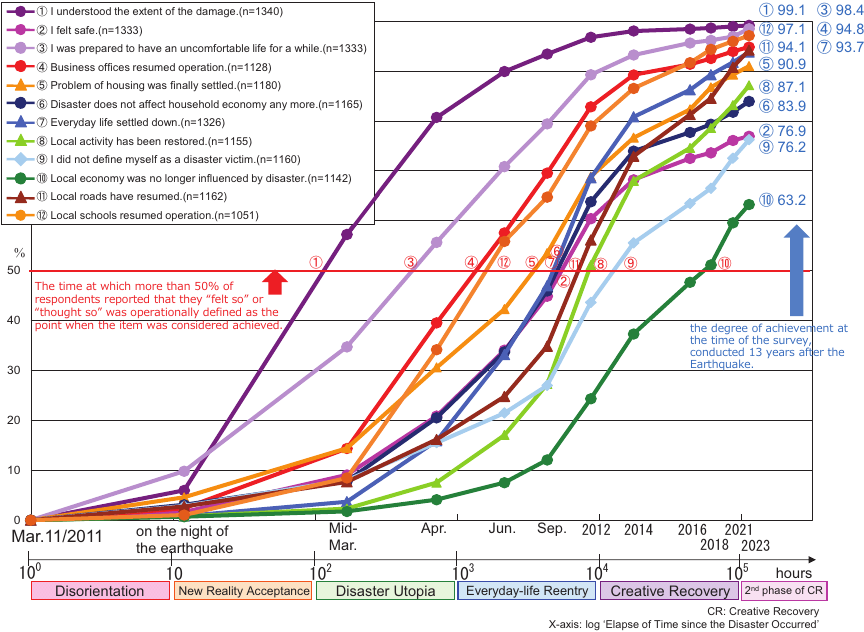
Fig. 1. Life recovery calendar of the GEJE (January 2024 (13 years since the earthquake)).
3.2. Life Recovery Calendar following the GEJE
Recovery is not a point-in-time phenomenon; it is a continuous process accompanied by gradual changes over time. Therefore, using the life recovery calendar method, this study sought to clarify the overall process of survivors’ life recovery by examining how their feelings and behaviors related to recovery changed over time after a disaster.
Based on interviews with survivors of the GHAE and other disasters, 12 events perceived by many survivors as turning points in their life recovery were identified. Respondents were asked when each event occurred. The survey question was phrased as follows: “Please reflect on how your feelings and behaviors have changed over time from the earthquake to the recovery and reconstruction phases. When did each of the following situations apply to you? Please select one time period for each item.” The twelve events were:
-
I understood the extent of the damage.
-
I felt safe.
-
I was prepared to have an uncomfortable life for a while.
-
Business offices resumed operation.
-
Problem of housing was finally settled.
-
Disaster does not affect household economy any more.
-
Everyday life settled down.
-
Local activity has been restored.
-
I did not define myself as a disaster victim.
-
Local economy was no longer influenced by disaster.
-
Local roads have resumed.
-
Local schools resumed operation.
Respondents selected one of thirteen time periods after the earthquake: by the night of the earthquake; within one week (late March); within one month (April); within three months (June); within one year (2012); within three years (2014); within five years (2016); within seven years (2018); within ten years (2021); by the present; do not feel this way even now; or do not remember/not applicable.
Figure 1 presents the life recovery calendar after the GEJE. The horizontal axis represents time elapsed since the earthquake on a logarithmic scale 11,12. The leftmost value (10\(^0\)) indicates one hour after the event, 10\(^1\) indicates ten hours, 10\(^2\) indicates one hundred hours (approximately two to four days), 10\(^3\) indicates one thousand hours (approximately one and a half months), 10\(^4\) indicates ten thousand hours (approximately one year), 10\(^5\) indicates one hundred thousand hours (approximately ten years), and the rightmost point represents 13 years after the disaster, corresponding to the time of the survey.
The vertical axis presents the cumulative percentage of respondents who stated that each feeling, behavior, or situation had occurred by each time point (excluding non-responses and “do not remember / not applicable”). Each item is presented as a cumulative line graph. The timing at which the cumulative percentage exceeded 50% was defined as the point at which the majority of respondents experienced the event.
Based on the timing at which majority of the respondents reported each event, the overall recovery trajectory can be summarized as follows: The event “① I understood the extent of the damage” occurred within a few days, and “③ I was prepared to have an uncomfortable life for a while” emerge within several weeks. Approximately two months after the disaster, “④ Business offices resumed operation” and “⑫ Local schools resumed operation” were reported. By approximately six months, “⑤ Problem of housing was finally settled,”; “⑦ Everyday life settled down,”; “⑥ Disaster does not affect household economy anymore,”; and “② I felt safe,” was reported by majority of the respondents. By around one year, “⑪ Local roads have resumed” and “⑧ Local activity has been restored” were observed, and many respondents reported “⑨ I did not define myself as a disaster victim.” In contrast, it took about seven years for the majority to report that “⑩ Local economy was no longer influenced by disaster,” indicating that economic recovery lagged behind physical and social restoration.
At the time of the survey (13 years after the disaster), approximately 90% reported “④ Business offices resumed operation,”; “⑦ Everyday life settled down,”; “⑤ Problem of housing was finally settled,”; and “⑧ Local activity has been restored,” Moreover, 83.9% reported “⑥ Disaster does not affect household economy anymore,”; 76.9% reported “② I felt safe,”; and 76.2% reported “⑨ I did not define myself as a disaster victim,” This indicates that even after 13 years, roughly one-quarter of the respondents did not feel safe and continued to consider themselves as disaster victims. In addition, only 63.2% reported “⑩ Local economy was no longer influenced by disaster” meaning that 36.8% continued to perceive disaster-related economic impacts in their communities.
In comparison with the life recovery calendar reported at the three-year mark in a previous study 17, the earlier survey did not employ random sampling from the electoral register or the Basic Resident Register. Instead, it was based on a list of respondents whose addresses and contact information were obtained through interviews conducted by NHK reporters nationwide. Consequently, the earlier sample was more heavily concentrated on individuals who experienced severe impacts and had not yet returned to stable living conditions: 20.3% reported having family members or relatives who were deceased or missing; 59.5% reported completely destroyed housing; and, regarding housing arrangements, 49.1% were living in temporary housing and 9.2% in leased “deemed temporary” rental housing. Reflecting this focus on more severely affected respondents, the recovery trajectory in the life recovery calendar was slower across all items in prior studies. By employing random sampling from the electoral register or the Basic Resident Register, we were able to depict the life recovery calendar in a manner that more comprehensively represented the overall survivor population.
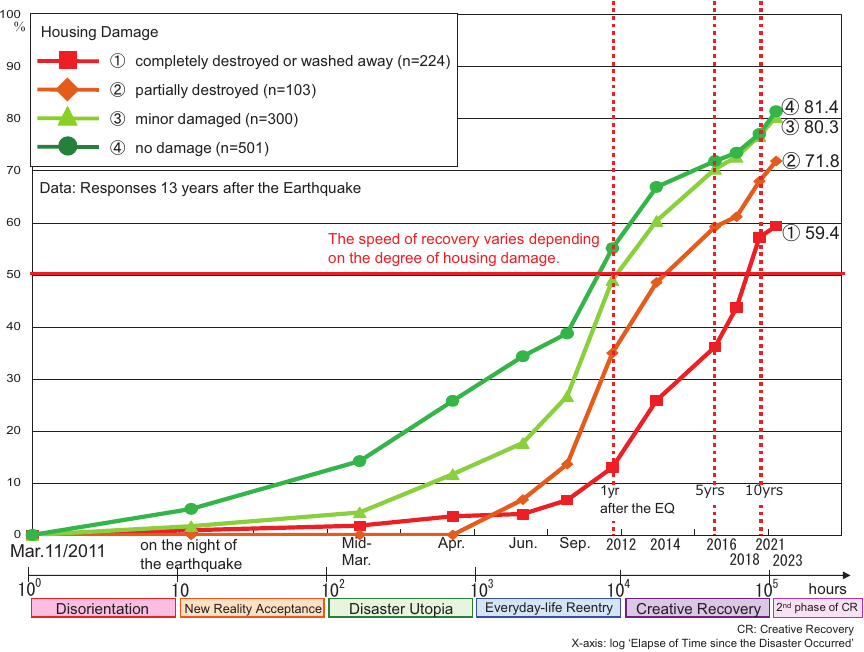
Fig. 2. Life recovery calendar (by degree of housing damage) (⑨ I did not define myself as a disaster victim.).
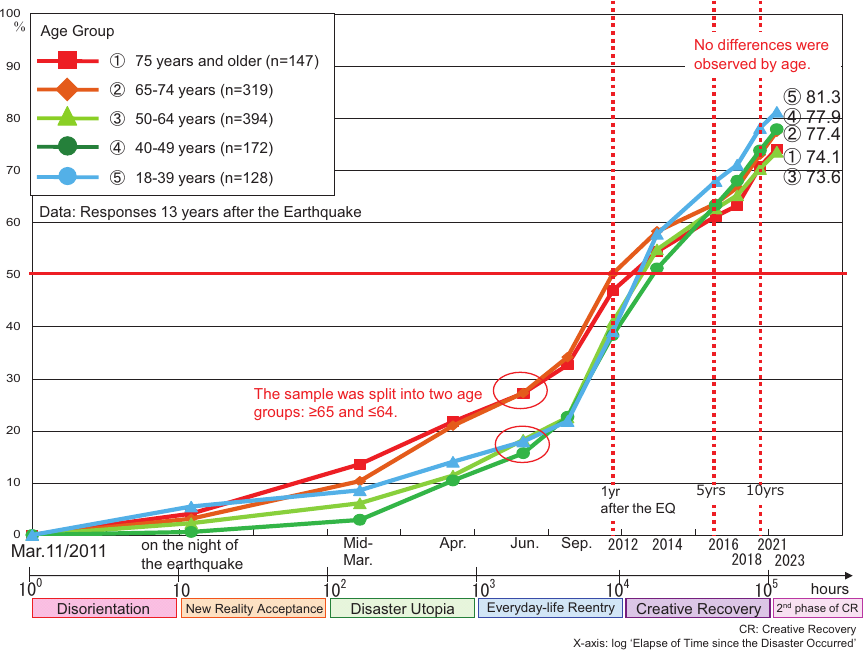
Fig. 3. Life recovery calendar (by age group) (⑨ I did not define myself as a disaster victim.).
3.3. Life Recovery Calendar by Housing Damage and Age Group
Among the twelve items in the life recovery calendar, the event “⑨ I did not define myself as a disaster victim” represents the point at which one’s self-recognition as a disaster victim disappears, signaling the end of the sense of being an affected person, the reconstruction of daily life, and psychological recovery. Therefore, this item can be interpreted as the final goal of life recovery 17,20. Fig. 2 illustrates this item by the level of housing damage and demonstrates that the speed of recovery differed according to the extent of housing damage.
For respondents whose houses had no or only minor damage, approximately half no longer defined themselves as disaster victims by one year after the GEJE and had begun moving toward a new daily life. In contrast, among those whose houses were partially collapsed, approximately over 30% reported “⑨ I did not define myself as a disaster victim” at one year, and this proportion did not exceed 50% until after five years. For respondents whose houses were totally collapsed or washed away, slightly more than 10% reported “⑨ I did not define myself as a disaster victim” at one year, and slightly more than 30% at five years. It was only after ten years that the majority of this group reported that the disaster no longer influenced them. However, even 13 years after the GEJE, approximately 40% reported “I define myself as a disaster victim.”
Greater housing damage requires more time, effort, and financial resources for life recovery, and the loss of living environments and basic infrastructure can lead to prolonged stress and grief. For households experiencing total collapse or washout, extended residences in temporary housing and repeated relocations may lead to ongoing instability. Fragmentation of local communities may delay psychological recovery. Consequently, it may take longer to regain a sense of normalcy and shift toward a future-oriented outlook, delaying departure from self-recognition of being a disaster victim. These differences suggest that psychological and social support, in addition to physical reconstruction, play a vital role in recovery.
Next, Fig. 3 examines whether recovery speed differed across age groups. Until approximately one year after the disaster, two distinct patterns were observed: those aged 65 years or older and those aged 64 years or younger. The proportion reporting “⑨ I did not define myself as a disaster victim” among respondents aged 65 years or older was approximately 10% higher than among those aged 64 years or younger. Based on field observations and interviews, one plausible explanation is that older adults generally have fewer employment and childcare responsibilities than working-age adults, resulting in less pressure associated with life reconstruction. However, after the first year, age-related differences nearly disappeared, and by the time of the survey, approximately 70% to 80% across all age groups no longer defined themselves as disaster victims.
A chi-square test indicated no statistically significant interaction between housing damage level and age group (\(\chi^2(12)=10.1\), n.s.). This suggests that while the severity of housing damage strongly affects the persistence of disaster-victim identity during life recovery, age alone does not result in sustained long-term differences in self-perception. This finding implies that support measures may be more effective when tailored to individual damage conditions and life challenges rather than being uniformly divided by age group.
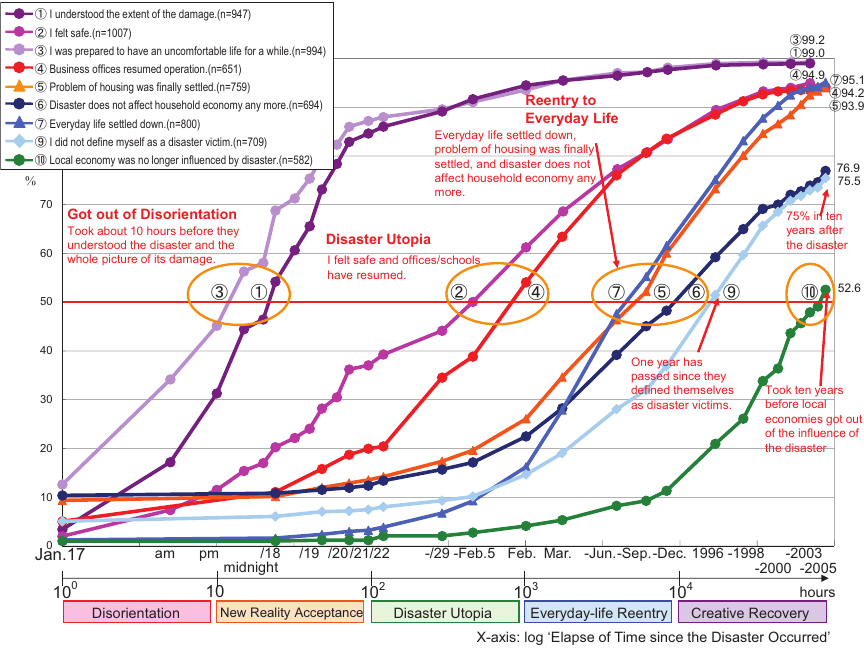
Fig. 4. Life recovery calendar of the GHAE (January 2005 (10 years since the earthquake)) 5.
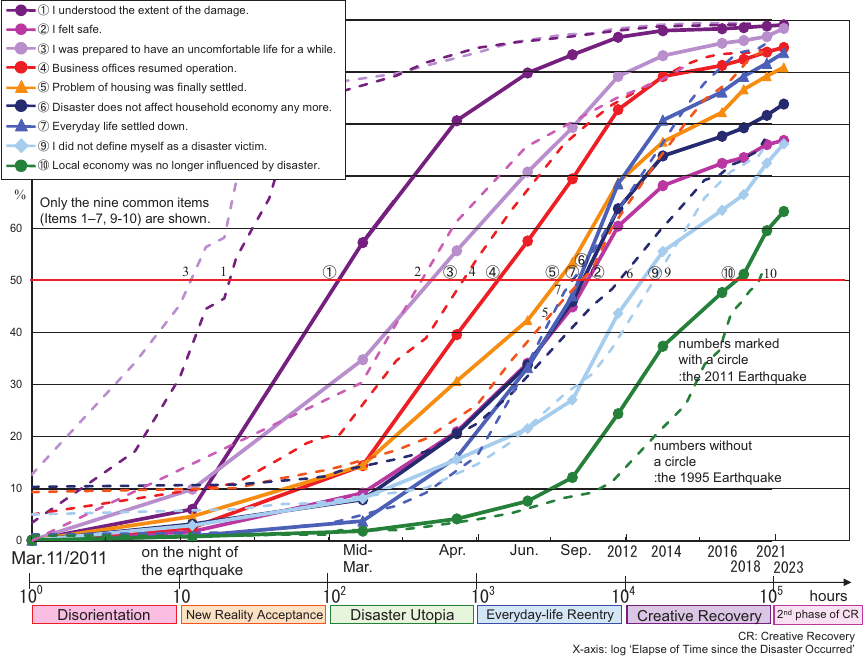
Fig. 5. Life recovery calendar (comparison of the GHAE (dotted lines) and the GEJE (bold lines with markers)).
3.4. Comparison with the GHAE
This section compares the results with those of the GHAE, the largest inland earthquake disaster in Japan since World War II. As the GEJE and GHAE differed in disaster characteristics (tsunami and wide-area damage vs. inland strike and direct urban impact), this comparison enables an examination of how differences in damage patterns and community structures affect recovery processes. Furthermore, by considering generational shifts, changes in urban structure, and differences in community functions, this analysis contributes to the systematic knowledge that can inform future disaster recovery policies.
Figure 4 presents the life recovery calendar for the GHAE. The survey targeted residents living in areas where the seismic intensity reached 6-lower or higher on the Japan Meteorological Agency (JMA) seismic intensity scale on the day of the earthquake. A random sample of eligible residents was drawn from the Basic Resident Register. Nine events were examined 12. The results indicate that a majority of respondents reported “③ I was prepared to have an uncomfortable life for a while” on the afternoon of the earthquake, and “① I understood the extent of the damage” at midnight on the same day. “② I felt safe” was reached approximately three weeks after the event, and “④ Business offices resumed operation” and schools resumed normal operations approximately one month later. “⑦ Everyday life settled down” and “⑤ Problem of housing was finally settled” were reported by approximately six months, and approximately one year later many respondents reported “⑥ Disaster does not affect household economy anymore” and “⑨ I did not define myself as a disaster victim.”
In contrast, it took approximately ten years for a majority to report that “⑩ Local economy was no longer influenced by disaster.” Moreover, even ten years after the earthquake, more than 20% of the respondents continued to identify as disaster victims.
Figure 5 compares the nine common items between the two disasters. Four notable features emerged. First, several indicators followed nearly identical recovery trajectories in both disasters, with the current figures exceeding 80%. In both cases, majority reported “④ Business offices resumed operation” within three months, and “⑤ Problem of housing was finally settled,”; “⑥ Disaster does not affect household economy anymore,”; and “⑦ Everyday life settled down.” within approximately six months. Despite differences in the scale of the affected areas, employment, housing, household economy, and daily life recovered relatively early in both disasters. This likely reflects established employment conditions, housing supply capacity, transportation and logistics infrastructure, and government support systems in Japan.
Second, some items demonstrated slower recovery during the GEJE than during the GHAE. Regarding “① I understood the extent of the damage” and “③ I was prepared to have an uncomfortable life for a while.” Most GHAE survivors reported these perceptions on the day of the earthquake. In contrast, GEJE survivors took several days to understand the extent of the damage and several weeks to prepare for prolonged hardships. For “② I felt safe.” More than 50% of the GHAE respondents reached this point within six months, and by ten years, approximately 95% felt safe. In the GEJE, although the majority felt safe by six months, approximately one-quarter (23.1%) felt unsafe, even 13 years after the disaster. This prolonged timeline likely reflects the cascading nature of the GEJE—earthquake, tsunami, and nuclear accident—resulting in widespread and uncertain impacts. Long-term evacuation orders, radiation risks, and information confusion further complicated perceptions of safety, delaying psychological acceptance of GHAE.
Third, “⑨ I did not define myself as a disaster victim”—a key milestone in life recovery—exhibited persistent differences. In the GHAE, a majority reached this point around one year after the earthquake; however, approximately 24.5% continued to identify as disaster victims in Year 10. In the GEJE, a majority was also reached at one year, but approximately 27.5% at Year 10 and 23.8% at Year 13 still identified as disaster victims. Contributing factors include the scale of tsunami damage, long-term displacement owing to nuclear evacuation, and erosion of community networks, all of which hinder the restoration of everyday life. Continued memorial practices and media coverage as well as long-term compensation and support policies may have also contributed to sustaining self-recognition among disaster victims.
Fourth, economic recovery (“⑩ Local economy was no longer influenced by disaster”) differed. In the GHAE, the majority (52.6%) reached this point ten years after the earthquake. In the GEJE, this point was reached earlier: 51.1% by Year 7 and 59.5% by Year 10. Nevertheless, 37.8% reported disaster-related economic impacts at the thirteen-year mark, indicating an ongoing need for support. The relatively faster economic recovery after the GEJE may reflect early and intensive national-level reconstruction funding, special reconstruction zones, accelerated infrastructure redevelopment, industry revitalization support, and incentives for business relocation, as well as tourism and industrial restructuring initiatives.
Moreover, prior comparative studies of the GEJE and the GHAE 17,22 have revealed that although the pace of recovery differs across disasters, the life recovery process is commonly characterized by the following five stages: (1) a stage in which survivors are prepared to have an uncomfortable life for a while and come to understand the extent of the damage; (2) a stage in which survivors report that they feel safe and business offices and schools begin to resume operation; (3) a stage in which everyday life settles down, problems of housing are finally settled, and disaster does not affect household economy anymore; (4) a stage in which survivors no longer define themselves as disaster victims; and (5) a stage in which the local economy is no longer influenced by disaster. A similar pattern was observed in the present cross-disaster comparison, suggesting that, at least in Japan, survivors’ life recovery processes exhibit a shared trajectory and degree of generalizability.
Considered together, these findings demonstrate that the life recovery calendar serves as an effective tool for visualizing not only physical and economic recovery, but also psychological acceptance and community regeneration. It highlights the distinct domains of early and delayed recovery and clarifies how disaster characteristics and policy responses shape the survivors’ lived recovery experiences. Thus, this method provides valuable insights for identifying evolving support needs from the recovery phase through long-term reconstruction, and underscores the importance of sustained support over extended periods.
4. Conclusion and Future Directions
This study visualized the long-term life recovery process of survivors of the GEJE by applying the life recovery calendar method to a large-scale random-sample questionnaire survey conducted 13 years after the disaster. In addition, a comparison with the GHAE examined both commonalities and differences in life recovery trajectories. In the GEJE life recovery calendar, based on the time when more than half of the respondents reported each event, the following pattern was observed: within a few days, survivors understood the extent of the damage; within several weeks, they were prepared to have an uncomfortable life for a while; within two months, business offices and schools resumed operation; within six months, housing problems were finally settled, household economy was no longer affected by the disaster, and safety perceptions returned; and within one year, local roads and local activities were restored, and many survivors no longer defined themselves as disaster victims. In contrast, it took seven years for the majority to report that the local economy was no longer influenced by the disaster. Even after 13 years, approximately one-quarter of them felt unsafe and continued to be identified as disaster victims. The resolution of victim identity differed by housing damage severity, whereas no long-term differences were observed by age group, suggesting the importance of support measures tailored to housing damage conditions rather than age alone.
A comparison with the GHAE revealed that business, housing, household economy, and daily life recovered relatively early in both disasters. However, understanding the extent of the damage, feeling safe, eliminating victim identity, and achieving local economic recovery required more time, particularly during the GEJE, when cascading hazards resulted in delayed recovery. These findings indicate that physical restoration, psychosocial recovery, and regional economic reconstruction progress on different timescales, underscoring the need for phase-specific support design and sustained policy interventions over extended periods.
Future research should overlay the timeline of national and local government measures and programs with the key stages of life recovery to clarify the relationship between recovery milestones and policy interventions. Further integration of qualitative data, including survivor narratives and municipal records, will strengthen our understanding of the mechanisms underlying quantitative trends and enrich our interpretation of recovery processes. In addition, attention should be directed toward visualizing unfulfilled long-term recovery needs, such as persistent victim identity and delayed local economic recovery, while examining the achievements and limitations of existing policies to identify directions for sustained recovery support. Finally, the life recovery calendar method is applied to other disaster cases to assess the reproducibility and generalizability of the indicators through a cross-case comparison with existing datasets.
Acknowledgments
The authors gratefully acknowledge the officials of the Reconstruction Agency, as well as those of Iwate, Miyagi, and Fukushima Prefectures and the relevant municipalities, for their valuable assistance in conducting the survey for this study. This study was supported by the Ministry of Education, Culture, Sports, Science and Technology of Japan, under “The Third Earthquake and Volcano Hazards Observation and Research Program.”
- [1] Cabinet Office, Government of Japan, “White paper on disaster management 2011,” 2011 (in Japanese). https://www.bousai.go.jp/kaigirep/hakusho/h23/index.htm [Accessed October 1, 2025]
- [2] Fire and Disaster Management Agency, Japan, “The 2011 earthquake off the pacific coast of Tohoku (the Great East Japan Earthquake),” No.153, March 8, 2016 (in Japanese). https://www.fdma.go.jp/disaster/higashinihon/items/165.pdf [Accessed October 1, 2025]
- [3] Reconstruction Agency, “Current status of reconstruction and future initiatives (as of September, 2025),” 2025 (in Japanese). https://www.reconstruction.go.jp/files/user/topics/main-cat1/sub-cat1-1/20250916_genjoutorikumi.pdf [Accessed October 1, 2025]
- [4] K. Tamura, S. Tatsuki, and H. Hayashi, “The external validity of life recovery tasks and their structure among the disaster victims of the Great Hanshin-Awaji Earthquake,” J. of Social Safety Science, No.2, pp. 25-32, 2000 (in Japanese). https://doi.org/10.11314/jisss.2.25
- [5] H. Koumoto, K. Shigekawa, S. Tanaka, and S. Tatsuki, “Analysing time-series change in seven elements model of socio-economic recovery for life restoration from disaster,” Special Collection of Papers on the Great East Japan Earthquake, No.7, pp. 39-42, 2018 (in Japanese).
- [6] K. Terumoto, Y. Tsuchiya, R. Otagiri, H. Nakabayashi, and I. Nakabayashi, “Individual disaster recovery: A framework in the long-term recovery process after the Great East Japan Earthquake,” Int. J. of Disaster Risk Reduction, Vol.60, Article No.102280, 2021. https://doi.org/10.1016/j.ijdrr.2021.102280
- [7] Y. Lee, M. Nagata, and K. Atsumi, “Key factors to determine the sense of recovery from the Great East Japan Earthquake and Tsunami,” J. of Disaster Recovery and Revitalization, No.6, pp. 1-8, 2014 (in Japanese).
- [8] Y. Horigome, K. Abe, and T. Chino, “Livelihood recovery process from the Great East Japan Earthquake in the tsunami-affected region using 2011 and 2013 cross-sectional data in Ofunato City,” J. of Policy Studies, Vol.17, No.1, pp. 21-39, 2015 (in Japanese).
- [9] K. Terumoto, Y. Tsuchiya, R. Otagiri, H. Nakabayashi, and I. Nakabayashi, “Trends and relationships in victims’ recovery perceptions: A case study of the recovery process following the Great East Japan Earthquake,” Natural Hazards, Vol.110, No.2, pp. 1061-1081, 2022. https://doi.org/10.1007/s11069-021-04979-0
- [10] Y. Wang, Z. Zou, and J. Li, “Influencing factors of households disadvantaged in post-earthquake life recovery: A case study of the Wenchuan earthquake in China,” Natural Hazards, Vol.75, No.2, pp. 1853-1869, 2015. https://doi.org/10.1007/s11069-014-1400-4
- [11] R. Kimura, H. Hayashi, S. Tatsuki, and K. Tamura, “Psychologically Defined Life Reconstruction Processes of Disaster Victims in the 1995 Hanshin-Awaji Earthquake,” J. of Social Safety Science, Vol.6, pp. 241-250, 2004 (in Japanese). https://doi.org/10.11314/jisss.6.241
- [12] R. Kimura, “Recovery and reconstruction calendar,” J. Disaster Res., Vol.2, No.6, pp. 465-474, 2007. https://doi.org/10.20965/jdr.2007.p0465
- [13] R. Kimura, M. Inoguchi, K. Tamura, and H. Hayashi, “Comparison between the life recovery processes after the Mid-Niigata Earthquake and the Chuetsu-Oki Earthquake – Results of a random sampled social survey using the life recovery calendar and GIS-based spatiotemporal analysis,” J. Disaster Res., Vol.10, No.2, pp. 196-203, 2015. https://doi.org/10.20965/jdr.2015.p0196
- [14] R. Kimura and S. Ohtomo, “Life reconstruction processes of flood disaster victims in semimountainous area – A case study of Kii Peninsula Flood Disaster (the Typhoon No.12 in 2011) in Japan –,” J. of Social Safety Science, No.21, pp. 137-147, 2013 (in Japanese). https://doi.org/10.11314/jisss.21.137
- [15] S. Ohtomo and R. Kimura, “the influence of residents’ resilience on the recovery in the Torrential Rain in Western Japan in 2018,” Risk Analysis, Vol.41, No.10, pp. 1860-1872, 2021. https://doi.org/10.1111/risa.13686
- [16] S. Ohtomo and R. Kimura, “Developing an assessment framework of the recovery calendar for COVID-19 calamity: Based on the data from the June 2021 survey,” J. Disaster Res., Vol.17, No.1, pp. 113-122, 2022. https://doi.org/10.20965/jdr.2022.p0113
- [17] R. Kimura, K. Tomoyasu, Y. Yajima, H. Mashima, K. Furukawa, Y. Toda, K. Watanabe, and T. Kawahara, “Current status and issues of life recovery process three years after the Great East Japan Earthquake questionnaire based on subjective estimate of victims using life recovery calendar method,” J. Disaster Res., Vol.9, No.7, pp. 673-689, 2014. https://doi.org/10.20965/jdr.2014.p0673
- [18] Cabinet of Japan, “Revision of the basic policy for reconstruction from the Great East Japan Earthquake after the reconstruction and revitalization period,” Cabinet Decision, March 9, 2021 (in Japanese). https://www.reconstruction.go.jp/files/user/topics/main-cat12/sub-cat12-1/20210309_02_kihonhoshunhonbun.pdf [Accessed December 25, 2025]
- [19] Survey Team on Life Recovery after the Great East Japan Earthquake Research, “Survey on life recovery five years after the Great East Japan Earthquake: FY2016 survey results report,” 2018 (in Japanese). https://kimurareo.com/images/2021/07/180301_Higashinihon_Report.pdf [Accessed October 1, 2025]
- [20] R. Kimura, H. Hayashi, K. Tamura, S. Tatsuki, T. Noda, K. Yamori, A. Kuromiya, and Y. Urata, “Developing victims’ life reconstruction indicators by social survey – Ten years monitoring in the Great Hanshin-Awaji (Kobe) Earthquake Disaster –,” J. of Social Safety Science, No.8, pp. 415-424, 2006 (in Japanese). https://doi.org/10.11314/jisss.8.415
- [21] R. Kimura, K. Tamura, M. Inoguchi, H. Hayashi, and Y. Urata, “Generalization of victims’ behavior and life reconstruction processes – Socio-economic recovery from three earthquake disasters occurred in Hyogo Prefecture in 1995, Niigata Prefecture in 2004 and 2007,” J. of Social Safety Science, Vol.13, pp. 175-185, 2010 (in Japanese). https://doi.org/10.11314/jisss.13.175
- [22] R. Kimura, “Support that disaster victims of the 2011 Great East Japan Earthquake felt and considerations on how to formulate measures for disaster management in the future – Based on a comparison with the 1995 Great Hanshin Awaji (Kobe) Earthquake, the 2004 Mid-Niigata Earthquake and the 2007 Chuetsu-Oki Earthquake,” J. Disaster Res., Vol.17, No.2, pp. 183-196, 2022. https://doi.org/10.20965/jdr.2022.p0183
This article is published under a Creative Commons Attribution-NoDerivatives 4.0 Internationa License.