
Survey Report:
Relationship Between Disaster Prevention Weather Information and Residents’ Awareness: A Case Study of the 2014 Hiroshima Heavy Rain Disaster
Masahiro Sawada*1,†
 , Toshihiko Kobayashi*2, Hiroto Minamide*3, Yuri Okada*3, Akiko Yamaguchi*3, Yuhito Hakozaki*3, Satoshi Ishii*3, Yoshiaki Akiyama*4, Haruna Ichida*4, Yutaro Takemoto*5, and Hiroshi Taniguchi*1
*1Graduate School of Disaster Resilience and Governance, University of Hyogo
1-5-2 Wakinohama Kaigan-dori, Chuo-ku, Kobe, Hyogo 651-0073, Japan
†Corresponding author
*2Hikone Local Meteorological Observatory
Shiga, Japan
*3Osaka District Meteorological Observatory
Osaka, Japan
*4Kobe Local Meteorological Observatory
Hyogo, Japan
*5Hiroshima Local Meteorological Observatory
Hiroshima, Japan

This survey report investigates the gap between disaster prevention weather information and residents’ evacuation behavior during the August 2014 Hiroshima Heavy Rain Disaster. Although meteorological forecasting technology has improved, it does not always lead to effective resident action. To understand this discrepancy, we conducted semi-structured interviews with five residents in the affected Asaminami Ward and analyzed 88 narratives from published experience records. We mapped residents’ subjective “moments of anxiety” and “evacuation decisions” against objective meteorological data (precipitation and warnings). The survey results reveal that residents’ sense of crisis often lagged significantly behind the issuance of warnings and was instead triggered by direct sensory perceptions of danger (e.g., sounds of rain and debris flow). This report provides qualitative data highlighting the specific cognitive barriers to using weather information in rapid-onset disasters.
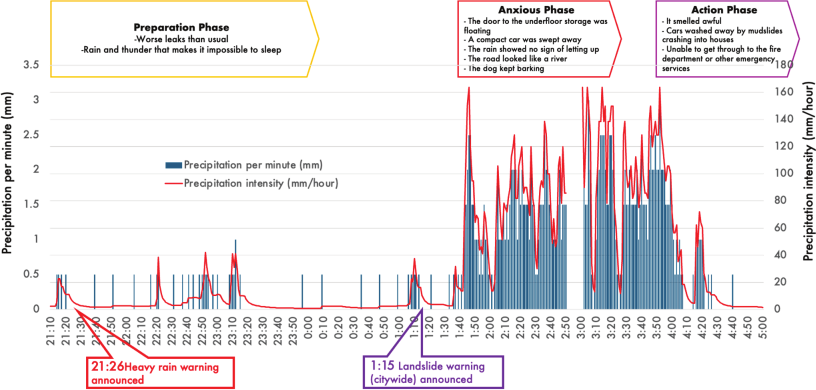
Comparison of residents" awareness phases and meteorological data timeline
1. Introduction
Heavy-rain disasters have occurred frequently in Japan in recent years. Despite advancements in the Japan Meteorological Agency (JMA) Emergency Warning System and improved forecasting accuracy, these technical advances have not sufficiently translated into protective actions by residents. The “normalcy bias,” where individuals underestimate threats, remains a significant barrier 1,2. Furthermore, previous studies have highlighted the difficulty of linking disaster information to immediate evacuation behavior, noting that residents often require “triggers” other than official information to initiate action 3,4.
This study focuses on thethe 2014 Hiroshima Heavy Rain Disaster that occurred in Hiroshima City on August 20, 2014. This event was characterized by localized, intense rainfall that caused simultaneous debris flows, resulting in 77 fatalities and widespread destruction.
This survey aims to clarify when and why residents experienced a sense of crisis and adopted safety-seeking actions. By contrasting subjective resident narratives with objective meteorological data (rainfall intensity and warning issuance times), we aim to identify specific disconnects in information usage. This report presents the results of a qualitative investigation combining direct interviews with analysis of experience records.
2. Overview of the 2014 Hiroshima Heavy Rain Disaster
On August 20, 2014, a quasi-stationary band-shaped precipitation system formed over Hiroshima City. Between 1:30 AM JST and 4:30 AM JST, hourly rainfall exceeded 100 mm in localized areas. The JMA issued heavy-rain warnings and landslide alert information; however, the evacuation rate remained low until the physical impact of the disaster became imminent.
Landslide disasters occurred at 166 locations in Hiroshima City: 107 debris flows and 59 slope failures, resulting in 77 deaths (including three disaster-related deaths) and 68 injuries. Residential building damage totaled 4,749 structures, including 179 completely destroyed and 217 partially destroyed. In the belt-like area extending from Yamamoto District in Asaminami Ward to Obayashi District in Asakita Ward, which suffered particularly concentrated damage, railways and lifelines were severely damaged 1.
The first report of a landslide disaster occurring in Hiroshima City was received by the authorities at 3:21 AM JST. Additionally, regarding the issuance of disaster prevention meteorological information, a warning was .issued at 9:26 PM JST on August 19, and sediment disaster vigilance information was issued at 1:15 AM JST on August 20, 2014.
3. Survey Method
To investigate residents’ awareness and actions, we employed two qualitative approaches: direct interviews and analysis of published experience records.
3.1. Interview Survey
We conducted interviews with residents of the Yagi and Midorii Districts in Asaminami Ward, which suffered severe damage.
Participants: The survey targeted five residents: three males and two females, aged from their 30s to 70s. Notably, one female participant in her 30s provided information regarding her father’s and older sister’s experiences. Participants were selected by the staff of the Hiroshima City Torrential Rain Disaster Memorial Museum, primarily from individuals who had been interviewed for museum exhibitions.
Method: Semi-structured interviews were conducted. The key questions focused on the following: (1) timeline of events; (2) information sources accessed; (3) moment of perceiving danger; (4) actions taken; and (5) emotions experienced.
Procedure: The survey was conducted on August 22, 2024. Each interview was conducted by a group of two to three interviewers per participant and lasted approximately 60 minutes. The interviewee in Case E provided information regarding the experiences and actions of her family members (parents and sister) in addition to her own (Fig. 1).
Ethical Considerations: Participation was voluntary. We explained the purpose of the study and obtained verbal consent regarding the use of data and anonymity at the time of recruitment.
3.2. Data Prepared for Interview Survey
The following data were prepared for the interview.
-
Three-hour accumulated analyzed precipitation (August 19, 2014, 9:00 PM JST to August 20, 2014, 6:00 AM JST; hourly intervals)
-
Twelve-hour accumulated analyzed precipitation (cumulative from 6:00 PM JST on August 19, 2014, to 6:00 AM JST on August 20, 2014)
-
Nowcast at 10-minute intervals (from 9:00 PM JST on August 19, 2014, to 4:30 AM JST on August 20, 2014)
-
Risk distribution at 10-minute intervals (from 9:00 PM JST on August 19, 2014, to 4:30 AM JST on August 20, 2014)
-
Half-hour animated precipitation analysis from before to after the onset of the torrential rain disaster
-
Prefectural meteorological information (Hiroshima Prefecture Meteorological Information regarding heavy rain and lightning, Nos. 1, 2, and 3)
-
JMA leaflet “Rain and Wind”
-
Topographic map of the area around Asaminami Ward, Hiroshima City
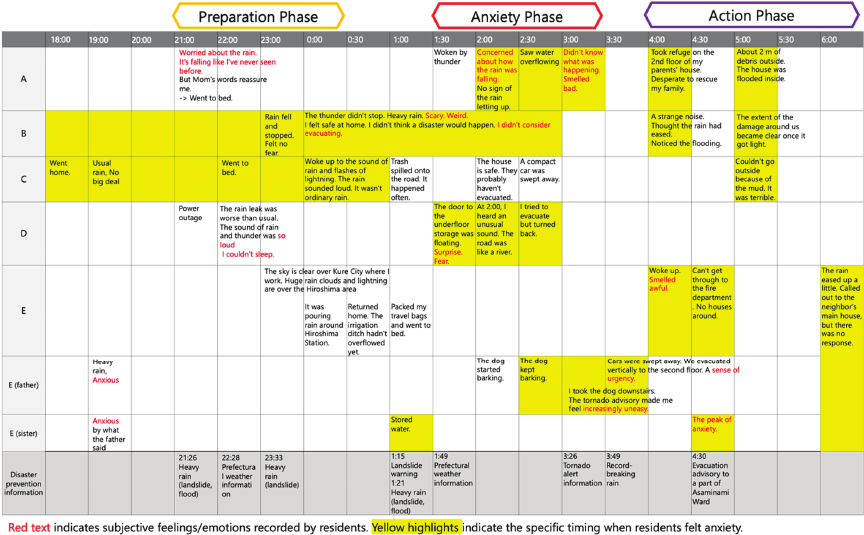
Fig. 1. Chronological sequence of awareness and evacuation actions for the five interview participants.
3.3. Analyzing Experience Records
Since the interview survey had a limited sample size of five participants, we analyzed the “Collection of Experiences from the August 20, 2014 Hiroshima Heavy Rain Disaster” to broaden the scope of emotional and behavioral analysis 5.
Data Source: Published on March 20, 2015, by the Japan Society of Erosion Control Engineering August 2014 Hiroshima Large-Scale Sediment Disaster Emergency Survey Team and Hiroshima City Disaster Prevention Specialist Network 5.
Selection Criteria & Method: We used the narratives of the 88 individuals included in this study. The analysis focused on the following three points and compared them with the interview results:
-
The time when they began to feel anxiety and the reason for it.
-
The time when they shifted to evacuation behavior and the reason for it.
-
The specific types of information they confirmed.
Definitions for Analysis: The definitions and categorization of “anxiety” and “evacuation behavior” in this study were established by the authors, referencing classification methods used in previous disaster psychology studies such as Ushiyama et al. 6 and Honma and Katada 7.
-
Start of anxiety: Defined as the moment when emotional expressions such as “unusual rain” were recorded. If a time was stated, then the earliest time was used. If no emotions were recorded, it was categorized as “No record.”
-
Evacuation behavior: Defined as evacuation preparation or implementation of vertical or horizontal evacuation.
-
Reasons (classification): Reasons for anxiety and evacuation were classified into seven categories:
-
i.
Anxiety owing to rain/thunder intensity or duration.
-
ii.
Calls from family or neighbors.
-
iii.
Danger felt from disaster weather information or municipality calls.
-
iv.
Confirmation of rising river levels (pre-flooding).
-
v.
Smelling unusual odors.
-
vi.
Hearing sounds indicative of disaster occurrence.
-
vii.
Witnessing disaster occurrence (landslide, flooding, inundation).
-
i.
4. Survey Results
4.1. Analyzing Interview Narratives (Cases A–E)
The interviews revealed that, despite the issuance of advisories and warnings, residents’ reactions varied significantly. We organized the specific actions, information gathering, and psychological changes of the five participants (Cases A–E) into chronological sequences, as presented in Fig. 1.
Below are the narrative details for each case (see Fig. 1 for a complete timeline).
I thought that a warning had probably been issued, but I did not know if it had been issued. Moreover, at the time I did not contemplate evacuating. Around 9:00 PM on the 19th, concerned about how the rain was falling, I went outside. The way the rain was falling was unlike anything I had experienced before and felt strange, but I was reassured by my mother’s words; she had lived in that area for over 80 years, “I have been alive for 86 years, and Mt. Abu has never collapsed, so it will be fine,” and went to bed.
At 1:59 AM on the 20th, I woke up to the sound of thunder and, concerned about the rain falling, went outdoors. I wanted to smoke a cigarette and went out to buy some at a nearby convenience store, but the Yagi irrigation canal in front of the store was overflowing, so, I turned back.
When I returned to the vicinity of my home after 3:00 AM, I witnessed a 2-ton truck being swept away by debris. Faced with the disaster, initially I did not understand what was happening. Moreover, there was a terrible smell. Next, I became worried about my family’s safety. I confirmed that my wife and daughter were safe, but my mother, who was sleeping on the first floor of my parents’ house, did not wake up easily, making me anxious. After confirming the safety of all family members, I managed to evacuate my father and mother to the second floor of my parents’ house. After that, I brought my wife and daughter, who were waiting at home, and the we, along with neighbors, temporarily evacuated to the second floor of my parents’ house and spent the night there. There were apparently several debris flows during the time that made loud noises; however, I was so desperate to rescue my family that I did not notice them. After it became lighter outside, I went out and checked for damage around my home. —Case A (Male, 60s, Midorii District)
I was at home, and until approximately 11:00 PM on the 19th, the rain was intermittent and I did not feel any fear. From approximately midnight on the 20th, the way the rain fell became strange, and I felt scared. Based on my experience, I had the impression that rain accompanied by thunder was intense but short-lived; however, I felt that the thunder would not stop. As it was in the middle of the night and the power was out for most of the time, the television would not turn on. I had almost no idea what was happening outside.
I had not obtained any meteorological information, and because I could not sleep owing to loud noises, my husband and I stayed awake. From the sound alone, the rain sounded like a waterfall (50–80 mm/h). I did not think a disaster would occur and believed I would be safe at home; therefore, I did not consider evacuating.
After 4:00 AM, when I believed the rain was weakening, there was a loud noise, and I thought a landslide had occurred. The underfloor storage in the kitchen was floating, and I realized that there was flooding. Only after it became light outside could I finally determine the extent of the damage to the surrounding area. —Case B (Female, 70s, Yagi District)
I returned home at approximately 6:00 PM on the 19th, and went to bed at approximately 10:00 PM . At that time, the rain appeared to be ordinary rain, so I believed it was not serious.
After midnight on the 20th, I woke up to loud rain and flashes of lightning. From approximately 12:30 AM to 12:40 AM, the lightning flashes and sounds were almost simultaneous. I felt that it was not ordinary rain. Around 1:00 AM, when I looked outside, garbage was flowing down the road. The irrigation canal probably overflowed, but since it happened occasionally, I was not particularly concerned about it. When I went to check the mountainside alley, brown water was flowing and I felt that considerable rain had fallen. Around 2:00 AM or 3:00 AM, a siren sounded, and I went outside to witness a light vehicle being swept away. Moreover, when I checked the first-floor kitchen, the lid of the underfloor storage was floating. I thought there had been a lot of rain, but since I believed my house was safe, I stayed home. I also assumed that people in the surrounding houses had not evacuated.
At 5:00 AM, as it became lighter outside, I attempted to go out from the entrance, but when I opened the door, mud came in, so, I attempted to exit through the back door, but mud was pushing against the door and it would not open. I then realized something terrible had happened.
I felt no fear; it was similar to watching footage the entire time. —Case C (Male, 70s, Yagi District)
The power went out after 9:00 PM on the 19th; after that, because of the sounds of rain and thunder, I could not sleep, so I stayed up working at home. There was usually a leak in my house, but at that time it was particularly bad.
Around 1:30 AM on the 20th, when I went to check the roof leak, the underfloor storage was open, and the door was floating. I was extremely surprised and frightened.
At approximately 2:10 AM, I heard a loud crash. Water was flowing like a river on the surrounding roads. It was difficult to open the sliding doors and the back door.
Just before 3:00 AM, I began to evacuate but turned back because of collapsed walls and road conditions. Owing to this, I was able to move my grandmother to a detached building. We spent the night there.
Looking back, I realized the reliability of the disaster prevention information, such as how the rainfall criteria for voluntary evacuation and damage in the neighborhood corresponded almost exactly to the yellow zone on the hazard map. —Case D (Female, 70s, Yagi District)
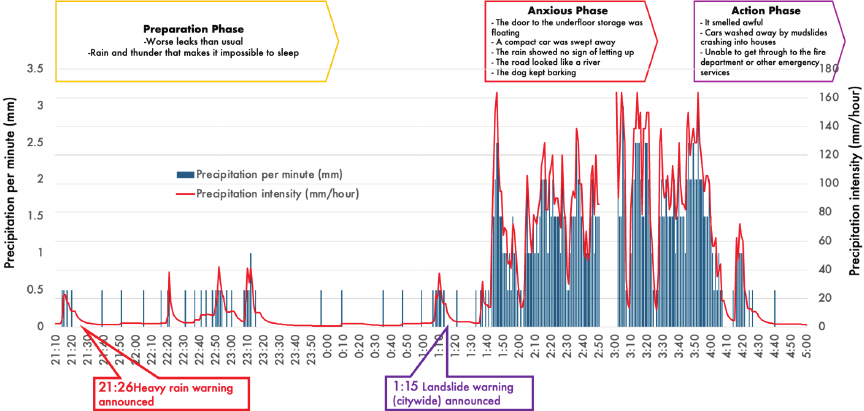
Fig. 2. Comparison of residents’ awareness phases and meteorological data.
Around 7:00 PM on the 19th, my father, who was driving, felt uneasy because the way the rain fell was different from usual. My older sister, who heard about this from my father, also felt uneasy.
I left my workplace in Kure City at approximately 11:00 PM, but the Kure City area was clear. I saw enormous rain clouds and lightning flashes in the direction of Hiroshima Bay. Around midnight on the 20th, when I arrived at Hiroshima Station, it was pouring at the station. When I arrived home at approximately 12:30 AM, the irrigation canal in front of the house, which I used as a reference for heavy rain, had not yet overflowed.
Around 1:00 AM, I packed my belongings for my previously planned overnight stay in Kobe on the 20th and went to bed. At that time, my older sister stored water and cooked 1.8 L of rice to make rice balls to prepare for an emergency.
At approximately 2:00 AM, our pet dog, which usually does not bark and is very cautious, began barking. The barking continued for more than 30 minutes.
Around 3:00 AM, my father brought the dog from the second floor to the first floor. Subsequently, he learned about the issuance of a tornado warning on the television, and his anxiety increased. Around 3:30 AM, there was a sound of something hitting the house wall. A car swept away by the debris collided with another car. Sensing urgency and recalling the vertical evacuation during the Great East Japan Earthquake, he took my grandmother, who was on the first floor, and moved to the second floor.
Around 4:00 AM, I woke up and looked out of the window, but could see nothing because of the terrible rain. Even inside the house, the sound of rain was so loud that one had to speak loudly to be heard. It smelled terrible, similar to the odor of rotting and peeling tree bark.
After that, my family called the fire department but could not get through. After approximately 30 minutes, they finally connected, but were told, “We cannot come immediately, so please prepare to go outside, prepare to climb onto the roof, and prepare footwear and things that can float.” Screams of “Help!” and “Water is coming into the house!” were heard from neighboring houses. The neighbor’s main house, which should have been visible from the balcony, disappeared. The neighbors shone flashlights on each other to confirm their survival. At that time, my sister’s anxiety peaked.
Around 6:00 AM, the rain weakened. There was no response when we called out to the neighbor’s main house.
Around 7:00 AM, the fire department came to rescue us, but we asked them to prioritize other houses, leaving their homes immediately before noon. —Case E (Female, 30s, Yagi District)
Based on the interview results, we categorized the residents’ timelines into three distinct phases:
-
1)
Preparation phase: Awareness of heavy rain but no sense of immediate crisis.
-
2)
Anxiety phase: Feeling unusual danger (e.g., “The rain sounds different”).
-
3)
Action phase: Evacuation or moving to the second floor (vertical evacuation).
4.2. Residents’ Awareness vs. Meteorological Data
We compared the three subjective phases identified in Section 4.1 with the objective meteorological data (precipitation and warnings). This relationship is summarized in Fig. 2.
As presented in Fig. 2, a clear discrepancy exists between the issuance of warnings and the residents’ shift to the “anxiety phase.”
4.3. Analyzing Experience Records
Analyzing 88 narratives revealed trends consistent with the interview results.
4.3.1. Time and Reasons for Feeling Anxiety
August 19, 2014: Although heavy-rain advisories and warnings were issued during this period, only 27 people (approximately 30%) reported feeling anxious. Even among them, the anxiety was vague (e.g., “It’s raining a lot”). Crucially, the “preparation phase,” where official warnings were active, passed with most residents not feeling a specific sense of crisis.
August 20, 2014: 79 people (approximately 90%) reported feeling anxious. The peak times were 2:00 AM JST (17 people) and 3:00 AM JST (25 people). The primary reasons were “Rain/thunder intensity” (41 people), followed by “Hearing sounds indicative of disaster occurrence” (13 people).
4.3.2. Time and Reasons for Evacuation Behavior
For the 49 people (approximately 55%) who took evacuation action, the peak time was at 3:00 AM JST (21 people).
The overwhelming reason for evacuation (32 people) was “Witnessing disaster occurrence (landslide, flooding, inundation).” This indicates that many people did not move until the disaster was visually confirmed.
4.3.3. Information Sources Checked
Television was the most cited medium (8 people).
Specific disaster prevention weather information (advisories, warnings, tornado alerts, AMeDAS) was cited by only one or two people. Most respondents did not check official weather information.
4.3.4. Summary of Analysis
Experience records reveal that although many felt anxious owing to rain/thunder, the majority did not shift to evacuation behavior until they witnessed the disaster. Furthermore, a few respondents reported checking disaster prevention weather information. This trend is highly consistent with the results from the five interviewees. Therefore, we believe that the qualitative findings from the five interviews possess a certain level of objectivity.
4.4. Discrepancy with Weather Information
A key finding of both surveys is the limited role of early warning information, particularly the critical gap observed in the Preparation Phase.
-
1)
The “blank” preparation phase: Although JMA issued alerts well in advance, these did not trigger the “anxiety phase” for most residents. The time between warning issuance and residents’ perceptions of danger was effectively a “psychological blank.”
-
2)
Trigger for action: Behavioral change was triggered predominantly by sensory information (auditory/visual cues) in the subsequent anxiety phase rather than by the digital information provided in the preparation phase.
5. Conclusion
5.1. Conclusion
This survey report analyzed the 2014 Hiroshima Heavy Rain Disaster through interviews and experience records. The results highlight that in this specific event, residents’ “disaster literacy”—defined as the ability to translate weather information into action—was overridden by normalcy bias during the preparation phase. Despite receiving warnings, residents maintained a psychological state of normalcy until imminent physical danger (sensory reality) presented itself in the anxiety phase. For future disaster prevention, bridging the gap between “digital warnings” in the preparation phase and “sensory reality” is crucial.
5.2. Limitations
Sample Size: Although the experience records support the findings, the primary detailed dataset is limited to five interviewees.
Demographic Bias: Future surveys should aim to include a broader range of age groups to clarify generational differences in information reception and evacuation behavior.
Recall Bias: Memory reconstruction may affect the precision of timestamps.
Methodology: The combination of individual and group interviews introduces variability.
Acknowledgments
This research is supported by a research grant from the Hyogo Earthquake Memorial 21st Century Research Institute (Public Interest Incorporated Foundation) and is part of the research theme of the “Disaster Prevention Literacy Subcommittee” under “The Third Earthquake and Volcano Hazards Observation and Research Program” (Ministry of Education, Culture, Sports, Science and Technology of Japan). We also express our gratitude to the staff of the Hiroshima City Torrential Rain Disaster Memorial Center for their cooperation in this investigation.
- [1] Cabinet Office, Government of Japan, “White paper on disaster management 2015,” 2015 (in Japanese).
- [2] K. Yamori, “Disaster psychology,” Kyoto University Press, 2004 (in Japanese).
- [3] K. Takenouchi and K. Yamori, “Synergistic integration of detailed meteorological and community information for evacuation from weather-related disasters: Proposal of a ‘disaster response switch’,” Int. J. of Disaster Risk Science, Vol.11, No.6, pp. 762-774, 2020. https://doi.org/10.1007/s13753-020-00317-3
- [4] Y. Takemoto, S. Ishii, H. Ichida, Y. Akiyama, M. Hakozaki, Y. Okada, S. Yamaguchi, H. Minamide, T. Kobayashi, M. Sawada, and H. Taniguchi, “Research on understanding the relationship between disaster prevention weather information and disaster perception among local residents,” J. of the Osaka District Meteorological Research Association, 2024 (in Japanese).
- [5] August 2014 Hiroshima Large-Scale Sediment Disaster Emergency Survey Team and Hiroshima City Disaster Prevention Specialist Network, “Collection of experiences from the August 20, 2014 Hiroshima Heavy Rain Disaster,” Japan Society of Erosion Control Engineering (JSECE), 2015 (in Japanese).
- [6] M. Ushiyama, M. Honma, S. Yokomaku, and K. Sugimura, “Characteristics of victims caused by heavy rainfall disaster caused by typhoon No.1919,” J. of Japan Society for Natural Disaster Science, Vol.40, No.1, pp. 81-102, 2021 (in Japanese).
- [7] M. Honma and T. Katada, “Study on the relationship between disaster advance information and resident evacuation in tsunami disaster prevention,” J. of Disaster Information Studies, Vol.6, pp. 61-72, 2008 (in Japanese). https://doi.org/10.24709/jasdis.6.0_61
This article is published under a Creative Commons Attribution-NoDerivatives 4.0 Internationa License.