
Research Paper:
Analysis of Social Media Discourse Surrounding Inbound Tourism Using BERTopic
Yoshiyuki Matsumoto

Department of Data Science, Shimonoseki City University
2-1-1 Daigaku-cho, Shimonoseki, Yamaguchi 751-8510, Japan

In recent years, the number of foreign tourists visiting Japan has increased rapidly, and tourism has come to play an increasingly important role in the national economy. At the same time, various issues associated with overtourism—such as overcrowding at tourist destinations, problems related to visitor behavior and manners, friction with local residents, and rising prices—have become more evident. Public opinions and sentiments regarding these issues are extensively expressed on social media platforms, providing a valuable source of information for the formulation of tourism policies and regional development strategies. However, to systematically extract meaningful insights from large-scale and unstructured textual data, applying advanced natural language processing techniques is indispensable. In this study, tweets related to foreign tourists were collected from X (formerly Twitter), preprocessed through procedures such as morphological analysis, and analyzed using BERTopic. BERTopic is a topic modeling approach that combines contextualized embeddings generated by BERT with clustering techniques. Compared with conventional probabilistic topic models such as latent Dirichlet allocation, BERTopic extracts semantically coherent topics by capturing contextual meaning rather than relying solely on word co-occurrence frequencies. In particular, it has been reported to outperform other methods in the analysis of short texts, such as social media posts. This study aims to clarify social perceptions and emerging issues related to foreign tourists by examining the characteristics and distributions of the extracted topics. The results of the analysis revealed that inbound tourism demand in Japan involves not only positive aspects but also negative issues. The current state of inbound tourism is considered to place a certain burden on Japanese society. Although inbound tourism provides economic benefits, the findings suggest that there is growing concern about the deterioration of quality of life and disruption of social order associated with the rapid increase in inbound tourism.
Analysis of social media using BERTopic
1. Introduction
With the rapid advancement of the Internet and information and communication technologies, a wide variety of digital information has been generated and accumulated daily in modern society. In particular, large volumes of textual data are continuously disseminated through online platforms, such as websites and social media. These data include people’s opinions, emotions, experiences, and evaluations and have attracted considerable attention as valuable information resources for understanding social trends and conducting market analysis. However, owing to their massive scale and unstructured nature, detailed manual analyses require substantial time and effort. Consequently, the importance of automated analytical methods that utilize techniques such as text mining and natural language processing has increased in recent years.
Textual data available on the Internet play a crucial role in the tourism domain. Travelers’ experiences and impressions are shared across various online media platforms, including social networking services, travel blogs, review websites, comments on video-sharing platforms, reviews of map-based services, and user evaluations of accommodation booking sites. This information is based on the actual experiences of visitors and is widely referred to as “word-of-mouth” information by other users. Traditionally, travel information has been primarily obtained through guidebooks and travel agencies. However, in recent years, the Internet has become the primary source of travel information, and user-generated reviews and comments have come to exert a significant influence on destination selection and tourist behavior. Against this background, analyzing textual data posted on the Internet is important for promoting tourism and regional revitalization.
In recent years, Japan has experienced a significant increase in inbound international tourists, and inbound demand has become a central component of tourism policies and economic growth strategies. Although the number of international visitors to Japan temporarily declined sharply due to the spread of COVID-19, it returned to an upward trend with the easing of the pandemic. In addition, factors such as the depreciation of the Japanese yen, driven by fluctuations in exchange rates, have further contributed to the growth in foreign tourist arrivals. An increase in the number of inbound tourists is expected to generate substantial economic benefits for regional economies and the tourism industry through the expansion of tourism-related consumption.
In contrast, several challenges associated with the rapid increase in tourists have been identified. Issues related to overtourism, such as excessive congestion in popular tourist destinations, negative impacts on the living environment of local residents, and problems related to tourist behavior and manners, have become increasingly evident across various regions. These issues may pose significant challenges to local communities, and maintaining a balance between tourism promotion and the residents’ quality of life (QOL) has become an important policy concern. Therefore, understanding public perceptions and evaluations of the increase in foreign tourists is essential for formulating future tourism policies and regional development strategies.
Against this background, this study collected textual data related to foreign tourists posted on social media and conducted topic analysis using natural language processing techniques to examine the latent thematic structure of the content. Specifically, tweets related to foreign tourists were collected from social media platforms. After appropriate text preprocessing, a topic-modeling approach was applied to extract the main issues embedded in the data. Through this analysis, this study aims to clarify the structure of discussions surrounding foreign tourists from multiple perspectives, including economic effects, tourism-related manners, congestion at tourist destinations, regional revitalization, and cultural exchange.
To achieve the objectives of this study, we formulated the following three research questions (RQs) and conducted analyses from multiple perspectives.
RQ1. What is the thematic structure of opinions on inbound tourism on social media?
To answer this RQ, BERTopic was used to extract meaningful topics from a large-scale dataset of social media posts. Specifically, we identified the major components of the discourse, such as economic benefits, crowding at tourist destinations, regional revitalization, and cultural exchange, and examined their occurrence patterns.
RQ2. How are the extracted topics evaluated in terms of sentiment?
A sentiment analysis was applied to each extracted topic to quantify the distribution of positive, negative, and neutral sentiments. This enables us to clarify social perceptions, including the extent to which positive aspects such as regional revitalization and cultural exchange are viewed favorably and the severity of negative reactions to issues such as inappropriate tourist behavior and overtourism.
RQ3. How do economic factors such as the depreciation of the Japanese yen and rising prices affect the structure of opinions regarding inbound tourism demand and foreign tourists?
For topics related to economic benefits, we analyze how the increase in inbound tourism demand resulting from the depreciation of the Japanese yen is associated with concerns about Japan’s perceived undervaluation and discussions on rising prices in specific regions. Through this analysis, we examine how the economic context influences people’s perceptions of inbound and foreign tourists.
By addressing these RQs, this study provides fundamental insights that can contribute to the development of sustainable tourism policies and regional revitalization strategies, extending beyond discussions based solely on the number of tourists and their spending.
3. Research Method
3.1. Data Collection
Textual data were collected from X (formerly Twitter) to analyze inbound tourism. The data collection period was from April 29 to May 5, 2024, corresponding to Japan’s Golden Week (GW), a period during which travel demand increased both domestically and internationally. During this period, it is expected that the number of tourism-related posts will increase and that a wide range of opinions regarding foreign tourists will be expressed.
The keyword used for data collection was “#インバウンド” (“#inbound”). After removing duplicate posts with identical content, approximately 11,000 posts were retained for the analysis. The collected data reflect public perceptions of inbound tourism during a period of high tourism demand. Topic analysis was subsequently conducted on the collected dataset using BERTopic.
3.2. Data Preprocessing
The collected textual data were preprocessed to improve the accuracy of the analysis. First, the text was segmented into individual words through a morphological analysis. Morphological analyses were performed using the Fugashi software 14. Additionally, based on previous research 15,16, only nouns were extracted from the set of parts of speech and used as targets for analysis. Non-independent words were excluded as stop words. Such words often carry little contextual meaning and tend to appear with high frequency, making them less informative for topic modeling. By removing these terms, data noise was reduced, thereby enabling more appropriate and accurate topic classification.
3.3. Topic Modeling Method Using BERTopic
In this study, BERTopic was employed to extract latent thematic structures embedded in the collected textual data. BERTopic is a topic-modeling approach that combines document embeddings generated by transformer-based models with clustering techniques, enabling the extraction of semantically coherent topics.
Conventional topic modeling methods such as LDA classify topics based on word frequency. As a result, they often face difficulties in appropriately grouping texts when different words with similar meanings are used or when the same word conveys different meanings depending on the context. By contrast, BERTopic generates topics by considering contextual semantics, which allows for more accurate topic classification.
Furthermore, previous studies have reported that BERTopic is particularly suitable for extracting topics from short textual data, such as social media posts 17,18,19.
The analysis procedure using BERTopic is outlined as follows.
1) Text Embedding
First, textual data are transformed into vector representations (embeddings). In this process, each text is converted into a numerical vector, which enables the representation of its semantic meaning and contextual information in a continuous vector space. Sentence-BERT was used for document embedding. Specifically, a pretrained Japanese model, “sonoisa/sentence-bert-base-ja-mean-tokens-v2” 20, was utilized.
The Japanese Sentence-BERT model can generate sentence embeddings that incorporate contextual information specific to Japanese. Compared with conventional word-frequency-based approaches, this method enables the acquisition of vector representations with higher semantic accuracy.
2) Dimensionality Reduction
The high-dimensional document vectors generated in the previous step were reduced in dimensionality using uniform manifold approximation and projection (UMAP). UMAP is a technique that maps data to a lower-dimensional space while preserving both local and global structures.
Sentence-BERT maps textual data into a 768-dimensional vector space, resulting in a high-dimensional representation. Such a high dimensionality makes effective clustering difficult. Therefore, dimensionality reduction using UMAP was applied to enable efficient and effective clustering.
3) Clustering Method
Clustering was performed using the hierarchical density-based spatial clustering of applications with noise (HDBSCAN), which is the default clustering algorithm in BERTopic. Compared with the conventional DBSCAN algorithm, HDBSCAN has the advantage of being able to handle variations in cluster density flexibly. DBSCAN assumes that the overall data density is uniform, whereas HDBSCAN employs a hierarchical approach that allows for varying densities across different regions of the data.
Consequently, even when the dataset contains a mixture of highly specific and narrowly defined topics alongside more abstract and broadly defined topics, HDBSCAN can effectively extract both types as distinct topics.
4) Topic Vectorization
Each clustered text was transformed into a bag-of-words (BoW) representation based on the word frequency. In this process, all the texts within each cluster (topic) are aggregated into a single document, and a word count (BoW matrix) is generated for each topic.
This enabled the quantification of how frequently each word appeared within each topic, thereby providing a basis for identifying representative terms for each topic.
5) Weighting Scheme
A weighting process was applied to the tokenized words to quantitatively evaluate their importance. In this study, the class-based term frequency–inverse document frequency (c-TF-IDF), which is commonly used in BERTopic, was employed. In c-TF-IDF, each cluster is treated as a single document, and the importance of the words is calculated at the cluster level.
Specifically, the weight \(w_{t,c}\) of a term \(t\) in cluster \(c\) is defined as follows:
-
*
\(f_{t,c}\): frequency of term \(t\) in cluster \(c\)
-
*
\(\sum_{t'\in c}^{}f_{t',c}\): total frequency of all terms in cluster \(c\)
-
*
\(N\): total number of clusters
-
*
\(n_{t}\): number of clusters containing term \(t\)
The first term represents the relative frequency of the term within the cluster (term frequency), and the second term represents the inverse cluster frequency (inverse document frequency). In other words, terms that frequently appear within a specific cluster but rarely appear in other clusters are assigned higher weights.
Unlike the conventional TF-IDF, which is calculated at the individual document level, c-TF-IDF is computed at the cluster level. This approach emphasizes the vocabulary specific to each cluster, thereby enabling a clearer extraction of the semantic characteristics of each topic.
3.4. Results of Topic Analysis Using BERTopic
3.4.1. Optimization of the Number of Topics
In this study, topic coherence was employed as a metric to determine the optimal number of topics in the topic model. Topic coherence is a measure that evaluates the semantic consistency of a set of words within a topic and is widely used to quantitatively assess the interpretability of topics 21.
Among various coherence measures, the c_v metric was adopted in this study. The c_v measure evaluates topics by combining word co-occurrence patterns with contextual similarity and has been reported to yield results that are relatively close to human judgment 22.
The c_v score generally ranges from 0 to 1, with higher values indicating greater semantic coherence among words within a topic and, consequently, higher interpretability. In this study, the c_v score was calculated by varying the number of topics, and the number of topics that yielded the highest score was selected as the optimal value. By employing topic coherence, the number of topics can be determined objectively and reproducibly without relying on subjective judgment.
The coherence score (c_v) results are shown in Fig. 1. The number of topics varied from 5 to 50 in increments of 5. Based on Fig. 1, the optimal number of topics was determined to be 15. Accordingly, in this study, the number of topics in BERTopic was set to 15 for the subsequent topic analysis.
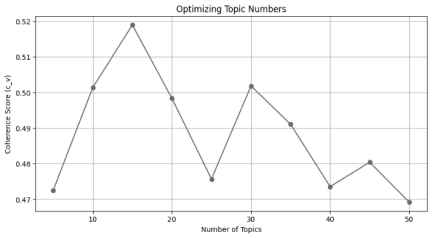
Fig. 1. Topic coherence score.
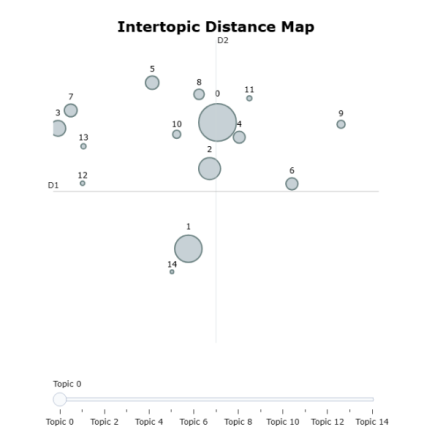
Fig. 2. Intertopic distance map.
Fig. 3. Topic word scores.
3.4.2. Topic Analysis Results
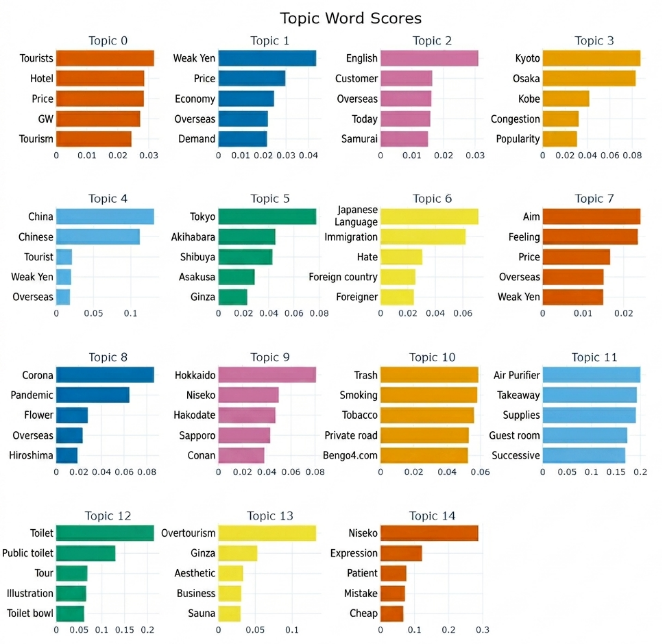
The number of topics was set to 15, and topic analysis was conducted using BERTopic. The results are shown in Figs. 2 and 3. Fig. 2 presents an intertopic distance map that visualizes the semantic distances among topics in two-dimensional space. Each topic is represented by a circle on the map. Each circle indicates the number of documents included in a topic. Topic 0 contains the largest number of documents, whereas Topic 14 contains the fewest. Additionally, topics located closer to each other on the map indicate a higher degree of semantic relatedness. Fig. 3 presents the topic word scores. For each of the 15 extracted topics, the figure presents the highly relevant keywords and their occurrence frequencies. An outline of the extracted topics is provided below.
Topic 0: Trends in Tourists, Hotels, and Prices
This topic includes discussions related to tourist trends, hotel accommodation prices, and demand during major holiday periods such as GW. It contained the largest number of documents (4,331 tweets), suggesting that this was the primary concern among the tweets collected using the keyword “inbound tourism.”
Topic 1: Depreciation of the Japanese Yen and Its Impact on the Japanese Economy
This topic includes many tweets related to macroeconomic perspectives, such as the economic impact caused by the depreciation of the Japanese yen, exports, domestic demand, and consumption tax. It is also the second-largest topic in terms of the number of tweets, containing 2,278 documents.
Topic 2: Hospitality, English Support, and Inbound Tourists
This topic includes many tweets related to hospitality services for inbound tourists, English language support, and customer services for tourists from specific countries and regions.
Topic 3: Congestion in the Kansai Region (Kyoto, Osaka, and Kobe)
This topic includes many tweets related to the popularity of major cities in the Kansai region, such as Kyoto, Osaka, Kobe, and Nara, as well as the congestion associated with increased tourism in these areas. In addition, tweets concerning the Osaka Expo were included as central themes.
Topic 4: Chinese Tourists and Consumer Behavior
This topic includes many tweets focusing on trends related to China and Chinese tourists, Chinese-language support, and the consumption behavior of Chinese tourists during long holiday periods.
Topic 5: Major Tourist Areas in Tokyo
This topic contains many tweets related to inbound tourism conditions in the major tourist areas of Tokyo, such as Akihabara, Shibuya, Asakusa, Ginza, and Tokyo Station, which are known to attract a large number of tourists.
Topic 6: Policies for Accepting Foreign Visitors and Public Reactions toward Foreigners
This topic includes discussions related to social aspects such as the acceptance of foreign visitors, Japanese language education, and government policies, as well as Japanese public perceptions and attitudes toward foreigners.
Topic 7: Inbound Tourism Strategies and Consumption
This topic is considered to include tweets related to products and menus targeting inbound tourists, as well as opinions regarding the balance between price increases caused by the depreciation of the yen and growth in overseas demand.
Topic 8: Recovery from the COVID-19 Pandemic and Tourism Events
This topic includes many tweets related to the recovery of tourism demand that declined during the COVID-19 pandemic, as well as the resurgence of tourism demand for various events, such as flower festivals held across different regions.
Topic 9: Tourism in Hokkaido
This topic includes tweets related to major tourist destinations and ski resorts in Hokkaido, as well as tourism routes associated with movies and other attractions.
Topic 10: Violations of Public Manners and Regulations
This topic includes opinions related to problems involving inappropriate tourist behavior such as littering, smoking on the streets, and unauthorized passage through private roads, as well as countermeasures, including fines, legal regulations, and warning signs implemented in response to these issues.
Topic 11: Theft of Hotel Amenities and Equipment
This topic includes tweets related to news reports about the damage caused by tourists taking hotel room equipment and amenities, such as air purifiers and televisions, as well as opinions and reactions regarding these incidents.
Topic 12: Public Restroom Conditions
This topic includes tweets related to the environment of public restrooms in Japan, news and opinions regarding tours associated with toilets, and differences in restroom manners between Japanese people and foreign visitors.
Topic 13: Overtourism and Specific Tourism Services
This topic includes tweets related to opinions and news concerning overtourism in general, as well as tourism topics associated with specific services such as esthetic salons and saunas.
Topic 14: Rising Prices in Niseko
This topic includes tweets related to rising prices in Niseko, a large number of foreign tourists, and a relatively small number of Japanese tourists visiting the area.
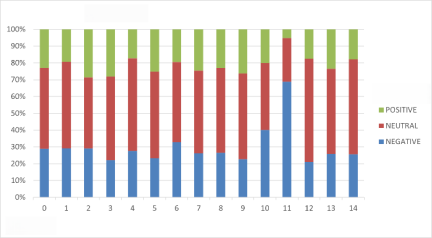
Fig. 4. Sentiment analysis for each topic.
3.4.3. Sentiment Analysis Results for Each Topic
Sentiment analysis was conducted for each tweet, and the tweets were classified into one of 15 topics. The results are presented in Fig. 4 and Table 1. Sentiment analysis assigns sentiment labels based on the semantic context of text. In this study, a pretrained BERT model available on Hugging Face 23 (koheiduck/bert–Japanese–finetuned–sentiment) was used. This model classifies texts into three categories: negative, positive, and neutral.
Figure 4 shows that neutral sentiments account for the largest proportion. In addition, although there is no substantial difference between the proportions of negative and positive sentiments, negative sentiments are slightly more prevalent. Table 1 presents the proportions of each sentiment category. “posi.–neg.” represents the value obtained by subtracting the proportion of negative sentiments from that of positive sentiments. While many topics showed negative values, Topics 11, 10, and 6 exhibit particularly large negative values, suggesting that these topics contain many negative posts. In contrast, Topics 3, 9, and 5 show positive values, indicating that these topics contain relatively many positive posts.
| No. | neg. | neut. | posi. | posi.–neg. |
| 0 | 29% | 48% | 23% | \(-\)6% |
| 1 | 29% | 51% | 19% | \(-\)10% |
| 2 | 29% | 42% | 29% | 0% |
| 3 | 22% | 50% | 28% | 6% |
| 4 | 28% | 55% | 17% | \(-\)10% |
| 5 | 23% | 52% | 25% | 2% |
| 6 | 33% | 48% | 19% | \(-\)13% |
| 7 | 26% | 49% | 25% | \(-\)2% |
| 8 | 27% | 50% | 23% | \(-\)4% |
| 9 | 23% | 51% | 26% | 4% |
| 10 | 40% | 40% | 20% | \(-\)20% |
| 11 | 69% | 26% | 5% | \(-\)64% |
| 12 | 21% | 61% | 18% | \(-\)4% |
| 13 | 26% | 51% | 23% | \(-\)2% |
| 14 | 26% | 56% | 18% | \(-\)8% |
4. Discussion
This section discusses the results of the previous section. The graph in Fig. 2 illustrates how the 15 extracted topics were distributed within a semantic space and reduced to two dimensions. There is little overlap between the circles representing individual topics, suggesting that the extracted topics are semantically distinct and relatively independent of each other. However, this graph represents a two-dimensional projection of a high-dimensional semantic space. During the dimensionality-reduction process, some of the complex relationships that originally existed among topics may have been lost. Therefore, the distances and positions shown in the figure should be interpreted with caution because they provide only an approximate representation of the underlying semantic structure.
4.1. Core Topic of the Whole
Regarding Topics 0, 1, and 2, these three topics alone contain more than 8,000 tweets in total, accounting for over 70% of all collected posts. In addition, they are located near the center of Fig. 2, suggesting that they represent the core themes of discussions related to inbound tourism.
Topic 0 is the largest, containing more than 4,000 tweets. Keywords such as “tourists,” “hotels,” and “Golden Week (GW)” appear prominently within this topic. This suggests that the topic primarily reflects phenomena that people can directly observe and experience, such as an increase in the number of tourists and the accompanying rise in hotel accommodation prices.
Topic 1 contains more than 2,000 tweets, with keywords such as “weak yen,” “economy,” and “exports” appearing frequently. This topic focuses on the underlying reasons for the growth of inbound tourism and its impact on the Japanese economy. Furthermore, the keywords “price” and “weak yen” appear in both Topics 0 and 1, indicating that various consequences associated with the depreciation of the Japanese yen, including rising prices, increased exports, and growth in foreign tourist arrivals, constitute major themes in discussions of inbound tourism.
The sentiment analysis results for these two topics exhibit similar patterns. In both cases, neutral sentiments account for approximately half of all the posts. However, the proportion of negative sentiments exceeds that of positive sentiments by approximately 6%–10%. This finding suggests that, while many users recognize the short-term economic benefits of the rapid increase in inbound tourism and the weak yen, they also express concerns about their future living conditions and the long-term outlook of the Japanese economy.
Topic 2 contains approximately 1,400 posts, making it the third largest topic identified in this study. The most prominent keywords in this topic include “English,” “customers,” and “overseas,” suggesting that the topic primarily consists of discussions related to customer service and communication with inbound tourists. The highest-scoring keyword is “English,” and the term “response” (or “support”) also appears among the major keywords. This indicates that many posts were concerned with language-related challenges, efforts, and strategies for communicating with foreign visitors. In addition, keywords such as “customers” and “samurai” are included, implying that the topic also reflects interactions with tourists who visit Japan seeking unique aspects of Japanese culture and traditions. From a regional perspective, “Taiwan” appears as a representative keyword, suggesting that a considerable number of posts within this topic involve experiences and interactions with visitors from Taiwan. The sentiment analysis results for Topic 2 show a relatively balanced distribution between negative and positive sentiments. This finding suggests that the posts contained both negative aspects, such as difficulties associated with customer service and language barriers, and positive aspects, such as enjoyment and satisfaction derived from cultural exchanges and interactions with foreign visitors. Overall, Topic 2 appears to represent frontline experiences in the inbound tourism sector, where the challenges of English-language communication coexist with the rewards of providing hospitality and engaging in cross-cultural interactions.
4.2. Trends in Popular Tourist Areas
Topics 3, 5, 8, and 9 represent discussions related to the vibrancy and attractions of popular tourist destinations. The primary keywords associated with these topics are specific place names. Topic 3 includes locations in the Kansai region, such as Kyoto, Osaka, and Kobe; Topic 5 focuses on central Tokyo areas, such as Tokyo, Akihabara, and Shibuya; Topic 8 is centered on Hiroshima; and Topic 9 contains place names in Hokkaido, including Hokkaido, Hakodate, and Sapporo. These regions are among Japan’s most prominent tourist destinations, and posts on these topics appear to reflect the lively atmosphere created by large numbers of visitors.
The sentiment analysis results indicate that, with the exception of Topic 8, positive sentiments exceed negative sentiments for all topics. Topic 3 has the highest proportion of positive sentiments. This suggests that the popularity of tourism in the Kansai region and the anticipation surrounding the Osaka Expo are viewed favorably by users, outweighing the negative perceptions associated with tourist congestion.
Topic 8 is the only topic for which negative sentiments outnumber positive sentiments. This topic includes keywords such as “COVID-19” and “countermeasures.” These results suggest that concerns regarding crowding and the effectiveness of measures to manage congestion influenced by the lingering effects of the pandemic are reflected in the posts associated with this topic.
4.4. Depreciation of Japan’s Value due to the Weak Yen
Topics 4, 7, and 14 contain discussions related to the economic aspects of inbound tourism as well as concerns regarding the declining value of Japan associated with the depreciation of the Japanese yen. These topics indicate that inbound tourism is not only viewed as an economic opportunity but is also discussed from the perspective that a weaker yen may reflect a decline in Japan’s relative economic standing.
Topic 4 focuses on issues related to China, one of the most influential sources of inbound tourists in Japan. Although this topic contains discussions regarding the economic benefits brought by Chinese tourists, the sentiment analysis results show that negative reactions exceed positive reactions by approximately ten percentage points. This suggests that the topic included a considerable number of posts expressing critical or negative attitudes toward Chinese tourists.
Topic 7 contains discussions regarding pricing strategies designed to attract inbound tourists and debates concerning the balance between overseas and domestic demand. Among the three topics, this topic exhibits sentiment analysis results that are closest to neutral, indicating that opinions are relatively balanced and less emotionally polarized.
Topic 14 is characterized by the highest keyword score for “Niseko.” This topic includes discussions of rising prices and land values in specific regions. The posts appear to reflect concerns that Japanese land and assets are being sold at relatively low prices because of the weak yen, as well as resentment toward a situation in which land price inflation, similar to that experienced during a speculative bubble, benefits only certain regions. Such discussions suggest the presence of negative perceptions of regional disparities and the broader economic consequences of inbound tourism.
4.5. Facilities Unique to Japan
Topic 12 is a distinctive topic characterized by strong attention to specific facilities and unique aspects of the Japanese environment. The keyword “toilet” receives an exceptionally high score, making this topic substantially different from the others. These results suggest that the cleanliness, functionality, and advanced features of Japanese public toilets are recognized as attractions for foreign visitors. This topic highlights how everyday infrastructure, which local residents may take for granted, can become a noteworthy tourism resource and contribute positively to the overall image of Japan among international tourists.
5. Conclusion
In this study, we collected textual data related to inbound tourism demand from social media posts on foreign tourists and analyzed the underlying thematic structure of these posts using topic modeling and sentiment analysis based on natural language processing techniques. BERTopic and sentiment analyses were used. Tweets related to foreign tourists were collected from social media, preprocessed, and analyzed using a topic model to extract the major issues contained in the posts. The results revealed that the current inbound tourism demand involves not only positive aspects, such as increased numbers of tourists and associated economic benefits, but also challenges related to social friction at tourist destinations and economic distortions caused by the depreciation of the Japanese yen.
The findings for the three RQs established in this study are described below.
Regarding RQ1, “What is the thematic structure of the opinions on inbound tourism?,” BERTopic analysis identified 15 topics. Discussions concerning phenomena observed in everyday urban environments (Topic 0) and economic issues (Topic 1) were found to be the central themes. Although depreciation of the Japanese yen generates economic benefits, the results suggest an underlying concern that the relative value of Japan is declining. These central themes were associated with various subthemes, including tourism trends in specific regions (Topics 3, 5, and 9) and problems related to tourist behavior and manners (Topics 10 and 11).
Regarding RQ2, “How are the extracted topics evaluated in terms of sentiment?,” the sentiment analysis showed relatively high levels of positive sentiments for topics concerning communication with foreign tourists (Topic 2) and tourism promotion in popular tourist areas (Topics 3, 5, and 9). Although communication difficulties were identified, regional revitalization and interactions with foreign tourists were generally viewed positively. In contrast, topics concerning the removal of hotel equipment by tourists (Topic 11) and inappropriate tourist behavior (Topic 10) showed relatively high levels of negative sentiment. These issues are perceived as causing direct and tangible harm and have negative impacts on the living environments of local residents.
Regarding RQ3, “How do economic factors affect opinions regarding inbound tourism demand and foreign tourists?,” the results reveal that, while the depreciation of the Japanese yen stimulates demand and generates economic benefits, there are persistent concerns about the decline in Japan’s relative value and competitiveness. We also found that perceptions of Japan’s declining relative value and negative views toward localized price increases, as observed in Niseko (Topic 14), contribute to complex attitudes toward inbound tourism.
Overall, an increase in inbound tourism demand is not viewed as an unequivocal success. On many topics, negative sentiment exceeded positive sentiment, suggesting that the current form of inbound tourism places a certain burden on Japanese society. While social media users acknowledge the economic benefits of inbound tourism, they also express concerns about the resulting deterioration in QOL and disruption of social order.
- [1] Y. Matsumoto, “Tourism Information analysis of SNS data using text mining,” J. Adv. Comput. Intell. Intell. Inform., Vol.29, No.4, pp. 829-837, 2025. https://doi.org/10.20965/jaciii.2025.p0829
- [2] Y. Matsumoto, “Analysis of inbound tourism demand using social media,” ICIC Express Letters, Part B: Applications, Vol.17, No.4, pp. 355-364, 2026. https://doi.org/10.24507/icicelb.17.04.355
- [3] N. Z. Dina, “Tourist sentiment analysis on TripAdvisor using textmining: A case study using hotels in Ubud, Bali,” African J. of Hospitality, Tourism and Leisure, Vol.9, No.2, pp. 1-10, 2020.
- [4] F. Visentin and D. Bertocchi, “Venice: An analysis of tourism excesses in an overtourism icon,” C. Milano, J. M. Cheer, and M. Novelli (Eds.), “Overtourism: excesses, discontents and measures in travel and tourism,” CABI International, pp. 18-38, 2019. https://doi.org/10.1079/9781786399823.0018
- [5] M.-d.-M. Alonso-Almeida, F. Borrajo-Millan, and L. Yi, “Are Social Media Data Pushing Overtourism? The Case of Barcelona and Chinese Tourists,” Sustainability, Vol.11, No.12, Article No.3356, 2019. https://doi.org/10.3390/su11123356
- [6] R. D. Siano and R. R. Canale, “Controversial effects of tourism on economic growth: A spatial analysis on Italian provincial data,” Land Use Policy, Vol.117, Article No.106081, 2022. https://doi.org/10.1016/j.landusepol.2022.106081
- [7] N. Türker, C. M. Koçoğlu, and Ö. Saraç, “Effect of Overtourism on Residents’ Quality of Life in World Heritage Cities,” J. of New Tourism Trends (JOINNTT), Vol.5, No.1, 2024. https://doi.org/10.58768/joinntt.1436906
- [8] K. Hussain, M. M. D. Alam, A. Malik, A. Tarhini, and M. K. A. Balushi, “From likes to luggage: The role of social media content in attracting tourists,” Heliyon, Vol.10, No.19, Article No.e38914, 2024. https://doi.org/10.1016/j.heliyon.2024.e38914
- [9] D. M. Blei, A. Y. Ng, and M. I. Jordan, “Latent dirichlet allocation,” The J. of Machine Learning Research, Vol.3, pp. 993-1022, 2003.
- [10] T. Ali, B. Omar, and K. Soulaimane, “Analyzing tourism reviews using an LDA topic-based sentiment analysis approach,” MethodsX, Vol.9, Article No.101894, 2022. https://doi.org/10.1016/j.mex.2022.101894
- [11] R. Leung and I. Handler, “Unveiling tourist typology: Using online reviews and LDA to understand motivations for visiting Kyoto’s prominent temples,” Int. J. of Tourism Cities, Vol.11, No.2, pp. 242-259, 2025. https://doi.org/10.1108/IJTC-01-2024-0014
- [12] J. Devlin, M.-W. Chang, K. Lee, and K. Toutanova, “BERT: Pre-training of Deep Bidirectional Transformers for Language Understanding,” North American Chapter of the Association for Computational Linguistics, pp. 4171-4186, 2019. https://doi.org/10.18653/v1/n19-1423
- [13] M. Grootendorst, “BERTopic: Neural topic modeling with a class-based TF-IDF procedure,” arXiv preprint, arXiv:2203.05794, 2022. https://doi.org/10.48550/arXiv.2203.05794
- [14] P. McCann, “fugashi, a Tool for Tokenizing Japanese in Python,” Proc. of Second Workshop for NLP Open Source Software (NLP-OSS), pp. 44-51, 2020. https://doi.org/10.18653/v1/2020.nlposs-1.7
- [15] M. Otani and S. Matsuda, “Application of topic models to medical text data,” Review of Japan Society of Health Support Science, Vol.5, pp. 29-35, 2020 (in Japanese). https://doi.org/10.14964/hssanj.5.29
- [16] S. Tsukioka, T. Yoshikawa, and T. Furuhashi, “A study on evaluation analysis for products using topic model,” Proc. of 31st Fuzzy System Symp., pp. 655-660, 2015 (in Japanese). https://doi.org/10.14864/fss.31.0_655
- [17] R. Egger and J. Yu, “A topic modeling comparison between LDA, NMF, Top2Vec, and BERTopic to Demystify Twitter Posts,” Frontiers in Sociology, Sec. Sociological Theory, Vol.7, Article No.886498, 2022. https://doi.org/10.3389/fsoc.2022.886498
- [18] W. Wahyuni, T. P. Lestari, M. Apriliana, and R. Gumelta, “Implementation of BERTopic for Topic Modeling Analysis of the Free Nutritious Meal Program Based on YouTube Comments,” J. of Applied Informatics and Computing, Vol.9, No.4, pp. 1964-1971, 2025. https://doi.org/10.30871/jaic.v9i4.9754
- [19] O. El-Gayar, M. Al-Ramahi, A. Wahbeh, T. Nasralah, and A. Elnoshokaty, “A Comparative Analysis of the Interpretability of LDA and LLM for Topic Modeling: The Case of Healthcare Apps,” Proc. of Americas Conf. on Information Systems 2024 Proc., No.22, 2024.
- [20] sonoisa/sentence-bert-base-ja-mean-tokens-v2. https://huggingface.co/sonoisa/sentence-bert-base-ja-mean-tokens-v2 [Accessed March 1, 2026]
- [21] J. Chang, J. Boyd-Graber, S. Gerrish, C. Wang, and D. M. Blei, “Reading tea leaves: how humans interpret topic models,” Proc. of the 23rd Int. Conf. on Neural Information Processing Systems (NIPS’09), pp. 288-296, 2009.
- [22] M. Röder, A. Both, and A. Hinneburg, “Exploring the Space of Topic Coherence Measures,” Proc. of the Eighth ACM Int. Conf. on Web Search and Data Mining (WSDM ’15), pp. 399-408, 2015. https://doi.org/10.1145/2684822.2685324
- [23] koheiduck/bert-japanese-finetuned-sentiment. https://huggingface.co/koheiduck/bert-japanese-finetuned-sentiment [Accessed May 1, 2026]
This article is published under a Creative Commons Attribution-NoDerivatives 4.0 Internationa License.
4.3. Social Friction and Actual Harm
Topics 6, 10, 11, and 13 contain posts representing the negative aspects of inbound tourism. These topics suggest that while inbound tourism generates significant economic benefits through an increase in foreign visitors, it also brings adverse effects, such as theft, deteriorating public manners, social tensions, and limitations of existing systems and regulations.
Among these topics, Topic 11 represents the most serious issue related to the damage suffered by accommodation facilities. It exhibits the highest proportion of negative sentiments among all topics, with approximately 69% of posts classified as negative. The keywords associated with this topic include “air purifier” and “television,” which are items that would not normally be considered consumable hotel supplies. This topic appears to reflect news reports and public reactions concerning theft from accommodation facilities, a behavior that is close to criminal activity. The strong sense of shock and anger expressed toward such incidents suggests that many posts contain reactions approaching the outright rejection of inbound tourism.
Topic 10 is the second-most negatively perceived topic after Topic 11. Its prominent keywords include “garbage,” “smoking,” and “cigarettes.” These posts appeared to focus on concrete problems that directly affected the daily lives of local residents. Additional keywords such as “private roads,” “warning signs,” and “fines” indicate that local communities have been compelled to adopt strict countermeasures. This suggests that issues related to tourist manners have become sufficiently serious and require stronger regulation and enforcement.
Topic 6 contains keywords such as “Japanese language,” “immigration,” and “dislike.” This topic appears to extend beyond tourism and includes emotionally charged discussions on government policies, immigration, and ethnic or cultural issues. The results suggest that the growth of inbound tourism has triggered expressions of distrust, concern, and resistance toward the acceptance of foreign residents and visitors.
Topic 13 includes “overtourism” as a major keyword and is associated with terms such as “Ginza,” “esthetic salons,” and “saunas.” These findings suggest that excessive tourist concentrations in specific locations and service sectors have a negative impact on regular users and local communities. Consequently, the adverse effects of overcrowding on particular destinations and services have become important issues highlighted within this topic.