
Research Paper:
Emotional Expression and Purchase Intention in RED Beauty-Related Comments: An Exploratory Comment-Based Analysis
Lu Jiang*
 and Yukio Kodono**,†
*School of Project Design, Miyagi University
1-1 Gakuen, Taiwa-cho, Kurokawa-gun, Miyagi 981-3298, Japan
**Kindai University
3-4-1 Kowakae, Higashiosaka, Osaka 577-8502, Japan
†Corresponding author

This study explores how emotional expression and purchase intention are reflected in beauty-related user comments on RED, a major Chinese social media and e-commerce platform. Using 4,371 beauty-related comments, this study applies sentiment analysis, bidirectional encoder representations from transformers (BERT)-based validation, linguistic feature detection, and qualitative coding to examine comment-level consumer expressions. The results show that the overall sentiment was positively inclined but heterogeneous. Sentiment intensity alone did not significantly predict purchase intention. Instead, specific linguistic features, such as emotional adverbs, repeated characters, and information-seeking expressions, played a more important role in indicating consumer interest. In addition, different beauty-related content themes were associated with different response patterns. Comments under “must-buy” posts showed stronger purchase-intention signals, while skincare-related comments showed more information-oriented responses. These findings suggest that purchase intention in RED beauty-related comments is often expressed through subtle linguistic cues rather than strong emotional polarity. This study contributes to social media marketing research by showing the limitations of sentiment-based approaches and the value of comment-level linguistic analysis. The findings also provide practical implications for marketers seeking to identify consumer interest in online communities.
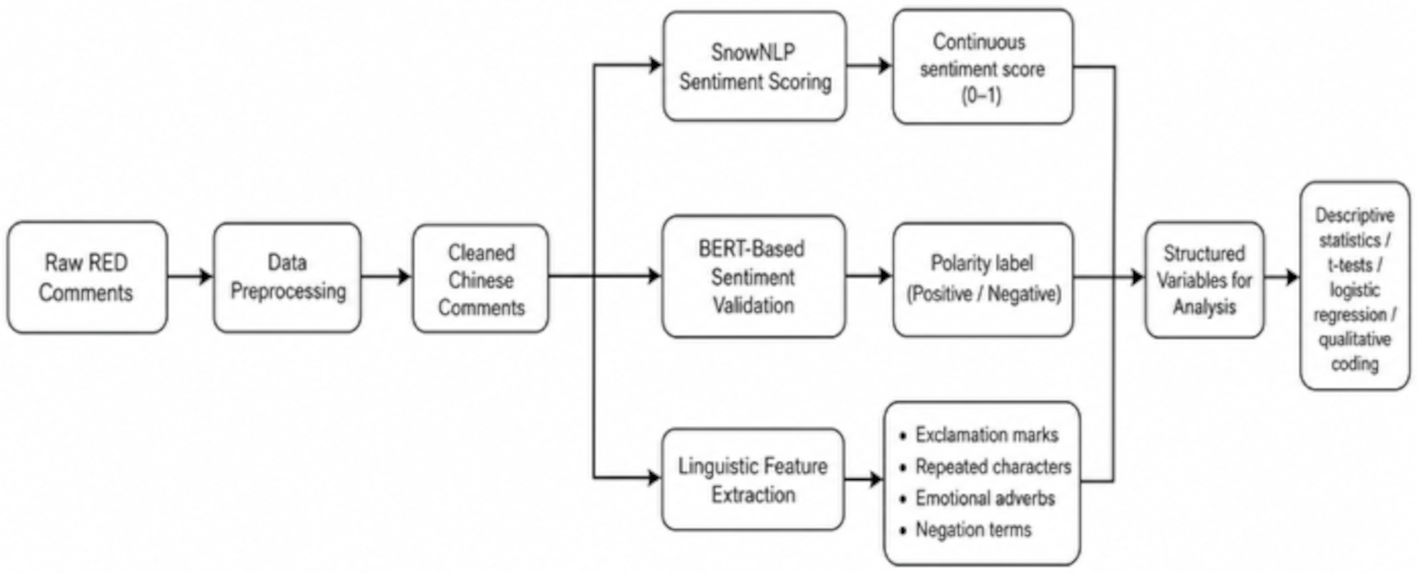
Workflow of RED comment analysis
1. Introduction
Social media platforms have become important spaces for consumers to share product experiences, exchange opinions, and express their purchase-related interest. User-generated content (UGC) plays an important role in this process because it provides peer-based information that influences how consumers evaluate products 2,1. Among the various platforms, RED has become a representative social media and e-commerce platform for beauty-related UGC in China. RED users frequently share product reviews, beauty routines, and recommendations. The platform is also known for its “grass-planting” effect, in which peer-generated content is closely associated with product interest and purchase-related discussions.
Existing studies on social media marketing have primarily focused on content creators, influencers, and post-level engagement. These studies have examined how opinion leaders affect consumer engagement and purchase behavior 3,4. However, little attention has been paid to comment-level consumer expressions, particularly how emotional tendencies, linguistic features, and purchase-related signals appear in user comments. This issue is important in the context of RED, where comment sections often include product evaluations, recommendation responses, purchase inquiries, and platform-specific expressions such as “种草” (plant grass, i.e., become interested in buying), “下单” (place an order), and “链接” (product link). These comments may provide useful signals for understanding consumers’ interest in social commerce.
To address this gap, this study focuses on beauty-related user comments on RED. It examines how emotional expressions, linguistic features, and purchase-intention signals are reflected in comment-level consumer expressions. Rather than treating sentiment polarity as the only indicator of consumer interest, this study considers specific linguistic features and purchase-related expressions in comments.
Specifically, this study addresses the following research questions:
-
(1)
How do emotional tendencies and purchase-intention signals differ across beauty-related themes?
-
(2)
What linguistic features are associated with emotional expression in beauty-related comments on RED?
-
(3)
How is the purchase intention expressed in user comments?
This study makes three major contributions to the literature. First, it shifts the research focus from influencer-centered perspectives and post-level engagement to comment-level consumer expressions. Second, sentiment intensity alone is insufficient for capturing purchase intention, highlighting the importance of linguistic features and purchase-related expressions. Third, this study provides practical insights for marketers seeking to identify consumer interests through user comments in online communities.
2. Literature Review
2.1. User-Generated Content, Electronic Word-of-Mouth (eWOM), and Purchase Intention
UGC is an important source of product information for digital marketing. Through eWOM, consumers share experiences, evaluations, and recommendations that may shape other consumers’ perceptions and purchase decisions 5,1,2. Recent studies have further shown that eWOM in social media environments is closely related to trust, perceived value, and purchase intention, especially among younger consumers 6,7. These findings provide a basis for examining how consumer interest is expressed through UGC.
2.2. RED and Social Commerce
RED, a Chinese platform integrating social media and e-commerce, has attracted increasing academic attention as a successful example of social commerce. Existing studies have explored marketing mechanisms and user behavior. For example, Sun and Ly found that positive user experiences enhanced continued usage and purchase intention 8. Based on the stimulus-organism-response framework, Lin and Shen demonstrated that platform-related stimuli such as information quality and community belonging evoke emotional responses that drive consumption 9. This is particularly relevant for younger user groups, as prior research indicates that Gen Z consumers are highly responsive to eWOM and social interaction cues in online environments 7. These findings suggest that RED provides a useful context for examining how UGC and social interactions are associated with consumer interest and purchase intention.
2.3. Comment-Level Consumer Expression and Research Gap
Recent studies have shown that eWOM, online reviews, and social media content are closely related to consumer trust and purchase intention 6,10,7. These studies provide important evidence that user-generated information can influence consumer decision-making in social commerce environments. Many studies have examined eWOM at the platform, post, or influencer levels, or through survey-based consumer perceptions. Little attention has been paid to how ordinary users express emotions or purchase-related interests in comments.
Comment sections are important because they contain direct consumer responses to product-related content. In these spaces, users express more than positive or negative emotions. They also ask for product links, compare product experiences, seek advice, and use platform-specific expressions such as “种草,” “冲” (rush to buy), “下单,” and “链接.” These expressions may indicate consumer interest, but are not always captured by sentiment polarity alone.
Sentiment analysis is widely used to identify consumer attitudes from large-scale textual data 11. However, sentiment scores typically focus on emotional polarity, whereas purchase intention in social media comments may appear through more subtle linguistic cues. For example, a comment asking for a product link may show purchase interest even if it does not contain strong positive emotions. Therefore, analyzing sentiment alone may overlook the important purchase-intention signals embedded in everyday commenting language.
To address these gaps, this study focuses on beauty-related user comments on RED. It combines sentiment analysis, bidirectional encoder representations from transformers (BERT)-based validation, linguistic feature detection, purchase-intention keyword identification, and qualitative coding. This approach allows the study to examine not only whether comments are positive or negative but also how emotional expression and purchase-related signals are reflected in comment-level consumer expressions.
3. Methodology
3.1. Data Collection and Preprocessing
The dataset used in this study consists of user-generated comments collected from RED, a major Chinese social media platform. The analysis focused on beauty-related posts retrieved using five Chinese keywords: 美妆种草 (beauty product recommendations), 护肤 (skincare), 彩妆 (color cosmetics), 化妆品必买 (must-buy cosmetics), and 早八人化妆 (8 a.m. makeup, referring to quick morning routines).
These keywords were selected based on their frequency and popularity on the platform and were intended to cover a wide range of UGC, including product reviews, daily beauty routines, and practical advice. Specifically, 美妆种草 and 化妆品必买 represent recommendation-oriented content aimed at encouraging purchases, while 护肤 and 彩妆 correspond to core product categories in the beauty domain. The term 早八人化妆 reflects a recent trend emphasizing efficiency and practicality in everyday makeup routines.
For each keyword, the top 100 posts ranked by number of likes were selected. The top 10 comments were collected from each post, resulting in an initial dataset of 4,590 comments. All data were obtained from publicly accessible RED content, and no personally identifiable information was collected with privacy considerations.
Several preprocessing steps were applied to improve data quality. Non-textual elements such as blank entries, image-only replies, and stickers were removed. Duplicate comments were also eliminated. In addition, noise such as HTML tags, emojis, and other non-linguistic symbols was filtered to ensure textual consistency. However, punctuation and syntactic features relevant to emotional expressions such as exclamation marks (!) and negation terms (e.g., 不, 没) were preserved. After preprocessing, 4,371 valid Chinese comments were retained for subsequent analysis.
3.2. Sentiment Scoring Using SnowNLP
To quantify emotional expressions in user comments, this study first employed the SnowNLP library in Python to calculate sentiment scores. SnowNLP is a widely used Chinese natural language processing tool. It provides sentiment polarity scores ranging from 0 to 1, where 0 indicates the most negative sentiment and 1 indicates the most positive sentiment.
SnowNLP was selected because it provides continuous sentiment scores. These scores allowed for a direct comparison of sentiment intensity across comments. They were used for the descriptive analysis, group comparisons, and regression analysis.
Sentiment analysis was also supported by the HowNet Chinese affective dictionary 12, which contains positive and negative sentiment terms. In this study, domain-specific slang and cosmetic product-related expressions were also considered to better capture the language used in beauty-related RED comments.
3.3. BERT-Based Validation of Sentiment Analysis
To address the limitations of relying only on SnowNLP, this study also conducted a BERT-based validation. A pretrained Chinese BERT-based sentiment model, IDEA-CCNL/Erlangshen-Roberta-110M-Sentiment, was applied to the same 4,371 comments using the Hugging Face transformers pipeline. The model classified each comment as either positive or negative.
The purpose of this validation was to examine whether the main sentiment tendencies obtained from SnowNLP were consistent with the results of a more recent model. SnowNLP was retained as the main scoring tool because it provides continuous scores from 0 to 1. These scores were necessary for the statistical analyses in this study. The BERT-based model was used as an additional validation method to check the robustness of sentiment analysis.
3.4. Linguistic Feature Extraction
In addition to sentiment scores, linguistic features related to emotional expressions were extracted. Four types of features were identified: exclamation marks, repeated characters, emotional adverbs, and negation terms.
Exclamation marks were used as indicators of emotional emphasis. Repeated characters, such as elongated sounds or repeated words, were treated as another form of emphasis commonly observed in social media comments. Emotional adverbs, such as “很,” “真的,” and “超级,” were used to capture intensified emotional tone. Negation terms, such as 不 and 没, were included because they can reduce or reverse sentiment polarity 13.
Both binary and frequency-based measures were created for each comment. The binary indicators indicate whether each feature is present or absent. Frequency-based measures indicate the frequency with which each feature appears in a comment. These variables were used to examine how linguistic features were associated with sentiment scores and purchase intention.
Figure 1 shows the workflow for converting the raw RED comments into structured variables. SnowNLP was used to calculate the sentiment scores, BERT was used for validation, and linguistic features were extracted for further analysis.
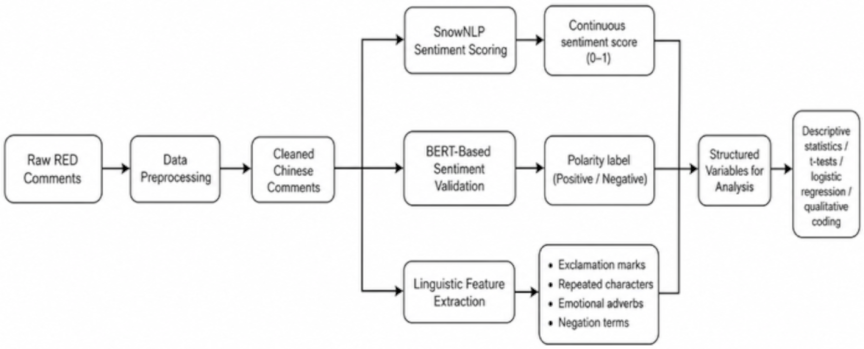
Fig. 1. Workflow for sentiment scoring, BERT-based validation, and linguistic feature extraction.
4. Results
The following analysis begins with an overview of purchase-intention expressions and sentiment distributions in the full dataset. It then compares sentiment and purchase-intention patterns across different beauty-related themes. Next, it examines how linguistic features are associated with emotional expressions and purchase-intention signals. Finally, high-sentiment comments are examined qualitatively to further interpret how users expressed consumer interest in the RED comment sections.
4.1. Overall Patterns of Sentiment and Purchase-Intention Expressions
To further examine the behavioral signals embedded in user comments, purchase-intention expressions were identified based on a predefined dictionary of purchase-related terms (e.g., “buy,” “order,” “rush,” “link,” “want,” and “recommend”). Each comment was coded as either containing purchase intention (1) or not containing purchase intention (0).
Among the 4,371 valid comments, 1,872 (42.8%) contained expressions indicating purchase intention, whereas 2,499 (57.2%) did not. This indicates that nearly half of the user comments include signals related to potential purchasing behavior, suggesting that the comment sections of RED serve not only as a space for emotional expression but also as a channel for communicating consumer interest.
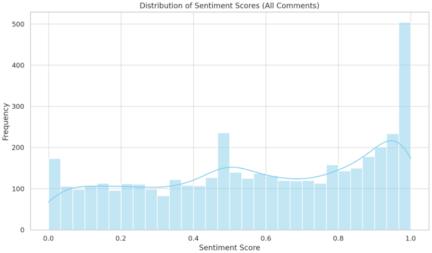
Fig. 2. Distribution of sentiment scores for all user comments.
To examine the overall emotional tendency of RED beauty-related comments, the distribution of sentiment scores was analyzed. Fig. 2 shows the sentiment score distribution for all 4,371 valid comments.
As shown in Fig. 2, the sentiment scores are not uniformly concentrated in the positive range. Although a noticeable peak appears in the high-score range above 0.8, the distribution also shows a relatively flat spread across the middle range, with visible frequencies around 0.5 and near 0. This pattern suggests that beauty-related comments on RED include a mix of strongly positive, neutral, and weakly expressed responses. Comments with extremely high sentiment scores often contain praise, excitement, or recommendation-oriented expressions, whereas those in the middle range may include informational inquiries, short responses, or comments with limited emotional polarity. A low sentiment score may reflect negative evaluations, hesitation, or comments containing negation. Therefore, the overall distribution should be interpreted as positively inclined but heterogeneous, rather than uniformly biased toward high sentiment scores.
4.2. Differences Across Beauty-Related Content Themes
Table 1 summarizes the average sentiment scores, standard deviations, and comment counts for the five keyword categories. Color Cosmetics (彩妆) and Beauty Recommendations (美妆种草) exhibit relatively higher average sentiment scores (0.612 and 0.602, respectively), indicating a generally more positive emotional tone in user comments. In contrast, Must-buy Cosmetics (化妆品必买) and Skincare (护肤) show comparatively lower average sentiment scores (0.545 and 0.555), suggesting a more neutral or restrained emotional expression.
| Keyword | Average sentiment score | Standard deviation | Comment count | Purchase-intention ratio |
| 化妆品必买 | 0.545 | 0.306 | 963 | 52.0% |
| 彩妆 | 0.612 | 0.306 | 750 | 44.7% |
| 护肤 | 0.555 | 0.325 | 955 | 29.6% |
| 早八人化妆 | 0.595 | 0.304 | 912 | 42.1% |
| 美妆种草 | 0.602 | 0.295 | 791 | 46.3% |
Regarding sentiment variability, Skincare (护肤, \({\textrm{SD}=0.325}\)) and Must-buy Cosmetics (化妆品必买, \({\textrm{SD}=0.306}\)) display relatively larger standard deviations, indicating a wider dispersion of emotional responses among users. This suggests that the discussions in these categories contain a mix of highly positive and critical opinions. Meanwhile, Color Cosmetics (彩妆) and 8AM Makeup (早八人化妆) show slightly lower variability, implying a more consistent emotional tone in user responses.
The purchase-intention ratio also differed across keyword categories. Must-buy Cosmetics showed the highest purchase-intention ratio (52.0%), followed by Beauty Recommendations (46.3%) and Color Cosmetics (44.7%). In contrast, Skincare had the lowest ratio (29.6%). These results suggest that recommendation-oriented themes are more closely associated with explicit purchase-intention expressions, while skincare-related discussions are more likely to involve product experience, ingredients, and information exchange.
To validate the sentiment tendency obtained from SnowNLP, a pretrained Chinese BERT-based sentiment model was applied to the same 4,371 comments. The model classified 3,003 comments (68.70%) as positive and 1,368 (31.30%) as negative. The mean SnowNLP score was higher for BERT-positive comments (0.621) than for BERT-negative comments (0.482), indicating that both methods generally produce consistent sentiment tendencies.
At the keyword level, positive comments accounted for the largest proportion across all five keyword groups. The positive ratios were highest for “化妆品必买” (72.90%) and “彩妆” (72.13%), followed by “美妆种草” (66.62%), “早八人化妆” (66.34%), and “护肤” (65.76%). These results provide additional support for the interpretation that beauty-related comments in RED are positively inclined but heterogeneous across content themes.
4.3. Linguistic Features Associated with Emotional Expression
In this section, we examine how sentiment scores differ depending on the presence or absence of syntactic features in user comments. Four types of syntactic features were selected: exclamation marks, repeated characters, emotional adverbs, and negation terms. Each feature was coded as a binary variable indicating whether it was present or absent in each comment. The two groups’ mean sentiment scores were then compared using independent-samples \(t\)-tests.
Table 2 presents the number and proportion of comments in each group, the mean sentiment scores for comments with and without each feature, and the results of the independent-sample \(t\)-tests. The results show that repeated characters and emotional adverbs are associated with significantly higher sentiment scores. Comments containing repeated characters had a higher mean sentiment score than those without (0.644 vs. 0.554, \({p<0.001}\)). Similarly, comments containing emotional adverbs had higher sentiment scores than those without them (0.644 vs. 0.570, \({p<0.001}\)). These findings suggest that emphasis-related expressions tend to strengthen the positive emotional tone in RED beauty-related comments.
| Feature | Present \(\boldsymbol{n}\) (%) | Mean (P) | Absent \(\boldsymbol{n}\) (%) | Mean (A) | \(\boldsymbol{t}\) | \(\boldsymbol{p}\) | Sig. |
| Exclamation | 15 (0.3%) | 0.652 | 4356 (99.7%) | 0.579 | 0.709 | 0.478 | n.s. |
| Repetition | 1238 (28.3%) | 0.644 | 3133 (71.7%) | 0.554 | 4.86 | <0.001 | *** |
| Emotional adverbs | 569 (13.0%) | 0.644 | 3802 (87.0%) | 0.57 | 5.241 | <0.001 | *** |
| Negation | 1252 (28.6%) | 0.555 | 3119 (71.4%) | 0.59 | -2.634 | 0.008 | ** |
Note: P \(=\) present; A \(=\) absent. Significance levels: *** \({p<0.001}\), ** \({p<0.01}\); n.s. \(=\) not significant.
In contrast, comments containing negation terms had significantly lower sentiment scores than those without negation terms (0.555 vs. 0.590, \({p<0.01}\)). This indicates that expressions of negation reduce the positivity of sentiment scores and may reflect hesitation, dissatisfaction, or a more cautious evaluation. By contrast, the difference between comments with and without exclamation marks was not statistically significant (0.652 vs. 0.579, \({p=0.478}\)). This may be partly due to the small number of comments containing exclamation marks in the dataset.
Figure 3 compares the mean sentiment scores of comments with and without each syntactic feature. Overall, the results indicate that linguistic features related to emphasis, particularly repeated characters and emotional adverbs, are more strongly associated with positive sentiment than punctuation alone is. These findings suggest that sentiment expression in RED comments is shaped not only by emotional polarity but also by platform-specific linguistic styles.
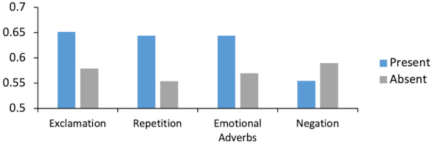
Fig. 3. Comparison of mean sentiment scores by syntactic feature presence.
4.4. Sentiment and Linguistic Predictors of Purchase Intention
To examine whether emotional polarity is associated with purchasing expressions, an independent samples \(t\)-test was conducted to compare the sentiment scores of comments containing purchase intention and those without purchase intention.
The mean sentiment score for comments expressing purchase intention was 0.574 (\({\textrm{SD}=0.315}\)), whereas that for comments without purchase intention was 0.580 (\({\textrm{SD}=0.314}\)). The difference between the two groups is not statistically significant (\({t=-0.607}\), \({p=0.544}\)).
This result suggests that purchase-related expressions in RED comment sections are not necessarily driven by stronger emotional polarity. Many purchasing signals appear in the form of informational inquiries or practical requests (e.g., asking for product links or prices) rather than emotionally expressive statements.
A binary logistic regression analysis was conducted to further examine the linguistic factors associated with purchase-intention expressions in user comments. The dependent variable was purchase intention (1 \(=\) comment expressing purchase intention, 0 \(=\) otherwise). The independent variables included sentiment score and several syntactic and emotional features identified in the comments, including the presence of exclamation marks, repeated characters, emotional adverbs, and negation expressions.
The results of the logistic regression analysis are presented in Table 3. The overall model was statistically significant (\({p<0.001}\)), indicating that the selected linguistic features collectively contribute to explaining the occurrence of purchase-intention expressions.
Among the predictors, emotional adverbs showed the strongest positive effect on purchase intention (\({\mathrm{B}=0.386}\), \({p<0.001}\)), suggesting that comments containing expressive modifiers such as “really,” “very,” or “super” are more likely to include purchasing signals. Character repetition also had a significant positive association with purchase intention (\({\mathrm{B}=0.171}\), \({p=0.017}\)), reflecting the role of emphatic expressions commonly used in social media communication. In addition, exclamation marks showed a marginally significant positive effect (\({\mathrm{B}=0.186}\), \({p=0.067}\)), implying that comments containing stronger expressive punctuation may also be more likely to convey purchase-related interests, although this effect was weaker than that of emotional adverbs and repetition.
In contrast, expressions of negation were negatively associated with purchase intention (\({\mathrm{B}=-0.144}\), \({p=0.039}\)), indicating that comments containing negation are less likely to express purchasing interest.
Interestingly, the sentiment score did not show a significant effect (\({p=0.330}\)), suggesting that purchase-related expressions in RED comment sections were not necessarily driven by stronger emotional polarity. Instead, specific linguistic patterns and expressive styles appear to play a more important role in signaling consumer interests.
| Variable | B | Odds ratio | \(\boldsymbol{p}\) | Sig. |
| Sentiment score | -0.099 | 0.906 | 0.33 | n.s. |
| Exclamation | 0.186 | 1.205 | 0.067 | \(†\) |
| Repetition | 0.171 | 1.186 | 0.017 | * |
| Emotional adverbs | 0.386 | 1.471 | <0.001 | *** |
| Negation | -0.144 | 0.866 | 0.039 | * |
Note: \(N=\textrm{4,371}\). Nagelkerke pseudo \(R^{2}=0.009\). Model \(\chi^2\) test: \(p<0.001\). Significance levels: *** \(p<0.001\), ** \(p<0.01\), * \(p<0.05\), \(†\) \(p < 0.10\).
4.5. Qualitative Patterns of Purchase-Intent Expressions
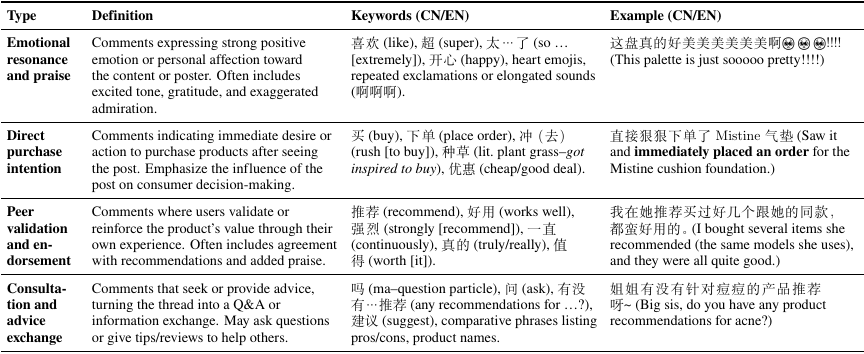
In addition to quantitative analysis, we conducted a qualitative examination of the comments with the highest sentiment scores. Specifically, 20 comments with sentiment scores of 0.95 or higher were selected to identify their linguistic characteristics and expression patterns.
A semi-open coding approach was used to classify comments. The coding focused on the semantic meaning and expression style of each comment. The initial categories were developed based on prior studies of emotional expression and purchase intention, and new categories were allowed to emerge from the data.
The first author coded all 20 comments, and the second author subsequently reviewed the coding results, category definitions, original Chinese comments, English translations, and representative keywords to ensure coding accuracy. When there were differences in interpretation, the authors discussed them until an agreement was reached. The examples listed in Table 4 were checked again to ensure that they represented each category clearly.
As a result, the high-scoring comments were classified into four types: Emotional Resonance and Praise, Direct Purchase Intention, Peer Validation and Endorsement, and Consultation and Advice Exchange. These categories demonstrate the different ways in which RED users express positive emotions and consumption-related attitudes in the comment sections. Table 4 presents the definitions, representative keywords, and examples of comments for each category.
Among the 20 high-scoring comments, eight were classified as Direct Purchase Intention, six as Emotional Resonance and Praise, four as Peer Validation and Endorsement, and two as Consultation and Advice Exchange. These results suggest that highly positive comments on RED are not limited to product appreciation. They also include purchase intentions, peer confirmation, and information exchange among users.
4.6. Frequency Analysis of Purchase-Intent Expressions in High-Scoring Comments
Python’s WordCloud visualization library was used to generate a word cloud based on the frequency statistics of segmented comment data from RED. Comments were tokenized using the Jieba segmentation tool, and the top 20 most frequent words were extracted to visualize user attention. In the word cloud, the size of each word reflects its frequency across all comments, and colors are used for visual contrast.
The study conducted a frequency analysis of purchase-intent expressions in comments with sentiment scores \(\geq\) 0.85. As shown in Figs. 4 and 5, the most frequent expressions were “买” (buy, 89 mentions), “推荐” (recommend, 50), “种草” (plant grass / become interested in buying, 17), “同款” (same item, 15), and “链接” (link, 14). These expressions represent direct purchase declarations, recommendation-oriented responses, and product information requests commonly observed in UGC. In particular, platform-specific expressions such as “种草,” “冲,” “安利,” and “想要” reflect the unique linguistic tendencies of RED users and indicate that purchase intention is often expressed through short, colloquial, and action-oriented phrases rather than through explicit statements of planned purchasing behavior.

Fig. 4. Word cloud based on the frequency of purchase intention vocabulary.
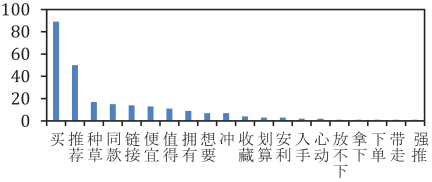
Fig. 5. Frequency of purchase-intent expressions.
5. Discussion
This study explored the emotional expressions and purchase-intention signals in beauty-related comments on RED. The results revealed three main findings. First, a large proportion of comments contained explicit purchase-intention expressions, suggesting that the RED comment sections reflect consumer interest. Second, the overall sentiment was positively inclined but heterogeneous. Third, purchase intention was not significantly associated with sentiment intensity, but it was related to specific linguistic features, such as emotional adverbs, repetition, and negation.
An important finding is that sentiment scores alone do not predict purchase intention. Although many comments were positive, those expressing purchase intention did not have significantly higher sentiment scores than those without purchase intention. This finding suggests that purchase-related signals are not always expressed through strong emotional polarity. In the RED comment sections, users often show consumer interest through practical and conversational expressions, such as asking for product links, prices, or recommendations. Therefore, relying only on sentiment analysis may overlook important comment-level signals. This finding is consistent with previous studies showing that user-generated comments may contain subtle consumption cues that are not fully captured by simple sentiment measures 14.
The results also showed differences across beauty-related content themes. Comments under “must-buy” product posts showed the highest proportion of purchase-intention expressions, while skincare-related comments showed the lowest proportion. This finding suggests that recommendation-oriented content is closely associated with direct purchase-related responses. By contrast, skincare discussions tend to involve information exchange, personal experience sharing, and problem-solving. These findings indicate that content themes shape not only the emotional tone but also the way users express consumer interest in online communities 15. These findings extend prior research on Generation Z’s impulse purchases in response to Instagram content 16, the effects of social-commerce constructs on trust and intention to buy 17, and KOL effectiveness in shaping skincare brand image 18 by highlighting purchase-related signals at the comment level.
A qualitative analysis of high-sentiment comments further showed that positive comments on RED are not limited to simple praise. They also include purchase intention, peer validation, and requests for product information. This suggests that comment sections can function as interactive spaces in which emotional expression, social interaction, and consumption-related signals appear. For marketers, these findings imply that consumer interest should not be identified solely through sentiment scores. Specific language patterns such as recommendation expressions, repeated characters, emotional adverbs, and information requests may provide useful signals for understanding potential purchase interests.
This study contributes to social media marketing research by highlighting the value of comment-level analysis. While previous studies have often focused on influencers, posts, or engagement metrics, this study shows that user comments can provide additional insights into consumer interest. It also demonstrates the usefulness of combining sentiment analysis, BERT-based validation, linguistic feature detection, and qualitative coding to analyze short-form social media comments.
Despite these contributions, this study had several limitations. First, the analysis was based on 4,371 beauty-related comments collected from RED. Therefore, the findings should be interpreted as exploratory evidence from a single product category rather than general conclusions about all RED users or product categories. Future studies should expand the dataset by collecting comments from more posts, longer time periods, and multiple product categories. Second, purchase intention was identified using a keyword-based approach. This method can capture explicit purchase-related expressions but may miss implicit or context-dependent signals of consumer interest. Future research could combine dictionary-based detection with supervised machine learning or manual validation. Third, although this study used SnowNLP and BERT-based validation, automated sentiment analysis may still have difficulty identifying sarcasm, slang, and context-dependent meanings. Future studies could also include images, videos, and post-level information to better understand consumer expressions and purchase-intention signals in social commerce.
6. Conclusion
This study examined how users express emotions and purchase intention in the comment sections of beauty-related content on RED. By combining sentiment analysis, linguistic feature detection, and qualitative examination, the findings reveal that comment sections serve not only as spaces for emotional interaction but also as important indicators of consumer interest.
The results show that while positive sentiment is prevalent in comments, sentiment intensity alone does not significantly predict purchase intention. Instead, specific linguistic patterns, such as emotional adverbs, repetition, and information-seeking expressions, play a more critical role in signaling consumption interest. In addition, different content themes were found to generate distinct patterns of user response, suggesting that the nature of UGC influences how consumers engage and express intentions. These findings highlight the importance of moving beyond traditional sentiment-based approaches when analyzing UGC. For researchers and practitioners, a deeper understanding of linguistic expressions in comments can provide more accurate insights into consumer behavior in social media environments.
Overall, this study contributes to a more nuanced understanding of consumer expression in social commerce and offers a foundation for future research on digital marketing and UGC.
- [1] C. M. K. Cheung and D. R. Thadani, “The impact of electronic word-of-mouth communication: A literature analysis and integrative model,” Decis. Support Syst., Vol.54, No.1, pp. 461-470, 2012. https://doi.org/10.1016/j.dss.2012.06.008
- [2] A. M. Kaplan and M. Haenlein, “Users of the world, unite! The challenges and opportunities of Social Media,” Bus. Horiz., Vol.53, No.1, pp. 59-68, 2010. https://doi.org/10.1016/j.bushor.2009.09.003
- [3] L. V. Casaló, C. Flavián, and S. Ibáñez-Sánchez, “Influencers on Instagram: Antecedents and consequences of opinion leadership,” J. Bus. Res., Vol.117, pp. 510-519, 2020. https://doi.org/10.1016/j.jbusres.2018.07.005
- [4] F. Fan, K. Chan, Y. Wang, Y. Li, and M. Prieler, “How influencers’ social media posts have an influence on audience engagement among young consumers,” Young Consum., Vol.24, No.4, pp. 427-444, 2023. https://doi.org/10.1108/YC-08-2022-1588
- [5] A. Babić Rosario, F. Sotgiu, K. de Valck, and T. H. A. Bijmolt, “The effect of electronic word-of-mouth on sales: A meta-analytic review of platform, product, and metric factors,” J. Mark. Res., Vol.53, No.3, pp. 297-318, 2016. https://doi.org/10.1509/jmr.14.0380
- [6] C. T. Bui, T. T. A. Ngo, H. K. L. Chau, and N. P. N. Tran, “How perceived eWOM in visual form influences online purchase intention on social media: A research based on the SOR theory,” PLoS One, Vol.20, No.7, Article No.e0328093, 2025. https://doi.org/10.1371/journal.pone.0328093
- [7] T. T. Le, D. N. Phan, T. T. T. Ngo, and N. T. Le, “Website quality’s impact on Gen Z’s eWOM behavior and online purchase intentions: The mediating role of trust in online shopping,” Asia Pac. J. Mark. Logist., Vol.38, No.8, pp. 2350-2370, 2026. https://doi.org/10.1108/APJML-03-2025-0567
- [8] Y. Sun and T. P. Ly, “The influence of word-of-web on customers’ purchasing process: The case of Xiaohongshu,” J. China Tour. Res., Vol.19, No.2, pp. 221-244, 2023. https://doi.org/10.1080/19388160.2022.2057378
- [9] B. Lin and B. Shen, “Study of consumers’ purchase intentions on community e-commerce platform with the SOR model: A case study of China’s Xiaohongshu app,” Behav. Sci., Vol.13, No.2, Article No.103, 2023. https://doi.org/10.3390/bs13020103
- [10] S. Kwakye, A. Ertugan, and L. Tashtoush, “Navigating purchase intentions: The influence of reviewers’ comments moderated by risk and trust,” Behav. Sci., Vol.14, No.7, Article No.552, 2024. https://doi.org/10.3390/bs14070552
- [11] W. He, S. Zha, and L. Li, “Social media competitive analysis and text mining: A case study in the pizza industry,” Int. J. Inf. Manag., Vol.33, No.3, pp. 464-472, 2013. https://doi.org/10.1016/j.ijinfomgt.2013.01.001
- [12] Z. Dong and Q. Dong, “HowNet and the computation of meaning,” World Scientific, 2006. https://doi.org/10.1142/5935
- [13] B. Liu, “Sentiment analysis and opinion mining,” Morgan & Claypool Publishers, 2012. https://doi.org/10.2200/S00416ED1V01Y201204HLT016
- [14] J. A. Chevalier and D. Mayzlin, “The effect of word of mouth on sales: Online book reviews,” J. Mark. Res., Vol.43, No.3, pp. 345-354, 2006. https://doi.org/10.1509/jmkr.43.3.345
- [15] I. Erkan and C. Evans, “The influence of eWOM in social media on consumers’ purchase intentions: An extended approach to information adoption,” Comput. Hum. Behav., Vol.61, pp. 47-55, 2016. https://doi.org/10.1016/j.chb.2016.03.003
- [16] E. Djafarova and T. Bowes, “‘Instagram made me buy it’: Generation Z impulse purchases in fashion industry,” J. Retail. Consum. Serv., Vol.59, Article No.102345, 2021. https://doi.org/10.1016/j.jretconser.2020.102345
- [17] N. Hajli, “Social commerce constructs and consumer’s intention to buy,” Int. J. Inf. Manag., Vol.35, No.2, pp. 183-191, 2015. https://doi.org/10.1016/j.ijinfomgt.2014.12.005
- [18] L. Xiong, V. Cho, K. M. Y. Law, and L. Lam, “A study of KOL effectiveness on brand image of skincare products,” Enterp. Inf. Syst., Vol.15, No.10, pp. 1483-1500, 2021. https://doi.org/10.1080/17517575.2021.1924864
This article is published under a Creative Commons Attribution-NoDerivatives 4.0 Internationa License.