
Research Paper:
Modeling Robot Head-Direction Duration and Switching Frequency During Side-by-Side Walking with a Human
Shudai Deguchi*,**
 , Takashi Minato**
, and Takamasa Iio*,**
*Graduate School of Culture and Information Science, Doshisha University
1-3 Tataramiyakodani, Kyotanabe, Kyoto 610-0394, Japan
**Guardian Robot Project, RIKEN
2-2-2 Hikaridai, Keihanna Science City, Kyoto 619-0288, Japan

Recent advancements in robotics have led to extensive research on social robots capable of moving alongside humans. However, existing studies on mobile robotics have largely overlooked head-direction behavior in the context of side-by-side interactions during walking. As an initial step toward addressing this gap, the present study investigated human head-direction behavior during side-by-side conversational walking. We developed a robot head-direction model based on the collected data and examined its implementation in a mobile robot. This approach provides a data-driven basis for designing robot head-direction behavior during side-by-side walking, rather than relying solely on fixed or manually specified head movements. Specifically, we conducted experiments comparing three conditions: (1) a data-driven condition, in which the robot’s head-direction behavior was governed by the data-driven model; (2) a control condition, in which head-direction durations were randomly assigned based on a uniform distribution between the minimum and maximum values of the data-driven model; and (3) a baseline condition, in which the robot exhibited no head-direction behavior. The results demonstrated that the robot in the data-driven and control conditions received significantly higher ratings than those in the baseline condition, with no discernible difference between the data-driven and control conditions. Notably, participants also rated the control condition favorably, despite its divergence from natural human head-direction patterns, implying that a mobile robot’s head-direction behavior need not necessarily mimic human head-direction behavior to be perceived positively. These findings have important implications for the future design and implementation of head-direction behaviors in mobile robots, highlighting the potential of non-human-like head-direction strategies to enhance human-robot interaction.
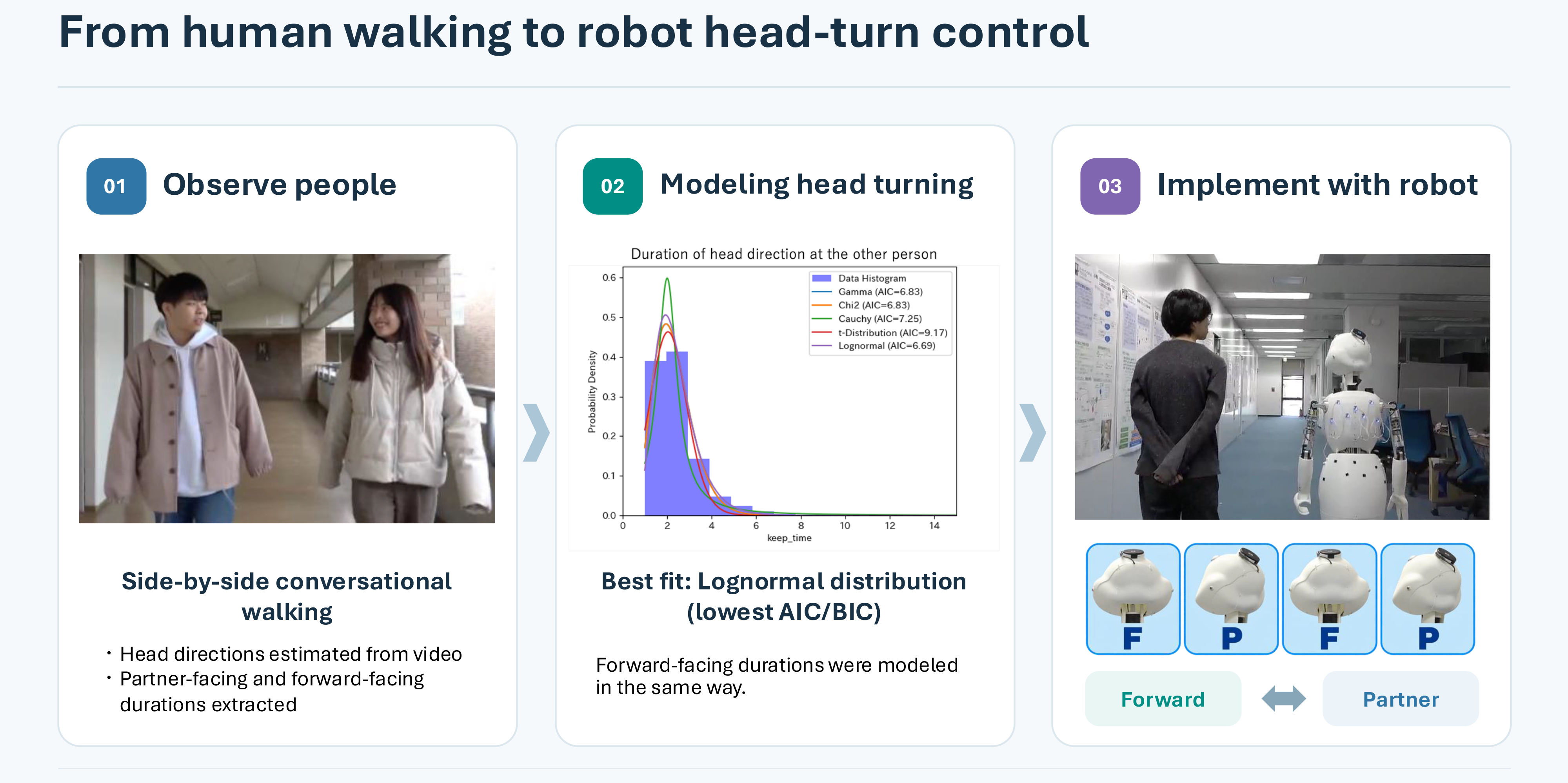
Overview of the proposed approach
1. Introduction
Recent advancements in robotics have led to the development of social robots capable of navigating alongside humans while offering guidance and assistance. Research in this domain has focused on robots designed to move synchronously with individuals, such as hand-holding robots that coordinate movement 1, robots that engage in communication while accompanying individuals in museum settings 2, and robots that assist shoppers by moving alongside them in commercial environments 3. More recent studies have also examined adaptive side-by-side social navigation and robot accompaniment in dynamic environments4,5. Other studies have explored hand-in-hand joint walking with a companion robot, indicating that physical coordination during walking is also an important form of moving human-robot interaction (HRI) 6.
The significance of such coordinated movement is underscored by studies on human-to-human walking interactions, which indicate that walking side-by-side without verbal communication can enhance the perception of a walking companion 7. This finding suggests that if a robot exhibits human-like movement, it may improve human impressions of the robot during side-by-side walking. Given that nonverbal cues such as walking rhythm, body orientation, and gaze direction play a crucial role in facilitating mutual understanding between walking partners, it is essential for social robots to adopt appropriate nonverbal behaviors when accompanying humans.
Head and eye movements are critical components of nonverbal behavior during locomotion and play a fundamental role in facilitating smooth communication between individuals. Gaze not only reinforces the context of a dialogue but also serves as a vital mechanism for conveying social cues 8. In human face-to-face interactions, gaze has been shown to transmit information 9, coordinate speaker alternations 10,11, express emotions, and signal the nature of interpersonal relationships 12,13, among other essential functions. The significance of gaze behavior has also been recognized in HRIs. Drawing inspiration from human gaze patterns, researchers have developed various gaze control models to enhance communication by coordinating speaker alternation in conversations 14, expressing personality traits such as introversion and diplomacy 15, and adjusting mutual gazes based on conversational context 16. These studies indicated that gaze behavior during locomotion is an important factor in enabling more natural and intuitive interactions between robots and humans. Consequently, modeling robotic gaze behavior based on human-to-human gaze dynamics holds great potential for improving social robot design and enhancing user experience.
However, gaze behavior during side-by-side movement has received little scholarly attention, even in the context of human-to-human interaction. Recent studies have begun to investigate the relationship between gaze and other social signals, such as laughter, during walking interactions and have highlighted both the importance and complexity of gaze behavior in non-face-to-face, on-the-move communication 17. Their findings indicate that gaze interaction during locomotion involves multiple interdependent factors that are difficult to examine simultaneously. Accordingly, rather than simultaneously modeling complex gaze interactions, our study adopted a stepwise approach and concentrated on the duration of gaze shifts as a minimal and controllable factor.
The challenge of effectively controlling the gaze of robots moving side-by-side remains an open research question. Most studies on gaze in both human-human interaction (HHI) and HRI have focused on face-to-face communication in static settings. In face-to-face HHI, the speaker and listener are typically oriented toward each other, with the gaze directed at the interlocutor approximately 60% to 80% of the time 18,19,20. In contrast, during movement-based communication, the speaker and listener are positioned laterally, with their bodies oriented in the direction of travel. Furthermore, their heads are frequently directed forward to maintain situational awareness, as the surrounding environment is continuously changing rather than remaining static. These differences suggest that the gaze behavior dynamics during side-by-side movements are distinct from those observed during face-to-face interactions in a stationary setting. Robot head-direction during autonomous navigation has also been examined, showing that the preferred head-direction behavior can depend on the interaction context21. Research on gaze behavior in robots moving side-by-side is particularly limited. For example, a study on a robot walking alongside an elderly individual 22 made the robot consistently face forward and did not engage in eye contact with the user. One participant in the study noted that the interaction would have been more enjoyable if the robot had facial expressions and eye movements. This observation underscores the need for further investigation into the role of gaze in interpersonal communication and its impact on perceived safety during movement. Establishing comprehensive design principles for gaze control in mobile robots remains a significant challenge, because many fundamental questions in this area remain unresolved.
This study aimed to derive the timing of switches in the head-direction from human side-by-side walking, implement these patterns in robots, and examine their impact on impression formation and perceived safety. Specifically, this research has three key objectives: (1) collecting and analyzing head-direction data from human side-by-side walking, (2) developing a simple head-direction switching timing model for robots that balances naturalness and safety, and (3) empirically validating the effectiveness of the data-driven model through evaluation experiments. The overarching goal is to elucidate the fundamental principles of head-direction behavior necessary for robots to engage in effective social interactions while moving alongside humans, which will ultimately contribute to the development of design guidelines for enhancing the communicative capabilities of mobile social robots. The focus on naturalness and safety in head-direction control arises from the inherent differences between human and robotic sensing capabilities in perceiving the external environment. When humans walk together, they not only maintain eye contact and engage in social interaction but also remain situationally aware by checking for obstacles and potential hazards. By contrast, robots are typically equipped with omnidirectional sensors that allow them to navigate safely without relying on direct visual input. Consequently, robots can maintain environmental awareness even when their heads are not directed toward their path of movement. However, even if a robot can check its environment using sensors, looking straight ahead is assumed to be the safest way to behave from a human perspective. Therefore, if a robot continues to look directly at its human partner without checking ahead, it may give the impression that it lacks complete situational awareness, which could cause distrust and may seem unnatural. This study evaluated head-direction control based on perceived naturalness and its contributions to a sense of safety. Its modeling concentrates only on the head-direction duration. Although previous research has shown that gaze behavior is related to the content of conversations and turn taking, in this study, we propose a simple model consisting solely of the timing of head-direction switches, excluding the influence of conversational content and turn taking as the first step in head-direction-based communication with a mobile robot. Clarifying the extent to which a basic model independent of conversation is effective will provide the fundamental criteria for future research on head-direction in moving robots.
Our contributions are as follows:
-
・
We present an exploratory investigation of head-direction switching frequency during side-by-side walking, in which a simple head-direction timing model was used to investigate how head-direction duration alone affects perceived safety, naturalness, and interactions with a mobile robot.
-
・
Participants gave favorable evaluations of the control condition, which exhibited uniform head-direction behavior that differed from natural human head-direction patterns. This result indicates that the head-direction behavior of a mobile robot can be perceived positively during movement, even without precisely imitating human head-direction behavior.
The structure of this paper is as follows: Section 2 outlines the data-collection process for developing the head-direction model, and Section 3 details the robot system, including the implementation of the model. Section 4 describes the experimental design used to evaluate the data-driven model. Section 5 presents the experimental results. Based on these findings, Section 6 discusses key characteristics of head-direction behavior during human-robot side-by-side navigation, followed by an analysis of the study’s limitations in Section 7. Finally, Section 8 provides conclusions and directions for future research.
2. Data Collection
According to Admoni and Scassellati, social gaze behavior in robots can be implemented using three primary approaches 23: (1) the physiological approach, which models gaze behavior based on neurophysiological or cognitive-psychological processes derived from human cognitive science; (2) the data-driven approach, which constructs gaze models based on empirical behavioral data obtained from human interactions; and (3) the heuristic approach, in which gaze behavior is directly designed based on expert knowledge and predefined rules.
This study adopted a data-driven approach because of the lack of prior research on robot head-direction behavior in walking and talking scenarios. Effective head-direction behavior for social robots moving alongside humans is inherently complex because it must serve multiple functions, including facilitating communication with the human partner, signaling the robot’s own movement intentions, and maintaining environmental awareness by recognizing obstacles and external stimuli. In the field of HRI, numerous studies have sought to implement human-like behaviors in robots by analyzing data from human interactions. Following this precedent, the present study collected human behavioral data to inform the development of a head-direction control model for robots.
To construct this model, data were collected by having pairs of participants walk side-by-side while engaging in conversations. Their interactions were recorded using a video camera, and head directions were extracted from the recorded footage. Further details of the data-collection process are provided in the following section.
2.1. Participants
Six participants, two males and four females with a mean age of 20.8 years, were recruited for data-collection. All participants were university students from the experimenter’s department who were native Japanese speakers. Accordingly, both task instructions and experimental procedures were conducted in Japanese.
To ensure a diverse range of interactions, participants were paired in a round-robin manner, yielding 15 unique pairs. Given that all the participants were from the same academic department and attended shared classes, they were familiar with each other before the experiment.
2.2. Procedure
First, participants gathered in a designated waiting area (classroom) where they were provided with an overview of the data-collection procedure. The following instructions were provided to the participants:
“In this data-collection session, pairs of participants will be asked to walk together and engage in conversation for approximately one minute. The interaction will be recorded using a video camera. There is no predetermined script, so you may discuss any topic of your choice. If you are unsure what to talk about, you may discuss the classes you take together. Although a camera will be positioned in front of you, please conduct the conversation as naturally as possible, as if the camera were not present.”
Following this explanation, pairs of participants were called in a randomized order generated in advance by a program that assigned pairs in advance. Each pair was escorted to the designated starting point for the walking task. The data collector was positioned approximately 2 m in front of the participants and began recording. The walk was initiated using a verbal countdown (“3, 2, 1”), after which participants commenced walking. During the task, the data collector walked backward while recording and maintained a consistent distance from the participants using a camera mounted on a tripod.
Participants walked a distance of approximately 100 m, at which point the data collector verbally signaled the end of the recording by saying “OK.” The duration of each video recording ranged from approximately 90 to 110 s. Because the data-collection involved filming both the outbound and return segments of the corridor walk, two recordings were obtained per pair, resulting in 30 video recordings.
Figure 1 shows the camera image used to extract the head angles required create a model of the robot head. This study was approved by the RIKEN Ethical Review Committee (RIKEN-W1-2022-045).
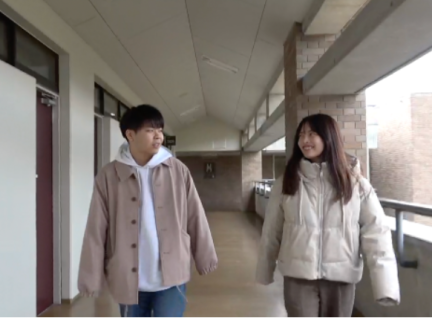
Fig. 1. Experimental image for data-collection during human-human side-by-side walking. Two participants walked side-by-side in a 100 m unobstructed corridor while engaging in free conversation.
2.3. Environment
Data were collected in the corridor of a classroom building on the university campus where the research team was based. The corridor provides a straight, unobstructed walking path of approximately 100 m in length. A video camera was used to capture participants’ behavior while walking and conversing. A tripod mounted on wheels was employed to ensure smooth and stable filming during movement.
2.4. Measurement
In this study, the measured behavior was operationally defined based solely on head orientation, and the actual eye gaze and eye movements were not considered. The criterion for determining whether a participant was directing their head toward their walking partner during movement was defined as the individual’s face oriented at an angle of 40° or more toward the partner relative to the forward-facing direction. This threshold was established based on a preliminary study examining the head orientation angles that contribute to the perception of being looked at while standing side-by-side. In that study, we investigated the angle at which the head was perceived to be turned sideways. A person was filmed from the side using a single camera while turning their head from front to side, with images extracted at 5° intervals. This procedure was carried out under static conditions, independent of the walking experiment shown in Fig. 1, and the author was the subject of the photographs used in the experiment. Evaluators (\(N=108\)) recruited via crowdsourcing were asked to indicate the images in which the head appeared be look sideways. The results indicated that the head was most frequently judged to be turned sideways at rotation angles between 50° and 55°. For the data-collection experiment, the participants changed their positions relative to each other, with one sometimes being more in front than the other.
In this analysis, 0° represents the participant facing straight ahead, with \(-\)90° indicating the head fully turned to the right and \(+\)90° indicating the head fully turned to the left.
2.4.1. Methods of Calculating Angles
An OPEN-CV-based program for estimating the angle a person is facing, available on GitHub, was used to measure the participants’ head-direction while they were walking and talking. The analysis code was inspired and developed based on the method in 24 to determine the angle of the head from 2D images.
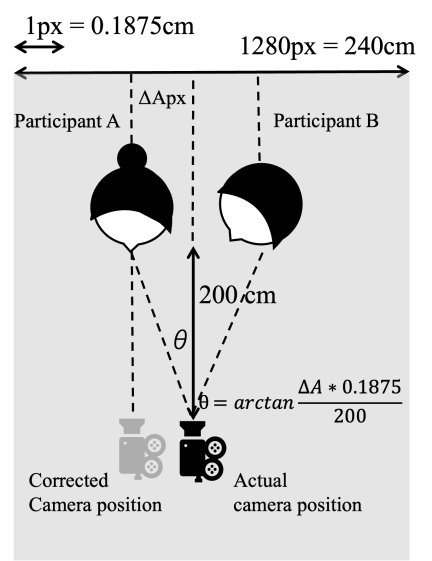
Fig. 2. Procedure for correcting head orientation angles based on camera position. Because the head-direction estimation program assumes a front-facing camera, the offset between the camera’s actual position and the participant’s face was calculated and compensated.
2.4.2. Method of Angle Correction
The angle correction method is shown in Fig. 2. The angle estimation program used in the angle calculation method assumes that the camera is shooting from the front. Therefore, the camera position was corrected such that it was exactly in front of the participants. Although only Participant A is shown as an example in Fig. 2 for simplicity, the same camera position correction was performed for both Participants A and B. In each frame, the camera position displacement (\(\Delta\)A,B) was calculated from the center of each head (bounding-box center), and the correction angle was calculated individually. The procedure for correcting the participant’s head-direction was as follows.
-
1.
The distance at the maximum angle of view of the camera was measured and the distance per pixel was calculated. The value was 0.1875 cm per px.
-
2.
The center of the participant’s head was extracted from each frame and the distance between the center of the head and the center of the head-direction angle was determined for each frame. The center of the participant’s head was used as the coordinate of the center of the bounding box attached during the estimation of head-direction. The misalignment for participant A is labelled \(\Delta\)A in Fig. 2.
-
3.
The distance from the camera to the participant (2 m) and the distance (\(\Delta\)A) calculated in the second step were used to estimate the error for each frame and correct the angle.
2.5. Results
The results for the duration of head-direction toward the other person are shown on the left side of Fig. 3. The graph shows the sum of each individual’s head-direction duration measurements, stacked across participants, where the horizontal axis represents the head-direction duration. The total number of head-direction episodes detected as being directed toward the other person was 828, with the most frequent glances lasting between 1 and 2 seconds. The results for the duration of the forward head-direction are shown on the right side of Fig. 3. The total number of glances detected while looking away was 828, with the mode being a head-direction duration within 1 second. At the individual level, the shape of the head-direction duration distributions was generally consistent with the group-level distribution shown in Fig. 3. These numbers match because the acts of looking at others and directing the head forward occur alternately. For durations longer than 15 seconds, a closer look revealed that only one participant exhibited head-direction toward the other person of that length, suggesting that it was an outlier. Conversely, forward head-direction durations exceeding 15 seconds were observed in four out of six participants, with such instances accounting for approximately 10% of their total forward head-direction episodes. This indicates that while long head-direction episodes toward the other person were rare and participant-specific, long forward head-direction episodes were less frequent but were shared among multiple participants and thus may reflect a broader behavioral tendency.
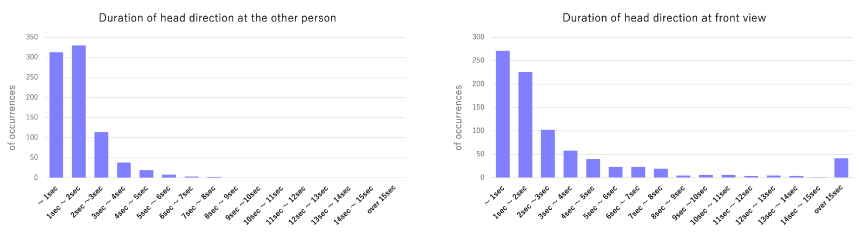
Fig. 3. Distribution of head-direction durations recorded during human-human side-by-side walking. Left: head-direction toward the walking partner. Right: forward head-direction.
3. Robot System
3.1. Modeling human Head-Direction
The dataset obtained from the data-collection described in the previous section was used to develop a head-direction model of the robot. The dataset consisted of histograms representing head-direction behavior during movement, specifically the duration distributions of the head-direction toward the walking partner and forward head-direction, as extracted from the recorded video footage (Fig. 3).
To model and implement the robot’s head-direction behavior, the measured data were analyzed to determine the distribution of time spent looking at the partner versus time spent looking away. The histograms, constructed by segmenting head-direction durations into one-second intervals, were fitted to various probability density functions, including gamma, chi-square, Cauchy, \(t\)-distribution, and lognormal distributions. To evaluate the fit of each distribution to the observed head-direction duration data, we calculated the Akaike Information Criterion (AIC) for each model. AIC is a widely used statistical measure of the relative quality of models for a given dataset, where lower values indicate a better balance between model complexity and goodness of fit25. Additionally, to compare candidate distributions more robustly, we calculated the Bayesian Information Criterion (BIC). Table 1 summarizes the AIC and BIC values for all the tested distributions, including the gamma, chi-square, Cauchy, \(t\)-distribution, and lognormal distributions. The BIC values showed the same tendency as the AIC values, and the lognormal distribution provided the lowest values for both head-direction durations toward the walking partner and forward head-direction durations. The fitting results for the head-direction toward the walking partner and the forward head-direction are presented in Fig. 4.
| Distribution | Frontal view AIC | Frontal view BIC | Other person AIC | Other person BIC |
| Gamma | 9.3836 | 19.1505 | 6.8272 | 16.6427 |
| Chi-square | 9.3836 | 19.1505 | 6.8272 | 16.6427 |
| Cauchy | 8.7056 | 18.4725 | 7.2491 | 17.0646 |
| \(t\)-distribution | 10.8504 | 25.5008 | 9.1699 | 23.8931 |
| Lognormal | 8.4135 | 18.1805 | 6.6947 | 16.5102 |
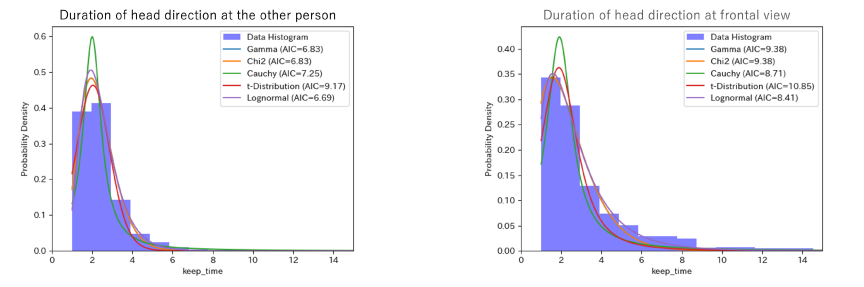
Fig. 4. Histogram fitting of head-direction duration data. The lognormal distribution showed the lowest AIC values in both cases, making it the best-fitting model.
Owing to the implementation constraints, the robot received head-direction commands from an external server. Owing to communication and processing latency, it was difficult to execute stable head-direction behaviors lasting less than 1 second. Therefore, in this experiment, the minimum duration of the robot’s head-direction was set to 1 second. In addition, head-direction durations longer than 15 seconds were eliminated because excessively long head-direction behaviors would have reduced the frequency of head-direction switching intended in the experimental model. This caused the overall distribution of the head-direction duration to appear slightly shifted to the right.
A comparison of the AIC values for each distribution indicated that the lognormal distribution provided the best fit for modeling head-direction behavior in this context.
In the lognormal distribution, \(s\) corresponds to the standard deviation of the log-transformed normal distribution (shape parameter), and \(\mathrm{scale}\) corresponds to the exponential transformation of the mean \(\mu\), i.e., \(\exp(\mu)\). Variable \(x\) represents the duration of each head-direction toward the walking partner or toward the forward direction. These parameters were used to generate the head-direction of the robot duration by fitting the subjects’ head-direction duration data. The fitted probability density function is given by
The estimated parameters for the lognormal distribution are presented below.
-
・
Head-direction toward the walking partner: \(s = 0.38\), \(\mathrm{scale} = 2.23\)
-
・
Forward head-direction: \(s = 0.60\), \(\mathrm{scale} = 2.27\)
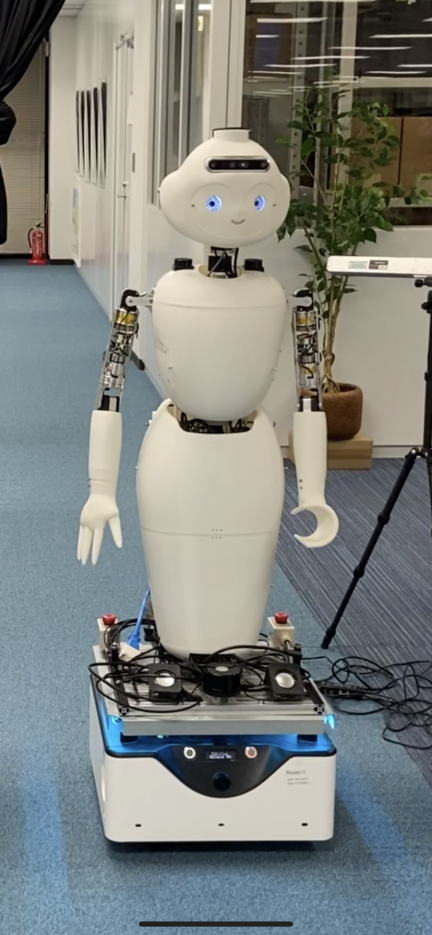
Fig. 5. “Indy” mobile robot used in this study. “Indy” has neck pitch/yaw and waist pitch control, allowing flexible switches in head-direction. The locomotion system (Keigan Ali) enables smooth side-by-side walking with participants.
3.2. Robot
In this study, a robot called Indy, developed as part of the RIKEN Guardian Robot Project, was used to assess the head-direction behavior model. Fig. 5 shows a photo of Indy.
The Indy is equipped with neck pitch and yaw control, as well as waist pitch control, enabling flexible movement. Its locomotion mechanism was based on the Keigan-Ali-system, developed by Keigan Co (https://www.keigan-ali.com/). Additionally, Indy features an embedded display within its eyes, allowing dynamic facial expression changes by modifying the displayed imagery. These capabilities facilitate effective communication with participants during motion.
To implement head-direction control in the experimental scenario, the pitch and yaw angles of the neck were adjusted to generate the appropriate switches in the head-direction. The eye display was configured to show an image simulating a human iris, enhancing the naturalness of the robot’s head-direction behavior. The eyes of the robot were constantly presented with an image simulating a human iris, and no eye movement control was performed. The orientation of the head was directly controlled as the head-direction behavior.
This design represents a simplified implementation of the robot’s head-direction behavior. In the present study, dynamic eye behaviors, such as blinking, saccades, and pupil movements, were not implemented, and the robot’s behavior was expressed only through head orientation. This simplification was adopted to isolate the effects of the head-direction duration and switching frequency. It should also be noted that many existing social robots, including platforms such as Sota and NAO, have limited or no capability to express natural eye movements such as blinking. Therefore, the present implementation reflects a practical constraint that is common to many robotic platforms.
3.3. Head-Direction Behavior Control
In the control phase of the robot’s head-direction behavior, commands are sent to the pitch and yaw angles of the robot to control its head-direction behavior and make it represent the head-direction duration generated by the head-direction model.
The robot’s head-direction behavior employed in this experiment consisted of a “look” function, which directed the robot’s head toward the participant, and a “look-front” function, which directed the robot’s head toward the forward direction. In the “look” function, the yaw angle of the robot is assigned a command value of 0.9 rad (approximately 50°), while the pitch angle is set to 0.5 rad (approximately 30°). The yaw angle used for head-direction control was based on prior knowledge regarding the angle at which a person is perceived as “looking” at someone when standing side-by-side. This threshold was derived from a preliminary online evaluation study conducted by the authors (see Section 2.4), in which participants were shown head rotation images at 5° intervals and asked to indicate the point at which they felt the person was looking sideways. The results showed that angles between 50° and 55° were most frequently perceived as conveying the impression of being looked at, and thus, a threshold of approximately 50° was adopted for head-direction control in this study. The pitch angle was set to look up by approximately 30°, such that the robot’s head was directed toward the author’s face when the author (168 cm) and robot were positioned at a distance of 1 m from each other. The angle was standardized for all participants, and the height was adjusted to match the height of the author, which approximates the average height of Japanese adults.
As the name suggests, the “look-front” function is a command that turns the robot’s head to the front. The experiments in Section 2.4 adopted a 40° threshold to ensure that no data would be omitted because of front-to-back positional shifts during walking. Conversely, the experiment described in Section 3.3 used 50°, which is the angle at which humans perceive that they are being observed, as a benchmark for designing robotic behavior. This discrepancy stems from the differing objectives: detection criteria during data-collection versus representation standards during robotic implementation. This methodological distinction is not expected to affect the interpretation of the results.
The SciPy module in Python was utilized to determine the duration of head-direction behaviors. The duration of each behavior was calculated based on the two parameters specified in the head-direction modeling process. To ensure accurate control timing and prevent overlap between the execution time of the head-direction commands and the modeled head-direction duration, the control time for the robot’s head-direction behavior was defined as the sum of the durations generated by the head-direction model and the time required for the robot to physically execute the head-direction command.
The temporal parameters governing the duration of the head-direction toward the walking partner and forward head-direction were generated by sampling from a lognormal distribution using the shape and scale parameters described in Section 3.1 and were sequentially stored in a list. The robot executed the switches in the head-direction according to the sequence of durations stored in the list.
For instance, consider a hypothetical sequence of head-direction durations represented as (4, 5, 4, 6, 5). In this scenario, the robot would first direct its head forward for 4 seconds, then shift its head-direction toward the partner for 5 seconds, followed by another forward-looking phase of 4 seconds, and so forth. The robot’s head movements were controlled to systematically alternate between these durations, ensuring realistic and dynamic head-direction behavior during the interaction.
4. Experiment
The robot evaluation experiment was designed as a basic evaluation of the head-direction behavior in a simple and controlled walking situation. Therefore, the experiment focused on whether the proposed head-direction duration pattern influenced the participants’ impressions under low-demand walking conditions.
4.1. Participants
Thirty-one participants (17 males and 14 females) were recruited for this experiment. They were university students with a mean age of 21.1 (\(\mathrm{SD}=0.92\)) who were randomly recruited through an application to a recruitment agency. The participants’ first language was Japanese, and explanations of the experiment were provided in Japanese. Due to a malfunction during the experiment, the experimental data of three participants were discarded, hence, data from 28 participants (17 males and 11 females) were used in the analysis.
4.2. Conditions
A head-direction behavior model for a robot walking side-by-side with a human was developed with the aim of enhancing perceptions of naturalness and safety. To evaluate its effectiveness, the experiment compared three conditions,
-
1.
Data-Driven Condition: The robot’s head-direction behavior was governed by the developed head-direction model.
-
2.
Control Condition: head-direction durations were randomly generated within a uniform distribution, with minimum and maximum durations of 1 second and 15 seconds, respectively.
-
3.
Baseline Condition: The robot does not shift its head and always faces forward while walking. This condition was used as the baseline without head-direction shifts toward the participant because continuously facing the forward direction was considered a reasonable reference behavior for safe navigation. This also served to familiarize the participants with the robot’s appearance and movement speed before evaluating the other conditions.
Participants completed the experimental task under each condition. In the data-driven and control conditions, the participants walked alongside the robot twice, once in each direction, within the experimental corridor. In the baseline condition, the participants walked alongside the robot only once.
4.3. Procedure
The participants were initially seated at a desk near the experimental environment and provided with a detailed explanation of the study. The experimental procedure was carefully outlined, and the participants were instructed on how to perform the task properly. The explanation for this is as follows:
“In this experiment, you will walk alongside the robot for approximately one minute. At both the start and end of the walk, you will be instructed to stand on a designated line marked with tape. When the robot crosses this line, it will initiate a turn. After the robot has completed its turn, you will receive a cue to begin the return walk. In both instances, the robot will initiate movement by turning toward you and then facing forward before proceeding.”
“The robot does not have the capability to speak; however, you are encouraged to imagine that they are conversing with the robot during the walk, while refraining from speaking aloud.”
“The experiment consists of two conditions. To familiarize you with the robot’s movement speed, the first phase of the experiment involves walking once with a robot that does not exhibit head-direction behavior and only displays a static eye image, without any dynamic facial expressions. This visual appearance will be kept the same in the following conditions. Following this introductory phase, you will be asked to complete a questionnaire assessing their initial impressions of the robot’s behavior. Subsequently, you will interact with the robots in the two conditions, each exhibiting distinct head-direction behaviors, and will complete a second questionnaire evaluating their impressions of the observed robot behaviors.”
The first condition for all participants was the baseline condition in which the robot exhibited no head-direction behavior. The order of the subsequent conditions (data-driven and control) was counterbalanced to account for the number of participants and their gender. Each participant experienced one of these two conditions in the second trial, followed by the remaining condition in the third trial. In the baseline condition, the robot initiated movement following the experimenter’s verbal cue, “start,” and participants began walking while maintaining a lateral position relative to the robot. In the subsequent conditions, after the “start” cue, the robot first oriented its head-direction toward the participant before initiating movement, then shifted its head-direction forward as it began walking. The interactions were recorded from the rear using a tripod-mounted camera.
Camera filming was conducted using the same method under all experimental conditions. The cameraman maintained a fixed distance behind the participant and the robot throughout the experiment. This filming procedure was consistent across all conditions, making it unlikely that the presence of the cameraman exerted any systematic influence on the specific conditions. Under the second and third conditions, upon reaching the designated goal point, the robot executed a turn and followed the same procedure as in the return trip, ensuring that each condition was completed as a round-trip interaction. After each condition, the participants were asked to complete a questionnaire evaluating their experiences under specific conditions. The experiment concluded once all three conditions were completed and the corresponding questionnaires were submitted.
The participant-robot interaction videos recorded for this experiment ranged in duration from 50 to 70 seconds. The robot used in the study was equipped with obstacle sensors designed to prevent collisions with humans and walls. Additionally, the robot maintained a predetermined movement speed, ensuring consistency in the session duration under normal conditions. However, in some instances, the robot movement speed deviated from the intended rate. This variation occurred when the participants moved too close to the robot or when the obstacle sensors misidentified objects, triggering unintended deceleration. Such fluctuations in speed were observed in several participant sessions, contributing to variability in the duration of the experiment. Videos of the participant-robot interactions were recorded under all experimental conditions, yielding a total of five videos per participant.
The above procedure was approved by the RIKEN Ethical Review Committee (RIKEN-W1-2022-045).
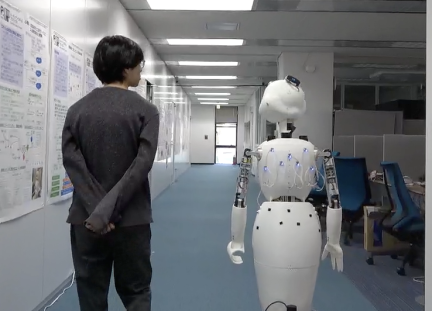
Fig. 6. Scene from the experiment evaluating robot head-direction behavior. A participant walks alongside the Indy robot in a straight 30 m corridor. Depending on the condition, the robot’s head-direction corresponded to the data-driven condition, control condition, or baseline.
4.4. Environment
The experiment was conducted in a straight, unobstructed corridor approximately 30 meters in length as part of the RIKEN Guardian Robot Project, in which the author is a participating member. The experimental setup is illustrated in Fig. 6. To record the participant-robot interactions, a tripod mounted on castors—similar to that used in the data-collection phase, was employed to ensure stable and consistent video capture throughout the experiment.
4.5. Measurement
The experiment employed three psychological scales to evaluate head-direction behavior derived from human head-direction data. The participants evaluated each condition using a custom Likert-type scale. All subjective items were rated on a 5-point scale, unless otherwise noted. Higher scores indicated more positive evaluations.
Safety:
The safety subscale of the Godspeed Questionnaire 26 was utilized to assess participants’ perceptions of safety.
Naturalness:
The naturalness subscale of the same instrument 27 was employed to evaluate the perceived naturalness of the robot’s head-direction behavior.
Custom Scale:
This scale aims to assess the key factors considered essential for the head-direction behavior of robots that move alongside humans and incorporates multiple perspectives. The elements included in this custom scale were as follows:
-
Q1:
Enjoyment of the robot
-
Q2:
Desire to engage in activities with the robot
-
Q3:
Interest in the robot
-
Q4:
Robots’ perceptions of the external environment
-
Q5:
Perceived assistance provided by the robot during times of need
The terms “enjoyment of the robot” and “desire to engage in activities with the robot” are derived from the perceived enjoyment scale of the Almere model, while “interest in the robot” corresponds to the perceived sociality scale from the same questionnaire 28. The Almere model is an extension of the technology acceptance model 29, designed to predict factors influencing the acceptance or rejection of information technology. This model has also been employed in studies examining the interactions between mobile robots and humans walking side-by-side 22. The questions “Robots’ perceptions of the external environment” and “Perceived assistance provided by the robot in times of need” were adapted from research on trust and perceived safety in self-driving cars 30. These items were included to evaluate whether implementing head-direction behavior alone—without any explicit assistance action—could enhance users’ feelings of trust or reassurance, such as the impression that the robot would help them if they were in trouble. Similar to mobile robots, self-driving cars are equipped with various sensors and are capable of autonomous movement. For our experiment, we adapted relevant questions from the questionnaire used to assess trust and safety in autonomous vehicles by making minor modifications, such as substituting the term “robot,” where necessary to align with the study’s context.
In addition to the questionnaire ratings, participants were asked to provide free-form comments after each condition. The authors categorized each comment as broadly positive or negative with respect to the corresponding condition.
5. Result
To analyze the questionnaire data, linear mixed-effects models were used for safety, naturalness, and custom questionnaire items. For each scale score or questionnaire item, the condition was included as a fixed effect, and participants were included as a random effect to account for repeated measurements from the same participant. When the fixed effect of the condition was significant, post-hoc pairwise comparisons were conducted using the Bonferroni correction. The reported \(p\)-values for pairwise comparisons were Bonferroni-adjusted. Because three pairwise comparisons were conducted among the three experimental conditions, the Bonferroni correction corresponds to an adjusted significance level of \(\alpha = .05 / 3 = .0167\) for unadjusted \(p\)-values.
5.1. Manipulation Check
We checked whether the head-direction behavior for the data-driven and control conditions was output according to the probability model for each condition. Fig. 7 depicts the experimentally generated durations of the head-direction toward the walking partner and the forward head-direction in the data-driven condition, and Fig. 8 presents the corresponding durations for the control condition. The results indicate that, under the data-driven condition, the duration of head-direction behavior adhered to the constructed model, whereas in the control condition, the head-direction durations exhibited a more uniform distribution. Although the measured data with durations below 1 second were eliminated from the 1–2 seconds range, this finding fits the head-direction duration model derived from the preliminary experiment. Thus, the results confirm that the head-direction behavior was successfully implemented and functioned as intended during the experiment.
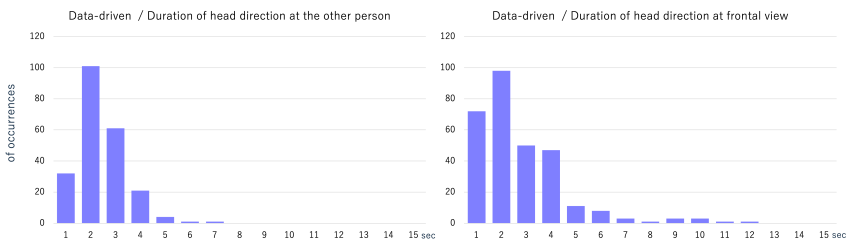
Fig. 7. Example of head-direction duration in the data-driven condition. Durations for participant-directed and forward head-direction were generated according to lognormal distributions derived from human data, and the robot alternated its head-direction accordingly.
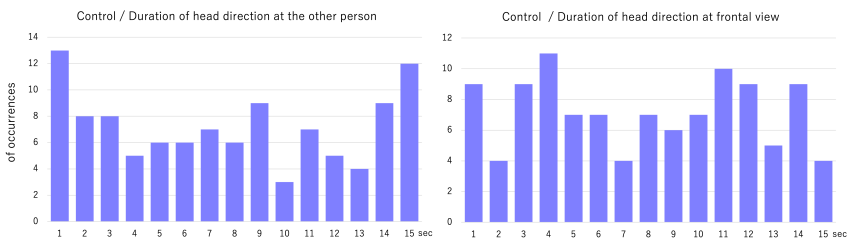
Fig. 8. Example of head-direction duration in the control condition. Durations for both participant-directed and forward head-direction were randomly generated from a uniform distribution between 1–15 s, producing more irregular head-direction patterns.
5.2. Safety
The results are shown in Fig. 9. The means of the safety scores were 11.57 (\(\mathrm{SD}=2.54\)), 11.89 (\(\mathrm{SD}=1.89\)) and 11.71 (\(\mathrm{SD}=2.61\)) for the baseline, data-driven, and control conditions, respectively. The linear mixed-effects model showed no significant effect of condition on perceived safety, \(F(2, 54) = 0.23\), \(p = .793\).
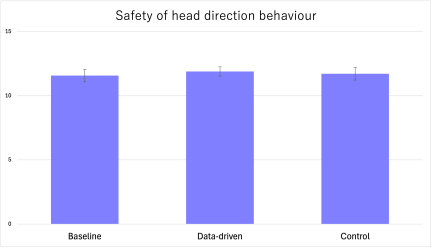
Fig. 9. Mean safety scores for baseline, data-driven, and control conditions. Error bars indicate standard deviation. No significant differences were observed between conditions.
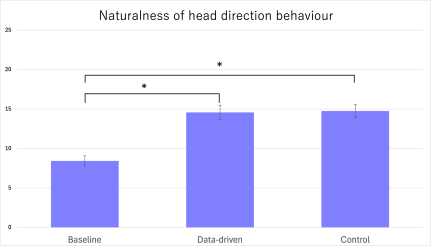
Fig. 10. Mean naturalness scores for baseline, data-driven, and control conditions. Error bars indicate standard deviation. Asterisks indicate significant differences. Both the data-driven condition and the control condition were rated significantly higher than the baseline.
5.3. Naturalness
The results are shown in Fig. 10. The mean of the naturalness scores were 8.43 (\(\mathrm{SD}=3.50\)), 14.57 (\(\mathrm{SD}=4.87\)) and 14.75 (\(\mathrm{SD}=4.49\)) for the baseline, data-driven, and control conditions, respectively.
The linear mixed-effects model showed a significant effect of the condition on naturalness, \(F(2, 54) = 28.09\), \(p < .001\). Post-hoc pairwise comparisons with Bonferroni correction showed significant differences between the baseline and data-driven conditions, \(p < .001\), and between the baseline and control conditions, \(p < .001\). No significant differences were observed between the data-driven and the control conditions, \(p = 1.000\). The naturalness of the robot’s head-direction behavior was rated higher under the data-driven and control conditions than under the baseline condition.
5.4. Custom Scale
Cronbach’s alpha was calculated for each experimental condition to examine the internal consistency of the custom questionnaire items. The Cronbach’s alpha values were \(\alpha = .82\) for the baseline condition, \(\alpha = .60\) for the data-driven condition, and \(\alpha = .51\) for the control condition. These results indicated that the internal consistency of the custom questionnaire items varied across conditions and was not consistently high. Therefore, the custom questionnaire items were analyzed separately rather than combined into a single composite score. The results are presented in Fig. 11.
The mixed-effects analyses showed significant effects of the condition on all custom questionnaire items: Q1, \(F(2, 54) = 13.49\), \(p < .001\); Q2, \(F(2, 54) = 13.37\), \(p < .001\); Q3, \(F(2, 54) = 115.27\), \(p < .001\); Q4, \(F(2, 54) = 5.42\), \(p = .007\); and Q5, \(F(2, 54) = 16.48\), \(p < .001\). Post-hoc pairwise comparisons with the Bonferroni correction showed that the data-driven and control conditions received significantly higher ratings than the baseline condition for Q1, Q2, Q3, Q4, and Q5. No significant differences were observed between the data-driven and control conditions for any custom questionnaire items.
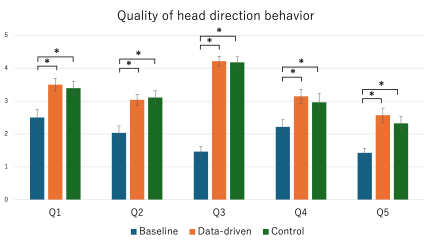
Fig. 11. Results for the custom questionnaire evaluating robot qualities. Error bars indicate standard deviation. Asterisks indicate significant differences (\(p < .05\), Bonferroni-corrected). The data-driven condition and the control condition scored significantly higher than the baseline for all custom questionnaire items.
| Positive opinion | Negative opinion |
| Data-driven condition | |
|
|
| Control condition | |
|
|
5.5. Participants’ Feedback Comments
Table 2 summarizes the participants’ feedback comments regarding the robot’s head-direction behavior under data-driven and control conditions. These comments reflected the participants’ subjective impressions.
5.5.1. Data-Driven Condition
Positive: Fourteen participants were positive, particularly in evaluating whether their gaze while walking felt natural, human, and attentive. Multiple participants mentioned improvements in interactions and changes in gaze duration favorably.
Negative: Six participants were negative, citing the unnatural timing of the gaze, safety concerns due to inattention to the front, and discomfort due to sustained gaze.
5.5.2. Control Condition
Positive: Twelve respondents were positive, indicating that eye contact and prolonged staring conveyed interest and humanity.
Negative: Eight respondents were negative, indicating the danger of prolonged sideways glances, unnaturalness, and discomfort caused by sudden changes in gaze.
6. Discussion
6.1. Effectiveness of the Data-Driven Condition
The data-driven condition was rated significantly higher than the baseline condition for items related to naturalness and interaction. This suggests that the moderate head-direction shifts in the data-driven condition functioned as positive signals indicating the robot’s interest, composure, and human-like naturalness. However, no significant differences were observed between the data-driven and control conditions for any of the items. This suggests that even head-direction behavior based on a uniform distribution, which was not observed in the human data, can still yield a certain level of evaluation.
At the same time, participants’ comments suggested that the frequency of head-direction shifts in the data-driven condition was not uniformly interpreted. The proposed model was designed to generate head-direction behavior based on the duration and switching frequency observed during side-by-side walking. Some comments suggested that frequent head-direction shifts were perceived positively. For example, one participant commented that “a lot of eye movement was seen, suggesting human-like behavior” (see Table 2, P3). Another participant stated, “They looked at us a lot, so it seemed like they had eye contact with us and we felt they cared about us” (see Table 2, P6). However, frequent head-direction shifts are not always positively evaluated. One participant commented that the robot “seemed to look at us too often” (see Table 2, P9). These comments indicate that head-direction frequency based on human data may not always be evaluated positively by all participants. Individual differences in preference, as well as differences between HHI and HRI interaction, may affect how appropriately the frequency of head-direction shifts appears.
6.2. Unexpected Findings and Design Implications
Contrary to initial predictions, the results of this study indicated that prolonged head-direction toward the participant in the control condition did not reduce evaluations of safety, naturalness, or custom questionnaire items. This unexpected finding is thought to stem from the low necessity for forward head-direction in the experimental environment, coupled with the prohibition of conversation. Consequently, head-direction behavior may have been interpreted not as a signal for conversational coordination, but as a social sign indicating the robot’s interest or attention.
Analysis of the participants’ comments revealed that prolonged staring was not necessarily perceived negatively.
This interpretation can be discussed in relation to Argyle and Dean’s affiliative conflict theory 13, which suggests that interpersonal intimacy is regulated through affiliative behaviors such as eye contact, interpersonal distance, and verbal intimacy. From this perspective, the prolonged partner-directed head-direction in the control condition may have increased the participant’s sense that the robot was directing interest or affiliative attention toward them, as reflected in the comment that the participant felt that the robot “liked me a little bit” (P10). At the same time, the participant also reported feeling “a bit nervous” (P10), suggesting that prolonged head-direction may simultaneously convey affiliative meaning and create discomfort when it exceeds an appropriate level. Thus, a favorable evaluation of the control condition may partly reflect the social effect of the partner-directed head-direction itself, even when head-direction duration does not follow the distribution observed in human side-by-side walking.
Furthermore, the results of this study suggest that behavior deviating from human data is not necessarily unnatural but may exert social influence. Human head-direction data do not exhibit a uniform duration distribution, and prolonged fixation is rare. However, in the control condition, head-direction behavior that deviated from statistical regularity emerged and was evaluated positively. This finding highlights that human perception does not necessarily rely on the “average naturalness” of a behavior, but instead engages in flexible interpretation.
Data-driven conditions have certain limitations. Averaging data from multiple participants smooths out extreme behaviors, making it difficult to express atypical actions that, although rare in human-derived models, can possess high expressiveness. In contrast, non-human, uniform behavior can output such rare, individualistic actions. The results obtained in this experiment provide important insights for future robot designs. Specifically, they suggested that head motion control in robots need not strictly adhere to human statistical patterns and that incorporating some degree of variation or deviation may be beneficial for evoking a more appealing and socially acceptable impression.
6.3. Application to Head-Direction Behavior Design
The results of this study suggest that prolonged head-direction toward the participant in the control condition did not necessarily lead to negative evaluations in the present experimental setting. We initially assumed that head-direction durations that were longer than those observed in human side-by-side walking might be perceived as unsafe or unnatural because the robot would appear to pay insufficient attention to the forward direction. However, both the data-driven and control conditions were evaluated more positively than the baseline condition, and no significant differences were observed between the data-driven and control conditions. This indicates that, in a nonverbal, straight, and obstacle-free corridor, even prolonged head-direction toward the participant may have been interpreted as a positive social signal, such as the robot paying attention to the participant, rather than as unsafe behavior.
This interpretation may partially reflect the characteristics of the experimental environment. Because the corridor was straight and unobstructed, the robot did not need to frequently avoid pedestrians, obstacles, or sudden changes in its walking path. Consequently, the participants may have had a relatively low expectation that the robot would continuously monitor the forward direction. Under such conditions, even a prolonged head-direction toward the participant in the control condition may have been positively accepted. However, in more complex environments, such as crowded or obstacle-rich spaces, the same behavior may be interpreted differently because participants may expect the robot to monitor its surroundings more actively.
Moreover, as indicated by comments such as “When the robot looked at me, I found myself looking back at it,” the robot’s head-direction appeared to function as a trigger for reciprocal looking even in the absence of speech. This suggests that head-direction behavior may also play a role during silent periods in human-robot co-walking scenarios.
7. Limitations and Considerations for Future Research
First, one limitation concerns the experimental setting and demographic composition of the participants. The Indy robot moved at a maximum speed of 0.5 m/s, which is slower than typical human walking speed, and the experiment was conducted in a straight, unobstructed corridor. In addition, the participants were limited to university students whose everyday walking speed may be faster than that of other populations. Therefore, for the present participants, the robot’s movement may have been perceived as relatively slow and low-risk, which may have reduced their expectation that the robot should frequently look forward or monitor the surrounding environment. This may partly explain why prolonged head-direction toward the participant, particularly in the control condition, was not interpreted as a serious lack of environmental awareness. However, this interpretation may not be generalizable to other populations. For example, older adults may have slower everyday walking speeds and may perceive the same robot speed differently than university students. In faster, crowded, or obstacle-rich environments, or with participants from different demographic groups, the same head-direction behavior may be interpreted differently, for example as the robot not paying sufficient attention to pedestrians or obstacles. Future studies should examine the proposed head-direction behavior model with more diverse participant groups and in environments in which the robot is required to monitor its surroundings more actively, such as situations involving higher walking speeds, pedestrians, obstacles, or changes in the walking path.
Second, the participants were instructed not to speak during the robot evaluation experiment, although the study was motivated by side-by-side walking interactions involving conversations. This procedure was adopted to isolate the effect of head-direction duration patterns from speech-related factors such as speech content, utterance timing, turn taking, and individual differences in conversational style. However, this made the experimental situation less similar to natural walking conversations, in which head-direction and speech are closely related. Therefore, the present findings should be interpreted as a basic evaluation of the robot head-direction duration patterns under controlled non-speaking conditions. Future studies should examine head-direction behavior in walking interactions that allow for natural conversations.
Third, the explanatory power of the proposed head-direction model is inherently limited by its simplified design. The present model focuses on the duration and switching frequency of head-direction and does not account for more complex aspects of visual interaction, such as mutual gaze, conversational turn taking, adaptive head-direction control, or conversational contingency. In natural human interactions, head-direction and gaze are often co-regulated between participants and are closely linked to communicative events, including turn taking, laughter, and moment-to-moment feedback. Therefore, the present model should not be interpreted as a comprehensive model of gaze or head-direction interactions in mobile HRI. Rather, it represents an initial implementation that focuses on head-direction duration patterns during side-by-side walking. Future studies should examine more complex aspects of interaction by incorporating mutual gaze, conversational states, adaptive responses, and human partner behavior.
Fourth, the eye expressions of the robot were simplified. The robot displayed a static iris image and did not implement dynamic eye behaviors such as blinking, saccades, or pupil movements. Therefore, the absolute levels of perceived naturalness and social realism may be lower than those of a robot with richer eye expressions. However, this limitation was common to all experimental conditions, including the baseline, data-driven, and control conditions. Therefore, although the static-eye implementation may have reduced the overall perceived naturalness of the robot, it is unlikely to have systematically biased the comparison between the conditions. Future studies should examine whether adding dynamic eye behaviors changes the perceived naturalness and social interpretation of head-direction behavior during side-by-side walking.
Fifth, the baseline conditions have some limitations. Although continuously looking straight ahead was selected as a reasonable reference behavior for safe navigation during robot walking, the absence of head movement may have reduced the perceived responsiveness or capability of the robot. Future studies could include additional baseline conditions, such as a robot that does not direct its head toward the participant but periodically turns its head to check the forward or surrounding environment.
Finally, the yaw angle used for the participant-directed head was fixed at approximately 50°. This setting was appropriate in the present experiment because the participants walked alongside the robot in a straight and unobstructed corridor, and the relative distance between the robot and the participant remained approximately constant. However, this fixed angle may not be sufficient in dynamic walking situations. If the distance or relative position between the robot and participant changes, the angle required for the robot to direct its head toward the participant may also change. Therefore, adaptive head-direction control based on the relative position and distance between the robot and human partner may be worth considering in future studies.
8. Conclusion
The findings of this study have significant implications for the future design of mobile robot head-direction behaviors. Traditionally, HRI research has focused on designing robotic behaviors that closely mimic human social behaviors. However, the results of this study suggest that robot head-direction behavior does not necessarily need to replicate human head-direction patterns to be perceived as natural and effective in a dynamic movement-based environment.
Notably, even when the robot exhibited a head-direction behavior that deviated from typical human norms, the participants did not perceive it as unnatural. This suggests that, in contexts involving movement, head-direction behavior optimized for interaction and engagement may be more effective than strict adherence to human-like head-direction patterns.
To validate this hypothesis further, future research should explore whether similar effects extend to other forms of nonverbal communication in mobile robots. In particular investigating:
-
・
Gestures in a Moving Environment: Examining whether non-human-like gestures can enhance interaction and engagement during movements.
-
・
Head-Direction Behavior for Turn Taking: Assessing how adaptive head-direction switching, which regulates conversational turn taking, functions in mobile interaction scenarios.
Clarifying these aspects will contribute to a more comprehensive understanding of nonverbal communication in mobile robots, ultimately enabling the development of more effective and socially engaging robot behaviors beyond human-based interaction models.
Acknowledgments
GPT-4o (version 2024-08-06) was used solely for language improvement and all AI-assisted texts were carefully reviewed and edited by the authors. This work was partially supported by JSPS (Japan Society for the Promotion of Science) KAKENHI, Grant Numbers 22H03895 and 24K21327, and JST RISTEX JPMJRS24L3 and JST SPRING JPMJSP2129.
- [1] N. Ise, Y. Nakata, Y. Nakamura, and H. Ishiguro, “Gaze Motion and Subjective Workload Assessment While Performing a Task Walking Hand in Hand with a Mobile Robot,” Int. J. of Social Robotics, Vol.14, pp. 1875-1882, 2022. https://doi.org/10.1007/s12369-022-00919-5
- [2] Y. Kuno et al., “Museum guide robot based on sociological interaction analysis,” Proc. of the SIGCHI Conf. on Human Factors in Computing Systems (CHI ’07), pp. 1191-1194, 2007. https://doi.org/10.1145/1240624.1240804
- [3] Y. Iwamura et al., “Do elderly people prefer a conversational humanoid as a shopping assistant partner in supermarkets?,” Proc. of the 6th Int. Conf. on Human-Robot Interaction (HRI ’11), pp. 449-456, 2011. https://doi.org/10.1145/1957656.1957816
- [4] E. Repiso, F. Zanlungo, T. Kanda, A. Garrell, and A. Sanfeliu, “People’s V-Formation and Side-by-Side Model Adapted to Accompany Groups of People by Social Robots,” 2019 IEEE/RSJ Int. Conf. on Intelligent Robots and Systems (IROS), pp. 2082-2088, 2019. https://doi.org/10.1109/IROS40897.2019.8968601
- [5] E. Repiso, A. Garrell, and A. Sanfeliu, “Adaptive Social Planner to Accompany People in Real-Life Dynamic Environments,” Int. J. of Social Robotics, Vol.16, pp. 1189-1221, 2022. https://doi.org/10.1007/s12369-022-00937-3
- [6] E. Coronado, T. Shinya, and G. Venture, “Hold My Hand: Development of a Force Controller and System Architecture for Joint Walking with a Companion Robot,” Sensors, Vol.23, No.12, Article No.5692, 2023. https://doi.org/10.3390/s23125692
- [7] M. Cheng, M. Kato, J. A. Saunders, and C.-h. Tseng, “Paired walkers with better first impression synchronize better,” PLOS ONE, Vol.15, No.2, Article No.e0227880, 2020. https://doi.org/10.1371/journal.pone.0227880
- [8] C. L. Kleinke, “Gaze and Eye Contact: A Research Review,” Psychological Bulletin, Vol.100, No.1 pp. 78-100, 1986. https://doi.org/10.1037/0033-2909.100.1.78
- [9] J. Cassell, O. E. Torres, and S. Prevost, “Turn taking vs. Discourse Structure: How Best to Model Multimodal Conversation,” Kluwer, 1998.
- [10] A. Kendon, “Some functions of gaze-direction in social interaction,” Acta Psychologica, Vol.26, pp. 22-63, 1967. https://doi.org/10.1016/0001-6918(67)90005-4
- [11] S. Andrist et al., “Conversational Gaze Aversion for Virtual Agents,” Proc. of Intelligent Virtual Agents (IVA 2013), pp. 249-262, 2013. https://doi.org/10.1007/978-3-642-40415-3_22
- [12] S.-H. Kang et al., “Towards building a virtual counselor: Modeling nonverbal behavior during intimate self-disclosure,” Proc. of the 11th Int. Conf. on Autonomous Agents and Multiagent Systems (AAMAS ’12), pp. 63-70, 2012.
- [13] M. Argyle and J. B. Dean, “Eye-Contact, Distance and Affiliation,” Sociometry, Vol.28, No.3 pp. 289-304, 1965. https://doi.org/10.2307/2786027
- [14] B. Mutlu, T. Kanda, J. Forlizzi, J. Hodgins, and H. Ishiguro, “Conversational gaze mechanisms for humanlike robots,” ACM Trans. Interact. Intell. Syst., Vol.1, No.2, Article No.12, 2012. https://doi.org/10.1145/2070719.2070725
- [15] T. Shintani et al., “Expression of Personality by Gaze Movements of an Android Robot in Multi-Party Dialogues,” 2022 31st IEEE Int. Conf. on Robot and Human Interactive Communication (RO-MAN), pp. 1534-1541, 2022. https://doi.org/10.1109/RO-MAN53752.2022.9900812
- [16] J. Ham, R. H. Cuijpers, and J.-J. Cabibihan, “Combining Robotic Persuasive Strategies: The Persuasive Power of a Storytelling Robot that Uses Gazing and Gestures,” Int. J. of Social Robotics, Vol.7, pp. 479-487, 2015. https://doi.org/10.1007/s12369-015-0280-4
- [17] P. Auer and B. Laner, “Laughter and gaze among talkers on a walk,” E. Zima and A. Stukenbrock (Eds.), “Mobile eye tracking: New avenues for the study of gaze in social interaction,” John Benjamins Publishing, 2025. https://doi.org/10.1075/pbns.351.08aue
- [18] R. Vertegaal et al., “Eye gaze patterns in conversations: There is more to conversational agents than meets the eyes,” Proc. of the SIGCHI Conf. on Human Factors in Computing Systems (CHI ’01), pp. 301-308, 2001. https://doi.org/10.1145/365024.365119
- [19] M. Argyle and R. Ingham, “Gaze, mutual gaze, and proximity,” Semiotica, Vol.6, No.1, pp. 32-49, 1972. https://cir.nii.ac.jp/crid/1571135650380249472
- [20] J. N. Cappella and C. Pelachaud, “Rules for Responsive Robots: Using Human Interactions to Build Virtual Interactions,” A. L. Vangelisti, H. T. Reis, and M. A. Fitzpatrick (Eds.), “Stability and change in relationships,” pp. 325-354, Cambridge University Press, 2002. https://doi.org/10.1017/CBO9780511499876.018
- [21] K. He, W. P. Chan, A. Cosgun, A. Joy, and E. A. Croft, “Robot Gaze During Autonomous Navigation and Its Effect on Social Presence,” Int. J. of Social Robotics, Vol.16, No.5, pp. 879-897, 2024. https://doi.org/10.1007/s12369-023-01023-y
- [22] D. Karunarathne, Y. Morales, T. Nomura, T. Kanda, and H. Ishiguro, “Will Older Adults Accept a Humanoid Robot as a Walking Partner?,” Int. J. of Social Robotics, Vol.11, pp. 343-358, 2019. https://doi.org/10.1007/s12369-018-0503-6
- [23] H. Admoni and B. Scassellati, “Social eye gaze in human-robot interaction: A review,” J. Hum.-Robot Interact., Vol.6, No.1, pp. 25-63, 2017. https://doi.org/10.5898/JHRI.6.1.Admoni
- [24] H. Zhou, F. Jiang, and H. Lu, “DirectMHP: Direct 2D Multi-Person Head Pose Estimation with Full-range Angles,” arXiv preprint, arXiv:2302.01110, 2023. https://doi.org/10.48550/arXiv.2302.01110
- [25] H. Akaike, “A new look at the statistical model identification,” IEEE Trans. on Automatic Control, Vol.19, No.6, pp. 716-723, 1974. https://doi.org/10.1109/TAC.1974.1100705
- [26] C. Bartneck, D. Kulić, E. Croft, and S. Zoghbi, “Measurement instruments for the anthropomorphism, animacy, likeability, perceived intelligence, and perceived safety of robots,” Int. J. of Social Robotics, Vol.1, No.1, pp. 71-81, 2009. https://doi.org/10.1007/s12369-008-0001-3
- [27] L. Moshkina, “Reusable semantic differential scales for measuring social response to robots,” Proc. of the Workshop on Performance Metrics for Intelligent Systems (PerMIS ’12), pp. 89-94, 2012. https://doi.org/10.1145/2393091.2393110
- [28] M. Heerink, B. Kröse, V. Evers, and B. Wielinga, “Assessing Acceptance of Assistive Social Agent Technology by Older Adults: The Almere Model,” I. J. Social Robotics, Vol.2, pp. 361-375, 2010. https://doi.org/10.1007/s12369-010-0068-5
- [29] F. D. Davis, “Perceived Usefulness, Perceived Ease of Use, and User Acceptance of Information Technology,” MIS Quarterly, Vol.13, No.3, pp. 319-340, 1989. https://doi.org/10.2307/249008
- [30] S. C. Kumaran et al., “A Social Approach for Autonomous Vehicles: A Robotic Object to Enhance Passengers’ Sense of Safety and Trust,” Proc. of the 2024 ACM/IEEE Int. Conf. on Human-Robot Interaction (HRI ’24), pp. 86-95, 2024. https://doi.org/10.1145/3610977.3634998
This article is published under a Creative Commons Attribution-NoDerivatives 4.0 Internationa License.