
Research Paper:
Development of Paper-Based Wearable Pressure Sensors for Evaluation of Swallowing Function
Baokang Zhang*, Jiahui Huang**, Ryuichi Yashima**, Kazuya Suzuki**, and Takahiro Arakawa**
*College of Information Engineering, Zhejiang University of Technology
No.18 Chaowang Road, Hangzhou, Zhejiang 310014, China
**Sustainable Engineering, Tokyo University of Technology
1404-1 Katakuramachi, Hachioji, Tokyo 192-0982, Japan

The decline in swallowing function has a profound impact on health, particularly for the elderly, as it not only reduces quality of life but also increases the risk of health issues such as aspiration pneumonia. In this study, a small, disposable paper-based pressure sensor was developed to evaluate swallowing function in a non-restrictive manner. To address the limited accuracy of paper-based carbon pressure sensors, we proposed increasing the thickness of the carbon layer and applying a controlled pressure during the drying process. As a result, the enhanced pressure sensor is capable of detecting minute pressures as low as 6 Pa with a high linear correlation (linear correlation coefficient: 0.9989), which is sufficient to capture pressure changes near the laryngeal prominence during swallowing. Furthermore, by enabling Bluetooth transmission of swallowing data from the sensor to a smartphone, real-time measurement and data management were realized, allowing clinicians and patients to conveniently obtain swallowing status information and support targeted intervention. The preliminary wearable swallowing test involved a total of 10 participants covering three age cohorts: three young adults aged 20–30 years, three middle-aged adults and four elderly individuals. Distinct swallowing characteristic waveforms were successfully collected from all volunteers. The average swallowing duration ranged from 0.62–0.89 s for young subjects, 0.74–0.96 s for middle-aged subjects, and 0.87–1.13 s for elderly subjects, with obvious discrepancies across age groups and individuals. The multi-age test results fully confirm that the sensor stably perceives tiny pressure fluctuations induced by laryngeal movement and is applicable for swallowing monitoring among diverse age populations. Although this work is a preliminary feasibility verification, the collected data validate the practicability of the fabricated sensor. In future research, we will enlarge the sample size and enroll patients with dysphagia to carry out systematic clinical tests for further performance assessment of the sensor.
1. Introduction
The global demographic shift toward an aging society has accelerated over the past decades, posing critical public health and socioeconomic challenges 1. According to international demographic projections, the elderly population continues to increase at an unprecedented rate, leading to a surge in age-related functional impairments 2. Among these, the decline in swallowing function—medically recognized as dysphagia—has gained significant attention due to its profound impact on morbidity and mortality in older adults 3. Dysphagia arises primarily from neuromuscular degeneration associated with normal aging, but it is further exacerbated in individuals with neurological disorders such as stroke, Parkinson’s disease, and dementia 4. These conditions compromise the coordination of oropharyngeal structures, resulting in impaired bolus transit and reduced airway protection during swallowing 5.
The clinical implications of dysphagia are substantial. Impaired swallowing heightens the risk of malnutrition, dehydration, and aspiration of food or saliva into the airway, potentially leading to aspiration pneumonia, a major cause of hospitalization and mortality among the elderly 6. The insidious and progressive nature of dysphagia underscores the critical importance of routine monitoring, early detection, and timely intervention 7. Evidence suggests that early identification of subtle swallowing difficulties allows more effective rehabilitation and may prevent life-threatening complications 8. However, implementing routine monitoring within daily life remains challenging due to the lack of accessible, non-invasive, and user-friendly screening tools.
Currently, swallowing assessment in clinical practice relies primarily on methods such as fiberoptic endoscopic evaluation of swallowing (FEES), videofluoroscopic swallowing study (VFSS), and high-resolution manometry (HRM) 9,10. These methods provide high spatial and temporal precision for analyzing pharyngeal biomechanics and bolus flow characteristics. Nevertheless, their broad implementation is hindered by several limitations: (1) FEES and VFSS require trained clinicians and specialized medical equipment; (2) VFSS exposes patients to ionizing radiation; (3) HRM involves catheter insertion into the pharynx and esophagus, which can cause discomfort and is unsuitable for repeated daily use; and (4) all tests require clinical environments, preventing long-term home-based monitoring 9,10,11. Consequently, these limitations collectively impede the ability to conduct continuous or frequent swallowing function evaluations in real-world settings, where early changes are most likely to be observed 12.
To overcome such constraints, researchers have increasingly pursued non-invasive, wearable sensing technologies capable of detecting laryngeal motion or acoustic signals associated with swallowing 13. Pressure sensors—owing to their compact structure and direct mechanical coupling with the skin—show particular promise 14. Various sensing mechanisms have been investigated, including capacitive, piezoelectric, and fiber-optic-based approaches. Capacitive sensors are lightweight, flexible, and energy-efficient, enabling robust performance in wearable systems, although they may be susceptible to electromagnetic interference 15. Piezoelectric sensors respond rapidly to mechanical changes, making them suitable for detecting the dynamic phases of swallowing, but they often suffer from signal drift over prolonged use 16. Fiber-optic sensors provide immunity to electromagnetic noise, high biocompatibility, and suitability for in vivo applications, as demonstrated by Maeda et al. 17; however, their fabrication and integration typically require precision alignment and high material costs, which limit widespread deployment in consumer health monitoring devices.
Given these challenges, there is a growing need for pressure sensors that combine low cost, mechanical flexibility, high sensitivity to subtle laryngeal movements, ease of fabrication, and compatibility with large-scale production 18. Paper-based sensors have emerged as an attractive candidate due to their inherent biodegradability, lightweight properties, customizable surface chemistry, and seamless manufacturability through scalable processes such as screen printing, roll-to-roll coating, or brush coating. Carbon-based conductive layers deposited on cellulose substrates enable stable piezoresistive behavior while maintaining the softness required for long-term skin contact. Such advantages align well with the practical requirements of home-based swallowing assessment, particularly for elderly users who may have sensitive or fragile skin.
In this study, we present a paper-based wearable pressure sensor system that enables non-invasive detection of swallowing-related laryngeal motion 19. Compared with previously reported fiber-optic systems 17, the proposed platform significantly reduces material cost, fabrication complexity, and system size. The sensing performance can be tuned by adjusting the carbon deposition parameters, allowing optimization for detecting minute pressure variations produced during the elevation of the laryngeal prominence. The device integrates seamlessly with a smartphone-based data acquisition and visualization interface, eliminating the need for laboratory-grade equipment and enhancing user accessibility. The combination of ultralightweight structure, mechanical flexibility, and natural biocompatibility offers superior comfort during extended wear, an essential requirement for continuous monitoring applications.
Furthermore, the environmentally friendly nature of paper-based electronics aligns with the increasing emphasis on sustainable healthcare technologies. By reducing reliance on complex electronic components and non-biodegradable materials, the proposed device contributes to minimizing electronic waste and fostering eco-friendly manufacturing practices 20.
Overall, this work aims to advance the field of swallowing function assessment by providing a scalable, cost-effective, and highly accessible sensing platform suitable for daily health management. The proposed system holds potential not only for early detection of dysphagia but also for rehabilitation tracking, telemedicine integration, and long-term public health surveillance within aging populations. Through its simplicity, comfort, and practicality, the paper-based wearable sensor represents a promising step toward democratizing swallowing health monitoring and enabling personalized healthcare strategies in real-world environments.
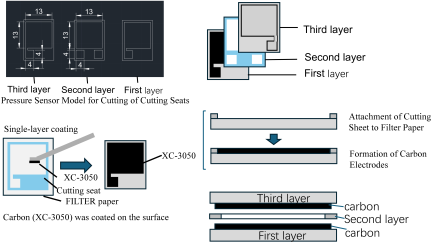
Fig. 1. Method for fabricating paper-based pressure sensors.
2. Experimental Methods
2.1. Fabrication of Paper-Based Pressure Sensor
The paper-based pressure sensor fabricated in this study was made by using paper as a base material and applying carbon conductive paint (XC-3050) to its surface. After applying the carbon paint, a pattern was created so that the carbon paint could penetrate at specific sites, and drying treatment was performed using a hot plate at 80°C (Fig. 1). This sensor has a three-layer structure, with carbon electrodes formed on the first and third layers, and a polypropylene film with a through structure used for the central second layer. When pressure is applied to the upper or lower surface, the carbon electrodes of the first and third layers come into contact, resulting in a change in electrical resistance 21. At this time, as the applied pressure increases, the contact area expands, and the resistance value decreases (Fig. 2).
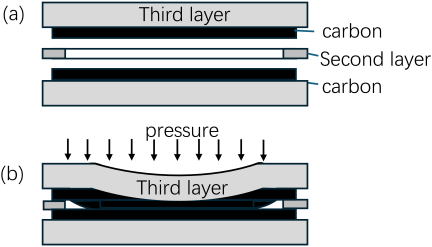
Fig. 2. Cross-sectional views of the paper-based pressure sensor: (a) under static conditions, and (b) under applied pressure.
2.2. Measurement of Pressure Characteristics and Stability of Sensors with Different Sizes
To evaluate the pressure characteristics of the paper-based pressure sensor, experiments were conducted in which pressures ranging from 0.3 kPa to 6 kPa were applied stepwise. A precision pressure-loading device was used to incrementally increase the pressure from 0.3 kPa at fixed intervals up to a maximum of 6 kPa. The output current of the sensor was measured at each pressure level, and the relationship between pressure and output current was recorded. The obtained data were entered into statistical analysis software for further analysis. In the evaluation of pressure response characteristics, indicators such as linearity of the graph and sensitivity were analyzed. Furthermore, in order to compare pressure characteristics under different sensor size conditions, sensors of varying sizes were subjected to the same experimental procedure. In addition, to evaluate the repeatability of the paper-based pressure sensor, 100 consecutive loading–unloading cycles were performed on a single fabricated sensor for repeatability testing, with its output current recorded using a dedicated measurement circuit.
2.3. Fabrication of Multi-Layer Structure Sensor for Sensitivity Improvement
Since sensitivity is defined as the ratio of the output change to the resistance change, assuming that the resistance change is constant, it is considered that the smaller the initial resistance, the higher the sensitivity 22. In addition, since electrical resistance depends on the cross-sectional area of the conductive layer, the thickness of the conductive layer, that is, the thickness of the carbon layer, affects the initial resistance. Therefore, for the purpose of controlling the thickness of the carbon layer, paper-based pressure sensors with carbon applied stepwise from one layer to five layers were fabricated, and the sensitivity of each sensor was compared and evaluated (Fig. 3). In fabricating the sensor, a multi-layer conductive layer was formed by repeating the process of drying after carbon application and then applying carbon again to the surface and drying.
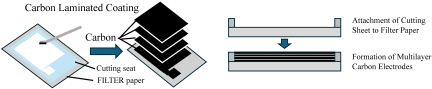
Fig. 3. Method for fabricating multilayer structure sensors.
2.4. Carbon Sensor Fabrication Process Including Pressure Application During Drying
To improve the reproducibility and minimum detectable load of the pressure sensor, we attempted to optimize the drying process of the carbon layer. Specifically, during the fabrication of multilayer-structured carbon-based sensors, a treatment was introduced in which a constant pressure of 600 Pa was applied during the drying of each carbon layer, aiming to reduce internal voids and enhance film density. In our previous study, although a minimum detectable load of 0.1 g was achieved, the measurement results exhibited significant variability, indicating a reproducibility issue. In the present study, sensors were fabricated both with and without the application of pressure during drying. Sensitivity measurements were conducted for each condition, and the standard deviations of the resulting output data were compared to evaluate the effect on sensor reproducibility.
2.5. Investigation of New Carbon Coating Process
To achieve both simplification of the manufacturing process and enhancement of sensor performance, a novel carbon coating process was investigated. In the conventional method, a four-layer conductive film was fabricated by repeating the cycle of applying and drying a thin carbon layer four times. However, this sequential multilayer deposition process involved complex steps and posed challenges in terms of reproducibility and productivity. In contrast, the newly developed process adopts a single-step coating method in which a carbon layer with a thickness equivalent to four conventional layers is applied at once, followed by a single drying process to form a thick film. This approach is expected not only to reduce the number of steps and shorten the fabrication time, but also to enable evaluation of the effects on film thickness uniformity, sensitivity, and reproducibility. In this section, the sensitivity and reproducibility of sensors fabricated by these two methods are compared and discussed.
2.6. Evaluation of Pressure Response Characteristics During Swallowing Using a Wearable Cervical Pressure Measurement Method
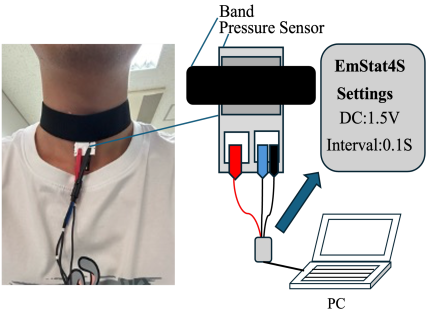
Fig. 4. Schematic illustration of the wearable paper-based pressure sensor for swallowing evaluation.
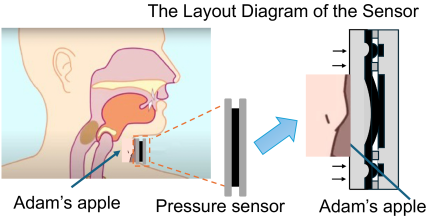
Fig. 5. Schematic image of a sensor mounted on the human neck.
A computer was connected to a current measurement device (EmStat 4S, Palmsens), and measurement software was started and set up (Fig. 4). The measurement interval was set to 0.1 seconds, and the output current accuracy was set to \(\pm0.01\) mA. As shown in Fig. 5, this paper-based pressure sensor has excellent flexibility, and sensors of different sizes were fabricated to optimize the area of the pressure-sensitive part, and their performance was evaluated. Next, a paper-based pressure sensor was attached under the subject’s Adam’s apple. The attachment position was selected based on human anatomical knowledge as the area below the Adam’s apple, and fixed using a flexible fixing band 17. After attachment, it was confirmed that the subject had no discomfort and that the sensor position did not shift. Thereafter, the subject was instructed to perform a swallowing action, where each subject swallowed 5 mL of room-temperature purified water for each test, and the test was repeated 10 times to take the average value. During each swallowing action, the output current of the sensor was transmitted to the computer in real time via the current measurement device and recorded continuously. This testing protocol was implemented to ensure the reliability and stability of the collected data. After the measurement was completed, the collected data were analyzed, and the output current waveform for each swallowing action was observed in detail. Specifically, feature quantities such as the peak value, valley value, rise time, and fall time of the waveform were extracted to evaluate the characteristics of the swallowing action. Swallowing duration \(T_s\) was defined based on waveform morphology. The onset of swallowing was determined as the time point at which a sharp rise appeared in the signal waveform accompanied by a substantial change in the time differentiated value, whereas the offset of swallowing was defined as the point where the steep slope of the waveform gradually moderated and signal elevation began to converge. To minimize subjective bias, identical criteria were applied to all measurements.
Preliminary wearable tests were expanded to a total of 10 volunteers consisting of three young adults aged 20–30 years, three middle-aged participants aged 42–55 years and four elderly volunteers aged 62–76 years. All enrolled subjects had no confirmed dysphagia, throat inflammation or nervous system diseases. The paper-based sensor was fixed underneath each subject’s laryngeal prominence via flexible straps.
3. Results and Discussion
3.1. Evaluation of Pressure and Stability Characteristics of Sensors with Different Sizes
The sensitivity of each size sensor (\(13\times13\) mm square, \(16\times16\) mm square, \(19\times19\) mm square) was calculated within the pressure range from 0.3 kPa to 6 kPa. Specifically, the calculation was performed based on the formula, where \(\Delta I\) is the change in output current and \(\Delta P\) is the change in pressure. As a result, all sensor sizes showed high sensitivity, with an average sensitivity of approximately 55 μA/kPa. Furthermore, a comparative analysis between sensors with different volumes confirmed that even the sensor with a reduced volume (\(13\times13\) mm square) could maintain high sensitivity (Fig. 6). When the relationship between pressure and output current was graphed, all sensor sizes showed good linearity (Fig. 7). This suggests that the sensor can detect even slight pressure changes and can evaluate pressure changes during swallowing. The fact that miniaturized sensors maintain high sensitivity is a great advantage in practical applications. In the 100-cycle repeated tests of the \(13\times13\) mm sensor, the average output current was 382.56 mA, with a standard deviation of 7.65 mA. Similarly, the \(16\times16\) mm sensor exhibited an average of 191.96 mA and a standard deviation of 9.33 mA, while the \(25\times25\) mm sensor showed an average of 166.30 mA and a standard deviation of 6.86 mA (Fig. 8). The relatively small standard deviations indicate that the variation in output current across the tests was minimal, demonstrating that the sensor stability is independent of size. As mentioned above, the small-sized sensor not only improves wearability and comfort, but also maintains sensitivity and stability, enabling the development of high-performance wearable devices.
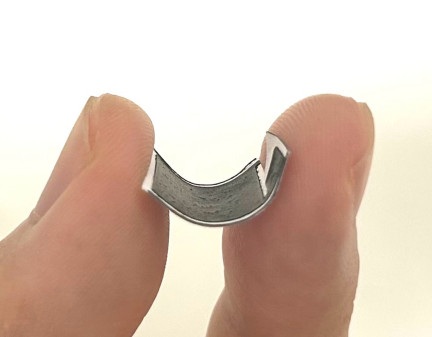
Fig. 6. Photograph of the paper-based pressure sensor.
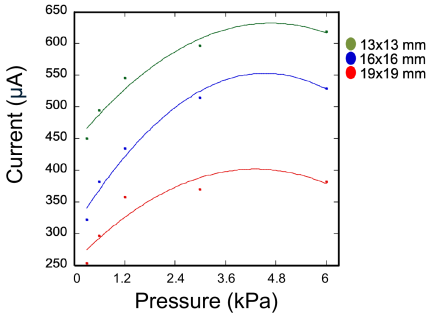
Fig. 7. Output current and quantitative characteristics of three paper-based pressure sensors with different sizes under applied pressure.
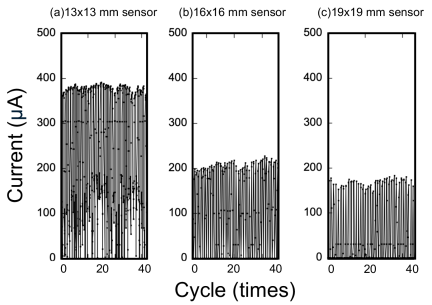
Fig. 8. 100-Cycle reproducibility of three sizes of paper-based pressure sensors.
3.2. Evaluation of Difference in Number of Carbon Coating Layers
The minimum detection amount and sensitivity were evaluated for pressure sensors with different numbers of carbon coating layers. As a result, the minimum detection load was 60 Pa for both 1-layer and 2-layer coating sensors. For 3-layer coating, detection was possible up to a load of 30 Pa, and for 4-layer coating, up to 6 Pa, confirming a tendency for the minimum detection amount to decrease as the number of carbon layers increases (Fig. 9). On the other hand, in the case of 5-layer coating, the output current had already reached a saturated state before pressure application, and no response to pressure changes was obtained, making quantitative evaluation of sensitivity difficult. In particular, the 4-layer carbon coating sensor showed high sensitivity, being able to detect loads up to 6 Pa. However, temporal variations and unstable behavior were observed in the output current during the experiment, leaving issues with stability. From this, it is considered that increasing the thickness of the carbon layer improves sensitivity, but excessive coating may cause saturation and reduced stability.
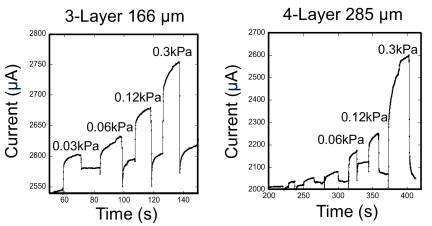
Fig. 9. Pressure–output current characteristics of paper-based pressure sensors with different sensitivities.
3.3. Effect of Pressure Application During Drying on Reproducibility and Sensitivity
It was confirmed that the multi-layer carbon pressure sensor to which a constant pressure (600 Pa) was applied during drying showed reduced output variation and improved reproducibility compared to the conventional method (Fig. 10). On the other hand, due to the densification of the film caused by pressure application, the absolute value of the output current decreased, and the minimum detection amount remained at 30 Pa 23. These results suggest that applying pressure during drying is effective for stabilizing the output, but excessive densification may reduce sensitivity.
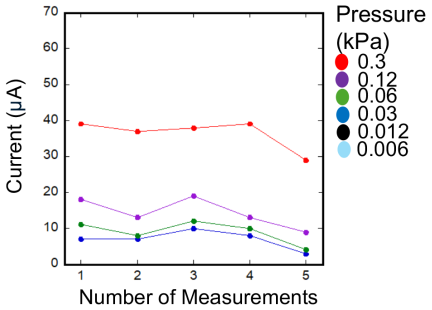
Fig. 10. Variation in current change with different applied weights (\(n = 5\)).
3.4. Both Sensitivity and Reproducibility by New Carbon Coating Process
It was confirmed that the thick film formation by single application introduced as a new process is effective in both sensitivity and reproducibility. Specifically, the carbon pressure sensor with a thickness equivalent to four layers fabricated by single application showed an improved minimum detection amount of up to 6 Pa (Fig. 11), and also had good output reproducibility. In addition, the sensor with a film thickness increased to 300 μm by single application maintained high sensitivity with a minimum detection amount of 6 Pa and obtained stable output characteristics. From these results, the new coating process is considered to be an effective method for achieving both sensitivity and reproducibility.
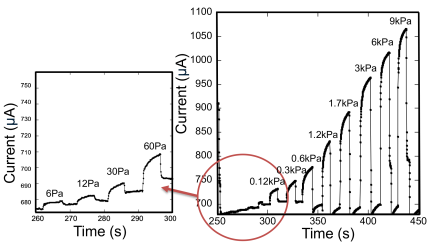
Fig. 11. Output current of the 300 μm-thick carbon-based sensor with an added 20 g load under different applied pressures.
3.5. Evaluation of Pressure Response Characteristics During Swallowing
When the sensor was attached under the Adam’s apple, the expected correlation was observed: the output current increased when the Adam’s apple rose during swallowing, and decreased when it returned to its original position (Fig. 12). This result indicates that the paper-based pressure sensor accurately senses pressure changes due to laryngeal movement and effectively outputs them as current changes. The rise time and fall time in the output current waveform obtained in this experiment reflect the start and end times of swallowing, and it is possible to measure the swallowing time based on this. The average swallowing time was 0.62 s for Subject 1, 0.75 s for Subject 2, and 0.89 s for Subject 3, all of whom were in their twenties. These results are comparable to those reported by Maeda et al. using a fiber-optic pressure sensor 17. The swallowing time measured in this way is an important indicator of swallowing function. In a normal swallowing process, swallowing is expected to be completed within a certain time, so if the swallowing time is abnormally long, it is considered that there is a suspicion of dysphagia or a decline in swallowing function.
Preliminary wearable swallowing tests were expanded to a total of 10 participants, including three young adults (20–30 years old), three middle-aged adults (44–55 years old) and four elderly individuals (62–75 years old). Distinct swallowing characteristic waveforms were successfully acquired from all subjects. Each participant completed ten independent swallowing trials with 5 mL room-temperature purified water per test under identical experimental surroundings. The average swallowing duration was 0.62–0.89 s for young participants, 0.74–0.96 s for middle-aged participants, and 0.87–1.13 s for the elderly, showing evident inter-age and inter-individual differences (Table 1). These multi-age cohort results sufficiently verify that the sensor can steadily capture subtle swallowing-related pressure variations and is feasible for swallowing monitoring across various age groups. This study serves as an initial feasibility validation; in follow-up work, we will further expand the sample pool and recruit dysphagia patients to complete more comprehensive clinical evaluations of the sensor’s practical performance.
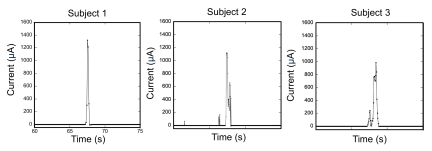
Fig. 12. Output current response curve corresponding to swallowing (Subjects 1–3, all in their twenties).
| Age group | No. of subjects | Duration range [s] | Avg. duration [s] |
| Young (20–30 y) | 3 | 0.62–0.89 | 0.753 |
| Middle (44–55 y) | 3 | 0.74–0.96 | 0.853 |
| Elderly (62–75 y) | 4 | 0.87–1.13 | 0.995 |
4. System of Swallowing Evaluation Device
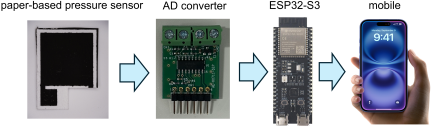
Fig. 13. Wireless measurement system for swallowing evaluation device.
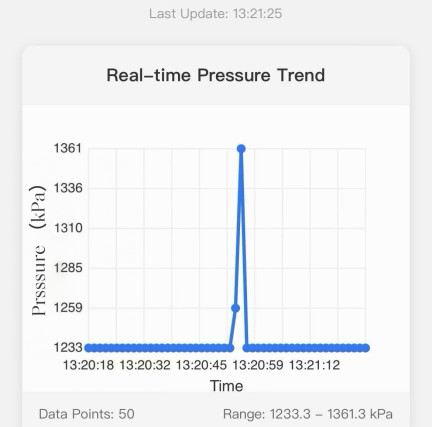
Fig. 14. Structure and working principle of the paper-based pressure sensor.
The swallowing evaluation system is designed to transmit output current data in response to applied pressure to a mobile terminal application via a Bluetooth module. The system operates on the principle that the paper-based pressure sensor first converts the mechanical pressure into an electrical signal, which is then digitized by an analog-to-digital converter. The resulting digital signal is transmitted wirelessly to the mobile application through the Bluetooth module (Fig. 13). The application software provides real-time data display through an intuitive graphical interface, enabling users to easily perceive pressure changes during swallowing. In this way, the swallowing evaluation device can process signals detected by the paper-based pressure sensor in real time and transmit them to the mobile terminal application via Bluetooth (Fig. 14). The system employs a BLE 4.2-based wireless transmission scheme with an ESP32 module consuming an average power of 240 mW. The sampling interval was set to 0.1 s (10 Hz). On the ESP32 platform, collected data were formatted into 2-byte integers and transmitted via Bluetooth Low Energy (BLE) notifications. On the smartphone side, received data were parsed as a Uint8Array, calibrated for sensor specific offset and scaled, and then converted into pressure values for display. In future work, we will evaluate the swallowing function in living organisms.
To clearly demonstrate the performance of the proposed sensor, the key parameters of the optimized device are summarized in Table 2. These indicators cover sensitivity, detection limit, linearity, repeatability, structural size, response speed, and wireless communication settings, which fully reflect the sensor’s capability for swallowing related micro pressure detection.
| Parameter | Value |
| Minimum detectable pressure | 6 Pa |
| Linear correlation coefficient | 0.9989 |
| Average sensitivity | 55 μA/kPa |
| Optimal sensitive area size | \(13\times13\) mm |
| Carbon layer thickness | 300 μm |
| Data sampling rate | 10 Hz |
| Operating pressure range | 6 Pa–9 kPa |
5. Conclusion
In this study, a miniature, disposable paper-based pressure sensor was successfully developed for non-restrictive swallowing function evaluation. By increasing the carbon layer thickness and applying controlled pressure during drying, the sensor’s accuracy was effectively improved, achieving a low detection limit of 6 Pa and a high linear correlation coefficient of 0.9989, enabling reliable capture of subtle pressure changes around the laryngeal prominence during swallowing. A Bluetooth-enabled data transmission function was integrated, realizing real-time measurement and management of swallowing signals on smartphones, which helps medical staff and patients obtain swallowing information conveniently and supports effective intervention strategies. Preliminary tests on two healthy subjects aged 20–30 successfully obtained typical swallowing waveforms, and the measured swallowing times showed clear intra-individual and inter-individual differences, reflecting the dynamic characteristics of swallowing. The results confirm that the device can stably capture small changes in swallowing function, showing good application potential in wearable, non-invasive swallowing assessment.
Acknowledgments
This work was supported in part by JSPS KAKENHI Grant Numbers JP23K26121 and JP26K00962.
- [1] O. Jane Osareme, M. Muonde, C. P. Maduka et al., “Demographic shifts and healthcare: A review of aging populations and systemic challenges,” Int. J. Sci. Res. Arch, Vol.11, pp. 383-395, 2024. https://doi.org/10.30574/ijsra.2024.11.1.0067
- [2] H. T. A. Khan, K. M. Addo, and H. Findlay, “Public health challenges and responses to the growing ageing populations,” Public Health Challenges, Vol.3, No.3, Article No.e213, 2024. https://doi.org/10.1002/puh2.213
- [3] P. K. Lieu, M. S. Chong, and R. Seshadri, “The impact of swallowing disorders in the elderly,” Annals-Academy of Medicine Singapore, Vol.30, No.2, pp. 148-154, 2001. https://doi.org/10.47102/annals-acadmedsg.v30n2p148
- [4] D. Britton, “The impact of aging and progressive neurological disease on swallowing: A concise overview,” J. of Texture Studies, Vol.47, No.4, pp. 257-265, 2016. https://doi.org/10.1111/jtxs.12189
- [5] A. Sasegbon and S. Hamdy, “The anatomy and physiology of normal and abnormal swallowing in oropharyngeal dysphagia,” Neurogastroenterology & Motility, Vol.29, No.11, Article No.e13100, 2017. https://doi.org/10.1111/nmo.13100
- [6] S. Tagliaferri, F. Lauretani, G. Pelá at al., “The risk of dysphagia is associated with malnutrition and poor functional outcomes in a large population of outpatient older individuals,” Clinical Nutrition, Vol.38, No.6, pp. 2684-2689, 2019. https://doi.org/10.1016/j.clnu.2018.11.022
- [7] A. R. Sheikhany, S. S. Shohdi, A. A. Aziz, O. A. Abdelkader, and A. F. Abdel Hady, “Screening of dysphagia in geriatrics,” BMC Geriatrics, Vol.22, No.1, Article No.981, 2022. https://doi.org/10.1186/s12877-022-03685-1
- [8] T. Murry, R. L. Carrau, and K. Chan, “Clinical management of swallowing disorders (5th Ed.),” Plural Publishing, 2022.
- [9] K. Helliwell, V. J. Hughes, C. M. Bennion, and A. Manning-Stanley, “The use of videofluoroscopy (VFS) and fibreoptic endoscopic evaluation of swallowing (FEES) in the investigation of oropharyngeal dysphagia in stroke patients: A narrative review,” Radiography, Vol.29, No.2, pp. 284-290, 2023. https://doi.org/10.1016/j.radi.2022.12.007
- [10] D. Park, Y. Oh, and J. S. Ryu, “Findings of abnormal videofluoroscopic swallowing study identified by high-resolution manometry parameters,” Archives of Physical Medicine and Rehabilitation, Vol.97, No.3, pp. 421-428, 2016. https://doi.org/10.1016/j.apmr.2015.10.084
- [11] M. A. Knigge, S. Marvin, and S. L. Thibeault, “Safety and tolerability of pharyngeal high-resolution manometry,” American J. of Speech-Language Pathology, Vol.28, No.1, pp. 43-52, 2019. https://doi.org/10.1044/2018_AJSLP-18-0039
- [12] Y. Wu, K. Guo, Y. Chu, Z. Wang, H. Yang, and J. Zhang, “Advancements and challenges in non-invasive sensor technologies for swallowing assessment: A review,” Bioengineering, Vol.11, No.5, Article No.430, 2024. https://doi.org/10.3390/bioengineering11050430
- [13] A. Surendar, “Intelligent wearable devices for early detection and support of speech and swallowing disorders,” J. of Intelligent Assistive Communication Technologies,” 2025. http://dx.doi.org/10.17051/JIACT/01.01.01
- [14] X. Liu, Y. Wei, and Y. Qiu, “Advanced flexible skin-like pressure and strain sensors for human health monitoring,” Micromachines, Vol.12, No.6, Article No.695, 2021. https://doi.org/10.3390/mi12060695
- [15] Z. Tan, H. Jiang et al., “Power-efficiency evolution of capacitive sensor interfaces,” IEEE Sensors J., Vol.21, No.11, pp. 12457-12468, 2021. https://doi.org/10.1109/JSEN.2020.3035109
- [16] M. Amit, L. Chukoskie, A. J. Skalsky et al., “Flexible pressure sensors for objective assessment of motor disorders,” Advanced Functional Materials, Vol.30, No.20, Article No.1905241, 2020. https://doi.org/10.1002/adfm.201905241
- [17] M. Maeda, M. Kadokura, R. Aoki et al., “A Fiber-optic non-invasive swallowing assessment device based on a wearable pressure sensor,” Sensors, Vol.23, No.4, Article No.2355, 2023. https://doi.org/10.3390/s23042355
- [18] X. Zhang, J. Chai, Y. Zhan, D. Cui, X. Wang, and L. Gao, “Design, fabrication, and application of large-area flexible pressure and strain sensor arrays: A review,” Micromachines, Vol.16, No.3, Article No.330, 2025. https://doi.org/10.3390/mi16030330
- [19] M. Maeda, M. Kadokura, R. Aoki, N. Komatsu, M. Kawakami, Y. Koyama, K. Watanabe, and M. Nishiyama, “A fiber-optic non-invasive swallowing assessment device based on a wearable pressure sensor,” Sensors, Vol.23, No.4, Article No.2355, 2023. https://doi.org/10.3390/s23042355
- [20] M. P. Cenci, T. Scarazzato, D. D. Munchen et al., “Eco-Friendly Electronics—A comprehensive review,” Advanced Materials Technologies, Vol.7, No.2, Article No.2001263, 2022. https://doi.org/10.1002/admt.202001263
- [21] J. Fastier-Wooller, T. Dinh, V. T. Dau, et al., “Low-cost graphite on paper pressure sensor for a robot gripper with a trivial fabrication process,” Sensors, Vol.18, No.10, Article No.3300, 2018. https://doi.org/10.3390/s18103300
- [22] H. Li, K. Wu, Z. Xu et al., “Ultrahigh-sensitivity piezoresistive pressure sensors for detection of tiny pressure,” ACS Applied Materials & Interfaces, Vol.10, No.24, pp. 20826-20834, 2018. https://doi.org/10.1021/acsami.8b03639
- [23] Y. Pang, H. Tian, L. Tao, Y. Li, X. Wang, N. Deng, Y. Yang, T. L. Ren, “Flexible, highly sensitive, and wearable pressure and strain sensors with graphene porous network structure,” ACS Applied Materials & Interfaces, Vol.8, No.40, pp. 26458-26464, 2016. https://doi.org/10.1021/acsami.6b08172
This article is published under a Creative Commons Attribution-NoDerivatives 4.0 Internationa License.