
Research Paper:
Measuring and Enhancing Digital-Intelligence Literacy: An Empirical Study in Zhejiang, China
Shangzhen Cai*, Yanyun Yao**,†, and Chaoyu Zhang*
*College of Artificial Intelligence, Ningbo University of Finance & Economics
No.899 Xueyuan Road, Haishu District, Ningbo, Zhejiang 315175, China
**College of Finance, Ningbo University of Finance & Economics
No.899 Xueyuan Road, Haishu District, Ningbo, Zhejiang 315175, China
†Corresponding author

The rapid advancement of generative artificial intelligence (GAI) is accelerating the transformation of digital society from “tool-based application” to “intelligent collaboration,” creating demand for composite competencies in technical operation, ethical awareness, and human–AI collaboration. To address limitations in existing digital literacy frameworks, particularly their inadequate treatment of cognitive overload, ethical risks, and disparities in the depth of GAI use, this study proposes the concept of “digital-intelligence literacy” (DIL) and constructs a comprehensive five-dimensional evaluation framework comprising Data-Inquisitive, Synergistic-Adaptive, Digital-Content-Hermeneutic, Ethico-Security, and Solution-Application literacies. Using 667 stratified random survey samples from Zhejiang Province, China, and employing principal component analysis, one-way ANOVA, structural equation modeling (SEM), and LASSO regression, this study systematically examines the current status, group disparities, and underlying mechanisms of DIL. The findings reveal the following: significant disparities in DIL across age groups, education levels, and GAI usage frequency, with older adults and low-frequency users encountering prominent challenges; GAI cognition emerges as the most critical factor for improving DIL, substantially exceeding the influence of attitudes and environmental perceptions; a core competency transformation chain of “Synergistic-Adaptive → Digital-Content-Hermeneutic → Solution-Application” literacy revealed by SEM, alongside dynamic interaction between safety-ethics and technological exploration; and participation intentions in DIL-related education are primarily driven by existing literacy levels, usage habits, and attitudes rather than cognitive factors alone. Based on these findings, this study proposes a “cognition-first, systemic-empowerment” strategy, including nationwide educational initiatives centered on GAI-based general knowledge and differentiated empowerment strategies for key groups, providing empirical evidence for local governments to formulate precise and inclusive literacy enhancement policies.
1. Introduction
The rapid development of generative artificial intelligence (GAI) is fundamentally reshaping the underlying logic of digital society and the paradigm of human–computer interaction. AI-generated content (AIGC) technologies, represented by ChatGPT and MidJourney, are transforming the modes of information production and dissemination while driving the evolution of public digital literacy from basic tool operation capabilities toward digital-intelligence collaboration. This transformation aligns with the strategic objectives of the “Intelligent Education for All” initiative outlined in China’s New Generation Artificial Intelligence Development Plan. Furthermore, the Interim Measures for the Management of Generative Artificial Intelligence Services incorporate user literacy into the algorithmic governance framework, signaling a transition in the AI development paradigm from technical regulation to capacity empowerment.
Despite this transformation, limitations have emerged in existing mainstream digital literacy assessment systems, such as the European Union (EU)’s DigComp 2.2. These systems are developed primarily within the context of the Web 2.0 architecture, and their classic “information-data-security” framework lacks sufficient explanatory power when addressing cognitive overload, ethical risks, and the usage-depth disparities triggered by GAI. Concurrently, China is advancing its “Digital China” and “Common Prosperity” strategies, thereby creating an urgent need for a public digital literacy assessment system that is internationally aligned, contextually relevant, and capable of evaluating both technical competence and ethical awareness. In this context, this paper refers to public digital literacy as “digital-intelligence literacy (DIL).”
To address these theoretical gaps and construct an empirical testing framework, an ideal research site should satisfy three conditions: the region should be at the forefront of digital development, enabling observation of typical human–AI collaboration scenarios; its policy system should include systematic deployments for digital literacy enhancement, reflecting a transition from technology diffusion to capacity building; and it should present structural challenges that balance “development and equity,” providing a realistic context for exploring whether literacy enhancement can effectively mitigate social disparities. Zhejiang Province, as a National Pilot Zone for the Innovative Development of the Digital Economy and a Demonstration Zone for Common Prosperity, satisfies all three conditions simultaneously. Therefore, this study selected Zhejiang Province as a representative case for regional empirical research. Although Zhejiang is not intended to represent all regions of China, its distinctive characteristics provide a generalizable analytical framework for understanding the formation mechanisms and promotion strategies of DIL in rapidly digitizing regions.
This study pursues the following objectives. First, it integrates international digital competence frameworks with local policy orientations to construct a five-dimensional DIL evaluation model comprising Data-Inquisitive, Synergistic-Adaptive, Digital-Content-Hermeneutic, Ethico-Security, and Solution-Application literacies. Second, using stratified sampling data from Zhejiang Province, the study applies principal component analysis (PCA), analysis of variance (ANOVA), structural equation modeling (SEM), and LASSO regression to systematically assess the current status, group disparities, and internal mechanisms of DIL.
The theoretical contribution of this study lies in elucidating the multidimensional structure and internal dynamic relationships of DIL, thereby extending the conceptual boundaries of digital literacy research in the age of intelligent technologies. Its practical contribution lies in providing empirical evidence for local governments to formulate precise and inclusive literacy enhancement policies, clarifying the central role of “cognitive empowerment” and the direction of differentiated interventions for older adults and low-literacy groups. As a case study based on a representative region, the analytical framework developed in this study offers valuable insights for other areas undergoing similar stages of digital transformation.
2. Literature Review
This review focuses on the Chinese and English literature on “digital literacy” and “artificial intelligence literacy,” clarifying the research context by examining conceptual evolution, core challenges, group disparities, and assessment pathways, thereby defining the academic positioning and innovative contributions of this study.
2.1. From Digital Literacy to DIL: Conceptual Evolution and Expansion
The conceptual system of “digital literacy” has continuously evolved alongside technological developments. Early studies emphasized the acquisition and understanding of digital information 1. Successive updates of the EU’s DigComp framework 2,3 and the release of China’s Action Outline for Enhancing Public Digital Literacy and Skills 4 have marked the evolution of the concept towards a comprehensive set of competences covering information, communication, content creation, safety, and problem-solving.
With the advent of GAI, digital literacy is undergoing a paradigm shift from “digital” literacy to “intelligence” literacy. Tu and Ma 5 noted that risks associated with digital-intelligence technologies, including information distortion and privacy breaches, are fundamentally reshaping the relationship between individuals and technology. Yuan et al. 6 introduced the concept of “digital-intelligent citizens,” emphasizing their multiple roles as “technology appliers, ethical thinkers, and value co-creators” in an intelligent society. Wang and Wang 7 analyzed the essential differences between information literacy, digital literacy, and AI literacy from a paradigm-evolution perspective, arguing that human–AI collaboration constitutes the core of AI literacy. This transformation indicates that individuals are no longer merely users of digital tools but increasingly function as co-creators in collaboration with AI.
2.2. Core Challenges of GAI: Capacity Reconstruction and Ethical Tensions
GAI introduces unprecedented demands on digital literacy. It makes “human–AI collaboration” the norm, resulting in new competencies, such as prompt design, critical evaluation of synthetic content, and understanding of algorithmic logic 6. Simultaneously, GAI introduces new risks, including algorithmic bias, data privacy concerns, and blurred intellectual property boundaries 8,9.
Education is at the forefront of observing these transformations. Yang and Lou 10 demonstrated that teachers’ self-efficacy in digital literacy significantly enhances their willingness to accept and integrate AI technologies. Stratton-Maher and Kelly 11 warned that students face an ethical tension between “learning” and “outsourcing” when using ChatGPT, highlighting the importance of cultivating students’ critical ability to “learn with AI” rather than “get answers from AI.” These studies collectively highlight the importance of higher-order thinking, ethical judgment, and creative application skills in education in the AI era.
2.3. Group Disparities and Emerging Divides: Structural Differentiation and Internal Heterogeneity
Significant disparities in digital literacy exist across different demographic and socioeconomic groups. Based on a large-scale survey in Japan, Nakagomi et al. 12 observed that the use of GAI is significantly correlated with age, education, and income, indicating the emergence of a “GAI divide.” In the Chinese context, Wang et al. 13 revealed that the influence of social capital on access to higher education is partially mediated by digital literacy and that this effect is stronger among students with higher socioeconomic status, indicating that digital literacy may inadvertently replicate or even amplify existing social inequalities.
Notably, the internal structural differentiation of digital literacy has received increasing attention. Based on latent profile analysis, Yang et al. 14 classified university students’ AI literacy into three types: novice, intermediate, and advanced, finding that creative self-efficacy is the key to achieving literacy advancement. This finding suggests that group disparities are reflected not only in the level of literacy but also in the typological differentiation of its internal structure; consequently, literacy enhancement policies require high precision. These findings imply that, without a comprehensive understanding of the internal structure of DIL and its relationship with group characteristics, literacy improvement policies risk adopting a one-size-fits-all approach. Therefore, to design precise and effective intervention strategies, it is essential to first clarify the internal dimensions of DIL and their interrelationships, which is precisely the core motivation for constructing the five-dimensional framework in this study.
2.4. Assessment Methods and Promotion Pathways: Systematic Exploration from Diagnosis to Intervention
Growing recognition of AI literacy has prompted the development of increasingly specialized and context-sensitive assessment tools. At an international level, Su et al. 15 concluded that AI literacy assessments should encompass knowledge, ethics, affect, and use, noting that most studies continue to rely on self-report questionnaires. Chinese scholars have also made substantial efforts in this regard. Liu et al. 16 developed a 38-item GAI literacy scale for university students that measures awareness, knowledge, skills, thinking, and ethics. Zhang et al. 17 developed a DIL scale for university students, with particular attention to data governance and intelligent decision-making in digital-intelligence scenarios. The purpose of this assessment was to guide promotion.
In terms of promotion pathways, research has emphasized the importance of contextualized learning and multi-level collaboration. Based on situated learning theory, Zhu et al. 18 demonstrated that university students’ digital situational perception positively predicts their digital literacy level through the sequential mediation of technology acceptance and peer interaction. Polizzi 19 proposed the concept of “strategic (dis)engagement,” revealing the agentic characteristics of higher-order literacy. Wu and Bai 20 emphasized that enhancing AI literacy for teachers and students requires systematic advancement in mechanism building, curriculum development, pedagogical innovation, evaluation reform, and ethical guidance.
2.5. Research Review and Positioning of This Study
In summary, current research exhibits three major trends: conceptual shift towards digital-intelligence collaboration, increasing emphasis on multidimensional and context-sensitive development, and growing attention to differentiated and targeted interventions. However, several limitations remain in existing research. First, contemporary frameworks exhibit insufficient temporal adaptability and localization of frameworks; most frameworks originate from Western contexts or focus on educational settings, lacking a “public DIL” evaluation system grounded in Chinese local practice and deeply integrated with GAI characteristics. Second, research on public-wide populations and heterogeneity mechanisms remains limited; systematic empirical studies targeting ordinary citizens at the provincial level are still scarce. Third, the systematic translation from assessment to strategy is inadequate; effective mechanisms for converting assessment results into actionable, multi-stakeholder public enhancement strategies remain underexplored.
To address these limitations, the present study selected Zhejiang Province, China, as a sample to construct a “public DIL” evaluation framework that integrates international experience with local needs, encompassing technology adaptation, human–AI collaboration, ethics and safety, and other dimensions. The aim is to reveal the underlying sources of group disparities and internal mechanisms among literacy dimensions, thereby providing theoretical and empirical support for the development of precise and effective literacy enhancement strategies.
3. Theoretical Framework Construction: Connotation, Dimensions, and Relational Hypotheses of DIL
3.1. Core Concept Definition: Distinguishing DIL from Related Concepts
DIL does not constitute a simple replacement of existing concepts. Instead, it represents a distinct framework that differs from both AI literacy and data intelligence literacy. Compared with AI literacy, which primarily emphasizes understanding AI principles, model architectures, and application skills 21 while addressing how AI functions, DIL focuses on the effective collaboration between humans and AI systems and places greater emphasis on capacity integration in dynamic interaction. Data intelligence literacy generally refers to the ability to collect, analyze, and interpret data for decision-making in big data environments 17, focusing on data-driven approaches; by contrast, DIL targets interactive scenarios of GAI and emphasizes critical evaluation of AIGC, ethical judgment, and collaborative creation.
3.2. Construction Logic and Dimension Selection of the Five-Dimensional Framework
To systematically characterize the composite construct of DIL, this study integrated international mainstream frameworks with local Chinese practices to construct a five-dimensional theoretical model.
(1) Rationale for dimension selection. The selection of five dimensions follows a dual principle of theory-grounding and practical relevance. Theoretically, the five competence areas of the EU’s DigComp 2.2 framework (information and data, communication and collaboration, digital content creation, safety, and problem solving) represent the internationally recognized core competence domains of digital literacy. The six key abilities of digital-intelligent citizens proposed by Yuan et al. 6 (exploratory, expressive, adaptive, interpretive, moral, and applicative abilities) characterize the role requirements of citizens in the intelligent era. By cross-integrating the two (using the five competence areas as “warp” and six role abilities as “weft”), we naturally derived five new literacy domains. For example, “information and data literacy” combined with “exploratory ability” forms “Data-Inquisitive Literacy,” emphasizing a shift from passively receiving information to actively exploring intelligent content; “safety literacy” combined with “moral ability” forms “Ethico-Security Literacy,” highlighting the integration of ethical awareness and safety capabilities.
(2) Consideration of alternative integration approaches. Theoretically, other integration approaches exist, such as using a single dimension (simple superposition of all abilities) or clustering based on behavioral indicators. However, the cross-integration adopted in this study retains both the structural integrity of the international framework and the role-specificity of the local framework, thereby preventing dimension redundancy or omission. Expert review and pre-survey validation confirmed that the five-dimensional structure exhibits optimal performance in terms of reliability and validity (see Section 4).
(3) Local adaptation and applicability to Zhejiang. The behavioral indicators were not solely derived from existing literature but were developed in combination with China’s policy context (e.g., “Digital China,” “Common Prosperity”) and the actual digital economy development of Zhejiang Province (high internet penetration, GAI enterprise agglomeration). In the pre-survey, we conducted cognitive tests with local Zhejiang residents, adjusting the wording and scenarios of some items to ensure that they align with the digital life experiences of the Zhejiang public. Therefore, the framework demonstrates strong ecological validity for Zhejiang, and its core dimensional structure is generalizable across regions.
| Symbol | Dimension name | Theoretical source | Core connotation analysis | GAI-era core characteristic |
| A | Data-Inquisitive Literacy | Information & Data Literacy \(+\) Exploratory Ability | The ability to proactively discover, critically evaluate, and innovatively use information and data in intelligent environments. | From “information retrieval” to “prompt engineering and generated content verification”; emphasizes fact-checking and bias identification of AIGC. |
| B | Synergistic-Adaptive Literacy | Communication & Collaboration \(+\) Expressive & Adaptive Abilities | The ability to use intelligent tools for efficient communication, teamwork, and resource integration. | From “interpersonal collaboration” to “human–AI \(+\) interpersonal hybrid collaboration”; emphasizes dialogue-based task allocation and strategy adjustment with AI. |
| C | Digital-Content-Hermeneutic Literacy | Digital Content Creation \(+\) Interpretive Ability | The ability to create, manage, deeply interpret, and critically evaluate digital content (especially AIGC content). | From “content consumption” to “content deconstruction”; requires understanding of algorithmic generation logic and identification of synthetic media and deepfakes. |
| D | Ethico-Security Literacy | Safety \(+\) Moral Ability | The ability to protect data and privacy security, follow ethical norms, and assume social responsibility in technology use. | From “passive protection” to “active ethical judgment”; focuses on algorithmic bias, AI accountability, and intellectual property boundaries. |
| E | Solution-Application Literacy | Problem Solving \(+\) Applicative Ability | The ability to comprehensively use intelligent technologies to identify and analyze complex problems, and to design, implement, and iteratively optimize solutions. | From “tool use” to “human–AI collaborative innovation”; emphasizes cross-disciplinary problem solving and creative generation through AI. |
Note: In the “Theoretical Source” column, “\(+\)” denotes the combination of a DigComp 2.2 competence area (before “\(+\)”) and a Yuan et al. 6 ability (after “\(+\)”).
3.3. Definition of DIL and the Five Dimensions
Based on the foregoing analysis, this study defines DIL in the AIGC era as the comprehensive set of competences that citizens must possess to effectively participate in society, pursue career development, and engage in lifelong learning. It encompasses the core characteristics of understanding intelligent technology logic, performing efficient human–AI collaboration, adhering to relevant ethical norms, and continuously adapting to technological evolution. DIL represents the development and expansion of traditional digital literacy in the age of intelligent technologies. The specific definitions, theoretical sources, and GAI-era core characteristics of the five dimensions are described in Table 1.
3.4. Examples of Operational Behavioral Indicators
To facilitate an understanding of how each dimension manifests in real-world situations, typical behaviors of individuals with high DIL are listed below:
Data-Inquisitive Literacy (A): When using AI to write a report, individuals proactively design multi-layered prompts to obtain the required information, cross-validate the generated content, and identify factual errors or logical contradictions. When encountering an unfamiliar AI tool, they actively search for tutorials and experiment on their own rather than waiting for others to teach them.
Synergistic-Adaptive Literacy (B): In team projects, individuals use AI tools to organize meeting minutes, assign tasks, and collaborate in real time with foreign colleagues via AI translation software. They can identify automated replies or disinformation generated by AI and quickly adapt to newly launched AI collaboration platforms.
Digital-Content-Hermeneutic Literacy (C): When faced with AI-generated news articles, individuals can judge authenticity by tracing sources and comparing different information sources and can analyze possible algorithmic recommendation biases. They can select the most appropriate AI creation tool based on task requirements and edit or re-create generated content.
Ethico-Security Literacy (D): When using AI painting tools, individuals actively avoid inputting copyrighted artist style prompts and disable unnecessary data sharing options to protect personal privacy. They can identify security risks, such as AI deepfake scams, and maintain a cautious attitude towards personalized recommendations.
Solution-Application Literacy (E): Individuals rapidly develop data visualization prototypes using AI coding assistants and iteratively optimize the code based on user feedback. They combine AI technology with domain-specific knowledge to complete cross-disciplinary innovation tasks and objectively evaluate the effectiveness of AI solutions.
These behavioral indicators serve as a reference for subsequent scale development and as qualitative evidence for assessing individual DIL levels in the empirical study.
3.5. Theoretical Hypotheses on the Internal Relationships of DIL
The five dimensions of DIL are not independent constructs. Based on the connotations of each dimension and relevant theoretical perspectives, this study proposes theoretical hypotheses regarding their internal relationships, as shown in Fig. 1.
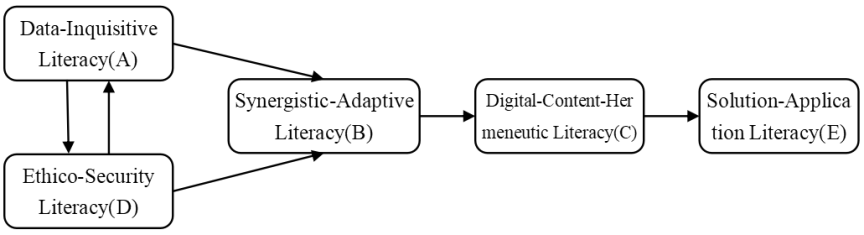
Fig. 1. Theoretically hypothesized model of relationships among the five dimensions of DIL.
(1) Core Competency Transformation Chain: B \(\to\) C \(\to\) E
Theoretical foundation: Cognitive Load Theory 22 posits that when individuals face complex tasks, effectively using external tools or collaboration strategies can reduce intrinsic cognitive load, thereby allocating more cognitive resources for deeper information processing and higher-order problem solving. In this study, Synergistic-Adaptive Literacy (B) reflects an individual’s ability to collaborate efficiently with AI and others. This ability reduces the technical operation load in human–AI interaction, enabling the individual to focus more on deep interpretation of AI-generated content (C), thereby solving complex problems more effectively (E). Therefore, we hypothesize that B \(\to\) C \(\to\) E forms the core positive transformation chain.
(2) Bidirectional Influence of Safety-Ethics: D \(\to\) A positive, A \(\to\) D negative
Theoretical foundation: The technology ethics paradox states that an increase in technical competence can be accompanied by a decrease in ethical sensitivity. On the one hand, high ethical safety awareness (D) prompts individuals to explore technology more responsibly (D \(\to\) A positive). On the other hand, overconfidence or frequent use of technical capabilities (A) may lead to “technological optimism,” causing individuals to underestimate potential ethical risks and thus relatively neglect safety issues (A \(\to\) D negative). This hypothesis is consistent with the empirical finding of 11 that students who over-rely on ChatGPT may weaken their critical thinking abilities.
(3) Driving Role of Exploration and Synergy: A \(\to\) B positive
Theoretical foundation: The concepts of “observational learning” and “self-efficacy” in Social Cognitive Theory 23. Data-Inquisitive Literacy (A) reflects an individual’s tendency to actively explore new technologies. Such exploratory behavior accumulates successful experiences, enhances self-efficacy, and thereby stimulates willingness to participate in collaborative innovation (B). Therefore, we hypothesize that A positively influences B.
Collectively, these hypotheses constitute a structural model of the internal logic of DIL, which are subjected to empirical testing via SEM in the following sections.
4. Research Design and Data
To empirically test the theoretical framework of the constructed DIL and to investigate its group disparities and influencing factors, this study adopted a questionnaire survey method with systematic sampling in Zhejiang Province.
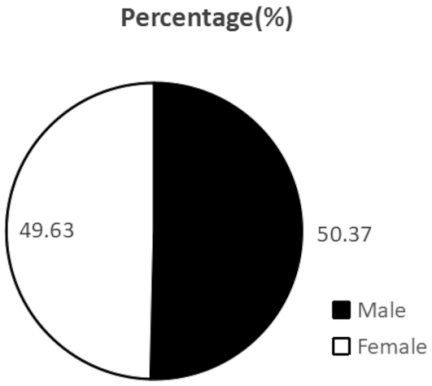
Fig. 2. Gender distribution [%].
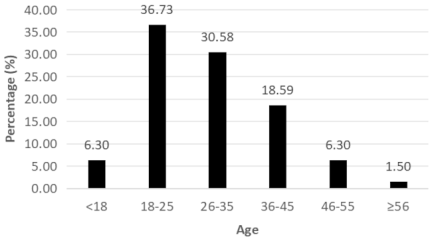
Fig. 3. Age distribution [%].
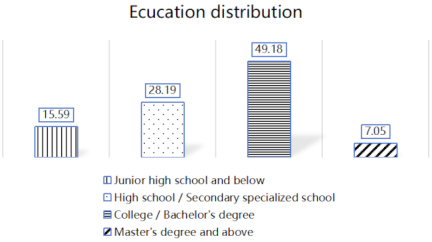
Fig. 4. Education distribution [%].
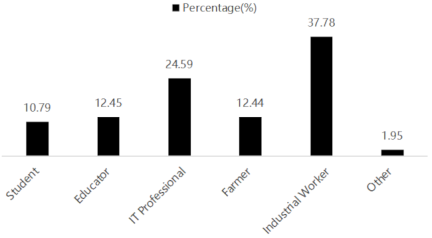
Fig. 5. Occupation distribution [%].
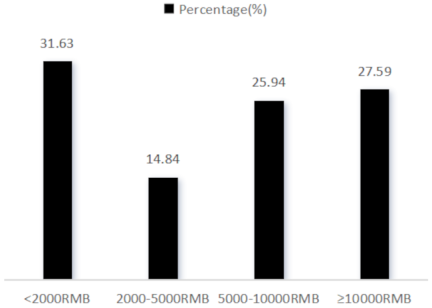
Fig. 6. Income distribution [%].
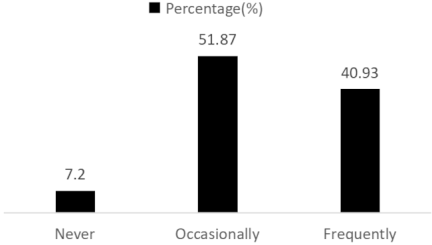
Fig. 7. GAI usage frequency distribution [%].
4.1. Questionnaire Design and Sampling
4.1.1. Questionnaire Structure
The questionnaire consisted of four modules:
(1) Basic Information of Respondents: Designed with reference to Chinese national survey databases, such as CGSS and CSS. It measured demographic characteristics and technology exposure, including gender (Q1.1), age (Q1.2), education (Q1.3), occupation (Q1.4), monthly income (Q1.5), and frequency of GAI use (Q1.6), totaling six items. The response options are shown in Figs. 2–7. This module was used to analyze group heterogeneity.
(2) Self-Assessment of DIL: Designed based on the five-dimensional theoretical framework in Section 3. Each dimension has four measurement items, totaling 20 items, coded as Q2.1 to Q2.20.
(3) GAI Cognition and Attitudes: Included three items: basic awareness of GAI (Q3.1), positive attitude towards GAI (Q3.2), and willingness to participate in digital-intelligence education (Q3.3). These items were used to explore the key cognitive and psychological factors affecting literacy.
(4) Environmental Perception and Evaluation: Included two items: perceived integration of GAI into daily life (Q4.1) and overall evaluation of Zhejiang’s digital development (Q4.2). These items were used to understand the potential impact of the macro-technological environment on individuals.
In this study, the variable codes correspond one-to-one with questionnaire item numbers. Specifically, “Q1.x” refers to Module 1 (basic information), “Q2.x” to Module 2 (self-assessment of DIL), “Q3.x” to Module 3 (GAI cognition and attitudes), and “Q4.x” to Module 4 (environmental perception and evaluation). The specific contents of each item are listed in Table 2.
| Measurement content | Item description |
| Data-Inquisitive Literacy (A) |
Q2.1 How would you rate your ability to judge the authenticity and reliability of content generated by GAI? □ Very poor □ Poor □ Average □ Good □ Very good |
|
Q2.2 How would you rate your ability to identify and handle information generated by GAI (e.g., deepfake videos, AI-written content)? □ Very poor □ Poor □ Average □ Good □ Very good |
|
|
Q2.3 When learning a new AI tool or technology, what is your most common approach? □ Wait for others to teach □ Search online tutorials by myself □ Participate in online courses or seminars □ Actively practice and interact with the community |
|
|
Q2.4 Have you ever used AI tools to explore unknown areas or make innovative attempts? □ Never tried □ Thought but did not act □ Tried a few times □ Often use AI to explore and innovate |
|
| Synergistic-Adaptive Literacy (B) |
Q2.5 How would you rate your ability to use GAI tools (e.g., virtual assistants, automated customer service) for online communication and collaboration? □ Very poor □ Poor □ Average □ Good □ Very good |
|
Q2.6 How would you rate your ability to identify and manage communication processes mediated by GAI? □ Very poor □ Poor □ Average □ Good □ Very good |
|
|
Q2.7 How would you rate your ability to use AI generation tools for creative expression? □ No experience □ Some understanding but lack of practice □ Have practical experience with some results □ Very proficient, often use for creative expression |
|
|
Q2.8 How well do you adapt to new AI technologies? □ Very difficult to adapt □ Slow adaptation, need time □ Can adapt relatively quickly and learn independently □ Very flexible, can quickly master and teach others |
|
| Digital-Content-Hermeneutic Literacy (C) |
Q2.9 How would you rate your ability to use GAI tools to create new digital content? □ Very poor □ Poor □ Average □ Good □ Very good |
|
Q2.10 How would you rate your ability to evaluate and select appropriate GAI tools for content creation? □ Very poor □ Poor □ Average □ Good □ Very good |
|
|
Q2.11 How do you use AI tools to interpret big data and complex information? □ Do not know how to use □ Some understanding but limited skills □ Can perform basic interpretation □ Proficient in advanced analysis and interpretation |
|
|
Q2.12 When using AI tools to analyze data, can you understand and explain the underlying model mechanism? □ Not at all □ Basic understanding □ Can explain simple models □ Very familiar, can explain in detail and adjust parameters as needed |
|
| Ethico-Security Literacy (D) |
Q2.13 Facing challenges from GAI applications, how would you rate your ability to protect personal data and privacy? □ Very poor □ Poor □ Average □ Good □ Very good |
|
Q2.14 How would you rate your ability to identify and prevent security issues possibly caused by GAI technology? □ Very poor □ Poor □ Average □ Good □ Very good |
|
|
Q2.15 When using AI technology to process information or create content, do you try to prevent potential copyright infringement? □ Usually do not consider □ Aware but not sure how to handle □ Sometimes check and avoid problems □ Always comply with copyright and ethical norms |
|
|
Q2.16 What is your view on the use of user data and privacy protection when AI provides personalized content? □ Never thought deeply □ Know it is a problem but not the impact □ Recognize its importance and take some precautions □ Take it very seriously, actively take measures to protect privacy |
|
| Solution-Application Literacy (E) |
Q2.17 How would you rate your ability to use GAI tools to solve complex problems? □ Very poor □ Poor □ Average □ Good □ Very good |
|
Q2.18 How would you rate your ability to combine GAI technology for innovative thinking and finding new solutions? □ Very poor □ Poor □ Average □ Good □ Very good |
|
|
Q2.19 Do you have experience in combining AI technology with knowledge from other fields for cross-disciplinary innovation? □ No experience □ Some attempts but limited results □ Have successful experience □ Cross-disciplinary innovation is my norm, with multiple successful cases |
|
|
Q2.20 What is your view on the potential of AI solutions in improving work efficiency and solving complex problems? □ No opinion yet □ Think there is potential but no personal experience □ Think it has significant impact and have positive experience □ Greatly trust AI solutions, have proven value in multiple occasions |
|
| GAI cognition and attitudes |
Q3.1 How well do you understand GAI (e.g., automatic content generation, image/video editing AI, text-to-speech conversion, etc.)? □ Not at all familiar □ Slightly familiar □ Moderately familiar □ Very familiar □ Extremely familiar |
|
Q3.2 What is your attitude towards learning and using GAI technology? □ Very interested □ Somewhat interested □ Neutral □ Not very interested □ Not at all interested |
|
|
Q3.3 Are you willing to participate in digital-intelligence literacy improvement activities in Zhejiang Province? □ Very willing □ Somewhat willing □ Neutral □ Not very willing □ Not at all willing |
|
| Environmental perception and evaluation |
Q4.1 In your daily life in Zhejiang Province, do you feel the application of GAI technology (e.g., intelligent recommendations, virtual assistants)? □ Very frequently □ Quite frequently □ Sometimes □ Rarely □ Almost never |
|
Q4.2 How would you evaluate Zhejiang Province’s achievements in promoting the digital economy and smart city construction? □ Excellent, with remarkable results □ Good, but still room for improvement □ Average, modest results □ Poor, no obvious achievements □ Very poor, almost no achievements |
| First-level stratum | Population [10,000] | Proportion [%] | Second-level stratum | Population [10,000] | Proportion [%] | Questionnaires |
| Hangzhou | 1237.6 | 62 | Lin’an | 54.299 | 38 | 157 |
| Shangcheng | 88.2797 | 62 | 257 | |||
| Shaoxing | 535.3 | 27 | Keqiao | 70.197 | 49.72 | 90 |
| Shengzhou | 70.9739 | 50.28 | 91 | |||
| Quzhou | 229.0 | 11 | Qujiang | 41.019 | 53.48 | 39 |
| Kaihua | 35.7015 | 46.52 | 33 | |||
| Total | 667 | |||||
4.1.2. Sampling Design
This study employed a two-stage stratified random sampling method. First, based on indicators including “permanent resident population,” “sex ratio,” “number of enrolled students in higher education institutions,” and “per capita annual disposable income,” the 11 prefecture-level cities of Zhejiang Province were subjected to cluster analysis. The results were grouped into three categories: I (Hangzhou); II (Ningbo, Wenzhou, Shaoxing, and Jinhua); and III (Jiaxing, Huzhou, Quzhou, Zhoushan, Taizhou, and Lishui). Random sampling was conducted within Categories II and III, selecting Hangzhou, Shaoxing, and Quzhou as representative cities (first stage). Second, within each selected city, two districts/counties were randomly chosen, ultimately determining six survey sites: Lin’an District and Shangcheng District in Hangzhou; Keqiao District and Shengzhou City in Shaoxing; and Qujiang District and Kaihua County in Quzhou (second stage).
Setting the confidence level at 95% (\(\textrm{$Z$-value}=1.96\)) and maximum allowable error \(E\) at 4%, the initial sample size was calculated as follows:
The samples were allocated proportionally to population size across the strata, as shown in Table 3.
4.1.3. Survey Implementation
Face-to-face offline questionnaire surveys were used for data collection. A pilot survey was conducted in May 2024, with 100 questionnaires randomly distributed to test item rationality and respondent comprehension. The formal survey was carried out between early July and July 20, 2024. The interviewers visited the six survey sites determined by the sampling design (Lin’an District and Shangcheng District in Hangzhou; Keqiao District and Shengzhou City in Shaoxing; and Qujiang District and Kaihua County in Quzhou). They conducted one-on-one interviews with respondents in community activity centers, parks, shopping malls, and residential areas, completing questionnaires on the spot. All interviewers received uniform training. For elderly respondents or those with lower education levels, the interviewers explained each question on-site to ensure accurate understanding. Each completed questionnaire was immediately checked for completeness, and missing or ambiguous answers were corrected or supplemented immediately. Data entry used double-entry verification by two independent people, with a third person comparing and correcting discrepancies to ensure data accuracy.
4.2. Sample Characteristics and Reliability/Validity Testing
4.2.1. Sample Distribution
The analysis results for basic information—gender, age, highest education, monthly income, occupation, and frequency of GAI tool use—are shown in Figs. 2–7. Each category contained a sufficient number of samples. The sample distribution closely aligned with the population distribution, enabling generalizability of the conclusions drawn from the sample analysis to the population.
| Measurement item | Cronbach’s \(\boldsymbol{\alpha}\) of dimension | Cronbach’s \(\boldsymbol{\alpha}\) if item deleted |
| Q2.1 | 0.821 | 0.79 |
| Q2.2 | 0.78 | |
| Q2.3 | 0.764 | |
| Q2.4 | 0.768 | |
| Q2.5 | 0.821 | 0.778 |
| Q2.6 | 0.797 | |
| Q2.7 | 0.756 | |
| Q2.8 | 0.77 | |
| Q2.9 | 0.817 | 0.796 |
| Q2.10 | 0.776 | |
| Q2.11 | 0.753 | |
| Q2.12 | 0.755 | |
| Q2.13 | 0.819 | 0.795 |
| Q2.14 | 0.789 | |
| Q2.15 | 0.755 | |
| Q2.16 | 0.754 | |
| Q2.17 | 0.831 | 0.796 |
| Q2.18 | 0.8 | |
| Q2.19 | 0.787 | |
| Q2.20 | 0.768 | |
| Overall | 0.958 | |
4.2.2. Reliability and Validity
To assess the quality of the questionnaire design and rationality of the DIL indicator system, reliability and validity tests were conducted on the second module (self-assessment of DIL). The reliability analysis results based on Cronbach’s \(\alpha\) coefficient are listed in Table 4. The overall Cronbach’s \(\alpha\) for DIL was 0.958, and the \(\alpha\) values for all first-level indicators exceeded 0.8. Deleting any item lowered the reliability coefficient, indicating good questionnaire quality and a reasonable indicator system from a reliability perspective.
The KMO and Bartlett’s tests were used to evaluate the validity of the indicator system. As shown in Table 5, the KMO value reached 0.986 (\({>}0.7\)), and Bartlett’s test of sphericity was significant, indicating good construct validity.
5. Empirical Results and Discussion
5.1. Assessment of DIL Levels and Group Disparities
5.1.1. Assessment of DIL
To quantitatively assess individuals’ DIL levels, a two-step PCA was conducted on data from the second module of the questionnaire (Q2.1–Q2.20). First, PCA was performed separately on the secondary indicators under each of the five dimensions (A–E). One principal component with an eigenvalue greater than 1 was extracted for each dimension, with cumulative variance contribution rates of 66.1%, 66.3%, 65.7%, 65.8%, and 67.5%, respectively, indicating that the extracted principal components effectively represented the principal information of each dimension. Based on this, scores on the five dimensions (A–E) were calculated for each respondent. The specific weight coefficients are listed in Table 6.
Subsequently, these five dimension scores (\(\mathrm{A}\)–\(\mathrm{E}\)) were subjected to PCA again, extracting one overall index (\(Q\)) representing the total DIL level, with a variance contribution rate of 84.8%. The expression for the total index \(Q\) is
| KMO and Bartlett’s test | ||
| KMO measure of sampling adequacy | 0.986 | |
| Bartlett’s test of sphericity | Approx. \(\chi^2\) | 8716.453 |
| \(\mathit{df}\) | 190 | |
| \(p\) | 0.000 | |
The analysis showed that the contribution weights of the five dimensions to the total index are extremely close (ranging from 0.216 to 0.219). This result empirically confirms the theoretical presupposition proposed in Section 3: DIL is an “organic whole” composed of five balanced dimensions. Neglecting any single dimension may constrain the overall improvement of literacy; for example, focusing only on application skills (Solution-Application Literacy) while ignoring ethics and safety (Ethico-Security Literacy) may expose individuals to risks such as privacy leakage or algorithmic bias. Therefore, literacy enhancement strategies must adhere to the principle of systematic, multi-dimensional synergy, avoiding a one-sided emphasis on technology over ethics or on application over cognition.
| Literacy domain | Evaluation expression |
| Data-Inquisitive Literacy (A) | \(\mathrm{A}= 0.298\times \textrm{Q2.1} + 0.304\times \textrm{Q2.2} + 0.314\times \textrm{Q2.3} + 0.313\times \textrm{Q2.4}\) |
| Synergistic-Adaptive Literacy (B) | \(\mathrm{B}= 0.306\times \textrm{Q2.5} + 0.293\times \textrm{Q2.6} + 0.318\times \textrm{Q2.7} + 0.311\times \textrm{Q2.8}\) |
| Digital-Content-Hermeneutic Literacy (C) | \(\mathrm{C}= 0.289\times \textrm{Q2.9} + 0.308\times \textrm{Q2.10} + 0.319\times \textrm{Q2.11} + 0.317\times \textrm{Q2.12}\) |
| Ethico-Security Literacy (D) | \(\mathrm{D}= 0.293\times \textrm{Q2.13} + 0.298\times \textrm{Q2.14} + 0.320\times \textrm{Q2.15} + 0.321\times \textrm{Q2.16}\) |
| Solution-Application Literacy (E) | \(\mathrm{E}= 0.298\times \textrm{Q2.17} + 0.298\times \textrm{Q2.18} + 0.305\times \textrm{Q2.19} + 0.315\times \textrm{Q2.20}\) |
| Basic information | \(\boldsymbol{F}\)-value | \(\boldsymbol{p}\)-value | Significant difference? | Reason for difference (post-hoc) |
| Gender | 0.068 | 0.795 | No | – |
| Age | 9.191 | \({<}0.001\) | Yes | 56\(+\) group significantly lower than other groups |
| Education | 2.765 | 0.042 | Yes | Master’s-and-above group significantly higher |
| Occupation | 1.657 | 0.178 | No | – |
| Monthly income | 1.026 | 0.409 | No | – |
| GAI usage frequency | 1836.919 | \({<}0.001\) | Yes | Frequent users \(>\) Occasional users \(>\) Non-users |
Note: \(F\)- and \(p\)-values based on Welch’s ANOVA; post-hoc comparisons using LSD.
| Fit index | \(\boldsymbol{\chi^2}\)/df | GFI | RMSEA | CFI | NFI | NNFI |
| Criteria | \({<}3\) | \({>}0.9\) | \({<}0.10\) | \({>}0.9\) | \({>}0.9\) | \({>}0.9\) |
| Results | 1.162 | 0.978 | 0.016 | 0.997 | 0.978 | 0.996 |
5.1.2. Analysis of Group Disparities
The one-way ANOVA results (Table 7) showed that DIL levels differed significantly by age, education level, and frequency of GAI use, while no statistical significance was found for gender, occupation, or monthly income.
(1) Age gap. The literacy level of the \(56{+}\) age group was significantly lower (\({p<0.001}\)), consistent with the GAI divide reported in 12. Individuals belonging to this group grew up in the pre-digital era and faced structural barriers in technical operation and cognitive adaptation, with particular disadvantages in Interpretive Literacy (C) and Ethico-Security Literacy (D). This result suggests that interventions for older adults should go beyond basic operational training and focus on cognitive adaptation and risk prevention.
(2) Education threshold effect. The master’s-and-above group showed significantly higher literacy (\({p<0.05}\)), with particular advantages in terms of Interpretive Literacy (C) and Ethico-Security Literacy (D). This finding is closely related to the critical thinking, research ethics, and methodological training emphasized in graduate education–precisely the core competencies required to evaluate AIGC and identify algorithmic bias. This finding confirms the findings presented in 13, suggesting a need for being attentive to the transformation of the “education gap” into a “DIL gap.”
(3) Usage-depth divide. GAI use frequency was positively correlated with literacy level (\({p<0.001}\)), with the following pattern: frequent users \(>\) occasional users \(>\) non-users. This result marks a paradigm shift from “access divide” to “usage-depth divide” 24. High-frequency use itself is a constructive learning process that effectively drives literacy improvement.
(4) Non-significance of occupation, income, and gender. Occupation and monthly income had no significant effect on literacy, possibly owing to Zhejiang’s high level of digital inclusiveness; an internet penetration rate of 85.8% and infrastructure coverage across urban and rural areas mean that different socioeconomic groups have equal opportunities to access digital technology. This finding contrasts with the observation in 12 that income is significantly associated with AI use, suggesting that digital infrastructure inclusiveness is likely an important moderating variable for alleviating structural inequality. Gender differences were also non-significant (\({p>0.05}\)), differing from the findings of some studies focusing on university students; this may be related to the fact that our sample covers the general public and Zhejiang’s high digital inclusiveness and also suggests that the composite literacy index may mask dimension-specific gender differences.
5.2. Internal Structural Relationships Among DIL Dimensions
To test the theoretical hypotheses proposed in Section 3, SEM was used to analyze the path relationships among the five literacy dimensions. Based on the SPSSPRO online data analysis platform (https://www.spsspro.com), the maximum likelihood (ML) method was used for parameter estimation. As shown in Table 8, the model fit indices were excellent, indicating a good fit between the model and data.
The standardized path coefficients are shown in Fig. 8: (1) the path “Synergistic-Adaptive Literacy (B) \(\to\) Digital-Content-Hermeneutic Literacy (C) \(\to\) Solution-Application Literacy (E)” showed significant coefficients of 0.48 and 0.52, respectively (\({p<0.001}\)); (2) the path “Ethico-Security Literacy (D) \(\to\) Data-Inquisitive Literacy (A)” had a coefficient of 0.21 (\({p<0.01}\)), whereas that of “Data-Inquisitive Literacy (A) \(\to\) Ethico-Security Literacy (D)” was \(-0.19\) (\({p<0.05}\)); (3) “Data-Inquisitive Literacy (A) \(\to\) Synergistic-Adaptive Literacy (B)” had a coefficient of 0.39 (\({p<0.001}\)).
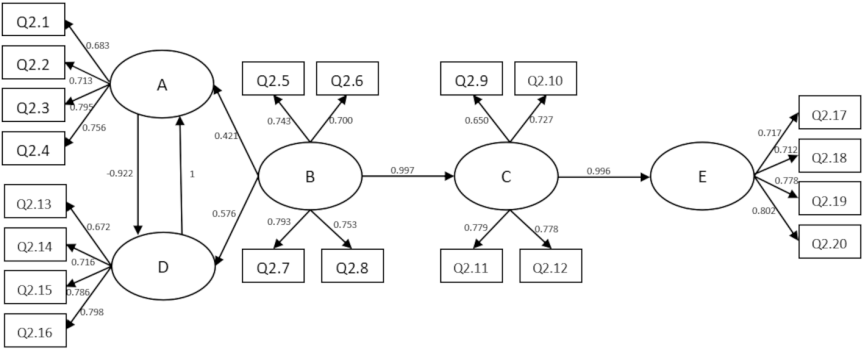
Fig. 8. Standardized path diagram of the SEM for DIL.
5.3. Key Factors Influencing DIL
LASSO regression was conducted with the total DIL index (Q) as the dependent variable and demographic characteristics (Q1.1–Q1.6), GAI cognition and attitude (Q3.1, Q3.2), and environmental perception (Q4.1, Q4.2) as the independent variables. Based on the SPSSPRO platform, 10-fold cross-validation was used to select the optimal penalty parameter \(\lambda\), with the criterion being the \(\lambda\) value that minimizes the mean squared error, i.e., the lambda.min rule. The final minimum \(\lambda\) value was 0.02, and the model’s goodness-of-fit (\(R^2\)) was 0.956. The regression result with standardized coefficients was as follows:
The results show that, among the selected significant variables, GAI cognition (Q3.1) had a standardized coefficient (8.596), which is substantially higher than those of GAI attitude (Q3.2, 0.020) and environmental perception (Q4.1, 0.018). Demographic variables (age, gender, education, etc.) were not selected as significant predictors by the model.
The absence of demographic variables (e.g., age, education) suggests that, after controlling for an individual’s level of GAI cognition, the performance differences across these groups in DIL are no longer significant. This finding reveals the core value of “cognitive empowerment”: improving GAI cognition may serve as an effective “equalizer” to bridge the literacy gaps caused by structural factors such as age and education, providing direct theoretical support for the “inclusive cognitive education” policy recommendation.
5.4. Factors Influencing Willingness to Participate in Digital-Intelligence Education
LASSO regression was also conducted with “willingness to participate in digital-intelligence education (Q3.3)” as the dependent variable and basic information (Q1.1–Q1.6), DIL level (Q), GAI cognition and attitude (Q3.1, Q3.2), and environmental perception (Q4.1, Q4.2) as the independent variables. As in Section 5.3, 10-fold cross-validation with the lambda.min criterion was used. The final minimum \(\lambda\) value was 0.061, and the model’s goodness-of-fit (\(R^2\)) was 0.507. The regression result with standardized coefficients was as follows:
5.5. Comprehensive Discussion
Based on the empirical results presented in the foregoing, this section discusses the theoretical implications of the five-dimensional framework, underlying causes of group disparities, and cognitive driving mechanism.
(1) Theoretical implications of the five-dimensional framework. PCA showed that the contribution weights of the five dimensions to the total index are extremely close (0.216–0.219), empirically confirming the “organic whole” theoretical presupposition proposed in Section 3. This finding indicates that DIL is not a linear superposition of single abilities but a composite of mutually supporting dimensions. Neglecting any single dimension (e.g., prioritizing technology over ethics) may constrain overall literacy improvement. SEM further revealed the internal mechanism: the “Synergistic-Adaptive \(\to\) Digital-Content-Hermeneutic \(\to\) Solution-Application” chain constitutes the core competency transformation pathway, which can be explained by Cognitive Load Theory 22: good synergistic-adaptive ability reduces the cognitive load of human–AI interaction, enabling individuals to focus more on deep interpretation and problem solving. Meanwhile, the coexistence of positive (D \(\to\) A, \({\beta=0.21}\)) and negative (A \(\to\) D, \({\beta=-0.19}\)) effects confirms the “technology ethics paradox”: ethical awareness drives responsible exploration, whereas overconfidence in technical ability may lead to ethical neglect.
(2) Group disparities and the new digital divide. The significant differences in age, education, and usage frequency revealed the evolving form of the digital divide. The low literacy of the 56\(+\) group reflects structural barriers for those who grew up in the pre-digital era. The advantage of the master’s-and-above group, particularly in Interpretive and Ethico-Security literacies, is closely related to the critical thinking and academic ethics emphasized in graduate education. The positive correlation with usage frequency marks the paradigm shift from “access divide” to “usage-depth divide” 24. Notably, the non-significance of occupation, income, and gender may be attributable to Zhejiang’s high level of digital inclusiveness (85.8% internet penetration), wherein widespread infrastructure coverage partially mitigates the constraints of socioeconomic status on literacy.
(3) Cognitive driving mechanism and policy implications. The LASSO regression showed that the standardized coefficient of GAI cognition (8.596) substantially exceeds those of attitude (0.020) and environmental perception (0.018), establishing the foundational role of “cognitive empowerment” in literacy construction. However, GAI cognition does not directly and significantly influence willingness to participate in education; rather, existing literacy level is the primary predictor (\(\beta=0.749\)). This paradox can be explained by the Self-Determination Theory 25: behavioral intention depends not only on cognition but also on self-efficacy and intrinsic motivation. Therefore, DIL education cannot stop at knowledge transmission; it must also focus on stimulating learning motivation, lowering participation barriers, and strengthening the “learning by using” experience, thereby forming a virtuous cycle of “cognition improvement \(\to\) literacy enhancement \(\to\) willingness increase \(\to\) continuous learning.”
6. Conclusion and Policy Recommendations
6.1. Main Conclusions
Focusing on the era of rapid GAI development, this study selected Zhejiang Province as a representative case to develop and empirically test a five-dimensional evaluation framework for DIL. The analysis systematically revealed the group disparities, internal mechanisms, and key influencing factors of DIL. The primary conclusions are as follows:
(1) Construction and validation of the five-dimensional framework. The fivedimensional DIL framework (Data-Inquisitive, Synergistic-Adaptive, Digital-Content-Hermeneutic, Ethico-Security, and Solution-Application) exhibited optimal reliability and validity, and the five dimensions contribute equally to overall literacy, empirically confirming the theoretical presupposition of an integrated and multidimensional competency system. SEM revealed the internal mechanism: the “Synergistic-Adaptive \(\to\) Digital-Content-Hermeneutic \(\to\) Solution-Application” chain forms the core competency transformation pathway, reflecting a progressive logic from collaborative adaptation to deep interpretation and then to problem solving. Concurrently, a bidirectional tension was observed between Ethico-Security and Data-Inquisitive literacies: ethical awareness drives responsible technological exploration, but overconfidence in technical ability may lead to ethical neglect.
(2) Group heterogeneity and the new digital divide. DIL levels among the public in Zhejiang Province showed significant group disparities, with age, education level, and GAI usage frequency being the main influencing factors. The literacy level of the 56\(+\) age group was significantly lower, reflecting the structural barriers faced by those who grew up in the pre-digital era. The master’s-and-above group showed significantly higher literacy, with particular advantages in Interpretive and Ethico-Security literacies, closely related to the critical thinking and academic ethics emphasized in graduate education. GAI usage frequency was positively correlated with literacy level, marking a shift from an “access divide” to a “usage-depth divide.” Occupation, income, and gender differences were not significant, possibly owing to Zhejiang’s high level of digital inclusiveness.
(3) Cognitive driving mechanism and the willingness-participation paradox. GAI cognition level was the most critical driver for improving DIL, with an influence far exceeding that of attitude and environmental perception, establishing the foundational role of “cognitive empowerment.” However, high cognition did not directly translate into a high willingness to participate in education; existing literacy level was the primary predictor of participation willingness, followed by positive attitude and usage habits. This paradox suggests that literacy enhancement should focus on stimulating intrinsic motivation and breaking the “low literacy–low participation” cycle.
6.2. Policy Recommendations
Based on the above conclusions, to effectively improve public digitalintelligence literacy in Zhejiang Province and bridge the new digital divide, the following systematic, multi-level policy recommendations are proposed:
(1) Strategic level: Establish a top-down design of “cognition-first, systemic empowerment.” Based on the finding that GAI cognition is the most critical lever for improving DIL (Section 5.3), it is recommended to formulate the Zhejiang Provincial Action Plan for Enhancing Public Digital-Intelligence Literacy, incorporating DIL as a core indicator in the construction of “Digital Zhejiang” and the Common Prosperity Demonstration Zone. The action plan should go beyond traditional skill training, highlight cognitive enlightenment centered on “understanding GAI,” and systematically cover the five literacy dimensions, achieving a competency leap from “tool application” to “intelligent collaboration.”
(2) Core intervention: Launch a public education campaign focusing on “GAI cognitive enlightenment.” Based on the central role of cognition, implement the “GAI General Knowledge Popularization” project, developing multi-media popular science resources for the public, explaining GAI’s basic principles, capabilities, boundaries, and ethical risks in accessible language. Deeply integrate DIL into the national education system: offer AI initiation and ethics courses at the basic education stage; integrate the use, critical evaluation, and innovative application of GAI tools into professional teaching in higher education and vocational training; and encourage universities and institutions to offer open courses and micro-credentials to the public.
(3) Targeted measures: Implement differentiated empowerment programs for key groups. Based on the age, education, and usage frequency disparities revealed by ANOVA (Section 5.1.2), design “slow-paced, intuitive, practical” age-friendly courses for the elderly, focusing on safe use and intergenerational communication; develop “low-threshold, gamified, highly incentivized” lightweight learning modules for low-literacy and low-motivation groups; and construct a “digital mentor” support network, encouraging high-literacy youth and technical professionals to become “community digital mentors” or “corporate internal trainers,” leveraging their demonstration and peer-driving effects.
(4) Ecosystem cultivation: Build a friendly environment of “learning by using and creating through learning.” Based on the finding that usage frequency is positively correlated with literacy (Section 5.1.2) and the core competency chain revealed by SEM (Section 5.2), promote transparent, user-friendly GAI applications in public services to enhance public perception and understanding in real-world scenarios. Support and sponsor innovation competitions and showcases based on GAI applications, fostering a social atmosphere that encourages exploration, tolerates failure, and values responsibility. Concurrently, given the “high cognition \(\ne\) high willingness” paradox, educational design should focus on stimulating intrinsic motivation and embedding learning content in authentic application scenarios, forming a virtuous cycle of “cognition improvement \(\to\) literacy enhancement \(\to\) willingness increase.”
6.3. Research Limitations and Future Directions
This study had several limitations. First, although the sample was scientifically drawn from Zhejiang Province, the generalizability of the conclusions to the entire country requires further verification. Second, cross-sectional data cannot capture the dynamic evolution of DIL or establish definitive causal relationships. Third, this study did not analyze the impact of regional development differences (between different cities and between urban and rural areas within Zhejiang Province) on DIL; future research could incorporate regional-level variables for multi-level analysis. In addition, self-report measures are likely subject to social desirability bias.
Future research could be extended in the following directions. First, conduct cross-regional comparative studies to test the adaptability of this evaluation framework to different socioeconomic and cultural contexts. Second, use longitudinal tracking designs or intervention experiments to deeply reveal the dynamic mechanisms of literacy development and effective cultivation pathways. Third, with the popularization of low-cost AI tools, such as DeepSeek, further explore the impact mechanisms of DIL improvement on individual productivity, innovative behavior, and regional digital economic development, providing more refined decision-making evidence for policy formulation.
- [1] P. Gilster, “Digital literacy,” John Wiley & Sons, 1997.
- [2] X. Shang and J. Zhang, “Digital literacy and skill cultivation for all: EU practical elements and domestic countermeasures,” Res. Libr. Sci., No.5, pp. 67-76, 2022 (in Chinese). https://doi.org/10.15941/j.cnki.issn1001-0424.2022.05.006
- [3] Y. Chen, “Research on the development method of the national digital literacy framework: Experience and enlightenment from DigComp,” Library, No.1, pp. 65-72, 2024 (in Chinese).
- [4] J. Hu, J. Cao, R. Dong, H. Gao, and T. Wang, “Development and practical approaches on the evaluation of nationwide digital literacy and skills,” Stud. Sci. Pop., Vol.18, No.5, pp. 5-13+111, 2023 (in Chinese). https://doi.org/10.19293/j.cnki.1673-8357.2023.05.001
- [5] L. Tu and Y. Ma, “From digital literacy to intelligent literacy: Risk challenges and literacy enhancement pathways brought by digital-intelligence technology,” Youth Journal., No.3, pp. 50-60, 2026 (in Chinese). 10.15997/j.cnki.qnjz.2026.03.007
- [6] L. Yuan, J.-Y. Xu, and W. Ye, “Digital intelligent citizen literacy in the AIGC era: Connotation analysis, training framework, and enhancement pathways,” Mod. Educ. Technol., Vol.33, No.9, pp. 5-15, 2023 (in Chinese).
- [7] R. Wang and Y. Wang, “Conceptual clarification of AI literacy: Paradigm evolution from information literacy and digital literacy to intelligent literacy,” Libr. J., Vol.45, No.8, pp. 70-79, 2026 (in Chinese). https://doi.org/10.13663/j.cnki.lj.2026.08.007
- [8] R. Darvin, “The need for critical digital literacies in generative AI-mediated L2 writing,” J. Second Lang. Writ., Vol.67, Article No.101186, 2025. https://doi.org/10.1016/j.jslw.2025.101186
- [9] Z. Wang, “The improvement of digital literacy of citizens under the wave of generative artificial intelligence: Reflections based on ChatGPT,” Libr. Theory Pract., No.5, pp. 78-86, 2023 (in Chinese). https://doi.org/10.14064/j.cnki.issn1005-8214.2023.05.008
- [10] J. Yang and K. Lou, “Exploring the nexus of self-efficacy in digital literacy and technology acceptance: Insights from L2 Chinese teachers,” Asia Pac. J. Educ., Vol.46, No.1, pp. 203-221, 2026. https://doi.org/10.1080/02188791.2024.2336247
- [11] D. Stratton-Maher and J. Kelly, “Learning with AI, not from AI: Ethical and pedagogical implications of ChatGPT in undergraduate education,” Nurse Educ. Today, Vol.158, Article No.106961, 2026. https://doi.org/10.1016/j.nedt.2025.106961
- [12] A. Nakagomi, N. Abe, and T. Tabuchi, “Emerging generative AI divide: Personal, positional, and resource-based factors associated with use and reasons for non-use,” Telemat. Inform., Vol.104, Article No.102360, 2026. https://doi.org/10.1016/j.tele.2025.102360
- [13] S. Wang, G. M. Alam, K. Bashir, and M. Lei, “Reproducing inequality? Social capital, digital literacy, and SES in access to higher education,” Humanit. Soc. Sci. Commun., Vol.13, Article No.42, 2026. https://doi.org/10.1057/s41599-025-06264-y
- [14] Y. Yang, F. Zhang, and J. Guo, “Typological profiles and enhancement strategies of artificial intelligence literacy among university students,” Res. Libr. Sci., No.10, pp. 2-13, 2025 (in Chinese). https://doi.org/10.15941/j.cnki.issn1001-0424.2025.10.001
- [15] J. Su, X. Chen, S. K. W. Chu, and X. Hu, “A scoping review of empirical research on AI literacy assessments,” Educ. Technol. Res. Dev., Vol.73, No.5, pp. 3105-3130, 2025. https://doi.org/10.1007/s11423-025-10515-9
- [16] M. Liu, S. Guo, Y. Su, Y. Li, and X. Kui, “Development and application of the assessment tool for college students’ generative artificial intelligence literacy,” Mod. Distance Educ. Res., Vol.37, No.6, pp. 24-33+70, 2025 (in Chinese).
- [17] Y. Zhang, L. Wang, and J. Qiu, “Development and preliminary validation of data-intelligence literacy scale for college students in China in the era of artificial intelligence,” Libr. J., 2026 (in Chinese). https://link.oversea.cnki.net/urlid/31.1108.G2.20260203.0926.002 [Accessed October 30, 2026]
- [18] G. Zhu, F. Pan, M. Fu, and J. Ni, “From ‘scenario’ to ‘situation’: How digital situational perception influences digital literacy of University students,” Innov. Educ. Teach. Int., Vol.63, No.1, pp. 145-162, 2026. https://doi.org/10.1080/14703297.2025.2475857
- [19] G. Polizzi, “Digital literacy and strategic (dis)engagement: Examining how functional and critical digital literacy shapes participation,” Inf. Commun. Soc., Vol.28, No.14, pp. 2483-2502, 2025. https://doi.org/10.1080/1369118X.2025.2452282
- [20] D. Wu and J. Bai, “Enhancing teacher and student AI literacy to promote digital transformation in education,” China Internet, No.8, pp. 50-54, 2025 (in Chinese).
- [21] M. X. Zhang and X. L. Yuan, “The era demands, basic connotation, and cultivation pathways of AI literacy,” China Internet, No.2, pp. 43-46, 2026 (in Chinese).
- [22] J. Sweller, “Cognitive load during problem solving: Effects on learning,” Cogn. Sci., Vol.12, No.2, pp. 257-285, 1988. https://doi.org/10.1207/s15516709cog1202_4
- [23] A. Bandura, “Social foundations of thought and action: A social cognitive theory,” Prentice-Hall, 1986.
- [24] J. van Dijk, “The digital divide,” Polity, 2019.
- [25] R. M. Ryan and E. L. Deci, “Self-determination theory and the facilitation of intrinsic motivation, social development, and well-being,” Am. Psychol., Vol.55, No.1, pp. 68-78, 2000. https://doi.org/10.1037/0003-066X.55.1.68
This article is published under a Creative Commons Attribution-NoDerivatives 4.0 Internationa License.