
Research Paper:
Identifying the “Front-End Knowledge Gap” in Lightweight Instruction—A Boundary Study Aimed at Interdisciplinary Adaptation
Jinxiu Yang*
 , Lu Zhang*
, and Guangrong Li**,†
, Lu Zhang*
, and Guangrong Li**,†
*School of Business, Fuyang Normal University
No.741 Qinghe East Road, Fuyang, Anhui 236041, China
**School of Economics and Management, Inner Mongolia University of Technology
No.49 Aimin Street, Xincheng District, Hohhot, Inner Mongolia 010051, China
†Corresponding author

In response to the higher requirements for teaching effectiveness imposed by the construction of new liberal arts, addressing the differentiation in the effectiveness of lightweight instruction across different majors is key to achieving its high-quality development. Based on data from 116 students in an economics and management course, we constructed a “perception–behavior–competence” mediation model and a chained mediation pathway to distinguish and test two mechanisms of academic major (front-end cognitive differences vs. process moderation), thereby exploring the adaptability challenges of lightweight instruction in interdisciplinary classrooms. Research findings indicate that (1) perceived lightweight teaching quality not only directly promotes students’ perceived competence but also significantly influences these perceptions through the key pathway of stimulating post-class case sharing behavior and (2) differences in academic background primarily manifest as front-end cognitive differences—students majoring in financial management show significantly lower “perceived relevance” of case studies compared with those in business administration. This disparity constitutes an initial cognitive barrier constraining teaching effectiveness but does not further transmit to perceived competence via the “perception–behavior” chain. In other words, different starting points do not necessarily lead to different outcomes—lightweight instruction plays a relatively equitable role in enhancing the competencies of students from different majors. This study identified the root cause of professional alignment challenges at the cognitive level and developed a practical framework of “initial assessment–process design–iterative optimization,” thereby providing an operational approach to streamlined interdisciplinary teaching.
1. Introduction
With the deepening advancement of the new liberal arts and digital education strategies, the teaching paradigm in higher education is undergoing a profound transformation from “knowledge transmission” to “competency development.” Lightweight instruction serves as an innovative pathway to implement this philosophy, aiming to optimize cognitive load by integrating “lightweight” resources, such as short videos and local case studies, thereby enhancing learning experiences and efficiency 1,2. However, teaching practice has revealed a profound disciplinary adaptation dilemma: although students’ perceived lightness of instruction is generally positive, there is a significant divergence among students from different disciplines in terms of their perceived case relevance. This study found that students majoring in financial management showed significantly lower perceived relevance towards cases compared to their counterparts majoring in business administration. The question arises, does this initial cognitive disparity affect the ultimate enhancement of competencies? If so, what mechanisms are involved? The underlying mechanisms urgently need to be elucidated.
Current research on lightweight instruction primarily focuses on the verification of overall effectiveness and exploration of design principles 2, with a lack of in-depth discussion regarding mechanisms for cross-disciplinary adaptation. From a theoretical perspective, lightweight instruction is primarily grounded in cognitive load theory and the principles of multimedia learning design. Cognitive load theory distinguishes between three types of cognitive load—internal, external, and related—and emphasizes optimizing information presentation to reduce external load and free up cognitive resources 3. Within this framework, strategies such as microlearning have been shown to enhance learning outcomes. However, existing research often implicitly adopts a “design-centric” approach, assuming that simply optimizing the form of information presentation can universally improve learning outcomes; this assumption overlooks the heterogeneity of learners’ cognitive structures. Furthermore, experiential learning theory posits that learning involves four stages: concrete experience \(\to\) reflective observation \(\to\) abstract generalization \(\to\) active experimentation 4. Similarly, Kirkpatrick’s four-level evaluation model emphasizes that the “behavioral level” is key to translating learning into performance outcomes 5. Schema theory explains how professional backgrounds shape cognitive schemas, influencing individuals’ filtering and interpretation of information 6. Although the aforementioned theories provide diverse perspectives for understanding lightweight instruction, research integrating them into interdisciplinary adaptation contexts remains relatively scarce.
Existing research lacks a sufficient understanding of the mechanisms underlying the “disciplinary alignment dilemma” in lightweight teaching, which is primarily reflected in three aspects. First, most studies have been confined to examining direct effects or affective/attitudinal outcomes, neglecting the critical mediating role of post-class case sharing behavior, which connects cognition, affect, and competency development 7,8. Second, the understanding of how an academic major (AM) operates remains ambiguous. It is unclear whether it moderates the perception-to-transfer process or constrains it by shaping front-end cognition (for example, perceived case relevance); this distinction lacks empirical testing 9. Third, “evidence-based” attempts to translate these findings into instructional design frameworks are lacking. This theoretical ambiguity and the absence of practical application make it difficult for teaching practices to break free from the limitations of “one-size-fits-all” designs. Therefore, resolving this “professional adaptation dilemma” not only holds theoretical value but is also a critical practical proposition for advancing lightweight teaching from a general experiential approach towards precise competency development.
Accordingly, this study utilized data from 116 survey questionnaires completed by students majoring in economics and management, with a focus on exploring the following questions: (1) What are the specific behavioral pathways through which perceived lightweight teaching quality influences students’ perceived competence? (2) How does AM influence this transformation process? (3) Most importantly, based on the aforementioned mechanisms, how can a professionally adaptive lightweight instruction practice plan be developed for frontline teaching? The marginal contribution of this paper manifests in three aspects. First, it reveals that post-class case sharing behavior serves as a supplementary mediating mechanism through which lightweight instruction influences the perceived competence, thereby refining our understanding of the “perception \(\to\) competence” transformation pathway. Second, it defines the scope of the “front-end cognitive gap;” while AM creates front-end differences, these differences do not necessarily lead to divergence at the endpoint, thereby providing a new boundary condition of “information–cognitive structure fit” for cognitive load theory. Third, it proposes a practical “diagnosis–design–optimization” framework, whose innovation lies in shifting the focus of intervention to the early stages, establishing an evidence-driven closed-loop process, and being specifically tailored to lightweight teaching contexts.
2. Theoretical Definition and Measurement of Core Constructs
Lightweight instruction is an agile teaching paradigm emerging against the backdrop of digital education. Its core essence lies not merely in relying on lightweight teaching resources such as short videos and localized cases, but also in enabling these resources to effectively reduce learners’ extraneous cognitive load and quickly embed them into their existing knowledge schemas through deliberate cognitive design, thereby facilitating a smooth and in-depth learning experience and knowledge construction 1. It emphasizes the flexibility of teaching iterations, timeliness of feedback loops, and low barriers to student engagement. Therefore, its effectiveness depends not only on the lightness of resource forms but also on the adaptation between teaching content and learners’ professional cognitive backgrounds. This study focused on the latter, exploring the adaptation dilemma that arises when lightweight instructional design fails to fully consider professional cognitive differences.
2.1. Perceived Lightweight Teaching Quality
Perceived lightweight teaching quality refers to the students’ subjective evaluation of the effectiveness of lightweight digital resources (such as short videos and concise case studies) adopted in the teaching process in terms of reducing cognitive load, enhancing learning interest, and facilitating knowledge. This construct is rooted in cognitive load theory, but it does not directly measure cognitive load itself; rather, it measures students’ perceptions of the quality of instructional design in effectively supporting their learning. In the field of educational measurement, students’ perceptions of instructional quality have been widely used as a valid indicator of instructional effectiveness. For example, the course experience questionnaire (CEQ) evaluates the instructional performance of higher education institutions by measuring students’ perceptions of course quality 10, while the instructional skills questionnaire (ISQ) predicts students’ self-reported learning outcomes based on their perceptions of instructors’ teaching skills 11. More directly relevant to the measurement content of this study, existing research indicates that students’ perceptions of the relevance of instructional content are significantly associated with the cognitive load they experience 12, while perceptions of instructional design quality have also been found to indirectly influence learners’ engagement by affecting cognitive load 13. These studies provide the theoretical and empirical foundation for this study to treat “perceived quality of lightweight instruction” as a predictor of students’ learning behaviors and perceived competencies. In terms of measurement, the perceived quality of lightweight instruction scale draws upon the multimedia learning experience scale developed by Ljubojević et al. 1 and has been contextually adapted to the specific context of lightweight instruction (short video resources, local case studies, etc.). The items cover two dimensions: cognitive load reduction (for example, “videos/case studies help understand abstract theories”) and emotional empowerment (for example, “materials make classes more vivid and engaging”). It is important to note that the perceived quality of lightweight instruction (PLTQ) and cognitive load are distinct constructs. PLTQ measures the students’ subjective evaluations of instructional design, whereas cognitive load measures the actual consumption of working memory resources during the learning process 3. This study treated PLTQ as a predictor of cognitive load rather than a substitute measure. Theoretically, students’ positive evaluations of the usefulness and engaging nature of instructional resources reflect the effectiveness of resource design in reducing extrinsic cognitive load. When students perceive videos or case studies as helpful for understanding abstract theories, this implies that these resources assist them in breaking down complex information into more manageable units, thereby freeing up working memory capacity. Empirically, prior research has shown that students’ perceptions of instructional presence within an inquiry-based community framework can effectively predict their cognitive load. In particular, instructional presence has been shown to be the best predictor of external and total cognitive load 14. Furthermore, students’ evaluations of the perceived quality of instruction have been found to significantly influence their cognitive, affective, and behavioral responses during the learning process 15. Collectively, this evidence suggests that students’ subjective evaluations of instructional design are not only indicators of their learning experiences but also key antecedents influencing the efficiency of their cognitive processing. This provides strong justification for this study’s positioning of the PLTQ as an antecedent variable predicting student behavior and competence. All items use a 5-point Likert scale. The scale demonstrated excellent internal consistency reliability in the sample of this study (Cronbach’s \(\alpha=0.962\)).
2.2. Post-Class Case Sharing Behavior
This study focused on an observable, explicit behavior in which students apply classroom learning to informal communication settings, operationalized as post-class case sharing behavior. This definition comes from the “active experimentation” stage in the experiential learning theory and serves as a key indicator of knowledge internalization and competence development. Given the multidimensional nature and measurement complexity of in-depth post-class case sharing, this study employed a single behavioral indicator for exploratory purposes: questionnaire item Q13: “After class, I have used course cases to explain management phenomena to others.” In exploratory research, it is a valid approach to use single-item measures with high content validity for specific, overt behaviors with a single target 16,17. This item is specific in wording and clear in its focus, and can effectively capture the most direct knowledge application and sharing behaviors stimulated by lightweight instruction. This operational definition aims to precisely measure the specific intermediary of “sharing behavior,” rather than encompassing all dimensions of learning transfer. Future studies should adopt more comprehensive scales to expand on this line of research.
2.3. Perceived Competence
Perceived competence refers to students’ overall subjective evaluation of improvements in knowledge, skills, and beliefs through course learning. Its theoretical framework is derived from the classic training evaluation model while integrating the perspective of self-determination theory (SDT), focusing primarily on the effectiveness of learning at the behavioral and outcome levels 5, particularly on enhancing learners’ competence 18. In terms of measurement, this study employed a seven-item scale (Q14–Q20) covering multiple dimensions, including knowledge mastery, confidence in application, problem-solving, and professional identity. The application and transfer dimension correspond to Kirkpatrick’s “behavioral level” concept 5; the self-efficacy dimension is based on Bandura’s self-efficacy theory 19; and the professional identity dimension draws on the operationalization approach of the occupational identity scale. The scale uses a 5-point Likert scale (1 \(=\) no improvement, 5 \(=\) significant improvement), and the mean of all items is calculated as the score for perceived competence. This scale demonstrated excellent reliability in this study (Cronbach’s \(\alpha=0.976\)), indicating its ability to consistently measure the construct.
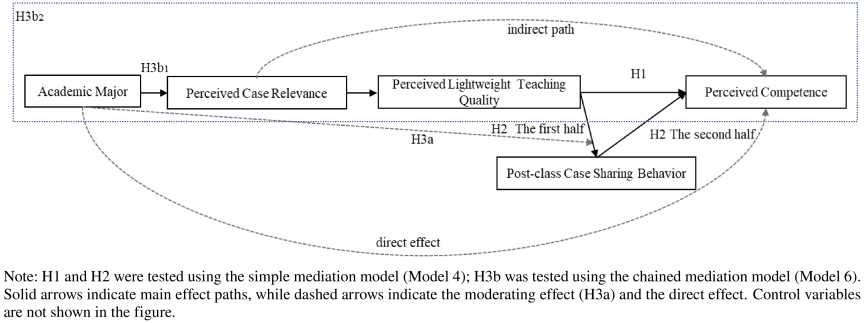
Fig. 1. Theoretical model.
2.4. Academic Major (Moderator/Grouping Variable)
AM’s influence essentially comes from the professional cognitive system it forms. Schemas determine how individuals filter, interpret, and integrate information 6. In this study, we posited perceived case relevance as a key mediating variable. For instance, due to schema differences, students in financial management may generally perceive a management case from Dream of the Red Chamber as being weakly relevant to their core domains of financial analysis and risk control. This initial low relevance perception would systematically undermine their subsequent learning engagement and transfer willingness, rather than impairing the efficiency of translating positive teaching experiences into behavior. Therefore, this paper proposes a chain-mediation model (as shown in Fig. 1): AM influences perceived case relevance, which in turn influences perceived lightweight teaching quality, which further influences post-class case sharing behavior, and ultimately influences perceived competence.
2.5. Control Variables
To account for other potential influences, this study included two control variables:
-
・
Self-Assessed Performance: We controlled for students’ self-reported mastery of course content (Q3). The theoretical basis for this is that cognitive load theory posits that learners’ prior knowledge is a key factor in moderating internal cognitive load—learners with extensive prior knowledge can process more information automatically, thereby freeing up cognitive resources for deep processing 3. By controlling for self-assessed performance, we can partially eliminate the confounding effect of differences in prior knowledge on the results.
-
・
Course Semester: This is controlled using a dummy variable based on the student’s actual semester of enrollment (current semester or previous semester, corresponding to questionnaire item Q4). The theoretical basis for this is the memory decay effect (Ebbinghaus’s forgetting curve)—the longer the time since the course was taken, the lower the retention rate of course content. By controlling for the course period, we can, to some extent, mitigate the potential influence of memory decay and differences in teaching cycles on the research results.
3. Theoretical Framework and Research Hypotheses
3.1. Perceived Lightness of Instruction and Perceived Competence
Cognitive load theory indicates that optimized instructional design can effectively reduce external cognitive load during the learning process, thereby freeing up more cognitive resources for knowledge construction and in-depth processing. Lightweight instruction is based on the principles of multimedia learning cognition and cognitive load optimization 20, incorporating lightweight teaching resources, such as short videos and localized cases, to visualize and contextualize abstract theories, and aiming to enhance the fluidity and immersive quality of the learning process. This approach has been proven to boost multimedia learning efficiency effectively. The facilitating effect of this instructional model on students’ perceived competence can be analyzed in two dimensions. First, lightweight resources can directly stimulate students’ learning interest and intrinsic motivation by lowering the cognitive threshold. According to SDT, when the learning environment supports students’ autonomy and competence, their intrinsic motivation is more likely to be stimulated. When students perceive learning materials as easy to understand and engaging, their emotional experiences become more positive, laying a psychological foundation for active knowledge absorption and internalization 15. Second, based on experiential learning theory, effective learning requires a complete cycle of concrete experience, reflective observation, abstract conceptualization, and active experimentation. The rich scenarios and case studies provided by lightweight instruction create high-quality concrete experiences for students, bridging theory and practice to enhance their confidence in mastering and applying knowledge (that is, competence). Empirical research has demonstrated the positive effects of lightweight or similar teaching strategies on learning engagement and knowledge acquisition. From a theoretical perspective, cognitive load theory offers an explanation at the cognitive level, suggesting that optimized design frees up cognitive resources; SDT provides an explanation at the motivational level, emphasizing the fulfillment of the need for autonomy and competence 21. Therefore, we propose H1:
-
H1:
Perceived lightness of instruction positively influences students’ perceived competence.
3.2. Mediating Role of Post-Class Case Sharing Behavior
Although perceived lightness of instruction enhances learning experiences, the transition from “positive perception” to “competence enhancement” is not automatic. The Kirkpatrick evaluation model indicates that training effectiveness progresses through four levels: reaction, learning, behavior, and results. The transfer at the “behavioral level” is crucial for measuring whether learning outcomes translate into practice. According to the triadic interaction model of social cognitive theory, environmental, behavioral, and individual cognitive factors interact 22. In lightweight instruction, positive perceived lightness of instruction (environmental support) reduces the psychological cost of knowledge retrieval and application, thereby promoting students’ behaviors of externally sharing learned knowledge (for example, explaining concepts to others using cases). Their success directly and powerfully enhances students’ confidence in their knowledge mastery and application abilities—that is, it elevates their “perceived competence.” Without this crucial behavioral conversion step, positive learning experiences may remain confined to the affective level. Theoretically, Kirkpatrick’s four-level evaluation model positions the “behavioral level” as the pivotal point for transformation 5; Bandura’s social cognitive theory explains the interaction between environment, behavior, and outcomes 22; and Kolb’s experiential learning theory identifies “active experimentation” as the final stage of the learning cycle 4. Therefore, we propose H2:
-
H2:
Post-class case sharing behavior mediates the effect of perceived lightness of instruction on perceived competence.
3.3. Mechanism of Academic Major: Hypothesis of Front-End Cognitive Differences
AM shapes students’ unique knowledge schemas and problem awareness 6. In the context of lightweight instruction, these discipline-specific schemas may influence the perception–behavior–competence pathway through two distinct mechanisms.
The first is a moderation of the conversion process (H3a): even with equally positive perceptions of lightweight instruction, students’ motivation and efficiency in translating perception into practice (for example, sharing behavior) are stronger when cases align with their professional schemas (for example, business administration students analyzing general management cases). This reflects individual differences in how environmental support fulfills basic psychological needs, as outlined by SDT 23. The second is the induction of a front-end cognitive difference (H3b): AM shapes the initial strength of the cognitive connection that students form with instructional cases. The theoretical foundation of front-end cognitive differences lies in schema theory. Schemas are abstract knowledge structures that store experiences and determine how individuals understand and interpret new information 6. When new information closely matches existing schemas, individuals can rapidly assimilate it, resulting in smooth cognitive processing and active engagement; when the match is low, individuals must engage in accommodation, which increases cognitive effort and may even lead to a sense of alienation. From a broader perspective on motivation, SDT suggests that intrinsic motivation is fostered when learning activities support individuals’ basic psychological needs for autonomy, competence, and relatedness 21. Applying this theoretical framework to the context of this study, the scarce identification of finance majors with comprehensive management cases essentially stems from a lack of relevance between the teaching cases and their “professional identity.” This inhibits the fulfillment of their need for “relatedness,” thereby affecting their learning engagement and intrinsic motivation. Therefore, pre-cognitive differences arise not only from schema matching but also from learners’ professional identity and motivational engagement. Consequently, the cognitive gap at the front end stems not only from schema matching but is also linked to learners’ professional identity and motivational engagement.
In the context of this study, the professional schemas of business administration students encompass comprehensive management knowledge, such as organizational behavior, team management, and leadership, exhibiting a high degree of schema fit with comprehensive management case studies, such as Dream of the Red Chamber and Romance of the Three Kingdoms. In contrast, the professional schemas of financial management students center on financial analysis, risk control, and financial statement interpretation, resulting in a naturally lower perceived relevance to comprehensive management case studies. This disparity in schema compatibility constitutes an “initial cognitive threshold” that constrains teaching effectiveness. We operationalize this as “perceived case relevance (PCR),” defined as the degree to which students subjectively perceive the connection between teaching cases and their professional knowledge systems. It is worth emphasizing that while “upstream cognitive differences” use professional background as an operational variable, their theoretical implications extend far beyond disciplinary classification itself. Professional background is a comprehensive manifestation of the cognitive schemas, problem awareness, and knowledge networks formed during the process of professional socialization; it serves as an observable proxy variable for front-end cognitive differences. In addition to professional background, front-end cognitive differences may also stem from individual-level factors, such as personality traits, prior educational experiences, interests, and cognitive styles, which will be discussed in the section on research limitations.
To clarify whether AM exerts its influence through a moderating or mediating mechanism, we propose the following set of comparable hypotheses:
-
H3a (Moderation Hypothesis):
AM moderates the effect of perceived lightweight teaching quality on post-class case sharing behavior. Specifically, compared to students majoring in financial management, perceived quality of lightweight teaching has a stronger positive effect on the sharing behavior of students majoring in business administration.
-
H3b (Mediating Mechanism Hypothesis):
AM influences subsequent variables through the mediating role of perceived case relevance. Specifically, business administration students’ perceived case relevance is significantly higher than that of financial management students (H3b1), and this difference is transmitted through the chain “perceived lightweight teaching quality \(\to\) post-class case sharing behavior” to perceived competence (H3b2).
Based on the above analysis, this study tested the aforementioned hypotheses simultaneously by constructing a chain mediation model (Fig. 1) (AM \(\to\) perceived case relevance \(\to\) perceived lightweight teaching quality \(\to\) post-class case sharing behavior \(\to\) perceived competence). The test results will reveal the actual roles of the two mechanisms: if the interaction term in H3a is significant, it supports the moderating mechanism; if the chained indirect effect in H3b2 is significant, it supports the front-end cognitive differences as the core transmission mechanism; and if neither is significant, it indicates that the scope of professional background’s influence needs to be redefined.
4. Research Design
4.1. Research Sample and Data Collection
This study conducted an exploratory analysis of the mechanisms within a specific teaching context. The organizational behavior course was selected because it is a foundational course that inherently attracts students from multiple disciplines, providing an ideal setting to observe issues of disciplinary adaptation. The use of localized cases, such as Dream of the Red Chamber and Romance of the Three Kingdoms, represents a typical practice of lightweight instruction. This study recruited undergraduates majoring in business administration and financial management who took the organizational behavior course during the 2023–2024 and 2024–2025 academic years as research subjects. Cluster sampling was conducted, and data were collected through questionnaire surveys. The survey was conducted both online and offline at the end of the course to ensure thorough responses and a high completion rate. In total, 157 questionnaires were distributed. To maximize data quality and minimize interference from extraneous variables, screening question Q24 (“Did the teacher explain temperament types using Dream of Red Mansions during the semester when this course was offered?”) was implemented. This process excluded nine questionnaires from participants who did not fully engage in the case-based teaching, ensuring that all analyzed samples received an equivalent level of instructional intervention. Question Q23 (“To ensure questionnaire quality, please select ‘Somewhat Agree’”) was embedded as an attention check item. Eight questionnaires that failed screening were excluded, effectively eliminating instances of careless responses. By examining the correlation coefficient (\(r = -0.501\), \(p < 0.001\)) between reverse-scored item Q12 (some case studies lack strong relevance to key concepts) and forward-scored item Q6 (video/real-life examples helped me grasp abstract theories), we validated the data and excluded 24 contradictory-response questionnaires. After a rigorous data cleaning process, 116 valid samples were obtained, with a valid recovery rate of 73.9%. The sample composition is described in Table 1.
| Major | Sample size | Valid samples | Course type |
| Business administration class 1 | 44 | 36 | Examination course |
| Financial management class 1 | 56 | 40 | Nonexamination course |
| Financial management class 2 | 57 | 40 | Nonexamination course |
There were 116 valid samples, of which 36 were business administration majors (31.0%) and 80 were financial management majors (69.0%). Although the sample sizes of the two groups were unbalanced, the independent samples \(t\)-test and subsequent bootstrap analysis demonstrated good robustness to sample size differences. Moreover, as this study primarily focused on elucidating the underlying mechanisms, the distribution of this sample did not affect the reliability of the core conclusions.
Although the official course nature designation differed between the two programs, both courses used closed-book examinations for their final assessments in practice. Consequently, there were no substantive differences in student assessment pressure or grading methodology. To avoid controlling for nonexistent confounders, course nature was not included as a control variable, allowing for a more isolated examination of the AM’s effect.
4.2. Variable Measurement and Operationalization
All core variables were assessed on a 5-point Likert scale (1 \(=\) strongly disagree / no improvement to 5 \(=\) strongly agree / significant improvement). The operational definitions and measurement details for each variable are summarized in Table 2.
| Variable type | Variable name | Variable symbol | Operational definition and measurement items | Calculation method |
| Independent variable | Perceived lightweight teaching quality | PLTQ |
Students’ evaluation of teaching resources and formats in reducing cognitive load and enhancing learning experiences. Items: Q6–Q11. |
Calculate the mean of the scores from the six items. |
| Dependent variable | Perceived competence | PC |
Students’ overall evaluation of the course’s contribution to enhancing knowledge, skills, and confidence. Items: Q14–Q20. |
Calculate the mean of the scores from the seven items. |
| Mediating variable | Post-class case sharing behavior | PCSB |
Students’ actual behavior of applying course learning to nonclass communication situations. Item: Q13 (“After class, I have used course examples to explain management phenomena to others”). |
Directly use Q13 item score |
| Moderator / grouping variable | Academic major | AM | Student’s academic major. | Dummy variable (0 \(=\) Business Administration, 1 \(=\) Financial Management) |
| Control variable | Self-assessed performance | SP | Student’s subjective evaluation of their mastery of course knowledge. | Directly use Q3 item score |
| Course semester | CS | Course enrollment timing, used to control for memory decay effects. | Dummy variable (0 \(=\) current semester, 1 \(=\) previous semester) | |
| Auxiliary variables | Perceived case relevance | PCR: Q12R |
Note: This represents the scores obtained after reversing the direction of the question, and is used to test the claim in the H3b hypothesis regarding “professional differences in the perception of case relevance.” Item: Q12 (“Some cases are not strongly related to knowledge points”). |
Score after reverse-scoring Q12 |
4.3. Explanation and Limitations Regarding the Validity of Single-Item Measurement
To measure post-class case sharing behavior (PCSB), this study used a single item (Q13: “After class, I used course cases to explain management phenomena to others”). We recognize that multi-item scales better capture behavioral multidimensionality (for example, frequency and depth). However, for a specific, overt, and singular core behavior, a well-targeted single-item measure is a valid and established approach in exploratory research 16,17. Item Q13 in this study was directly derived from the “active experimentation” stage in Experiential Learning Theory. Preliminary validity tests indicate that Q13 shows moderate-to-strong correlations with perceived competence (\(r = 0.52\)) and perceived lightweight teaching quality (\(r = 0.45\)). A major limitation is that a single item cannot distinguish the frequency, depth, proactiveness, or recipients of sharing, which may introduce measurement error. Subsequent research should employ multidimensional behavioral scales or combine them with ecological measurement methods, such as behavioral logs, to conduct robustness tests.
4.4. Data Analysis Methods
This study employed SPSS 30.0 and the PROCESS macro (Models 4 and 7) for data analysis, with Bootstrap sampling set at 5000 iterations. The analysis sequentially performed reliability and validity tests and descriptive statistics and employed Model 4 to examine the main and mediating effects (H1 and H2). Model 7 was used to test the moderating effect (H3a), while an independent samples \(t\)-test verified the front-end difference of H3b.
5. Empirical Results Analysis
5.1. Descriptive Statistics and Preliminary Analysis
5.1.1. Sample and Data Cleaning
A total of 157 questionnaires were distributed in this study. Data cleaning was conducted through the following steps to ensure data quality:
-
(1)
The correlation coefficient between the reverse-scored item (Q12) and forward-scored item (Q6) was calculated (\(r = -.501\), \(p < 0.001\)), confirming the consistency of participants’ responses.
-
(2)
All samples that did not select “Somewhat Agree” based on the attention screening question (Q23) were excluded.
-
(3)
Questionnaires with obvious contradictions in responses were excluded.
In total, 116 valid questionnaires were obtained, with a valid response rate of 73.9%. Among the valid samples, 36 students (31.0%) were from the Business Administration program, while 80 students (69.0%) were from the financial management program.
5.1.2. Descriptive Statistics of Core Variables
Table 3 presents descriptive statistics of the core variables. Among these, the mean values of PLTQ (\(\textrm{M} = 4.389\), \(\textrm{SD} = 0.662\)) and PC (\(\textrm{M} = 3.910\), \(\textrm{SD} = 0.900\)) were both higher than the theoretical midpoint of 3, indicating that students generally held a positive attitude towards the experience of lightweight instruction and its effect on competence improvement. However, the minimum value for PLTQ was as low as 1, indicating that some students provided extremely negative evaluations. This suggests that even within an overall positive atmosphere, lightweight instructional design must still address and respond to the adaptive challenges faced by a minority of students. The relatively large standard deviation of PC (0.900) indicates a significant divergence in how different students evaluate their own level of improvement, indicating that teaching effectiveness is uneven, thus providing a practical necessity for exploring the underlying mechanisms.
| Variable | Sample size | Mean (M) | Standard deviation (SD) | Minimum | Maximum |
| PLTQ | 116 | 4.389 | 0.662 | 1.00 | 5.00 |
| PC | 116 | 3.910 | 0.900 | 1.00 | 5.00 |
| PCR | 116 | 3.586 | 0.970 | 1.00 | 5.00 |
| AM | 116 | 0.690 | 0.465 | 0.00 | 1.00 |
| PCSB | 116 | 3.621 | 0.929 | 1.00 | 5.00 |
| SP | 116 | 2.90 | 0.703 | 2.00 | 4.00 |
| CS | 116 | 0.664 | 0.474 | 0.00 | 1.00 |
The mean PCR value (Q12R) was 3.586 (\(\textrm{SD} = 0.970\)), which is in the upper-middle range. However, its standard deviation was close to 1, and there were significant differences between majors (as analyzed later). This indicates that students hold divergent views on the relevance between teaching cases and theoretical knowledge, which directly points to the core issue of “major adaptation” focused on in this study. The mean value of PCSB (Q13) was 3.621 (\(\textrm{SD} = 0.929\)), indicating that students’ post-class application behavior generally occurred at a moderately high frequency, although there is still room for improvement. The distributions of the remaining control variables were all within reasonable ranges and exhibited good discriminatory power.
5.2. Reliability and Validity Testing
Before hypothesis testing, the reliability and validity of the multi-item scale were assessed. The Cronbach’s \(\alpha\) coefficient of PLTQ Scale (Q6–Q11) was 0.962, and that of PC Scale (Q14–Q20) was 0.976 (Table 4). All standardized factor loadings exceeded 0.7, and Cronbach’s \(\alpha\) exceeded 0.9, indicating excellent internal consistency of the scales. The AVE values for both latent variables exceeded 0.750, significantly surpassing the 0.5 benchmark, indicating excellent convergent validity.
Exploratory factor analysis (EFA) revealed that the KMO value was 0.921, and Bartlett’s test of sphericity was significant (\(\chi^{2} = 2263.661\), \(p < 0.001\)) (Table 5). The extracted two-factor structure (perceived lightness of instruction and perceptions of competence) was clear, with cumulative variance explained reaching 90.0%. All item factor loadings exceeded 0.70, indicating good construct validity.
| Latent variable | Observed variable | Standardized loading | Cronbach’s \(\boldsymbol{\alpha}\) | CR | AVE |
| PLTQ | Q6 | 0.898 | 0.962 | 0.949 | 0.757 |
| Q7 | 0.932 | ||||
| Q8 | 0.901 | ||||
| Q9 | 0.889 | ||||
| Q10 | 0.773 | ||||
| Q11 | 0.818 | ||||
| PC | Q14 | 0.847 | 0.976 | 0.954 | 0.750 |
| Q15 | 0.812 | ||||
| Q16 | 0.885 | ||||
| Q17 | 0.907 | ||||
| Q18 | 0.872 | ||||
| Q19 | 0.858 | ||||
| Q20 | 0.878 |
| KMO measure of sampling adequacy | 0.921 |
| Bartlett’s sphericity test | |
| Approximate \(\chi^2\) | 2263.661 |
| Degrees of freedom | 91 |
| Significance | \({<}0.001\) |
5.3. Hypothesis Testing
5.3.1. Main Effects and Mediating Effects Testing (H1 and H2)
To explore the internal mechanisms underlying the significant positive impact of PLTQ on PC, this study further incorporated PCSB as a mediating variable into the model. Mediation effects were examined using Model 4 of the SPSS macro program process (with a bootstrap sample size of 5000). Using the Bootstrap method provided by Hayes 24, we verified the mediating role of PCSB between PLTQ and PC. The path coefficients between PCSB, PLTQ, and PC are shown in Fig. 2.
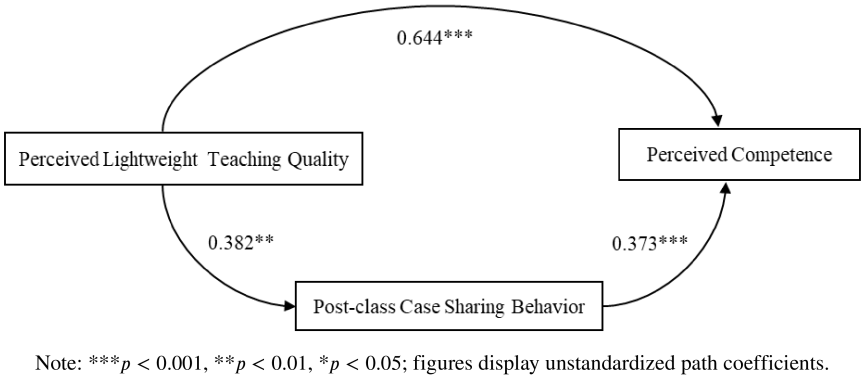
Fig. 2. Path coefficient diagram for perceived lightweight teaching quality, post-class case sharing behavior, and perceived competence.
As shown in Table 6, the bias-corrected 95% bootstrap confidence interval for the indirect effect of PLTQ on PC via PCSB did not include zero. This result confirms that PCSB significantly mediates the relationship between PLTQ and PC. The direct effect (0.644) and indirect effect (0.142) accounted for 81.9% and 18.1% of the total effect (0.786), respectively.
| Effect value | SE | LLCI | ULCI | Effect size | Conclusion | |
| Total effect | 0.786 | 0.098 | 0.591 | 0.981 | Significant | |
| Direct effect | 0.644 | 0.091 | 0.464 | 0.824 | 81.9% | Significant |
| Mediating effect | 0.142 | 0.046 | 0.045 | 0.228 | 18.1% | Significant |
The standardized value of the indirect effect was 0.11. On the original scale (1–5 points), for every 1-point increase in perceived quality of lightweight teaching, perceived competence indirectly increased by 0.142 points through the mediating effect of post-class case-sharing behavior, accounting for 3.6% of the mean perceived competence score (3.910). This indirect effect accounts for 18.1% of the total effect, representing a small-to-moderate effect size, and is significant in terms of revealing the theoretical mechanisms and explaining individual differences.
A significant total effect of PLTQ on PC was observed. After introducing PCSB into the model, the direct effect of PLTQ on PC remained significant. Furthermore, the bootstrap confidence interval for the indirect effect via PCSB did not include zero. These results indicate that PCSB plays a significant partial mediating role in the relationship between PLTQ and PC. Thus, H1 and H2 were supported.
5.3.2. Moderation Effect Test (H3a)
To examine the moderating role of AM in the relationship between PLTQ and PCSB (that is, the first stage of a moderated mediation model), the PROCESS macro (Model 7; Hayes 24) was used with 5,000 bootstrap samples to estimate 95% confidence intervals. The core objective was to validate Hypothesis H3a: Compared with finance majors, the PLTQ of coursework exerts a stronger promotional effect on PCSB among business administration majors.
-
(a)
Moderated Effect Regression Analysis
As shown in Table 7, a regression analysis was conducted to predict PCSB. The model incorporated AM, the interaction between PLTQ and AM, and the control variables self-assessed performance (SP, Q3) and course semester (CS, Q4). The overall model was statistically significant, \(F(5,110) = 6.431\), \(p < 0.001\), explaining 22.6% of the variance in PCSB (\(R^{2}= 0.226\)). Analysis of the coefficients revealed that the main effect of PLTQ was positive but did not reach statistical significance (\(b = 0.404\), \(p = 0.116\)). Similarly, the main effect of AM was not significant (\(b = 0.405\), \(p = 0.431\)), indicating no significant mean difference in PCSB between the two majors. Critically, the interaction effect between PLTQ and AM was also nonsignificant (\(b = -0.015\), \(p = 0.958\)). Thus, the strength of the relationship between PLTQ and PCSB did not differ significantly across AMs.
-
(b)
Analysis of Moderated Mediating Effects
The 95% confidence interval for the indirect effect of business administration majors includes 0 (\([-0.066,0.368]\)), while the indirect effect for Financial Management majors is significant (\([0.029, 0.240]\)). However, because the interaction term is not significant (\(p = 0.958\), see Table 7), the difference between the indirect effects of the two groups does not reach statistical significance. Therefore, it is not possible to conclude that “sharing behavior is more critical for finance majors” or that “business administration students enhance their capabilities through other pathways.” The data from this study only indicate that no moderating effect of major background on the indirect effect was detected in the overall sample. Therefore, H3a was not supported. It should be noted that the conditional indirect effects in Table 8 are derived from Model 7 and are not directly comparable to the overall average mediation effect from Model 4 in Table 6, as the present analysis specifically tested between-group differences.
| Outcome variable | Predictor variable | \(\boldsymbol{b}\) (unstandardized) | SE | \(\boldsymbol{t}\) | \(\boldsymbol{p}\) | 95% CI |
| PCSB | Constant | 2.365 | 0.347 | 6.821 | <0.001 | \([1.678,3.053]\) |
| PLTQ | 0.404 | 0.255 | 1.586 | 0.116 | \([-0.101,0.908]\) | |
| AM | 0.405 | 0.513 | 0.790 | 0.431 | \([-0.611,1.422]\) | |
| Interaction term (PLTQ \(\times\) AM) | -0.015 | 0.289 | -0.053 | 0.958 | \([-0.587,0.556]\) | |
| SP | 0.375 | 0.123 | 3.047 | 0.003 | \([0.131,0.620]\) | |
| CS | -0.169 | 0.493 | -0.342 | 0.733 | \([-1.146,0.809]\) | |
| Model summary \(R^{2}=0.226\), \(F(5,110)=6.431\), \(p<0.001\) | ||||||
Note: Academic major (AM) is a dichotomous variable, 0 \(=\) Business Administration, 1 \(=\) Financial Management. CI \(=\) Confidence Interval. SP and CS were controlled in the analysis.
| AM | Conditional indirect effect (PLTQ \(\boldsymbol{\to}\) PCSB \(\boldsymbol{\to}\) PC) | Boot SE | 95% Boot CI |
| Business administration (0) | 0.151 | 0.108 | \([-0.066,0.368]\) |
| Financial management (1) | 0.145 | 0.052 | \([0.029,0.240]\) |
| Moderated mediating effect index | -0.006 | 0.117 | \([-0.246,0.224]\) |
Note: Conditional indirect effects estimated using bootstrap method (5000 resamples). The adjusted mediation effect index reflects differences in indirect effects.
In summary, H3a was not supported. The data indicate that the effect of PLTQ on PCSB is consistent across disciplines, with no significant variation in its strength due to AM. This conclusion is supported by the nonsignificant interaction term and index of moderated mediation. Consequently, the anticipated moderating role of AM in the “PLTQ \(\to\) PCSB” pathway was not observed. This finding suggests that professional differences may not operate in the later instructional stage of “translating perceived lightness into behavior” (H3a) but rather in the earlier stage of “students’ initial engagement with case materials” (H3b). In other words, the divergence in students’ final perceived competence is more likely rooted in the initial perceived case relevance, as indicated by H3b, than in the process of behavioral translation. An additional notable finding is that the indirect effect of PLTQ on PC via sharing behavior was significant only for finance majors. This may imply that for finance students, who potentially begin with a weaker perception of case relevance, external “behavioral validation” (that is, sharing) is particularly critical for building competence confidence. In contrast, for business administration students with stronger initial relevance perceptions, competence may be enhanced more through in-class cognitive absorption and integration. This indicates potential differences in competence construction pathways contingent on varying cognitive starting points.
5.3.3. Testing Front-End Differences in Academic Major
(a) Preliminary Testing
To examine whether AM explains front-end cognitive differences, an independent-samples \(t\)-test was performed on PCR (Q12R). As shown in Table 9, Business Administration students scored significantly higher (\(\textrm{M} = 3.917\)) than Financial Management students (\(\textrm{M} = 3.437\)), with a mean difference of 0.48, \(t(114) = 2.519\), \(p = 0.013\). The effect size was moderate-to-large (Cohen’s \(d = 0.505\)). This result provides initial support for H3b (front-end difference hypothesis).
| Major | Cases (\(\boldsymbol{N}\)) | Mean (M) | Standard deviation (SD) | \(\boldsymbol{t}\) | \(\boldsymbol{p}\) | Cohen’s \(\boldsymbol{d}\) |
| Business administration | 36 | 3.917 | 0.841 | 2.519 | 0.013 | 0.505 |
| Financial management | 80 | 3.437 | 0.992 |
To further examine potential differences in PC, independent-samples \(t\)-tests were conducted on each of its sub-dimensions. The results are shown in Table 10; students majoring in business administration and financial management exhibited no statistically significant differences in their perceptions across all specific competence dimensions (all \(p> 0.05\)). Although significant front-end differences existed in PCR, this discrepancy did not systematically translate into students’ self-reported back-end perceptual dimensions, including knowledge acquisition, situational transfer, problem-solving, and comprehensive competence.
| Competency dimension |
Business administration (\(\boldsymbol{N = 36}\)) M (SD) |
Financial management (\(\boldsymbol{N = 80}\)) M (SD) |
\(\boldsymbol{t}\) | \(\boldsymbol{p}\) | Cohen’s \(\boldsymbol{d}\) |
| Knowledge mastery (Q14 and Q15) | 4.042 (0.849) | 3.944 (0.938) | 0.535 | 0.593 | 0.110 |
| Contextual transfer (Q16) | 3.750 (0.996) | 3.900 (0.976) | -0.761 | 0.448 | -0.150 |
| Problem solving (Q17) | 3.810 (0.980) | 3.900 (0.976) | -0.482 | 0.631 | -0.090 |
| Comprehensive competence (Q18–Q20) | 3.806 (0.977) | 3.942 (0.921) | -0.722 | 0.472 | -0.140 |
(b) Comprehensive Evaluation of the Front-End Difference Hypothesis
Based on a synthesis of the empirical analysis results presented in this section, this study revealed a key asymmetric pattern. On the one hand, the moderating effect of AM was not supported by the data (H3a was rejected), which indicates that AM did not exert a moderating influence within the core conversion chain of “PLTQ \(\to\) PCSB \(\to\) PC.” On the other hand, the results clearly validate the significant main effect of AM on PCR (H3b1 was supported). These dual empirical results indicate that the influence mechanism of professional background primarily lies in shaping students’ initial acceptance and perceived relevance of teaching cases. Although this front-end cognitive difference is significant, it does not directly lead to widespread divergence in final self-efficacy (PC). Therefore, the results robustly support the “front-end difference hypothesis” (H3b1). This research precisely pinpoints the critical challenge in professional adaptation at the initial stage of the teaching process—namely, the match between case studies and learners’ professional schemas—rather than in subsequent stages of knowledge internalization and transfer (see Section 5.3.4 for the test results for H3b2 (chain transmission)).
(c) Supplement to Qualitative Evidence
To supplement the quantitative findings, we conducted a systematic thematic analysis of the responses to the open-ended question (Q22: “What suggestions or feedback do you have regarding the case-based teaching in this course?”). A total of 87 valid responses were collected for this question (response rate: 75%), including 58 from students majoring in financial management and 29 from students majoring in business administration. Two researchers independently read all responses, identified key statements, and developed a coding framework through discussion, before categorizing and analyzing the data. The inter-coder agreement was 89%, and any discrepancies were resolved through discussion. Among financial management students, 42 responses (72.4%) explicitly mentioned “insufficient relevance of cases to the major” or “a desire for more finance-related cases”; among business administration students, only 3 responses (10.3%) raised similar concerns. Among business administration students, 19 responses (65.5%) emphasized that “cases were vivid and interesting” and “helped in understanding theory”; among financial management students, only 12 responses (20.7%) had similar evaluations. The following representative quotes were observed:
-
・
Financial management student A:
“Most cases are management stories; if ethics were taught using events like the Luckin Coffee financial fraud scandal, it would be more relevant to us.”
-
・
Finance management student B:
“I hope to see more leadership cases related to financial statement analysis.”
-
・
Business administration student C:
“The Dream of the Red Chamber case was very interesting; it helped me remember the personality types right away.”
The above qualitative evidence corroborates the quantitative results (professional differences in perceived case relevance, Cohen’s \(d = 0.505\)), indicating that differences in front-end cognition among financial management students stem primarily from the low alignment between case content and their professional schemas.
5.3.4. Chain Mediation Test: Mechanisms of Front-end Cognitive Differences
To test whether AM influences students’ PC through the chained path of “PCR \(\to\) PLTQ \(\to\) PCSB” (H3b2), this study employed Model 6 in PROCESS v4.2 24 to conduct a chained mediation analysis, with 5,000 bootstrap samples and a 95% confidence interval. The analysis controlled for self-rated academic performance (Q3) and class duration (Q4).
(a) Path Coefficient Analysis
The path coefficients of the chained mediation model are listed in Table 11. The path from academic background to perceived case relevance was significant (\(b=1.384\), \(\textrm{SE}=0.573\), \(p=0.017\), 95% CI \([0.248,2.520]\)), indicating that students majoring in business administration had a significantly higher perceived case relevance than those majoring in financial management. This is consistent with the results of the independent samples \(t\)-test and supports H3b1.
The effect of PCR on PLTQ was marginally significant (\(b=0.117\), \(p=0.064\), 95% CI \([-0.007,0.242]\)), suggesting that PCR may, to some extent, promote students’ positive experiences with lightweight teaching. The paths from PLTQ to PCSB (\(b=0.353\), \(p=0.006\)) and from PCSB to PC (\(b=0.349\), \(p<0.001\)) were both significant, further supporting the core arguments regarding the behavioral transformation mechanism in H1 and H2.
| Path | Coefficient (\(\boldsymbol{b}\)) | SE | \(\boldsymbol{t}\) | \(\boldsymbol{p}\) | 95%CI |
| AM \(\to\) PCR | 1.384 | 0.573 | 2.413 | 0.017 | \([0.248,2.520]\) |
| PCR \(\to\) PLTQ | 0.117 | 0.063 | 1.868 | 0.064 | \([-0.007, 0.242]\) |
| PLTQ \(\to\) PCSB | 0.353 | 0.125 | 2.818 | 0.006 | \([0.105, 0.601]\) |
| PCSB \(\to\) PC | 0.349 | 0.067 | 5.239 | <0.001 | \([0.217, 0.482]\) |
(b) Analysis of Indirect Effects
The bootstrap confidence interval for the chain of indirect effects (AM \(\to\) PCR \(\to\) PLTQ \(\to\) PCSB \(\to\) PC) is \([-0.008,0.071]\), which includes 0. The effect size is 0.020, which does not reach statistical significance. The confidence intervals for all other indirect effect paths (AM \(\to\) PCR \(\to\) PC, AM \(\to\) PLTQ \(\to\) PC, AM \(\to\) PCSB \(\to\) PC, AM \(\to\) PCR \(\to\) PLTQ \(\to\) PC, AM \(\to\) PCR \(\to\) PCSB \(\to\) PC, AM \(\to\) PLTQ \(\to\) PCSB \(\to\) PC) also include 0 (Table 12). Therefore, H3b2 is not supported.
| Indirect effect path | Effect size | BootSE | BootLLCI | BootULCI |
| AM \(\to\) PCR \(\to\) PC | 0.190 | 0.154 | -0.014 | 0.571 |
| AM \(\to\) PLTQ \(\to\) PC | 0.157 | 0.196 | -0.296 | 0.488 |
| AM \(\to\) PCSB \(\to\) PC | -0.208 | 0.212 | -0.696 | 0.174 |
| AM \(\to\) PCR \(\to\) PLTQ \(\to\) PC | 0.099 | 0.104 | -0.032 | 0.367 |
| AM \(\to\) PCR \(\to\) PCSB \(\to\) PC | 0.072 | 0.089 | -0.016 | 0.329 |
| AM \(\to\) PLTQ \(\to\) PCSB \(\to\) PC | 0.032 | 0.040 | -0.054 | 0.109 |
| AM \(\to\) PCR \(\to\) PLTQ \(\to\) PCSB \(\to\) PC (Chain-type) | 0.020 | 0.021 | -0.008 | 0.071 |
(c) Total and Direct Effects
The total effect of AM on PC was 0.341 (\(p=0.50\), 95% CI \([-0.657,1.338]\)), which was not significant. After controlling for the chained mediation path, the direct effect was \(-0.022\) (\(p=0.952\), 95% CI \([-0.742, 0.698]\)), which was also not significant. Combining the significant results of H1 and H2, it can be concluded that AM does not directly determine students’ PC, nor does it exert an indirect influence through a chained mediation path. Moreover, the promotional effect of lightweight teaching on students’ PC across different majors primarily stems from the teaching experience itself and the PCSB it elicits, rather than differences in professional background.
Based on the analysis in this section, H3b1 is supported (AM influences front-end cognitive differences), but H3b2 is not supported (chain mediation was not significant). This finding reveals the precise location of the “front-end cognitive gap”: AM does indeed cause variations in the starting points of PCR among students, but this initial difference does not evolve along the chain of PLTQ \(\to\) PCSB” into a differentiation in final PC. In other words, “different starting points” do not equate to “different endpoints.” Lightweight teaching has the capacity to bridge the front-end cognitive gap, providing students from different majors with relatively equitable opportunities for competency development.
5.3.5. Comprehensive Hypothesis Testing Results
The hypothesized “perception–behavior–competence” pathway (H1 and H2) was supported. In contrast, the moderating effect of AM posited in H3a was not confirmed. Thus, the initial cognitive disparity (H3b) was validated. The key findings are summarized in Table 13.
| Hypothesis | Test content | Key statistics | Bootstrap 95% CI / effect size | Conclusion |
| H1 | PLTQ \(\to\) PC | \(b=0.786\), \(t=7.997\), \(p<0.001\) | \([0.591,0.981]\) | Supported |
| H2 | The mediating effect of PCSB | Indirect effect \(=\) 0.142 | \([0.045,0.228]\) | Supported |
| H3a | Moderation effect of AM (PLTQ \(\to\) PCSB Path) | Interaction term \(b=-0.015\), \(t=-0.053\), \(p=0.958\) | \([-0.587, 0.556]\) | Rejected |
| H3b1 | AM \(\to\) PCR | \(t(114)=2.519\), \(p=0.013\) | Cohen’s \(d=0.505\) | Supported |
| H3b2 | Chain mediation effect (AM \(\to\) PCR \(\to\) PLTQ \(\to\) PCSB \(\to\) PC) | Indirect effect \(=\) 0.020 | \([-0.008,0.071]\) | Rejected |
Note: \(N=116\). H1 and H2 analyses controlled for SP (Q3) and CS (Q4). H2 and H3a employed Hayes’s 24 PROCESS macro (Models 4 and 7) with 5000 bootstrap samples.
5.4. Robustness Testing
To examine the robustness of the research model and rule out course assessment format (examination vs. evaluation) as a potential alternative explanation, we investigated the moderating effect of course characteristics. First, PROCESS Model 1 24 was used to test the moderating effect on the total effect path (PLTQ \(\to\) PC). The results showed a nonsignificant interaction effect (\(b=-0.078\), \(p=0.733\), 95% bootstrap CI \([-0.581,0.302]\)). Second, to further assess robustness, we tested its moderation of the first stage of the mediation path (PLTQ \(\to\) PCSB). However, the model did not converge stably with the control variables included, precluding a reliable estimation. Nevertheless, the null finding for the total effect path moderation already excludes course nature as a significant moderator of the primary relationship. In summary, course nature did not significantly moderate the PLTQ \(\to\) PC path. This result rules out assessment format as a viable alternative explanation, thereby strengthening the claim that “disciplinary adaptation” is the core explanatory variable. The nonsignificant moderating effect may be attributed to the fact that both graded and nongraded courses employed identical lightweight case libraries (Q24 shows a 92% core case usage rate) and identical final assessment formats. Thus, the formal distinction in course labels did not capture the core mechanisms underlying effectiveness conversion.
The empirical findings support the core causal pathway “PLTQ \(\to\) PCSB \(\to\) PC” (H1 and H2). More importantly, hypothesis testing revealed that AM does not influence the overall conversion efficiency by modulating this pathway (H3a rejected) but rather by inducing an upstream difference in PCR (H3b1 supported). Furthermore, this upstream difference did not propagate further to PC (H3b2 rejected). This precisely pinpoints the origin of the “professional adaptation dilemma”—the cognitive starting point—and reveals that it does not necessarily lead to differentiation at the endpoint. This finding corroborates the substantive consistency of the assessment formats discussed in Section 3, enabling dual confirmation that the inter-professional differences identified in this study can be robustly attributed to the differences in professional cognitive schema shaped by disciplinary backgrounds, rather than superficial situational factors. Additionally, the insignificant moderating effect of course nature effectively rules out the alternative explanation of assessment pressure, thereby enabling the reverse validation that AM and the resultant differences in professional cognitive schema are the more stable and profound root causes underlying the differentiated effectiveness of lightweight instruction.
6. Research Findings and Implications
6.1. Research Findings
This study integrated cognitive load theory, experiential learning theory, and social cognitive theory. Using a sample of 116 business and management students, it constructed a model combining mediation and chained mediation to systematically analyze the mechanisms through which the effectiveness of lightweight teaching is translated into outcomes, as well as its boundary conditions. The main findings of this study are as follows:
-
(a)
PLTQ significantly positively impacts students’ PC. Data analysis indicates that students’ positive experiences with lightweight instructional design can be directly and effectively translated into recognition of their own competence improvement (\(b=0.786\), \(p<0.001\)). This conclusion reaffirms that optimizing instructional design through “light-asset” resources, such as short videos and localized case studies, effectively reduces extraneous cognitive load, offering a viable pathway to enhance students’ learning gain and sense of competence. This provides direct evidence for practical reforms in business and management courses in the context of new liberal arts construction.
-
(b)
PCSB acts as a partial intermediary between PLTQ and PC. The findings indicate that PLTQ not only directly influences PC but also indirectly promotes competence development by motivating students to apply and share their knowledge in post-class scenarios (indirect effect value \(=\) 0.142, 95% bootstrap CI \([0.045, 0.228]\)). This indicates that the behavioral transformation of “learning for application” is the key mechanism through which lightweight instruction achieves profound impact.
-
(c)
AM influences PCR to create initial cognitive differences (H3b1 is supported), but these differences are not transmitted to PC via the “PLTQ \(\to\) PCSB” pathway (H3b2 is not supported). Business administration students had significantly higher PCR scores than financial management students (mean difference \(=\) 0.479, Cohen’s \(d=0.505\)); however, this initial difference did not lead to further differentiation in PC (there were no significant differences between the two groups across any PC dimensions). This finding reveals the true boundaries of the “major-fit dilemma”: the problem lies at the starting point, not in the process, and this initial difference can be bridged through instructional design.
In summary, the functional boundary model constructed in this study (Fig. 3) not only validates the core transformation pathway of “PLTQ \(\to\) PCSB \(\to\) PC” but also precisely locates the “front-end cognitive gap” at the starting point of the learning process, confirming that different starting points do not necessarily lead to divergence at the endpoint.
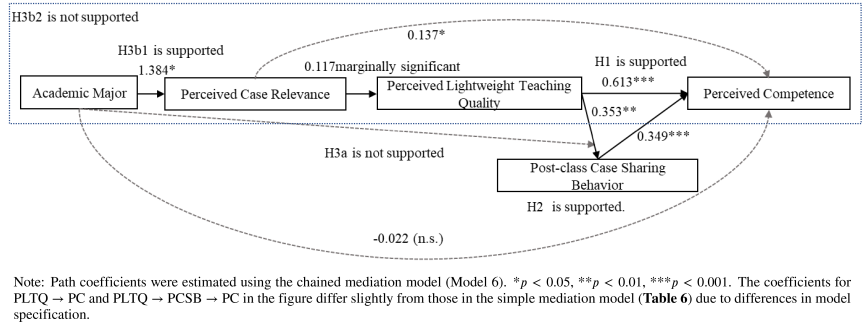
Fig. 3. An integrated model of the boundaries of action for adapting lightweight teaching programs to challenging contexts.
6.2. Research Implications
6.2.1. Theoretical Contributions
The primary theoretical contributions of this study are twohold.
-
(a)
Precisely identifying the location and boundaries of the “front-end cognitive gap” to deepen our understanding of the mechanisms underlying the effectiveness of differentiated instruction. Existing research has largely focused on the direct or moderating effects of academic background on learning outcomes but it has lacked a detailed deconstruction of its underlying mechanisms. By distinguishing between the “front-end cognitive differences” and “process moderation” mechanisms and employing a chained mediation model for testing, this study found that AM does indeed result in significant initial cognitive disparity (PCR), but this disparity is not further transmitted to PC through the “PLTQ \(\to\) PCSB” chain. The theoretical significance of this finding lies in its precise identification of the root cause of the major-majority mismatch at the starting point of the learning process, rather than within the process itself; simultaneously, it reveals the crucial boundary condition that “differences at the starting point \(\ne\) differences at the endpoint.” This study combined schema theory with SDT to explain the mechanisms underlying the formation of front-end cognitive differences from both cognitive and motivational perspectives. This provides a new theoretical perspective for understanding the pathways through which other stable individual characteristics, such as prior knowledge and cognitive styles, exert their effects.
-
(b)
Providing new boundary conditions for the application of cognitive load theory in differentiated teaching contexts. This study found that even when information presentation has been “streamlined,” if the content does not sufficiently align with learners’ professional cognitive schemas, its effectiveness will face a “cognitive threshold” in the initial stage. More importantly, once students cross this threshold, streamlined instruction consistently promotes the development of competencies among students from different disciplines (both H1 and H2 are significant). This suggests that when applying cognitive load theory in interdisciplinary teaching contexts, the focus should be on the boundary condition of initial cognitive schema alignment, rather than assuming that “streamlined” designs will automatically bridge all differences.
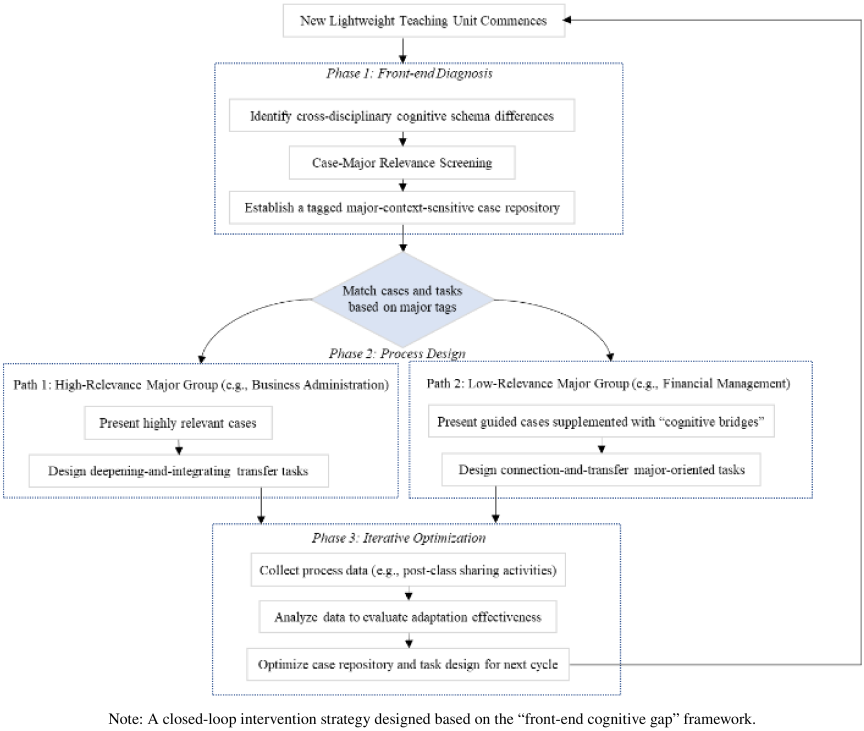
Fig. 4. Process flowchart for professional context-sensitive lightweight instructional design.
6.2.2. Practical Implications
The main practical implication of this study is that overcoming the “professional adaptation dilemma” in lightweight instruction lies in a strategic shift of intervention focus—from primarily emphasizing the “efficiency” of transformation during the learning process to proactively lowering the cognitive “barriers” at the outset of learning. Importantly, although there are differences in students’ prior knowledge across different majors, these differences do not diminish the effectiveness of lightweight teaching in enhancing students’ sense of competence (H1 and H2 were significant). This implies that instructors need not be overly concerned about the “innate disadvantages” stemming from students’ academic backgrounds; they simply need to establish cognitive bridges at the outset, after which they can treat all students equally throughout the remainder of the course. Based on these findings, we developed a context-sensitive design framework for professional education that incorporates preliminary assessment, instructional design, and iterative optimization (see Fig. 4). The innovation of this framework lies in the following. First, the focus of intervention is shifted to the early stages; while most existing differentiated instruction frameworks emphasize content stratification or ability grouping during the teaching process, they pay relatively little attention to systematic cognitive diagnosis prior to the initiation of instructional design. In contrast, this framework places the starting point of intervention at “front-end diagnosis,” emphasizing the identification of cognitive disconnects among students of different majors before instructional design begins. Second, through evidence-driven closed-loop iteration, this framework explicitly incorporates PCR and PCSB as quantitative feedback indicators, forming a closed loop of “diagnosis \(\to\) design \(\to\) evaluation \(\to\) optimization.” In contrast, traditional instructional design often adopts a linear model, with insufficient attention to data-driven closed-loop iteration. Furthermore, it is specifically tailored for lightweight teaching scenarios; this framework specifically addresses the core contradiction of lightweight teaching, namely, “limited resources and difficulty in adaptation,” rather than serving as a generic framework. This framework is based on preliminary recommendations derived from exploratory research and possesses theoretical and logical transferability. However, its generalizability must be tested and refined through future practical application.
-
(a)
Front-End Diagnostics: Implementing a pre-screening mechanism to evaluate the relevance of “cases.” During the preparation phase for interdisciplinary courses, teachers can invite student representatives from different majors to conduct a simple “relevance recognition” pre-test on the newly introduced lightweight instructional cases 15. Implement categorized tagging management for the case library based on scoring results (for example, high relevance-business administration, requires guidance-financial management). This approach enables teachers to accurately identify potential cognitive gaps among students from different majors before classes begin, providing advanced support for precisely matching teaching resources and preventing cognitive disconnects at the source.
-
(b)
Process Design: Embed Professional-Oriented Transfer Scaffolds. Course instructional design should consciously guide students to transfer general knowledge to specialized contexts. Taking the “Dream of the Red Chamber” leadership case study as an example, after the case presentation, teachers can design tasks related to “team role positioning and collaboration mechanisms” for students majoring in business administration and analysis tasks on “project budget preparation and risk control” for students majoring in financial management. This professional demand-aligned differentiated post-class task design effectively transforms the universal “perceived lightness of instruction” into “sharing behavior” aligned with students’ professional schemas. This approach successfully bridges the gap between knowledge acquisition and practical application.
-
(c)
Iterative Optimization: Establish an Evidence-Based Teaching Improvement Cycle. Incorporate PCR (instructional starting point) and “frequency of PCSB” (instructional process mediator) as key process-oriented evaluation indicators, and incorporate them into regular curriculum teaching reflections. By continuously collecting and analyzing these granular data, educators can dynamically assess learning touchpoints and barriers across different professional groups. This drives the evolution of teaching from a traditional experience-driven model to an evidence-based data-driven approach, enabling the continuous and precise optimization of lightweight instructional schemes.
This framework is primarily intended for platform-based courses, targeting students from multiple disciplines or courses that make extensive use of lightweight resources, provided that instructors are able to conduct pre-course assessments. Its applicability to single-discipline classes or resource-intensive instruction requires further evaluation.
6.3. Research Limitations and Future Prospects
This study had several limitations, highlighting directions for future research. First, the sample was drawn from a single course at the same university, and the data were cross-sectional, limiting the external validity of the conclusions and the ability to draw causal inferences. Nevertheless, the core findings—namely, the significant effect of AM on PCR and the pathway through which PLTQ influences PC via PCSB—remain robust within the current sample. Future research could validate these findings through a longitudinal design involving multiple universities and courses. Second, there are limitations in the measurement of key variables. The use of a single-item measure for post-class case-sharing behavior and the absence of a specialized cognitive load scale may introduce measurement error. However, even with such errors, H1, H2, and H3b1 remain significant, indicating that these effects are robust. The indirect effect (0.142) identified in this study should be regarded as preliminary exploratory evidence. Future studies could employ multidimensional behavioral scales and cognitive load measures to assess behavioral transfer and cognitive processing more accurately. Finally, while this study focused on professional background as an operationalized variable of the cognitive schema, it did not measure individual-level factors, such as personality traits, interests, or cognitive styles, limiting a comprehensive explanation of the sources of “upstream cognitive differences.” Additionally, while the key nonsignificant finding (H3b2 not supported) revealed the boundary condition that “differences at the starting point \(\ne\) differences at the endpoint,” the underlying cognitive mechanisms remain unclear. Future research could incorporate individual difference variables while controlling for professional background and further analyze the interaction mechanisms between subject-specific effects and individual effects by measuring indicators such as study time and effort.
Despite these limitations, as an exploratory first step in deconstructing the professional adaptation mechanisms of lightweight teaching, this study’s proposed “front-end cognitive gap” framework and “diagnosis–design–optimization” model still provide a clear theoretical foundation and design starting point for subsequent research.
Acknowledgments
This research was funded by Anhui Provincial Teaching Research Project for Higher Education Institutions: “Innovative Teaching Research on Organizational Behavior Courses in the New Liberal Arts Paradigm” (2022jyxm1154); Teaching Research Project: “Exploration and Practice of Digital Intelligence Reform Pathways for Business Administration Programs in Undergraduate Institutions under the New Liberal Arts Framework” (2022jyxm1151); Research on Optimizing the Business Administration Curriculum System to Enhance Data Analysis Competencies (2022JYXM0025); A Study on the Mechanism of Reverse Learning Among Older Employees in Corporate Digital Transformation (2024AH052989); Curriculum Ideological and Political Education Demonstration Course “Organizational Behavior” (2025KCSZKC10); Provincial Curriculum Ideological and Political Education Demonstration Course “Inventory Control and Management” (2023kcszsf124). During the preparation of this manuscript, the authors used DeepSeek for language editing and content refinement. After using this tool, the authors reviewed and revised the content as needed and take full responsibility for the final manuscript. No AI tools were used for data analysis, figure generation, or core research tasks.
- [1] M. Ljubojević, M. Savić, D. Mijić, and G. Vico, “Improving the efficiency of multimedia learning and the quality of experience by reducing cognitive load,” Appl. Sci., Vol.15, No.3, Article No.1054, 2025. https://doi.org/10.3390/app15031054
- [2] P. Li, Q. Liu, and L. Bai, “Teaching design and practice of university computer courses based on a lightweight teaching strategy,” Comput. Educ., Vol.2024, No.3, pp. 218-222, 2024 (in Chinese). https://doi.org/10.16512/j.cnki.jsjjy.2024.03.015
- [3] J. Sweller, “Cognitive load during problem solving: Effects on learning,” Cogn. Sci., Vol.12, No.2, pp. 257-285, 1988. https://doi.org/10.1207/s15516709cog1202_4
- [4] D. A. Kolb, “Experiential Learning: Experience as the Source of Learning and Development,” Prentice-Hall, 1984.
- [5] D. L. Kirkpatrick, “Techniques for evaluating training programs,” J. Am. Soc. Train. Dir., Vol.13, pp. 1-10, 1959.
- [6] D. C. Hambrick and P. A. Mason, “Upper echelons: The organization as a reflection of its top managers,” Acad. Manag. Rev., Vol.9, No.2, pp. 193-206, 1984. https://doi.org/10.2307/258434
- [7] T. Haile, “Understanding individual differences in learning strategies, cognitive characteristics and task demands: One-size does not fit all but tailoring is difficult,” Ph.D. thesis, University of Washington, 2023.
- [8] Q. L. Sheng, “Classroom teaching innovation for learning transfer,” Beihang University News Network Report, 2025 (in Chinese). https://news.buaa.edu.cn/info/1005/64454.htm [Accessed December 18, 2025]
- [9] Y. Cao, A. A. Aziz, and W. N. R. Mohd Arshard, “Performance and perception disparities in blended learning across varied vocational academic backgrounds,” J. Educ. Technol. Dev. Exch., Vol.17, No.2, pp. 176-198, 2024. https://doi.org/10.18785/jetde.1702.08
- [10] K. L. Wilson, A. Lizzio, and P. Ramsden, “The development, validation and application of the Course Experience Questionnaire,” Stud. High. Educ., Vol.22, No.1, pp. 33-53, 1997. https://doi.org/10.1080/03075079712331381121
- [11] M. H. Knol, C. V. Dolan, G. J. Mellenbergh, and H. L. J. van der Maas, “Measuring the quality of university lectures: Development and validation of the instructional skills questionnaire (ISQ),” PLOS ONE, Vol.11, No.2, Article No.e0149163, 2016. https://doi.org/10.1371/journal.pone.0149163
- [12] B. T. Sexton, “Exploring the influence of students’ perceptions of instructional message content relevance and experienced cognitive load on students’ cognitive learning,” Ph.D. thesis, University of Kentucky, 2017. https://doi.org/10.13023/ETD.2017.035
- [13] Y. Zhang et al., “Teaching presence promotes learner affective engagement: The roles of cognitive load and need for cognition,” Teach. Teach. Educ., Vol.123, Article No.104167, 2023. https://doi.org/10.1016/j.tate.2023.104167
- [14] K. Kozan, “The incremental predictive validity of teaching, cognitive and social presence on cognitive load,” Internet High. Educ., Vol.31, pp. 11-19, 2016. https://doi.org/10.1016/j.iheduc.2016.05.003
- [15] R. S. D. Silva, G. Q. Souki, A. S. D. Oliveira, L. S. G. Vieira, and M. Serra, “Cognitive, affective and behavioural repercussions of perceived quality in tourism vocational education: Insights from self-determination theory,” Int. J. Educ. Manag., Vol.38, No.6, pp. 1710-1734, 2024. https://doi.org/10.1108/IJEM-11-2023-0544
- [16] L. Bergkvist and J. R. Rossiter, “The predictive validity of multiple-item versus single-item measures of the same constructs,” J. Mark. Res., Vol.44, No.2, pp. 175-184, 2007. https://doi.org/10.1509/jmkr.44.2.175
- [17] C. Fuchs and A. Diamantopoulos, “Using single-item measures for construct measurement in management research: Conceptual issues and application guidelines,” Betriebswirtschaft, Vol.69, No.2, pp. 195-210, 2009.
- [18] Y. Wang, H. Wang, S. Wang, S. A. Wind, and C. Gill, “A systematic review and meta-analysis of self-determination-theory-based interventions in the education context,” Learn. Motiv., Vol.87, Article No.102015, 2024. https://doi.org/10.1016/j.lmot.2024.102015
- [19] A. Bandura, “Self-efficacy: Toward a unifying theory of behavioral change,” Psychol. Rev., Vol.84, No.2, pp. 191-215, 1977. https://doi.org/10.1037/0033-295X.84.2.191
- [20] R. E. Mayer and R. Moreno, “Nine ways to reduce cognitive load in multimedia learning,” Educ. Psychol., Vol.38, No.1, pp. 43-52, 2003. https://doi.org/10.1207/S15326985EP3801_6
- [21] R. M. Ryan and E. L. Deci, “Self-determination theory and the facilitation of intrinsic motivation, social development, and well-being,” Am. Psychol., Vol.55, No.1, pp. 68-78, 2000. https://doi.org/10.1037110003-066X.55.1.68
- [22] A. Bandura, “Social Foundations of Thought and Action: A Social Cognitive Theory,” Prentice-Hall, 1986.
- [23] S. Yu and C. Levesque-Bristol, “A cross-classified path analysis of the self-determination theory model on the situational, individual and classroom levels in college education,” Contemp. Educ. Psychol., Vol.61, Article No.101857, 2020. https://doi.org/10.1016/j.cedpsych.2020.101857
- [24] A. F. Hayes, “Introduction to Mediation, Moderation, and Conditional Process Analysis: A Regression-Based Approach,” 3rd Edition, Guilford Press, 2022.
This article is published under a Creative Commons Attribution-NoDerivatives 4.0 Internationa License.