
Research Paper:
Cooperative Game-Theoretic Analysis of the Collaborative Strategy in Inter-University Coalitions: A Case Study of Japanese Women’s Universities
Eriko Saito†

General Education Organization, Otemon Gakuin University
1-1 Oda Toshiba-cho, Ibaraki, Osaka 567-8620, Japan
†Corresponding author

This study aims to evaluate the multidimensional characteristics of Japanese universities and construct a cooperative strategy model based on cooperative game theory under geographic and institutional constraints. Weighted scores were computed, complementarity and coalition value were defined, and a coalition value function incorporating friction costs was formulated under four constraint scenarios. The empirical analysis based on 45 private women’s universities confirmed the model stability and interpretability. Core universities consistently emerged as coalition centers. Although the constraint altered the network density and coalition composition, the overall ranking of the cooperative value remained unchanged. In conclusion, the framework demonstrated a mathematically operational cooperative strategy that provided computational guidance for sustaining the social role of universities.
1. Background and Objective
Japan’s higher education sector is facing rising pressure to optimize resources through reorganization and inter-university alliances 1. Since the late 1990s, the decline in the 18-year-old population, along with the expansion of universities, has created a structural imbalance that has steadily intensified managerial challenges 2. In response, specifically, national universities have established inter-university alliances, such as the Four Universities Alliance Charter in 2001, thereby accelerating institutional integration under national policy initiatives 3,4,5.
Private universities have also rapidly advanced inter-university alliances. A comparable initiative was implemented in 2021, and the Private Comprehensive Three Universities Alliance was established, attracting significant attention for its efforts to build a complementary system of educational resources and revenue capacity beyond institutional boundaries 6. However, local and small-scale private universities have been unable to benefit from national protection or economies of scale and continue to face severe managerial challenges. In response, the government and local authorities have introduced measures to support restructuring, alliances, and withdrawals 7.
Women’s universities exemplify this situation: nearly 100 institutions existed three decades ago; however, only 71 remain today, necessitating survival strategies 8,9,10. Despite this decline, they still account for approximately 9% of all private universities in Japan and retain an important position in higher education by providing access to women, supplying human resources to the society, and functioning as integral components of the social system 11.
Saito and Ohno 12 empirically analyzed private women’s universities by combining institutional classification with electronic word-of-mouth (eWOM) data from current students. They constructed a four-cluster model based on the size and local retention rate. They applied latent Dirichlet allocation to extract preference values, revealing diverse forms of learning, including integrated learning, through resource diversity and gender-specific educational environments. When highlighting these strengths, the study also noted that refining value structures under competitive conditions remains a future challenge 12. These findings underscore the need for cooperative strategies that complement the strengths of universities while accounting for geographic and institutional constraints.
This study aims to evaluate the multidimensional characteristics of universities in Japan and examine, through cooperative game theory, the potential complementarity and coalition value that emerge when institutions form alliances under geographic and institutional constraints. It goes beyond identifying financially distressed universities and proposing closures, by presenting a cooperative strategy model that seeks Pareto improvements through complementary characteristics. By constructing this model, this study provides a mathematical and practical framework that supports decision-making and enables universities to sustain their social roles.
2. Prior Studies and Positioning
2.1. Cooperative Strategy and Alliances
A cooperative strategy contrasts with a traditional competitive strategy, and Brandenburger and Nalebuff advanced its theoretical development through the concept of coopetition that integrates competition and cooperation 13. Applying this perspective to higher education shows that alliances among universities strengthen competitiveness and create value through mutual complementarity.
Specific measures of university alliances include credit transfer systems and joint-degree programs that enhance educational appeal, as well as joint research and industry–academic collaboration that strengthen the social reputation of the university 7. These measures realize economies of scale and diversity that a single institution cannot achieve by reciprocally sharing resources and opening facilities. In the case of private universities, limited recruitment and brand recognition necessitate the reinforcement of the student base and differentiation of educational content through cooperative strategies that serve as key factors in institutional survival 14. Cooperative strategies also mitigate managerial risks arising from intensified competition, making them essential for reducing fluctuations in demand and revenue 13.
Universities must address not only efficiency and marketability but also educational policy and ethical perspectives when promoting alliances. MEXT specifies three critical criteria for reviewing university reorganization: ensuring the continuity of student learning, providing access to education in local communities, and considering the employment of faculty and staff 7. Kobayashi also emphasizes the importance of maintaining educational access in regional areas 15. These perspectives are essential prerequisites for designing cooperative strategies among universities.
2.2. Status of Women’s Universities
Japanese women’s universities face particularly severe managerial pressures. Women’s universities originated from prewar women’s colleges. They have long expanded opportunities for higher education and contributed to the cultivation of female human resources. Since the 1970s, coeducation has developed, and since the 2000s, the number of women’s universities has steadily declined 8,9,10. They face multiple challenges, including declining applicant pools owing to the falling birthrate, intensified competition with coeducational universities, changing educational needs driven by women’s diversified career paths, the concentration of resources in urban areas, and a relative decline in brand power 8,9,10. In this environment, certain institutions have pursued coeducation or campus relocation; however, universities with small scales and limited locations encounter clear limitations to independent responses.
Therefore, alliances that aim to share educational resources and achieve mutual complementarity constitute a practical option. In Japan, two women’s universities have begun this collaboration 16.
2.3. Cooperative Game Theory
Cooperative game theory provides a mathematical framework for analyzing situations in which multiple decision makers (players) act in an interdependent manner, and von Neumann and Morgenstern systematized its foundations 17. Researchers in management have widely applied game theory to model competition and cooperation and derive optimal strategies and equilibrium solutions. Game theory is divided into two major branches: noncooperative and cooperative. Cooperative game theory evaluates the value of coalitions under the assumption of agreement and benefit distribution among players 18. A representative solution concept in cooperative game theory is the Shapley value that provides a method for assessing fair payoff distribution and coalition stability among participants 19.
Recent studies in social sciences have expanded the applicability of cooperative game theory. Shubik theoretically demonstrated the allocation of an increase in social resources generated through cooperation 20. In debates on the universalization of higher education institutions, the sharing of educational resources and cross-institutional alliances reveals a theoretical alignment between payoff maximization and inclusiveness within cooperative game theory 7.
2.4. Positioning of this Study
The originality of this study lies in formulating cooperative strategies among small-scale institutions as a mathematical model based on cooperative game theory, building on the theoretical foundations and prior studies summarized in the preceding sections.
In recent years, the field of computational intelligence and intelligent informatics has advanced the quantitative analyses of social sciences and accumulated research on game theory and cooperative strategies. Kojima and Arita analyzed the evolutionary fixation of distributive norms using an extended Nash demand game and clarified the relationship between cooperative strategies and distributive justice 21. Koshelev demonstrated that the behaviors of trustees and investors in the initial two rounds of a trust game can be explained through cooperative game theory grounded in fairness 22. Su et al. empirically examined the correlation between cooperative network structures and outcomes in technology standards alliances, highlighting their strategic significance 23. Li investigated the influence of IT-mediated interactions on the formation of inter-firm trust—both competence and goodwill trust—and argued that the relationship duration moderated those effects 24. In addition, Ma et al. modeled the allocation of research effort in coauthored papers through game theory, providing insights into the universalization of educational collaboration 25.
These studies reinforced game-theoretic interpretations in the social sciences within the context of computational intelligence and intelligent informatics, particularly by addressing the coalition design and fair payoff allocation. In contrast, this study presents a cooperative strategy model for inter-university collaboration based on cooperative game theory and extends the existing theoretical foundation. This approach introduces a perspective absent from prior research and broadens the scope of theoretical applications while contributing to methodological advancement in the field.
3. Research Methodology
3.1. Analytical Data
The dataset consists of universities across Japan. Following the study by Saito and Ohno 12, this study extracts 12 variables related to university preference values and incorporates seven additional variables from prior studies 7,8,9,10. In total, the analysis employs 19 variables categorized into four dimensions. The terms in parentheses denote the variable symbols used in the subsequent model formulation.
Unless otherwise stated, all count variables represent the latest available annual values, and ratio variables are expressed as proportions in the interval \([0,1]\). Monetary variables are reported in thousand JPY and geographic variables in degrees.
- ・
-
・
Scale and location (sources: 12,30,31):
-
–
total enrollment (Students) (students enrolled)
-
–
enrollment capacity rate (Capacity) (proportion)
-
–
land price index (L-prices) (\(10^3\) JPY/\(\mathrm{m}^2\))
-
–
metropolitan dummy (Metropolitan) (binary)
-
–
local enrollment share (Local) (proportion)
-
–
coordinates (Latitude/Longitude) (degrees)
-
–
- ・
- ・
Although the variables are organized into four descriptive categories for presentation, the scoring model treats price competitiveness as an independent evaluation axis. Accordingly, the scoring framework defined in the next section operates in a five-dimensional space.
This study employs the latitude and longitude to calculate the Haversine distance between major cities. This method estimates the shortest spherical distance between two points on Earth, providing sufficient accuracy under a spherical model 41, and expresses the results in kilometers (km). The proportion of international students is expected to cluster near 0% because many women’s universities are small or located in regional cities. Therefore, this study adopts untransformed values to account for the possibility of limited statistical variance. Financial safety indicators (for example, equity ratio and debt ratio) and profitability indicators (for example, current ratio and tuition dependency) fluctuate significantly with annual financial statements or temporary factors such as subsidies and extraordinary items. Because the analysis focuses on the long-term structural conditions underlying coalition behavior, this study excludes these indicators from the dataset.
The designed variables undergo preprocessing. This study applies a logarithmic transformation to continuous variables with high skewness. For variables scaled per student, such as library holdings, the study standardizes the values in the same manner as the other continuous variables. This step eliminates unit and scale differences across variables, ensuring fair weighting and comparability. The study also standardizes the dimension scores to calculate complementarity. In addition, it converts categorical variables into binary form (0/1) and applies winsorization at the top and bottom 1% to mitigate the effect of outliers.
3.2. Scores and Interactions
This section defines the scoring framework and interaction structure in which each university is assigned a five-dimensional score. For instance, the educational resource score (\(E_i\)) is defined as a weighted composite of the relevant variables.
Equation (1) represents a convex aggregation of standardized variables, ensuring comparability within the dimension and preserving the relative scale differences across institutions. Weights \(w_k\) reflect the relative contribution of each variable and are fixed across institutions.
The AHP procedure follows the established methodology 42 and is informed by evaluation frameworks from international organizations, governments, and higher education management studies 43,44,45. Parameter \(\gamma\), constrained by \(0\le\gamma\le 1\), regulates the balance between empirically inferred structure and normative assessment. Consequently, \(\gamma\) reflects the evaluator stance, ranging from data-driven to policy-oriented judgment. The robustness of the results with respect to \(\gamma\) is examined through sensitivity analysis across alternative weighting scenarios. This formulation ensures transparency and interpretability of the integrated weighting scheme for users.
Tuition for four years is treated as a negative indicator because higher values imply lower competitiveness. To convert this into a utility measure, a monotonic decreasing transformation is applied. Let \(\textit{In}(x)\) denote a monotone inversion mapping a cost-type indicator to a benefit-type indicator, and let \(Z(x)\) denote min–max normalization: \(Z(x)=(x-\min(x))/\max(x)-\min(x))\), that scales values into interval \([0,1]\). Tuition efficiency indicator \(T_i\) is obtained by applying inversion followed by normalization \(Z(\textit{In}(x))\), such that lower tuition yields higher utility.
The overall score of university \(i\) is defined as a weighted aggregation of the five-dimensional scores, \(d\in \{E,L,I,\textit{Inv},T\}\) where \(E,\,L,\,I,\,\textit{Inv}\), and \(T\) denote the scores for educational resources, scale and location, internationality, investment outcomes, and tuition efficiency, respectively.
Equation (4) defines the baseline utility of each university, and Eq. (5) specifies the admissible weight space. The weights are calibrated using theoretical criteria derived from the AHP and prior evaluation research 43,44,45.
Furthermore, complementarity \(\textit{Comp}\) is defined as the difference in characteristics between universities.
In Eq. (6), \(d\) indexes the five dimensions. In Eq. (6), complementarity is measured using the L1 distance to preserve interpretability and avoid dominance by a single dimension. This indicator is used for comparative screening in coalition formation, rather than as a welfare measure.
When flagship faculty characteristics do not overlap and academic fields are complementary, an additional indicator, \(\textit{Cov}_{(i,j)}\) is introduced to capture the disciplinary coverage effects that increase collaboration attractiveness 12. \(\textit{Cov}_{(i,j)}\) is defined as a binary indicator such that \(\textit{Cov}_{(i,j)}=1\) if the flagship faculty categories of universities \(i\) and \(j\) are different, and \(\textit{Cov}_{(i,j)}=0\) otherwise, based on a predefined coding of academic fields.
The pair values synergy payoff between universities is defined as follows:
This payoff serves as the characteristic value for two-university coalitions. For larger coalitions, the cooperative game is evaluated using the Shapley value that measures the marginal contribution of each university across all coalition structures.
Geographic distance can be substantial within Japan and may substantially reduce the practical feasibility of collaboration. To capture this effect, distance cost is incorporated into the payoff function by extending Eq. (7) with a penalty term.
Parameters \(\lambda_1,\lambda_2\), and \(\lambda_3\) are calibrated to balance the relative contributions of complementarity, coverage, and distance effects, ensuring that no single component dominates the payoff. All components are normalized to comparable scales prior to aggregation; in particular, \(\textit{Dist}_{(i,j)}\) is standardized (or expressed in 100-km units) to avoid scale distortion. Before the analysis, a sanity check is conducted to verify the (i) convergence of standardized continuous variables to mean zero and standard deviation one, (ii) correct binary encoding, (iii) geographic validity of distance values, and (iv) reasonable sensitivity to parameter variation 46, thereby removing abnormal values, sign inconsistencies, and computational errors.
Equation (7) represents the baseline synergy determined solely by the institutional characteristics and complementarities, whereas Eq. (8) extends the model by incorporating feasibility constraints through spatial costs. Consequently, the specification separates the institutional utility, complementarity effects, and feasibility costs, thereby enabling the identification of core and peripheral institutions.
3.3. Coalition Value and Search
Coalition value function \(v(S)\) defines the characteristic function of the transferable-utility cooperative game for any coalition \(S\subseteq N\). Pair values synergy \(\textit{Syn}_{(i,j)}\) represents the interaction between two universities, and \(v(S)\) extends this notion of pair values to coalitions of arbitrary size by aggregating stand-alone utilities, interaction effects, and feasibility costs.
The coalition value is can be expressed as follows:
The first term represents the aggregate stand-alone utilities of the member universities. The second and third terms capture pair values complementarities and covariances within the coalition. The final term represents the coalition-level feasibility costs arising from real-world constraints. Thus, \(v(S)\) specifies a characteristic function comprising additive utilities, interaction components, and feasibility costs.
In this framework, \(\textit{Cost}(S)\) denotes the coalition-level feasibility cost and is defined as follows:
\(\textit{Dist}(S)\) denotes the maximum pair values geographic distance between the main campuses of universities in \(S\), representing the spatial constraints of the coalition. \(\textit{Pri}(S)\) measures the variance in land prices among member universities, reflecting restructuring and consolidation difficulty. \(\textit{Met}(S)\) is an indicator-type penalty capturing whether metropolitan and non-metropolitan institutions are jointly included. Together, these components represent the practical feasibility constraints affecting coalition formation.
In the strategy design stage, each university selects one of the three actions: solo survival (\(S\)), coalition participation (\(C\)), or withdrawal (\(D\)), forming the strategy set, \(\{S,C,D\}\). For a singleton university, the payoff equals its stand-alone value, \(v(\{i\})=S_i\). Withdrawal yields \(v(\emptyset)=0\), with residual liquidation value incorporated when applicable. Under cooperation, a coalition \(S\subseteq N\) receives value \(v(S)\) defined in Eq. (9).
Payoff allocation within a coalition follows Shapley value \(\phi_i\), defined as follows.
This allocation satisfies efficiency,
The stability is evaluated based on whether the core is nonempty 17,47. If the core is empty, bargaining solutions such as the Nash bargaining solution and the Kalai–Smorodinsky solution can be considered 48,49. This study adopts the Shapley value because it provides a unique and empirically computable index of marginal contribution, whereas the core and bargaining solutions may be empty or require additional implementation assumptions.
Coalition formation is explored under three feasibility constraints. The first is the geographic constraint, \(\textit{Dist}(S)\le D_{\max}\), that restricts coalitions exceeding an admissible spatial range. The second is a land-price constraint, \(\textit{Pri}(S)\le P_{\max}\), that limits coalitions with large disparities in restructuring and asset-consolidation conditions. The third is a local dependence constraint: screening coalitions primarily comprised universities with high local enrollment ratios to avoid an excessive concentration of demand. The coalitions are generated using a greedy coalition-generation procedure 50. To mitigate the combinatorial explosion inherent in coalition formation, the algorithm begins with highly complementary pairs and sequentially expands candidate coalitions while respecting the feasibility constraints. This heuristic approach does not guarantee global optimality but provides computationally tractable candidate coalitions under realistic conditions.
By accumulating locally rational expansions under realistic constraints, the method yields practically interpretable coalition candidates suitable for university cooperation screening.
3.4. Simulation
This section presents a scenario analysis under institutional constraints to examine the effects on coalition value. Five scenarios (S0–S4) are defined (Table 1).
| Scenario | Constraint | Purpose |
| S0 | Unconstrained | Theoretical upper bound (baseline) |
| S1 | Land price | Mitigate excessive land-price disparity |
| S2 | Distance | Limit geographic dispersion |
| S3 | Local dependence | Prevent demand concentration |
| S4 | Withdrawal allowance | Incorporate residual asset value into payoff |
S0 represents the unconstrained case and serves as the theoretical upper bound and baseline for comparison. S1 introduces the land price constraint, restricting coalitions with large disparities in land prices. S2 applies the distance constraint, restricting geographically dispersed coalitions. S3 incorporates the local dependence constraint, limiting coalitions among universities with high local enrollment ratios. S4 introduces the withdrawal allowance, in which strategy \(D\) adds the residual asset value to the payoff.
These scenarios are evaluated using several outputs: complementarity networks to describe coalition structures, pair rankings to evaluate two-university coalition values, rankings of greedy-generated coalitions to analyze coalitions of three or more universities, Shapley values to measure marginal contributions, and the identification of isolated and high-value nodes to characterize structural positions. This comparative analysis examines the manner in which institutional constraints reshape coalition value, stability, and relative strategic positions of universities. In the complementarity network, nodes represent universities, and edges are generated when pairwise complementarity exceeds the screening threshold used in the coalition search. Node colors represent composite score levels, and node sizes are uniform. Network coordinates are obtained using correspondence analysis and positioned using a spring layout. Therefore, the edge length represents the structural proximity rather than the geographic distance.
All computations are implemented in Python to enable reproducibility.
4. Empirical Analysis
4.1. Data for Analysis
This section outlines the dataset and preprocessing procedures used in the analysis. University names were standardized in uppercase Roman letters (for example, ATOMI), and organizational descriptors such as “University,” “Institute,” or “Academy” were omitted. The term “Women’s” was retained only when necessary for identification.
This study set private women’s universities as institutional units for empirical analysis. Their size distribution was highly skewed toward small institutions: the median was 2,064 students, 48% had fewer than 2,000 students, 20% had fewer than 1,000 students, and the minimum was 110 students. Additionally, 75% had fewer than 3,356 students 11. These figures demonstrated that women’s universities represented a collection of small-scale institutions, making them suitable for analyzing complementary alliances. As of August 2025, data were collected from 71 women’s universities as the initial sample. To balance recency and stability, multiyear averages, including the most recent year, were used. Institutions that suspended new student admissions or transitioned to coeducation after 2023 were excluded, as was one university with missing variables and TOKYOJOSHIIKADAI, whose extreme specialization and atypical selectivity made it incomparable with other institutions. Table 2 summarizes the strategic changes leading to these exclusions. The final dataset comprised 45 universities, including those in the Tokyo metropolitan area.
Nineteen variables were preprocessed for the analysis. Because the variables represented heterogeneous institutional attributes rather than a single latent construct, internal consistency metrics such as Cronbach’s \(\alpha\) were not applied. Table 3 presents the descriptive statistics to provide an overview of the dataset, focusing on the mean (M), standard deviation (SD), and coefficient of variation (CV). CV values were reported to two decimal places. Variables with notably high dispersion included S-Foreign (1.56), L-prices (1.26), TF-ratio (0.91), and Partner (0.87).
| Strategy type | University | Announced year | Implemented year |
| Admission halt | KEISEN | 2023 | 2024 |
| KOUBEKAISEI | 2023 | 2024 | |
| NOTRE DAME | 2025 | 2026 | |
| KAWAMURA | 2025 | 2026 | |
| Coeducation | TOKYO KASEI | 2023 | 2026 |
| OUKA | 2023 | 2024 | |
| SONODA | 2024 | 2025 | |
| NAGOYA | 2024 | 2025 | |
| KOBE SHOIN | 2024 | 2025 | |
| KATSUSUI | 2024 | 2025 | |
| EIYOU | 2025 | 2026 | |
| KYOTO KOKA | 2025 | 2026 | |
| OKAZAKI | 2025 | 2026 | |
| HIROSHIMA | 2025 | 2027 | |
| MUKOGAWA | 2025 | 2027 | |
| Differentiation | TOKYOJOSHIIKADAI | Academic distinctiveness | |
| Dimension | Variable name | M | SD | CV |
| Educational resources | Legacy | 55.50 | 20.10 | 0.36 |
| Departments | 3.38 | 2.09 | 0.62 | |
| Flagship | 0.64 | 0.48 | 0.75 | |
| ST-ratio | 36.56 | 14.83 | 0.41 | |
| Hensachi | 40.44 | 8.02 | 0.20 | |
| Books | 374,562 | 21,976 | 0.59 | |
| Scale and location | Students | 2,747 | 1,785 | 0.65 |
| Capacity | 0.96 | 0.16 | 0.17 | |
| L-prices | 167.24 | 211.04 | 1.26 | |
| Metropolitan | 0.62 | 0.49 | 0.79 | |
| Local | 55.85 | 21.41 | 0.38 | |
| Latitude | 35.40 | 1.6 | 0.05 | |
| Longitude | 137.1 | 3.41 | 0.02 | |
| Internationality | TF-ratio | 0.06 | 0.06 | 0.91 |
| S-Foreign | 25.58 | 39.83 | 1.56 | |
| Partner | 17.36 | 15.11 | 0.87 | |
| Investment outcomes | CR-ratio | 0.91 | 0.04 | 0.04 |
| Non-ratio | 0.07 | 0.03 | 0.50 | |
| 4-Fees | 491.20 | 58.80 | 0.12 | |
| Scholarships | 10.51 | 5.95 | 0.57 |
Notes: M, SD, and CV denote mean, standard deviation, and coefficient of variation, respectively. The variable definitions and measurement units are provided in Section 3.1. Values greater than 1,000 were rounded off to the nearest integer for presentation purposes.
These findings indicated substantial differences among women’s universities in terms of location, internationalization, and educational resources, suggesting that complementary strengths supported cooperative strategies rather than isolation.
4.2. Data Validity
This section describes the examination of the validity of the dataset. An initial cooperative game analysis conducted without a sanity check produced numerically implausible values: the pair value of KOUNAN–FUKUOKAKANGO reached 183,671, and several Shapley values exceeded 100,000 (for example, 101,810). These magnitudes indicated scale inconsistencies among the variables that distorted payoff calculations and reduced numerical stability. The sensitivity analysis further showed that small parameter changes altered the top-ranked coalitions, demonstrating ranking instability in the model.
A sanity check was conducted following the standard quantitative modeling practice to confirm the re-standardization, validity of the binary variables, and the geographic distance distribution, thereby ensuring numerical stability and interpretability before the scenario analysis. A refined model was constructed based on these checks. In this model, the pair values converged to approximately 5–8 (Table 4), the Shapley values stabilized at approximately 13–20 (Table 5), and sensitivity analysis produced consistent rankings (Table 6). This sanity check improved the consistency of the numerical stability ranking.
| University pair | Comp | Cov | Cost | \(\boldsymbol{v(S)}\) |
| 1 DOSHISHA–HEIAN | 6.59 | 1.00 | 0.32 | 6.59 |
| 2 TOKYOJOSHI–NIHONTAIKU | 6.02 | 3.00 | 1.39 | 6.26 |
| 3 ATOMI–NIHONJOSHI | 5.33 | 1.00 | 0.53 | 6.05 |
| 4 SHOWA–NIHONTAIKU | 7.24 | 2.00 | 2.83 | 5.95 |
| 5 OSAKASHOIN–OSAKAJOSHI | 7.87 | 1.00 | 2.31 | 5.85 |
Notes: \(\textit{Comp}=\) complementarity; \(\textit{Cov}=\) coverage indicator; \(\textit{Cost}=\) friction cost.
| Coalition | University | Shapley value |
| Coalition 1 | DOSHISHA | 13.62 |
| Coalition 1 | NIHONJOSHI | 15.98 |
| Coalition 1 | NIHONTAIKU | 14.18 |
| Coalition 1 | OSAKAJOSHI | 19.82 |
| Coalition 1 | TOKYOJOSHI | 13.21 |
Notes: Coalition 1 is DOSHISHA–NIHONJOSHI–NIHONTAIKU–OSAKAJOSHI–TOKYOJOSHI.
| Distance weight | Distance coefficient | Local cost | \(D\) (max) | \(\boldsymbol{v(S)}\) |
| 0.2 | 0.002 | 1.0 | 200 | 77.37 |
| 0.2 | 0.002 | 1.5 | 350 | 77.37 |
| 0.2 | 0.002 | 2.5 | 250 | 77.37 |
| 0.2 | 0.003 | 1.5 | 200 | 77.24 |
| 0.2 | 0.003 | 2.5 | 350 | 77.24 |
Notes: Across all tested parameter configurations, the Top-1 coalition remained identical: NIHONJOSHI–NIHONTAIKU–OSAKAJOSHI–SEISEN–TOKYOJOSHI. \(v(S)\) denotes the coalition value under each configuration. Max \(D\) (max) denotes the maximum allowable distance with the unit being [km].
This model was applied to scenarios S0–S4 (Table 1). The next section provides a comparison of the influence of each constraint on the complementarity and coalition value among universities.
4.3. Unconstrained Scenario (S0)
This section presents the results of the unconstrained scenario (S0), representing the fundamental potential of inter-university collaboration.
As shown in Fig. 1, the universities formed several small clusters. KOUNAN, DOSHISHA, and OSAKAJOSHI occupied central positions by connecting with many others, whereas FUKUOKAKANGO and FUJI appeared to be isolated nodes. The overall structure exhibited a “theoretical upper-bound case” characterized by high-density and redundant links. According to the top row in Table 7, the pair values identified SHOWA–NIHONTAIKU (6.64) and DOSHISHA–HEIAN (6.64) as exhibiting high complementarity. The greedy coalition analysis ranked a five-university coalition (79.67), including MATSUYAMA–NIHONJOSHI–NIHONTAIKU–OSAKAJOSHI–SHOWA, at the top. The Shapley values consistently identified OSAKAJOSHI (18.71) as a central contributor, along with other high-value nodes, including JISSEN (\(+1.42\)), SHOWA (\(+1.55\)), NIHONJOSHI (\(+1.38\)), DOSHISHA (\(+1.61\)), and KOUNAN (\(+1.47\)). Peripheral or isolated nodes included KORIYAMA (\(-0.62\)) and MATSUYAMA (\(-1.02\)), although MATSUYAMA appeared in top-ranked coalitions despite heterogeneous contributions. Negative Shapley values indicated that a university contributed less to a coalition than it would obtain by remaining independent under an unconstrained aggregation.
These baseline S0 results provided a reference for interpreting negative Shapley values and evaluating the effects of subsequent constraints on coalition composition and network density.
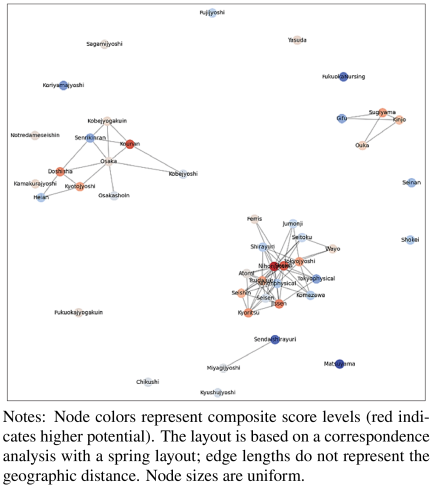
Fig. 1. Complementarity network under the unconstrained scenario (S0).
| Scenario edges | Pair values (Top-5) | Greedy alliances (Top-3) | Shapley value alliances (Top-3) | Isolated and high-value nodes |
|
Baseline 990 (S0) |
Top-1. SHOWA–NIHONTAIKU (6.64), Top-2. DOSHISHA–HEIAN (6.64), Top-3. OSAKAJOSHI–KOUNAN (6.61), Top-4. TOKYOJOSHI–NIHONTAIKU (6.57), and Top-5. SEISEN–NIHONJOSHI (6.46). |
Top-1. MATSUYAMA– NIHONJOSHI– NIHONTAIKU– OSAKAJOSHI– SHOWA (79.67), Top-2. KOUNAN– MATSUYAMA–NIHONJOSHI– OSAKAJOSHI–SENRIKINRAN (78.96), and Top-3. MATSUYAMA–NIHONJOSHI– OSAKAJOSHI– OUKA– SUGIYAMA (78.95). |
Alliance 1. OSAKAJOSHI (18.71), NIHONJOSHI (16.69), KOUNAN (16.54), MATSUYAMA (13.87), SENRIKINRAN (12.50), Alliance 2. OSAKAJOSHI (18.50), NIHONJOSHI (17.56), SHOWA (16.47), MATSUYAMA (13.34), NIHONTAIKU (12.96), and Alliance 3. OSAKAJOSHI (17.94), NIHONJOSHI (16.09), MATSUYAMA (15.02), SUGIYAMA (14.84), OUKA (14.35). |
Isolation. FUJI (\(-0.85\)), KORIYAMA (\(-0.62\)), KAMAKURA (\(-0.40\)), SAGAMI (\(-0.73\)), NOTREDAMSEISEN (\(-0.55\)), YASUDA (\(-0.36\)), MATSUYAMA (\(-1.02\)), KYUSHUJOSHI (\(-0.68\)), SEINAN (\(-0.71\)), CHIKUSHI (\(-0.64\)), FUKUOKAJOSHI (\(-0.77\)), FUKUOKAKANGO (\(-0.95\)), and SHOKEI (\(-0.59\)). High value. JISSEN (\(+1.42\)), SHOWA (\(+1.55\)), NIHONJOSHI (\(+1.38\)), DOSHISHA (\(+1.61\)), and KOUNAN (\(+1.47\)). |
|
Land price 725 (S1) |
Identical to S0. | Alliance composition identical to that in S0; scores changed. | Alliance composition identical to that in S0; Shapley values unchanged within rounding precision. | Isolated and high-value nodes identical to those in S0. |
|
Distance 346 (S2) |
Top-1. DOSHISHA–HEIAN (6.59), Top-2. TOKYOJOSHI–NIHONTAIKU (6.26), Top-3. ATOMI–NIHONJOSHI (6.05), Top-4. SHOWA–NIHONTAIKU (5.95), and Top-5. OSAKASHOIN–OSAKAJOSHI (5.85). |
Top-1. DOSHISHA– NIHONJOSHI–NIHONTAIKU– OSAKAJOSHI–TOKYOJOSHI (76.80), Top-2. KORIYAMA–NIHONJOSHI– OSAKAJOSHI–SHIRAYURI– SHOWA (75.67), and Top-3. ATOMI– DOSHISHA– HEIAN–NIHONJOSHI– OSAKAJOSHI (75.35). |
Alliance 1. OSAKAJOSHI (19.12), NIHONJOSHI (16.31), DOSHISHA (14.57), ATOMI (13.05), HEIAN (12.30), Alliance 2. OSAKAJOSHI (19.82), NIHONJOSHI (15.99), NIHONTAIKU (14.18), DOSHISHA (13.62), TOKYOJOSHI (13.21), and Alliance 3. NIHONJOSHI (17.60), OSAKAJOSHI (17.40), SHOWA (16.00), KORIYAMA (12.62), SHIRAYURI (12.05). |
Isolation. GIFU (\(-0.58\)) instead of KAMAKURA (\(-0.40\)); otherwise, identical to S0. High-value ranking identical to S0; values differ numerically. |
|
Local dependence 382 (S3) |
Identical to S2. |
Top-1. Alliance composition identical to that in S2 (Top-1), Top-2. Alliance composition identical to that in S2 (Top-3), and Top-3. NIHONJOSHI–OSAKAJOSHI–SEITOKU– SHIRAYURI–SHOWA (75.25). |
Alliances 1–2. Composition identical to that in S2, and Alliance 3. OSAKAJOSHI (19.20), NIHONJOSHI (15.69), SHOWA (14.66), SHIRAYURI (12.88), SEITOKU (12.82). |
Isolation. Isolated nodes identical to those in S2. High-value ranking identical to S0; values differ numerically. |
|
Withdrawal 260 (S4) |
Identical to S2. | Alliance composition identical to that in S3. |
Alliance 1. Composition identical to that in S2, Alliance 2. Composition identical to that in S2, and Alliance 3. Composition identical to that in S3. |
Isolation. Isolated nodes identical to those in S2, High-value ranking identical to S0; values differ numerically. |
4.4. Land Price Constraint Scenario (S1)
This section presents the results of S1 and compares them with those of S0 to assess the impact of land price differentials on network density and coalition structure.
In the complementarity network (Fig. 2(a), upper-left panel), the links among high-land-price universities were reduced, decreasing the edges from 990 (S0) to 725 (S1), whereas the central cluster remained unchanged. According to the second row in Table 7, the pair values matched those of S0, indicating stable coalition candidates. The greedy coalition search and Shapley values reproduced the S0 pattern, with OSAKAJOSHI as the major contributor, and the same isolated and high-value nodes were observed.
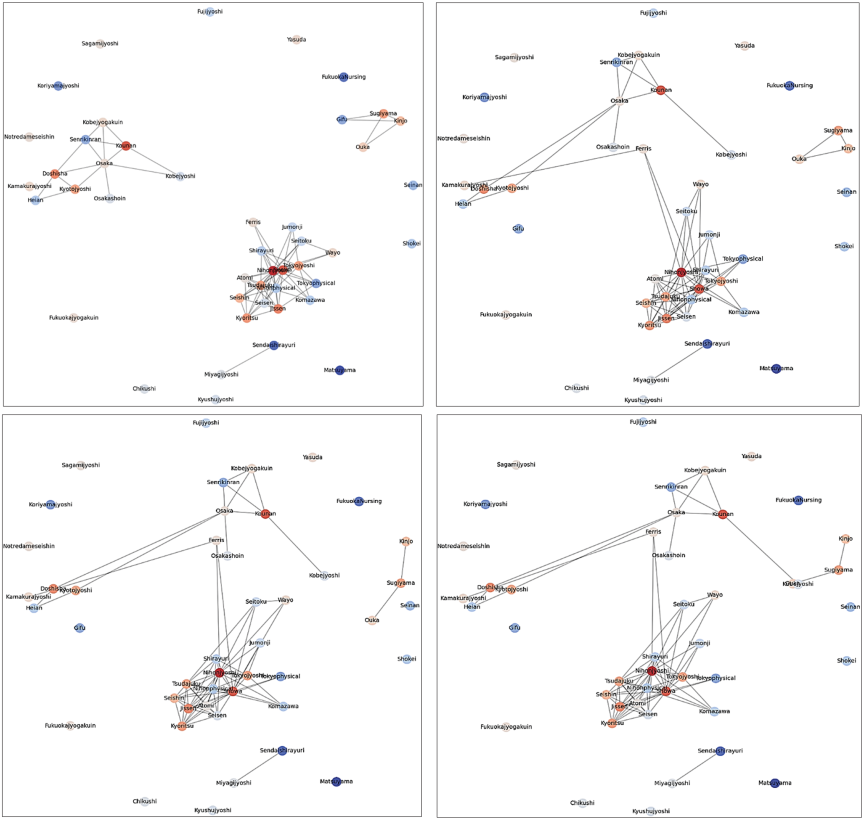
Fig. 2. Complementarity networks under constraint scenarios. (a) Upper left: land price constraint (S1); (b) lower left: distance constraint (S2); (c) upper right: local dependency constraint (S3); (d) lower right: withdrawal allowance constraint (S4). Visualization settings are identical to those in Fig. 1.
Overall, S1 reduced the network density while preserving the coalition composition and marginal contributions, indicating that land price differentials affected feasibility rather than cooperative value.
4.5. Distance Constraint Scenario (S2)
This section presents an analysis of the distance constraint (S2) relative to the unconstrained baseline (S0).
In the complementarity network (Fig. 2(b), lower-left panel), the number of edges decreased significantly from 990 (S0) to 346 (S2), producing a more tree-like structure. According to the third row in Table 7, the pair values reorganized the combinations observed in S0, highlighting geographically proximate universities—DOSHISHA–HEIAN (6.59), TOKYOJOSHI–NIHONTAIKU (6.26), and ATOMI–NIHONJOSHI (6.05)—and reordered the same combinations as those in S0. The greedy coalition formed a five-university coalition centered on NIHONJOSHI–NIHONTAIKU–OSAKAJOSHI, including DOSHISHA and TOKYOJOSHI (76.80); compared with S0, MATSUYAMA and SHOWA were replaced by DOSHISHA and TOKYOJOSHI, and coalition value \(v(S)\) increased slightly. The Shapley values kept OSAKAJOSHI and NIHONJOSHI at the core and elevated the contributions of ATOMI (13.05) and HEIAN (12.30). GIFU (\(-\)0.58) was added to the set of isolated nodes observed in S0, and the high-value nodes—JISSEN, SHOWA, NIHONJOSHI, DOSHISHA, and KOUNAN—remained consistent with those in S0 and S1.
In summary, the distance constraint altered network density and coalition composition but did not affect the underlying institutional value.
4.6. Local Dependence Constraint Scenario (S3)
This section presents an analysis of S3 relative to S0 and S2 to examine the link redistribution and coalition stability.
In the complementarity network (Fig. 2(c), upper-right panel), the number of edges decreased from 990 (S0) to 382 (S3), remaining above the level observed at 346 (S2), indicating partial link recovery. According to the fourth row in Table 7, the pair values matched those in S2. The greedy coalitions were typically identical to those in S2, with one coalition adding peripheral universities around the OSAKAJOSHI–NIHONJOSHI core. The Shapley values kept OSAKAJOSHI and NIHONJOSHI central and modestly increased the contributions of SHIRAYURI (12.88) and SEITOKU (12.82). The isolated set matched S2, and the high-value nodes remained consistent with S0–S2, indicating stable latent values.
Local dependence constraint preserved S2 structure while increasing connectivity and potential.
4.7. Withdrawal Allowance Scenario (S4)
This section presents the results of S4 that assumed withdrawal strategy \(D\) and incorporated the residual asset value into the payoff relative to S0.
In the complementarity network (Fig. 2(d), lower-right panel), the number of edges decreased to 260, producing the sparsest structure. However, the core cluster of OSAKAJOSHI–NIHONJOSHI–DOSHISHA remained intact, with a stronger dependence on the key nodes. According to the bottom row in Table 7, the Shapley values reproduced the S2–S3 pattern, with OSAKAJOSHI and NIHONJOSHI consistently contributing. The isolated and high-value sets remained identical to those in S2 and S0, respectively, and the high-value nodes remained JISSEN, SHOWA, NIHONJOSHI, DOSHISHA, and KOUNAN.
Taken together, the introduction of a withdrawal allowance did not alter the core structure or institutional potential relative to S2 and S3.
5. Discussion
5.1. Empirical Findings
This section presents an examination of inter-university cooperative strategies through institutional evaluations, complementarity, and coalition values among women’s universities.
The first aspect concerned the effects of data validation. After applying the sanity check and re-standardizing all variables, both the pair and Shapley values converged, and the sensitivity analysis produced consistent coalition values. These procedures enhanced the interpretability and robustness, confirming that the results reflected structural relationships rather than numerical artifacts. The second aspect concerned the persistence of high-value and isolated universities across scenarios. From S0 to S4, NIHONJOSHI, DOSHISHA, JISSEN, SHOWA, and KOUNAN consistently appeared as high-value nodes, whereas FUJI, KORIYAMA, and FUKUOKAKANGO remained isolated. Persistence indicated structurally embedded coalition stability with high-value institutions functioning as stable cores for Pareto-improving coalitions. Scenario-specific constraints primarily reshaped the network topology without altering the fundamental contribution structure. Across S1–S4, the constraints changed the coalition composition but not the contribution hierarchy. Land prices affected density, distance emphasized proximity, local dependence expanded coalition membership, and withdrawal allowance increased reliance on core universities. Accordingly, whereas the greedy coalition captured the feasible coalition expansion under constraints, the Shapley values revealed an invariant contribution structure across the scenarios.
The results showed that sustainable cooperation among women’s universities was driven by institutional differentiation rather than geographic or financial proximity. Data validation confirmed the numerical robustness and stability of the core–periphery structure under constraints.
5.2. Implications for Theory and Practice
This section provides a synthesis of theoretical and practical implications from the empirical analysis.
Three theoretical implications emerge. One theoretical implication is the linkage between cooperative game theory and the network structure. An analysis of pair values, greedy coalitions, and Shapley allocations within a unified framework clarifies partner selection in institutional collaboration. Another concerns the internalization of constraints as adjustment variables in the payoff function, allowing coalition attainability to be evaluated from theoretical optima to feasible institutional outcomes. A further finding is the identification of structurally central actors in the higher education market, as stable core universities appear consistently across scenarios.
Six practical implications are as follows. The first concerns the design of initial collaboration steps. Alliances among women’s universities can be initiated through small consortia of two to five institutions centered on NIHONJOSHI, DOSHISHA, JISSEN, SHOWA, and KOUNAN and can develop from credit transfer to joint-degree programs and organizational alliances. A comparable phased regional model is the alliance between Yamaguchi University, Yamaguchi Prefectural University, and Yamaguchi Gakugei University 51. The second concerns the complementary participation of isolated universities. These universities can participate through functional specialization in fields such as nursing, childcare, and community welfare, contributing expertise difficult to demonstrate independently. A relevant reference is the Consortium for Disaster Nursing that jointly manages specialized education 52.
The third concerns the mitigation of distance constraints. Hybrid courses and standardized learning systems can expand wide-area networks. The Consortium of Five Women’s Universities in Japan and the Seven Sisters consortium in the United States (U.S.) illustrate this principle 16,53. The fourth concerns payoff distribution and consensus-building mechanisms. The Shapley value can serve as an initial reference, with adjustments based on scholarship provision and cost-sharing for operating costs. International university consortia such as the Washington Metropolitan Area in the U.S. and the White Rose University Consortium in the United Kingdom demonstrate institutionalized resource-sharing rules 54,55.
The fifth concerns the diversification of dependency on core universities. Incorporating medium-sized institutions as bridging nodes reduces vulnerability to single points of failure. The Five Colleges, Inc. consortium in the U.S. offers an example. Amherst College and its four partners maintain institutional autonomy while forming a mutually complementary academic network that includes medium-sized members 56. The sixth concerns policy support. Public subsidies for shared facilities and restructuring costs can mitigate exogenous constraints. The Japan Student Services Organization has introduced a joint scholarship scheme in which universities and local governments collaborate to establish and collectively manage scholarship funds 57.
Taken together, stable contribution structures govern cooperation, and the framework supports both the interpretation and practical design of university alliances.
5.3. Limitations and Future Directions
The proposed framework has three main limitations related to the stability theory, data construction, and institutional implementation that define the scope of the present analysis and guide future research.
Stability was evaluated primarily through the Shapley value. Other solution concepts, including the core and bargaining solutions, were not incorporated, limiting the assessment of coalition sustainability and exit conditions. The empirical specification also constrained validity: financial indicators were excluded owing to volatility, and variable construction relied on publicly available statistics and hybrid PCA–AHP weighting, leaving residual subjectivity and coarse measurements. Future studies should integrate financial and structural indicators and develop calibration procedures reconciling expert judgment with predictive accuracy. Because the results are simulation-based, applicability to real alliances remained uncertain. Empirical testing through pilot collaborations, such as credit transfer schemes and monitoring of KPIs (for example, enrollment capacity rate), is required to confirm practical effectiveness.
Addressing these issues will extend the framework toward more reliable analysis and practical application.
6. Conclusion
Japan’s higher education system is under increasing pressure to optimize resources through reorganization and inter-university alliances. This study aims to evaluate the multidimensional characteristics of universities in Japan and examine the complementarity and coalition value arising from alliances under geographic and institutional constraints. Through this model, this study provides a mathematical and practical framework that supports decision-making and enables universities to sustain their social roles.
The empirical analysis focused on private women’s universities as small-scale institutional units. The model assigned weights to 19 variables across five dimensions and computed institutional scores. Complementarity and coalition values were then derived using a coalition value function that incorporated friction costs. Scenario simulations extended the baseline by introducing four institutional constraints—land price differentials, distance, local dependence, and withdrawal allowance.
The results confirmed numerical stability and consistency through a sanity check. Core universities consistently appeared as central contributors, whereas isolated universities persisted across scenarios. Constraints altered the network density and coalition composition, whereas the ranking of potential values changed only marginally. These findings indicated that cooperation was primarily governed by structurally stable contribution relationships rather than by external constraints. The unified framework clarified institutional partner selection and evaluated attainable coalitions relative to theoretical optima, thus confirming structurally persistent central contributors across scenarios. These findings provided practical guidance, including forming small consortia, complementary participation by isolated universities, mitigating distance constraints, Shapley-based allocation rules, diversifying dependence on core universities, and policy support mechanisms.
In summary, this study constructed a cooperative strategy model grounded in multidimensional evaluation and cooperative game theory, quantified complementarity and coalition value, and provided a mathematically operational framework to sustain the social roles of universities under institutional constraints.
- [1] Recruit Shingaku Soken, “National forecast of 18-year-old population: Trends in university, junior college, vocational school enrollment rates, and local retention rates 2023,” 2024. https://souken.shingakunet.com/research/2024/02/182023.html [Accessed September 1, 2025]
- [2] Obunsha Education Information Center, “Four universities applied for approval to be newly established in 2025,” 2023. https://eic.obunsha.co.jp/file/educational_info/2023/1114.pdf [Accessed September 1, 2025]
- [3] Future Leading Innovation Partnership (FLIP), “Charter of the four-university future co-creation alliance,” n.d. https://www.tokyo-4univ.jp/aboutus/ [Accessed September 1, 2025]
- [4] Former Tokyo Medical and Dental University, “Tokyo Science University will be established in October 2024,” 2023. https://www.tmd.ac.jp/news/20231201022319/ [Accessed August 1, 2025]
- [5] Future Leading Innovation Partnership (FLIP), “Ochanomizu University joins as a new member and a new charter is signed,” 2025. https://www.tokyo-4univ.jp/info/20250701-5933/ [Accessed August 1, 2025]
- [6] Teikyo University, “Teikyo University concluded a ‘Private comprehensive three-university alliance’ with Kindai University and Tokai University,” 2021. https://www.teikyo-u.ac.jp/topics/2021/0419 [Accessed August 1, 2025]
- [7] Ministry of Education, Culture, Sports, Science and Technology (MEXT), “Draft of discussion summary for the formulation of the Regional University Promotion Plan for FY2026,” 2025. https://www.mext.go.jp/content/20250730-mxt_daigakuc01-000044036_9.pdf [Accessed September 1, 2025]
- [8] University Journal Online, “Major reforms of women’s universities in the Tokyo metropolitan area: Five new directions and concrete cases,” 2024. https://univ-journal.jp/column/2024248518/ [Accessed August 1, 2025]
- [9] DIAMOND Education LABO, “77% of women’s universities fall short of enrollment capacity! Five reasons for declining popularity and the merits of still choosing a women’s university,” 2024. https://diamond.jp/educate/articles/tera_method/400071/ [Accessed September 1, 2025]
- [10] Asahi Shimbun Think Campus, “Now, women’s universities increasing enrollment shortfalls: Significance beyond coeducation,” 2023. https://www.asahi.com/thinkcampus/article-101151/ [Accessed August 1, 2025]
- [11] Mukogawa Women’s University Institute of Education and Research, “Institute homepage,” 2025. https://kyoken.mukogawa-u.ac.jp/ [Accessed September 1, 2025]
- [12] E. Saito and T. Ohno, “The Structure of Preference Values of Private Women’s Universities in Japan—Through Clustering of Universities and eWOM Analysis of Current Female Students—,” J. of Japan Industrial Management Association, Vol.75, No.4, pp. 108-124, 2025. https://doi.org/10.11221/jima.75.108
- [13] A. M. Brandenburger and B. J. Nalebuff, “Co-opetition,” Doubleday, 1996.
- [14] M. Adachi, “A study on design management and customer strategy in non-profit organizations: Introduction of CRM thinking and lessons from luxury brands on communicating brand image,” Direct Marketing Review, Vol.23, pp. 42-66, 2024 (in Japanese).
- [15] M. Kobayashi, “Educational disparity: The growing burden of education costs,” Chikuma Shobo, 2008 (in Japanese).
- [16] Nara Women’s University, “Memorandum of understanding on credit transfer between Nara Women’s University and Ochanomizu University based on the ‘Five women’s university consortium agreement’,” 2025. https://pr.nara-wu.ac.jp/news/2025/02/post-136.html [Accessed August 1, 2025]
- [17] J. v. Neumann and O. Morgenstern, “Theory of games and economic behavior (3rd ed.),” Princeton University Press, 1953.
- [18] R. J. Aumann, “Cooperative games: An overview,” R. J. Aumann and S. Hart (Eds.), “Handbook of game theory with economic applications,” Elsevier, Vol.1, pp. 11-42, 1987.
- [19] L. S. Shapley, “A Value for n-Person Games,” Contributions to the Theory of Games (Volume II) , H. W. Kuhn and A. W. Tucker (Eds.), pp. 307-318, Princeton University Press, 2016. https://doi.org/10.1515/9781400881970-018
- [20] M. Shubik, “Game theory in the social sciences: Concepts and solutions,” MIT Press, 1982.
- [21] K. Kojima and T. Arita, “Evolution of three norms of distributive justice in an extended Nash demand game,” J. Adv. Comput. Intell. Intell. Inform., Vol.18, No.3, pp. 409-417, 2014. https://doi.org/10.20965/jaciii.2014.p0409
- [22] M. Koshelev, “Trustees’ and investors’ behavior in the first two rounds of a trust game: Overview and a (partial) explanation based on cooperative game theory,” J. Adv. Comput. Intell. Intell. Inform., Vol.15, No.4, pp. 438-448, 2011. https://doi.org/10.20965/jaciii.2011.p0438
- [23] X. Su, J. Hu, and Y. Wang, “Cooperative network embedding, knowledge network structure and technological catch-up of latecomers: A technical standards alliance perspective,” J. Adv. Comput. Intell. Intell. Inform., Vol.26, No.4, pp. 619-630, 2022. https://doi.org/10.20965/jaciii.2022.p0619
- [24] M. Li, “IT-enabled interactions and interfirm trust: The moderating role of relationship duration,” J. Adv. Comput. Intell. Intell. Inform., Vol.27, No.3, pp. 522-529, 2023. https://doi.org/10.20965/jaciii.2023.p0522
- [25] Q. Ma, S. Muthukrishnan, B. Thompson, and G. Cormode, “Modeling collaboration in academia: A game theoretic approach,” Proc. of the 23rd Int. Conf. on World Wide Web (WWW ’14 Companion Volume), pp. 1177-1182, 2014. https://doi.org/10.1145/2567948.2579032
- [26] R. Goodman and C. Oka, “The hensachi: Its dominant role in university rankings,” Y. Kitamura et al. (Eds), “Handbook of Higher Education in Japan,” pp. 133-142, Amsterdam University Press, 2021. https://doi.org/10.1515/9789048559275-014
- [27] R. Goodman and C. Oka, “The invention, gaming, and persistence of the hensachi (‘standardised rank score’) in Japanese education,” Oxford Review of Education, Vol.44, No.5, pp. 581-598, 2018. https://doi.org/10.1080/03054985.2018.1492375
- [28] S. Yamada, “A descriptive study of university library holdings based on students’ perspectives: Focusing on the number of pages,” J. of the Japan Society of Library and Information Science, Vol.70, No.1, 2024 (in Japanese). https://doi.org/10.20651/jslis.70.1_1
- [29] S. Yamada, “Analysis of the relationship between university attributes and university library holdings: Focusing on the field of economics,” Proc. of the 68th Annual Conf. of the Japan Society of Library and Information Science, 2022 (in Japanese).
- [30] C. Champlin, M. Sirenko, and T. Comes, “Measuring social resilience in cities: An exploratory spatio-temporal analysis of activity routines in urban spaces during Covid-19,” Environment and Planning B: Urban Analytics and City Science, Cities, Vol.135, Article No.104220, 2023. https://doi.org/10.1016/j.cities.2023.104220
- [31] Z. Xu and S. S. Chopra, “Interconnectedness enhances network resilience of multimodal public transportation systems for safe-to-fail urban mobility,” Nature Communications, Vol.14, Article No.4291, 2023. https://doi.org/10.1038/s41467-023-39999-w
- [32] Times Higher Education (THE), “World university rankings 2025: Methodology,” 2024. https://www.timeshighereducation.com/world-university-rankings/world-university-rankings-2025-methodology [Accessed August 1, 2025]
- [33] QS Quacquarelli Symonds, “International student ratio (Indicator),” 2024. https://support.qs.com/hc/en-gb/articles/10425678849564-International-Student-Diversity-Indicator [Accessed August 1, 2025]
- [34] Ministry of Education, Culture, Sports, Science and Technology (MEXT), “The necessity of university internationalization (Document),” 2024. https://www.mext.go.jp/content/20241226-mxt_kotokoku02-000039459_7.pdf [Accessed August 1, 2025]
- [35] Japan Student Services Organization (JASSO), “The ‘300,000 international students plan’ and university internationalization,” University and Students, pp. 32-37, 2009. https://www.jasso.go.jp/gakusei/publication/dtog/__icsFiles/afieldfile/2021/02/11/daigaku540_07.pdf [Accessed August 1, 2025]
- [36] E. Saito, “Factors of career formation among university dropouts,” Proc. of the Autumn Conf. of the Japan Industrial Management Association, pp. 201-202, 2022 (in Japanese).
- [37] E. Saito, “Survival management of marginal universities and distortions in students’ self-assessment in career development,” Proc. of the 68th National Conf. of the Japan Association for Management Systems (Spring Conf.), pp. 80-82, 2022 (in Japanese).
- [38] E. Saito, “What to acquire in career education contributing to university management,” Proc. of the Spring Conf. of the Japan Industrial Management Association, pp. 129-130, 2022 (in Japanese).
- [39] S. Dynarski, L. Page, and J. Scott-Clayton, “College costs, financial aid, and student decisions,” NBER Working Paper, Article No.30275, 2022. https://doi.org/10.3386/w30275
- [40] S. M. Dynarski, “Does aid matter? Measuring the effect of student aid on college attendance and completion,” American Economic Review, Vol.93, No.1, pp. 279-288, 2003. https://doi.org/10.1257/000282803321455287
- [41] R. W. Sinnott, “Virtues of the Haversine,” Sky and Telescope, Vol.68, No.2, pp. 158-159, 1984.
- [42] T. L. Saaty, “The analytic hierarchy process: Planning, priority setting, resource allocation,” McGraw-Hill, 1980.
- [43] OECD, “Benchmarking higher education system performance,” OECD Publishing, 2019. https://doi.org/10.1787/be5514d7-en
- [44] D. D. Dill and M. Beerkens (Eds.), “Public policy for academic quality,” Springer, 2010.
- [45] Ministry of Education, Culture, Sports, Science and Technology (MEXT), “Main perspectives and example indicators in the ‘Evaluation of Inter-University Research Institutes’ (Document),” 2020. https://www.mext.go.jp/content/20200323-mxt_gakkikan-000006102_6.pdf [Accessed August 1, 2025]
- [46] J. Adebayo, J. Gilmer, M. Muelly, I. Goodfellow, M. Hardt, and B. Kim, “Sanity checks for saliency maps,” Advances in Neural Information Processing Systems, Vol.31, pp. 9505-9515, 2018.
- [47] D. B. Gillies, “3. Solutions to General Non-Zero-Sum Games,” A. W. Tucker and R. D. Luce (Eds.), “Contributions to the Theory of Games (Volume IV),” pp. 47-86, Princeton University Press, 2016. https://doi.org/10.1515/9781400882168-005
- [48] J. F. Nash, “The bargaining problem,” Econometrica, Vol.18, No.2, pp. 155-162, 1950. https://doi.org/10.2307/1907266
- [49] E. Kalai and M. Smorodinsky, “Other solutions to Nash’s bargaining problem,” Econometrica, Vol.43, No.3, pp. 513-518, 1975. https://doi.org/10.2307/1914280
- [50] O. Shehory and S. Kraus, “Methods for task allocation via agent coalition formation,” Artificial Intelligence, Vol.101, Nos.1-2, pp. 165-200, 1998. https://doi.org/10.1016/s0004-3702(98)00045-9
- [51] Yamaguchi Prefectural University, “Japan’s first certification as a ‘University and College Collaboration Promotion Corporation’ by national, public, and private universities,” 2023. https://www.yamaguchi-pu.ac.jp/au/ap/sparc/post-23/ [Accessed August 1, 2025]
- [52] Japanese Red Cross College of Nursing, “On the credit transfer system based on the agreement on the Five-University Disaster Nursing Consortium,” n.d. https://www.redcross.ac.jp/academics/consortium/ [Accessed August 1, 2025]
- [53] Seven Sisters Alum Association, “Homepage,” n.d. https://www.sevensistersalum.com/ [Accessed August 1, 2025]
- [54] The Consortium of Universities of the Washington Metropolitan Area, “Who we are,” n.d. https://consortium.org/who-we-are/ [Accessed August 1, 2025]
- [55] White Rose University Consortium, “Who we are,” n.d. https://whiterose.ac.uk/who-we-are/ [Accessed August 1, 2025]
- [56] Five Colleges, Inc., “Official website,” n.d. https://www.fivecolleges.edu/ [Accessed August 1, 2025]
- [57] Japan Student Services Organization (JASSO), “Grant-type scholarships,” n.d. https://www.jasso.go.jp/shogakukin/about/kyufu/index.html [Accessed August 1, 2025]
This article is published under a Creative Commons Attribution-NoDerivatives 4.0 Internationa License.