
Research Paper:
VPDL: Visual Prompt-Guided Differential Learning for Generalizable Scene Text Recognition
Yali Niu*, Jiahao An*,†, and Shihao Zou**

*School of Transportation & Information, Shaanxi College of Communications Technology
No.19 Wenjing Road, Weiyang District, Xi’an, Shaanxi 710018, China
†Corresponding author
**School of Computer Science and Technology, Huazhong University of Science and Technology
No.1037 Luoyu Road, Hongshan District, Wuhan, Hubei 430074, China

Scene text recognition (STR) in natural images remains highly challenging due to the large variations in character appearance across diverse real-world conditions, such as changes in font, color, layout, and background complexity—which hinder model generalization and remain insufficiently explored. To address this issue, we propose a visual prompt-guided differential learning (VPDL) framework designed to improve the generalization capability of STR models without requiring scene-specific fine-tuning. Inspired by the human ability to reference prior visual knowledge when recognizing text, VPDL introduces a set of character-level visual prompts that guide the model in perceiving appearance variations among characters. Built upon these prompts, we develop a local-to-global differential learning strategy that enhances patch-level representations and aligns global features with character cues while preserving scene-specific information. Additionally, to mitigate exposure bias in autoregressive decoding, we replace conventional label inputs with context-aware textual prompts, encouraging the decoder to better utilize textual cues embedded in image features. Extensive experiments on widely used benchmarks and real-world datasets demonstrate the effectiveness of VPDL.
Prompt-guided STR model
1. Introduction
Optical character recognition (OCR) is a fundamental technique in computer vision and serves as a core component in a wide range of visual understanding tasks. Together with object detection 1,2,3, OCR enables machines to perceive and interpret semantic information from complex scenes, supporting applications such as table structure recognition 4, scene text recognition (STR) 5,6, and information extraction from visually rich documents 7,8. In recent years, OCR and object-level perception have also become essential modules in intelligent transportation systems 9,10,11, where the ability to accurately read road signs, traffic indicators, storefront text, and other scene text elements plays a crucial role in enhancing vehicle perception and decision-making.
Among these tasks, STR remains one of the most challenging because natural images often contain cluttered backgrounds, uneven lighting conditions, diverse font styles, distortions, and irregular text layouts. These factors severely affect the stability and generalization ability of STR models. As STR continues to expand into real-world applications including autonomous driving 12, smart navigation 13, and large-scale visual information retrieval, developing models that can robustly generalize across diverse environments has become increasingly important.
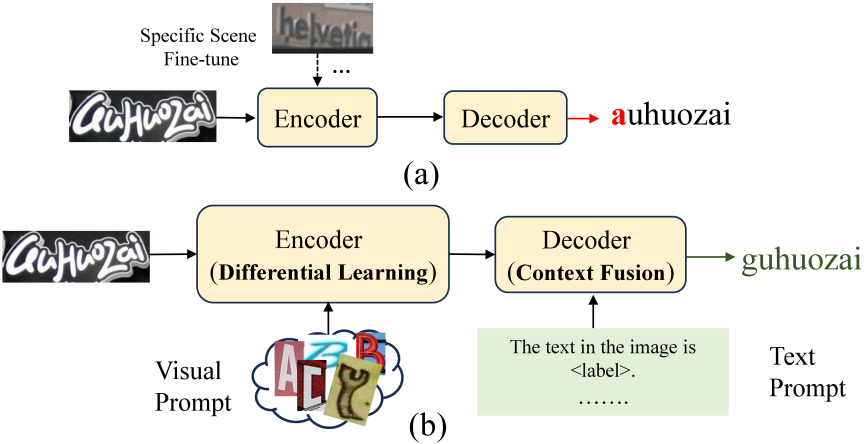
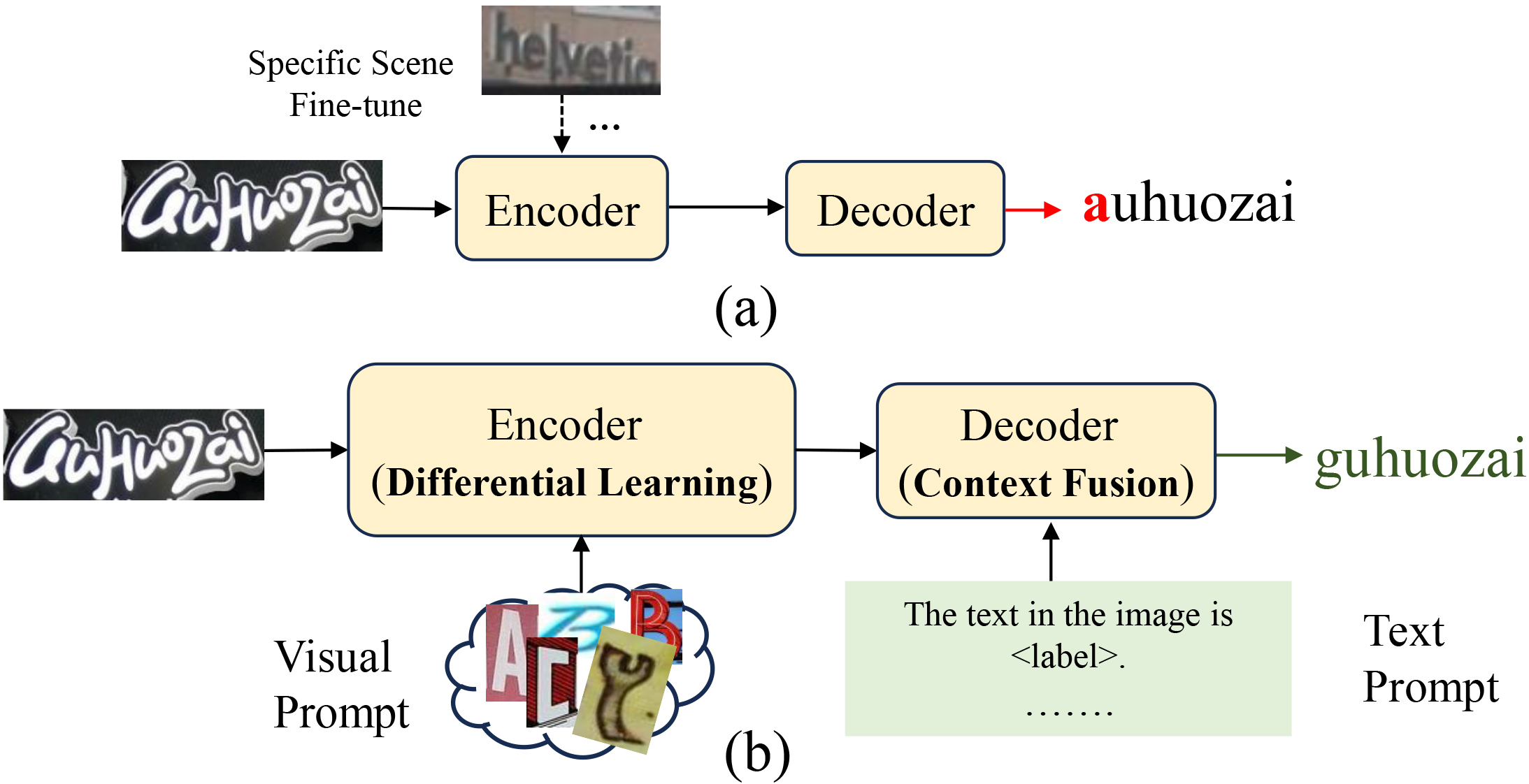
Fig. 1. Methods commonly used in existing STR studies. (a) Fine tuning-based methods, which mainly require fine-tuning for specific scenes using a large amount of data. (b) Our multimodal learning pipeline, where image prompts and text prompts guide the learning of a generalized STR model.
Early STR methods typically 14,15,16,17 adopt an encoder decoder framework. Image features are extracted by a visual encoder and then decoded using either attention based or CTC 18-based approaches. Although attention-based decoders provide flexible alignment, they may suffer from attention drift in cluttered or ambiguous regions. Attention drift refers to the condition where the attention mechanism fails to accurately locate the text image feature sequence corresponding to the current decoding position 19. Therefore, ACDS-STR 20 proposes a cross-domain attention guidance and feature encoding fusion module. By recursively guiding attention to learn the encoding process through the core region of characters, it mitigates attention drift. CTC-based approaches offer efficient inference but often rely on additional post processing to resolve alignment issues. To improve performance, many models 21,6,22 pretrain on large-scale synthetic datasets or conduct scene-specific fine-tuning, as shown in Fig. 1(a). For instance, MAERec 6 revisits STR from a data-centric perspective by constructing the large-scale Union14M benchmark and leveraging self-supervised pre-training on unlabeled real-world data. Meanwhile, OTE 22 proposes an image-to-vector paradigm that represents the entire text image using a single global token and performs vector-to-sequence decoding to alleviate alignment instability in conventional sequence-based frameworks. Despite these advances, existing approaches still largely rely on data-driven adaptation or architectural redesign, without explicitly modeling structured character-level priors for improved generalization across diverse appearances.
To overcome this limitation, we revisit how humans recognize text. Human recognition does not depend solely on the current visual input. Instead, we rely on prior knowledge of character shapes acquired through experience. When encountering characters that vary in texture, shape, or color, we implicitly compare them with familiar prototypes to infer their identity, as shown in Fig. 1(b). This observation suggests that STR models may also benefit from external visual references that provide character-level priors, allowing them to better handle diverse character appearances in natural scenes.
However, external visual references alone do not guarantee better recognition—the key lies in how they are compared with the current observation. In human perception, recognition can be understood as a structured comparison process involving both similarity alignment and discrepancy reasoning. Inspired by this perspective, we formulate the utilization of character priors as differential learning, which operationalizes this comparison mechanism through similarity-based feature alignment and residual-aware refinement in a local to global manner.
Based on this motivation, we propose a visual prompt guided differential learning (VPDL) framework for generalizable scene text recognition. VPDL introduces a library of character-level visual prompts that serve as compact yet diverse visual references. These prompts guide the model to perceive both the similarities and the structural differences between reference character samples and the characters appearing in the input image. Building on this idea, we design a local to global differential learning strategy that progressively enhances the visual representation within the encoder. At the local level, the model enriches each patch representation by incorporating character prompt features that share similar visual characteristics. At the global level, the model fuses prompt-aligned global features with residual information extracted from the input image to preserve scene-specific details and avoid over reliance on the prompt features.
In addition, we address the exposure bias commonly observed in autoregressive decoding. Instead of feeding raw label sequences into the decoder, we design context-aware textual prompts that guide the decoder to focus on the textual information embedded in the visual features. These textual prompts provide structured semantic cues that stabilize the decoding process and help the model produce more reliable predictions, especially when dealing with ambiguous or long text sequences.
In summary, the main contributions of this work are as follows:
-
We introduce VPDL, a framework that improves the generalization ability of STR models without relying on scene specific fine-tuning.
-
We propose character-level visual prompts together with a local-to-global differential learning strategy that enhances both fine-grained and global image feature representations.
-
We design context-aware textual prompts to mitigate exposure bias in autoregressive decoding, enabling more accurate and stable sequence prediction.
-
VPDL achieves more competitive results on commonly used benchmark datasets, outperforming the latest SOTA model on the real-world benchmark dataset Union14M benchmark.
3. Method
In this section, we first describe the pipeline of the proposed method in Section 3.1. Then, we present the character-level visual prompts in Section 3.2, the local-to-global differential learning strategy in Section 3.3, and the context-aware fusion decoder in Section 3.4. Finally, we describe the training objective in Section 3.5.
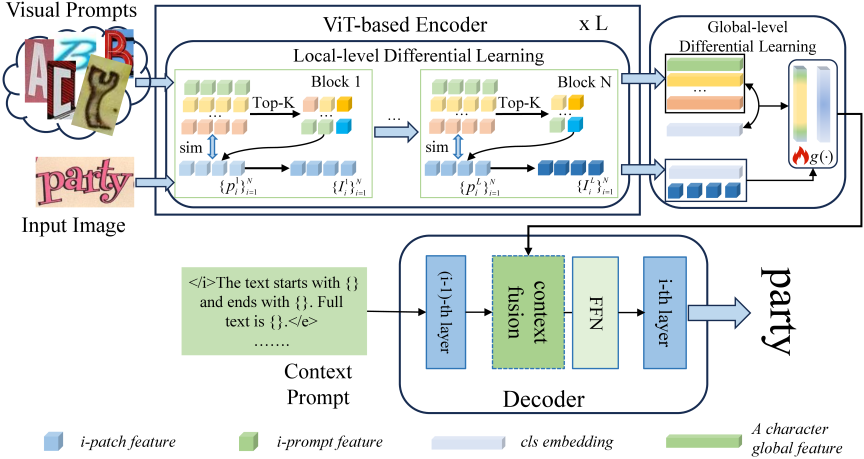
Fig. 2. Overall architecture of the proposed VPDL framework. The input image and character-level visual prompts are fed into the encoder, where local-to-global differential learning is performed, and the enhanced visual features are decoded under textual prompt guidance. Blue blocks denote image patch features, green blocks denote prompt features, and gray bars represent CLS/global embeddings. The flame-shaped icon indicates the learnable transformation module \(g(\cdot)\) used in global-level differential learning. Color variations are used only for visual distinction.
3.1. Pipeline
The architecture of VPDL is shown in Fig. 2 and consists of a visual encoder and a sequence decoder. We used Vision Transformer (ViT) 41 as the image encoder, constructed character-level visual prompts as a reference for the model, and then designed a visual prompt-guided local-to-global differential learning strategy. Through this differential learning, the model can learn both similar and differing information under the guidance of character visual prompts, thereby enhancing the discriminative capability of the input image features. These image features are then combined with text prompts as inputs to the decoder. The text prompts guide the decoder to further focus on the textual information within the image features, ultimately enabling more accurate decoding of the text sequence.
3.2. Character-Level Visual Prompt
To build a more generalizable scene text recognition model, we made the following observations when designing the visual prompt samples: the diverse appearances of characters pose significant challenges for recognition, resulting in suboptimal performance in some difficult scenarios. Therefore, we considered how humans accurately recognize various character shapes across diverse scenes. The reason lies in the human ability to reference memories of previously seen character shapes. By comparing these memories to characters encountered in scene images, humans can deduce the textual content by identifying similarities and differences.
Based on the above insights, we directly designed character-level visual prompts with the primary goal of providing the model with visual reference information for characters across different scenes and forms using a small but diverse character set. This functions similarly to human memory, helping the model learn the variations in character appearances across various scenes. This approach enhances the generalizability and recognition accuracy of the model.
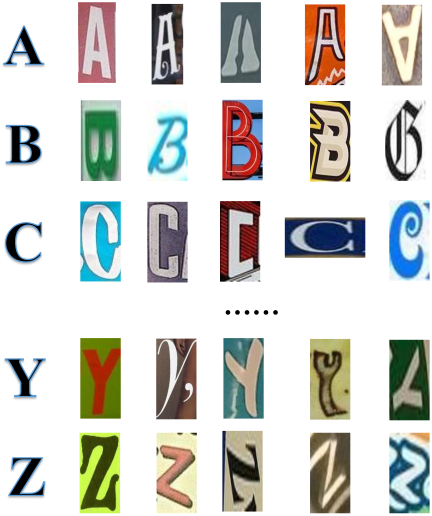
Fig. 3. Examples of some character-level visual prompts. The character-level visual prompts are a small yet diverse set of character samples collected from raw training images.
Specifically, we collected images of each character appearing in existing scene text datasets, which were manually cropped from the original images. Some examples are shown in Fig. 3. In our implementation, we construct an offline prompt library covering the full recognition vocabulary (96 character categories), and keep it fixed during training and inference. Unless otherwise specified, 20 prompt samples are used per category (1920 in total), and similarity matching is explicitly performed against the full prompt library during both training and inference stages. We further enhance these character-level prompts using sharpening and random Gaussian noise to better simulate real-scene degradations. Overall, the character-level visual prompts provide structured visual priors for the model, enabling more robust recognition under diverse and complex scene variations.
3.3. Local-to-Global Differential Learning
To effectively capture the fine-grained differences between input images and character visual prompts, we design a local-to-global differential learning strategy. This strategy enables the prompts to enhance the understanding of image content at the character level across different scenes, thereby improving text recognition accuracy. We use ViT as the image encoder, which contains multiple layers, where shallow layers learn low-level features of the image such as background information, while high-level layers learn visual features at an abstract level, such as textual information in the image. In the local feature extraction stage, we leverage differential learning between the patch blocks of the prompted image and those of the input image within different blocks of the ViT. At the end of each layer, we obtain enhanced patch representations of the original input, along with the CLS token, which encapsulates the global features of the image. By establishing a connection between these two types of global features, we derive the final representation of the input image. Through multi-level differential learning, the model’s ability to handle different scenarios is enhanced.
Local-Level: In local level differential learning, the method first calculates the similarity between each patch embedding of the input image and each character embedding in the character library, and then this similarity result is used to select the most similar \(K\) character features for the purpose of ensuring that each patch interacts with only the most relevant character features in order to make the feature recognition capability effective, as shown in the following equation:
At each layer of the encoder, the above computational process is repeated, such that the layer-by-layer enhancement process ensures that the model gradually focuses on the most relevant prompts in the character library, making the image feature representation more discriminative. It should be noted that, in the actual implementation, we progressively tighten the screening range by decreasing the value of \(K\) across layers. Specifically, for an encoder with \(L\) layers and an initial value (\(K_0\)), the Top-\(K\) value at layer \(l\) is defined as: \(K_l = \max(1,\lfloor K_0 (1 - ({l-1})/{L} ) \rfloor )\). This linear decreasing strategy allows shallow layers to retain richer character-level candidates for coarse alignment, while deeper layers focus only on the most relevant prompts, thereby improving the precision of feature refinement.
Global-Level: Since each patch represents only the local information within the current image, and typically only high-level encoded features emphasize the text information in the image, global image information is required to supplement this local information. After local differential learning, these patch features not only encapsulate the local information of the image but also incorporate prompt information from the character library. Rather than relying on simple aggregation to obtain global features, we combine the locally augmented patch features \(I \in \mathbb{R}^{N \times d}\) with the CLS embedding \(F_{cls} \in \mathbb{R}^{1 \times d}\). This approach preserves the significance of local information at the global level.
In order to obtain the global embedding of the input image in the global phase, we use the attention mechanism to perform feature interactions between the CLS token and the locally augmented patches. The weight matrix \(\alpha^g\) is derived by calculating the similarity between the CLS embedding and the individual patch embeddings. This matrix indicates how much information from each patch is aggregated into the CLS embedding. Specifically, the CLS embedding and the patch embeddings of the input image are projected into a query vector \(Q = F_{cls}W_Q\), key vectors \(K_i = I_iW_K\), and value vectors \(V_i = I_iW_V\).
To leverage character visual prompts at the global level, we compute each character’s global features \(F = \{F_1, F_2, \dots, F_c\} \in \mathbb{R}^{c \times d}\). These character global features are then used in differential learning with the global features \(I_g\) of the input image, primarily to measure which characters would be useful for the input image. The character library’s global features are weighted by similarity weights \(W_g \in \mathbb{R}^{1 \times c}\) to generate the character prompt vector \(T_g \in \mathbb{R}^{1 \times d}\).
If the global feature \(I_g\) contains only the prompt feature \(T_g\) similar to the character library, the model may over-rely on the character library information, limiting its adaptability to unique character variations in the input image. To address this, we introduce a residual mapping network \(g(\cdot)\) to learn the key differential features \(R_g\) between \(I_g\) and \(T_g\). This approach enables the model to retain the unique visual information of the input image through these residuals, allowing it to handle situations that deviate from the character library with greater accuracy.
3.4. Context-Aware Fusion Decoder
To alleviate exposure bias in autoregressive decoding, we design textual prompts as prior knowledge. This helps the model to further mine the text information hidden in the image feature embedding space for accurate recognition.
We first feed the textual prompts into an encoder to obtain textual embeddings. We then adopt a context fusion strategy to integrate the contextual information contained in the image features with the prior knowledge provided by the textual prompts. In this way, the decoder is guided to focus on plausible character sequences and generate more accurate predictions. Specifically, we first obtain the textual feature encoding \(I_t \in \mathbb{R}^{L \times d}\) (\(L\) is sequence length), then use the learning matrix to map the image feature \(\hat{I}_g\) to \([Q,K,V]=\hat{I}_gW_d\), where \(W_d \in \mathbb{R}^{d \times d}\), and use the direct fusion method to incorporate the textual information into the decoding process of the visual features:
3.5. Training Objective
The training objective of the scene text recognition task is to accurately recognize the text information in the image, and the specific training loss is shown in the following equation:
4. Experiment
4.1. Datasets
For the STR task, the availability of the real-world training dataset Union14M-L 6 has allowed this research to be pushed further in terms of performance. This dataset contains more than four million labelled images from a variety of real-world scenarios, so we also chose to use Union14M-L for model training. To address current challenges in the STR domain, Union14M-L contains an extensive challenge-driven benchmark (Union14M benchmark) as an evaluation benchmark for real-world scene text. The benchmark consists of seven subsets totaling 409,393 images, characterized by complexity and diversity. These subsets include curved, multi-oriented, artistic, contextless, salient, multi-word, and general text. The performance is also evaluated on six commonly used benchmarks, IIIT 5K-Words (IIIT5K) 42, ICDAR2013 (IC13) 43, ICDAR2015 (IC15) 44, Street View Text (SVT) 45, Street View Text-Perspective (SVTP) 46, and CUTE80 (CUTE) 47. We also evaluate the model on the more challenging real-world occlusion benchmarks OST (HOST and WOST) 28 and the artistic-text benchmark WordArt 48. In addition, we evaluate our model on three larger and more challenging benchmarks: COCO-Text (low-resolution and occluded text) 49, ArT (curved and rotated text) 50, and Uber-Text (vertical and rotated text) 51. Comprehensive details regarding these datasets can be found in prior works 27,15. We use word accuracy ignoring case and symbols (WAICS) 6 as the evaluation metric for all compared methods.
4.2. Implementation Details
The size of the patch in ViT is \(4 \times 4\) and the dimension of visual feature is 768 with a depth of 12 where the number of heads used for attention is 12. The dimension of text feature is also 768 with a depth of 6 where the number of heads used for attention is 8. We use the cosine learning rate scheduler without warm-up and the AdamW optimizer with a weight decay of 0.01. We conduct the experiments on eight NVIDIA RTX 4090 GPUs with a batch size of 64 per GPU for 10 epochs. For STR, the vocabulary size \(C\) is set to 96, including 0–9, a–z, A–Z, special characters.
4.3. Comparisons with State-of-the-Arts
Table 1. Comparison with representative and recent STR methods on common benchmarks. \(†\) stands for the method result from their original report, \(‡\) stands for the methods we reproduce, rest of the method’s results from DARLING 5 and the original report.
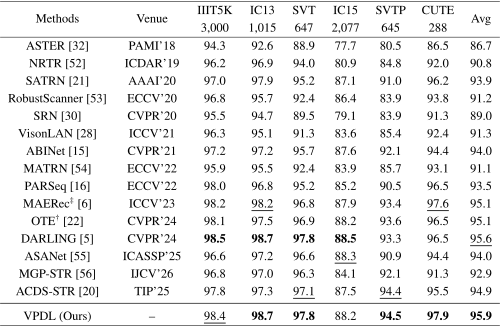
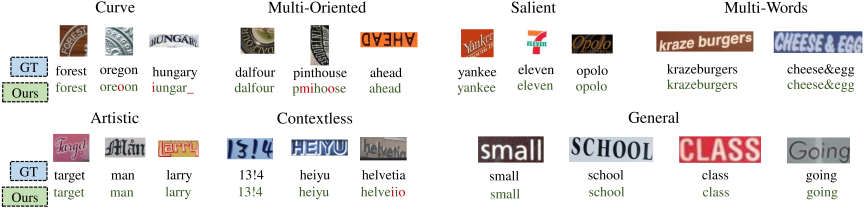
Fig. 4. Error analysis of our model on Union14M benchmark for seven scenarios in our prediction sequence, where green indicates characters predicted correctly and red indicates characters predicted incorrectly.
Result on Common Benchmark: The comparative performance of VPDL on common benchmark datasets is presented in Table 1. Although these six widely-used benchmarks have been extensively studied and their performance is close to saturation, VPDL remains competitive with recent methods, including several recently published works. Specifically, VPDL achieves the best overall average accuracy (95.9%) and obtains leading performance on SVT, SVTP, and CUTE. On IIIT5K and IC15, our method achieves comparable performance to the strongest baselines. These results indicate that incorporating character-level visual prompts with differential learning provides consistent improvements, even under highly saturated evaluation settings. To further understand the remaining errors, we examined failure cases on IIIT5K and IC15. Most incorrect predictions occur in images with severe blur, low resolution, heavy distortion, or ambiguous character boundaries, where visual cues are extremely limited. Such challenging samples remain difficult for most existing STR methods. We note that different approaches may adopt varying pre-training strategies and training data configurations as reported in their original works. Following standard practice, we compare results under the commonly reported benchmark settings to ensure fair and consistent evaluation.
Result on Union14M Benchmark: As one of the newest and most realistic benchmarks in the field of scene text recognition, the Union14M benchmark provides a robust validation of the effectiveness and robustness of our method. The results are shown in Fig. 4 and Table 2. The benchmark contains datasets from seven real scene categories, with large gaps and challenges in different scene categories, and from the results our model outperforms the current SOTA methods in most scene categories, although it does not achieve the best results in all categories.
Table 2. Comparison with state-of-the-art STR methods on Union14M benchmark. \(†\) stands for the method result from their original report, \(‡\) stands for the methods we reproduce, rest of the method’s results from DARLING 5 report.
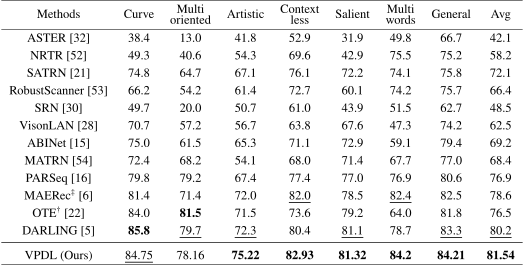
(1) Our method achieves the best results in challenging scenarios such as contextless and multi-word text. We attribute this improvement to two factors. First, the character-level visual prompts help the model focus on fine-grained character cues. Second, the textual prompts used in autoregressive decoding alleviate exposure bias, which is particularly important for semantic-free or long text sequences, where an early prediction error may otherwise propagate through the entire sequence.
(2) The inference results of some scenes from Fig. 4 as well as Table 2 show that our method is slightly less effective in curved and multi-oriented text scenes, and we hypothesize that this result occurs because these non-standard text shapes increase the visual complexity to a great extent compared with regular text images arranged in horizontal sequences, and instantly, we use character visual prompts to allow the model to understand as much as possible through differential learning. But the fact that the character shapes change irregularly with the images leads to a large difference between the learned semantic features and the levels, so it still poses a great challenge to recognize the corresponding visual features.
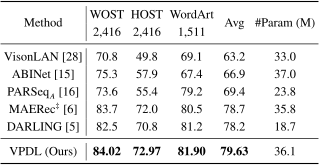
Table 3. Comparison with state-of-the-art STR methods on some more complicated datasets including occlusion and WordArt.
4.4. Result on More Complicated Datasets
Small-Scale Benchmark: We conducted comparison experiments on more complex and challenging scene text datasets, including the occlusion datasets WOST and HOST as well as the artistic-text dataset WordArt. We chose the models that reported the evaluation results of these datasets in the paper for comparison, and the results are shown in Table 3, where our model outperforms all the compared modeling approaches, achieving 1.46% and 0.91% in average performance improvement compared to DARLING 5 and MAERec 6, respectively. The designed character-level visual prompts simulate occlusion-like variations during data augmentation, enabling the model to learn more robust representations through differential learning. As a result, VPDL achieves stronger performance in these complex scenarios and demonstrates better generalization ability than the compared baseline models.
Table 4. Performance comparison on three large benchmarks. \(\sharp\) Reproduced by PARSeq\(_A\) 16, rest of the method’s results from CLIP4STR 57 report.
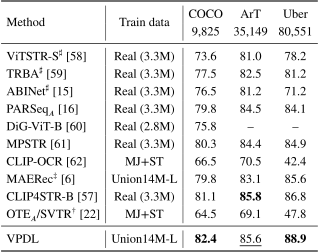
Large-Scale Benchmark: We also conducted evaluations on three larger and more challenging benchmarks involving low-resolution, occluded, and rotated text. The results are shown in Table 4. Our results demonstrate that VPDL consistently outperforms numerous baseline models, highlighting its strong generalization ability across diverse scene text recognition scenarios. However, compared with its performance on these three large-scale benchmarks, our model shows relatively smaller gains on the curve and multi-oriented categories of Union14M benchmark. This leads us to two key insights. First, we believe this is because rotated text undergoes a global transformation while maintaining a structured layout, whereas curved text involves local transformations that introduce complex character distortions, making it inherently more difficult to process. Second, while our model demonstrates strong cross-scenario generalization in most cases, its performance in curved and rotated text scenarios still requires further improvement.
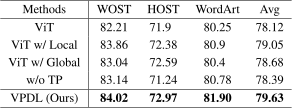
Table 5. Ablation experiment results for the VPDL model. Where ViT denotes no character visual prompts, w/ Local (Global) denotes local (global) differential learning based on ViT 41, and w/o TP indicates that only characters will be used as decoding input, not text prompts.
4.5. Ablation Study
The Evaluation of Differential Learning: In order to verify the effectiveness of this module, we added local and global differential learning to ViT respectively, and the results are shown in Table 5. After incorporating local differential learning, the model demonstrates a notable improvement in performance compared to ViT. This enhancement stems primarily from the ability to enrich each input image patch with more contextually similar visual prompts. For instance, characters with varying curvatures, like different forms of the letter “C,” should share common features. This approach enables the model to better capture and utilize feature information that was previously less effectively learned. Adding a global differential learning layer directly to ViT yields better results than using a local layer. We attribute this improvement to the more comprehensive capture of text-related information in the globally obtained image features. Our residual mapping network further enhances the model’s ability to focus not only on similarities with character features but also on the distinctive information of the input image itself at a global level. This broader focus enables the model to adapt more effectively to scenarios that differ from the character prompts, resulting in improved performance. In summary, the local-to-global differential learning design, based on character visual prompts, indeed enhances the model’s ability to learn more discriminative feature representations.
The Evaluation of Text Prompt: To verify the effectiveness of the textual prompts, we compare the results obtained using the original label sequence with those obtained using our textual prompts, as shown in the w/o TP setting in Table 5. Without textual prompts, the performance decreases by 1.24%, which confirms their effectiveness. Compared with directly using labels as decoder inputs, textual prompts encourage the model to focus more on the textual information embedded in the image features. This not only reduces interference from irrelevant features during decoding, but also alleviates error propagation from previously decoded characters, leading to more accurate recognition results.
The Evaluation of Image Prompts Size: Although, in principle, a more diverse set of character samples may provide richer visual references, our experiments show that increasing the number of prompts does not always lead to consistent gains, especially in scenarios such as multi-oriented text. To evaluate the effect of prompt pool size, we conduct experiments on three challenging datasets while varying the number of prompt samples per character. As shown in Fig. 5, introducing visual prompts consistently improves performance. For example, on WOST, the accuracy increases from 81.02% to 83.00% when the number of prompts per character increases from 5 to 20. However, the gains gradually saturate as more samples are added, suggesting that only a moderate number of prompt samples is sufficient to provide effective visual guidance.
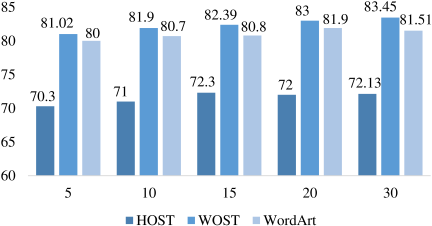
Fig. 5. Performance changes due to different numbers of visual prompt samples. \(X\)-axis coordinate values are the number of single character styles selected at a time, and \(Y\)-axis is the performance result on the three datasets.
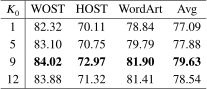
The Effect of Initial Top-\(\boldsymbol{K}\) Value: To evaluate the rationality of the Top-\(K\) configuration in local differential learning, we vary the initial value \(K_0\) while keeping the linear decreasing schedule unchanged. Specifically, we test \(𝐾_0 \in \{1,5,9,12\}\) on three challenging benchmarks (WOST, HOST, WordArt). As shown in Table 6, using a small value significantly limits multi-candidate alignment and leads to inferior performance. Increasing \(K_0\) improves accuracy by allowing richer prompt interaction, and the best performance is achieved at \(K_0=9\). Further increasing \(K_0\) to 12 does not bring additional gains, likely due to increased noise from less relevant prompts. These results validate the rationality of our Top-\(K\) design.
Table 6. Effect of initial Top-\(K\) in differential learning.
4.6. Effect of Different Text Prompt
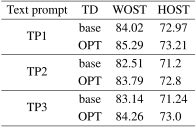
To validate the impact of text prompts on auto-regressive models, we designed experiments using different types of text prompts to compare text-guided fusion with others. Specifically, during training, we used three types of prompts: TP1: “The text starts with {P} and ends with {y}. Full text is {Party},” TP2: “The text in images is {Party},” and TP3: “Party.” The results, obtained using the same decoder, are shown in Table 7. From the table, we observe that not all text prompts effectively help the model accurately recognize image-based textual features. Unlike direct character embeddings, fixed-format text prompts in STR provide character-level information while introducing additional language constraints and semantic priors during decoding. This helps the model make more accurate inferences when dealing with blurred or ambiguous characters. Moreover, text prompts strengthen the connection between visual features and text space, reducing the modality gap and enabling the model to better learn semantic information from image features. Additionally, we explored the performance improvements brought by different text decoders. Since these decoders can generate better feature representations for long text sequences, they ultimately contribute to more effective fusion with image features, leading to improved results.
Table 7. Performance results of text prompts and different text decoder combinations on the complex datasets HOST and WOST. Where TP denotes text prompt and TD denotes text decoder.
5. Conclusion
To improve the practical generalization ability of scene text recognition models, we first introduce a diverse set of character visual prompts as structured visual references. We then design a local-to-global differential learning strategy that enables the encoder to capture both shared and distinctive information from these prompts, thereby learning more representative image features while avoiding information redundancy. Finally, to alleviate exposure bias in the decoder, we replace the commonly used label inputs with textual prompts, enabling the model to focus more effectively on the textual information embedded in image features.
Despite the promising results, VPDL still has several limitations. First, as observed on Union14M benchmark, the performance gain is relatively smaller for highly curved and multi-oriented text, where severe geometric deformation may weaken the patch-to-prompt correspondence. Second, although prompt interaction improves generalization, it introduces additional computational cost due to similarity matching between image patches and prompt samples, and further efficiency optimization would be beneficial. Third, the prompt library is constructed from a finite set of character appearances; extending prompt diversity (e.g., broader styles or cross-lingual characters) and exploring adaptive prompt selection mechanisms could further enhance robustness. These directions provide promising avenues for future research.
Acknowledgments
The authors would also like to thank the anonymous reviewers for their comments on improving the quality of this paper.
- [1] Z. Zou, K. Chen, Z. Shi, Y. Guo, and J. Ye, “Object Detection in 20 Years: A Survey,” Proc. of the IEEE, Vol.111, Issue 3, pp. 257-276, 2023. https://doi.org/10.1109/JPROC.2023.3238524
- [2] Y. Chen, X. Yuan, J. Wang, R. Wu, X. Li, Q. Hou, and M.-M. Cheng, “YOLO-MS: Rethinking Multi-Scale Representation Learning for Real-Time Object Detection,” IEEE Trans. on Pattern Analysis and Machine Intelligence, Vol.47, Issue 6, pp. 4240-4252, 2025. https://doi.org/10.1109/TPAMI.2025.3538473
- [3] M. Fang, X. Rui, H. Cheng, X. Liu, J. She, Y. Du, and H. Tan, “Small Object Detection Algorithm Based on Improved Attention Mechanism and Feature Fusion of YOLOv8,” J. Adv. Comput. Intell. Intell. Inform., Vol.29, No.4, pp. 941-955, 2025. https://doi.org/10.20965/jaciii.2025.p0941
- [4] J. Wan, S. Song, W. Yu, Y. Liu, W. Cheng, F. Huang, X. Bai, C. Yao, and Z. Yang, “OMNIPARSER: A Unified Framework for Text Spotting, Key Information Extraction and Table Recognition,” 2024 IEEE/CVF Conf. on Computer Vision and Pattern Recognition (CVPR), pp. 15641-15653, 2024. https://doi.org/10.1109/CVPR52733.2024.01481
- [5] B. Zhang, H. Xie, Z. Gao, and Y. Wang, “Choose What You Need: Disentangled Representation Learning for Scene Text Recognition, Removal and Editing,” 2024 IEEE/CVF Conf. on Computer Vision and Pattern Recognition (CVPR), pp. 28358-28368, 2024. https://doi.org/10.1109/CVPR52733.2024.02679
- [6] Q. Jiang, J. Wang, D. Peng, C. Liu, and L. Jin, “Revisiting Scene Text Recognition: A Data Perspective,” 2023 IEEE/CVF Int. Conf. on Computer Vision (ICCV), pp. 20486-20497, 2023. https://doi.org/10.1109/ICCV51070.2023.01878
- [7] C. Luo, C. Cheng, Q. Zheng, and C. Yao, “GeoLayoutLM: Geometric Pre-training for Visual Information Extraction,” 2023 IEEE/CVF Conf. on Computer Vision and Pattern Recognition (CVPR), pp. 7092-7101, 2023. https://doi.org/10.1109/CVPR52729.2023.00685
- [8] R. Wang, Y. Xue, and L. Jin, “DocNLC: A Document Image Enhancement Framework with Normalized and Latent Contrastive Representation for Multiple Degradations,” Proc. of the AAAI Conf. on Artificial Intelligence, Vol.38, No.6, pp. 5563-5571, 2024. https://doi.org/10.1609/aaai.v38i6.28366
- [9] M. Peng, K. Chen, X. Guo, Q. Zhang, H. Zhong, M. Zhu, and H. Yang, “Diffusion Models for Intelligent Transportation Systems: A Survey,” IEEE Trans. on Intelligent Transportation Systems, Vol.26, Issue 12, pp. 21526-21543, 2025. https://doi.org/10.1109/TITS.2025.3613178
- [10] M. Bakirci, “Advanced aerial monitoring and vehicle classification for intelligent transportation systems with YOLOv8 variants,” J. of Network and Computer Applications, Vol.237, Article No.104134, 2025. https://doi.org/10.1016/j.jnca.2025.104134
- [11] M. A. Jan, M. Adil, B. Brik, S. Harous, and S. Abbas, “Making Sense of Big Data in Intelligent Transportation Systems: Current Trends, Challenges and Future Directions,” ACM Comput. Surv., Vol.57, Issue 8, Article No.197, 2025. https://doi.org/10.1145/3716371
- [12] C. Zhang, Y. Tao, K. Du, W. Ding, B. Wang, J. Liu, and W. Wang, “Character-Level Street View Text Spotting Based on Deep Multisegmentation Network for Smarter Autonomous Driving,” IEEE Trans. on Artificial Intelligence, Vol.3, Issue 2, pp. 297-308, 2022. https://doi.org/10.1109/TAI.2021.3116216
- [13] L. Wu, C. Zhang, J. Liu, J. Han, J. Liu, E. Ding, and X. Bai, “Editing Text in the Wild,” Proc. of the 27th ACM Int. Conf. on Multimedia, pp. 1500-1508, 2019. https://doi.org/10.1145/3343031.3350929
- [14] B. Shi, X. Bai, and C. Yao, “An End-to-End Trainable Neural Network for Image-Based Sequence Recognition and Its Application to Scene Text Recognition,” IEEE Trans. on Pattern Analysis and Machine Intelligence, Vol.39, Issue 11, pp. 2298-2304, 2017. https://doi.org/10.1109/TPAMI.2016.2646371
- [15] S. Fang, H. Xie, Y. Wang, Z. Mao, and Y. Zhang, “Read Like Humans: Autonomous, Bidirectional and Iterative Language Modeling for Scene Text Recognition,” 2021 IEEE/CVF Conf. on Computer Vision and Pattern Recognition (CVPR), pp. 7094-7103, 2021. https://doi.org/10.1109/CVPR46437.2021.00702
- [16] D. Bautista and R. Atienza, “Scene Text Recognition with Permuted Autoregressive Sequence Models,” S. Avidan, G. Brostow, M. Cissé, G. M. Farinella, and T. Hassner (Eds.), “Computer Vision – ECCV 2022,” Lecture Notes in Computer Science, Vol.13688, pp. 178-196, 2022. https://doi.org/10.1007/978-3-031-19815-1_11
- [17] Y. Du, Z. Chen, C. Jia, X. Yin, T. Zheng, C. Li, Y. Du, and Y.-G. Jiang, “SVTR: Scene Text Recognition with a Single Visual Model,” arXiv preprint, arXiv:2205.00159, 2022. https://doi.org/10.48550/arXiv.2205.00159
- [18] A. Graves, S. Fernández, F. Gomez, and J. Schmidhuber, “Connectionist temporal classification: Labelling unsegmented sequence data with recurrent neural networks,” Proc. of the 23rd Int. Conf. on Machine Learning, pp. 369-376, 2006. https://doi.org/10.1145/1143844.1143891
- [19] Z. Cheng, F. Bai, Y. Xu, G. Zheng, S. Pu, and S. Zhou, “Focusing Attention: Towards Accurate Text Recognition in Natural Images,” 2017 IEEE Int. Conf. on Computer Vision (ICCV), pp. 5086-5094, 2017. https://doi.org/10.1109/ICCV.2017.543
- [20] F. Xue, J. Sun, Y. Xue, Q. Wu, L. Zhu, X. Chang, and S.-C. Cheung, “Attention Guidance by Cross-Domain Supervision Signals for Scene Text Recognition,” IEEE Trans. on Image Processing, Vol.34, pp. 717-728, 2025. https://doi.org/10.1109/TIP.2024.3523799
- [21] J. Lee, S. Park, J. Baek, S. J. Oh, S. Kim, and H. Lee, “On Recognizing Texts of Arbitrary Shapes with 2D Self-Attention,” 2020 IEEE/CVF Conf. on Computer Vision and Pattern Recognition Workshops (CVPRW), pp. 2326-2335, 2020. https://doi.org/10.1109/CVPRW50498.2020.00281
- [22] J. Xu, Y. Wang, H. Xie, and Y. Zhang, “OTE: Exploring Accurate Scene Text Recognition Using One Token,” 2024 IEEE/CVF Conf. on Computer Vision and Pattern Recognition (CVPR), pp. 28327-28336, 2024. https://doi.org/10.1109/CVPR52733.2024.02676
- [23] W. Hu, X. Cai, J. Hou, S. Yi, and Z. Lin, “GTC: Guided Training of CTC Towards Efficient and Accurate Scene Text Recognition,” Proc. of the AAAI Conf. on Artificial Intelligence, Vol.34, No.7, pp. 11005-11012, 2020. https://doi.org/10.1609/aaai.v34i07.6735
- [24] M. Yousef and T. E. Bishop, “OrigamiNet: Weakly-Supervised, Segmentation-Free, One-Step, Full Page Text Recognition by Learning to Unfold,” 2020 IEEE/CVF Conf. on Computer Vision and Pattern Recognition (CVPR), pp. 14698-14707, 2020. https://doi.org/10.1109/CVPR42600.2020.01472
- [25] T. Wang, Y. Zhu, L. Jin, D. Peng, Z. Li, M. He, Y. Wang, and C. Luo, “Implicit Feature Alignment: Learn to Convert Text Recognizer to Text Spotter,” 2021 IEEE/CVF Conf. on Computer Vision and Pattern Recognition (CVPR), pp. 5969-5978, 2021. https://doi.org/10.1109/CVPR46437.2021.00591
- [26] Y. Du, C. Li, R. Guo, X. Yin, W. Liu, J. Zhou, Y. Bai, Z. Yu, Y. Yang, Q. Dang, and H. Wang, “PP-OCR: A Practical Ultra Lightweight OCR System,” arXiv preprint, arXiv:2009.09941, 2020. https://doi.org/10.48550/arXiv.2009.09941
- [27] P. Wang, C. Da, and C. Yao, “Multi-granularity Prediction for Scene Text Recognition,” S. Avidan, G. Brostow, M. Cissé, G. M. Farinella, and T. Hassner (Eds.), “Computer Vision – ECCV 2022,” Lecture Notes in Computer Science, Vol.13688, pp. 339-355, 2022. https://doi.org/10.1007/978-3-031-19815-1_20
- [28] Y. Wang, H. Xie, S. Fang, J. Wang, S. Zhu, and Y. Zhang, “From Two to One: A New Scene Text Recognizer with Visual Language Modeling Network,” 2021 IEEE/CVF Int. Conf. on Computer Vision (ICCV), pp. 14174-14183, 2021. https://doi.org/10.1109/ICCV48922.2021.01393
- [29] Z. Wan, M. He, H. Chen, X. Bai, and C. Yao, “TextScanner: Reading Characters in Order for Robust Scene Text Recognition,” Proc. of the AAAI Conf. on Artificial Intelligence, pp. 12120-12127, 2020. https://doi.org/10.1609/aaai.v34i07.6891
- [30] D. Yu, X. Li, C. Zhang, T. Liu, J. Han, J. Liu, and E. Ding, “Towards Accurate Scene Text Recognition with Semantic Reasoning Networks,” 2020 IEEE/CVF Conf. on Computer Vision and Pattern Recognition (CVPR), pp. 12110-12119, 2020. https://doi.org/10.1109/CVPR42600.2020.01213
- [31] Z. Zhao, J. Tang, C. Lin, B. Wu, C. Huang, H. Liu, X. Tan, Z. Zhang, and Y. Xie, “Multi-modal In-Context Learning Makes an Ego-evolving Scene Text Recognizer,” 2024 IEEE/CVF Conf. on Computer Vision and Pattern Recognition (CVPR), pp. 15567-15576, 2024. https://doi.org/10.1109/CVPR52733.2024.01474
- [32] B. Shi, M. Yang, X. Wang, P. Lyu, C. Yao, and X. Bai, “ASTER: An Attentional Scene Text Recognizer with Flexible Rectification,” IEEE Trans. on Pattern Analysis and Machine Intelligence, Vol.41, Issue 9, pp. 2035-2048, 2019. https://doi.org/10.1109/TPAMI.2018.2848939
- [33] Z. Cheng, F. Bai, Y. Xu, G. Zheng, S. Pu, and S. Zhou, “Focusing Attention: Towards Accurate Text Recognition in Natural Images,” 2017 IEEE Int. Conf. on Computer Vision (ICCV), pp. 5086-5094, 2017. https://doi.org/10.1109/ICCV.2017.543
- [34] J. Baek, G. Kim, J. Lee, S. Park, D. Han, S. Yun, S. J. Oh, and H. Lee, “What is Wrong with Scene Text Recognition Model Comparisons? Dataset and Model Analysis,” 2019 IEEE/CVF Int. Conf. on Computer Vision (ICCV), pp. 4714-4722, 2019. https://doi.org/10.1109/ICCV.2019.00481
- [35] J. Devlin, M.-W. Chang, K. Lee, and K. Toutanova, “BERT: Pre-training of Deep Bidirectional Transformers for Language Understanding,” Proc. of the Conf. of the North American Chapter of the Association for Computational Linguistics: Human Language Technologies, Vol.1, pp. 4171-4186, 2019. https://doi.org/10.18653/v1/N19-1423
- [36] T. B. Brown, B. Mann, N. Ryder, M. Subbiah, J. Kaplan, P. Dhariwal, A. Neelakantan, P. Shyam, G. Sastry, A. Askell, S. Agarwal, A. Herbert-Voss, G. Krueger, T. Henighan, R. Child, A. Ramesh, D. M. Ziegler, J. Wu, C. Winter, C. Hesse, M. Chen, E. Sigler, M. Litwin, S. Gray, B. Chess, J. Clark, C. Berner, S. McCandlish, A. Radford, I. Sutskever, and D. Amodei, “Language models are few-shot learners,” Proc. of the 34th Int. Conf. on Neural Information Processing Systems (NIPS’20), pp. 1877-1901, 2020. https://doi.org/10.18653/v1/N19-1423
- [37] A. Radford, J. Wu, R. Child, D. Luan, D. Amodei, and I. Sutskever, “Language Models are Unsupervised Multitask Learners,” OpenAI Blog, 2019.
- [38] A. Bar, Y. Gandelsman, T. Darrell, A. Globerson, and A. A. Efros, “Visual Prompting via Image Inpainting,” Advances in Neural Information Processing Systems, pp. 25005-25017, 2022.
- [39] J. Zhu and G. Pang, “Toward Generalist Anomaly Detection via In-Context Residual Learning with Few-Shot Sample Prompts,” 2024 IEEE/CVF Conf. on Computer Vision and Pattern Recognition (CVPR), pp. 17826-17836, 2024. https://doi.org/10.1109/CVPR52733.2024.01688
- [40] F. Li, Q. Jiang, H. Zhang, T. Ren, S. Liu, X. Zou, H. Xu, H. Li, J. Yang, C. Li, L. Zhang, and J. Gao, “Visual in-Context Prompting,” 2024 IEEE/CVF Conf. on Computer Vision and Pattern Recognition (CVPR), pp. 12861-12871, 2024. https://doi.org/10.1109/CVPR52733.2024.01222
- [41] A. Dosovitskiy, L. Beyer, A. Kolesnikov, D. Weissenborn, X. Zhai, T. Unterthiner, M. Dehghani, M. Minderer, G. Heigold, S. Gelly, J. Uszkoreit, and N. Houlsby, “An Image is Worth 16times16 Words: Transformers for Image Recognition at Scale,” arXiv preprint, arXiv:2010.11929, 2020. https://doi.org/10.48550/arXiv.2010.11929
- [42] A. Mishra, K. Alahari, and C. Jawahar, “Scene Text Recognition using Higher Order Language Priors,” British Machine Vision Conf. (BMVC2), pp. 127.1-127.11, 2012. https://doi.org/10.5244/C.26.127
- [43] D. Karatzas, F. Shafait, S. Uchida, M. Iwamura, L. Gomez i Bigorda, S. R. Mestre, J. Mas, D. F. Mota, J. A. Almazàn, and L.-P. de las Heras, “ICDAR 2013 Robust Reading Competition,” 2013 12th Int. Conf. on Document Analysis and Recognition, pp. 1484-1493, 2013. https://doi.org/10.1109/ICDAR.2013.221
- [44] D. Karatzas, L. Gomez-Bigorda, A. Nicolaou, S. Ghosh, A. Bagdanov, M. Iwamura, J. Matas, L. Neumann, V. R. Chandrasekhar, S. Lu, F. Shafait, S. Uchida, and E. Valveny, “ICDAR 2015 Competition on Robust Reading,” 2015 13th Int. Conf. on Document Analysis and Recognition (ICDAR), pp. 1156-1160, 2015. https://doi.org/10.1109/ICDAR.2015.7333942
- [45] K. Wang, B. Babenko, and S. Belongie, “End-to-end scene text recognition,” 2011 IEEE Int. Conf. on Computer Vision, pp. 1457-1464, 2011. https://doi.org/10.1109/ICCV.2011.6126402
- [46] T. Q. Phan, P. Shivakumara, S. Tian, and C. L. Tan, “Recognizing Text with Perspective Distortion in Natural Scenes,” 2013 IEEE Int. Conf. on Computer Vision, pp. 569-576, 2013. https://doi.org/10.1109/ICCV.2013.76
- [47] A. Risnumawan, P. Shivakumara, C. S. Chan, and C. L. Tan, “A robust arbitrary text detection system for natural scene images,” Expert Systems with Applications, Vol.41, Issue 18, pp. 8027-8048, 2014. https://doi.org/10.1016/j.eswa.2014.07.008
- [48] X. Xie, L. Fu, Z. Zhang, Z. Wang, and X. Bai, “Toward Understanding WordArt: Corner-Guided Transformer for Scene Text Recognition,” S. Avidan, G. Brostow, M. Cissé, G. M. Farinella, and T. Hassner (Eds.), “Computer Vision – ECCV 2022,” Lecture Notes in Computer Science, Vol.13688, pp. 303-321, 2022. https://doi.org/10.1007/978-3-031-19815-1_18
- [49] A. Veit, T. Matera, L. Neumann, J. Matas, and S. Belongie, “COCO-Text: Dataset and Benchmark for Text Detection and Recognition in Natural Images,” arXiv preprint, arXiv:1601.07140, 2016. https://doi.org/10.48550/arXiv.1601.07140
- [50] C. K. Chng, Y. Liu, Y. Sun, C. C. Ng, C. Luo, Z. Ni, C. Fang, S. Zhang, J. Han, E. Ding et al., “ICDAR2019 Robust Reading Challenge on Arbitrary-Shaped Text – RRC-ArT,” 2019 Int. Conf. on Document Analysis and Recognition (ICDAR), pp. 1571-1576, 2019. https://doi.org/10.1109/ICDAR.2019.00252
- [51] Y. Zhang, L. Gueguen, I. Zharkov, P. Zhang, K. Seifert, and B. Kadlec, “Uber-text: A large-scale dataset for optical character recognition from street-level imagery,” SUNw: Scene Understanding Workshop-CVPR, Vol.2017, 2017.
- [52] F. Sheng, Z. Chen, and B. Xu, “NRTR: A No-Recurrence Sequence-to-Sequence Model for Scene Text Recognition,” 2019 Int. Conf. on Document Analysis and Recognition, pp. 781-786, 2019. https://doi.org/10.1109/ICDAR.2019.00130
- [53] X. Yue, Z. Kuang, C. Lin, H. Sun, and W. Zhang, “RobustScanner: Dynamically Enhancing Positional Clues for Robust Text Recognition,” A. Vedaldi, H. Bischof, T. Brox, and J.-M. Frahm (Eds.), “Computer Vision – ECCV 2020,” Lecture Notes in Computer Science, Vol.12364, pp. 135-151, 2020. https://doi.org/10.1007/978-3-030-58529-7_9
- [54] B. Na, Y. Kim, and S. Park, “Multi-modal Text Recognition Networks: Interactive Enhancements Between Visual and Semantic Features,” S. Avidan, G. Brostow, M. Cissé, G. M. Farinella, and T. Hassner (Eds.), “Computer Vision – ECCV 2022,” Lecture Notes in Computer Science, Vol.13688, pp. 446-463, 2022. https://doi.org/10.1007/978-3-031-19815-1_26
- [55] W. Xu, E. Eli, A. Aysa, X. Xu, and K. Ubul, “ASANet: Scene Text Recognition with Alternate Self-Attention,” 2025 IEEE Int. Conf. on Acoustics, Speech and Signal Processing (ICASSP), 2025. https://doi.org/10.1109/ICASSP49660.2025.10889330
- [56] C. Da, P. Wang, and C. Yao, “Multi-granularity prediction with learnable fusion for scene text recognition,” Int. J. of Computer Vision, Vol.134, No.1, Article No.47, 2026. https://doi.org/10.1007/s11263-025-02653-7
- [57] S. Zhao, R. Quan, L. Zhu, and Y. Yang, “CLIP4STR: A Simple Baseline for Scene Text Recognition with Pre-Trained Vision-Language Model,” IEEE Trans. on Image Processing, Vol.33, pp. 6893-6904, 2024. https://doi.org/10.1109/TIP.2024.3512354
- [58] R. Atienza, “Vision Transformer for Fast and Efficient Scene Text Recognition,” J. Lladós, D. Lopresti, and S. Uchida, “Document Analysis and Recognition – ICDAR 2021,” Lecture Notes in Computer Science, Vol.12821, pp. 319-334, 2021. https://doi.org/10.1007/978-3-030-86549-8_21
- [59] J. Baek, Y. Matsui, and K. Aizawa, “What If We Only Use Real Datasets for Scene Text Recognition? Toward Scene Text Recognition with Fewer Labels,” 2021 IEEE/CVF Conf. on Computer Vision and Pattern Recognition (CVPR), pp. 3112-3121, 2021. https://doi.org/10.1109/CVPR46437.2021.00313
- [60] M. Yang, M. Liao, P. Lu, J. Wang, S. Zhu, H. Luo, Q. Tian, and X. Bai, “Reading and Writing: Discriminative and Generative Modeling for Self-Supervised Text Recognition,” Proc. of the 30th ACM Int. Conf. on Multimedia (MM’22), pp. 4214-4223, 2022. https://doi.org/10.1145/3503161.3547784
- [61] X. Yang, Z. Qiao, J. Wei, D. Yang, and Y. Zhou, “Masked and Permuted Implicit Context Learning for Scene Text Recognition,” IEEE Signal Processing Letters, Vol.31, pp. 964-968, 2024. https://doi.org/10.1109/LSP.2024.3381893
- [62] Z. Wang, H. Xie, Y. Wang, J. Xu, B. Zhang, and Y. Zhang, “Symmetrical Linguistic Feature Distillation with CLIP for Scene Text Recognition,” Proc. of the 31st ACM Int. Conf. on Multimedia (MM’23), pp. 509-518, 2023. https://doi.org/10.1145/3581783.3611769
This article is published under a Creative Commons Attribution-NoDerivatives 4.0 Internationa License.