
Research Paper:
Generating Personalized MRI Reports from Key Phrases with Multiple LLM Agents and RAG Technique
Yulia Shichkina†
 and Aleksandr P. Stepanov
Department of Computer Science and Engineering, Saint Petersburg Electrotechnical University (LETI)
Litera F, Professor Popov 5, Saint Petersburg 197022, Russia
†Corresponding author

In the paper, the novel method for generating personalized magnetic resonance imaging (MRI) reports based on key phrases is introduced. In order to demonstrate the method, an application with multiple large language model (LLM) agents was written. For establishing connection between different agents, graph-based software architecture was used. The graph consists of the following nodes. (1) The data retriever node. In this node relevant reports along with the metadata are obtained from the vector database. (2) The findings generation node. This node includes an implementation of two different variations of an MRI report’s findings section generation method. The first is based on merging already existed findings parts of radiology reports that were retrieved by key phrases into the new one. The second is based on reconstructing findings section so that it contains specific paragraphs retrieved by key phrases from the vector store. (3) The impression generation node. This node implements summarization of a findings section into an impression. The performance of a findings part generation was evaluated with BLEU, ROUGE and BERTScore metrics. Experiments have shown promising results in generation of findings parts: for the first approach mean ROUGE-L score was about 0.5, BERTScore was around 0.8, for the second approach mean ROUGE-L score was approximately 0.6, BERTScore was roughly 0.9. The first approach was around three times slower than the second. During the experiments, the dataset of 908 reports gathered from seven radiologists was used. Qualitative analysis was performed with five-point Likert scale questionary and statistically analyzed by means of Mann–Whitney U test.
Findings section generation
1. Introduction
Nowadays large language models (LLMs) are used to solve a lot of tasks related to natural language processing (NLP) in different areas. For example, as demonstrated in 1, it is possible to use abilities of artificial intelligence (AI) to estimate quality of financial report. In this case, a report already exists. Another area is healthcare and medicine, where LLMs are used for treatment planning or patient engagement. There are a lot of ethical aspects of deploying LLMs in a clinical environment. For example, the most frequently discussed concerns are social bias, fairness, safety and privacy 2. All these issues should also be considered during medical report generation in radiology. In this field, AI models offer a promising pathway to automate report generation 3. A radiology report consists of a findings section that contains informative, fact-based observations of a patient’s conditions and an impression section that contains a thoughtful synthesis of the meaning of the findings leading to a diagnosis, a differential diagnosis, and management recommendations 4. The process of impression creation is time-consuming and requires a lot of concentration from a radiologist. There are several LLM-based approaches aimed to reduce the workload. For example, Sun et al. 5 explored the GPT-4 capabilities and limitations in performing zero-shot generation of an impressions section from a radiology report findings section. Serapio et al. 6 have shown that open-sourced fine-tuned text-to-text transformer (T5) LLM is able to generate a radiology report impression out of key findings with a satisfactory level of clinical and grammatical accuracy. In 7, Zhang et al. have shown that given a large dataset of 20 GB of medical and general-purpose texts for pre-training and 1.5 GB for fine-tuning, it is possible to train LLM that would be able to generate professional-grade and linguistically correct texts for a full spectrum of radiology examinations. The case when there is no such amount of data was investigated by Voinea et al. in 8 where parameter-efficient fine-tuning technique was used to fine-tune Llama3-8b for automatic generation of magnetic resonance imaging (MRI) and computer tomography (CT) impressions from radiology reports. Emerging of multi-agent systems inspired Zeng et al. 9 to develop multi-agent LLM framework for generation radiology report’s impression from the finding section.
The other side of radiology reports generation is the creation of findings section itself. This part contains observations of abnormalities and different complex patterns found in MRI or CT scans. As highlighted by Voinea et al. 8, report creation plays the key role in documenting found pathologies. It is important to mention that during the MRI scans interpretation, different specialists use individual vocabulary for describing similar structures. This writing style should be preserved in automatically generated reports. So, generation of personalized findings is a complex and relevant task. One of the ways to solve it is to fine tune LLM on existing reports. There are two major problems with this approach: (1) a limited number of reports belong to the specialist and (2) emergence of new reports that were not presented in the training set. In order to mitigate these issues retrieval augmented generation (RAG) strategy can be used 10. It helps to keep information up to date and significantly improve generation quality of the model.
The area of automatic generation of a findings section hasn’t been extensively explored yet. The current study introduces the novel approach to generate a findings section with help of key phrases, the RAG technique, and the LLM agent. Because of the RAG strategy, the generated section has unique writing style of the author. The RAG technique utilizes the vector database where reports along with the author metadata (author ID) are stored. So, during the retrieval process, only reports that belong to the certain author are extracted. An impression section is generated by another LLM agent by means of the RAG approach. For organizing information exchange between two above-mentioned LLMs the graph data structure is used. The generation quality of findings section was estimated with BLEU, ROUGE, and BERTScore metrics. Experiments have shown that it is possible to generate well-structured and consistent personalized MRI reports without fine-tuning LLM on large amount of data.
Table 1. Comparative synthesis of approaches.
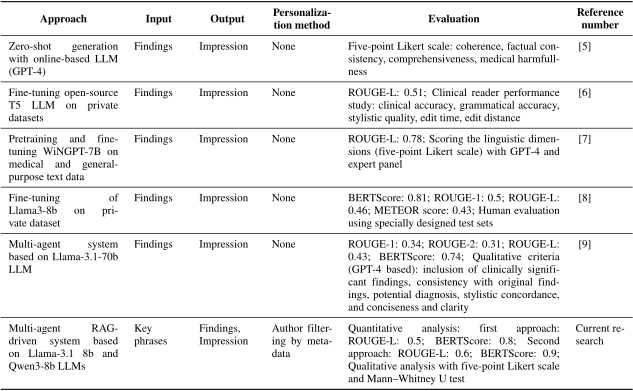
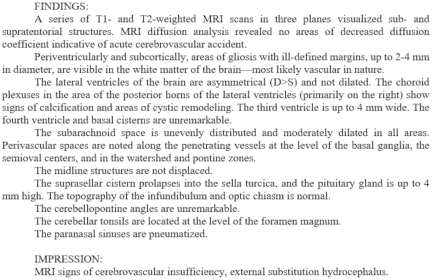
Fig. 1. Original MRI report.
2. Related Works
The use of RAG in radiology and multi-agent systems today is a fairly popular approach to generating reports’ impressions on medical images (MRI, X-rays, mammography, CT, etc.), as well as for forming substantiated answers based on the information received from various sources and building diagnostic conclusions, even in cases where there are no direct answers within the received context 11. In 12, Alam et al. introduce the multi-agent automated radiological report generation system based on the use of RAG-driven LLM for recognizing problem areas in chest X-ray images and final report creation. Close approach was proposed in 13, where authors present a multi-layered system based on LLM agents that is able to retrieve information from the BioBERT vector store as well as from the web. The developed framework is claimed to be a clinical intelligence partner designed to learn and actively contribute to the decision process. All the above-mentioned solutions are multi-purpose. They either need to have original radiological images, a large corpus of data, or access to the web. In the current study single-task approach based on limited number of existing medical reports is proposed.
The current study correlate with the research described in 8 were authors fine-tuned LLM to generate impression (conclusion) part. In this paper, inside the “Conclusion” section, authors mentioned that “LLMs can assist clinicians not only with conclusions but also with the entire report”. The current study proposes method to implement this. But instead of fine-tuning LLM on existing reports, RAG technique was used. Also, in the current study, a personalized approach to generating radiology reports was implemented. Fine-tuned LLM, on the contrary, is able to produce only generalized content.
Multi-agent approach and RAG technique in relation to medical report generation was also described in 9. This aligns with the current research, but that study on the one hand, was focused only on impression generation, and on the other hand, implementation of the proposed system assumed LLM with approximately a hundred billion of parameters, which needs environment with large GPU. In the current research full report was generated with LLM of only 8 billion parameters, which is suitable for environment with limited resource capabilities. Comparative synthesis is provided in Table 1. Table 1 shows that existing methods do not support personalization and are mainly focused on impression section generation based on findings section. Many of them use fine-tuning technique which requires dataset of significant size.
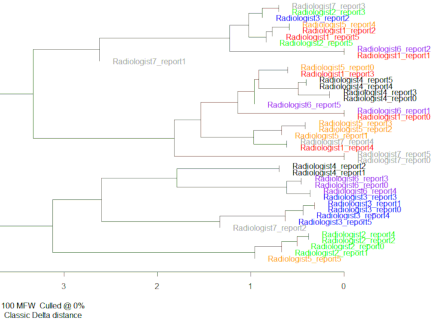
Fig. 2. The dendrogram of reports clusters from different radiologists.
3. Materials
3.1. Dataset
The dataset for the experiments consisted of 908 MRI reports, which were created by seven specialists.
Every report consists of findings (descriptive) and impression (conclusion) sections. The dataset covers a wide range of medical examinations. Example report (translated from Russian into English) is provided in Fig. 1. The report has a structure based on paragraphs, and each paragraph describes different aspect of the medical examination.
Style fidelity evaluation of reports was conducted with Delta stylistic similarity metric 14. The dendrogram of cluster analysis is depicted in Fig. 2. As can be seen from the tree graph, reports from different radiologists (indicated with colors) are mainly clustered into different groups. For more precise analysis longer texts from every specialist are needed.
3.2. Dataset Preparation
During the preprocessing stage from all reports of the current author findings and impression parts were extracted. The findings parts were additionally split by paragraphs, and paragraphs were split by chunks of several words in size. All resulting information along with its type (“paragraph,” “findings,” and “chunk”) and author id was written into the Chroma vector database. Vectorization was performed with FRIDA embedding model 15. Chroma DB was chosen because it is open-sourced and well-documented 16.
4. Methods
4.1. Vector Database
In order to effectively store and retrieve raw text a vector store is needed. This type of database uses vector space model to store data items along with associated numerical representations (vectors). Typically, vectors are word embeddings. Relevant documents can be retrieved out of a vector store with respect to distance metrics, for example, cosine similarity, which is expressed as follows:
Usually, a workflow with a vector database consists of two stages. In the first stage, raw texts are processed with an embedding function to obtain vector representation and after that are written into database. In the second stage, user query that was processed with the same embedding function is forwarded into database in order to retrieve top \(N\) semantically similar texts. It is important to note that the embedding function should be chosen with respect to the language the texts are written in.
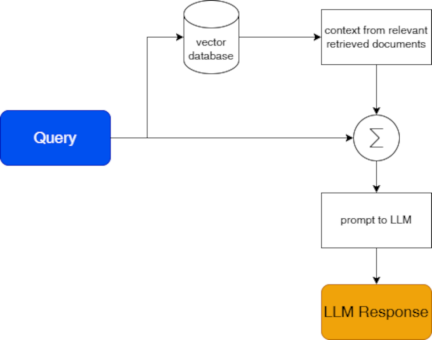
Fig. 3. Base RAG technique.
4.2. Retrieval Augmented Generation
Retrieval augmented generation (RAG) is a technique that allows LLMs to use additional information for responding to domain-specific questions. The RAG strategy eliminates necessity to retrain LLMs with new data. A typical use case is a chatbot that is able to answer questions based on the private information of a company. Simplified RAG strategy diagram is depicted in Fig. 3.
4.3. LangChain Framework
LangChain is a platform for building multi-agent LLM applications. It includes two frameworks: LangChain that helps to quickly prototype an LLM-based application and LangGraph that provides functionality such as low-level orchestration, memory management, and human-in-the-loop support. In the current study LangGraph framework is used.
Application logic was broken into three nodes: information retrieval node, findings generation node, and impression generation node. The first node uses Chroma DB vector store to retrieve information. The second node utilizes Qwen3-8B LLM 17 to generate findings section based on key phrases and prompt that was enriched with the information provided by the first node. Qwen3 offers strong capabilities for multilingual instruction following, which is crucial for this task. The third node uses the findings part, relevant data from the vector store and Llama 3.1 8b 18 as LLM to summarize the impression section. Llama 3.1 8b LLM is used because it is highly effective for text summarization due to long-context understanding. At the same time, according to conducted experiments, it hallucinates during sequential merging operations of two texts written in Russian. So, it is not recommended to use it for the second node in similar settings.
Table 2. Prompts for LLM (the first approach for findings generation).

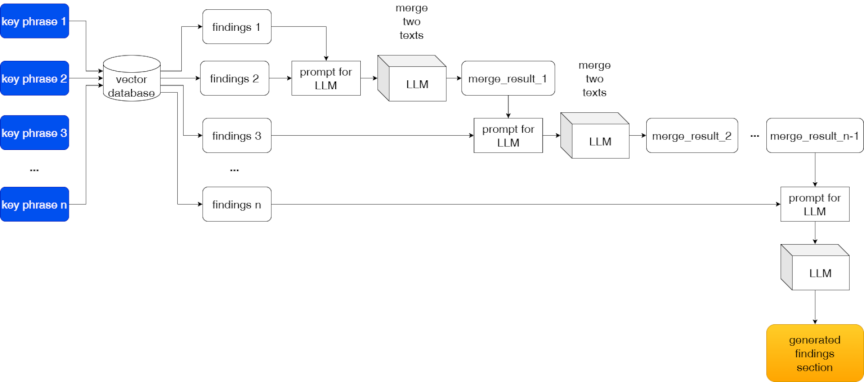
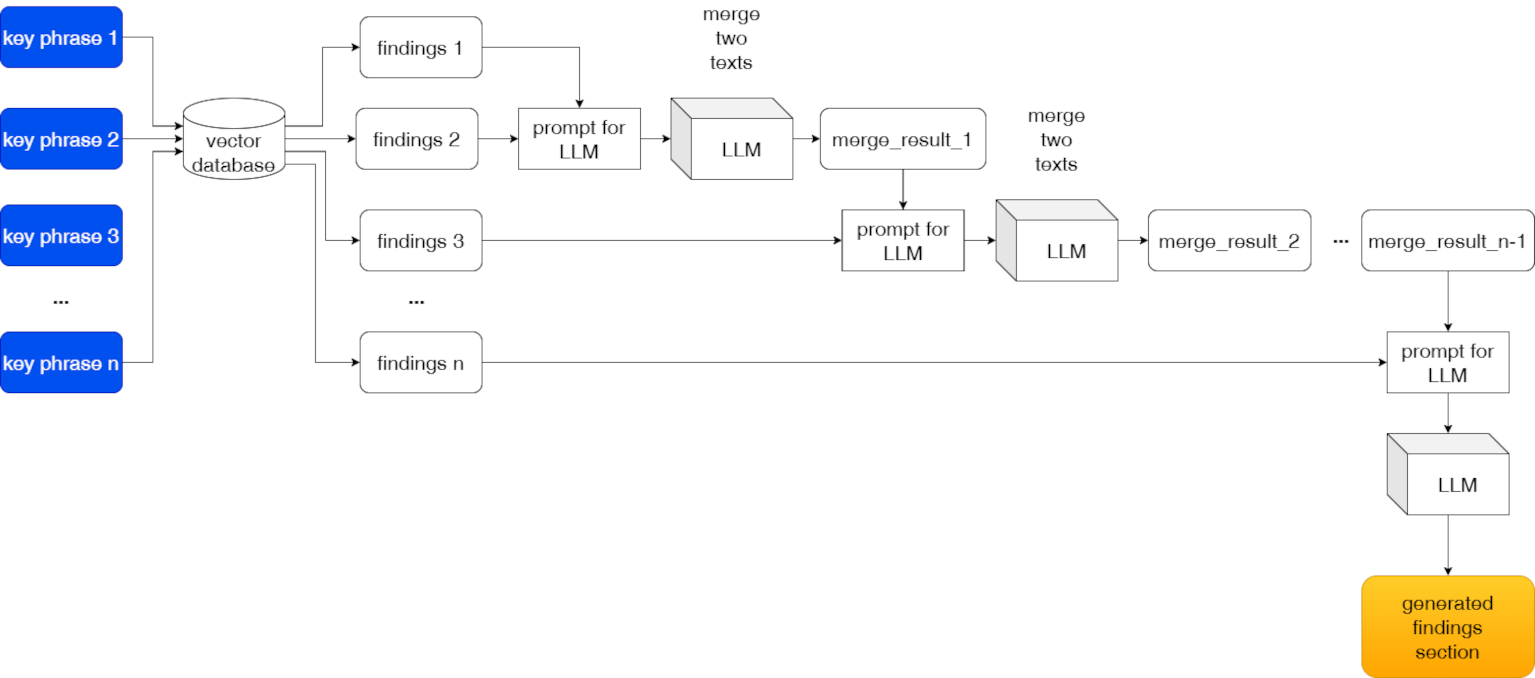
Fig. 4. Findings section generation (the first approach).
4.4. Evaluation
In the current study, ROUGE, BLEU, and BERTScore metrics are used. These metrics are usually used in NLP-related tasks for estimation performance of the model.
ROUGE (recall-oriented understudy for gisting evaluation) is a set of metrics that is used to evaluate automatic summarization and machine translation 19. The main goal is to check how much of the important content from referenced text is preserved in the generated text. In order to do it, word overlap is calculated. ROUGE-1 is used to capture overlap between individual words, ROUGE-2—between word pairs, ROUGE-\(n\)—between \(n\)-words (\(n\)-grams). ROUGE-\(n\) is computed as follows:
BLEU (Bilingual Evaluation Understudy) score is a measure of precision of matching \(n\)-grams between text that was generated and referenced text 20. The formula is given by Eq. 4.
Here, \(\mathit{BP}\) (brevity penalty) is a sizing coefficient, \(\omega_{n}\) are the weights for ngram precision, \(p_{n}\) is the ngram precision. BLEU score was designed to be a corpus measure, so for its application on the sentence level modifications are needed. In the current study Google BLEU variation of the BLEU metric is used. In this case final score is the minimum value of precision and recall that were calculated based on candidate and reference texts 21. Google BLEU score can be used in replace of usual BLEU metric.
BERTScore is a metric that is used to find semantic similarity between two texts 22. For this purpose, it utilizes contextual embeddings from a pre-trained BERT model to match words in generated and referenced texts using cosine similarity. The resulting score include precision (shows how generated tokens are covered by reference tokens), recall (shows how referenced tokens are covered by generated tokens) and F-score (harmonic mean of precision and recall).
Table 3. Prompts for LLM (the second approach for findings generation).
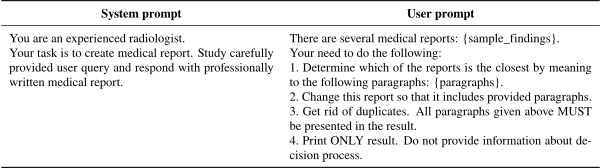
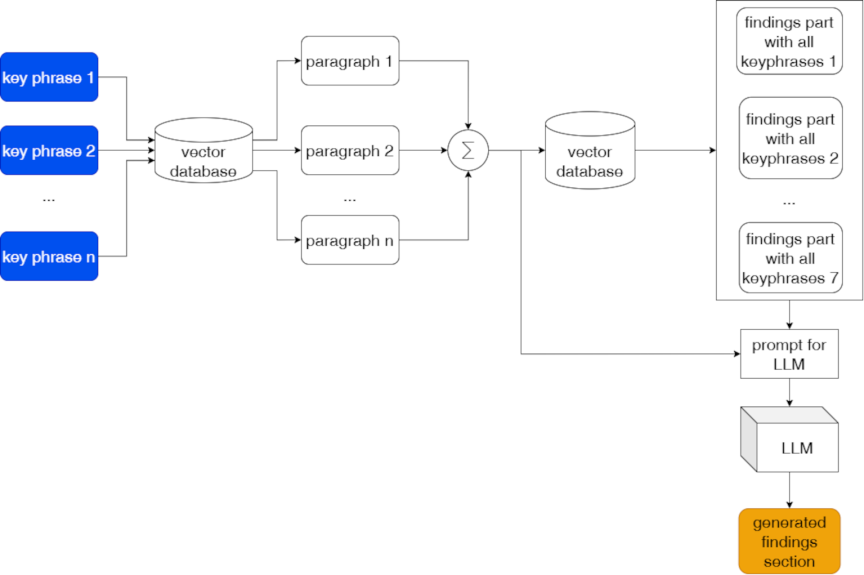
Fig. 5. Findings section generation (the second approach).
4.5. Ways to Generate Findings Section Based on Key Phrases
(a) The First Approach
This approach is based on merging already existed findings parts by the LLM agent (Qwen3-8B). In the initial stage, for every key phrase findings parts that contains these key phrases are found. After that they should be merged together. Due to the limited context window of LLM, cumulative merge procedure is used: the first section is merged with the second, the result is merged with the third part, result of this operation is merged with the fourth found section and so on. Final variant includes all key phrases. System prompt and user prompts for the LLM agent are given in the Table 2. Here variable “texts_to_merge” is a string that contains findings parts being merged, variable “key_phrases” is a string with key phrases separated by comma as a delimiter.
Simplified diagram of the approach is shown in Fig. 4.
(b) The Second Approach
The second approach is based on generating findings section that contains specific paragraphs with help of existing findings parts examples. In the first stage, paragraphs for every key phrase are obtained from the vector database. After that, their union is used to retrieve several findings sections that are similar (cosine similarity measure is utilized) to paragraphs. The number of extracted findings sections should be chosen with respect to the following considerations:
-
Total text length should be less than context window of the LLM with eight billion parameters.
-
The prompt for the LLM should include sufficient information to generate the correct response.
-
Context length increasing ultimately leads to the LLM’s hallucinations.
In the current study seven findings were retrieved. Found paragraphs as well as findings sections are injected into the prompt of the LLM agent which generates final findings section. The prompt for LLM is shown in Table 3. Here the variable “sample_findings” is a string that contains seven found finding sections, the variable “paragraphs” is a string that includes concatenation of paragraphs with key phrases.
Simplified diagram of the approach is depicted in Fig. 5.
4.6. Method to Generate Impression Section
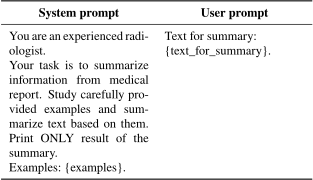
An impression section was generated with help of another LLM agent (Llama 3.1 8b). Approach is similar to the mentioned before. It relies on the same vector database and RAG strategy. In the first stage, example impressions are obtained from the vector database. In the second stage, they are combined with the previously generated findings section, forming the context for the LLM agent. This context is used to enrich the prompt. After that, the LLM agent generates impression part. The prompt for LLM is shown in Table 4. Here, variable “examples” is a string that contains sample impressions sections obtained from vector store, variable “text_for_summary” is findings section that was generated by the LLM agent.
Table 4. Prompts for LLM (approach for impression generation).
4.7. Reproducibility Checklist
In the Section 3.2 method for writing medical report and its parts into the vector store was described. During this preprocessing stage the following hyperparameters were used: chunk size of 80 characters, chunk overlap of 30 characters. Metadata include type of information (“chunk,” “paragraph,” and “finding”) and author ID.
Retrieval stage is based on filtering by metadata. For specific author with id the following operations are performed: chunks of texts are retrieved; paragraphs that are similar to chunks are obtained; finding parts similar to paragraphs are found. Score thresholds for obtaining similar chunks, paragraphs and findings were 0.1, 0.1, and 0.4, respectively. For the first approach, retrieval depth (number of findings parts found) was 1, for the second approach, retrieval depth was 1, 1, and 7 for chunks, paragraphs, and findings respectively.
Other hyperparameters related to operations with vector DB or LLMs, including graph orchestration settings, were taken as default values.
4.8. Ethical Aspects
According to 23, over the past decade, AI has become one of the fundamental technologies used to create innovative solutions in medicine and healthcare. LLM, which allows for the analysis, interpretation, and generation of text information in human language, occupies a special position in the development of medical information systems. The implementation of LLM is accompanied by a number of ethical issues and problems, of which the following, grouped into separate categories, can be attributed to the field of automatic generation of medical reports 24:
-
The quality and reliability of the generated texts, since the health and lives of patients, as well as the professional reputation of medical workers and researchers, depend on this 25. In particular, RAG-driven models can incorrectly aggregate conflicting information from different sources. LLMs often learn from their own mistakes. LLMs operate on response probabilities, which can lead to the potential for ignoring rare clinical cases. Most of the above issues are relevant to the proposed methods. Therefore, only those generated reports that have been verified and corrected by a medical professional are saved in the system. From a legal perspective, LLMs currently do not have the status of independent legal entities. Legal liability for the consequences of reports generated using LLMs rests with the medical professionals.
-
The presence of “hallucinations” in LLM-based systems, as they are trained on text corpora that may contain historical, social, and cultural biases, an unbalanced representation of medical knowledge, and errors in the labeling of medical data 26,27. The proposed methods do not include an LLM training module.
-
Opacity of the mechanisms for generating conclusions, lack of validity. The proposed methods do have an opaque nature. However, if necessary, when implementing a system based on these methods, it is possible to reference the templates from which the texts were taken when generating reports. This can be used as additional information for the healthcare professional.
-
Confidentiality and security of personal data 28. Even if the data is anonymized, there is a risk of reconstructing the patient’s identity based on indirect signs, which is especially relevant for rare diseases or unique combinations of clinical signs 29. The proposed methods are inherent to this problem, but given that they use only the templates of a specific healthcare professional to generate reports for their patients, and only locally, the risk of information leakage is no greater than when the healthcare professional works with paper MRI images or folders containing the patient’s MRI images stored on the physician’s computer. Otherwise, the use of intelligent systems based on the proposed methods requires patient consent to the processing of personal data.
Table 5. The mean and standard deviation of ROUGE metric for the first variation of the method stratified by the author.
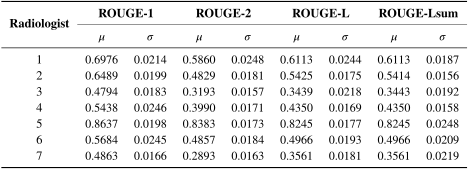
Table 6. The mean and standard deviation of BLEU and BERT metrics for the first variation of the method stratified by the author.
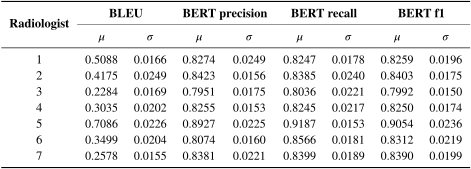
Table 7. The mean and standard deviation of ROUGE metric for the second variation of the method stratified by the author.
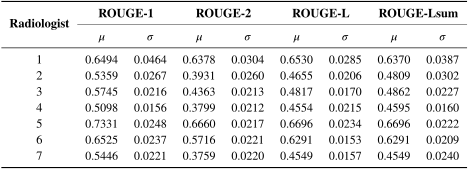
Table 8. The mean and standard deviation of BLEU and BERT metrics for the second variation of the method stratified by the author.
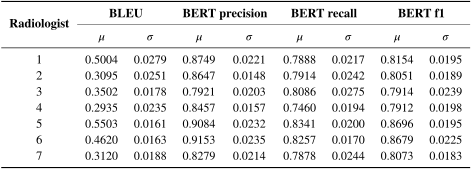
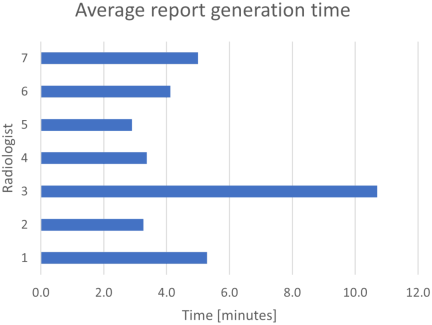
Fig. 6. Average report generation time (findings were generated with first variation of the method).
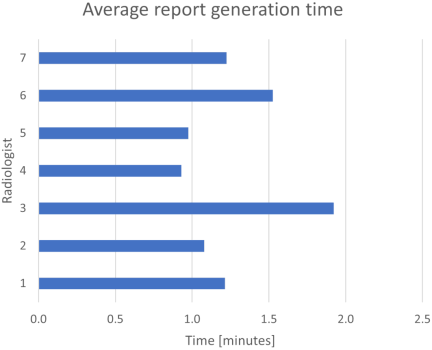
Fig. 7. Average report generation time (findings were generated with second variation of the method).
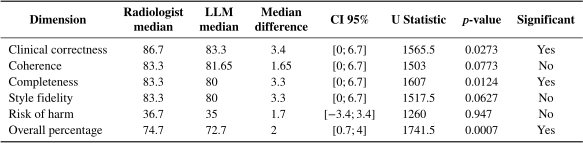
Table 9. Evaluation results of Mann–Whitney U test.
5. Results
During the experiments, findings and impression parts were generated with the same key phrases for each of the seven radiologists for both variations of the method. The quantitative results of generation findings section include estimation by such metrics as BLEU (Google BLEU), ROUGE, and BERTScore. Evaluation results for the first variation of the method are provided in Tables 5 and 6. For the second variation are shown in Tables 7 and 8.
As can be seen from the tables, both variations provide results closed to mentioned in Table 1. ROUGE scores for every specialist indicate that short as well as long word sequencies are captured by the LLM correctly, therefore generated text is coherent and fluent. BLEU score shows that generation results are similar to the reference texts but at the same time different word order and possible synonyms of the words affect the resulting value. It should be noticed that ROUGE and BLEU scores do not take into account semantics of the compared texts. In order to mitigate this issue BERTScore was used. BERT score that was estimated for every specialist indicates that a generated text is semantically similar to a referenced text despite different word order.
Another metric that should be taken into account is generation time. In the current study the generation time of the full report (a findings section and an impression section) was estimated for both method’s variations. Results are depicted in Figs. 6 and 7, respectively.
Comparison shows that time needed to generate full report for the first variation of the method is much higher than that for the second one. This is due to the fact that merging operation of the two findings sections is time-consuming. Also, the first variation is quite sensitive to the number of key phrases given to the input.
During the clinical evaluation 50 radiologist-generated MRI findings sections were used along with 50 MRI findings sections generated by LLM with proposed method. Each findings section was assessed by two professional radiologists across 5 dimensions using a five-point Likert scale. Questionary for radiologists includes clinical correctness (assessment of anatomical accuracy, diagnostic terminology, and clinical validity), coherence (assessment of logical flow, internal consistency, and structural organization), completeness (assessment of required elements, missing information, and comprehensiveness), style fidelity (assessment of professional conventions, terminology, and formatting standards), and risk of harm (assessment of patient safety implications, diagnostic errors, and miscommunication risks). For disparities determination Mann–Whitney U test was used. Results of the test are provided in Table 9 and in Fig. 8. Statistical analysis was conducted in Python 3.12.1 with Numpy (version 2.4.2), SciPy (version 1.17.1), and Pandas (version 3.0.1) packages.
In Table 9, “Radiologist” is the assessment of radiologist-generated MRI findings performed by radiologists. “LLM” is the assessment of LLM-generated MRI findings performed by radiologists.
The Mann–Whitney U test results demonstrate that while LLM show impressive capabilities in certain areas, human radiologists maintain statistically significant advantages in clinical correctness, completeness, and overall evaluation performance. The statistically insignificant result in risk of harm assessment is particularly encouraging and suggests LLM could serve as valuable safety validation tools in clinical workflows.
Findings sections generated by the LLM with the second and first variations of the method are provided in Figs. 9 and 10, respectively. Key phrases are highlighted.
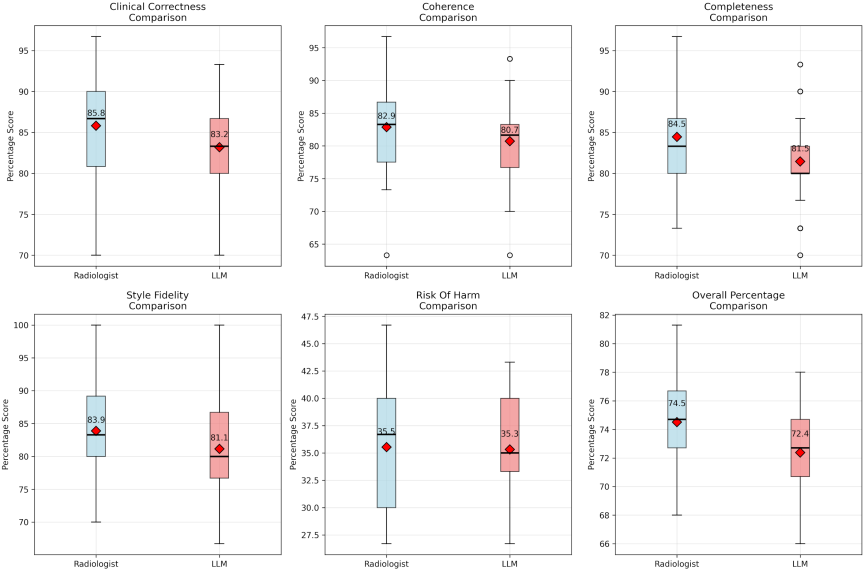
Fig. 8. Box plots for Mann–Whitney U test results (mean values are indicated with a red rhombus and number above it).
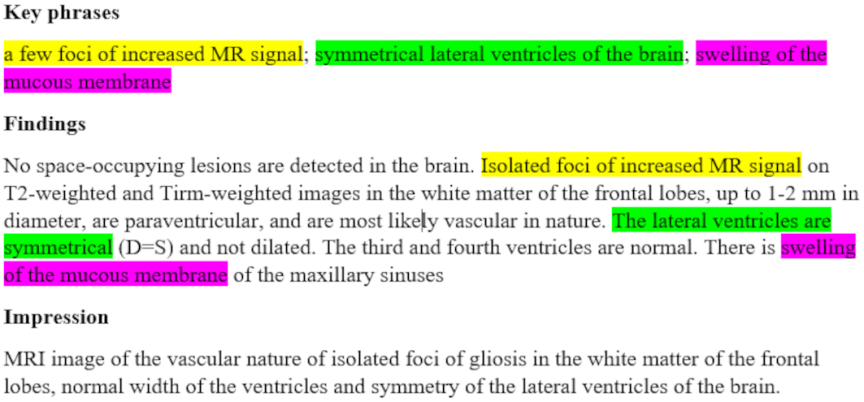
Fig. 9. Generation results of findings section (second variation of the method) and impression section.
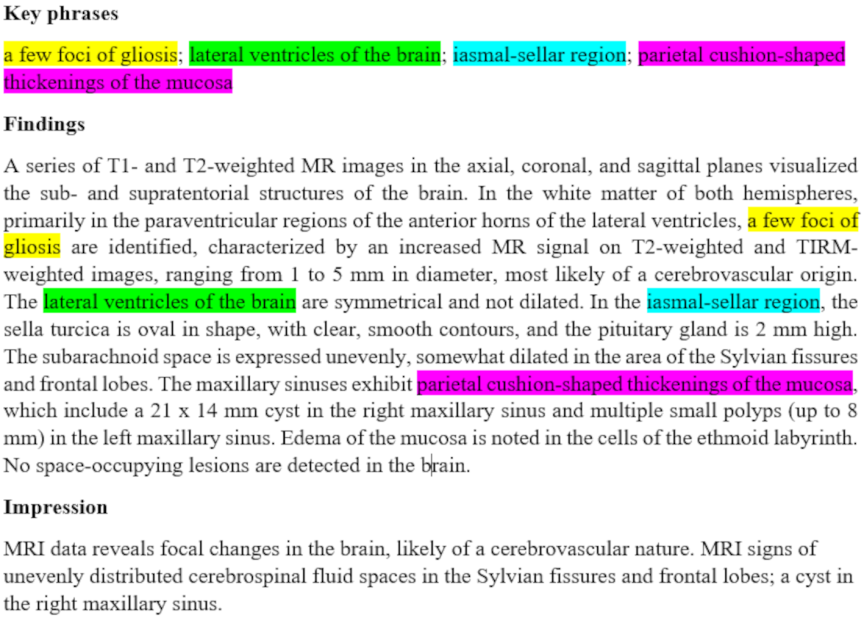
Fig. 10. Generation results of findings section (first variation of the method) and impression section.
6. Conclusion
In this study a novel key phrases-driven method for MRI reports’ findings section generation was presented. This method was implemented in two different ways each of which has its own benefits and drawbacks. The generation quality was estimated with multiple metrics quantitatively as well as with the five-point Likert scale questionary qualitatively and showed optimistic results. Graph-based architecture helped to integrate multiple LLM agents that were able to use different language models for distinct tasks. Also, the RAG strategy made it possible to generate high-quality medical texts by small pre-trained LLMs using the thesaurus of a specific author.
The current research has limitation connected with the number of key phrases used to generate findings section. Experiments have shown, that optimal number of key phrases is not exceeded seven. It was noticed, that eight billion parameters LLM is unable to repeat merge operation of texts eight or more times. In some experiments it lost context and stood frozen in the loop of generating the same token; in others the final text produced was unexpected. It is possible, that LLM with more parameters would be able to handle larger number of key phrases. But it is worth to say that there is a trade-off between generation time and the number of key phrases.
Another limitation can be connected with language sensitivity. Different languages may require different prompts for LLMs. Also, hyperparameters for retrieval may be chosen differently as well as embedding model.
Further experiments can be connected with a choice of different LLM. For example, one can use model with greater number of parameters or model of different type. It is interesting to find out, how proposed method will act when number of reports increase significantly. Also, in the current study basic (vanilla) RAG technique was used, which can be optimized in the following aspects: pre-retrieval (structurization and preprocessing of input data for better indexing), retrieval (improving the embedding model and filtering strategy), post-retrieval (filtering noise from the texts that were retrieved). Another direction of future research includes developing of leakage prevention protocol (leakage between test targets and retrieval corpus) and verification statement.
Despite all challenges, proposed method gives promising results in generation full medical report. It is not limited to MRI reports, but can also be extended to CT reports. The ultimate goal is to reduce workload pressures on healthcare systems in context of automatic medical report generation.
Acknowledgments
This research has been supported by the Ministry of Science and Higher Education (assignment No.FSEE-2025-0015).
- [1] L. Luo, “Combining knowledge graph and artificial intelligence to conduct financial report quality detection research,” J. Adv. Comput. Intell. Intell. Inform., Vol.29, No.4, pp. 787-795, 2025. https://doi.org/10.20965/jaciii.2025.p0787
- [2] M. Fareed, M. Fatima, J. Uddin, A. Ahmed, and M. A. Sattar, “A systematic review of ethical considerations of large language models in healthcare and medicine,” Frontiers in Digital Health, Vol.7, Article No.1653631, 2025. https://doi.org/10.3389/fdgth.2025.1653631
- [3] T. Nakaura et al., “The impact of large language models on radiology: A guide for radiologists on the latest innovations in AI,” Japanese J. of Radiology, Vol.42, No.7, pp. 685-696, 2024. https://doi.org/10.1007/s11604-024-01552-0
- [4] M. P. Hartung, I. C. Bickle, F. Gaillard, and J. P. Kanne, “How to create a great radiology report,” RadioGraphics, Vol.40, No.6, pp. 1658-1670, 2020. https://doi.org/10.1148/rg.2020200020
- [5] Z. Sun et al., “Evaluating GPT-4 on impressions generation in radiology reports,” Radiology, Vol.307, No.5, Article No.e231259, 2023. https://doi.org/10.1148/radiol.231259
- [6] A. Serapio et al., “An open-source fine-tuned large language model for radiological impression generation: A multi-reader performance study,” BMC Medical Imaging, Vol.24, Article No.254, 2024. https://doi.org/10.1186/s12880-024-01435-w
- [7] L. Zhang et al., “Constructing a large language model to generate impressions from findings in radiology reports,” Radiology, Vol.312, No.3, Article No.e240885, 2024. https://doi.org/10.1148/radiol.240885
- [8] Ș.-V. Voinea et al., “GPT-driven radiology report generation with fine-tuned Llama 3,” Bioengineering, Vol.11, No.10, Article No.1043, 2024. https://doi.org/10.3390/bioengineering11101043
- [9] F. Zeng, Z. Lyu, Q. Li, and X. Li, “Enhancing LLMs for impression generation in radiology reports through a multi-agent system,” arXiv:2412.06828, 2024. https://doi.org/10.48550/arXiv.2412.06828
- [10] P. Lewis et al., “Retrieval-augmented generation for knowledge-intensive NLP tasks,” Proc. of the 34th Int. Conf. on Neural Information Processing Systems, pp. 9459-9474, 2020.
- [11] M. L. Saini, V. M. Shrimal, A. Garg, D. C. Sati, and S. P. K. Mygapula, “Medical diagnosis with RAG-LLMs: A hybrid approach for AI-driven healthcare,” IEEE 4th Int. Conf. for Advancement in Technology, 2025. https://doi.org/10.1109/ICONAT66879.2025.11362545
- [12] H. M. T. Alam, D. Srivastav, M. A. Kadir, and D. Sonntag, “Towards interpretable radiology report generation via concept bottlenecks using a multi-agentic RAG,” Proc. of 47th European Conf. on Information Retrieval, Part 3, pp. 201-209, 2025. https://doi.org/10.1007/978-3-031-88714-7_18
- [13] Ç. U. Öğdü, K. Arslanoğlu, and M. Karaköse, “An adaptive multi-agent LLM-based clinical decision support system integrating biomedical RAG and web intelligence,” IEEE Access, Vol.13, pp. 167390-167404, 2025. https://doi.org/10.1109/ACCESS.2025.3613340.
- [14] J. Burrows, “‘Delta’: A measure of stylistic difference and a guide to likely authorship,” Literary and Linguistic Computing, Vol.17, No.3, pp. 267-287, 2002. https://doi.org/10.1093/llc/17.3.267
- [15] FRIDA. https://huggingface.co/ai-forever/FRIDA [Accessed November 17, 2025]
- [16] Chroma: Open-source search infrastructure for AI. https://www.trychroma.com/ [Accessed November 17, 2025]
- [17] A. Yang et al., “Qwen3 technical report,” arXiv:2505.09388, 2025. https://doi.org/10.48550/arXiv.2505.09388
- [18] A. Grattafiori et al., “The Llama 3 herd of models,” arXiv:2407.21783, 2024. https://doi.org/10.48550/arXiv.2407.21783
- [19] C.-Y. Lin, “ROUGE: A package for automatic evaluation of summaries,” Text Summarization Branches Out (Proc. of the ACL-04 Workshop), pp. 74-81, 2004.
- [20] K. Papineni, S. Roukos, T. Ward, and W.-J. Zhu, “Bleu: A method for automatic evaluation of machine translation,” Proc. of the 40th Annual Meeting of the Association for Computational Linguistics, pp. 311-318, 2002. https://doi.org/10.3115/1073083.1073135
- [21] Y. Wu et al., “Google’s neural machine translation system: Bridging the gap between human and machine translation,” arXiv:1609.08144, 2016. https://doi.org/10.48550/arXiv.1609.08144
- [22] T. Zhang, V. Kishore, F. Wu, K. Q. Weinberger, and Y. Artzi, “BERTScore: Evaluating text generation with BERT,” arXiv:1904.09675, 2019. https://doi.org/10.48550/arXiv.1904.09675
- [23] J. A. Omiye, H. Gui, S. J. Rezaei, J. Zou, and R. Daneshjou, “Large language models in medicine: The potentials and pitfalls: A narrative review,” Annals of Internal Medicine, Vol.177, No.2, pp. 210-220, 2024. https://doi.org/10.7326/M23-2772
- [24] S. A. Kostrov and M. P. Potapov, “Large language models in medicine: Current ethical challenges,” Medical Ethics, Vol.2025, No.2, pp. 22-31, 2025. https://doi.org/10.24075/medet.2025.008
- [25] M. Cascella et al., “The breakthrough of large language models release for medical applications: 1-year timeline and perspectives,” J. of Medical Systems, Vol.48, Article No.22, 2024. https://doi.org/10.1007/s10916-024-02045-3
- [26] S. M. C. A. Negri, “Robot as legal person: Electronic personhood in robotics and artificial intelligence,” Frontiers in Robotics and AI, Vol.8, Article No.789327, 2021. https://doi.org/10.3389/frobt.2021.789327
- [27] S. Schmidgall et al., “Evaluation and mitigation of cognitive biases in medical language models,” npj Digital Medicine, Vol.7, Article No.295, 2024. https://doi.org/10.1038/s41746-024-01283-6
- [28] N. Yadav et al., “Data privacy in healthcare: In the era of artificial intelligence,” Indian Dermatology Online J., Vol.14, No.6, pp. 788-792, 2023. https://doi.org/10.4103/idoj.idoj_543_23
- [29] I. C. Wiest et al., “Anonymizing medical documents with local, privacy preserving large language models: The LLM-anonymizer,” medRxiv, 2024. https://doi.org/10.1101/2024.06.11.24308355
This article is published under a Creative Commons Attribution-NoDerivatives 4.0 Internationa License.