
Research Paper:
YOLO-GF: A Lightweight Detector for Character-Level Recognition in Medicine Packaging
Shiyong Geng*1,†, Jintao Chen*2, Kuozhan Wang*3, Hengyi Li*3
 , Xuebin Yue*3
, and Lin Meng*4
, Xuebin Yue*3
, and Lin Meng*4
*1School of Integrated Circuits, Zhongyuan University of Technology
No.1 Huaihe Road, Longhu Town, Xinzheng, Zhengzhou, Henan 451191, China
†Corresponding author
*2The First Affiliated Hospital of Henan University of CM
No.19 Renmin Road, Jinshui District, Zhengzhou, Henan 450000, China
*3School of Automation and Electrical Engineering, Zhongyuan University of Technology
No.41 Zhongyuan Middle Road, Zhongyuan District, Zhengzhou, Henan 450007, China
*4College of Science and Engineering, Ritsumeikan University
1-1-1 Nojihigashi, Kusatsu, Shiga 525-8577, Japan

The aging global population has significantly increased the demand for long-term care, presenting various challenges in elderly healthcare, especially in medication management. Ensuring timely and accurate medication delivery is essential to preventing medication errors, which could otherwise lead to severe health complications. This paper proposes an innovative solution to automate and enhance medication verification in nursing homes through object detection. The proposed system leverages the YOLO-GF framework, which integrates efficient computational techniques with high detection accuracy to enable real-time medicine package detection. A hybrid down sampling (HDS) module, combining max pooling, average pooling, and 2×2 stride convolution, optimizes feature map processing by reducing computational overhead while preserving key spatial information. Additionally, an enhanced multi-scale pyramid pooling (EMSPP) technique is introduced to improve multi-scale feature aggregation, enhancing the model’s ability to capture object features at various resolutions. Unlike existing detection systems that often suffer from high computational cost or poor generalization, our approach explicitly balances speed and accuracy through lightweight architectural design. Extensive experiments validate the effectiveness of the HDS and EMSPP modules in multi-scale feature learning. The YOLO-GF framework achieves a 100.00% mean average precision (mAP) on the medicine package dataset, with an inference speed of 130.16 frames per second, fully meeting the real-time monitoring requirements. Further evaluation of public datasets, including Dish20 (98.30% mAP) and Barcodes (97.34% mAP), demonstrates that YOLO-GF outperforms existing state-of-the-art models. These results highlight the superior generalization capabilities of the proposed framework. This work establishes a novel and efficient real-time solution for medicine package verification by integrating HDS and multi-scale enhancement into a unified YOLO-based framework, significantly improving accuracy and safety over manual processes in healthcare environments. The project can be found at http://www.ihpc.se.ritsumei.ac.jp/obidataset.html.
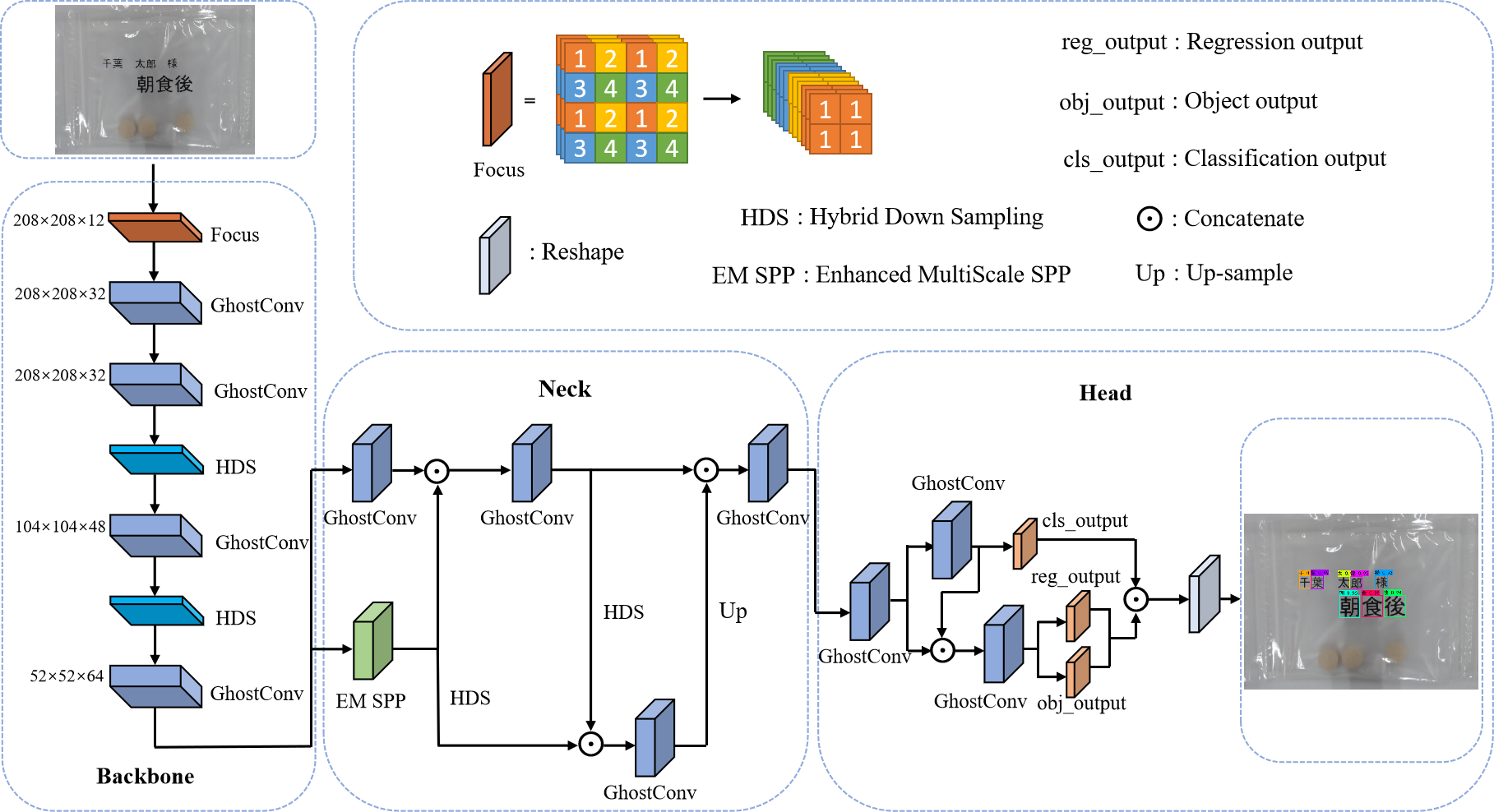
YOLO-GF overall framework
1. Introduction
The global population is rapidly aging, with a significant rise in the number of elderly individuals who require long-term care. According to the World Health Organization, by 2030, one in six people will be 60 years or older 1. This demographic shift presents various challenges for healthcare systems, particularly in managing elderly care. Ensuring that elderly individuals receive timely and accurate medication is one of the most critical aspects of healthcare, as medication errors lead to serious health complications. As a result, the need for innovative solutions that enhance the efficiency and safety of healthcare services has become more pressing than ever 2.
In nursing homes, healthcare staff typically administer medication, but a third-party verification process is often employed to minimize the risk of errors 3. This manual verification is time-consuming and requires additional resources, which strain the capacity of healthcare providers. Furthermore, the potential for human error remains a concern, especially in high-pressure environments where medication administration is performed at scale. Given these challenges, there is an increasing need for automated systems that enhance the accuracy and efficiency of medication checks, ensuring that medications are properly dispensed to residents in real time.
With the widespread application of artificial intelligence (AI) technology, AI-driven solutions increasingly demonstrate their potential in the medical field, particularly in automating complex tasks. Among these, object detection, a core task in computer vision, focuses on identifying specific objects in images or videos and determining their categories and bounding boxes 4. This technology has already seen significant applications in fields such as robotic vision 5, the internet of things (IoT) 6, and cultural heritage protection 7,8. In the medical domain, object detection and related deep learning techniques have been widely adopted for tasks such as histopathological image classification and brain tumor detection, where model accuracy, interpretability, and efficiency are essential 9,10. Similar techniques have also been extended to agricultural disease diagnosis using lightweight CNN models 11. These studies exemplify how deep learning-based visual analysis is being adapted to support high-stakes, domain-specific tasks, and offer conceptual inspiration for designing efficient and interpretable AI systems. When applied to pharmaceutical management, object detection technology enables real-time detection and automatic verification of medicine packaging, replacing traditional manual inspection methods. This innovative application not only effectively alleviates the workload of healthcare professionals but also improves the accuracy and reliability of medicine distribution and greatly enhances the safety and efficiency of healthcare institutions.
Nevertheless, ensuring reliable detection performance in real medication-dispensing scenarios remains challenging. Medicine packages frequently exhibit shapes, colors and layouts that are strikingly similar, and their appearance can be obscured or distorted by reflections from plastic surfaces. These factors make lightweight detectors particularly prone to performance degradation in practice. As recent comparisons have shown, common compact detection models still have limited accuracy. The best models achieve only 23.15% (YOLOv5-Nano 12), 32.21% (YOLOv4-Tiny 13), or 94.44% (YOLOX-Tiny 14) mean average precision (mAP), despite their high speed. Such accuracy levels are insufficient for safety-critical tasks such as medication verification, where even minor detection errors can pose significant clinical risks. These observations suggest that a lightweight architecture capable of maintaining real-time efficiency while enhancing feature extraction and multi-scale representation is needed.
Based on the above knowledge, this paper addresses the task of instance-level medicine package detection and proposes a novel approach to improve detection efficiency and performance. Ghost convolution (GhostConv) is introduced to address computational inefficiencies, a method that reduces redundancy in feature maps by generating a small set of primary feature maps using standard convolution operations, followed by low-cost linear operations to produce additional redundant feature maps. This significantly lowers computational costs while maintaining high-quality feature extraction. In addition, a hybrid down sampling (HDS) module is proposed, which combines max pooling, average pooling, and \(2\times2\) stride convolution operations. This combination reduces the number of parameters and the computational overhead while preserving important spatial information in the feature maps. Furthermore, enhanced multi-scale pyramid pooling (EMSPP) is introduced to enhance multi-scale feature aggregation, enabling the model to capture diverse object features across different resolutions. A unified YOLO-GF framework is constructed by integrating GhostConv, the HDS module, and EMSPP. Overall, the specific contributions are as follows.
-
A real-time medicine package detection system is proposed, along with the development of the YOLO-GF framework, designed to improve detection accuracy and computational efficiency.
-
The HDS module is introduced, which combines max pooling, average pooling, and \(2\times2\) stride convolution operations to reduce computational overhead while preserving important spatial features effectively.
-
The EMSPP is proposed, a novel method to enhance multi-scale feature aggregation, enabling the model to capture diverse object features at different resolutions and improving overall detection robustness.
These contributions collectively distinguish YOLO-GF from existing object detection frameworks for medicine packaging in several key aspects: first, it integrates a novel HDS strategy that improves computational efficiency without sacrificing spatial detail, unlike conventional pooling-only or strided-convolution designs; second, it introduces EMSPP, which significantly enhances multi-scale feature learning and object robustness across resolutions; and finally, it forms a unified, real-time detection system specifically optimized for medication package verification in high-throughput elderly care environments. Together, these innovations make YOLO-GF particularly well-suited for real-time medication package verification, addressing common challenges such as limited adaptability or high latency in existing detection frameworks.
The structure of this paper is as follows. Section 2 reviews the relevant literature, while Section 3 outlines the proposed approach. Section 4 covers the implementation process, including datasets, experimental results, an ablation study, a discussion, and directions for future research. Finally, Section 5 offers a summary of the main findings.
2. Related Work
2.1. Object Detection
In the context of deep learning, object detection methods are generally classified into two main categories: region-based detection methods and end-to-end detection methods. Region-based detection methods generate candidate regions and then classify and regress each area to determine the object class and location. Representative methods include Fast R-CNN 15, Faster R-CNN 16, and Mask R-CNN 17. Faster R-CNN introduces the Region Proposal Network, significantly improving the speed and accuracy of generating candidate regions. On the other hand, end-to-end detection methods, such as Single Shot MultiBox Detector (SSD) 18, RetinaNet 19, and You Only Look Once (YOLO) 20, directly regress the object class and bounding box position within the network, enabling faster detection speeds. The YOLO series models have undergone several iterations in recent years, including YOLOv4 13, YOLOv5, YOLOX 14, and the YOLOv7 21, significantly improving detection accuracy and inference speed.
In the field of object detection, Yue et al. 22 introduce YOLO-GS, a highly efficient tableware detection model, along with a corresponding grasping point algorithm for tableware, aimed at enhancing the detection and collection capabilities of empty-dish recycling robots. Zhou et al. 23 propose AD-YOLO, an airport object detection method that integrates an improved YOLO model with a Swin Transformer and attention mechanism. The method enhances small object detection accuracy through a channel spatial attention module and a small object detection layer.
Weng et al. 24 propose the SCR-YOLOv8 algorithm, a real-time object detection method based on an enhanced YOLOv8 architecture, which incorporates efficient modules for improved feature extraction and faster regression. Hao et al. 25 propose GSBF-YOLO, a lightweight object detection network that introduces the GSim module, C3Ghost module, BiFPN for multi-scale feature fusion, and a fine-tuned FocalEIOU loss function, achieving accurate tomato ripeness detection in real-time.
These studies provide valuable insights into improving detection performance through architectural modifications, attention modules, and multi-scale feature designs. Compared with them, our proposed framework focuses specifically on real-time medicine package detection in elderly care scenarios, which imposes stricter requirements on computational efficiency and layout sensitivity.
To address these constraints, we design a single-layer feature extraction path inspired by YOLOF and PolyYOLO, eliminating traditional multi-scale fusion to reduce complexity. Furthermore, unlike prior methods that focus on accuracy at the expense of latency, we adopt GhostConv and lightweight pooling strategies to balance speed and precision in high-throughput environments. Our architecture is therefore directly informed by the trade-offs observed in earlier YOLO and anchor-free models.
Our method draws structural inspiration from YOLOv5 and YOLO-GS 22, especially in the use of the Focus operation and Ghost Convolution in the backbone. However, we propose entirely different Neck and Head structures, incorporating our original HDS and EMSPP modules for improved speed-accuracy trade-offs in real-time medicine package detection.
2.2. Pooling Operation
Pooling operations have always been a common and important component of deep convolutional neural networks. The pooling layer reduces the feature map’s size and effectively extracts important information from the image. However, traditional pooling operations, such as maximum pooling and average pooling, often lose some spatial information, affecting the network’s understanding of complex visual scenes. PoolNet+ 26 proposes an improved pooling method that significantly improves the effect of salient object detection by introducing more sophisticated pooling strategies and adaptive mechanisms.
Huo et al. 27 propose a multiscale residual network with a strip pooling (SP-MSResNet) module to improve the recognition accuracy of intrusion disturbance signals in perimeter security systems, combining the benefits of traditional frequency-domain analysis with the feature extraction power of deep learning. Yang et al. 28 propose an efficient lifting-based wavelet pooling (LWPooling) method to address the limitations of traditional wavelet pooling, adaptively capturing and preserving critical high-frequency features to enhance CNN performance for classification and segmentation tasks. Wu et al. 29 propose the Pyramid Pooling Transformer (P2T), where pyramid pooling is adapted to multi-head self-attention (MHSA) in vision transformers to reduce sequence length while capturing powerful contextual features, significantly improving performance in various vision tasks. While these methods focus on pooling strategies tailored to saliency detection, security signals, or transformers, our work introduces a HDS module that integrates standard pooling and convolutional operations in a lightweight manner, ensuring spatial information retention and efficient computation for real-time medicine detection tasks.
Unlike methods such as strip pooling or wavelet-based pooling, which focus on specific domain signals or require complex transformations, our HDS module leverages only standard primitives (max pooling, average pooling, and strided convolution) to enhance feature diversity. This design is intentionally kept lightweight and hardware-friendly, addressing real-time requirements while avoiding excessive model overhead. The combination also improves robustness across varied spatial patterns seen in real-world medicine package layouts.
2.3. Medicine Package Recognition
In recent years, the development of automated systems for medicine package recognition has gained significant attention, particularly in healthcare settings such as nursing homes and hospitals. These systems aim to improve the accuracy and efficiency of medicine dispensing, which is critical in ensuring patient safety and optimal treatment. Traditional methods of manual medicine package identification are time-consuming and prone to human error. As a result, researchers have turned to deep learning and image-processing techniques to create more accurate and efficient solutions.
Various approaches have been proposed to tackle the challenges associated with automatic medicine recognition. Lyu et al. 3 propose a real-time automatic medicine package character recognition system that combines image processing and deep learning, utilizing a seven-layer deep learning model for accurate character extraction and recognition, achieving 97.16% accuracy. Yue et al. 2 propose a real-time medicine packet recognition system that utilizes deep learning, with character segmentation, recognition using a lightweight convolutional neural network, and parallel processing, achieving 100% accuracy at five frames per second. Zhu et al. 30 propose DIAGNN, a dual-level interaction aware heterogeneous graph neural network for medicine package recommendation, which models interactions between medical entities at two levels and incorporates medicine commonsense knowledge to improve the completeness and accuracy of recommendations. Similar efforts in medical image analysis, such as DeepCRINet for multi-class lung disease classification, demonstrate the effectiveness of dataset integration and domain-adapted architectures in improving model robustness 31. While these works focus on character recognition, semantic understanding, or recommendation, our study emphasizes object-level medicine package detection with high spatial precision, which is essential for reliable third-party verification in elderly care institutions.
While scene text detection methods (e.g., EAST 32, CRAFT 33, and DBNet 34) are highly effective in text localization tasks, their typical design focuses on arbitrarily oriented or curved text in natural images. By contrast, our method aims to detect medicine packages as object-level instances, rather than localizing individual text regions. Nevertheless, such methods offer valuable reference for future work on downstream medication label analysis and verification.
In contrast to prior character recognition approaches that rely heavily on text segmentation or semantic modeling, our method treats the medicine package as a whole object. This enables more robust spatial detection without relying on fine-grained OCR-level detail. Furthermore, our real-time pipeline is guided by these object-level insights to avoid misclassification caused by noisy or low-resolution text.
2.4. Attention Mechanisms
In recent years, attention mechanisms have been widely applied in object detection, including channel, spatial, and channel-spatial attention. Channel attention mechanisms enhance the model’s feature representation ability in the channel dimension by focusing on the relationships between different channels in the feature map 35. For example, squeeze-and-excitation networks (SE Net) 36 and efficient channel attention (ECA Net) 37 dynamically adjust the importance of channels to improve model performance. On the other hand, spatial attention mechanisms focus on the relationships between spatial positions, helping the model capture the shape and structure of objects. Convolutional block attention module (CBAM) 38, for instance, strengthens feature representation by combining both channel and spatial attention. Recently, many studies have started to integrate channel and spatial attention, combining both advantages to enhance object detection accuracy, especially in handling complex scenes and extracting global and local information.
Li et al. 39 propose a novel dual spatial attention network (DSA-Net) for underwater object detection in sonar imagery, incorporating a dual spatial attention module (DSAM) with global and local spatial attention branches to enhance feature extraction and improve detection accuracy. Lyu et al. 40 propose ECDet, an oriented object detection model that leverages an efficient cross-layer attention mechanism to enhance feature fusion and improve detection accuracy. Zhang et al. 41 propose a unified neural network framework, BHF-MTM, which utilizes a pixel attention enhancement module (PAEM) to improve the model’s ability to capture pixel features and spatial position perception, addressing the challenges of multitask detection and ensuring better task performance in road object detection for autonomous driving. In addition, recent surveys on explainable AI highlight the growing need for interpretable models in healthcare-related applications 42. These studies underscore the diverse forms and applications of attention mechanisms. Our proposed EMSPP module is motivated by the need for lightweight, multi-scale feature aggregation and robustness across varying object sizes, which is especially important in cluttered medicine tray layouts where multiple instances may co-occur.
While many previous works employ separate channel and spatial attention or integrate transformers, our EMSPP module offers an efficient alternative. It unifies scale-aware max-pooling, GhostConv-based feature extraction, and ECA channel attention into a single block. This design minimizes complexity while preserving fine-grained spatial cues, making it particularly well-suited for small object detection under computational constraints.
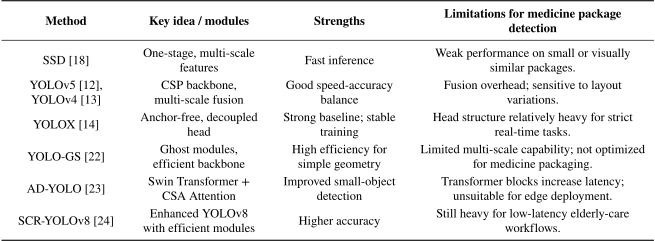
The literature review has been made more focused and the gaps most relevant to our task have been highlighted by us, summarizing several representative lightweight and enhanced detection methods in Table 1. While these approaches demonstrate improvements in efficiency, feature extraction and handling of small objects, they either sacrifice accuracy for real-time performance or introduce additional computational overhead that limits their deployment in medication verification scenarios. This comparison further clarifies the need for a more balanced framework, which motivates the design of our proposed YOLO-GF.
Table 1. Comparison of the relevant prior methods for real-time medicine package detection.
3. Methodology
3.1. Ghost Convolution
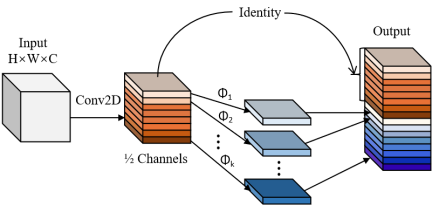
Fig. 1. The structure of GhostConv, which generates primary features using standard convolutions and produces redundant features via cheap linear operations to reduce computational cost.
In convolutional neural networks (CNNs), feature maps often contain significant redundancy, leading to unnecessary computational overhead. To address this, Han et al. 43 proposed GhostConv, a lightweight operation that reduces computation by generating intrinsic features through standard convolution and then creating additional “ghost” features via inexpensive linear transformations. As shown in Fig. 1, GhostConv first extracts primary feature maps, which capture the essential spatial information, and then applies cheap operations to approximate the redundant features typically learned by conventional convolutions. This process allows the model to maintain strong representational capacity while significantly lowering FLOPs and parameters. The GhostConv operation is formally defined as:
3.2. HDS Module
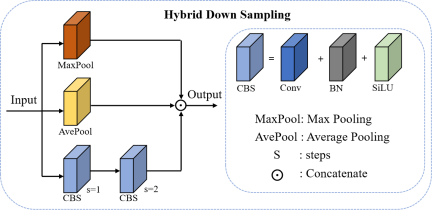
Fig. 2. The structure of the HDS module.
In object detection tasks, downsampling is frequently used for feature map processing to reduce the number of parameters and computational cost. Common methods include average pooling, max pooling, and convolution with a stride of 2. Each method has unique advantages and captures different types of feature information. To leverage the strengths of these three methods, this paper proposes a new downsampling module called HDS. This module applies average pooling, max pooling, and convolution with a stride of 2, then concatenates the outputs to form a comprehensive feature representation, as shown in Fig. 2.
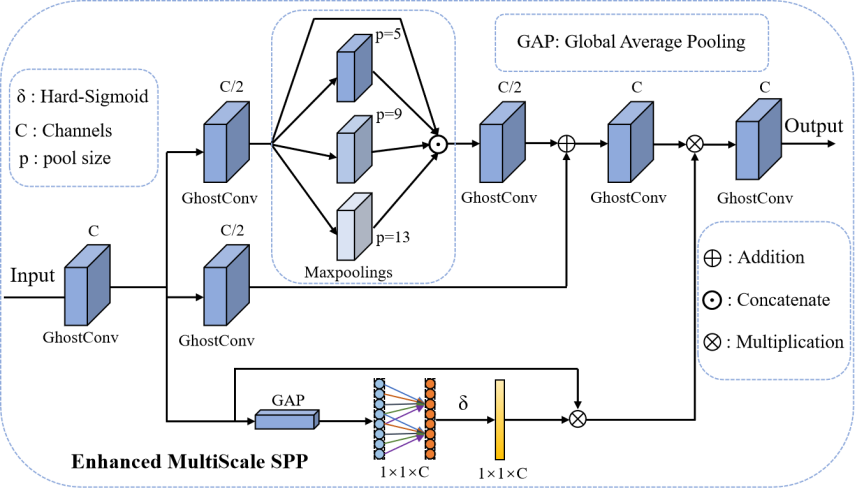
Fig. 3. The structure of the EMSPP module.
Specifically, the input feature is \(X \in \mathbb{R}^{H \times W \times C}\), where \(H\), \(W\), and \(C\) denote height, width, and channels, respectively. The formulas for max pooling, average pooling, and convolution are shown in Eqs. 2–4, respectively. This design offers several advantages. First, average pooling smooths the feature map. It suppresses noise, max pooling retains important edges and details, and convolution with a stride of 2 captures local spatial features, thereby enriching feature representation. Second, concatenating the outputs of different downsampling methods enhances the diversity and richness of the feature set, leading to effective information integration. Finally, since these downsampling methods have different sensitivities to image transformations, such as rotation and scaling, combining them improves robustness, resulting in more stable performance across various scenarios. Overall, the HDS method significantly enhances feature extraction capabilities and accuracy.
3.3. EMSPP Module
This paper proposes a simple and efficient EMSPP module, as illustrated in Fig. 3. Firstly, the structure of CSPNet 44 is adopted to divide the input features into three parts. One part directly uses GhostConv for feature extraction. Another part extracts features through GhostConv, followed by max pooling operations with different pool sizes, enabling multi-level feature extraction to handle objects of various scales and shapes, enhancing the model’s adaptability and accuracy under different conditions. The final part utilizes the efficient channel attention mechanism of ECANet 37 to eliminate fully connected layers, reducing computational complexity while maintaining model performance and improving the feature representation capability of convolutional neural networks without significantly increasing the number of parameters. Ultimately, the GhostConv part is added to the multi-scale SPP part and the features are integrated through GhostConv. The channel attention part serves as weights, which are fused with the first two parts to enhance the feature representation and improve the model’s overall performance.
3.3.1. Multi-Scale SPP
The multi-scale feature representation in CNNs is crucial for object detection. This paper proposes a multi-scale module to handle image information at various scales effectively. The module uses max pooling with different pool sizes to enhance the network’s multi-scale representation at a finer granularity, thereby capturing richer multi-scale information.
Formally, let \(X \in \mathbb{R}^{H\times W \times C}\) be the input feature map, where \(H\), \(W\), and \(C\) denote the height, width, and number of channels, respectively. First the GhostConv is used to extract the common information \(\mathcal{P}_{0}\) from all channels of input \(X\), namely,
Here, \(C\) denotes the concatenation operation. In multi-scale learning, the pool size and the number of branches are considered hyperparameters. Fine-grained features often contain contextual information at various scales. Based on empirical evidence, the number of branches is set to 3, with pool sizes of 5, 9, and 13, respectively.
3.3.2. Efficient Channel Attention Mechanism
Previous experience shows that avoiding dimensionality reduction is important for learning channel attention, and appropriate cross-channel interactions significantly reduce model complexity while maintaining performance 37. In the multi-scale SPP parallel branches, an ECA mechanism is utilized. This mechanism is then multiplied and added to the multi-scale SPP. This approach enhances the feature representation by emphasizing the most informative channels, thereby improving the model’s ability to capture relevant features across multiple scales 45. The model benefits from refined feature extraction and enhanced contextual information by integrating the attention mechanism with the multi-scale SPP. This combination improves accuracy and robustness in object detection tasks, as illustrated in Fig. 3. The ECA mechanism avoids dimensionality reduction by using channel-wise global average pooling (GAP) on the input features. After GAP, local cross-channel interactions are captured by considering each channel and its \(k\) neighbors separately. GAP can be expressed as follows:
An adaptive selection of the kernel size for the 1D convolutions is employed to determine the extent of local cross-channel interactions. The kernel size \(k\) is calculated using the following equation:
The hard-sigmoid activation function linearly transforms the output of the 1D convolution and multiplies the result with the input features as weights. These weighted features are then used to weight the output of the multi-scale SPP. The hard-sigmoid is represented as follows:
3.4. The Overall Framework of YOLO-GF
According to previous research, YOLO-GF eliminates the traditional feature pyramid network (FPN) structure and performs detection directly on a single feature layer. By removing the FPN, YOLO-GF significantly simplifies the network structure, reduces computational complexity, and thereby greatly increases detection speed. Despite not using multi-layer feature fusion, YOLO-GF maintains a high detection accuracy, making it suitable for scenarios requiring efficient object detection 46.
On the other hand, PolyYOLO improves detection accuracy by preventing label rewriting issues and unifies the Neck structure’s output into a single feature layer. This approach effectively avoids label rewriting problems that occur during multi-scale feature fusion. The unified feature layer design ensures the model handle objects of different scales while maintaining accuracy and stability. This structural improvement allows PolyYOLO to perform exceptionally well in complex object detection tasks 47.
Therefore, the proposed YOLO-GF combines the strengths of YOLOF and PolyYOLO. It simplifies the Neck structure and unifies the Neck’s output into a single feature layer, reducing the number of parameters while still maintaining high detection accuracy.
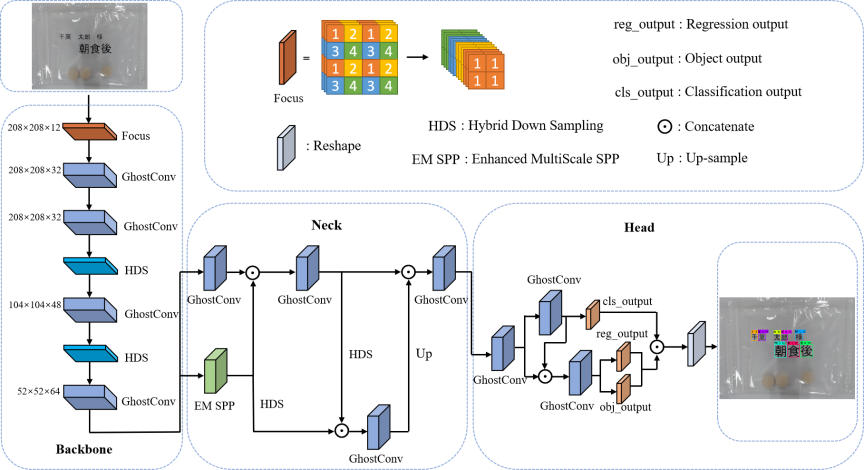
Fig. 4. The overall framework of YOLO-GF. The Focus is to slice the image and perform a double downsampling feature map without information loss. Reshape is to adjust the feature map.
As shown in Fig. 4, the text on the medicine package is clear and simple in structure. To detect the text on the medicine package, this paper designs a lightweight object detection model called YOLO-GF. The structure of YOLO-GF is illustrated in Fig. 4 and consists of three parts: Backbone, Neck, and YOLO Head.
In the backbone structure, we first employ the Focus operation—originally introduced in YOLOv5—to perform initial downsampling by slicing and concatenating adjacent pixels along the channel dimension. This operation effectively compresses spatial information, reduces computational load, and enhances feature representation. Following this, two GhostConv modules, based on the design from GhostNet 43, are used to extract lightweight yet expressive features. Subsequently, two HDS modules are applied to further downsample the feature maps while enhancing feature diversity. Finally, the backbone outputs a single-scale feature layer, which simplifies the network structure, reduces computational complexity, and improves detection speed—aligning with our goal of real-time medicine package detection. While the early stage of our backbone (Focus operation followed by GhostConv modules) resembles the layout used in YOLO-GS 22, our design diverges significantly in the following aspects. First, we replace the CSPLayer module with a novel HDS module to improve spatial robustness and diversity. Second, we introduce the EMSPP structure in the neck to enhance multi-scale feature fusion while maintaining efficiency. Finally, our model adopts a single-layer output structure and a decoupled detection head, in contrast to the multi-scale output and coupled head used in YOLO-GS. These modifications are tailored to the demands of real-time medicine package detection.
In the Neck structure, the input features are divided into two parts. One part passes through GhostConv and is forwarded directly. The other part is enhanced through EMSPP to improve feature extraction capabilities. This enhanced feature is then concatenated with the output from the first part after GhostConv and the features from the downsampling branch. The downsampling branch finally transmits information to the top-level branch via upsampling. By fusing multi-scale feature maps, the model’s ability to detect objects of various sizes is enhanced, and unifying the outputs into a single feature layer prevents label rewriting issues. Additionally, the operations within the Neck structure further extract and enhance features, ensuring that the feature maps fed into the Head structure are richer and more informative, thus boosting overall detection performance.
In the YOLO Head, only a single output path is used, significantly reducing the number of parameters. After the classification network extracts features at the input stage, these features are separately fed into the final classification and regression networks. This design enhances feature reuse and reduces parameter count. Additionally, this approach ensures that the classification and regression tasks are optimized independently, leading to more accurate predictions. The model achieves high performance with lower computational overhead by streamlining the architecture and focusing on efficient feature utilization.
3.5. Medicine Package Font Arrangement
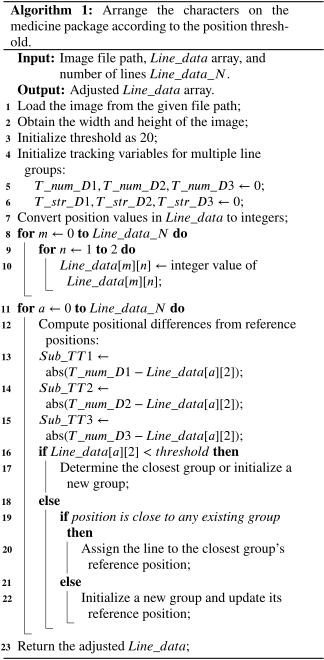
In this study, an algorithm is developed to arrange characters based on positional thresholds, aiming to optimize the location and ordering of characters within an image as shown in Algorithm 1. The inputs include the path to an image file, an array of character line data \(\mathit{Line\_data}\), and the number of lines \(\mathit{Line\_data}\_N\). The algorithm starts by opening the image file using the Pillow library and retrieving the image’s dimensions. A threshold is then set at 20, along with multiple variables initialized for tracking different groups of characters. The algorithm’s core involves converting the position data in the \(\mathit{Line\_data}\) array into integers and adjusting the position data of each line based on the set threshold. Specifically, the algorithm calculates the absolute differences between each line’s data and the positions tracked by the groups. Depending on these differences and the threshold, decisions are made on adjusting the current line’s position data. If the position data are less than the threshold, the line data are either allocated to the closest existing group or a new group is initialized. Otherwise, the algorithm checks if it is close to any existing group; if so, the line is assigned to the nearest group’s reference position. If not, a new group is initialized and assigned the position. Ultimately, the algorithm returns the adjusted \(\mathit{Line\_data}\) array containing optimized character position information.
4. Evaluation
4.1. Datasets
Medicine Package: This paper independently collected a medicine package dataset, available at http://www.ihpc.se.ritsumei.ac.jp/obidataset.html, which includes 296 images featuring 91 different font styles. The dataset focuses on real-world packaging scenarios, with diverse backgrounds, lighting conditions, and layout variations. Each image is manually annotated with bounding boxes for medicine package regions to support object-level detection tasks. To ensure balanced model development and evaluation, the dataset is split into 239 images for training, 27 for validation, and 30 for testing. This dataset serves as the core benchmark for evaluating the proposed method’s effectiveness in the healthcare domain.
Dish20: Dish20 is a public dataset containing 506 images across 20 categories of tableware, including bowls, plates, and cups, captured in real-world dining environments 5. Each image is annotated with object-level bounding boxes, and the dataset covers diverse layouts and occlusions. In this study, it is used to evaluate the proposed model’s generalization ability and lightweight performance beyond the primary medicine packaging task. We follow the original split: 409 images for training, 46 for validation, and 51 for testing.
Barcodes: The Barcodes dataset is a public dataset available at https://universe.roboflow.com/mjuks/barcodes-sddct, containing 4,333 images of barcode instances belonging to a single class. This dataset is used to assess the model’s performance on a simple, high-contrast object detection task. Among them, 3,792 images are used for training, 360 for validation, and 181 for testing.
COCO-Text: The COCO-Text dataset 48 is a large-scale scene text detection benchmark, containing 23,685 images with multiple annotated text instances across diverse real-world scenes. The dataset includes variations in text style, legibility, and background complexity, making it suitable for evaluating detection robustness in unconstrained environments. In our experiments, 14,091 images are used for training, 4,697 for validation, and 4,697 for testing.
Total-Text: The Total-Text dataset 49 is a publicly available scene text detection benchmark, consisting of 1,555 images with multiple text instances of varying orientations, including horizontal, multi-oriented, and curved text. Compared with simple high-contrast scenarios, Total-Text features more complex backgrounds and irregular text shapes, making it suitable for assessing detection robustness in challenging text-rich environments. In our experiments, 955 images are used for training, 300 for validation, and 300 for testing.
4.2. Implementation Details
All experiments use an i9-13900KF CPU with a single NVIDIA GeForce RTX 4090 GPU. The operating system is Ubuntu 22.04, with CUDA version 12.5 and the GPU acceleration library cuDNN 8.9.4. To ensure the reproducibility and comparability of the results, all models discussed in this paper are reproduced using TensorFlow to replicate the official code.
In this work, the training configuration is adapted to the characteristics of different datasets. For the Medicine Package, Dish20, and Barcodes datasets, the model is trained for 300 epochs with a batch size of 8. For the COCO-Text and Total-Text datasets, which contain more diverse and complex scene text patterns, the training schedule is set to 200 epochs while keeping the batch size fixed at 8. To further enhance robustness and generalization, we apply two commonly used data augmentation strategies in object detection, namely Mosaic and Mixup, each with an augmentation probability of 0.5.
To ensure fair comparison across all experiments, all models are trained under the same configuration. The Adam optimizer is adopted with parameters \(\beta_{1}=0.937\) and \(\beta_{2}=0.999\). The learning rate follows a warm-up cosine annealing schedule: it starts at \(4\times10^{-6}\) and increases to \(1\times10^{-3}\) during the first five epochs, after which it is gradually reduced following the cosine decay strategy, with a minimum value of \(1\times10^{-5}\). During inference, the confidence threshold is set to 0.5, and the IoU threshold for non-maximum suppression is fixed at 0.3 to ensure consistent and fair evaluation across all models. This paper uses the same loss function for YOLO-GF as in our previously published paper 50.
4.3. Evaluation Metrics
To assess the effectiveness of the object detection method, this study employs several evaluation metrics: average precision (AP), mAP, model parameters, FLOPs, and inference speed (fps). AP and mAP measure the model’s accuracy, while the number of parameters, FLOPs, and fps indicate the computational resources and efficiency of the model 51. Below are the explanations of these evaluation metrics.
\(\mathit{Pre}\) denotes precision, and \(\mathit{Rec}\) denotes recall. \(\mathit{TP}\) means true positives, \(\mathit{FP}\) means false positives, and \(\mathit{FN}\) represents false negatives. AP is calculated by the area under the precision–recall curve (P–R curve), expressed as:
The mAP is shown in Eq. 14. \(C\) is the number of classes and AP\(_j\) is the AP of the \(j\)-th class.
Following the COCO evaluation protocol, we report AP@50, AP@75, AP\(_s\), AP\(_m\), and AP\(_l\), where AP@50 and AP@75 denote AP at IoU thresholds of 0.50 and 0.75, respectively. AP\(_s\), AP\(_m\), and AP\(_l\) refer to the average precision for small, medium, and large objects, defined by object area ranges (\(<\) 32\(^2\), 32\(^2\) to 96\(^2\), and \(>\) 96\(^2\) pixels respectively). Similarly, AR\(_s\), AR\(_m\), and AR\(_l\) denote average recall values for these object size ranges. A detection is considered a TP if its intersection over union (IoU) with a ground truth box exceeds the specified threshold and the predicted class matches the ground truth.
4.4. Performance Comparison
4.4.1. Comparison with Other SOTA Models on Medicine Package Dataset
To justify the selection of YOLO-GF and assess its performance, we conducted a comprehensive comparison with a wide range of state-of-the-art (SOTA) object detection models on the medicine package dataset. The selected models cover diverse architectural paradigms, including two-stage detectors: Faster R-CNN (with VGG16 and ResNet50 backbones) 16; lightweight and scalable one-stage detectors: SSD 18, RetinaNet 19, EfficientDet (D0) 52; anchor-free models: FCOS 53, YOLOX 14; recent YOLO series models: YOLOv3 20, YOLOv4 13, YOLOv5, and YOLOv7 21. This diverse benchmark ensures that our evaluation is representative of both classical and modern detection strategies.
Table 2. Comparison with other SOTA models on Medicine Package Dataset. Input Res. indicates the resolution size of the input image.
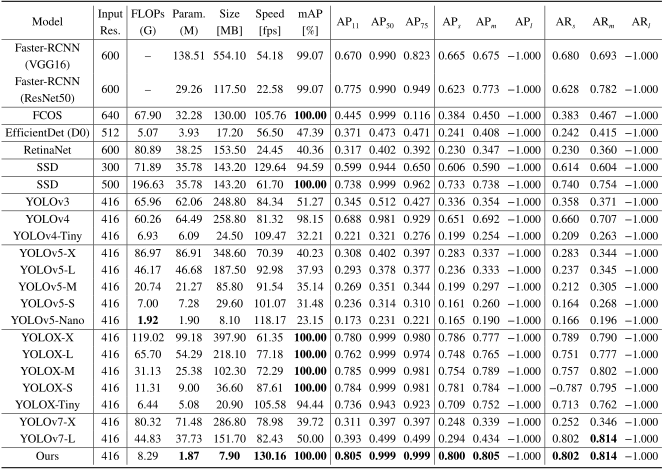
Table 2 presents the detailed results. YOLO-GF achieves a perfect mAP of 100.00%, matching or exceeding all other models. Notably, it significantly outperforms several representative baselines, such as Faster R-CNN (99.07%), EfficientDet-D0 (47.39%), and YOLOv5-X (40.23%). It also exhibits outstanding computational efficiency, with only 8.29G FLOPs, 1.87M parameters, and a compact model size of 7.90 MB, compared to the much larger sizes of Faster R-CNN (117.5 MB) and YOLOv5-X (348.6 MB).
In terms of inference speed, YOLO-GF leads with 130.16 fps, outperforming even other lightweight models like YOLOv5-S (101.07 fps) and YOLOX-Tiny (105.58 fps), and far surpassing two-stage models such as Faster R-CNN (22.58–54.18 fps) and EfficientDet (56.50 fps). This makes it highly suitable for real-time applications.
Beyond overall performance metrics, YOLO-GF excels across key detection indicators. It achieves an \(\mathrm{AP}_{50}\) of 0.999, indicating near-perfect detection at high IoU thresholds, and an \(\mathrm{AP}_{11}\) of 0.805, showing robustness under relaxed conditions. It also performs well across object sizes, with \(\mathrm{AP}_{s} = 0.800\), \(\mathrm{AP}_{m} = 0.805\), and \(\mathrm{AR}_{s,m} = 0.802, 0.814\). Since there are no annotated large objects in the test set, \(\mathrm{AP}_{l}\) is not applicable in this evaluation. These results demonstrate its versatility and high recall, even for small or densely packed objects.
Qualitatively, YOLO-GF benefits from its architecture, which includes a HDS module and EMSPP, enabling fine-grained semantic representation at different scales. This is especially important for the medicine package detection scenario, where accurate and fast detection of small, visually similar targets is critical.
Taken together, these results highlight YOLO-GF as an optimal and well-balanced solution for real-time, high-accuracy object detection in practical, resource-constrained environments.
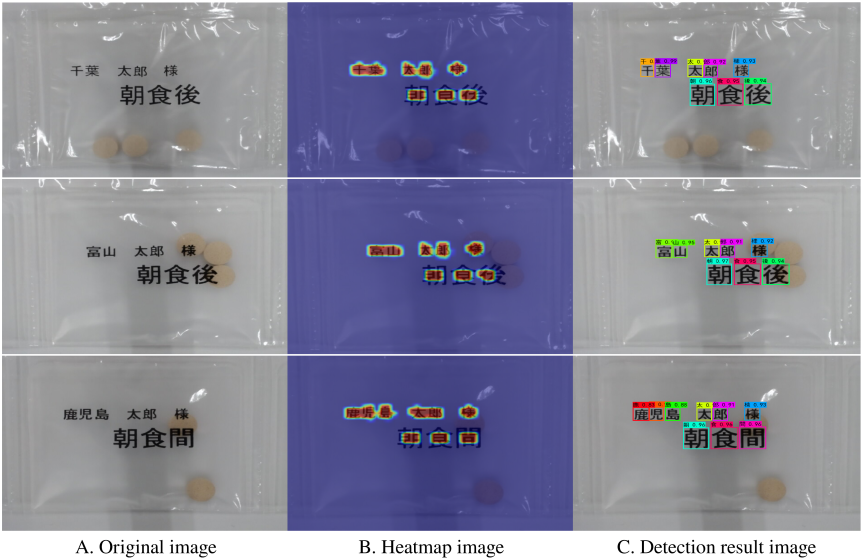
Fig. 5. Visualization results of YOLO-GF.
4.4.2. Ablation Study
Table 3. Ablation study of HDS-based YOLO-GF. Down sample means the different downsampling methods in the backbone and neck structures, Without shuffle indicates the absence of channel shuffle at the end of the GhostConv, and Loss func. denotes the loss function.
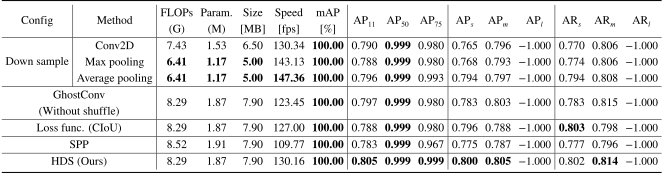
To comprehensively evaluate the effectiveness of each component in the design, extensive ablation experiments are conducted on YOLO-GF, with the results presented in Table 3. In the downsampling part, a detailed comparison is made between convolution with a stride of 2, max pooling, average pooling, and the proposed HDS. The results show that all four methods achieved an mAP of 100.00%, with minimal differences in model inference speed. Although the HDS-based YOLO-GF incurs slightly higher computational cost compared with the other downsampling strategies, it demonstrates clear advantages across several key metrics. In particular, its AP\(_{11}\), AP\(_{50}\), and AP\(_{75}\) scores reach 0.805, 0.999, and 0.999, respectively, all of which are the highest among the evaluated configurations. Additionally, in AP\(_s\), AP\(_m\), as well as AR\(_s\) and AR\(_m\), HDS also outperformed the other three methods. These results fully demonstrate the superior performance of the proposed HDS in the downsampling process, further validating its advantages in improving detection accuracy, especially when dealing with complex or poorly defined objects.
Although all configurations achieve the same mAP score of 100.00%, we rely on fine-grained metrics such as AP\(_{11}\), AP\(_s\), and AR\(_s\) to reveal meaningful differences in detection performance.
In GhostConv, when the shuffle operation is not included, the AP\(_{11}\) is only 0.797 and the AP\(_{75}\) is 0.980, both of which are lower than the results with the shuffle operation. Additionally, the AP\(_s\) and AP\(_m\) scores are 0.783 and 0.803, respectively, which are also lower than YOLO-GF’s 0.800 and 0.805. Similarly, in terms of AR\(_s\) and AR\(_m\), the performance without the shuffle operation only achieves 0.783 and 0.815, whereas YOLO-GF scores 0.802 and 0.814. Although YOLO-GF’s performance in AR\(_m\) is slightly lower than that without the shuffle operation, the overall evaluation still shows that the configuration with the shuffle operation in GhostConv performs best, demonstrating its overall advantage.
In the ablation experiments comparing the CIoU loss function and the loss function used in YOLO-GF, the results show distinct differences in performance. The CIoU loss achieved an AP\(_{11}\) of 0.788, AP\(_{50}\) of 0.999, AP\(_{75}\) of 0.980, AP\(_s\) of 0.796, AP\(_m\) of 0.788, AR\(_s\) of 0.803, and AR\(_m\) of 0.798. In contrast, YOLO-GF achieved higher scores across several metrics, with an AP\(_{11}\) of 0.805, AP\(_{50}\) of 0.999, AP\(_{75}\) of 0.999, AP\(_s\) of 0.800, AP\(_m\) of 0.805, AR\(_s\) of 0.803, and AR\(_m\) of 0.798. While both models performed similarly in terms of AP\(_{50}\) and AP\(_{75}\), YOLO-GF outperformed CIoU in AP\(_{11}\), AP\(_s\), and AP\(_m\). These results highlight the superior performance of the loss function used in YOLO-GF, demonstrating its advantage in improving detection accuracy, particularly in smaller object detection and the balance of precision across different object sizes.
In the ablation experiments comparing the traditional SPP and the proposed EMSPP, the results reveal notable differences in performance. The SPP configuration achieved an AP\(_{11}\) of 0.783, AP\(_{50}\) of 0.999, AP\(_{75}\) of 0.967, AP\(_s\) of 0.775, AP\(_m\) of 0.787, AR\(_s\) of 0.777, and AR\(_m\) of 0.796. In contrast, EMSPP outperformed SPP with an AP\(_{11}\) of 0.805, AP\(_{50}\) of 0.999, AP\(_{75}\) of 0.999, AP\(_s\) of 0.800, AP\(_m\) of 0.805, AR\(_s\) of 0.803, and AR\(_m\) of 0.798. While both methods showed comparable results in AP\(_{50}\) and AP\(_{75}\), EMSPP demonstrated significant improvements in AP\(_{11}\), AP\(_s\), and AP\(_m\). These results highlight the superior performance of EMSPP, particularly in enhancing the accuracy of smaller object detection and overall performance across different object sizes.
4.4.3. Visualization Results
To better understand the model’s performance, this paper presents three key views: the original image, the heatmap image, and the detection result image, as shown in Fig. 5. The original image displays the medicine package to be detected, with the user’s name and medication time at the top. The heatmap reflects the regions the model focuses on during the object detection process, with the highlighted areas visually representing the model’s probability distribution of the object’s location. Notably, the center of the heatmap is consistently focused on the exact center of the object, highlighting the model’s high sensitivity and accuracy in object localization. The detection result image combines the model’s output with the original image, showing the model’s ability to effectively detect the text on the medicine package and mark its position. The comprehensive presentation of these three views provides a thorough evaluation of YOLO-GF, particularly in terms of object localization accuracy, and offers a deeper exploration of the model’s understanding and application of image information.
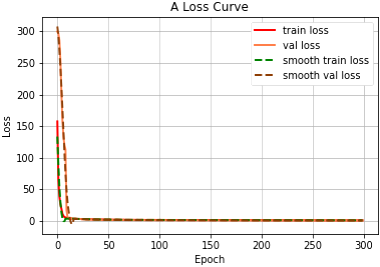
Fig. 6. Training and validation loss curves of YOLO-GF on the medicine package dataset.
Furthermore, Fig. 6 shows the training and validation loss curves of YOLO-GF on the medicine package dataset. Both curves drop rapidly during the initial training phase, gradually converging to similar values as training progresses. The discrepancy between the two curves remains minimal across all epochs, indicating that the model generalizes stably without overfitting, despite the relatively small dataset. This further confirms the effectiveness of the adopted optimization strategy and training configuration.
4.4.4. Fonts Arrangement Result
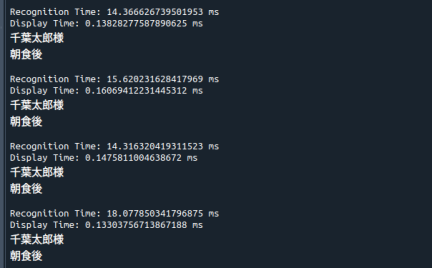
Fig. 7. Medicine package fonts arrangement result.
As shown in Fig. 7, the model demonstrated high efficiency and accuracy while recognizing and organizing the fonts on the medicine package. The processing time for font recognition and organization ranges from 14.32 ms to 18.08 ms, while the display time is between 0.13 ms and 0.18 ms. The overall processing time is short, with the model operating at a speed of approximately 55.5 to 69.8 fps, fully meeting the requirements for real-time monitoring. Moreover, the model ensured that the order of the text is correctly preserved, further validating its efficiency and accuracy in handling medicine package fonts.
4.4.5. Comparison with SOTA Models on Other Public Datasets
Table 4. Comparison with other SOTA models on the Dish20 and Barcodes datasets. Input Res. indicates the resolution size of the input image.
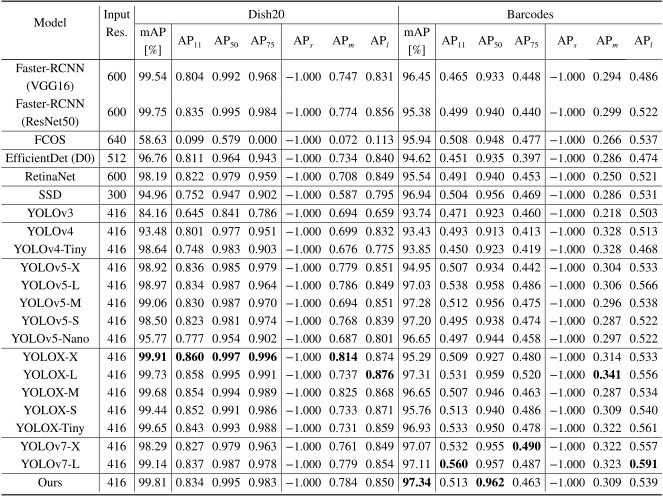
To verify the model’s generalization ability, YOLO-GF is tested on the Dish20, Barcodes, COCO-Text, and Total-Text datasets. Table 4 shows the experimental results of the Dish20 and Barcodes datasets. On the Dish20 dataset, YOLO-GF demonstrated exceptional performance, achieving an mAP of 99.81%, which highlights its superior object detection capabilities. For individual IoU thresholds, YOLO-GF achieved AP\(_{11}\) of 0.834, AP\(_{50}\) of 0.995, and AP\(_{75}\) of 0.983, showcasing its robustness in detecting objects under varying levels of overlap. Furthermore, YOLO-GF performed consistently across different object sizes, achieving AP\(_s\) of \(-1.000\) for small objects, AP\(_m\) of 0.784 for medium objects, and AP\(_l\) of 0.850 for large objects. On the Barcodes dataset, YOLO-GF maintained its strong generalization ability, achieving an mAP of 97.34%. For IoU thresholds, the model obtained AP\(_{11}\) of 0.513, AP\(_{50}\) of 0.962, and AP\(_{75}\) of 0.463, indicating stable performance even in challenging barcode detection tasks. In terms of object sizes, YOLO-GF achieved AP\(_s\) of \(-1.000\), AP\(_m\) of 0.309 for medium objects, and AP\(_l\) of 0.539 for large objects.
Table 5. Comparison with other SOTA models on the COCO-Text and Total-Text datasets. Input Res. indicates the resolution size of the input image.
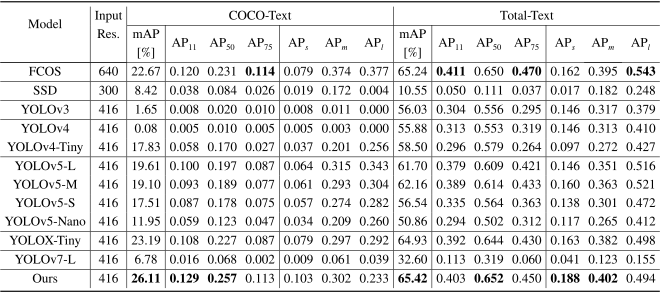
Table 5 shows a comparison of the same-level models of the COCO-Text and Total-Text datasets. On the COCO-Text dataset, YOLO-GF achieved the best performance with an mAP of 26.11%. Across IoU thresholds, the model reached AP\(_{11}=0.129\), AP\(_{50}=0.257\), and AP\(_{75}=0.113\), reflecting stable localization accuracy. For different object sizes, YOLO-GF obtained AP\(_s=0.103\), AP\(_m=0.302\), and AP\(_l=0.233\), demonstrating its ability to detect text instances of various scales under the diverse and complex conditions of natural-scene images. On the Total-Text dataset, YOLO-GF also achieved the highest mAP, reaching 65.42%. Under different IoU thresholds, the model achieved AP\(_{11}=0.403\), AP\(_{50}=0.652\), and AP\(_{75}=0.450\), showing reliable detection performance for both loose and strict localization criteria. Regarding object sizes, YOLO-GF achieved AP\(_s=0.188\), AP\(_m=0.402\), and AP\(_l=0.494\), indicating strong robustness in detecting multi-oriented and curved text across different spatial scales.
Overall, the experiments on the Dish20, Barcodes, COCO-Text, and Total-Text datasets demonstrate that the proposed YOLO-GF framework achieves stable and competitive performance across a wide range of visual scenarios. From cluttered multi-object environments and high-contrast structured patterns to complex natural-scene text with curved and multi-oriented layouts, YOLO-GF consistently maintains strong detection accuracy and robustness. These results confirm that the proposed method not only is effective for medicine-package detection but also exhibits strong generalization capability across diverse and challenging domains.
4.5. Discussion and Future Work
The experimental results clearly demonstrate YOLO-GF’s superior performance compared to other SOTA object detection models on the medicine package dataset. Achieving a perfect mAP of 100.00%, YOLO-GF not only matches the highest accuracy among all tested models but also outperforms them in efficiency. With a FLOPs of 8.29G and a model size of 7.90 MB, YOLO-GF is notably more resource-efficient than its counterparts.
Despite these promising results, several limitations remain. First, YOLO-GF is trained and validated on a domain-specific dataset with relatively consistent image quality and environmental conditions. As a result, its generalization to complex real-world scenarios—such as varying lighting, occlusion, or unfamiliar packaging—has not been fully assessed. We acknowledge this limitation and have explicitly addressed it in this manuscript. Future work will involve broader validation on more challenging datasets to assess the robustness and adaptability of our method in unconstrained environments.
Second, while the model delivers real-time inference at 130.16 fps, further optimization is needed for deployment in highly resource-constrained environments such as embedded systems or wearable medical devices. To address this, future work will investigate model compression techniques, including pruning, quantization, and knowledge distillation, to reduce latency and memory usage without significantly compromising accuracy.
Furthermore, the current system relies solely on visual cues for package verification, whereas printed text often contains important clinical information. OCR techniques are well known for their capabilities in understanding detailed text, especially when handling curved text, complex backgrounds, or fine-grained character patterns. However, our task involves detecting the medicine package as a whole rather than performing character-level parsing. The associated real-time and lightweight requirements make the direct integration of OCR or attention-heavy modules impractical at this stage. Nevertheless, utilizing OCR-derived textual cues within a hybrid framework is a promising avenue for future research, as it could enhance verification reliability when computational resources and imaging conditions permit.
In summary, although YOLO-GF achieves strong performance on the evaluated datasets, limitations remain in challenging cases, especially with very small or densely packed printed text, severe occlusion, and large appearance variations. These limitations are related to the current dataset characteristics and the lightweight design constraints of the model.
To enhance YOLO-GF’s applicability and performance, future work will focus on three key directions: first, applying domain adaptation and generalization strategies to improve robustness in unfamiliar environments; second, designing hardware-aware lightweight models for edge deployment; and finally, incorporating multi-modal fusion techniques to support text, code, and sensor-level data for comprehensive medicine verification.
Although the performance improvements over baselines appear modest in absolute terms, they are consistent across configurations and achieved with significantly lower computational cost, reinforcing the model’s suitability for real-time medicine-related deployment scenarios.
5. Conclusion
The rapid aging of the global population has intensified the need for efficient and accurate healthcare solutions, particularly in medication management for the elderly. This paper introduces a novel AI-driven system based on object detection designed to automate and improve medication verification in nursing homes. The proposed YOLO-GF framework, which integrates the HDS module and EMSPP, addresses key challenges in real-time medicine package detection, offering a solution that is both computationally efficient and accurate. Experimental results demonstrate that the system achieves high performance in terms of mAP and inference speed, outperforming SOTA models on multiple datasets. Our work prioritizes deployment readiness by balancing speed and accuracy, and by introducing structured output capabilities such as character sorting, which are essential for practical use in medicine packaging systems. While the proposed system has demonstrated strong performance in medicine package detection, its current applicability remains limited to relatively controlled environments. Future research will focus on enhancing its robustness under complex real-world conditions, improving computational efficiency for low-power devices, and integrating multi-modal information to support more reliable and flexible deployment in practical care scenarios.
Author Contributions
S.G. is responsible for grasping and guiding the overall research structure, planning, directions, and goals, as well as the overall writing of the paper, and is the main contributor to the paper. J.C. is responsible for data collection, compilation, and part of the paper writing. H.L. is responsible for drawing the figures and tables. X.Y. is responsible for proposing research methods and verifying some experiments. L.M. reviewed the entire article. K.W. contributed to data analysis and provided critical revisions to the manuscript. All the authors participated in the discussion and data collation during the research process, and the final paper is approved by all.
Acknowledgments
This work was partially supported by the Henan Province Key Research and Development Project (Grants No.241111312000), and the Henan Province Key Technologies Research Development Program (Grants Nos.252102320281 and 252102211106).
- [1] Y. Wang, S. Cang, and H. Yu, “A survey on wearable sensor modality centred human activity recognition in health care,” Expert Systems with Applications, Vol.137, pp. 167-190, 2019. https://doi.org/10.1016/j.eswa.2019.04.057
- [2] X. Yue, B. Lyu, H. Li, L. Meng, and K. Furumoto, “Real-time medicine packet recognition system in dispensing medicines for the elderly,” Measurement: Sensors, Vol.18, Article No.100072, 2021. https://doi.org/10.1016/j.measen.2021.100072
- [3] B. Lyu, Z. Wang, H. Li, A. Tanaka, K. Funumoto, and L. Meng, “Deep Leaning based Medicine Packaging Information Recognition for Medication Use in the Elderly,” Procedia Computer Science, Vol.187, pp. 194-199, 2021. https://doi.org/10.1016/j.procs.2021.04.108
- [4] Y. Zhou, “A YOLO-NL object detector for real-time detection,” Expert Systems with Applications, Vol.238, Part E, Article No.122256, 2024. https://doi.org/10.1016/j.eswa.2023.122256
- [5] X. Yue, H. Li, M. Shimizu, S. Kawamura, and L. Meng, “YOLO-GD: A Deep Learning-Based Object Detection Algorithm for Empty-Dish Recycling Robots,” Machines, Vol.10, Issue 5, Article No.294, 2022. https://doi.org/10.3390/machines10050294
- [6] Y. Ge, Z. Li, X. Yue, H. Li, Q. Li, and L. Meng, “IoT-based automatic deep learning model generation and the application on empty-dish recycling robots,” Internet of Things, Vol.25, Article No.101047, 2024. https://doi.org/10.1016/j.iot.2023.101047
- [7] X. Yue, H. Li, Y. Fujikawa, and L. Meng, “Dynamic Dataset Augmentation for Deep Learning-Based Oracle Bone Inscriptions Recognition,” ACM J. Comput. Cult. Herit., Vol.15, Issue 4, Article No.76, 2022. https://doi.org/10.1145/3532868
- [8] X. Yue, Z. Wang, R. Ishibashi, H. Kaneko, and L. Meng, “An unsupervised automatic organization method for Professor Shirakawa’s hand-notated documents of oracle bone inscriptions,” Int. J. on Document Analysis and Recognition (IJDAR), Vol.27, pp. 583-601, 2024. https://doi.org/10.1007/s10032-024-00463-0
- [9] N. Ullah, I. De Falco, and G. Sannino, “A Novel Deep Learning Approach for Colon and Lung Cancer Classification Using Histopathological Images,” 2023 IEEE 19th Int. Conf. on e-Science (e-Science), 2023. https://doi.org/10.1109/e-Science58273.2023.10254909
- [10] N. Ullah, M. Hassan, J. A. Khan et al., “Enhancing explainability in brain tumor detection: A novel DeepEBTDNet model with LIME on MRI images,” Int. J. of Imaging Systems and Technology, Vol.34, Issue 1, Article No.e23012, 2024. https://doi.org/10.1002/ima.23012
- [11] N. Ullah, J. A. Khan et al., “A Lightweight Deep Learning-Based Model for Tomato Leaf Disease Classification,” Computers, Materials & Continua, Vol.77, No.3, pp. 3969-3992, 2023. https://doi.org/10.32604/cmc.2023.041819
- [12] G. Jocher, A. Stoken, J. Borovec et al., “ultralytics/yolov5: v3.0,” Zenodo, 2020. https://doi.org/10.5281/zenodo.3983579
- [13] A. Bochkovskiy, C.-Y. Wang, and H.-Y. M. Liao, “YOLOv4: Optimal Speed and Accuracy of Object Detection,” arXiv:2004.10934, 2020. https://doi.org/10.48550/arXiv.2004.10934
- [14] Z. Ge, S. Liu, F. Wang, Z. Li, and J. Sun, “YOLOX: Exceeding YOLO Series in 2021,” arXiv:2107.08430, 2021. https://doi.org/10.48550/arXiv.2107.08430
- [15] R. Girshick, “Fast R-CNN,” 2015 IEEE Int. Conf. on Computer Vision (ICCV), pp. 1440-1448, 2015. https://doi.org/10.1109/ICCV.2015.169
- [16] S. Ren, K. He, R. Girshick, and J. Sun, “Faster R-CNN: Towards Real-Time Object Detection with Region Proposal Networks,” arXiv:1506.01497, 2015. https://doi.org/10.48550/arXiv.1506.01497
- [17] K. He, G. Gkioxari, P. Dollár, and R. Girshick, “Mask R-CNN,” 2017 IEEE Int. Conf. on Computer Vision (ICCV), pp. 2980-2988, 2017. https://doi.org/10.1109/ICCV.2017.322
- [18] W. Liu, D. Anguelov, D. Erhan, C. Szegedy, S. Reed, C.-Y. Fu, and A. C. Berg, “SSD: Single Shot MultiBox Detector,” 14th European Conf. on Computer Vision (ECCV 2016), pp. 21-37, 2016. https://doi.org/10.1007/978-3-319-46448-0_2
- [19] T.-Y. Lin, P. Goyal, R. Girshick, K. He, and P. Dollár, “Focal Loss for Dense Object Detection,” 2017 IEEE Int. Conf. on Computer Vision (ICCV), pp. 2999-3007, 2017. https://doi.org/10.1109/ICCV.2017.324
- [20] J. Redmon and A. Farhadi, “YOLOv3: An Incremental Improvement,” arXiv:1804.02767, 2018. https://doi.org/10.48550/arXiv.1804.02767
- [21] C.-Y. Wang, A. Bochkovskiy, and H.-Y. M. Liao, “YOLOv7: Trainable Bag-of-Freebies Sets New State-of-the-Art for Real-Time Object Detectors,” 2023 IEEE/CVF Conf. on Computer Vision and Pattern Recognition (CVPR), pp. 7464-7475, 2023. https://doi.org/10.1109/CVPR52729.2023.00721
- [22] X. Yue, H. Li, and L. Meng, “An Ultralightweight Object Detection Network for Empty-Dish Recycling Robots,” IEEE Trans. on Instrumentation and Measurement, Vol.72, 2023. https://doi.org/10.1109/TIM.2023.3241078
- [23] W. Zhou, C. Cai, C. Li, H. Xu, and H. Shi, “AD-YOLO: A Real-Time YOLO Network with Swin Transformer and Attention Mechanism for Airport Scene Detection,” IEEE Trans. on Instrumentation and Measurement, Vol.73, 2024. https://doi.org/10.1109/TIM.2024.3472805
- [24] Y. Weng, X. Xiang, and L. Ma, “SCR-YOLOv8: an enhanced algorithm for target detection in sonar images,” J. of Real-Time Image Processing, Vol.22, Article No.62, 2025. https://doi.org/10.1007/s11554-025-01637-7
- [25] F. Hao, Z. Zhang, D. Ma, and H. Kong, “GSBF-YOLO: A lightweight model for tomato ripeness detection in natural environments,” J. of Real-Time Image Processing, Vol.22, Article No.47, 2025. https://doi.org/10.1007/s11554-025-01624-y
- [26] J.-J. Liu, Q. Hou, Z.-A. Liu, and M.-M. Cheng, “PoolNet+: Exploring the Potential of Pooling for Salient Object Detection,” IEEE Trans. on Pattern Analysis and Machine Intelligence, Vol.45, Issue 1, pp. 887-904, 2023. https://doi.org/10.1109/TPAMI.2021.3140168
- [27] Z. Huo, J. Yang, M. Xi, D. Chen, and J. Wen, “SP-MSResNet: A Multiscale Residual Network with Strip Pooling Module for Intrusion Pattern Recognition,” IEEE Sensors J., Vol.24, Issue 19, pp. 30136-30146, 2024. https://doi.org/10.1109/JSEN.2024.3444917
- [28] Y. Yang, L. Jiao, X. Liu, L. Li, F. Liu, S. Yang, and X. Zhang, “Efficient LWPooling: Rethinking the Wavelet Pooling for Scene Parsing,” IEEE Trans. on Circuits and Systems for Video Technology, Vol.34, Issue 9, pp. 8481-8493, 2024. https://doi.org/10.1109/TCSVT.2024.3383072
- [29] Y.-H. Wu, Y. Liu, X. Zhan, and M.-M. Cheng, “P2T: Pyramid Pooling Transformer for Scene Understanding,” IEEE Trans. on Pattern Analysis and Machine Intelligence, Vol.45, Issue 11, pp. 12760-12771, 2023. https://doi.org/10.1109/TPAMI.2022.3202765
- [30] F. Zhu, X. Zhang, B. Zhang, Y. Xu, and L. Cui, “Medicine Package Recommendation via Dual-Level Interaction Aware Heterogeneous Graph,” IEEE J. of Biomedical and Health Informatics, Vol.28, Issue 4, pp. 2294-2303, 2024. https://doi.org/10.1109/JBHI.2024.3361552
- [31] N. Ullah, J. A. Khan, I. De Falco, and G. Sannino, “Bridging Clinical Gaps: Multi-Dataset Integration for Reliable Multi-Class Lung Disease Classification with DeepCRINet and Occlusion Sensitivity,” 2024 IEEE Symp. on Computers and Communications (ISCC), 2024. https://doi.org/10.1109/ISCC61673.2024.10733651
- [32] X. Zhou, C. Yao, H. Wen, Y. Wang, S. Zhou, W. He, and J. Liang, “EAST: An Efficient and Accurate Scene Text Detector,” 2017 IEEE Conf. on Computer Vision and Pattern Recognition (CVPR), pp. 2642-2651, 2017. https://doi.org/10.1109/CVPR.2017.283
- [33] Y. Baek, B. Lee, D. Han, S. Yun, and H. Lee, “Character Region Awareness for Text Detection,” 2019 IEEE/CVF Conf. on Computer Vision and Pattern Recognition (CVPR), pp. 9357-9366, 2019. https://doi.org/10.1109/CVPR.2019.00959
- [34] M. Liao, Z. Wan, C. Yao, K. Chen, and X. Bai, “Real-Time Scene Text Detection with Differentiable Binarization,” Proc. of the AAAI Conf. on Artificial Intelligence, Vol.34, No.7, pp. 11474-11481, 2020. https://doi.org/10.1609/aaai.v34i07.6812
- [35] C. Peng, X. Li, and Y. Wang, “TD-YOLOA: An Efficient YOLO Network with Attention Mechanism for Tire Defect Detection,” IEEE Trans. on Instrumentation and Measurement, Vol.72, 2023. https://doi.org/10.1109/TIM.2023.3312753
- [36] J. Hu, L. Shen, and G. Sun, “Squeeze-and-Excitation Networks,” 2018 IEEE Conf. on Computer Vision and Pattern Recognition (CVPR), pp. 7132-7141, 2018. https://doi.org/10.1109/CVPR.2018.00745
- [37] Q. Wang, B. Wu, P. Zhu, P. Li, W. Zuo, and Q. Hu, “ECA-Net: Efficient Channel Attention for Deep Convolutional Neural Networks,” 2020 IEEE/CVF Conf. on Computer Vision and Pattern Recognition (CVPR), pp. 11531-11539, 2020. https://doi.org/10.1109/CVPR42600.2020.01155
- [38] S. Woo, J. Park, J.-Y. Lee, and I. S. Kweon, “CBAM: Convolutional Block Attention Module,” 15th European Conf. (ECCV 2018), 2018. https://doi.org/10.1007/978-3-030-01234-2_1
- [39] Z. Li, Z. Xie, P. Duan, X. Kang, and S. Li, “Dual Spatial Attention Network for Underwater Object Detection with Sonar Imagery,” IEEE Sensors J., Vol.24, Issue 5, pp. 6998-7008, 2024. https://doi.org/10.1109/JSEN.2023.3336899
- [40] X. Lyu, L. Tian, and S. Teng, “ECDet: Efficient oriented object detection on the aerial image with cross-layer attention,” J. of Real-Time Image Processing, Vol.22, Article No.42, 2025. https://doi.org/10.1007/s11554-024-01617-3
- [41] Y. Zhang, Z. Tu, Y. Zheng, T. Zhang, C. Wu, and N. Wang, “Parallel Attention for Multitask Road Object Detection in Autonomous Driving,” IEEE Sensors J., Vol.24, Issue 21, pp. 35975-35985, 2024. https://doi.org/10.1109/JSEN.2024.3454773
- [42] N. Ullah, J. A. Khan, I. De Falco, and G. Sannino, “Explainable Artificial Intelligence: Importance, Use Domains, Stages, Output Shapes, and Challenges,” ACM Computing Surveys, Vol.57, Issue 4, Article No.94, 2024. https://doi.org/10.1145/3705724
- [43] K. Han, Y. Wang, Q. Tian, J. Guo, C. Xu, and C. Xu, “GhostNet: More Features From Cheap Operations,” 2020 IEEE/CVF Conf. on Computer Vision and Pattern Recognition (CVPR), pp. 1577-1586, 2020. https://doi.org/10.1109/CVPR42600.2020.00165
- [44] C.-Y. Wang, H.-Y. M. Liao, Y.-H. Wu, P.-Y. Chen, J.-W. Hsieh, and I.-H. Yeh, “CSPNet: A New Backbone that can Enhance Learning Capability of CNN,” 2020 IEEE/CVF Conf. on Computer Vision and Pattern Recognition Workshops (CVPRW), pp. 1571-1580, 2020. https://doi.org/10.1109/CVPRW50498.2020.00203
- [45] X. Yue and L. Meng, “YOLO-SM: A Lightweight Single-Class Multi-Deformation Object Detection Network,” IEEE Trans. on Emerging Topics in Computational Intelligence, Vol.8, Issue 3, pp. 2467-2480, 2024. https://doi.org/10.1109/TETCI.2024.3367821
- [46] Q. Chen, Y. Wang, T. Yang, X. Zhang, J. Cheng, and J. Sun, “You Only Look One-level Feature,” 2021 IEEE/CVF Conf. on Computer Vision and Pattern Recognition (CVPR), pp. 13034-13043, 2021. https://doi.org/10.1109/CVPR46437.2021.01284
- [47] P. Hurtik, V. Molek, J. Hula, M. Vajgl, P. Vlasanek, and T. Nejezchleba, “Poly-YOLO: Higher speed, more precise detection and instance segmentation for YOLOv3,” Neural Computing and Applications, Vol.34, No.10, pp. 8275-8290, 2022. https://doi.org/10.1007/s00521-021-05978-9
- [48] A. Veit, T. Matera, L. Neumann, J. Matas, and S. Belongie, “COCO-Text: Dataset and Benchmark for Text Detection and Recognition in Natural Images,” arXiv preprint, arXiv:1601.07140, 2016. https://doi.org/10.48550/arXiv.1601.07140
- [49] C.-K. Ch’ng, C. S. Chan, and C.-L. Liu, “Total-Text: Toward orientation robustness in scene text detection,” Int. J. on Document Analysis and Recognition (IJDAR), Vol.23, No.1, pp. 31-52, 2020. https://doi.org/10.1007/s10032-019-00334-z
- [50] X. Yue and L. Meng, “YOLO-MSA: A Multiscale Stereoscopic Attention Network for Empty-Dish Recycling Robots,” IEEE Trans. on Instrumentation and Measurement, Vol.72, 2023. https://doi.org/10.1109/TIM.2023.3315355
- [51] X. Yan, L. Jia, H. Cao, Y. Yu, T. Wang, F. Zhang, and Q. Guan, “Multitargets Joint Training Lightweight Model for Object Detection of Substation,” IEEE Trans. on Neural Networks and Learning Systems, Vol.35, Issue 2, pp. 2413-2424, 2022. https://doi.org/10.1109/TNNLS.2022.3190139
- [52] M. Tan, R. Pang, and Q. V. Le, “EfficientDet: Scalable and Efficient Object Detection,” 2020 IEEE/CVF Conf. on Computer Vision and Pattern Recognition (CVPR), pp. 10778-10787, 2020. https://doi.org/10.1109/CVPR42600.2020.01079
- [53] Z. Tian, C. Shen, H. Chen, and T. He, “FCOS: A Simple and Strong Anchor-Free Object Detector,” IEEE Trans. on Pattern Analysis and Machine Intelligence, Vol.44, Issue 4, pp. 1922-1933, 2022. https://doi.org/10.1109/TPAMI.2020.3032166
This article is published under a Creative Commons Attribution-NoDerivatives 4.0 Internationa License.