
Research Paper:
Mind Over Machine? The Role of Student Mindset in AI-Assisted Curriculum Design for Sexual Health Education
Yuju Huang

Kathmandu University
Dhulikhel, Bagmati 45200, Nepal

This study examines how student mindset influences the use of artificial intelligence (AI) tools, specifically ChatGPT, in lesson planning for sexual health education within a preschool teacher training course. With rising administrative demands in early childhood education, AI offers potential support in streamlining instructional design. The research focuses on how growth, fixed, and mixed mindsets shape students’ adoption, perceptions, and effectiveness of AI-assisted lesson planning among 45 undergraduate students. Participants developed lesson plans both with and without ChatGPT, followed by reflection on their experiences. Findings show that while students initially held clear preferences, many transitioned toward a hybrid approach after exploring the tool’s benefits and limitations. Growth mindset students preferred working independently but were open to AI as a supplemental aid. Fixed mindset students often began by relying on ChatGPT but shifted away after encountering its limitations. Mixed mindset students displayed the greatest adaptability, commonly blending AI input with personal insights. Students praised ChatGPT for enhancing creativity and saving time but criticized its lack of contextual sensitivity and emotional nuance. Overall, a blended method, merging AI support with human expertise, was most favored. The study underscores the importance of promoting flexible, growth-oriented mindsets and AI literacy in teacher education to foster effective, ethical integration of technology in the classroom.
1. Introduction
Preschool teachers often express frustration about the overwhelming demands of their roles. In addition to providing care and education for young children, they are expected to complete a significant amount of paperwork, including detailed lesson plans. These planning tasks are time-consuming and can detract from the time and energy needed for direct engagement with students. Given the increasing demands on educators, there is a growing need for tools that can streamline administrative responsibilities and support teachers in their planning efforts.
With the rapid development of artificial intelligence (AI), tools like ChatGPT have emerged as potential resources to assist educators in lesson planning. These AI assistants are capable of generating structured, creative, and standards-aligned content in a matter of minutes. This raises an important question: Can such tools effectively reduce the planning burden on teachers, particularly those in early childhood education?
To explore this possibility, the author, who works at a teacher preparation college, conducted a study involving college students training to become preschool teachers. These participants were asked to create lesson plans with and without the assistance of ChatGPT. In addition to examining the efficiency and quality of the resulting plans, the study also aimed to explore a psychological dimension: the role of student mindset.
Specifically, the author was interested in whether a student’s mindset, classified as either a growth or fixed mindset, would influence their engagement with AI tools like ChatGPT. Could students with a growth mindset be more open to using innovative tools, while those with a fixed mindset might resist or underutilize them? This study seeks to investigate the relationship between mindset, the use of AI-assisted lesson planning, and the overall quality and experience of the planning process in a teacher education context.
2. Literature Review
The integration of AI into educational practice has accelerated in recent years, particularly with the emergence of generative AI tools like ChatGPT. These tools have shown promise in supporting teacher education by enhancing instructional design, streamlining lesson planning, and sparking creativity 1,2. This is especially relevant in early childhood education, where educators often face significant administrative workloads 3. However, the effectiveness of AI implementation is influenced not only by its technical features but also by users’ psychological factors, particularly their mindset 4.
Mindset theory, developed by Dweck 4, distinguishes between fixed and growth mindsets. Individuals with a growth mindset believe abilities can be developed through effort and learning, while those with a fixed mindset see intelligence and talent as static traits. Recent research has also identified a mixed mindset, combining traits of both 5. Mindset influences how individuals engage with challenges, adopt tools, and adapt to new environments 6. In educational settings, growth mindsets are associated with persistence, openness to feedback, and constructive use of technology 7.
AI tools like ChatGPT have been praised for facilitating idea generation, saving time in planning, and providing cognitive scaffolding for novice teachers 8. However, concerns remain regarding their ability to address the emotional nuance and cultural sensitivity required for effective pedagogy—particularly in subjects like sexual health education 9,10. These tools often lack contextual awareness, which is essential when addressing sensitive topics in early childhood education.
The adoption and sustained use of AI in education are also influenced by users’ beliefs and attitudes. Students with adaptive learning orientations are more likely to use AI tools critically and effectively 11. Conversely, overreliance on AI—particularly among users unfamiliar with its limitations—can lead to disillusionment and reduced educational value 12.
In the context of teacher training, mindset is not only linked to academic resilience but also to technology integration. Preservice teachers with growth mindsets are more willing to experiment with tools like ChatGPT, reflect on both its benefits and drawbacks, and adapt their instructional strategies 13. Fixed mindset individuals may initially depend heavily on AI or reject it altogether, both of which limit its pedagogical effectiveness.
While there is growing research on AI in education, few studies have explored how mindset mediates the use of generative AI in curriculum design for sensitive topics. This is a crucial gap, particularly in sexual health education, which demands both factual accuracy and empathetic delivery. The present study aims to address this gap by exploring the interaction between student mindset and ChatGPT use in lesson planning among future preschool educators.
3. Methods
3.1. Participants
The study involved 45 undergraduate students enrolled in a sexual education course at a national university on the east coast of Taiwan. Among them, 38 were female and seven were male. The majority of participants (44 students) were majors in early childhood education, with one student from a different academic discipline. In terms of academic standing, the sample included 1 freshman, 1 sophomore, 2 seniors, 1 fifth-year student, and 40 juniors, representing a predominantly third-year student population.
3.2. Procedure
In Week 1, the author obtained informed consent from all participants, ensuring that ethical standards were upheld. In Week 2, students completed a pre-test survey based on Dweck’s mindset theory 4, which was used to categorize them into fixed, growth, or mixed mindset groups. After the mindset classification, the students were randomly assigned to groups of four, with one group of five to accommodate the total number of participants, resulting in a total of 11 groups. Each group then selected a gender-related picture book to serve as the foundation for their instructional design project. Using the selected book, each group was tasked with creating two separate lesson plans: one developed with the assistance of ChatGPT and the other without the use of ChatGPT, relying instead on traditional collaboration and individual effort.
Upon completing both lesson plans, students were asked to fill out a post-task reflection survey designed to explore their experiences with the instructional design process. The survey focused on several key areas, including whether or not they used ChatGPT during lesson planning, their perceived learning outcomes, challenges encountered, and reflections on teamwork and instructional strategies. Students were prompted to answer three open-ended questions: (1) which group they belonged to and whether they used ChatGPT; (2) whether they would choose the same method for lesson planning in the future or try a different one, with reasons for their choice; and (3) three advantages and three disadvantages of the method their group used in developing the lesson plans.
This study employed a structured and multi-phase research design to examine the impact of ChatGPT-assisted lesson planning in a sexual education course. With a well-defined participant group, primarily early childhood education juniors, the study combined quantitative categorization through mindset assessment with qualitative instructional tasks and reflective feedback. By comparing lesson plans created with and without AI support, and capturing students’ reflections on their experiences, the methodology aimed to explore both the pedagogical effectiveness and learner perceptions of AI integration in instructional design. The combination of mindset theory, collaborative group work, and reflective analysis provided a comprehensive framework for investigating how emerging technologies like ChatGPT influence the teaching and learning process.
4. Results
A total of 45 students enrolled in a sexual education course participated in this study. Among them, 30 were identified as having a mixed mindset, eight had a fixed mindset, and seven demonstrated a growth mindset (Table 1).
4.1. Students with Mixed Mindset
Of the 30 students with a mixed mindset, 16 initially chose to use ChatGPT to assist with writing their lesson plans, while the remaining 14 opted not to use ChatGPT (Table 2).
After completing their lesson plans, participants were asked about their future preference for using ChatGPT. The results showed a shift in their preferences: 12 students indicated they would prefer not to use ChatGPT, 8 preferred to continue using ChatGPT, and 10 expressed a preference for a mixed approach, combining both AI-assisted and independent writing methods (Table 3).
This shift represents a decrease in the number of exclusive ChatGPT users from 16 to 8, and a slight decrease in exclusive non-ChatGPT users from 14 to 12. The remaining 10 students moved toward a hybrid method, suggesting a nuanced perspective on the role of AI in their planning process.
Table 1. Participants.
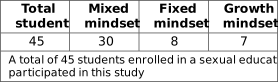
Table 2. Student with mixed mindset’s writing method.

Table 3. Student with mixed mindset’s future preference writing method.

Table 4. Student with fixed mindset’s writing method.

Table 5. Student with fixed mindset’s future preference writing method.

Table 6. Student with growth mindset’s writing method.

Table 7. Student with growth mindset’s future preference writing method.

Table 8. Students with mixed mindset’s time usage on lesson plan writing and grades.

Table 9. Students with fixed mindset’s time usage on lesson plan writing and grades.

Table 10. Students with growth mindset’s time usage on lesson plan writing and grades.

4.2. Students with Fixed Mindset
Among the eight students identified with a fixed mindset, two initially chose not to use ChatGPT for writing their lesson plans, while six opted to use ChatGPT (Table 4).
When asked about their future preferences, the number of students favoring non-ChatGPT methods increased from two to five. In contrast, the number of students preferring to use ChatGPT exclusively dropped from six to one. The remaining two students indicated a preference for a mixed approach, combining both ChatGPT-assisted and independent writing methods (Table 5).
4.3. Students with Growth Mindset
Among the seven students identified with a growth mindset, five initially chose not to use ChatGPT for writing their lesson plans, while two opted to use ChatGPT (Table 6).
In terms of future preferences, all five non-ChatGPT users maintained their choice. Of the two original ChatGPT users, one continued with their initial preference, while the other shifted to a mixed approach, combining both ChatGPT-assisted and independent writing methods (Table 7).
4.4. Students’ Mindset, Lesson Plan Quality, and Time Usage
Among the 30 students identified with a mixed mindset, over half (16 students) chose to use ChatGPT to write their lesson plans, while the other half opted not to use it. On average, these students spent 131.8 minutes writing their lesson plans. The average grade received for their lesson plans was 86.2 out of 100 (Table 8).
Among the eight students identified with a fixed mindset, six chose to use ChatGPT to write their lesson plans, while two opted not to use it. The average time spent on lesson plan writing among these students was 130.25 minutes. Their average lesson plan grade was 81.88 out of 100 (Table 9).
Among the seven students identified with a growth mindset, two chose to use ChatGPT to write their lesson plans, while five opted not to use it. The average time spent on lesson plan writing within this group was 120 minutes. Their average lesson plan grade was 93 out of 100 (Table 10).
4.5. Students’ Reflection on the Usage of AI-Assistance Tool
4.5.1. Non-Chat GPT Group’s Reflection
The reflections from the non-ChatGPT group reveal a strong preference for traditional, human-centered lesson planning over AI-assisted methods. Most students expressed that manually designing lesson plans allows for greater flexibility, personalization, and emotional depth. They emphasized that teachers understand their students best—taking into account class dynamics, developmental stages, learning needs, and environmental factors such as weather or classroom resources. This real-time adaptability was seen as something AI cannot yet replicate.
Several students pointed out the limitations of ChatGPT, including the need for highly specific prompts, repetitive outputs, and a lack of alignment with educational goals or classroom realities. Many noted that ChatGPT-generated plans tend to be generic, lacking creativity and contextual relevance. Additionally, some students found that the tool’s suggestions leaned heavily toward certain domains, such as arts, while neglecting others. They also criticized the process of using AI as time-consuming due to the need for constant revisions and clarifications.
Despite these criticisms, a few students acknowledged that AI tools like ChatGPT could serve as useful brainstorming aids, especially when lacking inspiration or exploring unfamiliar topics. These students viewed AI as a supplementary resource rather than a replacement for human judgment and creativity.
Overall, the consensus was clear: while ChatGPT offers convenience and speed, it falls short in delivering customized, emotionally resonant, and context-aware lesson plans. Most students concluded that combining human insight with selective AI assistance might offer the best of both worlds, but they remain committed to relying primarily on their own professional knowledge and collaborative efforts.
4.5.2. Chat GPT Group’s Reflection
The reflections from the ChatGPT group reveal an overall positive experience with using AI in lesson planning, emphasizing its role as a time-saving and idea-generating tool. Many students appreciated how ChatGPT helped them overcome creative blocks, provided structured and coherent lesson plans, and suggested novel activities they hadn’t considered. Some praised its ability to enhance the fluency and completeness of teaching materials, with clear formatting and logical sequencing that made lesson plans look more professional and polished.
Several participants noted that while ChatGPT was highly useful, it required clear and specific prompts to yield effective results. Without sufficient input, such as student age, topic, and learning goals, the output could be vague or generic. Therefore, students stressed the importance of human input in guiding the AI, highlighting a collaborative process where ChatGPT serves as a brainstorming partner or assistant rather than a sole creator.
Many students expressed interest in continuing to use ChatGPT in future lesson planning, often suggesting a hybrid approach that combines AI-generated suggestions with human judgment and customization. A few who had not yet used ChatGPT expressed curiosity and a willingness to experiment, acknowledging its potential as a helpful support tool.
However, some students expressed concerns about over-reliance on AI, fearing it might hinder their own creativity and critical thinking. They emphasized the need to verify AI-generated content, as it may contain inaccuracies. Overall, the group valued ChatGPT as a supplementary resource—one that enhances efficiency, expands thinking, and provides inspiration—while reaffirming the necessity of human oversight, pedagogical understanding, and adaptation to real classroom needs.
4.5.3. Mixed Writing Method Group’s Reflection
The reflections from the Mixed Writing Method group reveal a balanced, thoughtful approach to integrating ChatGPT with traditional lesson planning. Most participants favored a hybrid method, recognizing the strengths and limitations of both AI and human input. Many highlighted that while ChatGPT can generate diverse and creative activity ideas, it is most effective when guided by a clear structure provided by the user. Therefore, students often preferred to first develop the main framework themselves and then consult ChatGPT for inspiration, refinement, or to fill in gaps.
Several students appreciated how ChatGPT helped them break through creative blocks, offering new perspectives and saving time, especially when they were stuck or unsure of how to proceed. Others used it as a reference tool to cross-check their work, identify missing elements, or compare ideas sourced from the internet. Despite its usefulness, many agreed that relying solely on AI risks overlooking the nuanced needs of real classrooms, such as tailoring content to children’s specific developmental stages and classroom dynamics.
Some students expressed caution, emphasizing that while ChatGPT is convenient, it cannot fully replace the thoughtfulness and adaptability that come with human planning. They noted the importance of providing detailed prompts to get meaningful results and warned against blindly trusting AI-generated suggestions. This led to a common consensus that ChatGPT should be seen as an “assistant” or supplementary tool, not the primary creator.
Overall, the group recognized the value of combining human expertise with AI capabilities. The hybrid method allowed for efficient, creative, and well-rounded lesson planning, blending technological support with personalized, experience-based adjustments. This reflective approach shows a strong awareness of how to use AI ethically and effectively within educational contexts.
5. Discussion
5.1. Students’ Mindset Based Attitudes Toward AI Assisted Lesson Planning
5.1.1. Students with Mixed Mindset
The results from the 30 students identified as having a mixed mindset reveal an important evolution in their attitudes toward the use of AI in instructional planning. Initially, over half of these students (16 out of 30) were willing to engage with ChatGPT to support lesson plan development, while the rest (14 students) opted to rely on traditional, non-AI methods. However, after completing the task, a significant shift was observed: only 8 students maintained a preference for exclusive ChatGPT use, while 12 expressed a desire to avoid it altogether. Notably, a third of the group (10 students) indicated a preference for a blended approach, incorporating both AI and independent strategies in future lesson design.
This change suggests that direct experience with AI tools like ChatGPT can prompt users to re-evaluate their initial assumptions, whether positive or negative 8,12. For those who initially used ChatGPT, the drop from 16 to eight exclusive users implies that some encountered limitations in contextual understanding or emotional nuance, common critiques of large language models 9. Conversely, a small number of students who initially avoided ChatGPT may have recognized its potential value as a time-saving idea generator 1.
The emergence of a substantial group (10 students) favoring a hybrid approach is particularly significant. It aligns with broader research showing that students with adaptive or mixed mindsets are more likely to adopt flexible learning strategies, particularly when given opportunities for reflective practice 13,5. This indicates that many students do not view the issue as binary, but rather see value in strategically integrating AI assistance while maintaining their own creative and pedagogical control 11.
This nuanced perspective reflects a growing maturity in how future educators understand the role of AI—not as a replacement for human insight, but as a complementary tool that enhances creativity, efficiency, and planning when used critically 3. These findings are especially relevant for teacher education programs, which should prioritize not only technical training but also critical frameworks for evaluating the use of AI tools in pedagogy 2. Rather than promoting or discouraging AI use outright, instructional environments should foster exploration, reflection, and informed decision-making, enabling students to develop an ethical and pedagogically sound balance 4,12.
5.1.2. Students with Fixed Mindset
The data from the eight students identified with a fixed mindset reveal a clear and notable shift in their attitudes toward the use of ChatGPT after engaging in the lesson planning task. Initially, a majority (six out of eight) chose to use ChatGPT, while only two students opted not to use the tool. However, after completing the task, only one student maintained a preference for exclusive ChatGPT use, while five students indicated they would prefer not to use ChatGPT in future lesson planning. The remaining two students expressed a preference for a hybrid approach, blending both AI support and independent work.
This shift suggests that fixed mindset students, who are often characterized by a preference for predictability and a resistance to ambiguity or perceived failure, may have become increasingly skeptical or dissatisfied with relying on ChatGPT after experiencing its limitations 6,4. The drop from six to one exclusive user represents a substantial decrease in confidence in the tool’s usefulness or alignment with their expectations. Research has shown that individuals with fixed mindsets are more likely to disengage from tools or strategies that do not provide immediate, clear success 7. Possible contributing factors may include discomfort with unfamiliar technology, a perceived loss of agency in the planning process, or difficulty in synthesizing AI-generated content with personal pedagogical beliefs 13,9.
Interestingly, the emergence of two students choosing a mixed method points to a small but meaningful move toward flexibility. For students with a fixed mindset, this openness to combining AI assistance with their own input could reflect an early sign of shifting beliefs about learning and competence 5. It may also suggest that, when supported appropriately, even fixed mindset learners can begin to recognize the value of tools initially perceived as threatening or impersonal 8.
These findings emphasize the importance of targeted scaffolding when introducing AI tools to learners with fixed mindsets. Rather than simply providing access, educators should focus on building students’ confidence, developing digital competence, and promoting metacognitive reflection 2,12. Structured experimentation—through guided tasks, collaborative analysis, and clear examples of effective integration—can help reduce resistance, promote deeper engagement, and foster more adaptive attitudes over time 1,3.
5.1.3. Students with Growth Mindset
The responses from the seven students identified with a growth mindset offer insight into how this learner profile interacts with emerging technologies like ChatGPT. Initially, a majority (five out of seven) chose not to use ChatGPT for lesson planning, suggesting a strong preference for relying on their own capabilities and engaging directly with the instructional design process. These five students maintained their non-ChatGPT preference even after completing the task, indicating a level of consistency and confidence in their self-regulated learning strategies 14.
Of the two students who initially used ChatGPT, one continued to prefer AI assistance, while the other adopted a mixed approach, blending AI use with independent effort. This slight shift reflects the hallmark of a growth mindset: openness to experimentation, reflection, and adjustment based on feedback and experience 5. Rather than rigidly adhering to a particular method, growth mindset students are more likely to evaluate tools based on educational utility and alignment with their goals 13.
Interestingly, despite their orientation toward learning and adaptation, most of these students still chose to work without ChatGPT. This may suggest that growth mindset learners are confident in tackling complex tasks independently and find value in the cognitive demands of instructional planning without AI support 15. It could also indicate a critical stance toward the role of AI, wherein learners are willing to explore new tools but remain discerning about their pedagogical relevance 8,12.
These results highlight the importance of giving growth mindset students the freedom to explore diverse instructional strategies while promoting critical reflection on the value and limitations of AI. Although this group is capable of adapting and integrating new tools, their strong internal motivation may lead them to favor traditional methods unless the benefits of AI use are clearly demonstrable and aligned with learning objectives 1. For this group, future instructional strategies might focus on enhancing evaluative and strategic decision-making skills—helping them determine when and how AI can serve as meaningful support, without diminishing their agency or creativity 3.
5.2. Students’ Reflection on the Usage of AI-Assistance Tool
5.2.1. Non-Chat GPT Group’s Reflection
Reflections from students who developed lesson plans without the aid of ChatGPT reveal a strong commitment to traditional, human-centered instructional design. These students overwhelmingly emphasized the value of personalization, contextual sensitivity, and professional intuition—qualities they believed AI could not adequately replicate 16,17. Many cited the importance of considering classroom-specific factors such as student needs, developmental stages, classroom atmosphere, seasonal timing, and resource availability—dynamic elements they felt only trained educators could fully interpret and respond to 18,19.
Several students expressed concerns regarding the limitations of AI-generated content. A frequent critique was the need for precise, well-structured prompts to produce meaningful results—an area where some users lacked confidence 3. Others noted the formulaic and repetitive nature of ChatGPT’s output, which often failed to capture the creativity and nuance required in early childhood instruction. Some also observed a subject-area bias in the tool’s responses, with stronger suggestions in artistic or language-based domains, and less utility for interdisciplinary or technical planning tasks 8.
Interestingly, time management, often assumed to be a strength of AI, emerged as a criticism. Students reported that refining ChatGPT outputs to fit their instructional goals could be more time-consuming than developing plans independently. The process of revising AI-generated material to achieve meaningful alignment with curricular intentions was described by several as cumbersome 1,2.
Nonetheless, a minority of students adopted a more balanced perspective, acknowledging ChatGPT’s potential as a brainstorming partner, particularly in situations of creative fatigue or when working outside their content-area expertise 20. These students did not perceive AI as a replacement for professional skill, but rather as a complementary tool that could enhance ideation and support pedagogical development when used with discretion.
In summary, while most students in the non-ChatGPT group reaffirmed the value of human-driven instructional design, their reflections also demonstrated a cautious openness to AI. They concluded that while AI might serve a supportive function, it could never substitute the professional judgment, creativity, and adaptive expertise that teachers bring to curriculum development. These findings underscore the importance of preparing educators with critical technological literacy—the capacity to evaluate when and how to integrate AI tools meaningfully without diminishing the teacher’s role 12,3. Teacher education programs must prioritize both pedagogical confidence and digital discernment, empowering future educators to lead, not just implement, technological innovation.
5.2.2. ChatGPT Group’s Reflection
The reflections from students who used ChatGPT to assist with lesson planning suggest a generally positive and constructive experience. Many participants highlighted the tool’s value in overcoming creative blocks, streamlining the planning process, and generating professionally structured content—features that contributed to improved lesson clarity and organization 1,8. Several students noted that ChatGPT helped them “think outside the box” by offering novel instructional ideas or classroom activities they might not have independently considered. The AI’s capacity to generate clearly sequenced and logically organized materials was especially appreciated by students who felt less confident in structuring lessons 3.
However, students also acknowledged the necessity of providing precise and context-rich prompts to receive useful results. Without clear input, such as student age, learning goals, or instructional setting, ChatGPT tended to produce vague or generic content, echoing concerns found in current research about prompt dependency and limitations of large language models 20,21. This realization led many students to frame their interaction with ChatGPT as a collaborative process, positioning the educator not as a passive consumer but as an active guide and co-creator in shaping the lesson content 2.
Several students expressed enthusiasm about continuing to use ChatGPT, particularly within a hybrid instructional model that blends AI input with personal knowledge, teaching experience, and contextual adaptation. This approach was seen as a way to enhance efficiency without sacrificing the authenticity, creativity, or professional discernment needed in effective teaching 12. Interestingly, some students who had initially avoided ChatGPT expressed growing curiosity about its capabilities and a willingness to experiment with it in future instructional design tasks.
Nonetheless, reflections also included critical caution. A few students expressed concern that regular use of AI might lead to over-reliance, potentially diminishing their creative thinking or problem-solving capacity—a challenge also raised in emerging research on human-AI interaction in education 1,8. Others emphasized the importance of evaluating AI outputs for relevance, accuracy, and appropriateness to real-world classroom contexts, warning against uncritical acceptance of machine-generated materials 3.
In conclusion, while students generally viewed ChatGPT as a valuable and innovative support tool, they also demonstrated a mature awareness of its limitations. Most framed the tool not as a replacement for professional expertise, but as a supplementary resource that aids creativity, improves clarity, and saves time—so long as it is guided by pedagogical insight. These findings reinforce the importance of embedding AI literacy and critical thinking into teacher education programs, ensuring that future educators can confidently and ethically integrate AI tools into their instructional planning 17,12.
5.2.3. Mixed Writing Method Group’s Reflection
Reflections from students who adopted a mixed writing approach—integrating both ChatGPT and traditional lesson planning—revealed a thoughtful and strategic stance toward AI-assisted instruction. Most participants in this group expressed a preference for a hybrid method, acknowledging the strengths and limitations of both AI-generated content and human-developed instructional strategies. They described ChatGPT as a valuable tool for enhancing creativity, expanding idea generation, and refining specific components of their lesson plans—especially when experiencing cognitive blocks or uncertainty during planning 8,3.
A commonly reported strategy involved first developing an initial lesson structure independently, then consulting ChatGPT for inspiration, elaboration, or comparison. This workflow allowed students to retain pedagogical agency while drawing on the AI’s ability to enrich or diversify their instructional design 2,12. Several students also used ChatGPT as a reference-checking tool, comparing their own lesson ideas with AI-generated alternatives to identify overlooked elements or to consider broader instructional approaches 20.
Despite appreciating ChatGPT’s benefits, students emphasized the importance of critical oversight, noting that AI cannot fully address classroom complexities, such as developmental appropriateness, learner variability, or socio-emotional dynamics 1,17. They stressed that crafting clear, context-specific prompts was essential to eliciting relevant and usable responses—highlighting the need for AI literacy and informed use 21. Over-reliance on AI, they warned, could undermine the development of instructional creativity and reduce awareness of subtle but important pedagogical factors.
Across reflections, there was strong consensus that ChatGPT should serve as a collaborative assistant, not a primary planner. The hybrid model was valued for its ability to balance efficiency with authenticity, allowing students to harness AI’s capabilities while maintaining professional integrity and personalization in their work 8,12.
In conclusion, the Mixed Writing Method group demonstrated a high level of digital literacy and pedagogical discernment, recognizing that optimal lesson design involves synergy between AI tools and human expertise. Their reflections align with broader calls for AI-integrated teacher training, where future educators learn not only how to use technology, but also how to critically evaluate and ethically integrate it into their teaching practice 2,3.
Reflections from the non-ChatGPT, ChatGPT, and Mixed Writing Method groups revealed diverse but converging views on AI in instructional design. The non-ChatGPT group emphasized personalization, contextual sensitivity, and emotional nuance, arguing that human-driven lesson planning better accommodates classroom complexity. The ChatGPT group highlighted AI’s usefulness for efficiency, structure, and ideation, but acknowledged the need for caution and content vetting. The Mixed group, meanwhile, adopted a blended perspective, using ChatGPT to fill gaps and generate ideas while maintaining control over final decisions. Across all groups, students recognized that while AI has significant potential as a support tool, effective lesson planning must remain rooted in pedagogical reflection, contextual understanding, and informed human judgment.
6. Conclusion
Across the three mindset groups, mixed, fixed, and growth, the findings reveal notable shifts in students’ attitudes toward using ChatGPT in lesson planning, shaped largely by their direct experience with the tool. Students with a mixed mindset demonstrated the most balanced transformation, with many moving away from exclusive AI use and gravitating toward a hybrid approach that blends AI-generated ideas with personal pedagogical judgment. In contrast, fixed mindset students showed a marked decline in preference for ChatGPT, suggesting heightened sensitivity to the tool’s limitations and a tendency to disengage when outcomes did not meet expectations. Meanwhile, growth mindset students, though open to experimentation, largely maintained their preference for independent work, using AI selectively and critically. Reflections across the non-ChatGPT, ChatGPT, and Mixed groups further reinforced these patterns: students who avoided AI emphasized contextual nuance and professional intuition, AI users highlighted efficiency and creative support, and hybrid users valued the strategic combination of both. Overall, the findings underscore that students view AI not as a replacement for human expertise but as a supplemental tool whose effectiveness depends on mindset, metacognitive awareness, and pedagogical confidence.
6.1. Implications for Future Practice
The findings from this study highlight several important implications for future educational practice, particularly in teacher preparation and curriculum design. First, the varied student reflections suggest that AI tools like ChatGPT can serve as valuable supports in instructional planning, but their effectiveness largely depends on how thoughtfully and critically they are integrated into teaching practice 8,2. Teacher education programs should therefore include explicit training in AI literacy, equipping pre-service teachers to evaluate, adapt, and responsibly use AI tools without becoming overly reliant on them or compromising their professional autonomy 21,3.
Second, the success of the mixed writing method points to the pedagogical potential of a hybrid approach to lesson planning—one that combines human creativity, contextual awareness, and emotional intelligence with the efficiency, structure, and ideation capabilities of AI 1,12. Promoting this balance can lead to more innovative, efficient, and learner-responsive instructional designs while still preserving pedagogical integrity and teacher agency.
Additionally, the concerns raised by the non-ChatGPT group reinforce the continued importance of professional judgment, classroom experience, and knowledge of child development—elements that current AI tools cannot replicate or simulate meaningfully 17,1. As such, it is essential that educators understand that while AI can enhance and support lesson planning, it should not replace the nuanced, experience-based insight that skilled teachers bring to the classroom 20,3.
6.2. Implications for Future Research
This study opens several avenues for future research on the integration of AI tools like ChatGPT in educational settings. First, further investigation is needed to explore the long-term impact of AI-assisted lesson planning on teaching effectiveness and student learning outcomes, as this study primarily focused on the planning process and student perceptions 1,3. Longitudinal studies could offer deeper insights into how such tools influence instructional quality and pedagogical development over time 2.
Second, the study highlights the importance of understanding the optimal balance between AI assistance and human input. Research could explore how specific prompt engineering techniques, scaffolding strategies, or structured guidance protocols affect the quality, accuracy, and contextual relevance of AI-generated content 21,8. These findings would be particularly valuable for informing best practices in teacher education and curriculum design.
Additionally, expanding research to include practicing educators, diverse age groups, and subject areas would help generalize findings and uncover context-specific benefits and challenges of AI integration in lesson planning 20,8. Finally, ethical considerations surrounding AI use—such as data privacy, authorship, and algorithmic bias—warrant further empirical and policy-oriented exploration to support responsible and equitable implementation in education 12,3.
This study explored how undergraduate students in a Sexual Education course engaged with AI-assisted and traditional lesson planning, examining how mindset orientation influenced their choices, reflections, and evolving perceptions. The findings revealed distinct patterns across students who exclusively used ChatGPT, avoided it, or combined both methods—highlighting a range of perspectives on creativity, efficiency, autonomy, and pedagogical relevance. While many participants acknowledged the potential of AI for idea generation and refinement, they also stressed its limitations in addressing contextual, emotional, and developmental nuances in real-world teaching 17,1.
Ultimately, the study emphasizes the need to foster critical AI literacy and promote hybrid instructional design strategies that integrate AI tools without compromising professional judgment and human-centered pedagogical values 20,2. These insights contribute to the ongoing conversation on ethical, effective, and adaptive integration of AI in education, laying a strong foundation for future research on human-AI collaboration aimed at enhancing both teaching and learning outcomes.
- [1] W. Holmes, M. Bialik, and C. Fadel, “Artificial intelligence in education: Promises and implications for teaching and learning,” Center for Curriculum Redesign, 2019.
- [2] R. Luckin, W. Holmes, M. Griffiths, and L. B. Forcier, “Intelligence unleashed: An argument for AI in education,” Pearson, 2016.
- [3] O. Zawacki-Richter, V. I. Marín, M. Bond, and F. Gouverneur, “Systematic review of research on artificial intelligence applications in higher education – Where are the educators?,” Int. J. of Educational Technology in Higher Education, Vol.16, No.1, Article No.39, 2019. https://doi.org/10.1186/s41239-019-0171-0
- [4] C. S. Dweck, “Mindset: The new psychology of success,” Random House, 2006.
- [5] D. S. Yeager and C. S. Dweck, “Mindsets that promote resilience: When students believe that personal characteristics can be developed,” Educational Psychologist, Vol.47, No.4, pp. 302-314, 2012. https://doi.org/10.1080/00461520.2012.722805
- [6] S. Claro, D. Paunesku, and C. S. Dweck, “Growth mindset tempers the effects of poverty on academic achievement,” Proc. of the National Academy of Sciences, Vol.113, No.31, pp. 8664-8668, 2016. https://doi.org/10.1073/pnas.1608207113
- [7] L. S. Blackwell, K. H. Trzesniewski, and C. S. Dweck, “Implicit theories of intelligence predict achievement across an adolescent transition: A longitudinal study and an intervention,” Child Development, Vol.78, No.1, pp. 246-263, 2007. https://doi.org/10.1111/j.1467-8624.2007.00995.x
- [8] E. Kasneci et al., “ChatGPT for good? On opportunities and challenges of large language models for education,” Learning and Individual Differences, Vol.103, Article No.102274, 2023. https://doi.org/10.1016/j.lindif.2023.102274
- [9] L. Floridi and M. Chiriatti, “GPT-3: Its nature, scope, limits, and consequences,” Minds and Machines, Vol.30, No.4, pp. 681-694, 2020. https://doi.org/10.1007/s11023-020-09548-1
- [10] M. Haenlein and A. Kaplan, “Artificial intelligence and robotics: Shaking up the business world and society at large,” J. of Business Research, Vol.124, pp. 405-407, 2021. https://doi.org/10.1016/j.jbusres.2020.10.042
- [11] R. Baker and G. Siemens, “Educational data mining and learning analytics,” R. Keith Sawyer (Ed.), “The Cambridge Handbook of the Learning Sciences (2nd Edition),” pp. 253-272, Cambridge University Press, 2014. https://doi.org/10.1017/CBO9781139519526.016
- [12] N. Selwyn, “Should robots replace teachers? AI and the future of education,” Polity Press, 2019.
- [13] A. H. Cash, J. A. Williams III, and L. C. Hart, “University-district partnerships to improve field experiences: Associations with candidate perceptions and performance,” Teaching and Teacher Education, Vol.94, Article No.103122, 2020. https://doi.org/10.1016/j.tate.2020.103122
- [14] B. J. Zimmerman, “Becoming a self-regulated learner: An overview,” Theory Into Practice, Vol.41, No.2, pp. 64-70, 2002. https://doi.org/10.1207/s15430421tip4102_2
- [15] A. Bandura, “Self-efficacy: The exercise of control,” W. H. Freeman, 1997.
- [16] G. Biesta, “What is education for? On good education, teacher judgement, and educational professionalism,” European J. of Education, Vol.50, No.1, pp. 75-87, 2015. https://doi.org/10.1111/ejed.12109
- [17] P. A. Ertmer and A. T. Ottenbreit-Leftwich, “Teacher technology change: How knowledge, confidence, beliefs, and culture intersect,” J. of Research on Technology in Education, Vol.42, No.3, pp. 255-284, 2010. https://doi.org/10.1080/15391523.2010.10782551
- [18] L. Darling-Hammond, L. Flook, C. Cook-Harvey, B. Barron, and D. Osher, “Implications for educational practice of the science of learning and development,” Applied Developmental Science, Vol.24, No.2, pp. 97-140, 2020. https://doi.org/10.1080/10888691.2018.1537791
- [19] L. Shulman, “Knowledge and teaching: Foundations of the new reform,” Harvard Educational Review, Vol.57, No.1, pp. 1-23, 1987. https://doi.org/10.17763/haer.57.1.j463w79r56455411
- [20] G.-J. Hwang and N.-S. Chen, “Exploring the potential of generative artificial intelligence in education: Applications, challenges, and future research directions,” Educational Technology & Society, Vol.26, No.2, pp. I-XVIII, 2023. https://doi.org/10.30191/ETS.202304_26(2).0014
- [21] G.-J. Hwang, H. Xie, B. W. Wah, and D. Gašević, “Vision, challenges, roles and research issues of Artificial Intelligence in Education,” Computers and Education: Artificial Intelligence, Vol.1, Article No.100001, 2020. https://doi.org/10.1016/j.caeai.2020.100001
This article is published under a Creative Commons Attribution-NoDerivatives 4.0 Internationa License.