
Research Paper:
Analyzing the Network Structure of Indigenous Teachers’ Professional Development and Co-Production Behaviors: An Application of Epistemic Network Analysis
Hsiao-Chi Juan†

Department of Education, National Taichung University of Education
No.140 Minsheng Road, West District, Taichung 40306, Taiwan
†Corresponding author

This study aims to overcome the limitations of one-mode social network analysis by incorporating advanced two-mode network feature analysis and using clearer visualization tools for two-mode network analysis. The research applies network analysis in the relatively uncommon field of policy, particularly in educational policy governance, and explores research questions related to indigenous education by analyzing the trends of indigenous teachers participating in professional development activities. The methodology included a questionnaire survey using the network scale and co-production behavior scale. Data was collected from 85 indigenous teachers across three rural counties. The conclusion shows that local cultural elders have a significant impact on the professional development of indigenous teachers, and teachers with different levels of co-production have different preferences for professional development behaviors.
ENA projection of teacher networks
1. Introduction
Understanding the professional development of indigenous teachers, particularly in rural contexts, requires going beyond measures of training satisfaction or activity participation. Over the past few decades, scholars have increasingly emphasized the co-production of educational knowledge, in which teachers, communities, and institutions work together to shape learning environments. This perspective offers a valuable lens for analyzing professional agency and networked governance 1,2. However, research on the network structure underpinning these co-productive behaviors remains limited, particularly in the context of indigenous education policies.
There is also a practical necessity to move beyond post-activity satisfaction surveys, which dominate evaluations of indigenous teacher training. Such measures fail to provide deeper insights into how teachers engage with policy instruments, community knowledge systems, and institutional actors throughout their professional growth. By leveraging capabilities of epistemic network analysis (ENA) to visualize and quantify knowledge co-occurrence patterns, this study links individual behavior to structural and epistemic outcomes in the policy space. As Reid et al. 3 and Pantić et al. 4 emphasize, such integration offers new ways to assess teacher agency and knowledge enactment in networked professional communities.
Furthermore, despite the growing literature on co-production in public services 5,6,7,8, little is known about its implications for indigenous education systems. The key nodes of interaction, whether school administrators, policy implementers, or cultural elders, remain under-theorized and empirically unexplored 9,10. Rural indigenous areas in Taiwan typically lack access to formal teacher development pipelines, prompting teachers to engage more with local elders, community knowledge holders, and informal networks 7,8. To address this gap, this study maps the co-occurrence structure of co-production behaviors and links them to knowledge-building patterns among indigenous teachers.
Through an innovative combination of two-mode network modeling and ENA, this research aims to offer a richer, multi-dimensional understanding of indigenous teachers’ professional development grounded in both policy context and epistemic behavior.
To address these issues, this study poses the following research questions:
-
What role does indigenous teachers’ co-production behavior play in their professional growth networks? What co-occurrence patterns do teachers’ co-production behaviors present in the network?
-
How can ENA be used to identify differences in knowledge construction among indigenous rural teachers engaged in different co-production behaviors?
2. Literature Review
To establish a clear conceptual foundation for this study, this section reviews four interrelated constructs that are central to the research framework: teachers’ professional development, collaboration, co-production, and network theory. By exploring each concept, we clarify its definitions, theoretical significance, and relevance to indigenous education in rural contexts.
2.1. Co-Production and Collaboration
To clarify the definition of co-production, we follow McMullin’s framework, which defines it as the collective involvement of teachers, community elders, educational institutions, and policy intermediaries working together to generate public value through shared practices 5. While collaboration often refers to coordinated actions among peers or organizations with similar power and expertise, co-production extends further by involving diverse stakeholders, including citizens or community actors, in shaping both the processes and outcomes of public services or knowledge production 6.
We emphasize that this distinction is particularly salient in indigenous educational contexts, where cultural and epistemic participation from community members is integral to teaching and learning. In such settings, coproduction reflects a more inclusive and distributed form of engagement that acknowledges the role of community knowledge holders.
2.2. Knowledge Building in Indigenous Teacher Development
This study adopts a knowledge-building perspective of co-production, emphasizing the importance of co-creating knowledge between formal educators and local knowledge holders, such as tribal elders, as a core mechanism for professional development. Knowledge building is particularly vital for indigenous teachers in rural contexts, where the transmission and integration of indigenous languages, cultural practices, and community-based wisdom are essential for both educational equity and cultural sustainability. As Hill et al. 8 have noted, collaborative knowledge generation enhances both teacher learning and community engagement.
In this study, we define knowledge construction as the process by which indigenous teachers engage in meaning-making and interpretive practices through interactions with institutional and community actors. It is considered an emergent outcome of co-productive behaviors, especially in environments where professional development is embedded within relational community-based practices.
2.3. Network Theory and Epistemic Structures
Traditional approaches in social network analysis have largely relied on one-mode network structures, often focusing on interactions among actors without accounting for the relational dynamics between actors and events, such as professional development activities or roles 11,12. This limitation narrows our capacity to capture complex role-based or institutional relationships, especially in multilevel educational governance settings 13. To address this gap, the current study integrates a two-mode network analysis, enabling a more accurate representation of the relational structure between indigenous teachers and their professional growth activities.
Moreover, while ENA has become a powerful tool in learning sciences—particularly for modeling knowledge construction and collaborative discourse 14,15,16—its application to education policy and governance research remains scarce. As Elmoazen et al. 13 note in a systematic review, most ENA studies center on STEM education or online learning environments, with limited application to public policy, teacher agencies, or network governance 17,18.
2.4. Rationale for Network-Based Methodology
Building on this conceptual foundation, we clarify the rationale for applying network theory and methods to the study of co-production. Co-production processes are inherently relational and involve complex patterns of interaction among actors, such as teachers, community members, and policy intermediaries. Network analysis enables us to systematically map and quantify these ties, uncover structural patterns, and identify influential nodes.
In particular, ENA provides a powerful tool for capturing both social and conceptual co-occurrence patterns in discourse, offering insights into how knowledge is constructed and distributed across professional development networks. By combining two-mode network modeling with ENA, this study tracked the relational architecture of co-production and highlighted the cognitive and discursive elements of knowledge construction in indigenous teacher-learning environments.
3. Method
3.1. Data
This study employed a survey-based data collection method conducted through teacher-training workshops specifically arranged for indigenous language educators. These workshops, which were officially mandated for professional development, provided a practical context for administering and collecting responses. The survey period was from June 2023 to June 2024, during which we targeted certified indigenous language teachers across three rural counties in Taiwan. We purposefully selected Nantou, Miaoli, and Hsinchu counties as research sites because of their high indigenous population densities, particularly among the Atayal and Bunun groups, which ensured strong ethnic representativeness. These counties also reflect a balanced regional distribution spanning Taiwan’s central and northern mountainous areas, which are known for their concentration of rural indigenous communities. Importantly, all three counties have established indigenous education centers (IECs) that function as local intermediaries responsible for implementing indigenous language policies, organizing teacher-training programs, and facilitating community engagement. Thus, their inclusion offers a policy-relevant lens for examining how co-production and professional development unfold in localized and culturally embedded settings.
Table 1. Description statistics of the participants.
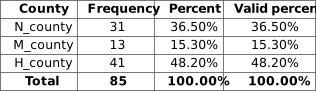
A total of 85 valid responses were collected. The distribution of the participants is summarized in Table 1. Among them, 36.5% were from Nantou County (\(n=31\)), 15.3% were from Miaoli County (\(n=13\)), and 48.2% were from Hsinchu County (\(n=41\)). The cumulative percentage reached 100%, indicating complete coverage of the valid sample pool.
3.2. Instrument
To investigate indigenous teachers’ professional development networks and co-production behaviors, this study designed a two-part questionnaire based on existing literature and policy contexts.
A network questionnaire was developed to examine professional interaction networks among educators. This design was informed by foundational frameworks in educational research, including those of Greany and Higham 19, who analyzed system leadership through school network structures, and Thompson 20, who conceptualized governance networks in education. To identify key relational patterns, the primary item in the network questionnaire asked respondents, “Whom do you most frequently consult regarding indigenous language or culture-related teaching matters?” to identify the distinct contributions of government agencies (such as IECs and county education bureaus), schools, community-based actors (such as principals, school leaders, and tribal elders), and other supporting institutions (such as universities and NGOs).
These items were carefully reviewed and revised with reference to the operational objectives of Taiwan’s IECs, ensuring alignment with local policy mechanisms and teacher role expectations. This co-design process aimed to reflect the actual governance environment in which indigenous teachers engage, including both formal and informal channels of knowledge exchange. Each of these actors plays a specific role—policy coordination, cultural knowledge transmission, and capacity building—in supporting professional growth and enacting co-production mechanisms.
The participants were allowed to select multiple options across three categories: government agencies, schools and communities, and other institutions. The options were derived based on the governance structure and policy guidelines of IECs in Taiwan, and each selection was binary-coded (\(1=\) selected, \(0=\) not selected).
Table 2. Frequencies and options of the network questionnaire.
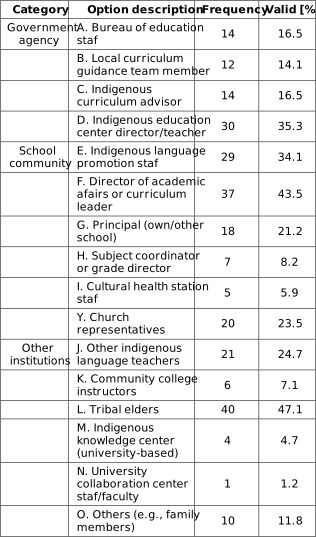
The full set of node options and selection frequencies is presented in Table 2.
The design of the questionnaire’s co-production component was fundamentally informed by McMullin’s typology of public value creation, which distinguishes three modes of civic engagement: individual, group, and collective co-production 5. This framework was adapted to the educational context of indigenous language teachers in Taiwan and further contextualized using policy guidelines issued by IECs. Individual co-production refers to personal initiatives undertaken by teachers to enhance their professional capacity, such as attending workshops or seeking educational resources independently. A sample item is, “I attend indigenous education professional development workshops.” Second, group co-production captures collaborative efforts among peers, including community building and the co-design of learning materials. A representative item is “I initiate or join teacher communities focused on indigenous education.” Finally, collective co-production involves broader system-level actions such as advocating for policy improvements or participating in community-based implementation. An example item includes: “I propose better teaching strategies to indigenous language promotion officers or the indigenous education center.” The survey instrument employed a three-point Likert-type scale (\(1=\) never, \(2=\) occasionally, and \(3=\) frequently) to measure the frequency of participants’ engagement in co-production behaviors. Based on the cumulative scores, participants were classified into three levels according to McMullin’s co-production typology. This distinction helps differentiate between the operationalization of behavioral frequency (through survey measurement) and the analytical categorization of actors into co-production levels used in the interpretation of network structures.
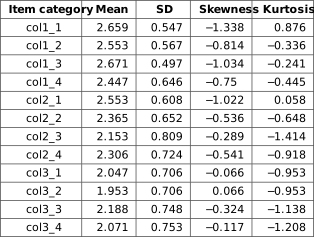
Table 3. Descriptive statistics of the co-production scale.
To evaluate the internal consistency of the co-production scale, Cronbach’s alpha was calculated across the 12 items representing the individual, group, and collective dimensions. The resulting coefficient was \(\alpha=0.92\), indicating excellent internal reliability. This value exceeds the commonly recommended threshold of 0.80, as suggested by Tavakol and Dennick for reliable use in social science research instruments 21.
Descriptive statistics for each item on the co-production scale are presented in Table 3. The items were grouped into three categories:col1_\(x =\) individual-level co-production behaviors, col2_\(x =\) group-level behaviors, and col3_\(x=\) collective-level behaviors.
All items were answered by 85 participants with no missing values. The mean scores ranged from 1.95 to 2.67, with standard deviations generally below 0.80, indicating moderate dispersion. The skewness and kurtosis values were within acceptable bounds, suggesting that the data distribution did not violate the normality assumptions substantially.
To further analyze engagement patterns, the summed scores for each participant across the 12 items were calculated and used to classify participants into three distinct levels of co-production. The classification logic was hierarchical: participants with a total score above 27 (\(\ge~9\) points from each level) were classified as Level 3 (high-level co-production), those who scored highly in the first two levels but not collective were coded as Level 2, and others were assigned to Level 1 (low-level co-production).
Consequently, 43 participants were identified as Level 3, 9 as Level 2, and 33 as Level 1. Mean total scores differed significantly across levels, with Level 3 averaging 32.21 and Level 1 averaging 21.91. An independent samples \(t\)-test confirmed a statistically significant difference between the two groups (\(t(74)=-12.93\), \(p<.001\)), demonstrating the validity of this tiered classification strategy in capturing behavioral variation across co-production intensities.
3.3. Methodology
We used the ENA Web Tool available at https://www.epistemicanalytics.org/ to conduct our analysis 1,11. This platform provides an interactive environment for performing ENA, enabling researchers to model, visualize, and compare patterns of connections in coded discourse data. This tool supports the construction of network models that represent the co-occurrence of concepts over time and facilitates the application of statistical and dimensionality reduction techniques, such as singular value decomposition (SVD) and mean rotation, to reveal meaningful differences between groups or conditions.
More specifically, ENA constructs a high-dimensional vector space where each unit of analysis (\(\mu\)) is associated with a normalized co-occurrence vector \(\textrm{N}\mu\). Through SVD, ENA rotates this high-dimensional space into a reduced coordinate system that retains the maximum variance in the data while minimizing dimensionality. Each unit \(\mu\) is then represented as a point \(\textrm{P}\mu\) in this transformed space, capturing its underlying knowledge structure or semantic signature 15.
Initially, data from all 85 participants were used to construct a weighted two-mode network representing the connections between teachers and the actors or institutions they consulted frequently. Each edge in the network was binary (\(1=\) selected, \(0=\) not selected) because only the presence or absence of a connection was recorded.
In addition to the visual comparison of networks, ENA points can be analyzed statistically. For example, we may test whether the patterns of association in one condition are significantly different from those in another. To demonstrate both parametric and nonparametric approaches to this question, the following examples use a Student’s \(t\)-test and a Mann-Whitney U test to test for differences between different conditions. For more details on the differences between the parametric and nonparametric tests, see Kurkela et al. 22.
3.3.1. Two-Mode Network Modeling and Weighting
The adjacency matrix of the network was computed to reflect the density and strength of ties. Relationships were visualized based on normalized adjacency vectors for each unit (teacher). Normalization is crucial to ensure that each vector represents the relative strength of the internal structure rather than the absolute frequency, thereby enabling a comparison across networks of unequal sizes 1,11. The normalization of the adjacency vector \(Z^y\) for unit \(y\) is defined as follows:
Following normalization, a centering step was applied to align all vectors around a common origin 15. This was performed by subtracting the mean of all the normalized vectors \(\widetilde{N}\) from each individual normalized vector:
3.3.2. ENA Projection
Following normalization and centering, ENA was employed to model and visualize the co-occurrence of co-production behaviors. ENA computes the co-occurrence structures within a defined window of discourse or behavior, transforming them into adjacency vectors for each unit 2. These vectors are then projected onto a low-dimensional semantic space using rotation and SVD.
To enhance interpretability and contrast between groups, this study used mean rotation, which aligns the first dimension of the ENA space with the vector \(\mu\) that maximizes the separation between group means 1,15:
Following the primary projection, the remaining variation is captured via SVD, which decomposes the residual matrix into three matrices 15:
This equation expresses the SVD of a real-valued matrix \(N\), which is a fundamental method in linear algebra, and plays a key role in the mathematical foundation of ENA. In this decomposition, \(N\) is an \(m \times n\) matrix that represents the flattened adjacency matrices of discourse networks. The matrix \(U\) is an \(m \times k\) matrix whose columns are orthonormal vectors and are eigenvectors of \(NN^\textsf{T}\); it represents the left singular vectors of \(N\). The matrix \(\Sigma\) is a \(k \times k\) diagonal matrix containing the non-negative singular values of \(N\), which are square roots of the eigenvalues of both \(NN^\textsf{T}\) and \(N^\textsf{T}N\), and are sorted in descending order. The matrix \(V\) is an \(n \times k\) matrix whose columns are orthonormal eigenvectors of \(N^\textsf{T}N\); it contains the right singular vectors of \(N\), forming an orthonormal basis for the row space of \(N\). SVD enables ENA to reduce high-dimensional vector representations of networks to lower-dimensional spaces while preserving the most meaningful variance, making it a powerful tool for visualizing and statistically comparing the content of different networks 1,11,15.
3.3.3. Statistical Comparison
To statistically test whether the patterns of association differed significantly across groups, we employed Student’s \(t\)-tests on the first ENA dimension. This approach evaluates whether the projected centroids of different co-production levels (e.g., Level 1 vs. Level 3) show statistically significant divergence. This is consistent with prior ENA applications and is supported by comparative statistical literature 20.
4. Finding
4.1. Professional Development Networks of Indigenous Teachers in Rural Areas
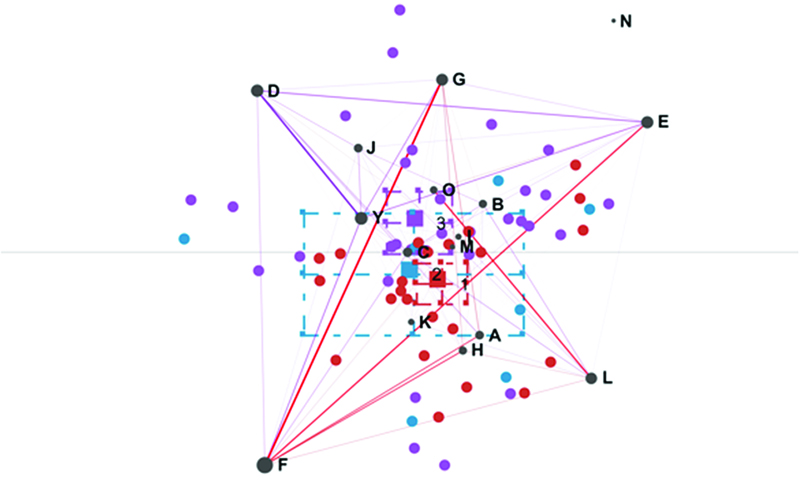
Figure 1 presents an ENA projection of professional development networks among indigenous language teachers in rural regions. In this network visualization, each node represents a key actor or institutional role involved in teachers’ learning and co-productive engagement, while the red connecting lines (edges) reflect the strength of the co-occurrence between actors, measured through normalized adjacency vectors. The thickness of these lines indicates the weighted frequency and intensity of co-production ties. Among the identified connections, the link between Community Language Staff and Tribal Elders (E–L) emerged as the most prominent, with a normalized weight of 0.10, highlighting this dyad as the most significant link in the network. This suggests that indigenous teachers rely heavily on the cultural and linguistic knowledge passed on by Tribal Elders, often mediated by Community Language Staff, underscoring the centrality of localized cultural expertise in rural indigenous professional development. Other strong ties included connections between Indigenous Education Center Directors and School Leadership (D–F) and between School Leadership and Tribal Elders (F–L), both with weights of 0.08, reflecting the bridging role of formal educational institutions in supporting traditional knowledge systems. Moderate associations such as those between Other Indigenous Teachers and Tribal Elders (J–L), Community Language Staff and School Leadership (E–F), and School Leadership and Principals (F–G), each with a weight of 0.05, further demonstrate the layered, multilevel structure of support that indigenous teachers navigate. However, the dominant E–L connection underscores the indispensable role of older knowledge systems and community language brokers in sustaining culturally grounded professional development.
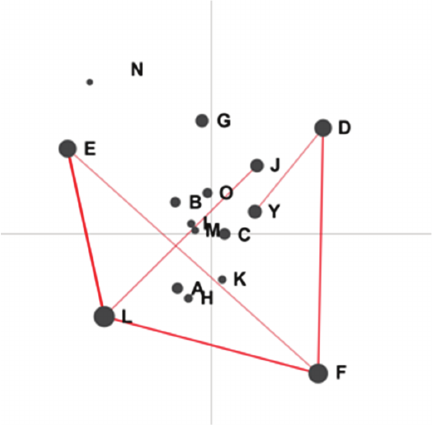
Fig. 1. Visualization of the professional development network among indigenous language teachers. Node size represents frequency of selection; edge thickness represents co-occurrence weight (only edges \(\ge 0.05\) shown).
These patterns revealed a strong reliance on locally embedded figures, particularly school-based personnel (F: Directors of Academic Affairs, E: Indigenous Language Promoters) and traditional knowledge holders (L: Tribal Elders). The connection between E and L (0.10) was the most prominent, suggesting that informal intergenerational mentorship played a critical role in the transmission of indigenous cultural and linguistic knowledge.
Moreover, the D–F–L triangle highlighted an integrated support system between the Indigenous Education Center, Formal School Leadership, and the Community. This resonates with the notion that network-based governance structures, as discussed by Thompson 20, facilitate horizontal collaboration between institutional and non-institutional actors, which is necessary in decentralized or underserved educational contexts.
Network visualization revealed notable co-occurrence patterns among actors such as Indigenous Education Center Directors, School Leaders, and Tribal Elders. Although this structure may reflect important institutional and cultural linkages, further qualitative research is required to confirm how trust and mediation function. However, these preliminary patterns suggest that indigenous teacher development may be influenced by both formal structures and community-based relationships.
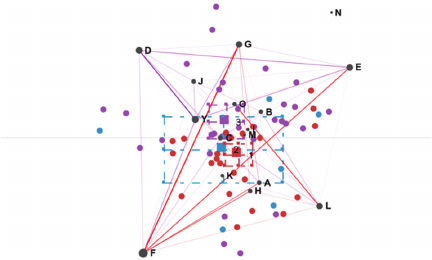
Fig. 2. ENA projection of all teachers (dots) with network co-occurrence lines. Red \(=\) Level 1, purple \(=\) Level 3, blue \(=\) Level 2.
4.2. Knowledge Construction Differences Among Teachers with Varying Co-Production Behaviors
To investigate how co-production behaviors influence the structure of knowledge construction, participants were categorized into three groups based on their levels of co-production engagement: Level 1 (low involvement), Level 2 (moderate involvement), and Level 3 (high involvement). Levels 1 and 3 represent the contrasting ends of the co-production spectrum, and the comparison follows a maximum contrast approach. Fig. 2 presents the composite ENA model, where each dot represents an individual teacher, and the lines represent the co-occurrence relationships between key actors.
The overlapping yet structurally differentiated clusters suggest that teachers at different co-production levels construct knowledge using distinct social strategies and epistemic associations.
To explore the most contrasting patterns, we compared Level 1 (individual) and Level 3 (collective) co-production groups. Fig. 3 shows the ENA networks. The red network (left) corresponds to Level 1, whereas the purple network (right) corresponds to Level 3. Visual inspection revealed that Level 3 participants formed denser and more distributed connections, particularly among school-based actors (F: Academic Directors, G: Principals, E: Language Promoters) and traditional knowledge holders (L: Elders).
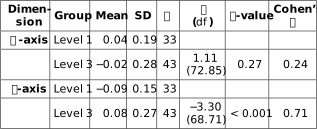
Statistical analyses further supported these observations. A two-sample \(t\)-test, assuming unequal variances, was conducted to examine group differences along the ENA projection axes (Table 4).
The significant difference along the \(Y\)-axis indicated that the Level 3 participants exhibited more integrated and distributed epistemic structures, suggesting a higher degree of cross-boundary collaboration and knowledge exchange. This finding supported the proposition that teachers who actively engage in collective co-production develop richer and more interconnected professional knowledge networks.
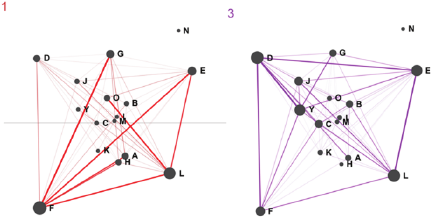
Fig. 3. Comparative ENA network plots between Level 1 (left, red) and Level 3 (right, purple) participants. Node size indicates frequency of co-occurrence; edge width indicates normalized connection weight.
These findings emphasize that engagement in collective co-production not only expands the scope of participation but also shapes the structure and diversity of professional knowledge construction. Active collaboration with both institutional actors and community elders appears to facilitate a more robust epistemic ecosystem for rural indigenous teachers.
Table 4. Comparison between Levels 1 and 3.
Although the primary comparative analysis focused on Level 1 (individual co-production) and Level 3 (collective co-production), we also examined Level 2 (group co-production) participants. The statistical results showed that Level 2 did not differ significantly from either Level 1 or 3 in terms of epistemic structure along the primary ENA dimensions. This suggested that group-level co-production might represent a transitional or hybrid engagement form that incorporates elements of both individual and collective practices. Teachers in Level 2 typically collaborated within institutional contexts (e.g., among teaching peers or school-based projects) but did not consistently extend their engagement to include broader community actors, such as tribal elders or policy intermediaries. Thus, while Level 2 behaviors demonstrated moderate co-occurrence patterns, they lacked the boundary-crossing intensity observed in Level 3 or the isolated patterns of Level 1. This interpretation aligned with the ENA visualizations (Fig. 2), where Level 2 (blue nodes) occupied an intermediary position, further supporting its role as a bridging category.
5. Discussion
This study offers a novel contribution to the literature on indigenous teacher professional development by integrating two-mode network analysis and ENA to examine co-production behaviors in rural Taiwan. By identifying key actors such as tribal elders, school leaders, and community language staff as central nodes in teachers’ professional growth networks, the findings highlight the distributed and relational nature of indigenous teacher learning. The use of ENA further reveals how varying levels of co-production correspond to differences in knowledge construction, providing methodological insights for analyzing epistemic and social structures simultaneously.
5.1. Decentralized, Community-Centric Professional Networks
The first key finding highlights that indigenous teachers in rural areas tend to rely heavily on school-based personnel (e.g., directors of academic affairs, principals) and community elders for professional learning. Nodes such as F (school leadership), L (tribal elders), and E (language promotion staff) emerged as the most central and frequently co-occurring actors. This suggests that indigenous teacher development is not exclusively facilitated by formal institutions but is often co-constructed through hybrid spaces, blending policy-driven roles with traditional, community-based knowledge sources.
This pattern supports the perspective of network governance in public services 20 and relational co-production 8,23, which argue that effective service delivery, particularly in culturally sensitive domains, requires horizontal coordination among multiple actors. The prominence of elders and community institutions in these networks emphasizes the importance of local knowledge sovereignty, echoing the findings of Hill et al. 8 that indigenous learning environments benefit from inclusive and epistemologically pluralistic systems.
5.2. Co-Production as Driver of Epistemic Diversity
The second major contribution lies in the demonstration that co-production behavior levels are closely tied to teachers’ epistemic network structures. Participants who engaged more actively in collective co-production (Level 3) displayed more complex, distributed, and semantically integrated networks than those who engaged primarily in individual-level actions (Level 1). While visual and statistical comparisons along the ENA \(X\)-axis showed no significant differences, the \(Y\)-axis revealed a meaningful distinction (\(p<0.001\), Cohen’s \(d=0.71\)), underscoring a qualitative shift in knowledge construction patterns associated with group collaboration and systemic engagement.
These findings align with Shaffer’s theory of epistemic frame development 14, which posits that professional competence is not merely the accumulation of content but also the development of structured ways of seeing and acting in a domain. Teachers who operate within collective co-production settings appear to construct knowledge not just through personal expertise but also through socially negotiated understanding, a key feature of distributed cognition.
These results are partially consistent with McMullin’s typology 24 of co-production, suggesting that individual, group, and collective levels may be associated with differences in behavioral patterns as well as epistemic structures. While the Level 3 group showed broader access to relational and knowledge nodes, such differences should be interpreted cautiously, given the limited inferential scope of the current dataset.
Acknowledgments
This study was supported by the National Science and Technology Council (NSTC), Taiwan, under Grant No.NSTC-113-2420-H-142-001-.
- [1] Y. Tan, Z. Swiecki, A. R. Ruis, and D. W. Shaffer, “Epistemic network analysis and ordered network analysis in learning analytics,” M. Saqr and S. López-Pernas (Eds), “Learning analytics methods and tutorials: A practical guide using R,” Springer Nature Switzerland, pp. 569-636, 2024. https://doi.org/10.1007/978-3-031-54464-4_18
- [2] V. Rolim, R. Ferreira, R. D. Lins, and D. Găsević, “A network-based analytic approach to uncovering the relationship between social and cognitive presences in communities of inquiry,” The Internet and Higher Education, Vol.42, pp. 53-65, 2019. https://doi.org/10.1016/j.iheduc.2019.05.001
- [3] J. W. Reid, J. Parrish, S. B. Syed, and B. Couch, “Finding the connections: A scoping review of epistemic network analysis in science education,” J. of Science Education and Technology, Vol.34, pp. 937-955, 2024. https://doi.org/10.1007/s10956-024-10193-x
- [4] N. Pantić et al., “Making sense of teacher agency for change with social and epistemic network analysis,” J. of Educational Change, Vol.23, pp. 145-177, 2022. https://doi.org/10.1007/s10833-021-09413-7
- [5] C. McMullin, “Individual, group, and collective co-production: The role of public value conceptions in shaping co-production practices,” Administration & Society, Vol.55, No.2, pp. 239-263, 2023. https://doi.org/10.1177/00953997221131790
- [6] T. Bovaird and E. Loeffler, “From engagement to co-production: The contribution of users and communities to outcomes and public value,” Voluntas: Int. J. of Voluntary and Nonprofit Organizations, Vol.23, pp. 1119-1138, 2012. https://doi.org/10.1007/s11266-012-9309-6
- [7] V. Pestoff, “Collective action and the sustainability of co-production,” Public Management Review, Vol.16, No.3, pp. 383-401, 2014. https://doi.org/10.1080/14719037.2013.841460
- [8] R. Hill et al., “Working with indigenous, local and scientific knowledge in assessments of nature and nature’s linkages with people,” Current Opinion in Environmental Sustainability, Vol.43, pp. 8-20, 2020. https://doi.org/10.1016/j.cosust.2019.12.006
- [9] L. Acar, T. Steen, and B. Verschuere, “Public values? A systematic literature review into the outcomes of public service co-creation,” Public Management Review, Vol.27, No.5, pp. 1357-1389, 2025. https://doi.org/10.1080/14719037.2023.2288248
- [10] N. Haug, “Actor roles in co-production—Introducing intermediaries: Findings from a systematic literature review,” Public Administration, Vol.102, No.3, pp. 1069-1094, 2024. https://doi.org/10.1111/padm.12965
- [11] D. W. Shaffer, W. Collier, and A. R. Ruis, “A tutorial on epistemic network analysis: Analyzing the structure of connections in cognitive, social, and interaction data,” J. of Learning Analytics, Vol.3, No.3, pp. 9-45, 2016. https://doi.org/10.18608/jla.2016.33.3
- [12] Y. Ogai, Y. Matsumura, Y. Hoshino, T. Yasuda, and K. Ohkura, “Centralized business-to-business networks in the Japanese textile and apparel industry: Using network analysis and an agent-based model,” J. Robot. Mechatron., Vol.31, No.4, pp. 546-557, 2019. https://doi.org/10.20965/jrm.2019.p0546
- [13] R. Elmoazen, M. Saqr, M. Tedre, and L. Hirsto, “A systematic literature review of empirical research on epistemic network analysis in education,” IEEE Access, Vol.10, pp. 17330-17348, 2022. https://doi.org/10.1109/ACCESS.2022.3149812
- [14] D. W. Shaffer et al., “Epistemic network analysis: A prototype for 21st-century assessment of learning,” Int. J. of Learning and Media, Vol.1, No.2, pp. 33-53, 2009. https://doi.org/10.1162/ijlm.2009.0013
- [15] D. Bowman et al., “The mathematical foundations of epistemic network analysis,” A. R. Ruis and S. B. Lee (Eds.), “Advances in Quantitative Ethnography,” pp. 91-105, Springer, 2021. https://doi.org/10.1007/978-3-030-67788-6_7
- [16] S. Zhang et al., “Understanding student teachers’ collaborative problem solving: Insights from an epistemic network analysis (ENA),” Computers & Education, Vol.183, Article No.104485, 2022. https://doi.org/10.1016/j.compedu.2022.104485
- [17] P. Fawcett and C. Daugbjerg, “Explaining governance outcomes: Epistemology, network governance and policy network analysis,” Political Studies Review, Vol.10, No.2, pp. 195-207, 2012. https://doi.org/10.1111/j.1478-9302.2012.00257.x
- [18] A. L. Siebert-Evenstone et al., “In search of conversational grain size: Modeling semantic structure using moving stanza windows,” J. of Learning Analytics, Vol.4, No.3, pp. 123-139, 2017. https://doi.org/10.18608/jla.2017.43.7
- [19] T. Greany and R. Higham, “Hierarchy, markets and networks: Analysing the ’self-improving school-led system’ agenda in England and the implications for schools,” UCL Institute of Education Press, 2018.
- [20] G. Thompson, “Between hierarchies and markets: The logic and limits of network forms of organization,” Oxford University Press, 2003. https://doi.org/10.1093/acprof:oso/9780198775270.001.0001
- [21] M. Tavakol and R. Dennick, “Making sense of Cronbach’s alpha,” Int. J. of Medical Education, Vol.2, pp. 53-55, 2011. https://doi.org/10.5116/ijme.4dfb.8dfd
- [22] K. Kurkela, S. Maijala, S. Tuurnas, and H. Jalonen, “Citizen agency in value co-creation processes—A literature review,” Int. J. of Public Sector Management, 2025. https://doi.org/10.1108/IJPSM-06-2024-0203
- [23] A. Uster, “Governmental implementation of information and communication technology at the local level: Digital co-production during a crisis,” Australian J. of Public Administration, Vol.84, No.1, pp. 69-101, 2025. https://doi.org/10.1111/1467-8500.12657
- [24] C. McMullin, “The case against co-production as a silver bullet: Why and when citizens should not be involved in public service delivery,” Public Management and Governance Review, Vol.1, No.1, 2024. https://doi.org/10.60733/PMGR.2024.04
This article is published under a Creative Commons Attribution-NoDerivatives 4.0 Internationa License.