
Research Paper:
Reused over Refurbished: Exploring Smartphone Life Extension in Thailand’s Informal Market
Kwanmanas Meethavorn*
 , Chanathip Pharino**
, and Aksornchan Chaianong***,†
*Department of Environmental Science, Chulalongkorn University
254 Phaya Thai Road, Wang Mai Subdistrict, Pathum Wan District, Bangkok 10330, Thailand
**Department of Environmental Engineering, Chulalongkorn University
Bangkok, Thailand
***Sustainability Transition Policy Group, Friedrich-Alexander-Universität Erlangen-Nürnberg
Nürnberg, Germany
†Corresponding author

The rapid turnover of smartphones has created a growing electric waste challenge globally, particularly in emerging economies where formal recycling infrastructure remains limited. Circular economy strategies, such as reuse and refurbishment, offer potential pathways to extend smartphone lifespans, yet consumer preferences and market structures strongly shape their adoption. This study explores the dynamics of smartphone life extension in Thailand’s informal economy, focusing on Bangkok’s second-hand smartphone market. Data were collected through structured interviews with 110 kiosk operators in Bangkok, complemented by stakeholder insights from recyclers and used-phone providers. Descriptive and inferential statistical analyses were conducted to examine business pathways, purchasing behavior, and factors influencing smartphone life extension. The findings demonstrated that reuse, rather than refurbishment, constitutes the dominant life-extension pathway. Most kiosks preferred smartphones that could be resold with minimal repair, while warranty provision emerged as the strongest enabling factor supporting consumer trust. Inferential analyses showed that prolonged smartphone circulation was significantly associated with product value, reflected in brand and price, whereas external condition and technical functionality were not significantly associated with smartphone age. Government support was perceived as limited, indicating that the market currently operates largely through decentralized commercial relationships rather than formal policy intervention. Thus, the study demonstrates that informal markets can serve as effective mechanisms for extending product lifespans and suggests that circular economy transitions in middle-income economies depend not only on refurbishment infrastructure but also on market organization, consumer trust, and product value.
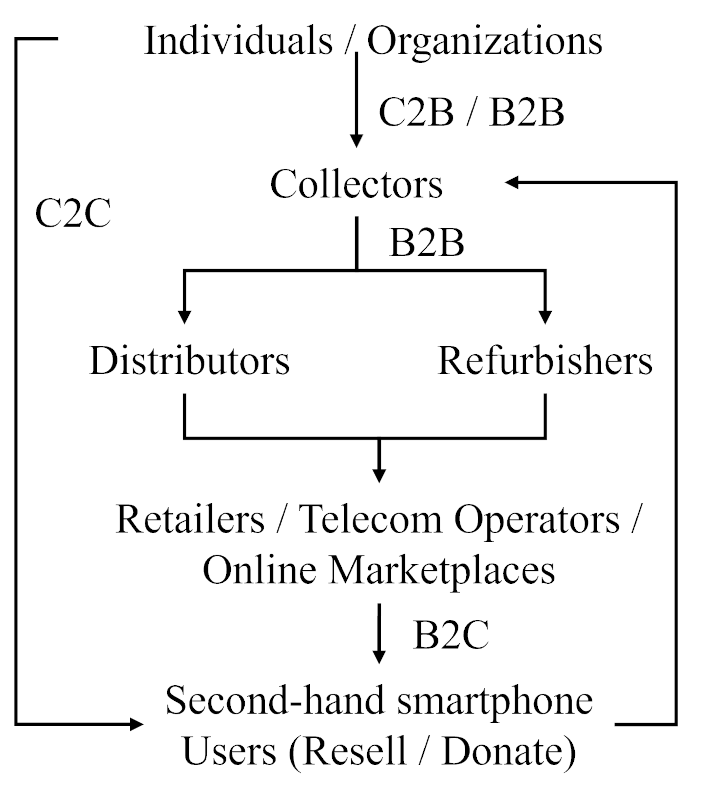
Second-hand smartphone market pathways
1. Introduction
The rapid turnover of smartphones, driven by innovation cycles and planned obsolescence, has made them one of the fastest-growing contributors to global electronic waste (e-waste) 1. In 2022 alone, over 5.36 billion devices were discarded, with only a fraction formally collected for reuse or recycling. Given the resource-intensive production and short lifespans of smartphones, extending their use has become central to the circular economy (CE) agenda. CE offers an alternative to the linear “take–make–dispose” model by promoting reuse, refurbishment, and recycling as pathways to slow material throughput, reduce raw material extraction, and divert devices from landfills 2,3. For smartphones, these life-extension strategies differ in terms of technical requirements, consumer acceptance, business models, and institutional support 4,5,6.
Globally, the adoption of reuse and refurbishment strategies varies with market structure and consumer perception. In high-income countries, certified refurbishment programs supported by brand manufacturers or third-party vendors have become widespread, bolstered by warranty systems and quality assurances 5,6. In contrast, in emerging markets, research consistently highlights consumer hesitation toward refurbished products, citing concerns about quality, price, trust, and warranty, with a stronger reliance on reusing devices in visibly good condition through informal trade networks 7,8. Brand reputation further shapes these dynamics: iPhones retain higher resale value and longer lifespans than Android devices, owing to extended software updates and consumer trust 9. These findings suggest that the balance between reuse and refurbishment is shaped not only by product characteristics but also by market structures and institutional conditions.
Asia offers a diverse landscape of smartphone consumption behavior shaped by cultural values, economic structures, and environmental awareness. Studies in Japan 10, Sri Lanka 7, and Indonesia 10 highlight factors such as price consciousness, environmental attitudes, and brand loyalty as drivers of second-hand adoption; however, “green” attitudes alone are insufficient without supportive infrastructure and retailer transparency 10,11. For instance, in Sri Lanka, the awareness of CE principles remains low despite positive consumer attitudes toward reuse 7. Broader analyses of circular consumption further highlight that economic incentives, resale trust, and social influences such as electronic word-of-mouth and peer norms are often more decisive than environmental awareness alone in driving purchase behavior 12. Despite the growing scholarly interest in CE, there remains limited empirical evidence explaining why reuse often dominates refurbishment in the informal second-hand smartphone market in Southeast Asia. Most academic focus has remained on Europe and North America, where structured reverse logistics and certified refurbishment practices dominate 4. In contrast, in Thailand, smartphone life extension is primarily driven by informal repair kiosks, peer-to-peer online platforms, and business-to-business (B2B) resale, yet there is a scarcity of empirical data examining how these informal market structures influence business pathways, consumer preferences, and life-extension strategies 13,14.
This study addresses this gap by investigating Bangkok’s informal smartphone market, in which preliminary evidence suggests that reuse dominates refurbishment. Specifically, this study seeks to (1) map the business models and acquisition practices of second-hand smartphone kiosks, (2) explain why reuse is preferred over refurbishment by examining consumer preferences and business practices, and (3) identify enabling and constraining factors. By integrating business pathways, consumer behavior, and institutional conditions, this study provides empirical evidence of why reuse currently dominates smartphone life extension in an informal market and discusses its implications for CE transitions in middle-income economies.
2. Methodology
This study adopted a mixed-methods approach combining literature analysis and stakeholder interviews.
The literature review focused on publications related to second-hand smartphone markets, refurbishment, repair, and the CE in Southeast Asia and comparable middle-income countries. Sources included peer-reviewed journal articles, industry reports, company publications, and government or reputable news reports published in English or Thai. These sources were selected for their relevance to identifying key stakeholders, business models, and market structures in Thailand’s second-hand smartphone ecosystem.
Primary data were collected from February to March 2025 through semi-structured on-site interviews with the operators of 110 second-hand smartphone kiosks. The interviews followed a standardized interview guide (Appendix A), allowing interviewers to collect comparable information while probing for clarification where necessary. Due to the absence of a formal national registry, a purposive sampling method was employed to target established kiosks in major IT retail hubs within department stores, while excluding dispersed street vendors to ensure a more consistent sampling frame. To enhance the coverage of Bangkok’s metropolitan market, the sampling sites were stratified into two geographic zones: inner Bangkok (e.g., MBK Center, Pantip Plaza, Union Mall, and Central Ladprao) and outer Bangkok (e.g., The Mall Tha Phra, Second Square Bangkae, and Future Park Rangsit). Approximately 55 interviews were conducted for each zone. Overall, the sample size exceeded the 20–40 interview range suggested for achieving cross-contextual thematic saturation in multi-sited qualitative research 15, providing broad coverage of Bangkok’s major second-hand smartphone trading hubs. As purposive sampling was employed, the objective was to achieve comprehensive coverage of stakeholder perspectives and thematic saturation rather than statistical representativeness. Accordingly, the findings primarily reflect the formalized kiosk-based market segment in Bangkok rather than the entire informal smartphone market. The interview guide covered four sections: (1) shop characteristics, (2) acquisition practices, (3) customer profiles and purchase behaviors, and (4) factors influencing business sustainability. Although the interview questions were open-ended, the responses were coded using a standardized coding framework developed by the research team (Appendix A). Similar responses were grouped into predefined analytical categories and transformed into quantitative variables for statistical analysis. Binary and multiple-response variables were coded as 0/1 (e.g., not mentioned/mentioned), while smartphone age was classified into three ordinal categories (\(\le\)4 years, 5–7 years, and \(\ge\)8 years). The resulting coded dataset was analyzed using descriptive statistics and Pearson’s chi-square test with Fisher’s exact test when expected cell counts did not meet the assumptions of the chi-square test. Statistical significance was set at \(p<0.05\). The same predefined coding rules were consistently applied across all 110 kiosk interviews. Respondents directly rated each factor on a four-point scale (from 0 \(=\) not important to 3 \(=\) highly important), and mean scores were calculated across all 110 responses. Each interview lasted for approximately 15–20 min per shop. In addition to kiosk operators, key informant interviews were conducted with smartphone recyclers and with upstream used-phone providers. These interviews served to triangulate the findings from kiosk operators and better understand value flows and stakeholder interactions within the informal second-hand smartphone ecosystem.
3. Results and Discussion
3.1. Smartphone Business Models and Pathways in Thailand
Figure 1 illustrates the business pathways supporting smartphone life extension in Thailand’s informal second-hand smartphone market. Interviews with kiosk operators and upstream stakeholders revealed that Thailand’s second-hand ecosystem integrates interconnected B2B, business-to-consumer, and customer-to-customer pathways (Fig. 1). Collectors act as principal entry points by sourcing smartphones from individual consumers, organizational bulk sales, and manufacturer trade-in programs before redistributing them to downstream distributors, refurbishers, and retailers. The ecosystem also involves smartphone manufacturers, telecommunications operators, repair shops, and recyclers, forming interconnected value chains that extend smartphone lifetimes through reuse, repair, and resale before the final material recovery 16,17. Similar patterns have been observed in China, where large-scale electronic product networks coexist with informal vendors 18. However, in Thailand, the collection system is dominated by small kiosks in department stores and marketplaces, reflecting a fragmented and largely informal structure that contrasts sharply with the more centralized models in other regions.
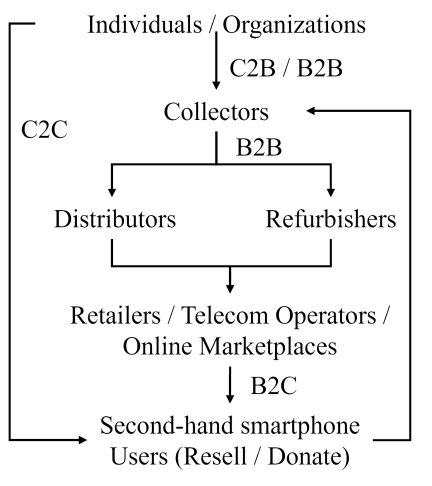
Fig. 1. Smartphone business models and empirical pathways. B2B: business-to-business; B2C: business-to-consumer; C2B: consumer-to-business; C2C: customer-to-customer.
Interviews with upstream stakeholders further revealed that manufacturers’ trade-in programs primarily function as sales and customer retention strategies rather than maximizing refurbishment. This observation is consistent with studies showing that trade-in programs are designed to stimulate replacement purchases while facilitating product returns to secondary markets 16. According to smartphone manufacturers’ marketing representatives, trade-in campaigns are designed to encourage consumers to upgrade their devices by offering promotional incentives and trade-in discounts. Smartphones collected through these programs are subsequently transferred to specialized third-party companies (e.g., Remobie and ComAsia) for sorting, resale, refurbishment, or recycling rather than being refurbished directly by manufacturers. This finding highlights the important role of independent market actors in extending smartphone lifespans in Thailand’s informal ecosystem.
Refurbishers comprised a relatively small proportion of the system. Unlike in Europe, where refurbishers are supported by certification schemes and embedded in CE strategies 17,19, most kiosk operators reported undertaking only minor repairs, such as battery or screen replacement, before resale, whereas extensive refurbishment remained uncommon. Consequently, smartphone life extension is achieved primarily through decentralized reuse networks supported by minor repairs rather than through dedicated refurbishment businesses. This finding supports Wieser and Tröger’s 20 argument that the inner loops of circularity—reuse, repair, and redistribution—are more cost-efficient than the outer loops (refurbishment and recycling) in contexts with weak institutional support. This market structure provides a foundation for understanding why reuse dominates refurbishment in Thailand’s informal smartphone market, as discussed in the following section.
Overall, the findings demonstrate that smartphone life extension in Thailand is primarily achieved through decentralized market actors rather than by manufacturer-led refurbishment programs. The dominance of collectors, distributors, and independent kiosks enables the rapid circulation of used smartphones through reuse and minor repairs, providing a foundation for understanding why reuse has become the predominant life-extension strategy in Thailand’s informal smartphone market, as discussed in the following section.
| Category | Analysis | \(\boldsymbol{\chi^2}\) | df | \(\boldsymbol{p}\)-value | Interpretation |
| Market context | Location \(\times\) Repair acceptance | 1.470 | 1 | 0.225 | No geographic difference |
| Location \(\times\) Acquisition source\(^{*1}\) | – | – | 1.000 | No geographic difference | |
| Location \(\times\) Popular iPhone | 4.982 | 1 | 0.026 | Inner Bangkok reported more iPhones | |
| Location \(\times\) Smartphone age | 4.087 | 2 | 0.130 | No geographic difference | |
| Product longevity | Age category \(\times\) Popular iPhone | 10.225 | 2 | 0.006 | Brand importance tends to increase with smartphone age |
| Age category \(\times\) Samsung | 2.399 | 2 | 0.301 | No significant association between smartphone age category and Samsung preference | |
| Purchasing considerations | Age category \(\times\) Price | 14.582 | 2 | \(\boldsymbol{{<}0.001}\) | Price is associated with shorter smartphone circulation |
| Age category \(\times\) Brand consideration | 5.163 | 2 | 0.076\(^{*2}\) | Marginal trend | |
| Age category \(\times\) External condition | 2.808 | 2 | 0.246 | Cosmetic condition does not explain smartphone longevity | |
| Age category \(\times\) Functionality/specification | 3.827 | 2 | 0.148 | No significant association |
\(^{*1}\)Fisher’s exact test was reported because expected cell counts were below the assumptions for Pearson’s chi-square.
\(^{*2}\)Linear-by-linear association: \(p=0.033\).
3.2. Evidence for the Dominance of Reuse over Refurbishment
Before investigating the factors associated with smartphone life extension, chi-square analyses were conducted to determine whether business practices differed between kiosks in inner and outer Bangkok. No statistically significant differences were observed in repair acceptance, smartphone acquisition practices, or the age category of smartphones that remained in circulation (Table 1), indicating broadly consistent business operations across Bangkok. The only significant difference concerned brand composition, with kiosks in inner Bangkok reporting a higher proportion of iPhone sales than those in outer Bangkok (\(\chi^2=4.982\), \(p=0.026\)). Consequently, the combined dataset was considered appropriate for subsequent analyses.
The findings show that the majority of kiosks (83%) sourced their second-hand inventory directly from individual customers, with 66% preferring phones in good cosmetic and functional condition that could be resold, thereby avoiding extensive refurbishment. This emphasizes the dominance of reuse loops in Bangkok’s second-hand ecosystem, where devices circulate without major repairs. Such practices are not only economically attractive but also environmentally efficient because reuse requires fewer material and energy inputs than refurbishment or recycling 20. This finding provides direct empirical evidence for the central proposition that reuse, rather than refurbishment, is the dominant product life-extension pathway in Thailand’s informal smartphone market.
To further investigate the factors associated with smartphone life extension, chi-square analyses were conducted to examine associations between smartphone age categories and key purchasing characteristics (Table 1).
A significant association was found between smartphone age category and iPhone popularity (\(\chi^2 = 10.225\), \(p=0.006\)). Smartphones remained in circulation for significantly longer in kiosks, where iPhones constituted the dominant resale product compared with kiosks specializing in other brands, whereas no comparable relationship was observed for Samsung. Rather than indicating a brand effect alone, these findings suggest that smartphones with higher residual values and stronger consumer confidence are better suited to Thailand’s reuse-oriented informal market, where repeated resale with minimal repair is economically preferred. Similarly, previous studies highlighted consumer trust, warranty, and perceived product value as important factors influencing the acceptance of second-hand and refurbished smartphones 8,16,21.
Purchasing considerations also varied according to smartphone age. Price exhibited the strongest association with smartphone age (\(\chi^2=14.582\), \(p<0.001\)), indicating that purchasing decisions varied with devices’ remaining lifespan. Price was more frequently identified as an important purchasing consideration for smartphones among younger age groups, whereas older smartphones remaining in circulation were less dependent on affordability alone. By contrast, external conditions and functionality were not significantly associated with smartphone age, suggesting that cosmetic appearance and technical specifications do not independently explain prolonged product circulation. Brand consideration showed a marginal ordinal trend, indicating that consumer perceptions of brand value may become increasingly important as smartphones remain in the secondary market for longer periods.
Overall, the inferential analyses support the descriptive findings that smartphone life extension in Thailand is driven primarily by direct reuse rather than extensive refurbishment. Within Thailand’s decentralized informal market, independent kiosks preferentially acquire smartphones that require little intervention, allowing high-value devices to circulate repeatedly through successive resale transactions. Therefore, refurbishment functions mainly as a supporting activity involving minor repairs, rather than a separate business model. These findings suggest that the interaction between product value, consumer trust, and the characteristics of Thailand’s informal market creates conditions under which reuse becomes the dominant circular strategy. Collectively, these findings demonstrate that in middle-income economies where informal markets remain dominant, CE transitions may depend as much on decentralized market organization, consumer trust, and product value as on investments in formal refurbishment infrastructure.
3.3. Enabling and Constraining Factors
In addition to consumer preferences, shop owners identified several factors influencing the sustainability of Thailand’s second-hand smartphone market (Table 2).
| Factors | Mean score (0–3) | High [%] | Interpretation |
| Product warranty / standard assurance | 2.63 | 78.2 | Builds consumer trust |
| Availability of repairing/refurbishing shops | 2.03 | 37.3 | Support minor repair |
| A system of collecting old smartphones to sell | 1.44 | 13.6 | Fragment supply network |
| Support from the government | 1.16 | 20.0 | Limited institutional support |
Note: \(N = 110\). Mean scores were calculated directly from respondents’ ratings using a four-point ordinal scale (0 = not important, 3 = highly important), where high [%] represented respondents assigning a score of 3.
Among these, product warranty or standard assurance received the highest support (\(\textrm{mean}=2.63\)), followed by the availability of repair and refurbishment services (\(\textrm{mean}=2.03\)) and collection systems (\(\textrm{mean}=1.44\)). In contrast, government support received the lowest rating (\(\textrm{mean}=1.16\)), indicating that the market currently relies more on private-sector initiatives than on formal institutional support.
Warranty and after-sales assurance emerged as the strongest enabling factors, with nearly four of five respondents identifying them as highly important. Kiosk operators have consistently reported that even short-term warranties increase consumer confidence by reducing the perceived risk associated with purchasing second-hand smartphones. Although most devices were sold without extensive refurbishment, warranty provisions served as a practical mechanism for building trust between sellers and consumers. This finding is consistent with previous studies demonstrating that warranty and quality assurance significantly improve consumer acceptance of reused and refurbished electronic products 22.
The availability of repair services was the second most important enabling factor (\(\textrm{mean}=2.03\)). However, the interviews indicated that the repair activities were generally limited to minor interventions, particularly battery and screen replacements, rather than comprehensive refurbishment. These services primarily restore devices to reasonable conditions, allowing smartphones to re-enter the market with minimal processing. This finding reinforces the business pathways described in Section 3.1 and the inferential analyses presented in Section 3.2, both of which indicate that reuse, rather than extensive refurbishment, constitutes the dominant product life extension strategy in Thailand’s informal smartphone market.
The collection system received moderate support (\(\textrm{mean}=1.44\)). While most kiosk operators source smartphones directly from individual consumers, the interviewees described the collection channels as fragmented and dependent on walk-in customers, personal networks, and informal intermediaries. Consequently, the continued availability of reusable smartphones relies largely on decentralized commercial relationships rather than coordinated reverse logistics systems. Unlike the formal collection models reported in several high-income countries 4, Thailand’s informal market continues to depend on independent collectors, retailers, and repair shops to maintain product circulation.
Government support received the lowest average score (\(\textrm{mean}=1.16\)), with almost half the respondents reporting that government policies had little or no influence on their businesses. Interviewees generally expressed limited awareness of initiatives promoting repair, reuse, or circular-economy practices in the smartphone sector. These findings suggest that Thailand’s second-hand smartphone market has developed largely through market-driven coordination rather than formal policy intervention. Consequently, trust is established primarily through retailers’ reputations, warranty provisions, and long-standing business relationships rather than government-backed certifications or standardized refurbishment systems.
The findings further indicate that the sustainability of Thailand’s informal smartphone market depends not only on economic incentives but also on social and entrepreneurial motivations. Among kiosk operators, 32% reported entering the business primarily to provide affordable smartphones for lower-income consumers, 28% cited continuing family businesses, and 20% emphasized the higher profitability of second-hand devices compared with new smartphones. These motivations suggest that the informal market generates both commercial and social value by expanding smartphone access while supporting long-established local enterprises, consistent with observations of entrepreneurial behavior in other informal electronic product markets 19.
Overall, the findings demonstrate that consumer trust represents the principal enabling condition for extending smartphone life in Thailand’s informal market. Warranty provisions, retailer reputation, and minor repair services collectively support continued product circulation, whereas fragmented collection systems and limited government involvement constrain the expansion of formal refurbishment pathways. These results further suggest that in middle-income economies where informal markets remain dominant, successful CE transitions may depend as much on trust-based market relationships as on investments in formal refurbishment infrastructure.
3.4. Implications for CE Transitions
These findings demonstrate that CE transitions in emerging economies may differ from those commonly described in high-income countries. Whereas CE policies often emphasize formal refurbishment systems and reverse logistics, Thailand’s second-hand smartphone market relies primarily on informal collectors, retailers, and repair shops to extend product lifetimes. Rather than viewing these informal actors as barriers to circularity, they should be recognized as important contributors to product reuse and resource efficiency.
The predominance of reuse observed in this study is consistent with the CE hierarchy in which direct reuse generally preserves more product value and requires fewer additional resources than refurbishment or recycling 20. Most kiosk operators preferred smartphones that could be resold with little or no repair, whereas refurbishment was mainly limited to minor battery or screen replacements. These findings indicate that refurbishment primarily supports reuse rather than serving as a dominant life-extension strategy.
The significant association between smartphone age and iPhone popularity should also be interpreted in the context of Thailand’s market rather than as a brand effect alone. Smartphones with higher residual values, longer software support, and stronger consumer confidence are better suited to Thailand’s decentralized informal market, where retailers seek to minimize refurbishment costs and inventory risks. Thus, the observed “iPhone effect” reflects the interaction between product characteristics and the country’s reuse-oriented market structure.
These findings extend previous consumer-oriented studies of smartphone lifetime extension by showing that prolonged product circulation is determined not only by purchasing preferences but also by interactions among consumer demand, retained product value, and secondary-market organization. While previous studies have primarily examined factors influencing consumer acceptance of reused or refurbished smartphones, such as price, product quality, brand, trust, and warranty 7,10,16,21, this study shows how these factors translate into actual life-extension pathways within an informal secondary market. Smartphones with sufficient residual value and consumer confidence can circulate repeatedly through decentralized resale networks with minimal intervention, and repair and refurbishment support this reuse process. Thus, this study advances the existing understanding by linking consumer-level determinants with product characteristics and market structure to explain smartphone lifetime extension.
From a policy perspective, Thailand’s second-hand smartphone market remains largely market-driven, with warranty systems providing greater support for reuse than formal government intervention. Instead of replacing informal markets with fully formalized systems, policymakers should strengthen the existing reuse networks through voluntary quality standards, improved collection systems, collaboration with manufacturers, and greater consumer confidence in second-hand products. Such approaches may better support CE transitions in Thailand and other middle-income countries, where informal markets remain central to extending product life.
4. Conclusion and Limitation
This study demonstrated that smartphone life extension in Thailand is primarily achieved through reuse rather than refurbishment within a decentralized informal market. The findings indicate that reuse is sustained through decentralized business networks that enable smartphones to be rapidly redistributed with minimal repair. In contrast, refurbishment is generally limited to minor interventions such as battery or screen replacement. Statistical analyses further revealed that smartphone longevity was significantly associated with product value, reflected in brand and price, whereas external condition and functionality were not significantly associated with smartphone age. These findings suggest that smartphone life extension is driven primarily by product value and consumer confidence rather than by refurbishment-related attributes.
In addition to product characteristics, the findings highlighted the importance of market-based trust mechanisms in supporting life extensions. The warranty provision was identified as the strongest enabling factor. In contrast, government support received the lowest rating, indicating that Thailand’s second-hand smartphone market currently operates largely through commercial incentives rather than formal policy interventions. Rather than interpreting the observed iPhone effect as a brand-specific phenomenon, the findings suggest that smartphones with higher residual values and longer software support are particularly compatible with Thailand’s reuse-oriented informal market structure.
This study contributes to a broader understanding of CE transitions in middle-income economies by demonstrating that informal markets can play a significant role in extending product lifetimes. The findings suggest that policies should strengthen existing reuse networks through quality assurance, voluntary certification, and improved collaboration between manufacturers and informal market actors rather than focusing solely on formal refurbishment systems.
This study had several limitations. First, it was geographically limited to kiosk-based businesses in Bangkok and may not fully represent regional or rural second-hand smartphone markets. Second, this study focused primarily on supply-side perspectives. Future studies should incorporate direct consumer surveys to better understand purchasing motivations and trust in reused and refurbished smartphones. Third, although this study examines the business pathways that support smartphone life extension, it does not quantify the environmental benefits of reuse and refurbishment. Future research that integrates life cycle assessment, consumer behavior analysis, and cross-country comparisons will provide a more comprehensive understanding of smartphone circularity across different institutional and market contexts. Finally, the cross-sectional design captures current business practices, yet it does not account for future changes in consumer preferences, smartphone technology, or policy development.
Acknowledgments
This research was supported by Research and Innovation Fund (NSRF) via the Program Management Unit for Human Resources & Institutional Development, Research and Innovation (Grant number B48G660121), which is associated with the project Circularity3 funded as Belmont Forum SSCP2022 AppId 2042.
- [1] C. P. Baldé, E. D’Angelo, V. Luda, O. Deubzer, and R. Kuehr, “Global transboundary e-waste flows monitor 2022,” United Nations Institute for Training and Research, 2022.
- [2] S. Çetin and J. Kirchherr, “The build back circular framework: Circular economy strategies for post-disaster reconstruction and recovery,” Circ. Econ. Sustain., Vol.5, No.3, pp. 1689-1726, 2025. https://doi.org/10.1007/s43615-024-00495-y
- [3] M. Geissdoerfer, P. Savaget, N. M. P. Bocken, and E. J. Hultink, “The circular economy – A new sustainability paradigm?,” J. Clean. Prod., Vol.143, pp. 757-768, 2017. https://doi.org/10.1016/j.jclepro.2016.12.048
- [4] J. C. T. Bieser et al., “Consumer-oriented interventions to extend smartphones’ service lifetime,” Clean. Responsible Consum., Vol.7, Article No.100074, 2022. https://doi.org/10.1016/j.clrc.2022.100074
- [5] D. A. Hazelwood and M. G. Pecht, “Life extension of electronic products: A case study of smartphones,” IEEE Access, Vol.9, pp. 144726-144739, 2021. https://doi.org/10.1109/access.2021.3121733
- [6] R. Pamminger, S. Glaser, and W. Wimmer, “Modelling of different circular end-of-use scenarios for smartphones,” Int. J. Life Cycle Assess., Vol.26, No.3, pp. 470-482, 2021. https://doi.org/10.1007/s11367-021-01869-2
- [7] W. M. H. P. Bandara and P. R. C. N. Ariyarathne, “Exploring consumer acceptance of refurbished smart phones in Sri Lankan market: Circular economy adoption,” J. Bus. Stud., Vol.11, No.2, pp. 73-89, 2024. https://doi.org/10.4038/jbs.v11i2.109
- [8] S. Holmström and H. Böhlin, “Towards a circular economy: A qualitative study on how to communicate refurbished smartphones in the Swedish market,” Umeå University, 2017.
- [9] T. Makov and D. Font Vivanco, “Does the circular economy grow the pie? The case of rebound effects from smartphone reuse,” Front. Energy Res., Vol.6, Article No.39, 2018. https://doi.org/10.3389/fenrg.2018.00039
- [10] Y.-Y. Chun et al., “What will lead Asian consumers into circular consumption? An empirical study of purchasing refurbished smartphones in Japan and Indonesia,” Sustain. Prod. Consum., Vol.33, pp. 158-167, 2022. https://doi.org/10.1016/j.spc.2022.06.015
- [11] J. C. Kerber, D. C. Fettermann, and M. Bouzon, “Effects of green and circular products’ features on consumers’ choice of remanufactured smartphones,” Bus. Strategy Environ., Vol.33, No.3, pp. 2331-2344, 2024. https://doi.org/10.1002/bse.3597
- [12] A. Klompstra, “The influence of eWOM on purchase intention for refurbished smartphones, mediated by trust and moderated by sentiment,” Master’s thesis, Radboud University, 2024.
- [13] B. S. Nzeyimana and S. M. Mariaselvam, “Behavioral drivers and e-waste valorization opportunities in HEIs: A dual-method study,” Circ. Econ. Sustain., Vol.5, No.6, pp. 5221-5246, 2025. https://doi.org/10.1007/s43615-025-00664-7
- [14] A. Singh, A. Yadav, T. T. Le, and S. Singh, “Recycling of electronic waste for circular economy goals: Systematic literature review,” Int. J. Glob. Bus. Compet., Vol.18, No.2, pp. 145-161, 2023. https://doi.org/10.1007/s42943-023-00081-3
- [15] A. K. Hagaman and A. Wutich, “How many interviews are enough to identify metathemes in multisited and cross-cultural research? Another perspective on Guest, Bunce, and Johnson’s (2006) landmark study,” Field Methods, Vol.29, No.1, pp. 23-41, 2017. https://doi.org/10.1177/1525822X16640447
- [16] L. Agostini, B. Bigliardi, S. Filippelli, and F. Galati, “Seller reputation, distribution and intention to purchase refurbished products,” J. Clean. Prod., Vol.316, Article No.128296, 2021. https://doi.org/10.1016/j.jclepro.2021.128296
- [17] D. Watson et al., “Circular business models in the mobile phone industry,” The Nordic Council of Ministers, 2017. https://doi.org/10.6027/TN2017-560
- [18] X. Chi, M. Streicher-Porte, M. Y. L. Wang, and M. A. Reuter, “Informal electronic waste recycling: A sector review with special focus on China,” Waste Manag., Vol.31, No.4, pp. 731-742, 2011. https://doi.org/10.1016/j.wasman.2010.11.006
- [19] J. Hapuli and A. Kumpulainen, “Circular economy of refurbished smartphones in the European Union: Research on drivers and barriers,” Karelia University of Applied Sciences, 2023.
- [20] H. Wieser and N. Tröger, “Exploring the inner loops of the circular economy: Replacement, repair, and reuse of mobile phones in Austria,” J. Clean. Prod., Vol.172, pp. 3042-3055, 2018. https://doi.org/10.1016/j.jclepro.2017.11.106
- [21] I. Gåvertsson, L. Milios, and C. Dalhammar, “Quality labelling for re-used ICT equipment to support consumer choice in the circular economy,” J. Consum. Policy, Vol.43, No.2, pp. 353-377, 2020. https://doi.org/10.1007/s10603-018-9397-9
- [22] A. Raihanian Mashhadi, A. Vedantam, and S. Behdad, “Investigation of consumer’s acceptance of product-service-systems: A case study of cell phone leasing,” Resour. Conserv. Recycl., Vol.143, pp. 36-44, 2019. https://doi.org/10.1016/j.resconrec.2018.12.006
Appendix
Appendix A. Semi-Structured Interview Guide
This interview guide (Table 3) was used to collect information from the second-hand smartphone kiosk operators in Bangkok. The responses were subsequently coded into predefined categories for descriptive and inferential statistical analyses.
| Section | Interview question | Interview item | Response / probe | Analytical variable | Coding |
|
Shop information |
– | Location | – | Location | \(0 =\) Inner, \(1 =\) Outer |
| Acquisition | Where do you usually acquire second-hand smartphones? | Second-hand smartphone acquisition | Customers bring phones / Buy from distributors or other sellers | Acquisition source | \(0=\) Buy from elsewhere, \(1 =\) Customers bring to shop |
| Acquisition | Would you buy a smartphone that requires repair? | Repair-needed condition accepted | Yes / No | Repair acceptance | \(0 =\) No, \(1 =\) Yes |
| Market characteristics | Which smartphone brand is currently the most popular among your customers? | Popular brands | iPhone / Samsung / Vivo / Oppo / Other Android |
Brand popularity |
Each brand coded separately: \(0 =\) not mentioned, \(1 =\) mentioned |
| Market characteristics | What is the oldest smartphone age that can still be sold in your shop? | Oldest phone that can still be sold | Open-ended (in years) | Smartphone age category |
1: \({\le}4\) yr, 2: 5–7 yr, 3: \({\ge}8\) yr |
| Customer preference | Do customers generally prefer newer or older smartphone models? |
Customer preference |
Newer / Older | Customer preference |
0 = Older model, 1 = Newer model |
| Purchasing considerations | What are the main factors customers consider when purchasing a second-hand smartphone? | Purchasing considerations | Price; Brand; External condition; Functionality / Specification (screen, battery, camera, etc.) | Purchasing factors | Each factor coded separately: 0 = not mentioned, 1 = mentioned |
| Enabling/constraining factors | How important are the following factors in supporting the second-hand smartphone business? | Enabling/constraining factors | Product warranty / standard assurance; Availability of repairing / refurbishing shops; A system of collecting old smartphones to sell; Support from the government | Factor rating |
0 = Not important, 1 = Slightly important, 2 = Important, 3 = Highly important |
| Additional comments | Do you have any additional comment? | Open-ended | Qualitative notes |
Note: The same predefined coding framework was consistently applied across all 110 kiosk interviews. Binary and multiple-response variables were coded as 0/1, while smartphone age was classified into three ordinal categories. For the enabling and constraining factors, the respondents directly assigned ratings from 0 (not important) to 3 (highly important); these scores were not assigned by the researchers.
Additional notes:
•Shop locations were classified as inner or outer Bangkok based on the Bangkok Metropolitan Administration district classification (https://district.bangkok.go.th/SEDPortal/50-map-overview/).
•All interviews were conducted face-to-face with kiosk operators in Thai and lasted for approximately 15–20 minutes.
•Responses to semi-structured questions were coded according to the predefined analytical categories presented above, with multiple responses coded separately where applicable.
•Open-ended responses and additional comments were retained as qualitative information and were used to support the interpretation and triangulation of the quantitative findings.
This article is published under a Creative Commons Attribution-NoDerivatives 4.0 Internationa License.