
Technical Paper:
Recycling Medical Intravenous Infusion Bags into Sharps Containers: Process Design and System Implementation
Shu-Mei Chien*,† and Cho-Chun Chou**
*Department of Nuclear Engineering, Pacific Engineers & Constructors, Ltd.
14F, No.333, Section 2, Dunhua South Road, Taipei 106033, Taiwan
†Corresponding author
**Green Hung Enterprise Co., Ltd.
Taichung, Taiwan

In 2024, Taiwan generated approximately 130,000 metric tons (MT) of medical waste, including about 42,000 MT of hazardous waste. Despite the implementation of circular economy initiatives, most of the medical waste is still incinerated and landfilled, thereby increasing the environmental burden through dioxin emissions and secondary pollution. Current recycling practices are aimed at converting medical plastics into secondary products but face logistical and operational challenges. This study developed a circular recycling system for medical intravenous (IV) infusion bags in Taiwan. In collaboration with two medical institutions, used IV bags were collected, sorted, cleaned, and reprocessed into recycled plastic pellets via a patented recycling-and-pelletization process. The pellets were incorporated into sharps containers, which were returned to participating hospitals, thus establishing a circular material pathway within the healthcare sector. The entire process was independently verified for traceability and regulatory compliance. The containers were assessed for recycled content, safety performance, and cradle-to-gate carbon footprint. The containers complied with ISO 14021 and ISO 23907-1 and were adopted by two hospitals in northern Taiwan. The carbon footprint was estimated as 1.852 kg CO2-eq per container, comprising 1.587 kg CO2-eq from raw-material acquisition and 0.265 kg CO2-eq from manufacturing. The economic dimension was discussed qualitatively through major cost components and potential avoided-cost mechanisms. The interpretation was limited by the unavailability of process data, financial and subsidy information, a quantitative base-case model, and a functionally equivalent virgin-plastic benchmark. The findings demonstrate practical implementation and provide a case-specific carbon-footprint baseline without establishing quantified environmental superiority or economic viability.
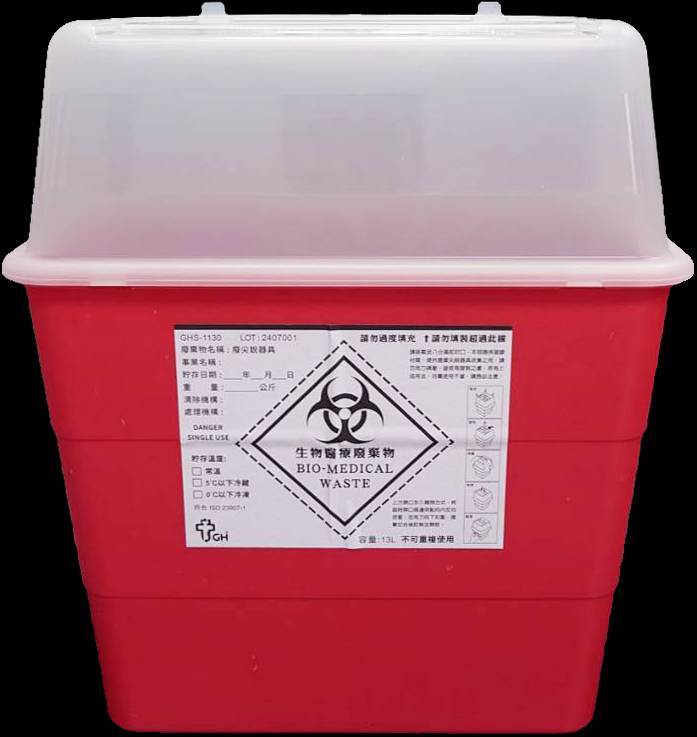
Sharps container from recycled IV bags
1. Introduction
In recent years, the Taiwanese government has actively implemented circular economy strategies in healthcare, designating hospitals as priority targets for the effective reuse and recycling of medical waste. Despite these efforts, intravenous (IV) infusion bags—which are among the largest contributors to medical plastic waste—are predominantly incinerated by certified waste management companies, with limited research addressing their recycling potential. The possibility of reprocessing IV bags for medical applications remains largely unexplored. The complex multilayer material composition of these bags, including plastics and additives, creates technical and regulatory barriers to effective recycling.
The need for precise control of the melting points and physicochemical properties of the components of IV bags during recycling introduces additional complexity. As a result, industry stakeholders have adopted a conservative stance on recycling composite medical IV infusion bags, thereby retarding the progress of medical waste recycling in Taiwan relative to other sectors.
Plastics are indispensable in modern society, but their production and disposal generate significant environmental burdens. Improperly discarded plastic waste, if solidified or landfilled rather than incinerated, accumulates in human environments. Approximately 120 million metric tons (MT) of plastic waste is estimated to accumulate in landfills or natural ecosystems by 2050 if waste management strategies are not improved 1. In Europe, plastic production and incineration contribute to nearly 400 million MT of CO\(_2\) emissions annually 2. Waste derived from composite materials further contaminates soil, water bodies, and marine ecosystems, exacerbating environmental degradation 3,4.
The rapid surge in medical plastic waste during the COVID-19 pandemic 5 underscored the urgency of developing innovative reuse and recycling technologies, as well as the implementation of circular economy models that can reintegrate the recovered materials into medical applications 6. Medical plastic waste management is widely acknowledged as complex and fragmented, with diverse separation and recycling methods under study but no consensus on the most effective strategy 7.
Waste management practices across the globe vary substantially by national policy and local infrastructure 8. The European Union (EU) is often recognized as a leader, particularly through the Waste Framework Directive (Directive 2008/98/EC), which introduced the waste hierarchy and enabled substantial reductions in landfill dependence. The 2015 EU Circular Economy Action Plan reinforced these principles, prioritizing reuse, recycling, and the minimization of landfilling 9.
The waste hierarchy ranks waste management approaches by their environmental impact, from top to bottom, as prevention (most preferred), preparing for re-use, recycling, other recovery, and disposal (least preferred) 10. Within the circular economy paradigm, products and materials are designed to stay in prolonged use via mechanisms such as reuse, repair, repurposing, and recycling. This approach not only optimizes resource efficiency but also contributes to the regeneration of natural ecosystems 11. To avoid confusion, we adhere to the accepted definitions of these terms: remanufacturing—which retains the original value of a product—is not applicable to disposable IV bags. In the present study, recycling is considered the applicable strategy for disposable IV bags that undergo material reprocessing.
Building on the EU framework, the present research develops a circular economy pathway for composite medical IV infusion bags in Taiwan. Waste IV bags were collected as recycling feedstock and processed into recycled pellets by using a patented recycling-and-pelletization method. These pellets were subsequently incorporated as recycled feedstock in the conventional injection molding of sharps containers.
The proposed pathway converts discarded composite medical IV infusion bags into recycled plastic pellets and incorporates them into the manufacture of sharps containers. The recycled sharps containers were evaluated in accordance with ISO 14021 and ISO 23907-1 and were adopted by two hospitals in northern Taiwan. The study reports the practical implementation of the recycling pathway, verified recycled content, product-safety conformity, and case-specific cradle-to-gate greenhouse-gas emissions. Pellet yield, energy intensity, and a functionally equivalent virgin-plastic benchmark were not available; hence, these parameters could not be used to support comparative claims regarding process efficiency or environmental superiority.
2. Status of IV Bag Recycling in Taiwan
2.1. Definition of Medical Industrial Waste in Taiwan
The classification of medical waste in Taiwan is based on the Standards for the Identification of Hazardous Industrial Medical Waste. Any waste that meets these criteria must follow strict treatment regulations. Practical operations, including packaging, storage, transportation, intermediate treatment, and final disposal, are regulated under the Standards for the Storage, Removal, and Treatment of Industrial Waste.
Hazardous waste generated by medical institutions must be transported in refrigerated trucks to licensed treatment facilities, where it is subjected to thermal processes (incineration, pyrolysis, melting, or smelting) or chemical processes (sterilization or chemical disinfection). In contrast, general industrial waste can be treated in municipal incineration plants or disposed of through sanitary landfilling.
2.2. Recyclable Medical Industrial Waste
Medical institutions in Taiwan generate a wide spectrum of general industrial waste, among which recyclable fractions constitute a substantial portion. Medical plastic waste—including non-infectious medical devices and packaging materials—can be directly recycled without sterilization. Appropriate implementation of recycling measures for this category provides several benefits:
-
1.
Reduction in waste generation
Minimizing the overall volume of medical waste requiring treatment and disposal.
-
2.
Mitigation of air pollution
Reducing emissions from incineration and related processes.
-
3.
Resource conservation
Enhancing the circular use of materials and reducing the demand for virgin plastics.
According to the regulations on the recycling and management of medical industrial waste, recyclable medical waste in Taiwan is segregated into six major categories, each subject to specific management protocols:
-
1.
Waste gypsum molds (fragments, blocks, and powder)
Discarded gypsum molds generated by medical institutions.
-
2.
Sterilized sharps waste
Sharp medical instruments that have undergone sterilization.
-
3.
Waste photographic films (rolls)
Discarded photographic and X-ray films from healthcare facilities.
-
4.
Spent developer and fixer solutions
Waste solutions derived from medical imaging and photographic processing.
-
5.
Sterilized dental crowns
Used dental crowns that have been properly sterilized.
-
6.
Medical plastic waste
Plastic materials from medical applications, including IV infusion containers (bottles and bags), infusion tubes, used syringes, and discarded medicine barrels.
This study focuses on Category 6, medical plastic waste, with particular emphasis on the recycling of IV infusion containers into new medical products, as illustrated in Fig. 1.
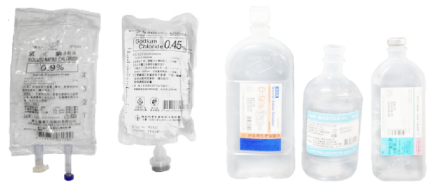
Fig. 1. Types of medical plastic waste.
2.3. Circular Economy for Composite Medical IV Infusion Bags
Establishing a circular economy for composite medical IV infusion bags necessitates an integrated approach that considers material properties, waste management, recycling technologies, and sustainability assessment. The complex material composition of these bags introduces technical and regulatory challenges during their recycling.
Medical IV bags are mainly composed of multilayer plastics such as polyvinyl chloride (PVC), ethylene vinyl acetate, and polypropylene (PP), which are selected for sterility, chemical resistance, and impermeability. The multilayer structure plays a key role in preventing gas penetration and maintaining product stability and sterility 12. Recent studies have also examined the effect of additives on the performance and recyclability of composite plastics 13,14.
According to the World Health Organization 15, medical waste management remains a major global concern. Used IV bags require specialized treatment to ensure safety and prevent environmental contamination. Incineration is widely used for treating medical waste because it effectively eliminates contaminated materials and mitigates public health risks.
Chemical recycling and pyrolysis have been identified as promising options for treating composite materials. Chemical recycling transforms composites into simple monomers, while pyrolysis converts them into petroleum-based raw materials for recycled plastics or energy recovery 16,17. Pyrolysis and catalytic cracking may also reduce reliance on virgin resources and lessen the environmental burden associated with incineration and landfilling 18,19.
However, the recyclability of composite plastics is limited by the differences in the melting points of the constituent material layers, thereby leading to processing inconsistency, deformation, or even structural failure in high-performance applications 12,20,21. Therefore, improving the material composition and designing composites with uniform thermal properties are important for improving recyclability.
Recent studies have applied circular economy principles to medical waste by adopting better product design, biodegradable materials, and recyclable biocompatible materials 22,23. In addition, life cycle assessment (LCA) has been increasingly used to evaluate environmental impacts. Previous studies have demonstrated that improved recycling systems can reduce carbon emissions, increase resource efficiency, and help identify environmental hotspots in medical consumables 24,25.
Although the individual recycling and manufacturing operations employed in this study—shredding, washing, pelletization, and injection molding—are well established, the novelty of the proposed system lies in the application and integration of these technologies within a new healthcare-sector circular pathway. Instead of following conventional recycling practices, whereby recovered medical plastics are sold as secondary raw materials, the implemented pathway converts post-consumer IV soft bags and IV bottles into recycled feedstock for sharps containers and returns the resulting products to healthcare use. This study documents an implemented case in which post-consumer IV materials are converted into sharps containers via an integrated collection, recycling, manufacturing, and product-return pathway.
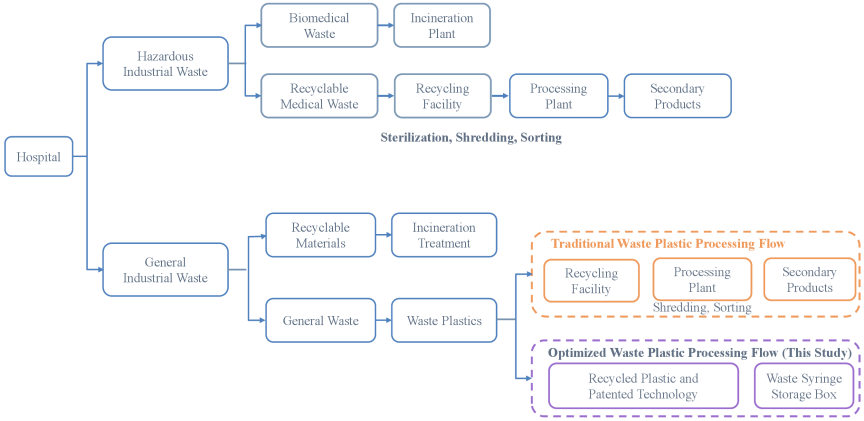
Fig. 2. Conventional medical waste plastic processing and the proposed circular recycling pathway.
3. Methodology
3.1. Optimization of Medical IV Bag Waste Treatment Process
In conventional medical plastic waste recycling processes, recyclers collect waste from healthcare facilities and subsequently classify, shred, and resell polymeric materials such as polyethylene (PE), PVC, and PP as secondary raw materials. However, composite plastics are predominantly subjected to incineration given the challenges associated with material separation and reuse. This study proposes an optimized treatment approach specifically targeting the recycling of composite medical IV infusion bags, thereby addressing the limitations of conventional disposal methods.
The proposed approach involves cap removal and manual sorting, followed by shredding, washing, flotation separation, dewatering, extrusion, and pelletization. The resulting pellets are subsequently used as part of the recycled feedstock mixture for injection molding of the sharps containers. These individual unit operations constitute conventional mechanical-recycling and polymer-processing steps. In this study, the term “patented” refers specifically to the recycling and pelletization method and the apparatus for PP composite medical IV bags protected by Taiwan Invention Patent No. I848721 and Taiwan Utility Model Patent No. M646752; it does not refer to the subsequent injection-molding operation.
This recycling pathway facilitates the material recovery of medical plastic waste and reduces reliance on virgin fossil-based resources. Moreover, reintegration of the recycled products within healthcare institutions fosters a circular material pathway within the healthcare sector.
Additionally, the recycled sharps containers provide a recycling outlet for recovered materials, thereby supporting a circular recycling framework within the healthcare sector. A conceptual comparison between the traditional plastic-waste treatment pathway and the optimized recycling framework introduced in this study is presented in Fig. 2.
3.2. Production of Recycled Sharps Containers
The production of recycled sharps containers follows a systematic process designed to ensure compliance with ISO standards and relevant regulatory frameworks.
The methodology integrates advanced material recovery techniques, precision engineering in molding, and third-party environmental impact verification to align with circular economy principles.
-
1.
Processing of composite medical IV infusion bags
The recycling of composite medical IV infusion bags involves a multistage treatment process to enhance material purity and optimize material-recovery efficiency. The recovered composite medical IV infusion bags are subjected to classification, mechanical shredding, washing, pulverization, flotation separation, and dewatering to remove contaminants and segregate usable polymer fractions (Fig. 3). Quantitative data on incoming or residual contamination and the maximum contamination level tolerated by the process constitute proprietary process-control information and therefore cannot be disclosed.
The processed plastic material was heated, extruded, and pelletized into uniform pellets, thereby improving the material consistency and molding performance. The feedstock used for the final sharps containers was subsequently reheated under controlled, process-specific temperature conditions to ensure homogeneous melting before injection molding. The IV-bag-derived pellets consisted of 100% post-consumer recycled PP/PE/PA. In the verified product formulation, the container body incorporated approximately 35% post-consumer recycled PP/PE/PA derived from IV soft bags, whereas the lid incorporated approximately 35% post-consumer recycled material derived from IV bottles. The remaining material in each component was virgin PP. The actual temperature settings and operating ranges are critical proprietary process parameters and therefore cannot be disclosed. The molten plastic was precisely injected into pre-engineered molds, where it underwent controlled cooling and solidification to form the structural framework of the storage container. The mold design adheres to strict engineering tolerances for ensuring dimensional accuracy, mechanical integrity, and structural stability, particularly in features that support secure storage and handling of medical waste.
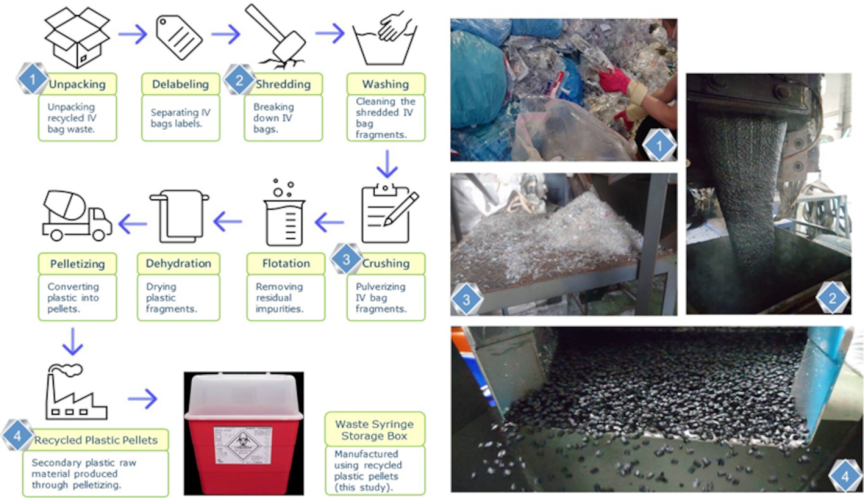
Fig. 3. Multistage treatment process for impurity removal and pellet production from composite medical IV infusion bags.
-
2.
Third-party verification and carbon footprint assessment
To support the environmental credibility and traceability of the proposed circular economy model, the recycled sharps containers and their reported carbon footprint were independently evaluated against the applicable standards. The recycled sharps containers were assessed for conformity with ISO 14021 for self-declared environmental claims and ISO 23907-1 for the safety requirements and test methods applicable to single-use sharps containers. The product carbon-footprint assessment was independently verified in accordance with ISO 14067.
The recycling and pelletization stage is associated with Taiwan Invention Patent No. I848721, which covers a method and apparatus, and Taiwan Utility Model Patent No. M646752, which covers an apparatus. The subsequent injection-molding operation is not characterized as patented in this study.
The cradle-to-gate product carbon-footprint assessment quantified greenhouse gas emissions from raw-material acquisition and transportation through production of the recycled sharps containers. The reported result is therefore treated as a case-specific product carbon footprint rather than as a comprehensive LCA.
For the carbon-footprint assessment, the functional unit used as the reporting basis was one 13-L recycled sharps container with a unit mass of 631 g, providing the puncture- and leak-resistant collection function evaluated under ISO 23907-1. The cradle-to-gate system boundary included raw-material acquisition and transportation, and the manufacturing processes of manual sorting, weighing, crushing, washing, dewatering, pellet production, material mixing, and outsourced injection molding.
The amount of electricity consumed at the recycling plant during the data-collection period (July 2024) was obtained from Taiwan Power Company utility bills. The associated emissions were calculated using Taiwan’s grid-average life-cycle electricity factor of 0.606 kg CO\(_2\)-eq/kWh for 2021, published in 2023 by Taiwan’s Ministry of Environment. No renewable electricity, renewable energy certificates, or on-site renewable generation was used. Because supplier-specific activity and electricity data for outsourced injection molding were unavailable, emissions from that process were estimated using a dataset from SimaPro version 9.5.0.0.
Distribution, use, and end-of-life treatment were outside the cradle-to-gate boundary. Human energy inputs, consumer transportation, employee commuting, and capital goods were excluded. No identified emission source within the defined system boundary was excluded by the application of a quantitative cut-off threshold. Avoided incineration of discarded IV bags was not credited. The report included no negative-emission or avoided-burden credit, while incineration of manufacturing waste was treated as an emission-generating activity.
4. Results and Discussion
The implemented process converts composite medical IV bags into recycled plastic pellets that are subsequently incorporated as recycled feedstock for the injection molding of sharps containers. The recycled sharps containers are certified under ISO 14021 and ISO 23907-1, ensuring compliance with environmental and safety standards while contributing to the circular economy.
The following sections describe the manner in which applicable standards were incorporated into the recycling pathway for composite medical IV bags.
4.1. Use of Recyclable Materials
In accordance with ISO 14021, recycled sharps containers may be manufactured using recyclable and regenerated materials such as recycled plastics in order to reduce reliance on virgin raw materials. Our team collaborates with medical institutions in northern Taiwan to recycle used IV bags into plastic pellets by the documented recycling and pelletization process. These pellets are subsequently incorporated as recycled feedstock in the manufacture of sharps containers, which are returned to the healthcare sector as part of the implemented circular recycling pathway. The recycled products are subsequently reintegrated into healthcare and caregiving facilities for continued use.
4.2. Reduction in Non-Biogenic Resource Consumption
The verification confirmed that the recycled pellets derived from the collected IV soft bags consisted of 100% post-consumer recycled PP/PE/PA. In the verified product formulation, the container body incorporated approximately 35% post-consumer recycled PP/PE/PA derived from IV soft bags, whereas the lid incorporated approximately 35% post-consumer recycled material derived from IV bottles. The remaining material in each component was virgin PP. The available verification documents identify the combined polymer composition as PP/PE/PA but do not quantify the individual proportions of PP, PE, and PA. On the basis of the component masses for the container body (400 g) and lid (230 g), the IV-bag-derived recycled material in the body was estimated as approximately 140 g (\({\textrm{400}~\textrm{g} \times 35{\%}}\)), corresponding to approximately 22.2% of the assembled container mass [\(140/(400 + 230) \times 100{\%}\)]. The overall recycled content was approximately 35%, with the IV-bottle-derived recycled material used in the lid. At the material-content level, this recycled fraction partially substitutes the virgin polymer feedstock in the assessed product. However, because no functionally equivalent virgin-plastic sharps container was assessed, the magnitude of the corresponding life-cycle environmental benefit was not quantified.
4.3. Safety Considerations: Puncture and Leak Prevention
A total of 20 samples were submitted to an independent third-party testing body for conformity assessment in accordance with ISO 23907-1:2019. The penetration force of each tested specimen exceeded 16 N, and the average force exceeded 18 N, thereby meeting the applicable acceptance criteria. No leakage or breach was observed after the drop test, and the performance and function of the container were not compromised during the tipping test. The final product was confirmed to comply with all applicable requirements of ISO 23907-1:2019.
4.4. Carbon-Footprint Assessment of the Recycled Product
Using one 13-L recycled sharps container weighing 631 g as the functional unit, the cradle-to-gate carbon footprint was calculated as 1.852 kg CO\(_2\)-eq per container (reported as 1.85 kg CO\(_2\)-eq after rounding). Raw-material acquisition, including transportation, and manufacturing contributed 1.587 and 0.265 kg CO\(_2\)-eq, accounting for 85.7% and 14.3% of the footprint, respectively. Distribution, use, and end-of-life treatment were outside the system boundary. The result did not include a quantified credit for the avoided incineration of discarded IV bags. The cradle-to-gate carbon footprint results are summarized in Table 1.
A direct carbon-footprint comparison with a conventional virgin-plastic sharps container was not possible because none of the available datasets used an equivalent product specification, functional unit, and system boundary. The value reported in this study should therefore be interpreted as a case-specific baseline rather than as evidence of quantified carbon reduction relative to a virgin-plastic product.
| Scope of LCA: Cradle-to-gate (from raw material acquisition to manufacturing) product carbon footprint—life cycle greenhouse gas emissions | |
| Life cycle stage | Cradle-to-gate |
| Raw material | 1.587 kg CO\(_2\)e |
| Manufacturing | 0.265 kg CO\(_2\)e |
| Distribution | N/A |
| Usage | N/A |
| Disposal | N/A |
| Total | 1.852 kg CO\(_2\)-eq |
|
Emissions per functional unit (one assessed recycled sharps container) |
1.852 kg CO\(_2\)-eq |
4.5. Limitations of the Quantitative Assessment
The case-study materials provided the aggregate-site electricity consumption used in the product carbon-footprint calculation but did not include batch-level input–output mass-balance data or equipment-specific electricity consumption. Therefore, the usable-pellet yield per unit mass of IV bags and the energy consumption per kilogram of recycled product could not be quantified. In addition, supplier-specific activity and electricity data for outsourced injection molding were unavailable, and the corresponding emissions were estimated using a SimaPro 9.5.0.0 dataset. No functionally equivalent virgin-plastic sharps container dataset with a comparable functional unit and cradle-to-gate boundary was available, and avoided-incineration impacts were not credited. These limitations prevented definitive conclusions regarding the material and energy efficiency of the recycling process or the magnitude of carbon reduction relative to a conventional product. The reported carbon footprint should therefore be regarded as a case-specific baseline for subsequent research using harmonized product specifications and system boundaries.
Processing temperature is a critical parameter because it directly affects the melting and mixing behavior of the material, pellet quality, and subsequent product performance. However, the actual temperature settings and operating ranges applied in the implemented process constitute critical proprietary technical information and cannot be disclosed. For the same reason, quantitative feedstock-contamination tolerances, compatibilizer formulations and proportions, residence times, and equipment-specific operating parameters cannot be reported because of technical and commercial confidentiality. Consequently, the information reported in this study does not permit complete independent reproduction of the patented recycling and pelletization process. The study should therefore be interpreted as documentation of an implemented recycling pathway and verified product performance, rather than as a fully reproducible technical description of the patented process. This confidentiality constraint represents a limitation of the present study.
4.6. Qualitative Economic Considerations and Data Limitations
The major cost components associated with the recycling pathway include the collection of discarded IV bags, cleaning, material separation and processing, pellet production, injection molding of the sharps containers, and product testing and certification. Potential economic benefits may arise from the avoided waste-treatment and disposal costs and from the partial substitution of the virgin polymer feedstock with the recycled PP/PE/PA. However, no separate revenue stream was quantified in this study.
The available case-study materials did not include itemized financial data, estimates of avoided costs, relative cost data, or information concerning policy subsidies, grants, or other financial incentives. Therefore, the net economic benefit, payback period, and economic viability of the system, either with or without policy subsidies, could not be determined. Because a quantitative base-case financial model could not be constructed, sensitivity analysis was not conducted. Relative cost comparisons or ranges could not be derived without making unsupported assumptions. Accordingly, the cost and potential benefit categories presented above should be interpreted as qualitative economic considerations rather than as a formal cost-benefit analysis or evidence of economic viability.
5. Conclusion
This study documents the practical implementation of a circular-economy pathway for converting discarded composite IV infusion bags into recycled sharps containers. The recycled pellets derived from the collected IV soft bags consisted of 100% post-consumer recycled PP/PE/PA. The container body incorporated approximately 35% post-consumer recycled PP/PE/PA derived from IV soft bags, whereas the lid incorporated approximately 35% post-consumer recycled material derived from IV bottles. The remaining material in each component was virgin PP. The individual proportions of PP, PE, and PA were not quantified in the available verification documents. The product complied with ISO 14021 and ISO 23907-1, was adopted by two hospitals in northern Taiwan, and had a cradle-to-gate carbon footprint of 1.852 kg CO\(_2\)-eq per 13-L container weighing 631 g (1.85 kg CO\(_2\)-eq after rounding). The assessment used site electricity records and a Taiwan grid-average life-cycle factor of 0.606 kg CO\(_2\)-eq/kWh but excluded downstream distribution, use, and end-of-life treatment, and did not credit avoided incineration. Because batch-level mass-balance data, equipment-specific energy consumption, and a functionally equivalent virgin-plastic benchmark were unavailable, no definitive conclusion regarding process efficiency or the magnitude of carbon reduction relative to conventional containers could be drawn. The reported results provide a case-specific baseline for future assessments using comparable functional units and system boundaries.
Because medical-waste disposal and treatment are strictly regulated, the implemented pathway relies on a tripartite collaboration among hospitals, recycling facilities, and consulting organizations. By implementing an optimized circular recycling system, supported by ISO safety certification and localized carbon footprint data, the project establishes a direct link between healthcare and industry, thus effectively advancing circular economy and sustainable development goals.
- [1] R. Geyer, J. R. Jambeck, and K. L. Law, “Production, use, and fate of all plastics ever made,” Sci. Adv., Vol.3, No.7, Article No.e1700782, 2017. https://doi.org/10.1126/sciadv.1700782
- [2] European Commission, “A European strategy for plastics in a circular economy,” 2018.
- [3] M. Wagner et al., “Microplastics in freshwater ecosystems: What we know and what we need to know,” Environ. Sci. Eur., Vol.26, Article No.12, 2014. https://doi.org/10.1186/s12302-014-0012-7
- [4] D. K. A. Barnes, F. Galgani, R. C. Thompson, and M. Barlaz, “Accumulation and fragmentation of plastic debris in global environments,” Phil. Trans. R. Soc. B, Vol.364, No.1526, pp. 1985-1998, 2009. https://doi.org/10.1098/rstb.2008.0205
- [5] J. C. Prata, A. L. P. Silva, T. R. Walker, A. C. Duarte, and T. Rocha-Santos, “COVID-19 pandemic repercussions on the use and management of plastics,” Environ. Sci. Technol., Vol.54, No.13, pp. 7760-7765, 2020. https://doi.org/10.1021/acs.est.0c02178
- [6] A. L. P. Silva et al., “Rethinking and optimising plastic waste management under COVID-19 pandemic: Policy solutions based on redesign and reduction of single-use plastics and personal protective equipment,” Sci. Total Environ., Vol.742, Article No.140565, 2020. https://doi.org/10.1016/j.scitotenv.2020.140565
- [7] L. Rigamonti et al., “Environmental evaluation of plastic waste management scenarios,” Resour. Conserv. Recycl., Vol.85, pp. 42-53, 2014. https://doi.org/10.1016/j.resconrec.2013.12.012
- [8] S. ElSaid and E.-H. Aghezzaf, “A progress indicator-based assessment guide for integrated municipal solid-waste management systems,” J. Mater. Cycles Waste Manag., Vol.20, No.2, pp. 850-863, 2018. https://doi.org/10.1007/s10163-017-0647-8
- [9] G. Marin, F. Nicolli, and R. Zoboli, “Catching-up in waste management. Evidence from the EU,” J. Environ. Plan. Manag., Vol.61, No.11, pp. 1861-1882, 2018. https://doi.org/10.1080/09640568.2017.1333952
- [10] Department for Environment, Food and Rural Affairs (DEFRA), “Guidance on applying the waste hierarchy,” 2011. https://assets.publishing.service.gov.uk/government/uploads/system/uploads/attachment_data/file/69403/pb13530-waste-hierarchy-guidance.pdf [Accessed March 28, 2026]
- [11] European Parliament, “Closing the loop: New circular economy package,” 2016. https://www.europarl.europa.eu/RegData/etudes/BRIE/2016/573899/EPRS_BRI(2016)573899_EN.pdf [Accessed March 28, 2026]
- [12] J. Schmidt, L. Grau, M. Auer, R. Maletz, and J. Woidasky, “Multilayer packaging in a circular economy,” Polymers, Vol.14, No.9, Article No.1825, 2022. https://doi.org/10.3390/polym14091825
- [13] H. Logan, T. F. Astrup, and A. Damgaard, “Additive inclusion in plastic life cycle assessments part I: Review of mechanical recycling studies,” J. Ind. Ecol., Vol.28, No.6, pp. 1582-1597, 2024. https://doi.org/10.1111/jiec.13542
- [14] J. N. Hahladakis, C. A. Velis, R. Weber, E. Iacovidou, and P. Purnell, “An overview of chemical additives present in plastics: Migration, release, fate and environmental impact during their use, disposal and recycling,” J. Hazard. Mater., Vol.344, pp. 179-199, 2018. https://doi.org/10.1016/j.jhazmat.2017.10.014
- [15] World Health Organization, “Safe management of wastes from health-care activities: A summary,” 2017.
- [16] R. Meys et al., “Towards a circular economy for plastic packaging wastes – The environmental potential of chemical recycling,” Resour. Conserv. Recycl., Vol.162, Article No.105010, 2020. https://doi.org/10.1016/j.resconrec.2020.105010
- [17] J. Hopewell, R. Dvorak, and E. Kosior, “Plastics recycling: Challenges and opportunities,” Phil. Trans. R. Soc. B, Vol.364, No.1526, pp. 2115-2126, 2009. https://doi.org/10.1098/rstb.2008.0311
- [18] S. M. Al-Salem, P. Lettieri, and J. Baeyens, “Recycling and recovery routes of plastic solid waste (PSW): A review,” Waste Manag., Vol.29, No.10, pp. 2625-2643, 2009. https://doi.org/10.1016/j.wasman.2009.06.004
- [19] K. Ragaert, L. Delva, and K. Van Geem, “Mechanical and chemical recycling of solid plastic waste,” Waste Manag., Vol.69, pp. 24-58, 2017. https://doi.org/10.1016/j.wasman.2017.07.044
- [20] K. Kaiser, M. Schmid, and M. Schlummer, “Recycling of polymer-based multilayer packaging: A review,” Recycling, Vol.3, No.1, Article No.1, 2018. https://doi.org/10.3390/recycling3010001
- [21] P. D. Mangalgiri, “Polymer-matrix composites for high-temperature applications,” Def. Sci. J., Vol.55, No.2, pp. 175-193, 2005. https://doi.org/10.14429/dsj.55.1980
- [22] M. Ranjbari et al., “Mapping healthcare waste management research: Past evolution, current challenges, and future perspectives towards a circular economy transition,” J. Hazard. Mater., Vol.422, Article No.126724, 2022. https://doi.org/10.1016/j.jhazmat.2021.126724
- [23] R. Hossain, A. Ghose, and V. Sahajwalla, “Circular economy of the materials in the healthcare industry: Opportunities and challenges,” Resour. Conserv. Recycl., Vol.215, Article No.108041, 2025. https://doi.org/10.1016/j.resconrec.2024.108041
- [24] Y. Cho et al., “Achieving the sustainable waste management of medical plastic packaging using a life cycle assessment approach,” Heliyon, Vol.10, No.19, Article No.e38185, 2024. https://doi.org/10.1016/j.heliyon.2024.e38185
- [25] A. Booth, M. Chowaniec, S. Goyal, S. Faulkner, and S. Shaw, “The carbon footprints of single-use and reusable medical devices: A systematic review,” BMJ Open, Vol.15, No.12, Article No.e108446, 2025. https://doi.org/10.1136/bmjopen-2025-108446
This article is published under a Creative Commons Attribution-NoDerivatives 4.0 Internationa License.