
Research Paper:
Reducing Thermoplastic Diversity— A Path to Enhanced Circularity
Mattias Lindahl*,†
 , Rajni Hatti-Kaul**
, Erik Sundin*
, and Leif Nilsson***
*Department of Management and Engineering, Linköping University
SE-581 83, Linköping, Sweden
†Corresponding author
**Center for Chemistry and Chemical Engineering, Lund University
Lund, Sweden
***Rentus AB
Finspång, Sweden

This paper shows that reducing thermoplastic diversity can improve circularity without compromising key performance. Based on 63 interviews and a stakeholder workshop across the Swedish plastics value network, it identifies highest near-term feasibility in high-volume Northern European consumer applications, especially packaging and PE, PP, and PET flows, where design, collection, and recycling can be aligned. More demanding applications remain conditional, and advanced structural composites are outside the current evidence base. Respondents link reduction not only to cleaner material flows and stronger recycling markets, but also to production and economic value: larger volumes of fewer polymers, lower inventory and changeover costs, less start-up waste, and more stable processing. These gains depend on maintaining application-specific properties. Three priorities emerge: (i) circular design; (ii) phasing out hazardous materials while prioritising recyclable polymers; and (iii) aligned regulation across the value network. The results support a staged, application-specific “fewer, better” strategy—not universal substitution.
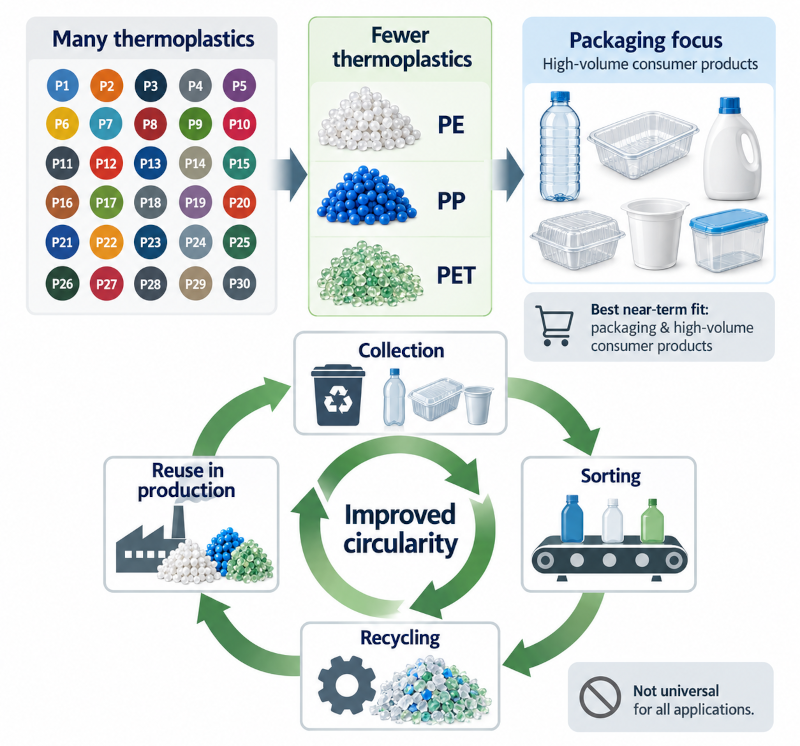
Fewer thermoplastics, better recycling
1. Introduction
1.1. Background
The rapid increase in global plastic production since the 1950s demonstrates its usefulness and broad societal integration across sectors such as construction, electronics, textiles, transport, and aviation 1. Despite this widespread use, recycling, reuse, and recovery have not kept pace, and rising demand continues to rely largely on virgin fossil feedstock 2. The increase in plastic types and additives complicates the recycling processes 3. The environmental and health impacts of plastic production, use, and disposal have become increasingly clear 4,5,6. This led to policy actions including the European Union (EU) plastics strategy, single-use plastics bans, packaging recyclability rules, and measures against microplastic emissions 7. Globally, 175 countries pursued a legally binding plastics treaty 8, but negotiations failed in 2025.
Plastic production now exceeds 400 million tonnes annually, with most derived from non-renewable fossil resources 9. Disposal through incineration, landfilling, or environmental leakage contributes to greenhouse gas emissions projected to rise from 1.8 Gt CO\(_2\)eq in 2015 to 8 Gt CO\(_2\)eq by 2050 under business-as-usual scenarios 10,11. Plastic waste also degrades into microplastics that accumulate in ecosystems and food chains.
Recycling rates remain low: only 9% of global plastic waste was recycled in 2019, while 22 million tonnes leaked into the environment 12. In Sweden, of 1.3 Mt of plastics placed on the market in 2019, 87% was incinerated in 2020 and only 10% was recycled 13. Challenges arise from plastic heterogeneity and limited transparency regarding polymer and additive composition.
While replacing plastics with other materials has been suggested, such substitutions often yield higher greenhouse gas emissions 14. Current strategies instead focus on redesigning and managing plastics more sustainably 15. Proposed pathways include smarter use, increased circularity, and a shift to renewable feedstock 11,16. These involve reducing unnecessary plastic use, improving resource efficiency, extending product lifetimes, and developing renewable polymer building blocks 17. Reducing the number of plastic types in the market has also been proposed to create cleaner material flows and improve recyclability 18.
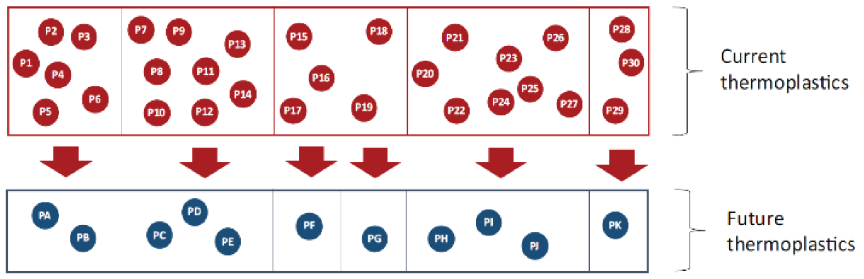
Fig. 1. An illustration of how current thermoplastics within a product sector can be grouped according to similar properties to then be replaced by a smaller number of partially new thermoplastics, based on 19,20.
1.2. Aim of the Paper
This paper examines the hypothesis that lower thermoplastic diversity can improve plastics circularity by simplifying material flows and enabling higher-quality recycling. Fig. 1 illustrates how thermoplastic varieties may be consolidated. The empirical study does not test a generic mono-material solution; rather, it asks in which applications and polymer families respondents considered reduction technically and economically realistic, and where they did not. The paper addresses three linked questions: (i) which barriers in the plastics value network currently prevent such a transition; (ii) in which application areas and polymer families a reduction appears most realistic; and (iii) which governance mechanisms could enable implementation.
The paper draws primarily on interviews and a workshop with stakeholders from the Swedish plastics industry, trade organisations, experts, and academic researchers. Since earlier studies show that feasibility is strongly application-specific 19, the analysis is confined to Northern Europe, particularly Sweden, and to high-volume consumer-product applications. It therefore excludes advanced industrial uses and high-performance composite systems.
2. Method
This paper employs a qualitative research design to assess whether reducing the number of thermoplastic types could enhance circularity within the Swedish plastics value network. The study integrates semi-structured interviews and a stakeholder workshop, following established principles for qualitative inquiry and interpretation 21. Circularity is analysed primarily at the product and sector levels and then interpreted in relation to Swedish and Northern European collection, sorting, and policy arrangements.
Research design and sampling: Semi-structured interviews captured experience-based insights on material choices, recycling challenges, policy expectations, and thermoplastic simplification. Purposeful sampling ensured analytical breadth across the Swedish plastics value network, from polymer production to recycling, rather than statistical representativeness. The study includes 63 respondents (Table 1): polymer manufacturers (1), compounders/converters (28), original equipment manufacturers (OEMs) (4), users (9), recyclers (5), trade organisations (5), and researchers/experts (11), spanning key sectors. The sample reflects major Swedish plastic-use domains 19, but does not represent a quantified share of national material flows.
| Industry sector | Respondents (type and number of respondents) |
| Agriculture | Trade association (1) |
| Assorted products | Compounders and converters (7) |
| Chemicals | Trade association (1) |
| Children’s toys | Converter (1) |
| Construction | Compounders and converters (2); users and customers (3); trade associations (2) |
| Electronics | Compounders and converters (2); OEM (1) |
| Food | OEM (1) |
| Hygiene and healthcare | Compounders and converters (2); users and customers (3) |
| Packaging and storage | Compounders and converters (6) |
| Plastic raw material | Polymer manufacturer (1) |
| Profiles and boards | Compounders and converters (3) |
| Recycling | Recycling companies (5) |
| Traffic | Users and customers (2) |
| Vehicles | Compounders and converters (5); OEMs (2); trade associations (1) |
| Other actors | Respondents (type and number of respondents) |
| Municipality | User and customer (1) |
| Researchers and experts | Researchers and experts (11) |
Data collection: Interviews were conducted digitally or by phone using a structured but flexible guide 21, with some involving multiple representatives per organisation. The guide (\(\approx 9\)–19 questions, depending on actor) covered polymer use, performance needs, feasibility of reducing diversity, and implications for production, use, recycling, and regulation (see Appendix 1 in 19). Questions were not shared in advance, and interviews lasted 30–60 minutes. A complementary three-hour workshop with ten stakeholders validated key interpretations and identified actionable pathways.
Data analysis: Interview and workshop data were analysed using thematic analysis, combining iterative coding, cross-actor clustering, and interpretive synthesis, with attention to both convergence and divergence. The results are organised into four themes: (1) barriers and feasibility; (2) application areas and candidate polymers; (3) property requirements and limits; and (4) policy instruments. Feasibility is assessed by application domain, e.g. packaging, healthcare, construction, vehicles, and electronics, rather than for thermoplastics as a whole.
Research quality and ethics: Credibility was strengthened through triangulation, broad actor coverage, and systematic coding. The study is an analytically oriented Northern European case, not a statistically representative survey. The workshop primarily validated interview findings; only 10 of 63 respondents participated, and sellers were not represented 19. All participants gave informed consent, with confidentiality and anonymisation maintained throughout.
3. A Plastic Value Network
Figure 2 provides a schematic overview of a generic plastic value network 21,22,23,24,25. Most plastics on the market are synthetic and derived from crude oil or natural gas, supported by mature petrochemical processes and infrastructure 11. During crude oil distillation, the naphtha fraction (C5–C10 hydrocarbons) is cracked to form low-molecular alkenes such as ethylene, propylene, and butylene, which serve as key monomers for polymers like polyethylene and polypropylene 6. Aromatic components of naphtha, such as benzene, toluene, and xylene, form the basis for polymers such as polystyrene, nylon, polyurethane, polycarbonate, polyethylene terephthalate (PET), and other polyesters.
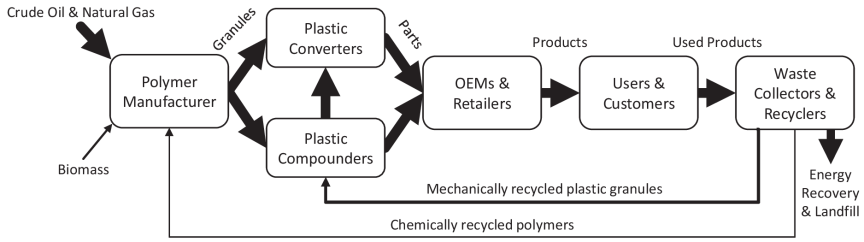
Fig. 2. A generic plastic value network showing the flow of materials and products between actors (based on 21,22,23,24,25). The thickness of the arrows illustrates the relative amount of material flowing between the actors.
“Virgin” polymers are compounded with additives to meet required properties, then processed into products via moulding, blowing, or extrusion. Packaging is the largest use, followed by construction, textiles, and automotive. Post-consumer plastics are collected and sorted, with recyclable fractions sent to mechanical or chemical recycling and the rest to incineration or landfill 22.
The value network consists of actors of varying size: a small number of global petrochemical companies dominate polymer production, while converters represent around 50,000 smaller and medium-sized enterprises in Europe. Recycling is carried out by relatively few large firms, alongside emerging smaller companies developing chemical recycling technologies.
Biobased plastics represent only about 1% of the market and are produced from agricultural feedstocks such as sugar cane and starch. Monomers like ethanol, lactic acid, succinic acid, and 1,3-propanediol are typically produced via fermentation, while others, such as ethylene glycol, are obtained through chemical transformation. These monomers are polymerized using standard chemical mechanisms including free-radical polymerization for bio-polyethylene (PE) and esterification for biobased polyesters 17.
4. Polymers—Thermoplastics and Thermosets
Polymers are commonly classified into thermoplastics, thermosets (Fig. 3), and a third group, elastomers, which are highly flexible materials capable of returning to their original shape after deformation 26. Thermoplastics soften when heated and harden when cooled, a reversible process that allows repeated re-melting, reshaping, and recycling 27. Some of the most common thermoplastic polymers are listed in Table 2. Their macromolecular structure, defined by monomer chemistry, chain arrangement, and side groups, influences properties such as chemical and UV resistance.
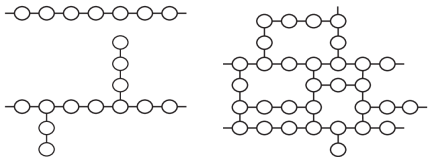
Fig. 3. Schematic view of thermoplastics and thermosets.
| Polymer | Properties |
| Polyethylene (PE) |
Semi-crystalline, the most common plastic used and recycled, is classified into several groups (LDPE, HDPE, etc.) based on density and side chains, \(T_g\) of \(\sim -100°\)C. \(+\): Excellent resistance to most chemicals, negligible moisture absorption, highly resistant to abrasion, high elasticity at temperatures down to \(-50°\)C, can be heat-sealed and food approved. \(-\): Low stiffness and tensile strength, low tolerance to temperatures above 80°C. |
| Polypropylene (PP) |
Semi-crystalline, the second largest plastic in volume after LDPE, \(T_g\) of \(-20°\)C to \(0°\)C. \(+\): Transparent, hard or flexible, excellent resistance to most chemicals, fatigue resistant, does not absorb moisture, can be food-contact approved, recyclable. \(-\): Sensitive to UV radiation, can degrade in direct sunlight, not as impact resistant as PE, poor scratch resistance, brittle at low temperatures, permeable to highly volatile gases and liquids. |
| Polyvinyl chloride (PVC) |
Amorphous high-volume plastic available in a rigid and flexible form, \(T_g\) of 85°C–90°C. \(+\): Excellent resistance to chemicals, does not absorb moisture, resistant to microorganisms, long-term durability, can get food contact approval, good UV-resistance, material properties ranging from very soft (e.g., garden hose) to stiff and hard (e.g., drainpipes) can be influenced easily during compounding, recyclable. \(-\): Highly toxic, carcinogenic monomer, formation of HCl on thermal degradation, recycling is problematic due to leaching of harmful additives. |
| Polystyrene (PS) |
Amorphous high-volume plastic with \(T_g\) of \({\sim}100°\)C. Copolymerization of styrene with other monomers for better properties such as heat resistance, impact strength, stiffness, processability, and chemical resistance, e.g., styrene-butadiene, acrylonitrile-styrene-acrylate, styrene-acrylonitrile (SAN), and acrylonitrile butadiene styrene (ABS). \(+\): Highly transparent stiff and hard plastic, negligible moisture absorption, good surface gloss, food contact approved, recyclable. \(-\): Brittle, poor chemical resistance, low softening temperature, turns yellow outdoors. |
| Acrylonitrile butadiene styrene (ABS) |
Lightweight amorphous copolymer with \(T_g\) of \({\sim}105°\)C. \(+\): Mechanically tough, high impact strength, does not absorb moisture, good surface gloss, good electrical isolation, easy to colour, recyclable. \(-\): Poor heat, solvent, and UV resistance, cracks under stress. |
| Polymethyl methacrylate (PMMA, Plexiglass) |
Highly transparent amorphous acrylic plastic having a \(T_g\) of 107°C. \(+\): Possesses better resistance to impact and UV resistance than polystyrene, recyclable. \(-\): High thermal expansion coefficient, poor scratch- and solvent-resistance, cracks under stress, viscous in molten state. |
| Polyamide (PA, nylon) |
Semi-crystalline construction plastic, different types, e.g., PA6, PA66, PA11, and PA12. \(T_g\) of PA6: 50°C. \(+\): High temperature resistance, high stiffness at high temperatures when impact modified with glass fibres, good electrical properties, food approved quality PA available, can be protected against fire, recyclable. \(-\): Absorbs moisture from atmosphere, which changes its mechanical properties and dimensional stability, brittle at low temperatures if not modified. |
| Acetal (POM) |
Material with highest crystallinity among construction plastics with \(T_g\) of \(-85°\)C. Available in homopolymer (better mechanical properties) and copolymer (higher resistance to warm water) forms. \(+\): Plastic with highest stiffness, negligible influence on mechanical properties in the temperature range of \(-\)40°C to \(+80°\)C, high toughness without additives, high fatigue strength, good creep resistance, excellent spring properties, no moisture absorption, good dimension stability, good resistance against solvents, excellent friction and abrasion properties, can get food contact approval, recyclable. \(-\): Low operating temperature (80°C for continuous use, 120°C for short use). |
| Polyethylene terephthalate (PET) |
Thermoplastic semi-crystalline polyester with \(T_g\) of 65°C–80°C. \(+\): Combines high stiffness, good mechanical, thermal, and electrical insulating properties, good resistance to UV light, high operating temperature, and recyclable. \(-\): Becomes brittle if not dried properly during manufacture and hydrolyses in water above 80°C, poor resistance against strong acids and bases, oxidants, the crystallized polymer has lower impact strength and moldability. |
| Polycarbonate (PC) |
Amorphous construction plastic with a \(T_g\) of 147°C. \(+\): Highly transparent, extremely tough, possesses very high impact strength, tolerates high operating temperature, negligible moisture absorption and high dimension stability, good electrical properties, food approved, low flammability, recyclable. \(-\): Poor chemical and solvent resistance, high tendency to crack under constant load, breaks down in water above 60°C, susceptible to UV light. |
| Polylactic acid (PLA) |
Thermoplastic polyester, properties ranging from amorphous glassy to semi-crystalline and highly crystalline polymer with a \(T_g\) of 55°C–60°C. Mechanical properties lie between those of PS and PET. \(+\): Produced from biobased feedstock, compostable, degrades into non-toxic acid, melts more easily than other thermoplastics. \(-\): More expensive than fossil-based plastics, not suitable for high-temperature applications, possesses higher permeability than other thermoplastics, cannot be recycled with other plastics. |
Thermoplastics may be amorphous (e.g., polycarbonate (PC), polymethyl methacrylate (PMMA), polystyrene (PS), and polyvinyl chloride (PVC)), which are typically transparent, flexible, and brittle, or semi-crystalline (e.g., polyamide (PA), PET, polypropylene (PP), and acetal (POM)), which are generally opaque, tougher, and whose mechanical performance depends on crystallinity and temperature relative to the glass transition (\(T_g\)). Biobased variants exist in smaller volumes, including bio-PE, bio-PET, bio-polytrimethylene terephthalate, and fully biobased plastics such as polylactic acid (PLA), polybutylene succinate, polyhydroxyalkanoates, and polyamide 11 29.
Approximately 75% of plastics on the market are thermoplastics, predominantly used in packaging and textile fibres 30. A further 20%–25% serve long-lived infrastructure applications such as pipes, cable coatings, and structural components, while the remainder is used in durable consumer products including electronics, furniture, and vehicles 31. Demand for high-performance thermoplastics with enhanced strength and durability is increasing across multiple sectors. In contrast, thermosets are permanently cross-linked polymers that do not melt or soften upon heating; they retain their shape at elevated temperatures and char rather than decompose when overheated 32. Common thermosets include vulcanised rubber, polyurethane foams, unsaturated polyester and epoxy resins, and phenolic materials, with major applications in automotive, construction, electronics, and aerospace industries.
5. Additives
Polymers are typically compounded with additives to achieve required performance 33,34,35. Processing aids improve flow and stability; fillers (e.g., calcium carbonate and silica) support molding and thermal properties; and plasticizers add flexibility 36. Mechanical properties are enhanced with glass or carbon fibres, while nucleating agents, antistatic agents, and stabilizers (e.g., antioxidants, UV absorbers, and hydrolysis stabilizers) improve processing, durability, and environmental resistance 34,35. Pigments and flame retardants add colour, protection, and fire safety. Table 3 summarises key additive categories 34,35. However, several conventional additives raise environmental and health concerns, driving demand for safer alternatives 35.
| Additive group | Function | Examples |
| Plasticizers | Impact flexibility | Phthalate esters (e.g., diisononyl phthalate, diisodecyl phthalate), chlorinated paraffins |
| Antioxidants | Maintain mechanical properties under heat and oxygen ageing | Ascorbic acid, tocopherols, polyphenolic compounds |
| Antistatic agents | Prevent the build-up of a static charge on a plastic surface | Glycerol monostearate, ethoxylated fatty acid amines, diethanolamides |
| Impact modifiers | Enable plastics to absorb shocks and impacts without cracking | Acrylic-based, methacrylate-butadiene-styrene, ABS, ethylene-vinyl acetate |
| UV blockers | Protection from solar radiation | Carbon black, titanium oxide, hydroxybenzophenone, etc. |
| Heat stabilizers | Antioxidants that are used to protect polymers from the degrading effects of heat during processing or use. | Barium-zinc additives (for PVC), hindered phenolics, secondary aromatic amines (primary antioxidants). Phosphites/phosphonites, thioethers, soya-based epoxies (secondary antioxidants). |
| Pigments | Provide colours to plastics making them more aesthetically appealing |
Inorganic (Iron oxides, TiO\(_{2}\)). Organic (quinacridones (red, violet, orange), dioxazines (violet), isoindolines (yellow, orange, red), and perylenes, flavanthrones, and anthraquinones). |
| Flame retardants | Improve the resistance of materials to fire | Halogenated chemicals (e.g., hexabromocyclododecane); phosphate chemicals (e.g., tris (1,3-dichloro-2-propyl) phosphate) |
| Processing aids | Lower production temperature, optimized material consumption, improved flow properties, decreased surface tension | Metal soaps, hydrocarbon waxes, fluoropolymers |
6. Plastic Components—A Challenge for the Circular Economy
Wiesinger et al. 37 identify over 10,500 chemicals in plastics, including more than 2,400 of potential concern and \({\sim}350\) appearing on both positive and negative regulatory lists, highlighting inconsistencies. Limited transparency, since formulations are often proprietary 6, further complicates waste management and recycling.
Because additives, residual monomers, and processing aids are not chemically bound, they can leach during use and recycling, posing environmental and health risks 35 and degrading recyclability and material quality 38,39. Persistent substances such as phthalates and brominated flame retardants contribute to uncertain compositions and downcycling. As a result, mechanical recycling is largely limited to relatively pure streams (e.g., low-density polyethylene (LDPE), high-density polyethylene (HDPE), PET bottles, and some PP).
Multilayer films and laminates (\({>}100\) million tonnes annually 40) further hinder recycling due to inseparable layers. In response, measures such as plastic taxes are driving a shift toward mono-material designs, mainly polyolefins, to improve recyclability.
7. Swedish Plastic Value Network Actors
7.1. Interview Results
Stakeholders did not regard feasibility as uniform across thermoplastic target applications. The empirical picture from the Unity study 19 is therefore conditional rather than general. In the underlying interview study, 21 of 31 manufacturers stated that they could reduce the number of plastics they use, and just over 60% considered their current product specifications to be more demanding than function strictly requires 19. The main feasibility condition was preservation of application-specific performance. Upstream actors such as polymer producers, compounders, and converters primarily emphasised processability, viscosity, shrinkage, tool compatibility, and cost, whereas downstream actors more often focused on product function, compliance, and procurement simplicity. Recyclers, trade organisations, and experts placed greater emphasis on volumes, traceability, and sorting.
Respondents identified the clearest near-term opportunities in packaging and other high-volume consumer-product flows dominated by PE, PP, and PET, where mono-material design, transparency, and recycled-content use can be strengthened. Healthcare was described as partly feasible for selected transparent or white consumables and procurement flows, but not for all medical devices because traceability, hygiene, and in-body use impose tighter limits. Construction was described as more feasible for simpler packaging-related flows than for long-life building products. Vehicle-related feasibility was seen as conditional and mainly limited to selected applications where durability, temperature resistance, price, and processability can still be met. In contrast, the present evidence does not support extending the feasibility claim to fibre-reinforced or structural composite applications.
At the same time, respondents saw clear economic and production-side value in a staged reduction. The underlying Unity report points to larger purchase volumes of fewer polymers, lower raw-material and inventory costs, lower set-up times, less start-up scrap, higher factory capacity, easier machine optimisation, and stronger markets for higher-value recycled plastics. These gains are reasons why feasibility was viewed positively in suitable applications even though it was not regarded as universal.
7.2. Workshop Results
Ten participants representing manufacturers, purchasers, recyclers, trade organisations, and experts took part in the workshop and formulated several proposed actions for reducing the number of thermoplastic types.
-
・
Less stringent requirement specifications: Participants recommend relaxing requirement specifications where feasible to reduce unnecessary material complexity and enable more versatile and resource-efficient thermoplastic use.
-
・
Industry- and product-specific standardization: Standardizing thermoplastics within specific industries and product categories, allowing only a selected range with defined recycling properties, is seen as a way to streamline recycling processes and reduce confusion in the market.
-
・
Active manufacturer participation: Manufacturers are encouraged to deliberately limit the number of thermoplastics they employ, signalling a proactive commitment to lowering material diversity. This approach is viewed as a potential driver of innovation and more sustainable material choices.
-
・
Increased use of transparent thermoplastics: The workshop highlights the value of using transparent (non-coloured) thermoplastics wherever possible, as this simplifies material identification and improves recycling outcomes while supporting environmental goals.
-
・
Greater use of recycled thermoplastics: Expanding the use of recycled thermoplastics is emphasised as an important means of strengthening circularity and reducing dependence on virgin materials.
-
・
Tariffs on imported thermoplastics: Introducing tariffs on imported thermoplastics is proposed to encourage the use of locally available, more sustainable materials and to limit the introduction of additional thermoplastic variants.
Participants also outline key material properties that should guide the selection of a reduced set of thermoplastics: good impact strength, for example in household goods, toys, reusable packaging, and selected non-structural consumer components; good wear resistance in repeated-use consumer products; chemical resistance for detergent, cleaning, and household containers; colour fastness and UV resistance for outdoor consumer applications; moisture and oxygen barrier for food packaging; and good recyclability for all thermoplastic applications considered within the study.
As noted earlier, transparent thermoplastics are recommended when no strict colour requirements apply. The workshop discussions repeatedly underlined that these requirements remain application specific and should not be extrapolated to advanced composite or other structural high-performance systems.
8. How the Number of Thermoplastic Types Can Be Reduced
The recommendations from Swedish plastic industry representatives indicate three main areas for action: (i) enhancing communication and coordination across the plastics value network, including product standardization and clearer specification setting; (ii) strengthening circular design principles in thermoplastic production and product development; and (iii) implementing legislation that supports standardized, recyclable, and non-toxic materials. These areas correspond directly to the bottlenecks identified in the interviews: overspecification points to the need for less stringent requirement setting in suitable products; mixed and opaque waste streams point to mono-material design, transparency, and labelling; and weak demand for higher-quality recyclate points to quota obligations, procurement requirements, deposit systems, and extended producer responsibility. In other words, circularity is not expected to be enhanced only at one level, but through coordinated action across product design, sectoral material choices, and the surrounding regional waste-management and policy system.
8.1. Selection and Design of Thermoplastics for the Circular Economy
There is growing recognition that thermoplastic pollution must be addressed “upstream,” through the design of materials that support enhanced performance and recyclability while simultaneously reducing the generation of hazardous and other problematic wastes. Improving recycling in isolation is insufficient and may even lead to unintended negative consequences if issues related to eco-toxicity and human health risks are not mitigated early in the design and production stages 41.
Contemporary circular design frameworks increasingly emphasise material reduction and optimisation, extended product lifetimes through reuse, repairability, and refurbishability, and the integration of recyclability as a fundamental design requirement 42. Within this context, limiting the number of thermoplastics implies prioritizing polymers and additive systems capable of supporting genuinely circular products, either by enabling longer service lifetimes or by facilitating high-quality, closed-loop recycling. Such an approach necessitates a re-evaluation of both thermoplastic production and recycling practices so that materials are engineered with their end-of-life pathways explicitly in mind. As indicated in Table 2, most thermoplastic polymers are theoretically recyclable; however, large fractions remain unrecycled in practice due to technological and economic constraints and because of problematic additives that compromise recyclability 43.
Simplifying material formulations and reducing the diversity of polymer–additive combinations can enhance recyclability, while greater transparency regarding material composition can further improve the efficiency of sorting and recycling processes 44. Moreover, many of the performance characteristics emphasised by thermoplastic manufacturers, such as impact resistance, barrier properties, and specific chemical or UV resistance, are already well understood across existing polymer families (Table 2). These requirements can often be met through carefully selected and compatible additive systems, provided such choices remain aligned with circularity principles and do not introduce substances that hinder recycling or pose environmental or health risks.
8.2. Phasing out Certain Polymers and Additives of Concern
Phasing out hazardous polymers and additives in favour of non-toxic, recyclable alternatives is a critical step in streamlining the thermoplastics system. Several widely used polymers, including PVC, ABS, SAN, and PC, are produced from monomers classified as carcinogenic, mutagenic, or toxic to reproduction 40. PVC illustrates these concerns: despite its functional versatility across construction, electronics, automotive, and medical applications, its production relies on vinyl chloride, a highly toxic and carcinogenic monomer, and its recycling is hindered by the release of additives such as benzyl butyl phthalate, a substance of very high concern. Reflecting these risks, the European Commission is being urged to phase out PVC by 2030 45. Proposed substitutes include non-plastic materials, alternative thermoplastics such as PE and PP, and application-specific bioplastics 46.
The phase-out of problematic additives, including certain plasticizers, brominated flame retardants, and pigments, is equally necessary, given their tendency to leach, bioaccumulate, and degrade recycling quality. Industry expertise, particularly among compounders and converters, is well positioned to support the transition to safer additive systems. Designing polymers with intrinsic properties that minimise additive needs and facilitate mono-material solutions would further strengthen value-chain alignment and improve integration across national and regional plastics systems 18.
Polyolefins (PP and PE) and PET, which have comparatively low monomer hazard profiles 41, account for roughly 80% of thermoplastic use and are compatible with established mechanical recycling processes; PET additionally supports (bio-)chemical depolymerization. Expanding the use of these polymers is most plausible in packaging, household products, toys, appliance housings, and other consumer applications with moderate property requirements. The evidence base in this study is much weaker for safety-critical, long-life, fibre-reinforced, load-bearing, or otherwise highly specialised applications. The results therefore support staged consolidation around dominant recyclable families in specific application groups, not blanket replacement across all thermoplastic uses or rapidly growing carbon fibre reinforced thermoplastic-type systems.
8.3. Policies, Communication, Research, and Innovation
An enabling policy framework, coupled with active dialogue across the plastics value network, is essential for advancing a circular plastics economy. Many countries have already introduced policy measures to incentivize improved product design 45. Within the EU, recent directives target hazardous chemicals in production and waste streams 19, require all plastic packaging to be reusable or cost-effectively recyclable by 2030, and mandate recycled-content thresholds of 25% by 2025 and 30% by 2030. The Eco-design for Sustainable Products Regulation further strengthens these requirements, while the Stockholm Convention on Persistent Organic Pollutants bans several chemicals of concern globally. In the context studied here, these policy instruments are best understood as responses to empirically observed bottlenecks: design standards address overspecification, deposit and traceability systems address mixed waste flows, and recycled-content obligations address weak market demand for higher-quality recyclate. Nonetheless, chemical governance remains insufficient to ensure sustainable management across the plastics value network.
Growing regulatory pressure is beginning to reshape industry practice, exemplified by the shift from multilayer to mono-material packaging designed for recyclability. Such developments illustrate how reducing thermoplastic diversity can support cleaner material flows and reduce waste. Recent innovations in mono-material design based on chemically circular and biodegradable polymers further reinforce this potential 47.
Continued progress requires research and innovation to develop safer polymers and additives, alongside a transition to renewable feedstocks aligned with circularity principles. Robust international legislation, standardized sustainability assessment methods, and clear performance standards will be critical. Improved transparency across the plastics value network is also necessary to support informed decision-making and accelerate the uptake of sustainable materials. At the same time, the transferability of this study beyond Northern Europe should not be assumed: regions differ markedly in collection systems, sorting infrastructure, producer-responsibility schemes, procurement practice, and policy enforcement. Extension to other regions therefore requires separate analysis of regional waste-management arrangements and market conditions.
9. Conclusion
This paper argues that reducing thermoplastic diversity can improve circularity by strengthening material flows, recycling quality, and markets for recycled plastics. It does not claim universal feasibility, but identifies where respondents see it as realistic and why. The strongest potential lies in high-volume consumer applications, especially packaging and PE, PP, and PET flows, where design, collection, and recycled content can be aligned. Respondents also point to clear production and economic benefits, including higher volumes of fewer polymers, lower inventory and changeover costs, reduced waste, and improved process efficiency. In contrast, healthcare, long-life construction, advanced vehicle applications, and structural composites remain conditional or outside the evidence base. Reducing thermoplastic diversity should therefore be treated as a staged, application-specific strategy, not a universal substitution approach.
Acknowledgments
The authors acknowledge funding from VINNOVA, Avfall Sverige, and the Swedish Environmental Protection Agency for the UNITY project (see Avfall Sverige Report 2022:23). Additional support was provided by Mistra through the programmes Sustainable Plastics, STEPS, and Mistra REES. We thank all interview respondents for their time and insights.
- [1] S. Freinkel, “Plastic: A toxic love story,” HarperCollins, 2011.
- [2] D. Allen et al., “The fraud of plastic recycling—How big oil and the plastics industry deceived the public for decades and caused the plastic waste crisis,” Center for Climate Integrity, 2024.
- [3] K. Elo, J. Karlsson, K. Lydebrandt, and E. Sundin, “Automation of plastic recycling – A case study,” Proc. EcoDesign 2009, pp. 935-940, 2009.
- [4] United Nations Environment Programme, “Turning off the tap: How the world can end plastic pollution and create a circular economy,” 2023.
- [5] Ellen MacArthur Foundation, “The new plastics economy: Rethinking the future of plastics and catalysing action,” 2017.
- [6] J. R. Jambeck and I. Walker-Franklin, “The impacts of plastics’ life cycle,” One Earth, Vol.6, No.6, pp. 600-606, 2023. https://doi.org/10.1016/j.oneear.2023.05.015
- [7] European Commission, “A European strategy for plastics in a circular economy,” 2018.
- [8] United Nations Environment Programme, “Historic day in the campaign to beat plastic pollution: Nations commit to develop a legally binding agreement,” 2022. https://www.unep.org/en/news-and-stories/press-release/historic-day-campaign-beat-plastic-pollution-nations-commit-develop [Accessed February 4, 2026]
- [9] Plastics Europe, “Plastics – The fast facts 2023,” 2023.
- [10] J. Zheng and S. Suh, “Strategies to reduce the global carbon footprint of plastics,” Nat. Clim. Change, Vol.9, No.5, pp. 374-378, 2019. https://doi.org/10.1038/s41558-019-0459-z
- [11] F. Bauer et al., “Plastics and climate change—Breaking carbon lock-ins through three mitigation pathways,” One Earth, Vol.5, No.4, pp. 361-376, 2022. https://doi.org/10.1016/j.oneear.2022.03.007
- [12] Organisation for Economic Co-operation and Development (OECD), “Global plastics outlook: Policy scenarios to 2060,” 2022. https://doi.org/10.1787/aa1edf33-en
- [13] A. Fråne et al., “Kartläggning av plastflöden i Sverige 2020: Med avseende på råvara, produkter och avfall,” Naturvårdsverket, 2022 (in Swedish).
- [14] F. Meng, M. Brandão, and J. M. Cullen, “Replacing plastics with alternatives is worse for greenhouse gas emissions in most cases,” Environ. Sci. Technol., Vol.58, No.6, pp. 2716-2727, 2024. https://doi.org/10.1021/acs.est.3c05191
- [15] F. Vidal et al., “Designing a circular carbon and plastics economy for a sustainable future,” Nature, Vol.626, No.7997, pp. 45-57, 2024. https://doi.org/10.1038/s41586-023-06939-z
- [16] I. Vanderreydt et al., “Pathways to circular plastics in Europe: Good examples from countries, business and citizens,” European Environment Agency, 2023.
- [17] R. Hatti-Kaul et al., “Designing biobased recyclable polymers for plastics,” Trends Biotechnol., Vol.38, No.1, pp. 50-67, 2020. https://doi.org/10.1016/j.tibtech.2019.04.011
- [18] T. Nielsen et al., “Pathways to sustainable plastics – A discussion brief,” Lund University, 2018.
- [19] M. Lindahl et al., “Unity – Is it possible to replace all of today’s plastic variants with a smaller number?,” Avfall Sverige, 2022. https://mistrarees.se/custom/uploads/2023/02/2022-23-eng.pdf
- [20] L. Mattias, L. Ellen, HK. Rajni, and E. Sundin, “Is it possible to reduce the number of today’s thermoplastics?—An investigation of the Swedish plastic industry,” S. Fukushige, T. Nonaka, H. Kobayashi, C. Tokoro, and E. Yamasue (Eds.), “EcoDesign for Circular Value Creation: Volume II,” pp. 171-186, Springer, 2025. https://doi.org/10.1007/978-981-97-9076-0_11
- [21] OECD, “Plastic additives,” 2014. https://doi.org/10.1787/9789264221291-en
- [22] T. Nielsen and F. Bauer, “Plastics and sustainable investments – An information brief for investors,” IVL Swedish Environmental Research Institute, 2019.
- [23] A. Paletta et al., “Barriers and challenges to plastics valorisation in the context of a circular economy: Case studies from Italy,” J. Clean. Prod., Vol.241, Article No.118149, 2019. https://doi.org/10.1016/j.jclepro.2019.118149
- [24] A. A. Capetillo, “Circular economy in a plastic world: How can emerging technologies enable the transition?,” Master’s thesis, Lund University, 2021.
- [25] W.-T. Hsu, T. Domenech, and W. McDowall, “Closing the loop on plastics in Europe: The role of data, information and knowledge,” Sustain. Prod. Consum., Vol.33, pp. 942-951, 2022. https://doi.org/10.1016/j.spc.2022.08.019
- [26] A. R. Rennie, “Thermoplastics and thermosets,” G. M. Swallowe (Ed.), “Mechanical Properties and Testing of Polymers: An A–Z Reference,” pp. 248-248, Springer, 1999. https://doi.org/10.1007/978-94-015-9231-4_53
- [27] M. E. Grigore, “Methods of recycling, properties and applications of recycled thermoplastic polymers,” Recycling, Vol.2, No.4, Article No.24, 2017. https://doi.org/10.3390/recycling2040024
- [28] U. Bruder, “Värt att veta om plast,” Bruder Consulting, 2018 (in Swedish).
- [29] Y. Xie et al., “Bio-based polymeric materials synthesized from renewable resources: A mini-review,” Resour. Chem. Mater., Vol.2, No.3, pp. 223-230, 2023. https://doi.org/10.1016/j.recm.2023.05.001
- [30] S. M. Al-Salem, P. Lettieri, and J. Baeyens, “Recycling and recovery routes of plastic solid waste (PSW): A review,” Waste Manag., Vol.29, No.10, pp. 2625-2643, 2009. https://doi.org/10.1016/j.wasman.2009.06.004
- [31] J. Hopewell, R. Dvorak, and E. Kosior, “Plastics recycling: Challenges and opportunities,” Philos. Trans. R. Soc. Lond. B Biol. Sci., Vol.364, No.1526, pp. 2115-2126, 2009. https://doi.org/10.1098/rstb.2008.0311
- [32] M. Kazemi, S. Faisal Kabir, and E. H. Fini, “State of the art in recycling waste thermoplastics and thermosets and their applications in construction,” Resour. Conserv. Recycl., Vol.174, Article No.105776, 2021. https://doi.org/10.1016/j.resconrec.2021.105776
- [33] M. Tolinski, “Additives for Polyolefins: Getting the Most out of Polypropylene, Polyethylene and TPO,” Elsevier, 2015.
- [34] E. A. Coleman, “Plastics additives,” M. Kutz (Ed.), “Applied Plastics Engineering Handbook: Processing, Materials, and Applications (2nd Edition),” pp. 489-500, William Andrew Publishing, 2017. https://doi.org/10.1016/B978-0-323-39040-8.00021-3
- [35] J. N. Hahladakis et al., “An overview of chemical additives present in plastics: Migration, release, fate and environmental impact during their use, disposal and recycling,” J. Hazard. Mater., Vol.344, pp. 179-199, 2018. https://doi.org/10.1016/j.jhazmat.2017.10.014
- [36] A. D. Godwin, “Plasticizers,” M. Kutz (Ed.), “Applied Plastics Engineering Handbook: Processing and Materials,” pp. 487-501, William Andrew Publishing, 2011. https://doi.org/10.1016/C2010-0-67336-6
- [37] H. Wiesinger, Z. Wang, and S. Hellweg, “Deep dive into plastic monomers, additives, and processing aids,” Environ. Sci. Technol., Vol.55, No.13, pp. 9339-9351, 2021. https://doi.org/10.1021/acs.est.1c00976
- [38] H. A. Leslie et al., “Propelling plastics into the circular economy – Weeding out the toxics first,” Environ. Int., Vol.94, pp. 230-234, 2016. https://doi.org/10.1016/j.envint.2016.05.012
- [39] A. Turner, “Black plastics: Linear and circular economies, hazardous additives and marine pollution,” Environ. Int., Vol.117, pp. 308-318, 2018. https://doi.org/10.1016/j.envint.2018.04.036
- [40] D. Lithner, Å. Larsson, and G. Dave, “Environmental and health hazard ranking and assessment of plastic polymers based on chemical composition,” Sci. Total Environ., Vol.409, No.18, pp. 3309-3324, 2011. https://doi.org/10.1016/j.scitotenv.2011.04.038
- [41] G. Leone, R. Payet, and E. de Villamore, “Plastic’s toxic additives and the circular economy,” International Pollutants Elimination Network, 2020.
- [42] United Nations Industrial Development Organization, “Circular design of plastic products – Policy brief,” 2024.
- [43] I. A. Ignatyev, W. Thielemans, and B. Vander Beke, “Recycling of polymers: A review,” ChemSusChem, Vol.7, No.6, pp. 1579-1593, 2014. https://doi.org/10.1002/cssc.201300898
- [44] K. Le Blevennec et al., “For better not worse: Applying ecodesign principles to plastics in the circular economy,” Environmental Coalition on Standards, 2019.
- [45] European Environmental Bureau, “EU has legal duty to ban PVC – NGOs tell European Commission,” 2023. https://eeb.org/eu-has-legal-duty-to-ban-pvc-ngos-tell-european-commission/ [Accessed February 4, 2026]
- [46] European Union, “The use of PVC (poly vinyl chloride) in the context of a non-toxic environment – Final report,” 2022. https://doi.org/10.2779/375357
- [47] E. C. Quinn et al., “Mono-material product design with bio-based, circular, and biodegradable polymers,” One Earth, Vol.6, No.6, pp. 582-586, 2023. https://doi.org/10.1016/j.oneear.2023.05.019
This article is published under a Creative Commons Attribution-NoDerivatives 4.0 Internationa License.