
Paper:
Current Situation and Problems of Pass on Related to the Kumamoto Earthquake in 2016: The Case of Elementary and Junior High School Teachers in Mashiki Town
Taiyo Hamatsu and Yukiko Takeuchi†
Kumamoto University
2-39-1 Kurokami, Chuo-ku, Kumamoto, Kumamoto 860-8555, Japan
†Corresponding author

This study examines how disaster experiences from the 2016 Kumamoto Earthquakes are transmitted and reflected in school education, focusing on elementary and junior high school teachers in Mashiki Town, one of the most severely affected areas. A questionnaire survey was conducted to clarify teachers’ perceptions and practices regarding the transmission of disaster experiences. The study addressed three research questions: (1) how disaster experiences are shared and transmitted among teachers, (2) how archival materials and facilities related to the earthquake are utilized in schools, and (3) how the earthquake experiences are reflected in disaster education. The results show that while teachers generally recognize the importance of transmitting disaster experiences, systematic opportunities for sharing within schools are limited, partly due to teacher turnover. Although many teachers are aware of archival resources, their use in educational practice remains limited. Furthermore, disaster education reflecting earthquake experiences tends to rely on individual teachers’ initiatives rather than on institutionalized curricula. These findings suggest that sustainable transmission of disaster experiences in school education requires organizational support, including systematic teacher training, curriculum development, and effective use of archival resources. This study provides empirical insights into post-disaster education in a severely affected municipality and contributes to the discussion on disaster memory transmission in schools.
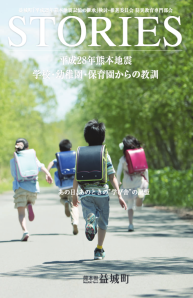
STORIES: Lessons from the 2016 Kumamoto Earthquakes
- [1] R. Isihara and N. Matsumura, “A study on the actual condition and the effects of disaster oral tradition in the coastal regions,” J. of Japan Society of Civil Engineers, Ser. D3 (Infrastructure Planning and Management), Vol.69, No.5, pp. I_101-I_114, 2013. https://doi.org/10.2208/jscejipm.69.I_101
- [2] K. Taniuchi, Y. Tashiro, I. Fujie, and N. Matsumura, “Do flood memories affects citizens’ disaster prevention abilities? A case study of flood-prone Nishiyodogawa Ward in Osaka City,” 52nd Civil Engineering Planning Research Presentation and Lectures, pp. 335-339, 2015.
- [3] A. Shibayama, “The first ten years and the next ten years of disaster archives,” Tohoku University International Research Institute of Disaster Science Disaster Culture Archive, 2021. https://www.shinrokuden.irides.tohoku.ac.jp/msrdnwp/wp-content/uploads/2021/01/r2_shibayama [Accessed November 6, 2024]
- [4] Mashiki Town, “Overview / Mashiki Town.” https://www.town.mashiki.lg.jp/kiji0032000/index.html [Accessed December 10, 2024]
- [5] Geospatial Information Authority of Japan, “1:25,000 active fault map – Futagawa and Hinagu zones and surrounding areas: “Yatsushiro (revised edition)” and “Hinagu” explanatory booklets.” https://www.gsi.go.jp/common/000202326.pdf [Accessed January 21, 2025]
- [6] Mashiki Town, “Population by age group as of March 2024.” https://www.town.mashiki.lg.jp/kiji0032535/3_2535_18593_up_w0bed8er.pdf [Accessed January 21, 2025]
- [7] Mashiki Town, “Verification report on Mashiki Town’s response to the 2016 Kumamoto Earthquakes.” https://www.town.mashiki.lg.jp/bousai/kiji0032410/3_2410_1633_up_j7cvpcog.pdf [Accessed December 10, 2024]
- [8] Kumamoto Prefectural Government, “On the role of disaster prevention coordinators.” https://www.pref.kumamoto.jp/uploaded/attachment/133671.pdf [Accessed December 10, 2024]
- [9] Kumamoto Prefectural Government, “Educational material related to the 2016 Kumamoto Earthquakes: “TSUNAGU: Toward Kumamoto’s Tomorrow” leaflet.” https://www.pref.kumamoto.jp/uploaded/attachment/142333.pdf [Accessed December 11, 2024]
- [10] Kumamoto Prefectural Board of Education, “Verification report on the response to the Kumamoto Earthquake, 2020.” https://www.pref.kumamoto.jp/uploaded/attachment/65436.pdf [Accessed December 11, 2024]
- [11] Kumamoto Prefectural Board of Education, “Guidelines for disaster prevention education in schools.” https://www.pref.kumamoto.jp/uploaded/attachment/65208.pdf [Accessed December 11, 2024]
- [12] Kumamoto Earthquake Museum, “Kumamoto Earthquake Museum.” https://kumamotojishin-museum.com/ [Accessed January 21, 2025]
- [13] Mashiki Town, “About the Kumamoto Earthquake – Related exhibition corner (Updated April 1, 2023).” https://www.town.mashiki.lg.jp/kouryu/kiji0032931/index.html [Accessed January 22, 2025]
- [14] Mashiki Town, “STORIES: Lessons from the 2016 Kumamoto Earthquakes and childcare facilities after the 2016 Kumamoto Earthquakes.” https://www.kumamoto-archive.jp/post/58-99991jl00075cy [Accessed November 6, 2024]
- [15] Kumamoto University Center for Water Cycle, Marine Environment and Disaster Management, “Digital archive division.” https://cwmd.kumamoto-u.ac.jp/digital_archives_laboratory/overview/ [Accessed January 24, 2025]
- [16] K. Shobu, “Research on community version timeline for disaster risk reduction with cooperate school and community,” Master’s Thesis, Kumamoto University, 2022.
- [17] T. Takagi, “Inheritance and issues of disaster prevention education in schools implementing comprehensive school safety support programs,” Undergraduate Thesis, Kumamoto University, 2023.
This article is published under a Creative Commons Attribution-NoDerivatives 4.0 Internationa License.